
When Fiat forces you to wage wars you've already won to win treasures from castles you've already stormed, Bitcoin will give you the keys to keep what's yours.
Joined January 2009
- Tweets 411
- Following 348
- Followers 163
- Likes 1,980
38 Photos and videos







Ed retweeted

22 Dec 2025
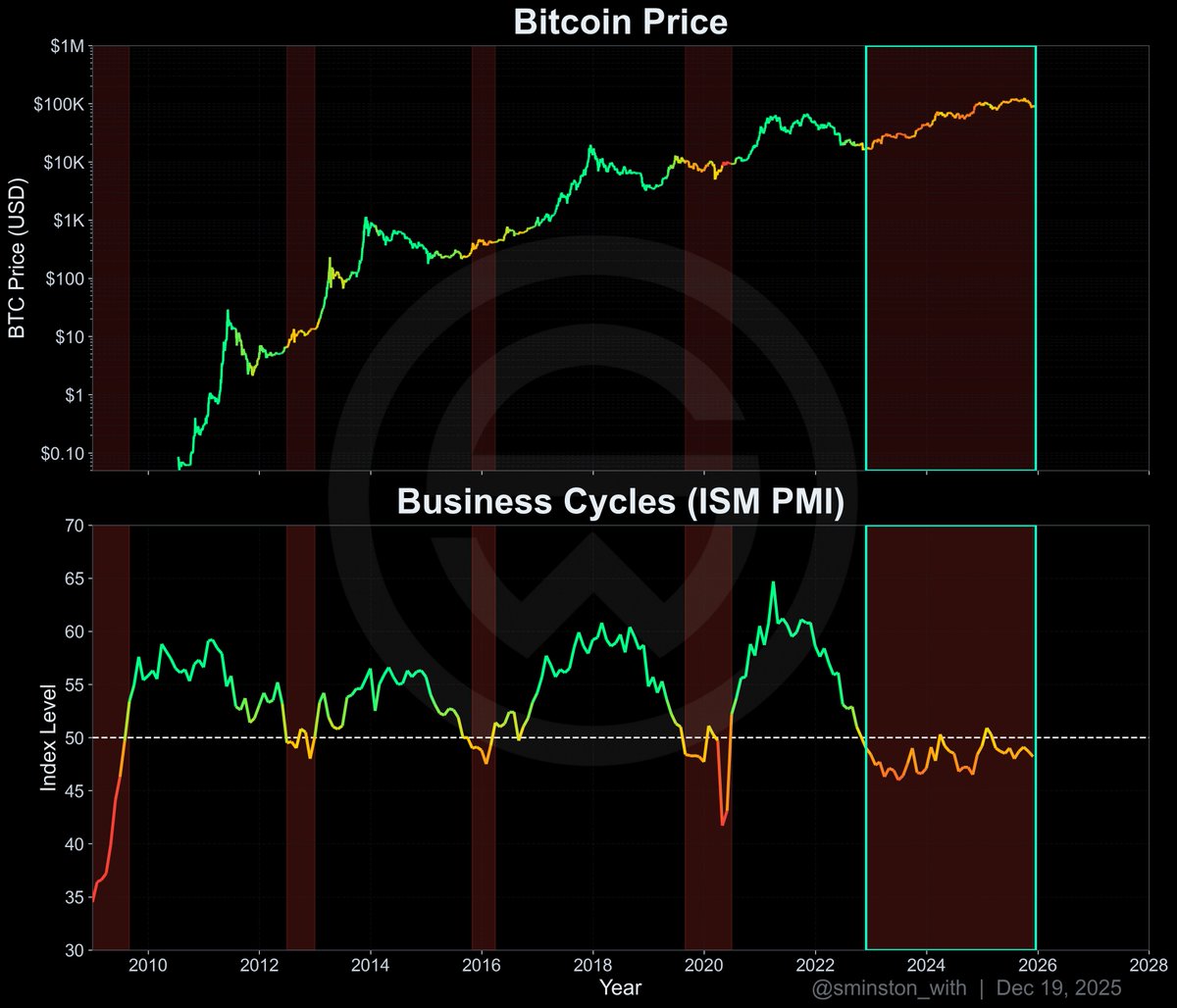
You may not like that Bitcoin bubbles are tied-in to the Macro cycles, but no matter how you skin it, it appears to be a strong driver.
- - -
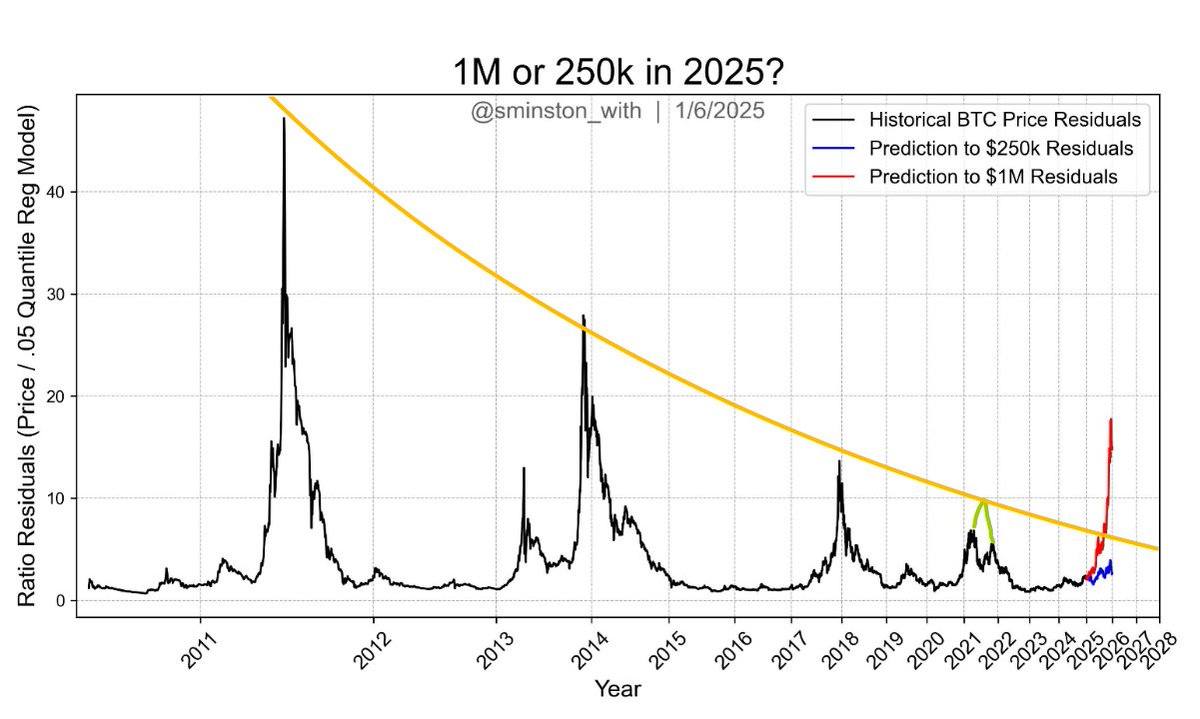
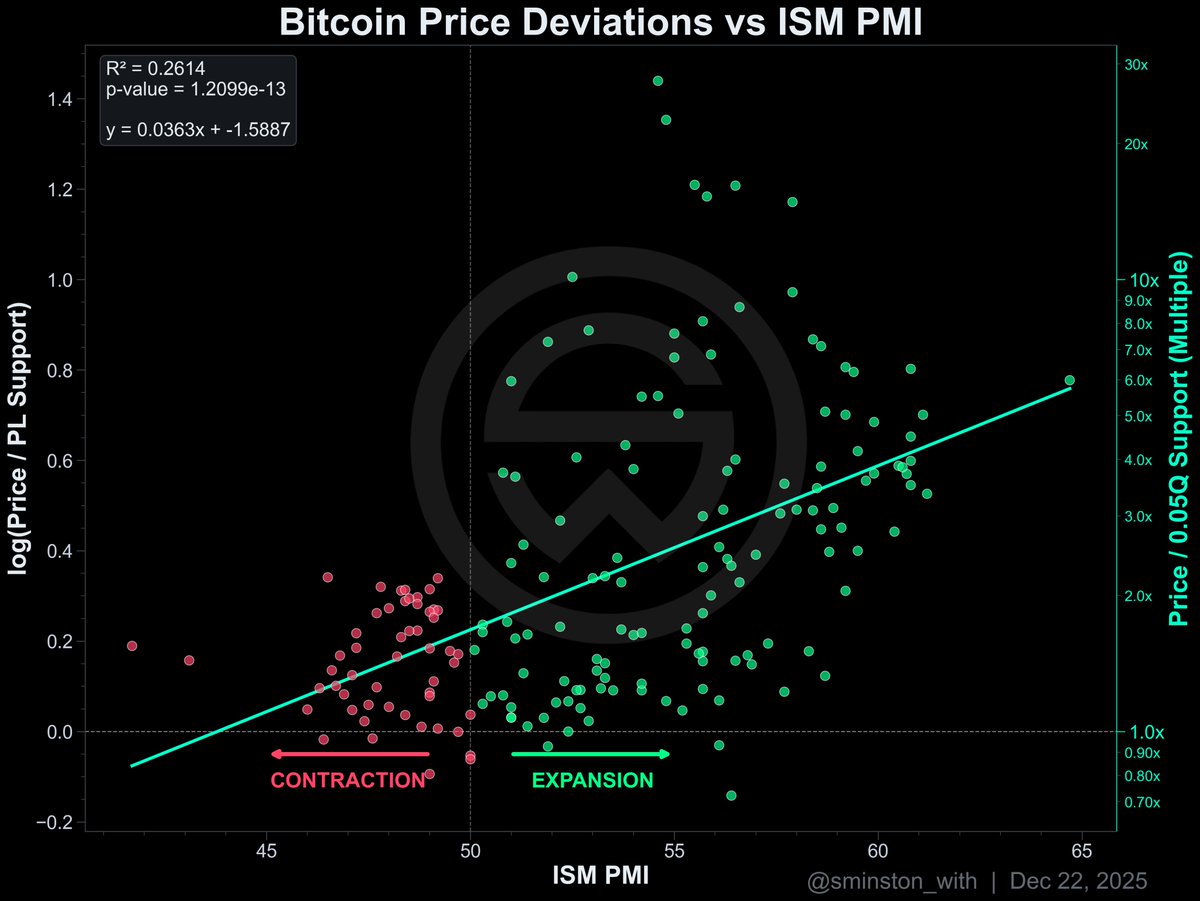
Just take a look at THIS - BTC price has NEVER done more than a 2.5x off its power law support line when PMI was below 50 (contraction).
... I finally finished a regression analysis where I compared the raw ISM PMI value (50 is the threshold, below is a contraction and above is an expansion) to Bitcoin's price deviations FROM its support level (by convention I tend to use the .05 quantile PL).
The statistical results even surprised me:
R² = 0.26, p-value = 1.2e-13
That R² means PMI ALONE explains 26% of Bitcoin's valuation variance...that's massive for a single macro indicator, actually. The p-value is essentially zero, meaning this correlation ain't a fluke.
Halving cycles are nonsense. Let's use some parsimony, people; Bitcoin bubbles expand more when the economy is expanding.
34
61
437
58,165
Ed retweeted

22 Dec 2025
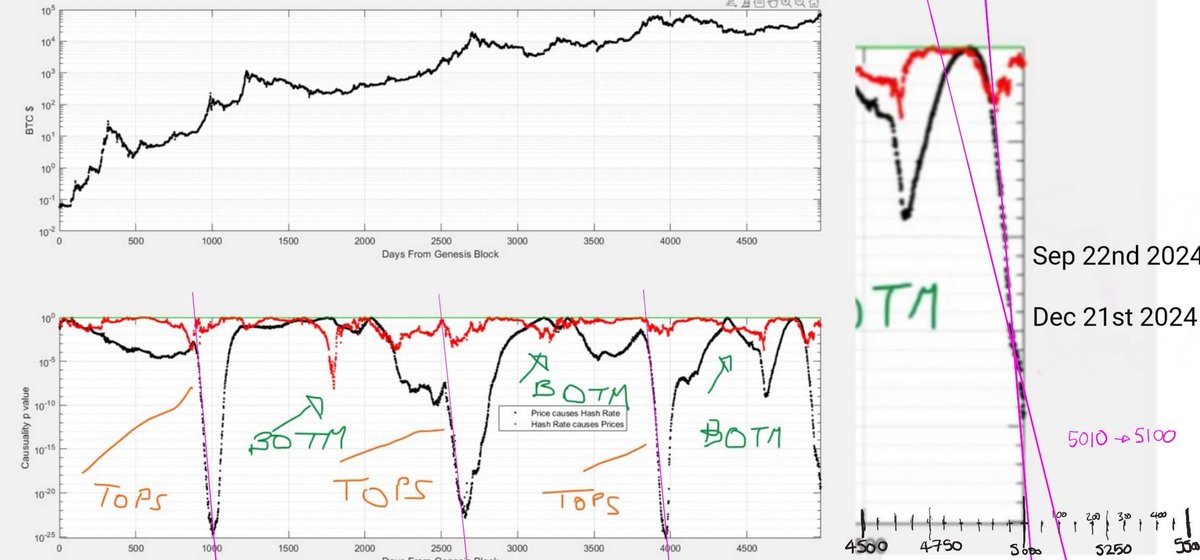
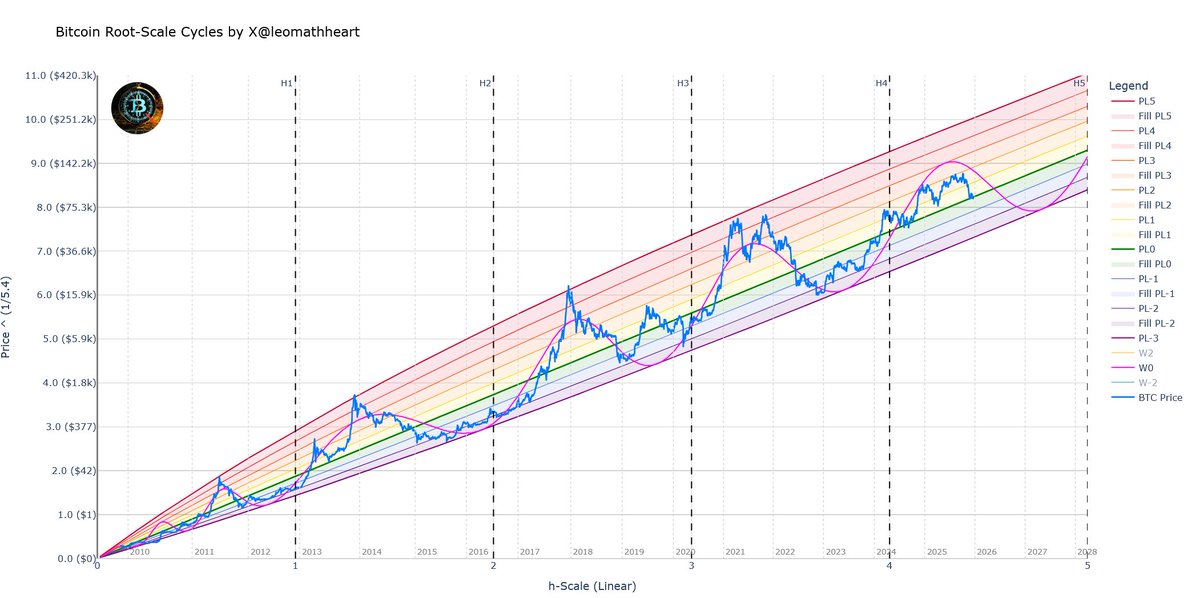
While prominent Bitcoin analysts like Arthur Hayes and researchers at K33 argue that the traditional 4-year halving cycles are dead due to institutional adoption, ETF inflows, and shifting monetary policies, this root-scale chart tells a different story.
All 5 out of 5 cycle tops (H1 through H5) have been modeled with remarkable precision using a single natural cycle framework tied to Bitcoin's block production. The pattern holds strong, with projections extending into 2028 showing no signs of the cycles fading.
If the data fits this tightly, why declare the end? Cycles aren't over—they're evolving, but still very much alive.
Chart credit: @leomatheart
24
17
151
18,116
Ed retweeted

15 Oct 2025
The wait is over!
Introducing... 🥁
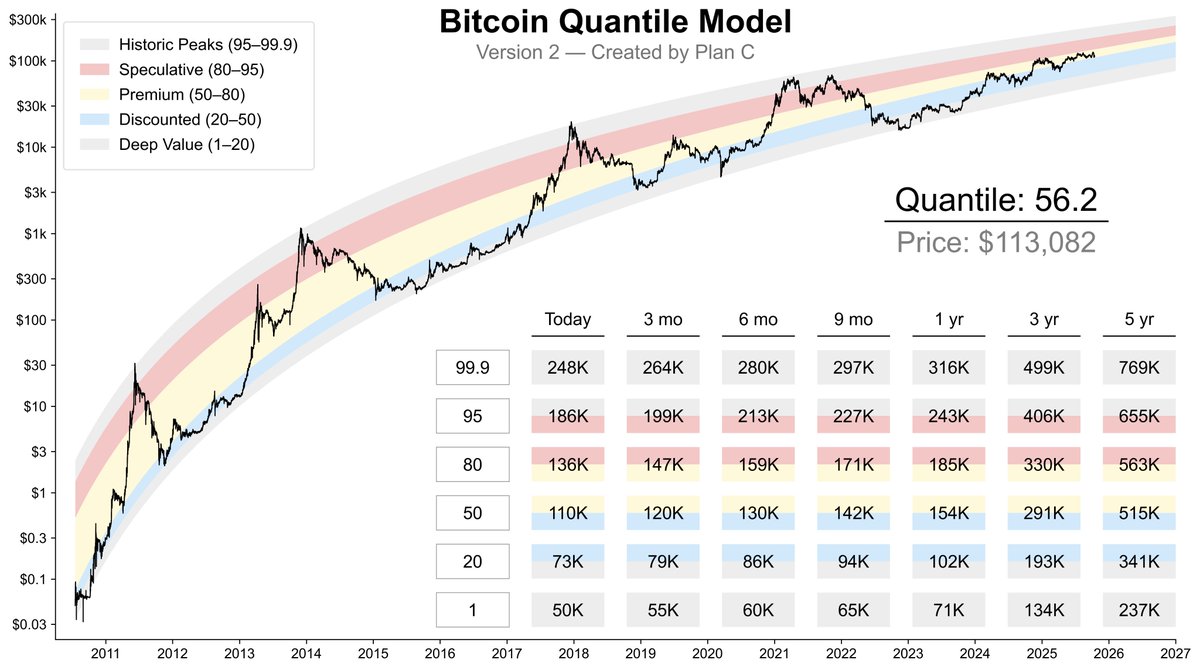
Bitcoin Quantile Model v2.
You’re going to want to bookmark this post—and follow for regular model updates.
After months of research and development, I’m very proud of this model—my flagship quantile framework.
I’m confident it’s one of the best—if not the best—long-term Bitcoin investment frameworks available.
As a full-time, unpaid Bitcoin researcher, I’m often asked how people can best support my free content.
Simply bookmark, repost, and comment on my posts :)
Thanks for all your continued support!
— PlanC
Key Features & Improvements:
1. Quantile lines never cross—mathematically impossible.
2. Cycle-length agnostic.
3. 133,000 data points and 1,500 lines of code.
4. Fits and stores 999 quantile levels (τ = 0.001–0.999 in 0.001 steps) and identifies which level the last price is closest to.
5. Fits the two leading decay functions (stretched exponential decay & exponential decay) and selects the better fit via quantile-appropriate AIC.
Uses Akaike weights to identify the best-supported model.
Akaike weights (AIC-based):
Stretched exponential decay: 96.4%
Exponential decay: 3.6%
6. Piecewise Quantile Regression — Linear Stretched Exponential Decay (Nonlinear).
354
1,043
5,514
1,048,983

Ed retweeted

4 Aug 2025
“If I put $100 in Bitcoin in 2010 I’d have $2.8B now.”
No.
If you bought $100 of Bitcoin in 2010 and watched it go to:
$1k → $100k → $1.7M
and did nothing
Then watched $1.7M go to $170k
and still did nothing
Then watched $170k go to $110M
and still did nothing
Then watched $110M wither to $18M
and still did nothing
Then watched $18M surge to $390M
and still did nothing
Then watched $390M deteriorate to $85M
Then watched $85M climb to $1.6B
and still did nothing
Then watched $1.6B shrink to $390M
and still did nothing
Then watched $390M surge to $2.8B
and then for some reason finally decided to do something…
Then yes, $100 in 2010 would be worth $2.8B today.
1,222
4,538
68,986
3,606,835
Ed retweeted

31 Jul 2025
WHY YOU'RE BROKE - TIME PREFERENCE EXPLAINED
Escape The Matrix Episode 2 is HERE!
You’re not broke because you skipped finance class.
You’re broke because you live in a civilization that worships now and has the attention span of a microwave burrito.
I cover:
🧠 What time preference actually is (and why it's the most important concept you’ve never heard of)
⏳ Why civilization only exists because some guy in history said, “I’ll wait”
💸 How artificially low interest rates fake time, fund fantasy, and cause recessions
🍔 Why fast food, TikTok, and zero-down financing are symptoms of a dying timeline
🏛 How Bitcoin stretches your horizon and teaches your brain to respect the future again!
8
8
86
6,022
Ed retweeted

2 Jul 2025
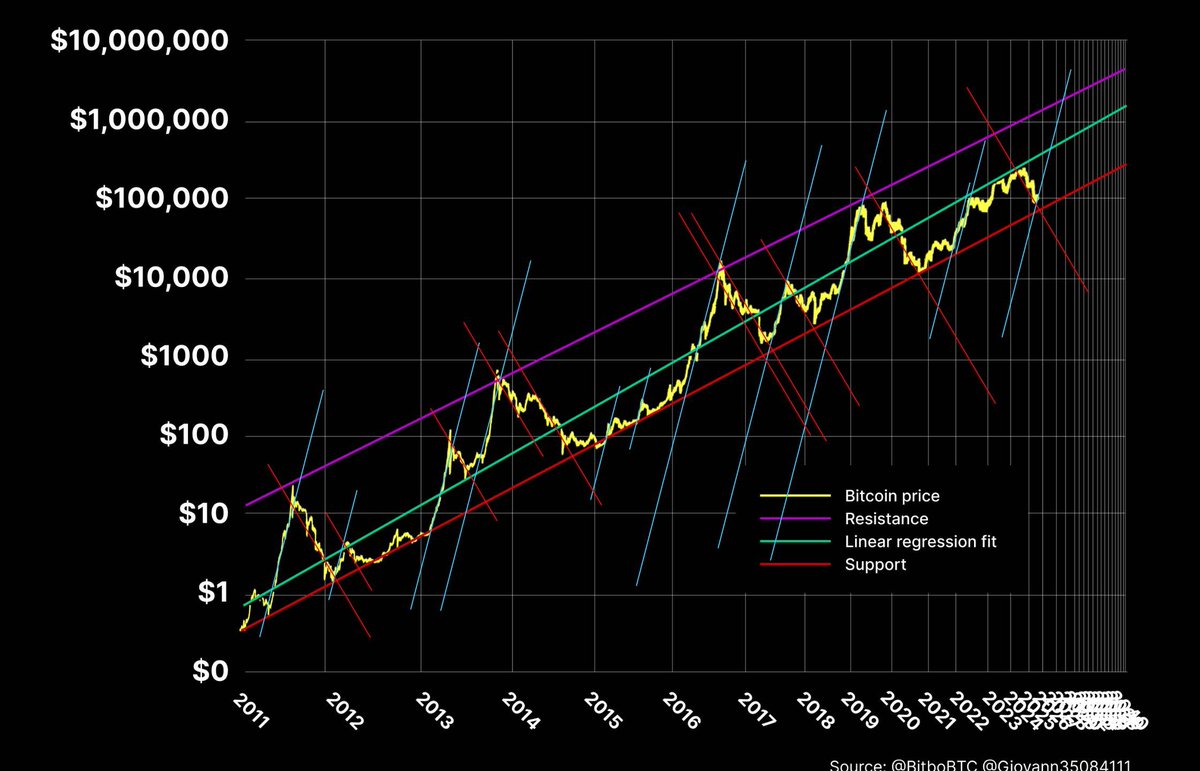
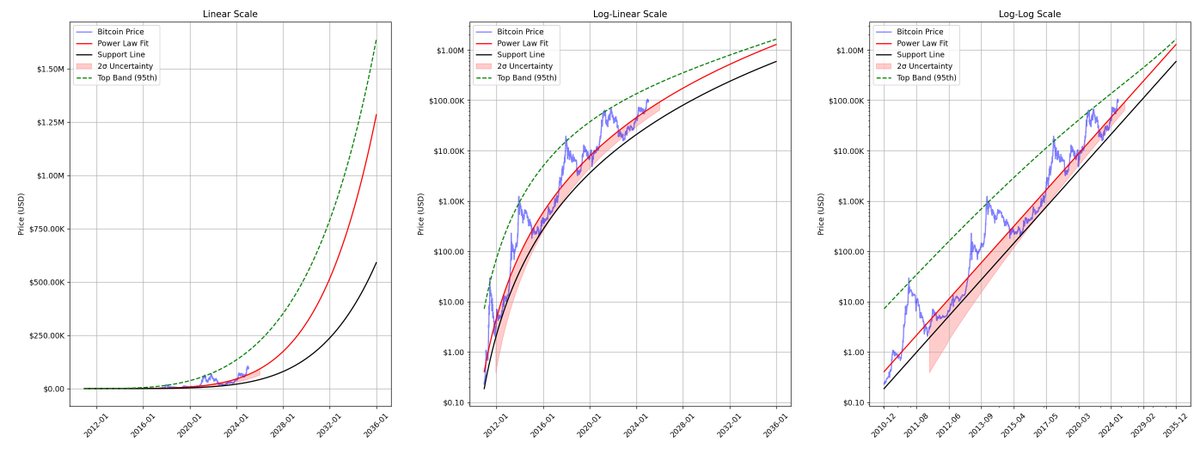
Used financial notation for the people that allergic to the scientific notation (try to learn it sometime).
Also projected to 10 years in the future.
We cross 1 M sometime in 2033.
Enjoy.
11
43
187
21,617
Ed retweeted
2 Jul 2025
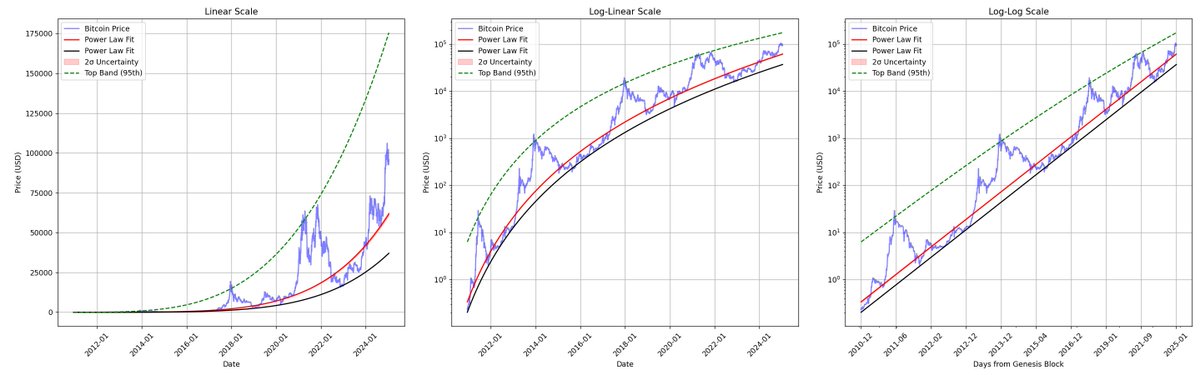
Added a decaying top channel.
What there is to argue with this model?
14
13
96
9,726
Ed retweeted

27 Jun 2025
Some thoughts on the landscape of Bitcoin-backed fixed-income securities, and the endgame coming into focus.
To rewind a bit, let me take you back to 2021, the manic phase of the COVID bull market. I had just begun a full-time position writing research for Bitcoin Magazine Pro (then called The Deep Dive), an analytics focused newsletter focused on the Bitcoin market.
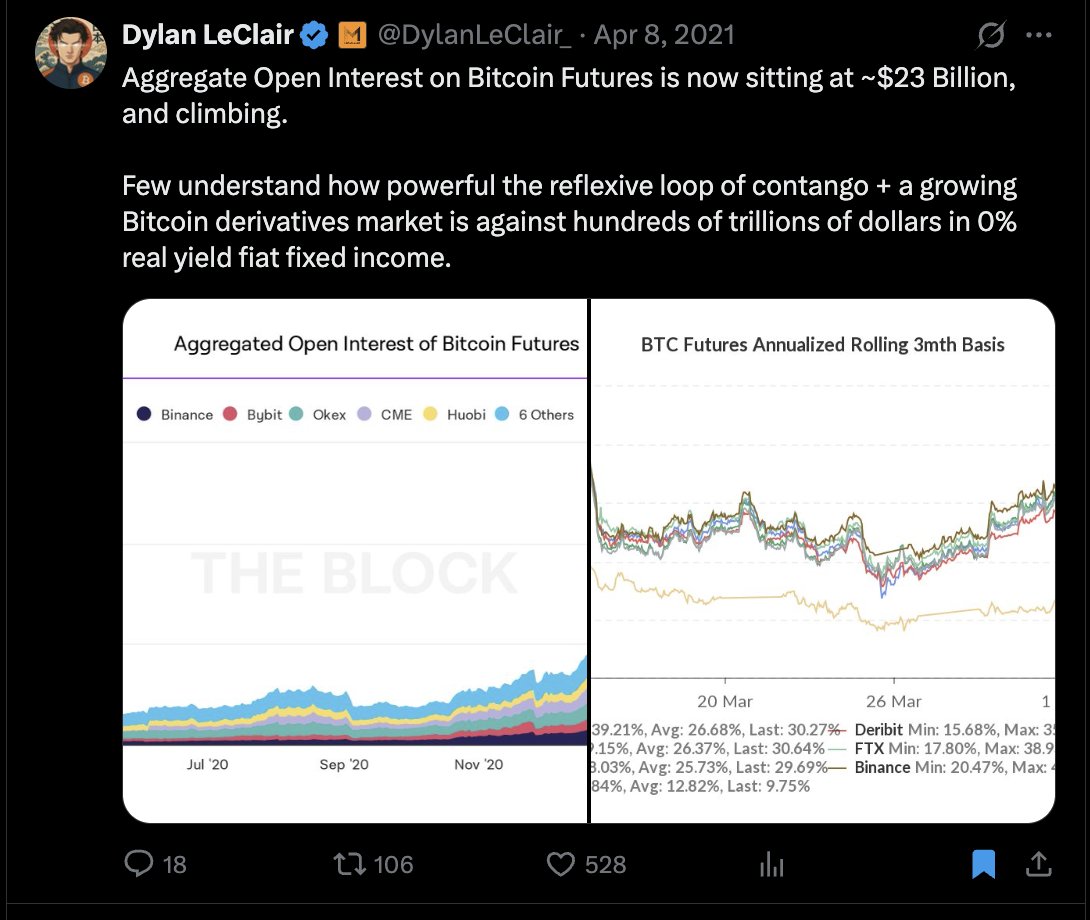
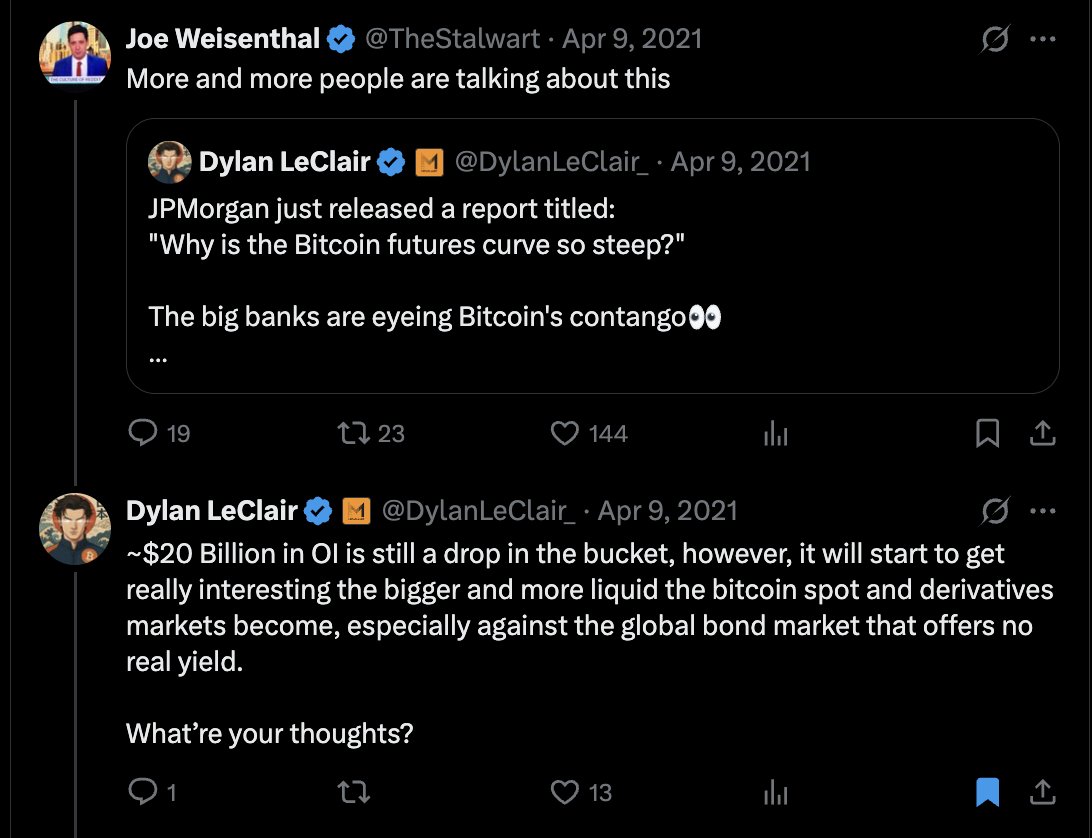
At that time, a dominant market talking point among Bitcoiners was “contango,” the phenomenon of futures trading at a premium to the spot price for a commodity. That premium is common in commodity markets because of physical constraints such as storage and seasonality, but none of those constraints exist for BTC. There is no storage cost, the future supply schedule is known with certainty, and the asset is intangible and indestructible.
Many found it confounding that a 20-30% annualized return could be made simply by buying spot BTC and shorting the futures contract. For those unfamiliar with the mechanics, if you buy 1 BTC and short 1 BTC of futures (posting the spot BTC as collateral), you hold a synthetic-dollar position that pays a variable yield. Baseline funding on perpetual futures is about 10% APR, meaning that if spot and futures trade exactly in tandem the synthetic dollar yields roughly 10%. During the leverage frenzy of 2021, those yields rose to more than 40%.
I was convinced the bond market would not stand idle while Bitcoin hyper-monetized in a zero-rate environment. My naive hypothesis was that Wall Street would imminently arrive to capture the spread by taking delta-neutral positions, long spot and short futures, thus outperforming anything in traditional fixed income.
That view was flawed for two main reasons:
1) The plumbing was not ready: no serious institutional capital was going to log in to Binance or FTX to run this trade.
2) Even with a friendly regulatory landscape and secure platforms, most capital lives under strict mandates that prohibit such activity.
Instead of a wave of institutional arbitrage, the contango premium collapsed under its own weight as the underlying bull-market leverage unwound. Demand to short fiat and long BTC dried up, and the most levered crypto firms imploded, mainly driven by altcoin based leverage and loan rehypothecation.
After the 2022 bear market, the clean-up process began. Bad actors disappeared, BlackRock filed for a spot ETF in mid-2023, and the institutional tide started to shift.
By 2024 both legs of the contango trade were finally available on Wall Street. Institutions could go long via SEC-approved spot ETFs and go short via CME futures, capturing a roughly 5-15% annualized spread with full regulatory oversight. Yet fixed-income capital still stayed away. The players harvesting that basis were prop funds, not the massive pools of fixed-income capital, as their mandates prohibited such activities. Something was still missing.
For a while I thought convertible bonds issued by operating companies might be the bridge. Volatility could be the transmuting variable that lets Bitcoin-backed optionality outcompete traditional cash-flow bonds. But the convert market is opaque, infrequent, relatively illiquid, and much smaller than the depths where fixed-income giants swim.
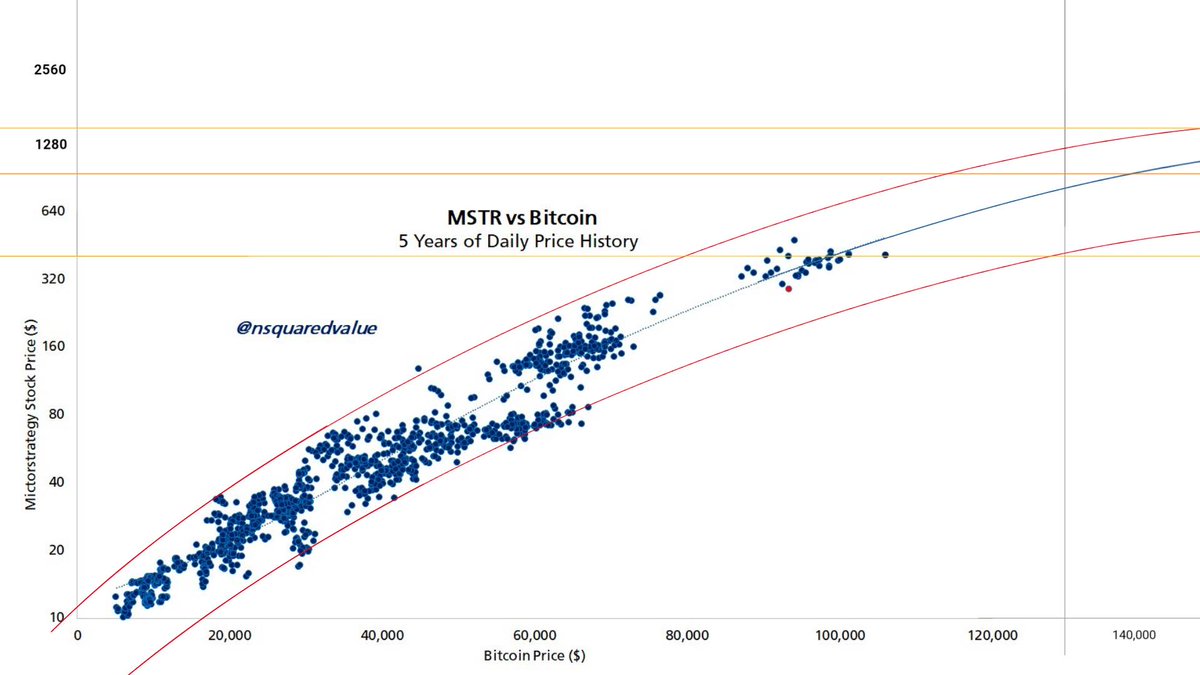
The endgame revealed itself in 2025. It finally clicked when MicroStrategy launched its first perpetual preferred equity offering. Suddenly the fiat-denominated bond-market endgame came into focus. Massive fixed-income pools were never going to post BTC on a futures exchange to hold a synthetic-dollar position, no matter how attractive the yield. Even when that contango trade offered 40% in 2021, it didn’t matter.
MicroStrategy’s Bitcoin-backed preferred equity solved this. The instrument is issued in dollars, MSTR buys BTC up front, the pref ranks senior to common equity, is registered with the SEC, is transparently over-collateralized, and pays a fixed dividend that does not evaporate when dynamic funding rates collapse.
In effect it is an infinite-duration BTC<>USD swap contract, wrapped in a bond like instrument.
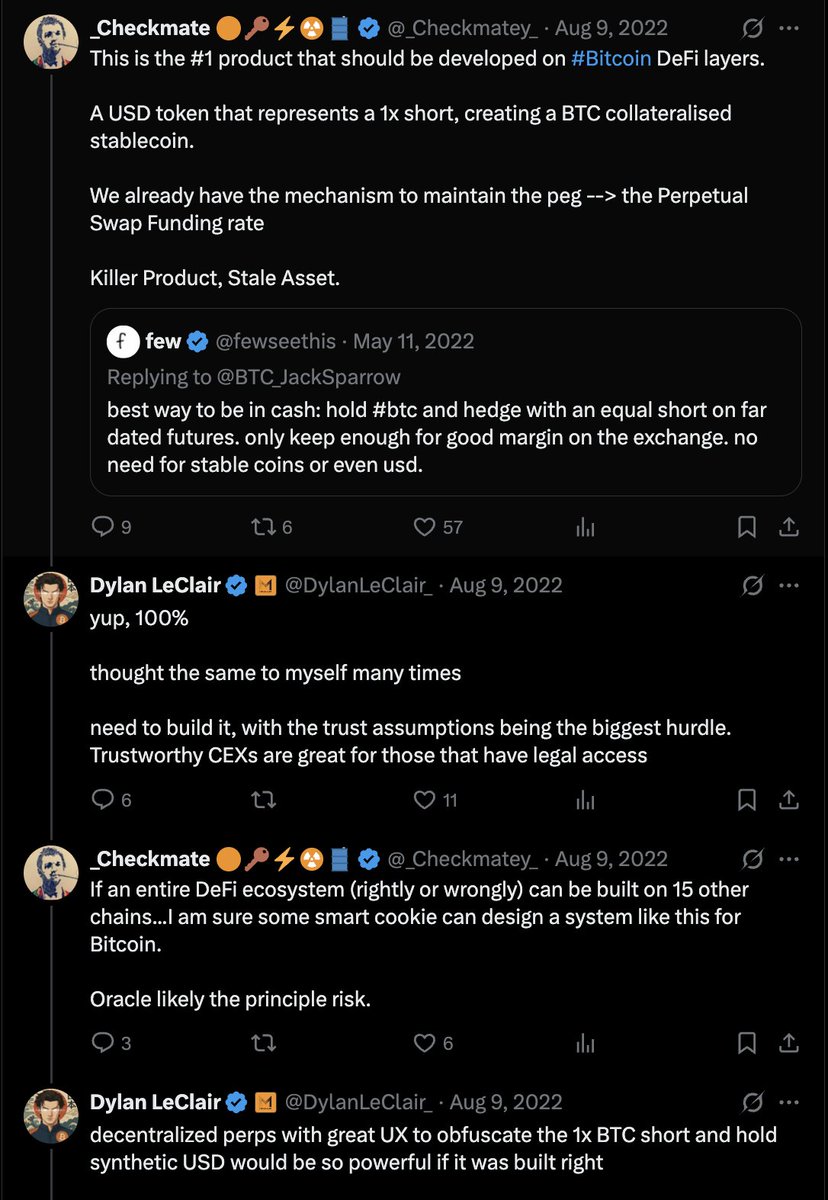
Interestingly, the “crypto-complex” has spent billions attempting to create such product-market fit. Ideas such as synthetic stablecoins built upon perpetual swap contracts - which never really landed with much effect in TradFi.
Here is @_Checkmatey_ and I discussing the hypothetical product-market fit of a synthetic instrument collateralized by BTC that pays yield based on a perpetual futures contract… Sound familiar?
Outside of raw spot BTC itself, I’ve often stated that the “golden goose” in crypto was who was going to be first to figure out how to seamlessly build a secure vehicle that provides USD yield and stable USD exposure to investors who want to take the other side of the trade as the long perpetual futures traders…
Well, Saylor figured it out (shocker)....
MSTR is going long spot BTC (in massive size) and selling the short leg of a perpetual swap to the $100T fixed-income market. STRF pays roughly a 10% dividend and is secured by Bitcoin collateral. It offers far greater legal protection, transparency, and stability than any offshore perpetual swap ever has.
These instruments are built to capitalize on the fiat system’s inherent design: 21,000,000 BTC versus an unlimited and ever-expanding supply of currency units.
The contango narrative of 2021 and its perceived 2nd & 3rd order effects on the fixed income markets was simply ahead of its time.
To conclude:
Bitcoin-backed perpetual preferred is the golden goose. And Saylor caught it.
The gates of Troy have been breached.

171
510
2,757
410,800

Ed retweeted
16 Jun 2025
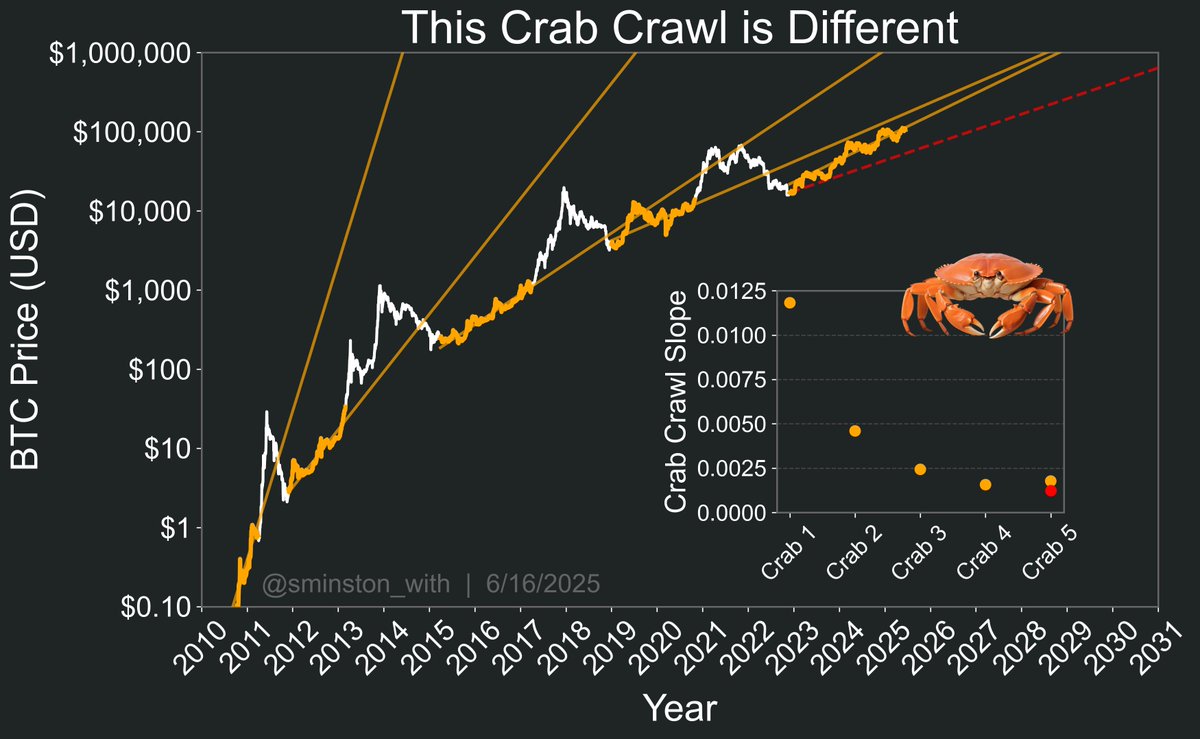
Been feeling like we're on the longest Bitcoin crab crawl ever?
Not only would you be right - but there is something else unique about the current "crab market" as I call it.
It is the first of all the crab markets to have a steeper slope than the previous one.
Keep reading 👇
34
61
573
65,642
Ed retweeted

14 Jun 2025
What if Nakamoto acquired GameStop?
A declining retail giant reborn as a national Bitcoin brand.
21st-century infrastructure. 21st-century money.
Let’s walk through the vision. 🧵
41
12
238
37,705
Ed retweeted

10 Jun 2025
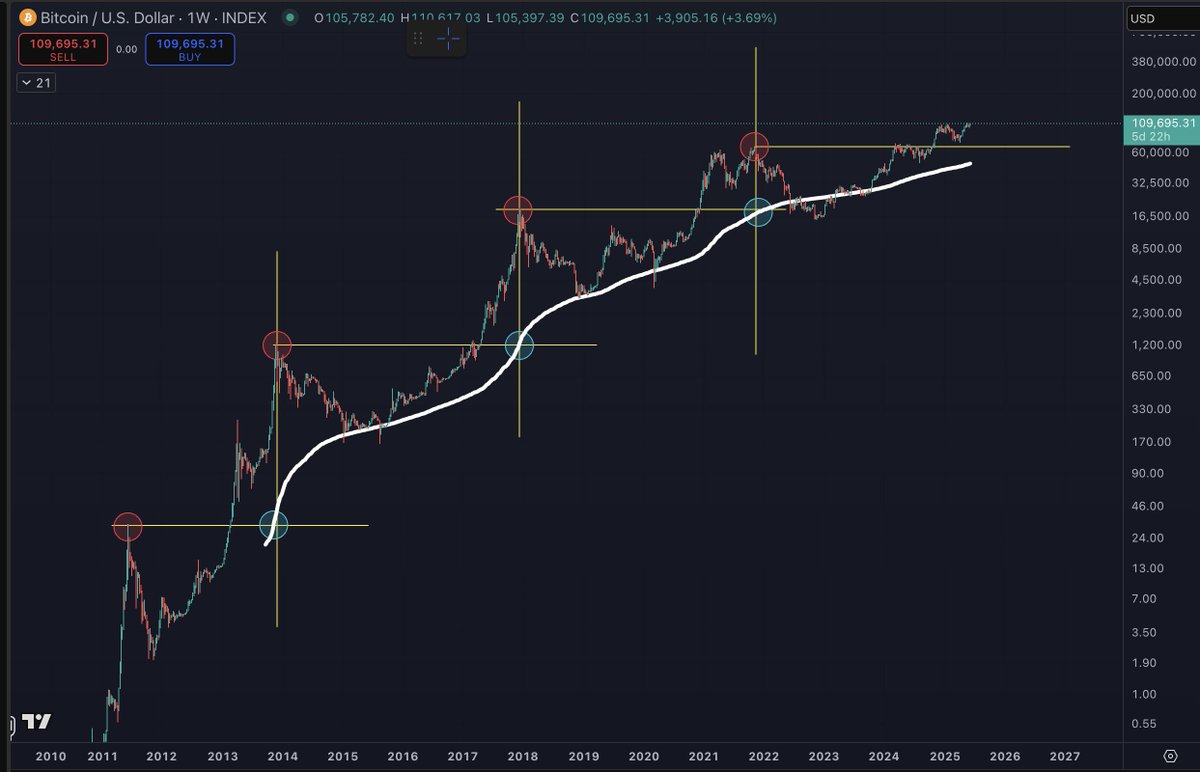
Historically, the #BTC market cycle top is in when the 200W SMA crosses the prior ATH.
Something to keep in mind...
929
2,357
17,319
1,936,278

Ed retweeted

29 May 2025
Days to cover is here.... 🥳
thesmarterinvestmentguy.com/…
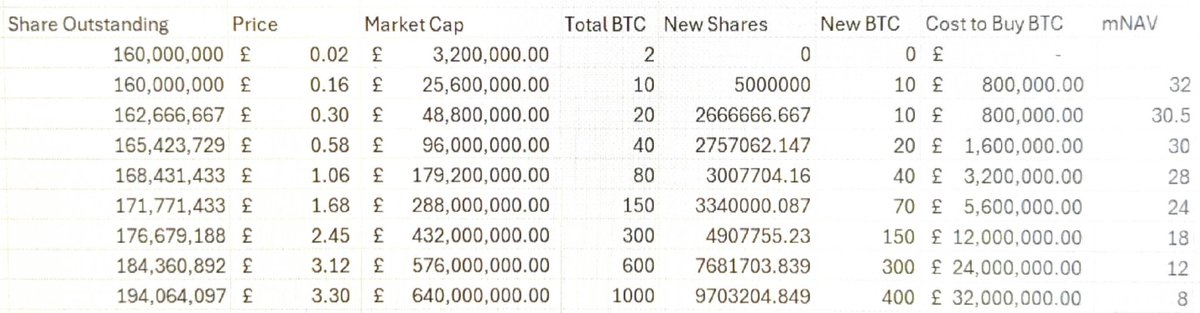
Keep reading to the end because this chart is so much more than just days to cover (spoiler: share price could reach £20 by August).
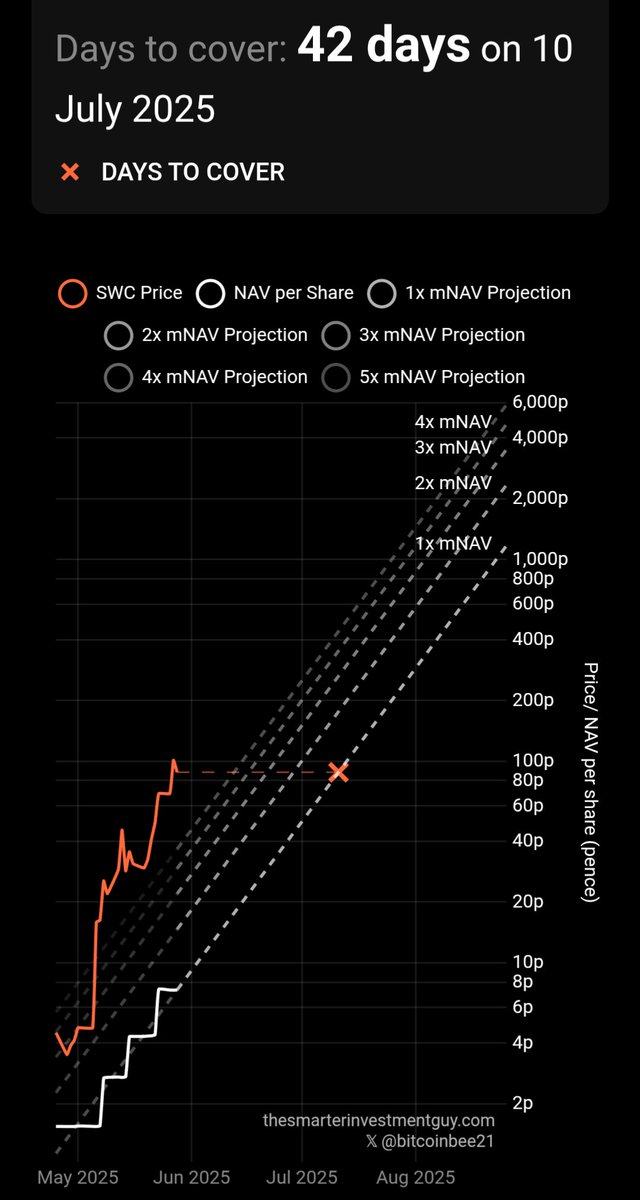
There's no set calculation for this, but by my estimate is the days to cover for $SWC is around 42 days. It's important to note that I'm using days to cover the NAV (cash bitcoin). I think others are only using bitcoin, which is why you get a lower number. Either way, the days to cover for $SWC is very low.
I'm sure everyone knows about days to cover by now, but the way I look at it is if NAV keeps growing at the current rate, then your investment will be "risk free" by the number of days to cover. So as long as you can hold for 42 days, then any volatility in price before then is irrelevant.
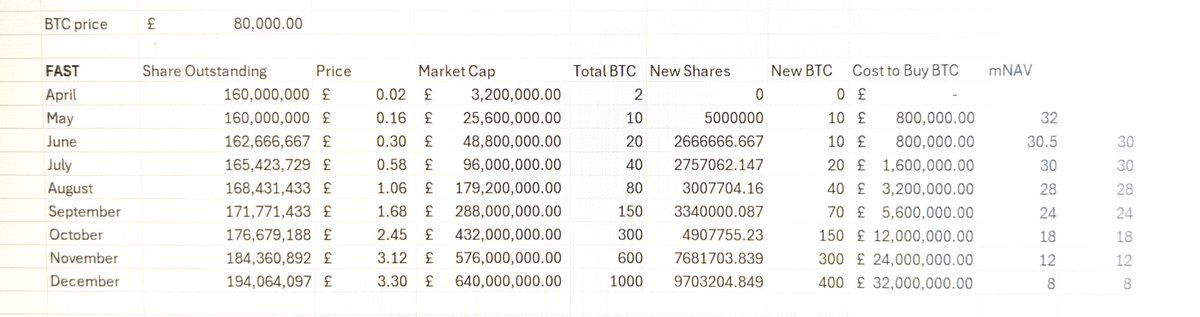
Now for the exciting part. This chart is made up of the white line, which is the NAV per share. So as of today, you are paying 88p, for bitcoin and cash worth 7.3p. Hence you get to an mNAV in the region of 10x. What I've done is projected forward the NAV per share 3 months. Where the price crosses this projection, you get the date that the price covers the NAV. If you keep going though, you get an indication of where the NAV per share might end up in 3 months' time. At current rates of growth, we're looking at an NAV per share of over £10 in 3 months! And as this is per share, it takes into account any dilution.
Stick on a multiple—let's say a very modest 2x mNAV—and you get to a share price in 3 months of £20! Let me repeat that... If we keep growing our NAV at current rates, and the mNAV compresses from 10x to 2x, the share price will be £20.
I'd like to be a bit more conservative and expect growth to slow a little, so let's say growth slows by half—then I'd expect a share price by end of August to be around £5 to £10. If you want to be more bullish, then at an mNAV of 5x, the share price will be £60 in 3 months. I think this really outlines why people are willing to value us at a 10x mNAV. We're growing, and growing really really quickly.
This model will only improve as we get more data, but would love your thoughts.
27
10
68
14,481
Ed retweeted

6 May 2025
Check out our latest pod with @JessePeltan, which is just 3 hrs straight of him dropping bangers like the one below
306
623
3,604
21,727,336
Tried to trade £30k just now on HL, can't get a quote for it in HL. I'm sure I'll find a way around it, but just thought I would highlight the lack of liquidity at slightly higher levels.
I did manage to trade a few £100k blocks using AJbell, so I assume it is an HL issue.
2
6
497