
Actively Ignorant
Joined March 2009
- Tweets 4,809
- Following 103
- Followers 8,141
- Likes 8,735
258 Photos and videos













Tim Egge retweeted

Apr 27
Let me dump some carbs on you...
Someone said yesterday that thinking about CHO intake in terms of stores, output and "bonking" is the "old way" of looking at carbs in sport.
That pissed me off.
So, let's start with...
Only those with a bullet-proof basic understanding can have an advanced understanding.
Put another way, he couldn't tell me why this is the case. So, let me tell you why this is that case...
The error in thinking of a carbohydrate/glycogen "reservoir" comes largely in the sense that the reservoir isn't one tank.
We have...
Tank 1: Liver Glycogen
Tank 2-2,000,000 Muscle Glycogen
That is, every muscle fiber has its own little tank. So, in terms of glycogen depletion, while a significant drop in liver glycogen is obvious - the typical "bonk"...
Drops is muscle glycogen are far more subtle...
They manifest as progressive transition from more economical fibers to less economical. So, over the course of the race, pace for a given O2 uptake progressively decreases.
*Assuming CHO makes it across the gut wall to the blood*...
High levels of exogenous intake can offset this progressive depletion of more economical fibers & keep the pace high for a give O2 uptake over longer periods of time.
This is why, again, assuming good levels of clearance from the gut, high CHO intake can have a small, but meaningful impact on the pace that can be held late in a race.
TLDR...
- A liver glycogen bonk is obvious.
- Muscle glycogen depletion is subtle.
- Exogenous CHO can offset glycogen depletion (to an extent) & help to maintain pace for longer.
But....
1/ The size of the engine determines fuel needs.
2/ You can only use what you can clear (& if you can't clear it, there's a timebomb jostling around in your gut - just waiting to go off)
5
8
154
13,864
Tim Egge retweeted

Feb 3
New article on what small swim improvements mean come race day trainsmooth.com/2026/02/02/s…
1
2
133

New blog on traveling to a race and protecting plasma, HRV and recovery trainsmooth.com/2025/12/04/h…
48
New blogs on weightloss, nutrition for performance and example of daily nutrition based around training trainsmooth.com
1
3
146
Tim Egge retweeted
19 Oct 2025
New blog on the nutrition/diet series. This blog is on carb intake for training trainsmooth.com/2025/10/19/c…
1
1
143
New blog post on weight loss trainsmooth.com/2025/10/12/w…
60
Tim Egge retweeted

25 Sep 2025
Running is 90% mental, and the other 35% is in your head.
11 Sep 2025

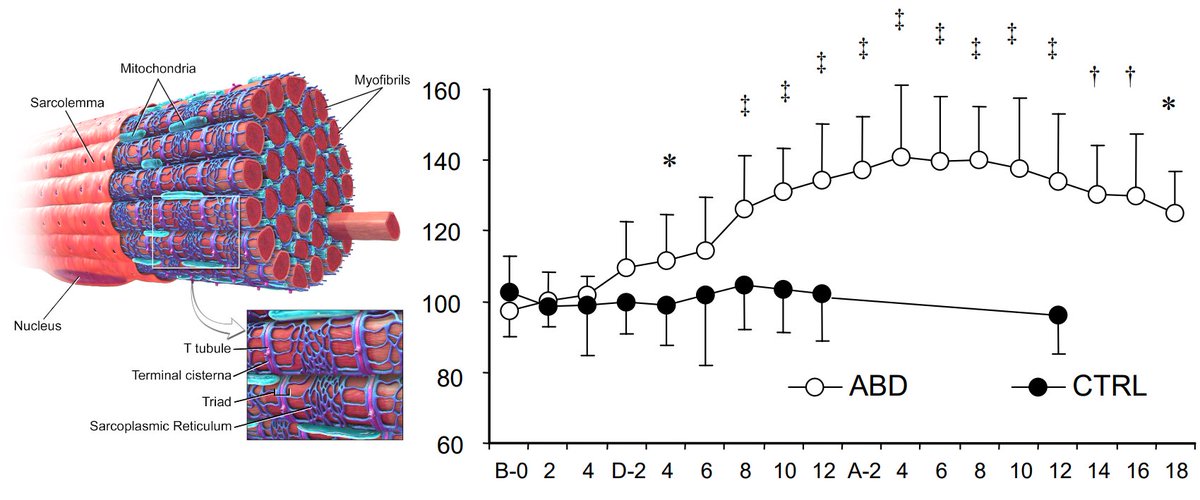
Mentally imagining muscle contractions increased strength by 35% without physical exercise.
2
4
107
8,919
Tim Egge retweeted

18 Sep 2025
1) Despite the billions invested in longevity business, almost nobody will live to 125 as many people seem to believe (or dream)…People will die decades earlier from non-communicable diseases (NCDs) like cardiovascular disease, cancer, diabetes or Alzheimer’s. These almost always strike first….Their common root? Mitochondrial dysfunction cellular bioenergetics disruption.
Lifestyle interventions thorough exercise, nutrition, sleep, lack of stress and not supplements could get you to 90-100…
13
28
182
22,191
Tim Egge retweeted

4 Sep 2025
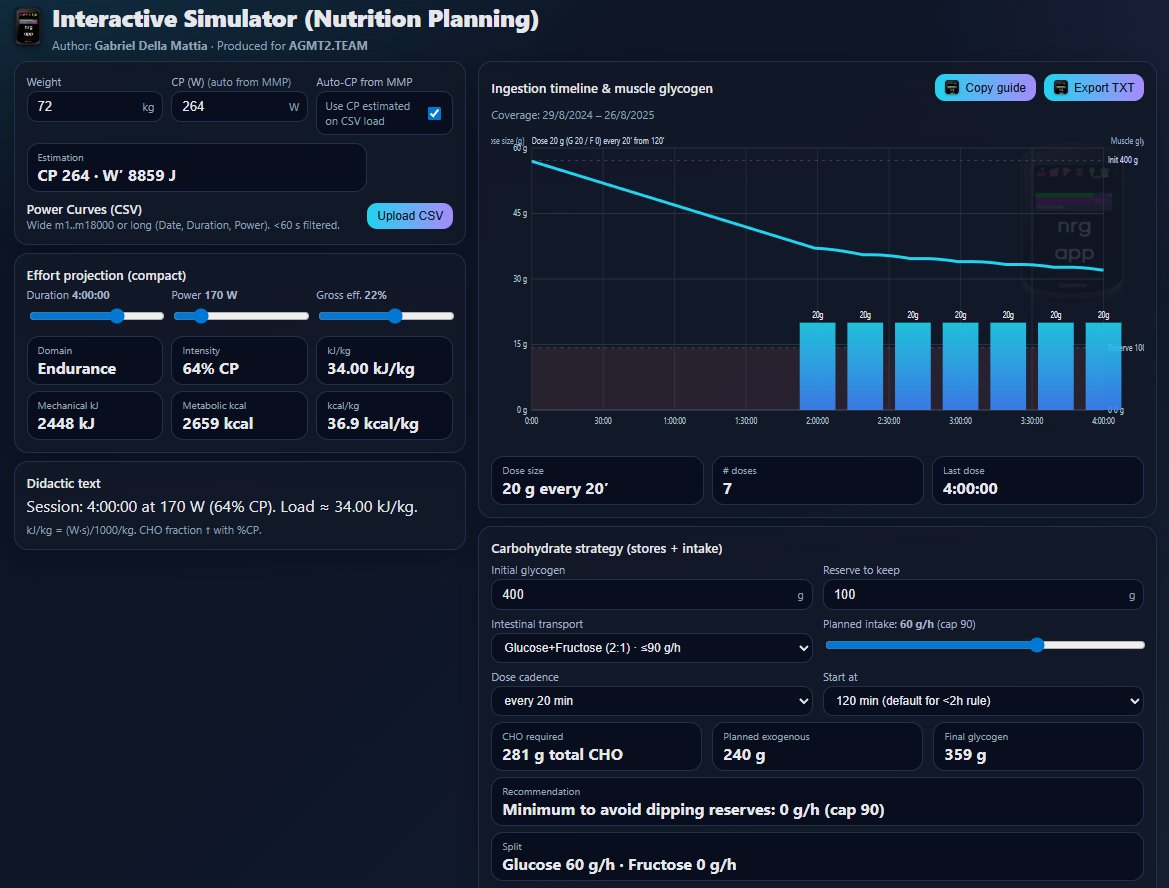
Interactive Simulator (Nutrition Planning)
enydog.github.io/NutriCalc/
I’ve been using it for several years as an app, and today I’m sharing it in HTML mode. I hope you find it useful.
If you find any errors or have suggestions, please don’t hesitate to share them. Thank you.
1
6
46
2,890
Tim Egge retweeted
17 Aug 2025
What would it look like if Dr. Michele Ferrari was coaching an age group triathlete (without the doping) trainsmooth.com/2025/08/17/d…
1
1
218
Tim Egge retweeted
13 Aug 2025
What would the Norwegian Method look like for an age group athlete plaining out their season trainsmooth.com/2025/08/13/n…
1
1
135
Tim Egge retweeted
3 Aug 2025
What does your triathlon performance look like when using @DanBiggles22 approch of reverse engineering trainsmooth.com/2025/08/03/d…
1
3
215
Tim Egge retweeted

6 Feb 2025
By your 50s, your heart has already begun to stiffen and shrink, making it work significantly harder to pump blood. But research confirms that committing to 4–5 days of exercise per week can preserve its structure and function—keeping it as resilient and efficient as that of someone decades younger.
This might seem a bit surprising—this dose is higher than most people are currently achieving and more than the minimum recommended exercise guidelines.
But research shows that exercising just 2–3 days per week isn’t enough to prevent the heart from stiffening with age. In fact, it offers only slightly more benefit than being completely sedentary—meaning a higher dose of exercise is needed to truly protect heart function.
Committed exercisers who workout 4–5 times per week don't experience the age-related changes in heart structure, and competitive master athletes working out 6–7 times per week have the healthiest hearts of anyone.
There’s no shortcut to maintaining a youthful heart—consistent training is essential. While exercising 2–3 days per week can support metabolism and muscle health, it’s simply not enough to prevent the heart from stiffening with age. If you want to preserve heart function and elasticity, you need to commit to a higher dose of exercise.
Check out the latest episode of the FoundMyFitness podcast, where @brady_h and I break down the best insights from past experts on how to train for optimal cardiovascular health, longevity, and performance.
Full episode on YouTube:youtu.be/rdcMvDvY4rU?si=2FWn…
6 Feb 2025

4–5 days of aerobic exercise per week may be the “sweet spot” for preserving a youthful heart structure as you age
This frequency helps slow the natural shrinking and stiffening of the heart, preserving its elasticity
Anything less—including the often-recommended 150 minutes per week—likely falls short of providing optimal protection
There are definitely many, many benefits to only exercising 2-3 days a week (metabolic, brain health, etc.), but maintaining youthful cardiovascular compliance and structure into old age seems to require more effort
39
245
1,825
490,545
Tim Egge retweeted

30 Jan 2025
Mitochondrial dysfunction plays a vital role in the etiology of depression.
🧵1/9

69
400
2,097
264,824
Tim Egge retweeted

10 Jan 2025
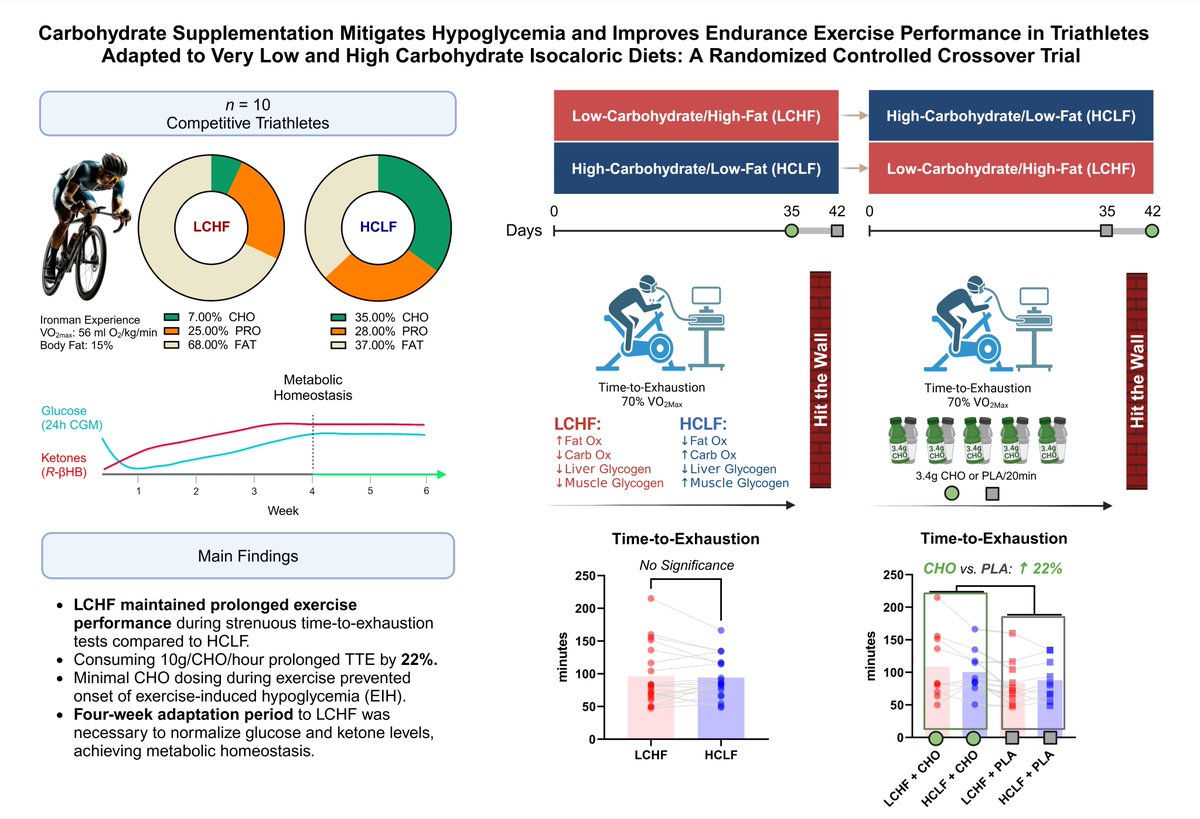
🧵Very-low carb (ketogenic; LCHF) vs high-carb diet (HCLF):
-Ironman triathletes (n=10)🚴♂️
-"Hitting the Wall"🥵
-Homeostasis monitoring ("Keto-Adaptation")📈
Our hypothesis was wrong...again
🔍CRITICAL QUESTIONS:
1) Does adopting an LCHF diet impair strenuous time-to-exhaustion performance?
2) Does carb supplementation (3.4g/20min) during exercise, 6-12x lower than current CHO fuelling recommendations, improve time-to-exhaustion on LCHF? If so, how?
3) Keto-adaptation homeostasis timeline?
🔏KEY CONTROLS:
1) Randomized & Controlled
2) ❎Crossover Design
3) ↔️Calories
4) ↔️Physical Activity Load
5) Dietary Compliance:⬆️BHB CGM
What did we see? 1/n
🔗Detailed study breakdown below
56
141
692
399,327
Tim Egge retweeted
13 Jan 2025
One of the biggest barriers in sports performance is objectivity.
During the good times, everything looks great. However, during the bad times, objectivity is the first thing that goes…What was bright before, overnight can be very dark…
An advice I always give to those entering sports performance in any of its modalities: collect data, measure parameters and communicate constantly.
2
13
89
7,503