
troll-demon @taprootwizards
Joined January 2012
- Tweets 56,660
- Following 5,356
- Followers 167,489
- Likes 27,070
9,180 Photos and videos









The Wizard Portal is a first-of-its-kind Bitcoin ordinals marketplace built by @TaprootWizards.
Get instant purchase confirmations and pay with non-BTC payment options like USDC, SOL, ETH, and Apple Pay.
Protected by Privy.
May 29

today we’re launching the Wizard Portal! 🚀
🧙♂️buy with USDC, SOL, or ETH. any wallet, any chain
🧙♂️or buy with Apple Pay, no wallet required
🧙♂️no downloads, installs, or seed phrases
🧙♂️FAST confirmations!
🧙♂️exclusive for @TaprootWizards and @QuantumCats
link and details below👇

9
9
48
11,333
Eric Wall retweeted

I agree it shouldn't on the L1 layer. At same time, it should add op_CAT, and, better, op_STARK, to allow for L2s to deal with that (with all the risks and benefits).
The worst outcome of this would be for Bitcoiners to say "let's do nothing at all". That will continue to harm Bitcoin.
Jun 5

An unfortunate example of why I've long said not to expect Bitcoin to implement strong cryptographic privacy at the base layer.
Doing so greatly increases risk of undetectable monetary supply inflation. Few folks value privacy more than supply integrity.
x.com/zooko/status/206264492…
5
4
55
9,168
Eric Wall retweeted
you're confused. The formal verification would show that some new circuit is gud. It won't and cannot prove that the buggy circuit wasn't exploited.
But I explained already how to deal with that. Track the size of the shielded pool over next week.
9
2
56
7,145

The existential question of crypto is now whether ”AI-enhanced bug finding” strengthens the defenders more than the attackers
Some people think so. They think ”well, this means that we’re going to have swarms of AI agents diligently watching over every minutiae of the protocol in real time!”. And from this lens, the ZEC exploit patch is concrete evidence of exactly that
For others (like @VitalikButerin) it means that writing formally verified code will be a demystified art, strengthening things further. ”Writing secure code has moved from impossible to hard” is a verbatim quote from him, last month
For a third category of people, and presumably the largest group, the thought is ”when humans move their weapons from knives to guns to rocket launchers, they’re more likely to have things blow up in their face, regardless of which side has more of them”
17
6
61
6,237
AI:
*uses reverse-engineered zero knowledge proofs as reward functions in order to lower the number of toffoli gates in quantum circuits and finds patches hyperinflation exploits in zcash privacy pools*
Person on Twitter:
”Eric you have AI psychosis. It’s just autocorrect ”
10
4
57
7,031

this is the best bitcoin podcast episode i’ve listened to all year, especially for those that are interested in quantum
a background note: i first listened @danboneh talk on the topic of quantum what must’ve been almost 10 years ago. to me, he’s the one expert who demonstrates the most knowledge depth (and humility) on the subject, and teaches me the most when he speaks
recently, dan helped come up with a way to run Shor’s algorithm with 10x fewer physical qubits than previously thought (co-author on the 2026 Google paper)
my tl;dr of the episode:
his baseline characterization of quantum computing isn’t as something that might be fundamentally impossible. that error correction would get exponentially hard in the same way that breaking elliptic curve cryptography in the classical sense gets exponentially hard with the number of bits in a key
It is hard for sure, but not ”exponentially hard”
at the same time he doesn’t personally think CRQCs powerful enough to attack bitcoin is going to happen before 2035
(sidenote: it should be obvious to anyone that the deadline to reach safety isn’t ”the date when the smart people think an attack is most likely to happen”, but way before then. the question is rather ”by when is it even at a small risk?” and optimize for that)
he gives the reason for why it is unlikely to happen before 2035: it is not a principle of physics or of human progress, just a matter of funding. if quantum had the same level of funding that ai does, the calculus would be entirely different (the threat of attack would come much sooner)
to connect what he say to what some quantum critics like @jamesob, @reardencode or @robin_linus within the bitcoin community are saying, he does have the humility to acknowledge that it is *possible* error correction doesn’t scale. nobody knows for sure until it is proven.
that is a wholly different thing than confidently rejecting outright that it will ever scale, as if it’s something you can know and base your plans on, which is effectively what @jamesob, @reardencode and @robin_linus are doing
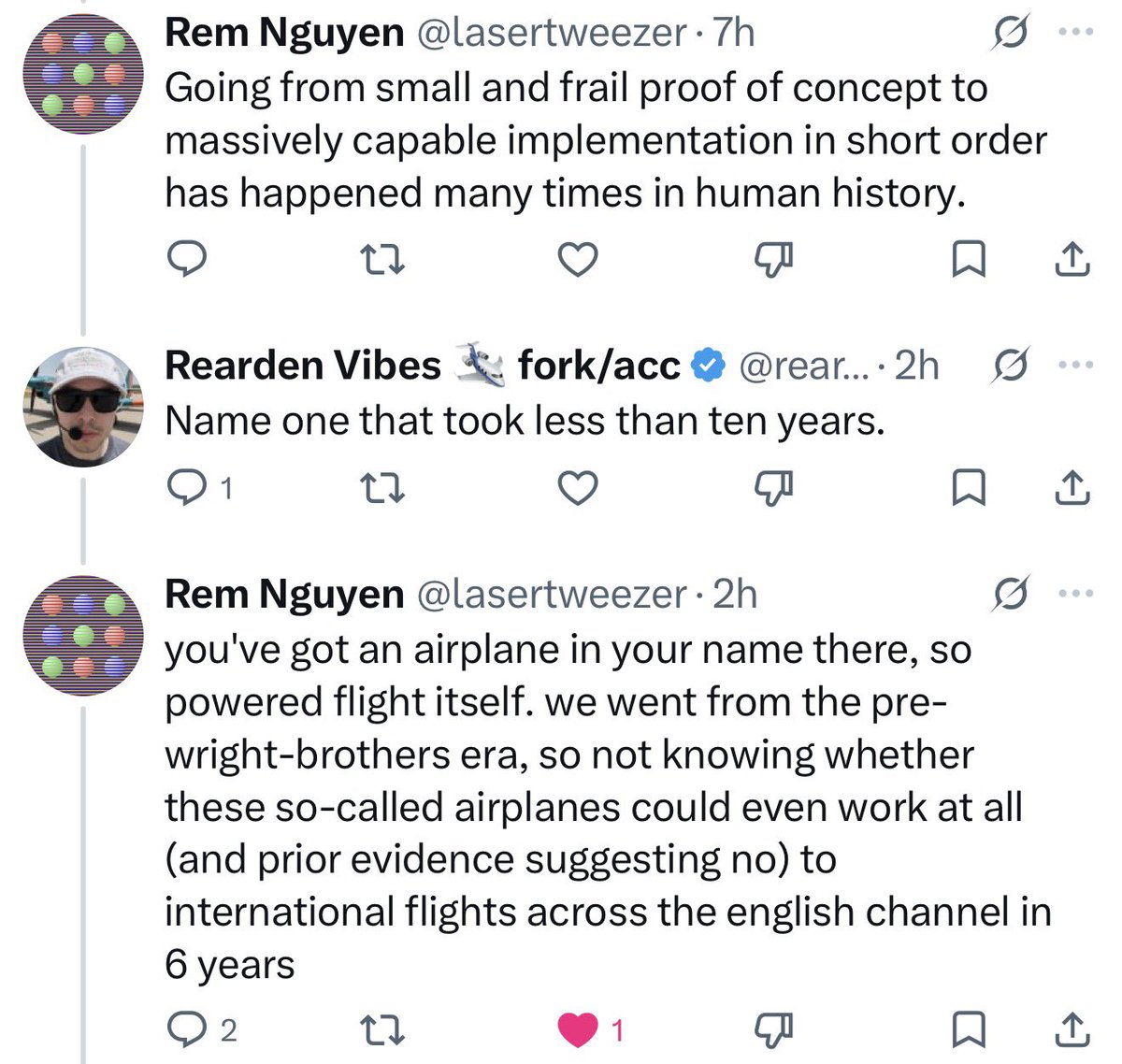
he compares quantum computing to flight, the wright brothers, and thinks that quantum computing already had its ”kitty hawk” moment (when the wright brothers flew 37 meters in 1903) with the google willow chip in 2024 (proving scalable fault-tolerant quantum computers are possible)
”error corrected quantum computing is not a theory, it has been proven to work”
regarding the notion that no quantum computer has factored a number higher than 21, dan says that that's true, but that it's only just now that these tools are coming together. it's happening right now.
the entire podcast is a treasure trove of information and is probably the single highest signal thing you can listen to if you want to get up to speed on the latest in ”quantum computing vs Bitcoin” from someone who actually knows what he’s talking about
congrats @isabelfoxenduke on this stellar interview

BITCOIN RAILS #61: QUANTUM CRYPTOGRAPHY FOR BITCOIN | with Dan Boneh @danboneh
🔗 YOUTUBE: youtu.be/F-HG87VJj_k
🌿 SPOTIFY: open.spotify.com/episode/7ly…
One of the most prolific and influential cryptographers in the world, it’s difficult to fully quantify the impact that Dan Boneh has had on Bitcoin and digital assets more broadly.
Through both his own research and his mentorship of some of the space’s most important contributors — e.g. Andrew Poelstra, @benediktbuenz, and @robin_linus — few people have done more to shape the cryptographic foundations underlying modern blockchains and digital finance.
More recently, Dan co-authored @Google's widely discussed paper, “Securing Elliptic Curve Cryptocurrencies against Quantum Vulnerabilities,” which reduced prior estimates of the resources required to run Shor’s algorithm against the elliptic-curve cryptography used by Bitcoin.
The paper reignited debate around quantum computing timelines and the long-term security assumptions behind modern cryptocurrencies.
In this episode of Bitcoin Rails, Dan and I discuss the current state of quantum computing, its potential implications for Bitcoin, and how he believes the Bitcoin community should think about preparing for a post-quantum future over the coming decade and beyond.
And yes, Dan shares his take on the “when quantum” question in the interview, among other key perspectives.
This episode of Bitcoin Rails is brought to you by my NEW sponsors:
LayerTwo Labs @LayerTwoLabs — developing research, software, and technologies for scaling Bitcoin via the integration of Drivechains (BIP 300/301)
Hashi on @SuiNetwork — a primitive for executing Bitcoin Defi transactions, without having to trust a federated bridge or other centralized entity
BitBox @BitBoxSwiss — an open-source Bitcoin-only hardware wallet, with smooth UX and no compromises on security. Check out Bitbox [dot] swiss and use code BITCOINRAILS to get a discount
TIMESTAMPS:
00:00 — Intro and Dan’s history with cryptography and Bitcoin
11:44 — Shor's algorithm: how a 1994 paper became cryptography's most important threat
16:39 — Building a quantum computer: superconducting qubits vs neutral atoms
25:37 — When should we start worrying about quantum computers? The timeline debate
31:51 — Have we already reached quantum computing's “ahá” moment?
39:09 — Inside the Google paper: how Shor's algorithm was optimized
49:57 — The Bitcoin mempool attack and the 10-minute window
59:21 — Mitigation: what should Bitcoin do to prepare for quantum?
1:11:54 — Hash-based vs lattice-based signatures: Dan's case for lattice
1:23:15 — ZK proofs, BIP361, and what to do with Satoshi's coins
1:31:52 — Encrypted mempools and MEV
1:38:29 — Why Bitcoin will survive quantum and Dan's message to Bitcoin builders
23
44
387
65,472
Eric Wall retweeted
Add op_cat or op_STARK.
This way Bitcoin contained but those who want get self custodial privacy at scale, in post quantum secure way.
Jun 3

Why adding Zcash style privacy to Bitcoin at the consensus layer is a bad idea:
4
4
52
5,766
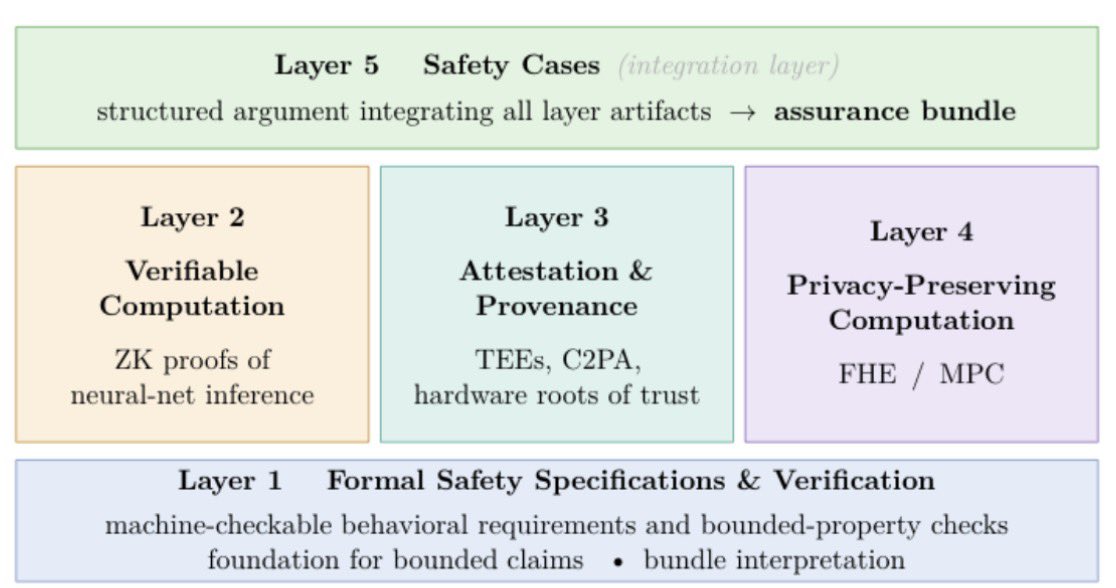
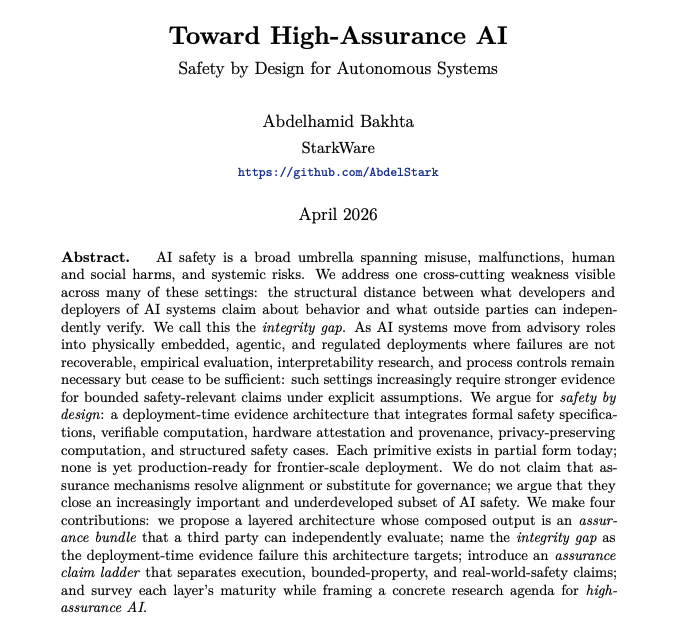
I’ve read through @AbdelStark’s paper.
I think this could serve as a foundational piece for anyone who’s looking to get into AI compute verifiability (super important field!)
There are also some really good lessons from the ZK space in this which the AI space can learn from 🧵
Jun 2

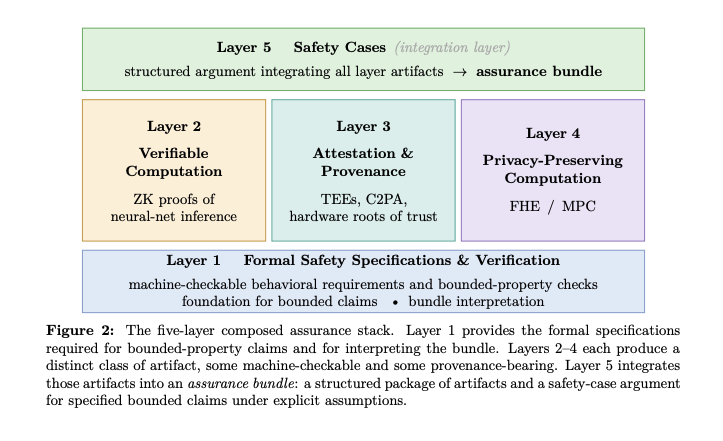
Toward High-Assurance AI, Safety by Design for Autonomous Systems.
AI safety is relatively good at shaping and evaluating how models behave. It's much weaker at producing evidence an outsider can independently verify about what a model / agentic system actually did in a specific deployment.
Core idea is this: We address one cross-cutting weakness visible across many of these settings: the structural distance between what developers and deployers of AI systems claim about behavior and what outside parties can independently verify. We call this the integrity gap.
New paper on closing that gap: 🧵
11
18
75
17,465
This paper maps that out into an entire science, breaks down the different areas and what levels of assurances are possible & what current tech stacks provide. IMO: AI model labs should collab with & learn from the ZK space sooner rather than later. @AbdelStark’s paper is a great intro.
3
1
16
2,215
Eric Wall retweeted

Jun 1
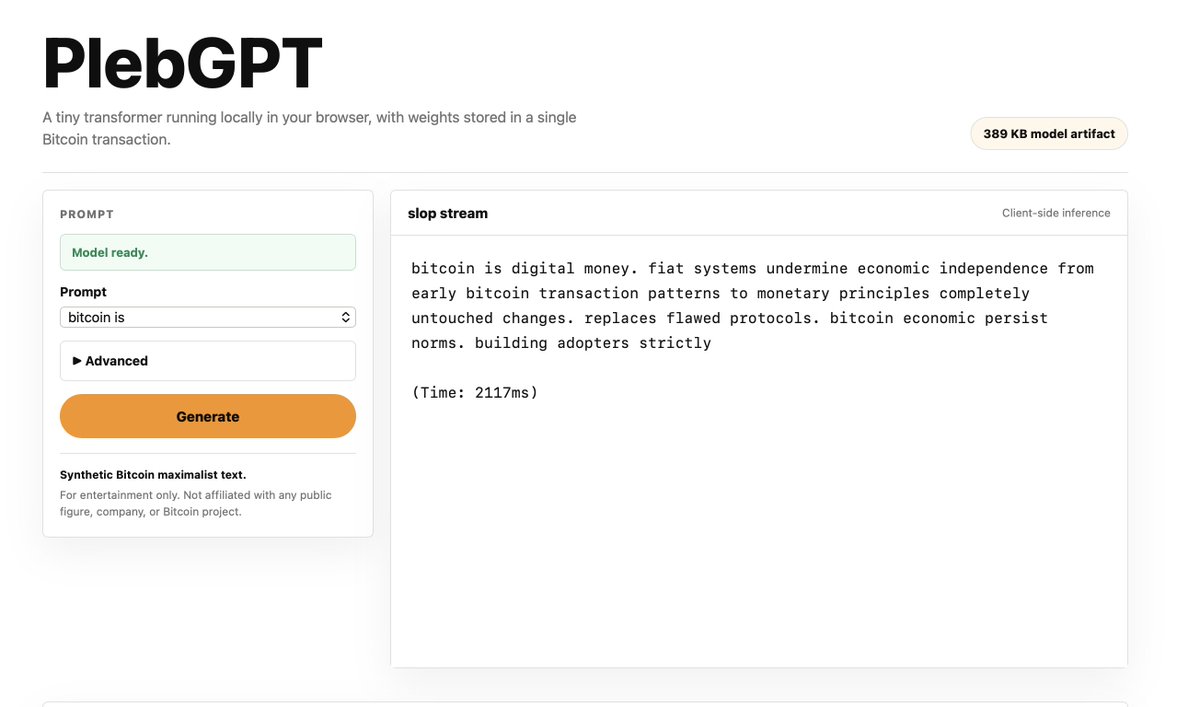
I built a very small language model on plebslop.
How small? Small enough to fit in a single *standard* bitcoin transaction.
There is now a plebslop generator on every Bitcoin node.
The UI includes client-side inference code. It loads the weights and does it all in-browser
36
24
181
40,035
Eric Wall retweeted

May 29
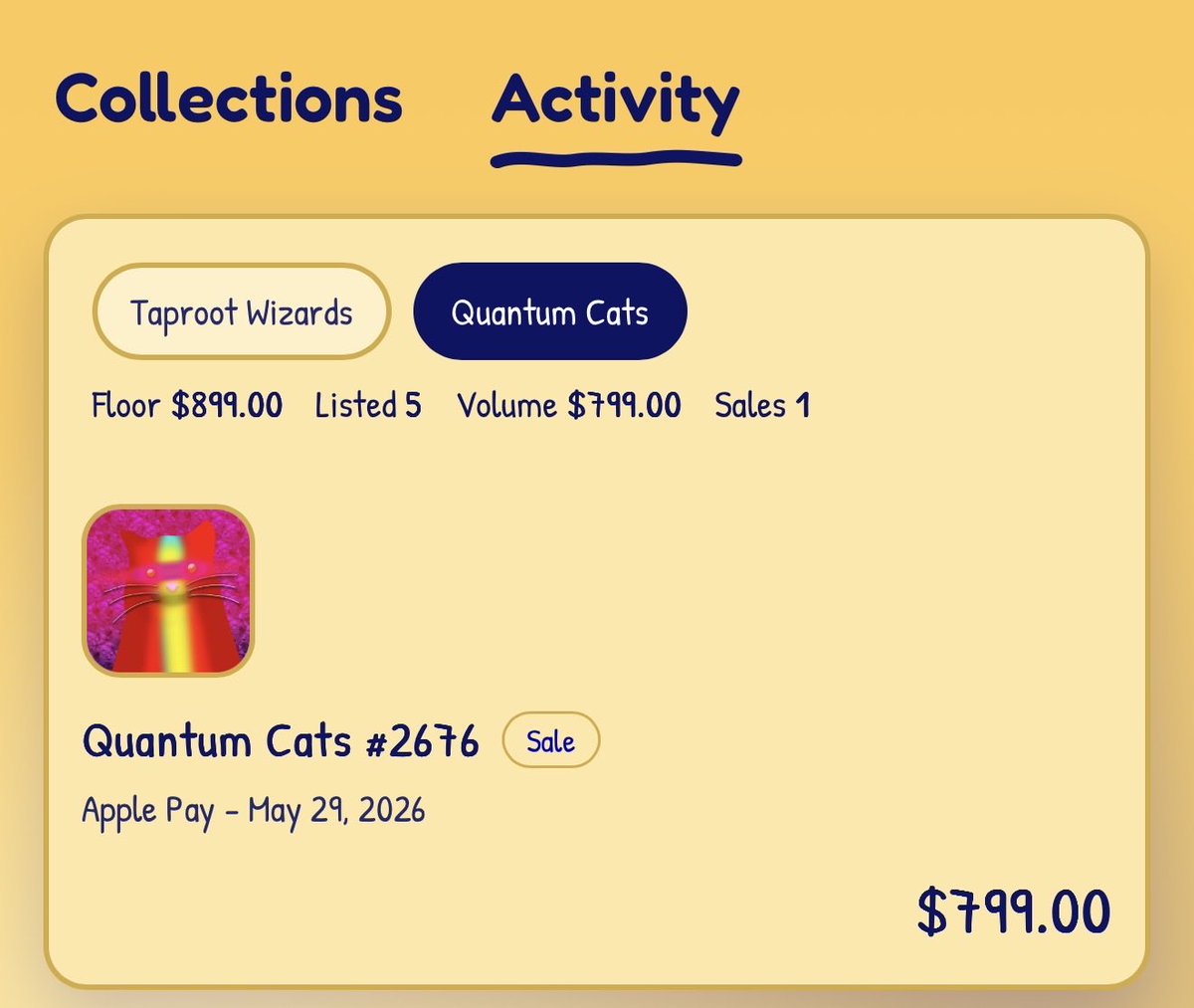
BREAKING: FIRST EVER SALE OF A BITCOIN JPEG USING APPLE PAY
56
40
339
19,715
Eric Wall retweeted
May 29
today we’re launching the Wizard Portal! 🚀
🧙♂️buy with USDC, SOL, or ETH. any wallet, any chain
🧙♂️or buy with Apple Pay, no wallet required
🧙♂️no downloads, installs, or seed phrases
🧙♂️FAST confirmations!
🧙♂️exclusive for @TaprootWizards and @QuantumCats
link and details below👇
71
50
281
51,023