Broadcasting coast-to-coast on #DMRadio #InsideAnalysis and on TV with #FutureProof. Sign up for weekly insights about #Analytics & #AI - bit.ly/4d5NdWe

Joined September 2010
4,281 Photos and videos
Pinned Tweet
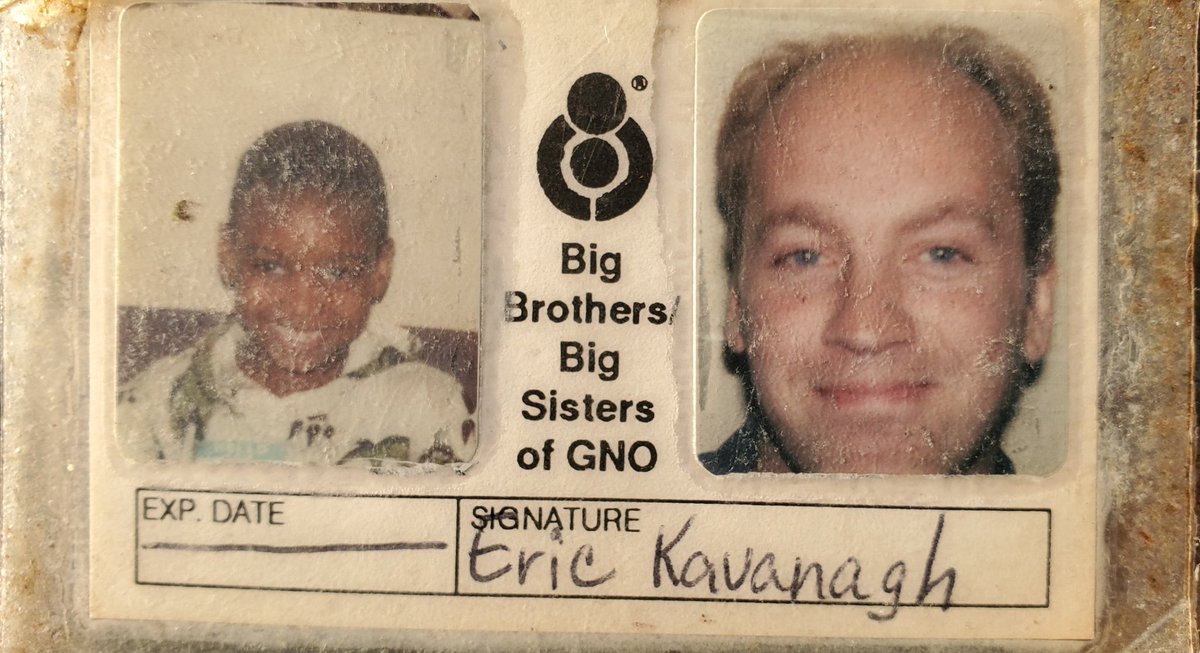
My Little Brother is gone. You left us too soon! You were such a beautiful boy who grew into a wonderful man! I'll miss you always, my dear friend. I still see your smile and hear your laugh. You will live forever in my heart, and through your wonderful children. CU in Heaven!
12
14
81
Eric Kavanagh on #DMRadio retweeted
AI isn't coming for data teams — it's already here. The challenge? Making data understandable enough for it to work. New InsideAnalysis episode: @JessicaTalisman & @Eric_Kavanagh on why semantic data graphs are the foundation for enterprise AI. Also featuring @d3fmacro. 🎥 buff.ly/8xNyU2l #AI #KnowledgeGraph #SemanticLayer
3
3
61
Eric Kavanagh on #DMRadio retweeted
I made 13 separate requests for support, beginning on January 3. Every request was denied until 2:09 p.m. on January 6, when Pelosi’s Sergeant at Arms finally approved assistance. 2 mins later-the first Capitol window was broken. @SpeakerPelosi forced me out of my position the very next day.😡
24
244
730
8,911
Eric Kavanagh on #DMRadio retweeted
Good AI governance doesn’t slow innovation — it creates the structure needed to deploy AI with confidence, accountability, and trust.
1
1
4
209
Eric Kavanagh on #DMRadio retweeted
Replying to @AZ_Intel_
So we gotta check back in 3 days to see if its true?
4
1
76
6,152
Eric Kavanagh on #DMRadio retweeted
Resilient, diversified energy is security.
1
2
78
Eric Kavanagh on #DMRadio retweeted
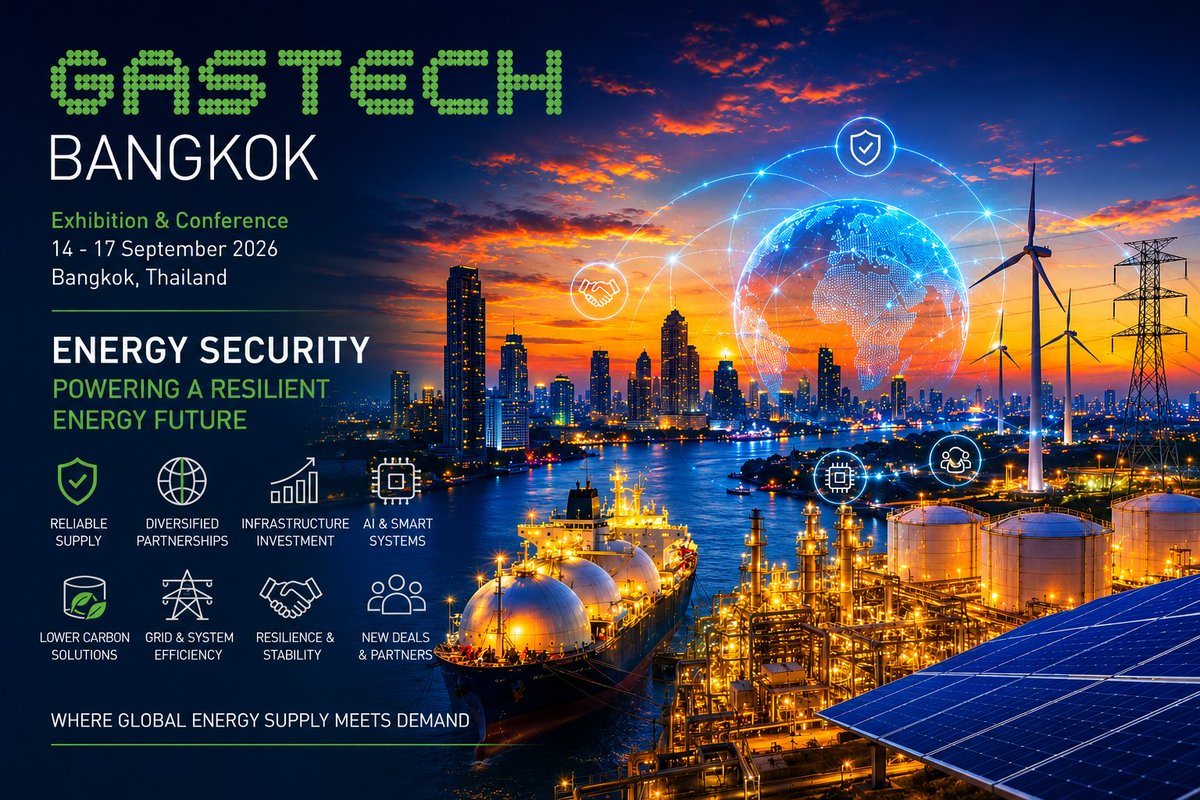
Energy security is no longer only about having enough supply. It is about resilience, diversification, affordability, and the ability to adapt as global demand accelerates. Across the world, governments and industry leaders are navigating a more complex energy landscape shaped by geopolitical pressure, supply volatility, infrastructure constraints, and rising power needs. The question is no longer simply how to deliver more energy, but how to deliver it in a way that supports stability, competitiveness, and future-ready growth. That is why Gastech 2026 in Bangkok comes at such an important moment. Asia is at the center of one of the world’s most consequential energy conversations. Demand is growing, infrastructure investment is expanding, and the need for secure, reliable, and lower-carbon energy systems is becoming more urgent. LNG and natural gas remain critical to that equation, especially as countries look to balance energy security, industrial growth, and long-term transition goals. But the conversation is also broadening. Energy security now depends on diversified supply, stronger partnerships, smarter infrastructure, AI-enabled forecasting, grid modernization, storage, system efficiency, and coordinated investment across the full energy value chain. This is not a temporary challenge for the industry. It is a new layer of complexity and opportunity. From LNG and natural gas to electrification, AI, hydrogen, climate technologies, and resilient infrastructure, the next phase of energy security will require both physical capacity and intelligent coordination. That is the conversation I’m looking forward to following as Gastech 2026 brings the global energy community to Bangkok. 🔗 Learn more: gastechevent.com/conferences… @GastechEvent #Gastech2026 Partner #EnergySecurity #EnergyTransition #AIforEnergy
8
20
33
1,189
Eric Kavanagh on #DMRadio retweeted
Exactly. TMZ is chasing clicks while the city is literally in crisis. They want to nitpick where a guy sleeps after his home was burned down instead of talking about why the neighborhood burned in the first place. We aren't distracted.
1
1
88
Eric Kavanagh on #DMRadio retweeted
🚨WOW!!! Tim Sparks has confirmed he purchased 80 PIZZA HUTS and brought back EVERYTHING that made them iconic! Pac-Man is back. Salad bar is back. Red cups are back. Booths for families. "I want to rebuild places for families to connect and put their phones down..."
5,608
25,070
168,300
4,614,955
Eric Kavanagh on #DMRadio retweeted
Replying to @WhiteCoatWaste
This is pure evil. To intentionally withhold mitigating medications and pain meds after torturing these poor animals??? This was supposed to have been stopped. Definitely going to be following this story. Let's hope Congress can actually do something for a change.
2
11
90
2,290
Eric Kavanagh on #DMRadio retweeted
Replying to @WhiteCoatWaste
I’m so sick of these a holes abusing these poor animals. It’s sickening we don’t have laws against this. Thanks for nothing Congress.
3
8
116
1,999
AI is deleting the rules! That's profound. #BoomiWorld @Boomi
1
104
Huge milestone for Boomi: the ONLY 12-time leader in the Gartner Magic Quadrant for iPaaS. 👏 That consistency doesn’t happen by accident. #BoomiWorld @boomi
2
68
Eric Kavanagh on #DMRadio retweeted
This is the greatest "Redneck" video I've ever seen! 👏😂
263
819
5,036
168,117
AI Pipelines - Self Healing for Critical Data youtube.com/shorts/9IX0dWwDa… via @YouTube Learn how "intent-aware" pipelines can heal themselves. it works especially well when they're also aware of their own Service-Level Agreements. Good stuff! @dhinchcliffe @YvesMulkers @7wData #cool
1
110
What are Agentic Data Pipelines and how do they work? Check out this 20-min deep dive on Dagen.ai: youtu.be/Hcdr89mzceY?si=kVS_… @dhinchcliffe @YvesMulkers @dikayodata @mobiusmedia @thebloorgroup @dmradioonline #Agentic #Data #Pipelines

1
2
177
Eric Kavanagh on #DMRadio retweeted
AI is putting real pressure on data teams - not just to scale, but to make data understandable. In this InsideAnalysis episode, presented by @eric_kavanagh, @JessicaTalisman explains why data graphs and semantics are becoming the foundation for enterprise AI 👇 What she covers: → Why data graphs ontologies succeed where MDM and data virtualization fall short → How semantic layers connect domain logic to enterprise data → What RDF & OWL unlock beyond traditional data catalogs → How to bring real context and meaning into your data ecosystem You’ll also hear from @d3fmacro, Co-Founder of Collate, who shows how semantics can be embedded into every data structure through automation and open standards. If you’re serious about AI, this is the layer most teams are missing! 🎥 Watch the full episode here: buff.ly/9zeAjcX #AI #DataEngineering #KnowledgeGraph #SemanticLayer #AIAgents #DataGovernance #RDF #EnterpriseAI
3
5
109
Eric Kavanagh on #DMRadio retweeted
Surfer Erin Brooks with a double air combo
102
306
3,796
131,892
Eric Kavanagh on #DMRadio retweeted
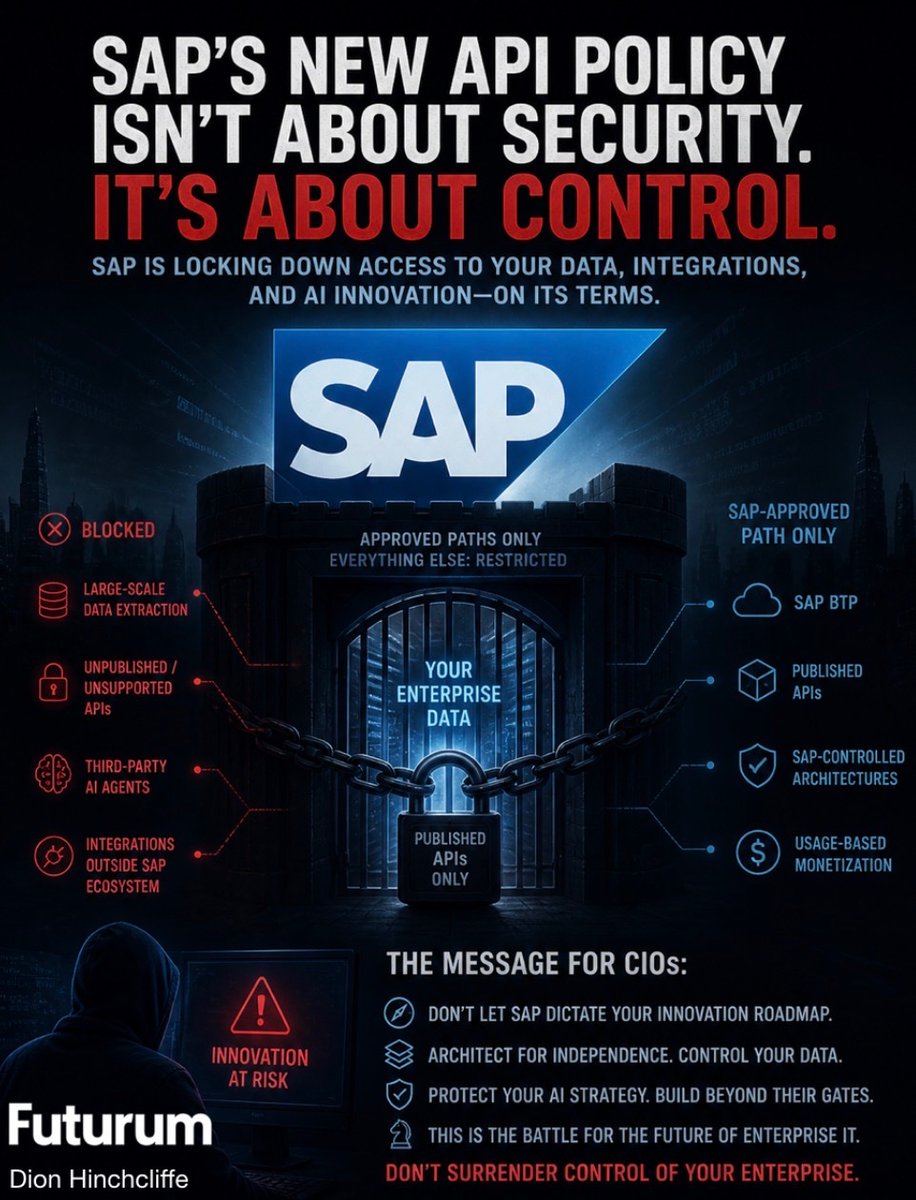
The New API Policy From @SAP Is Exactly What CIOs Feared. And It Changes the Power Dynamic The latest backlash from the @_DSAG isn’t noise. It’s a clear signal. And CIOs should take it very seriously. What just happened: SAP has just introduced a new API policy that fundamentally redraws the boundary between what customers can do and what SAP allows them to do. At a high level, the policy: * Restricts usage to “published” APIs only, or those listed in official hubs or documentation  * Prohibits or tightly controls: * Large-scale data extraction * Use of undocumented interfaces * Integration with third-party AI agents outside SAP-approved architectures  * Requires that innovation happens within SAP-endorsed pathways and architectures  SAP’s justification is predictable: Security, stability, and performance. DSAG’s response is blunt: * Lack of contractual clarity * Lack of transparency on which APIs are actually allowed * Risk to existing integrations and partner ecosystems * Potential innovation slowdown, especially in AI  And here’s the real kicker: The policy introduces ambiguity around what is even permitted, and ambiguity is poison for enterprise IT. ⸻ Let’s be honest: This isn’t about APIs and is a long-standing issues with CIOs trying to integrate their IT estate with SAP. And now use AI with it. Unfortunately, it is much more about control of the enterprise data plane in the age of AI. APIs are just the enforcement mechanism. SAP is doing three things simultaneously: 1. Reasserting platform control For years, SAP customers have quietly used: * Undocumented APIs * Direct database access patterns * Custom extraction pipelines Why? Because SAP integrations have historically been… let’s say, “non-trivial.” Now SAP is drawing a hard line: If it’s not explicitly sanctioned, it’s not supported. That’s not modernization. That’s re-centralization of control. ⸻ 2. Forcing the “clean core” narrative, whether you’re ready or not This policy is the enforcement arm of SAP’s long-running strategy: * Clean core * S/4 migration * BTP as the extension layer * SAP-controlled integration surfaces In other words: You don’t extend SAP anymore. You extend through SAP. That’s a subtle but massive shift in architecture authority. ⸻ 3. Locking down AI access to SAP data This is the most consequential piece, and maybe the least talked about. The policy explicitly restricts API usage for: * Autonomous agents * Generative AI systems * Multi-step AI workflows Unless they run inside SAP’s approved ecosystem  This is huge, to say the least. So let’s translate that: SAP is trying to control which AI systems can touch your core enterprise data. And that’s a direct collision with reality. Because right now: * Enterprises are mostly building AI outside SAP * The best models are outside SAP * Innovation is happening outside SAP Even DSAG data shows most enterprises are using non-SAP AI tools. So this policy isn’t aligned with how CIOs are actually building. ⸻ Why SAP is really doing this Let’s drop the PR language. SAP is responding to three existential pressures: 1. AI is disintermediating ERP If AI agents can: * Read SAP data * Execute workflows * Automate decisions Then SAP becomes a system of record, not a system of control. That’s a dangerous place to be for a vendor like SAP. ⸻ 2. Data gravity is shifting away from ERP With modern architectures: * Data lakes * Data clouds * External AI pipelines SAP no longer owns the enterprise data gravity center. This policy is an attempt to pull it back in. ⸻ 3. Monetization pressure APIs are becoming the new licensing surface. Expect: * Usage-based pricing * API throttling models * “Fair use” definitions that evolve over time  In short: This is as much about revenue control as it is about technical governance. ⸻ The uncomfortable truth for CIOs SAP isn’t unique here. Most major platform vendors are moving in this direction: * Control access * Meter usage * Gate innovation But SAP is doing it in a way that hits a nerve because: * It sits at the core of the enterprise * It’s historically been hard to integrate * CIOs already feel trapped in long-term dependencies So when SAP tightens the screws, it feels existential. ⸻ What CIOs should do next (this is the real part) You cannot ignore this. But you also shouldn’t overreact. 1. Inventory your “shadow APIs” immediately You likely have: * Undocumented integrations * Direct table access * Partner solutions using non-published endpoints These are now risk assets. Know them. Map them. Prioritize them. ⸻ 2. Architect for controlled decoupling Do not double down on SAP-native everything. Instead: * Introduce data abstraction layers * Build event-driven integration models * Separate operational systems from AI orchestration layers Goal: SAP should be a system of record — not your system of innovation. ⸻ 3. Protect your AI strategy at all costs This is the big one. Do NOT let SAP dictate your AI roadmap. Instead: * Build AI pipelines that can operate independently of SAP constraints * Use intermediate data layers (lakehouse, streaming, etc.) * Ensure your AI agents can function even if SAP access tightens further Because it will. ⸻ 4. Renegotiate governance, not just contracts This isn’t just a legal issue. It’s architectural governance. Push SAP on: * API transparency openness * Long-term support guarantees * Transition timelines * Pricing clarity If it’s not written down, it doesn’t exist. ⸻ 5. Start scenario planning for partial exit strategies Not “rip and replace.” But: * Modular replacement of capabilities * Parallel systems for innovation * Reduced dependency on SAP for new workloads Because the real risk isn’t this policy. It’s what comes next. ⸻ Final take This is one of the clearest signals yet: The enterprise software battle is shifting from Apple… to control of data and AI access. SAP just made its move. It’s asserting that: * Your data * Your integrations * Your AI workflows …should run through its architecture. CIOs now have a choice: * Accept that model * Or architect around it But doing nothing? That’s the one option that guarantees lock-in. And this time, it won’t just be expensive. It will define your ability to compete at all.
1
1
7
710
Eric Kavanagh on #DMRadio retweeted
Data is the foundation, without it, even the most powerful AI is just an expensive guess.
1
2
81