
1,921 Photos and videos


Jonny retweeted

Absolutely retarded.
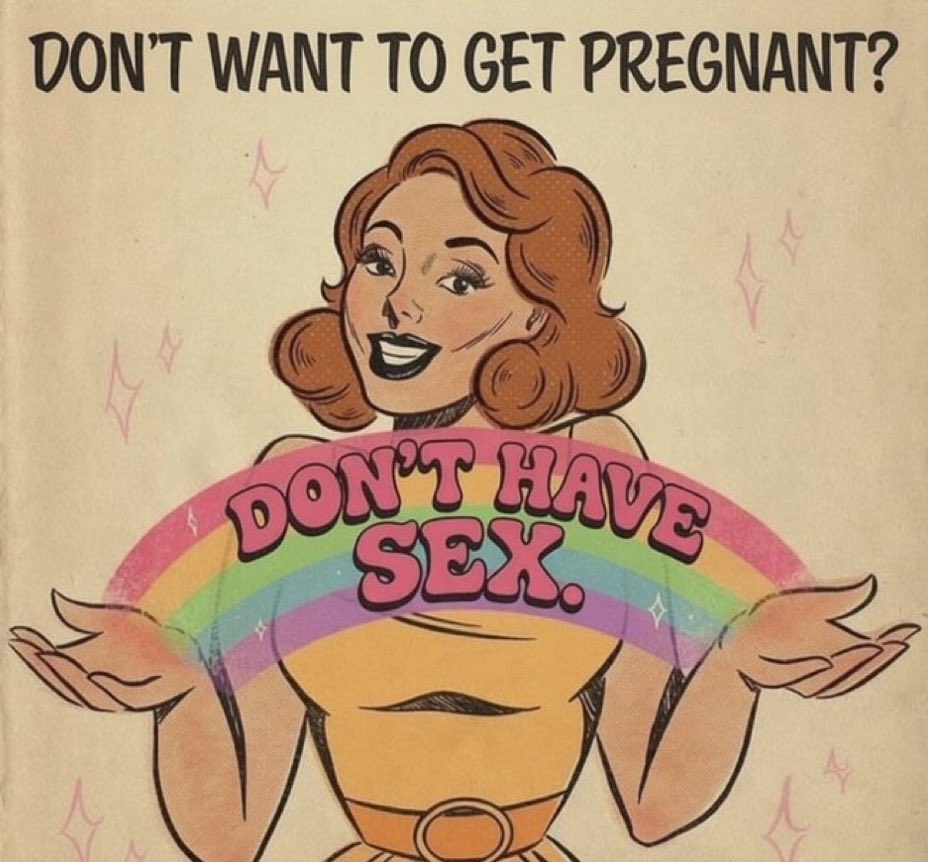
"Consent to sex is consent to pregnancy" is one of those slogans people repeat because it sounds profound until you think about it for more than six seconds.
Consent to driving isn't consent to dying in a car crash.
Consent to eating isn't consent to food poisoning.
Consent to leaving your house isn't consent to being assaulted.
Acknowledging a risk exists is not the same thing as agreeing to every possible consequence without recourse.
And calling pregnancy an "inconvenience" is a cute bit of rhetoric considering it involves major physiological changes, medical risks, permanent bodily effects, pain, disability, and occasionally death.
It's remarkable how quickly some people go from "protect innocent life" to "women lose bodily autonomy the moment sperm shows up" without noticing the contradiction.
It truly is a shame you weren't aborted
Jun 8

Le consentement à un rapport sexuel est un consentement à une grossesse.
Vous n’avez pas le droit de tuer l’être humain innocent que vous avez créé simplement parce que c’est « gênant ».
1,057
461
4,334
283,382



Jonny retweeted

May 9
Congratulations on working 40 hours! You are now free to dissociate for 2 days
29
795
13,480
428,430
Jonny retweeted

Apr 10
😅

43
186
7,269
456,377
Jonny retweeted

Apr 8
Not so. But let's use a different argument
1. An omnipotent god can actualise any possible world
2. An intentional agent intentionally actualises a specific world from all PWs.
3. If a PW is intentionally selected, every action within it - known in advance given omniscience...
1
1
3
132
Jonny retweeted

No, we don't.
If I have foreknowledge, then the future is predestined. But I didn't necessarily make it happen.
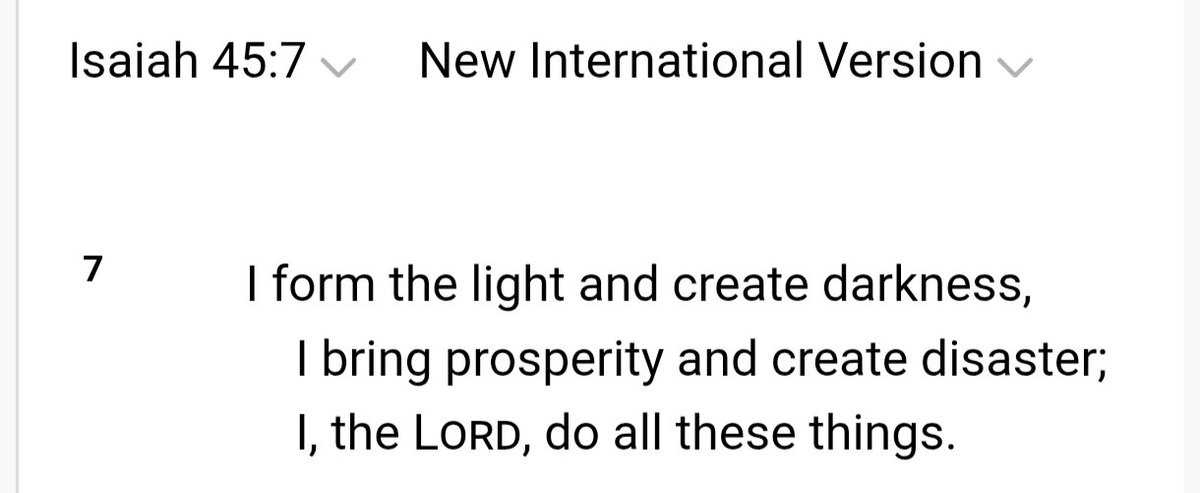
But God supposedly set the initial conditions. Foreknowledge plus setting initial conditions equals responsibility. No escape.
2
1
5
283
Jonny retweeted

Apr 1
bio says "proud husband, father of 3, god loving christian ✝️"
and it's the worst person you've ever encountered on here
184
2,316
24,032
254,218


Jonny retweeted

Mar 25
The story of the fall in the garden of eden is an incredibly stupid story.
It’s like a father who puts their child in a room with a venomous snake, then tells the child not to touch or go near the snake, knowing fully well that the child has absolutely no understanding of the consequences of touching the snake and then seriously punishing the child and all the child’s descendants that have absolutely nothing to do with the initial event, for being bitten by the snake.
And then calling the father all loving and good.
No story ever written is more stupid.
Mar 24

Start a problematic discourse:
389
747
5,739
211,357
Jonny retweeted

Mar 25
We have no idea how the majority of the disciples died. Most of the martyrdom tales come from fantastical apocryphal narratives written a century or more later & nothing even in those stories indicates a simple “it didn’t happen” would have saved them.
Mar 25

The disciples of Jesus who were in a position to know whether Jesus had risen from the dead or not, died excruciating deaths when they could have saved themselves by simply saying, "Look, it never happened."
44
34
459
26,309
Jonny retweeted
Mar 24
I bookmarked this to respond later …
Like atheists, Agnostics do not believe in God either , which is why Agnosticism and atheism aren’t mutually exclusive because they’re answering different questions. And it’s very important to know these things if you are against atheism.
Atheism addresses belief….“Do you believe a god exists?”, while agnosticism addresses knowledge…“Do you claim to know whether a god exists?”
You can consistently say “I don’t believe” and at the same time “I don’t know,” and that position …”agnostic atheism”… is actually where most atheists fall. There’s no contradiction here because belief and knowledge operate at different levels… belief is about what you accept as true, while knowledge implies a stronger claim of justified certainty. You don’t need certainty to withhold belief,,,in fact, we do this all the time in everyday reasoning.
Once you see that distinction clearly, atheism stops looking like a bold claim and starts looking like the default rational stance. When someone aserts that a god exists, they’re making a positive claim about reality, and the reasonable response is to ask for evidence before accepting it. If that evidence isn’t provided, withholding belief isn’t dogmatic or stupid , it’s exactly what we do with any unsupported claim.
You don’t belive something first and then wait for evidence…you wait for evidence and then form belief. Atheism, in this sense, is just the consistent application of that principle.
By contrast, theism(which religious people hold) carries a much heavier burden because it doesn’t just posit that something exists, it usually makes specific claims… that a god exists, that this god has intentions, communicates what it wants from us, intervenes, inspires books , reveal itself to people in caves , had a son etc .
Each added detail increases the burden of proof and implausibility of theism and yet these claims typically rely on tradition, revelation, or “personal experience” rather than independently verifiable evidence.
Deism, on the other hand, makes a more minimal claim…a non-intervening creator…which reduces its burden compared to theism, but it still asserts the existence of an entity without direct evidence, so it remains speculative.
when you line it all up, agnostic atheism comes out as the most epistemically grounded position…it avoids overreaching claims, aligns with how we evaluate evidence everywhere else, and simply withholds belief until there’s sufficient justification. It’s not claiming certainty…it’s just refusing to pretend certainty where there isn’t any…🙂
Mar 24

Agnosticism is a more honest stance in my opinion
18
42
174
11,683
Who did I "put down" by saying it doesn't merit respect to take Ozempic?
x.com/BikeMan/status/2036346…
50
Jonny retweeted

Mar 21
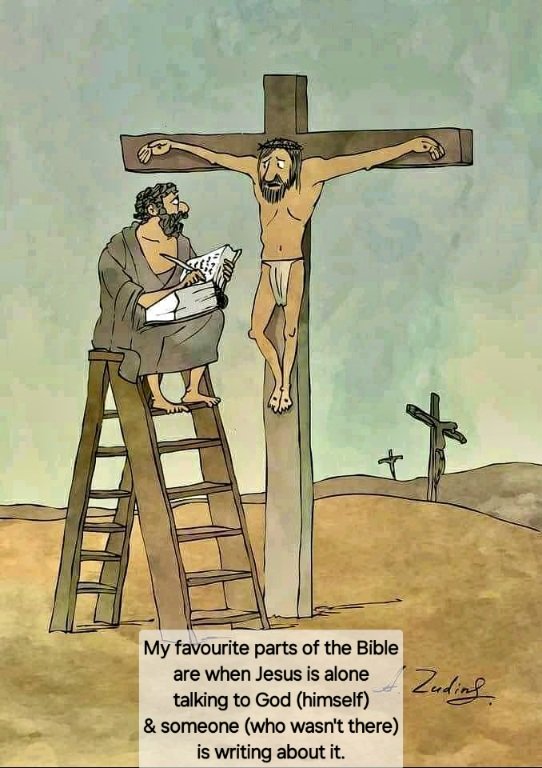
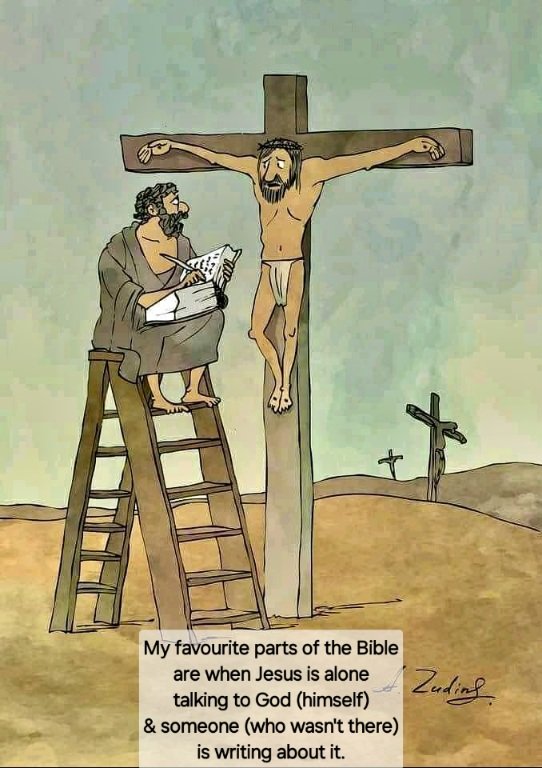
so jesus was alone talking to God, then somebody who wasn’t there wrote about it.
185
223
1,783
155,285
Jonny retweeted

Mar 21
Einstein never said this. It was written by an author, Rita Mae Brown in 1983. It doesn’t even make sense. Edison tried to make a light bulb and failed thousands of times doing it over and over. He said, “I have not failed, I have found 10,000 ways that won’t work.”
2
1
63
16,547

Jonny retweeted

I’m on r/men again, they’ve been asked “if you want kids, why wouldn’t you consider adopting or fostering?” And some of them replied “I want to continue my bloodline/legacy/last name.” Like… what legacy?? Jeff Smith????
1,095
1,816
43,778
1,430,831
Jonny retweeted

Another poor Christian who thinks free will is compatible with their faith...🤣
Basic logic dictates that if one's choice is irrefutably, unambiguously known in advance by ANY omniscient agent, then one CANNOT exercise one's choice contrary to the choice that is already known.

9
5
42
1,080
Jonny retweeted

Feb 19
If you take that as removing what he said about rich people, then guess what? "All things" applies to saving unrepentant blasphemers, atheists, rapists, murderers, war criminals, deceivers, Satan, you name it! Nothing can possibly be disqualifying from salvation by that logic.
8
1
9
3,036
You: [claim NHS funding pledge didn't happen]
Me: "Yes it did, here's the evidence it exceeded it"
You: [moves on to something different to the original pledge]
Impressive attempt at diversion, but you're going to have to take the L on the first take 👍
x.com/anonoccu1/status/20229…
1
1
131