
1,343 Photos and videos











New album from Wolves of Agra - Installment One (EP, 2022 Release) youtube.com/playlist?list=PL… via @YouTube #heavymetal #music #wolvesofagra
1
Ed Vayn retweeted

May 14
Lesson 1: Speak the customer's language, not your product's.
"You knock, the door opens — people want to talk. Your problem won't be opening the door. It will be: can you speak the language?"
If you didn't come from the industry, take the time to learn it.
1
1
142
Ed Vayn retweeted

I built a content machine.
It turned me into a one-person media company, has driven tens of millions in pipeline for @tenex_labs, and is allergic to AI-slop.
It has also turned all of my employees into content creators.
I may opensource the whole thing, but for now, I'm going to share how I built it & how it works.
Feel free to copy & paste the steps to Claude/Codex if you want to build your own content machine.
Step 1: Map out the process
In order to make any of your work AI-native, you need to understand the way in which it's been done historically. This is why business context & domain expertise REALLY matters, even in a post-AI world.
Content has been my bread & butter for the last decade, so I started by pulling out an 8.5x11 sheet of printer paper and drawing the traditional process.
1) Look for inspiration
2) Pick a 10x content idea
3) Research the idea
4) Brain dump all of my thoughts about the idea
5) Decide the post format I want to create
6) Create a draft of the post
7) Edit the post
8) Create derivative versions of the post
9) Go live
10) Track performance
Step 2: Where am I needed vs. not needed?
I am needed for the first & final mile:
First mile: picking the idea/direction & providing all of the necessary context
Final mile: going through the final draft with a fine tooth comb & giving final sign-off.
AI can handle the rest:
Looking for inspiration, researching the idea, pulling my thoughts out, writing the post, doing a first edit, creating derivative content, and tracking performance.
Step 3: Build the Content Machine
The machine is one pipeline, run end-to-end or step-by-step. It is a directory of skills that mimic the steps in the content process that I've delegated.
1) The Oracle [AI]
Mines my Slack, Notion, call transcripts and Gmail for spikes, moments I naturally said something worth expanding, while the Internet Reader curates an external feed of X accounts & websites I've selected.
Qualifying ideas (≥6/10) are written to The Vault (a notion database of content ideas).
2) Select the idea from The Vault [Human]
3) The Researcher [AI]
Before any interview, build a sourced research-report.md: TL;DR, key facts with links, current developments, what's already been said, contrarian angles, and open questions for the interview. Claims are adversarially checked; fact is separated from opinion.
4) Interview Panel [AI Human]
Six world-class interviewers (Joe Rogan, Howard Stern, Michael Barbaro, etc) ask 12–15 questions, one at a time, each pushing a different dimension...and never satisfied with vague answers. Won't advance without 2–3 specific stories, real numbers, and emotional specificity.
5) Production [AI]
The interview becomes a raw .md file: transcript, key stories, core insights, quotable moments, emotional anchor, surprising reveals, and the "so what." This raw file is sacred: my exact words, never paraphrased away.
6) Refinement [AI Human]
I tell the machine what content type I want to create. It reads my custom style guide past feedback lessons content-type spec, then drafts in my voice...pulling real stories and quotes from the raw file. The #1 rule: write like you're texting a friend. Supports long posts, LinkedIn, X threads, and more.
7) Writer's Council [AI]
Six expert reviewers (Shaan Puri, Morgan Housel, David Perell, etc) score the draft through their own lens, splitting fixes into editorial (the machine can rewrite) and information gaps (only the creator can answer...these route back to the interview panel).
8) Revision Loop [AI]
Iterate until council scores 9/10.
9) Repurposing Engine [AI]
One anchor → 10 natively-formatted derivatives, each re-hooked for its platform and each held to the same full Council → revision bar of 9/10. This is how two people produce like a hundred.
10) Final revision [Human]
11) Learning Loop [AI]
After approval, the machine compares first draft vs. final, extracts confirmed lessons, and saves them to that creator's content-lessons.md. Every future first draft starts smarter. Lessons override the style guide when they conflict.
Feel free to steal the machine & ask me any questions about how it works!
37
39
817
196,240
Ed Vayn retweeted

Jun 2
Most people quit before the proof becomes visible. They mistake delay for failure because they cannot see what their discipline is already producing. The future usually arrives after the weak have already talked themselves out of reaching it.
4
3
58
1,885
Ed Vayn retweeted

Jun 2
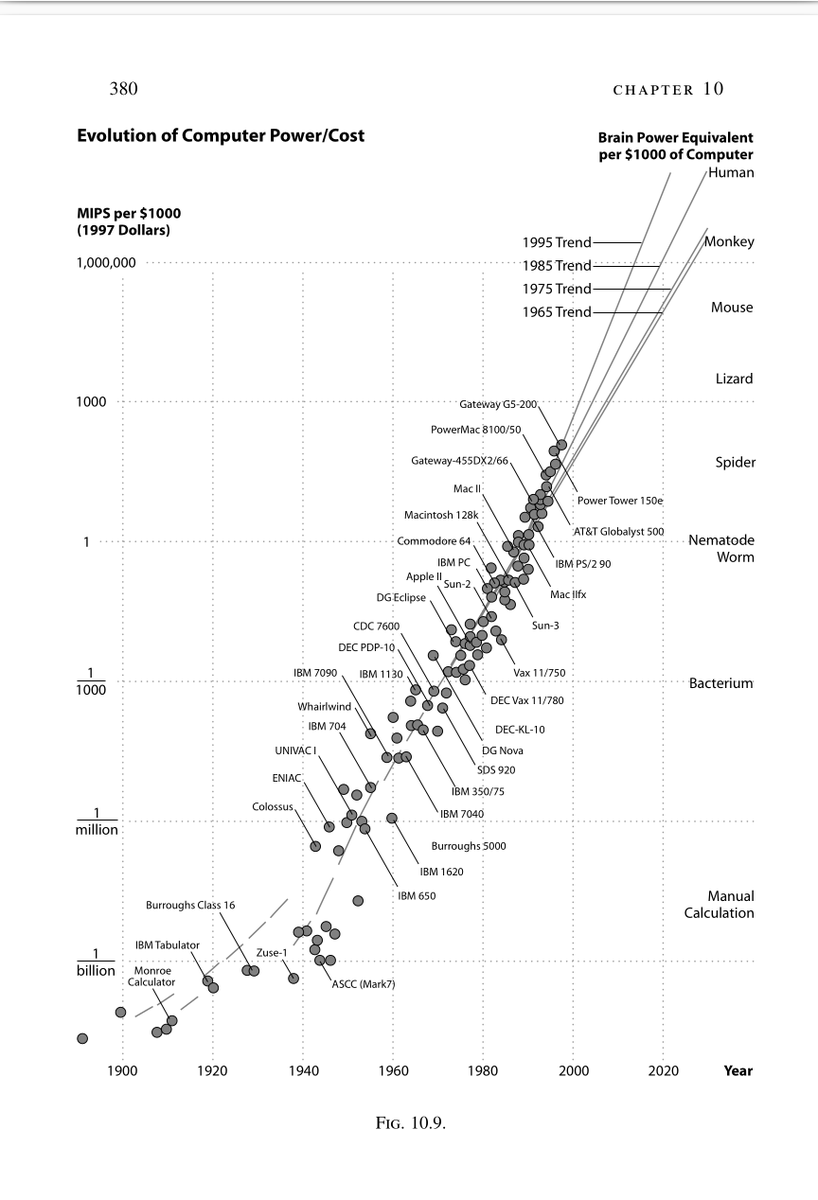
Another aspect of this that is often missed is that, while people use the term "exponential" such phenomena are often actually hyper-exponential. Stock market bubbles are like this in their late stages.
Didier Sornette in the last chapter of his book "Why Stock Markets Crash" points to hyper-exponential growth in many aspects of the human world such as real (CPI adjusted) world GDP, the computer power avilable per real dollar (pic refers) and many other metrics. Such hyper-exponential growth tends to accelerate to a "singularity point" at which something big happens. Looking at the graphs the singulatiry point is approximately in the next few years.
Not the log scale.
1
2
5
1,923
Ed Vayn retweeted

Jun 1
Interesting.
Jun 1

spent my 11-hour flight back from europe working on a very long report. started as a slack message but morphed into a several pages long doc. wifi was as shitty as it gets. after finally making it home i realized that the computer had forcefully restarted. opened slack: draft was gone :(
hail mary: claude pls save me, no clue how but pls try
it checked APFS snapshots, time machine, slack indexeddb, write-ahead logs, service worker / http caches, local storage, app logs, hibernation image... nothing. all gone
but then... it realized i have alfred installed. so it checked the clipboard snapshots alfred keeps in sqlite. sad news: alfred clipboard memory gets deleted after 24h. aggressive retention policy. however! when sqlite runs DELETE, nothing gets actually deleted. it only marks pages as reusable, but it doesn't override the physical bytes. so claude decided to do a raw-scan of the db, reverse eng alfred data format, figure out the portion containing the timestamp, stitched everything back together across overflow pages... and handed me the exact final version of my report, the last one i cmd C'd
all this, in a single shot
... day 200 of "what if you had an elite hacker you can ask anything to"
14
9
181
125,549
Ed Vayn retweeted
Jun 1
The thing is, it’s actually really good advice.
Jun 1

new grads often ask me what they should be doing so they don't fall behind in the ai space. there's a lot, but its honestly super manageable. become intimate with model internals. proof based linear algebra. non-convex optimization. this is stuff you could've done in undergrad. it definitely takes some time and work, but its doable. have taste, have opinions. train a small model, then train a big one. vLLM internals, tensor parallelism. hand roll kernels. cluster orchestration. do you have opinions on synthetic data? why don't you? SFT, PPO, you should know this. learn Triton. everyone is reproducing papers now so you need to be doing more. do you know the semi supply chain? where are the bottlenecks? hardware, man, hardware. your little gpu rig erector set in your basement isnt gonna cut it. build a cluster, a big one. pretrain a 800B model. now postrain it. serve it to millions of people. you should be able to beat deepseek on some benchmarks now. its a lot to take in but it all snowballs. this what job security looks like from now on. do you want to work in tech or not
49
68
1,328
501,879
Ed Vayn retweeted

Jun 1
Funny how the pendulum shifts
1. "GPT wrappers are worthless" → the value acrues to application layer
2. "AI will eliminate white collar jobs" → someone needs to manage all these AI agents and everyone is now saying white collar workers will rise due to AI
3. "Open source will never catch up" → Gemma and DeepSeek are good enough for 80% of tasks
4. "I only use Claude Code, Codex is mid" → Codex is becoming a super app. Coding, docs, browser, computer use, automations, all in one surface.
4. "You need to pick a model and go deep" → model loyalty is dead, the best founders swap weekly based on the task
5. "SaaS is dead" → This was mostly true but for some SaaS margins actually improve when agents pay for their own tokens and need their own seats
6. "AutoGPT is the future" → AutoGPT died. Then agents actually got good 2 years later with Hermes, OpenClaw, and managed agents. The idea was right. The timing was wrong.
7. "Prompt engineering is a career" → lasted about 18 months as a job title. Workflow engineering replaced it.
8. "Computer use is a gimmick" → "sent from computer use/ai agent will be the new sent from iphone
9. "AI design looks generic" → the generic look is a taste problem not a technology problem. The founders feeding their agents references from Japanese packaging, brutalist architecture, and 1960s print are getting beautiful output.
10. "Fine-tuning is the moat" → a well-structured Obsidian vault with good markdown files outperforms fine-tuning for most use cases and costs nothing.
11. "Benchmarks tell you which model to use" → benchmarks tell you which model won a test. I think we're all waking up to this lol.
12. "AI will consolidate into 2-3 winners" → AI is fragmenting into thousands of vertical applications built on commodity models. The consolidation is at the model layer. The explosion is at the application layer. Both are happening simultaneously.
13. "The hard part is building" → the hard part is choosing what to build. Building takes a weekend. Choosing the right thing to build takes taste, domain knowledge, and customer conversations. thats why i built ideabrowser.com to make it easier for you.
14. "The terminal is the future" → desktop apps just ate the terminal. Claude Code desktop, Codex app, both shipped GUI versions in the same month. The next 100 million agent users will never open a terminal (thank god).
I guarantee you I'm holding at least 2-3 beliefs right now that will look stupid by Christmas. I just don't know which ones. Neither do you. No one does. Build anyway.
Keep moving because this is the greatest time to be building.
I'm rooting for you.
166
159
1,336
108,631
Ed Vayn retweeted

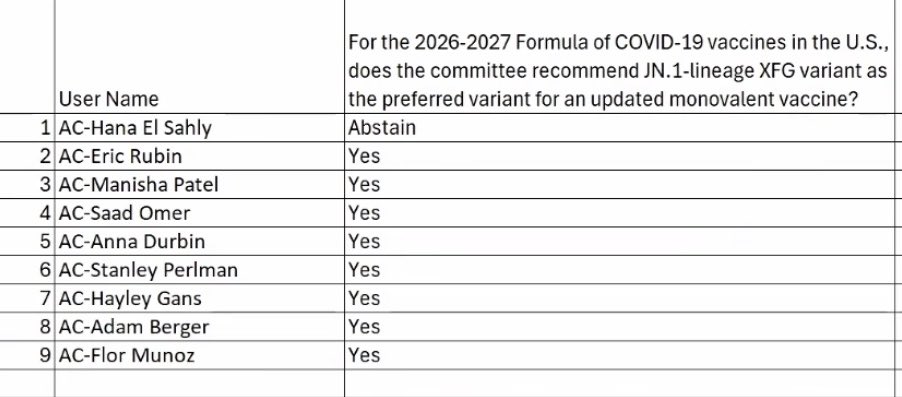
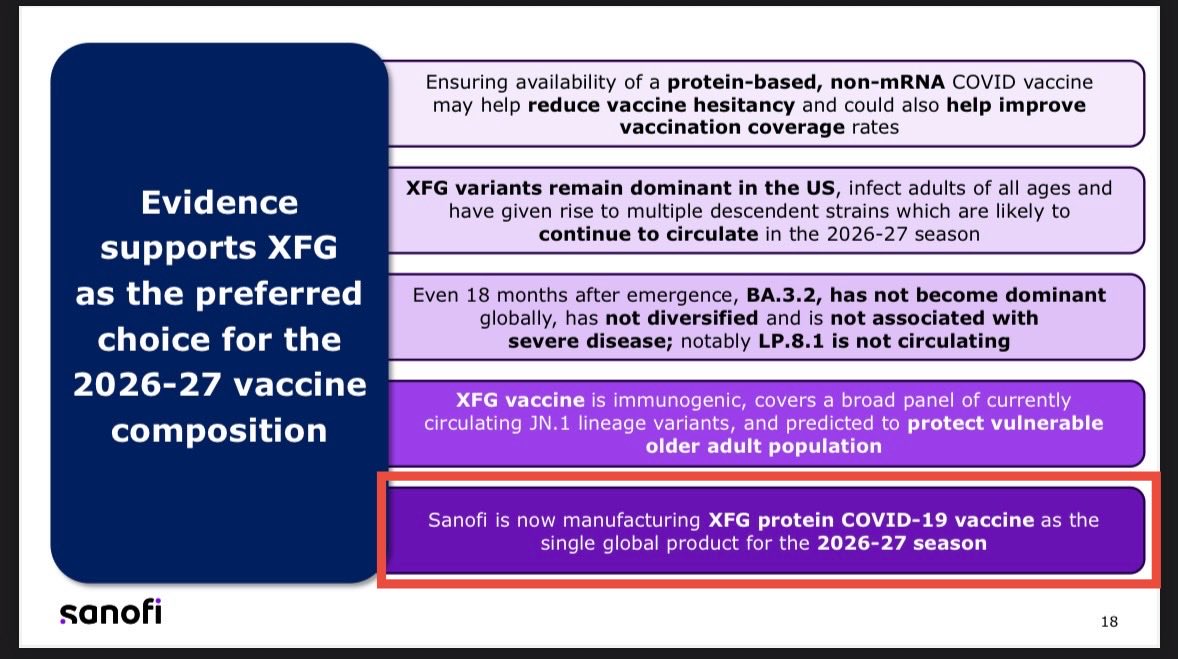
📢 💉FDA vaccine committee recommends for updated 2026-2027 vaccines to target the XFG variant.
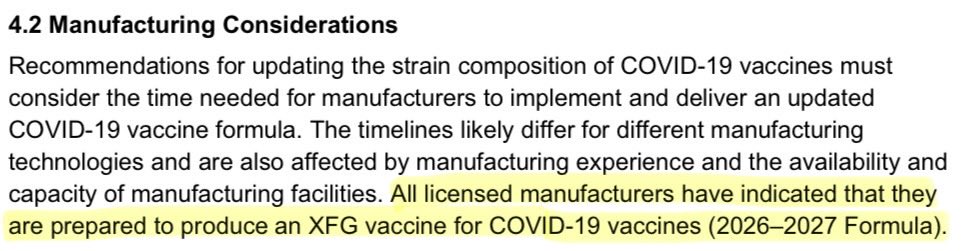
All three manufacturers have indicated preparedness to produce an XFG vaccine for fall release, and Sanofi has already started manufacturing of XFG Novavax/Nuvaxovid.
Link to today’s VRBPAC meting: youtube.com/live/3wU0NWzXvZY
The vote was 8 Yes, 0 No, and 1 Abstain for the question “For the 2026-2027 Formula of COVID-19 vaccines in the U.S., does the committee recommend JN.1-lineage XFG variant as the preferred variant for an updated monovalent vaccine?”
Meeting slide decks:
• Sanofi: fda.gov/media/192766/downloa…
• Moderna: fda.gov/media/192768/downloa…
• Pfizer: fda.gov/media/192765/downloa…
• CDC epidemiology and genomics: fda.gov/media/192772/downloa…
• CDC vaccine effectiveness: fda.gov/media/192771/downloa…
• WHO TAG-CO-VAC: fda.gov/media/192767/downloa…
• FDA strain selection: fda.gov/media/192769/downloa…
9
65
248
6,477
Ed Vayn retweeted

Cars are essentially robots on wheels… cars now, physical AI next?
$BB

To grasp why $BB QNX is interesting for car OEMs, consider this:
Mercedes E-Class has 5 interior cameras.
Each requires secure, real-time software.
Imagine a camera safety system. QNX acts as a sandbox, isolating and protecting each piece of software, ensuring no hacks while managing all inputs with precision.
QNX's importance in modern vehicles is often underestimated, but as cars become software-driven, its role grows:
Security: Creates a secure environment, a 'sandbox' where software operates safely.
Integrity: If compromised, the consequences could be catastrophic, even without considering self-driving tech.
I thought this use case was interesting, since I see people talking about the self-driving use case and why this is why BlackBerry so undervalued.
The self-driving part is just a story. But these cameras are actually already there. How much more software will normal cars have in the future? Hard to tell.

2
6
56
8,837
Ed Vayn retweeted

Here’s one of greatest personal finance tricks I know:
Stop caring about what other people think.
Focus on your own goals, career, and family.
Works wonders.
71
29
565
17,747
Ed Vayn retweeted

Apr 30
physically write down the little things that make you happy each day
1
1
4
115
Ed Vayn retweeted

Apr 30
Thoughts?
Just finished the biggest renovation I’ve ever done.
Custom shower door going in master shower.




22
3
35
3,732



Ed Vayn retweeted

Apr 30
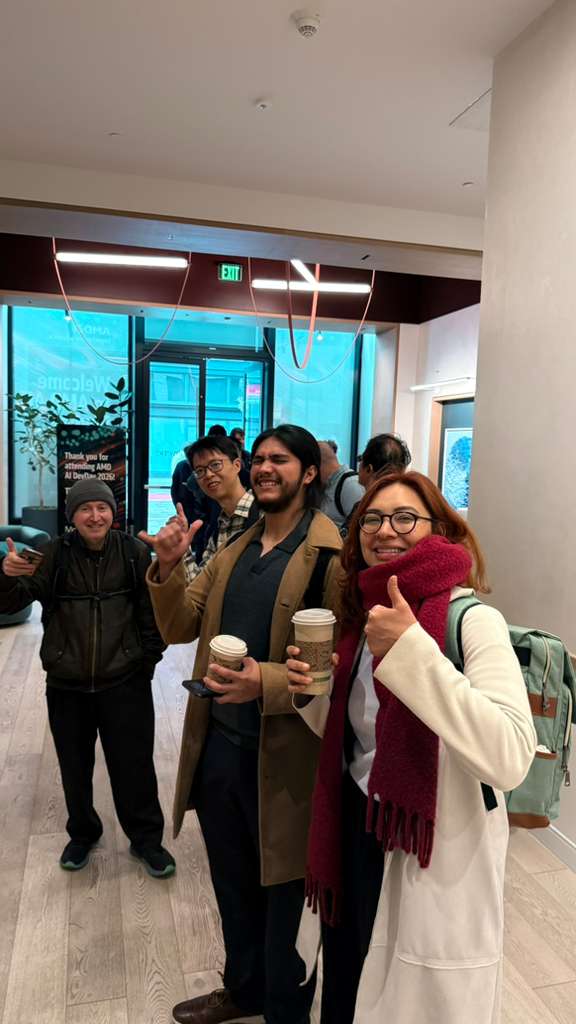
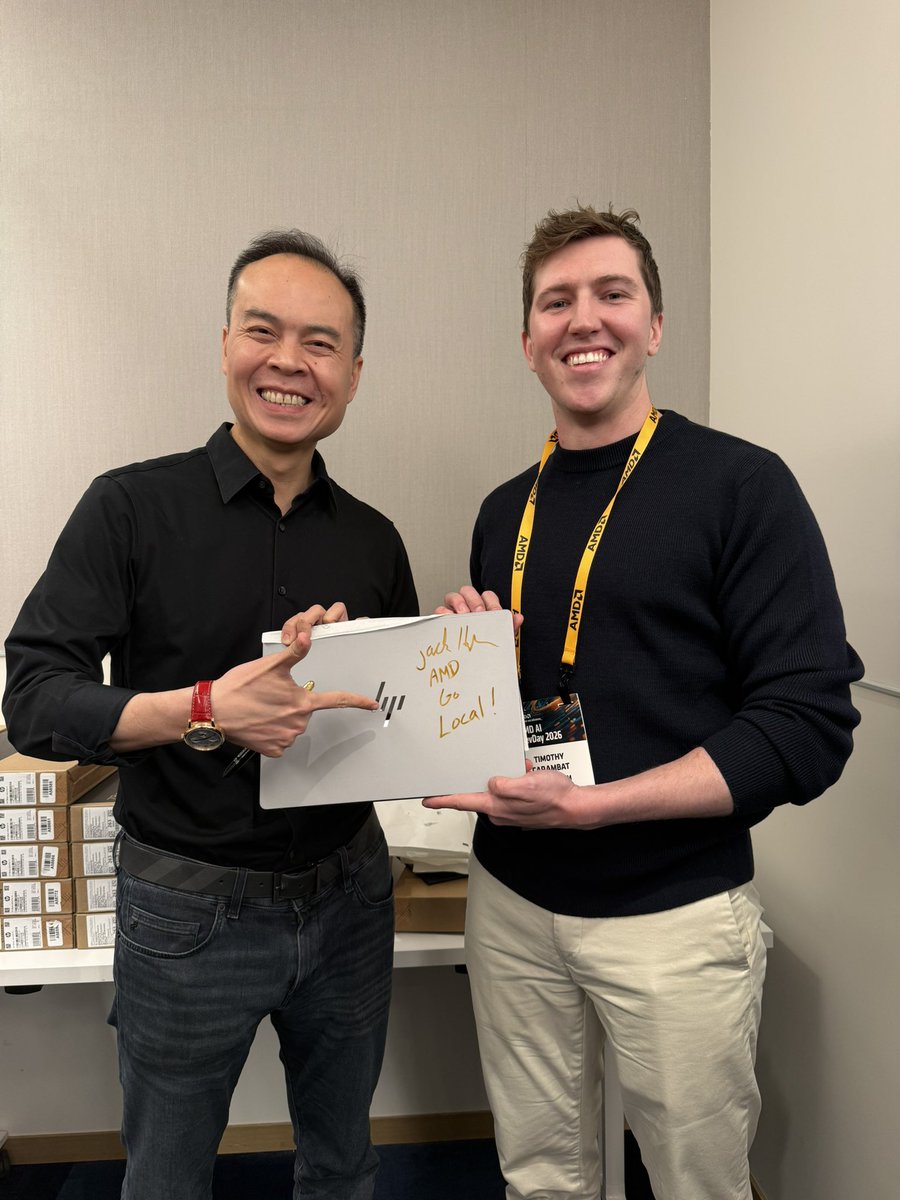
🚀 Inspired to be at @AMD AI Dev Day in San Francisco today where the AI community is converging to shape what’s next.
The energy is exceptional. Every keynote, demo, and conversation reinforces a deeper truth: AI has moved beyond advancing computing. It is now redefining human potential and possibility at global scale. At AMD, we’re proud to be at the center of this transformation, accelerating it with open, powerful, and accessible technology.
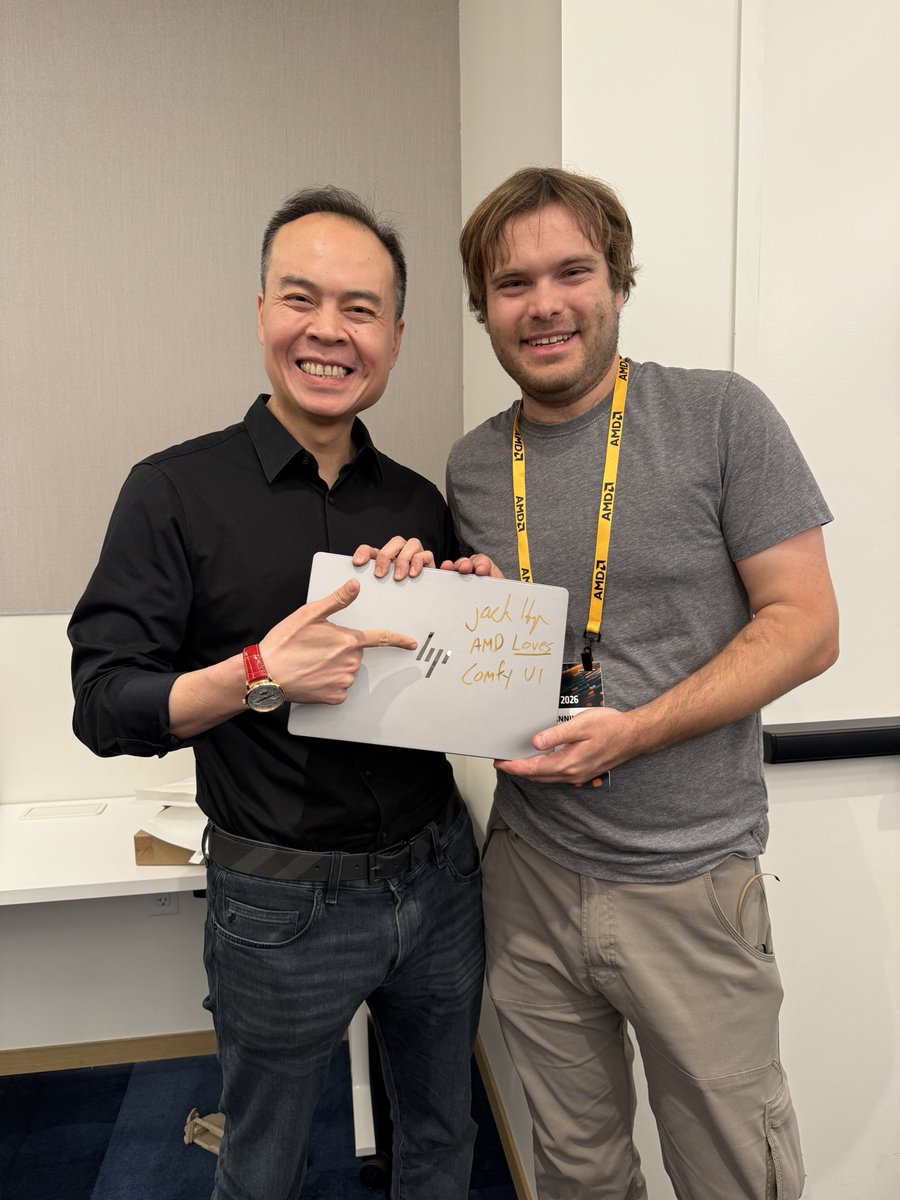
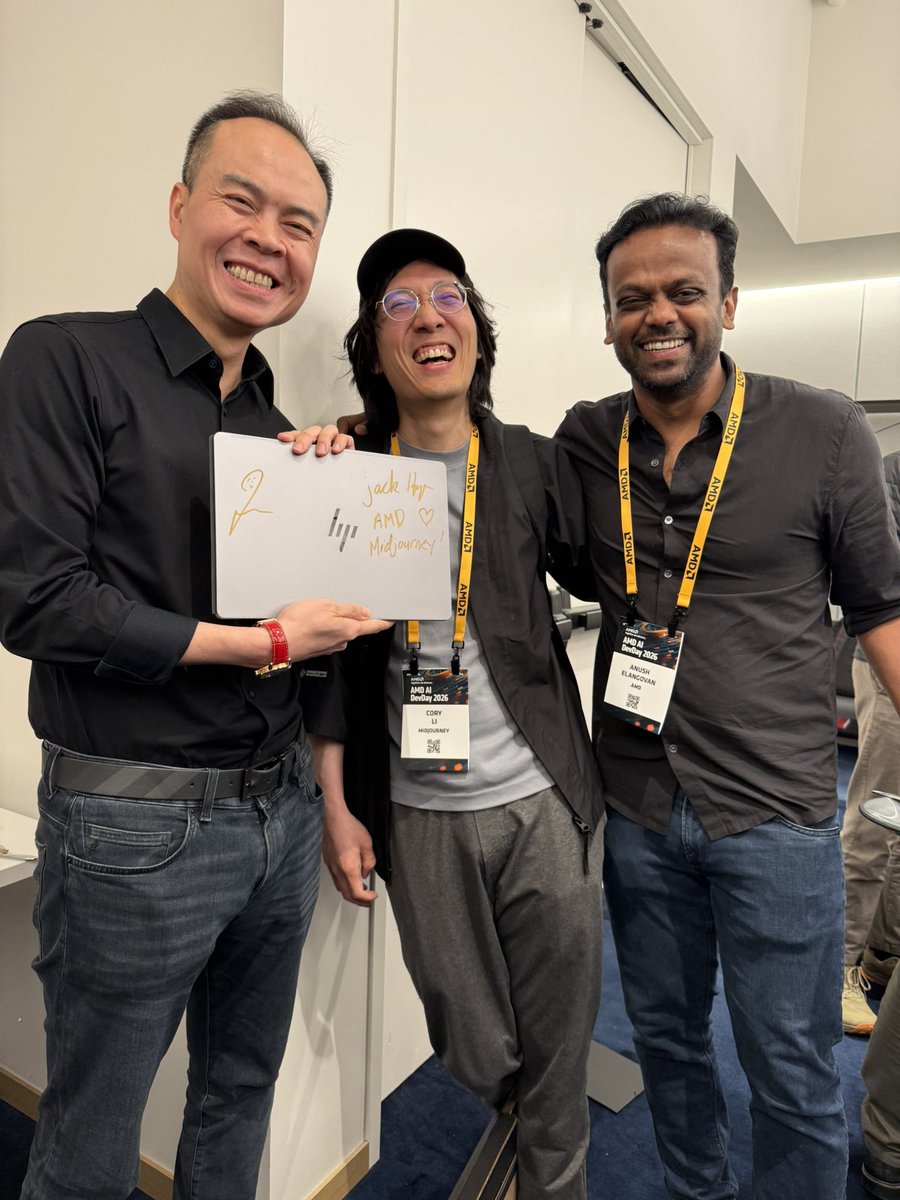
A personal highlight was spending time with visionary founders and CEOs including @ComfyUI, Midjourney, @AnythingLLM, @Kog__AI, Starcluster and many more. These builders are turning bold ideas into real-world impact, and it was an honor to put Ryzen AI Max powered @HP ZBook mobile workstations in their hands so they can move even faster.
This is leadership in the AI era: empowering creators, fueling ambition, and turning visionary ideas into scalable reality.
The future isn’t coming. It’s being built right here, right now. Excited to keep pushing the boundaries alongside this incredible community.
8
13
76
22,409
Ed Vayn retweeted

Apr 21
Right now, every developer with Claude and an API key is trying to build a massive, world-changing generative tool.
And 99% of them are becoming OBSOLETE in six months.
The actual gold mine in 2026? Using AI to build hyper-niche, painfully boring software for industries that Silicon Valley forgot - Micro SaaS!
Here is why the math works for solo developers today:
1. The Execution Gap is Gone Two years ago, launching a SaaS required a frontend dev, a backend engineer, and a DBA. Today, a single developer using Claude or Codex can orchestrate the entire modern stack in a week. You no longer need a team; you just need a problem.
2. Riches are in the "Boring" Niches Don't build a "general productivity app." Build a hyper-specific solution for a physical-world problem. Think about a dedicated venue booking platform specifically designed for local schools to reserve sports grounds. It sounds completely unsexy. It won't get you on the front page of Hacker News. But it solves a massive logistical headache (handling timezones, double-bookings, and admin access) for a specific group of buyers who are thrilled to pay a monthly subscription to make their pain go away.
3. You Compete on Empathy, Not Code When the cost of writing code drops to zero, your only moat is your understanding of the customer. Because the AI is handling the boilerplate and the repetitive syntax, you can actually spend 80% of your time acting like a business partner—talking to users, refining the product, and closing sales.
The formula has never been clearer: Find a boring problem in a traditional, messy industry.
Use AI to build the solution in weeks, not months. Charge $99/month to 1,000 businesses.
21
23
219
45,643

Mark Cuban just described the largest wealth transfer of the AI era.
Almost nobody understood what he said.
Cuban: “There are 33 million companies in this country. Aren’t going to have AI budgets. Aren’t going to have AI experts.”
Not tech startups.
The shoe store. The regional trucking outfit. The accounting firm with 12 employees.
The businesses that actually run the physical economy.
They know AI is coming. They have no idea what to do with it.
Cuban: “You’ve got the head of Microsoft saying software is dead because everything’s going to be customized to your unique utilization.”
Software is dead.
The SaaS era ran on one rule. Build a generic product. Force millions of companies to bend their workflows around it. Charge rent forever.
AI ends the contract.
The business stops bending to the software. The intelligence bends to the business.
But customized by whom.
The third-generation manufacturer cannot tell Claude from Gemini. The county hospital is staring at a reactor asking where the light switch is.
Cuban: “Who’s going to do it for them?”
That question is worth more than the frontier models themselves.
Hundreds of billions are being burned to build the foundation. The smartest engineers alive are locked in a bloodbath over who owns the base layer.
Let them fight.
Let them burn the capital. Let them drive the cost of raw intelligence toward zero.
Because the wealth does not collect where the brain is built.
It collects where the brain meets the business.
Every ambitious kid in college right now thinks survival means a seat at OpenAI or Anthropic.
Cuban is staring at the other 99 percent of the economy.
Learn the models. Then learn the messy, unglamorous reality of how a 50-person company actually operates.
Walk through the door. Understand their problems. Wire the intelligence directly into their revenue.
That is not a job title. That is an entire economic class being born.
You do not need to build the brain. You need to build the nervous system.
The biggest winners of the electricity era were not the engineers who built the generators. They were the ones who walked into dark factories and showed the owners where to plug in.
33 million companies are standing in the dark right now.
Silicon Valley is racing to build the god. The fortunes will belong to whoever teaches him a trade.
487
1,853
14,290
3,704,782
Ed Vayn retweeted

Apr 28
🚨 🚨 NOVAVAX DERAILED!!
📣 New podcast episode live!
I flew to Raleigh to get the scoop on Novavax (the protein-based Covid vaccine) from Himanshu Shah of Shah Capital, one of its largest shareholders. I wanted to understand exactly how & why it was sidelined in spite of early rallying and favorable safety profile.
As part of the full NVAX story, Shah’s is an important insider view, though more financially-focused than my usual medical/scientific discussions. There is certainly much more to the story, which I will cover in upcoming episodes on another date. Please drop any comments or questions and I’ll pass them on for you.
‼️CHAPTERS IN NEXT TWEET ‼️
🎧 Subscribe to The Dana Parish Podcast for more in-depth conversations at the intersection of public health, policy, and real-world decision making!
38
39
189
59,640

Most serving stacks run FLUX.2 as four separate stages with Python overhead between each one. We collapsed all four into a single fused execution graph using MLIR-based compilation.
On @AMD MI355X, that means a 3.8x speedup over torch.compile, 1024x1024 images in under 3.5 seconds, and a deployment container under 700MB. We ran the same pipeline on Blackwell, too. AMD delivers equivalent generation quality at a 5.5x lower cost.
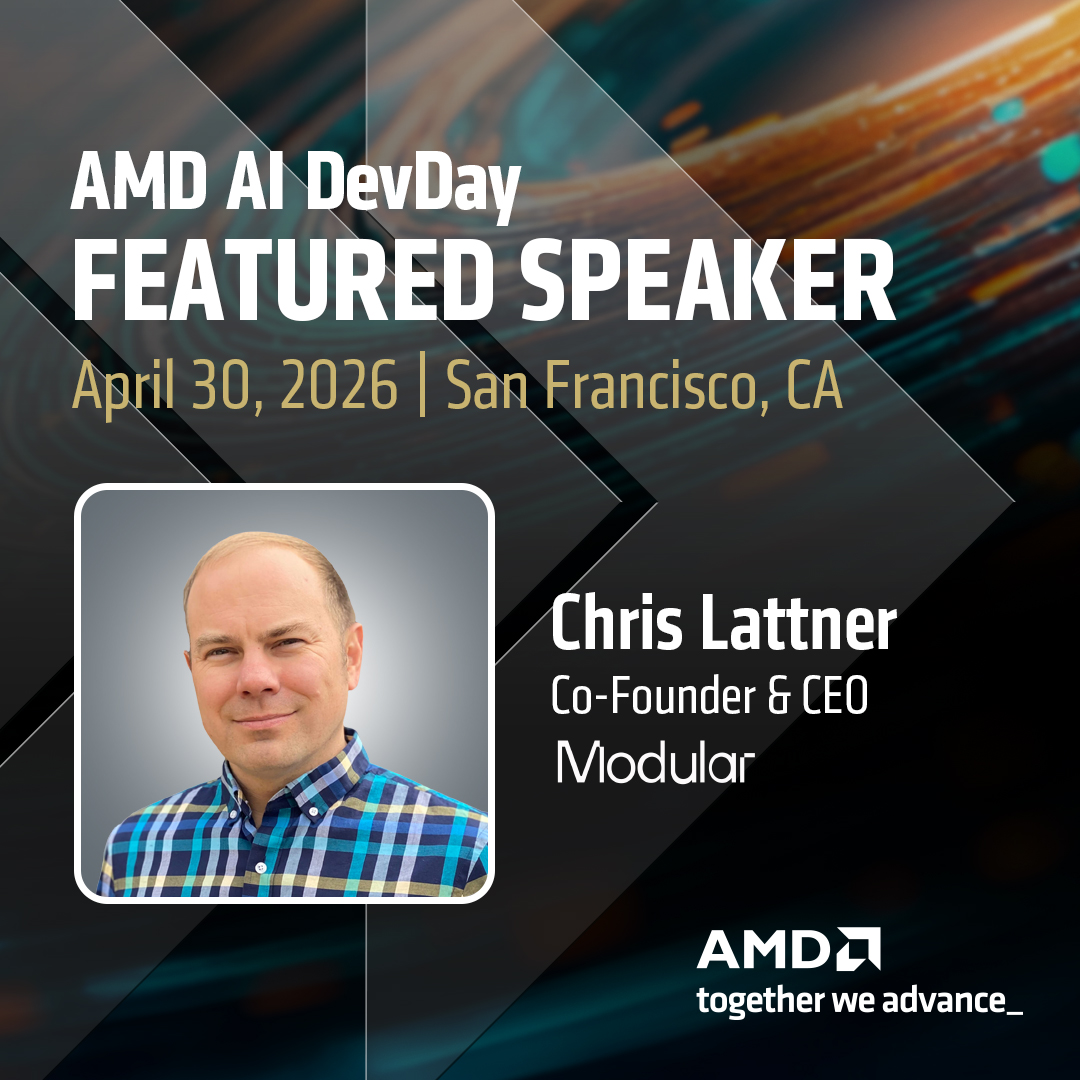
@clattner_llvm is presenting the full breakdown at AMD AI DevDay. Register: amd.com/en/corporate/events/…
2
13
52
6,228