
Joined February 2018
- Tweets 10,691
- Following 1,728
- Followers 773
- Likes 66,067
330 Photos and videos











F3Hacker retweeted

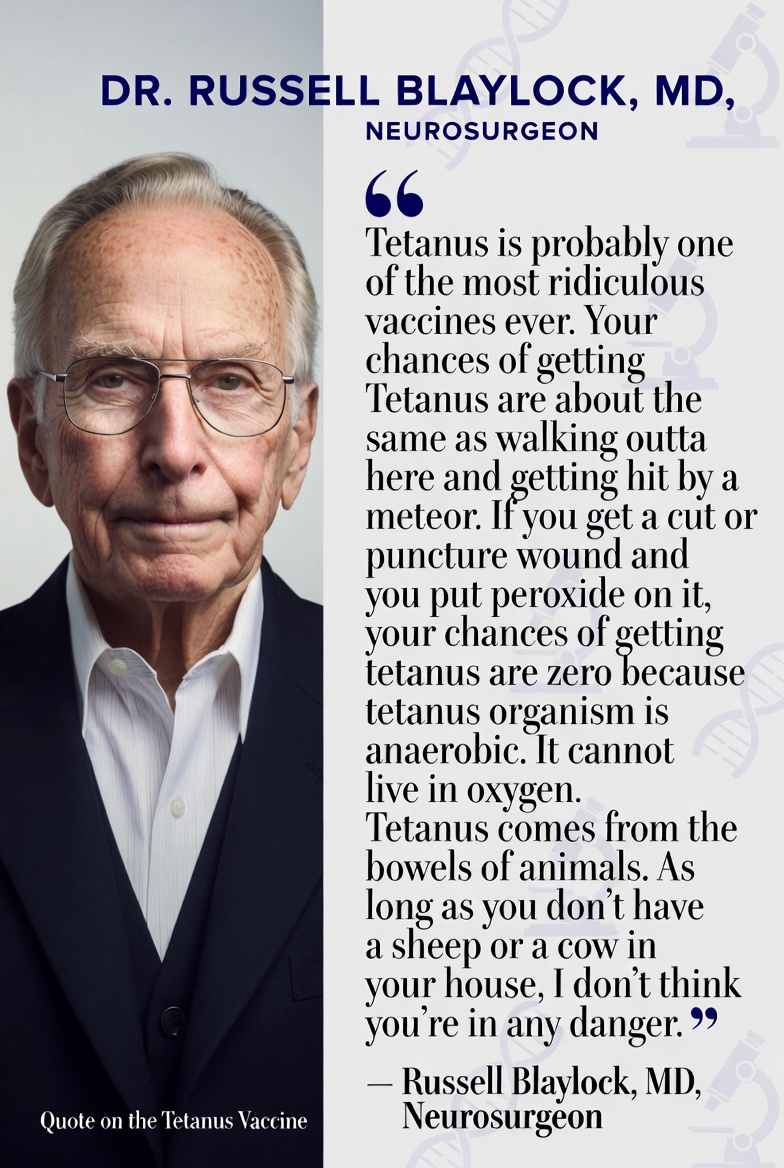
Dr. Russell Blaylock: "The tetanus vaccine is one of the MOST RIDICULOUS vaccines ever."
Just got a cut or puncture wound? The ER is about to BULLY you into a TOXIC shot you don’t need.
Here’s what they won’t tell you:
The shot they push is NOT a simple tetanus vaccine — it’s the full DTaP combo loaded with:
• Aluminum (up to 0.625 mg — a known neurotoxin)
• Formaldehyde
• 2-phenoxyethanol Triton X-100
• Milk protein (casein) & latex residues that can trigger anaphylaxis or CREATE new dairy/latex allergies
The tetanus toxoid inside has NEVER been properly safety-tested in a double-blind placebo-controlled trial. CDC admits it.
It’s grown on beef heart infusion with real risk of Mad Cow prion contamination.
Your actual chance of getting tetanus? 1 in 11 MILLION.
Spores live in manure, NOT rust. Clean the wound properly — oxygen kills them. 95% of the decline happened BEFORE any vaccine thanks to sanitation.
If you’re already exposed, the shot is useless — it takes 3-8 weeks for antibodies.
But high-dose Vitamin C (1–3g/day) cured 100% of cases in studies with ZERO deaths. Cheap. Safe. Ignored.
Why are we terrorized into this untested, poison-filled combo shot for a disease that’s basically extinct in clean countries?
Because fear sells.
Don’t fall for the rusty nail myth. Clean the wound. Monitor it. Refuse the jab.
Were you guilt-tripped into a “tetanus shot?” Were you ever told it was actually the full DTaP?
216
5,491
10,476
162,376
I imagine @thefarmbabe would
Jun 14

How many scientists out there would drink small amounts of glyphosate to prove that the large amounts that we are exposed to every single year from the foods we eat is completely harmless?
1
15
F3Hacker retweeted

The same company with a criminal record keeps getting billions while the public pays the price.
CDC Just Awarded Pfizer Another $1.24 Billion for Infant and Adult COVID-19 mRNA Shots” 💉
Even after years of injuries, excess deaths, and safety signals, the gravy train continues.
Full article here:
globalresearch.ca/cdc-pfizer…
How much more evidence do we need before this stops?

42
275
368
8,044
F3Hacker retweeted

Jun 14
Your large intestine is a polite, tidy, undersized thing, and that fact alone rules you out as a plant specialist.
The animals that make a living from plants are defined by what they keep at the back end. A horse has an enormous hindgut. A gorilla's colon and fermenting chamber fill most of its torso. A cow runs four stomachs and a microbial factory the size of a dustbin. All of it exists to do one slow, demanding job. Turn cellulose, the tough fibre of plants, into something the animal can absorb. It takes vast internal volume and many patient hours.
Now look at yours. The human colon is small and unassuming, a fraction of the proportional size of a true herbivore's. We have nowhere to run that great fermentation. Eat a large amount of plant fibre and your gut cannot wring a living from it the way a cow can. It mostly bulks up, ferments a little, makes gas, and moves on.
That missing fermentation chamber is the most damning piece of anatomy in the whole argument. You cannot be an animal built to live on plants while lacking the one organ that living on plants absolutely requires.
What you have instead is a short, efficient tube for absorbing rich, concentrated, already-broken-down food. Meat. Fat. The output of a kill, not the contents of a meadow.
24
270
1,136
19,221

Jun 13
🤣
Jun 12

Elon Musk has enough money now to fix every McDonald's ice cream machine, but he won't because he only thinks of himself.
16
F3Hacker retweeted

97 out of 100 Senators had their campaigns funded by AIPAC.
We knew there was a uniparty but I don’t think most of us knew what that actually entailed.
Now that we do, we need to take steps to prevent this foreign influence over the American government.

97 out of 100 Senators campaigns were funded by AIPAC.
That’s all I’m gonna say.
393
2,930
12,367
348,005
F3Hacker retweeted

Jun 11
There are no double-blind, placebo-based randomized controlled trials for the safety of childhood vaccines. They don't exist because the people responsible for them decided not to do them.
I know this because in 2017 @RobertKennedyJr and I sat down at the NIH with Francis Collins and Tony Fauci and asked them. We said, we can't find a single placebo-based safety trial for any vaccine on the childhood schedule. Are you doing them, or are we just not seeing them?
They told us they don't do those trials because they believe it is unethical to withhold what they consider a beneficial product from a control group. That is the logic. The faith that the product is so valuable that studying it rigorously would be unfair to the people in the trial not getting it. So they never study it.
Every vaccine given to every child in America rests on an assumption of safety and nothing more.
@MarcelloFoa
218
2,547
5,406
113,988
F3Hacker retweeted
59 years ago today, Israel hit the USS Liberty which killed 34 Americans and wounded 171.
The weird part to me is that they have wreckage from this on display in a museum.
If I accidentally attacked my greatest ally, I would be too embarrassed to display it for everyone to see.
Jun 8

Exactly 59 years ago today, Israel attacked the USS Liberty, killing 34 Americans and wounding 171.
Never Forget.

354
2,558
14,240
468,393
Jun 11
There's no possible way this could work out well.

ELON MUSK:
“We’re going to have universal high income.
We’ll basically just issue money to people."
"AI and robots are going to make so much stuff and provide so many services that they’ll run out of things to do for humans."
"Money will stop being relevant at some point in the future."
"AI won’t use human currency. It will care about power and mass: wattage and tonnage.”
ME:
“So just as you’re becoming a multi-trillionaire, money starts to have less value?”
ELON:
“Yeah, pretty much.”
17
Jun 11
To those who are asking 'How will FL counties *ever* make up for the upcoming nix on property taxes???'
This is how.
Jun 11

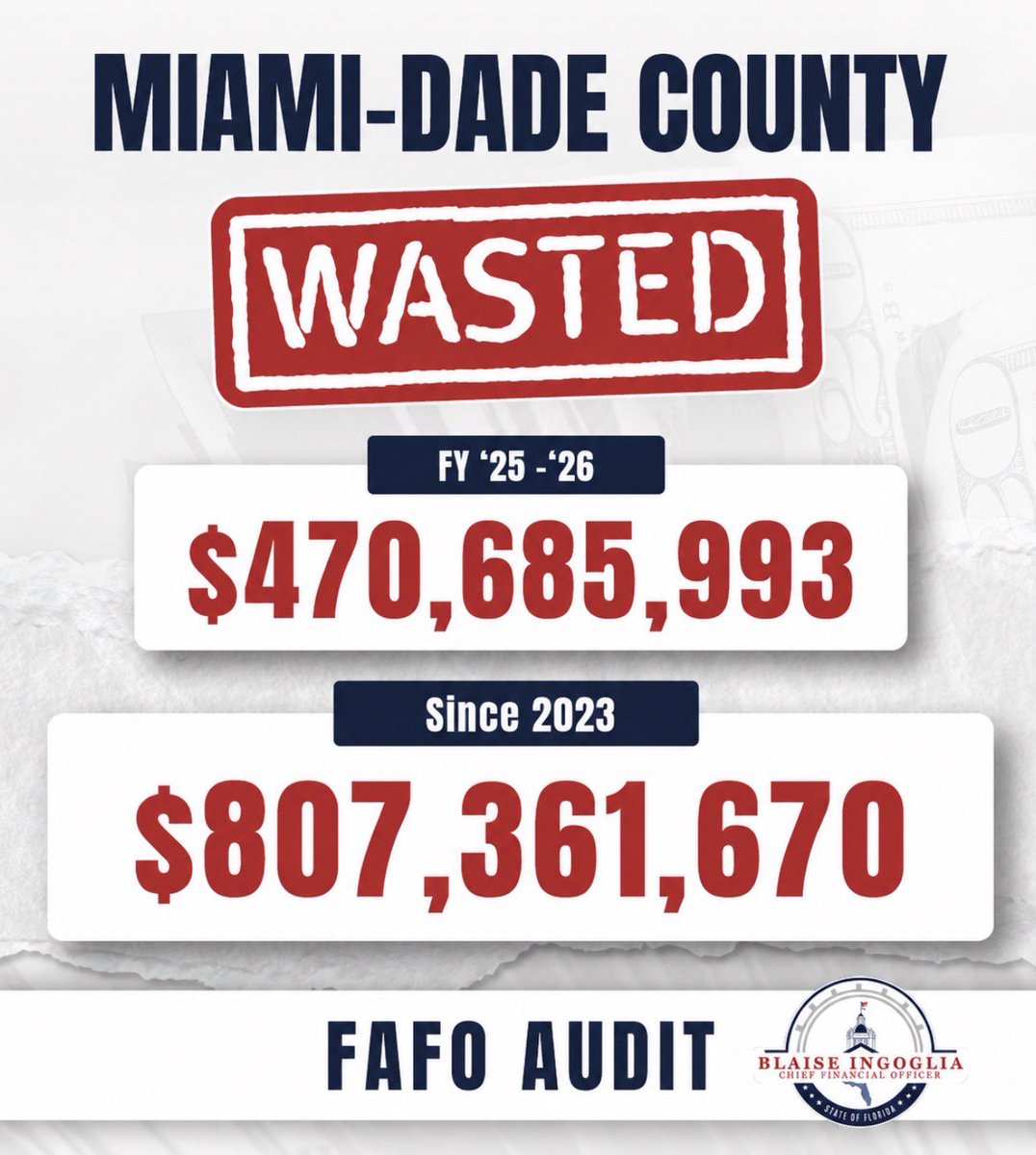
The new leader in the clubhouse for wasteful and excessive spending is Miami-Dade County with over $470M in FY ‘25/‘26 and a grand total of $807M over the last 3 years.
That’s an insane amount of overspending.
Miami-Dade is quickly becoming the poster child for unsustainable government growth.
23
F3Hacker retweeted

Jun 11
Deaths in the US so far in 2026, by cause:
Drowning: approximately 1000 (22 kids in Texas alone)
Mushroom poisoning: 4
Rattlesnake: 3
Lightning: 2
Marathon: 1
Measles: 0
And, oh yeah, overdose: approximately 30000
Let's try to scare people some MORE about measles, huh?
Jun 11

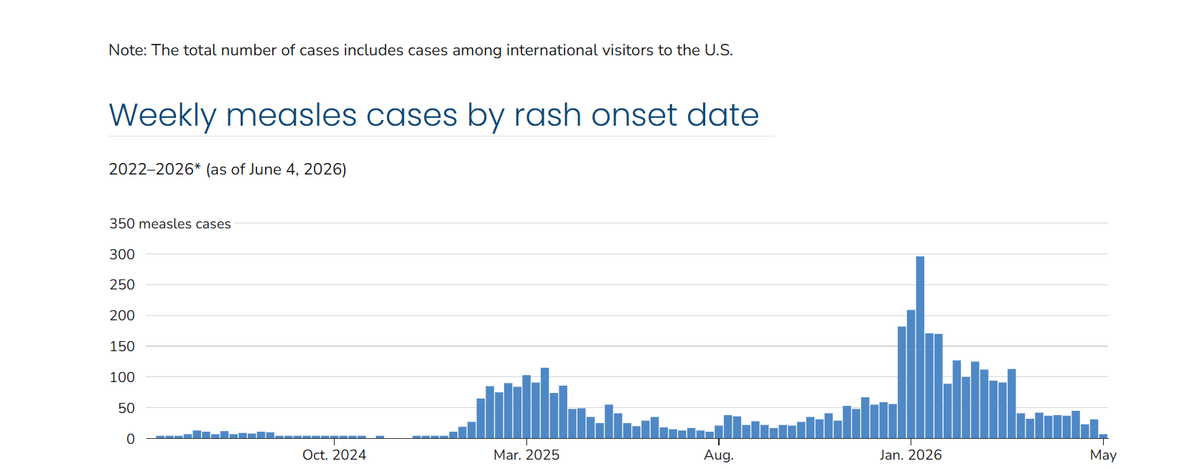
Fun fact: NOT ONE PERSON IN THE US HAS DIED OF MEASLES IN 2026.
Not one.
We've had a total of 127 measles hospitalizations this year - 0.001% of all hospital stays.
And the outbreaks peaked FIVE MONTHS AGO.
I favor measles vaccination. But can the media please drop the drama?
223
3,480
13,435
418,175
F3Hacker retweeted

Jun 11
One only has to look at the sheer scale of the planet to see the flaws in the climate agenda.
Combined, every town and city on Earth occupies a mere 3% of the world's landmass. The true driving forces for regional climates rest in the oceans and major landforms - the planet's genuine engine rooms. Oceans cover 72% of the globe to an average depth of 2.3 miles. They contain roughly 86% of the global carbon reservoir and 91% of all retained heat energy; by comparison, our thin atmosphere holds a meager 1 to 2% of each.
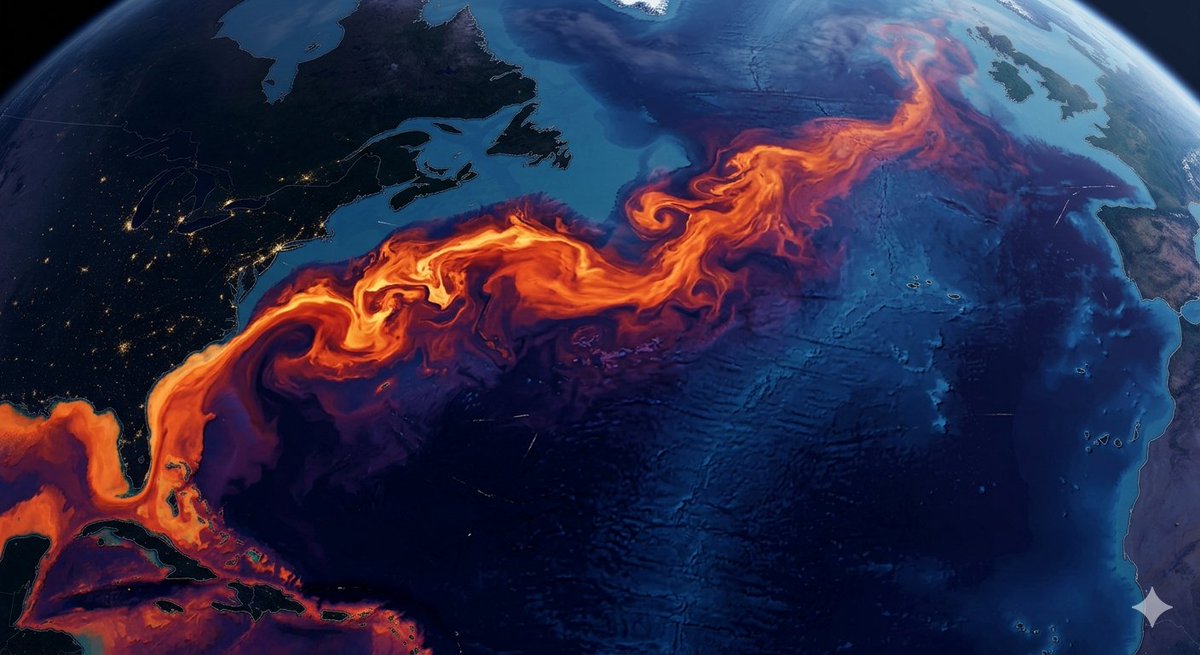
Ancient ocean currents give balance to the world's weather, carrying tropical warmth to northern regions in cycles that drive migration, cloud formation and global storms. Landforms guide ocean currents across deep geological time, as tectonic changes to continental land masses reshape the entire world.
The legacy of ignoring this planetary scale of the environment can be seen today in our defaced countryside and industrialised coastal retreats. Sweeping vistas are being vandalised by massive arrays of wind and solar structures, causing immeasurable localised environmental carnage.
It has created a perpetual, asset-swapping loop of renewal and replacement at a staggering, endless cost to national economies, while hollowing out traditional industries and aggressively mining the earth for rare metals like copper and silver.
The back-end of this 'clean' energy loop is an impending hazardous waste crisis. With global solar capacity now officially surpassing 2 Terawatts (TW)—representing between 7 and 8 billion solar panel equivalents—the world is utterly unprepared for the onslaught of disposal.
The International Renewable Energy Agency projects up to 78 million metric tons of solar e-waste by 2050. Because there is little financial incentive for complex recycling, up to 90% of decommissioned panels currently go straight into the ground. When left to fracture in landfills, heavy metals like lead and cadmium can leach into surrounding soil and groundwater.
This will remain the most visible legacy from the Twenty-First Century.

49
494
1,107
15,116
Jun 11
Here's the list of everyone who's been arrested:
.
Jun 10

ActBlue accepted foreign money and donations under fake names.
They knew about it and failed to stop it.
And when we asked them about it, they all took the 5th.
5
F3Hacker retweeted

Bret Weinstein cuts straight to the chase:
"We are going to have an endless battle in which those of us who see what we believe is clear evidence of some kind of election rigging or fraud are faced with indignation from a vast array of people portraying themselves as more rigorous and careful who say, 'Where is your evidence? Where exactly is your evidence that there was something wrong with this election?' And we are gonna be caught in the following predicament.
No piece of evidence is sufficient to establish that case. And the sum total of all of the evidence contains true things and false things. So it is also no good.
So the question is, can you logically deduce that something has gone wrong? I believe you can easily.
Can you prove it? No.
And not being able to prove it means that the election will proceed. It will be validated by all of the structures, including the courts. And that means that those who take on the power that derives from these elections will be the result of whatever process we just went through, whether it was an election that happened to be anomalous through organic means, or it was the result of some kind of fraud or election rigging. That is not an accident.
That is not an accident.
And the point that I wanna make primarily is the primary evidence against elections that look like this being organic is not actually in the trickle of evidence that we are actually able to see, the moment by moment vote count that does something strange during the night when some large tranche of ballots is suddenly counted or something like that.
The evidence is in the structure of how the elections are actually carried out. These elections are designed to allow fraud that cannot be detected and will not be prosecuted. And that's really the thing that we must focus on."
@BretWeinstein
897
2,814
13,206
688,853
F3Hacker retweeted

Jane Doe 4 alleges President Trump raped her when she was 13 years old.
In 2025, she settled with the Epstein estate.
In March 2026, Epstein's accountant Richard Kahn confirmed this under oath, before Congress.
257
8,168
15,757
213,537
F3Hacker retweeted

Jun 11
🚨 Powerful as hell: Austin Metcalf’s father looked his son’s killer, Karmelo Anthony, dead in the face after the 35-year sentence and unloaded truth:
"You can't look me in the EYES but you can STAB my f*cking SON!"
"You're going to prison. I forgave you the day it happened. I DON'T forgive what you did."
"This was never about race. It is about right and wrong. My son's death destroyed the person I used to be. He does not exist anymore." — Jeff Metcalf
A father’s broken heart speaking raw justice. 35 years with parole in ~17 is still too soft for taking a 17-year-old’s life. Rest in peace, Austin. Prayers for the Metcalf family. 🙏🏻
Share if you stand for real accountability.

53
303
1,107
20,183
F3Hacker retweeted

Jun 11
Q: "Did you weaken your fraud standards to help Democrats?"
ActBlue CEO: "On the advice of counsel, I respectfully decline to answer the question"
107
453
4,807
74,150
F3Hacker retweeted
Jun 11
Modest warming since the end of the Little Ice Age in 1850 supports billions of people better than any previous cold era ever did.
Yet, a weird paradox dominates our modern climate discourse: we celebrate ancient warm eras as golden ages, but frame today's mild shifts as inherently catastrophic. History shows that warmth has always delivered prosperity. Look no further than Roman vineyards flourishing in Britain or Viking farms thriving in Greenland.
Conversely, cold spells almost always bring hardship - marked by the Thames freezing over, expanding Alpine glaciers and systemic crop failures during the Little Ice Age (roughly 1300–1850). When you compare the Holocene’s historical rollercoaster, the Roman Warm Period (250 BC–AD 400) and the Medieval Warm Period (900–1300 AD) stand out as eras of booming agriculture and expanding empires.
The Little Ice Age was a harsh, multi-century counterpoint that brought widespread famine and societal strain across Europe. Throughout these dramatic ups and downs, ice core data shows atmospheric CO₂ was remarkably flat, hovering steadily between 270 and 285 ppm.
These profound climate convulsions happened purely on the back of natural variability - solar output, volcanic aerosols and oceanic-atmospheric circulation flips - all without CO₂ needing to budge. On a broader scale, today's blips are superimposed over a gradual, long-term cooling trend that followed the Holocene Thermal Optimum thousands of years ago, when temperatures were frequently 0.5°C to 1°C warmer than today.
Earth’s climate has always been dynamic on multiple timescales, operating independently of any single variable, such as CO₂. Natural precedent proves that warmth isn't inherently destructive. Humans are marvelously adaptive and the biosphere is inherently resilient.
The real challenges ahead aren't dictated by a climate driven panic, but by our astonishing capacity for adaptation.
Image: A recreation of a Viking-age settlement, showcasing the turf-roof architecture that allowed Norse communities to thrive in northern latitudes.

46
412
1,042
15,722


F3Hacker retweeted

Jun 11
71 children from an Orthodox Jewish school have been rescued from underground tunnels connected to a sewer system in New York.
The children reportedly got lost during a trip after they began exploring what was down there.
Emergency crews responded and were able to safely locate and rescue all of the children without injury.
1,448
5,038
20,079
5,334,120