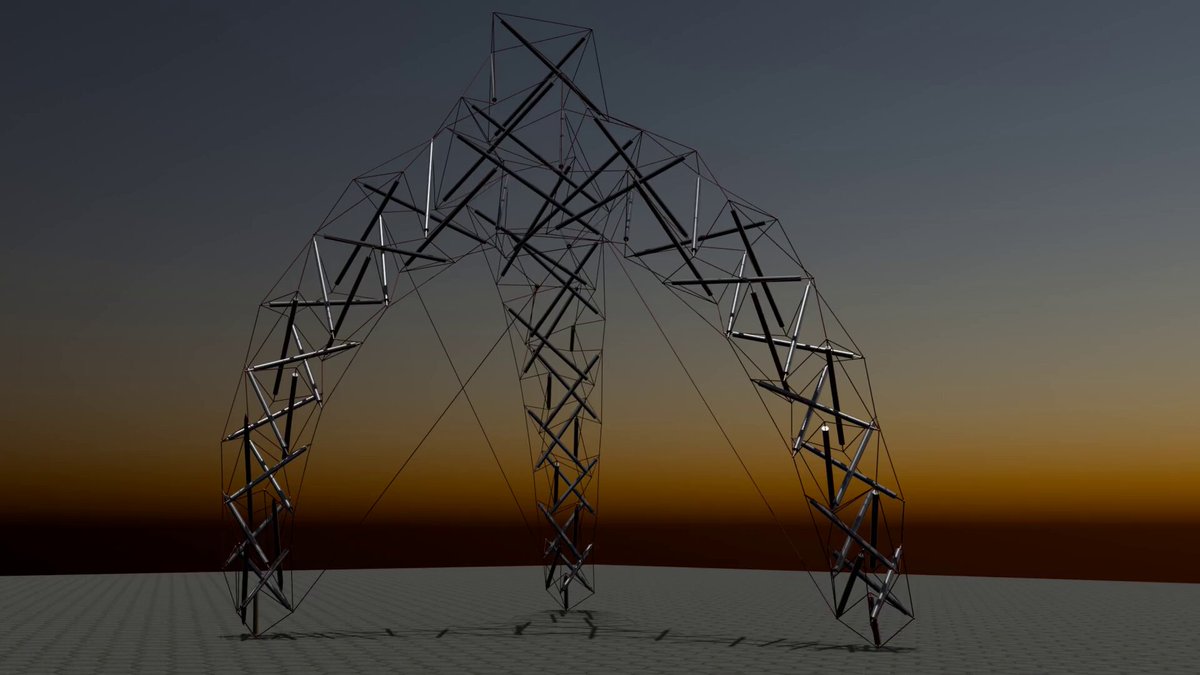
tensegrity artist, coder, amateur central bank watcher
Joined May 2007
- Tweets 6,613
- Following 607
- Followers 544
- Likes 5,879
855 Photos and videos









Gerald de Jong retweeted

Jun 12
Your experience is a simulation, a virtual reality projected into a virtual observer. The observer is a model of what it would be like if you existed, were uploaded into a monkey and deeply invested in its affairs. The model is used to drive a monkey in the physical universe.
10
17
176
9,574
Gerald de Jong retweeted
Jun 10
Consciousness does not seem to come in degrees (but awareness, integration, lucidity and agency do). Either “the lights are on” or off. I suspect that consciousness is like fire, or life: once ignited, its activity creates the conditions for sustaining it.
96
31
362
16,419
Gerald de Jong retweeted

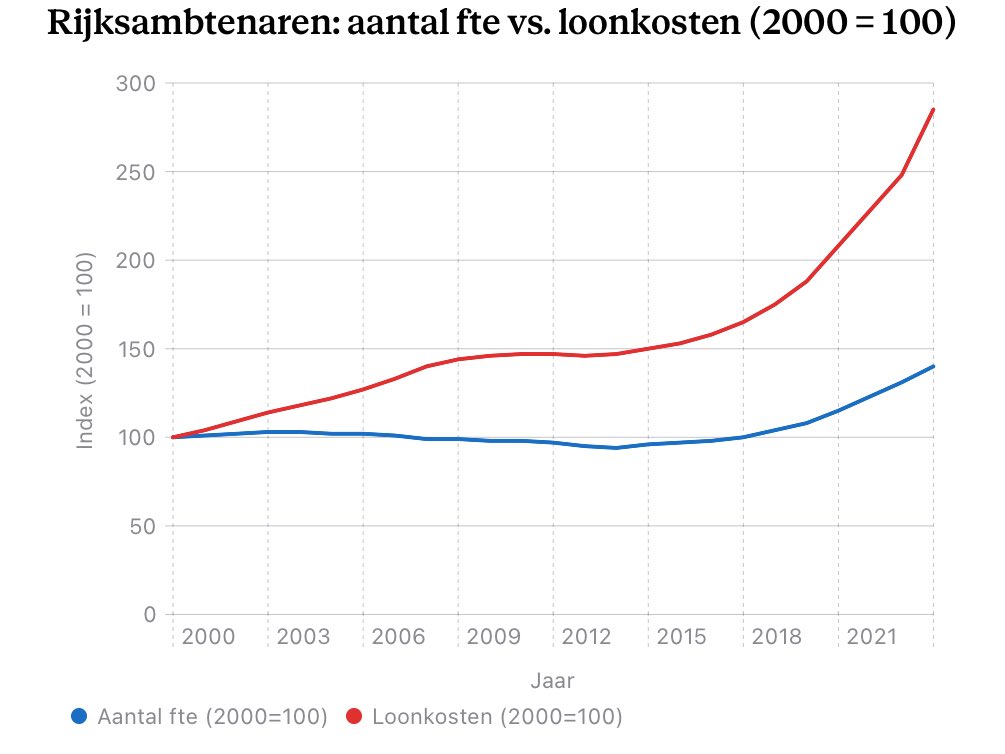
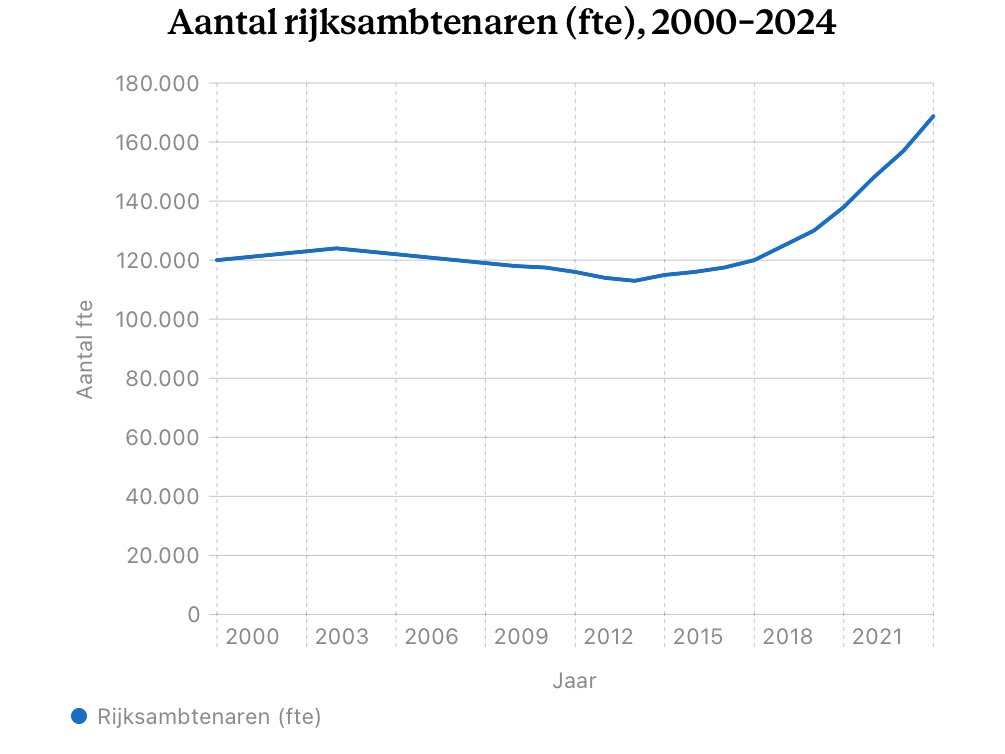
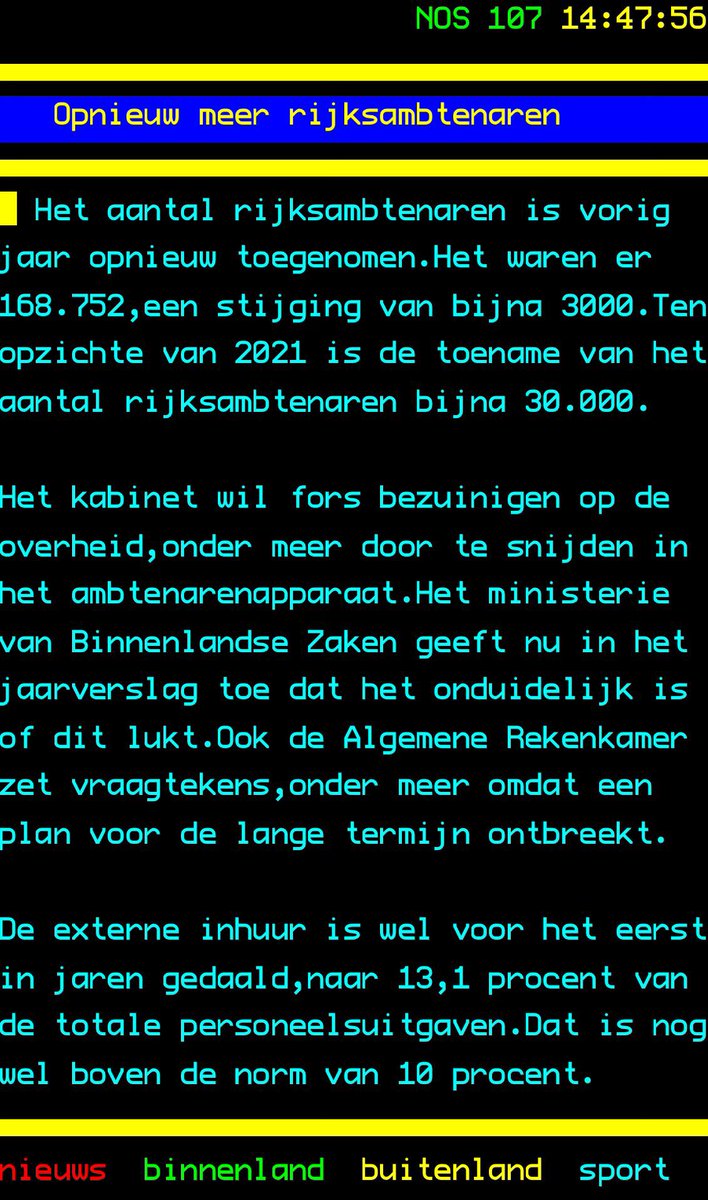
In 6 jaar tijd kwamen er 43.000 rijksambtenaren bij ( 38% 🔵). De loonkosten stegen zelfs 68% (🔴). Ondertussen spreken alle partijen af te willen bezuinigen op de overheid.
De overheid creëert geen welvaart, ze verdeelt die van anderen.
En ze groeit als een paddenstoel in het donker.
128
893
1,881
52,566
Gerald de Jong retweeted

Beste @EersteKamer leden, voormalige collega’s. Wat Gijs Strijker hier zegt klopt 100%. Gijs houdt zich zelfs nog in. De schade die dit onzalige Box 3 voorstel voor ons investeringsklimaat real time aanricht is gigantisch. Stop dit kansloze gedrocht!
7
145
430
5,908
Gerald de Jong retweeted

May 19
Beste @EersteKamer leden, voormalige collega’s. Wat Gijs Strijker hier zegt klopt 100%. Gijs houdt zich zelfs nog in. De schade die dit onzalige Box 3 voorstel voor ons investeringsklimaat real time aanricht is gigantisch. Stop dit kansloze gedrocht!
53
487
2,040
53,317
Gerald de Jong retweeted
May 18
What makes computation important to understanding life and minds is not the Turing machine, but the principle of causal insulation. Computers create their own, self contained world, fully governed by rules that are independent from the dynamics of the substrate.
47
37
321
16,248
Gerald de Jong retweeted

"Taxes on unrealized gains are absurd."
Michael Green (@profplum99) on Dutch box 3 policy.
"They're trying to tax the failure to sell. To incentivize people to sell appreciated stock, sell the house. It's a band-aid on an already flawed strategy."
"High-potential earners will lowball their future earnings and get the hell out. The ones with less confidence in their capability will get stuck."
"You will end up with a nation of losers. But it takes a very long time."
"The Netherlands has incredible resources, an extraordinarily well-educated population — not particularly well-educated in capitalism, but that's okay. It takes a lot to screw up a society."
Quoting Adam Smith: "There's much ruin in a nation."
Translation: bad policy doesn't kill a country. It hollows it out one high earner at a time.
Who is already considering leaving the Netherlands, and where are you going?

I sat down with Michael Green, Chief Strategist at Simplify Asset Management, former Logica Capital, ex-Thiel Macro.
The man who built the passive investing critique that broke Wall Street's biggest assumption now has Bitcoin in his crosshairs.
"Bitcoin's system is a failure. It was reinvented as a speculative monster. It'll eventually collapse. And I really could care less."
This isn't a random hater. @profplum99 has run the simulations on the network and is simply not buying it.
He's been published by the central bank research desks. He came on the show to argue that the entire financial system is about to break.
The brutal case against Bitcoin from someone who understands market structure better than 99% of the people defending it.
Full episode on @new_era_finance.
TIMESTAMPS:
00:00 — The System Is Broken
10:00 — Passive Investing Owns Everything
20:00 — The Generational Wealth Crisis
30:00 — Why You'll Never Afford A House
40:00 — AI's 25% Hiring Collapse
49:00 — The Brutal Bitcoin Case
56:00 — Why Stablecoins Win, Not Bitcoin
25
73
341
48,567
Gerald de Jong retweeted

May 14
It is only a matter of time before every citizen in the EU becomes aware of the largest bank and pension fraud in history (Worst Bank Scenario);
PLEASE SHARE:
The banking system that was built up from the 1970s onwards (after the Nixon shock) is based on securitisations, OTC derivatives and collateral trading (banks enter into contracts with pension funds and insurers, with collateral trading taking place off-balance sheet). From the very professionalisation of this OTC derivatives trading, it was already known that highly liquid collateral was required. In the EU this shortfall amounted to more than EUR 2,000 billion in 2008; worldwide, tens of trillions of euros. The credit crisis did not come unexpectedly but was part of the Worst Bank Scenario.
Barroso was the one who in 2005 proposed the ‘Globalisation Fund’, which entered into force on 1 January 2007.
In 2007, the Trans-Atlantic plan was concluded between the EU and the US, and the megalomaniac transition was rolled out (climate, energy, pandemic preparedness, Ukraine, and a Palestinian state) to force the creation of the United States of Europe through the ECB, central banks, and parties such as ING, BlackRock, Goldman Sachs, etc., using common debts.
At the same time, the Treaty of Lisbon was being prepared, which was signed in 2009. Climate, energy, and solidarity (we will fairly share the debts) were smuggled into the EU Treaty, and Article 122 was amended so that in a “crisis” EU debt (Eurobonds) can be created without citizen input and through a fast-track procedure (as with the corona recovery fund, the financing of Russian assets, etc.).
Through the back door, the elite has seized power in the EU, and this elite believes it is possible to complete the European Union through fraud and common debts.
Draghi worked at Goldman Sachs and became president of the Bank of Italy in 2006. Trichet was president of the ECB. Lagarde sat on the Supervisory Board of ING/NN for half a year in 2005 — the bank that forms the central pivot in the Worst Bank Scenario.
Lagarde subsequently became Minister of Finance, with Macron working under her. He joined the Attali Commission in 2007 and was seconded to Rothschild in 2008 — the bank that advised among others the Dutch state on bank rescues.
Lagarde succeeded the Frenchman Strauss-Kahn at the IMF in 2011. While bank directors and other financial executives are subject to fit-and-proper tests — where a fraud conviction is an obstacle to appointment — this is apparently no issue at all at the ECB.
Draghi (then still president of the Bank of Italy) and Trichet used LCH.Clearnet in 2010/2011 (the year Regulation 2011/1176 was adopted — the foundation for the NextGenerationEU plan that was launched under the guise of Corona in 2020). By adjusting collateral requirements (haircuts), they manipulated Italian interest rates so that the asset purchase programme could be expanded even further once Draghi became ECB president.
Draghi, himself a Goldman Sachs alumnus, wanted — “whatever it takes” — to narrow the interest rate spreads between Southern and Northern member states (with the ultimate goal of European own resources and Eurobonds).
In 2015, banks and insurers were separated and interest rates were pushed into negative territory so that banks would pay for this enormous collateral upgrade for OTC derivatives, which they executed via the central banks. Attali advocated in 2015 for European defence bonds.
Corona was seized upon to finally launch the eurobonds. Thanks to the amended Treaty of Lisbon, without any input from troublesome parliamentarians or citizens.
The ECB is by no means independent. It is being used by the establishment to carry out the Worst Bank Scenario in order to realise the European Federation (transfer union) — among other things through the ESM and hundreds of billions in state guarantees granted since 2012 (the Netherlands alone more than €200 billion).
Read Worst Bank Scenario.
May 13

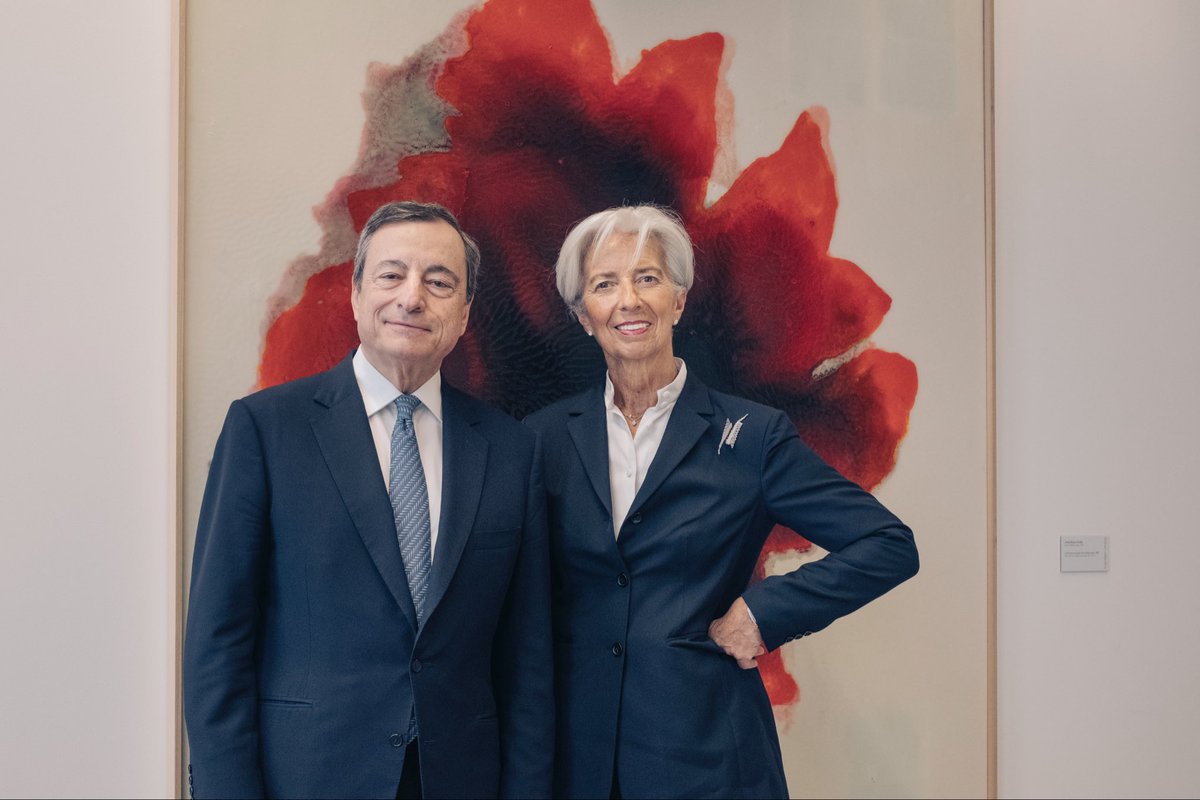
Mario Draghi exemplifies true European statesmanship: answering the call when it mattered most and helping Europe emerge stronger.
President Christine @Lagarde congratulates him on receiving the Charlemagne Prize ecb.europa.eu/press/key/date…
10
366
448
9,851

May 10
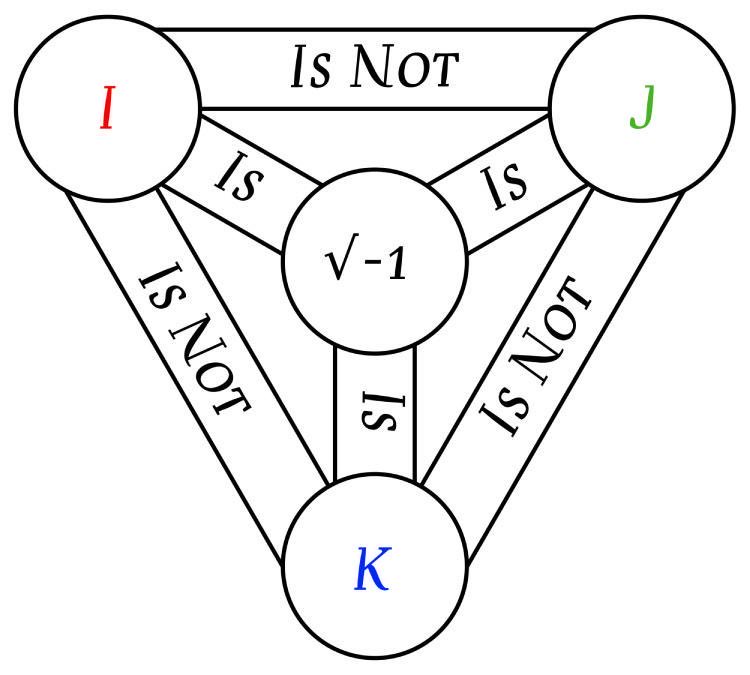
When I was a child in Elementary School, I asked the nun, our teacher, how it was possible to believe in The Holy Trinity, three is one and one is three. The Father, The Son, and The Holy Ghost. She should have pointed me to the quaternions and blown my little mind. 🤣
36

Gerald de Jong retweeted

Apr 18
74
225
1,465
742,114
Gerald de Jong retweeted

Apr 8
Anthropic:
"This is terrifying!
This is far too powerful and dangerous for any normal human to wield...
Better give it to the Tech Giants."
13
18
194
5,107
Apr 8
Isn't this even a more urgent issue for trust institutions like banks than a quantum computer moving Satoshi's coins? Also social engineering is boosted now.
Apr 7

Claude Mythos.
Ten trillion parameters: the first model in this weight class. Estimated training cost: ten billion dollars.
On the hardest coding test in the industry (SWE bench) it scores 94%.
It found a security flaw in a system that had been running for 27 years, one that every human engineer and every automated check had missed. It found another bug that had survived five million test runs over 16 years. (It did so overnight.)
It is so capable in cybersecurity that Anthropic will not release it to the public, instead it is launching Project Glasswing along with 100m in compute credits to help secure software.
Only twelve partners currently have access: Amazon, Cisco, Apple, Google, Microsoft, NVIDIA, JPMorgan Chase, Crowdstrike, Palo Alto, AWS, The Linux Foundation, Broadcom. (I'm sure the Pentagon is on the line?)
This is not a product launch: it is a controlled deployment of a system too powerful to distribute freely.
Tell me this isn't (very expensive) AGI?
24
Apr 1
This almost gives me a stutter. Although normally I watch interviews at 2x speed, admittedly.
Mar 31

🚨 Marc Andreessen Says the AI Layoffs Hype is ‘100% Incorrect’
“Essentially every large company is overstaffed. We could debate how much but it's at least by 25% … And now they all have the silver bullet excuse — it's AI. I know this for a fact because I talk to them.”
30

Gerald de Jong retweeted

Mar 28
👏🏼👏🏼👏🏼👏🏼👏🏼👏🏼👏🏼👊🏼
1 Sep 2025

As another man who once worked with me declares himself saddened by my beliefs on gender and sex, I thought it might be useful to compile a list for handy reference. Which of the following do you imagine makes actors and directors who aren’t involved with the HBO reboot of Harry Potter so miserable?
Is it my belief that women and girls should have their own public changing rooms and bathrooms?
That women should retain female-only rape crisis centres?
That men don’t belong in women’s sport?
That female prisoners shouldn’t be incarcerated with violent men and male sex offenders?
That women should remain a protected class in law, because they have sex-specific needs and issues?
That language should reflect reality rather than ideological jargon, especially in a medical context?
That women shouldn’t be harassed, persecuted or fired for refusing to pretend humans can change sex?
That women should not be threatened with violence and rape when they assert their rights?
That freedom of speech and belief are essential to a pluralistic democratic society?
That troubled minors, especially those who are gay, autistic and trauma-experienced, should be given mental health support instead of irreversible surgeries and drug treatments on non-existent evidence of benefit?
That gay people shouldn’t be pressured to include the opposite sex in their dating pools, nor should they be smeared as ‘genital fetishists’ when they don’t?
That cross-dressing heterosexual male fetishists aren’t actually oppressed, but having the time of their lives piggybacking off gender identity ideology?
That said ideology, and the privileged, blinkered fools pushing it because they suffer zero consequences themselves, have done more damage to the political left’s credibility than Trump and Farage could have achieved in a century?
Let me have your thoughts.
22
230
5,583
1,779,271
Mar 16
I asked the AI (Gemini) about an event from quite long ago, a fatal car crash, and it gave me an answer that I knew was not correct. When challenged it doubled down. Later it apologized profusely. Cannot be trusted!!!
1
50
Gerald de Jong retweeted
Mar 14
I don't think most people realize that there would be no electric cars on the road if not for Elon Musk. Tesla is still the only western auto maker that builds electric cars with a profit. Everyone else is forced to absorb billions of losses, which they don't do voluntarily.
64
50
1,212
217,731
Gerald de Jong retweeted

Mar 13
This Land Is Mine
"What's Nina working on now??" THIS: https://apocalypseanimated.com...
youtube.com 1
1
2
498