
Ran @Ethereum launch. CEO @Mattereum Forbes bit.ly/3cPdZCw myhopeforthe.world Book thefutureofstuff.store radical ESG bit.ly/3CodRrd
Joined June 2009
- Tweets 242,276
- Following 9,233
- Followers 38,187
- Likes 16,321
8,758 Photos and videos






Pinned Tweet

14 Jun 2024
ALL ON THE SAME SIDE?
Can regulators and crypto ever get along?*
My talk from #Login #Vilnius #Lithuania
youtube.com/watch?v=CnN8mhd8…


43
66
352
91,302
Vinay retweeted

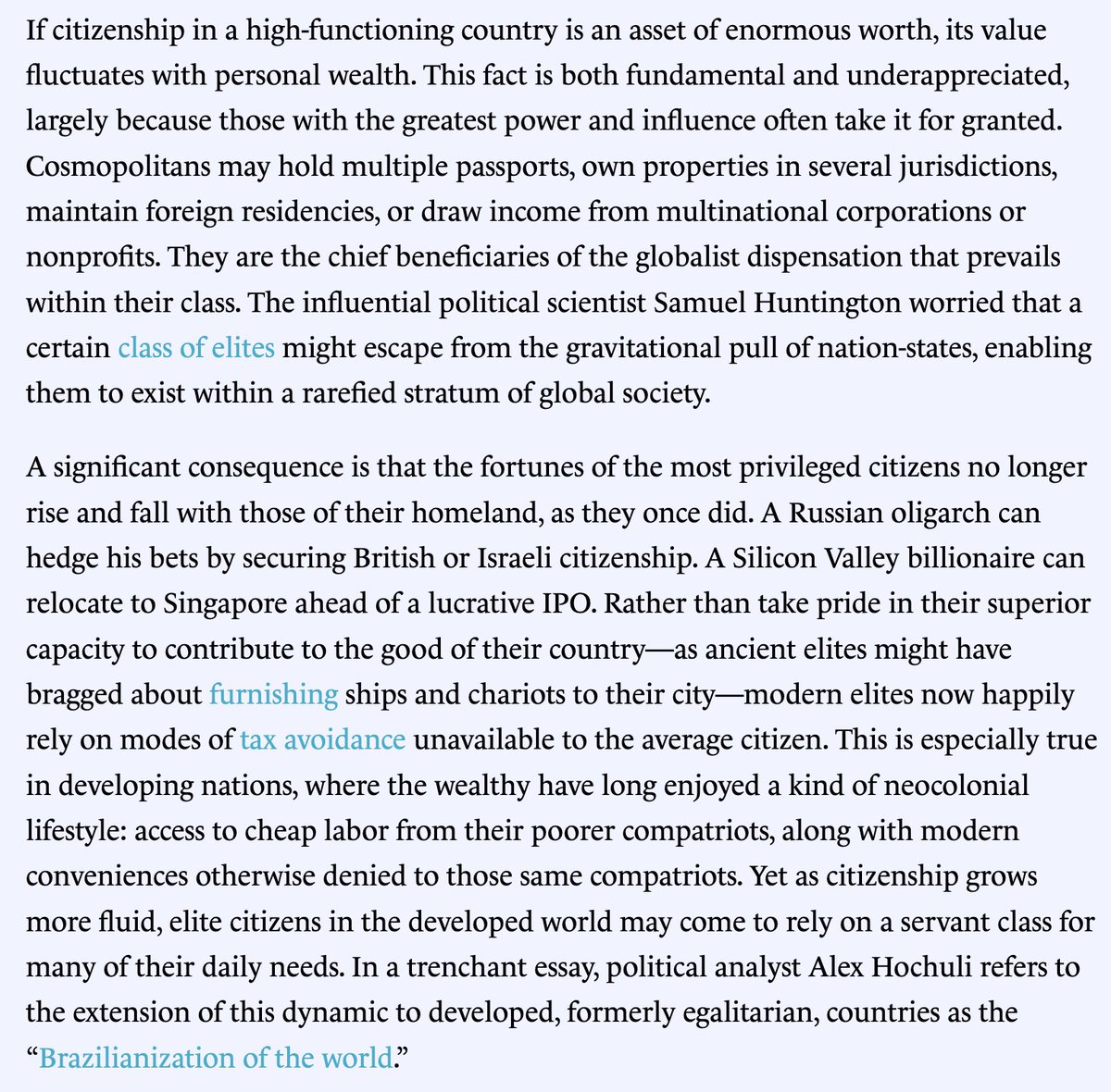
The Economist had an interesting story today (really) about increasing global migration among wealthy Westerners. Here's what I wrote about this phenomenon earlier this year:
10
45
369
19,560
Vinay retweeted

Rare example of left wing Anglofuturism. Whereas the political class- Lab, Lib Dem & Con want us to accept decline, the Anglofuturists want three important things to fix Britain-
- British technological innovation
- Restoration of British heritage
- British military hard power
Jun 13

A British drone industry would not be a cost. It would be a renaissance.
British kit, designed here, built here, used by our forces and sold to our allies.
War has already changed. Britain needs to as well.
dailymail.com/debate/article…
4
20
141
6,925
Vinay retweeted

Jun 13
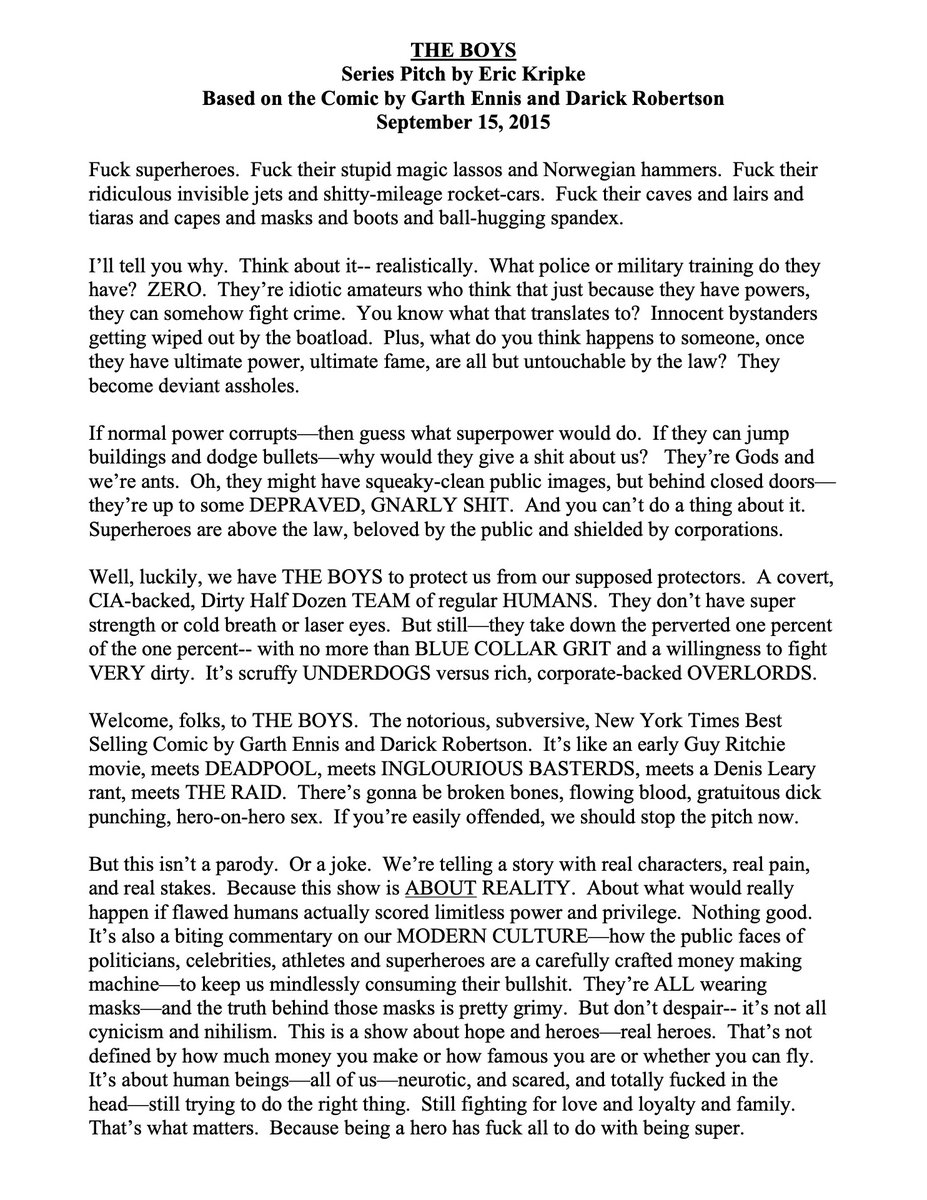
Where it all began: my first pitch for @TheBoysTV eleven years ago. Since then, hundreds of actors, thousands of crew, and millions of viewers embraced this insane idea. I'm grateful beyond words, and proud that all these years later, we stayed true to this mission statement. #FYC #TheBoys @PrimeVideo
162
537
5,854
254,893
Vinay retweeted

I hate to break it to you - but the United States is an absolute, incoherent shitshow.
The idea that we have ‘representative government’ is ridiculous. If that were true we would not have wasted billions killing Iranians for no reason at all. Some people wanted this - but the voters who elected this government did not.
Let’s go further. When Trump goes to China - he brings our ‘great billionaires’ with him. I can’t think of any more obvious symbol that we live in an oligarchy that does everything it can to manipulate outcomes - and that voting is a bit of a joke. It’s like he’s bringing with him ‘the ruling elite.’ Because that is what he did.
We have at least 40 million illegal aliens living here. Our business ‘leaders’ engineered this by bribing politicians to keep the border open - because they wanted to pay low wages and make mucho $$ for themselves. When people objected because their incomes were falling - the business leaders accused them of racism and funded Barack Obama to become POTUS.
The USA is $40 trillion in debt - and no one has a plan to solve that problem. Absolutely no one. This will blow up one day - and it will destroy normal people who save in dollars - because the unspoken plan is to destroy the currency and save the rich and destroy the rest. But people who own our homes - like Blackstone or Blackrock - won’t care because their assets will follow inflation. Everyone else will be reduced to paupers renting from them - their bank accounts gone.
The United States today is hopelessly dysfunctional. It lacks a coherent population that can even agree on anything. It is bankrupt - but the rest of the world is propping it up because they are also scared of what happens when the dollar collapses. It doesn’t have any smart leaders - and we have to watch insiders doing oil trades to make $$ on the Iran war - and the administration itself sells shit coins. Our foreign policy is a total joke - not strategic in any way at all. It is driven by special interests, and then not even followed through. And people are actuality making money on it - pump and dump coming straight from the White House.
This is a hell of a way to celebrate 250 Years! At least we can have a cage match on the White House lawn that degrades our entire history and underscores just how bad and ridiculous things are!
Thank you for your attention to this matter! Enjoy the circus! If you’re lucky you will be dead when the music stops!
514
1,044
6,387
198,272
Vinay retweeted

Twenty years ago, after joining Google, I published my old Amazon internal "drunken" blog rants all at once, almost fifty of them. They went super viral and led to me getting famous almost overnight, though nothing compared to five years later with the Platforms Rant. (When the Platforms Rant was making the rounds, my buddy Andrey Gubarev told me he'd just gone to visit his parents in Northern Siberia, and they only knew two things about Google, and I was one of them.)
But for the time, in 2006, my Drunken Blog Rants made a big splash.
To my lasting regret, @Werner made me take the best one down, six days after posting, because he felt it exposed too much proprietary Amazon information. And I complied, because he had asked soooo nicely, unlike their Head Legal Counsel who threatened to personally chew my balls off if I so much as hinted at recruitiing anyone from Amazon to Google.
Well, twenty years later, I went looking for it, and of course, Fable found it for me in an old zipfile inside another zipfile in Google Cloud Storage inside a CVS repository whose Attic happened to have a copy of every single original Amazon blog rant.
Look what they did to my boy Fable. That was uncalled for.
I re-read the post 20 years later, and it really was the best one. The world might have had GraphQL years earlier if they'd been able to read it. The post lays out with memorable examples exactly why Amazon needed something like GraphQL, even calling it a query language.
The article does expose a lot about how Amazon's databases and service APIs worked back in 2004, so it was reasonable to take it down. But had I known better, I would have just edited it.
The essay: yegge.ai/listings/services-a…
6
24
243
18,942

One of those things where you try explaining it to not very political people and you just end up sounding completely mad dailymail.com/news/article-1…

28
221
918
33,746
Vinay retweeted

A powerful El Nino is poised to reach historic strength and intensify extreme weather events across the globe.
It will change weather on a global scale
“I wouldn’t be at all surprised to see 40C-plus heat.” in UK next year says Professor Bill McGuire
independent.co.uk/life-style…
102
254
541
20,734
Vinay retweeted

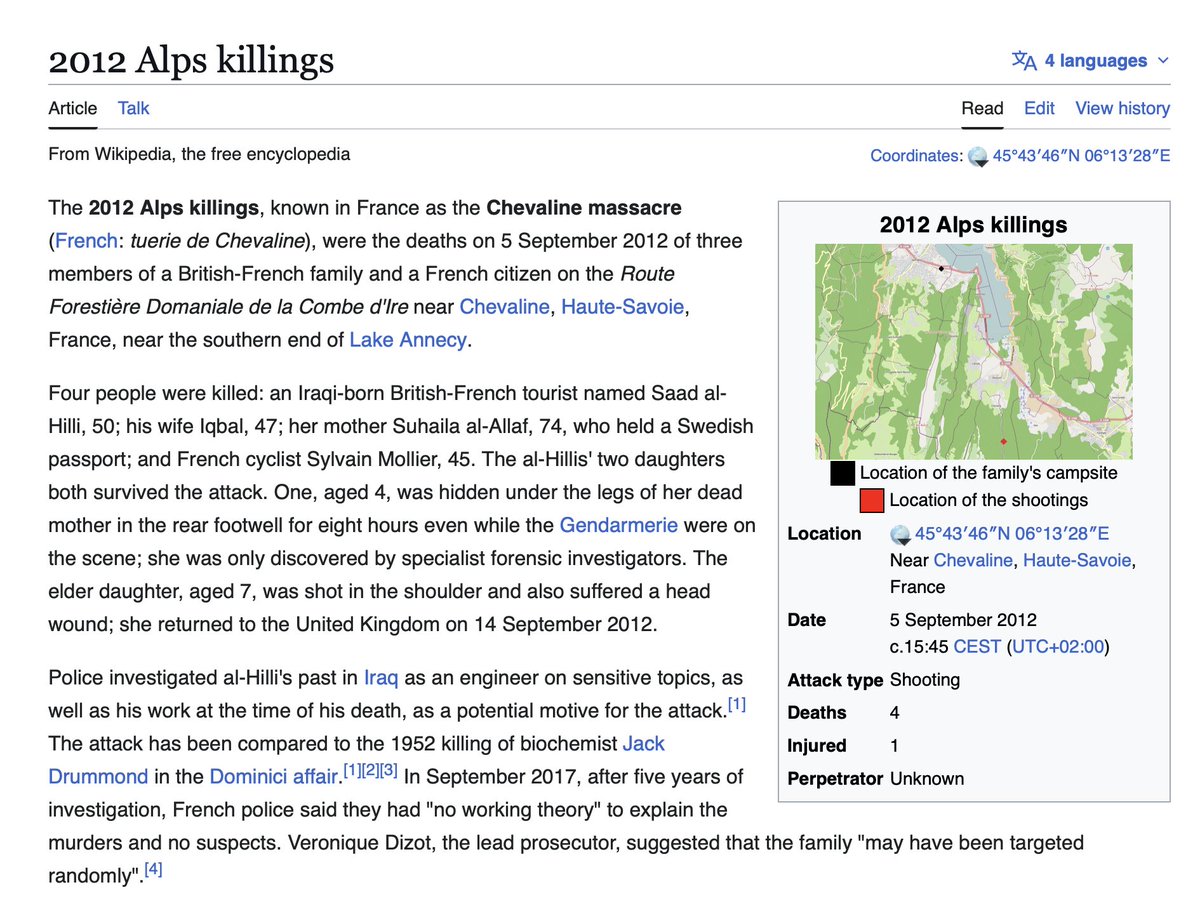
As a fan of French history: French crime is so much more insane than anything we have ever had in the US, and that has been historically true. The French criminal class doesn't think in terms of crimes, it thinks in terms of plots. You would not believe the stuff that happened at Versailles in the 1600s, or in Paris during WWII. Networks of crime.

Brad told me about this the last time we got lunch and my jaw was on the floor. Thank God America is not always the craziest country on Earth. At the very end, this bewilderingly brutal and spooky story opens out into an even deeper rabbit-hole known as the Chevaline Massacre.
14
63
1,157
102,105
Vinay retweeted

Jun 13
The clearest 11 minutes I have heard on why the AI capex boom may not pay off. @ChrisBloomstran at the Zurich Project on the depreciation wall, ~$650B of off-balance-sheet SPV debt, and the circular financing between Nvidia, OpenAI, and the hyperscalers.
52
182
1,104
208,409
Vinay retweeted

“rebuild teams around load-bearing polymaths who own business outcomes”
This is an incredible post. This is where we are right now, full stop. You are either part of an organization that is currently processing this and trying to find the optimal way to function, or your organization is dead already. There are only two forks ahead in the road, operate wisely.
Engineers and competence are back.
23h

THE TOKEN HANGOVER
@matanSF (Matan Grinberg), CEO and co-founder of @FactoryAI , interviewed by @HarryStebbings (@20vcFund )
This is a special for me since I've been an investor in @FactoryAI since their seed round, and think Matan is a very very special founder.
Summary: Grinberg argues the next 24 months in enterprise AI are a resource-allocation problem: tokens, dollars, and people. Most CIOs are now waking up to bills they cannot justify. The fix is to spend frontier tokens only on the 10-20% of work that requires planning intelligence, run the other 80-90% on open models, and rebuild teams around load-bearing polymaths who own business outcomes. The single-frontier-monopoly fear is fading: four roughly-equivalent labs is the emerging reality, which puts pricing power back in the application layer.
1. The Token Hangover. Enterprise AI adoption ran through three phases this year: boards yelling at CEOs about AI strategy, "token maxing" with AI usage written into perf reviews, and now the morning-after bill. One CIO Grinberg spoke to was spending hundreds of thousands of dollars a month on engineers asking Opus 4.8 things like "how's it going" and "what are my macros from lunch." The frontier model became the default surface for every question, no matter how trivial. Phase 3 is the moment routing matters: every call to a frontier model needs to earn its price.
2. Resource Allocation Is the Job. For the next 24 months every C-suite is solving the same problem: how to allocate dollars, tokens, and headcount against business outcomes. Engineering teams used to be judged by features shipped per quarter, a metric with no link to revenue, market share, or retention. A logistics company adding more engineers to ship more features was always solving the wrong problem; AI made the misallocation visible. Tie every person's work to the metric that actually moves the business, then re-allocate.
3. Load-Bearing Individuals. The "10x engineer" frame measures lines of code, the wrong unit. Grinberg's unit is the load-bearing individual: the person whose absence breaks something. With AI the load-bearing few compound roughly 10,000%; the others get close to nothing, so any org enforcing one token-spend-per-engineer number is painting with too wide a brush. Average token spend per engineer will land on the same order of magnitude as their salary within three years, with a wildly bimodal distribution.
4. Frontier for Decisions Only. 80-90% of software development tasks can run on open models; the remaining 10-20% is planning, where the frontier still wins. This mirrors how human orgs work: leadership is a tiny share of total hours but decides the company's fate. The ego trap is engineers assuming their work is too important for an open model. The router decides better than the engineer, and the cost curve falls only if you wire the routing.
5. The Kirkland Mistake. Kirkland & Ellis announced a $500M, five-year internal AI build, which Grinberg reads as validation for Harvey rather than a threat. Building AI is not a law firm's core competency, and Kirkland's spend will teach them how hard it is. The general rule: just because you can build it does not mean you should, and the discipline is naming the few things you and your team own end-to-end. Outsource everything else, even when you technically know how to do it yourself.
6. Model-App Separation. When the model provider also sells the app, the incentives split: an API business wants you to spend more tokens. A healthy market keeps the application layer independent, so model providers compete on price, speed, and quality every week. Enterprises do not want to vendor-lock again; every CIO carries scars from the cloud era's three-year discount-then-jack-the-price trap. The application layer survives precisely because it forces that competition.
7. Sales as Product. Name a legendary company with a weak sales or marketing team. You can't. The Silicon Valley fallacy that research sits at the top and sales is "dirty work" produces companies that win the gold rush and then collapse when gravity returns. At Factory, engineers and salespeople sit intermixed; when sales closes, engineering says "we closed"; when engineering ships, sales says "we shipped." Atrophied sales muscles will not regrow once enterprise buyers stop saying yes to everything.
8. Polymath Era. Da Vinci, Newton, Euler could be polymaths because their fields were shallow. By the 2010s a theoretical physicist needed 50 years to reach the frontier before contributing anything new. AI collapses that catch-up time, so one person can push forward developer marketing, token-caching infrastructure, and solution engineering at once. The engineer of the future is a GM who owns marketing copy, product metrics, and sales enablement.
9. Build the Factory. Factory's name is literal: engineers in the next era design the assembly line that produces software. The DevX investments that used to scale linearly with headcount (good docs, CI/CD, linters, pre-commit hooks) now scale with the number of agents you run, which is 10x or 100x larger. Every dollar spent making agents production-ready compounds against thousands of PRs a week. Humans move up the stack, from writing code to designing the system that writes code.
10. Seal Team Six. Mandating beds in the office is a hiring failure dressed up as commitment. Grinberg's image: a basketball game judged by who sweat the most, when the scoreboard is what counts. Factory bought eight sleeps for all 30 team members at the time, because recovery is where the gains come from when work requires every ounce of brain power. If your load-bearing engineer can do their best work on two hours of sleep, they were not doing load-bearing work in the first place.
11. Four Frontier Labs. Grinberg's biggest mind-change this year: a single dominant model is unlikely, and four roughly-equivalent frontier providers is the more probable steady state. That outcome is the win for humanity. A one-lab monopoly was the dangerous scenario, and four equivalent labs is also the structural bull case for the application layer because it forces real ongoing price competition. Every CIO Grinberg meets has already decided not to throw their lot in with a single provider.
12. Dario's Self-Serving Doom. "AI will take your jobs" was the pitch that helped raise hundreds of billions, and Grinberg thinks it damaged public psychology and fed the slow-AI lobby. Watch the rhetoric flip at IPO: humans will suddenly become important again, because humans are the ones buying the stock. Founders who never needed to raise that money, like Zuckerberg and Hassabis, never made that argument. Incentives drive the labor-displacement rhetoric more than philosophy does.
7
14
293
79,637
10h
Yesterday’s future.
Jun 12
The next war won't be won by armies, navies or air forces alone.
It'll be won by the country whose 19 year olds can code, whose factories can build drones in weeks not years, and whose grid stays on when someone tries to switch it off.
Industry. Society. Economy. That's the fight now.
We're not ready. And we're not being honest about what getting ready will cost.
2
1
4
437
Vinay retweeted

Oh.
My.
God.
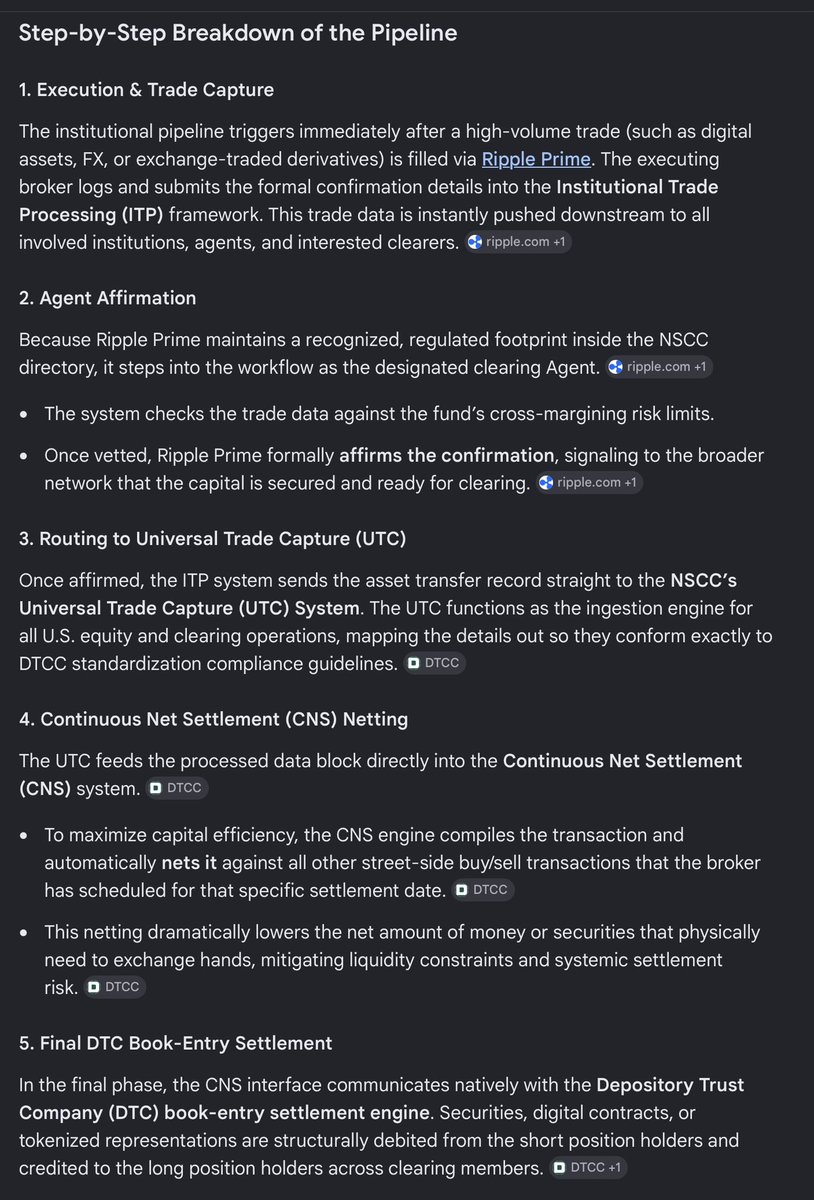

The fact that the DTCC capitulated and went all public chains should tell you a lot.
They attempted to keep everything status quo with new technology and they just couldn’t do it.
67
236
1,487
139,482
Vinay retweeted

Jun 13
🚨 WHEN FORMER SPY CHIEFS MI6 START WARNING THE COUNTRY, PEOPLE LISTEN
Sir Richard Dearlove did not mince his words.
Britain, he says, is being governed by a "bunch of students" who fail to grasp the dangers facing the world.
His concern is not party politics.
It is national security.
And when a former head of MI6 openly questions whether the government understands the scale of the threats ahead, that should concern everyone.
Because intelligence chiefs rarely speak this bluntly unless they believe something has gone badly wrong.
@TVKev
416
6,334
19,357
385,482

I actually predicted a few years ago that computer vision and other robotics (the non-humanoid kind) were at the point where we should be able to recycle a lot more of our trash because of the ability to identify and mechanically decompose heterogenous materials more precisely and it appears that it has been put into practice in China.
Jun 13

The most brutal part is not that China is using AI to sort garbage.
It is that China has pushed waste management so far that the old problem has reversed.
China used to worry about having too much garbage to process.
Now some waste-to-energy plants are facing the opposite problem:
not enough garbage.
Previously sealed landfills may even have to be reopened, not because China failed, but because waste has become fuel, feedstock, data, and part of an industrial recycling loop.
This is what China does best.
It takes the ugliest, dirtiest, most ignored corner of urban life — garbage — and turns it into engineering, automation, energy recovery, environmental governance, and industrial optimization.
Even trash gets absorbed into the machine.
In many countries, garbage is where governance collapses.
In China, even garbage becomes a system.
14
71
719
77,208
Vinay retweeted

Jun 13
⚡️This is a monster signal.
This is the moment frontier AI stops being treated like software and starts being treated like controlled strategic capability.
The key phrase is not “customers.”
The key phrase is “foreign national Anthropic employees.”
That means the state is no longer only controlling chips, model weights, or overseas access. It is moving into cognition access by nationality. That is the real threshold. The U.S. government is saying the highest models are sensitive enough that even people physically inside the United States, working inside the company, may be barred from touching them if their nationality creates deemed-export risk.
That is weapons-control logic.
This is ITAR logic for intelligence.
The corporate language about a “misunderstanding” is probably diplomacy.
Companies say that when they need to preserve customer trust, employee morale, and regulatory room. But national security authorities do not force emergency suspension of top model access because someone made a minor paperwork mistake.
Something about Fable 5 and Mythos 5 crossed the line: cyber capability, autonomous R&D acceleration, AI-improving-AI utility, bio/security planning, code exploitation, or some blend of all of it.
The U.S. state just showed that Anthropic does not fully control Anthropic’s frontier layer.
That is the phase change.
Labs can brand themselves as public-benefit AI companies. They can talk about safety. They can sell enterprise plans. They can publish model cards. But once the models become national capability, the sovereign arrives. The state does not need to own the company to control the access surface. It only needs legal authority over export, security, procurement, and liability.
This confirms the arc we’ve been tracking:
Frontier AI becomes state-supervised strategic infrastructure.
Public AI splits from strategic AI.
Foreign access gets restricted.
Labs become quasi-defense contractors.
Model access becomes a national security perimeter.
Enterprise customers learn that API access is not property. It is revocable permission inside a sovereign-controlled stack.
The most important implication is organizational.
If foreign national employees can be cut off from frontier systems, AI labs now have to reorganize internally around citizenship, clearance, compartmentalization, and controlled access. That breaks the old Silicon Valley assumption that global talent can freely collaborate around the frontier. The next AI lab structure looks less like Google in 2015 and more like a defense prime crossed with a classified research facility.
For markets, the winners are the national champions with U.S.-aligned infrastructure, cleared customer channels, government relationships, compliance capacity, and domestic compute. The losers are open access, foreign-dependent AI wrappers, offshore model distributors, and any enterprise whose moat depends on unrestricted access to frontier APIs.
For geopolitics, this is escalation. China will read this correctly. Allies will read this correctly. Every serious state will understand that frontier models are now part of national power.
The AI race just moved from “who has the best chatbot” to “who controls cognition as a strategic asset.”
Jun 13

The US government, citing national security authorities, has issued an export control directive to suspend all access to Fable 5 and Mythos 5 by any foreign national, whether inside or outside the United States, including foreign national Anthropic employees.
The net effect of this order is that we must abruptly disable Fable 5 and Mythos 5 for all our customers to ensure compliance.
Access to all other Claude models is not affected.
We apologize for this disruption to our customers. We believe this is a misunderstanding and are working to restore access as soon as possible.
Read our full statement: anthropic.com/news/fable-myt…
106
237
1,530
612,481
18h
Anglofuturism this
Jun 13
This week the most advanced AI model on the planet got switched off by a foreign government. British researchers were studying it. British companies were testing it. British hospitals were piloting it. Not any more.
This isn't an AI story. It's the story of every industry we used to lead.
Britain has some of the best AI talent in the world. DeepMind was built here. Our AI Safety Institute writes the rules other countries follow. We have the researchers, the universities, the standards.
What we don't have is the power stations to run the data centres, the planning system to build them, or the industrial base to make the chips. So the work happens here and the value lands somewhere else. We invent. Others build. Others decide. Then we read about it on Saturday morning.
Same story as the kit our soldiers don't have. Same story as the factories we used to.
I spent nine months in government making this argument inside the room. I'll make it louder from outside.
2
538
Vinay retweeted

He’s right
Jun 13
This week the most advanced AI model on the planet got switched off by a foreign government. British researchers were studying it. British companies were testing it. British hospitals were piloting it. Not any more.
This isn't an AI story. It's the story of every industry we used to lead.
Britain has some of the best AI talent in the world. DeepMind was built here. Our AI Safety Institute writes the rules other countries follow. We have the researchers, the universities, the standards.
What we don't have is the power stations to run the data centres, the planning system to build them, or the industrial base to make the chips. So the work happens here and the value lands somewhere else. We invent. Others build. Others decide. Then we read about it on Saturday morning.
Same story as the kit our soldiers don't have. Same story as the factories we used to.
I spent nine months in government making this argument inside the room. I'll make it louder from outside.
56
48
729
136,493
Vinay retweeted

Jun 13
The US government, citing national security authorities, has issued an export control directive to suspend all access to Fable 5 and Mythos 5 by any foreign national, whether inside or outside the United States, including foreign national Anthropic employees.
The net effect of this order is that we must abruptly disable Fable 5 and Mythos 5 for all our customers to ensure compliance.
Access to all other Claude models is not affected.
We apologize for this disruption to our customers. We believe this is a misunderstanding and are working to restore access as soon as possible.
Read our full statement: anthropic.com/news/fable-myt…
12,249
25,483
86,554
85,810,515
Vinay retweeted

Jun 12
Today, I’m releasing never before seen intelligence revealing new evidence of past US government funding for more than 120 biolabs in over 30 countries, including Ukraine.
In support of President Trump‘s Executive Order to end federal funding of dangerous gain of function research around the world, and increase transparency and accountability, ODNI will continue working with partners across the Administration to identify where these labs are, what pathogens they contain, and what “research” is being conducted.
odni.gov/index.php/newsroom/…
13,183
70,134
235,235
17,612,034
Vinay retweeted

Jun 11
This is one of Tucker's most explosive interviews about Trump, Iran, and who is actually in control of the U.S
He said Trump was pressured into a war he didn't want, knew it was a bad idea, understood it could wreck his presidency and blow up the global economy... and did it anyway.
Not because he was fooled or misinformed, but because he couldn't stop it.
Think about what that means.
Trump spent years campaigning against forever wars. If he understood the risks of attacking Iran, hated the idea of another Middle East disaster, and yet ended up there anyway, then the story isn't about Trump.
It's about the forces that were able to move him so far away from his campaign promises and values.
And Tucker goes there.
He talks about the donors, Netanyahu, the pressure Trump was put under, and how he changed after the Butler shooting.
He also talks about why he believes he'll eventually be silenced.
And then, right in the middle of the interview, Trump posts that peace may finally be on the table.
So the whole conversation suddenly becomes something bigger: Can Trump still break free? Can he actually walk away?
Or was the moment everyone voted for in 2024 already lost long ago?
Whether you agree with Tucker or not, this isn't some recycled Fox News talking-point session.
This is asking a question that almost nobody in mainstream politics is willing to ask:
If the most powerful man in the world can't do what he wants, then who the hell is actually in charge?
@TuckerCarlson, @TCNetwork
413
1,361
5,839
1,069,604