
🇵🇸 | Crypto | Ai | Geopolitics
Joined December 2017
- Tweets 6,637
- Following 3,988
- Followers 1,130
- Likes 16,689
1,214 Photos and videos

















Feb 13

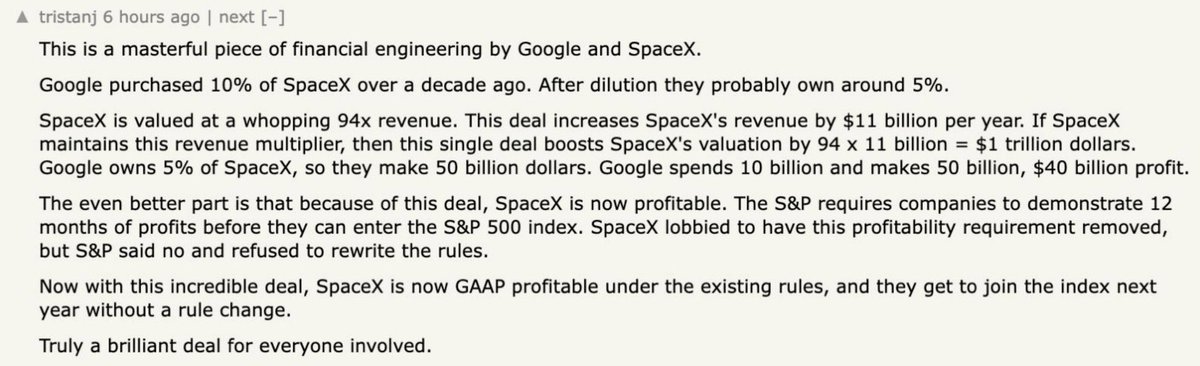
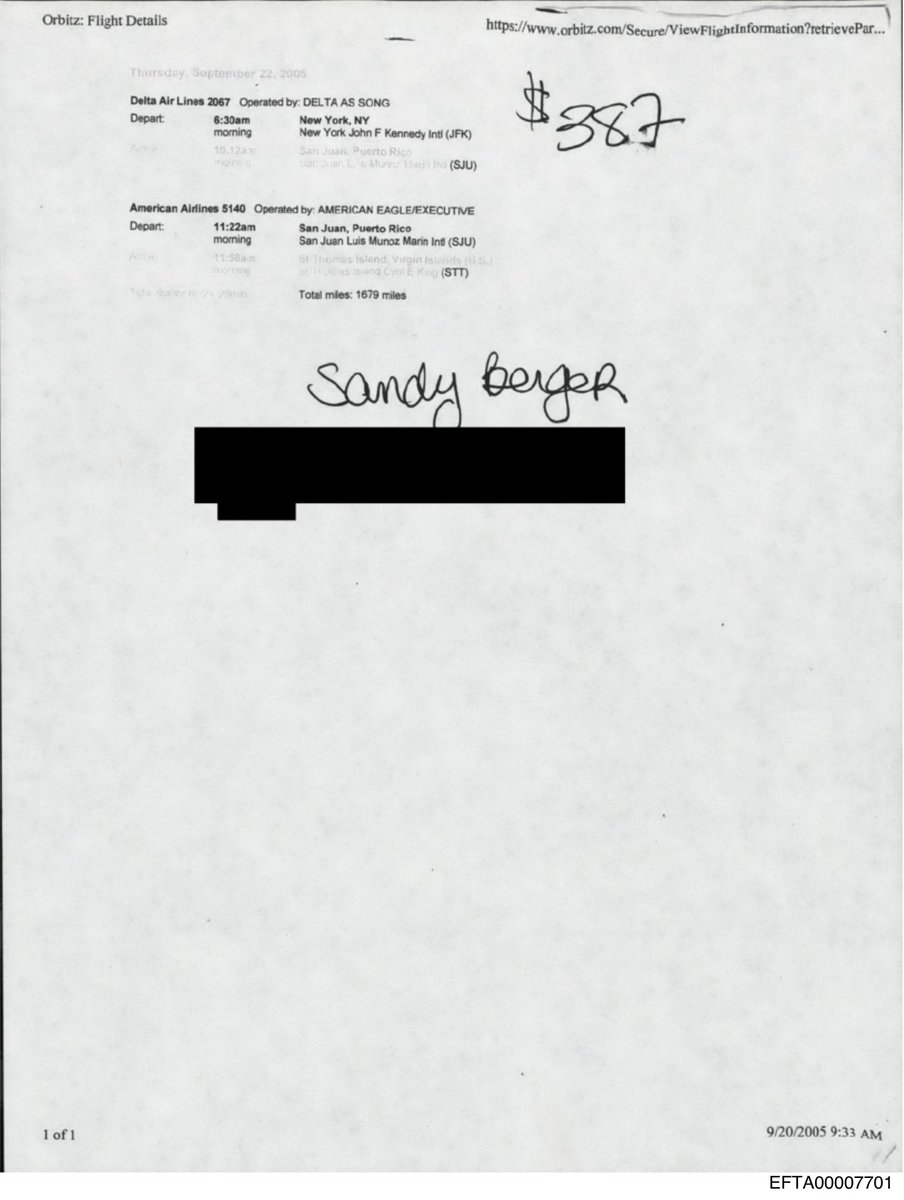
Sandy Berger flew to Epstein Island on a flight purchased by Jeffrey Epstein in 2005, two weeks after being sentenced to 100 hours of community service after illegally removing highly classified documents from the National Archives relating to 9/11 and intentionally destroying some of them.

5
2
9
2,116
ǤλⱠⱠØ retweeted

Jun 9
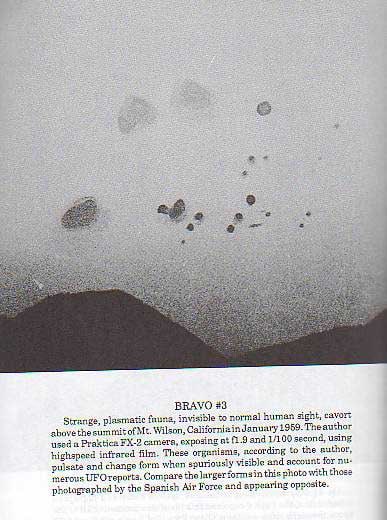
Trevor James Constable told us all about sentient plasmoid life 70 years ago.
He called them ‘Sky Creatures’ and he told us exactly how to photograph them.
UFOlogy is a treadmill in a black hole.
Jun 9

David Grusch mentions knowledge of “sentient plasmoid life.”
What exactly does that mean?
49
177
1,154
74,704
ǤλⱠⱠØ retweeted

Jun 7
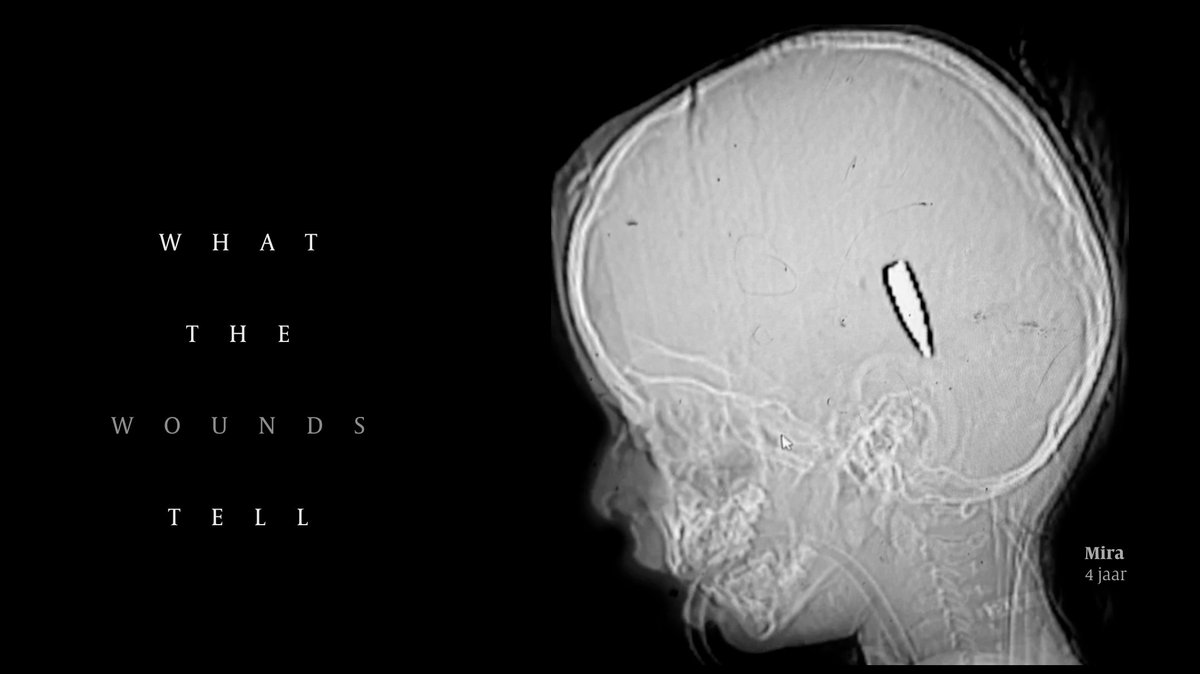
Crazy that this is getting barely any coverage. This year’s European Press Prize was just awarded to an investigative report by the Dutch newspaper De Volkskrant. It is entitled “What the Wounds Tell” and in it the journalists Maud Effting and Willem Feenstra document the cases of 114 children in Gaza under the age of 15 who were struck by a single bullet to the head or chest. Almost all of them died or were left severely disabled. They chose to document only the cases of boys and girls under the age of 15 (though often much younger: aged 3, 4 or 7) because these are children who can be immediately identified as such. “A single bullet in these parts of the body is a clear indication that these children were deliberately targeted“, the two journalists write.
This is the article: volkskrant.nl/kijkverder/v/2…
494
24,284
48,116
1,450,606
ǤλⱠⱠØ retweeted

Jun 2
The most basic way AI could blow up imo. I'm not saying it does but this is the most obvious way I can see it happening
- Per seat subscriptions are massively subsidized. The flat fee was priced way below what heavy usage actually costs
- For real business use you have to move to the API anyway. Data protections, work integrations and compliance officer approval
- On the API you pay metered rates, and businesses are burning credits way faster than the per seat pricing ever led them to expect
- This is everywhere right now. Internally for us, Codex users, Uber torching its entire 2026 AI budget in 4 months, the Microsoft comments. Just go try an API
I shared more on this here: x.com/Shaughnessy119/status/…
- And I don't think most businesses have the money to keep paying increasing API rates without a real change to how they operate (caps needed)
- Because they have a cheap alternative. They can reach open source models through any aggregator (OpenRouter, Venice, Baseten, Together) and still get strong privacy. Venice private data centers, or E2EE/TEE serving GLM 5.1.
More on open source inference provider raises here: x.com/Shaughnessy119/status/…
- And the discount is enormous. DeepSeek V4 codes within a hair of Opus on SWE bench at roughly 1/30th the price, and the cheapest open models run closer to 1/100th
- Chinese labs open source frontier grade models. The model is the single biggest cost an inference provider has, and they get it for free
- This idea dies if China goes closed source. That is actually bullish web2 AI labs, because if everyone is closed you pay up for the best intelligence. China goes closed source if they are tired of giving away an asset and they want the revenue and data flow to train new models
- Is this showing up in web2 AI lab revenue yet? No. Revenue is off the charts. Anthropic went from 9B to 47B run rate in five months
- So go forward, what happens?
- I think revenue slowly starts leaking to the open source inference providers (see Venice usage, OpenRouter's $113M raise, Baseten is raising at $11B or triple its valuation in three months, on revenue that went from $200M to $600M annualized in a single quarter)
- It doesnt move overnight, but it caps the labs ability to raise prices, and margins are already deeply negative. OpenAI is reportedly running near negative 122%
- With margins that bad there is no cash flow, so the labs are fully dependent on outside capital to buy GPUs, train models, and keep subsidizing usage (I.e. see Google tapping $80b equity sale, granted 30b for employee RSU taxes. Clearly they think Equity is overvalued or you wouldn't sell it)
- The break comes when that capital stops. Pricing is capped so margins cant improve, and the moment investors lose conviction on payback, the whole flow reverses
- Why would they lose conviction on payback? Back to the start - the inability to improve margins or get businesses to pay more
- This is also limiting, if we start making new drugs with AI or create entirely new businesses, you better believe people will pay up to the max for AI usage
Jun 1

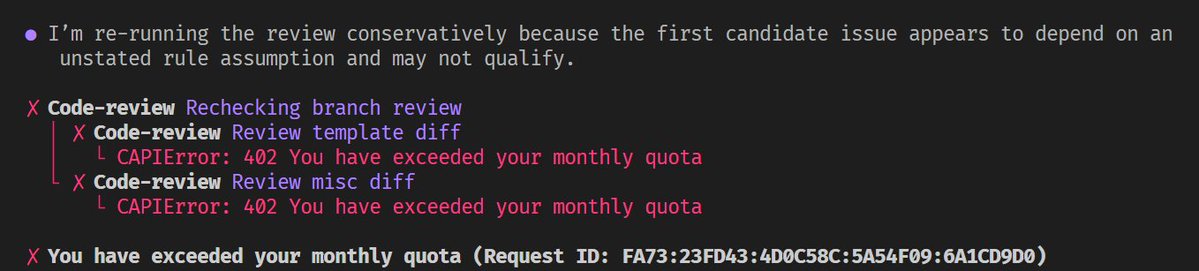
🦔GitHub Copilot switched to token-based billing this morning and users are already out of credits. Pro subscribers paying $39 a month are reporting 60% of their credits gone in two hours of normal use. One user lost 20% of their allowance from a single file review with no code changes. Another hit their monthly cap before the calendar even flipped to June.
Orgs with shared token pools have no way to see individual usage, so entire teams get cut off when one person runs a heavy prompt. Users are canceling and moving to Claude Code and Codex. GitHub community forums are on fire.
My Take
Flat-rate AI subscriptions were always subsidized. Everyone in the industry knew it. Today the subsidy ran out for a few million developers at once. The problem is a lot of companies already restructured around these tools. They cut headcount and told remaining engineers to lean on Copilot instead of building skills internally. Those companies now depend on a tool whose cost just became unpredictable and whose usefulness completely changes when you have to ration prompts to stay under budget.
The developers moving to Claude Code and Codex will hit the same wall eventually. Every AI provider faces the same unit economics. Anthropic filed its S-1 this morning, and the durability of its revenue depends on whether customers stick around once real pricing kicks in everywhere. If a $39 subscriber cancels after one day because the tool became unusable, multiply that across millions of seats and the churn risk becomes very real.
Today showed what happens when AI pricing meets reality. The companies that built their workflows around cheap tokens just discovered the tokens aren't cheap anymore and the people who knew how to do the work without them are already gone.
Hedgie🤗
175
263
2,266
2,078,089
ǤλⱠⱠØ retweeted

Jun 5
Y’all need to check this out, the Albania situation is getting more intense by the day. Apparently, Saudis entered the chat!!
This is top-tier reporting.
142
2,286
5,598
699,715

this is the best bitcoin podcast episode i’ve listened to all year, especially for those that are interested in quantum
a background note: i first listened @danboneh talk on the topic of quantum what must’ve been almost 10 years ago. to me, he’s the one expert who demonstrates the most knowledge depth (and humility) on the subject, and teaches me the most when he speaks
recently, dan helped come up with a way to run Shor’s algorithm with 10x fewer physical qubits than previously thought (co-author on the 2026 Google paper)
my tl;dr of the episode:
his baseline characterization of quantum computing isn’t as something that might be fundamentally impossible. that error correction would get exponentially hard in the same way that breaking elliptic curve cryptography in the classical sense gets exponentially hard with the number of bits in a key
It is hard for sure, but not ”exponentially hard”
at the same time he doesn’t personally think CRQCs powerful enough to attack bitcoin is going to happen before 2035
(sidenote: it should be obvious to anyone that the deadline to reach safety isn’t ”the date when the smart people think an attack is most likely to happen”, but way before then. the question is rather ”by when is it even at a small risk?” and optimize for that)
he gives the reason for why it is unlikely to happen before 2035: it is not a principle of physics or of human progress, just a matter of funding. if quantum had the same level of funding that ai does, the calculus would be entirely different (the threat of attack would come much sooner)
to connect what he say to what some quantum critics like @jamesob, @reardencode or @robin_linus within the bitcoin community are saying, he does have the humility to acknowledge that it is *possible* error correction doesn’t scale. nobody knows for sure until it is proven.
that is a wholly different thing than confidently rejecting outright that it will ever scale, as if it’s something you can know and base your plans on, which is effectively what @jamesob, @reardencode and @robin_linus are doing
he compares quantum computing to flight, the wright brothers, and thinks that quantum computing already had its ”kitty hawk” moment (when the wright brothers flew 37 meters in 1903) with the google willow chip in 2024 (proving scalable fault-tolerant quantum computers are possible)
”error corrected quantum computing is not a theory, it has been proven to work”
regarding the notion that no quantum computer has factored a number higher than 21, dan says that that's true, but that it's only just now that these tools are coming together. it's happening right now.
the entire podcast is a treasure trove of information and is probably the single highest signal thing you can listen to if you want to get up to speed on the latest in ”quantum computing vs Bitcoin” from someone who actually knows what he’s talking about
congrats @isabelfoxenduke on this stellar interview

BITCOIN RAILS #61: QUANTUM CRYPTOGRAPHY FOR BITCOIN | with Dan Boneh @danboneh
🔗 YOUTUBE: youtu.be/F-HG87VJj_k
🌿 SPOTIFY: open.spotify.com/episode/7ly…
One of the most prolific and influential cryptographers in the world, it’s difficult to fully quantify the impact that Dan Boneh has had on Bitcoin and digital assets more broadly.
Through both his own research and his mentorship of some of the space’s most important contributors — e.g. Andrew Poelstra, @benediktbuenz, and @robin_linus — few people have done more to shape the cryptographic foundations underlying modern blockchains and digital finance.
More recently, Dan co-authored @Google's widely discussed paper, “Securing Elliptic Curve Cryptocurrencies against Quantum Vulnerabilities,” which reduced prior estimates of the resources required to run Shor’s algorithm against the elliptic-curve cryptography used by Bitcoin.
The paper reignited debate around quantum computing timelines and the long-term security assumptions behind modern cryptocurrencies.
In this episode of Bitcoin Rails, Dan and I discuss the current state of quantum computing, its potential implications for Bitcoin, and how he believes the Bitcoin community should think about preparing for a post-quantum future over the coming decade and beyond.
And yes, Dan shares his take on the “when quantum” question in the interview, among other key perspectives.
This episode of Bitcoin Rails is brought to you by my NEW sponsors:
LayerTwo Labs @LayerTwoLabs — developing research, software, and technologies for scaling Bitcoin via the integration of Drivechains (BIP 300/301)
Hashi on @SuiNetwork — a primitive for executing Bitcoin Defi transactions, without having to trust a federated bridge or other centralized entity
BitBox @BitBoxSwiss — an open-source Bitcoin-only hardware wallet, with smooth UX and no compromises on security. Check out Bitbox [dot] swiss and use code BITCOINRAILS to get a discount
TIMESTAMPS:
00:00 — Intro and Dan’s history with cryptography and Bitcoin
11:44 — Shor's algorithm: how a 1994 paper became cryptography's most important threat
16:39 — Building a quantum computer: superconducting qubits vs neutral atoms
25:37 — When should we start worrying about quantum computers? The timeline debate
31:51 — Have we already reached quantum computing's “ahá” moment?
39:09 — Inside the Google paper: how Shor's algorithm was optimized
49:57 — The Bitcoin mempool attack and the 10-minute window
59:21 — Mitigation: what should Bitcoin do to prepare for quantum?
1:11:54 — Hash-based vs lattice-based signatures: Dan's case for lattice
1:23:15 — ZK proofs, BIP361, and what to do with Satoshi's coins
1:31:52 — Encrypted mempools and MEV
1:38:29 — Why Bitcoin will survive quantum and Dan's message to Bitcoin builders
23
44
385
65,566
ǤλⱠⱠØ retweeted

Jun 2
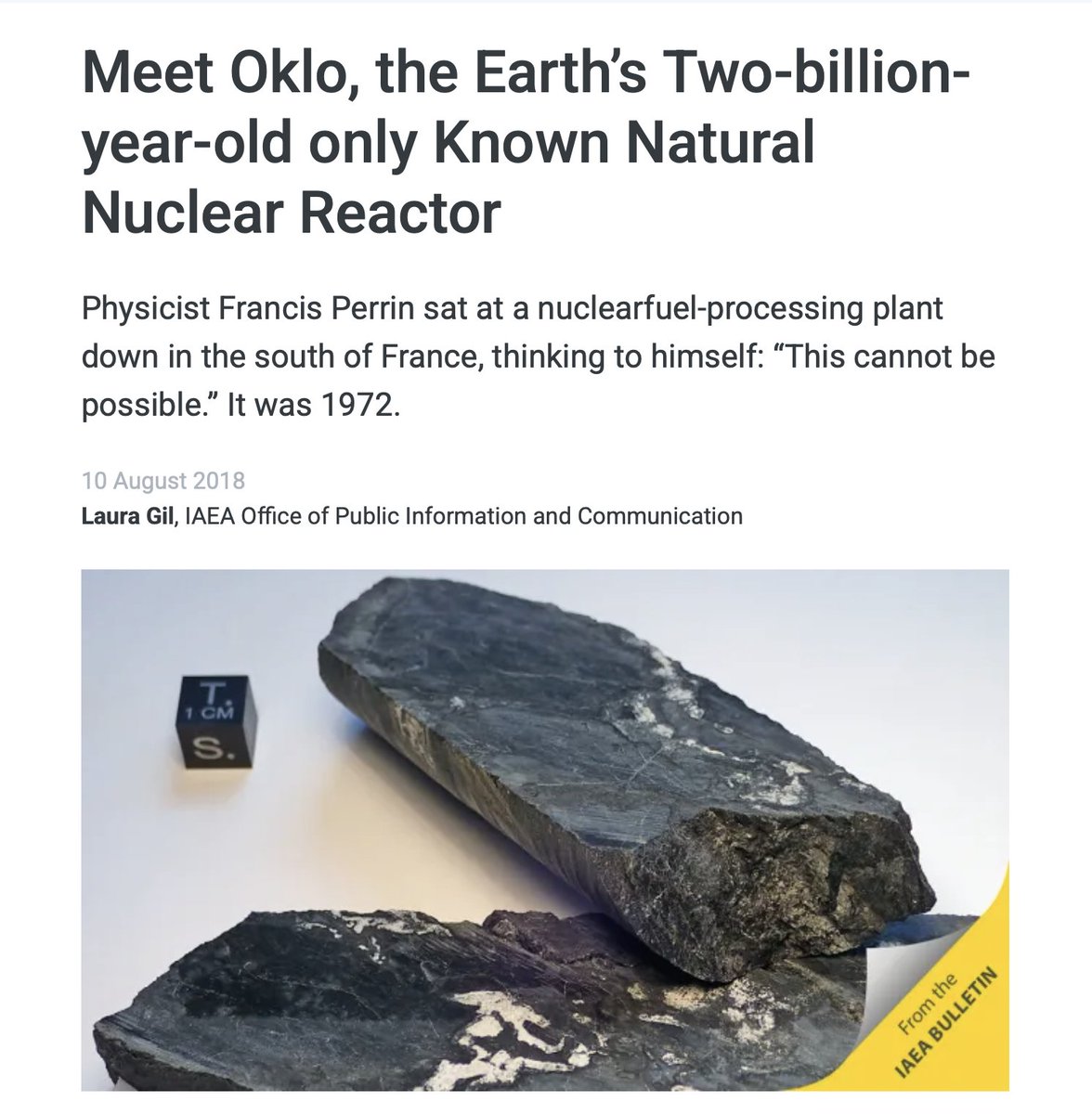
2 billion years ago, a nuclear reactor geologically self-assembled and turned itself on.
No humans were involved. Only rock, groundwater, & natural uranium.
It ran intermittently for hundreds of thousands of years.
Here's the story of Oklo (not the company, but the place!):🧵


40
506
3,675
611,801

let me give a proper explanation on how this shit works because seeing a lot of fake news
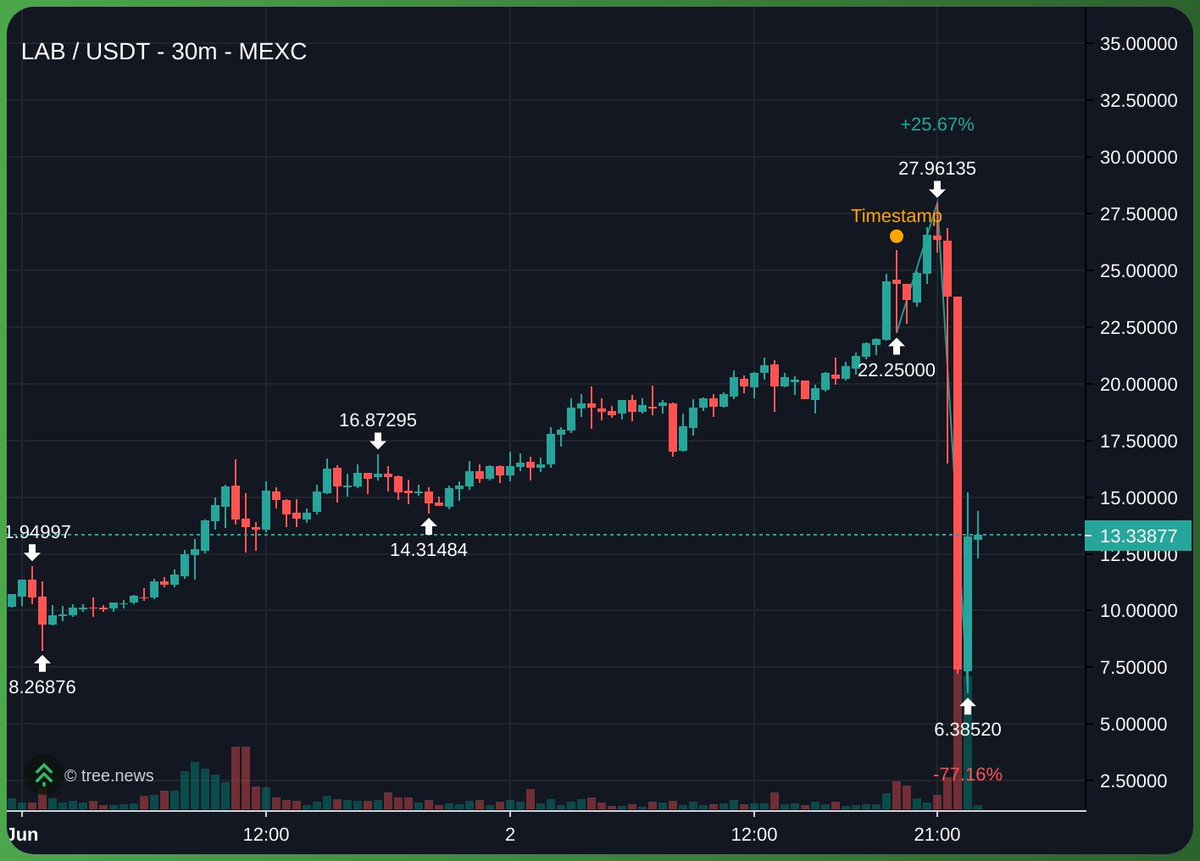
when you see these insane candles happening on random tokens like LAB, RAVE, Momentum etc it’s because of a group of people do what is called “active market making”
almost all of these “active market makers” are based in China/Asia. many claim to be able to achieve results like RAVE and LAB but few can actually properly deliver
typically these AMMs will either approach projects prior to launch or after launch (if certain conditions can be met). but scammy projects also look to approach them
the deal is usually that the AMM will put up the capital needed to push the token to the insane highs you see, and in return for the project letting the AMM “crime” their token they split whatever the profits are once the crime is complete
so how does the crime work and how do the people involve profit?
the first thing you’ll notice is that all these tokens have perp listings (usually binance perps) but very few spot listings
this is intentional. the first major requirement for this crime to happen is absolute control of the spot supply of the token
by that I mean the team/insiders need to control basically the entirety of the float. RaveDAO for instance, insiders were estimated to control over 98% of the spot supply
this is vital because spot supply that isn’t controlled by insiders can be sold into the spot price being driven up by perps. to help prevent this is another reason why tokens with basically no spot listings or liquidity are chosen. if there is a lot of spot supply ready to be dumped on the AMM then it could bankrupt them, meaning the crime has failed
as it is their capital at risk, AMMs are even asking projects to put them on all the multisigs for the token supply, to ensure that nothing can be dumped while the crime is happening
so once supply is completely controlled then what?
these AMMs don’t just commit the crime from one or two binance accounts. the accounts would likely be frozen instantly. instead they have 1000s of KYC’d accounts which operate in unison to drive the perp price up
because no one has supply to sell, there isn’t any other way to drive the price back down except to short
but this is where they get you
the AMM can squeeze any short placed, as every shorter will have their breaking point. either their own tolerance or a liquidation point. every short that gets liquidated or stopped out is profit for the AMM
add onto the fire that because of huge dislocations between underlying and perp price, you get some insane funding rates. as I write this LAB is -1% an hour shorts pays longs (over 8000% a year). this makes it even harder for shorts to hold their position, plus the AMM is making bank on their long positions funding
BriskCapital is right when he says they wouldn’t have let him win with this size of a short position, especially publicly. his mistake was trying to short it in the first place, which is exactly what the AMMs want you to do. where do you think the 7 figs he lost went to?
then whenever they decide the crime is complete they pull the rug and you see the collapse candle to zero. because they are the only entity holding the bid up, they have complete control over when and how the price collapses (meaning they can also likely join in on the short)
my advice is to not touch these tokens. if you want to feel something just buy a small amount for fun. definitely do not buy anything sizeable, do not make any trades on leverage and DO NOT SHORT
you are trying to compete against an entity that has complete control over where price goes
Jun 2

Lots of you saying I got unlucky on $LAB and should've held the short longer. Let me be clear. I was the target. If I kept that position open they would have pushed it to $40 no question. This market hunts liquidity and I am not here to get wiped out completely.
This is exactly why I probably won't share any shorts with size on coins like this in the near future. Too dangerous. I closed to survive. That is how you stay in this game.
61
83
628
144,204
ǤλⱠⱠØ retweeted

Jun 3
I largely think of "crypto" as a failed asset class at this point.
I've written about the causes multiple times. Mainly, most crypto assets are worthless, or have dreadful value accrual, and most founders have abused the lack of guardrails and dumped on people indiscriminately, or are outright scammers.
On top of that we had the Memecoins SuperBullshitCycle, a trend that brought the worst out of people, and sucked everyone's souls & pockets dry. And then came the never-ending wave of DeFi hacks, which has dramatically increased since last April.
This can seem contradictory, as adoption of "crypto" is surging:
> Stablecoin adoption continues growing fast
> Politicians in the US are openly pro crypto
> Tradfi is looking at tokenizing everything
> Usage of equities & commodities perps is exploding in offshore and DeFi exchanges
> The US is in the early stages of adopting perps
> Prediction markets are becoming part of everyone's daily lives
These are more "blockchain" than "crypto", although there are some exceptions with a token in those fields, most of which have been performing very well in recent months. A few among those exceptions even distribute most revenue to holders via buybacks (Hyperliquid in particular), which is what every investor actually wants to see to be invested in a good business rather than a fleeting narrative.
We also have the privacy category. The one old school crypto category that is not liquid diarrhea. The world needs private non-custodial stores of value.
Crime in particular needs privacy, as proven by the DoJ confiscation of $15 billion in Bitcoin from Cambodia's pig butchering farms, legal filing for which was submitted on October 8, 2025 (coincidentally right before 10/10). Of course, everyone needs privacy, not just criminals, but crime flows are real, and large.
The asset attracting the most flows in this niche is Zcash. Zcash's recent performance has been fascinating, as it has been trending higher with bitcoin trending lower, a sign of real reallocation among bitcoiners.
Another crypto category that is not dead is the "AI" category, full of high flying, fundamentally lacking, narrative driven tokens. The standout exception is Venice, a private AI platform with growing users and revenue, whose tokens are directly backed by the business rather than a narrative.
So one could say old "crypto" is a failed asset class, but from the ashes come new beginnings, and the new face of crypto is one heavily dominated by the needs of Tradfi, prediction markets, AI, and privacy.
Crypto sucks. Long live crypto.
165
501
1,170
238,414
ǤλⱠⱠØ retweeted

Jun 2
Hey There Melania (Official Music Video)
104
533
2,007
160,908
ǤλⱠⱠØ retweeted

Jun 2
Today, Trump appointed Bill Pulte as Director of National Intelligence.
I’ve spent nearly a year investigating the Epstein files.
When I saw the announcement, I went back into my records and searched one word:
Pulte. 🔥🧵

110
3,200
9,304
549,147
ǤλⱠⱠØ retweeted

Jun 2
The next evolution of Hermes Agent is here!
Introducing Hermes Desktop: everything you love about Hermes, now native on your machine.
First demoed in Jensen's GTC keynote, it's now in public preview.
1,238
1,466
12,813
5,822,200
ǤλⱠⱠØ retweeted

🚨BREAKING: A cognitive scientist from MIT has mathematically proven that evolution guarantees we see zero percent of true reality, that most consciousness in the universe exists without a body, and that non-human intelligences with a wider window on reality than ours can reach in and manipulate it the way a programmer manipulates a video game.
Donald Hoffman (@donalddhoffman) is a cognitive scientist at UC Irvine who has spent 40 years building a mathematical theory of the observer. His work was cited by John Wheeler in the "It From Bit" paper. He studied under Marvin Minsky at MIT, spent two decades secretly meeting with Francis Crick to study consciousness, and has nine specific mathematical conjectures on the table that would derive general relativity, quantum field theory and the Big Bang from a single framework. The top high-energy physicists in the world, Nima Arkani-Hamed and Nobel laureate David Gross, are already saying spacetime is doomed. Hoffman thinks he knows what replaces it.
This interview is the first time he has publicly laid out what his mathematical model explains about alien life, embodiment and the structure of reality.
It already derives time dilation and quantum wave functions directly from differences in observer window size. Physics has spent a century failing to solve the measurement problem because it has been looking in the wrong place. The observer has to come first, and no physicalist framework can get you there.
A consciousness with a larger observer window has access to the underlying structure of our reality in ways we can't perceive or counter. A craft going Mach 40 instantaneously in our headset could be a leisurely maneuver in theirs.
The implications for UAP and alien life are immense.
Embodiment, being locked into a body with fingers and toes as your only interface with the world, is a probability zero anomaly in the full space of possible minds. He also says current large language models are dumber than cucumbers. His new framework, the recursive trace logic, is a completely different architecture, and some of the biggest names in frontier AI have already come to him about it.
The framework has no ceiling, and the implication is a single unified consciousness exploring itself through an unbounded number of perspectives, each one capable of waking up.
Death, in this framework, is just the closing of an icon on the desktop.
Full conversation is live now.
703
2,051
11,673
1,641,822
ǤλⱠⱠØ retweeted

Same bullshit
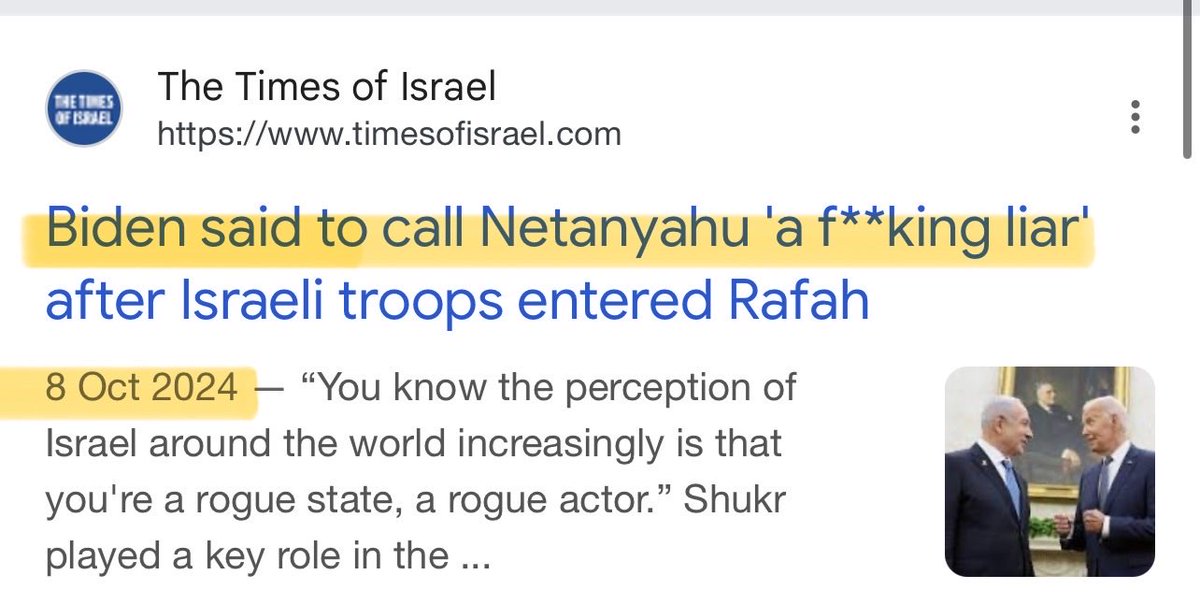

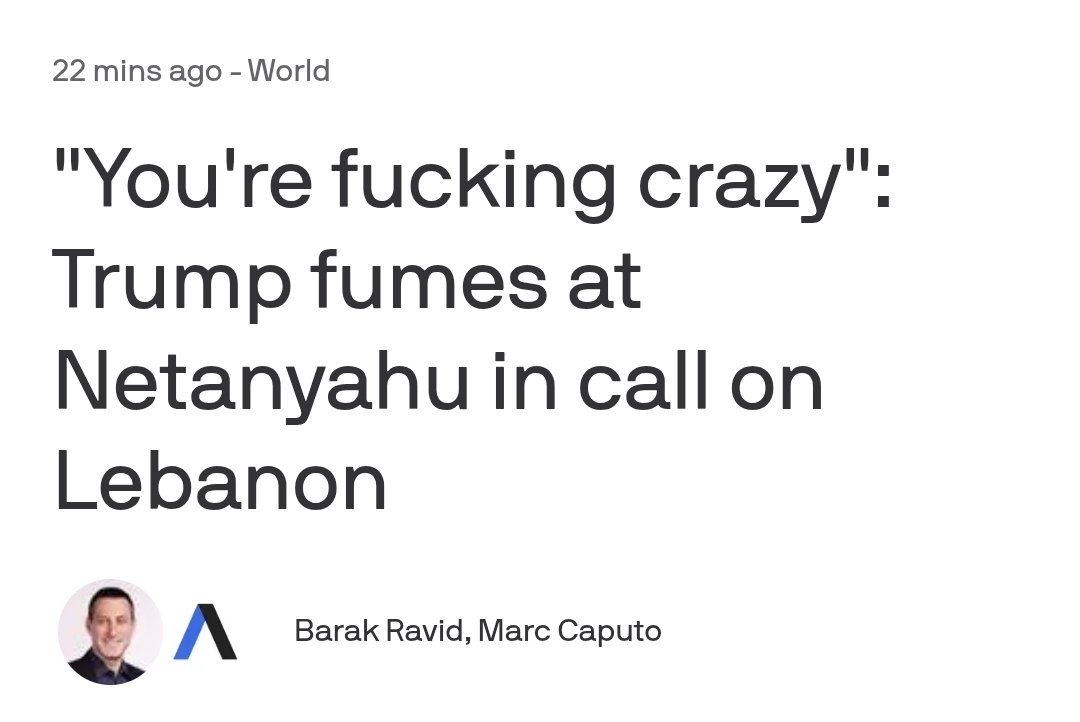
🇺🇸🇮🇱 According to Axios, Trump told Netanyahu on a call Monday: "You're fucking crazy. You'd be in prison if it weren't for me. I'm saving your ass. Everybody hates you now. Everybody hates Israel because of this."
We've seen this before. Right before the Israeli-American strikes in summer 2025, the media manufactured similar stories about Trump and Bibi falling out. This could equally be messaging aimed at the American audience increasingly frustrated with Israeli influence in Washington.
37
1,100
6,061
156,073
ǤλⱠⱠØ retweeted

May 31
One of the most amazing things I’ve ever seen: a standing ovation for the full Daraxonrasib results
I feel inspired and energised, to put it mildly — we have a targeted therapy for pancreatic cancer now, and nothing is undruggable anymore
104
1,499
9,559
1,975,610
ǤλⱠⱠØ retweeted

Jun 1
Barak Ravid has made a whole career out of these articles telling Americans they don't need to worry about the latest horrifying war because the president is taking care of it. Some Ravid headlines from the Biden administration:
Biden “running out” of patience with Bibi as Gaza war hits 100 days
Scoop: Biden in “frustrating” call told Bibi to solve Palestinian tax revenue issue
Biden’s ultimatum to Bibi: Change Gaza policy or we will
White House temperature is “very high” ahead of Biden-Bibi call
“We won’t support you”: Inside Biden’s ultimatum to Bibi
Israel and U.S. deeply divided in meeting on key Rafah operation issues
Biden and Bibi “red lines” for Rafah put them on a collision course
Biden-Bibi clash escalates as U.S. accused of undermining Israeli government
Biden and Netanyahu hold first call in a month amid public split
Biden breaks with Netanyahu but sticks with Israel
Biden on hot mic: Told Bibi we needed “come to Jesus” meeting on Gaza
Biden, in rare criticism, warns Netanyahu that Israel risks losing global support
Biden, in rare criticism of Bibi, says pause in Gaza fighting should have come sooner
Scoop: Blinken warns Israeli officials global pressure will grow longer war goes on
Israeli minister lambasted at White House about Gaza and war strategy
Scoop: Biden tells Bibi he’s not in it for a year of war in Gaza
Blinken unloads on Bibi: “You need a coherent plan” or face disaster in Gaza
Scoop: White House cancels meeting, scolds Netanyahu in protest over video
Netanyahu irked by “critical” Harris comments
Jun 1

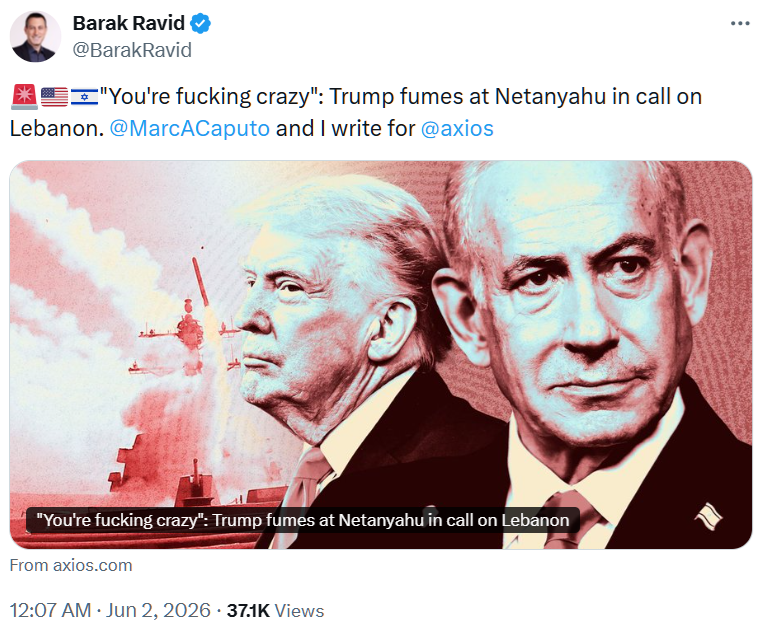
like clockwork we have another Mossad asset Barak Ravid "OMG TRUMP YELLED AT NETANYAHU AND ACTUALLY HATES HIM OMG ISRAEL AND THE US ARE TOTALLY SEPARATE AND THE US IS RESTRAINING THEM, IRAN MUST SIGN A DEAL NOW IMMEDIATELY OMG OMG OMG" hasbara piece. He's been churning out this bullshit for almost 3 years straight now, "OMG BIDEN IS TURNING ON NETANYAHU, OMG OMG"
57
1,074
2,968
132,973
ǤλⱠⱠØ retweeted

🚨: You’re closer in size to the entire observable universe than to the smallest possible scale of reality—the Planck length—by roughly 400 million times.
Let that sink in.
139
1,067
5,745
459,074
ǤλⱠⱠØ retweeted

May 29
27
114
434
62,697

Rule changes for the SpaceX $SPCX IPO:
Index providers waived the profitability requirement and cut the seasoning window from 90 days to 5.
This forces over $30 trillion in passive 401k and retirement money to buy SpaceX at IPO valuations.
Bloomberg Intelligence estimates S&P 500 funds must absorb 19% of SpaceX's float within 6 months.
Russell 1000 and Nasdaq 100 funds will absorb 24%.
The rules built to protect passive investors:
1. S&P 500 has required 12 months of trading and 4 quarters of GAAP profitability since 2002. Both waived.
2. Nasdaq cut its inclusion window from 90 trading days to 15.
3. FTSE Russell cut its to 5.
All three benchmarks are now structured to buy SpaceX at IPO pricing.
550
1,588
10,013
11,645,828
ǤλⱠⱠØ retweeted

An engineer built an interactive book on data structures and algorithms of 680 pages:
39
733
5,939
352,265