
Building the world’s first AI-powered cross-border compliance platform, starting with sales tax, VAT and GST 🌎
Joined May 2021
- Tweets 606
- Following 894
- Followers 1,124
- Likes 423
145 Photos and videos










Sphere retweeted

Feb 12
Every layer of global commerce has been solved by software.
Except one.
@stripe solved payments. @flexport solved logistics. @deel solved payroll. But compliance - the rules that govern what you owe when you sell across a border - is still a patchwork of consultants, spreadsheets and guesswork.
There's a reason it's last.
Payments has largely been commoditized. A dollar moves the same way whether you're sending it to London or Lagos. Logistics can be optimized. A shipping container is a shipping container. But compliance doesn't work like that. You can't standardize it, because every country's tax rules are an expression of its sovereignty.
Brazil taxes software differently than Germany does. India's GST regime looks nothing like Japan's consumption tax. And here's the thing - there isn't a whole lot of alignment.
That’s because every tax code is that country codifying its own economic priorities, cultural values, and political environments. What gets taxed, what is exempt, what gets incentivized - those are policy choices that reflect what a society actually cares about.
This is, essentially, a complex adaptive system: 190 countries, all acting as independent players, all changing their rules on their own timelines for their own reasons and in responses to each other. One country raises a threshold. Another introduces a new digital services tax. A third rewrites its e-invoicing requirements. None of them are coordinating with each other. And every change ripples out and interacts with every other change in ways that nobody planned for.
If you’ve worked on problems like weather modeling or autonomous driving - systems where you can’t just map the state of the world once and call it done, where the environment is changing while you’re trying to understand it - that’s the kind of problem this is.
The engineering challenge at @get_sphere is building a system that understands all of these different regimes - really understands them, not just stores them - and can reason about how they apply to any given transaction, even as the rules themselves are changing.
This is, by a wide margin, the hardest problem I’ve ever worked on.

1
1
4
584
Sphere retweeted

Feb 8
So, @get_sphere is hiring a Founding Growth Lead in SF right now.
You’ll work closely with @nrudder_ (founder/CEO) to help amplify the team’s brand, build out direct & partner channels, establish Sphere’s presence in international markets, and more.
Lmk if you’re interested.
jobs.ashbyhq.com/sphere/5210…
5
5
64
5,716

26 Nov 2025
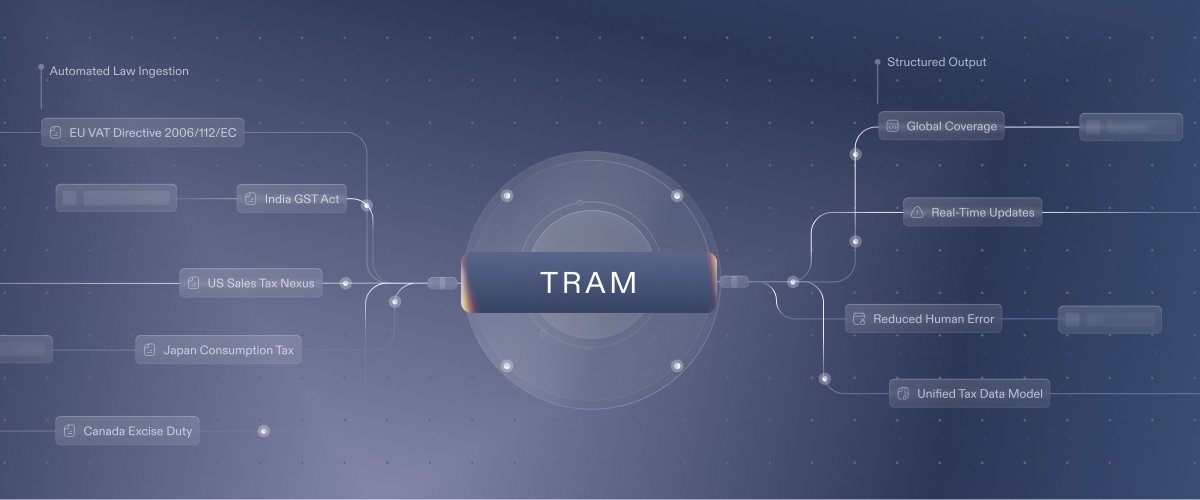
Curious about how we built TRAM and what the future of tax research looks like? Look no further 👇
26 Nov 2025

Building an AI-powered system that ingests, codifies and monitors the world's tax law is no easy feat. It has never been done before.
In our whitepaper on how we built TRAM (Tax Review and Assessment Model), our AI Lead, @bowcut_a, steps through:
🌍️ How we built the world's first AI-native tax engine
🪜 The steps TRAM takes to balance accuracy with scalability
🔍️ How we evaluate TRAMs outputs, and
🏰 TRAM's moat and how it improves over time
If you want to build systems that are at the forefront of AI and international trade, @bowcut_a is looking for someone to join his team
Whitepaper: getsphere.com/blog/building-…
AI Engineer role: jobs.ashbyhq.com/sphere/4e3c…
2
5
1,045
Sphere retweeted
25 Nov 2025
On the back of our Series A from @a16z, I want to sound the conch to my fellow Australians in the tech and startup space 🇦🇺🐚
If you are an Aussie who wants to move to SF - which let's face it, is still the absolute epicentre of AI / tech - then @get_sphere will sponsor your visa and pay for your relocation.
The Aussie mafia here is strong.
Your career will hit an inflection point.
Come be a part of it 💪

3
2
17
1,270
Sphere retweeted

21 Nov 2025
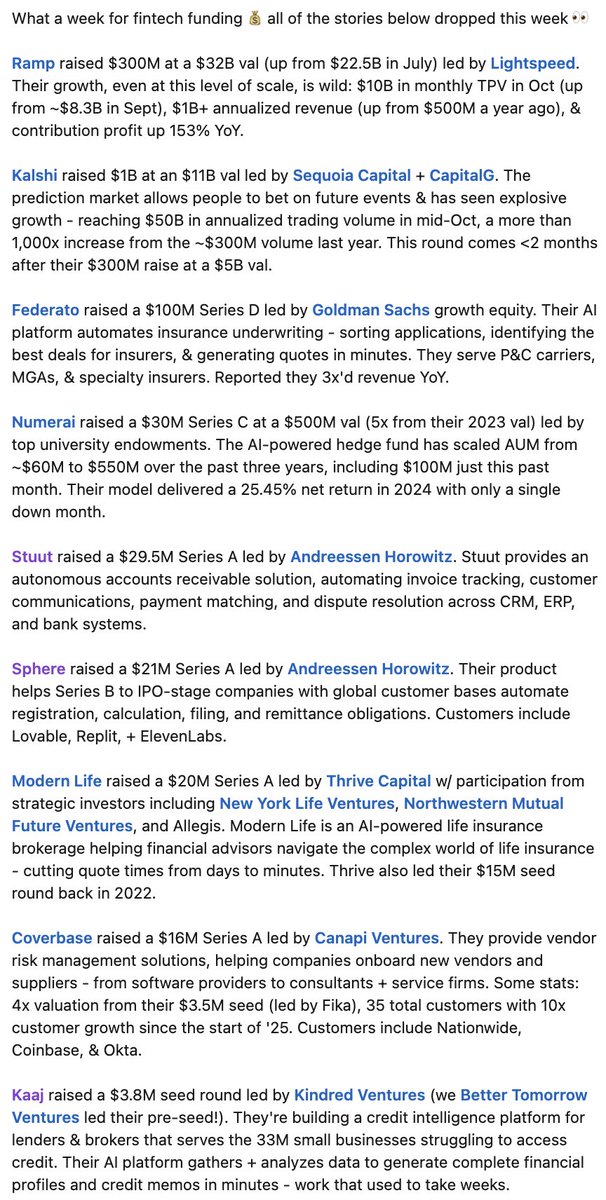
What an insane week for fintech funding
@tryramp --> $300M at $32B val @lightspeedvp
@Kalshi --> $1B at $11B val @sequoia
@Federato_AI --> $100M Series D @GoldmanSachs
@numerai --> $30M Series C at $500M val
@StuutAI --> $29.5M Series A @a16z
@get_sphere --> $21M Series A @a16z
@ModernLifeHQ --> $20M Series A @ThriveCapital
Coverbase --> $16M Series A @CanapiVentures
@kaaj_ai --> $3.8M seed @KindredVentures
3
7
74
17,359
Sphere retweeted

19 Nov 2025
Congrats to @get_sphere on their $21m series A led by a16z!
People see the flashy headline, but @nrudder_ has one of the toughest stories of grit and determination I’ve seen at YC. Even people that believed in him in his last business left the company for dead.
13
13
194
31,698
19 Nov 2025
19 Nov 2025
The journey to Series A at @get_sphere was a deeply personal one for me and this interview I did with @aaron_epstein is the unfiltered version.
People say that you should seperate work from your personal life, but when you're a founder they're inextricably linked. A crisis on either side ripples into the other.
I hate lines like "we're just getting started" because the truth is, most founders go through a valley of pain before they get to any sort of validation.
Yes, there's always a long road ahead and you should never become complacent - but the struggle should be acknowledged.
Enjoy.
1
1
7
1,111
18 Nov 2025
.@get_sphere has raised a $21M Series A, led by @a16z with participation from @ycombinator, @felicis, @20vcFund and more.
This marks the beginning of a new type of tax engine - an AI-native system that can help companies expand globally by removing cross-border compliance out of the equation.
When coupled with our 100 local rails into tax authorities around the world, you have a platform that can fully automate the end-to-end compliance lifecycle.
Making going global from day 1 a reality.
Welcome to the team @a16z, @mandrusko1 and a huge thank you to all our customers who believed in us from the beginning.
7
1
17
2,878

New integration: Sphere x Orb! We’ve added support for @get_sphere an AI-enabled cross-border tax compliance platform trusted by top SaaS & GenAI teams. We now support even more ways to automate tax across US sales tax and international VAT/GST. More integrations coming soon 👀

2
12
1,761
Sphere retweeted
30 Sep 2024
The era of going global from day 1 is here.
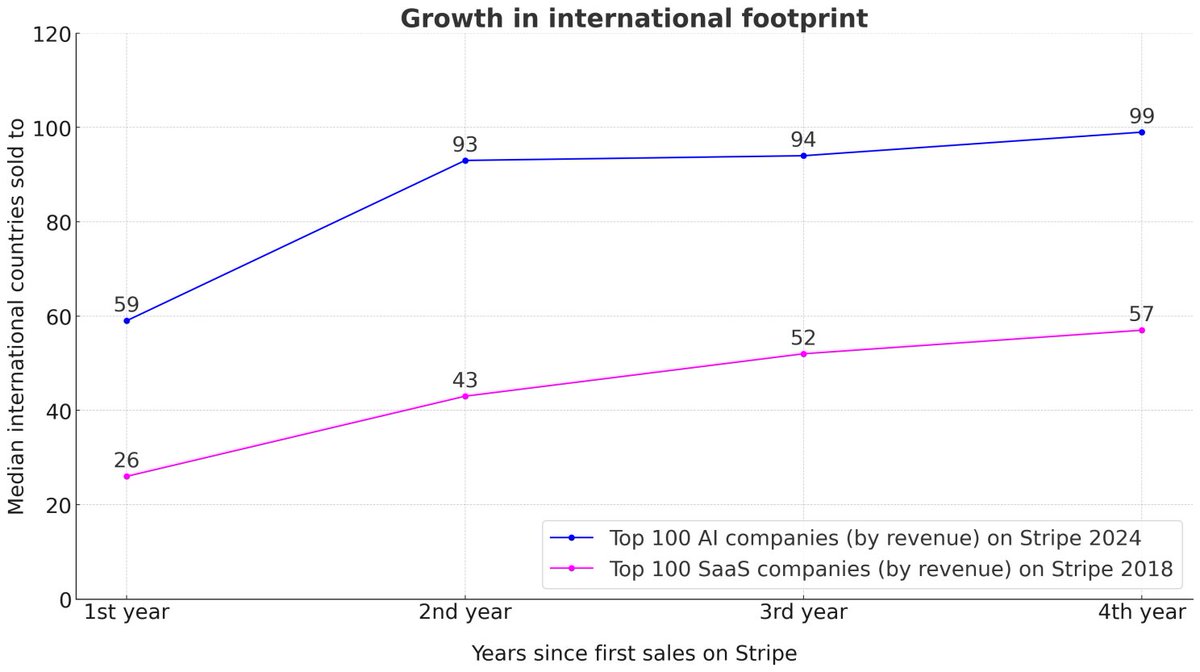
The top 100 AI companies on Stripe sell into 59 foreign countries in Year 1 and 93 in Year 2.
But with instant international expansion comes administrative headaches in the form of tax, e-invoicing, payments and more.
You need to understand the rules, regulations and laws that impact cross border transactions.
And that is exactly what Sphere is helping AI companies like @runwayml, @weaviate_io, @ideogram_ai and @codeiumdev do.
We're training LLMs to ingest local laws and regulations to ensure that all transactions into those regions are compliant.
We're starting with sales tax, VAT, GST but this is much broader than indirect tax - we see this as a global cross-border commerce platform.
Stay tuned.
Credit goes to Emily Glassberg Sands for pulling this data together from Stripe (who we are a proud partner of). Full link to article here: linkedin.com/pulse/how-real-…
1
10
1,147
Sphere retweeted

16 Aug 2024
🌎@get_sphere (YC W22) is on a mission to build the world’s first AI-powered cross-border compliance platform, starting with sales tax, VAT, and GST.
ycombinator.com/launches/Lcb…
Congrats @nrudder_ and the team on the launch!

1
7
54
9,704
Sphere retweeted

24 Sep 2023
nothing like a YC reunion w/thousands of alums to make it feel like SF is best place to be in the world
96
125
2,493
573,130
2 Mar 2023
We're excited to partner with @omarsar0 to share:
🧱 How to structure effective prompts
🧪 How to test and improve LLMs
🔍 Dataset prep and LLM fine-tuning
⚒️ Integrate the latest promoting tools
Find more info and registration details below!
getsphere.com/cohorts/prompt…
1
1
16
3,121
14 Feb 2023
Dive into the nitty-gritty of randomized experimentation at tech companies with a hands-on approach to real-world problems.
Topics include:
☑️ hypothesis tests
☑️ p-values
☑️ confidence intervals
☑️ multiple hypothesis testing
☑️ p-hacking
Register 🔜 getsphere.com/cohorts/implem…
2
850
Sphere retweeted

9 Feb 2023
Get excited to start learning live with @chipro in the ML Systems Design and Strategy course! Dive into how to prioritize, develop, and scale ML projects that solve real-world business problems 💻 @get_sphere #mlops #machinelearning #mlstrategy bit.ly/kdn-sphere-230208

3
12
4,643
9 Feb 2023
Twitter's acquisition sparked conversation on the impact of social media algorithms on content visibility. But what about presentation bias in search?
Learn about the impact and how ML can help overcome challenges in our interview with @softwaredoug.
➡️ ow.ly/TMYl50MNH1u
1
517
7 Feb 2023
How can you use time series forecasting for extreme events such as blizzards and pandemics?
In the final session of their course, @timoschowski and Jan Gasthaus cover making accurate predictions using modern forecasting techniques.
Register now for June: ow.ly/IMk950MLhxs
3
465
6 Feb 2023
Scaling B2B SaaS is back! One month from today, @ibscribe will lead the first session.
If you want to learn how to craft a strategy and tactics to scale your B2B product, this course is for you!
Learn more and register: ow.ly/V4EH50MKOiF
#b2b #business #leadership
1
1
615
1 Feb 2023
In Day 1 of Doug Turnbull's ML-Powered Search, the cohort learned to:
✅ Differentiate relevant from irrelevant results
✅ Develop measures to rank quality
✅ Experiment with manually tweaking a solution
🔗 ow.ly/ooLI50MzqlF
#search #machinelearning #engineering #data
2
3
792
30 Jan 2023
🤖 @amazon's DeepAR is a powerful #ML powered #forecasting method, the 1st model that natively works on multiple time series. Last week, learners in @timoschowski and Jan Gasthaus' cohort got hands-on experience using this method.
👀 what else is covered: getsphere.com/cohorts/modern…
5
479