
Start With #Business Outcomes, Not #AITools
bit.ly/4bbdROQ
#AIStrategy #ArtificialIntelligence #AIAdoption #TechLeadership #DigitalTransformation #AIImplementation

2
6
9
101

20h
A useful AI prototype should not prove that AI is interesting. Everyone already knows AI is interesting.
The prototype should prove whether one defined business capability is feasible, useful, and worth expanding. That means the scope has to be bounded. Do not prototype “an HR assistant.” Prototype policy question answering from approved handbook sections, with source references and escalation guidance. Do not prototype “a finance chatbot.” Prototype invoice discrepancy review using invoice data, purchase orders, vendor terms, and business rules.
A good prototype should test the real shape of the work: inputs, outputs, documents, permissions, human review, workflow usefulness, logging, and failure detection.
For Microsoft-based organizations, the prototype should also test the implementation path: dot net, Azure OpenAI, SQL Server, SharePoint, Microsoft 365, internal A P Is, ASP.NET Core, OpenAPI, logging, review, and feedback.
The production workflow behind this video was built using the same methodology I apply for enterprise clients — I identified a real production bottleneck, evaluated AI options, and built a .NET-integrated workflow using AI tools to deliver it faster, better, and at lower cost. The thinking that improved my own workflow is the same thinking I bring to yours.
Explore more practical, applied enterprise AI insights at AInDotNet.com.
#EnterpriseAI
#AIPrototype
#AIImplementation
#AIAssistants
#MicrosoftAI
#DotNet
#AzureOpenAI
#BusinessAutomation
#WorkflowAutomation
#AIGovernance
#AIArchitecture
#SQLServer
#SharePoint
#Microsoft365
#APIs
#OpenAPI
#SemanticKernel
#ProductionAI
#AInDotNet
2
1
2
38

This video explores a strategic approach to AI use, emphasizing the "pareto principle 80 20 rule" where AI handles the bulk of manual tasks. By implementing effective "productivity systems" and a robust "ai system", businesses can achieve significant "workplace automation". This allows humans to focus on critical judgment, showcasing how to use ai effectively for greater output.
#AI #ArtificialIntelligence #AIProductivity #ProductivitySystems #WorkplaceAutomation #BusinessAutomation #AIAutomation #ParetoPrinciple #8020Rule #AIForBusiness #FutureOfWork #AIWorkflow #AutomationTools #OperationalEfficiency #BusinessSystems #GenerativeAI #AIUseCases #DigitalTransformation #WorkflowAutomation #AIImplementation #HumanInTheLoop #AIStrategy #ProductivityHacks #Entrepreneur #BusinessGrowth #TechExplained #AIInnovation #Efficiency #SmartWork #AIContent
Link to full video: youtu.be/7JGPPCQ2S1U
2

Jun 13
Built a RAG system for a client last year, tested it for weeks, answers were sharp, accurate, fast
Three months after launch the answers started getting noticeably worse.
Nothing in the code changed, nothing in the model changed.
What changed was the data, more documents kept getting added, new policies, updated pricing sheets, old versions never removed.
The vector store grew but nobody built a strategy for what to do when information became outdated or conflicting.
So now the system had two documents saying different things about the same topic, both equally ‘relevant’ by similarity score, and no way to know which one was current.
The model picked one, confidently, sometimes the wrong one.
This is the part of RAG nobody plans for at the start because at the start you have 50 clean documents and everything works perfectly. Six months later you have 500, half of them outdated, and nobody’s touched the indexing strategy since day one.
A RAG system is not something you build once. It’s something that needs a process for what happens when your data changes, versioning, removing outdated chunks, flagging conflicts.
If your RAG system was great at launch and feels off now, this is almost always why.
Message me for audit.
#aiimplementation
19

Implementation layer is what will set the tone for how successful AI Adoption looks like.
Here is how we deploy the AI Implementation for business.
theorangeclub.me/ai-implemen…
#AI #AIImplementation #AIAutomation #DigitalTransformation #TheOrangeClubAgency

1
1
4

Jun 13
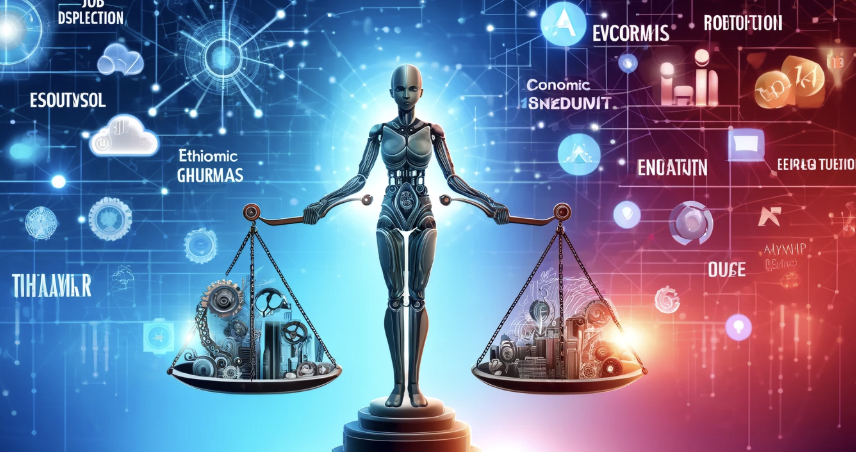
Separating Real #AI Value From #Hype
bit.ly/4bbdROQ
#AIStrategy #ArtificialIntelligence #AIAdoption #TechLeadership #DigitalTransformation #AIImplementation
3
4
6
109

Jun 12
OpenAI shipped a tool as open source. The source wasn't code. It was a 40 page plan in plain English. Feed it the plan, pick your platform, and it builds a working version. modernlogic.io/podcast #CustomSoftware #AIImplementation #TechPodcast
1
105
Jun 11
It’s 11pm
Someone just landed on your website, liked what they saw, filled your contact form.
Your autoresponder sent them a ‘we’ll get back to you soon’ email.
They woke up the next morning already talking to someone else who replied in 4 minutes.
Not because your service was worse, because your response was slower.
Speed is not a sales skill anymore, it’s infrastructure.
If your first response to a new lead still depends on someone being awake, that’s the thing worth fixing before anything else.
Want the solution?
#AIImplementation
12
Jun 11
Something nobody tells you when you hire a cheap developer to build your AI system
You pay once to build it
You pay every month when it breaks, drifts, returns wrong outputs, loses data, or stops working after an API update you didn’t know was coming.
The cheap build is never the cheap option, it’s just the option where the real cost shows up later when you are already dependent on it.
I have rebuilt more ‘working’ AI systems than I have built from scratch.
The pattern is always the same, built fast, built cheap, worked in the demo, fell apart in production.
By the time the client came to me they would already paid twice, once to build it and once to deal with what it cost them while it was quietly failing.
Build it right the first time, it’s always cheaper.
#AIImplementation
15
Jun 11
Nobody warns you about this when you start building with AI
The more capable the model gets the more expensive your mistakes become.
A bad prompt with GPT-3 gave you a weird answer. A bad prompt with a frontier model in 2026 gives you a confident, well-structured, completely wrong output that your team trusts because it reads so well.
The writing got better, the hallucinations got more convincing.
This is why evaluation layers matter more now than they ever did, not just testing in development, continuous monitoring in production, catching drift before your users catch it for you.
The model got smarter, your safety net needs to keep up.
Let’s build it together, message me for any assistance.
#AIImplementation
17

Many AI pilots fail because no one owns them.
The ones that succeed assign one operator for 90 days to review, adjust, report. Without an owner, you have a subscription, not a pilot.
Define pilot ownership for real results. davincisolutions.ai/insights…
#PilotOwnership #AIImplementation #Accountability #OperationalDiscipline #DavinciAISolutions

Jun 11
An LLM weighs your first message about as much as your last. No recency bias. So long, sprawling chats often get worse, not better. Managing context is the skill. modernlogic.io/podcast #AIImplementation #ContextEngineering #TechTalk

The global AI market hits $1.8 trillion by 2030. Every vendor is now "AI-powered."
Which of these three questions trips up vendors most in your experience?
#AI #MachineLearning #AIStrategy #TechVendors #AIImplementation #EnterpriseAI
1
Jun 10
A working AI demo can create false confidence.
The data is clean. The examples are selected. The workflow is simple. The audience is forgiving. That can make a weak system look stronger than it really is.
Production is different. Real users bring messy inputs, missing information, unclear permissions, outdated documents, support expectations, logging requirements, and business risk. That is where many AI projects slow down or fail.
The practical takeaway is simple: do not confuse a demo with a production-ready AI system. A demo should create interest. A prototype should create evidence. Before moving toward MVP or production, prove that one reusable AI capability can survive real workflow conditions.
For Microsoft-based organizations, that means thinking about .NET integration, Azure OpenAI, security, SharePoint or Microsoft 365 data, SQL Server, logging, review, and support early enough to avoid expensive rework.
The production workflow behind this video was built using the same methodology I apply for enterprise clients — I identified a real production bottleneck, evaluated AI options, and built a .NET-integrated workflow using AI tools to deliver it faster, better, and at lower cost. The thinking that improved my own workflow is the same thinking I bring to yours.
Explore more practical, applied enterprise AI insights at AInDotNet.com.
#EnterpriseAI
#AIImplementation
#AIPrototype
#ProductionAI
#AIGovernance
#AIArchitecture
#MicrosoftAI
#DotNet
#AzureOpenAI
#AIAssistants
#BusinessAutomation
#WorkflowAutomation
#SharePoint
#SQLServer
#Microsoft365
#SemanticKernel
#MVP
#AIAdoption
#AInDotNet
2
2
66

Jun 10
🛑The adoption gap every AI leader must close.
🟢The organisations winning with AI focus on adoption and value, not just technology.
#AIImplementation #ArtificialIntelligence #AITransformation #AIAdoption #EnterpriseAI #DigitalTransformation
3
Jun 10
Anthropic just dropped Claude Fable 5 yesterday and it’s a different conversation now
Same underlying model as Mythos, the one governments were nervous about earlier this year.
Fable 5 is that model with safety classifiers on top, finally available to everyone.
The numbers are real. 80.3% on SWE-Bench Pro for agentic coding. GPT-5.5 sitting at 58.6% on the same benchmark. That’s not a small gap.
1 million token context window. Vision. Tool use. Function calling. The longer and more complex the task the bigger the lead over everything else available right now.
The interesting part, if you ask it something in cybersecurity or biology it quietly falls back to Opus 4.8 instead. Happens in under 5% of sessions. The full Mythos 5 with guardrails lifted exists but it’s locked to vetted partners only. Anthropic basically split one model into two products based on what they were comfortable releasing publicly.
For anyone building serious AI systems right now, this changes what’s possible in production.
Complex document analysis, multi-step agent workflows, autonomous coding tasks, the ceiling just moved.
Worth knowing if you are building anything real with AI this year.
#AIImplementation
64

Stream on YouTube: youtu.be/QT056prLpHs
#aidistribution #aiimplementation #leadershippodcast #aiadvice
4

“How do we become AI Native without wasting time?”
The gap:
⚙️ Tools vs. INFRASTRUCTURE.
⚙️ Experimenting vs. OPERATING SYSTEM.
⚙️ Executive attention vs. EXECUTIVE OWNERSHIP.
GenAIPI installs and runs your AI Transformation System, your company can go from AI "activities" to structured business capability.
🟢 90-day roadmap to prioritize what matters.
🟢 Monthly cadence to keep execution moving.
🟢 Ongoing tracking to measure adoption and impact.
🟢 Permanent infrastructure so AI becomes part of how the business operates.
➡️ Move from AI activity to AI capability.
GenAIPI
Make AI Work For You
Schedule a Strategy Call: genaipi.org
#GenAIPI #AITransformation #AIImplementation #AIReadiness #AIForBusiness #AIStrategy #AIInfrastructure #FractionalCAIO #fCAIO
1
2
50

Jun 10
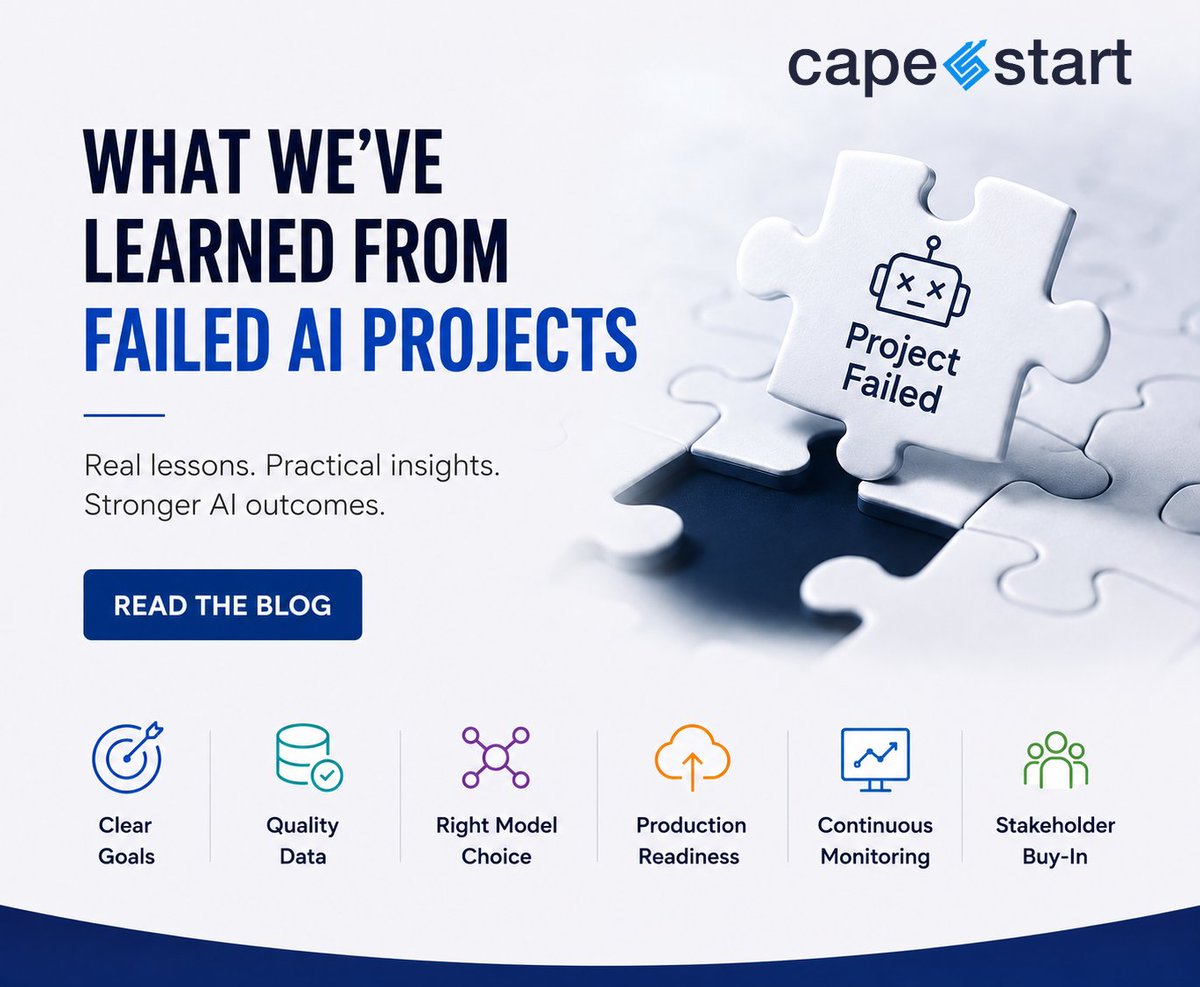
The gap between an AI pilot and a production success is often smaller than people think, but easier to miss than most realize. See what we've learned from AI projects that didn't go as planned.
capestart.com/resources/blog…
#EnterpriseAI #AIStrategy #MLOps #AIImplementation
9