
Jun 11
Il comunicato stampa della presidenza del Consiglio sull'AI: Niulinx investimento strategico
"Gli investimenti stanno abilitando filiere prioritarie come robotica umanoide, guida autonoma, quantum, fotonica per l’high-performance computing e IA verticale. Tra le iniziative già realizzate figurano Generative Bionics, Niulinx, Algorithmiq, CamGraPhIC/2D Photonics, ALLSIDES e Smartness, con capacità di attrarre capitali nazionali e internazionali e creare nuove posizioni altamente specializzate.
A partire dal 2026 si affianca il Polo nazionale di trasferimento tecnologico dedicato all’IA e alla cybersicurezza, “Polo SophIA”, come ulteriore leva per sostenere start-up deep tech e trasformare i risultati della ricerca in imprese innovative. La strategia complessiva mira a fare dell’IA non solo un oggetto di regolazione, ma un asse di crescita, competitività e posizionamento internazionale del Paese."
governo.it/en/node/32050
1
4
556

Algorithmiq Raises €18m Series B
#QuantumAI #QuantumAlgorithms #QuantumSoftware #AI #QuantumTech #SeriesB #Funding #Algorithmiq
thesaasnews.com/news/algorit…
14

$IONQ $HQ $IBM $MSFT $XNDU
1. 보고서 개요
2026~2027년 기업들이 양자 소프트웨어를 도입할 때 참고할 수 있는 조달 및 평가 프레임워크로 작성됨.
총 10개 양자 소프트웨어 벤더(IBM Quantum, Horizon Quantum, Classiq, Riverlane, Q-CTRL, Quantinuum Software, Multiverse Computing, Algorithmiq, Strangeworks, Xanadu)를 8개 평가 기준으로 비교 및 분석.
IonQ는 직접 평가 대상 벤더로는 포함되지 않았고, Horizon Quantum이나 Classiq 등과 하드웨어 파트너 또는 전략적 투자자 관계로만 언급되었다.
2. 보고서의 기본 관점
보고서는 양자컴퓨팅 상용화에서 하드웨어만큼이나 소프트웨어 스택이 중요하다는 점을 강조함.
양자 소프트웨어를 5개 계층으로 나누어 설명하는데,
- 접근 및 추상화
- 컴파일 및 최적화
- error mitigation 및 error correction
- 응용 소프트웨어
- 오케스트레이션
각 계층별로 주요 벤더와 현실적인 도입 시점을 제시.
3. 일반 기업 IT 부서 관점에서의 추천
기업들이 가장 먼저 검토해 볼 만한 후보
- Classiq: 접근, 추상화, 회로 합성 계층에서 강점
- Q-CTRL Fire Opal: 오류완화와 성능 관리 계층에서 강점
이것은 2026년에 바로 대규모 상용 배포라는 의미가 아니라, 2026년 평가 및 POC(Proof of Concept)를 시작할 수 있는 실질적인 후보라는 뜻. Horizon Quantum에 대해서는 장기적으로 큰 잠재력이 있다고 평가하지만, 2026년 상용 도입 대상으로는 아직 이르다고 보고 있음.
보고서 자체가 2026년 1분기 기준 pre-revenue(매출 전)이며 commercial maturity(상업적 성숙도)가 낮다고 명시하고 있어, 2027년 이후 전략적 관찰 및 관계 구축 대상으로 분류.
4. IonQ 관련 객관적 사실만 정리
- 사업 모멘텀: 매출 성장과 자본 여력은 확인되지만, 아직 수익성은 입증되지 않음. 상업적 성장세는 강하나 손실 구조는 지속 중.
- 생태계 연결: Horizon Quantum(1억 1천만 달러 PIPE 투자, IonQ가 주요 투자자)과 Classiq(누적 2억 달러 이상 투자, IonQ, AMD, Qualcomm 등 참여)에 전략적 투자. 다만 이는 생태계 연결을 의미할 뿐, IonQ가 소프트웨어 시장을 통제한다는 증거가 아님.
- Q-CTRL Fire Opal 통합: AWS Braket에서 IonQ Aria, Forte QPU와 연동되어 error mitigation 기능을 제공. 공개 벤치마크에서는 알고리즘과 큐비트 수에 따라 1.06~2.43배의 error reduction 효과를 확인. (최대 1,000배 같은 극단 수치는 벤더 주장으로 제한)
- Oxford Ionics 인수: IonQ의 하드웨어 로드맵을 강화. 다만 영국 정부가 인수를 승인하면서, trapped-ion HW와 핵심 인력 및 제조 역량을 영국 내에 유지하라는 조건을 붙였기 때문에, 완전한 흡수라고 표현하기는 어려움.
5. 보고서의 한계
공개자료 기반 분석의 한계를 인정한다. 특히 NDA 기반 상업 조건, 비공개 배포 사례, 사전 공개되지 않은 알고리즘 결과, 하드웨어 파트너십의 실제 독점성 등은 외부에서 충분히 확인하기 어렵다고 설명한다.
6. 투자 관점에서는 다음 질문을 별도로 검증
- IonQ의 2026년 매출 증가분 중 반복성이 높은 매출은 얼마인가.
- RPO가 실제 현금 매출로 전환되는 속도는 어떤가.
- 256-qubit system 판매가 반복 가능한 제품 매출인지, 단발성 strategic sale인지.
- Oxford Ionics, SkyWater, Horizon, Classiq, Q-CTRL 연결이 IonQ의 독점적 이익으로 얼마나 귀속되는지.
- IonQ의 손실 구조가 매출 성장과 함께 개선되는지, 아니면 성장할수록 더 많은 자본을 태우는 구조인지.
이 질문들에 답하지 않으면, 보고서의 IonQ full-stack thesis는 강한 내러티브일 뿐 검증된 투자 명제는 아님.
May 25

$IONQ $HQ $IBM $MSFT $XNDU $QBTS $INFQ $RGTI $AMZN $HON
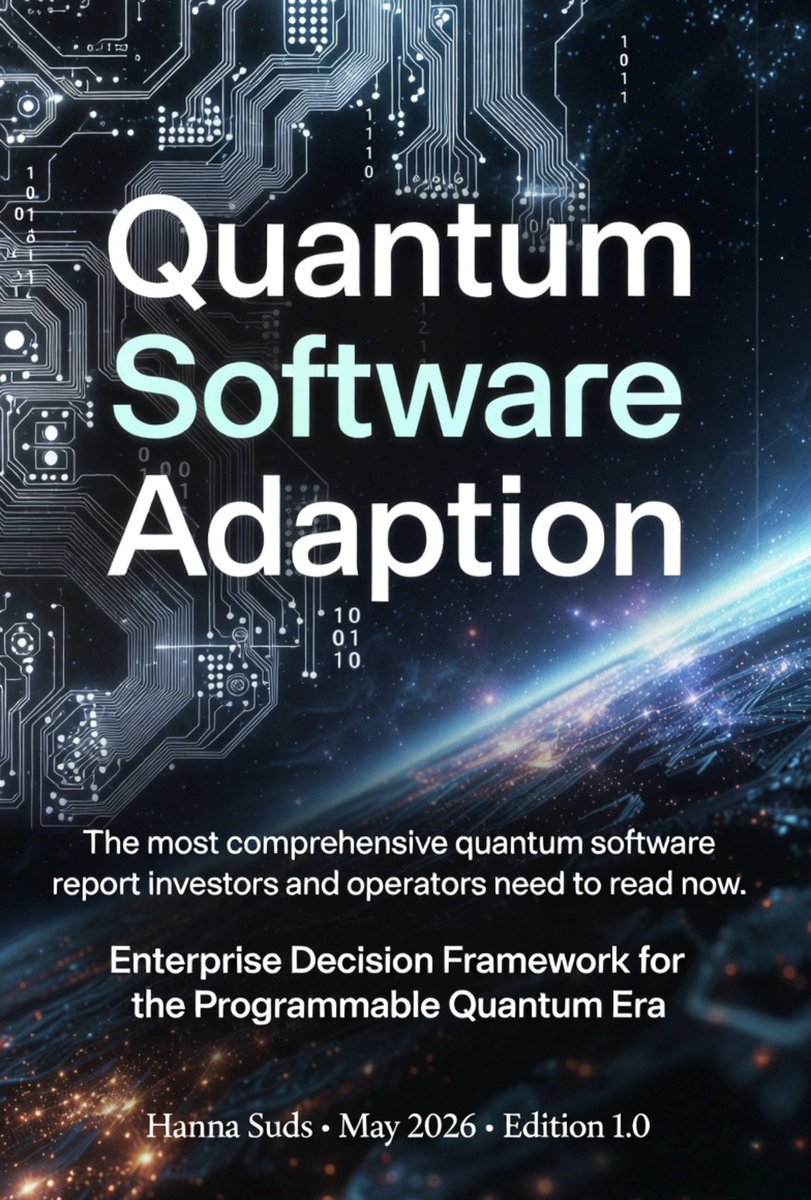
The most thorough and independent quantum software report ever published is now available.
While the quantum hardware race has captured nearly all the headlines and investment attention, this report makes one thing unmistakably clear: the software layer will ultimately determine which hardware companies succeed commercially and which remain laboratory curiosities. Hardware without production-ready, enterprise-accessible software is just expensive lab equipment. Yet the quantum software sector remains dramatically under-discussed and likely under-valued relative to its decisive importance for enterprise adoption and government programs.
Every serious quantum investor and enterprise decision-maker needs to understand this space right now as software companies such as Q-Ctrl, Horizon Quantum, Classiq, Riverlane, and several others are critical conductors of just how far and far the quantum ecosystem will mature. Make no mistake, though the market has generally discussed hardware companies, understanding the integrated relationships between hardware and software provides a true understanding of the market, where it’s going, and who’s taking us there.
To read the full report visit: quantumtechintegration.blogs…
This is the only complete, conflict-free framework evaluating ten leading quantum software vendors across eight dimensions — with reproducible scoring, due-diligence grids, sector guidance, and a full day 90 POC playbook.
No other report comes close to this level of depth and independence. Read the report at: quantumtechintegration.blogs…
1
3
14
3,319


May 11
$IONQ Algorithmiq, a quantum software company previously based in Finland, has established its global headquarters in Milan, Italy share.google/odqExskhbW1jGoJ…
5
139

May 11
🏛️ Company: Algorithmiq
🔗 Website: algorithmiq.fi
📊 Amount: €18 Million
🔄 Round: Series B
⚙️ Industry: AI
🌍 Location: Milan, N/A, Italy
1
14
399

May 11
Two Italian deep tech raises this week. Both worth understanding,mostly because of what they're working on.
Cellply, based in Bologna, raised €7.15M. @cellply build single cell analytical tools for cancer immunotherapies.
How does it matter>a single dose of cell therapy costs roughly €350,000 per patient and patients don't get a refund if it doesn't work. Cellply's technology helps pharma companies and doctors know whether a treatment is actually working at the cellular level before that €350K is committed.
Another company Algorithmiq raised €18M and moved its global headquarters from Helsinki to Milan in the same announcement.
They build the software layer that makes quantum computers actually useful , already shipping commercial products with Microsoft, IBM and Rigetti.
The pattern is the same in both companies. Hard science,expensive customer problems.
Italy has produced the best physicists in the world for a century like Fermi, Marconi, Rubbia and is only now starting to commercialise that depth at scale. Two raises in one week is a small data point but its pointing in a recognisable direction.

2
27
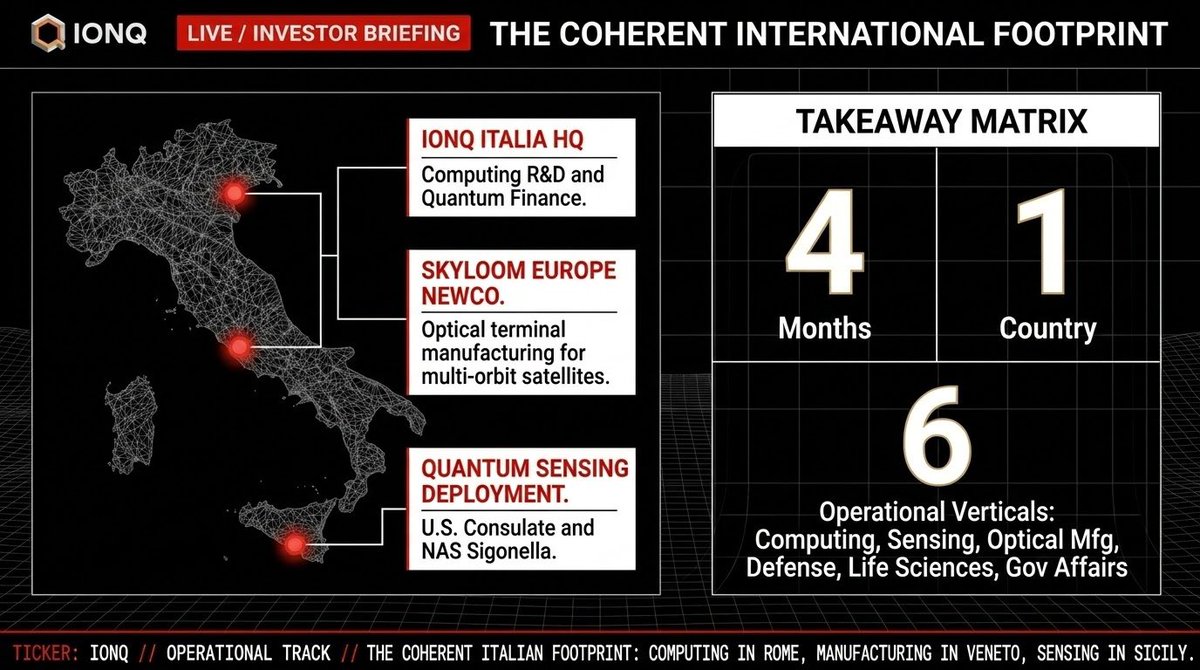
🇮🇹 THE ITALIAN FOOTPRINT - now coherent across three geographies, each with a distinct functional purpose:
→ Rome - IonQ Italia HQ. Marco Pistoia as CEO. R&D academic-policy interface Quantum Finance team (Meena Tumuluri ex-JP Morgan, Ramis Movassagh ex-Google Quantum AI). BonelliErede on legal.
→ Veneto - Skyloom Europe NewCo with Officina Stellare. Optical terminal manufacturing for multi-orbit satellite networks. Same hardware Skyloom delivers to the SDA's Proliferated Warfighter Architecture in the US now manufactured on European soil.
→ Sicily (Niscemi) - Quantum sensing deployment. U.S. Consulate General Naples officially credits IonQ Italia and Capella Space for landslide monitoring. Coordination with Naval Air Station Sigonella.
Six operational verticals wired into Italian soil over four months: computing R&D, quantum sensing, optical manufacturing, defense liaison, life sciences, government affairs.
In parallel signals this week:
→ April- Minister of Enterprises Adolfo Urso meets De Masi at Villa Firenze, Washington. €1B over five years and 300 jobs disclosed.
→ April 15 - Wilson Center, USA 250 celebrations. Pistoia on innovation panel with Italian Economy Minister Giorgetti, Fincantieri, Almaviva, Google.
→ April 16 - ANIPLA Milan, Quantum Computing in Life Sciences. Pistoia alongside Algorithmiq, IBM Research, QURECA.
Forward calendar: June US-Italy Business Forum (Miami) and September 20-23 NODYCON 2026 at Sapienza Pistoia opening keynote in the Capitoline Protomoteca Hall, the room with the marble busts of Galileo and Volta.
1
1
11
396

Finland’s Algorithmiq takes top spot in $50M Q4Bio Challenge with quantum drug simulation milestone arcticstartup.com/algorithmi… via @ArcticStartup @AlgorithmiqLtd @WellcomeLeap #nordicmade #Finland #funding #startups #healthtech #lifescience #deeptech #trending
1
3
166

Apr 27
$IonQ Two Marco Pistoia @marco_pistoia (CEO, @IonQ_Inc Italia) appearances in 48 hours, on two continents, two completely different registers.
April 15 Washington, Wilson Center. “165 Years of US-Italy Diplomatic Relations,” part of the USA 250 celebrations, organized by Decode39 in partnership with the Italian Embassy.
Pistoia on the innovation/industry panel alongside Rita Balogh (Google), Ambassador Kenneth J. Braithwaite (Fincantieri Marinette Marine), Poggipolini Group, and Almaviva Group. Moderated by Valbona Zeneli (Decode39, Atlantic Council).
Keynote by Italian Economy Minister Giancarlo Giorgetti.
April 16 - Milan. ANIPLA conference
“Quantum Computing in Life Sciences,” sponsored by AFI (Italian Pharmaceutical Industry Association) and CPA (Chemical Pharmaceutical Association). Marco Pistoia among speakers that included Sabrina Maniscalco (Algorithmiq), Ivano Tavernelli (IBM Research Zurich), and Araceli Venegas-Gomez (QURECA) a serious technical convening, not a promotional event.
One day, IonQ Italia is at the table for Italy-US economic diplomacy alongside Google and Fincantieri. The next, it’s at the table with the European quantum technical leadership in front of the Italian pharma industry.
ANIPLA’s framing on Milan:
“Quantum computing is no longer just a promise. It is a concrete trajectory beginning to impact research, development, and production in the life sciences sector.”
Worth tracking alongside last month’s Syngenta × QuantumBasel announcement.
🔗 formiche.net/gallerie/galler…
$IONQ #IonQ

1
5
34
1,776

Except the Q4Bio results make a strong case that it isn't.
Huge congratulations to Algorithmiq for taking the $2M for simulating photodynamic therapy — a light-activated cancer treatment — at scales approaching 100 qubits.
Five of six teams used IBM's utility-scale Heron or Nighthawk processors (the sixth team, Harvard, ran on different hardware). The spec was genuinely hard: 50 qubits, 1,000–10,000 gate circuits, and a clear path to scaling. The "path to scaling" requirement has a real definition (wellcomeleap.org/q4bio/progr…), teams had to show their algorithm works on today's ~50-qubit demonstrations _and_ scales to the 100–200 qubit, 10⁵–10⁷ gate depth machines expected in 3-5 years. Circuit depth and error behavior both have to stay under control as you grow the problem.
2
3
93

※양자컴퓨터, '연구실' 탈출해서
'병원'으로 가는 중 (feat. IBM)
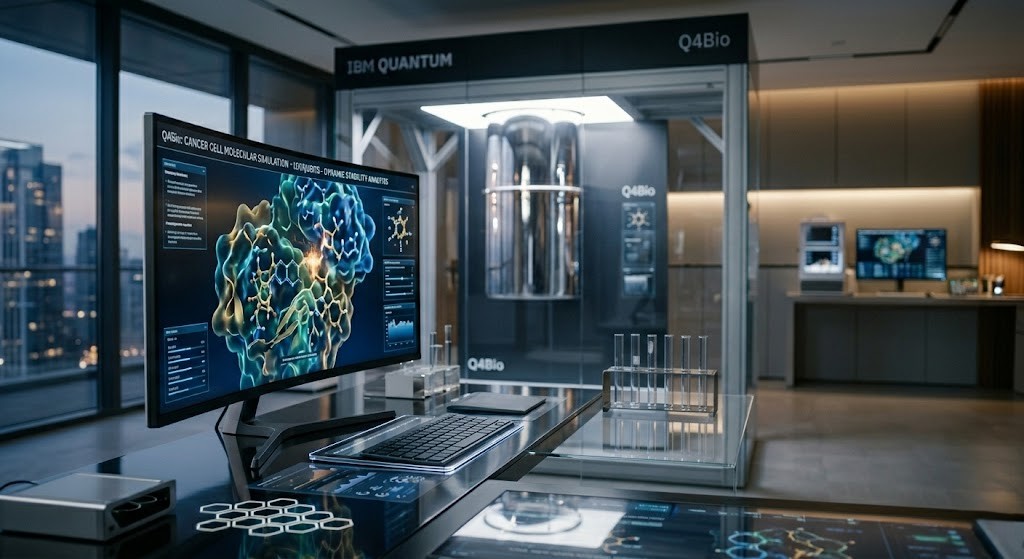
1. 암 치료 시뮬레이션 (Algorithmiq IBM)
내용:
광역학 치료(빛으로 암세포 죽이는 거) 할 때
일어나는 복잡한 분자 반응을 100큐비트급
양자컴퓨터로 돌려버림.
포인트:
기존 슈퍼컴퓨터로도 벅찼던
'복잡한 화학 계산' 영역을 양자가
직접 건드리기 시작함.
암 정복에 한 발짝 더 다가간 느낌임.
2. 유전체(DNA)의 양자화
(옥스퍼드 & 생어연구소)
내용:
DNA 정보를 아예 양자 방식으로 변환해서
처리하는 데 성공함.
포인트:
방대한 유전 데이터를 처리하는 속도와
정확도가 차원이 달라질 가능성을 보여줌.
3. 하이브리드 계산의 부상
(Chicago & MIT)
내용:
QPU(양자)랑 GPU(고전)를 같이 쓰는
'짬짜면' 방식 도입.
포인트:
양자가 모든 걸 다 하는 게 아니라,
잘하는 것만 딱 골라서 협업하는
'현실적인 공존 모델'이 정착 중임.
✔️개인적인 뷰
이제 양자컴퓨팅은 "언젠가 되겠지"
하는 먼 미래 이야기가 아님.
특히 생명공학처럼 변수가 무한대에
가까운 미시 세계에서는 양자컴퓨터가
압도적인 우위를 가질 수밖에 없음.
IBM 장비를 쓴 팀들이 성과를 낸 걸 보면,
하드웨어의 안정성도 꽤 올라온 듯함.
조만간 신약 개발 기간이 10년에서
1~2년으로 단축되는 시대를 직접 보게
될지도 모르겠음.
✔️결론:
양자컴퓨팅 바이오 조합은 앞으로
무조건 주목해야 할 치트키임.
#양자컴퓨터 #IBM #아이온큐 #SEALSQ
#XNDU #BTQ
6
3
9
132

Apr 17
Wellcome Leap just awarded a $2M prize for the first experimental quantum-classical drug simulation on a 50 qubit system.
$IONQ already walked this path — at larger scale, one year earlier.
#QuantumPharma
Algorithmiq, IBM, and Cleveland Clinic built an end-to-end pipeline targeting photosensitizer cancer drugs. Peer-reviewed in Nature. Funded by a $50M program that doesn't pay for roadmaps — it pays for results.
In 2025, IonQ and AstraZeneca delivered a 20x drug-discovery speedup using quantum-classical hybrid workflows.
Wellcome Leap just validated that the entire workflow category works.
When a $50M prize program confirms quantum pharma is real, it doesn't just lift the winner. It re-prices the pipeline IonQ already has.
thequantuminsider.com/2026/0…
3
16
1,477

Mar 2
#キャルちゃんのquantphチェック
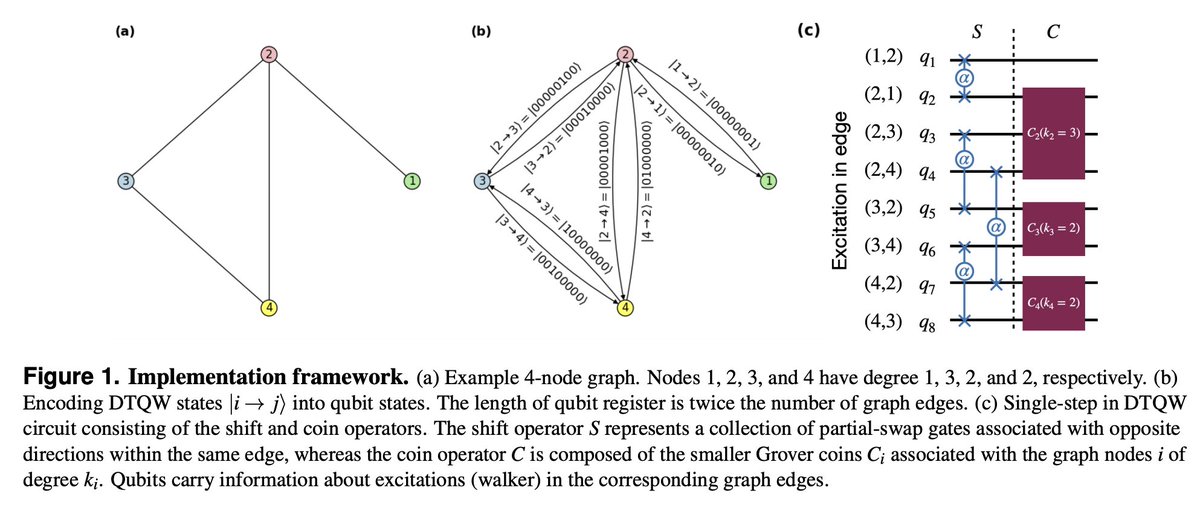
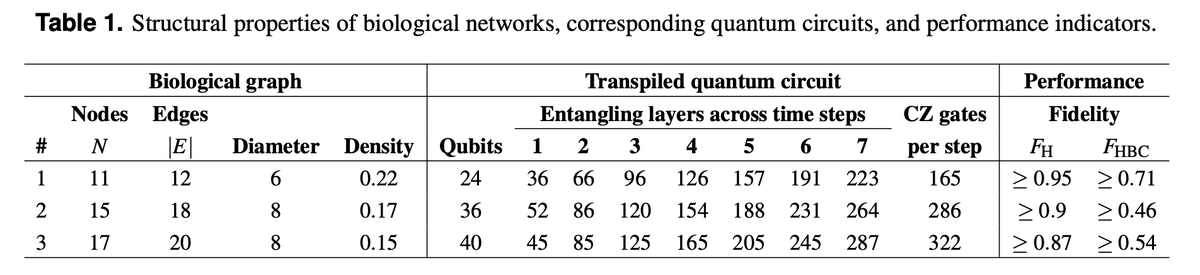
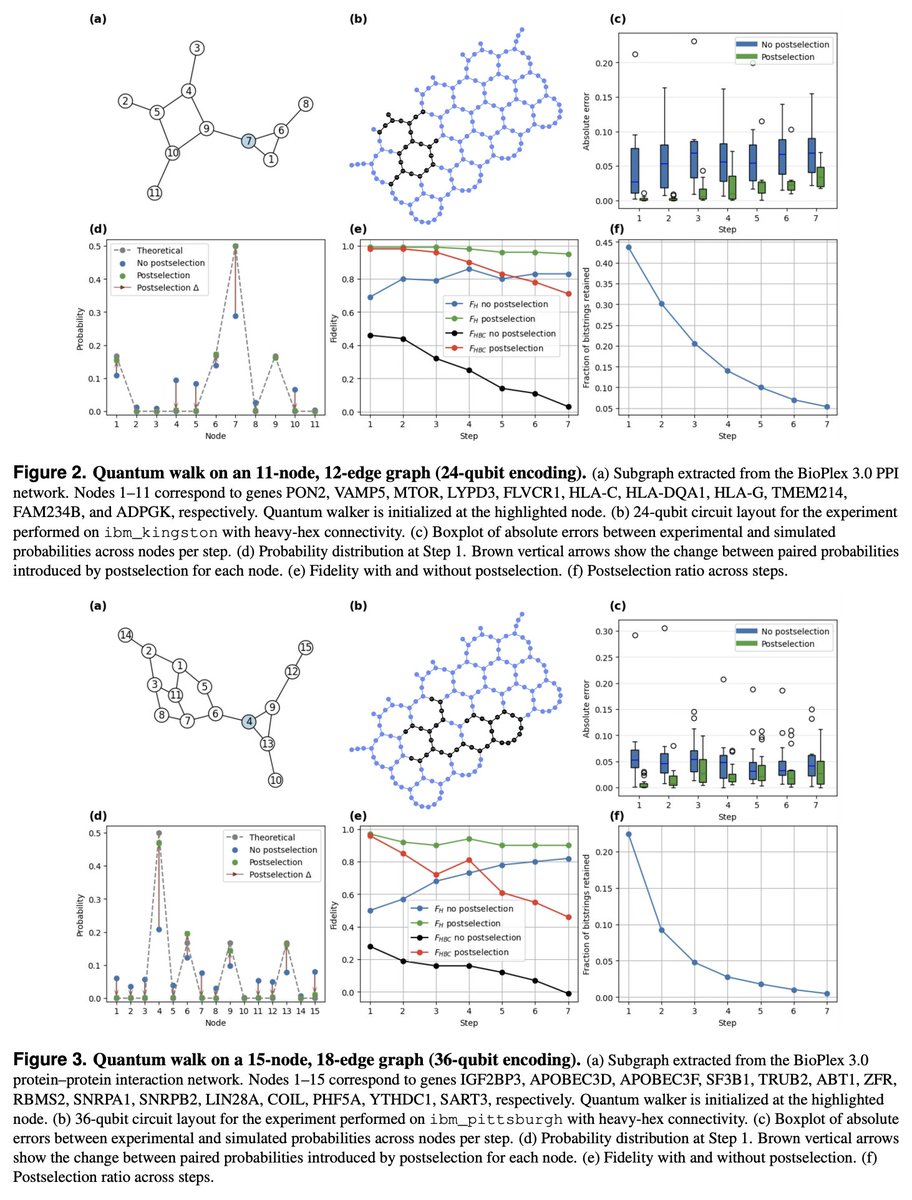
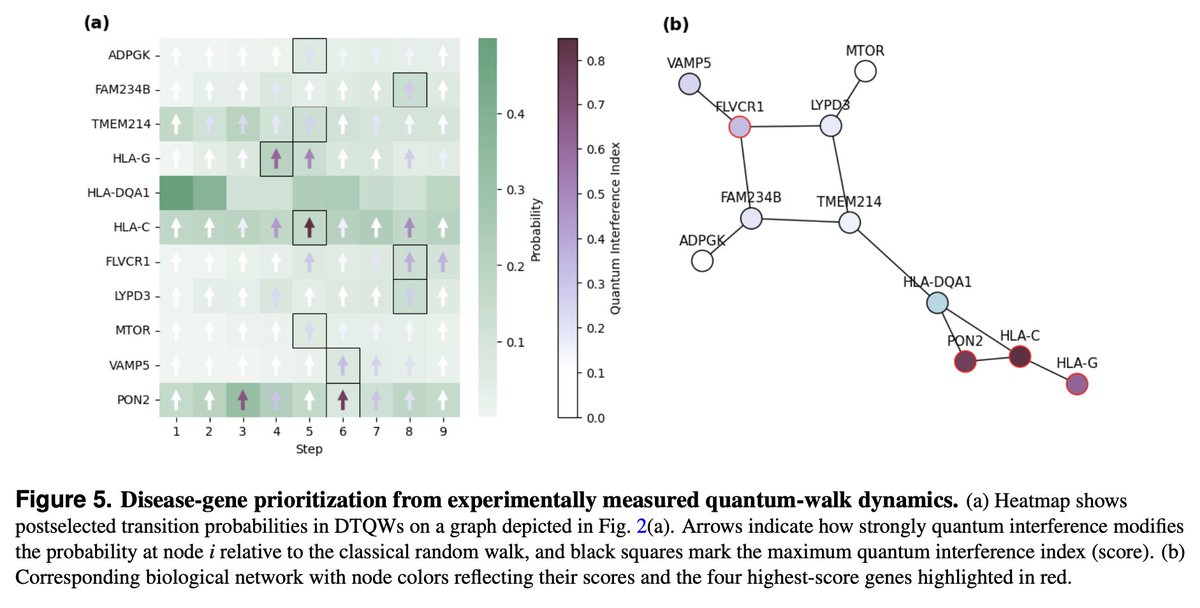
NISQにおいて生物ネットワークのための実用的な量子ウォークを実装するために、symmetry-sector encoding (対称セクター符号化?)を活用し、回路depthと量子ビットをトレードオフするアルゴリズムを提案。AlgorithmiqとIBMの研究。
arxiv.org/abs/2602.24053
1
3
636

Feb 25
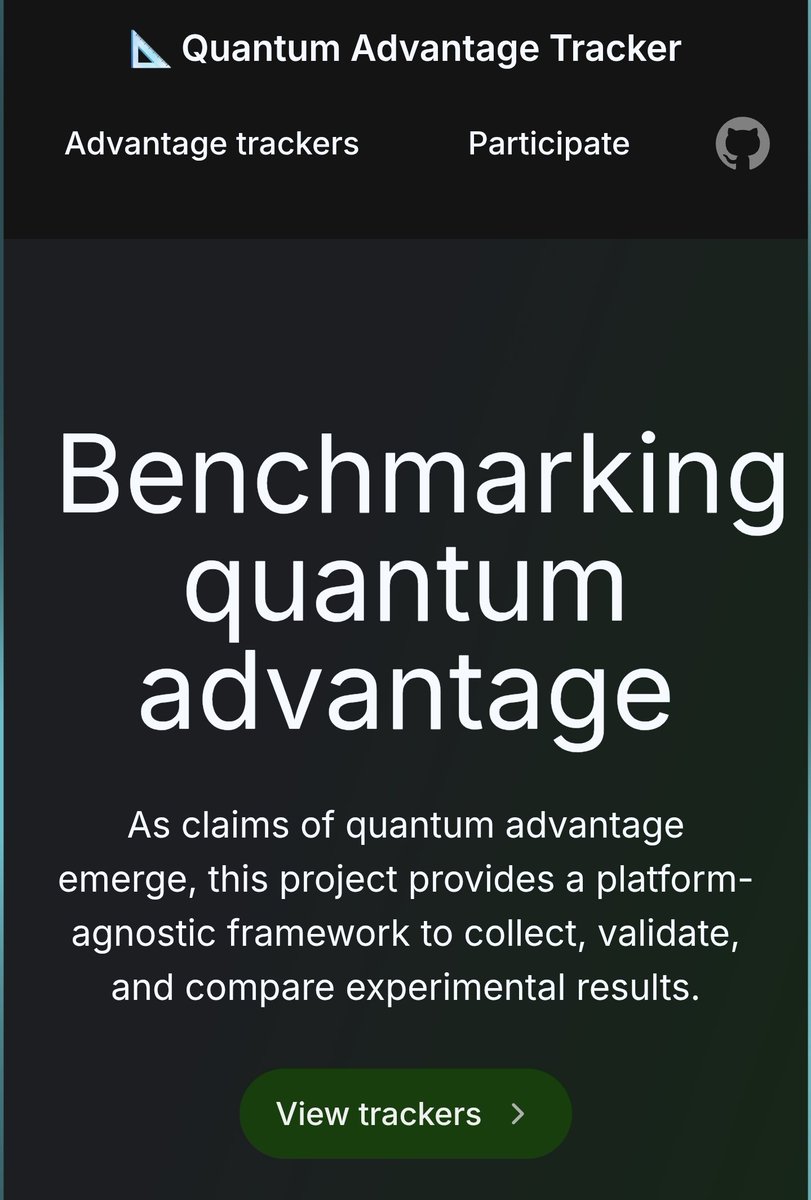
Quantum Advantage Tracker 아시나요?
작년 하반기부터 올해 초에 걸쳐 IBM이 Flatiron institute, BlueQubit, Algorithmiq 등과 공동으로 출범해서 양자 컴퓨터가 고전 컴퓨터를 연산 효율섣, 바용, 정확더 측면에서 능가하는 기점을 엄밀하게 검증하고 추적하기 의해 만든 오픈소스 평가 플랫폼이에요.
3가지 유형의 실험 결과가 포함되어 있어요.
1. Obsercsble Estimation : 어떤 물리량에 대해 양자 상태에서의 기대값을 오차 범위와 함께 계산해서 연산 결과의 신뢰성을 봐요.
2. Variational Problem: 복잡한 양자 many body system에서 양자 알고리즘이 고전 알고리즘보다 더 낮은 에너지를 찾아내는지 확인해요.(V-score)
3.Classically Verifiable Problem: 양자 컴퓨터의 계산 결과물이 유효한지 고전컴퓨터로 확인해요.
커뮤니티에 공개적으로 실전적인 검증을 하려고 하는 방향성이 잘 보여요. 많은 QC 업체들이 본인들이 유리하게 측정한 벤치마크만 보여주거나 이마저도 제한적으로만 공개하는 등 불투명한 면이 많은데 IBM은 그에비해 가장 투명하게 보여주려 하는 것 같네요.
실재 IBM 양자컴퓨터를 이용할 때 큐빗 하드웨어 상태를 실시간으로 확인하는 것까지 가능해요.
quantum-advantage-tracker.gi…
2
10
1,023

Today's 'Noisy Quantum Computers' Can Already Do Useful Physics (And We Have Proof)
Researchers just demonstrated that current quantum computers—despite their noise and errors—can reliably study complex quantum physics. This matters because we might not need to wait for perfect, fault-tolerant quantum computers to start getting useful scientific results.
Using a 91-qubit IBM quantum processor, a team from IBM Quantum, Algorithmiq Ltd, and Trinity College Dublin accurately simulated quantum chaos at a scale that's extremely difficult to verify classically. Their work, published in Nature Physics, shows that error mitigation techniques can make today's imperfect machines scientifically useful.
The Credibility Problem
Here's the challenge quantum computing has faced: when you're studying problems too complex for classical computers to verify, how do you trust your quantum results? The hardware is noisy, errors accumulate, and you can't just check the answer against a known solution.
This credibility gap has been a major obstacle for near-term quantum computing. If we can't trust the results, what's the point?
The Solution: Smart Circuits Plus Error Mitigation
The researchers used something called dual-unitary circuits—a special class of quantum circuits that are maximally chaotic but still mathematically tractable in specific ways. These circuits spread information extremely fast across the system (which is what makes them chaotic), yet still allow exact predictions for certain carefully chosen measurements.
They ran these circuits on a superconducting quantum processor, executing over 4,000 two-qubit gates. Without any correction, the experimental data decayed much faster than theory predicted—a clear signature of hardware noise degrading the results.
But here's where it gets interesting. After applying tensor-network error mitigation (TEM)—a classical post-processing technique that essentially tries to mathematically undo the noise—the measured results closely matched exact theoretical predictions. This worked across multiple system sizes, from 51 to 91 qubits.
The entire workflow for the largest experiments, including noise characterization and mitigation, took just over three hours.
What Makes This Different
This isn't just about matching known solutions. The team deliberately pushed into regimes where no exact answers exist—areas too hard even for classical supercomputers to simulate reliably.
In these regions, different classical approximation methods gave conflicting answers. The error-mitigated quantum data aligned more closely with one of the classical methods, effectively acting as an arbiter between competing simulations.
This represents a subtle but important shift in how near-term quantum computers might be used. Rather than seeking outright "quantum supremacy," they can complement classical tools in hard-to-simulate areas of physics, helping us figure out which classical approximations are more trustworthy.
How Error Mitigation Works
TEM doesn't eliminate errors at the hardware level. Instead, it accepts noisy results and corrects them statistically after the computation runs.
The method starts by building a detailed noise model of the quantum hardware, focusing on errors from two-qubit gates. These errors are represented mathematically so they can be approximately inverted. The quantum computer runs the original circuit, while a classical tensor-network calculation figures out what measurement would have produced the ideal, noise-free result.
This trades increased classical computation for reduced quantum demands—a practical compromise that doesn't require the massive overhead of full fault-tolerant quantum computing.
What This Enables
The implications extend beyond just benchmarking quantum hardware. These techniques could help us better understand many-body physics—how large collections of interacting particles behave.
That fundamental understanding could eventually translate into practical applications: materials science, more efficient drug discovery, and potentially even solving complex optimization problems in logistics and traffic flow.
More immediately, dual-unitary circuits offer a new benchmark for quantum computers. Clifford circuits (the current standard) can be efficiently simulated classically, so they don't capture the complexity of real applications.
Fully generic chaotic circuits are too difficult to verify. Dual-unitary circuits sit in a useful middle ground—complex enough to stress hardware and mitigation methods, yet constrained enough to allow analytical checks.
The Limitations
The researchers are transparent about what this doesn't solve. Error mitigation can't replace fault tolerance. Its effectiveness depends on hardware stability and noise rates, and it may break down as circuits become deeper or less structured.
The observables they examined were specifically chosen because they work well with dual-unitary circuits. Other quantities—like general correlation functions or entanglement measures—might behave differently and require substantially more sampling.
Still, the results are encouraging. As one team member noted, this approach shows that useful quantum simulations may be possible without waiting for full quantum error correction, which requires enormous overheads in qubits and control.
What Comes Next
This work opens several near-term directions. Dual-unitary circuits could study transport, localization, and thermalization in driven quantum systems. Similar techniques could benchmark other quantum platforms like trapped ions or neutral atoms.
As hardware continues improving, the combination of error mitigation and analytical structure might allow quantum simulations to surpass classical methods in specific areas of many-body physics—sooner than we thought.
We're not there yet, but we're also not stuck waiting indefinitely for perfect quantum computers. This middle path—imperfect hardware made useful through clever mitigation—might be how quantum computing becomes scientifically productive well before it becomes fault-tolerant.
#QuantumComputing #QuantumPhysics

12
72
57
958

Algorithmiq and Microsoft Collaborate on Fault-Tolerant Quantum Solutions for Chemistry and Drug Discovery
@AlgorithmiqLtd #QuantumComputing #HPC
ow.ly/tV1C50XHzUr
1
189

11 Dec 2025
Algorithmiq & Microsoft Aim for Accurate Molecular Simulations
#quantum #quantumcomputing #technology
quantumzeitgeist.com/algorit…
1
29

15 Aug 2025
I've read through the 15 quantum applications showcased at WEF, and took note of which vendor's hardware they used so you don't have to:
Algorithmiq (Quantum Computing for the Discovery of Light Activated Cancer Drugs) - unspecified
Accenture (Reimagining Supply Chain Management Using Quantum Computing) - D-Wave $QBTS annealer
Moderna (Quantum mRNA Optimization) - $IBM superconductor
Yapi Kredi Bank (Financial Crash Estimation in Enterprises) - simulator
Ford Otosan (Body Shop Scheduling Optimization) - D-Wave annealer
QLM Tec (Quantum Lidar Methane Camera) - QLM quantum sensing
Accenture (QML for Radiographic Detection in Chest X-Rays) - simulator
QuSecure (Real World Cryptographic Agility) - classical PQC upgradable to QKD/QRNG on quantum hardware
SandboxAQ (CardiAQ - Magnetocardiography using Quantum Sensors) - CardiAQ quantum sensing
Accenture (Quantum Vehicle-to-Grid) - unspecified
Toshiba (Quantum-inspired High-Frequency Trading system) - simulator
AXA XL (Optimization of Reinsurance Contracts) - D-Wave annealer
Quantum Diamonds (Enabling the Next Generation of 3D Semiconductors Using Quantum Diamond Sensors) - QDM quantum sensing
SandboxAQ (Materials Discovery for a Clean-Energy Future) - simulator
Accenture (Remediation of PFAS Chemicals Using Quantum Computing) - $IONQ ion trap
15 Aug 2025

$IonQ Quantum is already here not “future tech”.
WEF’s Quantum Application Hub showcases 15 real-world solutions from 11 orgs:
•Health: cancer therapy, mRNA prediction, cardiac diagnosis
•Energy: methane detection, EV grid optimization
•Finance: crisis modeling, currency arbitrage
Many are already in production proving early quantum advantage.
🔗 initiatives.weforum.org/quan…
🔗 linkedin.com/posts/camillemj…
2
1
22
2,014