
Building a custom whiteboard canvas without heavy libraries.
DailyLOG Lab:
• #Laravel
• #AlpineJS
• #TailwindCSS v4
• #interact.js
Drag & resize, infinite pan & zoom, sticky cards, SVG minimap, and one-click sticky-to-task graduation.
Lightweight. Fast. Integrated. ⚡️
12

🌟 Worth a look #CodeTrendy → The Tool Empire - Free Browser
Hundreds of free online tools for developers, designers, writers, and students. Fast, private, no lo
#SEO #DesignTools #Freemium #Alpinejs #JavaScript
codetrendy.com/listing/theto…
2
上ポン屋@SL retweeted

htmxやalpinejsは「Reactと比べて機能が足りない」といった理由で一部方面で嫌われてる印象だけど、過去のSEO資産を引き継ぎやすいし、SSRという圧倒的なわかりやすさがあるので、個人的には好きです。
1
6
777

🔴 Curso/Libro Intro - Full-Stack Laravel 13 y Livewire 4 IA Alpinejs: Apps reales Desde Cero -P2
🔴 Curso/Libro básico sobre Laravel Livewire en el cual veremos cada uno de sus componentes principales para crear aplicaciones basadas en componentes.
youtu.be/0ejtUb5OVlU
1
17

May 29
Ne pārāk liels projekts - laravel alpinejs. Palūdzu lai atrod kļūdas un ievainojamības. Ar 62 aģentiem (6 find, 56 verify) apēda 35% no $100 Max 5h limita apmēram 10min. ~20M tokenu, $26.84 būtu tīri API izmaksās (CC gan slēpj subaģentu tokenizācijas metrikas transkriptos).
1
3
1,713


May 23
Annoying???
If anything we must shill for JQuery, AlpineJS or straight vanilla orders of magnitude more
It's never late for redpilling handicapped devs to ditch their bloated junk
2
1,434


May 21
Porting our dated HTML AlpineJS <many more> to TanStack as we speak. 😅
3
1,455

May 12
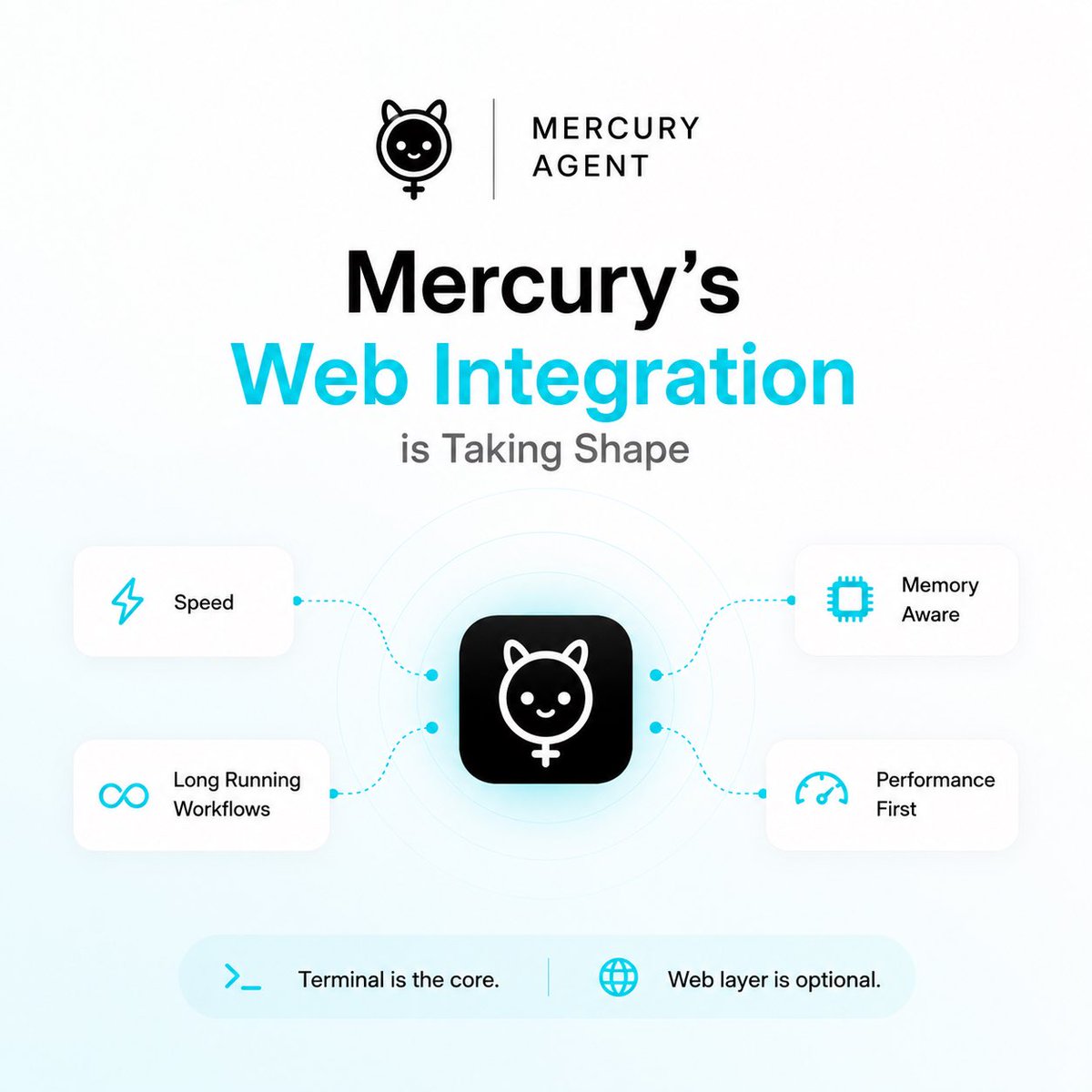
After weeks of benchmarking, compatibility testing, and cross-platform experiments, Mercury’s web integration is finally taking shape.
We started with HTMX.
Tested AlpineJS.
Rolled Hono into the stack.
But the biggest challenge wasn’t features.
It was making sure the UI never becomes the bottleneck for the agent itself.
Mercury is built around speed, memory, soul, and long-running workflows.
A heavy frontend breaks that philosophy instantly.
The team at Cosmic Stack Labs is now finalizing the framework direction with performance-first tradeoffs heavily optimized.
And importantly:
the web layer stays optional.
Disabled by default.
You enable it only if you actually want it.
The terminal remains the core.
Fast. Native. Focused.
But what’s coming next is much bigger:
graph-linked memories, visual relationship mapping, evolving long-term context, skill/plugin awareness across sessions, and memory visualization that actually makes agent reasoning inspectable.
Mercury keeps evolving with you.
Possibilities are honestly getting insane.
1
7
1,670

So true! It's the "everyone's got a plan, till they get punched in the face (often with their own shiddy ideas)".
I keep ideas on a private Airtable (or Excel spreadsheet or private JIRA board).
When a "really cool idea" hits me, I write it down immediately and forget about it on purpose. Odds are 90% it's a bad idea. But I put it on the board in case I get a rare good idea.
The good ideas I put before my team. If I think they're super critical, I make a working demo (with fake data) at home or during free time at the office (yes, that IS possible, lol) and bring it to the next meeting.
I've found that a working demo (and especially showing them how few LOC it actually took) turns heads and nudges minds. I've been asked to consult multiple teams across multiple departments within 6 months of starting my job because of it.
Be a good Code Mechanic, and be a good salesmen of ideas and you'll eventually get what you want. But prove it, first. You can always recycle what you build. And you always have a board full of ideas.
I'm also working on "how do I handle bad ideas (like react) that get voted on, without my input?" One thing I've done is find an area on which me and my colleagues agree, then give them a "buffet" of multiple versions of the implementation. Frame it as a "hunger games" competition between technologies, but never, ever tell them, with certain terms the answer. Let them figure it out or ask questions, after you demo'd the better option (or various options that technically work better than the obvious worst one).
E.g., if my team was debating frontend frameworks, I'd build a Blazor webapp with dummy backend and show them server-sent events or websockets using React, VueJS, HTMX and stock Blazor.
I'd show the working sample at a meeting and field questions, a vote, etc. ALWAYS showing them how many LOC it took.
The point is, "show, don't tell".
Software devs are creatures with fragile egos. But humans love cool demos of what could be, especially if you show them how low the cost actually IS.
#csharp #blazor #htmx #alpineJS
May 10

Talking about solutions and ideas is the hardest part of software development, not the actual coding
2
176

This is an erp system I built : stafferp.ethsch.org,
This is a social app that was done with laravel, alpinejs , it has a flutter mobile app too: protagram.org
And others I can't put up here, sir(NDA).
4
3
41
46,258
Yes, however, the corporate grind gets old - that's why I built my own home lab.
#csharp and #aspdotnet are boringly GOATED. That could be a major contributor to us not getting as much attention as we'd like.
Won't stop me aggressively promoting it. I want all to try it.
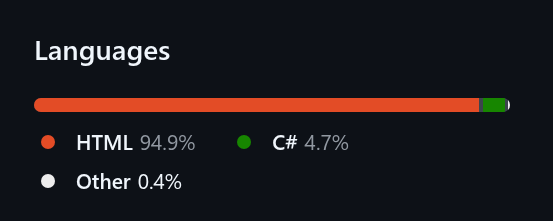
It's so good, I code mostly in HTML and backend. Here's a sample ratios of my newest library, Drip.UI:
github.com/nickpreston24/Dri…
I'm not sure what I'll do with Drip, but I know it's going to be HTML and CSS focused and plug right into existing aspnet apps of all types without disrupting existing (often legacy) code.
Each component is (so far) auto-generated, has basic AlpineJS support for toggles and basic states. And htmx islands support, so C# devs a) won't have to have magic strings and hx-paths all over the place and b) components will be (hopefully) more portable.
I'm considering generating the handlers as well. Might auto-plug them into controllers. Might not. Who knows?
No raw JS, if I can avoid it. Might add some #hateoas support.
So far, the visuals and animations work, like 92.5% of the components. I merely had to find-replace 3 small patterns common to alpinejs.
Make your code work for you, not YOU for your CODE!

I think because of .NET developers are corporate people they are more concerned about stability and maintainability rather than shine tricks like other languages
2
33
3,752
This looks legit.
Is this xplatform?
Want any help with this? I'd like to see web tech easily run inside winforms/wpf so we don't have to use Electron.... 🤢
I know old-school winforms, webforms, Razor, Blazor, react, vue, angular, HTMX, alpineJS, and WPF.
2
2
319

May 7
hiring: SDE-1 (Full Stack) at Trampoline
Stack: Python, Django, PostgreSQL, AlpineJs or NextJs.
Location: Onsite, Gurgaon, Haryana.
docs.google.com/forms/d/e/1F…
1
4
50
2,602

We're hiring: SDE-1 (Full Stack) at Trampoline
We're building the platform behind Fableroom. The work sits at the fascinating intersection of supply chain, logistics, and operations, where a smarter algorithm or a cleaner abstraction can save weeks of human effort across a warehouse.
We're looking for someone who genuinely enjoys solving problems.
Not someone who has memorised frameworks, but someone who reaches for first principles when things get weird (and in supply chain, things get weird often).
If you've ever looked at a slow, manual ops process and thought "this should just be software," we'd love to hear from you.
Stack: Python, Django, PostgreSQL, AlpineJs or NextJs.
Location: Onsite, Gurgaon, Haryana.
Apply here: docs.google.com/forms/d/e/1F…
1
20
1,034

May 4
He probably wanted to know why there isn't an official documentation of htmx and alpinejs working in sync as it should be.
2
5
905

May 4
Issue fixed, It was actually Alpinejs chrome extension causing issue. Thanks to dev community for quick solution community.shopify.dev/t/func…
May 4

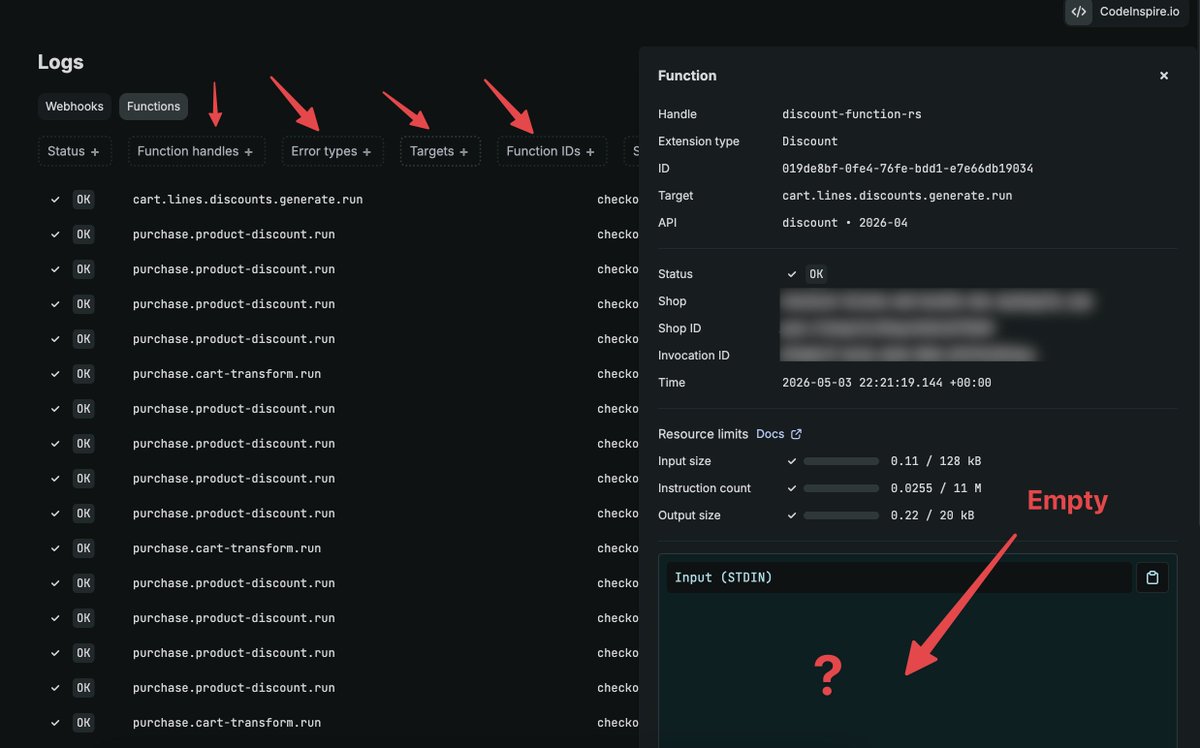
Shopify dev dashboard for functions log is so buggy.
None of the buttons marked with arrows are working. The input and output doesn't display anything while my input have many queries. When you copy, it shows the data.
@nick_wesselman wanted to let you know if there is any update on this.
1
1
16
1,192
Understandable. I stuck with dotnet, and it works really well for web, without reaching for yet another JS framework.
My stack:
Razor pages
Htmx
Alpinejs
Systemd
Sql
Cypher
Bash
I can make anything. For mobile, it's going to suck no matter what.
My advice to anybone is, "build your own stack". It might be a Frankenstein, but it's YOURS, not a big corpo's.
Challenge yourself by reducing depenencies and writing your own.
1
2
43