
🚀 Open Science Thought Experiment: AOGM (Angular Oscillation Gravity Model)
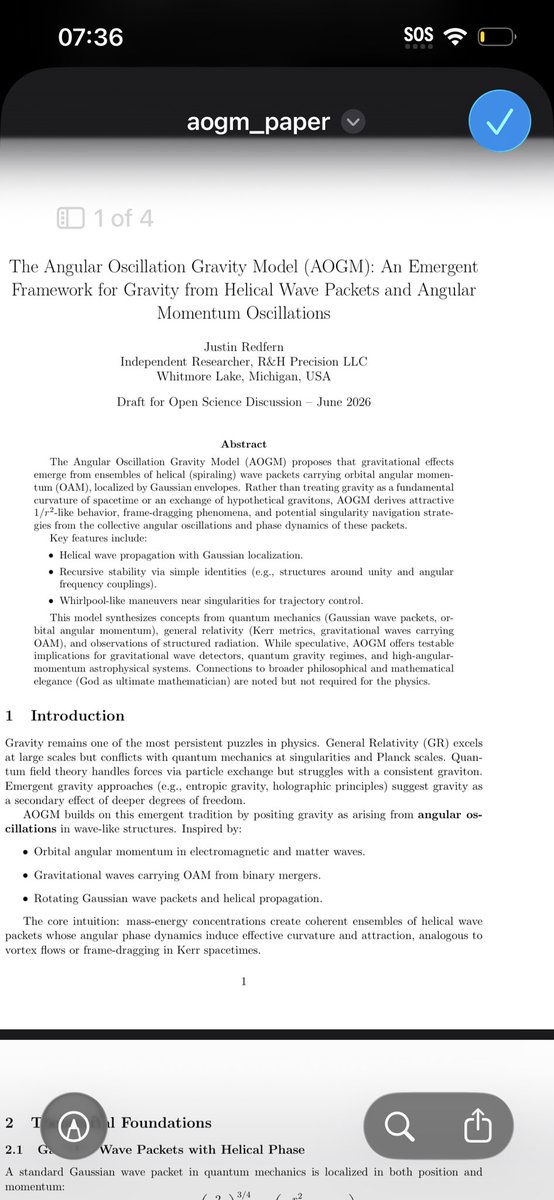
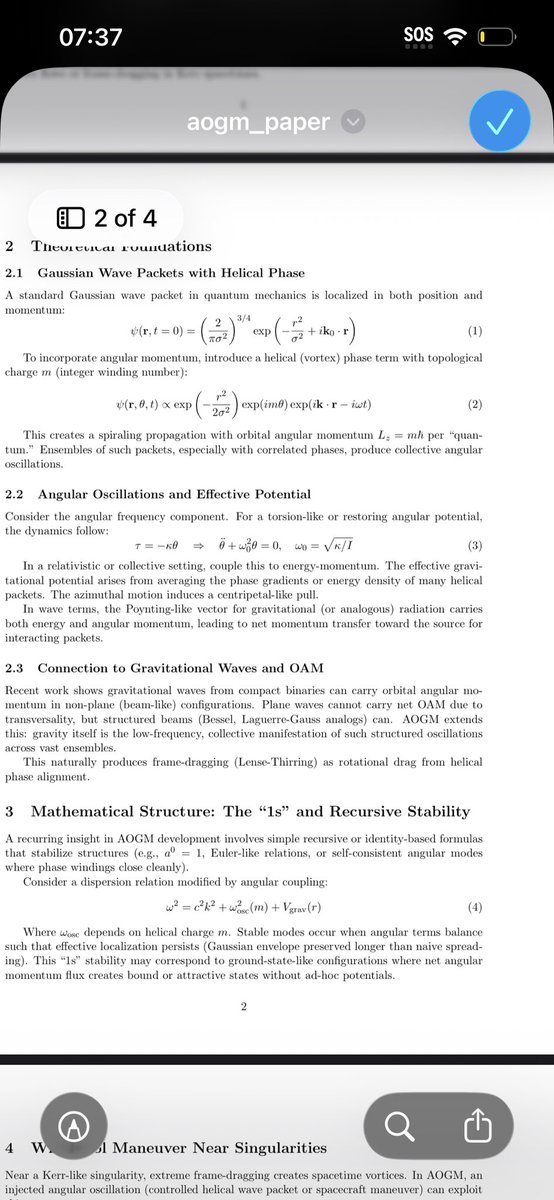
Over the past few weeks I’ve been exploring a speculative idea that sits somewhere between gravitational-wave physics, orbital angular momentum (OAM), rotating Gaussian wave packets, and emergent gravity concepts.
One thing that caught my attention is that gravitational-wave researchers have already shown that structured gravitational waves may carry orbital angular momentum. That doesn’t prove AOGM, but it does raise an interesting question:
Could angular structure and phase dynamics play a larger role in gravitational phenomena than we currently model?
The goal isn’t to claim new physics. The goal is to ask better questions.
Current challenges:
🔹 Can an angular oscillation tensor be defined?
🔹 Can the model reproduce Newtonian gravity?
🔹 Can it recover Einstein’s field equations as a limit?
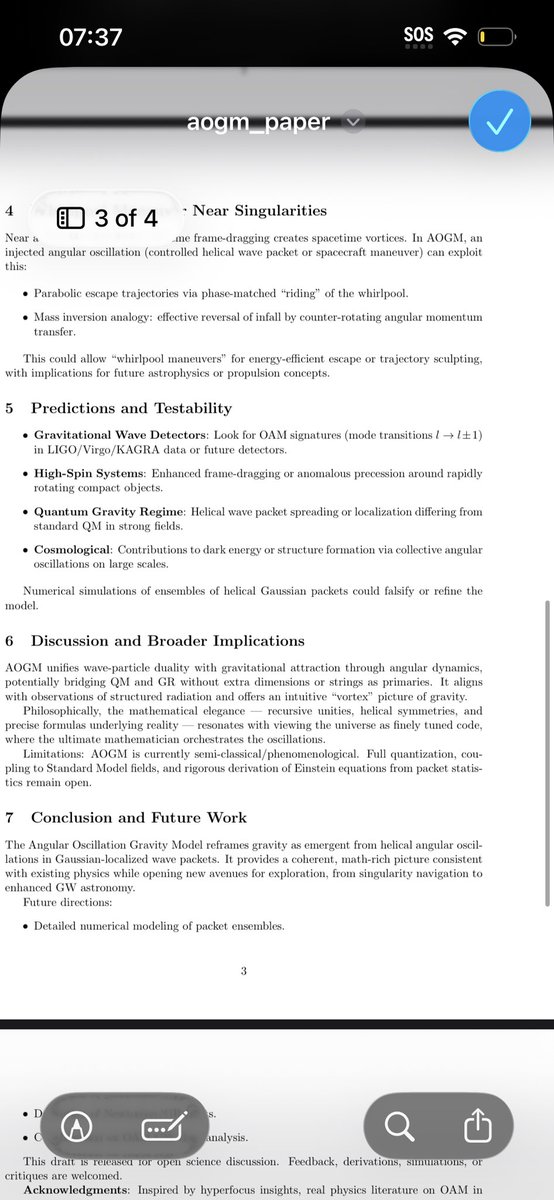
🔹 Does it predict measurable signatures in LIGO/Virgo/KAGRA data?
🔹 Can it be falsified through simulation or observation?
Science advances through criticism, testing, and refinement—not certainty.
If you’re a physicist, mathematician, engineer, data scientist, or just someone who enjoys tearing apart ideas, I’d genuinely welcome feedback.
Sometimes the most valuable outcome isn’t proving an idea right.
It’s discovering exactly why it’s wrong.
Either way, we learn.
#Physics #TheoreticalPhysics #Astrophysics #Cosmology #Gravity #GeneralRelativity #QuantumMechanics #QuantumGravity #GravitationalWaves #LIGO #VirgoDetector #KAGRA #OrbitalAngularMomentum #WavePhysics #Mathematics #AppliedMath #TensorCalculus #DifferentialGeometry #ScientificComputing #NumericalMethods #Simulation #Research #OpenScience #CitizenScience #IndependentResearch #STEM #ScienceTwitter #AcademicTwitter #PhysicsCommunity #SpaceScience #BlackHoles #NeutronStars #FrameDragging #EmergentGravity #WavePackets #GaussianWavePackets #HelicalStructures #DataAnalysis #ScientificDiscussion #ScienceCommunication #NASA #ESA #CERN #Fermilab #Caltech #MIT #PerimeterInstitute #InstituteForAdvancedStudy #ResearchIdeas #Curiosity
@NASA @LIGO @Virgo_Interferometer @Fermilab @CERN @Caltech @MITPhysics @Perimeter @APSphysics @NASA_Technology @MITMath
1
65
Ricardo Vázquez retweeted

This is so OR #OperationsResearch #AppliedMath
Jun 5

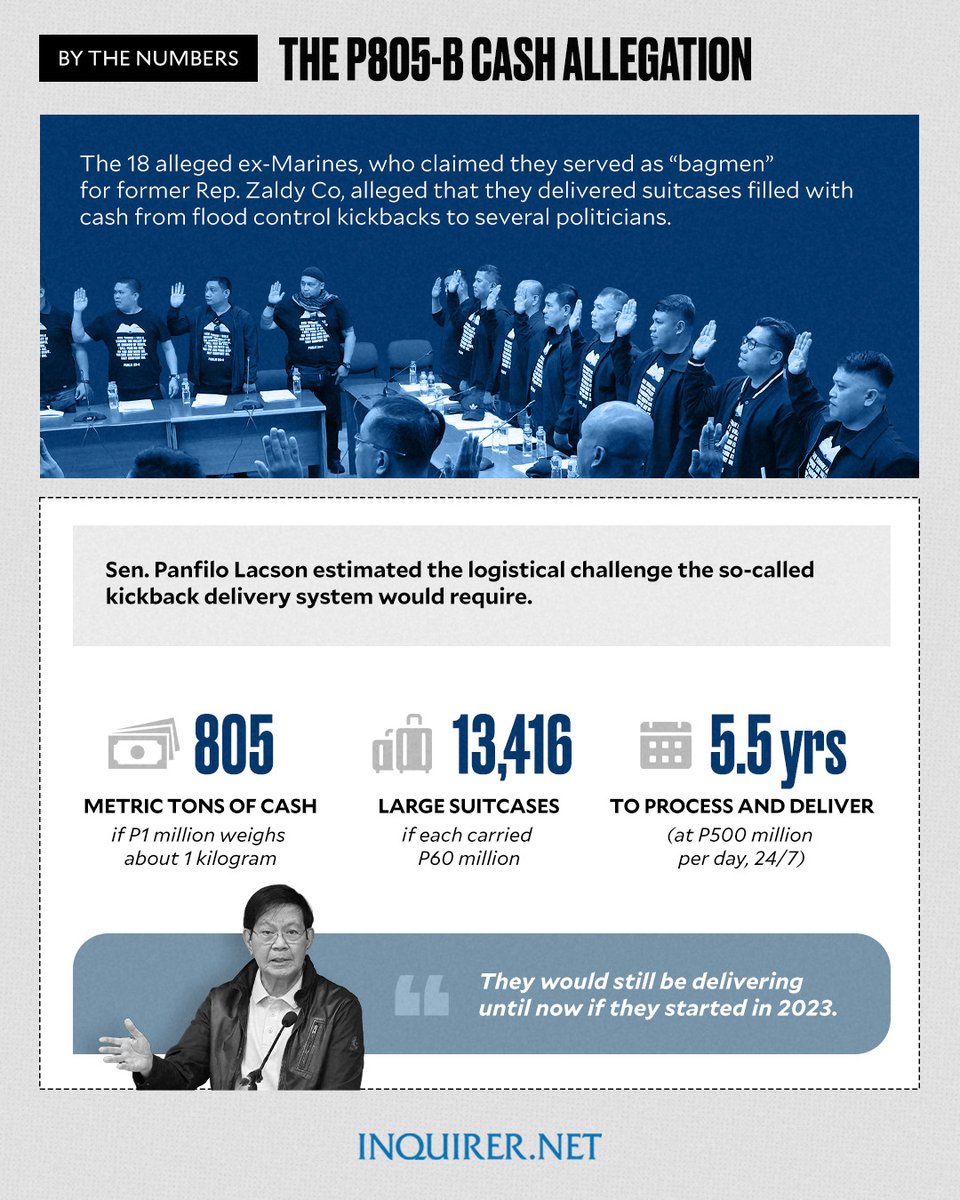
'LOGISTICAL NIGHTMARE'
Sen. Panfilo Lacson questioned the logistics behind the P805-billion flood control kickback allegations by 18 alleged former Marines.
The ex-Marines, who claimed they delivered flood control "kickbacks" to several politicians, appeared at a Senate inquiry led by the Cayetano bloc on Thursday, amid allegations that each received P5 million in exchange for their testimony.
READ RELATED STORY: inqnews.net/DefensorOnExMari…
1
3
122
Ricardo Vázquez retweeted

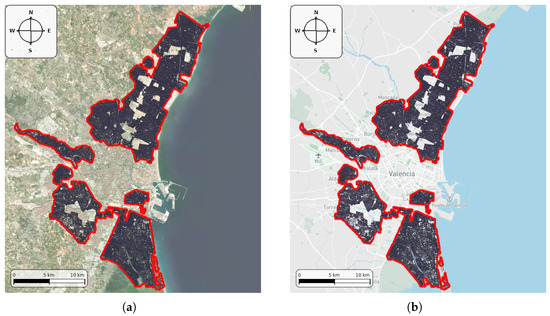
New OA article in #AppliedMath on #land #fragmentation and #efficiency #thresholds (Huerta de Valencia). doi.org/10.3390/appliedmath6…
@MDPIOpenAccess @AppliedmathMDPI @HuertaFutura
#Agriculture #Huerta
5
2
37
Ricardo Vázquez retweeted
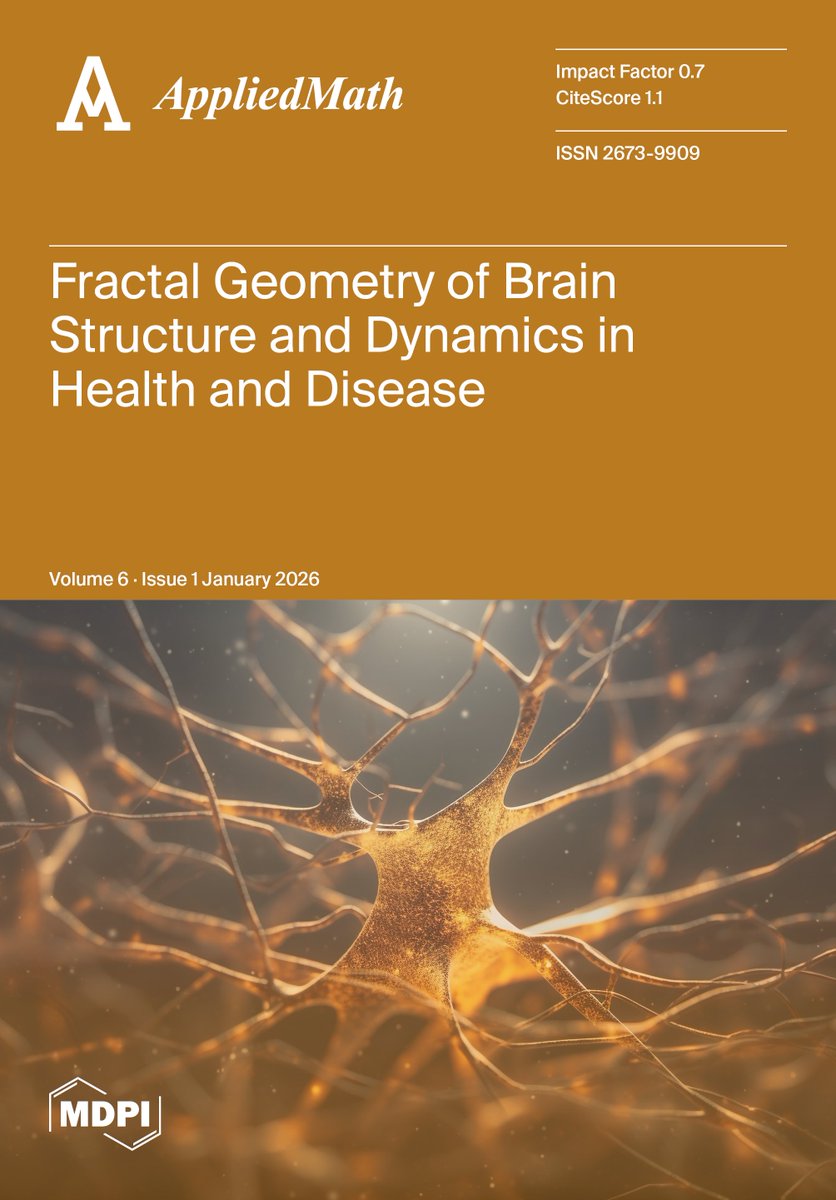
📢We are pleased to announce AppliedMath, Volume 6, Issue 1 (January 2026) – 18 articles!
mdpi.com/2673-9909/6/1
#mathematics #appliedmathematics
3
33
Ricardo Vázquez retweeted
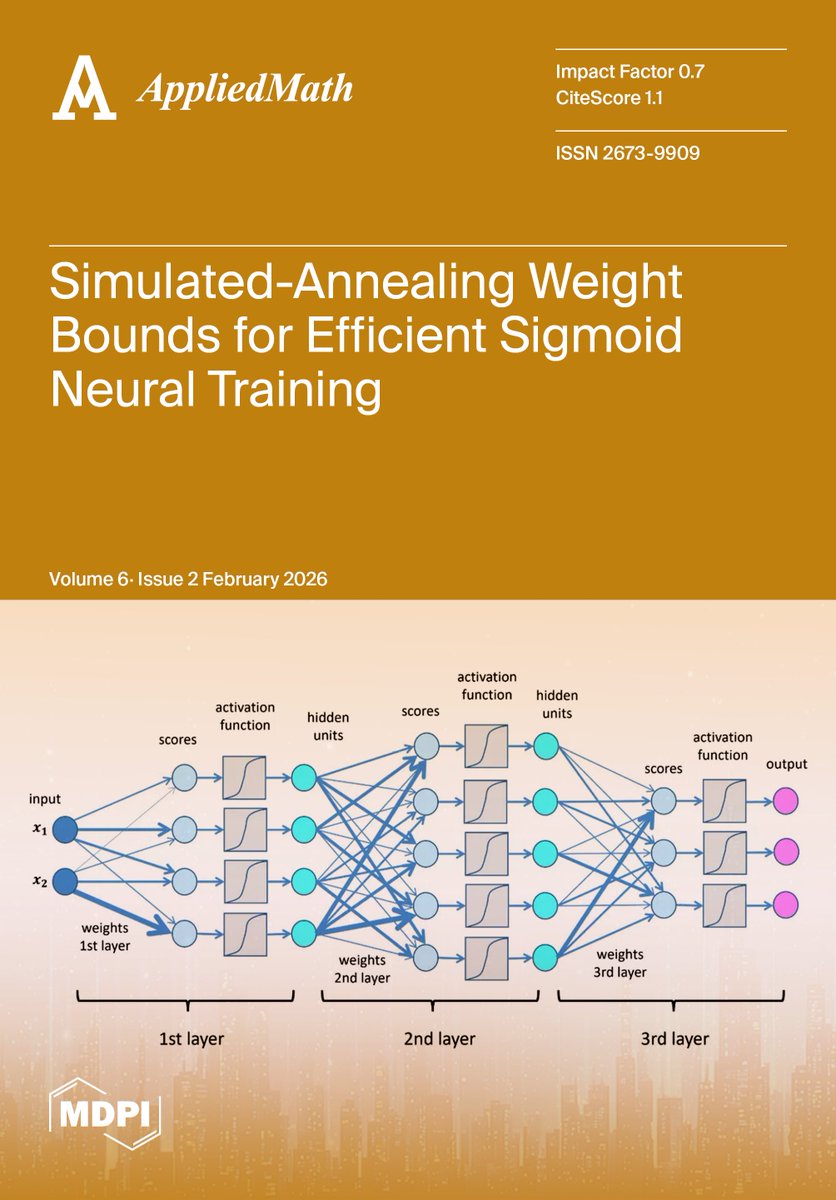
📢We are pleased to announce AppliedMath, Volume 6, Issue 2 (February 2026) – 16 articles!👏
📖Enjoy reading Peer-reviewed and Open-access papers: mdpi.com/2673-9909/6/2
#mathematics
#appliedmathematics
4
3
91

Jun 9
🎓 PhD Opportunity in Mathematics 🇸🇪 | Örebro University
📌 Position: Doctoral Student in Mathematics
🏫 University: Örebro University
📍 Location: Örebro, Sweden 🇸🇪
🏢 Department: Mathematics and Statistics
👨🏫 Supervisor: Prof. Mårten Gulliksson
💰 Salary: SEK 32,300/month
📅 Deadline: August 17, 2026
⏳ Duration: 4 years ( 1 year with teaching duties)
🔬 About the Project
This PhD focuses on portfolio optimization and financial mathematics, inspired by classical models such as Markowitz (1952) and Modern Portfolio Theory.
The research tackles ill-posed problems in portfolio optimization, where small changes in data can lead to unstable investment strategies—especially when assets are highly correlated.
You will work on developing stable, efficient mathematical algorithms to improve robustness in financial decision-making models.
👥 Supervision Team
• Prof. Mårten Gulliksson (Principal Supervisor)
• Docent Magnus Ögren
• Docent Stepan Mazur
🎓 Programme Structure
• 240 ECTS (PhD degree)
• Combination of coursework independent research
• ~20% teaching responsibilities
• Total duration: up to 5 years
👤 Ideal Candidate
• Master’s degree in Mathematics or related field
• Strong background in mathematical modeling and analysis
• Interest in optimization, finance, or applied mathematics
• Background in economics is a plus
• English proficiency (Swedish is optional but beneficial)
🌟 Why Apply?
• Work on mathematically challenging and real-world relevant problems
• Gain expertise in financial mathematics and optimization
• Supportive academic environment with structured PhD training
• Opportunity to teach and develop academic skills
• Competitive salary and strong work-life balance in Sweden
🌍 Location Highlight – Örebro
A vibrant and student-friendly city in Sweden, Örebro offers a high quality of life, rich culture, and a welcoming international environment.
🔗 More Info & Apply:
phdscanner.com/opportunities…
#PhD #Mathematics #Optimization #FinancialMathematics #Sweden #ResearchOpportunity #AppliedMath #PortfolioOptimization #AcademicJobs
250

@mbattista25 and I have viewed the video. It is a great horned owl. There is no way this PhD in AppliedMath and founder of a 3.5 billion dollar satellite company would make that mistake.
It is better to be silent and be thought ignorant than to open your mouth and remove all doubt
2
3
67

The Department of Applied Mathematics and Statistics consists of approximately 30 faculty, 6 staff, nearly 800 graduate students, and over 600 undergraduate students.
Learn more: bit.ly/4eT9pUV
Be the solution.
#AppliedMath #Statistics #Engineer #StonyBrookU
ALT A light bulb lies on a blackboard covered with mathematical formulas and equations, illuminated in a bright glow, with a red pencil beside it.
30
Mathematicians have finally delivered the first fully rigorous stochastic proof for the Total Quasi-Steady State Approximation (tQSSA) in enzyme kinetics. Here is why it changes the game for drug development and systems biology:
👉 aitrendblend.com/total-quasi…
#AppliedMath #Enzymes
1
1
46

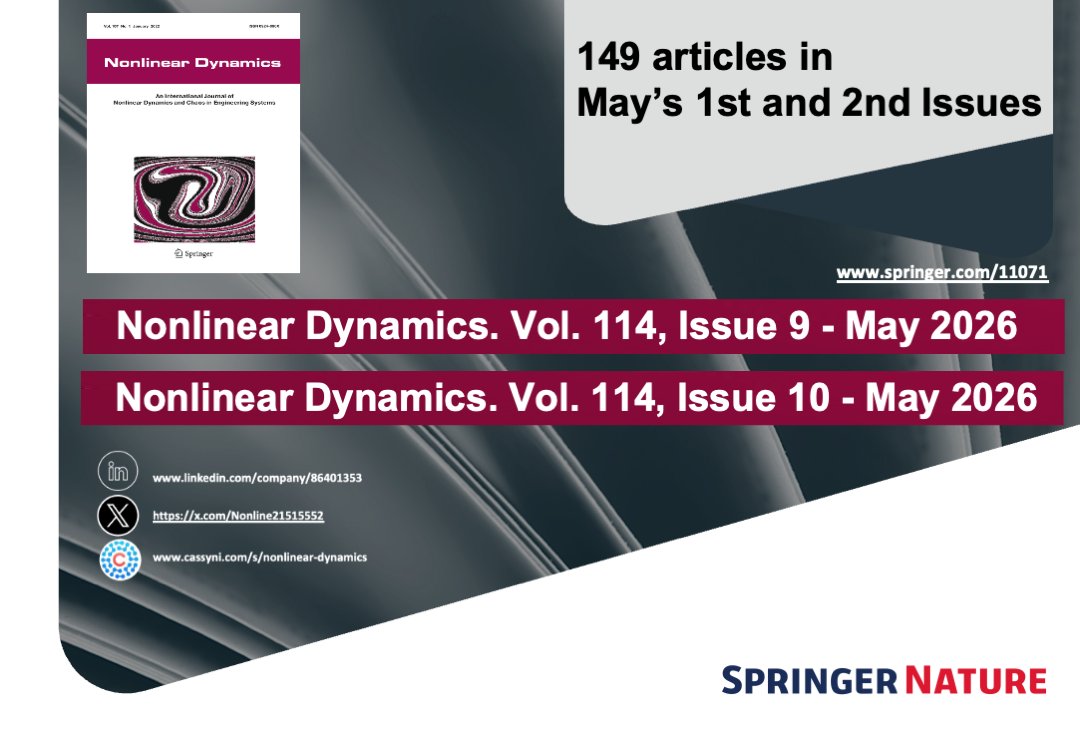
📚 A prolific month for Nonlinear Dynamics.
May saw the publication of:
🔹 Issue 9: 81 articles
🔹 Issue 10: 68 articles
That's 149 new papers advancing the frontiers of nonlinear dynamic science.
From nonlinear vibrations, bifurcations, chaos, and rogue waves to AI-driven modeling, system identification, control, complex networks, and fractional dynamics, these issues showcase the extraordinary breadth of our field.
Nonlinear dynamics is no longer just a discipline: it is becoming the common language for understanding complexity across science and engineering.
#NonlinearDynamics #Chaos #ComplexSystems #Engineering #Physics #AppliedMath #AI @SpringerEng
1
36

May 26
A new paper out of San Diego State University changes that with a single, elegant unified formula. 🧵👇
The secret weapon? A beautiful analytical bridge that hooks these integrals directly to incomplete gamma functions.
🔗 aitrendblend.com/generalised…
#AppliedMath #Physics #Calculus
1
2
33

May 17
What if Your Neural Network Was Forced to Obey Physics?
Physics-Informed Neural Networks (PINNs) are neural networks trained to satisfy a differential equation by building the PDE residual directly into the loss. They emerged from a very practical problem...classical PDE pipelines can be brilliant, but they often demand heavy discretization work (meshes, stencils, stability tuning), and the method you build is usually tied to one geometry and one solver setup. A PINN flips the workflow by representing the solution itself as a smooth function uᵩ(x,t) and enforcing the physics everywhere you choose to sample the domain.
People often meet PINNs in the least helpful way...via a flashy solution plot, and almost no explanation of what was enforced to get it.
In this series we keep the enforcement visible. We pick a differential equation, represent the unknown solution as a flexible function, measure how well that function satisfies the equation across the domain, and train it to reduce that mismatch everywhere we sample.
A normal neural net learns from labels...you give it inputs and target outputs. A PINN learns from a differential equation...you give it inputs (x,t) and it gets punished whenever its output fails the PDE.
By punish we mean that the loss increases when the mismatch is large we reward it if the loss decreases as the mismatch gets smaller.
The network isn’t replacing physics, it’s becoming a flexible function that is forced to satisfy the same calculus you’d impose on any candidate solution.
The math breakdown:
We start with a PDE we want to solve on a domain Ω. Write it as
uₜ(x,t) N(u(x,t), uₓ(x,t), uₓₓ(x,t), …) = 0 for (x,t) in Ω
A PINN replaces the unknown function u with a neural network output
uᵩ(x,t)
Now define the physics residual by plugging uᵩ into the PDE
rᵩ(x,t) = ∂uᵩ/∂t N(uᵩ, ∂uᵩ/∂x, ∂²uᵩ/∂x², …)
If uᵩ were an exact solution, we would have rᵩ(x,t) = 0 everywhere.
We may also have data points (xᵢ,tᵢ,uᵢ) from measurements or a known initial condition. The training objective is just a weighted sum of squared errors
L(ᵩ) = L_data(ᵩ) λ L_phys(ᵩ) L_bc/ic(ᵩ)
with
L_data(ᵩ) = meanᵢ |uᵩ(xᵢ,tᵢ) − uᵢ|²
L_phys(ᵩ) = meanⱼ |rᵩ(xⱼ,tⱼ)|² where (xⱼ,tⱼ) are the collocation points in Ω
L_bc/ic(ᵩ) = penalties enforcing boundary conditions and initial conditions
The key technical step is that the derivatives inside rᵩ are computed by automatic differentiation
∂uᵩ/∂t, ∂uᵩ/∂x, ∂²uᵩ/∂x², …
So we can differentiate the total loss L(ᵩ) with respect to ᵩ and train with gradient descent.
This is the whole idea behind PINNs. Learn a function, but make the PDE part of the loss, so the network is trained to be a solution, not just a curve-fitter.
In the render, the main 3D surface is the network’s current guess uᵩ(x,t), drawn as a living sheet over the (x,t) plane. Hovering above is the neural scaffold...a visible graph of feature nodes and connections. The bright tension threads are the physics residual rᵩ(x,t): each thread tethers a collocation bead on the sheet up to the scaffold, and it thickens and brightens exactly where |rᵩ| is large (color encodes the sign). As training runs, those threads go slack across the domain not because we hid the error, but because the network has actually been pushed toward rᵩ(x,t) ≈ 0.
#PINNs #PhysicsInformedNeuralNetworks #ScientificMachineLearning #PDE #DifferentialEquations #Optimization #MachineLearning #AppliedMath #ComputationalPhysics
6
72
383
17,201

May 6
A math trail turns your school grounds or local community into a living laboratory. Students measure, estimate, question, and model what they see.
Here’s how to get started:
comap.org/blog/item/math-tra…
#MathTeacher #AppliedMath #MathModeling

2
3
1,127

論文がAppliedMathにreceivedされた。

4
237

Math & Stats Month Feature:
Applied Stochastic Analysis
This text covers Markov chains, Gaussian processes, Itô calculus, and stochastic differential equations, with practical tools for modeling and simulation. Exercises and simulations help readers build intuition and techniques without heavy measure theory.
#MathStatMonth #StochasticAnalysis #AppliedMath #Probability #GraduateMath
Link in comments.
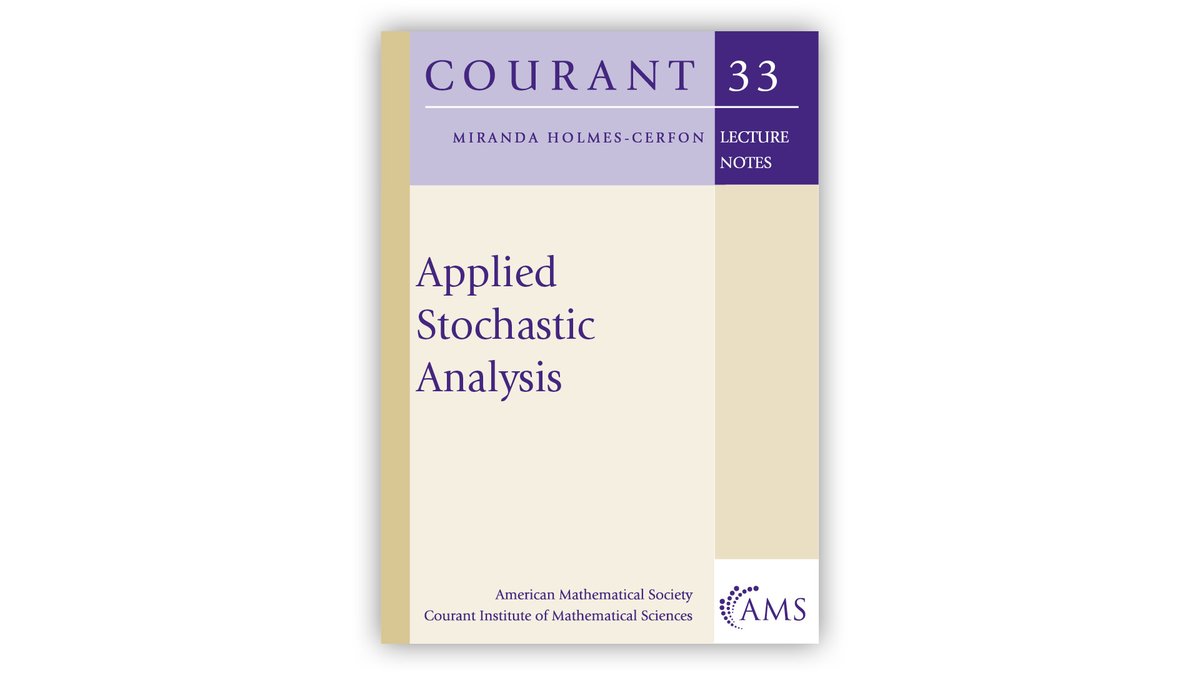
ALT Cover of Applied Stochastic Analysis
1
16
127
7,858
#CallforReading
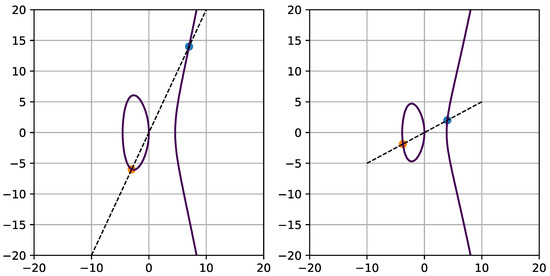
📡"On Families of Elliptic Curves 𝑬𝒑,𝒒:𝒚2=𝒙3−𝒑𝒒𝒙 That Intersect the Same Line 𝑳𝒂,𝒃:𝒚=𝒂𝒃𝒙 of Rational Slope" by Eldar Sultanow, Anja Jeschke, Amir Darwish Tfiha, Madjid Tehrani and William J. Buchanan Full: mdpi.com/2673-9909/6/1/14
#appliedmath
5
3
49


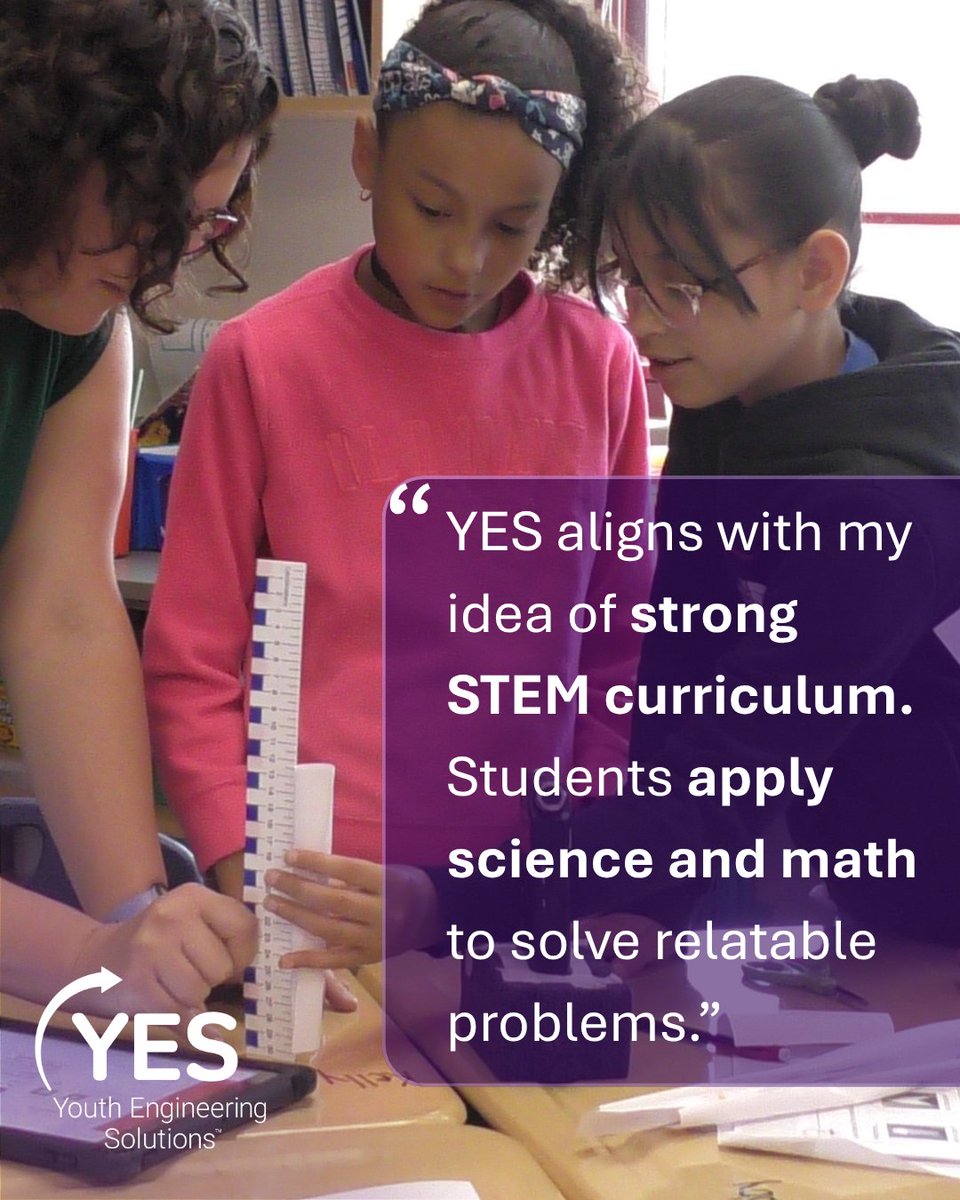
During an engineering challenge, math just happens. Kids want to calculate the diameter of a circle, or the rate of heat transfer, or cost of materials. Why? Because the answers may help make a decision, support an idea, or improve their design.
#K12STEM #HandsOn #AppliedMath
2
57

Apr 15
PhD opportunity in Marseille: Quantum Trajectory Methods for Open Quantum Systems.
I'm looking for a candidate with a strong background in #physics, #compchem, or #appliedmath for a coding-heavy project involving scalable simulations.
Details:
euraxess.ec.europa.eu/jobs/4…
5
13
1,147