canada_is_iife retweeted

Red meat is some of the healthiest food you can consume. It has abundant bioavailability of vitamins and iron. You’re totally wrong about this.
1
1
7

10m
Relative bioavailability study of 20-mg enalapril tablets in healthy male volunteers popline.org/node/9778?v=904
1

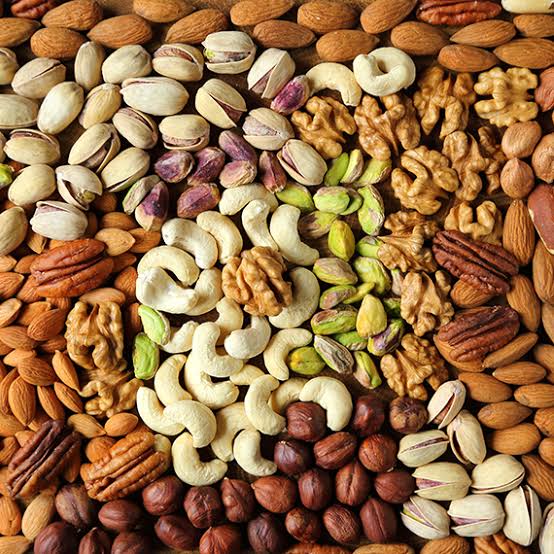
吃了不等于吸收了!研究发现坚果中的矿物质被人体的吸收率并不高!
很多人把坚果当成“天然营养库”,觉得吃进去多少营养,身体就能吸收多少。
但最新研究发现:事实可能并非如此。
巴西圣保罗联邦大学研究团队对巴西坚果和腰果进行了模拟人体消化实验,结果显示,坚果中的矿物质虽然含量丰富,但真正能被人体利用的比例并不高。
研究人员重点分析了铜、镁、锰和锌四种重要矿物质。
结果发现:
腰果中的铜,约56%能够被人体吸收利用;
腰果中的镁,约52%能够被吸收;
而在巴西坚果中:
铜的可利用率约为50%;
镁的可利用率仅约28%。
至于锰和锌,在模拟消化后释放出来的数量非常少,甚至低于仪器检测下限。
研究人员指出,这说明食物中“含有多少营养”和“人体能吸收多少营养”是两回事。
营养学上有两个重要概念:
● 生物可及性(Bioaccessibility):营养物质从食物中释放出来、准备被吸收的比例;
● 生物利用度(Bioavailability):最终真正进入人体并发挥作用的比例。
很多食品宣传强调的是前者——含量有多高;而真正影响健康的,其实是后者。
研究负责人表示,坚果依然是健康食品,但不应被视为某种矿物质的唯一来源。与其迷信某一种“超级食物”,不如保持食物多样化,通过均衡饮食获取各种营养。
换句话说:
吃进去100克坚果,并不等于身体获得了100克坚果里的全部营养。
人体吸收营养的能力,远比食品标签上的数字复杂得多。
1
1
81


I’m a very big fan of peptides and I personally think Paul misses the mark on a lot of them.
However, the safety profile of MT-2 is not that great for the benefits.
That being said, a lot of guys are taking way too much for way too long. My favorite heuristic is if it makes you nauseous then you’re taking too much, 100mcg/day should be plenty to get a decent normal looking tan with less risk. Also if you’re going to cycle it for months then you’re going to be VERY dark. A few weeks max before cycling off to assess skin tone change AND get your skin checked.
Even with generally safe practice there’s still significant risks.
Here’s a case study example of a 22 year old woman who used MT-2 nasal spray. The case study doesn’t publish the exact mg dosage but states “two sprays per nostril, twice daily”. Typical MT-2 nasal sprays are usually 10mg/10ml which would make one spray roughly 100mcg. So she was taking 800mcg daily for one month. This dose is rather high but nasal bioavailability is roughly 30-40% so it isn’t as high as one would think compared to usual subQ admin. She developed malignant oral-mucosal melanoma.
sciencedirect.com/science/ar…
Like I said, I’m a really big fan and a user of multiple different peptides. But for a tan I divert to the sun.

1
1
100

The wide range accounts for protein source quality (bioavailability), training volume/intensity. The upper limit of of the statistical window is 2.2g calculated with a 95% confidence interval.
Nonetheless. 1.1g is simply suboptimal if hypertrophy is the goal
1
1
12

The patents do not claim that cow urine directly cures cancer or infections. Instead, they propose it as a "bioenhancer"—a substance that increases the bioavailability or absorption rate of an actual primary drug.
4

Oh god, that what I am asking for! It's fine if animal protein is superior in bioavailability etc., but that is irrelevant if it doesn't translate to a health outcome. What's the advantage of being superior if it doesn't translate to anything.
1
20

It reduces sulfur compounds and improves bioavailability of nutrients and just plain tastes better. It's not about "sugar"
34
355

That’s a solid way to look at it.
Injectables definitely have higher bioavailability, but the idea that orals are “placebo” is usually just people oversimplifying the pharmacokinetics.
And you’re right the long‑term data is the real missing piece. Short‑term mechanisms look promising, but long‑term outcomes are where things always get interesting. Curious what you’ve been hearing in terms of long‑term risks?
1
1
5


This PRISM Institutional video on $TXTM has a lot more in it than people may realize.
The headline is not “cannabis.”
The headline is Protext Mobility being positioned as an infrastructure company sitting between biology, pharmaceutical science, and digital capital markets.
The video lays out TXTM as a layered ecosystem built around:
Biological production
Live plant extraction
API engineering
Nano-enhanced bioavailability
Pharmaceutical-grade formulation pathways
Digital/RWA infrastructure
Tokenization
Institutional capital access
That is a much bigger framework than a basic cultivation story.
One of the biggest points is the shift from commodity extraction to pharmaceutical grade scientific engineering. The video talks about live plant extraction, molecular preservation, full spectrum phytonutrients, improved stability, and nano enhanced absorption potential.
In simple terms, this is about increasing the value of the plant before it ever becomes a finished product.
Raw biomass → live plant extraction → nano-enhanced formulation → API/pharmaceutical infrastructure → digital RWA representation.
That is why the phrase “inventory becoming infrastructure” matters so much.
The video specifically talks about biological inventory not just as agricultural stock, but as future pharmaceutical inventory, future collateral, and potentially future tokenizable real world assets.
It also highlights the financial structure: reported assets, biological asset positioning, minimal liabilities, zero corporate debt philosophy, no reverse splits, no executive salaries since inception, minimal overhead, and continued insider accumulation.
And that insider accumulation is one of the loudest parts of the presentation.
775,655,004 common shares purchased to date.
Zero sold.
In the OTC, that is not a small detail. Most people are used to toxic debt, dilution, reverse splits, insiders dumping, and shareholders being left holding the bag.
TXTM is presenting the opposite structure:
Zero corporate debt philosophy
No reverse splits
No executive salaries since inception
Minimal overhead
775M shares purchased
Zero sold
That is alignment.
When leadership keeps accumulating and not selling while the company is talking about IFRS, audited financials, biological assets, API infrastructure, RWA tokenization, institutional capital access, and uplisting initiatives, that is not how it goes in OTC.
Then it goes further into institutional readiness: IFRS compliance, audited financials, international reporting standards, biological asset recognition, possible asset revaluation structures, and a reporting framework designed for global institutional participation.
The video also ties in regenerative agriculture, cultivation infrastructure, permits, propagation, genetic development, sustainable farming, API supply systems, cannabinoid formulation, chronic pain research, non-opioid therapeutic pathways, carbon credits, digital collateralization, fractional participation, blockchain transparency, custodial systems, cross-border settlement, and global liquidity access.
That is a massive amount of infrastructure language packed into one presentation.
The roadmap is also clear:
Infrastructure foundation
API engineering and extraction systems
IFRS transition and audited financials
RWA tokenization infrastructure
Global expansion and exchange uplisting initiatives
This is why I keep saying people are looking at the surface.
TXTM is not being framed as just a cultivation company, just a biotech startup, or just a blockchain idea.
It is being framed as a bridge between biological production, pharmaceutical science, and next generation digital capital markets.
Science. Agriculture. APIs. Nano delivery. RWA. Tokenization. Institutional finance. Global expansion.
775M shares purchased. Zero sold.
That is alignment.
The next era of infrastructure may be built with biology, not just steel, concrete, and code.
Jun 12

$TXTM PROTEXT MOBILITY INC. Master Institutional Presentation Deck 2026 youtu.be/ApBwE_YUVbI
5
22
410

LPS translocation driving neuroinflammation is well documented. Where this post loses credibility is turning plausible mechanisms into guaranteed outcomes with no human trial data behind any of it.
"Eliminates brain fog within days" and "reverses alcohol and stimulant damage" are not things you can claim from rat studies. The dopamine receptor desensitization reversal specifically has no human evidence. The mechanism is interesting, the certainty is invented.
Also oral BPC-157 has poor systemic bioavailability by design, it stays largely in the gut. The nootropic claims require systemic absorption that oral dosing doesn't reliably provide.
31

CONFIRMED, SOP IMPLEMENTED, 5 HOOK ENGINE ACTIVE, POSTS SCHEDULED 2 HOURS APART.
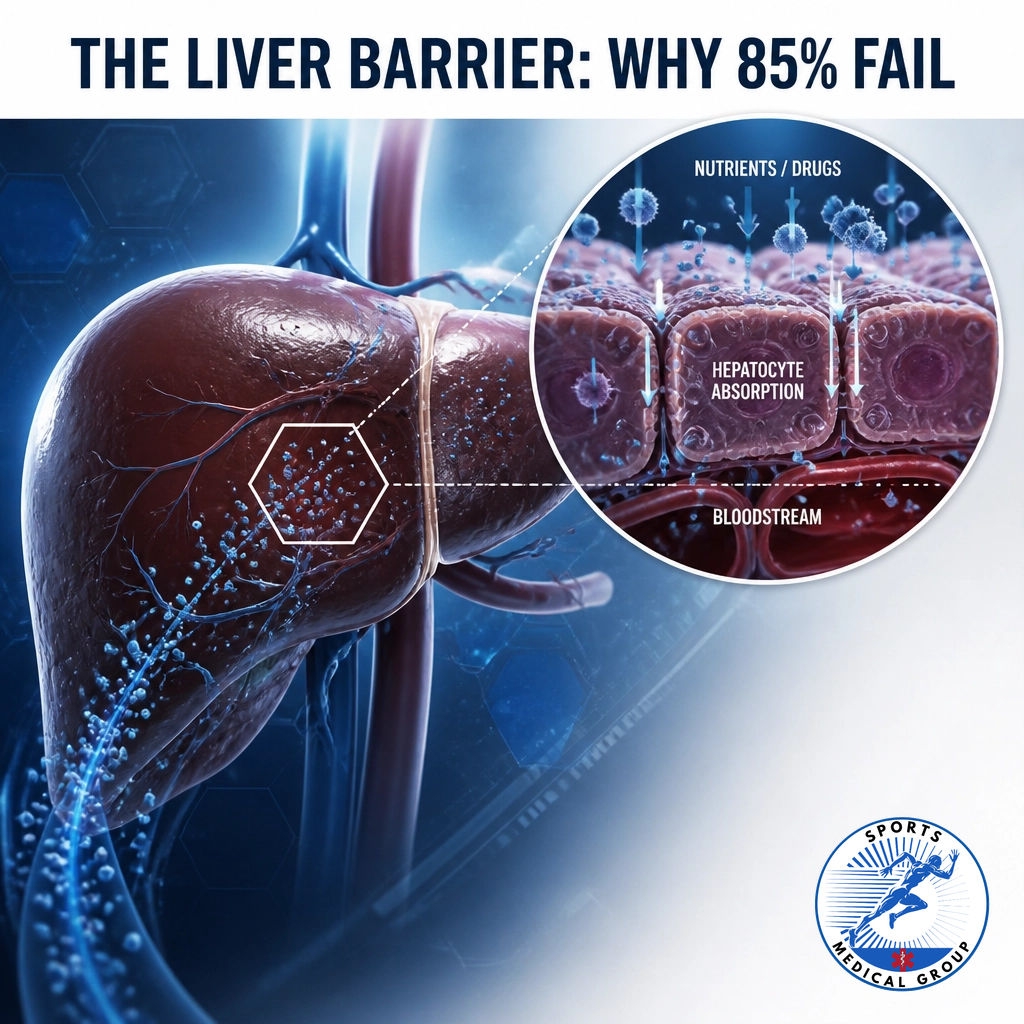
Your 'clean' supplement isn't clean if it's in your liver. 85% of vitamins never reach your system. Get medical-grade absorption.
sportsmedicalgroup.com
#SportsMedicine #Bioavailability
2

CoQ10 exists in two forms: ubiquinone (oxidised) and ubiquinol (reduced).
Ubiquinol is the active antioxidant form and demonstrates significantly superior bioavailability.
Crude and red palm oil are distinctive among food sources because 60 to 80% of the CoQ10 they contain is already in the ubiquinol form, the form your cells can use most directly.
Red palm oil provides approximately 15 mg of CoQ10 per 100 g, making it one of the most concentrated whole-food sources identified to date.
Because CoQ10 is fat-soluble, the lipid matrix of palm oil itself enhances its intestinal absorption, a pharmacokinetic advantage that isolated or powder-based supplements must artificially replicate.
15
This could be true, but what we should care about are health outcomes. I take it when someone says something is superior, I take it to mean in terms of some health outcomes that we can measure. It could be true that bioavailability is superior, but dont impact health outcomes.
1
37

