
Mar 7
Nervos Network (CKB): Less Noise, More Work
The past month, from February to early March 2026, showed something important: Nervos keeps building, even while the market is driven by fear, volatility, and the broader crypto sentiment.
While CKB’s price, like many altcoins, continued to move largely in sync with the overall market, the ecosystem itself was going through meaningful internal changes.
One of the biggest developments was the gradual sunset of legacy solutions like Force Bridge and Godwoken v1.
For some, that may sound like shutting old things down. But in reality, it is a sign of a project maturing.
Nervos is not trying to carry its entire old stack forward at any cost.
Instead, the team is shifting focus toward more modern architectures, including Axon and an updated Layer 2 stack, in order to concentrate resources where future growth is most likely.
And this is where it gets especially interesting:
Nervos is increasingly aligning itself with Bitcoin scalability.
This is no longer just the story of “another blockchain.”
It is about positioning within one of the largest and most promising sectors in the market:
expanding Bitcoin’s capabilities through flexible, powerful, long-term infrastructure.
What does this mean for the community and investors?
— the project is shedding outdated weight
— resources are being redirected into more promising directions
— the ecosystem is becoming strategically clearer
— the bet is being placed on infrastructure, not short-term hype
Yes, the market still controls price action.
Yes, CKB remains highly dependent on the overall condition of crypto.
But periods like this are exactly when you see which projects are simply existing — and which ones are laying the groundwork for the next wave of growth.
Nervos right now is not a story about noise. It is a story about restructuring, focus, and strengthening.
And if the team executes its Bitcoin scalability vision the way it intends to, the market may eventually be forced to revalue what CKB really represents in the next cycle.
Sometimes the most important news is not a pump — but the right decision to leave the old behind and build for a stronger future.
#Nervos #CKB #NervosNetwork #Bitcoin #BTC #Layer2 #Axon #BitcoinScalability #Crypto #Web3 #Blockchain #DeFi #BTCFi #Altcoins #CryptoInvesting #DigitalAssets #Layer1 #Infrastructure #FutureOfBitcoin #BuildInBearMarket
13
63
792

15 Oct 2025
Imagine stepping into the future of blockchain, where Bitcoin's unyielding power meets infinite scalability. ExSAT Network isn't just another layer.
Who's in? 🚀 #ExSAT #BitcoinScalability #Web3Future
4
43
38
319

15 Aug 2025
🚀 Scaling Bitcoin with exSat Network!
The @Galxe Starboard algorithm highlights authentic engagement on @exSatNetwork, making your contributions count.
#exSatNetwork #GalxeStarboard #BitcoinScalability #Web3Innovation #CryptoCommunity #Starboard
12
6
6
120

JUST IN: Traditional bridges have failed DeFi, costing billions.
@PortaltoBitcoin eliminates this risk with trustless atomic swaps and native BTC execution.
This is true cross-chain scalability for Bitcoin. No wrapped tokens, no intermediaries. BTC flows natively across chains, as if it belongs.
The Portal Attestation Chain ensures proof, not just promise. This isn’t complex; it feels natural.
TGE incoming. Ready for mass adoption.
#PortaltoBitcoin #BitcoinScalability #DeFi

3
4
102

2 Jul 2025
🛠️ Spaces Protocol is lightweight tech. @spacesprotocol
Sync with a pruned node, no bloat - Bitcoin’s security without the overhead. #BitcoinScalability #Node #Naming #Lightweight #Tech
1
3
130

29 Jun 2025
“Channel Factories: The Secret Sauce for Bitcoin Scalability”
Earlier, we talked about using native $BTC in DeFi with Portal. But how does this all scale? How can we have millions of instant, cheap Bitcoin transactions without clogging the main chain?
Enter the unsung heroes of Bitcoin scaling: Channel Factories.
#ChannelFactories #BitcoinScalability #LightningNetwork #DePIN #Web3
1/ The Bottleneck Problem
The Bitcoin blockchain is a fortress of security, but it's not built for micro-transactions by the billions. Every transaction costs money and takes time because it has to be recorded by everyone on the network.
This is why we have Layer 2 solutions like the Lightning Network, which allows people to open "payment channels" and transact off-chain, only settling the final result on the main Bitcoin blockchain. But even opening all those individual channels can become a bottleneck!
2/ What is a Channel Factory? (ELI5)
Imagine you and a group of friends want to share a single, super-efficient payment system. Instead of each of you opening separate little "channels" with every other friend (which would be messy and take up lots of space on the main Bitcoin chain), you all pool your funds into one "factory."
This "factory" is a special kind of multi-party smart contract on Bitcoin. Once it's set up with one on-chain transaction, everyone within that factory can open countless, instant, and private sub-channels with each other, all without ever touching the main Bitcoin chain again!
3/ The Scalability Superpower
🔹️Massive Efficiency: Instead of many individual on-chain transactions for channels, you get one transaction for potentially hundreds or thousands of channels. This slashes on-chain footprint by 90% or more!
🔹️Instant Channels: Once inside the factory, creating new sub-channels is instant, secure, and off-chain. No more waiting for blockchain confirmations just to start transacting.
🔹️Flexible Liquidity: Funds within the factory can be easily re-allocated between users and channels off-chain, adapting to changing needs without costly on-chain movements.
🔹️True Group Payments: It opens the door for groups of users to manage shared liquidity for various purposes, from gaming to complex financial arrangements, all secured by native Bitcoin.
4/ The Backbone of the Future
Channel Factories aren't just a theoretical concept; they're the next evolution for Bitcoin's scalability and crucial for projects like Portal. They allow the trustless, native BTC transactions we discussed yesterday to happen at a scale previously unimaginable, preserving Bitcoin's core principles while unleashing its full DeFi potential.
This is how Bitcoin truly becomes a global payment layer for billions, not just a store of value. It's the silent, powerful engine making trustless, non-custodial Bitcoin DeFi a reality.
We're building the future, one native BTC transaction at a time. 🧠
#Bitcoin #Scalability #DeFi #ChannelFactories
Disclaimer: While Channel Factories are a powerful concept, their full implementation and widespread adoption are ongoing developments within the Bitcoin ecosystem.

13
9
145

19 Jun 2025
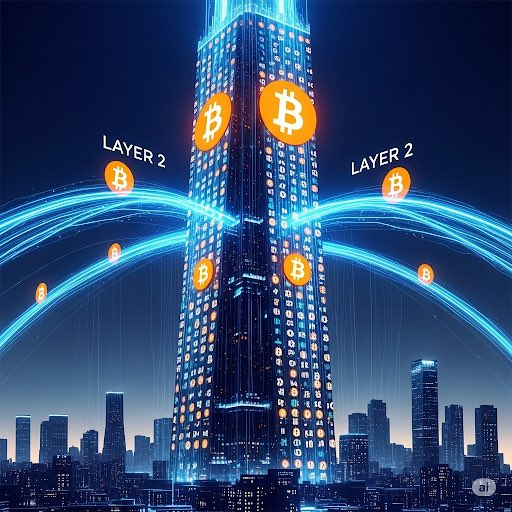
2 unique feature of portal to bitcoin
✅ Portal DEX scales with Bitcoin’s growth!
✅ Handle high-volume swaps with Layer 2 efficiency.
Ready for the future of DeFi trading!
#PortalDEX #BitcoinScalability
7
7
88

11 Jun 2025
GM jellies ☕
Gkaito ❤️
Keep believing 🫶
Still grinding hard and somehow not on the @KaitoAI leaderboard yet 😅
But giving up? Never.
I believe in @KaitoAI and @PortaltoBitcoin family 🥰
#PortalToBitcoin #KaitoAI #Yaps #BitcoinDeFi #Web3 #BitcoinScalability #CryptoCommunity

52
5
58
675
8 Jun 2025
GM jellies 💜
GYAP ☕
Time to wake up
Feeling good today - landed my another @KaitoAI yap with just two smart followers
If you are looking through some other projects on @KaitoAI
Join @PortaltoBitcoin
#kaitoyaps #PortalToBitcoin #KaitoAI #Yaps #Web3 #BitcoinScalability #Crypto
47
10
59
1,052
5 Jun 2025
Gm jellies 💜 🫶
Gm yappers ☕
What should I yap about? 🤔🧐
@PortaltoBitcoin & @KaitoAI
I'm here to build, brick by brick.
Every movement starts with belief.
If you're reading this, I see you. Let's build🚀🔥
#PortalToBitcoin #KaitoAI #Yaps #Web3 #BitcoinScalability #Crypto

43
7
50
680
2 Jun 2025
gPortal🫰
gKaito♥️
Just joined the @KaitoAI Yaps program.
🔥If you want to engage with great content and smart people in crypto, let’s connect through Kaito.
Let's yapping @PortaltoBitcoin
Fam 💜 🫶
#PortalToBitcoin #KaitoAI #Yaps #BitcoinDeFi #Web3 #BitcoinScalability
28
9
45
541

1 Jun 2025
GM! Jellies 🪼
Drenched in sun and dripping in Web3 energy 🕶️☀️
Vibes too smooth with @PortaltoBitcoin and @KaitoAI to ignore 😉
#PortalToBitcoin #KaitoAI #Yaps #BitScaler #AureliaTestnet #LiteNodes #BitcoinDeFi #CrossChain #AtomicSwaps #Trustless #HyperBitcoinization #PortalDEX #BlockchainTechnology #CryptoTech #Web3 #BitcoinScalability #NonCustodial #Decentralization #NotYourKeysNotYourCoins #CryptoCommunity #Airdrop #CryptoAirdrop #Testnet #HODL #CryptoNews #Cryptoworld

32
7
59
1,202
31 May 2025
An average Portal Jelly after @PortaltoBitcoin's TGE 🤑🤩
@KaitoAI
#PortalToBitcoin #KaitoAI #Yaps
#BitScaler #AureliaTestnet #LiteNodes #BitcoinDeFi #CrossChain #AtomicSwaps #Trustless #HyperBitcoinization #PortalDEX
#BlockchainTechnology #CryptoTech #Web3 #BitcoinScalability #NonCustodial #Decentralization #NotYourKeysNotYourCoins #CryptoCommunity #Airdrop #CryptoAirdrop #Testnet #HODL #CryptoNews #Cryptoworld

37
15
72
1,950

23 May 2025
amazon.com/dp/B0F8L48HH1 #BitcoinMining, #BitcoinMiners, #CryptoMining, #Bitcoin, #Cryptocurrency, #Blockchain, #MiningHardware, #BitcoinFarm, #CryptoInvestment, #MiningRig, #BTC, #DigitalCurrency, #MiningProfit, #BitcoinHashrate, #CryptoTech, #MiningPool, #BitcoinRewards, #BlockchainTechnology, #MiningEquipment, #CryptoEconomy, #BitcoinSecurity, #MiningSoftware, #DecentralizedFinance, #BitcoinNetwork, #MiningEfficiency, #CryptoWealth, #BitcoinEnergy, #MiningFarm, #CryptoMarket, #BitcoinProduction, #MiningOperations, #CryptoInnovation, #BitcoinScalability, #MiningProfitability, #CryptoHardware, #BitcoinBlockchain, #MiningTrends, #CryptoFuture, #BitcoinInvestment, #GorillaCases,
Bitcoin mining hardware
Cryptocurrency wallets
1
3
61

19 Apr 2025
🔶 #Bitcoin, 💰 #Cryptocurrency, 🔗 #BlockchainTechnology, 🌐 #DigitalCurrency, 📈 #BitcoinInvestment, 📊 #CryptoMarket, 🏦 #DecentralizedFinance, ⛏️ #BitcoinMining, 🌍 #BitcoinAdoption, 👤 #SatoshiNakamoto, 📚 #CryptoEducation, 📰 #BitcoinNews, 💸 #InvestInBitcoin, 💹 #BitcoinTrading, 🚀 #FutureOfFinance, 🌈 #Altcoins, 🤝 #CryptoCommunity, 👛 #BitcoinWallet, ✊ #HODL, 💵 #BitcoinPrice, 📣 #CryptocurrencyTrends, 📜 #BitcoinRegulations, 🗽 #FinancialFreedom, 🧠 #WealthManagement, 🧮 #BitcoinAnalysis, 🪙 #CryptoAssets, 🧑🎓 #BitcoinForBeginners, 🎯 #InvestSmart, ⚙️ #BitcoinScalability, 🧬 #CryptoInnovation
2
56

10 Apr 2025
3 Ways Bitcoin Scalability and Usability Will Transform Money
#Bitcoin #CryptoPodcast #Blockchain #Cryptocurrency #StarkWare #DigitalEconomy #BitcoinScalability #PeerToPeer #ZeroKnowledgeProofs #FinancialInclusion
tradezpulse.com/3-ways-bitco…
1
1
38

17 Mar 2025
Want expert insights? Watch the panel discussion "The Future of #Bitcoin Scalability" with @CReckhow, @realmtbman, @theblackmarble, @GoetzMr, and @zguz for hot takes and expert analysis!
#BitcoinScalability
#Babylon
1
5
56

14 Mar 2025
[Problems of Bitcoin]
1.Scalability Issues:
- Low Transaction Processing Speed:
Bitcoin can only process about 7 transactions per second (TPS). In contrast, Visa handles thousands of transactions per second. This limits its use for large-scale commercial applications.
#BitcoinScalability #LowTPS
- Block Size Limitation:
The 1MB block size limit (slightly improved with SegWit) causes network congestion and longer processing times as transaction volume increases.
#BlockSizeLimit #NetworkCongestion
2.High Transaction Fees
When the network is congested, users must pay higher fees to prioritize their transactions. This makes it inefficient for microtransactions.
#HighFees #MicrotransactionFail
3.Energy Consumption
- Proof of Work (PoW):
Bitcoin uses a Proof of Work mechanism for mining, consuming vast amounts of electricity. As of 2023, the Bitcoin network’s annual energy consumption rivals that of some small countries (e.g., Argentina).
#ProofOfWork #EnergyHog
- Environmental Controversy:
Increased carbon emissions have led to criticism for its negative environmental impact.
#BitcoinCarbon #EcoCriticism
4.
Volatility
Bitcoin’s price is highly volatile, making it difficult to use as a stable store of value or payment method. For example, it’s common for prices to fluctuate by 10-20% in a single day.
#BitcoinVolatility #PriceSwings
5. Association with Illicit Activities
Bitcoin’s high level of anonymity has led to its use in dark web transactions and illegal activities (e.g., drugs, hacking ransoms). While not fully anonymous, its difficulty to trace is seen as a problem.
#DarkWebBitcoin #IllicitUse
6.Centralized Mining
Although Bitcoin aims for decentralization, mining is dominated by a few large mining pools. For instance, China or specific companies have controlled significant portions of the hashrate in the past.
#CentralizedMining #HashrateControl
- 51% Attack Risk:
Theoretically, if 51% of miners collude, they could manipulate the network.
#51Attack #NetworkRisk
7. Lack of User-Friendliness
- Complex Wallet Management:
Losing a private key means permanently losing funds, and setting up and using it is challenging for beginners.
#WalletComplexity #KeyLoss
- Irrecoverability:
Unlike banks, there’s no password reset option, so accidentally losing access means no recovery.
#NoRecovery #UserError
8. Regulatory Uncertainty
Governments worldwide are attempting to ban or regulate Bitcoin (e.g., China’s mining ban). This creates legal instability and increases investor anxiety.
#BitcoinRegulation #LegalRisk
9.Economic Limitations
- Lack of Functionality as Currency:
Its deflationary nature (capped at 21 million coins) encourages hoarding rather than spending, making it inefficient as a practical payment method according to critics.
#DeflationaryFlaw #HoardingIssue
- Lack of Consumer Protection:
There’s no recourse for fraud or hacking victims, unlike with banks or credit cards.
#NoProtection #CryptoScams
10. Technical Vulnerabilities
- Quantum Computing Threat:
If quantum computers become widely available in the future, Bitcoin’s encryption (SHA-256, ECDSA) could potentially be broken.
#QuantumThreat #CryptoSecurity
- Software Bugs:
Bugs in Bitcoin Core software could endanger the entire network if discovered.
#SoftwareBugs #NetworkVulnerability
11. Social Issues
- Wealth Concentration:
Early adopters and large holders (whales) own most of Bitcoin, potentially exacerbating wealth inequality.
#WealthGap #BitcoinWhales
- Limited Financial Inclusion:
Regions without internet or technological access cannot use Bitcoin, limiting its global inclusivity
12. Difficulty in Upgrading
As a decentralized system, protocol upgrades (e.g., SegWit, Taproot) are slow and require difficult community consensus, leading to criticism that technological progress is hindered.
#Bitcoin #BitcoinProblem
74

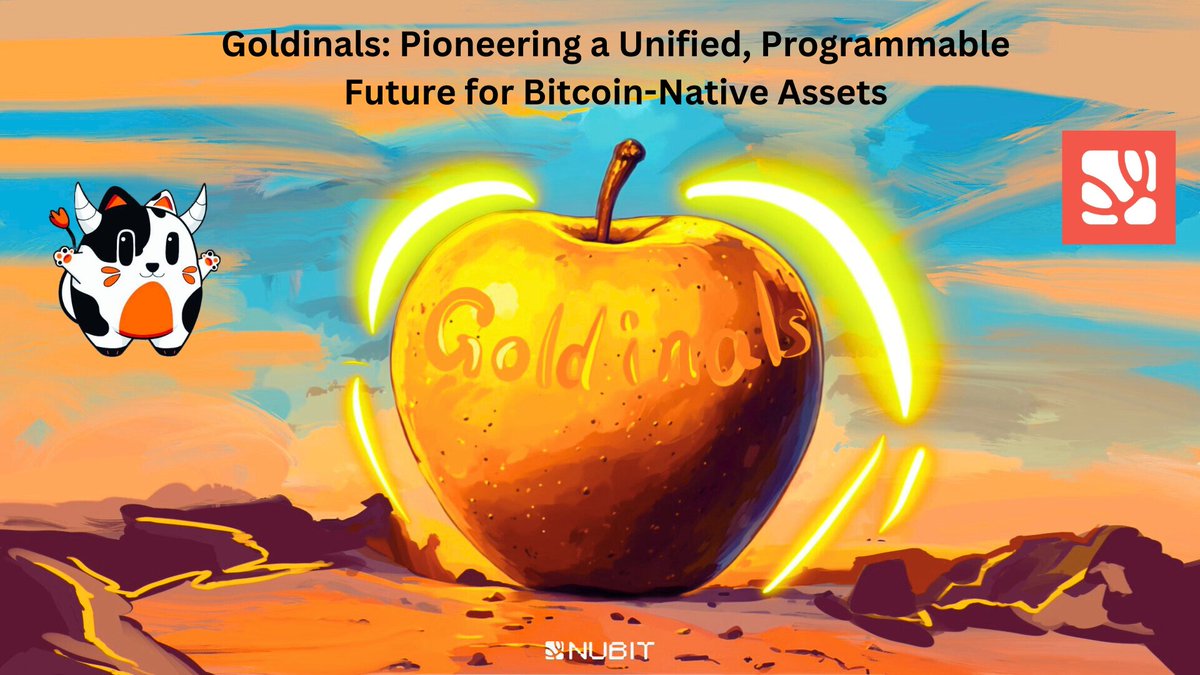
Goldinals: Pioneering a Unified, Programmable Future for Bitcoin-Native Assets
Introduction
In the ever-evolving world of Web3, Bitcoin remains the cornerstone of decentralized finance, yet its asset ecosystem has long been fragmented by isolated standards like BRC-20, Ordinals, and Runes. Enter Goldinals—a groundbreaking protocol developed by Nubit (Riema Labs Inc.)—which promises to unify, decentralize, and program Bitcoin-native assets like never before. Launched in January 2025, Goldinals is not just another protocol; it’s a paradigm shift that could redefine Bitcoin’s role in DeFi, NFTs, and cross-platform applications. This article explores how Goldinals leverages Bitcoin’s core principles to create a trust-minimized, scalable, and programmable ecosystem, positioning it as a catalyst for the next asset boom in the Bitcoin supercycle
@trackoor @nubit_mass @Xaviert221 @mr_satoshiii @nubit_org
#Goldinals #Bitcoin #BitcoinNative #Web3 #DeFi #newbit
The Fragmented Bitcoin Asset Landscape: A Call for Unity
Bitcoin’s rise as a decentralized digital currency has inspired a wave of innovations, including tokenized assets and programmable protocols. However, standards like BRC-20, Ordinals, and Runes—while revolutionary—operate in silos, relying heavily on centralized indexers and custodial solutions. This fragmentation creates inefficiencies, limits interoperability, and undermines Bitcoin’s trustless ethos. Posts on X from accounts like
@nubit_org and @mr_satoshiii
highlight the community’s frustration with centralized indexers reducing security for BRC-20 assets.
Goldinals addresses this challenge head-on
Conceptualized by Domo (the creator of BRC-20) and implemented by Nubit, Goldinals is the first unified protocol for Bitcoin-native assets, consolidating these fragmented standards into a cohesive, decentralized framework. By eliminating reliance on off-chain indexers, Goldinals restores Bitcoin’s trust-minimized nature, ensuring all operations are validated on-chain—a feat that resonates deeply with Bitcoin’s original vision
#Decentralized #BitcoinInnovation
Goldinals’ Core Innovations: Programmability Meets Bitcoin’s DNA
At the heart of Goldinals lies its unparalleled programmability, enabled by BitVM—a computational layer for Bitcoin that introduces advanced on-chain logic without compromising security or decentralization. This innovation allows Goldinals to support complex functionalities like token gating, multi-signature wallets, and conditional transfers, transforming Bitcoin into a programmable platform rivaling Ethereum’s smart contract capabilities.
For example, Goldinals’ intuitive API—modeled after ERC-20 with functions like Deploy, Mint, Transfer, and Burn—empowers developers to build scalable applications directly on Bitcoin. This programmability opens doors for DeFi protocols, interactive NFTs, and cross-platform integrations, as evidenced by early adopters like Wizz Wallet, Merlin, and Avalon Finance, who have pledged support for Goldinals (per Nubit’s announcements and X posts). Imagine a decentralized lending platform on Bitcoin where assets are conditionally transferred based on real-time market data—Goldinals makes this possible.
Moreover, Goldinals leverages Zero-Knowledge Proofs (ZKPs) to enhance privacy and scalability, ensuring sensitive data remains confidential while maintaining high transaction throughput. This combination of programmability, privacy, and scalability positions Goldinals as a game-changer for Bitcoin-native innovation.
#Programmability #Privacy #Scalability
Scalability and Privacy: Goldinals’ Technical Edge
Bitcoin’s scalability has long been a bottleneck, particularly for asset-heavy applications. Goldinals addresses this with its Data Availability 2.0-inspired architecture, integrated with BitVM and ZKPs, to achieve near-infinite scalability. While Bitcoin’s base layer processes around 7 transactions per second (TPS), Goldinals enables thousands of TPS for asset operations, rivaling Layer-2 solutions on Ethereum.
Privacy is equally critical, and Goldinals’ use of ZKPs ensures that asset transfers and smart contract executions remain anonymous and secure. For instance, a user can mint a Goldinals-based NFT for a rare digital collectible without revealing their identity, all while the transaction is validated trustlessly on-chain. This privacy-preserving approach is vital for applications in finance, gaming, and identity management, addressing a key concern in Web3
#BitcoinScalability #BitcoinPrivacy
Interoperability: Bridging Bitcoin’s Ecosystem
Goldinals’ interoperability sets it apart from its predecessors. By integrating BRC-20, Ordinals, and Runes into a single standard, Goldinals eliminates the fragmentation that has plagued Bitcoin’s asset ecosystem. This unification not only simplifies development but also fosters collaboration among Bitcoin-native projects. Nubit’s partnerships with industry leaders like Babylon, StarkWare, and Fractal Bitcoin, as noted in the whitepaper and recent X posts, underscore Goldinals’ potential to drive a unified Bitcoin DeFi ecosystem.
For developers, this means building applications that seamlessly interact across protocols, reducing complexity and costs. For users, it translates into a seamless experience where Bitcoin-native assets—whether tokens, NFTs, or stablecoins—function cohesively, enhancing adoption and utility.
#Interoperability #BitcoinDeFi
Goldinals in Action: Real-World Impact
To illustrate Goldinals’ potential, consider a hypothetical DeFi application on Bitcoin: a decentralized lending platform using Goldinals-based assets. A user could deploy a Goldinals token, gate access to borrowers based on credit scores (via ZKPs for privacy), and execute conditional transfers for loan repayments—all on Bitcoin’s secure, trust-minimized layer. Early adopters like Milkyway and Wizz Wallet are already exploring such use cases, as highlighted in Nubit’s Medium posts and X discussions.
Another example is interactive NFTs for gaming, where Goldinals’ programmability enables dynamic ownership rules and cross-platform compatibility. This aligns with the growing demand for Bitcoin-based gaming assets, as seen in posts on X about Bitcoin’s role in the next asset boom.
#BitcoinNFTs #BitcoinGaming
The Future of Bitcoin: Goldinals as a Catalyst
Goldinals is not just a protocol—it’s a vision for Bitcoin’s future. By injecting programmability, scalability, and privacy into Bitcoin’s ecosystem, Goldinals is poised to unlock a new era of Bitcoin-native innovation. As @nubit_org
recently stated on X, “We’re in a supercycle beyond imagination. Goldinals and what it brings are injecting new energy into Bitcoin.” This sentiment echoes across the crypto community, with users like
@CrypLykos and @i_am_the_fairu
praising Goldinals’ role in unifying Bitcoin’s assets.
For the Bitcoin ecosystem, Goldinals offers a pathway to compete with Ethereum and Solana in DeFi and NFTs while preserving Bitcoin’s decentralization and security. Its potential to drive the “next asset boom” makes it a must-watch project for developers, investors, and Web3 enthusiasts alike.
#BitcoinFuture #CryptoInnovation
Conclusion: Why Goldinals Matters
Goldinals represents a monumental leap for Bitcoin, transforming it from a static store of value into a dynamic, programmable platform for Web3 innovation. By unifying Bitcoin-native assets, enhancing scalability with BitVM and ZKPs, and prioritizing privacy and interoperability, Goldinals is setting the stage for a decentralized, trust-minimized future. For those passionate about Bitcoin’s evolution, Goldinals is not just a protocol , it’s a movement.
I invite the Nubit team and the broader Bitcoin community to explore Goldinals’ potential and share their insights on Twitter with
#Goldinals #BitcoinNative #BitcoinDeFi #BitcoinScalability #BitcoinPrivacy
Let’s discuss how Goldinals can shape the future of Bitcoin togethe
4
3
12
517

19 Jan 2025
Bitcoin Faces ‘Bank Run’ Vulnerability, Warns Cyber Capital Founder Justin Bons
news.nbtc.finance/bitcoin-fa…
#BankRunRisk #BitcoinScalability #CryptoCrisis #BitcoinDebate #CryptoAdoption #Crypto #Bitcoin #NBTC
1
22