


4 Dec 2025
August 2024: BitGo partnered with BiT Global, causing controversy over Justin Sun's involvement, leading Sky (MakerDAO) to propose full offboarding of WBTC by October 2024 💥
What Actually Happened:
BitGo became minority owner in joint venture with Hong Kong-based BiT Global, described as strategic partnership with Justin Sun. MakerDAO's risk team Block Analitica Labs found Sun's involvement presented unacceptable risk levels.
The Fallout:
Sky's governance forum claimed Sun or affiliates likely control BitGlobal, with ownership concealed through shell companies and nominee directors. Major DeFi protocols panicked.
Why This Matters for @TheTNetwork:
When the dominant Bitcoin bridge faces custody controversies, trust evaporates. Coinbase delisted WBTC shortly after launching competitor cbBTC, leading to BiT Global lawsuit that was eventually dropped.
The Alternative:
tBTC has no Justin Sun, no custody drama, no single entity that can be "taken over." 100 rotating validators, fully transparent, mathematically secured.
Centralized bridges = centralized drama. Choose wisely. 🎯
4 Dec 2025

Bitcoin DeFi faces a brutal reality: over $2 billion lost to exploits and hacks in 2024, with 70% of major exploits coming from audited smart contracts 🚨
Here's the uncomfortable truth most won't tell you: audits aren't enough anymore.
The Problem:
Cross-chain bridges account for nearly 40% of Web3 exploits in 2025. WBTC, cbBTC, and most wrapped tokens rely on complex smart contracts with multiple attack vectors.
Why @TheTNetwork Is Different:
tBTC's architecture minimizes smart contract complexity. Instead of custodial bridges with single points of failure, Threshold uses threshold cryptography—mathematical security, not just code security.
Real Security:
Zero custodial hacks across 32,000 BTC bridged. While competitors suffer exploits (Wormhole $320M, Multichain compromised keys, Socket flaws), tBTC's design eliminates the attack vectors that plague centralized bridges.
When access control vulnerabilities caused $953.2M in losses in 2024, decentralized custody becomes non-negotiable.
Security isn't marketing—it's architecture. 🛡️
9
29
28
233

18 Nov 2025
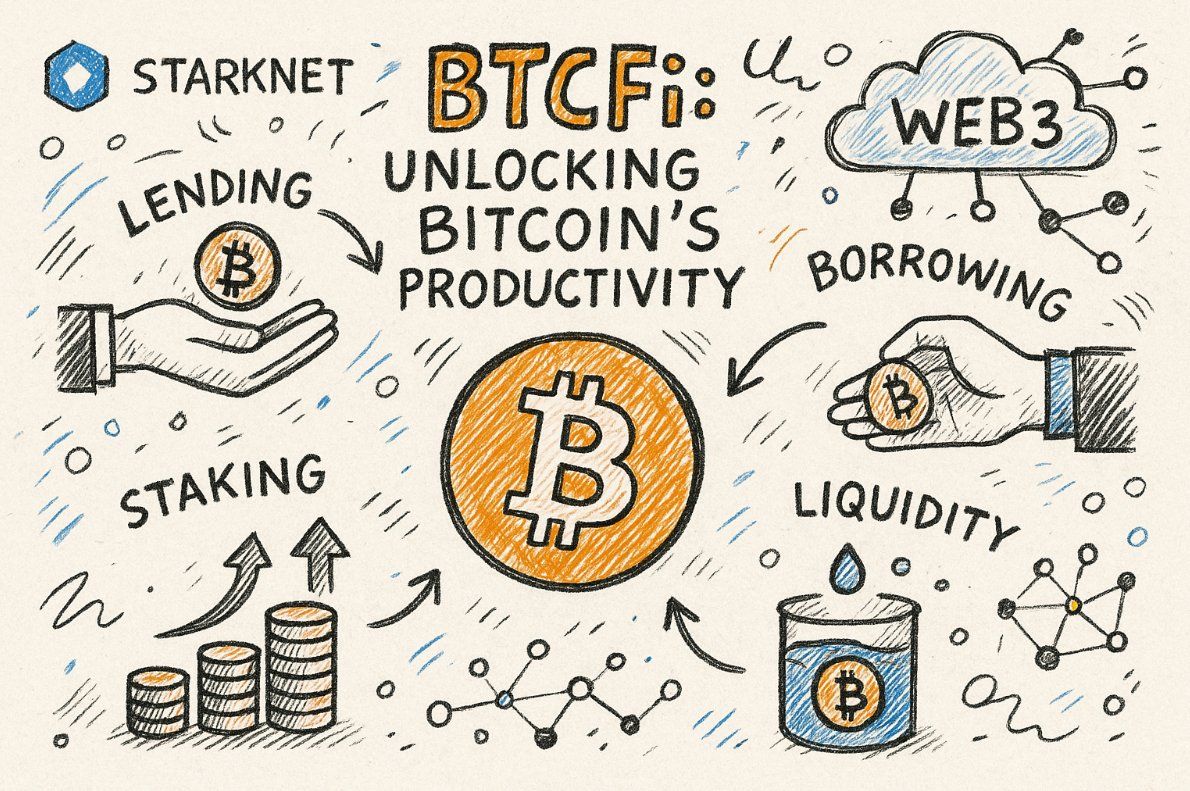
告别昙花一现的BTCFi,@Starknet让比特币真正“动”起来
当其他生态的BTCFi还在靠短期激励堆砌泡沫,Starknet已经用一套“反套路”打法,重构了比特币在DeFi的价值逻辑——这里没有激励停、TVL崩的尴尬,只有让每一分BTC都产生持续价值的生产性生态。
过去的BTCFi项目,把70%-90%的奖励砸向简单存款,BOB、Core Ignition等案例证明,这种“撒钱换TVL”的模式终是昙花一现,激励一停TVL就暴跌40%-50%。但Starknet的BTCFi不同,1亿STRK激励不搞“大水漫灌”,精准锚定稳定币借贷、包装器流动性深度、可质押BTC供应三大核心,每一分奖励都在为“持久价值”铺路。
在这里,BTC不再是闲置的数字资产。接入Re7机构级资金,搭配一键循环金库与Earn门户,你的BTC能质押赚STRK(不稀释原有STRK质押者收益),能低息借稳定币再投基金,还能通过统一入口跨链对接以太坊、Solana资产,25%-30%的可持续回报不再是噱头。更关键的是,所有包装器通过WBTC路由,低滑点清算 安全货币市场,彻底避免流动性碎片化的坑。
新加坡Token2049的舞台上,比特币质押产品、Re7基金、LayerZero/BitGlobal合作已同步官宣,WBTC、tBTC等六大资产率先融入Starknet DeFi堆栈。这不是又一个短期投机赛道,而是比特币从“静态资产”转向“生产性抵押品”的转折点——对用户,是BTC持续生息的新路径;对生态,是粘性TVL与循环费收的坚实底座。
Starknet的BTCFi,不玩流量游戏,只做价值沉淀。现在入场,让你的BTC真正“动”起来,不止于涨跌幅,更在于每一刻的生产性收益。
86
26
23,766

31 Oct 2025
Starknet just launched its BTCFi campaign, and it’s massive. 100M STRK will be distributed weekly over the next six months.
What I really like is that rewards go to productive activity: borrowing, wrapping, and staking, not just idle deposits sitting around.
Top protocols like LayerZero, BitGlobal, and RE7 Capital (with over $1B AUM) are backing the campaign, adding deep liquidity, interoperability, and institutional strength.
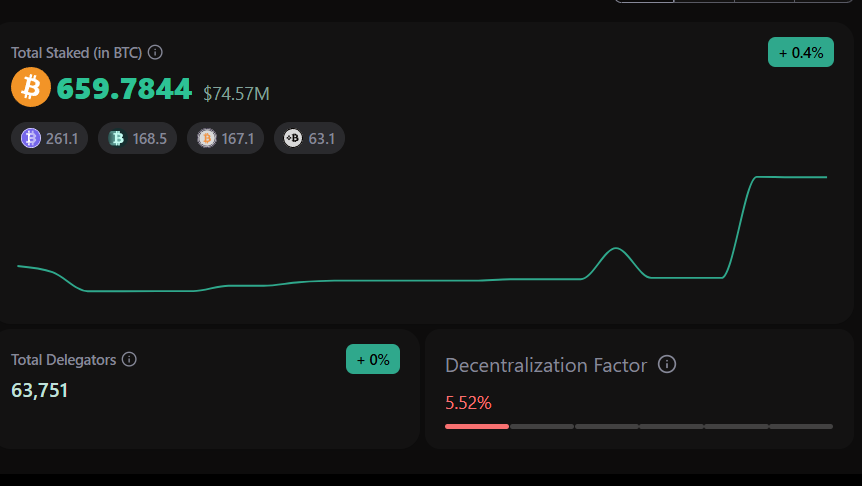
The results speak for themselves, a staking frenzy is already underway:
> solvBTC: 261 BTC
> LBTC: 168.5 BTC
> WBTC: 167.1 BTC
> tBTC: 63.1 BTC
That’s 659.7 BTC (~$74.5M) staked and this is just the beginning of Starknet’s BTCFi revolution.
1
11
2,393

14 Oct 2025
看够了其他生态的BTCFi套路吗?靠短期激励拉TVL,70%-90%奖励砸给闲置存款,结果激励一停,BOB跌40%、Core Ignition崩超50%,钱没赚到,还得看着流动性打水漂。这种“赚快钱”的玩法,早该被淘汰了!
现在,@Starknet 带着真正的BTCFi革命来了——不搞大水漫灌,只把资源砸在能落地的实用处:稳定币借贷、包装器流动性深度、可质押BTC供应,每一分激励都为长期价值买单。更有管理超10亿美金的机构Re7入场,带来mRe7BTC和mRe7USD,DeFi用户能循环拿25%-30%回报;再加上一键循环金库、Earn门户,资本流动靠的是策略,不是投机,粘性直接拉满!
新加坡Token2049邀请制活动上,它还要放大招:比特币质押产品、Re7资金支持、1亿STRK激励计划,连和LayerZero/BitGlobal的合作都安排上了。WBTC、tBTC等6大资产从一开始就接入DeFi堆栈,不用等、不折腾。
在这里,你的BTC不再是躺平的数字——能护网络安全,能借稳定币(利率还补贴到40%),还能在多策略里赚可持续收益;对生态来说,是粘性TVL,是循环生费的经济底子。
别再追那些“一激就涨、一停就跌”的伪机会了,Starknet的BTCFi,才是比特币在DeFi里真正落地的开始!
59
1
24
37,188

9 Oct 2025
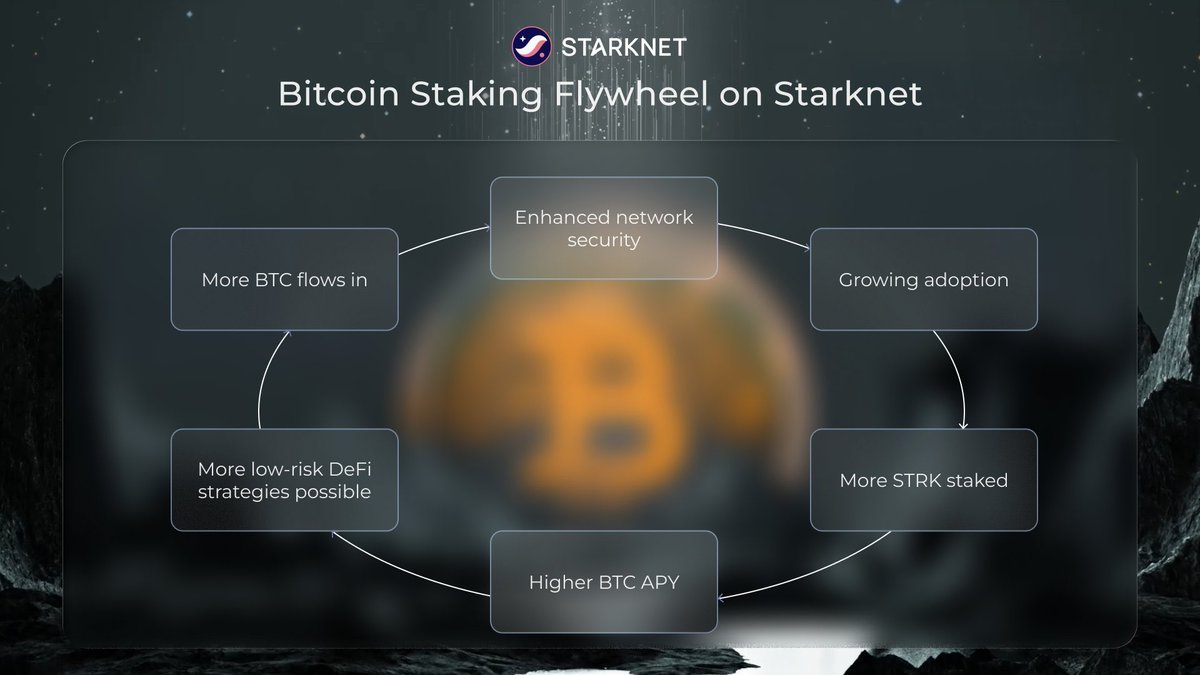
Starknet上的BTCFi:从“数字黄金”到生产力引擎
大家好!最近@Starknet 的BTCFi生态正式点燃了整个链上世界,这波操作让我忍不住多聊两句。BTCFi不是什么新鲜词,但Starknet的玩法完全颠覆了以往的“yield theater”——那些TVL暴涨后又暴跌的把戏。9月30日正式上线后,短短一周内,数据就亮瞎眼了。来,咱一步步扒开看,为什么这事儿值得你我都盯紧。
推出后首周表现:数据说话,火力全开
BTCFi一落地,Starknet就成了资本的“新宠”。别光听我吹,来看硬指标:
• 净流入爆炸:一周内净流入超40M美元,碾压市场其他链。比Solana多5倍,比Sui多4倍。 更夸张的是,推出头几天就有517 BTC直接涌入,Ready钱包独揽44M TVL。
• TVL狂飙:9月整体TVL涨56.8%,直奔256M美元。BTC staking一开闸,100M STRK和BTC被锁仓,Endur.fi的仪表盘上甚至显示最高53.4% APY。
• 交易量6倍跃升:从8月中旬的15万笔/天,飙到90万 笔/天。 不是空转,是真金白银在借贷、流动性池子里滚雪球。
• STRK价格回应:从0.156刀起步,一周内拉30% ,摸到0.1777甚至0.18。 虽离ATH还远(2刀 ),但这反弹力度,市场已经在投票了。
这些不是炒作,是链上实打实的生产力。过去BTCFi试点(如BOB、Core)TVL跌40-50%,因为奖励一停人就跑。Starknet不一样:激励直指借贷和wrapper深度,借USDC成本降40%,让资本黏得住。
为啥值得关注?不止是短期糖果
Starknet的BTCFi不是“农场游戏”,而是构建一个BTC能真正“工作”的生态。想想看,你的BTC以往就是躺平HODL,现在能staking赚STRK(2-3%起步),还能循环借贷瞄准25-30%收益。 Re7的机构基金(历史15-20% on BTC)一接入,零售用户也能跟上。
核心亮点,值get:
• 可持续机制:BTC staking不稀释STRK治理(alpha cap限重),同时降安全成本2/3%。双staking让BTCers和STRK holders双赢。 未来BitVM 原生ZK rollup,BTC直接结算,信任最小化。
• 激励精准:100M STRK(约1400万刀)撒6个月,直奔DEX流动性、借贷市场和稳定币借贷。 Vesu补贴借贷利息,Troves/0D vaults一键循环basis trade。 不是被动存取,而是推交易、 liquidation和手续费。
• UX和互操作升级:10月中Earn portal上线,一站式staking、借贷、vaults。从ETH、Solana甚至原生BTC桥入,LayerZero BitGlobal已就位。 八位数深度池子,让杠杆不滑点。
• 安全 对齐:顺序器去中心化,validator能stake BTC/STRK。 路线图直指双结算,保守BTC holders也能安心入场。
简单说,Starknet把BTC从“宠物岩石”变“生产工具”。其他L2等OP_CAT opcode升级(几年后?),Starknet用wrapped BTC 桥 oracle直接上车。 如果TVL和用户黏性扛住激励尾声,这波BTCFi能成赢家通吃。
尾声:行动起来,别错过Starktober
Starknet不是在追热点,是在重塑BTC的DeFi叙事。数据已证明首周火爆,未来潜力更大——从Re7基金到LBTC集成,生态在加速。 想玩?桥WBTC,stake到Endur或Ready,借Vesu循环。风险自负,但机会摆这儿。
#starktember
49
3
18
19,463

7 Oct 2025
Be confident! Something big is about to happen.
Optimism about the future is the first step to success.
Let's succeed together with BitGlobal
#BitGlobalToken #BitGlobalStaking
3
65

6 Oct 2025
Absolutely leadership makes all the difference and @Goltra at @morphnetwork and @GracyBitget at @Bitglobal are proving it
18

1 Oct 2025
I'M TIRED....Why??....Well… you know it… Most BTCFi experiments felt and still feel like yield theater. It's always the same crap to be fair...Park some BTC, farm a token, watch TVL spike, then watch it evaporate when emissions cool.
That’s why what @Starknet is rolling out this week actually caught my attention. Get ready for my thesis...lmao
Because it finally looks like Bitcoin liquidity is being wired into a system that can compound on its own rather than just sit for optics.
Here’s how I’m thinking about it, yield first. BTC staking runs side by side with $STRK and pays roughly 2–3% in STRK, and it doesn’t dilute STRK governance because of the alpha cap that limits BTC’s weight.
On top of that you have Re7’s tokenized funds coming on with real track records. Their BTC yield fund has historically pulled around 15–20% on BTC and the stablecoin fund around 15% on stables. Since Starknet’s money markets let you borrow against those positions, you can loop them sensibly and target about 25–30% before costs if utilization and spreads cooperate.
It does not stop there. Troves and 0D vaults give one-click loops into basis and managed LP. Vesu is subsidizing borrowing by about 40% of interest for at least six months, which makes borrowing against BTC wrappers here meaningfully cheaper than elsewhere in my spreadsheet.
Cheaper borrow changes the math on every looped position. If your base is 4–6% on staked BTC and your borrow is subsidized, the incremental loop can remain accretive where it normally wouldn’t.
Design choices matter. Other campaigns threw 70–90% of rewards at passive deposits and saw TVL drop 40–50% once emissions tapered. Starknet is pointing a 100M STRK program, paid weekly for at least six months, straight at productive flow: borrowers, wrapper depth, staking. That means lenders still earn, but the real juice is on the side that creates trades, liquidations, and fees.
And in my opinion that is how you make capital sticky instead of farm-and-dump.
Liquidity architecture is also sane. No wrapper wars. Everything routes through WBTC for unified depth and safer liquidations. The WBTC/USDC anchor pool targets roughly 10–15M in liquidity.
Wrapper pairs like tBTC/WBTC and LBTC/WBTC target around 4–6M each. If you want simpler carry, LPing those pools earns trading fees plus STRK, and it directly supports the liquidation path for the lending markets. Which is the sort of plumbing you want if you plan to run leverage without nasty slippage on unwind.
UX is getting a lift too, and I'm a big fan of cleaner UX's in DeFi. The Earn portal goes live mid-October. One place to stake wrappers, lend on Vesu, enter Re7 and 0D vaults, and move funds in from Ethereum, Solana, or native Bitcoin rails. Interop via LayerZero and liquidity support via BitGlobal are already in the mix. Day-one lending pools are seeded with eight-figure depth so the loops are actually executable, not just theoretical.
Security and alignment are not an afterthought as well btw! Sequencer decentralization is on the path where validators can stake BTC or STRK.
Governance stays anchored to STRK because of that alpha cap I mentioned earlier. In plain English, BTC can strengthen economic security and still not outvote STRK holders. There is also a roadmap toward dual settlement on Bitcoin, which is exactly the kind of long-horizon alignment that convinces conservative BTC holders to participate.
22
6
37
18,523

30 Sep 2025
BTCFi era officially begins on Starknet 🐺🚀
Bitcoin stays Bitcoin… but here it finally works for you.
What’s rolling out:
⚡ Bitcoin staking (WBTC, tBTC, LBTC, SolvBTC)
🏦 Institutional onboarding
🤝 Major partners (LayerZero, BitGlobal, Stargate & more)
💰 100M STRK incentive program
We’re talking APRs like:
• 2–3% base on BTC staking
• mRe7BTC: 15–20% APR (loop to 25–30%)
• mRe7USD: ~15% APR (stable stables, loopable)
• Troves vaults: 15–30% APR
• Vesu lending: borrow stables, lend BTC at solid rates
• 0D Capital meta vaults auto-allocating across best plays
This is the moment
Bitcoin DeFi, but actually usable.
Starknet isn’t slowing down, it’s just loading the next level.
LFG frens 🐺🔥
#BTCFi #Starknet @Starknet @StarknetAfrica @StarkWareLtd @StarknetWPL @WPLSTARK @xverse
5
9
22
1,300

4 Sep 2025
DeFi101: Bitcoin Summer
Ok, so much cool stuff was revealed in the Neutron Prop A80 that went live on DaoDao yesterday!
Some of the key highlights:
- 100,000,000 $NTRN in rewards!
- At least 6 Epochs, of 2 months each.
- Additional rewards from Structured, Bitglobal, Lombard, Etherfi, Solv, Bedrock & Pump.
- Epoch 1: Budget $250,000 rewards, eligible assets: MaxBTC, wBTC, LBTC, eBTC, SolvBTC, uniBTC & USDC.
- Deposits accepted on Neutron chain or Ethereum mainnet.
- Boosts from Locking NTRN, or holding specific NFTs.
- Rewards paid 100% linearly over 2 months, or 50% forfeit for immediate claim. Boosts for locking rewards.
- Two types of vault:
1) Campaign Vaults (deposit a single asset, which will be deployed across @amberfi_io, @mars_protocol , and/or @neutron_org Supervaults).
2) @StructuredFi maxBTC Vaults (Deposit Vault and the Liquidity Vault for maxBTC / wBTC)
- Structured Vaults will require KYC and Lockup, however, Campaign Vaults will be fully open.
So excited for what's coming!
5
3
26
3,560
29 Aug 2025
How do I get BITGLOBAL TOKEN (BGT)?
1. Through the Airdrop program, you'll receive BGT for FREE. Please contact your sponsor for more information.
2. Through the PRESALE program, you'll receive BGT TOKEN directly into your wallet instantly.
3. Through the STAKING program, which we'll launch soon.
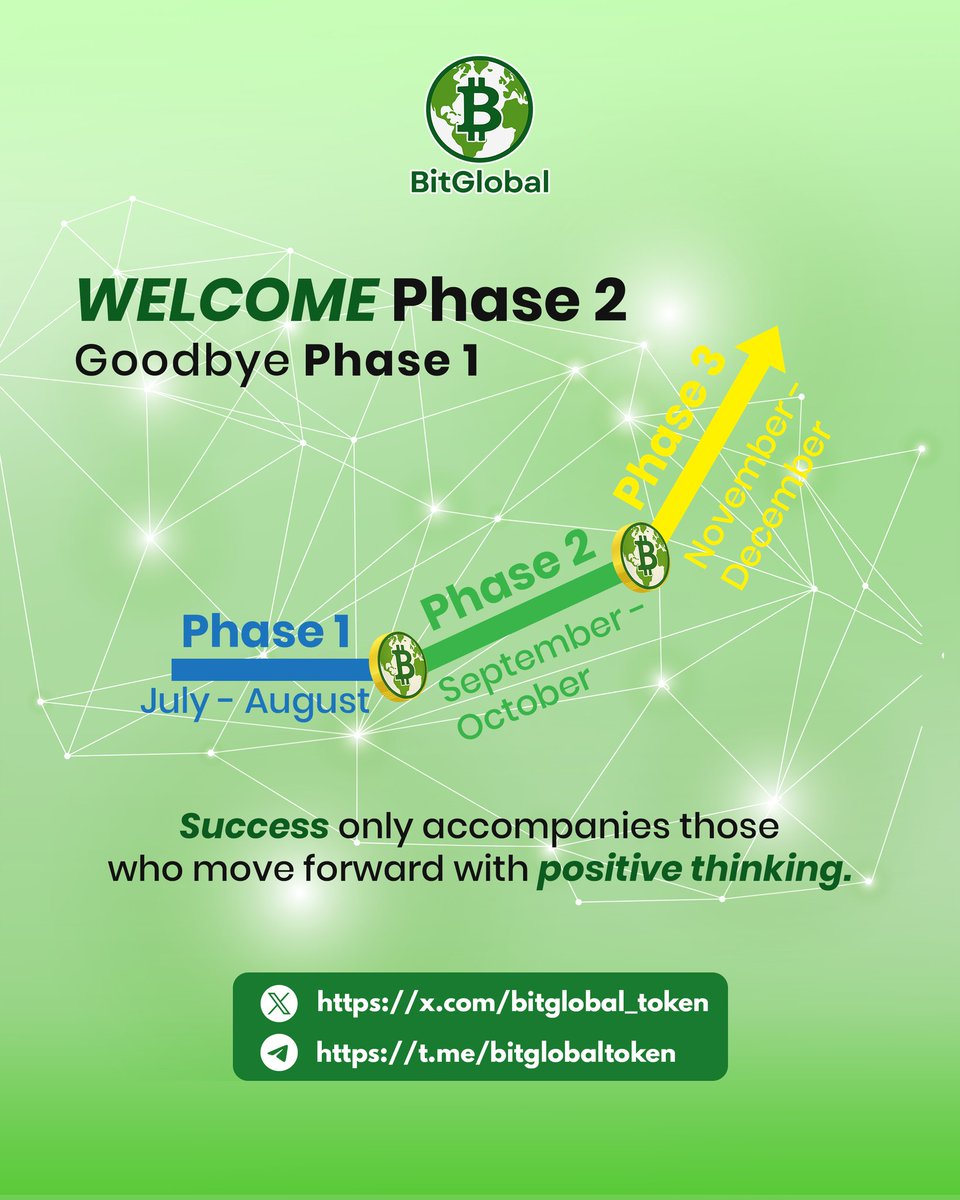
What's in PHASE 2 of Bitglobal Token?
Phase 2, specifically in September-October, will see changes in the Airdrop and Presale rates.
Congratulations to those of you who participated in PHASE 1, as the BGT rates from PHASE 1 will not be available in PHASE 2.
Collect as much BGT as possible and STAK it, and your wealth will multiply without having to actively participate.
For details, please check our official website, which we will update soon.
Join us
Success only comes to those who think positively.
#BitGlobalToken #WelcomePhase2
1
4
185
12 Aug 2025
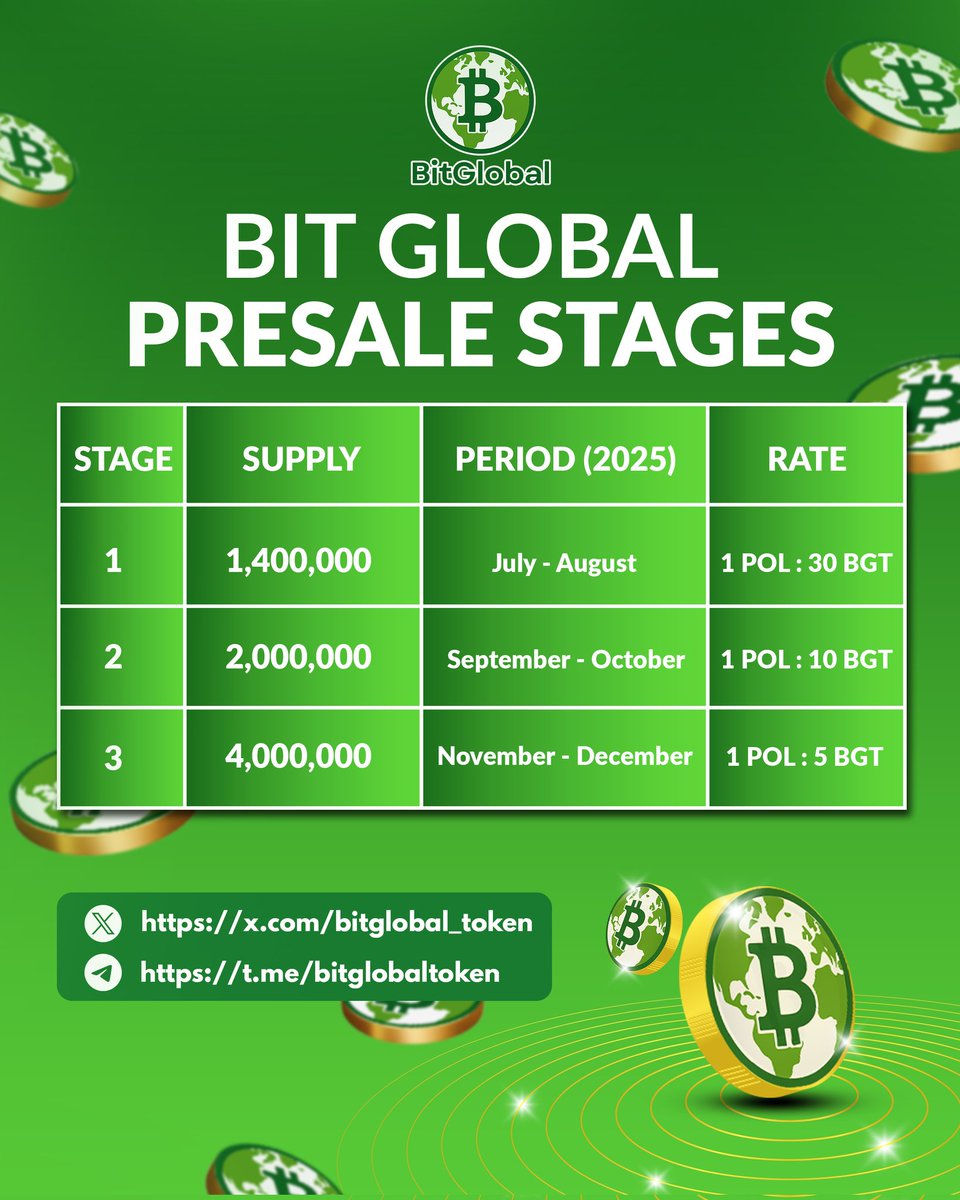
In accordance with the agreement of Bit Global leaders, we have made a new decision regarding the PRESALE rates from phase 1 to phase 3.
Here are the full details:
BIT GLOBAL PRESALE is divided into 3 stages
The first stage is July to August
Rate 1 POL get 30 BGT
With a supply of 1,400,000 BGT
The second stage is September to October
Rate 1 POL get 10 BGT
With a supply of 2,000,000 BGT
The third stage is November to December
Rate 1 POL get 5 BGT
With a supply of 4,000,000 BGT
BitGlobal supply is very small!
Don't miss it or you will be left far behind
Note: If during the expiration period there are still tokens left, the rate will automatically expire and the next rate will apply.
Note : Smartcontrack presale Phase 1 (July-August) with a rate of 1 POL: 30 BGT
How to: Send POL coins to the wallet below, and BGT will automatically be added to your wallet.
👇👇👇
0xfdBaDf87eE58bC0c1DAe9C699BFdd576e4cED9Fa
#BitGlobal #PRESALE
2
120
29 Jul 2025
BIT GLOBAL TOKEN DETAILS
Supply : 21,000,000
polygonscan.com/token/0x2ca8…
Smartcontract : 0x2ca8c91077756537b7318060160ffaf27d45b4f3
Airdrop Website : bitglobal.asia
Global Community Group : t.me/bitglobaltoken
Official Channel : t.me/bitglobal_channel
X : x.com/bitglobal_token
CS : t.me/bitglobal_cs
Bit Global (BGT) Buying Tutorial : youtube.com/shorts/UrfnCX9j5…
BGT Wallet Tutorial : youtube.com/shorts/5VMdng1Tl…
#BITGLOBAL #SUPPLY21MILLION
5
8
18
1,632

29 Jul 2025
Start minting crypto daily with #BitGlobal!
💰 Deposit just 100 USDT
📈 Earn up to 1.3% daily
🎁 Get 10 USDT experience bonus
🤝 Invite & earn 10% team rewards
Simple. Smart. Transparent.
#Crypto #DeFi #PassiveIncome #Web3 #BGC
1
52
16 Jul 2025
🚨 Don’t miss the BitGlobal Marketing Plan Zoom session!
🗓 July 16 | ⏰ 8:30 PM SGT
💡 Learn, grow, and earn with us!
🎥 Join Zoom: us05web.zoom.us/j/8384080586…
ID: 838 4080 5865 | Passcode: 1IttWP
#BitGlobal #CryptoCommunity #MarketingTalk #Web3Events

1
36

22 Jun 2025
Awesome!!!
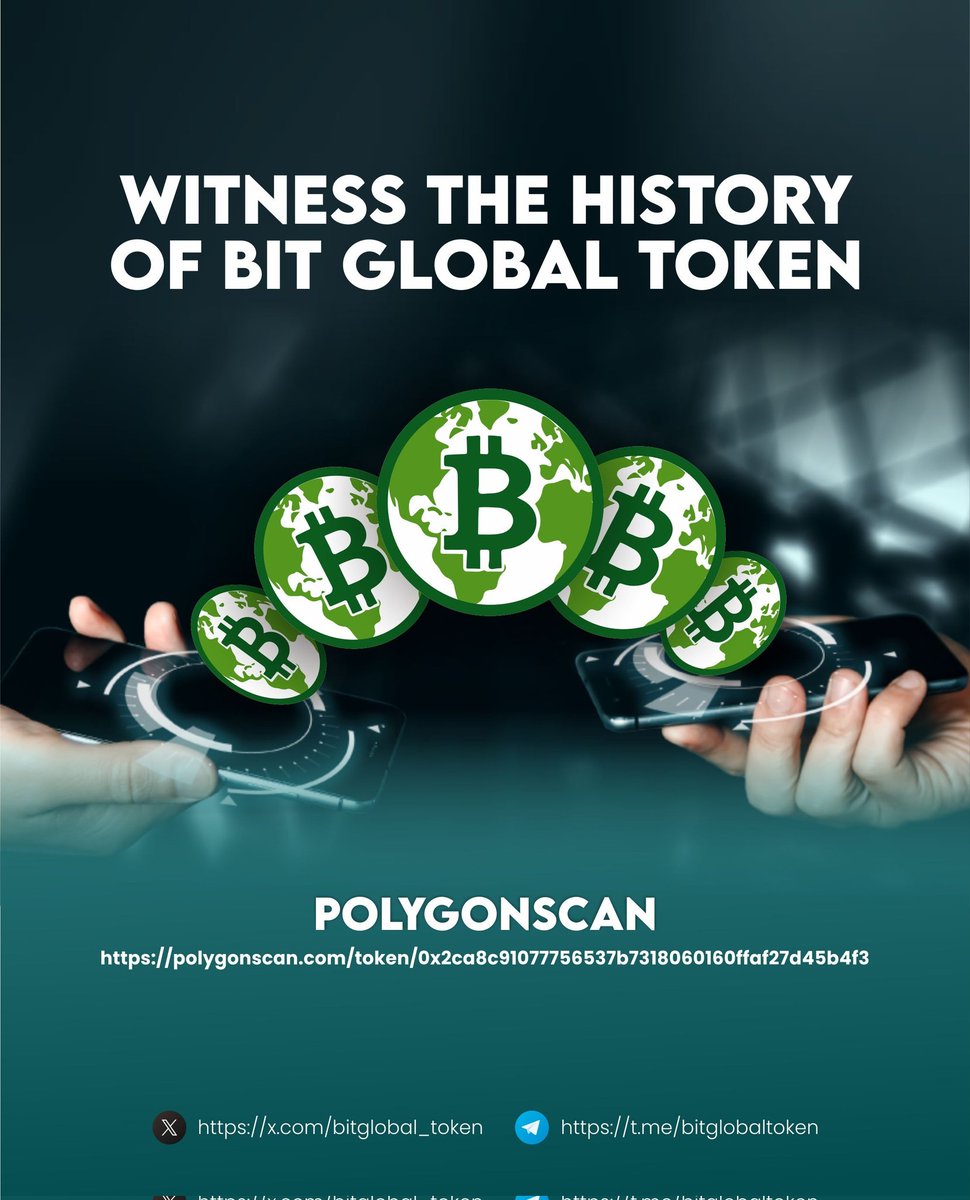
Today a great history begins
Bit Global Token with 21 million supply & Polygon Network has officially launched.
Please check on Polygonscan:
polygonscan.com/token/0x2ca8…
Get free BGT airdrop after website launch soon.
#BitGlobal #Polygonscan
1
5
247