
🔪 Premium Culinary Artistry. Unmatched Precision. 🔪
**Forged USA Blades** invites you to elevate your kitchen game with the ultimate culinary upgrade. Bring master-tier blademaking directly to your countertop or prep station with this stunning, hand-forged 5-piece custom kitchen knife set designed to slice, dice, and chop with effortless perfection.
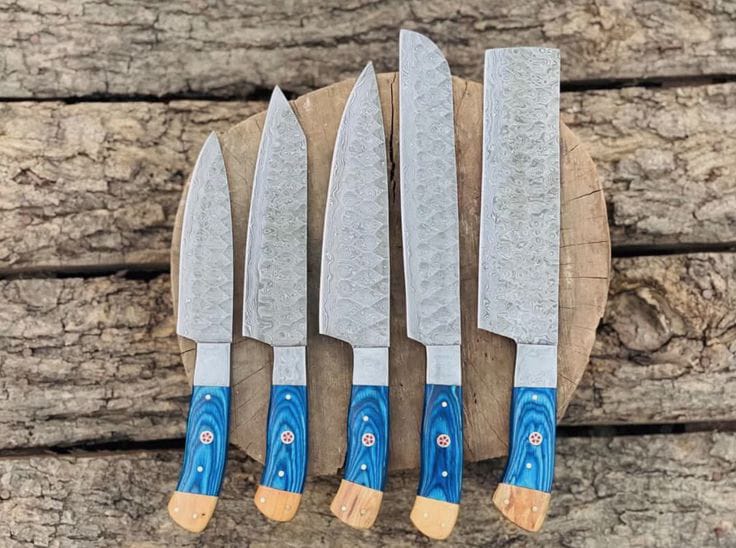
Take a look at the spectacular level of custom detail and artistry captured in :
* 🌀 **Hand-Forged Hammered Damascus Steel:** Each blade features an exquisite, high-contrast Damascus ripple pattern paired with a beautiful hammered textured finish along the upper spine for a true forge-to-table aesthetic.
* 🌊 **Vibrant Ocean-Blue Waves:** Outfitted with highly contoured, ergonomically shaped layered blue scales that display a striking rippled grain pattern, bringing a modern and sophisticated look to your culinary collection.
* 🪵 **Natural Burl Wood Accents:** Each handle is beautifully capped with a light, naturally grained burl wood bolster at the butt end, establishing a seamless and organic balance.
* ⚙️ **Meticulous Mosaic Pin Details:** The rock-solid, full-tang handle construction is anchored and secured firmly by flush-mounted silver pins and a prominent, highly detailed central mosaic pin for high-end custom flair.
* 🥩 **Complete 5-Piece Culinary Lineup:** A comprehensive set meticulously designed to cover every cutting task, featuring a traditional square-tipped Nakiri/cleaver, a versatile Santoku, a classic chef's slicing blade, a utility knife, and a precision paring blade.
### 🔥 Elevate Your Kitchen or Camp Layout
Whether you are a professional chef prepping in a high-end kitchen, a backyard BBQ pitmaster, or searching for the ultimate heirloom-quality gift, **Forged USA Blades** delivers pure, uncompromising authenticity. No mass production, no shortcuts—just raw, handmade perfection built to last.
📥 **Drop us a DM right now** to lock down this exact custom culinary set or to start collaborating on your next custom dream build!
#ForgedUSABlades #KitchenKnives #DamascusSteel #ChefKnife #CustomCutlery #HandmadeKnives #CulinaryTools #KnifeSet
2
102
🔪 Culinary Excellence. Handcrafted Precision. 🔪
**Forged USA Blades** steps into the kitchen with the ultimate culinary upgrade. Bring master-tier blademaking to your countertop with a premium, hand-forged kitchen knife set designed to slice, dice, and chop with effortless perfection.
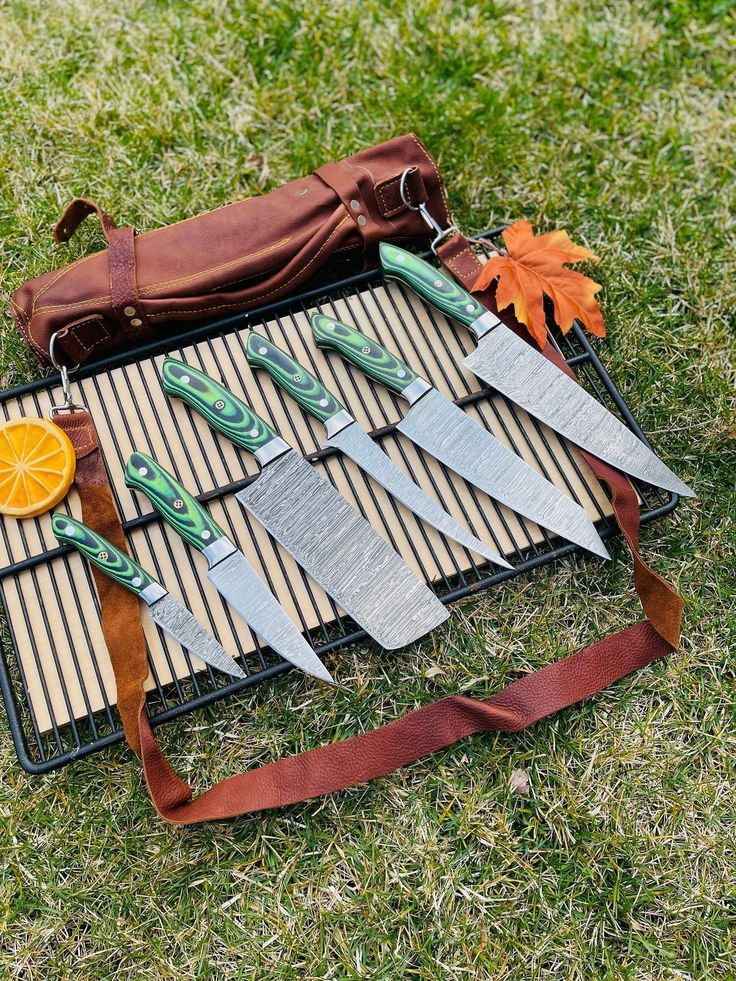
Take a look at the spectacular level of custom detail and artistry captured in :
* 🌀 **Premium Hand-Forged Damascus Steel:** Every blade features a stunning, high-contrast Damascus ripple pattern, meticulously etched to highlight the layered steel aesthetics.
* 🟢 **Vibrant Green Pakkawood Handles:** Outfitted with highly contoured, ergonomically shaped green layered wood scales that offer a striking aesthetic and a comfortable, slip-resistant grip.
* 🛡️ **Polished Integrated Bolsters:** Engineered with solid steel bolsters that create a seamless transition from handle to blade, ensuring perfect weight distribution and balance.
* 🔩 **Intricate Mosaic Pin Detail:** The full-tang handles are beautifully anchored and secured by flush-mounted pins and a prominent central mosaic pin for high-end custom flair.
* 🥩 **Complete 6-Piece Set Versatility:** Featuring a comprehensive lineup built for any culinary task, including a massive chef's knife, a heavy-duty cleaver, a sleek slicing/utility blade, and precision paring knives.
* 🎒 **Premium Genuine Leather Knife Roll:** Paired with a heavy-duty, rich brown leather storage roll equipped with a secure shoulder strap, matching leather loops, and polished hardware to protect your investment on the move.
### 🔥 Elevate Your Kitchen or Camp Layout
Whether you are a professional chef prepping in a high-end kitchen, a backyard BBQ pitmaster, or looking for an heirloom-quality gift, **Forged USA Blades** delivers pure, uncompromising authenticity.
📥 **Drop us a DM right now** to lock down this exact custom culinary set or to start collaborating on your next dream build!
#ForgedUSABlades #KitchenKnives #DamascusSteel #ChefKnife #CustomCutlery #HandmadeKnives #CulinaryTools #KnifeSet
1
123

4 Dec 2025
Crafting a Stone Blade from Millefiori Glass: The Art of Forging a Exquisite Stone Knife with Millefiori Glass.😮😮#MillefioriGlass #BladeMaking #ArtisanCraft #OddlySatisfying #Craftsmanship #FlameWorking
1
2
28

15 Aug 2024
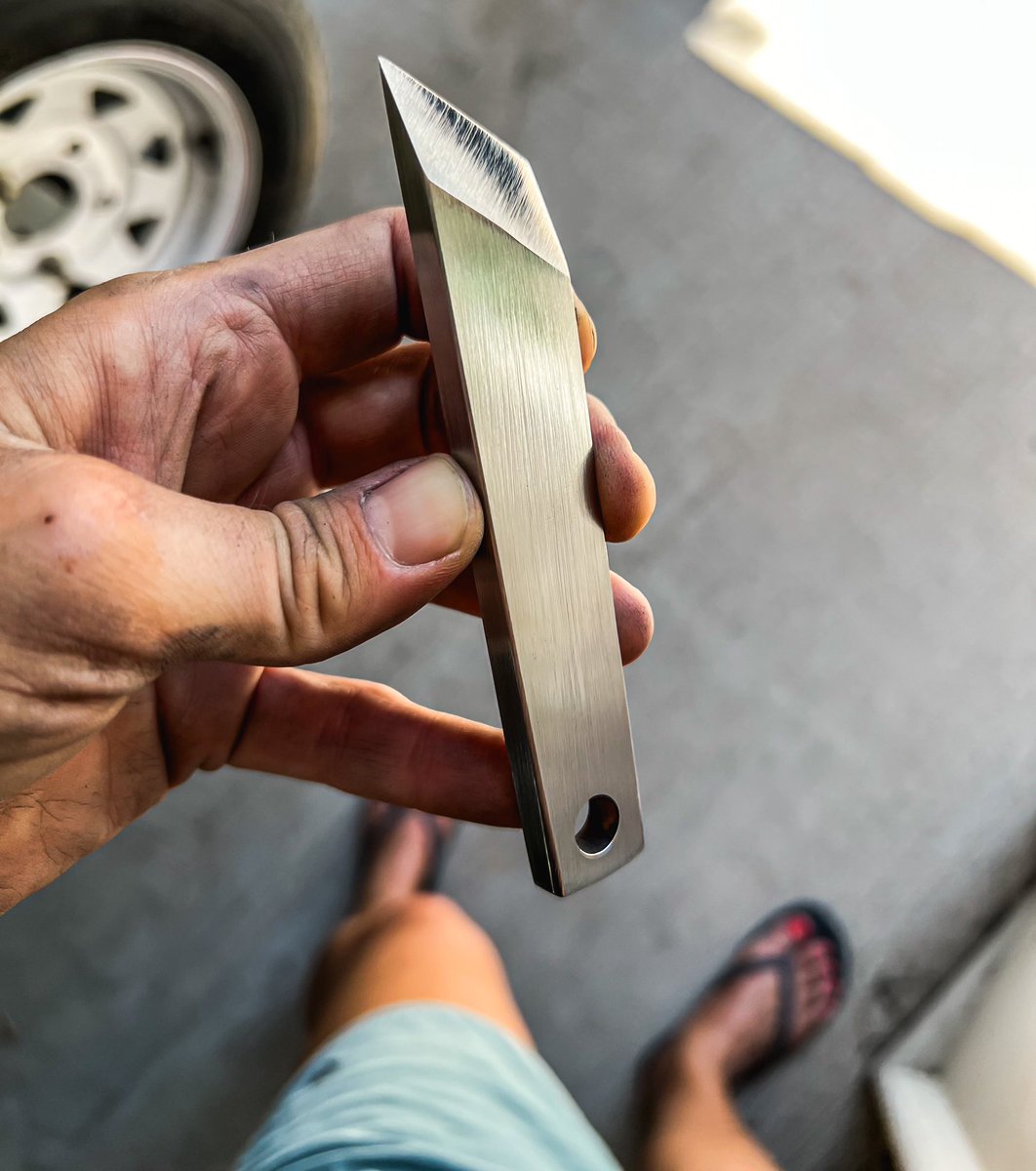
A Broadashi Blade.
#Knives #Blades #KnifeMaking #BladeMaking #Knife #Blade #Bladesmith #EDC #MakingThings #Work #Create #Steel #Grit #KnifeAddicts #KnifeCollectors #KnifeMakers #Details #Grind #BladeCollectors #BladeAddicts
4
97
13 Aug 2024
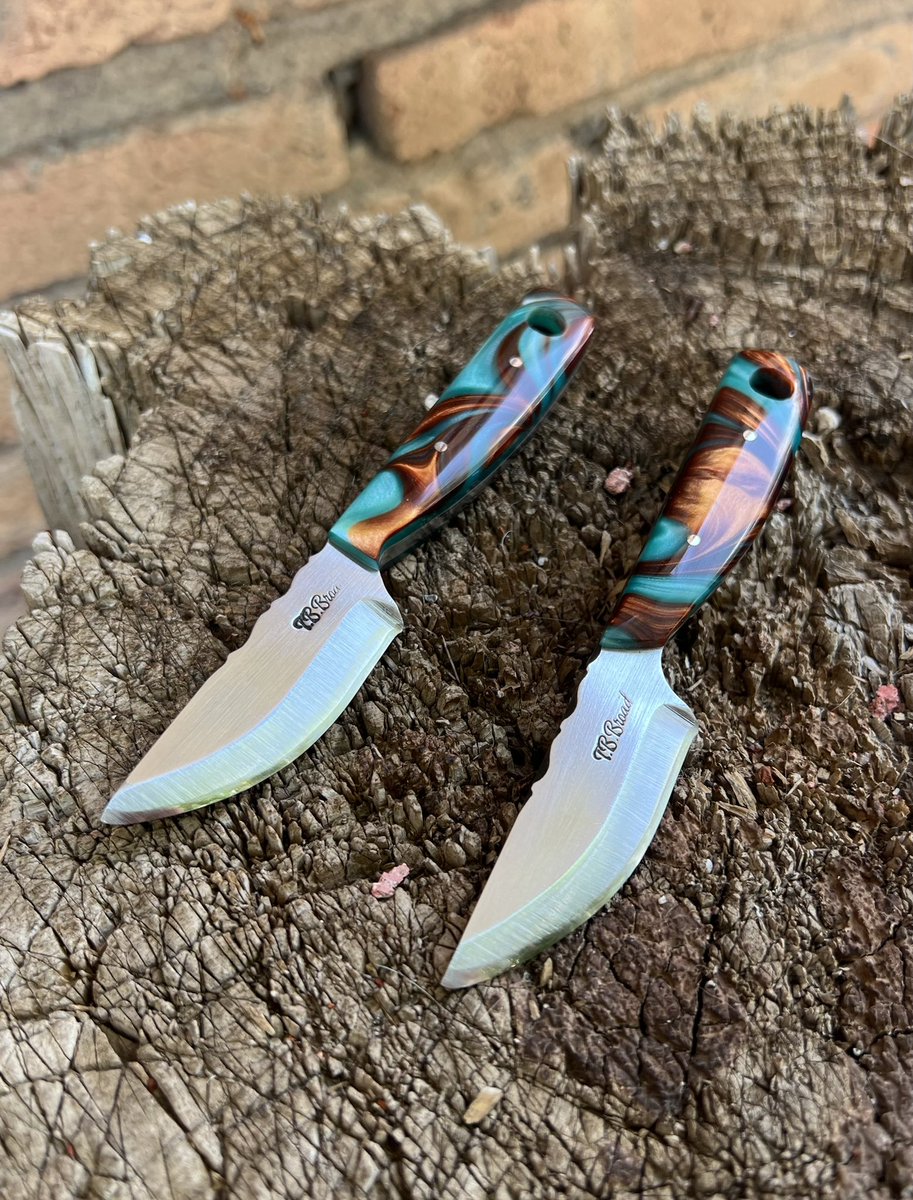
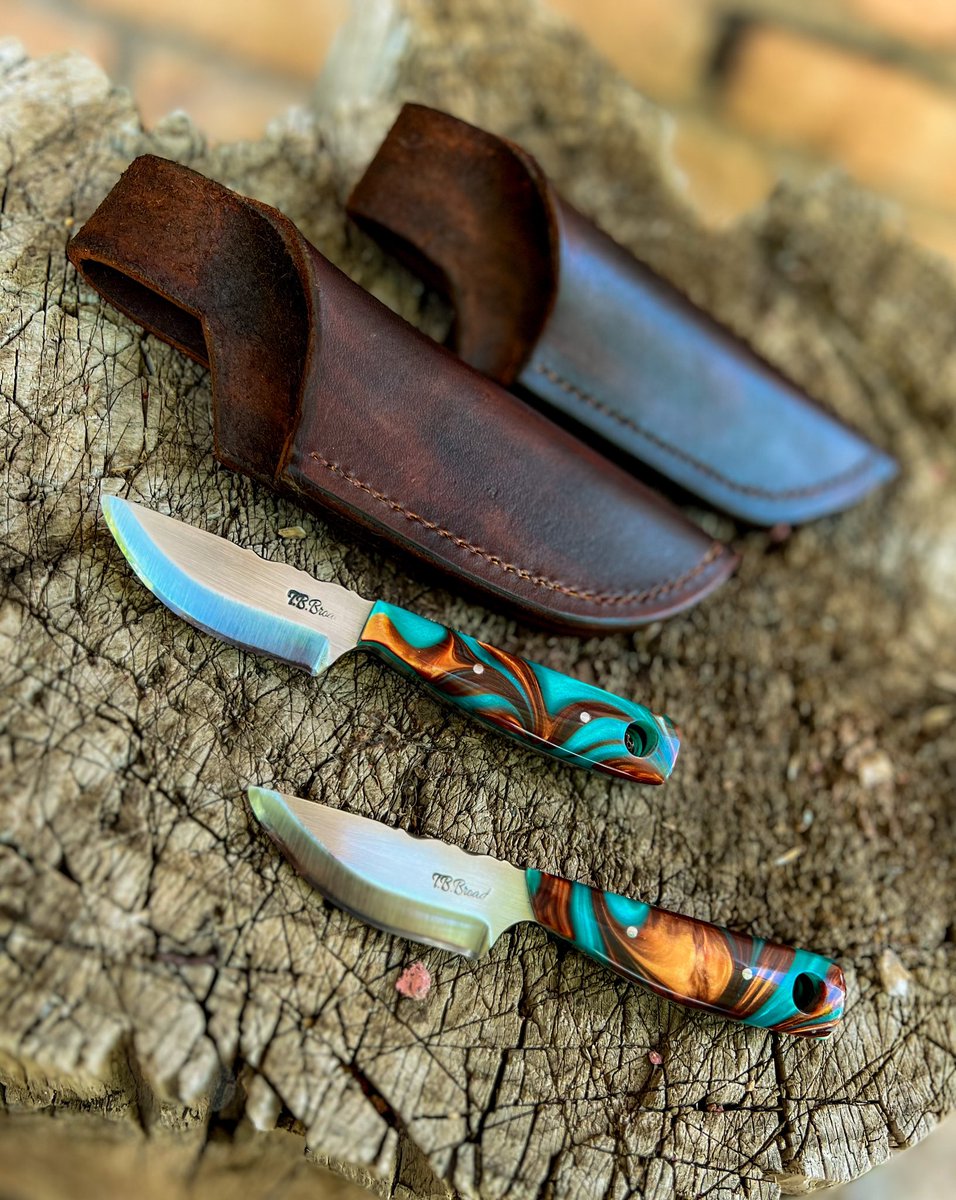
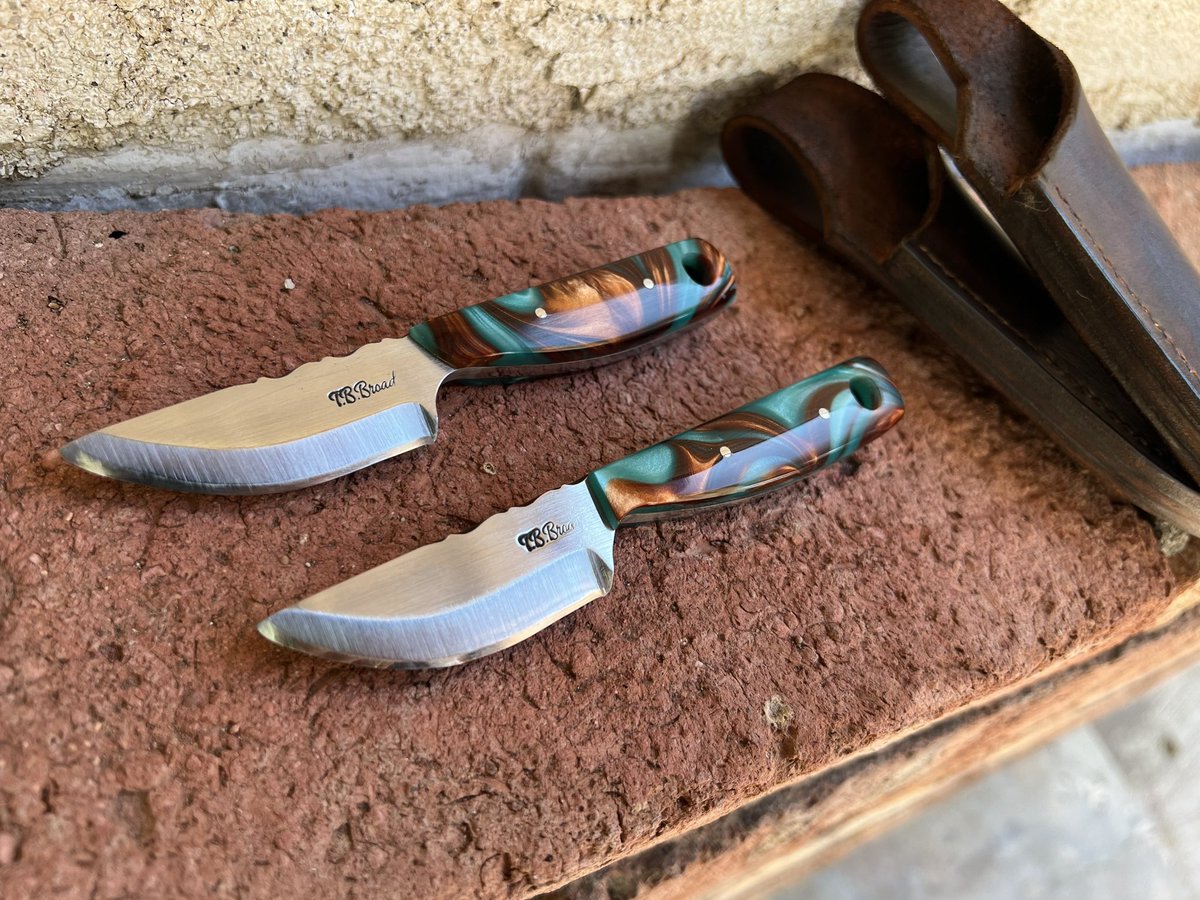
Completed twin knife and sheath sets.
#Knives #Blades #KnifeMaking #BladeMaking #Knife #Blade #Bladesmith #EDC #MakingThings #Work #Create #Steel #Grit #KnifeAddicts #KnifeCollectors #KnifeMakers #Details #Grind #BladeCollectors #BladeAddicts #KnivesOfInstagram #KnifeArt
5
75

This is a complicated question. Steelmaking in preindustrial times followed one of two methods - carburizing pieces of iron and laminating them together, or using a crucible to form a hard, high-carbon steel. Both were very intensive in labor and materials, produced limited quantities, and more suitable to blademaking than general metalworking.
Boilers used to be made from wrought iron at first, but to produce it at scale you need to be able to make pig iron at scale. Which requires blast furnaces. These didn't appear in Europe until the 12th c. though were present in China since the Han dynasty.
Blast furnaces require a lot of fuel, mainly very pure sources of carbon in the form of charcoal or coke derived from coal. The problem with charcoal is that you need to burn a lot of wood to produce it, practically entire forests' worth, and coke wasn't used until the early 18th c. in Britain.
There probably just wasn't this level of demand for iron at all until around the late Middle Ages. I can only speculate why it changed, but the introduction of gunpowder might be one reason. It could also be due to the more-timbered Northern Europe remaining relatively underdeveloped until then, which is another rabbit hole of a topic as to why.
5
197

18 Jan 2024
No, sanmai is a blademaking technique. I'm pretty sure you're thinking of shumai.
1
1
1
53

26 Aug 2023
Judging by what you see in artisinal blademaking today, I expect a week's work (without benefit of power tools) would create the kind of heirloom-quality sword which come down to us as museum pieces.
1
2
66

18 Jun 2023
This, metalworking (ie blademaking), cray-pas art, and restoring old “appliances” are mesmerizing and relaxing
I’ve never understood the whole ASMR thing, but I imagine this is what that feeling is like
2
1,080

1 Aug 2022
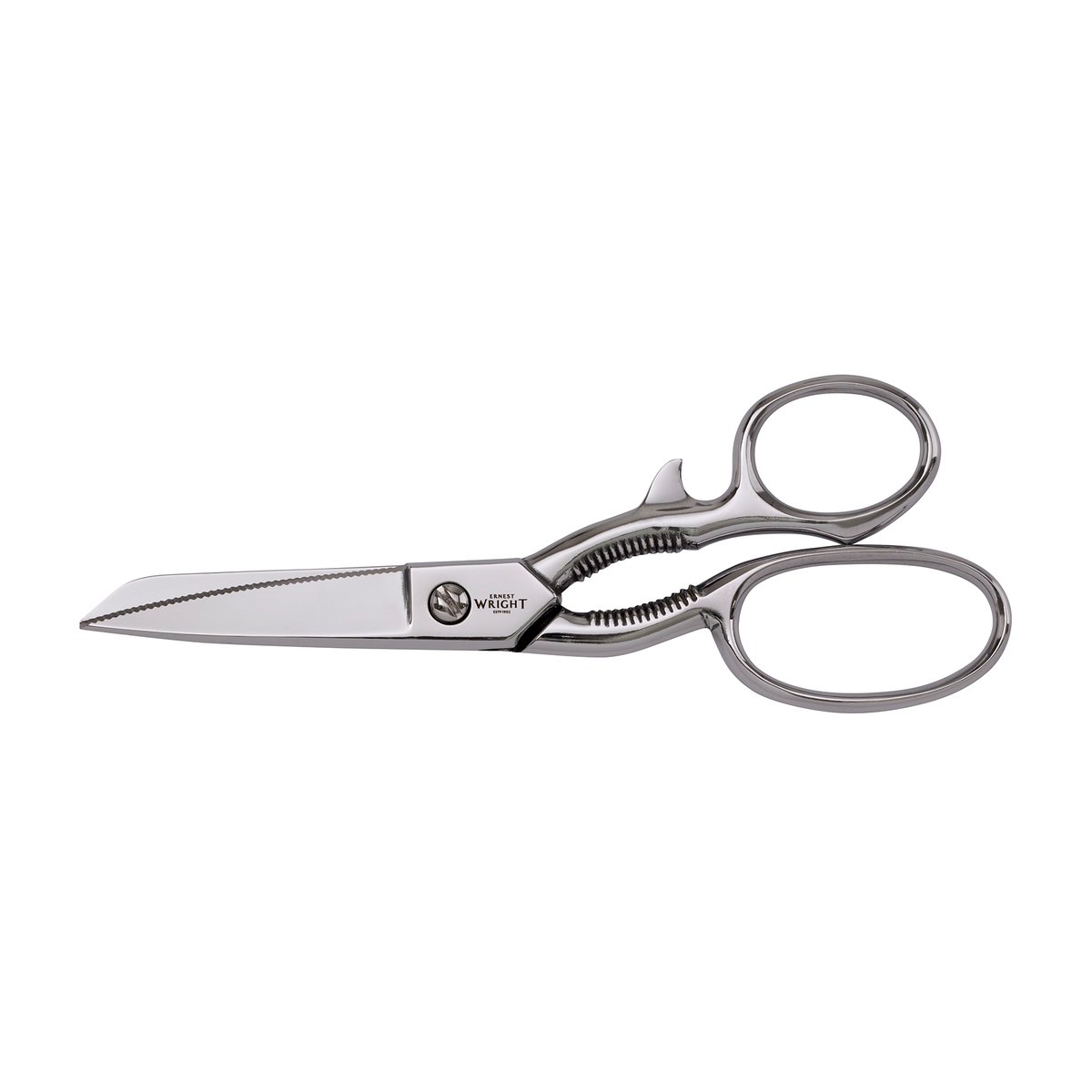
Meet Our Heritage Makers: @ernestwrightltd one of two remaining scissor makers in the UK. Both are in Sheffield, home to blademaking since the 14th c. Wright’s “putters” are highly trained master artisans; as the company says, “Buy once, love it forever!” ciselier.com/collections/ern…
1

Hrrm. The Bronze I cast may well be strong enough to make a solid tonfa out of. (When I get to blademaking I'll be attempting machetes, but no idea if I'll even enjoy doing blades.)
1
2

12 Jan 2022
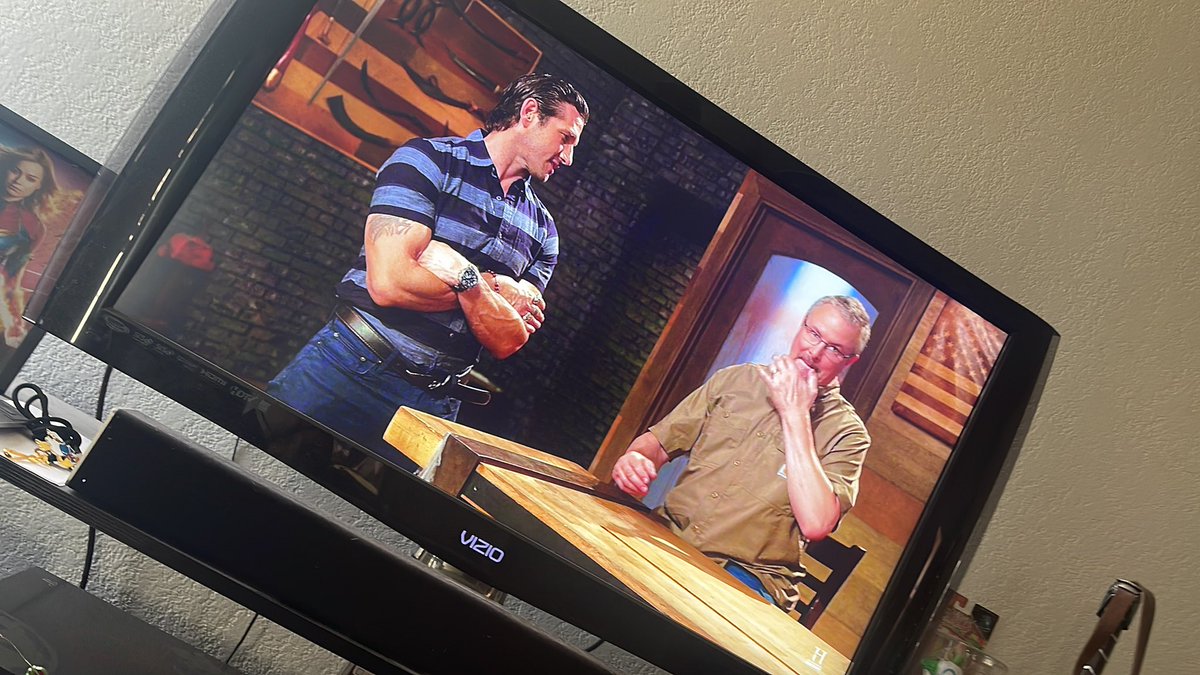
Best way to start the day.. 🗡 🔥 #ForgedInFire #BladeMaking @Neilson_Knives @Whiskey_Whiskey @BenavidesVal
2

26 Nov 2021
Almost a year now since I made my first real sword. For all of you that find blademaking and forging interesting, here's also a link to my YouTube channel.
Haven't had any time to make another video i a while, but I have the plans for the next one set :3
youtu.be/NduI9-wnrJY

2
2
5

21 Apr 2021
Yes to both Blown anyway and Flower Fight.
We enjoy Forged in Fire in our trailer. It’s blademaking in the forge. Pretty cool.
1
3

6 Jan 2021
The weirdest thing is that according to English sources, Portugal had a stronger individual identity as far as military weapon development went than one of the hotbeds of blademaking in Europe. Completely bizarre how there's this absolute lack of information on the internet.
1
3

10 Nov 2020
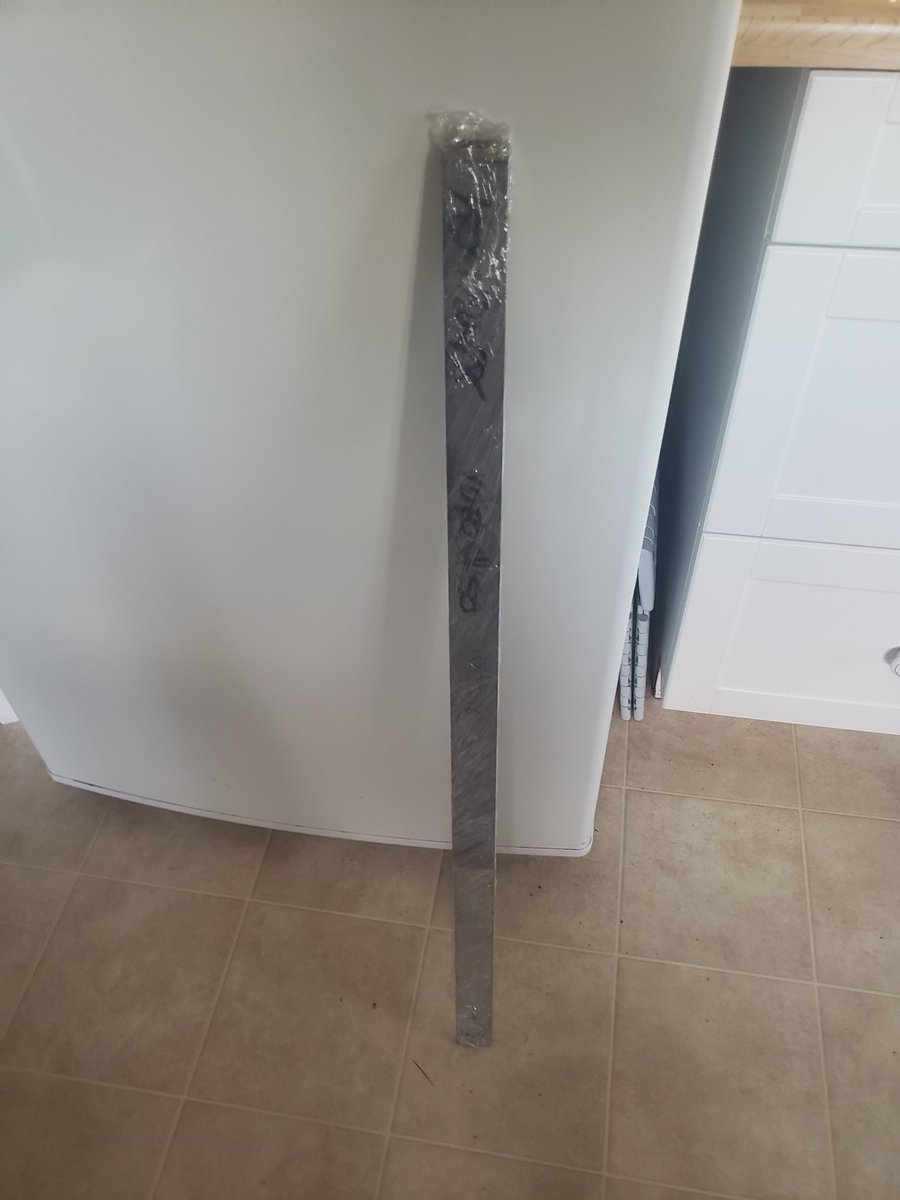
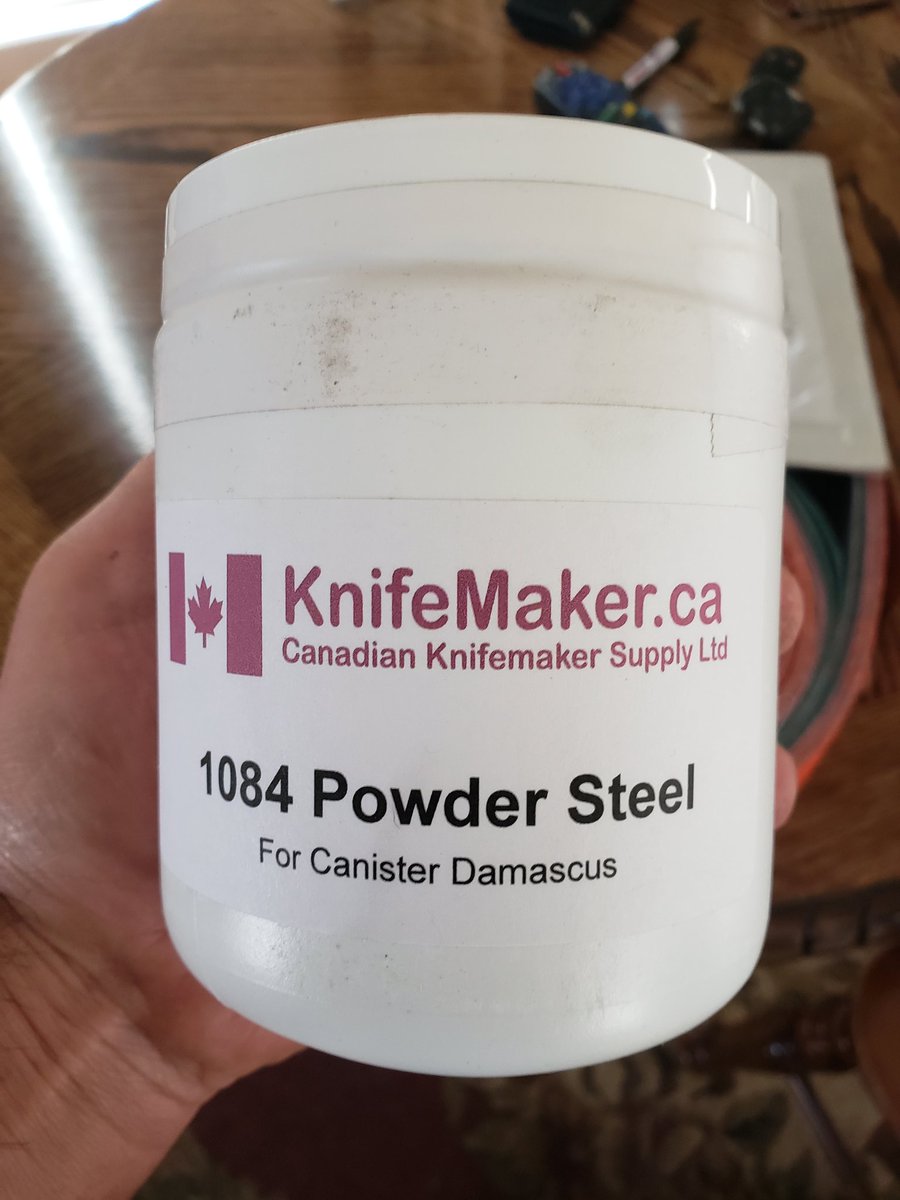
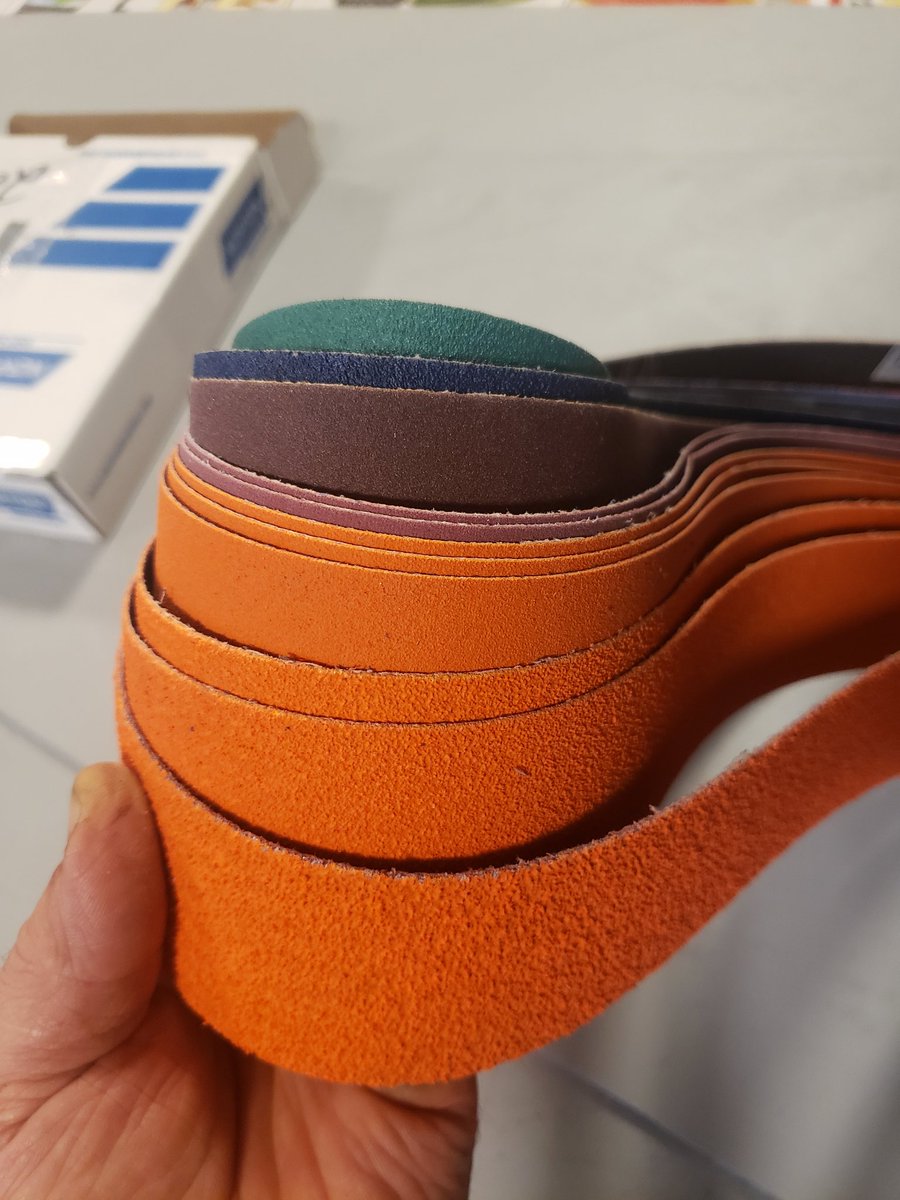
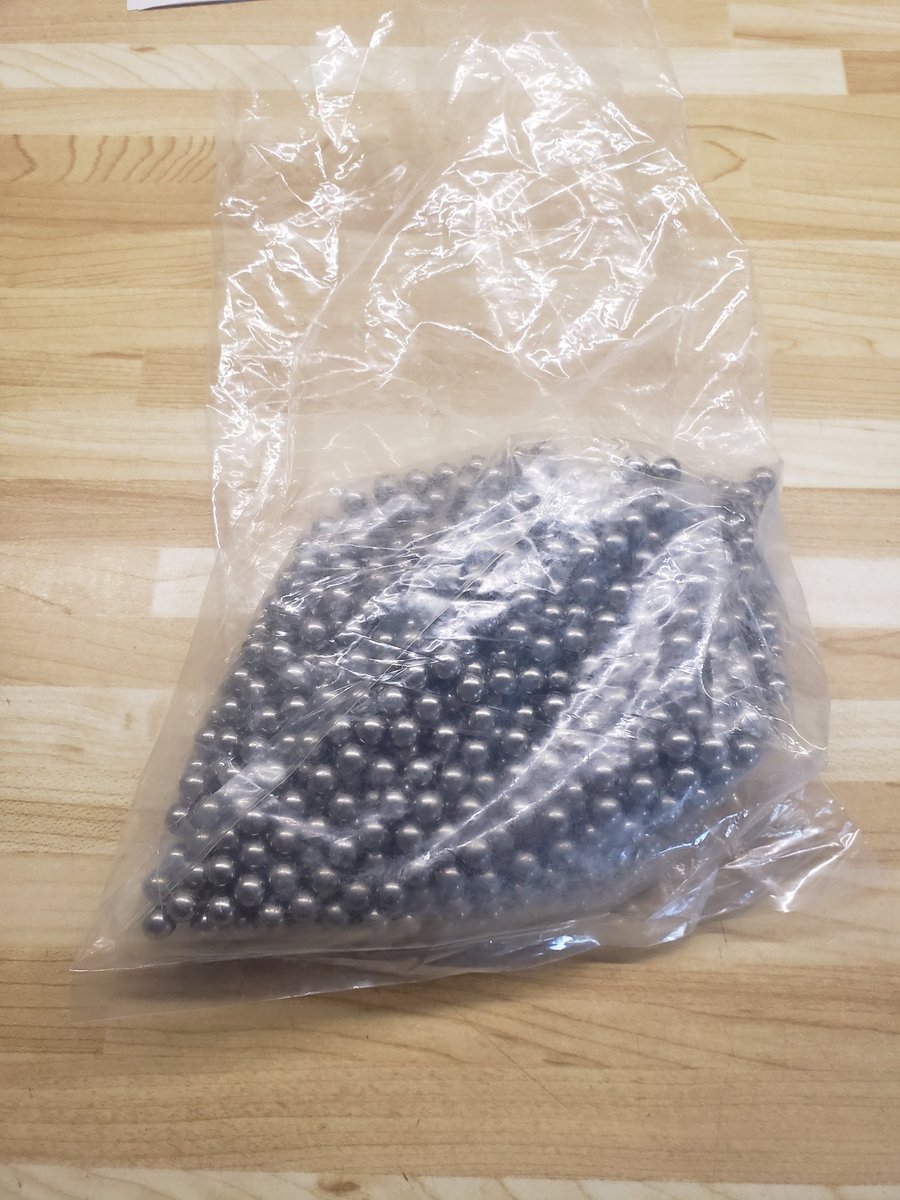
Presents at the door today! Pretty awesome considering the delivery date was November 16 EOD.
Some of those 2x72 belts look like they eat knuckles for breakfast.
Also picked up 1000 x 1/4" Carbon Ball Bearings (might have messed this up & should have got chrome).
#blademaking
1
2
2 Nov 2020
Finally ordered a bunch of steel tonight for #blademaking.
1084, 1095, 15N20 & even some powdered 1084 for cannister Damascus. #forging
2
4

7 Oct 2020
Anyone wants to learn blacksmithing/blademaking hit me up. Always happy to help get someone started.
6

4 May 2020
going to build Gabe a coal forge and quenching station so that he can get started on his blademaking journey
3
7
