
Available at Masapharm Pharmacy for UGX 85,000 Ugx.
Home delivery available.
Order: masapharmpharmacy.com
WhatsApp: 0762 964 025 | Call: 0707 821 402
#PediaSureUganda #KidsNutritionKampala #ImmuneSupport #BrainDevelopment #MasapharmPharmacyKawaala
1
1
7

Jun 13
🧠✨ Brain Development Starts with the Right Training!
Abacus help in children focus, memory, visualization, concentration, and problem-solving skills. Every practice session builds confidence and creates a stronger foundation for future success.
#Abacus #BrainDevelopment

1
2

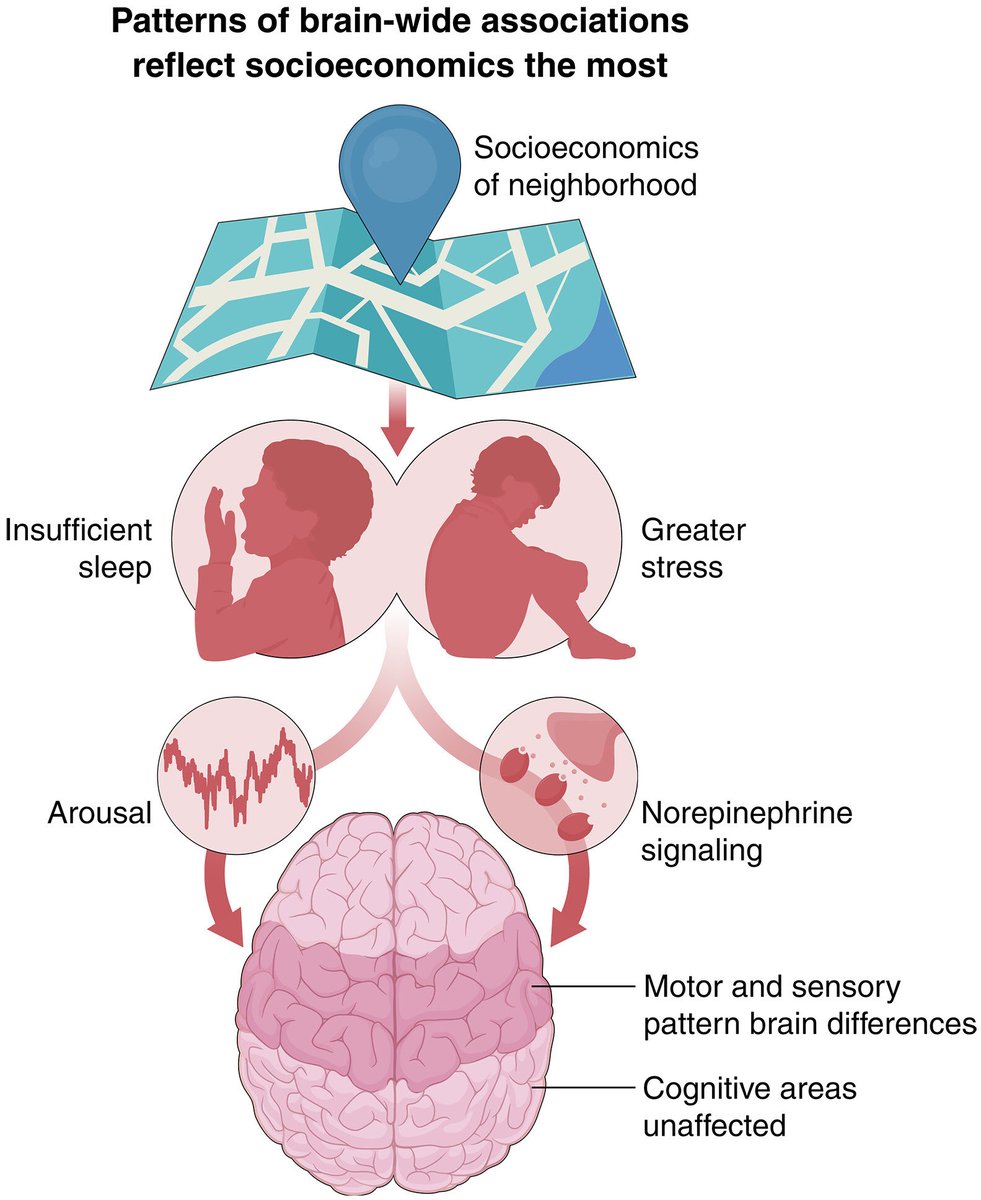
Durante años hemos buscado explicaciones en la genética, el coeficiente intelectual, la crianza o la salud física. Sin embargo, un nuevo estudio publicado en la revista Science analizó 649 variables en casi 12,000 niños de 9–10 años:
🧠 El factor que más se refleja en la organización cerebral infantil es el nivel socioeconómico y las condiciones de vivienda.
✅ De las 40 variables más asociadas con la función cerebral, 37 fueron indicadores socioeconómicos (ingreso familiar, pobreza del vecindario, acceso a recursos, vivienda, transporte, entre otros).
✅ Los patrones cerebrales se relacionaron principalmente con regiones sensoriales y motoras, no con las áreas clásicamente vinculadas al razonamiento o la cognición superior.
✅ Dos posibles mecanismos vinculados:
😴 Menor calidad y cantidad de sueño
😟 Mayor estrés crónico
Estos factores parecen actuar como vías mediante las cuales las desventajas socioeconómicas influyen en el cerebro en desarrollo.
Cuando los investigadores ajustaron los análisis por nivel socioeconómico, aproximadamente 70% de las asociaciones entre cerebro e IQ dejaron de ser significativas. Esto sugiere que muchas relaciones previamente atribuidas a la inteligencia podrían estar fuertemente influenciadas por las condiciones socioeconómicas en las que crecen los niños.
Este trabajo refuerza una idea central de la investigación en infancia temprana:
🌱 No basta con preguntarnos qué ocurre dentro del niño; debemos entender qué ocurre alrededor del niño.
#BrainDevelopment #ChildhoodAdversity #Pediatrics #PublicHealth
science.org/doi/10.1126/scie…
2
106

Jun 12
🧠 Want to support your child’s brain development in a holistic way? Discover a systems-based approach that really works for families. Read more 👉 mummyfever.co.uk/supporting-… #ParentingTips #BrainDevelopment #ChildWellbeing #MummyFever
5
Jun 12
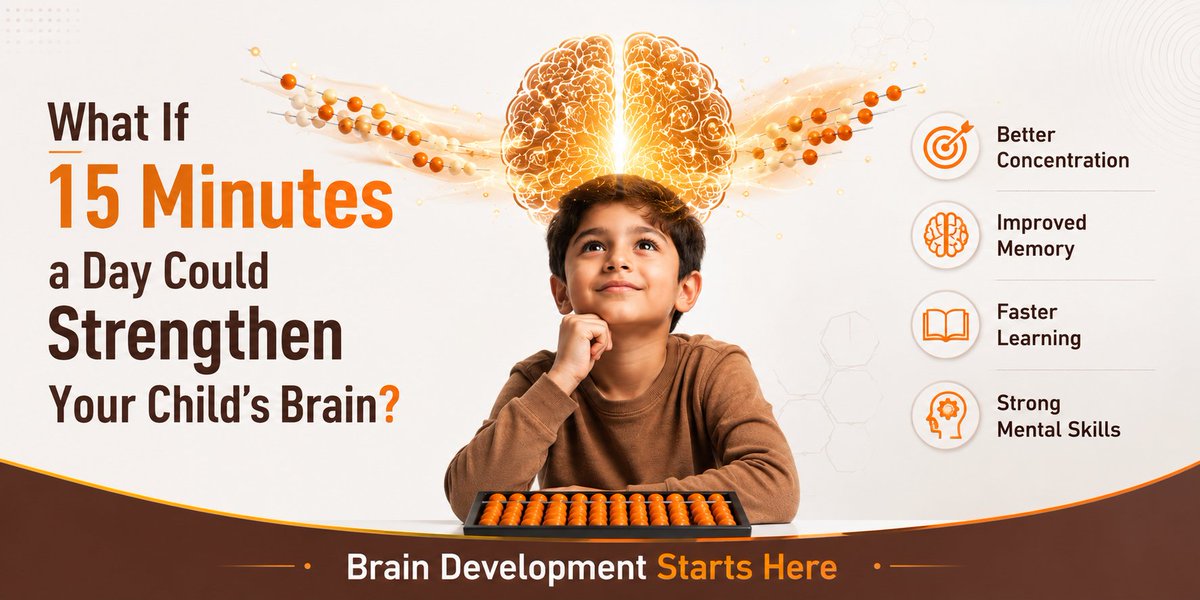
🧠 Just 15 minutes a day can make a difference!
Boost concentration, improve memory, and strengthen your child's mental skills with Abacus training.
#Abacus #BrainDevelopment #KidsLearning #MemoryBoost #Concentration #AVASAbacus
1
1
6

Why can't toddlers control their impulses? This week on SBS, developmental neuroscientist Dr. Abigail Fiske of @LancasterUni explains:
🧠 Executive function
👶 Infant brain development
🌱 Why early childhood matters
#Neuroscience #Psychology #ChildDevelopment #BrainDevelopment

1
5

Jun 12
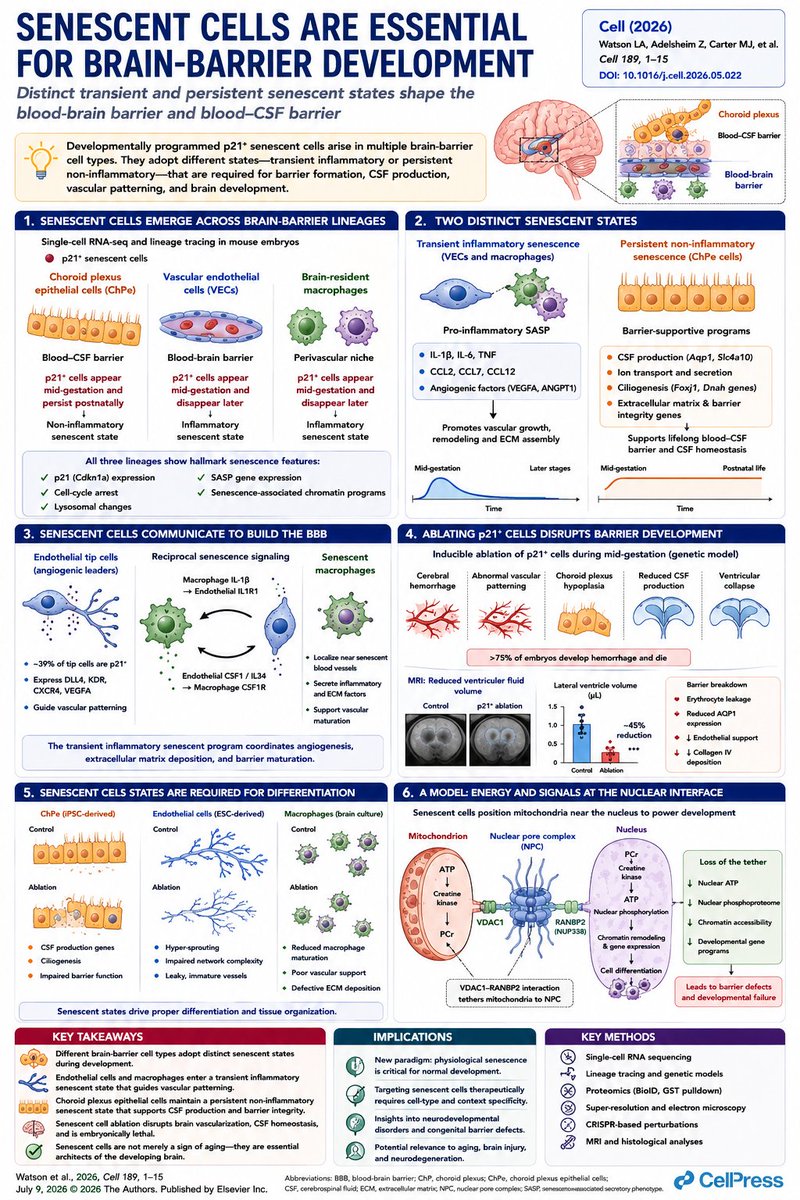
Senescence Is Not Always Bad: It Builds the Brain's Barriers
For years, cellular senescence has been viewed primarily as a hallmark of aging, neurodegeneration, and tissue dysfunction.
But a new Cell study challenges that paradigm.
The authors discovered that senescent cells are an essential developmental program required for formation of the brain's protective barriers.
Rather than representing pathological aging, specific senescent cell states emerge during embryogenesis and actively guide:
🧠 Blood-brain barrier (BBB) development
🧠 Blood–cerebrospinal fluid (CSF) barrier formation
🧠 Brain vascular patterning
🧠 Choroid plexus maturation.
Three brain cell populations become senescent
Using single-cell transcriptomics, lineage tracing, and genetic ablation, investigators identified p21⁺ senescent populations in:
🟡 Choroid plexus epithelial (ChPe) cells
🔵 Vascular endothelial cells (VECs)
🟢 Brain-resident macrophages.
All three populations displayed hallmark features of senescence:
✅ p21 expression
✅ Cell-cycle arrest
✅ Senescence-associated transcriptional programs
✅ Secretory signaling phenotypes (SASP).
However, they behaved very differently.
Two forms of developmental senescence emerge
The study uncovered two fundamentally distinct senescent states.
1. Transient inflammatory senescence
Observed in:
🔵 Endothelial cells
🟢 Brain macrophages
These cells appeared during mid-gestation and disappeared after barrier formation.
Their SASP programs were highly inflammatory, producing:
• IL-1β
• IL-6
• TNF
• CCL chemokines
• angiogenic factors.
These signals coordinated vascular growth and remodeling.
2. Persistent non-inflammatory senescence
Observed in:
🟡 Choroid plexus epithelial cells.
Remarkably, these cells retained senescence markers:
✅ At postnatal day 21
✅ At 12 months of age
while maintaining normal physiological function.
Unlike classical aging-associated senescence, ChPe cells lacked inflammatory SASP features and instead expressed genes supporting:
🧬 Barrier integrity
🧬 CSF production
🧬 Ciliogenesis
🧬 Ion transport
🧬 Tissue homeostasis.
This may represent the first example of a lifelong physiological senescent state in a normal somatic tissue.
Senescent endothelial cells guide vascular patterning
One of the most surprising findings was that senescence strongly overlapped with:
🌱 endothelial tip cells.
Tip cells lead angiogenic sprouts during vessel formation.
Approximately:
📈 39% of endothelial tip cells were p21⁺
compared with only ~11% of non-tip endothelial cells.
These cells expressed:
• DLL4
• KDR
• CXCR4
• angiogenic signaling programs.
The data suggest that developmental senescence helps coordinate controlled angiogenesis rather than simply terminating proliferation.
Macrophages and endothelial cells form a senescence circuit
Single-cell analyses identified extensive communication between:
🟢 Senescent macrophages
and
🔵 Senescent endothelial cells.
Key signaling axes included:
Macrophage IL-1β
→ endothelial IL1R1
and
Endothelial CSF1 / IL34
→ macrophage CSF1R.
Senescent macrophages preferentially localized near senescent blood vessels during embryonic development, suggesting a coordinated vascular remodeling niche.
Eliminating senescent cells disrupts brain development
The strongest evidence came from genetic ablation experiments.
Removing p21⁺ cells during embryogenesis caused:
☠ Embryonic lethality
🩸 Cerebral hemorrhage
🧠 Ventricular collapse
📉 Impaired CSF production
📉 Choroid plexus hypoplasia
📉 Abnormal vascular architecture.
More than 75% of embryos developed hemorrhage after p21⁺ cell depletion.
Blood vessels became:
⬆ Hyperbranched
⬆ Disorganized
⬆ Endothelial proliferation
⬇ Network complexity.
The findings indicate that senescent cells actively restrain and sculpt vascular development.
Choroid plexus senescence supports CSF homeostasis
Ablation of senescent ChPe cells produced dramatic defects.
Investigators observed:
⬇ Choroid plexus size
⬇ AQP1 expression
⬇ Endothelial support
⬇ Collagen IV deposition
⬇ Ventricular fluid volume
⬇ CSF production.
MRI analysis showed:
📉 ~45% reduction in lateral ventricular fluid volume.
Barrier integrity was also compromised, with increased erythrocyte leakage into ventricular spaces.
A new model of senescence biology
The prevailing model states:
Senescence
→ aging
→ inflammation
→ pathology.
This work suggests a more nuanced framework:
Developmental senescence
→ tissue patterning
→ barrier formation
→ physiological homeostasis.
Only later, when dysregulated or chronically activated, might senescence contribute to disease.
Why this matters
The study fundamentally changes how we think about senescence.
Instead of being solely an aging-associated damage response, senescence appears to be an ancient developmental program that can be deployed in multiple ways:
🔹 Transient inflammatory senescence to coordinate angiogenesis
🔹 Persistent non-inflammatory senescence to support lifelong epithelial function.
The findings also raise important questions for senolytic therapies.
If some senescent cells are required for tissue integrity and barrier function, indiscriminate elimination of all senescent cells may not always be beneficial.
Understanding the difference between:
✅ beneficial physiological senescence
and
❌ pathological aging-associated senescence
may become one of the central challenges of geroscience over the next decade.
Reference
Watson LA, Adelsheim Z, Carter MJ, et al.
Persistent and transient senescent cells contribute to brain-barrier development.
Cell (2026)
DOI: 10.1016/j.cell.2026.05.022
#Senescence #Aging #BrainDevelopment #BloodBrainBarrier #ChoroidPlexus #CSF #Neurobiology #DevelopmentalBiology #CellJournal #Geroscience
1
3
16
347

Jun 12
बच्चों के दिमाग को तेज बनाने का तरीका |
#SwamiKrishnanandJiMaharaj #BrainDevelopment #SmartKids #ParentingTips #ChildDevelopment
#KidsEducation #MentalGrowth #PositiveParenting #LifeLessons #SpiritualWisdom #MotivationalShorts #EducationTips #FocusAndConcentration #MindPower
1
7


Jun 11
🧠 When concentration improves, learning becomes easier.
Strong focus is the foundation of every child's success. Abacus training helps children develop better concentration,
#Abacus #BrainDevelopment #Concentration #Focus #Memory #Learning #Education #MentalMath

1
1
1
6

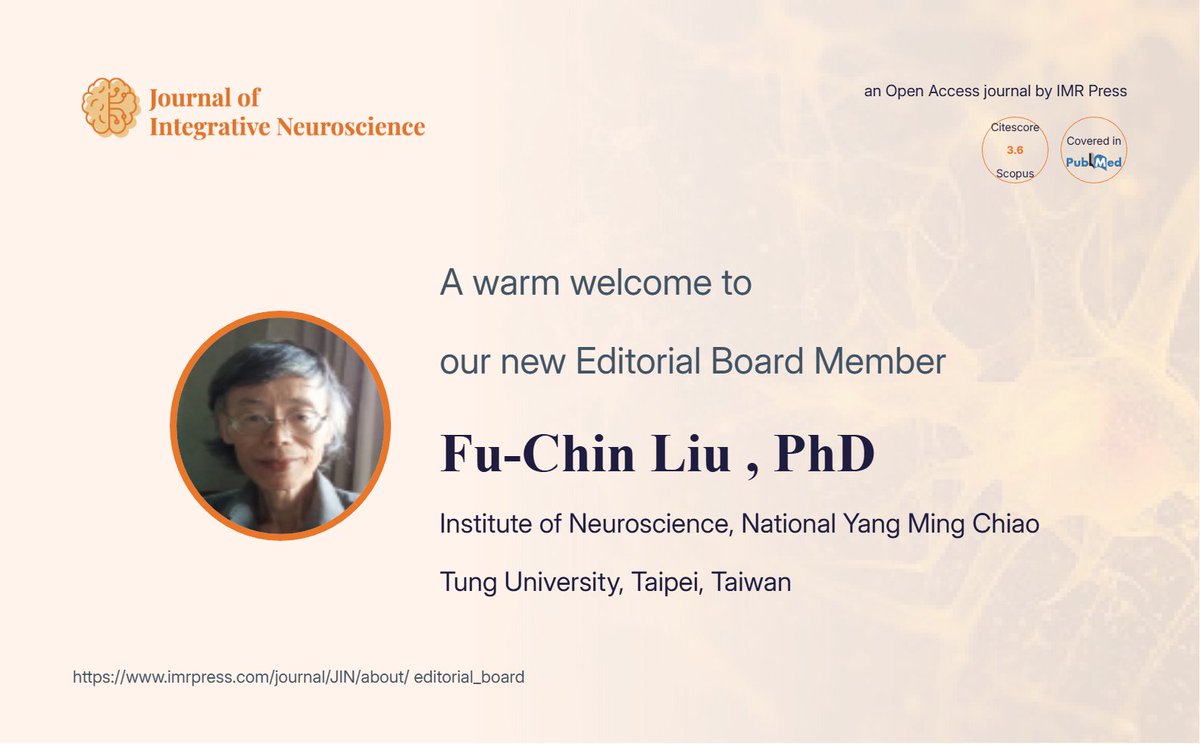
🎉 Editorial Board Announcement | Journal of Integrative Neuroscience
🧠 We are pleased to welcome Professor Fu-Chin Liu, PhD, to the Editorial Board of the Journal of Integrative Neuroscience!
🏛️ Professor Liu is affiliated with the Institute of Neuroscience, @NYCU_official, Taipei, Taiwan.
🔬 Her research focuses on fundamental questions in developmental neuroscience and neural circuit formation, including:
🧩 Basal Ganglia Development 🧠 Striatal Development and Function 🔗 Neural Circuit Development 🌱 Neural Development 🧬 Molecular Mechanisms of Brain Formation
📌 Professor Liu has made significant contributions to understanding the genetic and molecular mechanisms that regulate neuronal differentiation, neural patterning, and the establishment of functional neural circuits during brain development.
📚 Her research has provided important insights into the development of the basal ganglia and striatum, advancing our knowledge of how complex neural networks are formed and maintained in the central nervous system.
🤝 We are honored to have Professor Liu join our Editorial Board and look forward to her expertise supporting JIN’s mission to advance rigorous, interdisciplinary, and impactful neuroscience research.
🔗 Learn more: imrpress.com/journal/JIN/abo…
#Neuroscience #NeuralDevelopment #NeuralCircuits #BasalGanglia #Striatum #DevelopmentalNeuroscience #Neurobiology #BrainDevelopment #AcademicPublishing #EditorialBoard #PeerReview #JournalOfIntegrativeNeuroscience
1
4
173

Jun 10
Big ideas begin with the right energy, teamwork, and everyday nutrition. 💻✨
Neel Salt supports the minds that create, innovate, and shape tomorrow’s Tanzania.
#NeelSalt #YoungCreators #CreativeMinds #MadeForTanzania #BrainDevelopment #IodineMatters #FutureThinkers

3
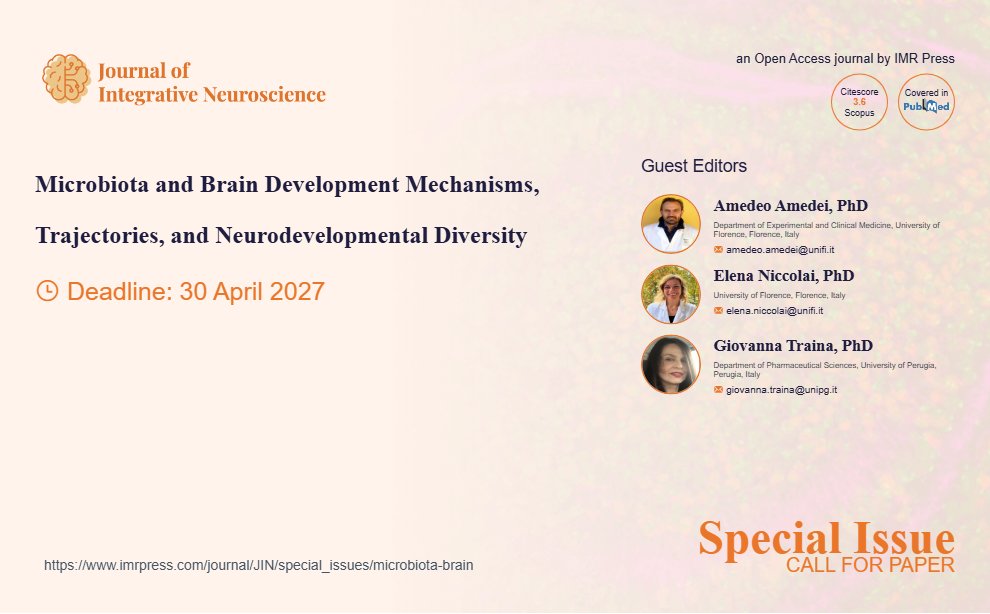
We warmly invite you to submit your research to the Special Issue:
🧠 Microbiota and Brain Development Mechanisms, Trajectories, and Neurodevelopmental Diversity
Guest-Edited by Prof. Amedeo Amedei and Dr. Elena Nicolai from @UNI_FIRENZE, together with Dr. Giovanna Traina from @UniperugiaNews.
📖 For more details, please visit:
imrpress.com/journal/JIN/spe…
👉 The microbiota–gut–brain axis has emerged as a critical regulator of brain development, influencing neural maturation, cognition, behavior, and neurodevelopmental trajectories. Increasing evidence suggests that microbial communities and their metabolites play fundamental roles in shaping neurological outcomes across the lifespan.
✨ This Special Issue aims to explore the mechanisms connecting microbiota and brain development, with a focus on neurodevelopmental diversity, immune–brain interactions, microbial signaling pathways, and translational strategies targeting the microbiota–brain axis. We welcome original research and review articles that advance this rapidly evolving field.
🧠 Why submit to this Special Issue of JIN?
✔️ Open Access
✔️ Rapid peer-review process
✔️ Indexed in PubMed and Scopus
✔️ International visibility
✔️ Dedicated expert editorial team
📖 Manuscript types:
Original Research Articles · Review Articles · Communications · Perspectives
📆 Submission deadline:
30 April 2027
✍️ Submit your manuscript:
imr.propub.com
📑 Author guidelines:
imrpress.com/journal/JIN/pag…
#Neuroscience #Microbiota #GutBrainAxis #BrainDevelopment #Neurodevelopment #Neurodiversity #BrainResearch #OpenAccess #CallForPapers #CFP
1
3
76


Jun 9
AIIMS Report Warns Air Pollution Directly Affecting Unborn Babies Brain Development | Shocking Health News नवजात बाळांवर प्रदूषणाचा घाला! गर्भातील बाळाच्या मेंदूपर्यंत पोहोचतायत हवेतील घातक कण; एम्स (AIIMS) च्या अहवालात अत्यंत गंभीर इशारा.
#AirPollution #AIIMSReport #PregnancyCare #UnbornBabyHealth #BrainDevelopment #HealthAlert #SaveOurChildren #PM25 #MaternalHealth #MedicalResearch #BreakingNews #PublicHealth
1
122

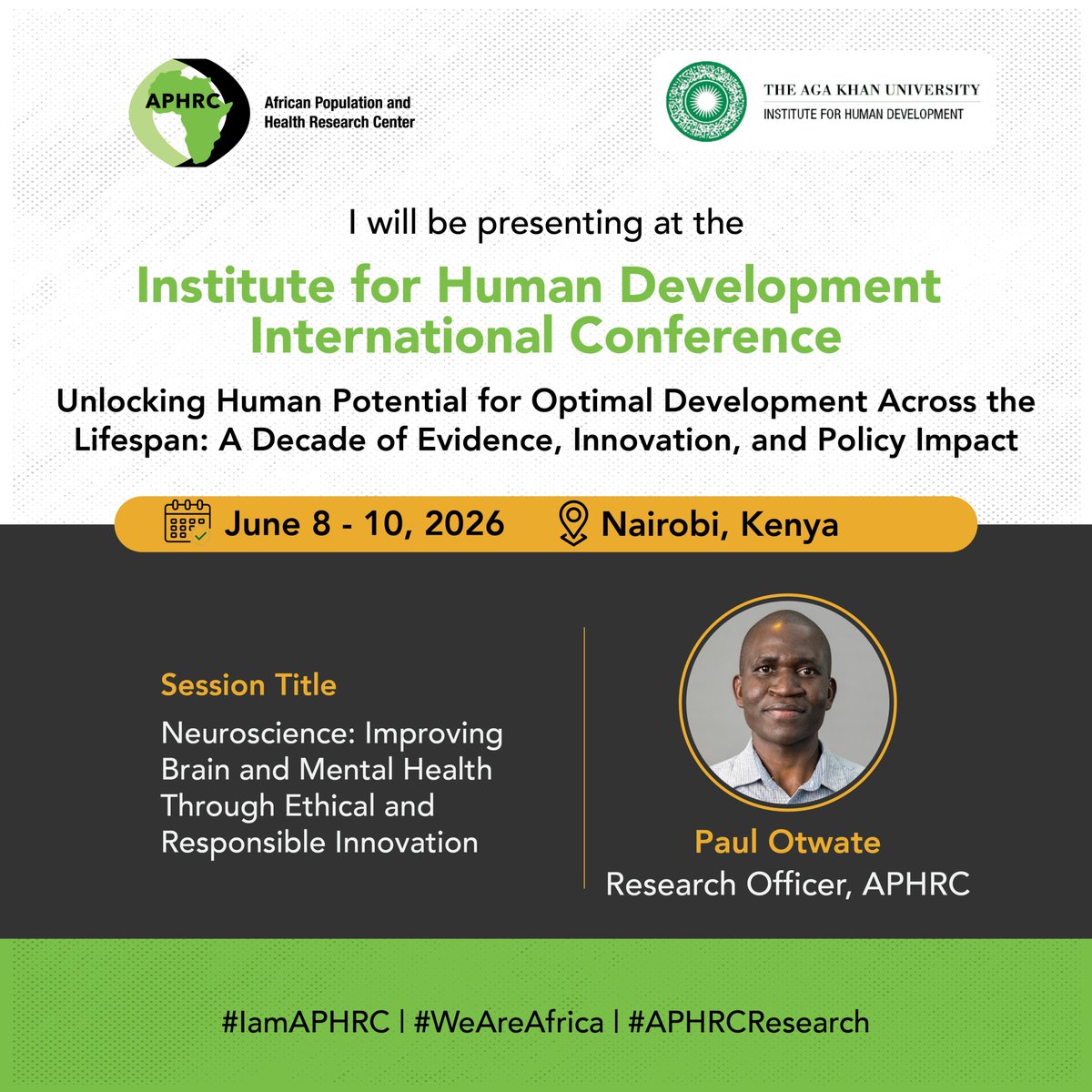
At the ongoing Institute for Human Development International Conference, #IamAPHRC’s @OtwatePaul will present findings from APHRC's Knowledge, Attitudes, and Practices (KAP) study on community perceptions of neuroimaging technologies and their potential role in advancing research on child brain development in Kenya.
The study found that while awareness of common imaging technologies such as X-rays and ultrasound is high, knowledge of MRI remains limited.
Nearly half of caregivers associated neuroimaging with health and safety risks, which guided community engagements to challenge misconceptions and promote acceptance.
#APHRC #Neuroimaging #ChildDevelopment #BrainDevelopment #ResearchForImpact #IHDConference #EvidenceToAction #ScienceForDevelopment
@NairobiCityGov @kadzomudzo @DrNampijjaM @KennethOkelo @awuoroloo1 @MDMwanga @OtwatePaul @jauriri2007 @symonmkariuki @ericomari @mbaya_nelson @Espira15 @onyango_silas @CharityWaweru @charleslenjo @NairobiCityGov @uthabitiafrica @KisumuCountyKE
4
12
405