
Mar 23
சாலையில் MTC பேருந்துக்கு வழி விடுவோம்!
"BUS FIRST"
#MTCChennai | #MTC4Chennai | #ChennaiBus | #MTCBus | #Chennai | #NammaChennai | #NammaBus | #BusFirst | #VazhiVidu
4
10
33
1,898

We have started with #BusFirst campaign, though suboptimal. It is high time we realize the significance of moving people over moving vehicles.@CumtaOfficial @MtcChennai @ChennaiTraffic @chennaicorp @kgbias

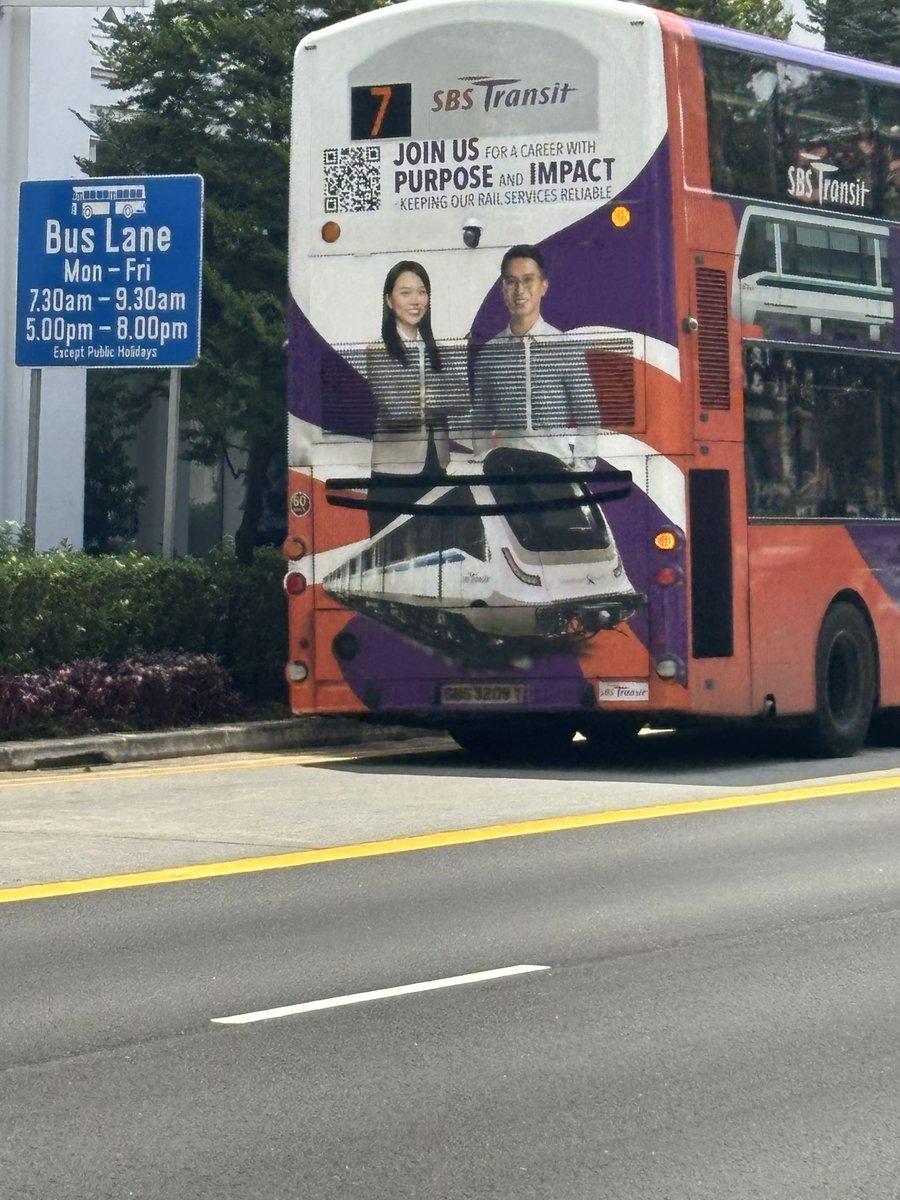
Recently, during my visit to #Singapore, I had the opportunity to observe how bus lanes are implemented on the ground.
Bus lanes as a concept are not new to us — cities like #Bengaluru and #chennai have already tried them. But what stood out here was not the idea, but how consistently it has been implemented and strengthened over time.
Singapore introduced bus lanes as early as 1974, when the city was dealing with increasing congestion and declining bus reliability. The intent was clear — prioritise buses so that public transport remains dependable. What is interesting is how that idea has evolved into a much more refined system today. @LTAsg
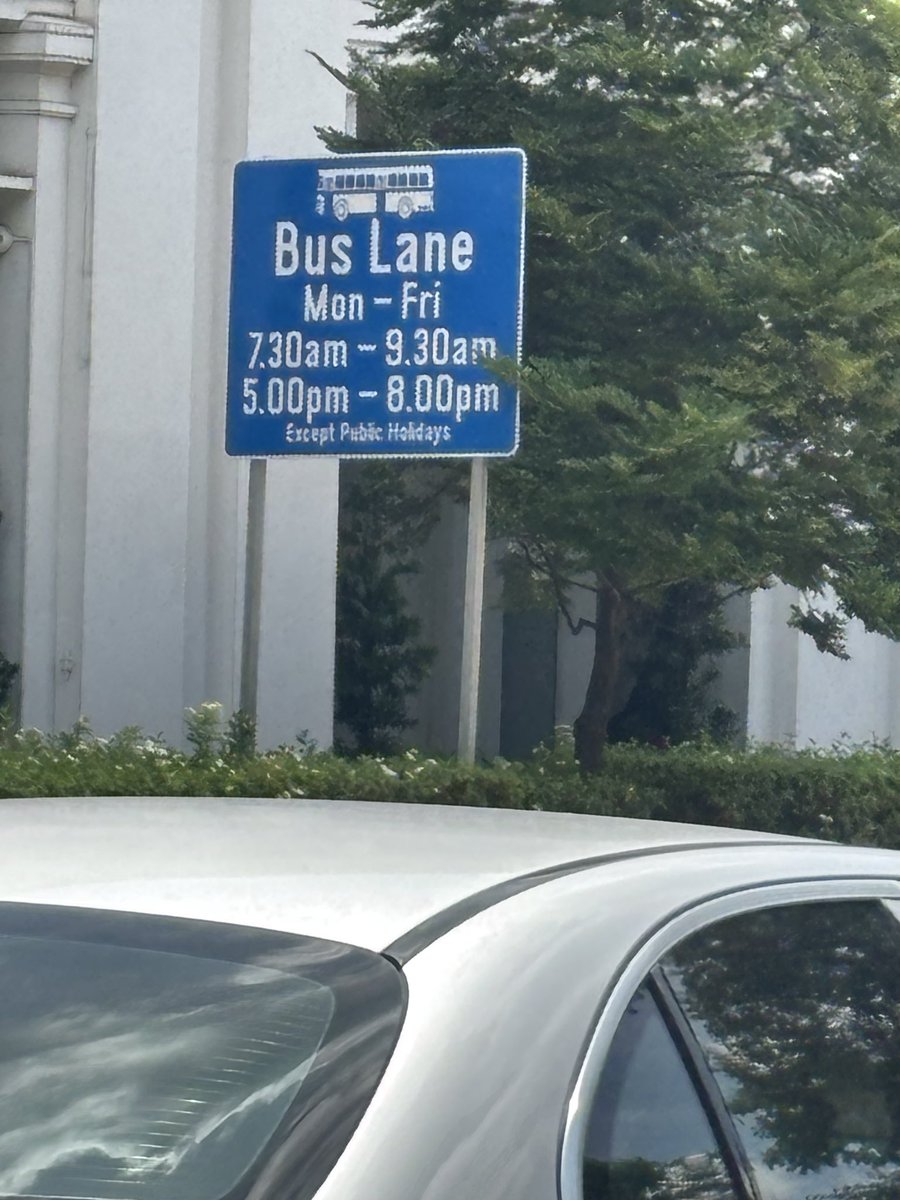
One simple but effective aspect is that the bus lane is not enforced throughout the day. It operates only during peak hours — morning and evening — and this is clearly communicated through signage on the road. It immediately builds acceptance, because users understand that priority is given only when it is needed most.
What also stood out was how well the system is communicated.
It is not just about a signboard.
The information is layered:
•Clear roadside signage with exact timings
•Consistent lane markings
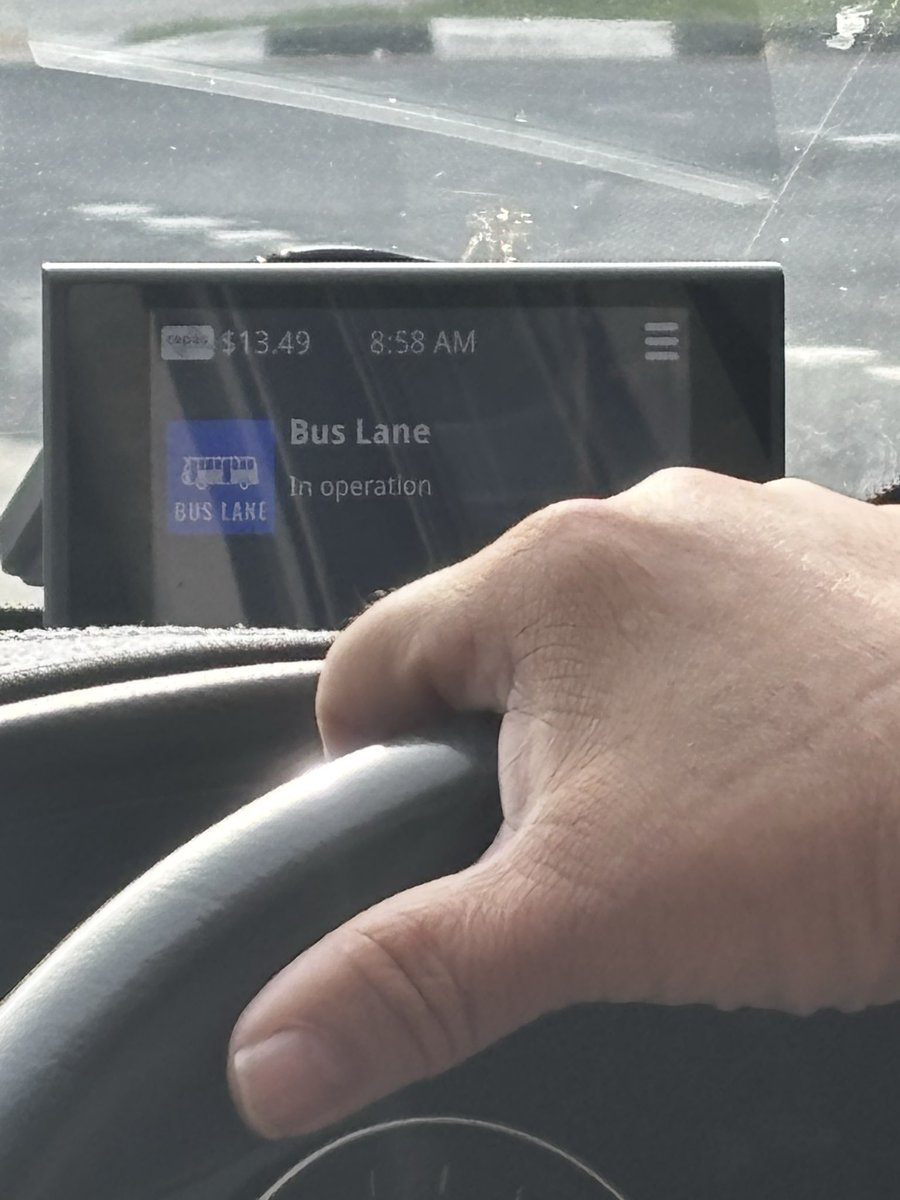
•And even real-time alerts inside vehicles through onboard units, indicating when a bus lane is in operation
There is very little ambiguity for the user.
But in my view, the biggest reason why this works is something more fundamental.
The #kerbside is tightly managed.
In many of our cities, the leftmost lane is where everything happens — parking, loading, informal stops. So when we try to introduce a bus lane in the same space, conflict is inevitable.
In #Singapore, that conflict is largely addressed through strict control over #parking and stopping along bus lane corridors, especially during operational hours. The curb is largely kept clear, with designated spaces and strong enforcement.
As a result, buses move uninterrupted, enforcement becomes easier, and compliance becomes more natural.
It’s a reminder that a bus lane is not just a lane marking. It is a combination of parking management, enforcement, communication, and timing strategy.
We often ask why similar interventions struggle in our cities. Maybe the answer lies not in the idea, but in the ecosystem we build around it.
Worth reflecting as we continue to push for bus priority systems in Indian cities.
@BMTC_BENGALURU @MtcChennai @DKShivakumar
1
1
9
788
Mar 8
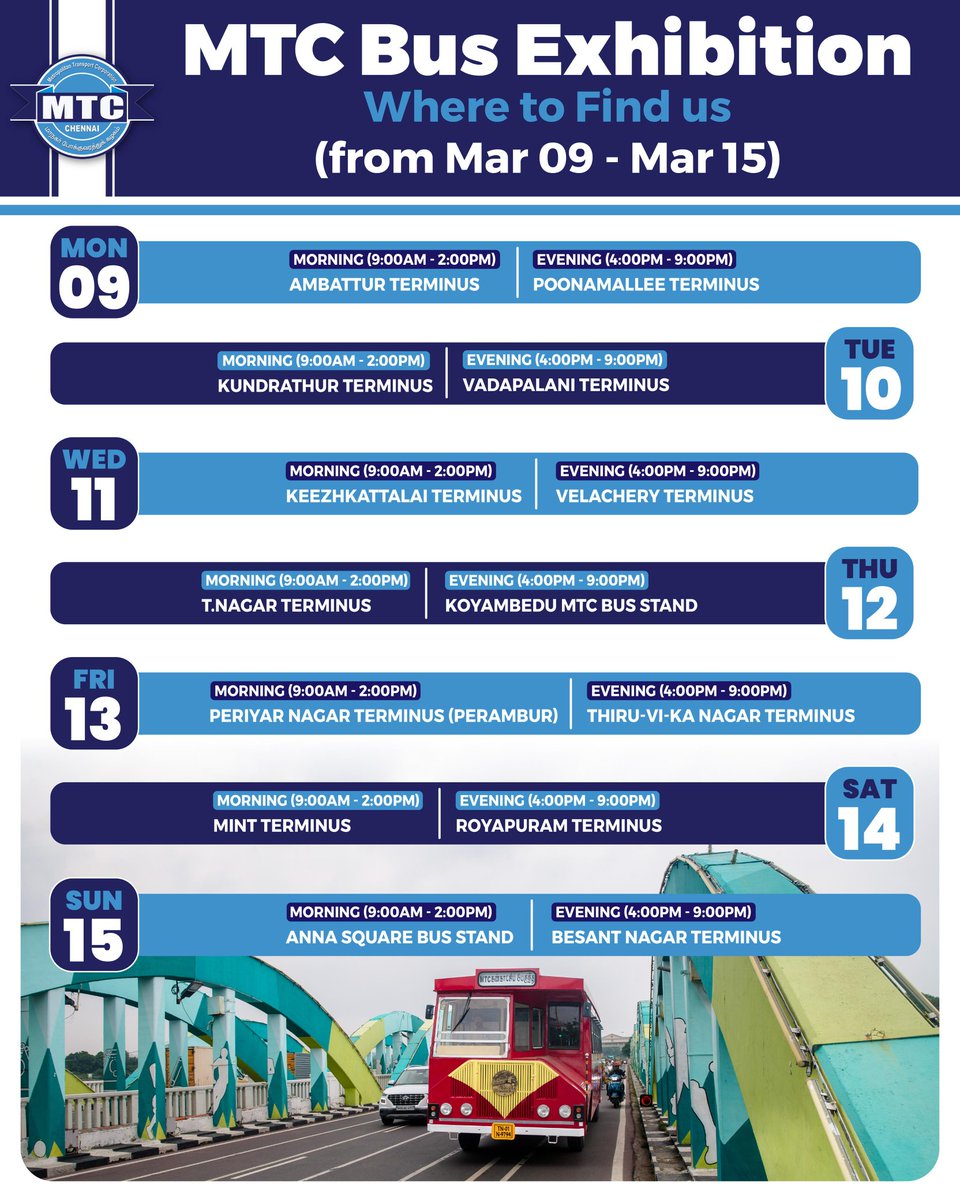
We’re in your neighbourhood this week!
The MTC Bus Exhibition is happening across #Chennai from Mar 09 – Mar 15.
Drop by your nearest venue and experience the story of Chennai’s buses up close!
#MTCChennai | #MTC4Chennai | #ChennaiBus | #MTCBus | #Chennai | #NammaChennai | #NammaBus | #BusFirst | #VintageBus | #Exhibition
2
6
25
1,757
Feb 22
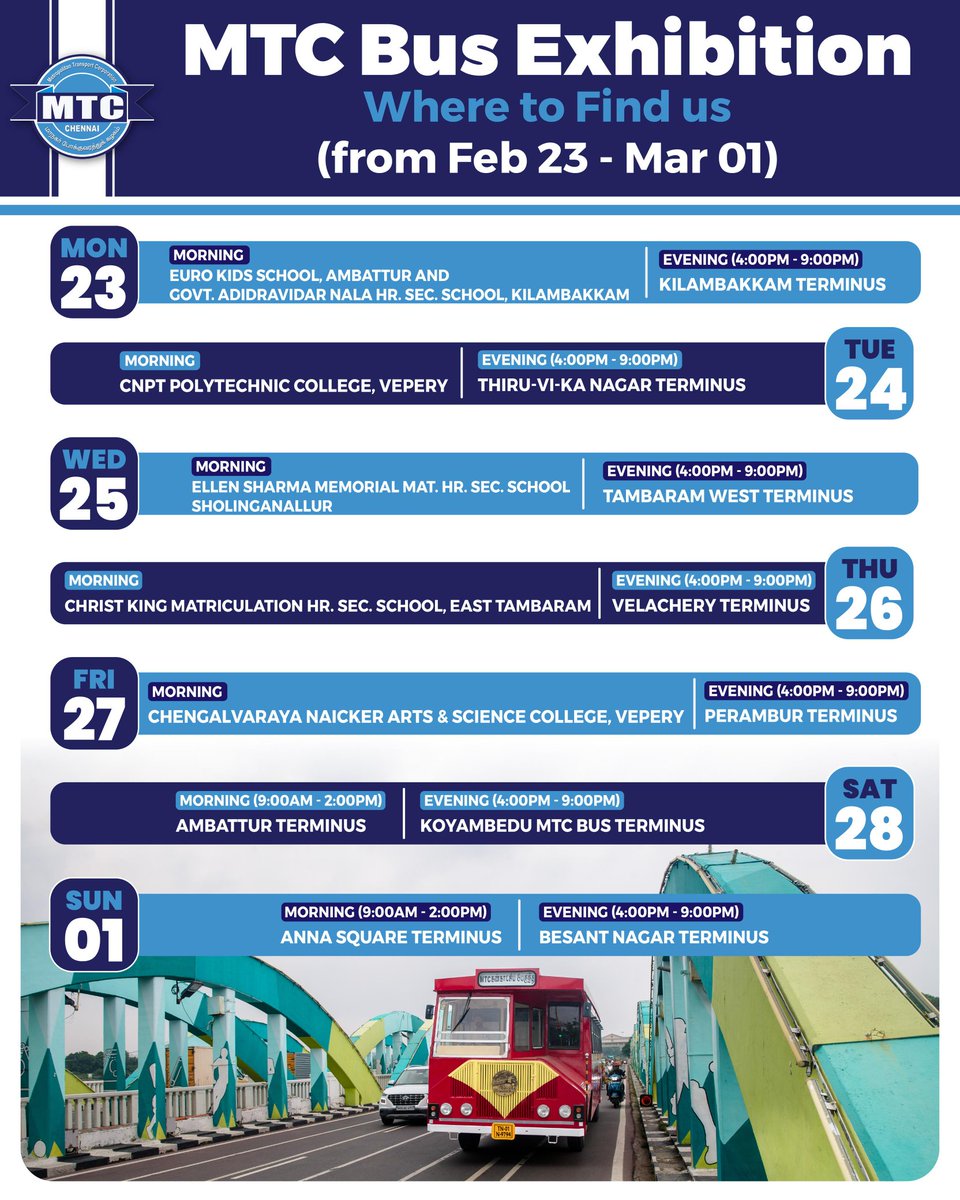
We’re in your neighbourhood this week!
The MTC Bus Exhibition is happening across #Chennai from Feb 23 – Mar 01 .
Drop by your nearest venue and experience the story of Chennai’s buses up close!
#MTCChennai | #ChennaiBus | #MTCBus | #BusFirst | #NammaBus | #VintageBus | #Exhibition
1
11
1,131
Feb 15
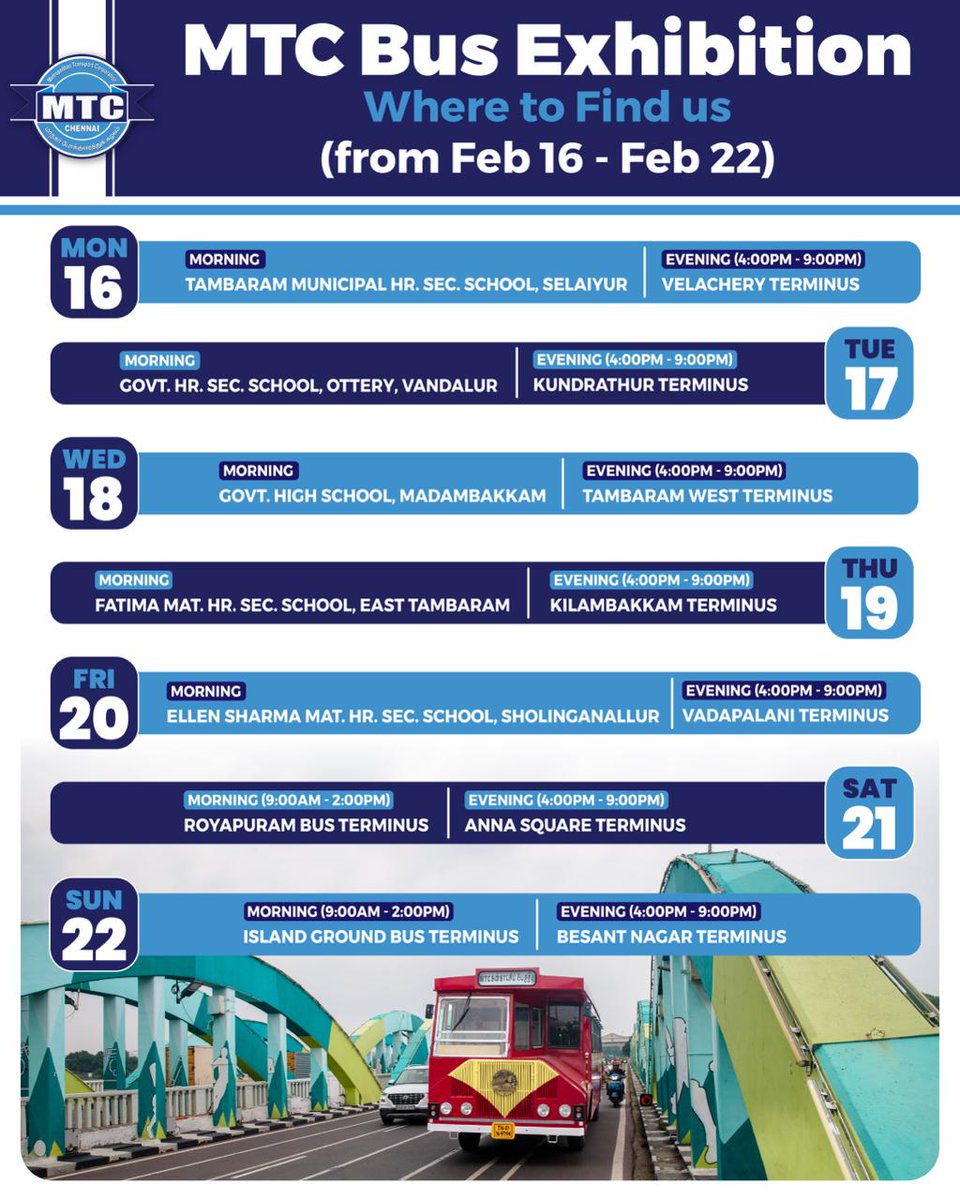
Chennai, we’re coming to your neighbourhood!
Here’s the schedule for the MTC Bus Exhibition from Feb 16 – Feb 22.
Visit us at your nearest bus terminus and experience how #MTC connects the city every day.
#MTCChennai | #MTC4Chennai | #ChennaiBus | #MTCBus | #Chennai | #NammaChennai | #NammaBus | #BusFirst | #VintageBus | #VazhiVidu | #Exhibition | #Bus
1
2
20
1,960
Feb 8
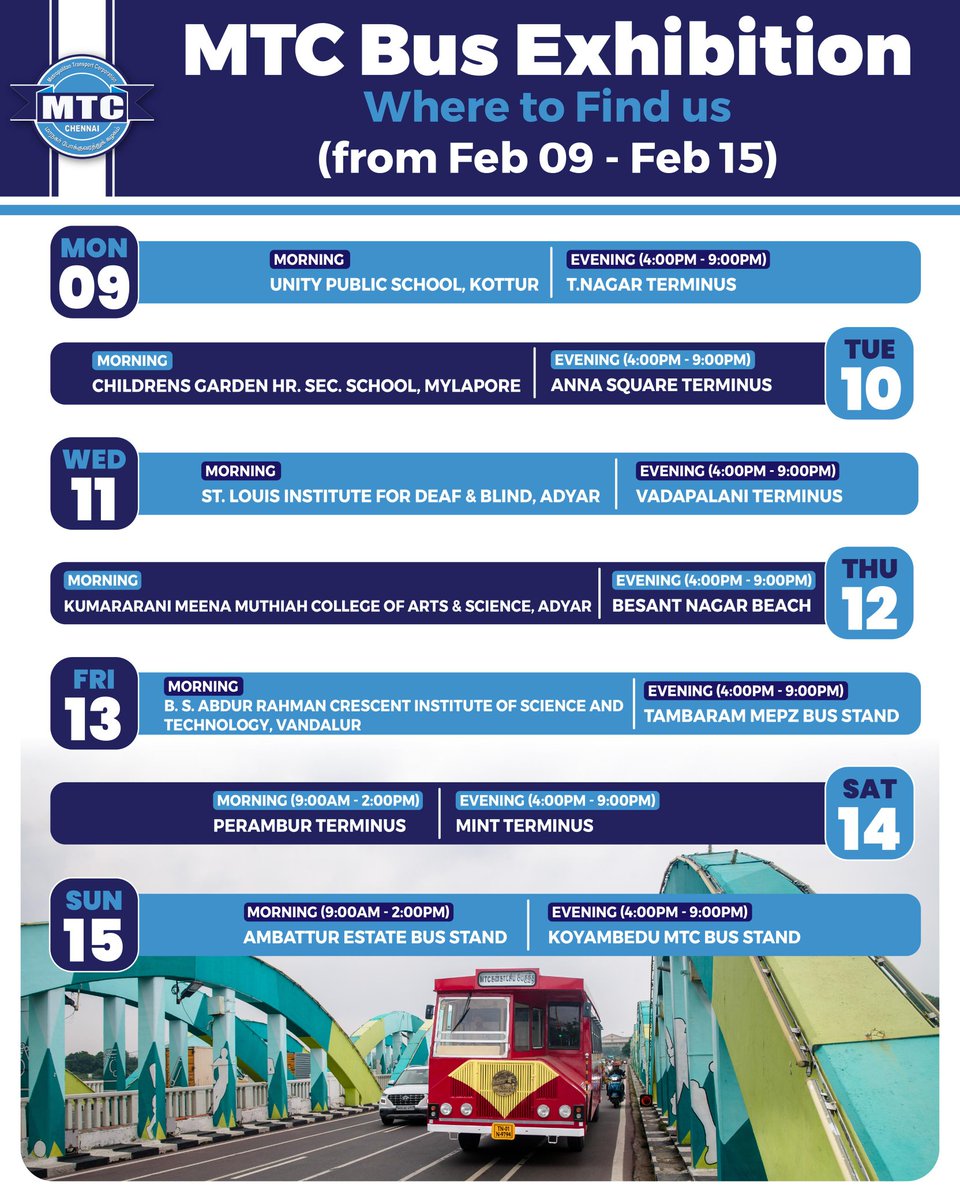
We’re in your neighbourhood this week!
The MTC Bus Exhibition is happening across #Chennai from Feb 09 – Feb 15.
Drop by your nearest venue and experience the story of Chennai’s buses up close!
#MTCChennai | #ChennaiBus | #MTCBus | #BusFirst | #NammaBus | #VintageBus | #Exhibition
2
4
10
1,957
Feb 1
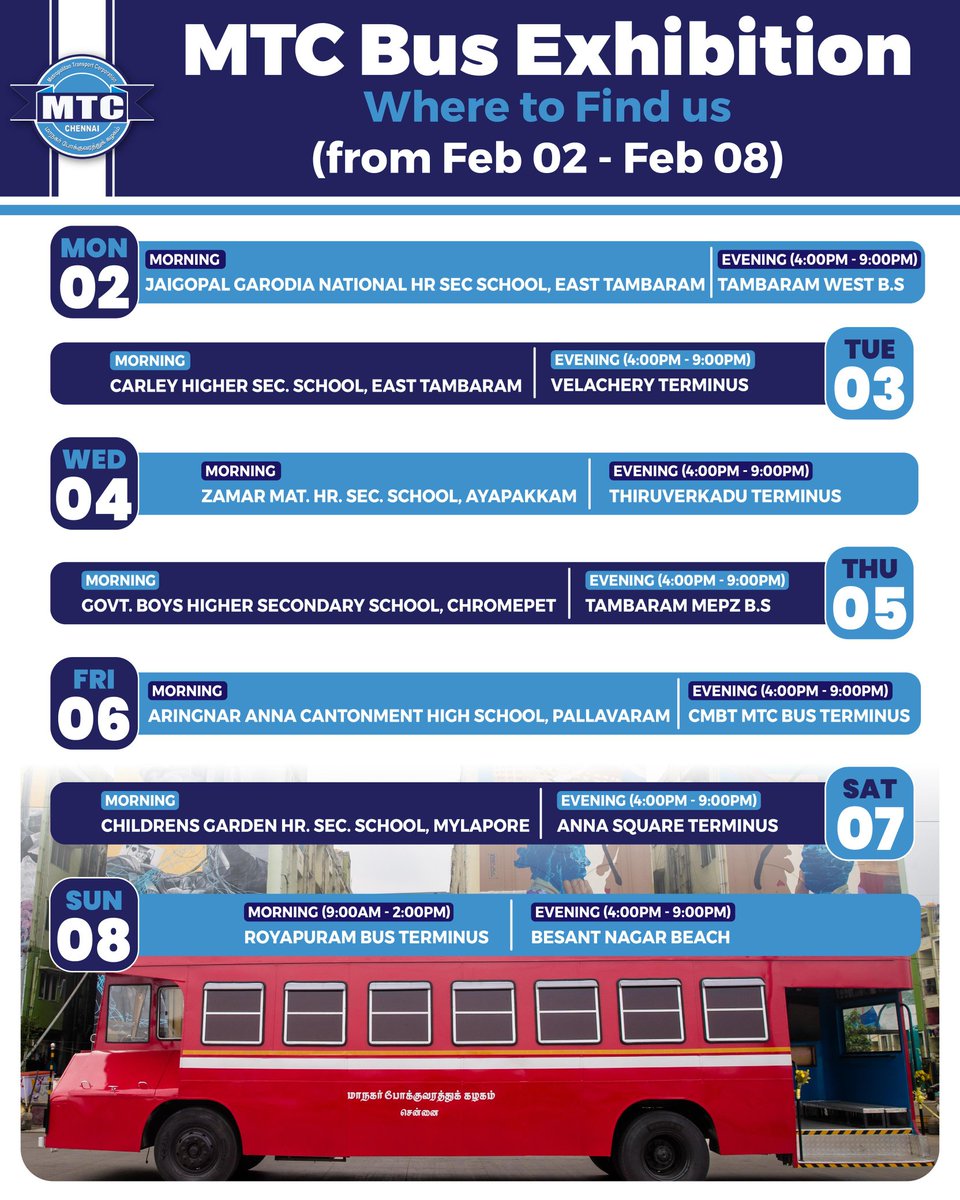
Chennai, we’re coming to your neighbourhood!
Here’s the schedule for the MTC Bus Exhibition from Feb 02 – Feb 08.
Visit us at your nearest bus terminus and experience how #MTC connects the city every day.
#MTCChennai | #MTC4Chennai | #ChennaiBus | #MTCBus | #Chennai| #NammaChennai | #NammaBus | #BusFirst | #VintageBus | #VazhiVidu | #Exhibition | #Bus
3
2
17
1,894

Jan 30
BusFirst - பாதுகாப்பான சாலை, சிறந்த பயணம்
@CMOTamilnadu @mkstalin @Udhaystalin
@mp_saminathan @MTCChennai
@sivasankar1ss
#TNDIPR #TNMediahub #CMMKStalin #DyCMUdhay #TNGovt #PeoplesGovt #TNGovtSchemes #CMOTamilnadu #peoplecm #TamilNadu
22
27
693
Jan 29
Bus first விழிப்புணர்வு பிரச்சாரத்தின் ஒரு பகுதியாக மாநகர் போக்குவரத்து கழகத்தின் அனைத்து ஓட்டுனர்கள் மற்றும் நடத்தினர்களும் சாலையில் #MTC பேருந்து முதன்மை பெற மற்றும் பொதுமக்களுக்கு ஒரு சிறப்பான பயண அனுபவத்தை வழங்க தாங்கள் அனைவரும் பின்பற்ற வேண்டிய வழிமுறைகளை உறுதிமொழி ஏற்றனர்...!
#MTCChennai | #MTC4Chennai | #ChennaiBus | #MTCBus | #Chennai | #NammaChennai | #NammaBus | #BusFirst | #vazhividu
7
17
84
3,113
Jan 27
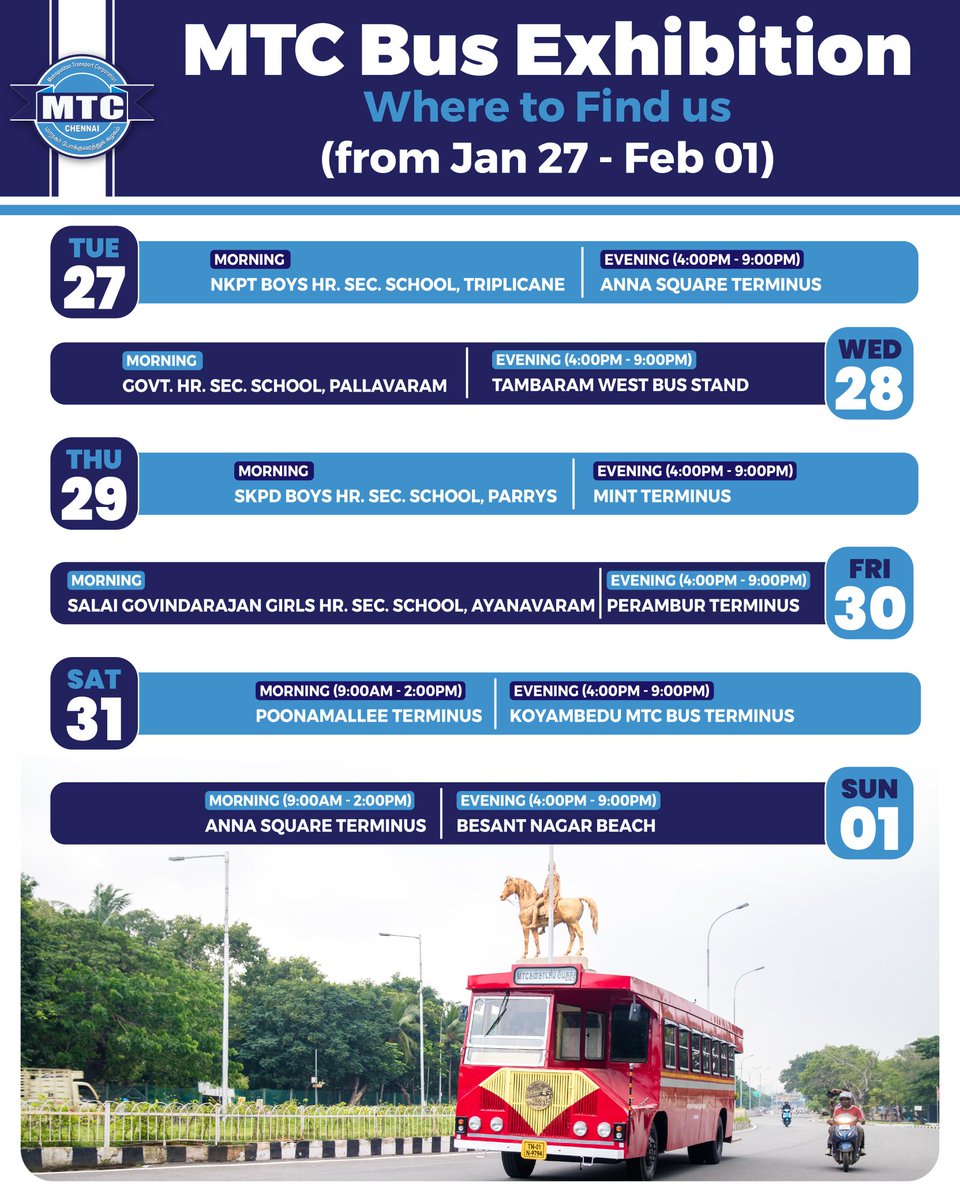
Chennai, we’re coming to your neighbourhood!
Here’s the schedule for the MTC Bus Exhibition from Jan 27 – Feb 01.
Visit us at your nearest bus terminus and experience how #MTC connects the city every day.
#MTCChennai | #MTC4Chennai | #ChennaiBus | #MTCBus | #Chennai | #NammaChennai | #NammaBus | #BusFirst | #VintageBus | #VazhiVidu | #Exhibition | #Bus
3
7
34
2,956
Jan 18
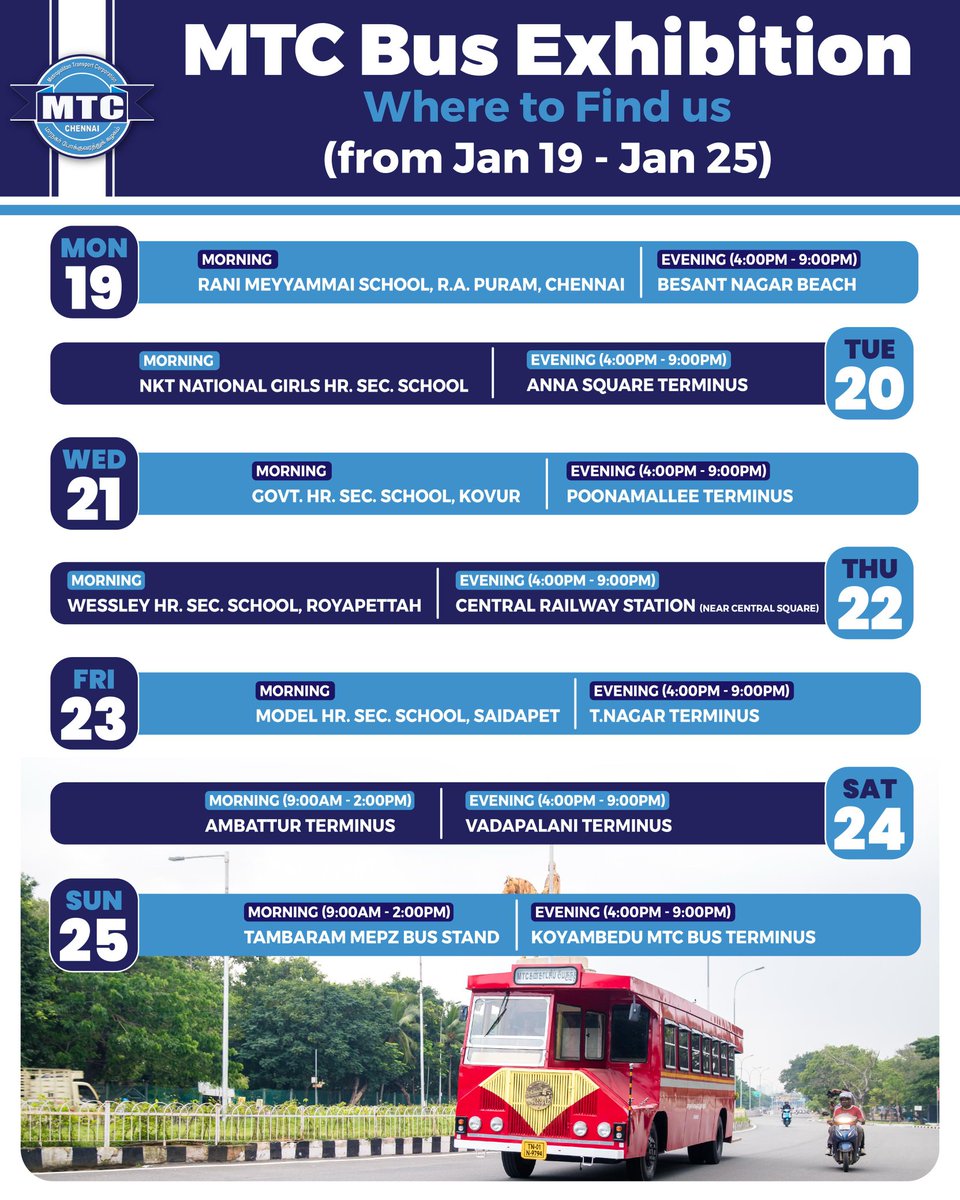
Chennai, we’re coming to your neighbourhood!
Here’s the schedule for the MTC Bus Exhibition from Jan 19 – Jan 25.
Visit us at your nearest bus terminus and experience how #MTC connects the city every day.
#MTCChennai | #MTC4Chennai | #ChennaiBus | #MTCBus | #Chennai | #NammaChennai | #NammaBus | #BusFirst | #VintageBus | #VazhiVidu | #Exhibition | #Bus
4
21
111
4,772
Jan 11
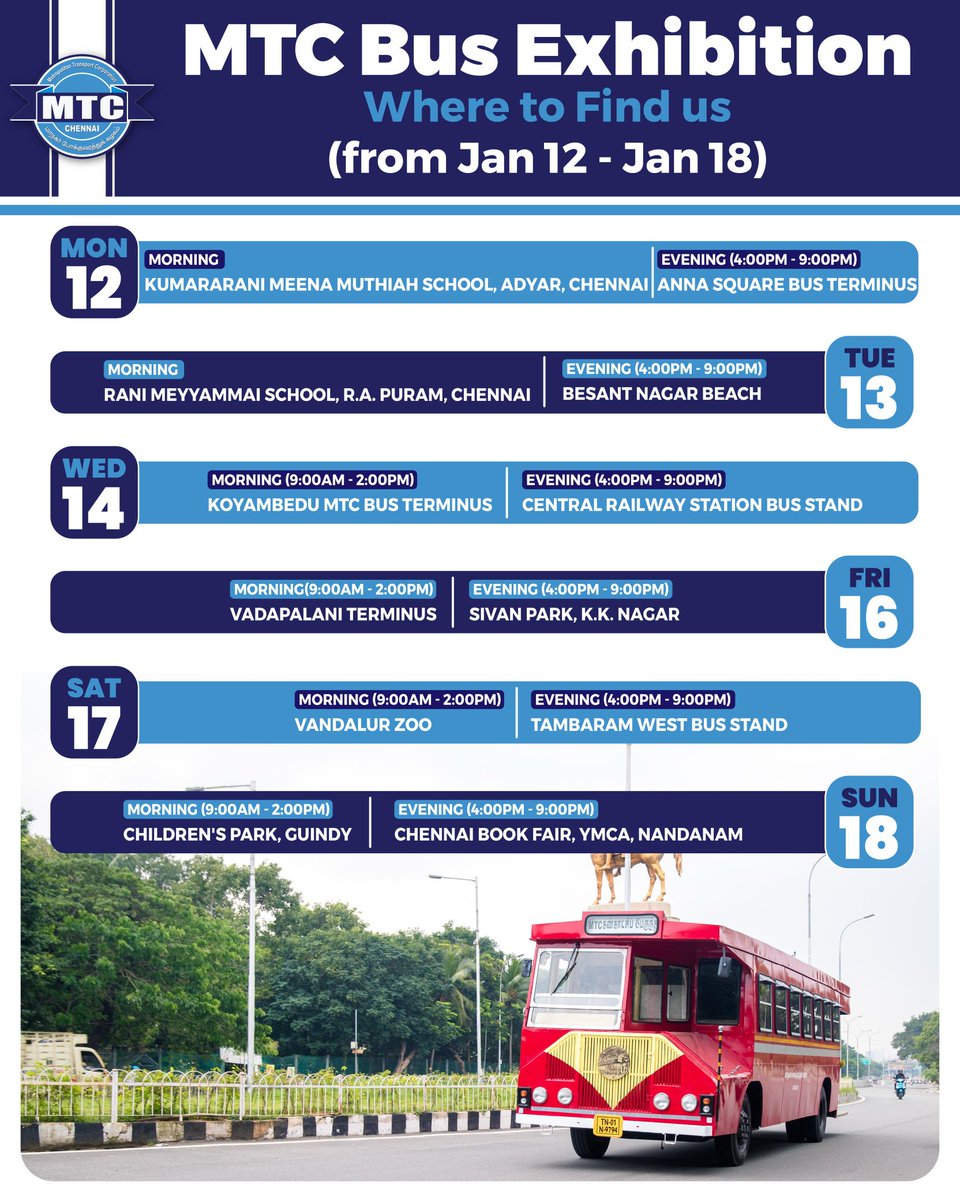
We’re in your neighbourhood this week!
The MTC Bus Exhibition is happening across #Chennai from Jan 12 – Jan 18.
Drop by your nearest venue and experience the story of Chennai’s buses up close!
#MTCChennai | #ChennaiBus | #MTCBus | #BusFirst | #NammaBus | #VintageBus | #Exhibition
4
3
28
2,485
Jan 10
சென்னை மாநகரின் பொதுப் போக்குவரத்தில் முக்கிய பங்காற்றும் மாநகரப் பேருந்தின் அவசியத்தை,
மழலையர்களுக்கு உணர்த்தும் காணொளி!
#MTCChennai | #MTC4Chennai | #ChennaiBus | #MTCBus | #Chennai | #NammaChennai | #NammaBus | #BusFirst | #VazhiVidu
@CMOTamilnadu | @sivasankar1ss @sjchiru | @prabhusean7 | @MDThirushkamini | @arasubus | @TNDIPRNEWS
3
7
53
2,130
Jan 4
சென்னை மாநகரின் பொதுப் போக்குவரத்தில் முக்கிய பங்காற்றும் மாநகரப் பேருந்தின் அவசியத்தை,
மழலையர்களுக்கும் புரியும் வகையில் விளக்கும் காணொளி!
#MTCChennai | #MTC4Chennai | #ChennaiBus | #MTCBus | #Chennai | #NammaChennai | #NammaBus | #BusFirst | #VazhiVidu
@CMOTamilnadu | @sivasankar1ss | @sjchiru | @prabhusean7 | @MDThirush_16 | @arasubus | @TNDIPRNEWS
5
6
25
1,587
Jan 4
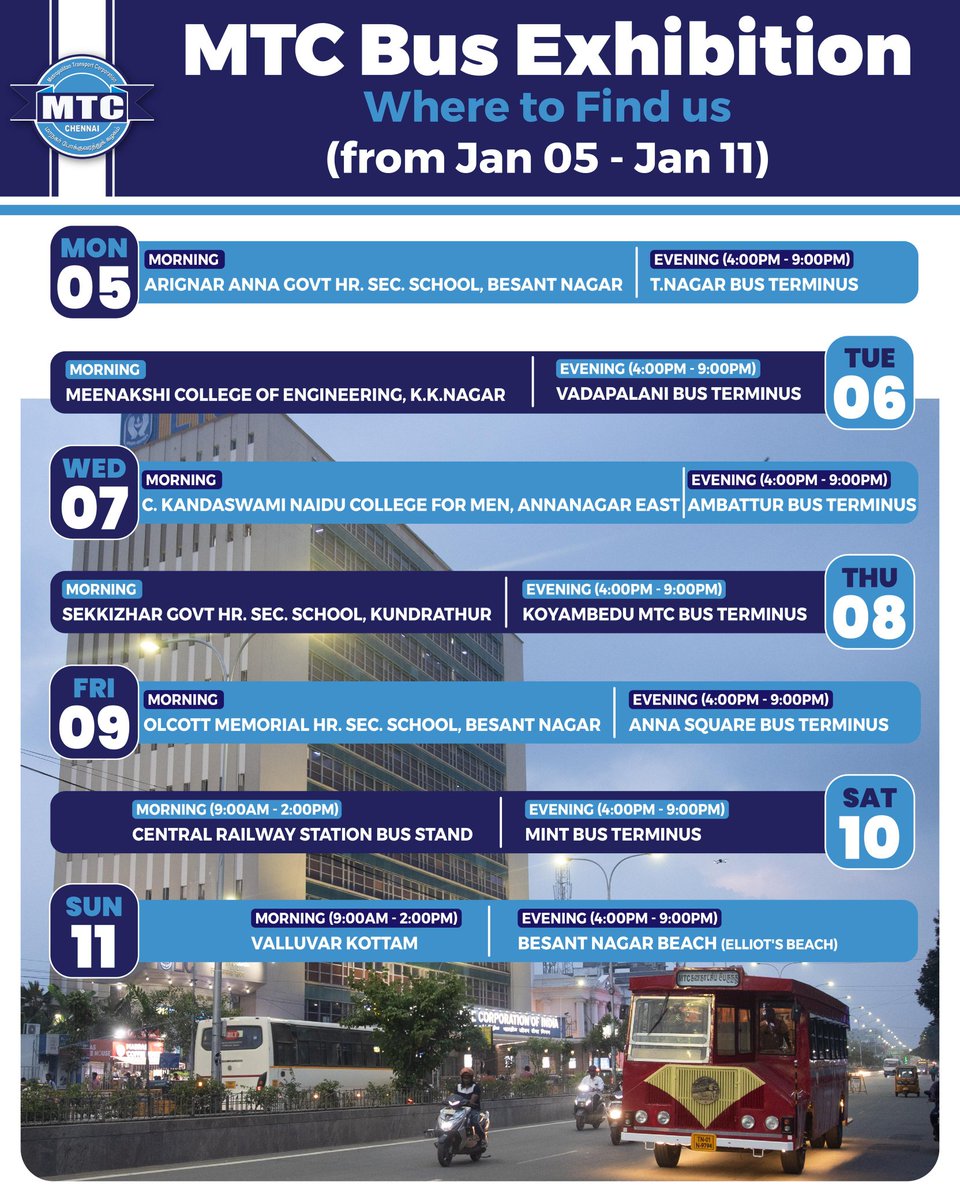
We’re in your neighbourhood this week!
The MTC Bus Exhibition is happening across #Chennai from Jan 05 – Jan 11.
Drop by your nearest venue and experience the story of Chennai’s buses up close!
#MTCChennai | #ChennaiBus | #MTCBus | #BusFirst | #NammaBus | #VintageBus | #Exhibition
1
1
19
1,499
31 Dec 2025
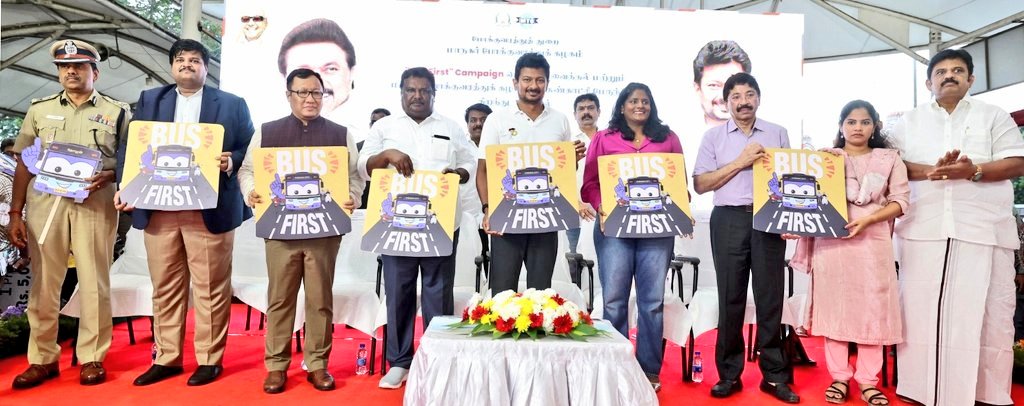
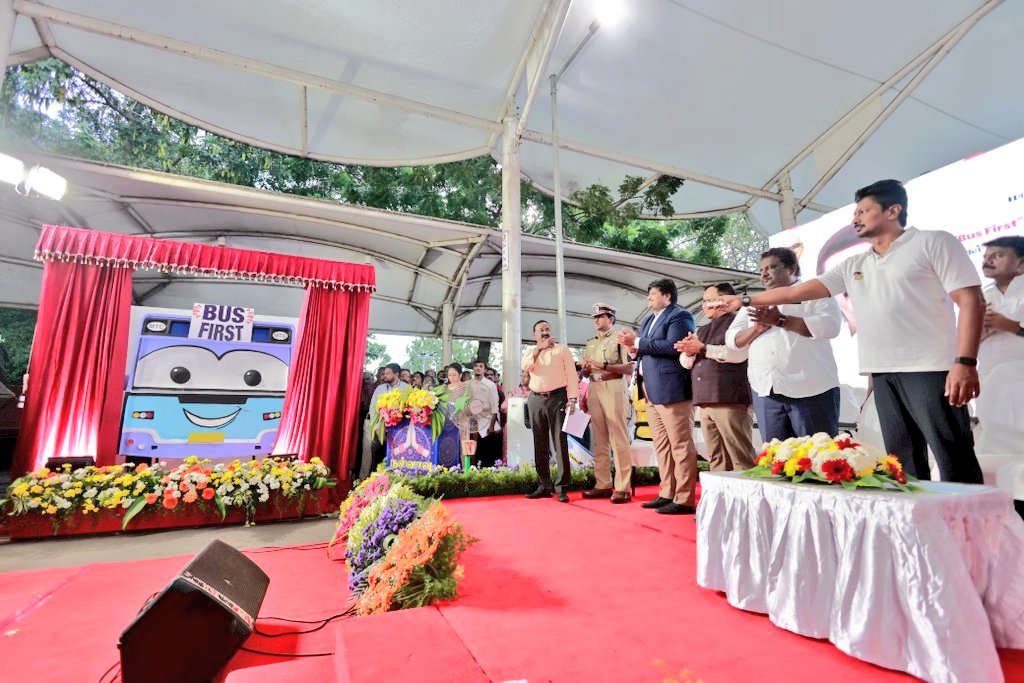
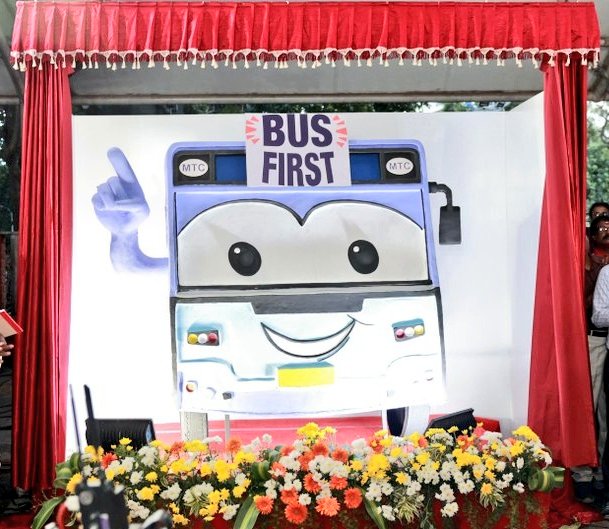
🔟 Bus First Campaign:
Launched on 21 November 2025, the #BusFirst campaign promotes giving priority to buses on city roads—recognising their social and environmental value.
Indian cricketer and sports broadcaster @MDThirush_16 was welcomed as the Brand Ambassador of #MTC Chennai, amplifying the campaign’s message citywide. (11/n)
#MTCChennai | #MTC4Chennai | #ChennaiBus | #MTCBus | #Chennai | #NammaChennai | #NammaBus | #VazhiVidu
2
1
7
385
28 Dec 2025
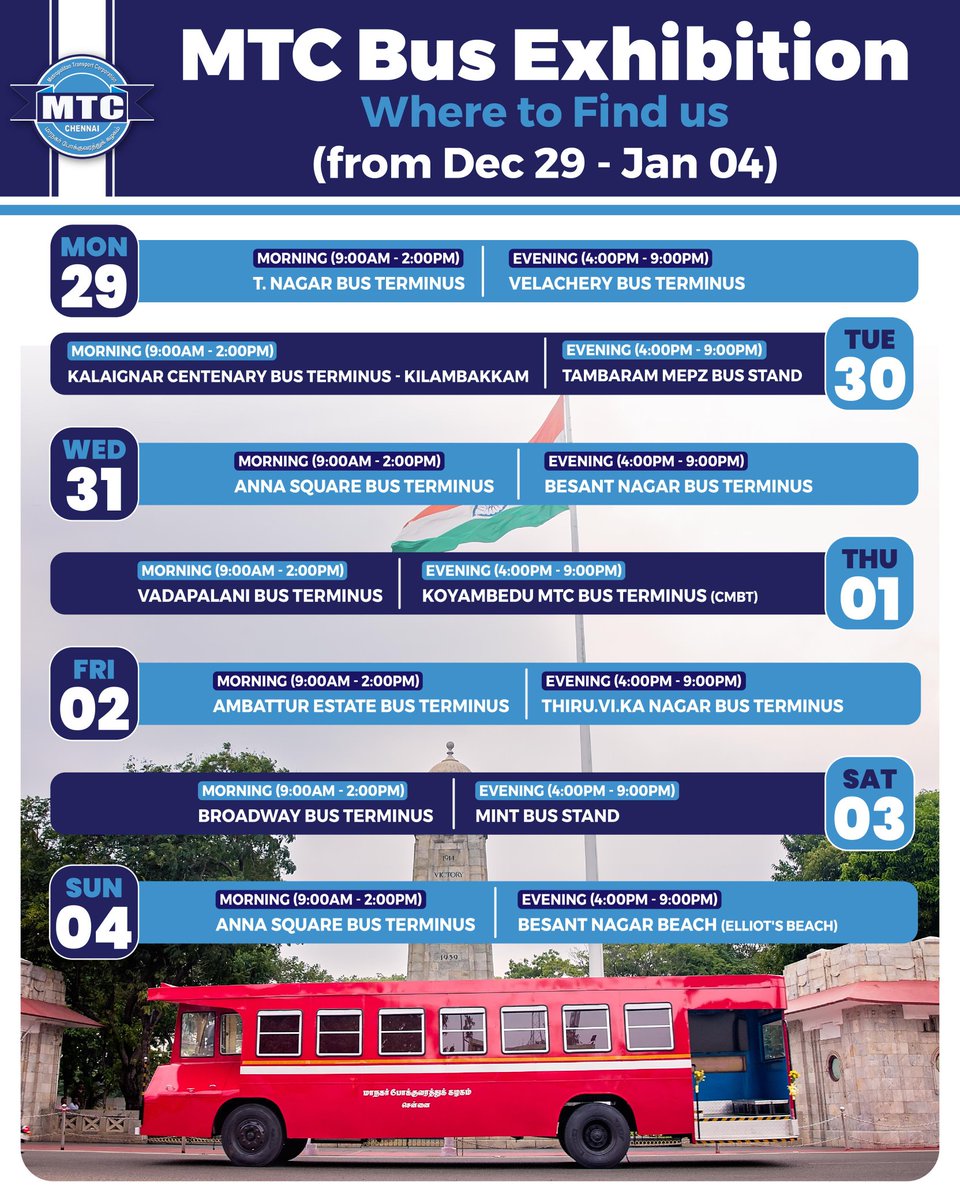
Chennai, we’re coming to your neighbourhood!
Here’s the schedule for the MTC Bus Exhibition from Dec 29 – Jan 04.
Visit us at your nearest bus terminus and experience how MTC connects the city every day.
#MTCChennai | #MTC4Chennai | #ChennaiBus | #MTCBus | #Chennai | #NammaChennai | #NammaBus | #BusFirst | #VintageBus | #VazhiVidu | #Exhibition | #Bus
4
11
97
6,519
27 Dec 2025
சாலையில் MTC பேருந்துக்கு வழி விடுவோம்!
"BUS FIRST"
#MTCChennai | #MTC4Chennai | #ChennaiBus | #MTCBus | #Chennai | #NammaChennai | #NammaBus | #BusFirst | #VazhiVidu
2
5
35
1,270

24 Dec 2025
✅ - Reinstatement of deleted annual reports
⏳- Publication of #PTSC - Public Transport Service Comtract
⏳- Commitment to ongoing transparency.
1 done, 2 to go. #BusFirst starts with building trust in transparent way, can yield much more than synthetic marketing. @MtcChennai
24 Dec 2025

mtcbus.tn.gov.in/Home/Annual…
Annual reports now have a dedicated page after out letter and are back online. Let's keep the bus clean and transparent, not just literally the bus, but bus operations and management too.
2
122
21 Dec 2025
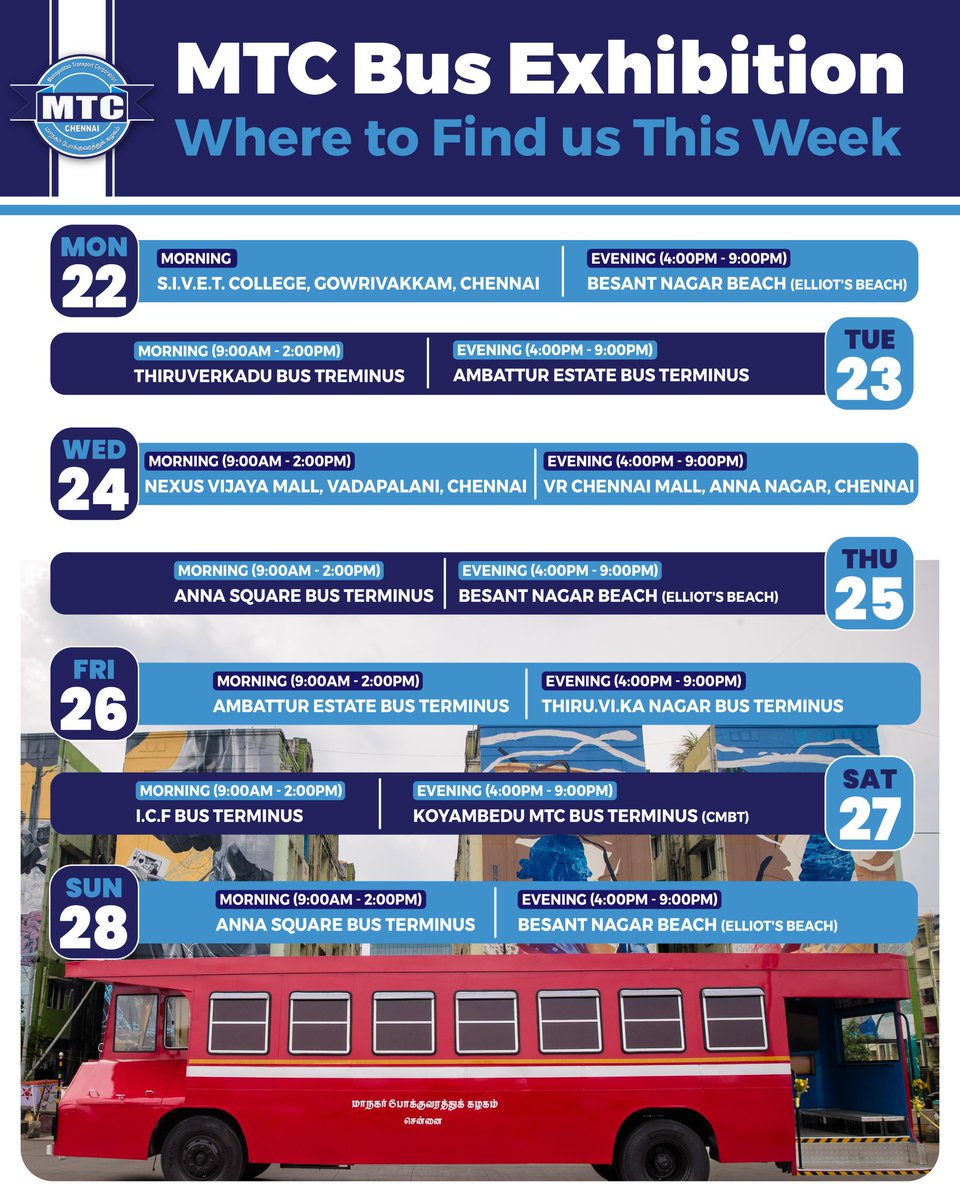
MTC Bus Exhibition – Where to Find Us?
The MTC Bus Exhibition will be displayed at multiple bus termini and public locations across Chennai from 22.12.2025 to 28.12.2025 (morning & evening sessions).👇
The public is requested to visit and learn about MTC’s services and future initiatives.
#MTCChennai | #MTC4Chennai | #ChennaiBus | #MTCBus | #Chennai | #NammaChennai | #NammaBus | #BusFirst | #VintageBus | #VazhiVidu | #Exhibition | #Bus
3
8
27
2,378