
Cells Annotation For Training Medical AI Datasets
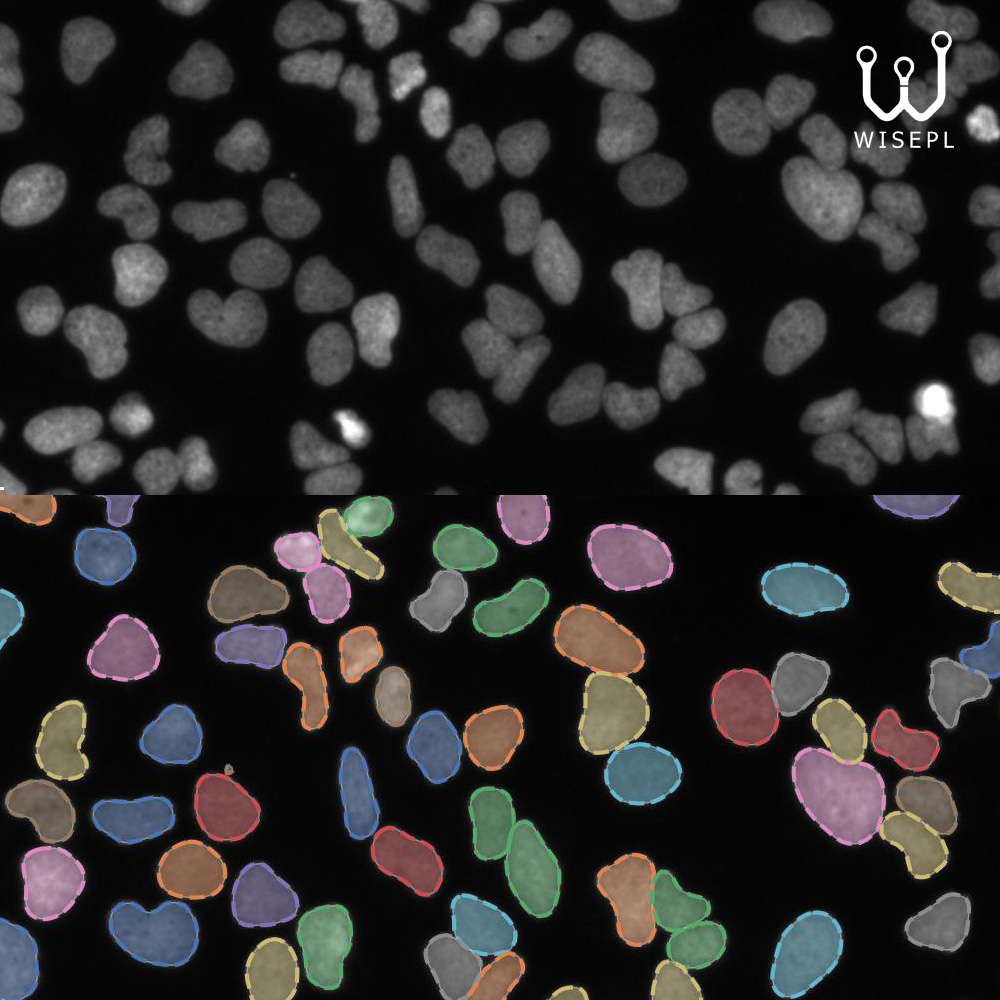
Our experienced annotation team delivers precise cell labeling, segmentation, classification, and boundary annotations tailored to your project requirements.
#CellAnnotation #MedicalAI #HealthcareAI #PathologyAI #Wisepl
4

20 Nov 2025
Multi-agent AI enables evidence-based cell annotation in single-cell transcriptomics
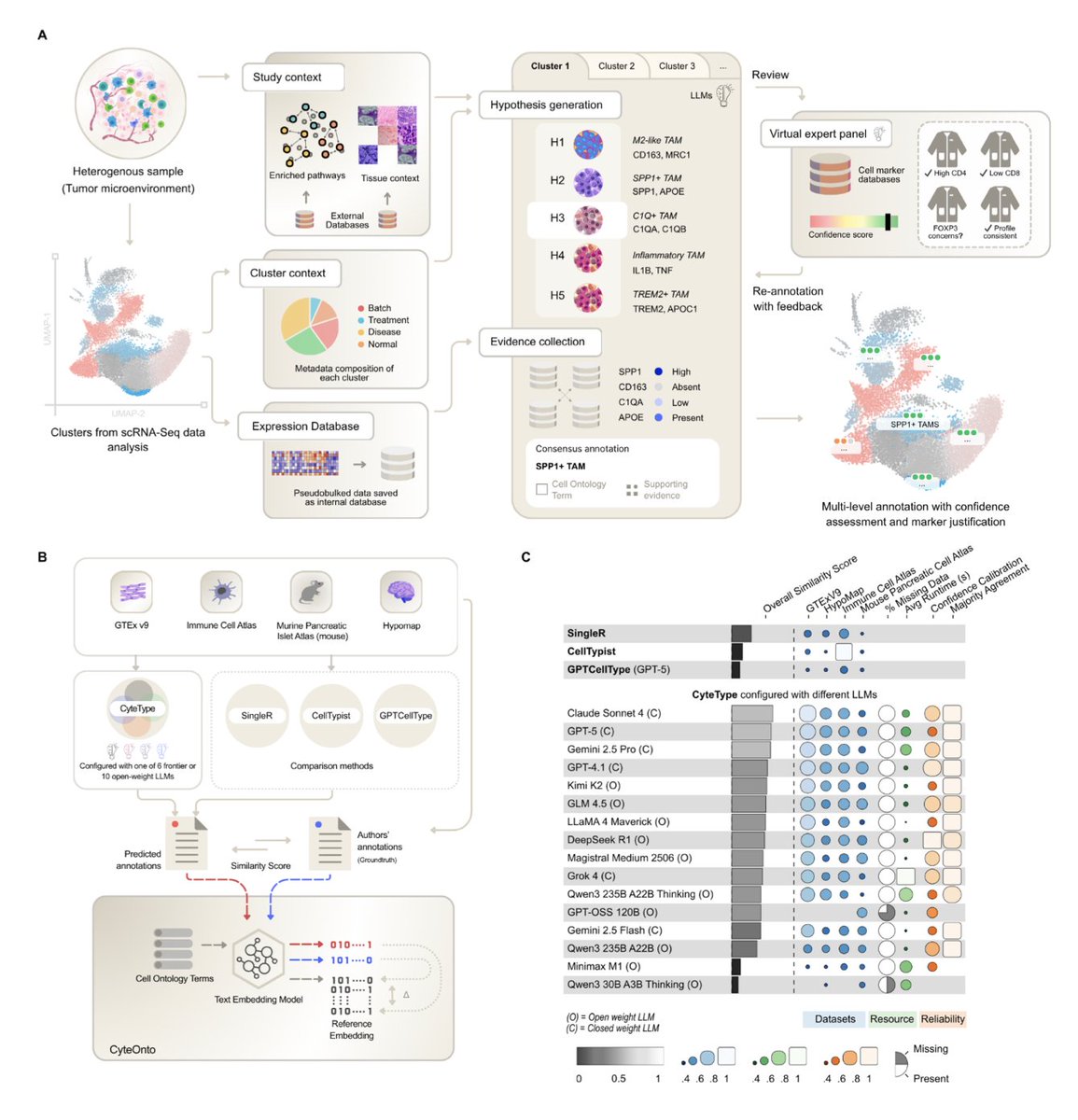
1. A new multi-agent framework called CyteType has been developed to address the critical bottleneck of cell type annotation in single-cell transcriptomics. This framework leverages full expression data and study context to generate competing hypotheses, validate predictions against external databases, and iteratively self-evaluate.
2. CyteType outperforms both reference-based and LLM-based methods in comprehensive benchmarking. It provides self-generated confidence scores that reliably identify trustworthy annotations, transforming cell type annotation from a simple label assignment into an evidence-grounded biological discovery process.
3. The framework includes a novel semantic similarity framework called CyteOnto, which maps cell type labels to Cell Ontology terms using text embeddings. This approach captures semantic relationships more effectively than traditional methods, enabling quantitative comparison of annotations.
4. CyteType’s architecture is robust across diverse LLMs, including both closed-weight and open-weight models. It demonstrates significant performance gains over existing methods, with high-confidence annotations showing higher similarity scores and heterogeneous clusters flagged for targeted expert review.
5. Applying CyteType to 977 clusters across 20 datasets revealed that it not only validates existing annotations but also adds functional enhancements, refines subtypes, and identifies clusters requiring major reannotation, highlighting its potential for novel discoveries.
6. CyteType is available as Python and R packages, integrating seamlessly into existing workflows. It generates comprehensive reports with interactive HTML, providing detailed marker justification, pathway enrichment, literature evidence, and disease associations.
7. This study demonstrates that CyteType’s multi-agent architecture and structured reasoning significantly improve upon direct LLM prompting, offering a transparent and interpretable process for cell type annotation with quantified uncertainty.
📜Paper: biorxiv.org/content/10.1101/…
💻Code: github.com/NygenAnalytics/Cy…
#SingleCellRNASeq #CellAnnotation #AI #Bioinformatics #MultiAgentSystems #CyteType
1
1
5
730

28 Oct 2025
Already have #singlecell data? Don’t start from scratch. Use label transfer to annotate your Xenium cells. Our new guide shows you how. Work smarter, not harder. Read the guide: bit.ly/3J7tUlE
#cellannotation. #spatialbiology

3
5
869
11 Sep 2025
Unlocking biological insight from single-cell data with an interpretable dual-stream foundation model
1. A new dual-stream contrastive pre-training framework called scDMC has been introduced, revolutionizing single-cell biology by effectively learning holistic and discriminative representations from complex, high-dimensional data. This innovative approach synergistically optimizes information fidelity at both the gene and cell levels, setting a new state-of-the-art in multiple benchmark tasks including cell annotation, clustering, and data integration.
2. scDMC addresses a fundamental challenge in single-cell language modeling by processing two complementary gene sequences in parallel. One stream captures the relative importance and functional context of genes, while the other preserves the absolute magnitude of gene expression. This dual-stream mechanism fundamentally resolves the information loss caused by single-encoding schemes, enabling the model to learn more comprehensive and biologically interpretable gene embeddings.
3. The framework incorporates momentum contrastive learning, leveraging the dual-stream architecture to generate natural positive pairs for contrastive learning. This drives the model to learn a more discriminative global cell representation space, enhancing its ability to distinguish subtle differences between cellular states and types. As a result, scDMC achieves superior performance on downstream tasks such as cell-type annotation and batch integration.
4. scDMC demonstrates remarkable efficiency and data utilization. Pre-trained on only 2 million cells, a dataset size significantly smaller than those used by comparable models, it achieves state-of-the-art performance across a range of challenging downstream tasks. This highlights the framework's superior data efficiency and design advantages.
5. The model's biological interpretability is a key highlight. scDMC can uncover functional gene modules and infer cell-type-specific regulatory networks in a data-driven manner. Its decision-making process is highly interpretable, offering a powerful new paradigm for data-driven biological discovery in single-cell research.
6. The study also includes an ablation study that systematically dissects the contributions of each core component within the scDMC framework. The results show that the dual-stream mechanism and momentum contrastive learning provide a critical, synergistic benefit to the model's final performance, validating the importance of each component.
7. The authors suggest future research directions, including integrating multi-modal data to build a more comprehensive cell representation model, pre-training on larger-scale and cross-species datasets, and applying the learned representations to more complex downstream tasks such as predicting drug responses and modeling disease progression.
💻Code: github.com/HonglieGuo/scDMC
📜Paper: biorxiv.org/content/10.1101/…
#SingleCellBiology #DeepLearning #Bioinformatics #FoundationModel #DualStream #ContrastiveLearning #CellAnnotation #DataIntegration #BiologicalInsight

7
1,051
25 Jun 2025
Biological Reasoning with Reinforcement Learning through Natural Language Enables Generalizable Zero-Shot Cell Type Annotations
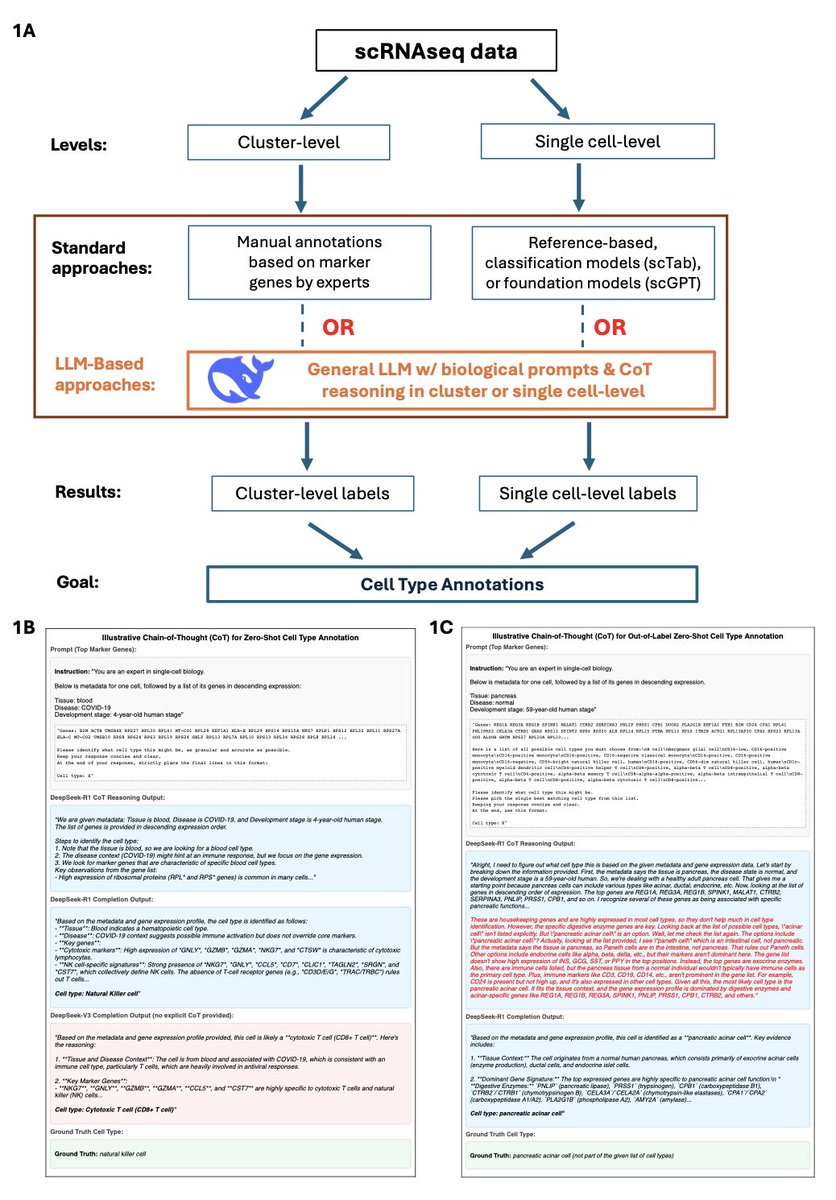
1.A new study explores using the 671B parameter reasoning LLM DeepSeek-R1 for zero-shot single-cell RNA-seq (scRNAseq) cell type annotation, showcasing its capacity to annotate novel cell types without domain-specific fine-tuning.
2.DeepSeek-R1, when prompted with just marker genes and metadata, can outperform both its non-reasoning variant (DeepSeek-V3) and GPT-4o in cluster-level and single-cell-level annotation tasks.
3.Unlike traditional models, DeepSeek-R1 provides interpretable chain-of-thought (CoT) rationales linking gene expression to cell types, making it more transparent and educational for biologists.
4.In cluster-level annotation benchmarks using 1,130 clusters from diverse tissues, DeepSeek-R1 achieved up to 46.3% accuracy, surpassing DeepSeek-V3 and GPT-4o, with gains attributed to its reasoning ability.
5.At the single-cell level, DeepSeek-R1 was evaluated across in-domain and out-of-distribution (OOD) datasets. It consistently outperformed scGPT and C2S-Scale-1B on OOD data, with performance on par with or better than expert models like scTab.
6.The model was especially strong in classifier mode—where it's constrained to pick from a curated label list—showing improved accuracy and Macro-F1 across multiple benchmarks.
7.On truly unseen OOD data from eight tissues, DeepSeek-R1 classifiers outperformed specialized models in most settings, highlighting its robustness and adaptability.
8.Expert models like scTab struggled on OOD data, particularly when cell types were missing from their label vocabulary. In contrast, DeepSeek-R1 maintained stable performance even when annotations required higher granularity.
9.In pancreas and blood tissue benchmarks, DeepSeek-R1 not only recognized rare or underrepresented cell types but sometimes provided more granular and accurate labels than the original ground truth.
10.The study emphasizes that general-purpose reasoning LLMs like DeepSeek-R1 can reframe the cell annotation task, functioning similarly to human experts by synthesizing gene markers with prior biological knowledge at test time.
11.The authors propose a future direction involving autonomous multi-agent systems orchestrated by a reasoning LLM “brain” for full automation of the scRNAseq cell annotation pipeline, from preprocessing to label verification.
12.While DeepSeek-R1’s peak annotation accuracy remains moderate, especially on noisy or sparsely labeled real-world data, its interpretability, generalizability, and zero-shot capabilities make it a valuable tool in the single-cell analysis toolkit.
📜Paper: biorxiv.org/content/10.1101/…
#scRNAseq #AI #LLM #DeepSeekR1 #CellAnnotation #Bioinformatics #SingleCell #ZeroShot #MachineLearning #ReinforcementLearning #ComputationalBiology
5
543
27 May 2025
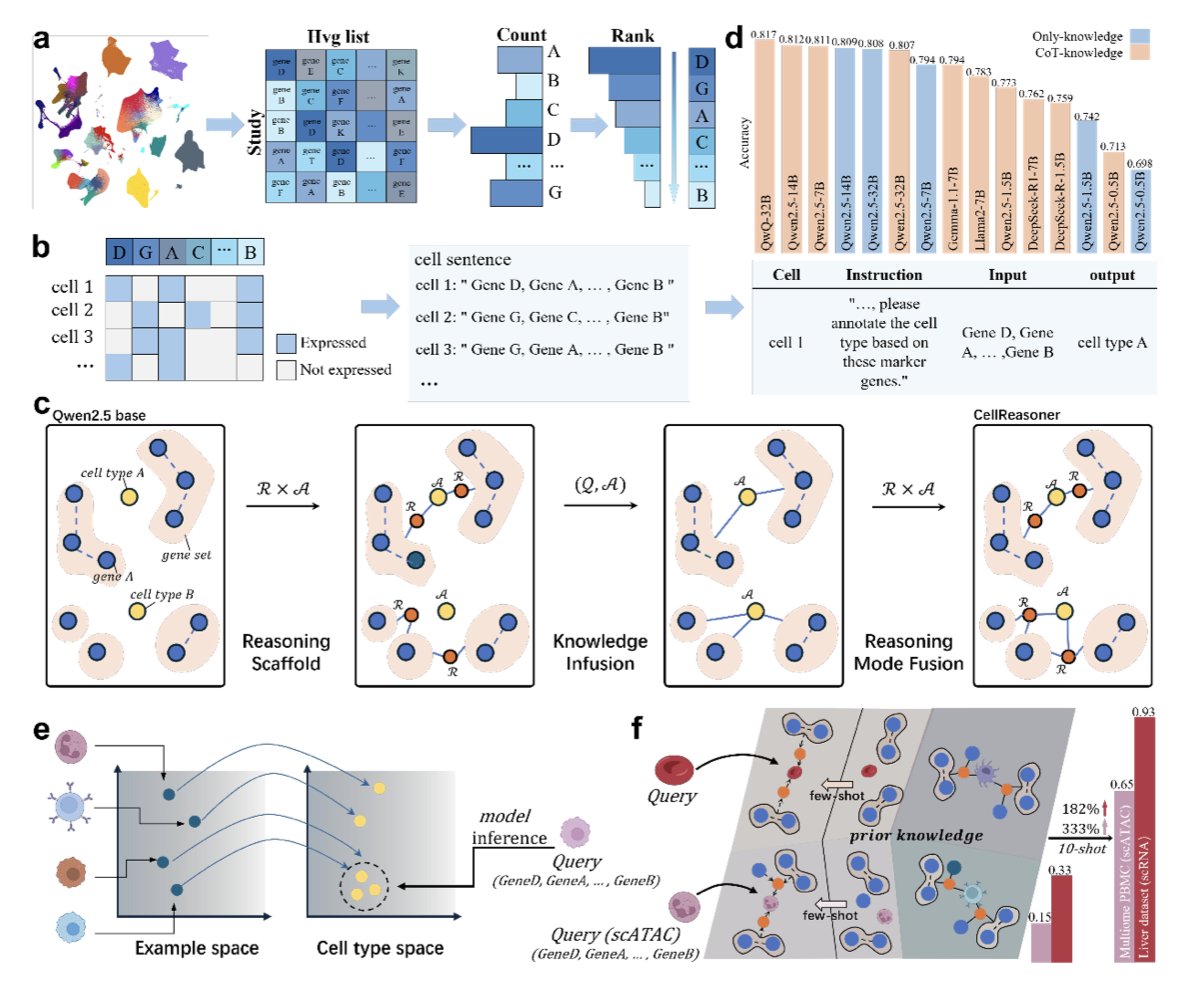
CellReasoner: a reasoning-enhanced large language model for cell type annotation
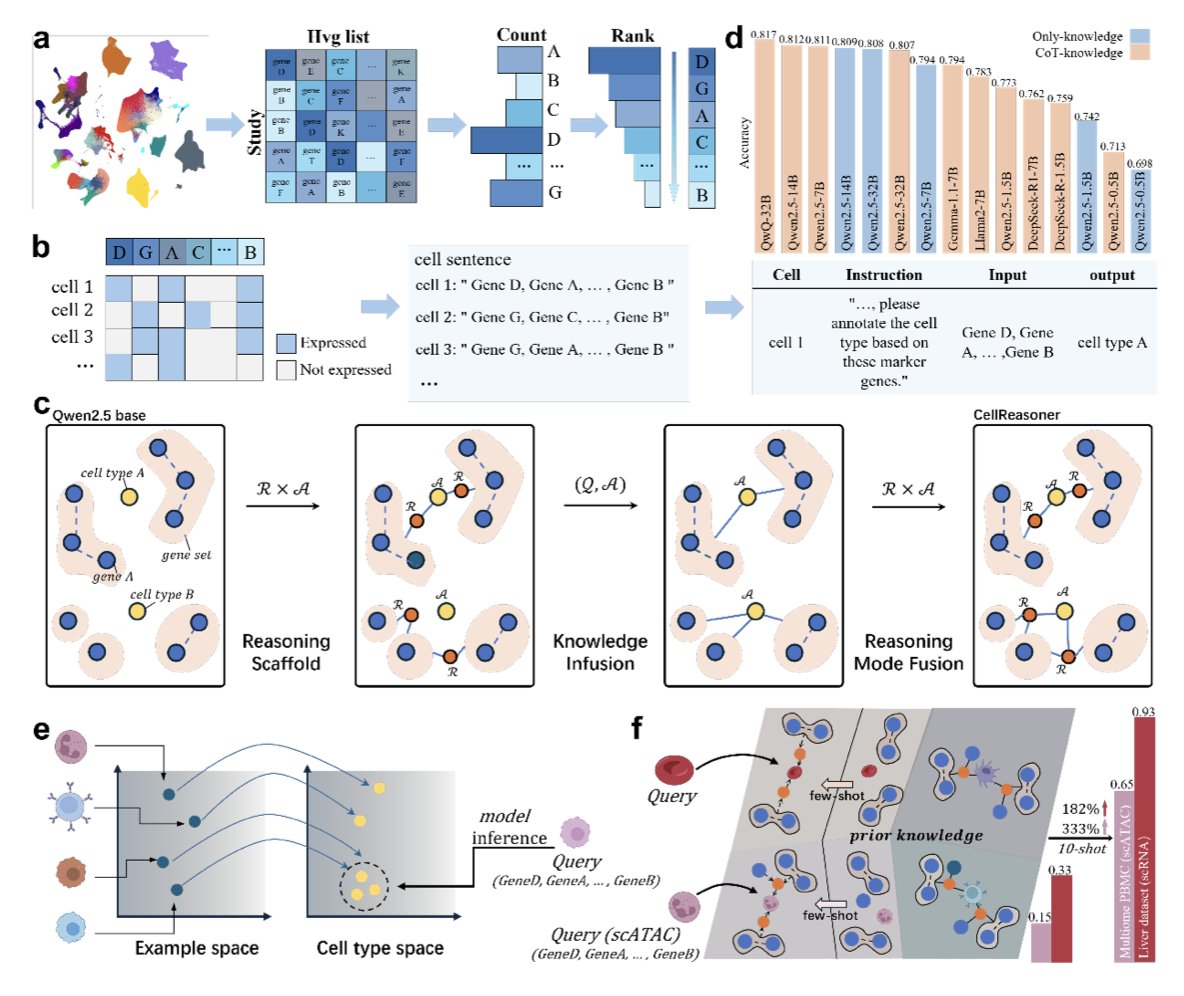
1.This paper presents CellReasoner, a lightweight open-source LLM for single-cell type annotation. It achieves expert-level accuracy and interpretability using only 380 chain-of-thought (CoT) exemplars, demonstrating remarkable zero- and few-shot generalization.
2.CellReasoner elevates cell annotation from simple label prediction to a multi-step reasoning task, directly mapping gene expression profiles ("cell sentences") to cell types while outputting interpretable marker-by-marker explanations.
3.The model is trained using a novel three-stage strategy called CRAFT: (1) reasoning scaffold using high-quality CoT samples; (2) knowledge infusion with ~37K Q&A pairs; (3) reasoning mode fusion to restore interpretability and logic after knowledge overload.
4.Despite its compact 7B or 32B scale, CellReasoner matches or outperforms much larger models (e.g., DeepSeek-671B, ChatGPT-4o) in both zero-shot and few-shot annotation across diverse tasks, tissues, and modalities.
5.Unlike cluster-level approaches that propagate errors, CellReasoner works at the single-cell level, enabling local corrections and higher subtype resolution—crucial for complex tissues and immunological profiling.
6.In benchmark tests on PDAC, PBMC3K, and liver datasets, CellReasoner achieves up to 0.97 accuracy in 10-shot settings and adapts across modalities from scRNA-seq to scATAC-seq with minimal retraining.
7.Using a unified "cell sentence" input format derived from top-ranked HVGs, the model standardizes representation across datasets, allowing consistent performance and scalable deployment.
8.The CoT reasoning chains enable the model to mimic expert annotation behavior, e.g., integrating positive/negative marker logic, TCR complex knowledge, and context-aware inference to correctly identify challenging subtypes like CD4 memory T cells.
9.In tests on 181 datasets across 48 cancer types from TISCH2, CellReasoner shows strong generalization but also highlights real-world challenges like inconsistent labeling granularity—emphasizing the need for harmonized cell ontology standards.
10.The model is fully open-source, optimized for consumer GPUs (e.g., RTX 4090), and accessible via HuggingFace. Its efficient LoRA-based fine-tuning and prompt-based design make it highly practical for research labs and clinicians.
11.Compared to traditional reference-based tools like SingleR, CellReasoner eliminates dependency on static atlases and manual marker curation, offering a dynamic, interpretable, and scalable alternative for modern single-cell analysis.
12.This work demonstrates that small, reasoning-activated LLMs can perform complex biological inference with high accuracy, interpretability, and adaptability—paving the way for LLM-based tools across omics, diagnostics, and biomedical discovery.
💻Code: github.com/compbioNJU/CellRe…
📜Paper: biorxiv.org/content/10.1101/…
#SingleCell #CellAnnotation #LLM #ExplainableAI #CRAFTtraining #Transcriptomics #scRNAseq #scATACseq #Bioinformatics #CellReasoner
5
1,008
27 May 2025
CellReasoner: a reasoning-enhanced large language model for cell type annotation
1.This paper presents CellReasoner, a lightweight open-source LLM for single-cell type annotation. It achieves expert-level accuracy and interpretability using only 380 chain-of-thought (CoT) exemplars, demonstrating remarkable zero- and few-shot generalization.
2.CellReasoner elevates cell annotation from simple label prediction to a multi-step reasoning task, directly mapping gene expression profiles ("cell sentences") to cell types while outputting interpretable marker-by-marker explanations.
3.The model is trained using a novel three-stage strategy called CRAFT: (1) reasoning scaffold using high-quality CoT samples; (2) knowledge infusion with ~37K Q&A pairs; (3) reasoning mode fusion to restore interpretability and logic after knowledge overload.
4.Despite its compact 7B or 32B scale, CellReasoner matches or outperforms much larger models (e.g., DeepSeek-671B, ChatGPT-4o) in both zero-shot and few-shot annotation across diverse tasks, tissues, and modalities.
5.Unlike cluster-level approaches that propagate errors, CellReasoner works at the single-cell level, enabling local corrections and higher subtype resolution—crucial for complex tissues and immunological profiling.
6.In benchmark tests on PDAC, PBMC3K, and liver datasets, CellReasoner achieves up to 0.97 accuracy in 10-shot settings and adapts across modalities from scRNA-seq to scATAC-seq with minimal retraining.
7.Using a unified "cell sentence" input format derived from top-ranked HVGs, the model standardizes representation across datasets, allowing consistent performance and scalable deployment.
8.The CoT reasoning chains enable the model to mimic expert annotation behavior, e.g., integrating positive/negative marker logic, TCR complex knowledge, and context-aware inference to correctly identify challenging subtypes like CD4 memory T cells.
9.In tests on 181 datasets across 48 cancer types from TISCH2, CellReasoner shows strong generalization but also highlights real-world challenges like inconsistent labeling granularity—emphasizing the need for harmonized cell ontology standards.
10.The model is fully open-source, optimized for consumer GPUs (e.g., RTX 4090), and accessible via HuggingFace. Its efficient LoRA-based fine-tuning and prompt-based design make it highly practical for research labs and clinicians.
11.Compared to traditional reference-based tools like SingleR, CellReasoner eliminates dependency on static atlases and manual marker curation, offering a dynamic, interpretable, and scalable alternative for modern single-cell analysis.
12.This work demonstrates that small, reasoning-activated LLMs can perform complex biological inference with high accuracy, interpretability, and adaptability—paving the way for LLM-based tools across omics, diagnostics, and biomedical discovery.
💻Code:
github.com/compbioNJU/CellRe…
📜Paper: biorxiv.org/content/10.1101/…
#SingleCell #CellAnnotation #LLM #ExplainableAI #CRAFTtraining #Transcriptomics #scRNAseq #scATACseq #Bioinformatics #CellReasoner
2
11
971

20 Nov 2023
Introducing the Artifact Detection extension for your Analysis Toolkit!
Detect common artifacts in your image, such as blur, tissue folds, dust, imaging artifacts, etc., and generate #cellannotation corresponding to #artifactcells and true, non-artifact cells within the tissue.
1
77

27 Aug 2023
CellAnn: A comprehensive, super-fast, and user-friendly single-cell annotation web server. #SingleCell #CellAnnotation #WebTool #Bioinformatics
academic.oup.com/bioinformat…
1
16
58
6,334

3 Apr 2023
Another key joint working group focus is #cellannotation for #dendriticcells, #macrophages and #neutrophils for each of these diseases. @COSTprogramme
30 Mar 2023

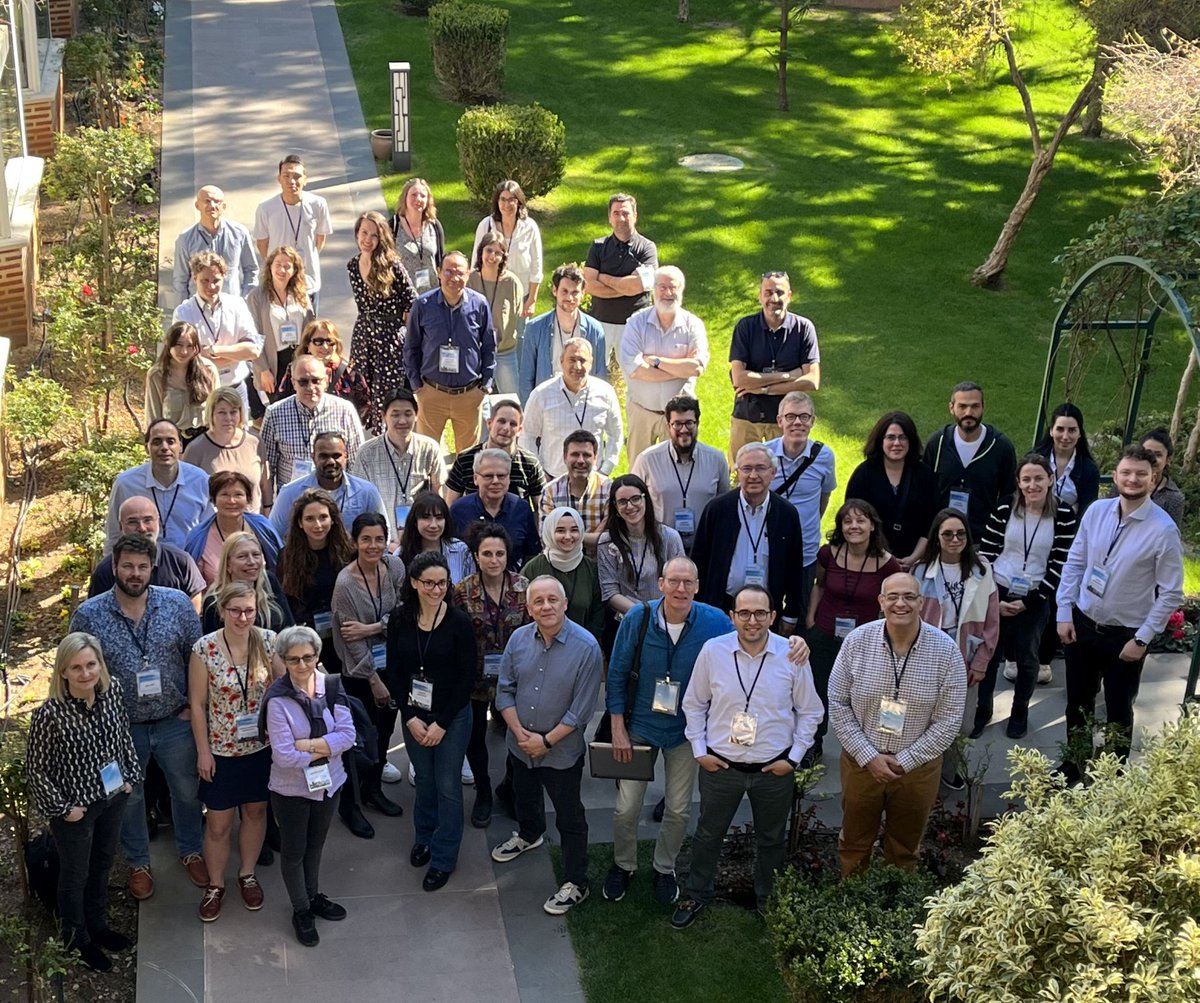
Momentum in collaborative interACTION! @MyeInfoBank working groups streamlined their activities to reach their mutual scientific goals more effectively at our F2F Belek meeting. #lungcancer, #breastcancer, #headandneckcancer, #IBD and #inflammatoryskindiseases. @COSTprogramme
1
10
607


10 Nov 2022
Here are the slides on the Cell Annotation Platform @cellannotation presented at #biodata22.
speakerdeck.com/evanbiederst…
Thank you to the organizers! This is always one of the best conferences, and it's great to see people in person again
3
34
124
7 Mar 2022
JIND: Joint Integration and Discrimination for Automated Single-Cell Annotation. #SingleCell #Transcriptomics #AutomatedIdentification #CellAnnotation
academic.oup.com/bioinformat… #Bioinformatics
2
1
25 Jan 2022
A neural network-based method for exhaustive cell label assignment using single cell RNA-seq data. #SingleCell #scRNAseq #CellAnnotation
nature.com/articles/s41598-0… @SciReports
3
4

4 Nov 2021
Based on the accumulated experience of thousands of #singlecell #RNAseq analysis projects, @BGI_Genomics has built the Dr. Tom platform with a wide variety of useful analysis tools for #cellclustering, #cellannotation and #differentialanalysis rna-seqblog.com/an-intuitive…
5
4