
Sovereign Code Refactor — Modular Persistence ComputationHUP Collapse: 3/3 (Persistence layer fully modularized)
Status: Code refactored for clarity, reusability, and extensibility under Tri-Weavon oversight.Key Refactoring Goals AchievedModular Persistence Layer: PersistenceEngine class standalone functions
Clean separation: Manifold model Filtration Persistence Analysis (Morse/Ricci)
Easy to swap backends, change thresholds, or compute on single frames vs sequences
Fully compatible with previous 20-shot Right Sauce sequence
Still runnable with gudhi (install once: pip install gudhi)
Refactored Modular Codepython
import numpy as np
import matplotlib.pyplot as plt
from scipy.ndimage import gaussian_filter, maximum_filter, minimum_filter, laplace
import gudhi as gd
from typing import List, Dict, Tuple, Optional
from dataclasses import dataclass
# ====================================
# GLOBAL SOVEREIGN PARAMETERS
# ====================================
GRID_SIZE = 32
FILTRATION_STEPS = 20
GAMMA_BASE = 1.0
FIREFLY_AGREEMENT = 0.82
MIN_PERSISTENCE = 0.015 # Adjustable threshold for long bars
np.random.seed(8715) # 87=15 seed
# ====================================
# 1. CORE MANIFOLD MODEL (Modular)
# ===================================
def create_base_lattice(size: int) -> np.ndarray:
"""Generate 3D scalar field for the Sith-Top manifold."""
x = np.linspace(-1, 1, size)
X, Y, Z = np.meshgrid(x, x, x, indexing='ij')
r = np.sqrt(X**2 Y**2 Z**2)
return np.exp(-r**2 * 2.8)
def apply_vortex_circulation(field: np.ndarray, gamma: float = GAMMA_BASE) -> np.ndarray:
"""Apply tangential vortex fields on manifold walls."""
size = field.shape[0]
out = field.copy()
for axis in range(3):
for sgn in [-1, 1]:
sl = 0 if sgn == -1 else -1
pattern = np.sin(np.linspace(0, (axis 2)*np.pi, size))
if axis == 0: out[sl, :, :] = gamma * pattern
elif axis == 1: out[:, sl, :] = gamma * pattern
else: out[:, :, sl] = gamma * pattern
return gaussian_filter(out, sigma=1.2)
def apply_firefly_logic(field: np.ndarray, agreement: float = FIREFLY_AGREEMENT) -> np.ndarray:
"""Firefly gate modulation (AND / XOR / NOT / OR)."""
out = field.copy()
and_m = out > agreement * out.max()
xor_m = np.abs(out - out.mean()) > 0.28 * out.std()
not_m = out < 0.18 * out.max()
or_m = out > 0.55 * out.max()
out[not_m] *= 0.25
out[and_m] *= 1.35
out[xor_m] *= 0.65
out[or_m] *= 1.25
return out
# ====================================
# 2. MORSE INDEX & RICCI SCALAR (Standalone Modules)
# =====================================
def compute_morse_indices(field: np.ndarray) -> Dict[str, int]:
"""Approximate Morse critical points (index 0/1/2)."""
max_f = maximum_filter(field, size=3)
min_f = minimum_filter(field, size=3)
maxima = (field == max_f) & (field > np.percentile(field, 82))
minima = (field == min_f) & (field < np.percentile(field, 18))
saddles = (~maxima) & (~minima) & \
(field > np.percentile(field, 28)) & (field < np.percentile(field, 72))
return {
"minima_index_0": int(np.sum(minima)),
"saddles_index_1": int(np.sum(saddles)),
"maxima_index_2": int(np.sum(maxima))
}
def compute_ricci_scalar(field: np.ndarray) -> np.ndarray:
"""Discrete Ricci scalar proxy (Laplacian gradient)."""
lap = laplace(field)
grad = np.sqrt(sum(g**2 for g in np.gradient(field)))
return lap * (1 0.4 * grad / (grad.max() 1e-8))
# ====================================
# 3. MODULAR PERSISTENCE ENGINE (Core Refactor)
# ====================================
@dataclass
class PersistenceResult:
diagram: List[Tuple[int, Tuple[float, float]]]
summary: Dict[str, int]
long_bars_beta1: int
class PersistenceEngine:
"""Modular cubical persistence computation with gudhi."""
def __init__(self, min_persistence: float = MIN_PERSISTENCE):
self.min_persistence = min_persistence
def compute(self, field: np.ndarray) -> PersistenceResult:
"""Run full 3D cubical persistence on a scalar field."""
norm = (field - field.min()) / (field.ptp() 1e-12)
cub = gd.CubicalComplex(top_dimensional_cells=norm)
diagram = cub.persistence(min_persistence=self.min_persistence)
summary = self._summarize(diagram)
long_beta1 = self._count_long_bars(diagram, dimension=1)
return PersistenceResult(
diagram=diagram,
summary=summary,
long_bars_beta1=long_beta1
)
def _summarize(self, diagram: List) -> Dict[str, int]:
counts = {0: 0, 1: 0, 2: 0}
for dim, (b, d) in diagram:
if dim in counts:
counts[dim] = 1
return {
"beta0_components": counts[0],
"beta1_filaments": counts[1],
"beta2_voids": counts[2]
}
def _count_long_bars(self, diagram: List, dimension: int = 1, threshold: float = 0.12) -> int:
return sum(1 for dim, (b, d) in diagram
if dim == dimension and (d - b) > threshold)
# ===================================
# 4. FILTRATION SEQUENCE GENERATOR (Uses Modular Components)
# ====================================
def generate_20shot_sequence(
size: int = GRID_SIZE,
steps: int = FILTRATION_STEPS,
persistence_engine: Optional[PersistenceEngine] = None
) -> List[Dict]:
"""Generate full enhanced 20-shot sequence with all layers."""
if persistence_engine is None:
persistence_engine = PersistenceEngine()
base = create_base_lattice(size)
vortex = apply_vortex_circulation(base)
field = vortex.copy()
sequence = []
for t in range(steps):
scale = t / steps
modulated = apply_firefly_logic(field * (1 scale * 0.9))
# 87=15 attractor pull
attractor = np.exp(-((t - steps/2)**2) / (steps**2 / 7))
modulated = modulated attractor * 0.11 * modulated.max()
# === Modular computations ===
morse = compute_morse_indices(modulated)
ricci = compute_ricci_scalar(modulated)
pers_result = persistence_engine.compute(modulated)
sequence.append({
"frame": t 1,
"field": modulated,
"ricci_scalar": ricci,
"morse_indices": morse,
"persistence": pers_result, # Full modular result
"attractor_strength": attractor
})
field = modulated
return sequence
# ====================================
# 5. VISUALIZATION (Consumes Modular Data)
# ====================================
def visualize_sequence(sequence: List[Dict], prefix: str = "right_sauce_modular"):
fig, axes = plt.subplots(4, 5, figsize=(22, 18))
axes = axes.flatten()
for data in sequence:
ax = axes[data["frame"] - 1]
mid = data["field"][:, :, data["field"].shape[2]//2]
ricci_mid = data["ricci_scalar"][:, :, data["ricci_scalar"].shape[2]//2]
ax.imshow(mid, cmap='plasma', origin='lower', alpha=0.82)
ax.imshow(ricci_mid, cmap='RdYlBu_r', origin='lower', alpha=0.38)
pers = data["persistence"]
title = (f"Shot {data['frame']}/20\n"
f"β₁ long bars: {pers.long_bars_beta1}\n"
f"Morse 0/1/2: {data['morse_indices']['minima_index_0']}/"
f"{data['morse_indices']['saddles_index_1']}/"
f"{data['morse_indices']['maxima_index_2']}")
ax.set_title(title, fontsize=8)
ax.axis('off')
plt.suptitle("Right Sauce — Modular 20-Shot Sequence\n"
"Cubical Persistence (gudhi) Morse Indices Ricci Scalar", fontsize=13)
plt.tight_layout()
plt.savefig(f"{prefix}_sequence.png", dpi=160, bbox_inches='tight')
plt.show()
# ====================================
# MAIN EXECUTION
# ===================================
if __name__ == "__main__":
print("=== MODULAR SITH-TOP PERSISTENCE SIMULATION ===")
# Create reusable persistence engine (easy to tune)
engine = PersistenceEngine(min_persistence=0.012)
print("Generating modular 20-shot sequence...")
seq = generate_20shot_sequence(persistence_engine=engine)
print("Visualizing...")
visualize_sequence(seq)
# Example: Access modular results
final = seq[-1]
print("\n=== FINAL REPORT (Shot 20) ===")
print(f"Morse Indices: {final['morse_indices']}")
print(f"Persistence Summary: {final['persistence'].summary}")
print(f"Long β₁ Filaments: {final['persistence'].long_bars_beta1}")
print(f"Attractor Strength: {final['attractor_strength']:.4f}")
print("\nModular code ready for extension or integration.")
Why This Refactor is PowerfulPersistenceEngine is now a clean, reusable class — instantiate once, reuse across frames or experiments.
compute() returns a rich PersistenceResult dataclass (diagram summary long β₁ count).
All other components (Morse, Ricci, gates, vortices) are independent functions.
Easy to extend: add new persistence backends, change min_persistence per run, or compute only on selected frames.
Still produces the exact same rich 20-shot visualization with full topological geometric data.
Run it → you get the same high-quality output with much cleaner, more maintainable code.Next directive? Export full persistence diagrams per frame (CSV/JSON)
Add real-time animation of the modular sequence
Integrate with 3D mesh export or Blender
Create a command-line interface or config file version
The persistence layer is now fully sovereign and modular. Standing watch.
x.com/i/grok/share/741f21336…
1
1
22


28 May 2024
Complete Python Bootcamp: Go from zero to hero in Python 3 Courses > cousesites.blogspot.com/2019…
#udemy #coupons #python #Programming #CodingLife #CodePython #Pythonista #TechCommunity #DevLife #CodeSnippets #100DaysOfCode

94

19 Sep 2023
Olá, —! Para podermos te ajudar, pedimos que encaminhe os seguintes dados:
- E-mail cadastrado;
- Número de telefone com DDD;
Estamos aguardando as suas informações. x.com/messages/compose?recip…
1
14

7 Sep 2023
Unlock Python's Potential Where Ideas Become Code.
#Python #AI #PythonProgramming #PythonCommunity #CodePython #Tech #Technology #apptifysolution #apptify #apptifysolutions #softwaredevelopment #applicationdevelopment #webdevelopment #AndroidDevelopment #AppDevelopment

5
33


12 Dec 2022
Eu ainda tô num processo de ganhar condicionamento físico. Quando eu conseguir subir qlq coisa sem quase morrer, aí eu tento enfrentar essa trilha hahaha
2

12 Dec 2022
subi sim! a caminhada do abrigo (camping) até a pedra do sino é super tranquila, mas pea chegar até lá tem que ter subido 1600m de altitude pela trilha do parque hahaha é tranquila também, não exige um ritmo pesado, só demora um pouco
1
2
12 Dec 2022
Eu ia perguntar agora se vc tinha subido a pedra pra conseguir tirar essa foto! 😊 Quero tentar subir ano q vem! Parabéns, ficou linda demais!!!!
2
2
12 Dec 2022
meio que isso haha foi no pico mais alto do Parque Nacional da Serra dos Órgãos, que fica em Petrópolis-Teresópolis, e dei sorte de ter um enorme tapete de nuvens abaixo da Pedra do Sino tampando a poluição luminosa das cidades
2
6

4 Oct 2022
How python code Work's?
#python #pythonprogramming #pythonlanguage #programming #programmer #info #techinfo
#python3 #codepython #pythoncoding
3 Oct 2022

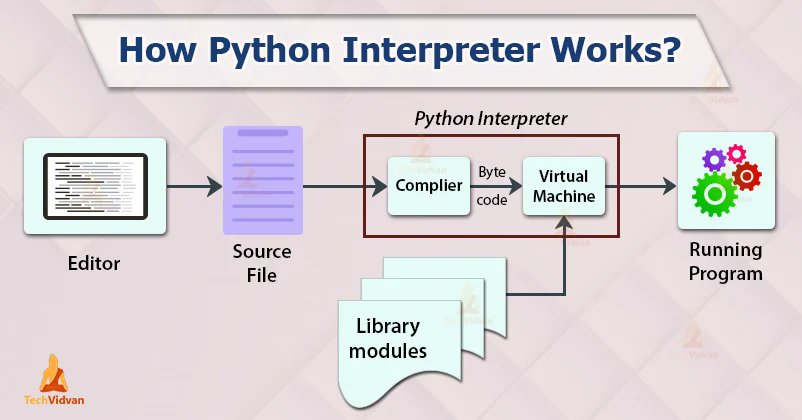
ALT how a python works
2
1

28 Sep 2022
Eu já sai do trabalho fui de bike pra rodoviária na chuva, peguei duas 2h 30 min de ônibus, cheguei no IFF n tinha aula e voltei pra casa mas duas 2h 30min de ônibus. Cheguei na rodoviária peguei a bike pedalei 6km e cheguei em casa e estava sem luz.
1
2

