Filter
Exclude
Time range
-
Near
EPA Shutters CompTox Research Center Amidst Growing TSCA Needs ow.ly/OkqG106u5QU

15
EPA Shutters CompTox Research Center Amidst Growing TSCA Needs ow.ly/8YV5106u5Pz

74
Replying to @factpostnews
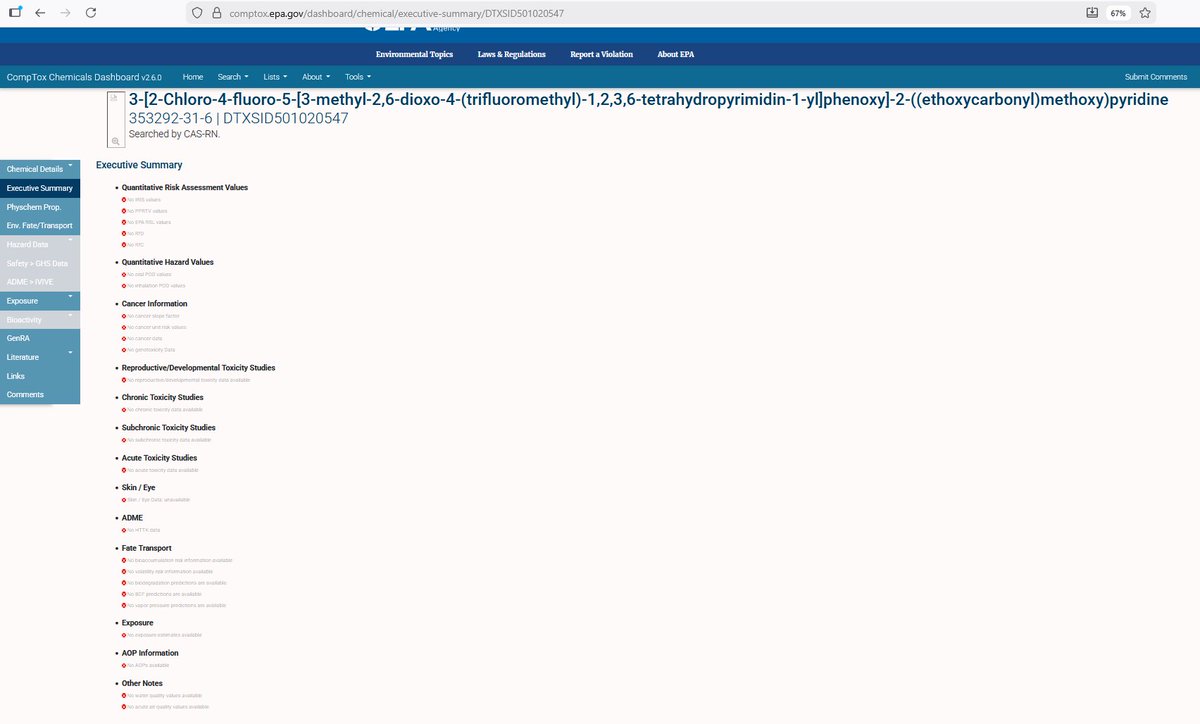
And here is the EPA Comptox Executive Summary for this one (epyrifenacil CAS#353292-31-6). NO DATA. NO TESTING. Way to go Trump!
8
391
I’ll be attending the #2025SOT and look forward to connecting with #comptox community! If you’re in my network and attending, let’s catch up. Also, if you're working in #ML, #transporters, or #predictivetoxicology, I’d love to connect as well. Feel free to reach out!
38
It’s in some meds for arthritis we called it capsaicin! Capsaicin   Names Pronunciation /kæpˈseɪsɪn/ or /kæpˈseɪəsɪn/ Preferred IUPAC name (6E)-N-[(4-Hydroxy-3-methoxyphenyl)methyl]-8-methylnon-6-enamide Other names (E)-N-(4-Hydroxy-3-methoxybenzyl)-8-methylnon-6-enamide 8-Methyl-N-vanillyl-trans-6-nonenamide trans-8-Methyl-N-vanillylnon-6-enamide (E)-Capsaicin Capsicine Capsicin CPS Drug Identifiers CAS Number 404-86-4  3D model (JSmol) Interactive image Beilstein Reference 2816484 ChEBI CHEBI:3374  ChEMBL ChEMBL294199  ChemSpider 1265957  DrugBank DB06774 ECHA InfoCard 100.006.337  EC Number 206-969-8 IUPHAR/BPS 2486 KEGG C06866  PubChem CID 1548943 UNII S07O44R1ZM  CompTox Dashboard (EPA) DTXSID9020241  InChI SMILES Properties Chemical formula C18H27NO3 Molar mass 305.418 g·mol−1 Appearance Crystalline white powder[1] Odor Highly pungent Melting point 62 to 65 °C (144 to 149 °F; 335 to 338 K) Boiling point 210 to 220 °C (410 to 428 °F; 483 to 493 K) 0.01 Torr Solubility in water 0.0013 g/100 mL Solubility Soluble in alcohol, ether, benzene Slightly soluble in CS2, HCl, petroleum Vapor pressure 1.32×10⁻⁸ mm Hg at 25 °C[2] UV-vis (λmax) 280 nm Structure Crystal structure Monoclinic Pharmacology ATC code M02AB01 (WHO) N01BX04 (WHO) License data EU EMA: by INN Legal status US: ℞-only[3][4] Hazards GHS labelling: Pictograms  Signal word Danger Hazard statements H301, H302, H315, H318 Precautionary statements P264, P270, P280, P301 P310, P301 P312, P302 P352, P305 P351 P338, P310, P321, P330, P332 P313, P362, P405, P501 NFPA 704(fire diamond)  2 1 0 Safety data sheet(SDS) [2] Except where otherwise noted, data are given for materials in their standard state (at 25 °C [77 °F], 100 kPa).  verify (what is  ?) Infobox references Capsaicin Heat Above peak (pure capsaicin is toxic)[2] Scoville scale 16,000,000[5] SHU Capsaicin (8-methyl-N-vanillyl-6-nonenamide) (/kæpˈseɪsɪn/ or /kæpˈseɪəsɪn/) is an active component of chili peppers, which are plants belonging to the genus Capsicum. It is a potent irritant for mammals, including humans, and produces a sensation of burning in any tissue with which it comes into contact. Capsaicin and several related amides (capsaicinoids) are produced as secondary metabolitesby chili peppers, likely as deterrents against certain mammals and fungi.[6]Pure capsaicin is a hydrophobic, colorless, highly pungent (i.e., spicy) crystalline solid.[2]
227
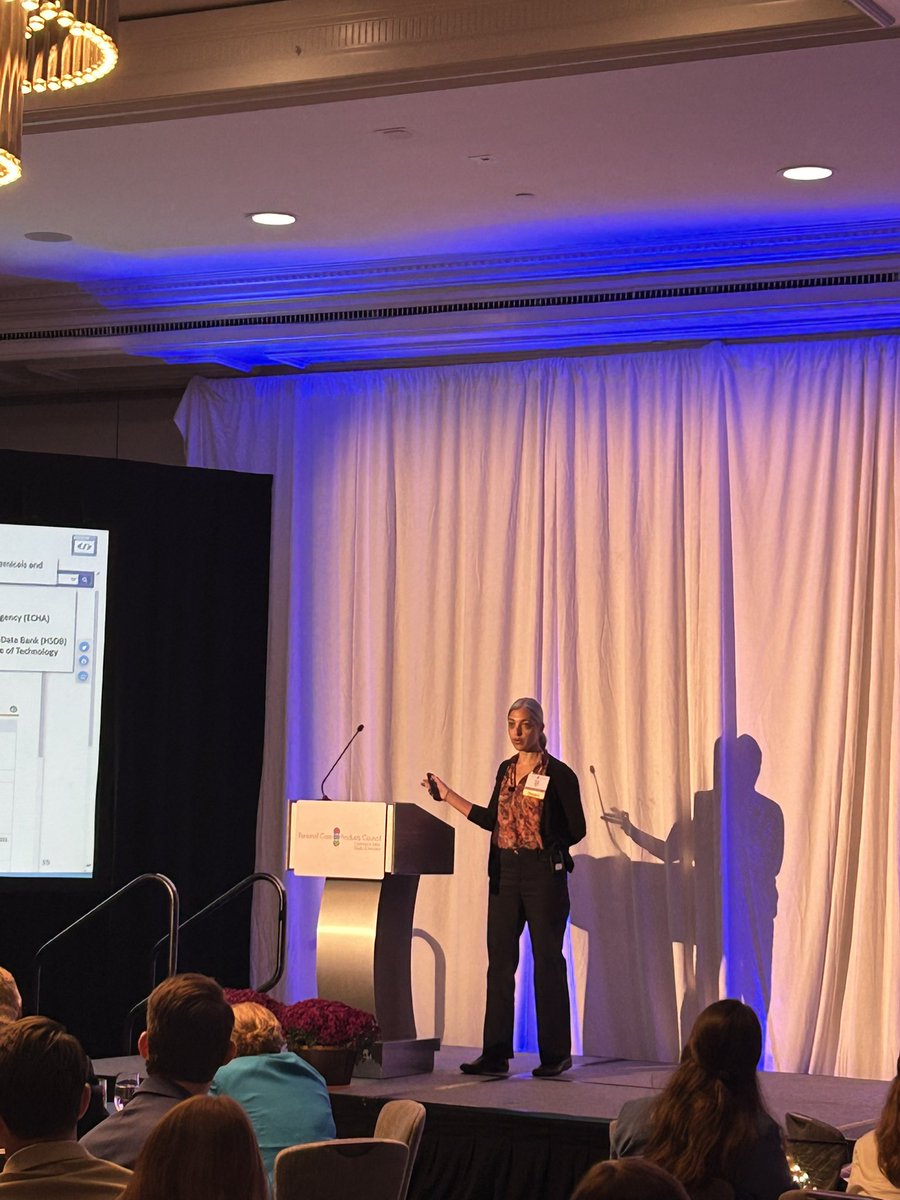
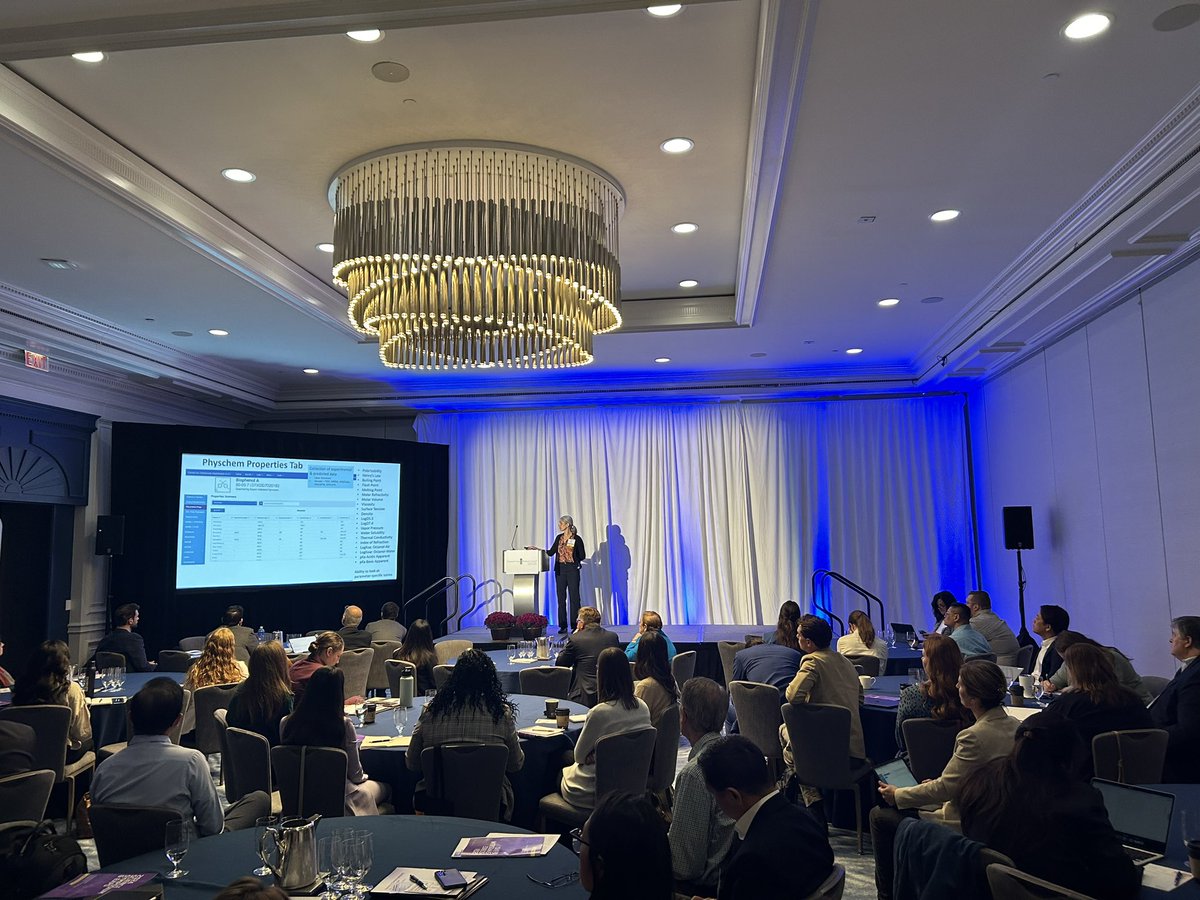
Nisha Sipes, Ph.D., provides an in-depth overview of the @EPA’s #CompTox Dashboard. This suite of tools includes #chemistry, #toxicity and exposure data for more than one million chemicals to help scientists and decision-makers evaluate chemicals efficiently. #PCPCScience24 #PCPCEvents #EnvironmentalScience
117
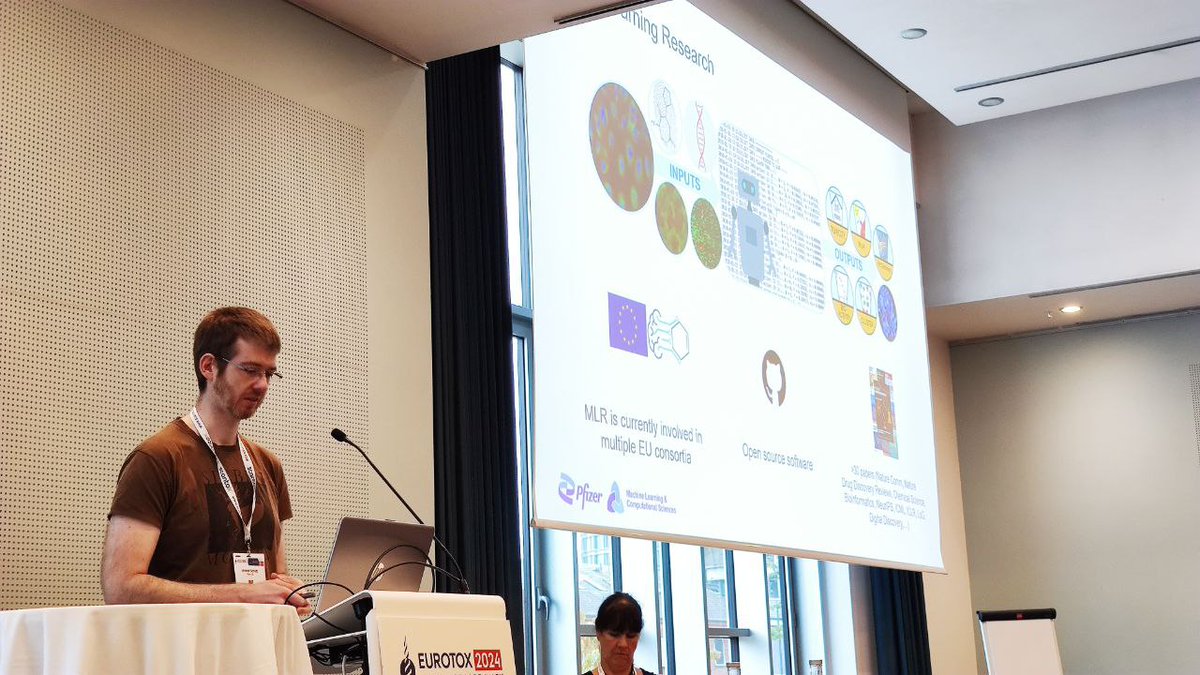
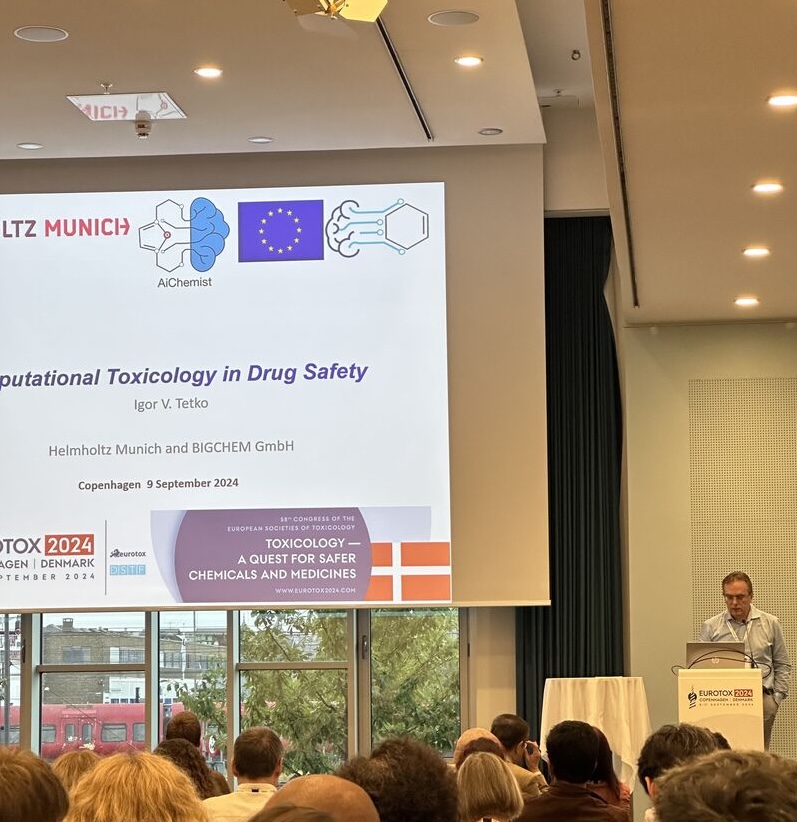
AIDD is at @EUROTOX2024! @ktschuett gave a lecture on molecular representation learning for drug discovery at the Data Science in Drug Discovery and Development Symposium, followed by a talk by Igor Tetko on CompTox in drug safety.
1
2
206
16 Aug 2024
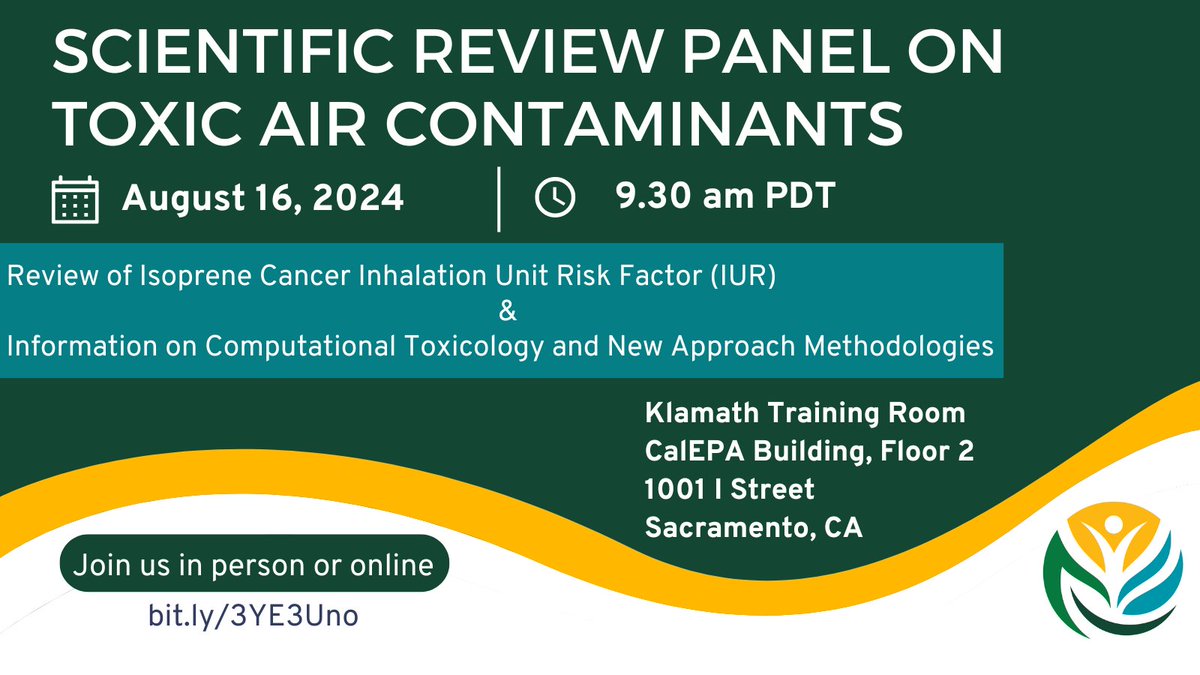
📣Mtg TODAY-9:30 AM PDT Scientific Review Panel on Toxic Air Contaminants meets on new #CompTox program draft isoprene assessment. Join @AirResources @CA_PesticideReg & us: ✅In-person at CalEPA HQ ✅Zoom: bit.ly/3YDNknj Agenda & public comment: bit.ly/3YE3Uno
1
1
199
15 Aug 2024
Comptox soon SURELY
15 Aug 2024
Getting a 120 means very little to me nowadays. I honestly feel more proud of myself for finally pushing through some quests. I now have the ability to start Sliske's endgame, a quest I should have probably completed years ago...
1
3
254
14 Aug 2024
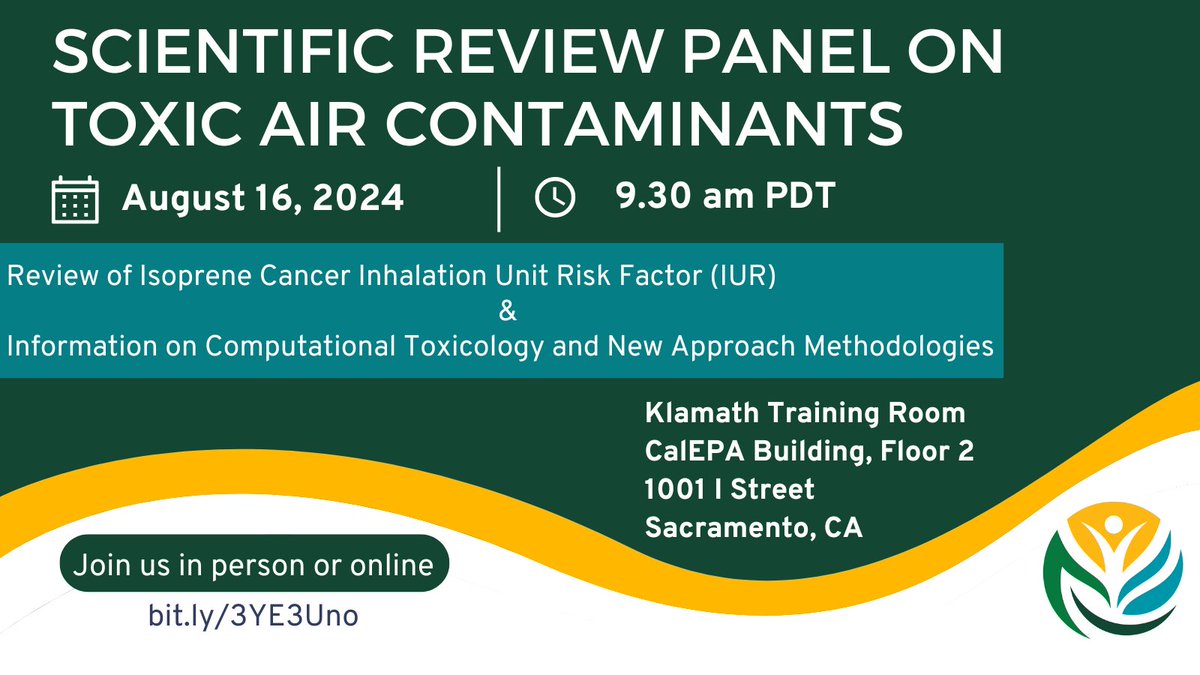
📣Friday at 9:30 AM PST Scientific Review Panel on Toxic Air Contaminants meets on new #CompTox program draft isoprene assessment. Join @AirResources @CA_PesticideReg & us: ✅In-person at CalEPA HQ ✅Zoom: bit.ly/3YDNknj Agenda & public comment: bit.ly/3YE3Uno
1
2
3
463
That sounds good for some broad and easy toxicants like DDT, but once we start looking at something like PFAS where there are 14000 in CompTox this is practically impossible
1
1
114
Researchers identify potential hazards in biosolid fertilizers phys.org/news/2024-06-potent… Among them were bisphenol A (BPA), commonly found in plastics, and carbamazepine, a drug used to treat epilepsy and bipolar disorder. JUNE 25, 2024 Fertilizers manufactured from the sludgy leftovers of wastewater treatment processes can contain traces of potentially hazardous organic chemicals, according to a new study by Johns Hopkins University researchers. The research, published in Environmental Science & Technology, provides one of the most comprehensive looks at the chemical composition of so-called biosolids across the country and is the first step toward identifying common chemical contaminants that may need government regulation. The findings could help the U.S. Environmental Protection Agency prioritize which organic compounds to investigate further, the researchers said. "We've been relatively in the dark when it comes to possible organic hazards in biosolids, and we need to know if there are any smoking guns that we're unaware of," said Carsten Prasse, an assistant professor in the Department of Environmental Health and Engineering who studies environmental contaminants. "Regulators need to know what these types of fertilizers are made of to determine how they can be responsibly used." Using analytical chemistry techniques capable of identifying thousands of chemicals, Prasse and his team screened 16 samples of biosolids from wastewater treatment facilities in nine U.S. and three Canadian cities. Samples contained traces of pharmaceuticals, industrial chemicals, and a variety of fragrances. Among them were bisphenol A (BPA), commonly found in plastics, and carbamazepine, a drug used to treat epilepsy and bipolar disorder. "Because there are so many compounds in biosolids, the question we had was how do we triage? How do we find the chemicals that are widespread and could potentially be problematic, that the EPA and other scientists would need to investigate before proposing regulations," Prasse said. The researchers then created lists of the chemicals found in each sample and compared them to compounds that popped up in multiple places across the country. They identified 92 compounds that were present in 80% or more of the samples. The researchers then cross-referenced those 92 compounds against the EPA's CompTox Chemical Dashboard—a database that details the properties, hazards, and potential risks of thousands of chemicals. The dashboard helped the team identify which chemicals were most likely to pose threats to human health or the environment. "We're not saying that these compounds pose a risk right now, because we haven't done a formal risk assessment," said Matthew Newmeyer, a research associate at the Bloomberg School of Public Health and first author on the paper. "We're saying that these have a potential to be problematic and we need more information in order to make sure these biosolids are safe." Using biosolids can be beneficial, the researchers said. They are rich in nitrogen, phosphorus, and other nutrients that help plants grow. They require less energy to make than synthetic alternatives. And wastewater facilities can sell biosolids to generate revenue to offset treatment costs and reduce waste sent to landfills or incinerators. More than half of the 3.76 million tons of biosolids produced in the United States in 2022 fertilized agricultural lands, golf courses, and other landscaped areas, according to the EPA. While direct contact with biosolids is likely limited to occupational exposures, the broader population could be exposed to contaminants absorbed by crops grown in such fertilizers, the researchers said. The team plans to measure the identified compounds in the biosolids and vegetables grown in biosolid-amended soil to determine if their concentration levels warrant concern. The researchers are also investigating risks to farmers, landscapers, and composters who work with biosolids. Farmers sue EPA over ‘forever chemicals’ in fertilizer 06/07/2024 The agency is evaluating the risks of two types of PFAS in biosolid fertilizer, but the suit aims for quicker action on enforceable regulations. Five Texas farmers and ranchers are suing EPA over its failure to limit “forever chemicals” in sludge, a problem that they say has killed their animals, jeopardized their health and devalued their land. The complaint, filed Thursday in the U.S. District Court for the District of Columbia, comes while EPA assesses the risks of two types of PFAS, or per- and polyfluoroalkyl substances, in biosolids, a term for sewage sludge treated to be used as fertilizer. That process has been “unreasonably delayed,” the complaint says, which asks the court to establish enforceable deadlines by which the agency must promulgate regulations under the Clean Water Act. Texas farmers claim company sold them PFAS-contaminated sludge that killed livestock 5 Mar 2024 Two ranches also allege biosolids with ‘forever chemicals’ ruined crops, polluted drinking water and left their properties worthless A Texas county has launched a first-of-its-kind criminal investigation into the waste management giant Synagro over PFAS-contaminated sewage sludge it is selling to Texas farmers as a cheap alternative to fertilizer. Two small Texas ranches at the center of that case have also filed a federal lawsuit against Synagro, alleging the company knew its sludge was contaminated but still sold it. Sludge spread on a nearby field sickened the farmers, killed livestock, polluted drinking water, contaminated beef later sold to the public and left their properties worthless, the complaint alleges. The PFAS levels independent testing found on the farm were “shockingly high”, said Kyla Bennett, policy director for the Public Employees for Environmental Responsibility (Peer) non-profit, which is assisting in the analyses. The farms’ drinking water was found to be contaminated at levels over 13,000 times higher than the federal health advisory for PFOS, one kind of PFAS compound, a Guardian calculation indicates, and affected meat was as much as 250,000 times above safe levels, the lawsuit alleges. The complaint alleges the families will probably have to abandon their ranches from which they sell livestock.
19
【米国】 EPAはPFOAとPFOSを有害物質に指定し、関連化学物質98種をリスト化した。詳細はCompToxダッシュボードで確認可能である。 #化学物質 #DGER epa.gov/system/files/documen…

4
72
Oh! THAT'S what CompTox stands for!
4
If you’re in #2024SOT, check out our work on developing graph convolutional neural network model for Bile salt export pump. Poster P164 #comptox #toxicogenomics
158
Gençlerde akıl sağlığı krizi! "Sosyal medya platformlarının karşı konulmaz algoritmaları yüzünden, en ilgili anne babalar bile çocuklarını çevrim içi tehlikelere karşı koruyamıyor. Bu dopamin vuruşları onları bağımlı yapıyor. Bu sanki dijital bir fentanyl (morfin türevi)." Fiona McFarland, Florida Eyalet Temsilcisi Önce Fentanyl neymiş ona bir bakalım: "Fentanil, 1950'lerin sonunda Belçika'da bulunan Janssen Pharmaceutica tarafından sentez edilmiş, morfinden yaklaşık 80 kez, meperidinden ise 500 kat daha güçlü olan bir opioid analjeziktir." CompTox Bilgi Paneli (EPA): DTXSID9023049 Yani gençler üzerinde morfinin 80 katı bir uyuşturma etkisi yapıyor! ABDli Genel Cerrah Vivek H. Murthy 2023 yılında sosyal medyayı, "ulusal gençlik akıl sağlığı krizinin önemli bir etkeni" kabul eden bir uyarı yayınladı. "Platformların gençleri 'bağımlı olmaya', zararlı ve aldatıcı içerikler üreten bir hesap sahibinin sosyal medyasını takip etmek veya onunla etkileşimde bulunmak için aşırı veya zorlayıcı bir ihtiyaç duymasına neden olacak şekilde tasarlandığı bir gerçektir!" Bu alıntılar ABD'nin Florida Eyalet Meclisi'nde, 16 ve daha küçük yaştaki çocukların sosyal medya kullanımının yasaklanmasını isteyen yasa tasarısının gerekçe açıklamalarından yapılmıştır. Kaynak: Washington Post Gazete, haberinde şu verilere de yer vermiş: "Pew Research Center'a göre, 13-17 yaş arası çocukların yaklaşık yüzde 95'i sosyal medyada, üçte birinden fazlası 'neredeyse sürekli sosyal medyayı kullanıyor!" Efendim bu kardeşiniz neredeyse 2 yıldır "18 yaşından küçük çocukların sosyal medya kullanmaması gerektiğini" söylüyor. Hadi ben uzman değilim. Doktor söylemiş: "Gençlerde akıl sağlığı krizi söz konusu! Bunun sorumlusu sosyal medyadır!" Avrupa'da Fransa ve İngiltere de 17 yaşından küçüklerin sosyal medya kullanmasını yasakladı. Eyalet temsilcisi ne demişti: "Sosyal medya dijital morfindir!" Morfin değil de Fetanil demişti değil mi. Morfinden 80 kat güçlü uyuşturucu! Başka ne demişlerdi? "Çocuğunu aldatarak, onu bağımlı kılarak, uyduruk, zehirli içerik üreticileri ile etkileşime girmeye zorluyor!" Nasıl yaparız bilmem! Gidip çocuğumuza yasaklar mıyız, yetkililere baskı mı yaparız.. Ama bu akıl sağlığı krizine biz de dur demek zorundayız! Çok değil bundan 2 ay önce sosyal medyanın 24 yaşından küçükler için uygun olmadığını söylemiştim. Gerekçesini de belirtmiştim: "Ekran, dopamin salgılatıyor. Dopamin beynimizin ilkel kısmına seslenir. Böylece düşünmeye, empati kurmaya, merhamete, kendine vakit ayırmaya, akıllı karar vermeye yarayan medeni kısım devre dışı kalıyor! Buna karşı koyma gücünü ancak 24 yaşına geldiğimizde kazanıyoruz. Beynin yapısı böyle!" 🤔 Yani adamların tam istediği nesil yetişiyor. 🤔 "Hocam şu Florida'da çıkan yasa hakkında paylaşım yapmadınız!" Yapım işte. Biraz bol sebzeli. Sebze sever misiniz bilmiyorum. Elde bol çikolata ve şeker var çünkü. 🥦
4
70
318
25,124
Some nice enhancements to the EPA's CompTox Chemicals Dashboard v2.3, including a new EPA Health Assessment Workspace Collaborative (HAWC) subtab. Check it out! comptox.epa.gov/dashboard/

33
CompTox @ Genentech is looking for a summer intern to work on toxicity data integration and development of predictive models. Please apply if you're interested. #Cheminformatics #DrugDevelopment #MachineLearning careers.gene.com/us/en/job/2…

2
2
231