
🔥 Exciting news!
Spotlight Interview Number 7 is here –– "Spotlight," our series of interviews with some of the top voices in the UX industry and leaders of fantastic teams like @Google, @Meta, @Amazon, @Yahoo, @Dropbox, @Netflix, @Tinder, @McAfee, and more.
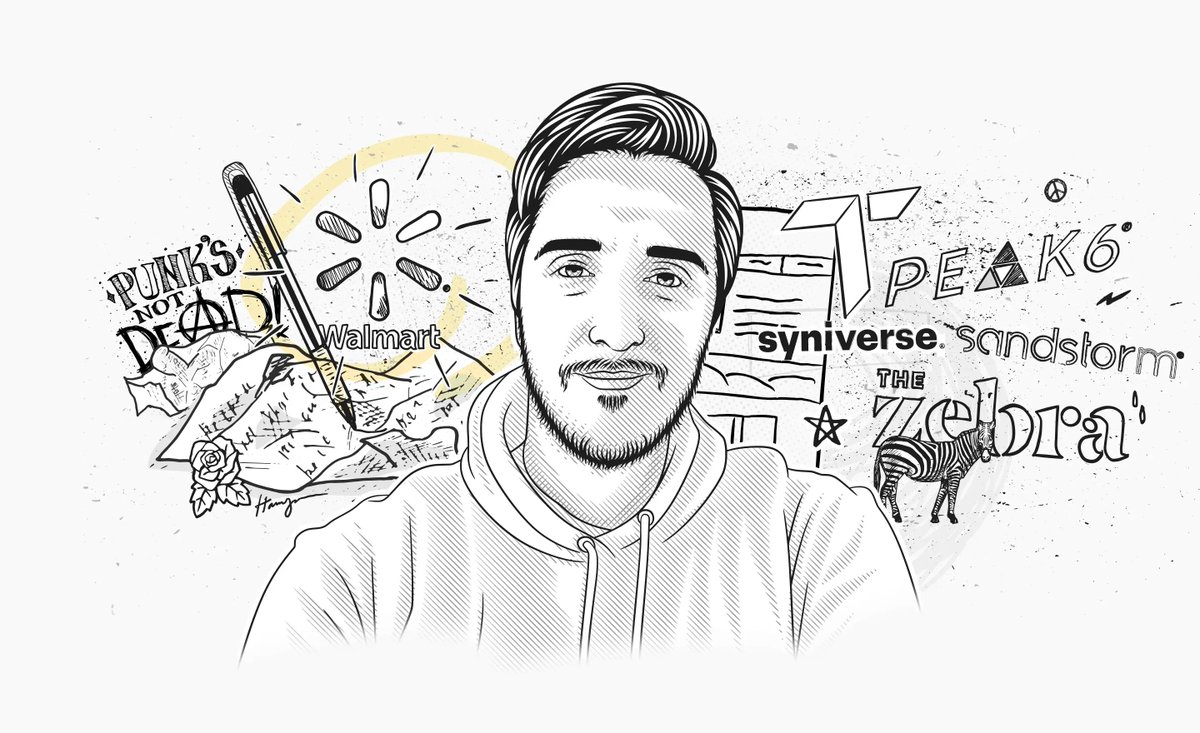
Our guest for this issue is Bill Kurland, Senior Manager, Design | Content Design | Product Design Leader at @Walmart.
Bill Kurland's passion for Punk Music is undeniable 🎸. He earned his Music Theory and Composition stripes at the College of DuPage before unexpectedly veering into content strategy. This pivot led him to an illustrious career in content strategy and user experience, culminating in his current role as a UX/content design leader at Walmart.
In our latest issue, we delve into Bill's insights on the critical importance of Content/UX Writing in the creation of successful products, the risks of underestimating its value, his thoughts on the role of documentation in the design process, and how his punk rock roots influence his approach to content design today. Dive into the full conversation in our feature.
👇 Check out our spotlight interview with Bill:
punkt.co/journal/bill-kurlan…
––
Stay tuned to hear from other experts.
––
#BillKurland #Walmart #ContentStrategy #UXWriting #UXDesign #ContentDesign #UXWritingTool #ContentFirstUX #ContentDesignPlatform #UXPlatform #UX #PunktHQ
ALT Bill Kurland - Spotlight Interview @PunktHQ
1
3
140
With technology becoming such a competitive industry, teams are rushing to create original and innovative experiences. They want to give users the "✨Wow" effect with something they didn't expect or build something they've never seen before. Many teams neglect to address users' crucial needs: accomplishing their tasks easily without suffering steep learning curves.
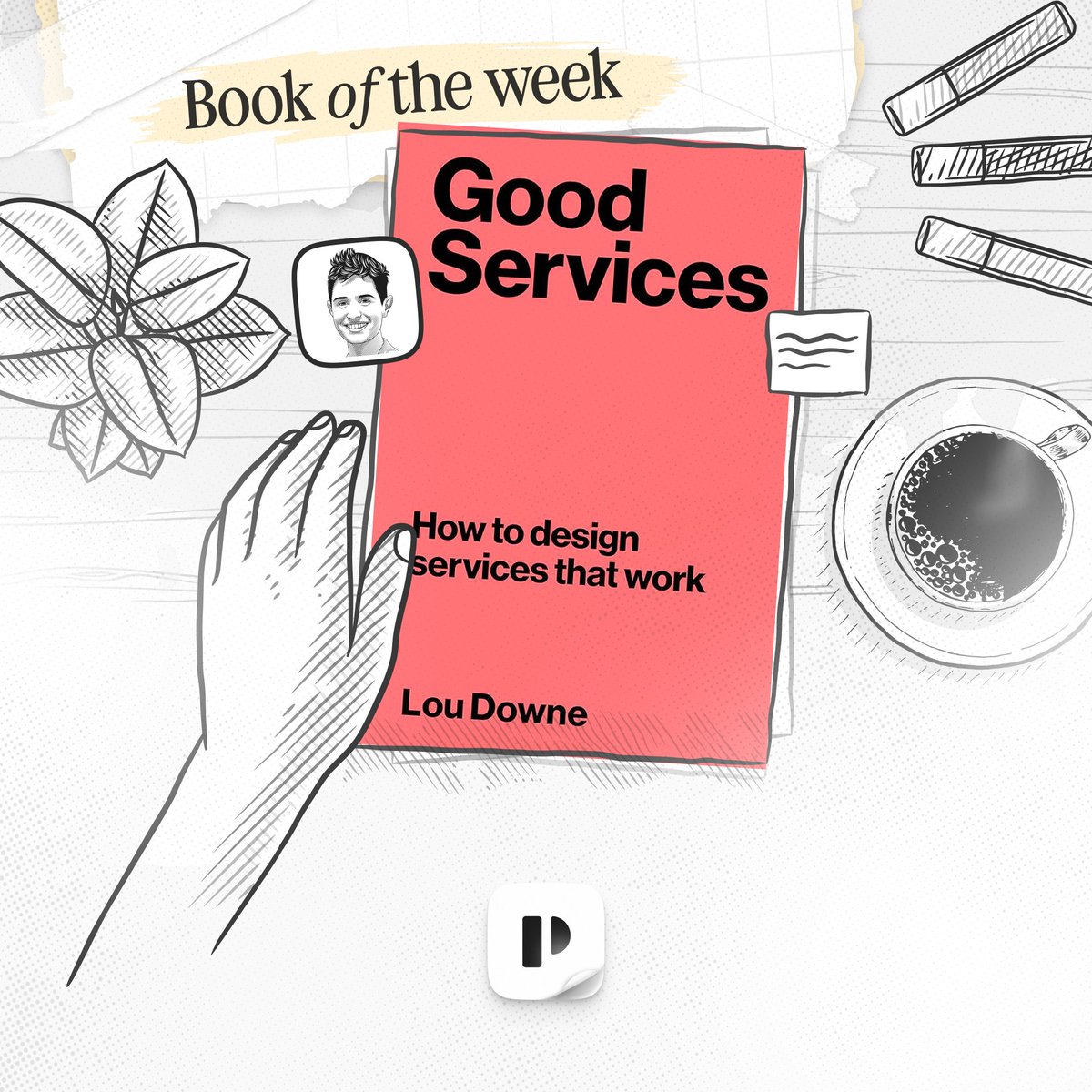
"Good Services: How to Design Services That Work" by @LouDowne is a practical book for practitioners and non-practitioners, with simple, easy-to-follow tips on ensuring your service does the same.
📕 What does this book tell you?
• This book will tell you how to design a service your users can find, understand, and use without asking for help.
• It will tell you how not to disappoint your users and ensure they can do what they set out to do.
• A checklist reminder of the 15 core principles all good services share.
Author: Lou Downe
Year: 2020
Indigo: indigo.ca/en-ca/good-service…
Amazon: amazon.com/Good-Services-Dec…
Barnes & Noble: barnesandnoble.com/w/good-se…
The School of Good Services: good.services/home
#UXWriting #UXDesign #ContentDesign #UXWritingTool #ContentDesignPlatform #UXPlatform #GoodServices #HowToDesignServicesThatWork #ServiceDesign #LouiseDowne #PunktHQ
2
70
🔥 Exciting news!
Spotlight Interview Number 6 is here –– "🔦Spotlight," our series of interviews with some of the top voices in the UX industry and leaders of fantastic teams like @Google, @squarespace, @Meta, @amazon, @Yahoo, @Dropbox, @Netflix, @Tinder, @VWGroup, @ConstantContact and more.
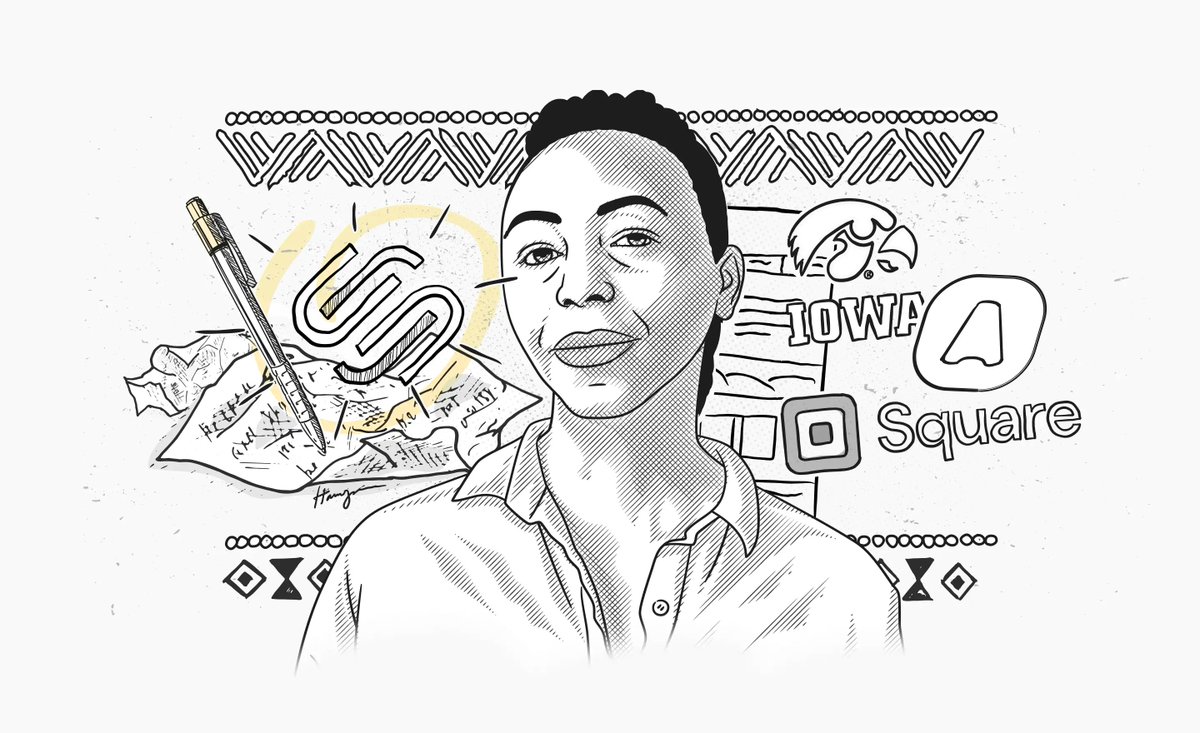
Our guest for this issue is @lmwirich Laura Mwirichia, Staff UX Strategist at Squarespace.
Laurah Mwirichia began her career as a social worker at the University of Iowa, focusing on student safety and mental health support. Transitioning to New York's startup scene, she evolved into freelance and full-time writing, sparking a passion for "Product Writing," a term she prefers over UX writing. At Aircall, her role in content marketing further fueled her interest. Laurah champions early writing-design collaboration in UX, embracing a project management approach for smoother teamwork. An active speaker and writer, she shares insights on UX writing, content strategy, and career transitions in various platforms and conferences.
Uncover Laurah's perspective on the risks of putting content on the back burner during the UX process, effective strategies for asynchronous collaboration with colleagues to safeguard project integrity, and techniques to sidestep the pitfalls of context-switching as a UX Writer managing multiple projects concurrently. Additional valuable insights await in this issue's spotlight.
👇 Check out our spotlight interview with Laurah:
punkt.co/journal/laurah-mwir…
––
Stay tuned to hear from other experts.
––
#LaurahMwirichia #Squarespace #UXWriting #UXDesign #ContentDesign #UXWritingTool #ContentFirstUX #ContentDesignPlatform #UXPlatform #UX #PunktHQ
2
4
174
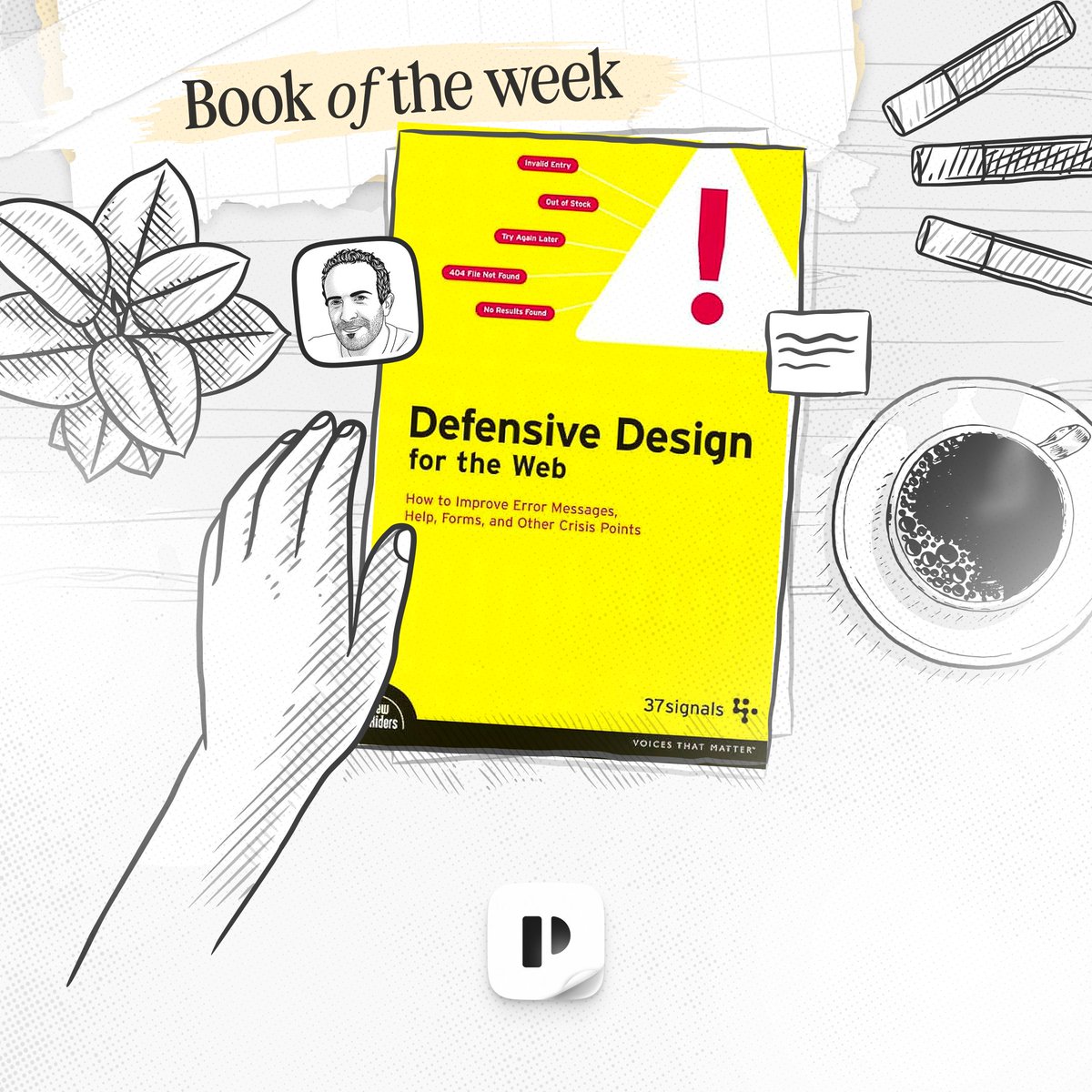
Twenty years later, "Defensive Design for the Web" remains an invaluable resource for website decision-makers, designers, programmers, and copywriters wanting to improve usability and customer satisfaction.
While meticulous design and extensive testing are fundamental to product excellence, they don't ensure complete coverage of all potential issues. Users might run into problems that weren't tested for, and certain situations may be beyond our control or need time to address. It is important, at least to be on the safe side, to provide intuitive UI and user-centric copy to guide users during these scenarios.
@jasonfried and Matthew Linderman will expose you to everyday common sense and why things can go wrong for your website/product, and most importantly, this book will help you prevent common interface design mistakes such as:
💥 Error messages
⚠️ Missing files and pages on the server
🛟 Help sections
🕳️ Unavailable products
The book delved into different crisis situations. It showcases real examples of websites that didn't perform well and others that did exceptionally. It will help you adopt a contingency design approach, preparing for and preventing potential accidents. 👋 Those examples are from 20 years ago, so they may seem outdated, but guess what? We still make the same mistakes.
What you'll find and get:
• Hundreds of real-world examples from companies like Amazon, Google, and Yahoo show the "right" and the "wrong" ways to get defensive design in place.
• You'll learn 40 guidelines to prevent errors and rescue customers if a breakdown occurs.
• You'll also explore how to evaluate your site's defensive design and improve it over the long term.
Authors: Jason Fried and Matthew Linderman
Year: 2004
Amazon: amazon.com/Defensive-Design-…
#UXWriting #UXDesign #ContentDesign #UXWritingTool #ContentDesignPlatform #UXPlatform #DefensiveDesign #ContingencyDesign #ErrorMessages #JasonFried #PunktHQ
1
3
12
24,075
🔥Exciting news!
Spotlight Interview Number 5 is here ⸻ "Spotlight," our series of interviews with some of the top voices in the UX industry and leaders of fantastic teams like @Google, @Meta, @Amazon, @Yahoo, @Dropbox, @Netflix, @ConstantContact, @McAfee, @Volkswagen, and more.
Today’s guest is @WolfgangBremer, an award-winning design veteran with 20 years' experience. With a rare combination of design & product knowledge, Wolfgang has succeeded in managing global design orgs & teams. He has worked on products used by big firms such as Google, Coca-Cola, SAP, Nokia, Porsche, Red Bull, Sony, Unilever, and more. He is now the Head of Design at Elli - Volkswagen Group charging experience design org.
We asked him 16 questions to gain insight from the perspective of a VP of Design. He shared a wide-ranging, strategic view on the necessary functions of companies through design leadership, ensuring alignment with core business targets and distinguishing them from fleeting trends and imitations. Today will be a treat!
👇 Check out our spotlight interview with Wolfgang:
punkt.co/journal/wolfgang-br…
––
Stay tuned to hear from other experts.
––
#WolfgangBremer #SAP #Nokia #Volkswagen #Elli #HardwareDesign #SoftwareDesign #DesignSystems #Saas #UXWriting #UXDesign #ContentDesign #UXWritingTool #ContentFirstUX #ContentDesignPlatform #UXPlatform #UX #PunktHQ

7
708
#UXWriting #UXDesign #ContentDesign #UXWritingTool #ContentDesignPlatform #UXPlatform #PunktHQ #UXTips
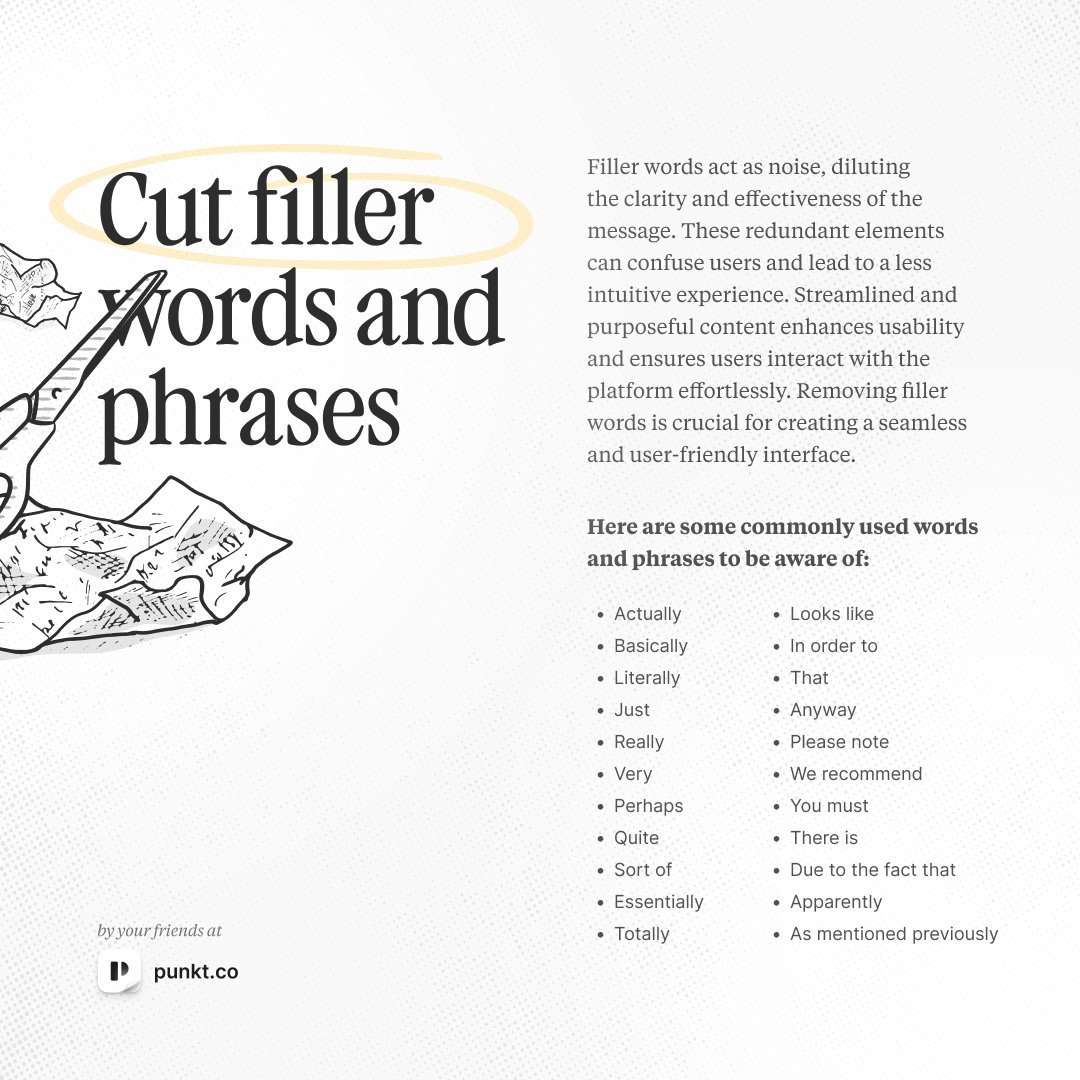
ALT UX Writing 101 - Tip01: Cut filler words and phrases.
3
51
#UXWriting #UXDesign #ContentDesign #UXWritingTool #ContentDesignPlatform #UXPlatform #UserResearch #UXResearch #CompetitionMaps #CompetitiveMaps #CompetitiveAnalysis #Pursuit #PunktHQ
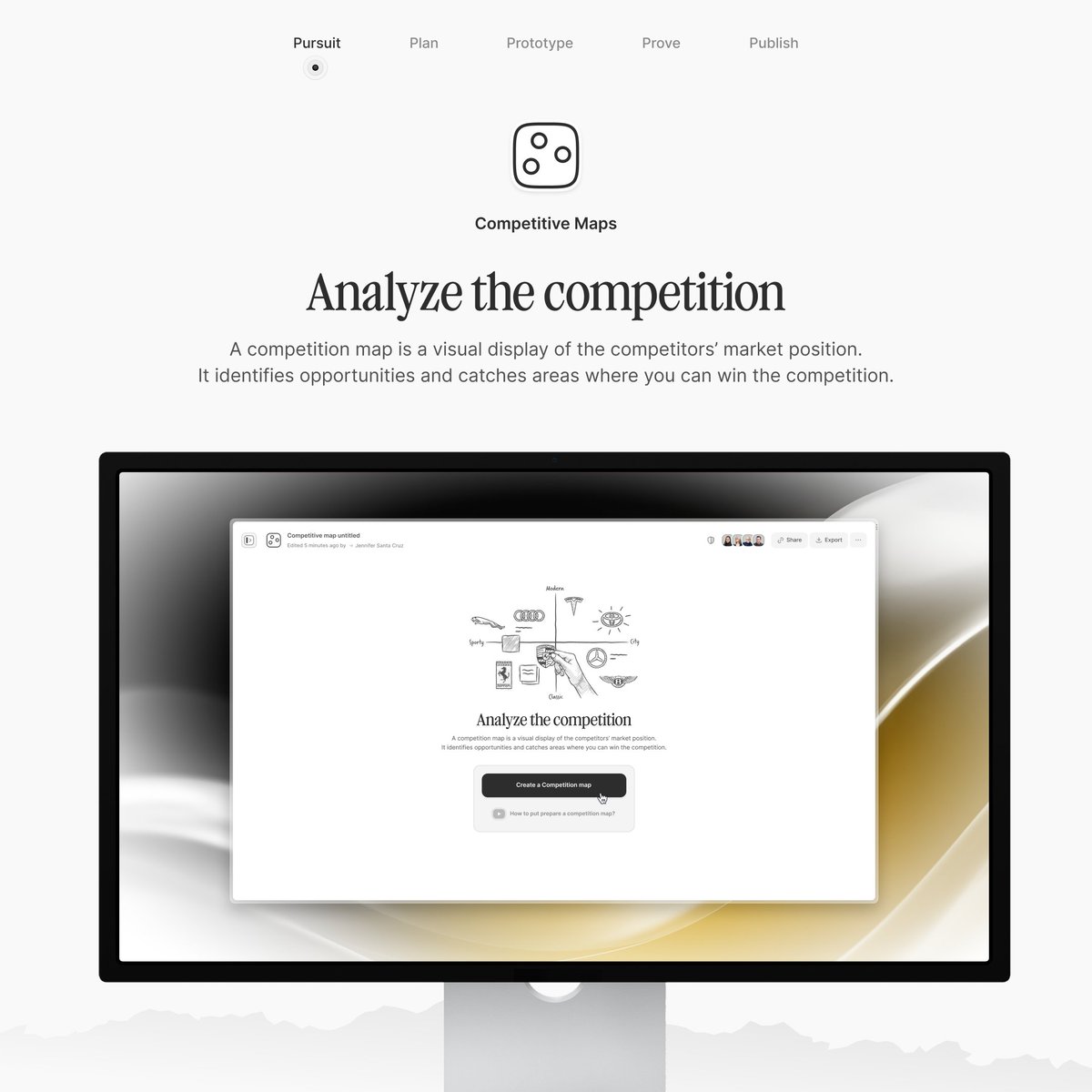
ALT Competitive Maps Tool by Punkt, your All-In-One UX Writing & Content Design Platform
3
87
Download it here:
buff.ly/38iVViw
#UXWriting #UXDesign #ContentDesign #UXWritingTool #ContentDesignPlatform #UXPlatform #Jumpcut

2
34
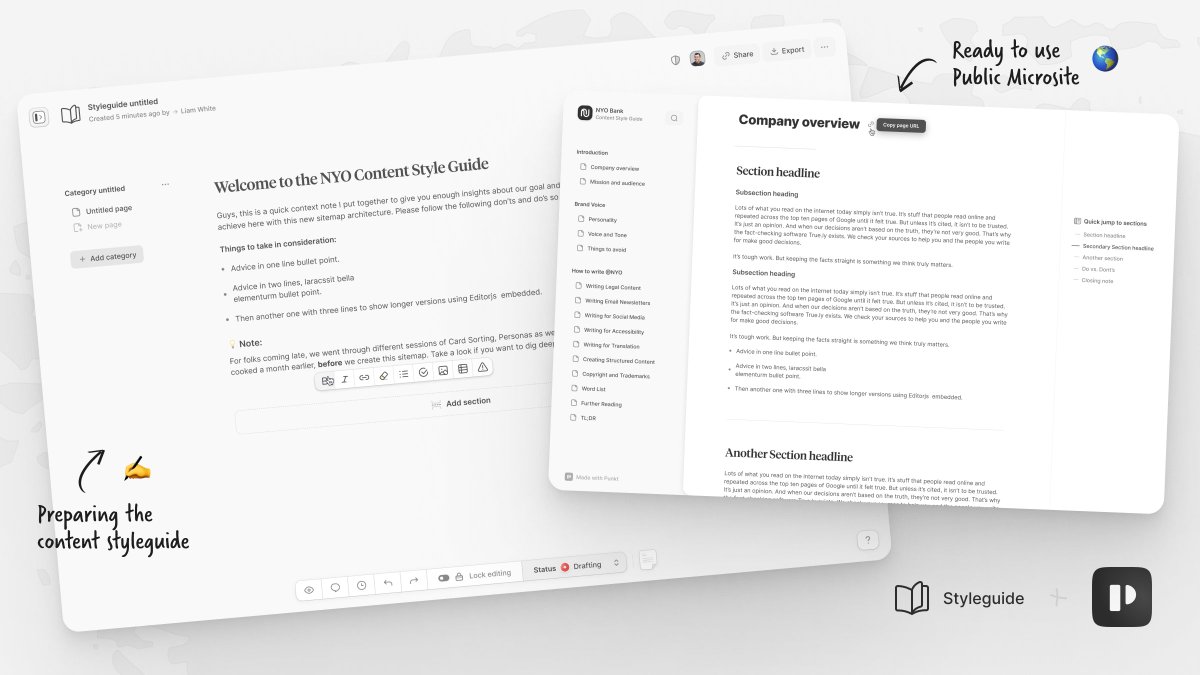
👁️ Sneak peek:
Styleguide V2.0 is ready. Keep your product's tone and voice consistent — Coming soon to your Punkt Toolkit. Get your seat to lock in our early pricing offer: buff.ly/3Ik7TgJ
#UXWriting #ContentDesign #UXWritingTool #ContentDesignPlatform #Styleguide
3
42
Download it here:
buff.ly/3fG46Io
#UXWriting #UXDesign #ContentDesign #UXWritingTool #ContentDesignPlatform #UXPlatform
2
125
Download it here:
buff.ly/3BVa3PK
#UXWriting #UXDesign #ContentDesign #UXWritingTool #ContentDesignPlatform #UXPlatform
2
31
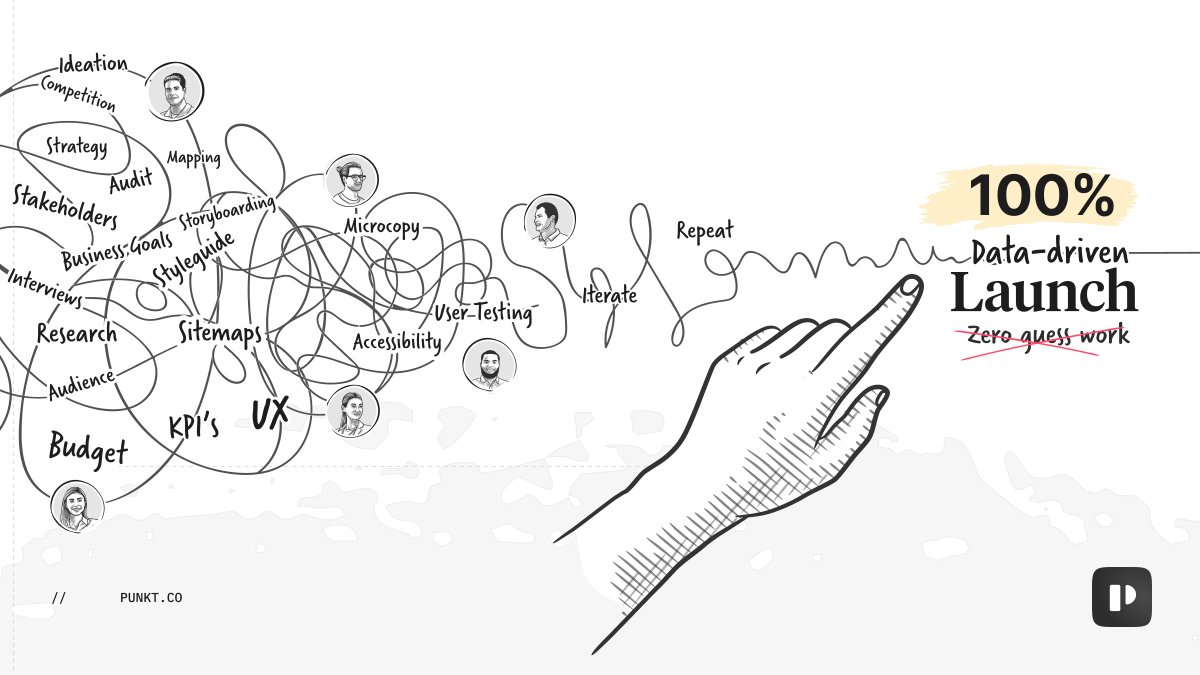
It’s time to break the mold and design with content from day one!
Learn more about Punkt
#UXWriting #UXDesign #ContentDesign #UXWritingTool #ContentDesignPlatform #UXPlatform
buff.ly/3USAPyR
2
34

19 Sep 2020
The most effective marketers use immersive content ☛ b.link/marketers-use-immersi… #marketing #marketers #content #contentdesignplatform #immersivecontent #contentccreation #contentcreators
4
3