
Having great content isn't enough – you need to get it in front of the right eyes!
We leverage powerful distribution channels to amplify your message.
#ContentDistribution #AudienceReach #AmplifyYourBrand

1

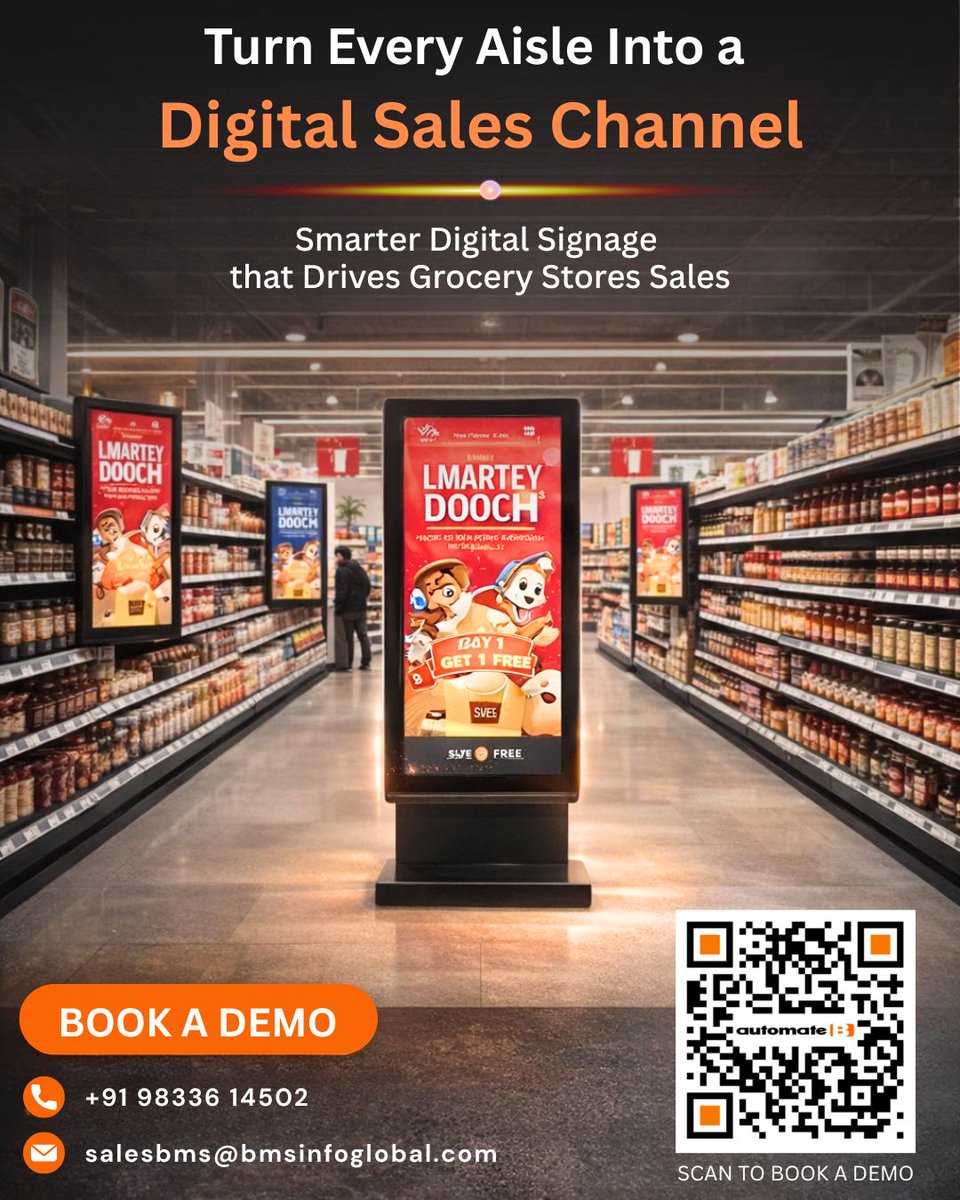
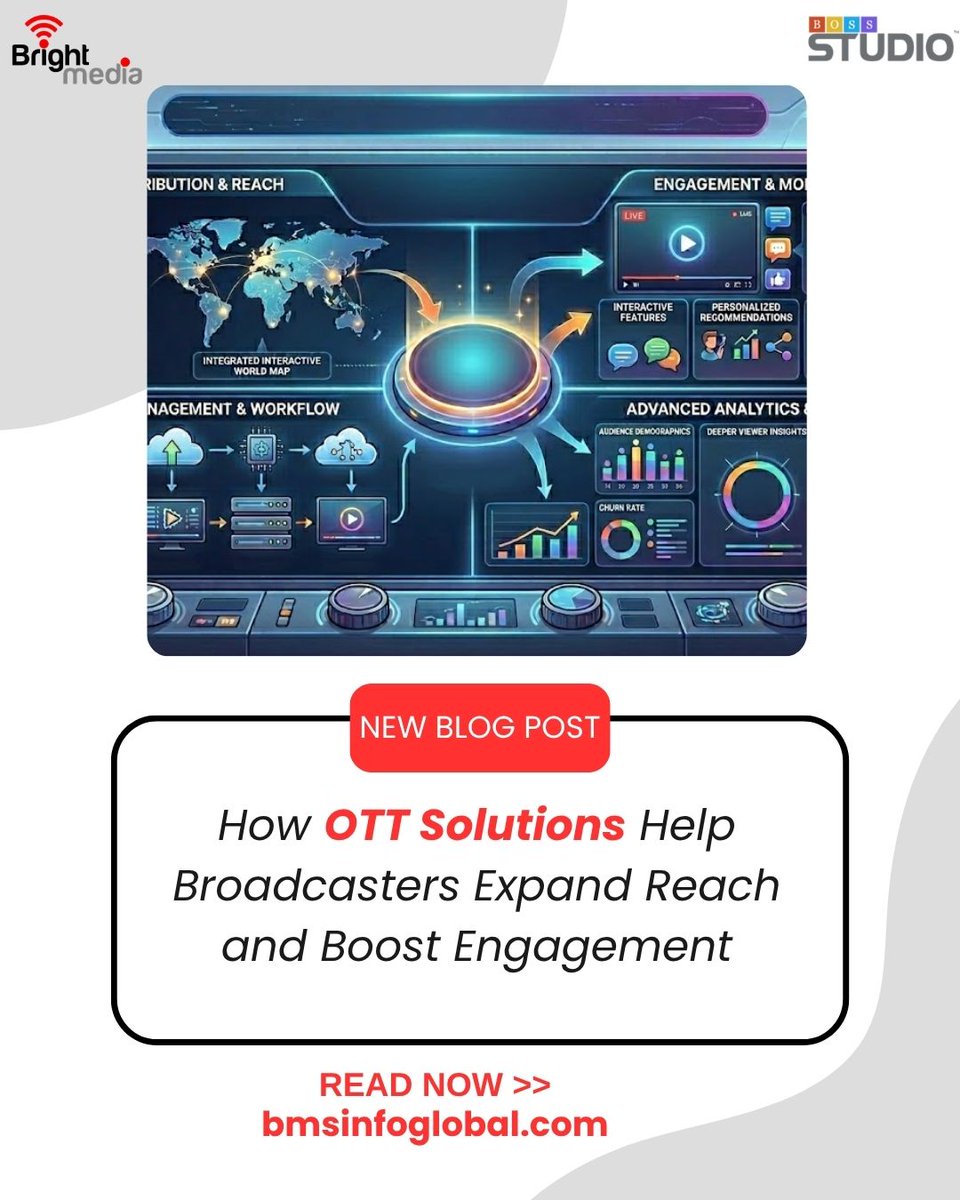
Expand your reach. Engage more viewers. Grow faster.
Manage & deliver OTT content seamlessly with BOSS Studio.
Read more - bmsinfoglobal.com/
Book demo - bmsinfoglobal.com/
#OTT #StreamingSolutions #BroadcastTech #FASTChannels #MediaTech #ContentDistribution
34

Jun 12
Chptr Raises $5.5M Series A
#HyperlocalMedia #CommunityStorytelling #DigitalMedia #BroadcastMedia #LocalNews #ContentDistribution #AI #MediaTech #SeriesA #Funding #Chptr
thesaasnews.com/news/chptr-r…
11

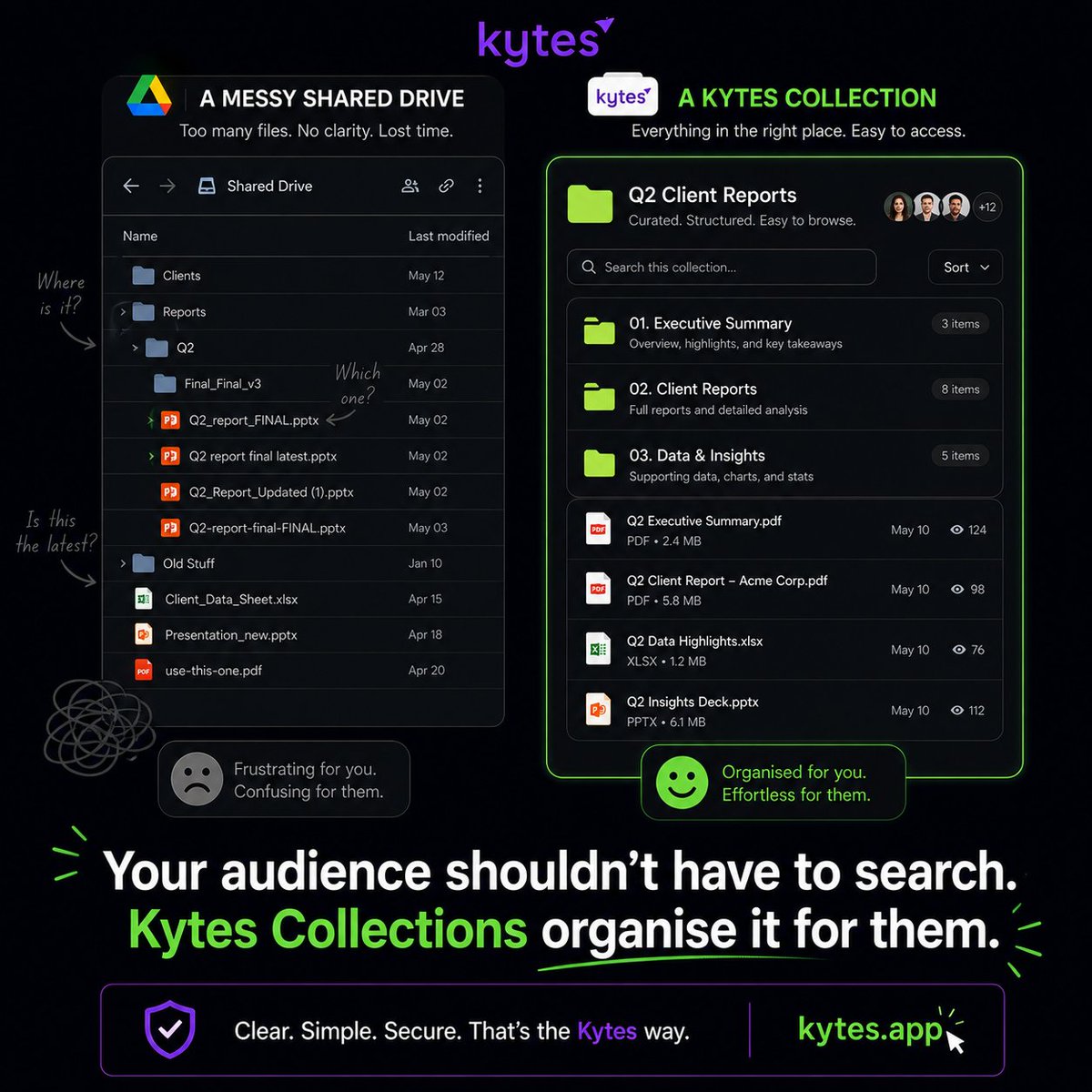
A folder stores files.
A Collection helps people find what they need. 📚
Kytes Collections are curated, labelled, and structured for browsing—not endless searching.
How does your team organize content for clients today? 👇
#ContentOrganisation #ContentDistribution #KytesApp
5
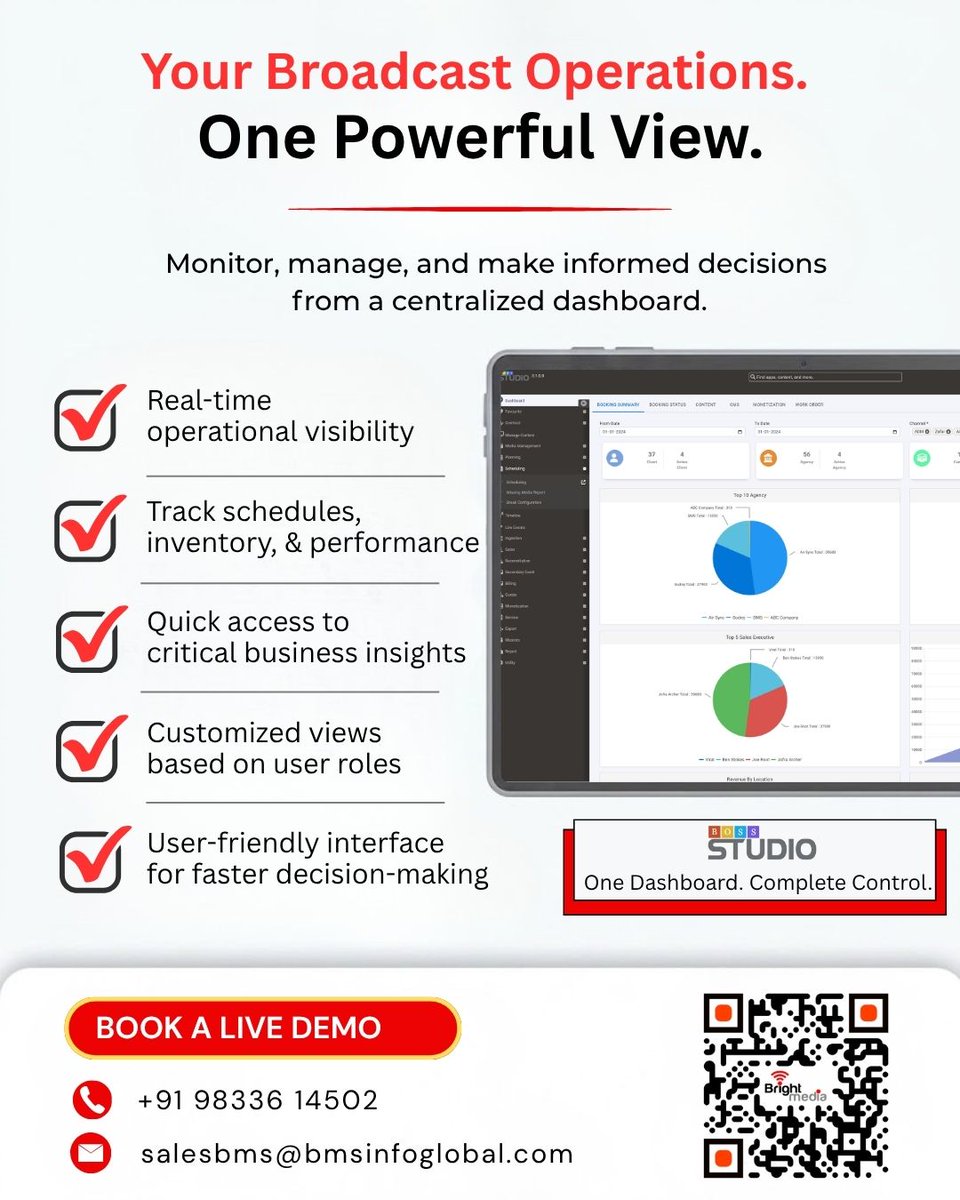
Expand your reach. Engage more viewers. Grow faster.
Manage & deliver OTT content seamlessly with BOSS Studio.
Read more - bmsinfoglobal.com/
Book demo - bmsinfoglobal.com/
#OTT #StreamingSolutions #BroadcastTech #FASTChannels #MediaTech #ContentDistribution
11

Jun 10
Former Paramount Executive Brendon Thomas Joins Radial Entertainment as CRO
Read more: soapcrush.world/post/former-…
#RadialEntertainment #ParamountGlobal #MediaExecutive #EntertainmentIndustry #CRO #ContentDistribution #MediaBusiness
Brendon Thomas, a former Paramount Global exec…

4
Expand your reach. Engage more viewers. Grow faster.
Manage & deliver OTT content seamlessly with BOSS Studio.
Read more - bmsinfoglobal.com/
Book demo - bmsinfoglobal.com/
#OTT #StreamingSolutions #BroadcastTech #FASTChannels #MediaTech #ContentDistribution
10
Expand your reach. Engage more viewers. Grow faster.
Manage & deliver OTT content seamlessly with BOSS Studio.
Read more - bmsinfoglobal.com/
Book demo - bmsinfoglobal.com/
#OTT #StreamingSolutions #BroadcastTech #FASTChannels #MediaTech #ContentDistribution
1
14

Jun 8
Distribui organic content-ul tau pe o retea de mii de conturi de tiktok, instagram, youtube si facebook.
#marketing #contentdistribution
4

A digital publishing platform is more than a technology purchase, it’s a strategic decision. Read our latest blog getmagicbox.com/blog/questio…
#DigitalPublishingSolutions #K12Content #EdTechPlatform #EducationalPublishers #FutureOfLearning #ContentDistribution #K12Learning
1

Jun 4
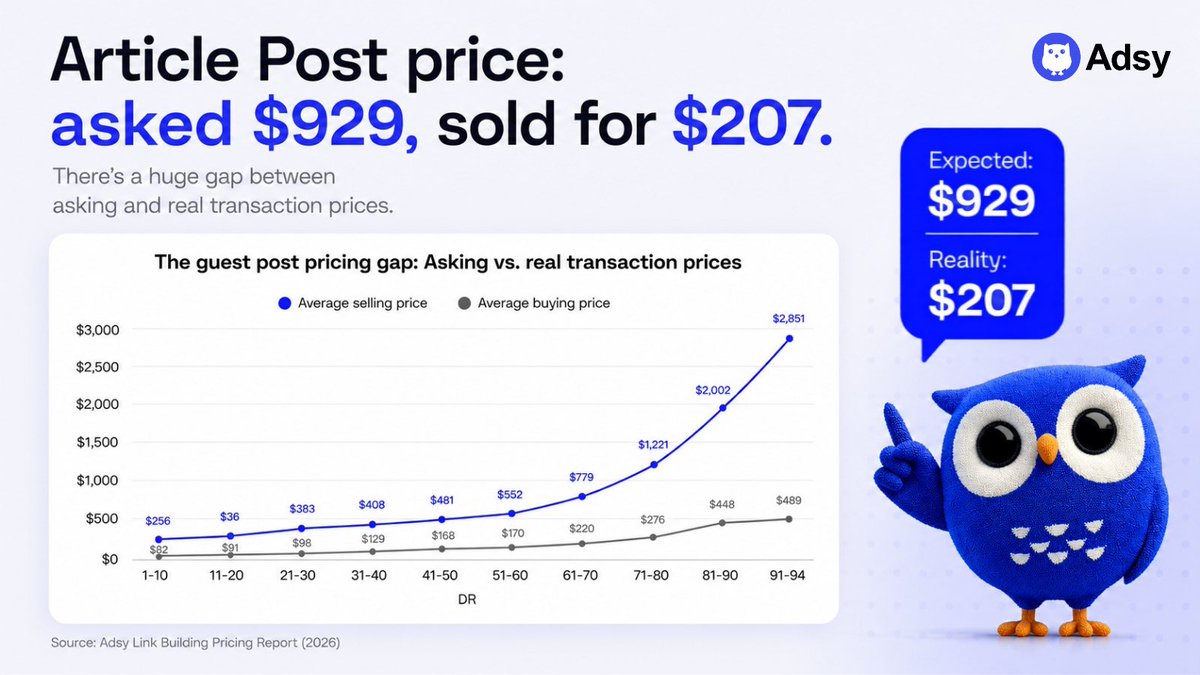
💸 We analyzed 52,671 websites and found a huge price gap.
The average asking price for an article post was $929, but the actual selling price? Just $207.
So where does that gap come from?
Most websites list the price they'd like to get. Advertisers pay what makes sense for their budget and goals. As a result, the average selling price is almost 300% higher than the average transaction price. It's around 4x what advertisers actually pay.
What's even more interesting? The higher the DR, the bigger the gap.
But here's something many advertisers overlook: a lower-priced guest post isn't always a bad deal.
A lot depends on how you choose the site. Instead of chasing only high-DR pricey websites, focus on the basics: choose the right niche, language, country, traffic quality, and SEO metrics. If those match your goals, you can often find strong placements without spending hundreds of dollars on every backlink.
I advise choosing between these Adsy products - Article Posting, Crowd Posts, or Press Release, depending on what you're trying to achieve and how much you want to spend.
Curious how backlink pricing really works?
Check out the full study 👇
bit.ly/4x5haQw
#adsy #guestposting #contentdistribution #howmuchisguestpost #SEO
2
29


May 25
What You Should Know About Membership Video on Demand (MVOD)
The streaming industry has changed dramatically over the past decade. What began as a simple alternative to traditional television has evolved into a diverse digital ecosystem that includes subscription platforms, creator-driven services, educational networks and community-based streaming experiences. As audiences increasingly seek more personalized and engaging forms of entertainment and learning, new business models have emerged to meet those expectations.
One of the most important of these models is Membership Video on Demand, commonly known as MVOD. Although the term is sometimes confused with traditional subscription streaming, MVOD represents a different approach to audience engagement — one that focuses not only on access to video content, but also on membership, community, exclusivity and long-term relationships between platforms and viewers.
Understanding how MVOD works is becoming increasingly important for media companies, creators, educators and streaming platforms navigating the future of digital distribution.
What Is Membership Video on Demand?
Membership Video on Demand (MVOD) is a streaming model in which users gain access to video content through a membership-based relationship rather than through simple transactional subscriptions or other traditional VOD monetization models.
In an MVOD platform, viewers are not treated merely as customers purchasing access to a content library. Instead, they become members of a broader ecosystem built around creators, organizations, institutions, brands or communities. The membership often includes additional benefits that go beyond video streaming itself.
These benefits may include:
▪ exclusive programming,
▪ early access to new releases,
▪ live events and livestreams,
▪ direct interaction with creators,
▪ educational resources,
▪ community discussions,
▪ premium services,
▪ institutional access through libraries and organizations.
Because of this broader relationship, MVOD platforms often create stronger audience loyalty and engagement than traditional streaming models focused solely on one-way content consumption.
Why MVOD Has Become More Popular
The rise of MVOD reflects major changes in audience behavior and digital media consumption. Modern viewers increasingly want more than passive entertainment. Many audiences now value exclusivity, participation, personalization and community interaction.
At the same time, creators and media organizations are searching for sustainable ways to build direct relationships with audiences without depending entirely on advertising revenue or large distribution companies.
The MVOD model offers several important advantages for both platforms and content creators. Because it emphasizes ongoing membership relationships rather than simple transactional access, MVOD often leads to stronger long-term audience loyalty and higher levels of engagement. The model also provides more stable recurring revenue streams while allowing creators and media companies greater independence from traditional advertising systems and third-party distributors.
In addition, MVOD is especially well suited for niche programming and specialized communities, where highly engaged audiences are often more valuable than broad mass-market reach. As a result, MVOD has expanded well beyond entertainment and is now widely used in education, public media, fitness, professional training and creator-driven digital platforms.
Examples of MVOD Platforms
One of the clearest examples of MVOD is @Patreon. Through @Patreon, creators offer exclusive videos, livestreams, behind-the-scenes content and direct engagement to paying members who support their work.
Another well-known example is Nebula (@WatchNebula), a creator-focused streaming service that emphasizes educational and documentary-style programming supported directly by members rather than traditional advertising systems.
In entertainment and comedy, @Dropout has become a successful MVOD platform by combining exclusive original programming with a highly engaged membership community.
Educational streaming services also frequently use the MVOD model. @MasterClass offers premium instructional video courses taught by experts, celebrities and professionals, while @CuriosityStream provides specialized science, history, technology and nature programming to members interested in educational content.
Public and institutional streaming services also demonstrate MVOD principles. @PBS offers @PBS Passport, which gives expanded streaming access to viewers who financially support local @PBS stations through memberships and donations.
Similarly, @HooplaDigital and @Kanopy provide movies, documentaries and educational content through university and public library memberships rather than traditional direct subscriptions.
MVOD Beyond Entertainment
One of the defining strengths of MVOD is its flexibility. Unlike traditional streaming models that focus mainly on television and movies, membership-based video services have expanded into many industries.
Educational platforms use MVOD systems to combine:
▪ instructional video libraries,
▪ certifications,
▪ coaching,
▪ live classes,
▪ interactive learning communities.
Fitness and wellness services combine streaming workout videos with personalized programs and member engagement. Professional training services use membership-based video systems for continuing education and skill development.
In many of these industries, the membership experience itself becomes just as important as the video content.
Challenges of the MVOD Model
Although MVOD offers many advantages, it also requires ongoing effort to maintain audience loyalty and engagement. Unlike purely transactional streaming services, MVOD platforms depend heavily on trust, interaction and consistent value creation. Successful membership-based services must continuously provide fresh and meaningful experiences through regular content updates, strong community management, creator interaction, exclusive features and long-term relationship building with audiences.
Because the value of MVOD extends beyond simple content access, maintaining audience engagement becomes especially important. If members no longer feel personally connected to a platform, creator or community, they may lose interest in maintaining their memberships. For this reason, successful MVOD platforms often invest heavily in audience communication, community engagement and premium member experiences that strengthen long-term loyalty.
MVOD vs. SVOD: What’s the Difference?
MVOD is closely related to Subscription Video on Demand (SVOD), but the two models are not identical.
SVOD refers to the traditional subscription streaming model used by services such as @Netflix, @DisneyPlus, @HBOMax and @Hulu. In this system, viewers pay a recurring monthly or annual fee for unlimited access to a content library.
The SVOD model focuses primarily on content access and large-scale entertainment distribution. Platforms compete through:
▪ massive content libraries,
▪ high-budget productions,
▪ exclusive licensing agreements,
▪ broad mainstream appeal.
MVOD, by contrast, emphasizes membership and audience participation in addition to content access. The broader value comes from community engagement, exclusivity, creator relationships, educational experiences or institutional affiliation.
The difference can be summarized simply:
▪ SVOD primarily sells access to content.
▪ MVOD sells access to a membership experience built around content.
For example, @Netflix succeeds through the size and variety of its entertainment catalog, while Nebula (@WatchNebula) focuses on building a loyal membership community around educational creators and independent programming. Likewise, @PBS Passport and @Kanopy rely on institutional and community membership systems rather than purely commercial subscriptions.
Another important distinction between MVOD and traditional SVOD models involves content exclusivity and distribution rights. In the streaming industry, rights granted for MVOD distribution may differ from those granted for SVOD, AVOD, TVOD or other VOD monetization models. A content owner may license the same program to multiple platforms under different types of VOD rights, depending on the terms of the agreement, territorial restrictions, release windows and exclusivity provisions.
For example, a documentary series might appear on an SVOD platform such as @Netflix under a traditional subscription agreement while also being distributed through an MVOD educational platform or creator membership service under separate rights. In some cases, MVOD rights may be exclusive to a particular membership community or institutional platform, while other VOD rights remain non-exclusive or available through different monetization channels.
As streaming ecosystems become increasingly complex, many distributors and rights holders now manage overlapping VOD rights across multiple business models simultaneously. This makes clear rights tracking and licensing management especially important for companies distributing content across MVOD, SVOD, AVOD, TVOD and hybrid streaming platforms.
The Future of MVOD
As streaming continues to evolve, the line between MVOD and traditional subscription streaming is becoming increasingly blurred. Many platforms now incorporate features associated with membership ecosystems, including exclusive communities, live interaction, personalized experiences and premium access tiers.
This reflects a broader shift in digital media consumption: audiences increasingly want participation and connection, not just passive viewing.
MVOD reflects this transformation particularly well. By combining streaming content with community, exclusivity, education and audience engagement, membership-based video platforms are helping shape the future of digital media and online entertainment.
Managing MVOD Rights and Distribution
As membership-based streaming platforms continue to grow, rights management has become increasingly important for content owners, distributors and streaming services. MVOD distribution often involves complex licensing structures that may include territorial rights, platform restrictions, membership windows, exclusivity periods, educational access, institutional licensing and multi-platform distribution agreements.
Because MVOD services frequently combine traditional streaming with community features, educational access or creator-driven memberships, managing these rights efficiently requires flexible and detailed rights management tools. Content owners must be able to track where content can be distributed, under which membership models it may appear, how long licenses remain active and which partners or platforms have authorization to stream specific assets.
#MediaRights supports MVOD rights management alongside other major VOD business models, including SVOD, TVOD, AVOD, FVOD and hybrid distribution models. The platform allows media companies and distributors to manage licensing agreements, distribution rights, content availability windows, territorial restrictions and digital asset tracking within a centralized system designed specifically for modern media operations.
As streaming ecosystems continue to diversify, having the ability to manage MVOD-specific licensing and distribution rights becomes increasingly valuable for organizations operating across multiple digital platforms and monetization models.
Visit our website (medialogiq.com/mediarights) or contact us at info@medialogiq.com today to learn more about #MediaRights.
#VOD #MVOD #SVOD #TVOD #AVOD #FVOD #OTT #OverTheTop #DistributionRights #DistributionStrategy #MediaDistributionRights #FilmDistributionRights #TVDistributionRights #FilmDistribution #TVDistribution #MediaLicensing #FilmDistributionSoftware #TVDistributionSoftware #RightsLicensing #RightsManagement #RightsManagementSoftware #media #ContentDistribution #filmtech #contenttech #entertainment #content #film #movies #tv #tvshow #tvseries
2
4
43

May 21
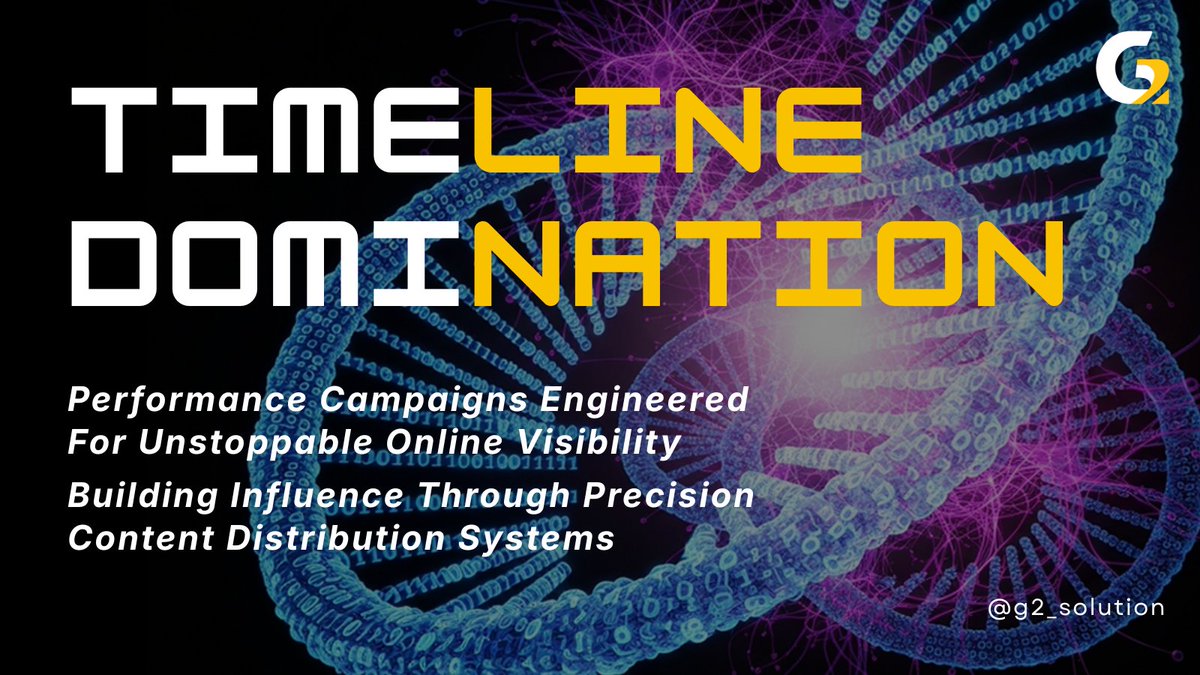
A viral campaign is not an accident.
It is the result of engineered distribution.
G2S combines data driven performance metrics with creative storytelling to launch multimedia campaigns that dominate timelines.
We optimize your distribution mechanics to turn audience attention into sustained brand authority.
#ViralGrowth #DataMarketing #GrowthHacking #ContentDistribution
6
10
261

El éxito de los dramas turcos es imparable 🌍En #SomosDistribution contamos con títulos líderes como #AmorEnRenta que garantizan altos niveles de audiencia gracias a su calidad visual y narrativa Contenido premium listo para conectar
#DramasTurcos #KiralıkAşk #ContentDistribution
11
35
436

Apr 27
ABS-CBN's content revenues hit P12.59B, narrows losses in 2025 corporate.abs-cbn.com/newsro…
#ABSCBN #contentproduction #contentdistribution #revenue
2
17
362

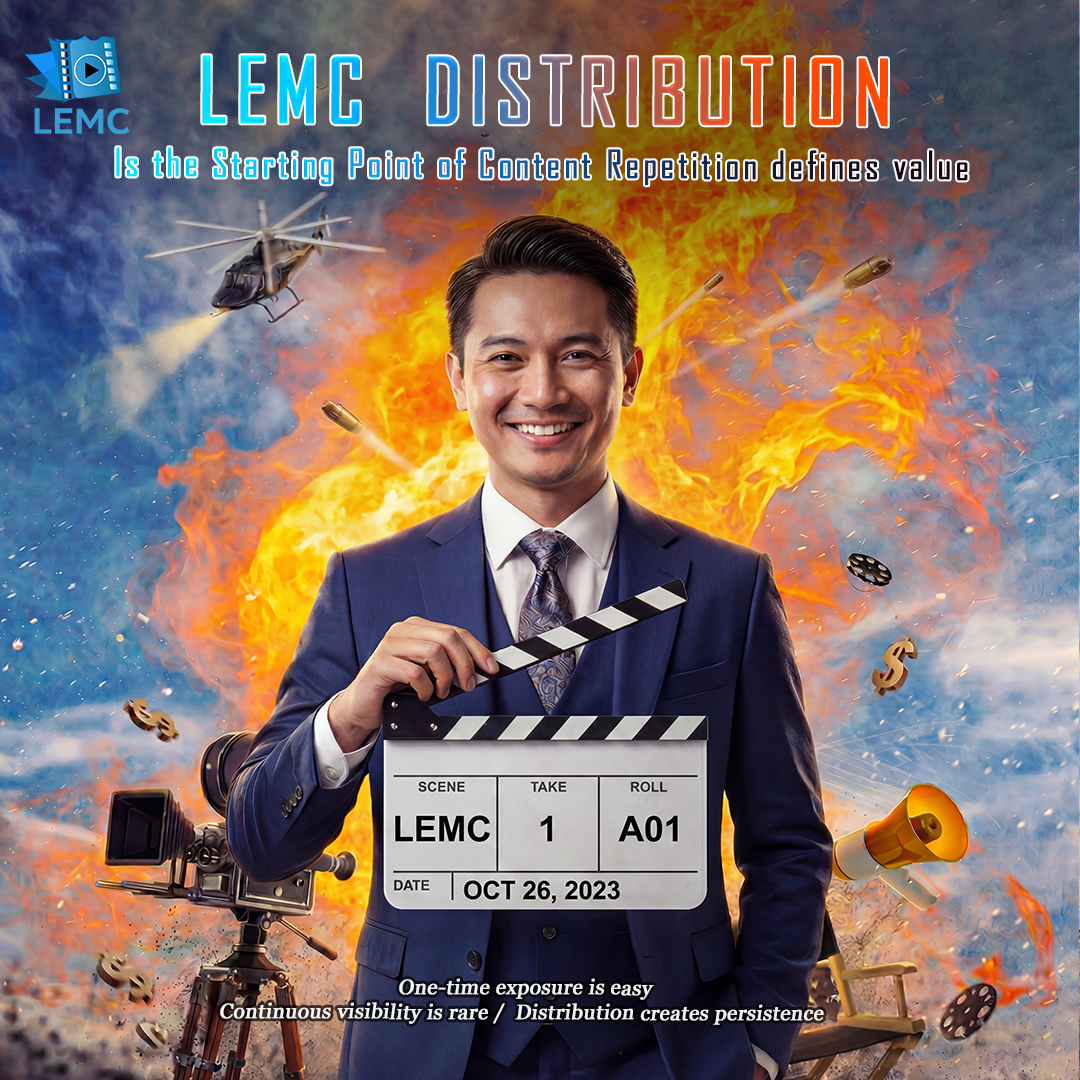
LEMC Distribution Is the Starting Point of Content
Repetition defines value
✅ One-time exposure is easy
✅ Continuous visibility is rare
✅ Distribution creates persistence
#LEMC #ContentDistribution #TrafficLogic #DigitalMedia #AttentionEconomy #ContentFlow
8
6
1,352

Apr 17
5 mistakes most clippers don't even realize they're making
And they're the reason nothing works.
If you're posting and not seeing results, you're probably doing at least one of these.
Watch this before your next clip
klippify.com
#ContentMarketing #CreatorEconomy #GrowthMarketing #ContentDistribution
2
37
Apr 16
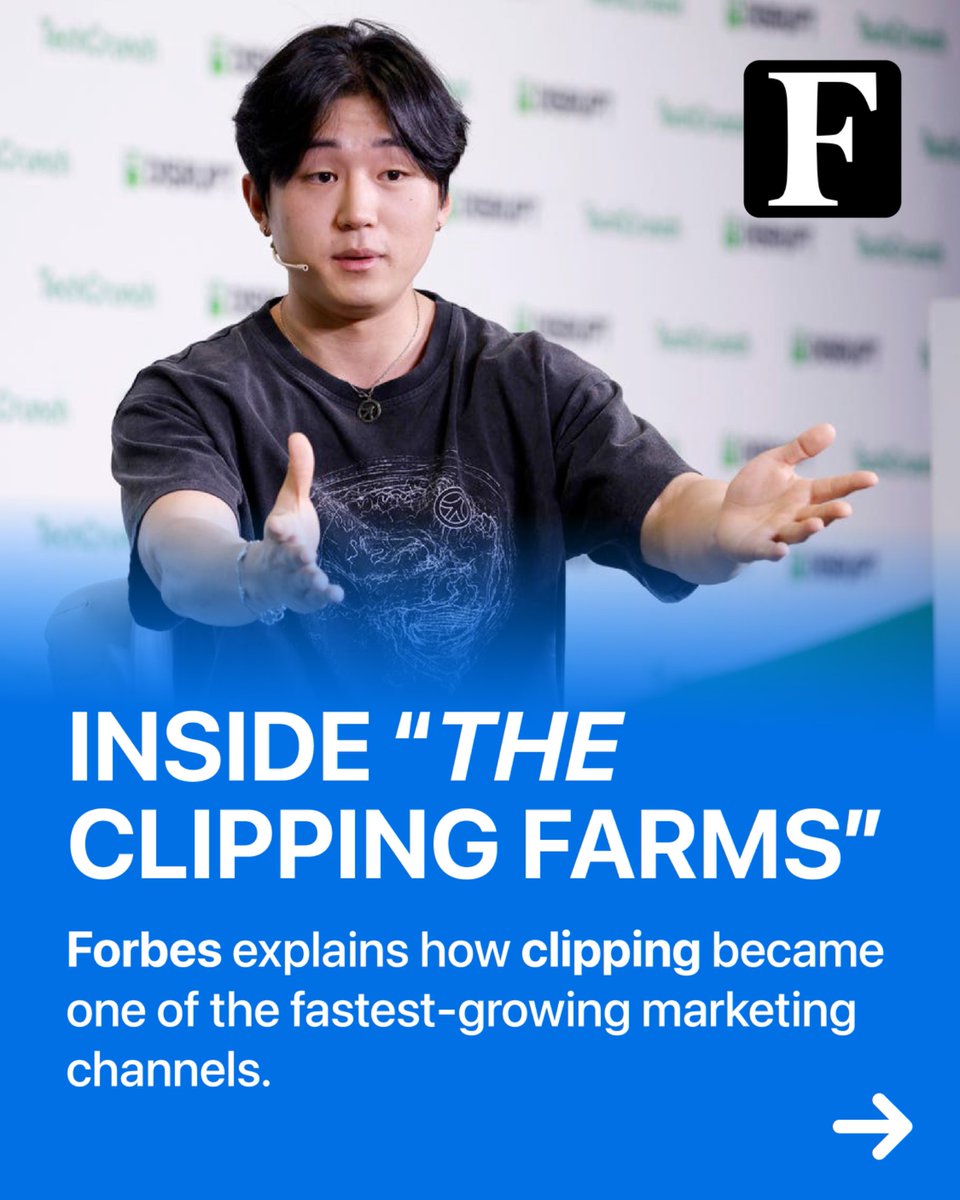
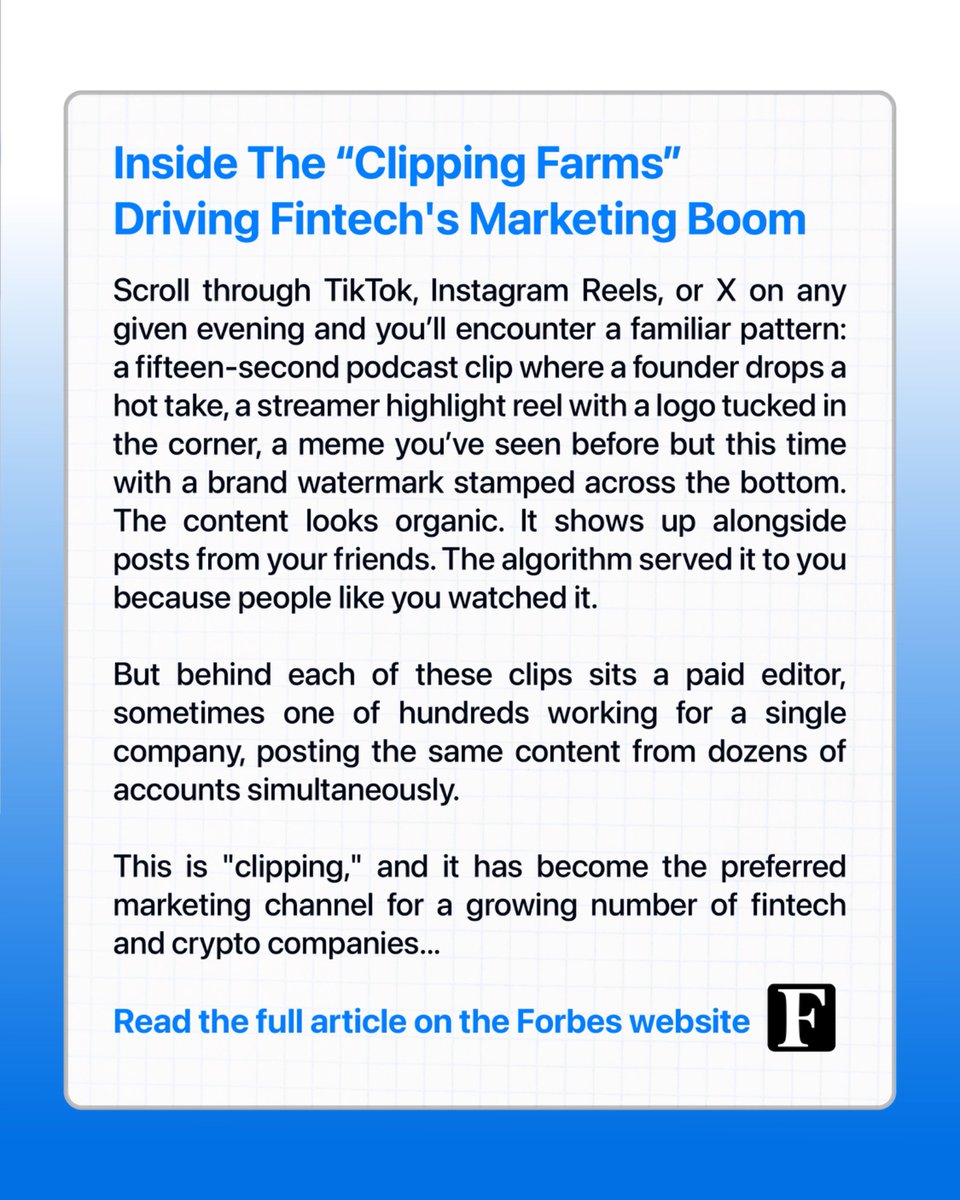
Forbes is talking about clipping
Not as a trend, but as a real marketing channel brands are already using to scale.
Hundreds of creators posting the same content across multiple pages, turning one video into massive distribution.
This is how content spreads today.
And this is exactly where things are going.
Start on Klippify
Klippify.com
#ContentMarketing
#CreatorEconomy
#ContentDistribution
#GrowthMarketing
#Clipping
2
55

Apr 13
Introducing:
(Yes, this is a long read. We did it old school. Some things are worth the time!)
STAR: The American Market
The Home of Media, Distribution, Monetization, and Branding
A new global gathering. Los Angeles. May 2028.
Robert Blagman and Patrick Zuchowicki Jucaud are moving forward with the creation of STAR: The American Market, a new international trade show to be held in Los Angeles in May 2028, under the banner of Media Fusion Incorporated. STAR is being built specifically to reconnect the global media industry with the American marketplace, the largest, most commercially sophisticated, and most consequential content economy in the world, through a dedicated gathering that no longer exists in its absence. Eyal Alon, Director of Strategic Finance and Shareholder Alignment at Media Fusion Incorporated, will lead the capital formation and investor alignment strategy supporting STAR's development and other media ventures the company is developing.
Media Fusion Incorporated anticipates that STAR will play a strategic role within the broader MWWC platform. MWWC, a publicly traded entity with which Media Fusion Incorporated is pursuing a merger, is expected to provide the expanded infrastructure, market visibility, and shareholder foundation that a venture of STAR's scale and ambition requires. That merger remains subject to the completion of a definitive agreement.
"NATPE did not fail this industry. The industry passed NATPE by in many ways. After 62 years of actually being in the room where this business came together, where deals were made, and relationships were built that sustained entire careers, NATPE is disappearing without a serious fight from the people who benefited most from what it provided. Patrick and I watched that happen, and neither of us was willing to accept it as the final chapter.
What we are building under STAR: The American Market is not a journey into nostalgia. It is a full commitment to where this business is actually going, which means leaning into artificial intelligence completely, because the media industry is being rewritten at a pace that most people inside it have not yet fully reckoned with. Patrick and I are already deep inside that revolution, working alongside leading AI futurists and technologists who are building the tools that will define how content is created, distributed, localized, and monetized for the next generation of this business.
This is not the first time Patrick and I have looked at something the industry thought was impossible and decided to do it anyway. In the early 1990s, when the idea seemed outrageous to almost everyone in the television and DRTV business, we launched the first three home shopping networks in Eastern Europe, building something from nothing in markets that nobody else was paying attention to. That experience, and the success that followed, taught us that the mountains worth climbing are usually the ones most people are standing at the base of, talking themselves out of the effort.
The American media market is the most powerful content economy in the world, and it deserves a marketplace that reflects the industry as it exists today and as it will exist in five years, not as it existed when NATPE was at its peak. We have the experience, the relationships, the vision, and, frankly, the deep desire for this quest. The march toward the future of media will happen with or without anyone's permission. We intend to lead it, and I cannot think of two people better positioned to do so than Patrick and me."
Robert Blagman, Founder and Chief Executive, Media Fusion Incorporated
What NATPE Leaves Behind
NATPE ran for 62 years, and that felt like something worth fighting for. It was the marketplace where the American television business met the world, where international buyers and domestic sellers built the relationships that defined careers and drove decades of transactions. Its closure has left the United States, the world's largest and most commercially sophisticated media economy, without a dedicated gathering for the first time in memory. Without a central marketplace anchored in America, the industry fragments. Deal flow slows. Global access to the American market becomes harder and more expensive for everyone trying to reach it. That is the problem STAR is being built to solve.
Why This Moment.
The timing of this initiative is not accidental, and the closure of NATPE accelerated it considerably. When a 62-year institution disappears overnight, it does not just leave a gap. It leaves an entire industry without a home, and that kind of absence has a way of clarifying what needs to be built and how quickly. The convergence of artificial intelligence, global distribution, and brand-driven monetization has created a market opening that did not exist even a few years ago. AI is ready to be built into the infrastructure of a live market event in ways that genuinely change outcomes for participants. The international appetite for American content and American audiences has never been stronger. And the brands and advertisers who ultimately finance the content ecosystem are actively seeking new environments where they can operate alongside the creative and distribution communities, rather than in separate conversations.
Initial pilot initiatives and early-stage partnerships are expected to begin well ahead of the full-scale market launch in May 2028, with announcements to follow in the months ahead.
Why Los Angeles?
The United States is the center of global content consumption, and Los Angeles sits at the heart of that economy, home to studios, streaming platforms, agencies, global buyers, and emerging AI media companies reshaping how this business operates. The event will take place May 16 through 18, 2028, at a premier Downtown Los Angeles venue, where discussions and agreements are already underway, positioned in the weeks leading up to the Olympic Games, when the eyes of the world will already be on this city.
What STAR Will Be
STAR is being built around the three sectors that drive the American content economy: the brands, advertisers, and licensors who finance content and connect with audiences through it. The multilingual broadcasters, streaming platforms, pay-television operators, social media networks, and digital distributors that deliver it. And the creators, producers, and IP owners who originate it. Keeping those three groups in separate conversations has never made commercial sense. STAR puts them in the same room.
STAR is being structured with multiple revenue streams, including participation, brand integration, strategic partnerships, and data-driven services, designed to make the market financially sustainable from its first year and scalable well beyond it.
Artificial intelligence will not be a feature of this market. It will be its foundation. AI-driven matchmaking will connect participants based on genuine business compatibility. Real-time localization will allow international content to engage the American multilingual audience in ways that have never been commercially accessible at a market event. Advanced content positioning tools will let companies present their catalogs in the formats and metrics that today's buyers actually use. These capabilities are designed to improve the quality of every meeting, every introduction, and every transaction that results from the event.
We are already in conversation with leading AI and technology companies about structural roles in STAR, not as sponsors or exhibitors but as partners woven into how the market operates. The industry has tens of thousands of AI companies operating today, with a significant and growing share focused on media. No market has been built to serve that community alongside the traditional content business. STAR will be the first. The market will be developed and operated in full alignment with global AI standards, regulatory frameworks, and compliance requirements.
The People Building It
Patrick Zuchowicki Jucaud co-founded DISCOP in 1990 and spent more than thirty years building it into one of the most respected international content marketplace platforms in the world, with particular strength across Eastern Europe, Africa, and emerging territories that most established events had overlooked. When NATPE recognized what he had built and acquired DISCOP, it was the clearest possible validation of his work. He has built a market from the ground up before, at the highest level, and he is doing it again.
Eyal Alon brings cross-border investment and business development experience across Israel, the United States, Europe, and Africa, including founding and scaling ventures and leading capital initiatives across multiple markets. As Director of Strategic Finance and Shareholder Alignment at Media Fusion Incorporated, he will lead capital formation for STAR and ensure that the right investors are engaged from the earliest stage of the initiative's development. Assembling serious capital partners early is among the most consequential decisions this team will make, and Mr. Alon is leading that process.
Honoring What NATPE Built
We cannot build a market that carries forward the spirit of NATPE without recognizing the people who made it matter. Media Fusion Incorporated's non-profit foundation intends to establish a NATPE Hall of Fame, a permanent recognition of the executives, dealmakers, and industry leaders who shaped the global content business over the past six decades. The foundation will preserve that history and make it accessible to the next generation of people entering this industry who never had the chance to experience what NATPE was at its best.
"The industry still runs on relationships. What artificial intelligence changes is how you find the right ones, how you prepare for them, and how you convert them into real business. By 2028, that shift will be impossible to ignore. A market that does not reflect it is not a market the industry will need. We are building one that does, from the first day."
Patrick Zuchowicki Jucaud, Co-Founder, STAR: The American Market
What Comes Next
STAR is in its early stages, with dates set and the venue confirmed. Over the coming months, we will announce our commercial and AI partnerships, the full framework for participation, and everything else that goes into building a market of this kind. We welcome conversations from anyone in the industry who wants to be part of it.
STAR: The American Market is an initiative of Media Fusion Incorporated, currently in its formative and development stage. The event is planned for May 16 through 18, 2028, in Los Angeles. This announcement reflects the current intentions and direction of the initiative. Specific commercial arrangements, partnerships, investment structures, and operational details will be communicated in subsequent announcements. Nothing in this announcement constitutes a solicitation of investment, a financial commitment, or a guarantee of any specific outcome.
About Media Fusion Incorporated
Media Fusion Incorporated operates in global media distribution, brand integration, content packaging, and monetization strategy, working with content businesses, broadcasters, advertisers, and distribution partners in more than 35 countries. The company works at the intersection of television, streaming, digital media, and the evolving global content economy. Media Fusion Incorporated is pursuing a merger with MWWC, a publicly traded company, which is expected to provide an expanded platform, public market visibility, and the shareholder infrastructure that ventures, including STAR: The American Market, are designed to grow within, subject to the completion of a definitive agreement.
#NATPE #STARTheAmericanMarket #MediaIndustry #AIMedia #ContentMarket #LosAngeles #LA2028 #Olympics2028 #Streaming #BroadcastMedia #MediaTech #ArtificialIntelligence #ContentDistribution #Hollywood #MWWC #MediaFusion
@Variety @Deadline @THR @MIPCOM @Realscreen
3
1
11
2,973