
May 25
What You Should Know About Membership Video on Demand (MVOD)
The streaming industry has changed dramatically over the past decade. What began as a simple alternative to traditional television has evolved into a diverse digital ecosystem that includes subscription platforms, creator-driven services, educational networks and community-based streaming experiences. As audiences increasingly seek more personalized and engaging forms of entertainment and learning, new business models have emerged to meet those expectations.
One of the most important of these models is Membership Video on Demand, commonly known as MVOD. Although the term is sometimes confused with traditional subscription streaming, MVOD represents a different approach to audience engagement — one that focuses not only on access to video content, but also on membership, community, exclusivity and long-term relationships between platforms and viewers.
Understanding how MVOD works is becoming increasingly important for media companies, creators, educators and streaming platforms navigating the future of digital distribution.
What Is Membership Video on Demand?
Membership Video on Demand (MVOD) is a streaming model in which users gain access to video content through a membership-based relationship rather than through simple transactional subscriptions or other traditional VOD monetization models.
In an MVOD platform, viewers are not treated merely as customers purchasing access to a content library. Instead, they become members of a broader ecosystem built around creators, organizations, institutions, brands or communities. The membership often includes additional benefits that go beyond video streaming itself.
These benefits may include:
▪ exclusive programming,
▪ early access to new releases,
▪ live events and livestreams,
▪ direct interaction with creators,
▪ educational resources,
▪ community discussions,
▪ premium services,
▪ institutional access through libraries and organizations.
Because of this broader relationship, MVOD platforms often create stronger audience loyalty and engagement than traditional streaming models focused solely on one-way content consumption.
Why MVOD Has Become More Popular
The rise of MVOD reflects major changes in audience behavior and digital media consumption. Modern viewers increasingly want more than passive entertainment. Many audiences now value exclusivity, participation, personalization and community interaction.
At the same time, creators and media organizations are searching for sustainable ways to build direct relationships with audiences without depending entirely on advertising revenue or large distribution companies.
The MVOD model offers several important advantages for both platforms and content creators. Because it emphasizes ongoing membership relationships rather than simple transactional access, MVOD often leads to stronger long-term audience loyalty and higher levels of engagement. The model also provides more stable recurring revenue streams while allowing creators and media companies greater independence from traditional advertising systems and third-party distributors.
In addition, MVOD is especially well suited for niche programming and specialized communities, where highly engaged audiences are often more valuable than broad mass-market reach. As a result, MVOD has expanded well beyond entertainment and is now widely used in education, public media, fitness, professional training and creator-driven digital platforms.
Examples of MVOD Platforms
One of the clearest examples of MVOD is @Patreon. Through @Patreon, creators offer exclusive videos, livestreams, behind-the-scenes content and direct engagement to paying members who support their work.
Another well-known example is Nebula (@WatchNebula), a creator-focused streaming service that emphasizes educational and documentary-style programming supported directly by members rather than traditional advertising systems.
In entertainment and comedy, @Dropout has become a successful MVOD platform by combining exclusive original programming with a highly engaged membership community.
Educational streaming services also frequently use the MVOD model. @MasterClass offers premium instructional video courses taught by experts, celebrities and professionals, while @CuriosityStream provides specialized science, history, technology and nature programming to members interested in educational content.
Public and institutional streaming services also demonstrate MVOD principles. @PBS offers @PBS Passport, which gives expanded streaming access to viewers who financially support local @PBS stations through memberships and donations.
Similarly, @HooplaDigital and @Kanopy provide movies, documentaries and educational content through university and public library memberships rather than traditional direct subscriptions.
MVOD Beyond Entertainment
One of the defining strengths of MVOD is its flexibility. Unlike traditional streaming models that focus mainly on television and movies, membership-based video services have expanded into many industries.
Educational platforms use MVOD systems to combine:
▪ instructional video libraries,
▪ certifications,
▪ coaching,
▪ live classes,
▪ interactive learning communities.
Fitness and wellness services combine streaming workout videos with personalized programs and member engagement. Professional training services use membership-based video systems for continuing education and skill development.
In many of these industries, the membership experience itself becomes just as important as the video content.
Challenges of the MVOD Model
Although MVOD offers many advantages, it also requires ongoing effort to maintain audience loyalty and engagement. Unlike purely transactional streaming services, MVOD platforms depend heavily on trust, interaction and consistent value creation. Successful membership-based services must continuously provide fresh and meaningful experiences through regular content updates, strong community management, creator interaction, exclusive features and long-term relationship building with audiences.
Because the value of MVOD extends beyond simple content access, maintaining audience engagement becomes especially important. If members no longer feel personally connected to a platform, creator or community, they may lose interest in maintaining their memberships. For this reason, successful MVOD platforms often invest heavily in audience communication, community engagement and premium member experiences that strengthen long-term loyalty.
MVOD vs. SVOD: What’s the Difference?
MVOD is closely related to Subscription Video on Demand (SVOD), but the two models are not identical.
SVOD refers to the traditional subscription streaming model used by services such as @Netflix, @DisneyPlus, @HBOMax and @Hulu. In this system, viewers pay a recurring monthly or annual fee for unlimited access to a content library.
The SVOD model focuses primarily on content access and large-scale entertainment distribution. Platforms compete through:
▪ massive content libraries,
▪ high-budget productions,
▪ exclusive licensing agreements,
▪ broad mainstream appeal.
MVOD, by contrast, emphasizes membership and audience participation in addition to content access. The broader value comes from community engagement, exclusivity, creator relationships, educational experiences or institutional affiliation.
The difference can be summarized simply:
▪ SVOD primarily sells access to content.
▪ MVOD sells access to a membership experience built around content.
For example, @Netflix succeeds through the size and variety of its entertainment catalog, while Nebula (@WatchNebula) focuses on building a loyal membership community around educational creators and independent programming. Likewise, @PBS Passport and @Kanopy rely on institutional and community membership systems rather than purely commercial subscriptions.
Another important distinction between MVOD and traditional SVOD models involves content exclusivity and distribution rights. In the streaming industry, rights granted for MVOD distribution may differ from those granted for SVOD, AVOD, TVOD or other VOD monetization models. A content owner may license the same program to multiple platforms under different types of VOD rights, depending on the terms of the agreement, territorial restrictions, release windows and exclusivity provisions.
For example, a documentary series might appear on an SVOD platform such as @Netflix under a traditional subscription agreement while also being distributed through an MVOD educational platform or creator membership service under separate rights. In some cases, MVOD rights may be exclusive to a particular membership community or institutional platform, while other VOD rights remain non-exclusive or available through different monetization channels.
As streaming ecosystems become increasingly complex, many distributors and rights holders now manage overlapping VOD rights across multiple business models simultaneously. This makes clear rights tracking and licensing management especially important for companies distributing content across MVOD, SVOD, AVOD, TVOD and hybrid streaming platforms.
The Future of MVOD
As streaming continues to evolve, the line between MVOD and traditional subscription streaming is becoming increasingly blurred. Many platforms now incorporate features associated with membership ecosystems, including exclusive communities, live interaction, personalized experiences and premium access tiers.
This reflects a broader shift in digital media consumption: audiences increasingly want participation and connection, not just passive viewing.
MVOD reflects this transformation particularly well. By combining streaming content with community, exclusivity, education and audience engagement, membership-based video platforms are helping shape the future of digital media and online entertainment.
Managing MVOD Rights and Distribution
As membership-based streaming platforms continue to grow, rights management has become increasingly important for content owners, distributors and streaming services. MVOD distribution often involves complex licensing structures that may include territorial rights, platform restrictions, membership windows, exclusivity periods, educational access, institutional licensing and multi-platform distribution agreements.
Because MVOD services frequently combine traditional streaming with community features, educational access or creator-driven memberships, managing these rights efficiently requires flexible and detailed rights management tools. Content owners must be able to track where content can be distributed, under which membership models it may appear, how long licenses remain active and which partners or platforms have authorization to stream specific assets.
#MediaRights supports MVOD rights management alongside other major VOD business models, including SVOD, TVOD, AVOD, FVOD and hybrid distribution models. The platform allows media companies and distributors to manage licensing agreements, distribution rights, content availability windows, territorial restrictions and digital asset tracking within a centralized system designed specifically for modern media operations.
As streaming ecosystems continue to diversify, having the ability to manage MVOD-specific licensing and distribution rights becomes increasingly valuable for organizations operating across multiple digital platforms and monetization models.
Visit our website (medialogiq.com/mediarights) or contact us at info@medialogiq.com today to learn more about #MediaRights.
#VOD #MVOD #SVOD #TVOD #AVOD #FVOD #OTT #OverTheTop #DistributionRights #DistributionStrategy #MediaDistributionRights #FilmDistributionRights #TVDistributionRights #FilmDistribution #TVDistribution #MediaLicensing #FilmDistributionSoftware #TVDistributionSoftware #RightsLicensing #RightsManagement #RightsManagementSoftware #media #ContentDistribution #filmtech #contenttech #entertainment #content #film #movies #tv #tvshow #tvseries
2
4
43
Apr 13
Media Distribution Fees and Expenses: The Smart Way to Track and Report Costs with MediaRights
The first thing you notice isn’t the numbers.
It’s the movement.
Money doesn’t sit still in modern media distribution—it flows, splits, loops back and reshapes itself across deals, territories and timelines. Rights are no longer just owned; they are activated. Monetization is no longer linear; it is layered. And behind every layer sits a chain of decisions: distribution fees defined in acquisition agreements, expenses accumulating across titles, vendors and markets, all quietly reshaping the final outcome of a deal.
In other words, the complexity isn’t theoretical.
It’s operational.
And in this rapidly evolving ecosystem, clarity isn’t a luxury—it’s infrastructure.
That’s where #MediaRights fundamentally changes the game.
Understanding Distribution Fees
A distribution fee is the portion of revenue allocated to intermediaries or rights holders as a title moves through the distribution chain.
It defines how incoming revenue is split between stakeholders such as distributors, sales agents, platforms and rights holders. In practice, it governs how value is shared once revenue is generated.
Depending on the agreement, distribution fees can take multiple forms, including fixed amounts, percentage-based structures or conditional arrangements tied to territory, performance or exploitation rights.
As a result, distribution fees are one of the primary levers shaping how revenue is allocated across the lifecycle of a title.
Understanding Distribution Expenses
A distribution expense represents the cost required to bring a title to market and sustain its distribution lifecycle.
These are operational costs incurred to enable distribution, including marketing campaigns, localization, technical preparation, legal clearance, delivery workflows and third-party commissions.
Unlike distribution fees, expenses do not determine how revenue is shared. Instead, they determine how much is spent in the process of generating that revenue.
Together, these costs form the underlying structure that supports and enables distribution.
The Relationship Between Distribution Fees and Distribution Expenses
Distribution fees and distribution expenses operate together, but they influence financial outcomes in fundamentally different ways.
Distribution fees shape how revenue is allocated across stakeholders, while distribution expenses shape how much of that revenue is consumed in the process of generating it. One determines participation in value, the other determines the cost of creating it.
This distinction becomes critical across the lifecycle of a title. A deal may appear strong at the revenue-sharing level, but underlying expenses can significantly impact actual returns. At the same time, disciplined expense management can improve profitability even within less favorable fee structures.
Understanding both in isolation is not enough. Real financial clarity comes from seeing how they interact.
By tracking distribution fees alongside detailed expense structures, organizations gain a complete view of how value flows, where it is spent and what is ultimately retained. This is what transforms fragmented financial data into meaningful insight.
In a system where every title carries its own complexity, that unified perspective is what turns reporting into clarity—and clarity into control.
Rethinking Distribution: From Static Deals to Dynamic Choices
Traditional systems treat distribution fees as fixed—locked into agreements and rigid in execution. But real-world sales don’t behave that way. Different buyers, regions and strategies demand flexibility at the point of execution.
#MediaRights introduces a more fluid model.
Within acquisition agreements, multiple distribution fee structures can be defined upfront—each representing a different commercial strategy. Instead of forcing a single path, sales teams can select the most applicable fee option directly within each sales contract.
It’s a subtle shift, but a powerful one:
▪ Deals become adaptive rather than constrained
▪ Sales teams gain autonomy without losing control
▪ Finance retains consistency across variations
This isn’t just configuration—it’s optionality built into the DNA of the deal.
From Afterthought to Strategic Signal
If revenue tells one side of the story, expenses reveal the structure behind it.
#MediaRights elevates expense tracking from a back-office function to a strategic layer of rights management. Every cost tied to a title, whether operational, marketing or distribution-related, is captured with precision and context.
Users can log expenses at the title level, ensuring that every dollar is directly anchored to the content it supports. Beyond individual entries, the system introduces expense groups, transforming scattered costs into structured financial logic.
These groups can be defined as:
▪ Uncapped, where costs flow freely as needed
▪ Capped, where financial discipline is enforced through predefined limits
Capped structures can be further refined through:
▪ Absolute caps, fixed monetary ceilings
▪ Percentage-based caps, limits tied to revenue
This allows organizations to reflect real contractual constraints while maintaining internal financial control, bringing consistency to how costs are tracked, governed and ultimately optimized.
Expense Types: Giving Structure to Spend
Not all expenses are created equal—and treating them as such is where many systems fall short.
#MediaRights introduces expense types as a way to bring clarity and consistency to financial tracking. Instead of a flat list of costs, every expense is categorized, making it easier to analyze, control and report across titles and deals.
▪ Marketing and Promotion
This category covers all activities aimed at driving awareness and audience engagement for a title. It includes digital campaigns, trailer production, PR outreach, festival submissions and promotional events. These costs are often dynamic and performance-driven, varying significantly by territory and release strategy. Structuring them clearly allows teams to measure return on investment and understand which efforts actually drive demand.
▪ Delivery and Localization
This represents the cost of preparing content for different markets and platforms. It includes subtitling, dubbing, editing for compliance, format conversions and accessibility enhancements. As distribution scales globally, these expenses become a critical part of expansion planning. Proper categorization helps teams forecast international rollout costs and manage vendor ecosystems more efficiently.
▪ Third-Party Commissions
Many distribution pathways involve intermediaries such as sales agents, aggregators or platform partners. This category captures the fees paid to those entities, often structured as percentages or negotiated commissions. Clear tracking ensures transparency in how revenue is shared and helps maintain healthy margin control across deals.
▪ Legal and Compliance
Every distribution agreement rests on a legal foundation. This includes contract drafting, rights clearances, censorship approvals and regulatory filings. While not directly revenue-generating, these costs are essential enablers of distribution. Capturing them accurately ensures that legal exposure and compliance effort are fully visible within the financial model.
▪ Technical Services
Before content reaches audiences, it must meet platform and technical standards. This includes quality control, mastering, encoding and platform-specific ingestion requirements. These services ensure that content is not only deliverable but optimized for each channel. Tracking them separately helps identify inefficiencies and avoid redundant processing across vendors or formats.
▪ Logistics and Operations
These are the underlying operational costs that support the movement of content. They include file transfers, storage, archival systems and internal coordination efforts. While individually small, they accumulate across titles and workflows, making structured tracking essential for accurate profitability analysis.
Precision in Every Entry
At the core of #MediaRights is a simple principle: every expense should tell a complete story.
Each entry captures a structured set of attributes that ensure both clarity and traceability. This includes the Date, indicating when the cost occurred, along with a reference field for supporting identifiers. A Description provides clear, human-readable context, while the Type enables proper categorization for reporting and control. Financial accuracy is maintained through the Amount, supported by Currency and Exchange Rate fields to ensure global consistency. Additional context is captured through the associated title, linking the expense to a specific piece of content, as well as the vendor responsible for the cost and the relevant contract number that ties it back to legal agreements.
Required fields ensure that no critical data is lost, maintaining consistency and completeness across all entries.
This structured approach transforms raw financial inputs into actionable intelligence, ready for reporting, auditing and strategic decision-making.
#MediaRights ensures the financial layer of distribution is just as structured, dynamic and meaningful as the content itself.
Distribution fees become flexible instruments rather than static constraints. Expenses become visible, categorized and controllable. Finance shifts from reacting to complexity to organizing it with precision.
Because in today’s content economy, success isn’t just about what you sell.
It’s about how precisely you understand the movement behind every dollar.
Ready to transform the way you manage distribution?
Discover how #MediaRights turns complexity into clarity across fees, expenses and reporting. Visit our website (medialogiq.com/mediarights) or get in touch at info@medialogiq.com to see how it can elevate your business.
#producerroyalties #DistributionExpenses #DistributionCosts #DistributionFees #filmdistribution #FilmDistributionSoftware #FinancialManagement #ProducerRoyaltyReport #ProducerRoyaltyStatement #ProducerShare #RevenueTracking #RightsLicensing #MediaLicensing #RightsTracking #RightsManagement #RightsManagementSoftware #DistributionRights #ContentDistribution #EntertainmentFinance #filmtech #contenttech #RoyaltyCalculations #RoyaltyManagement #RoyaltyReporting #SalesReporting #TVDistributionSoftware #entertainment #content #film #movies #tv #tvseries
2
4
87
Mar 10
The Art of Silence: Holdback Rights in Media Licensing
Licensing isn’t just a legal formality; it’s the art of deciding who gets which slice of your intellectual property—and under what conditions. When done strategically, it transforms a single piece of media content into a carefully orchestrated portfolio of deals that enhance influence, boost revenue and provide lasting leverage. It’s not just about signing contracts; it’s about designing a comprehensive rights strategy. And at the heart of this strategy lie holdback rights—the quiet force that controls the timing and sequence of content releases across platforms and markets. By mastering the balance of exclusivity, non-exclusivity and well-timed restrictions, licensors can maximize their returns and maintain control over the entire lifecycle of their content. In this article, we’ll explore how these rights work, why they matter and how they can elevate your media licensing strategy.
Media Licensing and Types of Licenses
To appreciate the importance of holdback rights, it’s essential to first understand the broader world of media licensing. Licensing is the agreement that grants another party (the licensee) the right to use, distribute or create derivative works from intellectual property (IP) owned by the licensor. These agreements aren’t just about protecting the rights of the IP owner; they are the key to unlocking multiple revenue streams, expanding brand influence and entering new markets.
Licensing agreements can be broadly categorized into three main types: exclusive, non-exclusive and holdback licenses. Here’s a closer look at what sets each type apart.
1. Exclusive Licenses: Giving One Party the Keys
An exclusive license grants the licensee the exclusive right to use the intellectual property (IP) in a specific manner, for a set period and within a defined territory. Essentially, the licensor agrees not to grant the same rights to any other party within the scope of that agreement, ensuring the licensee has sole access to the content during the term of the license. For example, a major film studio may license exclusive rights to a streaming platform to distribute a film for a certain period, preventing other platforms from offering the same content during that time. The significance of exclusive licenses lies in their ability to create scarcity and demand. When a streaming service secures exclusive rights to a highly anticipated movie or series, it can leverage this exclusivity to attract and retain subscribers, offering a unique value proposition that is unavailable elsewhere.
2. Non-Exclusive Licenses: Spreading the Opportunities
A non-exclusive license allows multiple licensees to use the same content simultaneously, giving the licensor the freedom to license the same rights to several parties under the agreed terms. This type of license does not limit the licensor from granting similar rights to other entities, enabling broader distribution. For example, a music label might license the same song to multiple brands for use in various commercials or a TV show might be licensed to different broadcasters across the globe. The key benefit of non-exclusive licenses is their ability to maximize the reach and distribution of content. By licensing content to multiple parties, the licensor can generate several revenue streams, offering flexibility in how and where the content is used, while extending its exposure across different markets and platforms.
3. Holdback Rights: The Silent Architects of Content Release Timing
Holdback rights are a unique element of media licensing that allow the licensor to control when and how content is released to different markets or platforms. A holdback right enables the licensor to delay or restrict the distribution of content for a specific time, creating an exclusive window or release strategy. For instance, a film might be released exclusively in theaters for a set period before becoming available for digital download or streaming. Holdback rights are critical for maximizing the value of content by preventing oversaturation and allowing the licensor to strategically time the release across different channels and markets. In the following sections, we’ll explore how holdback rights are implemented, their various uses and why they are such an essential tool for licensors in media licensing.
How Holdback Rights Work: Common Uses and Strategies
Holdback rights are strategically used to optimize content distribution and maximize revenue. By controlling when content is made available across various media and markets, licensors can create value by strategically timing releases. Below are some of the most common uses and strategies for holdback rights.
1. Theatrical Windowing: Maximizing Box Office Revenue
One of the most common applications of holdback rights is theatrical windowing, where content is exclusively available in theaters for a set period before being released on other media like streaming services, digital download or DVD. This practice ensures that the initial theatrical release captures the most lucrative revenue streams, which often come from box office sales. For example, a film might be given an exclusive 90-day window in theaters, after which it becomes available for home viewing or digital rental. The key advantage of this holdback strategy is that it allows the content to enjoy an initial burst of revenue before being exposed to other distribution channels, preventing early saturation that could diminish its value. Theatrical holdbacks help maximize box office returns by leveraging the exclusivity of the theater experience, enticing viewers to watch the film on the big screen rather than waiting for other formats.
2. Streaming Platform Holdbacks: Exclusive Digital Releases
Holdback rights also play a crucial role in digital content distribution, particularly when a movie or TV series is licensed to a streaming platform. In such cases, a licensor may delay the availability of the content on competing platforms or restrict its release for a specific time, allowing it to be made available only on one streaming service for a defined period. For example, a popular TV series might be licensed exclusively to Netflix for one year, preventing other platforms like Hulu or Amazon Prime from offering the same content during that period. This creates a competitive advantage for the exclusive platform and serves as a major selling point for attracting and retaining subscribers. Additionally, by holding back the release on other media platforms, licensors can negotiate more favorable deals, capitalizing on the exclusivity and ensuring the content’s value is protected.
3. Regional or Territorial Holdbacks: Control Over Global Distribution
Another common use of holdback rights is related to territorial control, where content is released in certain regions or markets before others. By delaying the release in specific geographic locations, licensors can maximize the potential of each market. For instance, a film might first be released in the United States and after a certain period—say, six months—it becomes available in international markets like Europe or Asia. Regional holdbacks are used to optimize pricing strategies and capture the maximum possible revenue in each territory. Content may perform differently in various markets and staggering the release dates allows licensors to take advantage of this by tailoring release strategies based on local demand and viewer preferences. This also gives each market a “fresh” release window, preventing the content from being overshadowed by other releases.
4. Promotional and Merchandise Holdbacks: Timing Merchandise Releases
Holdback rights aren’t just for content releases—they can also be applied to related promotional materials and merchandise. In the case of a blockbuster movie, for example, the licensor might hold back the release of movie-related merchandise, such as toys, apparel or collectibles, until the theatrical release has peaked. This creates a second wave of demand, allowing the content to maintain momentum as consumers who have already seen the film now look for ways to engage further, often by purchasing merchandise. Holdbacks in this context ensure that product lines are launched at the most strategic time to maximize sales, benefiting both the licensor and the retailers. By timing the release of merchandise to coincide with content milestones, licensors can also increase brand visibility and maintain interest in the content long after its initial release.
These strategies demonstrate the versatility of holdback rights in media licensing and how they provide licensors with the tools to control not just when content is released, but how it’s distributed across media, markets and even product categories. By strategically holding back content, licensors can protect its value, optimize revenue and enhance brand positioning.
The Importance of Holdback Rights in Media Licensing
Holdback rights play a critical role in preserving the value of media content. By controlling when and how content becomes available across different media platforms, licensors can prevent overexposure or premature distribution that might reduce its market value. For example, if a movie were released on streaming platforms on the same day as its theatrical debut, many viewers might choose the more convenient and cheaper option of watching it at home rather than going to the theater, leading to a decline in box office revenue.
In addition, holdback rights help maximize revenue streams by allowing licensors to stagger releases across multiple distribution channels. Instead of making content available everywhere at once, the release can be structured in phases—such as theatrical release, followed by home video formats like DVD or Blu-ray and later streaming platforms. Each stage generates its own revenue, allowing the licensor to capture value from different markets and audiences over time.
Finally, holdback rights contribute to strategic brand positioning by allowing licensors to carefully manage how and when audiences engage with their content. A controlled release schedule helps maintain anticipation and keeps the content relevant in the public conversation. For instance, a television series released gradually over time can sustain audience interest and discussion for longer periods, helping the content remain top-of-mind and strengthening its long-term impact.
Holdback Rights vs. Exclusive Rights
It is important to distinguish holdback rights from exclusive rights, as the two concepts serve different purposes in media licensing. Exclusive rights grant a licensee the sole ability to distribute or exploit content within a defined scope—such as a specific territory, media or time period—preventing the licensor from granting the same rights to others during that term. Holdback rights, by contrast, ensure that a specific piece of content is not released in certain markets, media or channels for a defined period and these restrictions apply across contracts rather than being tied to a single licensee. In simple terms, exclusive rights determine who is allowed to distribute the content, while holdback rights determine when the content may be released. Both tools are often used together to structure sophisticated licensing strategies and carefully manage the lifecycle of media content.
Managing Holdback Rights with MediaRights
Managing holdback rights across multiple territories, media and distribution windows can quickly become complex, particularly when dealing with large content libraries and numerous licensing agreements. #MediaRights supports the management of holdback rights in a highly detailed and structured manner, allowing licensors to define and track holdback conditions across multiple dimensions such as territory, platform, channel, language and time period. By capturing these restrictions centrally, the system helps ensure that contractual obligations are respected and that new deals do not conflict with existing holdbacks. This level of precision enables content owners and distributors to confidently implement sophisticated release strategies while maintaining full visibility and control over their licensing rights.
Want better control over complex rights and holdbacks?
Visit our website (medialogiq.com/mediarights) or contact us at info@medialogiq.com to learn how #MediaRights simplifies global rights management.
#RightsManagement #DistributionRights #Holdback #HoldbackRights #DistributionHoldback #AvailabiliyReporting #AvailabilityReport #RightsAvailability #Licensing #FilmDistribution #TVDistribution #ContentDistribution #Software #FilmDistributionSoftware #TVDistributionSoftware #MediaLicensing #RightsLicensing #RightsManagement #RightsTracking #RightsManagementSoftware #media #ContentDistribution #filmtech #contenttech #entertainment #content #film #movies #tv #TVShows
2
4
116
Feb 11
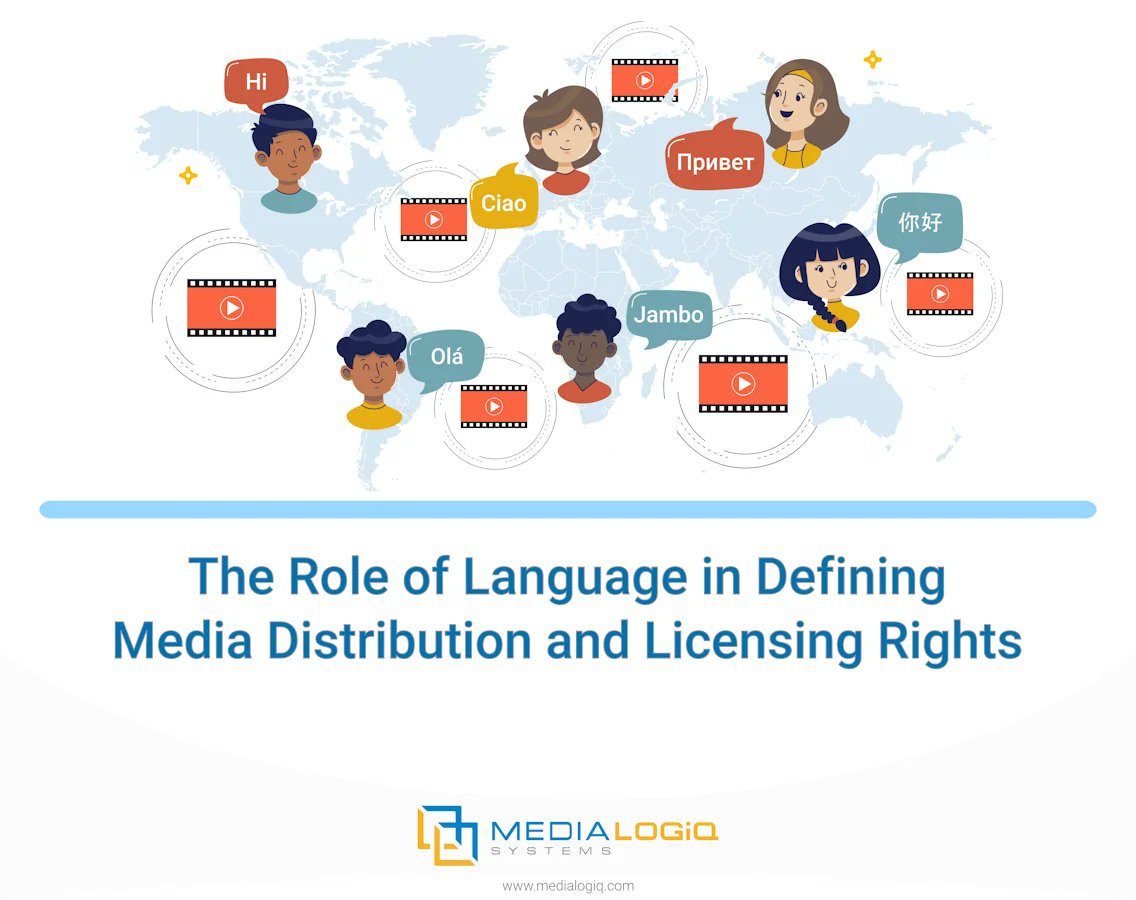
Role of Language in Defining Media Distribution and Licensing Rights
In media rights management, value is rarely lost in dramatic ways. It slips away quietly—through vague definitions, assumed meanings and missing dimensions. Among these, language is one of the most underestimated and yet commercially decisive elements in modern distribution and licensing.
As content circulates globally across platforms, regions and audiences, rights are no longer defined solely by where or how content is distributed, but also by the language in which content can be made available. The precision with which language is defined—or ignored—directly affects ownership clarity, availability accuracy and licensing revenue.
Rights as a Multi-Dimensional Structure
Distribution and licensing rights are best understood as a dynamic, interconnected system composed of five essential dimensions:
1. Product (Intellectual Property)
The core content itself: a film, series, episode, format or derivative work.
2. Distribution or Licensing Territory
The geographical regions where the rights can be exercised.
3. Distribution or Licensing Language
The specific language(s) in which the content can be distributed or licensed.
4. Distribution or Licensing Media or Right
The platform or medium through which the content is exploited (e.g., theatrical, TV, SVOD, AVOD, FAST, etc.).
5. License Type
The nature of the grant—whether exclusive, non-exclusive or subject to holdbacks.
These dimensions are deeply intertwined and must be viewed as a unified rights framework. Altering or neglecting any one dimension doesn’t simplify rights management—it compromises its accuracy and effectiveness.
From Owned Rights to Licensed Rights
A distributor’s role extends far beyond simply handling content; it involves acquiring or owning distribution rights, which together form a comprehensive rights repository. This repository reflects the full spectrum of the distributor’s legal entitlements, detailing what content can be exploited and under what conditions.
When a distributor negotiates deals with platforms, broadcasters or digital services, it doesn’t transfer its full ownership of rights. Instead, it licenses specific subsets of those rights, crafting Licensed Rights that mirror the same five core dimensions. These include the product itself, defined territories, language(s), specific media platforms and the nature of the license, including its exclusivity and time frame.
This alignment between owned rights and licensed rights is crucial. Any system that fails to model these rights with the same level of precision and dimensional depth risks introducing significant errors and uncertainties into the licensing process, creating potential legal and financial pitfalls.
Why Language Is Not Optional
Language is often treated as an attribute rather than a right. This assumption may have worked in simpler distribution models, but it breaks down in today’s reality.
Language plays a pivotal role in determining several critical factors: it defines which audiences can legally access content, dictates whether multiple licensees can operate within the same territory and influences whether dubbed, subtitled or original-language versions can be exploited separately. It also impacts whether a distributor retains residual value to monetize.
For instance, a distributor may hold all-language rights in a specific territory, allowing them to control the content in every language. Alternatively, they might only have rights to certain languages, such as Arabic and English, but not French. In other cases, some languages may already have been licensed to other parties, while others remain under the distributor’s control.
Without language as an explicit dimension, these important distinctions become blurred, leading to potential confusion and legal complications.
MediaRights: Language as a First-Class Rights Dimension
#MediaRights, the comprehensive rights management system from MedaLogiq Systems, recognizes language not as a secondary filter, but as a core structural dimension of rights.
Unlike systems that assume language is implicit within territory or media, #MediaRights supports:
🗹 Local and specific languages within a territory
🗹 Multiple languages per right
🗹 All-language or any-language ownership
🗹 Language-agnostic licensing when appropriate
This flexibility reflects real-world rights contracts, not theoretical simplifications.
When All Languages Are Owned
In many cases, a rights owner or distributor holds rights for all languages within a territory. #MediaRights accommodates this naturally:
🗹 The language dimension can be omitted when it is irrelevant
🗹 Or explicitly marked as “all languages”
🗹 Allowing licensing regardless of language without artificial constraints
This is a critical distinction: the system does not force unnecessary complexity, but it is ready when complexity exists.
Language Across Three Critical System Functions
#MediaRights embeds language intelligently across three key operational areas, ensuring consistency from ownership to sales.
1. Distribution (Owned) Rights
At the ownership level, #MediaRights allows distributors to precisely model:
🗹 Which languages are included in their rights
🗹 Whether rights are limited to specific language versions
🗹 Whether future language versions are covered
This creates a true representation of the rights repository, eliminating assumptions that often surface only when a deal is blocked—or worse, breached.
2. Availability Reports at Language Level
Availability reporting is where missing language dimensions cause the most damage. If a system cannot accurately distinguish language rights, availability reports may show rights as unavailable when they are, in fact, still open for licensing. Even worse, they may incorrectly display rights as available when those rights have already been licensed in a specific language, leading to confusion and potential conflicts.
#MediaRights generates language-aware availability reports, allowing users to see:
🗹 What is available
🗹 Where it is available
🗹 In which language(s)
🗹 And on which media and license terms
This level of accuracy supports confident sales decisions and protects contractual integrity.
3. Sales and Licensing Precision
In sales and licensing, language becomes a commercial lever.
#MediaRights enables:
🗹 Licensing by specific language within the same territory and media
🗹 Parallel licensing of different languages to different licensees
🗹 Clear enforcement of exclusivity and holdbacks at the language level
🗹 Sales teams can structure deals that maximize value without relying on manual checks, spreadsheets or institutional memory.
The Cost of Ignoring Language
Some rights management platforms still lack language as a formal dimension. While this may simplify system design, it often complicates real-world operations.
Users of such platforms may experience:
• Inaccurate availability reports
• Inability to model partial language deals
• Manual workarounds outside the system
• Increased risk of underutilization or over-licensing
These limitations do not just inconvenience users—they actively interfere with distribution strategy and revenue optimization.
Language Defines Modern Rights
In today’s media ecosystem, language is not a detail. It is a defining axis of rights.
A rights management system must be capable of reflecting the full dimensionality of real contracts—without forcing users to choose between simplicity and accuracy. #MediaRights achieves this balance by treating language as a first-class dimension, while remaining flexible enough to step aside when language is irrelevant.
As distribution becomes more global and more granular, the role of language in defining rights will only grow. Systems that recognize this reality empower their users. Systems that ignore it leave value—and certainty—on the table.
Looking to streamline and future-proof your global rights management? Visit our website (medialogiq.com/mediarights) or contact us at info@medialogiq.com today to learn how #MediaRights can modernize the way you manage rights and drive revenue.
#RightsManagement #DistributionRights #LanguageBasedRights #LicensingOverlapPrevention #AvailabiliyReporting #AvailabilityReport #RightsAvailability #Licensing #FilmDistribution #TVDistribution #ContentDistribution #Software #FilmDistributionSoftware #TVDistributionSoftware #MediaLicensing #RightsLicensing #IPLicensing #IntellectualPropertyLicensing #RightsManagement #RightsTracking #RightsManagementSoftware #media #ContentDistribution #filmtech #contenttech #entertainment #content #film #movies #tv #TVShows
3
5
38
Jan 26
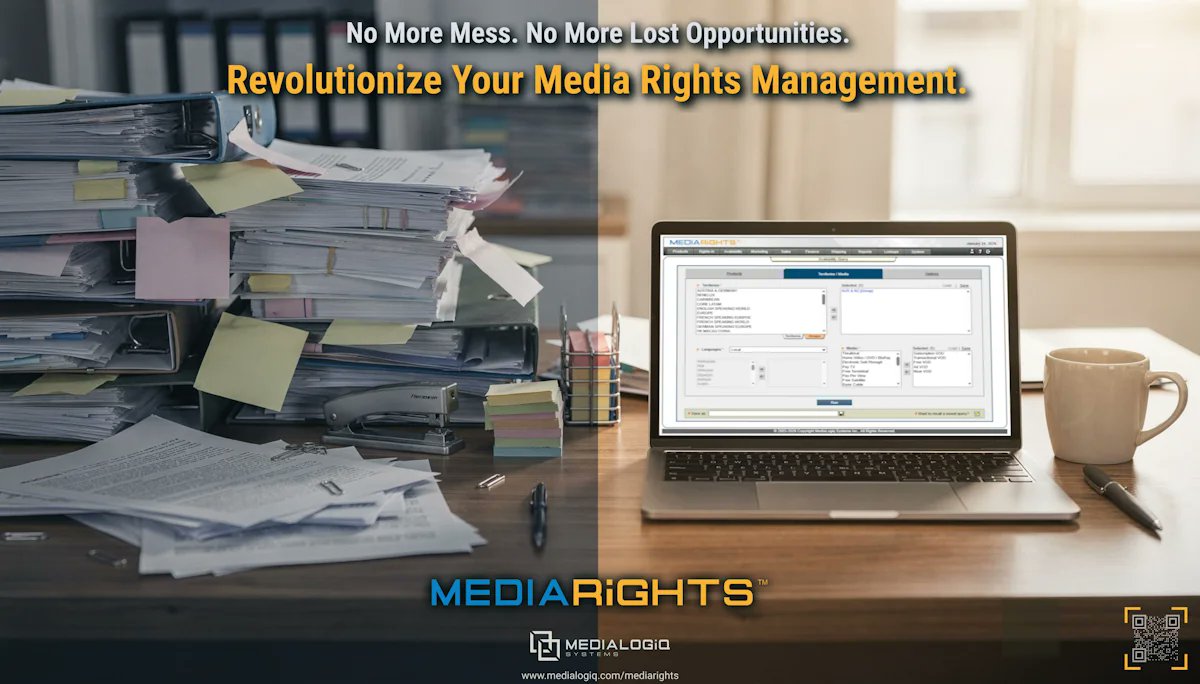
No More Mess. No More Lost Opportunities. Revolutionize Your Media Rights Management
Managing rights can feel like navigating a maze of contracts, paperwork, missed opportunities and financial details. Production and distribution companies face the challenge of keeping track of every agreement, licensing deal, distribution right, payment schedule, royalties, invoice and cash receipt—often leading to confusion, inefficiency, costly errors and financial discrepancies.
With #MediaRights, these problems are a thing of the past. Our platform offers a streamlined, cloud-based solution designed to eliminate the chaos of traditional rights management. No more lost opportunities due to disorganization and no more messy paperwork slowing you down.
While #MediaRights is built to meet the needs of large enterprises, MediaLogiq Systems also offers affordable, scalable plans tailored to midsize and small companies. Now, businesses of all sizes can access the same powerful tools to simplify their rights management and drive growth without the burden of complex, expensive solutions.
Revolutionize the way you manage media rights with an easy-to-use platform that unlocks new levels of efficiency, clarity, and control. With #MediaRights, you’ll spend less time on paperwork and more time on what matters—growing your business and seizing new opportunities.
Visit our website (medialogiq.com/mediarights) or contact us at info@medialogiq.com today to learn more about #MediaRights.
#ProductManagement #RightsManagement #DistributionRights #AvailabiliyReporting #AvailabilityReport #RightsAvailability #Marketing #Licensing #Invoicing #Royalties #FinancialManagement #MaterialServicing #FilmDistribution #TVDistribution #ContentDistribution #Software #FilmDistributionSoftware #TVDistributionSoftware #RightsLicensing #RightsManagement #RightsTracking #RightsManagementSoftware #media #ContentDistribution #filmtech #contenttech #entertainment #content #film #movies #tv #TVShows
2
4
45
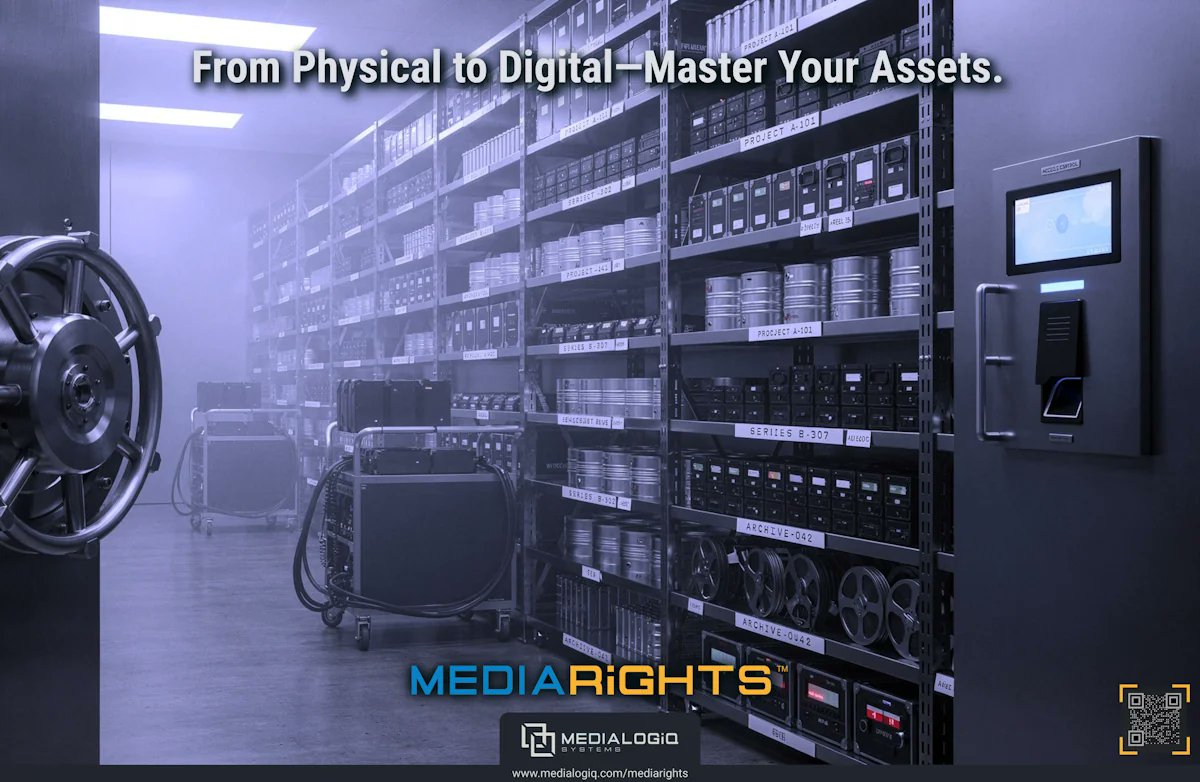
From Physical to Digital—Master Your Assets
Effective rights management hinges on keeping track of assets, whether they are physical items or digital files. #MediaRights, the comprehensive Rights Management System by MediaLogiq Systems, goes beyond basic tracking by allowing teams to monitor and manage assets through every step of their lifecycle. With its embedded asset management features, #MediaRights ensures that the details surrounding every asset are meticulously organized, making it easier to evaluate, track and prepare assets for shipping without the confusion and inefficiency of disorganized inventories.
Organizing Your Asset Library
In the world of media delivery, maintaining control over your assets is essential. #MediaRights makes it easy to track a vast universe of assets, from film reels to ProRes files and everything in between. The system provides a detailed view of each asset’s characteristics, which is especially beneficial for teams that need to make quick decisions about what is available and what requires further preparation. With MediaRights, users can see everything at a glance:
▪ Format and Resolution: Know exactly what type of asset you are working with, whether it is a high-definition ProRes file or a legacy tape format like DigiBeta.
▪ Audio/Subtitle Languages: Track all available language versions, including audio dubs and subtitle tracks, to ensure the right version is delivered to the right audience.
▪ Storage Location: Whether the asset is stored physically in a vault or digitally in the cloud, #MediaRights keeps a record of its exact location, helping you find it fast.
▪ Version Notes and Identifiers: Every asset’s version is tracked, along with any relevant identifiers, making sure you are always working with the most up-to-date files.
▪ Status and Quantity: Easily track the current status of each asset—whether it is available, on loan or in use—and monitor the quantity of assets available for distribution or delivery.
This comprehensive asset tracking is not just for cataloging; it is a vital tool for ensuring you can quickly assess what is available, what might need transcoding or dubbing and what is ready to ship.
The Shipping Management Edge
While #MediaRights excels at managing asset details, it also takes the headache out of shipping logistics. #MediaRights helps track when and where assets need to go without facilitating the actual delivery process. This feature ensures a smooth transition from asset preparation to dispatch, ensuring your team knows when materials are on the move and where they are headed.
The system captures all shipping information, including:
▪ Tracking Materials Requested by the Licensee: #MediaRights enables you to track assets specifically requested by the licensee as per the terms of the contract. This ensures the right materials are delivered in the right quantity and on time, in line with contractual obligations.
▪ Duplication Orders: If an asset needs to be duplicated, #MediaRights allows you to manage duplication orders. Track when duplication requests are made, how many copies are needed and the status of those orders, ensuring that the required assets are prepared and shipped without delay.
▪ Shipments in Progress: The software helps track assets as they are being shipped, giving you a clear record of what is currently in transit.
▪ Asset Lending and Returns: #MediaRights allows you to track which assets are on loan and when they are expected to return, helping you manage inventory effectively.
▪ Shipping Status: Keep tabs on the status of each asset’s shipment, whether it is ready to ship, in transit or returned, giving you a complete view of the asset’s journey.
Though #MediaRights does not handle the actual delivery process, it ensures that you are prepared for it. By tracking all the necessary shipping details, it gives teams the power to anticipate needs, manage inventory and ensure smooth handovers to third-party shipping providers.
Asset Management for the Modern Media Team
#MediaRights helps teams stay ahead by offering a centralized location for all asset-related information. It tracks everything from formats and language versions to shipping status and location, offering a streamlined process for preparing assets for delivery and keeping track of them along the way.
With its focus on managing metadata, versions, storage and shipping logistics, #MediaRights ensures your media assets are always accounted for, reducing errors and minimizing the risk of miscommunication or missed deadlines. Whether you are managing a handful of assets or thousands, #MediaRights helps you keep everything running smoothly.
Find out how #MediaRights can elevate your business by visiting our website (medialogiq.com/mediarights) or getting in touch with us at info@medialogiq.com today.
#AssetManagement #ContentFulfillment #DuplicationOrder #EntertainmentLogistics #MaterialServicing #MediaDeliverables #MaterialShipping #MaterialDelivery #MasterCopy #DistributionRights #AvailabiliyReporting #AvailabilityReport #RightsAvailability #FilmDistribution #TVDistribution #ContentDistribution #FilmDistributionSoftware #TVDistributionSoftware #RightsLicensing #RightsManagement #RightsTracking #RightsManagementSoftware #media #ContentDistribution #filmtech #contenttech #entertainment #content #film #movies #tv #TVShows
2
5
41
8 Dec 2025
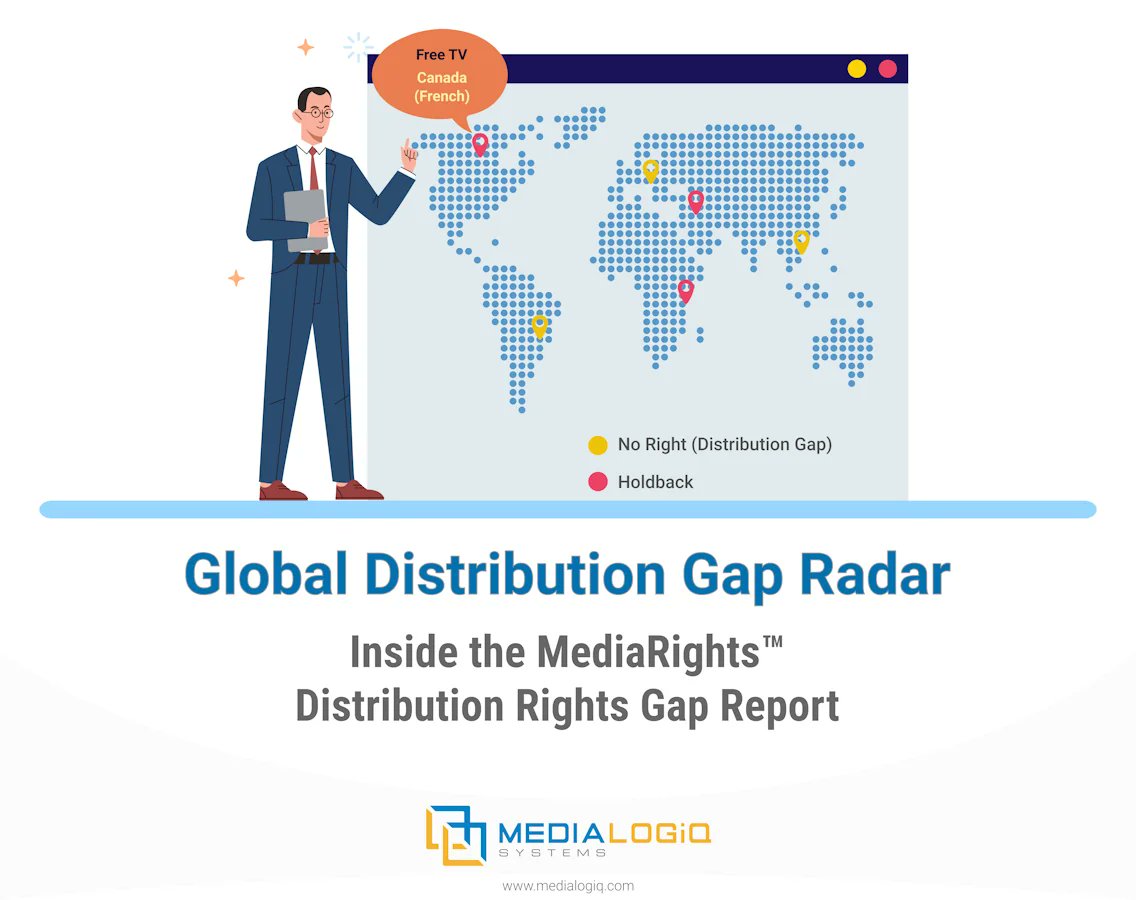
Global Distribution Gap Radar: Inside the MediaRights Distribution Rights Gap Report
Navigating the complexities of global media rights is like assembling a massive jigsaw puzzle, where each missing piece represents a missed opportunity. Every territory, language and medium isn’t just a potential revenue stream, but also a hidden risk. The world of media rights is vast, fragmented and fast-paced, where even the slightest oversight can cost you valuable deals and licensing opportunities. With the constant evolution of digital platforms, emerging markets and licensing trends, rights holders must maintain a sharp focus on every detail, because the consequences are significant and even the smallest oversight can result in missed opportunities for global success.
Managing media rights involves far more than signing contracts — it demands precise tracking, continuous updates, and above all, accurate recording. A simple misentered territory, a forgotten language or an incorrect media can lead to costly errors and missed opportunities. These gaps, often hidden in the sea of data, represent the areas of your rights portfolio where distribution rights are either missing or improperly recorded, leaving valuable income on the table.
#MediaRights, a comprehensive rights management and licensing platform developed by MediaLogiq Systems, is designed to address these complexities head-on. The platform empowers users with the ability to manage and track rights across products, territories, languages and media. It offers a full suite of detailed and summary reports, availability tracking and a range of other powerful features. These tools ensure that every distribution right is accounted for, providing clarity, precision and actionable insights to maximize licensing opportunities.
Among all of these valuable features, one stands out as an invaluable tool — the Distribution Rights Gap Report.
Bridging Global Distribution Gaps
The Distribution Rights Gap Report is a vital asset for rights managers, enabling them to pinpoint where gaps exist in their distribution rights portfolio. This tool is not just another report; it is an intelligent system that continuously scans your entire rights landscape, identifying areas where rights are either missing or where misapplications have occurred, allowing you to act fast and strategically.
The beauty of the Gap Report lies in its simplicity and depth. Users can filter data by product, territory, language and medium, making it easy to visualize gaps. These gaps could be due to oversights, data entry mistakes or strategic holdbacks, but regardless of the cause, the report makes it clear where action is needed. It ensures that users don’t just spot these issues — they can act on them with speed and confidence.
However, while the Distribution Rights Gap Report is a significant advantage, it’s just one piece of the puzzle. #MediaRights offers a broad range of comprehensive reports and tools that allow users to track availability, run detailed analytics and monitor distribution rights at the most granular level, across any combination of products, territories, languages and media. Together, these capabilities ensure that users can stay on top of their entire rights portfolio, optimize licensing strategies and spot new opportunities with ease.
Granular Detail for Strategic Insight
One of the standout features of #MediaRights is its ability to deliver granular detail across various dimensions of rights management. While other platforms may offer basic rights tracking, #MediaRights allows users to filter rights data by specific parameters, such as title, territory, language and medium, all in a way that makes sense for their specific needs.
For example, you might be managing a highly popular film that’s already licensed in major territories like the US, UK, Canada and Australia, but notice gaps in other markets across Central or Southeast Asia and Polynesia. Using the Gap Report, you can quickly identify these gaps and then make informed decisions about pursuing rights acquisition in those markets. This level of detail allows rights holders to optimize licensing strategies and ensure no potential market is left unexploited.
Delivered in a user-friendly Excel format, the report makes it easy to manipulate, analyze and share data with stakeholders. Whether working with a team or presenting findings to senior executives, the Excel output allows for quick access to actionable insights that can be acted upon immediately. By making the report so accessible and actionable, #MediaRights ensures that rights managers can move from identifying gaps to taking strategic actions with minimal friction.
How the Gap Report Unlocks Business Opportunities
The Distribution Rights Gap Report is more than just a tool for identifying missing rights — it serves as a springboard for strategic action. By revealing where your distribution rights fall short, the report not only pinpoints gaps in your licensing coverage but also gives you the opportunity to:
🗹 Fix Data Entry Mistakes: Errors are inevitable in any system, but the Gap Report makes it easy to pinpoint where misentries have occurred. Whether it’s a misentered territory or an incorrect media type, the report flags mistakes so that users can correct them swiftly, keeping their rights portfolio accurate and complete.
🗹 Prioritize Acquisition of Missing Rights: The Gap Report helps you quickly identify key territories, languages or media where rights are missing. You can then prioritize these areas and negotiate to acquire the necessary rights before competitors can enter the market.
🗹 Expand Your Distribution Portfolio: The Gap Report gives you an opportunity to explore areas of your rights portfolio that may have been previously underutilized. If certain territories, languages or media were overlooked, this report enables you to revisit those gaps and pursue further acquisitions, opening up additional revenue streams.
🗹 Maximize Licensing Opportunities: The ability to spot gaps in your rights management gives you the opportunity to negotiate additional deals. By identifying gaps where you lack distribution rights, you can approach licensors to fill those voids, ensuring that no part of your portfolio remains underexploited.
To conclude, the Distribution Rights Gap Report is a valuable tool within #MediaRights, helping users identify gaps, fix errors and expand their acquisitions. With a complete set of reports and analytics, it ensures portfolios are always accurate, well-optimized and primed for success.
Looking to enhance and optimize your global rights management?
Visit our website (medialogiq.com/mediarights) or contact us at info@medialogiq.com today to find out how #MediaRights can help you manage rights more efficiently and maximize revenue.
#DistributionRightsGapReport #RightsGapAnalysis
#DistributionHoldback #Holdback #DistributionRights #RightsPortfolio #RightsManagement #RightsAvailability #FilmDistribution #TVDistribution #ContentDistribution #FilmDistributionSoftware #TVDistributionSoftware #RightsLicensing #MediaLicensing #RightsManagement #RightsTracking #RightsManagementSoftware #media #ContentDistribution #filmtech #contenttech #entertainment #media #content #film #movies #tv #tvshows
2
5
40
17 Sep 2025
Connect With Us at MIPCOM 2025!
Medialogiq Systems is attending MIPCOM 2025 at the Palais des Festivals, Cannes, from October 13–16, 2025. We would appreciate the opportunity to discuss your needs and demonstrate how our solutions can benefit your business.
Please let us know if you would like to arrange a live demo session during the event.
Contact us at info@medialogiq.com or visit our website at medialogiq.com/contact-us to book a meeting.
We look forward to connecting with you at the event.
#MIPCOM2025 #MIPCOM #Cannes #MediaLogiq #MediaLogiqSystems #InternationalTVResearch #ITVR #MediaRights #TVAnalytics #ContentTracking #AudienceMeasurement #TVRatings #TAM #TelevisionAudienceMeasurement #AudienceReporting #AudienceAnalytics #AudienceAnalysis #TelecastPerformance #ContentPerformance #FilmDistribution #TVDistribution #ContentDistribution #FilmDistributionSoftware #TVDistributionSoftware #RightsLicensing #RightsManagement #RightsTracking #RightsManagementSoftware #entertainment #media #content #film #movies #tv #tvseries #tvprogram

2
5
43
14 Jul 2025
Optimizing Licensing with MediaRights (Part 1): Understanding Territories, Groups and Regions
Managing distribution rights across multiple countries, regions or platforms can quickly become complex. That’s why #MediaRights offers a flexible and powerful system for organizing territories, territory groups and geographical regions. Understanding how these elements work together is essential for efficient rights management. In this article, we will explore what each concept means, how they interact and best practices for using them effectively.
Territories: The Foundation of Rights Management
In #MediaRights, a Territory typically refers to a specific geographical area where content rights can be granted or restricted. This could be as broad as the United States or as specific as French Guiana.
One of the standout features of #MediaRights is its support for user-defined territories. This means you are not limited to a preset list. You can define new territories tailored to your business needs, whether that means individual provinces of Canada or small Caribbean islands like Turks and Caicos Islands or Saint Lucia.
Regions: A Simple Way to Categorize Territories
To simplify selection and categorization, #MediaRights lets you assign a Region to each territory. Regions are essentially group labels that help organize your territories into logical clusters.
For example:
Territories like France, Germany and Spain might all belong to the region Europe, while Japan, South Korea and Thailand could be part of the region Asia Pacific.
This approach makes filtering and selection more intuitive, especially when working with a large number of territories. Note that each territory belongs to only one region, which helps avoid ambiguity.
Territory Groups: Create Custom Combinations
While regions are hierarchical and one-to-one, Territory Groups are where the real flexibility begins. #MediaRights allows you to define unlimited territory groups — customized sets of territories that reflect your business logic.
Some common examples include:
• “Worldwide” — a group that includes all available territories.
• “English-Speaking Markets” — a group consisting of the US, UK, Canada, Australia and similar regions.
• “French-Speaking Europe” — a group that includes European territories with significant French-speaking populations, such as France, Belgium, Switzerland and Luxembourg.
Territory groups can overlap and coexist, which means one territory can be part of multiple groups depending on context. This is especially useful when creating distribution rights, checking avails or working on acquisition and sales contracts.
Practical Use Cases
The combined use of Territories, Territory Groups and Regions in #MediaRights provides a powerful toolkit for streamlining everyday rights management tasks. Here is how they can be applied in real-world workflows:
🗹 Define and Query Distribution Rights Efficiently
When setting up new distribution rights, using predefined territory groups (like “Europe excluding UK” or “LATAM”) saves time and ensures consistency. Similarly, when querying existing distribution rights or availability, you can filter by region or group to simplify and accelerate the search process.
🗹 Quickly Check Title Availability
Rather than manually inspecting availability across dozens of countries, you can instantly query by group (e.g., “Asia Pacific Streaming Markets”) or by region (e.g., “EMEA”). This makes identifying open territories fast and accurate, helping your team act quickly on licensing opportunities.
🗹 Streamline Sales and License Entry
From pitching to finalizing deals, territory structures enhance your sales workflow:
• Sales teams can align offers with territory groups like “Worldwide excluding US.”
• When adding license rights, assigning territories through groups reduces errors and speeds up entry, especially for complex multi-territory deals.
• This structure also promotes consistency across #MediaRights, contract documentation and other systems, reducing mismatches and manual rework.
🗹 Generate fast and Clear Sales Reports
Structured geography in reporting brings clarity at every level—regions offer high-level overviews, territory groups allow focus on specific market segments and individual territories enable detailed country-level analysis. This layered approach makes reporting both scalable and decision-ready.
By leveraging user-defined territories, regions and flexible territory groups, #MediaRights enables precise scalable rights management. Whether you are defining rights, selling content, checking availability or reporting performance, this structure keeps your operations clear, fast and future-proof.
Looking to streamline and future-proof your global rights management? Visit our website (medialogiq.com/mediarights) or contact us at info@medialogiq.com today to learn how #MediaRights can modernize the way you manage rights and drive revenue.
#TerritoryManagement #TerritoryGroups #GeographicRegions #MultiTerritoryDeals
#Customization #MetadataManagement #DistributionRights #AvailabiliyReporting #AvailabilityReport #RightsAvailability #FilmDistribution #TVDistribution #ContentDistribution #FilmDistributionSoftware #TVDistributionSoftware #RightsLicensing #RightsManagement #RightsTracking #RightsManagementSoftware #media #ContentDistribution #filmtech #contenttech #entertainment #content #film #movies #tv #tvshows
2
4
38
27 May 2025
The Power of Customization: How MediaRights Adapts to Your Workflow
In the media and entertainment industry, no two organizations are alike. Licensing models, product lines, territories and financial structures vary widely—even within the same company over time. Traditional rights management systems often impose rigid frameworks that force teams to conform to someone else’s logic.
#MediaRights takes a different approach. Designed around a highly flexible, user-defined architecture, #MediaRights allows you to customize virtually every aspect of the platform to reflect your real-world workflow. From the products you manage to the currencies you report in, you define how the system works for you—not the other way around.
Whether you’re distributing films globally, managing TV rights by region, or licensing merchandise, #MediaRights adapts to your business logic with ease.
Product Types: Tailored to Your IP Strategy
#MediaRights enables you to define an unlimited variety of product types based on the scope of your business. The platform doesn’t restrict you to predefined categories—instead, you can add, edit and organize product types as your catalog evolves.
Examples of Product Types:
Audiovisual Content:
• TV Series
• TV Mini-Series
• Theatrical Feature Film
• Short Film
• Special
• Interstitial
• Podcast
• Digital Series
• Webisode
Merchandising and Extensions:
• Digital Games and Apps
• Apparel
• Accessories and Footwear
• Food and Beverage
• Consumer Electronics
• Health and Beauty
• Publishing
• Stationery and Paper Goods
• Toys
• Home Furnishings
• Gifts and Novelties
• Live Events / Themed Entertainment
• Promotions
These are just examples—you can create as many product types as you need to reflect your business model, brand strategy and future expansion.
Media Types: Reflect Your Real Distribution Strategy
Different rights apply to different platforms, formats and use cases. With #MediaRights, you can define the exact media rights relevant to your deals—without being locked into a preset list. As your business enters new platforms or develops new distribution models, your rights taxonomy can grow with you.
Examples of Media Types:
• Theatrical
• Non-Theatrical
• Free TV
• Pay TV
• Subscription VOD (SVOD)
• Transactional VOD (TVOD)
• Ad-Supported VOD (AVOD)
• Pay-Per-View (PPV)
• FAST (Free Ad-Supported Streaming TV)
• Electronic Sell-Through (EST)
• Catch-Up FVOD
• Catch-Up AVOD
• Internet
• Mobile
• Hotels
• Airlines
• Ships
• Festival
• Educational
• Merchandising
• Format (Scripted and Non-Scripted)
• Impact Promotion
• Impact Screening
This is a customizable list—add any media type that fits your current and future licensing needs.
Territories and Regions: Map the World as You Operate
Geographical licensing is rarely straightforward. #MediaRights gives you complete freedom to define individual territories, regional groupings and even niche markets according to your operational needs.
Examples of Custom Definitions:
• Territories (e.g. Canada, Italy, France, Brazil)
• Regions (e.g. Caribbean, EMEA, LATAM, APAC)
• Territory groups (e.g. German-Speaking Europe, French-speaking Africa, CIS, Nordics)
Add, modify and group territories in ways that align with your distribution logic—there’s no limit to how specific or broad your definitions can be.
Channels and Distribution Platforms: Stay Aligned with Your Partners
Content today lives across hundreds of platforms. #MediaRights allows you to maintain a comprehensive and evolving list of all the channels and platforms where your IP is distributed or promoted.
Examples of Channels:
• Regional broadcasters (e.g. ARTE, ZeeTV, NHK)
• Global streamers (e.g. Netflix, Disney , Prime Video)
• FAST platforms (e.g. Pluto TV, Tubi, Roku Channel)
• Event-based exhibitors (e.g. Cannes, TIFF, SXSW)
Your organization can create a living database of every platform or partner it works with—adding new channels and modifying old ones as the landscape shifts.
Credits, Events and Awards: Structure Recognition and Metadata
Whether it’s internal reporting, external promotion or legal obligations, organizing credits and accolades properly is key. #MediaRights lets you define any credit types, award categories or industry events relevant to your content.
Examples Include:
Credit Types:
• Executive Producer
• Creator
• Director
• Actor/Actress
• Line Producer
Events:
• Berlinale
• Emmys
• Oscars
• Golden Globes
• Webby Awards
Awards:
• Best Film
• Best Director
• Best Actor
• Best Actress
• Best Animation
• Best Screenplay
• Audience Choice Award
You’re not restricted by templates—customize your metadata to reflect your creative hierarchy and industry recognition.
Currencies and Live Exchange Rates: Financial Precision Across Markets
Financial tracking across multiple currencies is a core requirement for global media companies. #MediaRights gives you full control over how you manage currencies in deals, reporting and forecasting—while also supporting real-time exchange rate updates.
Key Customization Features:
▪Define home currency and currencies per deal (e.g. USD, EUR, GBP, CAD, AUD, JPY)
▪Integrate with live exchange rate APIs to auto-convert financial values
▪Lock exchange rates to protect against fluctuations during sensitive deal windows
▪Enable reporting in home currency or deal currencies to suit different stakeholders (e.g. finance vs. sales)
Add as many currencies as needed and configure exchange settings that match your internal finance policies.
Distribution Expenses: Bring Operational Clarity
Tracking distribution-related costs is essential for budgeting, reporting and deal evaluation. #MediaRights allows you to define and monitor every type of expense relevant to your content and campaigns.
Examples of Distribution Expense Types:
• Localization (Dubbing, Subtitling)
• Legal Services (Clearance, Contract Review)
• Marketing and Promotions
• Digital Platform Onboarding Fees
You can create unlimited capped or uncapped expense categories and subcategories to reflect your actual cost structures and workflows
Assets Storage Locations and Material Types: Track Your Content Deliverables
Managing the assets tied to your IP—both digital and physical—is just as important as managing rights. #MediaRights gives you full flexibility to define material types, formats and storage locations based on your operational setup.
Examples of Material Types:
• Master Files (HD, 4K, ProRes, etc.)
• Promo Trailers and Teasers
• Digital Cinema Package (DCP)
• Subtitles
• Closed Captions
• Artwork and Posters
• Social Media Assets
• Scripts and Bibles
Examples of Asset Storage Locations:
• Cloud Storage (e.g. AWS, Google Cloud)
• In-House Servers
• Third-Party Vaults
• Physical Archives
• Vendor Repositories
Customize as many types and locations as needed to reflect your production pipeline and archiving strategy.
Why Customization Matters: Real Business Benefits
🗹 Workflow Consistency – Align teams around a shared system that reflects your business, not someone else’s template
🗹 Scalability – As your operations grow, #MediaRights grows with you—no retooling required
🗹 Speed and Accuracy – Custom lookups mean faster data entry, cleaner reports and fewer mistakes
🗹 Adaptability – Add or modify entries at any time to keep pace with new partnerships, platforms or product lines
A System That Grows With You
#MediaRights isn’t just a tool—it’s a flexible framework designed to mirror how your business actually works. Every list you see in this article is just a starting point. You have the power to define your own product types, rights, currencies, territories, platforms and more.
Because the future of media operations doesn’t lie in standardization—it lies in customization.
Ready to take control of your workflow?
Visit our website (medialogiq.com/mediarights) or contact us at info@medialogiq.com today to see how a fully customizable system can transform the way you manage your rights, content and revenue.
#Customization #CustomizableWorkflow #MetadataManagement #DistributionRights #AvailabiliyReporting #AvailabilityReport #RightsAvailability #FilmDistribution #TVDistribution #ContentDistribution #FilmDistributionSoftware #TVDistributionSoftware #RightsLicensing #RightsManagement #RightsTracking #RightsManagementSoftware #media #ContentDistribution #filmtech #contenttech #entertainment #content #film #movies #tv #tvshows
3
5
58
28 Apr 2025
The Art of Shipping Entertainment
In the entertainment industry, getting a deal signed is only half the story—the real plot twist begins with delivering the goods. From global streaming giants to niche broadcasters, every licensed title demands a behind-the-scenes coordination effort: sourcing masters, tracking formats, managing assets and getting content into the right hands, on time, every time. This is where #MediaRights steps in—not just as a rights management platform, but as the orchestrator of content logistics, turning the complex task of material servicing and shipping into a streamlined, intelligent and surprisingly elegant operation.
Defining Materials at the Deal Stage
Material servicing in #MediaRights doesn’t wait until after the paperwork is signed—it begins the moment a deal is created. Right within the sales order or contract, users can define exactly what materials need to be delivered for each product: whether that’s full-length masters, promos, subtitled versions or metadata packs.
What sets #MediaRights apart is the level of granularity. Material requirements can be specified per line item, allowing for tailored delivery strategies across multi-title deals. For each product, users can outline:
▪ Technical formats (SD, HD, 4K, PAL/NTSC, etc.)
▪ Audio/video specs (language versions, channel configs)
▪ Physical or digital delivery methods
▪ Associated fees and shipping instructions
It’s a proactive, deal-aware approach to fulfillment that ensures nothing falls through the cracks later on. And while many shipments are contract-based, #MediaRights also supports non-contractual servicing, such as sending promotional assets, trailers or festival screeners. This flexibility means users can handle a wide range of requests with the same ease and precision.
Managing the Asset Universe
Behind every great delivery is a well-organized vault. #MediaRights comes equipped with a fully embedded asset management system, giving teams full visibility into the materials they have—before they commit to what they need to send.
Assets can be anything from film reels and DigiBeta tapes to ProRes files, subtitle tracks and audio dubs. Each entry supports detailed metadata:
▪ Format and resolution
▪ Audio/subtitle languages
▪ Storage location (physical or digital)
▪ Version notes, identifiers and more
This isn’t just a digital library—it’s a servicing command center, letting you quickly assess what’s ready to go, what needs to be dubbed or transcoded and where it’s all stored.
Material Servicing in Action
Once contracts are live and materials are requested, the Material Servicing Panel becomes the operational hub. Here’s where logistics meets user experience:
▪ Pull a real-time list of upcoming or overdue requests
▪ Filter by product, licensee, format or delivery method
▪ Match requests with available assets
▪ Trigger duplication, conversion or subtitling workflows
▪Initiate physical shipments or digital deliveries
Material servicing in #MediaRights can be tied directly to a contract—as the fulfillment of a deal’s agreed-upon terms—or it can be initiated as a standalone request, such as delivering promotional materials, screeners or trailers to marketing partners, festival coordinators or platform curators. Both types of servicing follow a similar streamlined workflow, giving teams full flexibility in how they manage different content distribution scenarios.
Whether you’re sending a French-dubbed version of a drama to Canada or uploading a 4K master for a VOD launch in Southeast Asia, #MediaRights keeps everything traceable and on-task.
#MediaRights also keeps a detailed record of every step—from duplication orders and subtitle or dubbing workflows to final shipments—complete with logs, timestamps and delivery statuses. So instead of chasing down updates, your team always knows exactly where every asset is, and the “Where is that master?” email becomes a thing of the past.
There Is a Delivery Behind Every Story
Material servicing isn’t just about shipping files—it’s about delivering on the promise of a story. A signed contract may close the deal, but it’s the actual delivery of the content that brings it to life for audiences around the world. Whether it’s a drama dubbed in Spanish or a trailer ready for a festival, getting the right version to the right place is what truly activates the viewing experience.
#MediaRights makes that possible—without the drama. By seamlessly connecting sales data with asset availability and operational workflows, the platform turns what used to be a logistical tangle into a smooth, strategic process. It’s where smart technology meets storytelling execution.
The entertainment supply chain doesn’t end with a handshake—it ends when the right file (or reel/disc) reaches the right screen, at the right moment. #MediaRights is built to make that moment frictionless, traceable and even enjoyable for the teams behind the scenes.
In a world where rights are global, windows are short and expectations are high, #MediaRights redefines the art of shipping entertainment—with smart tools, streamlined workflows and a whole lot less chaos.
Visit our website (medialogiq.com/mediarights) or contact us at info@medialogiq.com today to learn more about how #MediaRights can empower your business.
#AssetManagement #ContentFulfillment #DuplicationOrder #EntertainmentLogistics #MaterialServicing #MediaDeliverables #MaterialShipping #MaterialDelivery #MasterCopy #Promos #DistributionRights #AvailabiliyReporting #AvailabilityReport #RightsAvailability #FilmDistribution #TVDistribution #ContentDistribution #FilmDistributionSoftware #TVDistributionSoftware #RightsLicensing #RightsManagement #RightsTracking #RightsManagementSoftware #media #ContentDistribution #filmtech #contenttech #entertainment #content #film #movies #tv #TVShows
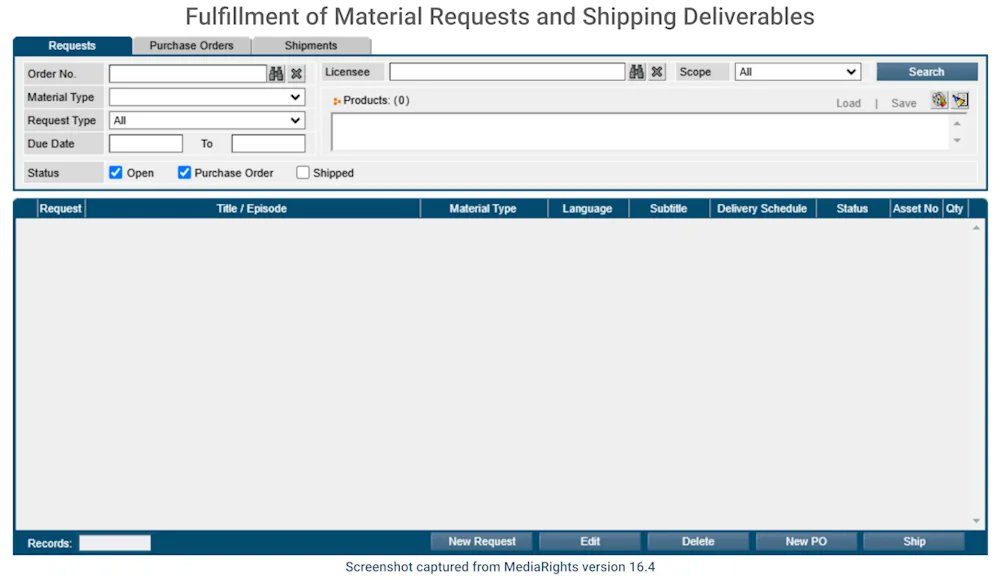
2
5
52
31 Mar 2025
MediaRights: An Enterprise-Wide Solution with Cross-Division Collaboration
Picture a media empire where divisions operate at the edge of brilliance—each a sovereign force, yet seamlessly interconnected by an invisible thread of innovation. Traditional systems are clunky, fragmented, and struggle to keep up with the lightning-fast pace of today’s media landscape. #MediaRights shatters these limitations. It’s not just a solution—it’s a game-changer. A cloud-based powerhouse designed for the modern age, #MediaRights seamlessly integrates an enterprise’s diverse divisions, giving them the freedom to operate independently while empowering effortless collaboration. Imagine an ecosystem where each division acts as an autonomous unit, yet transparency, security, and coordination flow naturally between them. That’s the transformative power of #MediaRights.
A New Era in Rights Management
What sets #MediaRights apart is its ability to enable cross-division collaboration without sacrificing the privacy or independence of individual units. It offers a scalable and intelligent framework that allows large, multifaceted enterprises to manage rights across multiple divisions seamlessly. Whether you’re in television, film, music, or any other media domain, the ability to share rights, access valuable resources, and collaborate across divisions is crucial. Yet, every division within an enterprise still requires autonomy and confidentiality to preserve its competitive edge.
Freedom to Collaborate, Privacy to Compete
In the traditional model, rights management systems often force divisions to be overly dependent on each other, creating bottlenecks and security concerns. However, with #MediaRights, divisions can act independently while still operating under the umbrella of the larger enterprise. Each division can produce, acquire, and distribute its own content while maintaining exclusive control over their rights and products.
At the same time, #MediaRights introduces an unprecedented level of cross-division collaboration. The system allows divisions to share their assets for marketing, licensing, and distribution, while maintaining strict control over the level of access and visibility each other’s rights have. This means divisions can pool their resources when necessary but never at the cost of their autonomy. It’s a delicate balance, and #MediaRights makes it look effortless.
Enterprise-Wide Availability and Licensing Control in Real Time
One of the standout features of #MediaRights is its ability to manage licensing rights across an entire enterprise in real time. Imagine a scenario where one division secures a major licensing agreement for a much-anticipated piece of content. With #MediaRights, the deal instantly reflects in the availability reports across the enterprise. Crucially, no other division can inadvertently enter into a conflicting deal. If the rights are exclusive or put under a holdback, the system automatically restricts access, protecting the integrity of the agreement and avoiding costly mistakes. This dynamic level of control ensures that there is never any overlap or misunderstanding regarding rights usage.
This real-time reflection of licensing agreements creates a more streamlined and transparent process across the enterprise, allowing teams to work smarter, faster, and with more confidence.
Individual Control, Enterprise-Wide Visibility
While #MediaRights allows divisions to maintain full control over their acquisitions and distribution, it also allows them to determine who within the enterprise can access and modify specific rights and deals. This customizable permissions structure ensures that sensitive data, such as sales orders or acquisition agreements, can be protected at the most granular level.
Divisions can set restrictions to control whether a deal is visible and editable only within their unit, across the entire enterprise, or even for specific teams or preset users within the company. This flexibility is vital in industries where the wrong information at the wrong time can lead to major financial and strategic repercussions. With #MediaRights, you can be sure that no deal is accidentally altered or accessed by someone without the proper permissions.
In summary, #MediaRights is revolutionizing rights management with its ability to balance autonomy and collaboration. It allows large media enterprises to function as a unified ecosystem, where divisions have the freedom to act independently while maintaining enterprise-wide coordination. It’s the ultimate solution for media organizations looking to manage complex, multi-division licensing and distribution in a way that is both secure and flexible, future-proofing them for a rapidly evolving digital landscape.
Ready to revolutionize your distribution workflow?
Visit our website (medialogiq.com/mediarights) or contact us at info@medialogiq.com today to learn more about how #MediaRights can empower your business.
#Enterprise #DistributionRights #AvailabiliyReporting #AvailabilityReport #RightsAvailability #FilmDistribution #TVDistribution #ContentDistribution #FilmDistributionSoftware #TVDistributionSoftware #RightsLicensing #RightsManagement #RightsTracking #RightsManagementSoftware #media #ContentDistribution #filmtech #contenttech #entertainment #content #film #movies #tv #TVShows
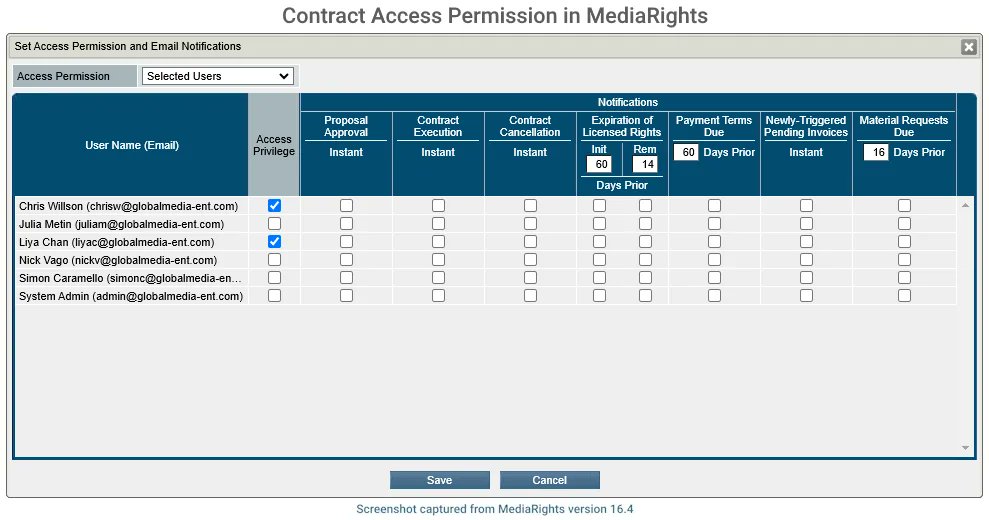
2
4
30
10 Mar 2025
What is 2FA and How Two-Factor Authentication Enhances Security?
As the digital landscape continues to expand, the risks to our online security have never been more pronounced. With the rise of cybercrime and data breaches, users need to ensure that their personal and corporate information remains protected from unauthorized access. So, how do you safeguard your personal and corporate information in a world where threats are evolving every day? Enter Two-Factor Authentication (2FA)—a game-changing security feature that provides an added layer of defense against unauthorized access. In this article, we’ll break down the power of 2FA, how it keeps your data safe, and how #MediaRights is using it to give users the peace of mind they deserve.
What is 2FA?
Two-Factor Authentication (2FA) is an advanced security measure designed to add an extra layer of protection when accessing online accounts or systems. Unlike traditional authentication methods, such as simply entering a username and password, 2FA requires users to provide two different types of information before gaining access to their account. This two-step process helps ensure that even if an attacker has access to one form of authentication (e.g., a password), they would still be unable to breach the system without the second layer of security.
The two factors typically used in 2FA include:
▪ Something You Know: This is generally the user’s password or PIN, something they have set and know.
▪ Something You Have: This could be a temporary code sent to the user’s mobile device, email or generated through an authenticator app. This code is often time-sensitive and expires after a short period, making it harder for cybercriminals to use if intercepted.
By requiring two distinct forms of verification, 2FA significantly reduces the chances of unauthorized access, making it one of the most effective ways to protect online accounts from potential threats.
2FA in MediaRights Authentication
#MediaRights takes user security seriously, offering 2FA as an optional yet powerful feature that can further safeguard your account. With #MediaRights, users can activate 2FA during the authentication process, providing an additional layer of identity verification after the standard login procedure.
When logging into a #MediaRights account, the system first prompts users to enter their user ID and password—the conventional authentication method. Once the correct credentials are submitted, #MediaRights will initiate the second phase of authentication by opening up a new dialog box for identity verification.
This new layer of protection involves sending a one-time passcode (OTP) to the user’s corporate email address. The OTP is unique and valid only for 120 seconds to ensure the security of the process. Upon entering this passcode into the verification dialog, users are granted access to their #MediaRights account.
Trust This Device: Simplifying Future Logins
#MediaRights understands that while 2FA is vital for enhancing security, it can sometimes be an extra step for users who log in frequently from the same device. To balance security with convenience, #MediaRights offers a helpful feature: “Trust this device”.
Once 2FA has been successfully completed on a particular device, users have the option to activate a checkbox that will “trust” the device. This means that for the next 90 days, users won’t be prompted for identity verification every time they log in from that device. It provides a convenient, secure solution for frequent logins while maintaining a robust level of security.
However, the security benefits of 2FA are not compromised by this feature. Users can still rely on the second layer of protection when accessing their accounts from other devices, ensuring their data remains secure wherever they go.
Why 2FA Matters for MediaRights Users
With increasing threats from cybercriminals, having strong security measures in place is essential, especially for professionals who handle sensitive media or business data. By implementing 2FA, #MediaRights is helping users strengthen their account security, providing a dual-layer defense against unauthorized access.
With the added benefit of the “Trust this device” option, #MediaRights ensures that users can maintain high security without sacrificing ease of use. This flexible approach allows users to secure their accounts while making everyday logins more efficient.
Two-Factor Authentication is no longer just a luxury—it is a necessity in today’s digital world. By integrating 2FA into its authentication system, #MediaRights is taking significant steps to enhance the security of its platform, protecting users’ sensitive data from potential breaches. With an easy-to-use yet highly effective 2FA system and a user-friendly “Trust this device” option, #MediaRights is making it easier than ever for users to safeguard their information while enjoying a smooth and flawless login experience.
Incorporating 2FA is a small step that leads to a much safer digital environment—ensuring your data stays protected with #MediaRights.
Visit our website (medialogiq.com/mediarights) or contact us at info@medialogiq.com today to learn more about how #MediaRights can empower your business.
#security #2FA #OTP #UserAuthentication #UserLogin #DistributionRights #AvailabiliyReporting #AvailabilityReport #RightsAvailability #FilmDistribution #TVDistribution #ContentDistribution #FilmDistributionSoftware #TVDistributionSoftware #RightsLicensing #RightsManagement #RightsTracking #RightsManagementSoftware #media #ContentDistribution #filmtech #contenttech #entertainment #content #film #movies #tv #TVShows

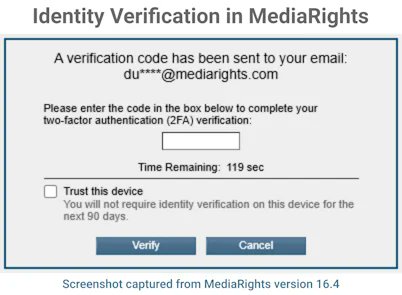
2
4
27
24 Feb 2025
In an age where data is the backbone of every business, protecting sensitive information has never been more critical. #MediaRights, a powerful, web-based rights management system designed for media companies to manage their intellectual property, licensing and distribution, ensures your data is shielded every step of the way. As businesses increasingly rely on online platforms to manage valuable information, the risk of exposure is high. #MediaRights redefines security by offering a multi-layered, proactive approach to data protection. From advanced user authentication and access controls to encrypted communications and data storage, every aspect of our system is designed to fortify your data against emerging threats. With dedicated servers, secure facilities, continuous monitoring and reliable backups, we ensure your data remains uncompromised, today and in the future.
Ready to revolutionize your distribution workflow? Visit our website (medialogiq.com/mediarights) or contact us at info@medialogiq.com today to learn more about how #MediaRights can empower your business.
#security #2FA #DistributionRights #AvailabiliyReporting #AvailabilityReport #RightsAvailability #FilmDistribution #TVDistribution #ContentDistribution #FilmDistributionSoftware #TVDistributionSoftware #RightsLicensing #RightsManagement #RightsTracking #RightsManagementSoftware #media #ContentDistribution #filmtech #contenttech #entertainment #content #film #movies #tv #TVShows

2
4
25
11 Feb 2025
Proactive and Prepared in Action: The Strategic Role of Email Notifications in MediaRights
Managing media rights effectively means more than just keeping records—it is about anticipating key moments before they happen. #MediaRights, a powerful and user-friendly cloud-based rights management system, empowers distribution teams to stay agile, responsive and ahead of the curve. At the heart of its forward-thinking and intelligent design lies a versatile email notification system, ensuring users stay effortlessly connected to critical events, deadlines and opportunities.
This system functions as an operational command center, ensuring that no deadline, renewal opportunity or contractual obligation goes unnoticed. By delivering timely, customizable alerts, it streamlines workflows, minimizes risks and enhances collaboration across departments. Whether it is securing rights, finalizing deals or managing financial milestones, #MediaRights equips decision-makers and rights managers with the foresight and precision they need to act decisively and maximize every opportunity.
Customizable and Targeted Notifications
A standout feature of #MediaRights is its flexible and comprehensive email notification system, designed to keep users informed and in control of critical developments. Built for precision and adaptability, this system allows users to configure alerts across three key areas:
▪ Product-related events
▪ Acquisition-related events
▪ Contract-related events
What makes this feature truly powerful is its customization. Notifications can be fine-tuned based on user roles and privileges, ensuring that only the right individuals receive relevant updates. Additionally, users can set notifications to trigger a specific number of days before an event, providing ample time for preparation and decisive action.
Product Notifications: Staying Ahead in the Distribution Cycle
Product notifications are a vital feature for managing the distribution lifecycle effectively. They consist of two key events that ensure seamless coordination and timely action:
▪ Product Activation:
The moment a product enters the distribution cycle, it becomes available to the sales team, sparking an immediate notification. This allows sales representatives to engage with fresh opportunities as soon as they arise, enabling quick responses and maximizing the potential of new product releases.
▪ Expiration of Distribution Rights:
As distribution rights near their expiration, users are notified ahead of time—based on a preset window. These advance alerts provide the necessary lead time for teams to renegotiate terms or renew agreements with content owners, ensuring the uninterrupted flow of rights and preventing gaps in distribution.
As demonstrated in the Image below, users can seamlessly configure their notification preferences for these events. The grid layout presents the events at the top and lists active users along the left. Each intersection of the grid contains a checkbox—selecting it ensures that the user will receive relevant notifications, contingent on their assigned privileges. This intuitive system not only provides flexibility but also keeps teams informed and ahead of critical product milestones.
Acquisition Notifications: Timely and Accurate Royalty-Out Management
Acquisition notifications are essential for ensuring that royalty-out obligations are met on time and in full accordance with acquisition agreements. These notifications help users stay on top of critical financial deadlines and maintain smooth interactions with content owners.
▪ Royalty Statements Due:
#MediaRights ensures that designated users are notified well in advance of upcoming royalty statement deadlines. Users can customize these notifications to be sent a specific number of days before the due date, ensuring that they are always prepared to meet their obligations and send statements to product owners on time.
In addition to initial reminders, users have the option to configure repeated notifications at another preset window, ensuring they never miss a deadline. This recurring notification system gives users extra confidence that they will act in accordance with their acquisition agreements, avoiding potential delays or discrepancies. By providing this level of proactive support, #MediaRights helps users manage their royalty-out responsibilities seamlessly, building strong, reliable relationships with content owners.
Contract Notifications: Ensuring Seamless Execution and Servicing
Effective contract management is vital for ensuring smooth operations and aligning all team members throughout the media licensing process. Contract notifications deliver timely alerts for key events, allowing teams to stay on top of every stage of the contract lifecycle and respond promptly when necessary. Let’s take a brief look at how contract notifications in #MediaRights help keep your operations running seamlessly:
▪ Proposal Approval:
As soon as a proposal is approved as a pending order, users receive an instant notification, enabling them to track new deals with efficiency and precision. This immediate alert ensures no opportunity is missed.
▪ Contract Execution:
Once a pending order is signed and formalized into a contract, users are notified instantly, ensuring that the contract is finalized without delay and that all involved parties are promptly informed.
▪ Contract Cancellation:
Users are immediately alerted when a contract is canceled, allowing them to assess potential impacts and take the necessary steps to mitigate disruptions in operations or revenue.
▪ Expiration of Licensed Rights:
Staying ahead of expiring sales rights is crucial for maximizing revenue opportunities. To help users stay prepared, the system notifies them well in advance, based on a predefined window. This provides adequate time to prepare new offers for the licensee, explore renewal options or seek other opportunities to maximize sales potential. By receiving this timely alert, teams can proactively act to secure continued revenue, ensuring a seamless transition and preventing any disruptions in content distribution.
▪ Payment Terms Due:
Finance teams are notified in advance to issue invoices according to the due payment terms for receivables. These alerts ensure that invoices are generated on time, keeping the financial workflow seamless and helping to maintain a steady cash flow. By receiving timely notifications, finance teams can stay on top of outstanding receivables and ensure that payments are collected in accordance with agreed-upon terms.
▪ Newly-Triggered Pending Invoices:
Finance teams can generate invoices in advance and keep them pending. As soon as one of these pending invoices is triggered to be processed, relevant finance users are immediately notified, keeping the financial workflow seamless and ensuring timely billing processes.
▪ Material Requests Due:
Shipping and servicing teams are notified ahead of material request due dates, ensuring that materials are delivered to licensees on time and that operations continue to run smoothly.
By providing these comprehensive and timely notifications, contract notifications help streamline contract management, making sure key events are never overlooked and that team members can respond efficiently at every stage.
#MediaRights transforms how you manage key events, ensuring timely actions, seamless coordination and complete visibility throughout your distribution and contract processes. Say goodbye to missed deadlines and manual tracking—embrace the power of automated notifications and stay ahead of every key event with ease.
Ready to revolutionize your distribution workflow?
Visit our website (medialogiq.com/mediarights) or contact us at info@medialogiq.com today to learn more about how #MediaRights can empower your business.
#notification #AutomaticNotification #EmailNotification #DistributionRights #AvailabiliyReporting #AvailabilityReport #RightsAvailability #FilmDistribution #TVDistribution #ContentDistribution #FilmDistributionSoftware #TVDistributionSoftware #RightsLicensing #RightsManagement #RightsTracking #RightsManagementSoftware #media #ContentDistribution #filmtech #contenttech #entertainment #content #film #movies #tv #TVShows
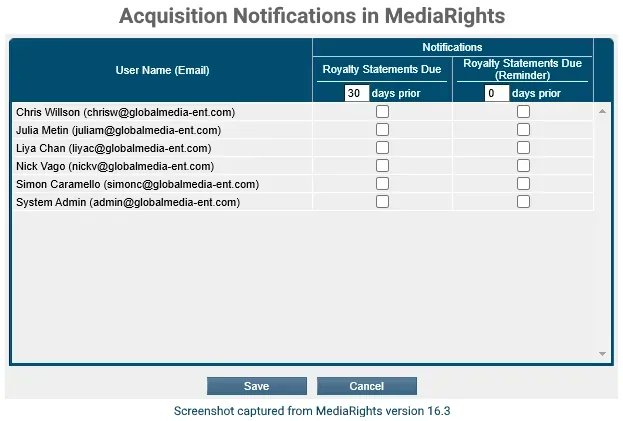
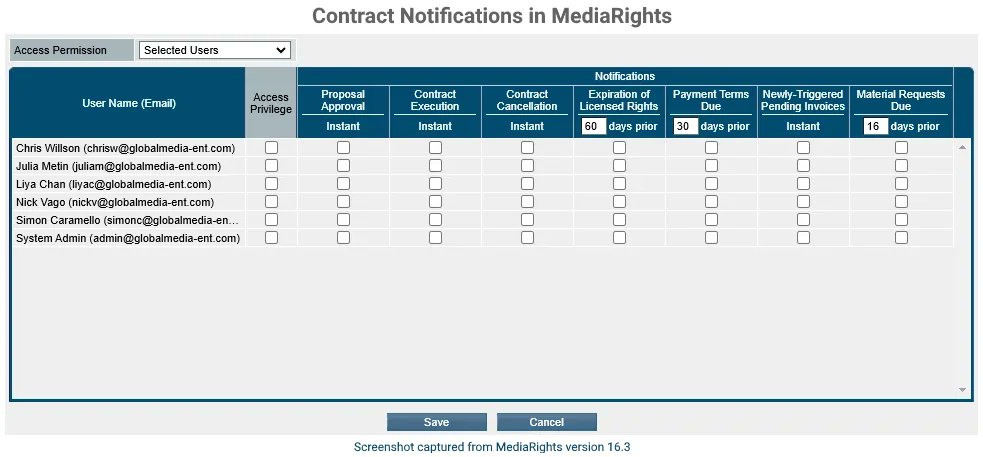
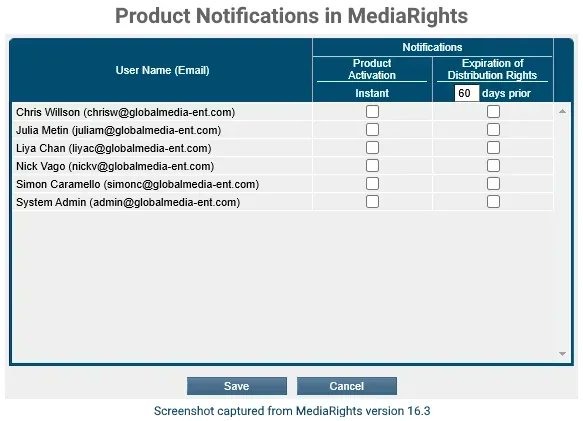
2
4
27
21 Oct 2024
What Is Run-Off Period? Understanding the Winding-Down Process in Media Licensing Contracts
In media licensing agreements, the terms “run-off” or “sell-off” are frequently encountered. Though it can be easy to overlook at first, run-off provisions play a critical role in determining the rights and obligations once the licensing period ends. In this article, we’ll explore the meaning of run-off in media licensing contracts, its importance and its impact on both licensors and licensees.
What is Run-Off?
Run-off in media licensing refers to a period after the expiration or termination of a license during which the licensee is permitted to continue using the licensed content under specific restrictions. This period is designed to help the licensee wind down the use of the licensed media without facing immediate consequences or legal disputes.
This concept is sometimes referred to by other names, including sell-off, phase-out or grace period. In some contexts, it may also be called extension period, transition period, post-termination rights or wind-down period, depending on the specifics of the agreement.
Typically, a run-off clause outlines the conditions under which the licensee may continue using the licensed rights, such as:
▪ Time limitations on extended use (e.g., 12 or 24 months after license expiration);
▪ Recognition of previous sales that go beyond expiration, alongside restrictions on making new sales or creating new content using the licensed rights;
▪ Obligations to pay royalties or other fees during the run-off period.
This provision ensures that both parties have a clear understanding of what happens when a licensing term ends, providing protection and stability as they transition out of the agreement.
Why is Run-Off Important?
Run-off clauses are particularly important in the entertainment industry where the licensed right is embedded into ongoing projects, such as film, TV shows, live performances, video games or merchandise. Without a run-off provision, the licensee may be forced to abruptly stop the distribution, sale or marketing of content that is already in circulation, leading to financial losses, legal disputes or consumer confusion.
For licensors, run-off clauses provide a structured conclusion to the license, allowing them to negotiate new deals or grant licenses to other parties without causing sudden conflicts. For licensees, these clauses offer valuable breathing room to clear out remaining stock, fulfill existing contractual obligations or wrap up ongoing projects without violating the terms of the original agreement.
Core Elements of a Run-Off Clause
A well-defined run-off clause typically includes the following core elements to ensure clarity and mutual understanding between licensors and licensees:
▪ Duration of Run-Off Period
Specifies the length of time the licensee is permitted to continue using the licensed rights after expiration.
▪ Recognition of Previous Sales
Allows the licensee to acknowledge and maintain rights to sales made before expiration.
▪ Restrictions on New Sales
Outlines limitations on making new sales or marketing efforts during the run-off period.
▪ Limitations on Content Creation
Specifies any restrictions on producing new content or products using the licensed rights.
▪ Obligations for Royalty Payments
Defines any requirements for the licensee to pay royalties or fees during the run-off phase.
▪ Conditions for Existing Stock
Clarifies how the licensee may manage remaining inventory, including distribution and sales.
▪ Notification Requirements
Outlines any obligations for notifying the licensor about ongoing sales or distributions.
Common Scenarios for Run-Off Applications
1. Distributor Agent Maintaining Sales: In some cases, a distributor agent may continue to sell rights to exhibit a product across different distribution media, provided those sales were initiated before the expiration of the acquired distribution rights. While they cannot market or sell new content after the expiration, the run-off clause allows them to maintain and fulfill existing sales agreements that originated during the licensing period. This ensures that the distributor can capitalize on previous transactions while transitioning out of the acquisition agreement.
2. Producer Wrapping Up Ongoing Projects: A producer who has acquired rights to an intellectual property for a specific project may continue to work on and complete any ongoing projects during the extension period. For example, if a producer has developed a series based on an acquired property, the run-off clause allows them to finalize episodes or seasons that are already in production. However, they cannot initiate new projects or adaptations under the expired license, ensuring they adhere to the terms of the original agreement.
3. Distributor Selling Remaining Stock and Merchandise: A common situation occurs with distributors of home entertainment products, such as Blu-rays, DVDs, and merchandise, who continue to sell their remaining stock after a licensing agreement expires. If a distributor has a run-off clause in place, they can liquidate their inventory of physical products and related merchandise without facing immediate legal repercussions. This provision allows the distributor to honor existing stock commitments and ensure a smooth transition out of the agreement while mitigating potential financial losses.
In summary, run-off terms are a vital element of media licensing contracts, providing a structured transition period when a license expires. When negotiating a media licensing deal, both parties should pay close attention to the run-off provision, ensuring it covers the necessary duration, scope and financial obligations. A well-drafted run-off clause can prevent disputes and provide a smooth transition, protecting both the licensor’s and licensee’s interests in the long term.
How MediaRights Can Help You?
MediaRights is the essential tool for any film and content distributor who values accuracy, efficiency and transparency.
It provides robust support for managing run-off provisions, which are crucial for maintaining precise distribution rights. With MediaRights, users can effortlessly define run-off terms for the products they acquire, ensuring these provisions are accurately reflected in distribution rights, product availability and the conflict-checking process during sales. This comprehensive approach streamlines rights management, reduces the risk of disputes and optimizes overall distribution efficiency.
Say goodbye to cumbersome spreadsheets and the frustrations of tracking run-off terms for your distribution rights. Embrace the future of rights management with MediaRights, where efficiency and accuracy redefine how you manage your content rights.
Visit our website (medialogiq.com/mediarights) or contact us at info@medialogiq.com today to learn more about how #MediaRights can empower your business.
#DistributionRights #LicensedRights #RunOff #SellOff #AvailabiliyReporting #AvailabilityReport #RightsAvailability #FilmDistribution #TVDistribution #FilmDistributionSoftware #TVDistributionSoftware #RightsLicensing #RightsManagement #RightsManagementSoftware #media #ContentDistribution #filmtech #contenttech #entertainment #content #film #movies #tv #TVShows
2
4
68
9 Sep 2024
Introducing MediaRights v16: Your Rights Management Just Got Better!
We are excited to announce the release of MediaRights v16, our latest and most powerful version yet! This new release brings an array of enhancements across several key areas including Product Catalog, Sales Report and Availability Summary. We have also implemented crucial bug fixes and optimizations to make your overall experience smoother and more reliable.
One of the most exciting new features in MediaRights v16 is the built-in Marketing Activity Tracker. This powerful module, similar to a CRM, allows you to track all your marketing interactions and history with clients.
Benefits of the Marketing Activity Tracker
▪ Centralized Tracking: Keep all your marketing activities organized in one place.
▪ Improved Client Relationships: Build stronger and more personalized relationships with your clients.
▪ Enhanced Sales Efficiency: Identify sales opportunities and track your progress more effectively.
Experience Rights Management Like Never Before!
With MediaRights v16, you’ll enjoy a more efficient, effective and enjoyable rights management experience. The combination of new features, enhancements and bug fixes will help you streamline your workflows and achieve your goals.
Jump into MediaRights v16 today and discover the difference!
Visit our website (medialogiq.com/mediarights) or contact us at info@medialogiq.com today to learn more about how #MediaRights can empower your business.
#RightsAvailability #FilmDistribution #TVDistribution #FilmDistributionSoftware #TVDistributionSoftware #RightsLicensing #RightsManagement #RightsManagementSoftware #media #ContentDistribution #filmtech #contenttech #entertainment #content #film #movies #tv #TVShows #CRM
3
5
52
29 May 2024
A Guide to Traditional and Modern Distribution Rights for Film and TV Content (Part 4)
In this series, we’ve navigated the complex world of media distribution rights, revealing how these rights enable filmmakers and content creators to share their work with audiences globally. We began by exploring the foundational concepts of core and ancillary rights, emphasizing their critical role in the distribution landscape. We then ventured into the realm of physical distribution rights, discussing traditional methods such as theatrical releases, home video and non-theatrical screenings. Subsequently, we shifted our focus to non-physical distribution rights, breaking down the essential elements that drive content delivery and revenue in the digital era.
Now, in this final chapter, we shed light on the last category of non-physical distribution rights: Video-on-Demand (VOD). We will discuss various monetization models of VOD, providing insights into how these models shape viewer experiences and enhance content accessibility. Following this, we will revisit ancillary rights, presenting a comprehensive overview of the additional revenue streams that extend beyond core distribution channels.
Video-on-Demand (VOD) Distribution Rights
Video-on-Demand (VOD) distribution rights enable content creators to deliver their works directly to audiences via internet streaming platforms. Unlike traditional linear television broadcasting, which operates on a fixed schedule with viewers tuning in at predetermined times to watch content interspersed with commercials, VOD offers unparalleled flexibility and control. Viewers can select and watch content on demand, at any time, on various internet-connected devices. This non-linear approach allows for continuous viewing of multiple episodes, pausing and resuming content, and accessing a diverse range of programming tailored to individual preferences. This transition to on-demand consumption has revolutionized content accessibility and significantly transformed the Over-The-Top (OTT) entertainment landscape.
VOD distribution features a spectrum of monetization models, each suited to distinct audience preferences and content strategies. Let’s look into the four prominent VOD distribution rights models:
▪ Free VOD (FVOD):
Free VOD platforms offer users access to content at no charge, removing financial barriers to content consumption. Viewers can watch videos without the need for subscription fees or transaction costs, ensuring easy accessibility for all. However, unlike other VOD models, FVOD services typically do not generate direct revenue from viewers. Instead, they rely on alternative sources such as donations, sponsorships or indirect means of support. Sometimes, creators or organizations use FVOD platforms to expand their audience reach and engagement, prioritizing accessibility over direct monetization.
▪ Advertising-Based VOD (AVOD):
Advertising-Based VOD platforms, similar to Free VOD, grant users access to content without any associated costs, ensuring widespread availability and ease of access. However, the primary distinction lies in the revenue model employed by AVOD platforms, which relies on advertisements. Users encounter ads either before, during or after viewing content, with the platform earning revenue from advertisers. This advertising revenue serves as the financial backbone, allowing AVOD platforms to offer free content to users while sustaining their operations.
▪ Subscription VOD (SVOD):
Subscription Video-on-Demand (SVOD) platforms operate on a subscription-based model, where users pay a regular fee for access to their content library. Subscribers enjoy an ad-free experience and unlimited streaming of movies, TV shows and even exclusive content at their convenience. SVOD platforms not only provide a reliable and recurring income stream but also offer subscribers a diverse and immersive entertainment experience spanning various genres and offerings.
▪ Transactional VOD (TVOD):
In contrast to Subscription VOD, Transactional VOD operates on a pay-per-transaction model, allowing users to rent or purchase individual titles for a one-time fee. With TVOD, viewers have on-demand access to the latest movie releases, premium content and other offerings without the long-term commitment associated with subscription-based services. This model is particularly popular for new movie releases, live events and exclusive content that may not be available on traditional streaming platforms. For content creators and distributors, TVOD offers a flexible distribution model that allows for targeted marketing and monetization strategies.
Ancillary distribution Rights
In the world of media distribution, content creators and rights holders have long recognized the value of ancillary distribution rights in maximizing revenue and expanding the reach of their intellectual property. Ancillary rights encompass a diverse array of opportunities beyond traditional distribution channels, offering new avenues for additional monetization and audience engagement. Understanding and strategically managing these rights is crucial for maximizing the potential of any creative project.
Here, we explore the details of four primary categories of ancillary distribution rights: Video Clips, Soundtrack, Format, Derivative Works and Merchandising, highlighting their significance and opportunities for content creators.
Video Clips
This involves licensing short excerpts or clips from the original content for various uses, such as promotional materials, advertisements, educational purposes, news segments and social media. Video clips can serve as teasers, highlight key moments or provide supplemental content that enhances the viewer’s engagement with the full work. Licensing video clips can be a lucrative source of income for the copyright holder, as they can be used across a wide range of platforms and media.
Soundtrack
These rights pertain to the music or audio components of the content, which can be licensed for use in other media productions, advertisements or sold as standalone products. Soundtracks can become valuable assets, contributing significantly to the overall brand identity of the content. They can be marketed through streaming platforms, physical album sales or incorporated into live performances and merchandise. Additionally, a well-received soundtrack can drive further engagement with the original content, enhancing its popularity and commercial success.
Format
Format rights encompass the intellectual property associated with a specific format or concept for media content, such as television shows, game shows or reality programs. This includes the fundamental structure, rules, themes and presentation style that define the essence of the program. Acquiring format rights grants production companies or broadcasters the permission to reproduce the same format in various markets or territories, tailoring it to suit local audiences while preserving the core elements of the original concept. This process enables the adaptation of content to different cultural contexts, languages and regulations, ensuring its relevance and appeal across diverse audiences worldwide.
Derivative Works
Derivative work rights are essentially the legal permission to create something new and creative that is inspired by or directly based on, the original work. This legal framework opens a door to a diverse landscape of derivative creations. These new works can take various forms, including adaptations that retell the story in different formats, such as novels based on movies or musicals based on TV shows. Additionally, they may involve prequels and sequels that expand upon the existing narrative by exploring backstories or continuing the storyline. Furthermore, derivative works can materialize as spin-off series, interactive video games or any other creative expression inspired by the original content.
Merchandising
Merchandising rights represent a crucial component of ancillary distribution in the media and entertainment industry, providing creators and rights holders with a strategic avenue to expand their intellectual property beyond its original form and into the realm of consumer products. These rights grant the legal authority to develop, produce and market merchandise inspired by the original content, spanning a diverse spectrum of physical and non-physical (digital) items:
▪ Physical:
Physical merchandising entails producing and selling tangible items that fans can buy and interact with. This includes products such as action figures, clothing, posters and accessories. These items enhance fan engagement and brand loyalty, turning fans into ambassadors who promote the content through their use of these goods, while also providing a significant revenue source for content creators and rights holders.
▪ Non-Physical (Digital):
non-physical merchandising, on the other hand, focuses on the creation of virtual or downloadable products that fans can access and enjoy through digital platforms. This encompasses a diverse range of digital goods and experiences, including mobile apps, desktop wallpapers, video games, e-books and virtual items within online communities and gaming environments. Digital merchandising leverages the power of technology and online distribution channels to reach audiences globally, offering immersive and interactive experiences that complement the original content.
Together, physical and digital merchandising rights afford content creators and rights holders the potential to create a multi-dimensional brand experience that surpasses traditional media boundaries. By strategically utilizing these rights, creators can deepen audience engagement, extend the lifespan of their intellectual property and unlock new revenue streams in an increasingly digital and connected world. From physical collectibles that fans proudly display on their shelves to engaging digital experiences that transport them into fantastical worlds, merchandising rights play a vital role in shaping the broader cultural impact and commercial success of entertainment franchises across the globe.
In conclusion, mastering media distribution rights is essential for creators to thrive in the dynamic entertainment landscape. Through a nuanced understanding and adept management of these rights, creators can forge impactful connections with global audiences, driving both cultural resonance and commercial success in an increasingly interconnected today’s world.
Visit our website (medialogiq.com/mediarights) or contact us at info@medialogiq.com today to learn more about how #MediaRights can empower your business.
#DistributionRights #DistributionStrategy #MediaDistributionRights #FilmDistributionRights #TVDistributionRights #NonPhysicalDistributionRights #VOD #FVOD #AVOD #SVOD #TVOD #AncillaryRights #VideoClips #soundtrack #format #FormatRights #DerivativeWorks #merchandising #MerchandisingRights #FilmDistribution #TVDistribution #FilmDistributionSoftware #TVDistributionSoftware #RightsLicensing #RightsManagement #RightsManagementSoftware #media #ContentDistribution #filmtech #contenttech #entertainment #content #film #movies #tv #tvshow
ALT A Guide to Traditional and Modern Distribution Rights for Film and TV Content (Part 4)

ALT An Overview of Ancillary Distribution Rights
2
5
79
14 May 2024
A Guide to Traditional and Modern Distribution Rights for Film and TV Content (Part 3)
In the first two parts of this series, we explored the fascinating world of media distribution rights, uncovering how these rights empower filmmakers and content creators to manage the intricate landscape of sharing their work with audiences. In the first part, we examined the fundamental concepts of distribution rights, distinguishing between core and ancillary rights. Core rights form the backbone of a film or TV show’s distribution strategy, while ancillary rights offer additional avenues for revenue generation through merchandise, soundtracks and other channels. Building upon this foundation, our second part dissected the realm of physical distribution rights, which encompass the traditional methods of delivering content through tangible media. We unraveled the nuances of theatrical, traditional home video and non-theatrical distribution.
Now, in Part 3, we shift our attention to the ever-evolving realm of non-physical distribution rights. In this chapter and the next one, we will explore the modern landscape of home video, television and video-on-demand (VOD) platforms, where content transcends geographical barriers and seamlessly reaches audiences through cutting-edge technologies, eliminating the need for physical media.
Modern Home Video Distribution Rights
The world of home video distribution has undergone a dramatic shift, leaving behind the dusty shelves of video rental stores and bulky DVD cases. Today, electronic sell-through (EST) and download-to-rent models reign supreme, offering viewers unmatched convenience and flexibility in accessing their favorite films and TV shows.
▪ Electronic Sell-Through (EST)
Electronic sell-through (EST) enables viewers to become permanent custodians of their digital entertainment libraries. Platforms like iTunes, Amazon Prime Video and Google Play offer a vast selection of movies and TV shows for purchase. Once bought, the content resides within the user’s digital library, accessible for streaming or download on various devices. This eliminates the need for physical media and provides the freedom to enjoy content anytime, anywhere. However, unlike physical ownership, EST purchases typically grant a license to access the content, not true ownership of the digital file itself.
▪ Download-to-Rent
For those seeking a more temporary viewing experience, download-to-rent offers a cost-effective alternative. Similar to the traditional video rental model, viewers pay a fee to access a film or TV show for a limited time, typically 24 or 48 hours. Platforms like YouTube, Amazon Prime Video and Apple TV provide download-to-rent options, enabling viewers to enjoy content offline after downloading it to their devices. This model caters to those who prefer experiencing a specific title without committing to a permanent purchase.
Modern home video distribution offers undeniable advantages. The convenience of instant access, vast content libraries and the ability to download for offline viewing are highly attractive propositions. However, there are also considerations. Reliance on internet connectivity can be a hurdle and frequent updates to platforms or changes in licensing agreements could potentially restrict access to previously purchased content. Additionally, the lack of physical ownership in EST purchases may deter viewers who prefer the social aspects of lending and borrowing movies with friends or who simply enjoy the satisfaction of building a tangible collection.
Furthermore, modern home video distribution is constantly evolving. Technological advancements promise even greater accessibility and personalization. In this rapidly changing landscape, home video distribution continues to push boundaries, offering endless possibilities for entertainment consumption.
Fundamental Elements of Non-Physical Distribution Rights
Before examining the specific categories of television and Video-on-Demand (VOD) distribution rights, let’s establish the fundamental building blocks that underpin all non-physical content distribution: programming model, monetization model and distribution method. These elements work together to determine how viewers access content and how platforms generate revenue.
Programming Model
The programming model defines how content is delivered to viewers, encompassing two main approaches: linear programming and non-linear programming.
▪ Linear Programming
This traditional model delivers content on a predetermined schedule, similar to the experience of watching free-to-air broadcasts. Viewers tune in at specific times to watch the programs being aired, with limited control over what’s available at a given moment.
▪ Non-Linear (On-Demand) Programming
This model offers viewers the flexibility to choose what they want to watch and when they want to watch it. Unlike linear programming, which follows a predetermined schedule, non-linear programming allows audiences to access movies, TV shows and other content at their convenience. On-demand programming has become increasingly popular due to its convenience and the ability to accommodate individual viewing preferences. It gives viewers control over their entertainment experience, allowing them to pause, rewind or fast-forward through content as desired.
Monetization Model
The monetization model determines how platforms generate revenue from the content they offer. Here’s a breakdown of some common models:
▪ Free (Sponsorship)
In the Free (Sponsorship) model, viewers access content for free without direct advertisements. This model is often associated with state-run or publicly funded television channels, supported financially by government funding, private donations or corporate sponsorships. Viewers enjoy uninterrupted programming, funded by these external sources, which may include indirect advertising through sponsored content or brand mentions within programs.
▪ Ad-Supported
The ad-supported model also provides viewers with access to content for free, but with intermittent advertisements. This model is commonly found in commercial television channels and ad-supported VOD platforms. Viewers are shown advertisements before, during or after programs, with the aim of generating revenue for the channel or platform. Advertisements can take various forms, including traditional commercials, product placements or sponsored segments. While viewers benefit from free access to content, they are exposed to advertising messages throughout their viewing experience. Advertisers pay for ad slots based on factors like program popularity and viewer demographics, providing revenue for the channel or platform.
▪ Subscription-Based
The subscription-based monetization model allows viewers to access a library of content for a recurring fee. This model is common in subscription TV services like cable or satellite packages and subscription VOD platforms. Subscribers enjoy unlimited access to a wide range of content in exchange for a monthly or yearly subscription fee, allowing them to watch without interruptions from commercial breaks. This model provides a steady revenue stream for service providers, who rely on subscription fees to fund content production and acquisition.
▪ Pay-Per-Transaction
Under the pay-per-transaction model, viewers pay a one-time fee to purchase or rent individual episodes or seasons of a show. This model is commonly used for transactional VOD services and Pay-Per-View (PPV) television programs, such as live sporting events. Revenue is generated each time a viewer makes a purchase or rental, with prices varying based on the content’s popularity and demand. While this model offers flexibility for viewers who prefer individual purchases, it may result in higher costs compared to subscription-based services over time.
Distribution Method
The distribution method encompasses the pathways through which content reaches viewers:
▪ Over-the-Air (OTA)
Over-the-air (OTA) refers to the transmission of television signals through the airwaves, which can be received by antennas on television sets. This method allows viewers to access free-to-air TV channels.
▪ Cable
Cable is a method of distributing television programming and other content to consumers through wired connections, commonly using coaxial cables or other copper wire technologies. This method delivers television signals directly to viewers’ television sets from a central distribution point. Cable is favored by many consumers for its high bandwidth, which allows for the transmission of a wide range of channels and content types. It also offers reliable signal quality, often providing access to premium channels and services.
▪ Satellite
Satellite distribution involves transmitting television programming and other content to consumers via signals from satellites. This method delivers content to viewers’ satellite dishes, providing access to a wide range of channels and content options. With a wide range of channels and content, it’s popular for its reliability. It ensures uninterrupted reception, even in areas with limited access to other methods. This makes it a preferred choice for diverse viewing options and reliable service.
▪ Over-the-Top (OTT)
Over-the-top (OTT) distribution delivers content directly to viewers over the internet, bypassing traditional airwaves, cable or satellite. This method enables access to a diverse range of streaming services, including on-demand movies, TV shows and live broadcasts. OTT platforms provide flexibility and convenience, allowing viewers to watch content on various devices like smart TVs, smartphones and tablets. With OTT, viewers can enjoy personalized content experiences tailored to their preferences, making it a popular choice in the modern digital landscape.
▪ Direct-to-Mobile
Direct-to-Mobile distribution refers to the direct delivery of content over the internet to mobile devices, such as smartphones and tablets, through dedicated applications or streaming services. It shares similarities with Over-the-Top (OTT) as both rely on the internet to deliver content. However, unlike OTT distribution, which covers a wide range of devices including smart TVs and computers, Direct-to-Mobile focuses solely on content consumption on mobile platforms.
By understanding these core elements, we can see how different non-physical distribution rights utilize them in various combinations to deliver television content and VOD content to viewers. In the next section, we will explore how television distribution rights leverage these elements to create a diverse range of viewing options.
Television Distribution Rights
Among non-physical distribution rights, television rights play a significant role in bringing content to viewers across various platforms.
Below is an overview of several key television distribution rights:
▪ Free Terrestrial
These are traditional free-to-air television channels available Over-the-Air (OTA) and offer linear programming. Free terrestrial TV channels are either free of charge or rely on advertisements for revenue.
▪ Free Satellite
Free satellite television refers to channels that are accessible through satellite without requiring a subscription fee. Like free terrestrial channels, these satellite channels offer linear programming and are either free of charge or ad-supported.
▪ Pay Cable
Pay cable television comprises channels available through cable subscription, offering a wide range of programming for a monthly fee. These channels provide linear programming and require a subscription fee for access.
▪ Pay Satellite
Much like pay cable TV, Pay satellite television provides a diverse range of programming for a subscription fee and is accessible via satellite. It offers linear content.
▪ Pay-Per-View (PPV)
Pay-Per-View (PPV) television allows viewers to purchase specific events or programs on a one-time basis for a premium price. These events can include live sports matches, concerts or special broadcasts. PPV channels usually offer linear content and viewers pay for each event they choose to watch. Sometimes, viewers may have limited on-demand access to the purchased content for a period after the event. PPV channels are available through cable, satellite or internet.
▪ Subscription OTT TV
Subscription OTT TV refers to subscription-based streaming services available over the internet. Like pay cable and pay satellite, these platforms offer linear content for a subscription fee, providing viewers with a wide range of premium channels and programming options.
▪ Free Ad-Supported TV (FAST)
Free Ad-Supported TV (FAST) refers to internet-based channels that offer free content supported by advertisements. These platforms provide a variety of programming, including linear shows and scheduled broadcasts, similar to traditional television. FAST channels are accessible through streaming devices or smart TVs, providing viewers with a convenient way to access a range of shows without a subscription.
▪ Direct-to-Mobile TV
Direct-to-Mobile TV delivers content directly to mobile devices, such as smartphones and tablets, through dedicated apps or streaming services. These services offer both linear and non-linear content, tailored specifically for mobile viewing. Users can access live TV streams, on-demand shows and exclusive content, all optimized for mobile devices. With Direct-to-Mobile TV, viewers have the flexibility to enjoy their favorite programs on the go, making it an ideal choice for mobile entertainment enthusiasts.
TV Catch-Up Rights: A Special Case
TV catch-up rights grant viewers access to recently aired programs through a platform for a limited period, allowing audiences to watch shows they might have missed during the original broadcast. Catch-up services can be integrated into traditional TV platforms or offered by on-demand streaming services.
These rights enable viewers to catch up on missed episodes or watch programs at their convenience, adding flexibility to their viewing experience. Catch-up services typically store recently aired content for a specified period, ranging from a few days to several weeks, depending on the platform.
Additionally, catch-up rights can enhance the value of subscription-based VOD services by providing added convenience and accessibility to viewers, particularly for busy individuals who may not always be available to watch their favorite shows when they air live.
To sum up, this chapter discussed modern home video and television distribution rights, along with the core elements of non-physical distribution rights. The next and final part of this series will explore Video-on-Demand (VOD) services and ancillary distribution rights.
Visit our website (medialogiq.com/mediarights) or contact us at info@medialogiq.com today to learn more about how #MediaRights can empower your business.
#DistributionRights #DistributionStrategy #MediaDistributionRights #FilmDistributionRights #TVDistributionRights #NonPhysicalDistributionRights #HomeVideo #ModernHomeVideo #ESL #ElectronicSellThrough #DTR #DownloadToRent #LinearProgramming #NonLinearProgramming #FTA #FreeToAir #OTA #OverTheAir #cable #satellite #OTT #OverTheTop #DirectToMobile #FreeTerrestrial #FreeSatellite #PayCable #PaySatellite #PPV #PayPerView #FAST #catchup #FilmDistribution #TVDistribution #FilmDistributionSoftware #TVDistributionSoftware #RightsLicensing #RightsManagement #RightsManagementSoftware #media #ContentDistribution #filmtech #contenttech #entertainment #content #film #movies #tv #tvshow #tvseries
ALT A Guide to Traditional and Modern Distribution Rights for Film and TV Content (Part 3)
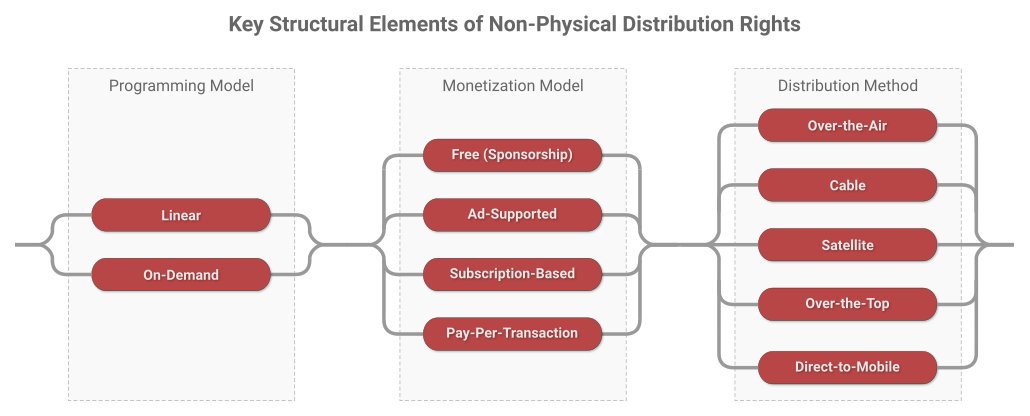
ALT Key Structural Elements of Non-Physical Distribution Rights
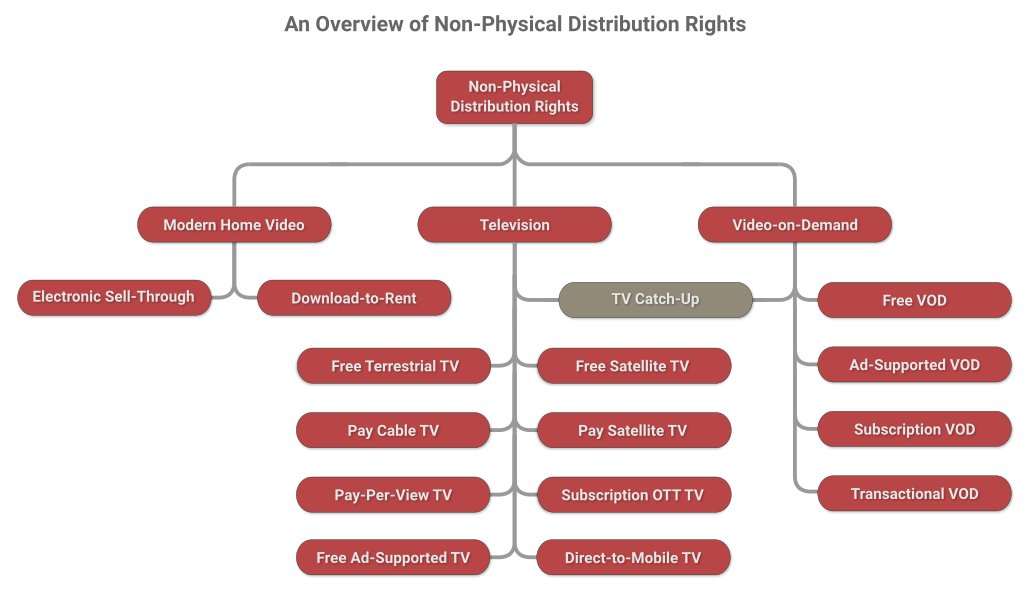
ALT An Overview of Non-Physical Distribution Rights
2
5
76
26 Mar 2024
A Guide to Traditional and Modern Distribution Rights for Film and TV Content (Part 2)
In the first part of our series on media distribution rights in the film and TV industry, we explored the fundamental concepts of core and ancillary distribution rights. We analyzed how these rights shape the distribution landscape, impacting the visibility and accessibility of content to audiences worldwide. Core distribution rights were identified as the foundational permissions linked to the presentation of a film or TV show, while ancillary distribution rights offer additional avenues for revenue generation. We examined examples of core and ancillary rights and emphasized the importance of understanding distribution rights for both producers and distributors. Continuing our discussion, we now shift our focus to physical distribution rights, which consist of three distinct categories: Theatrical, traditional home video and non-theatrical. Let’s dive into each category to grasp its significance in distribution.
Theatrical Distribution Rights
Theatrical distribution rights serve as the foundation of cinematic experiences, providing audiences with immersive viewing experiences on the silver screen. This category involves partnerships with cinemas and theaters for the public exhibition of films, catering to a communal setting where viewers can collectively engage with the content.
While theatrical releases offer this unique communal experience, it’s essential to recognize that not all products are destined for the big screen. Some productions are specifically tailored for home video or television from the outset, bypassing theatrical release altogether.
For films destined for theatrical release, there are typically two distribution strategies: wide releases and limited releases. Wide releases involve simultaneous screenings in numerous theaters, aiming to reach a broad audience across various locations. In contrast, limited releases target specific markets or demographics initially before gradually expanding to a wider audience.
Revenue generation for theatrical releases primarily stems from box office ticket sales. The success of a film in theaters is often gauged by its opening weekend grosses and per-screen averages, reflecting audience interest and engagement.
Additionally, theatrical release windows play a pivotal role in the distribution process. These windows dictate the duration of exclusive theater screenings before the film becomes available for distribution on other platforms such as home video, television or streaming services.
Overall, while theatrical distribution rights offer filmmakers the opportunity to exhibit their work on the big screen and engage audiences in a communal setting, it’s essential to acknowledge the diversity of distribution strategies within the film industry, with some productions finding their place in home video or television markets.
Traditional Home Video Distribution Rights
Traditional home video distribution rights are rooted in the sale and rental of physical media formats such as DVDs and Blu-rays, serving as a key player of at-home entertainment experiences for decades. While this category has evolved with digital advancements, it remains relevant for certain demographics and regions where physical media still holds appeal.
Subcategories within traditional home video distribution include:
▪ Sell-Through:
Sell-through models entail the direct sale of DVDs and Blu-rays to consumers for personal ownership. This model allows viewers to curate personal libraries of their favorite films and TV shows, providing a tangible connection to their cinematic preferences and ensuring access to beloved content anytime.
▪ Rental (Obsolete):
Historically, rental services provided access to films for a limited duration in exchange for a rental fee, offering a cost-effective option for viewers to enjoy new releases or classics without committing to a purchase. However, with the rapid rise of digital streaming platforms and on-demand services, traditional rental services have become obsolete, replaced by more convenient and instantaneous means of accessing content.
Non-Theatrical Distribution Rights
Non-theatrical rights refer to the distribution of films and TV shows outside the conventional setting of commercial movie theaters. Unlike theatrical screenings, which target a broad audience for public entertainment and rely on ticket sales for revenue, non-theatrical exhibitions are tailored to more specialized viewership and serve a variety of purposes. This distribution method often involves licensing agreements between content creators and institutions or organizations seeking to screen the content for specific groups.
One significant difference between theatrical and non-theatrical distribution lies in their target audience. Theatrical releases aim to appeal to the general public, attracting moviegoers seeking entertainment, while non-theatrical screenings cater to more specialized audiences. These audiences could range from students in educational settings to passengers on a cruise ship or film enthusiasts attending a festival.
Moreover, the purposes behind theatrical and non-theatrical screenings vary significantly. While theatrical releases primarily focus on revenue generation through ticket sales and building initial audience buzz, non-theatrical screenings serve diverse objectives. These objectives may include entertainment in venues such as hotels or cruise ships, educational purposes in schools and universities or industry exposure at film festivals.
Additionally, the frequency and venue of screenings differ between theatrical and non-theatrical distribution. Theatrical releases typically have a limited window of exclusive cinema screenings before other distribution channels become available. In contrast, non-theatrical screenings can be one-time events or ongoing exhibitions, depending on the agreement and venue. Furthermore, while theatrical exhibition occurs in dedicated movie theaters equipped for optimal viewing experiences, non-theatrical screenings can take place in a wide range of settings, from classrooms and auditoriums to airplanes and hospital common areas.
Understanding these key distinctions is essential for appreciating the value of non-theatrical rights in providing content creators with opportunities to reach specific audiences and achieve diverse goals beyond traditional theatrical releases.
Here are some prominent subcategories within non-theatrical rights:
▪ Inflight Entertainment: Airlines provide onboard entertainment options for passengers, showcasing films and TV shows during flights to enhance the travel experience.
▪ Hotels and Hospitality: Hotels and resorts offer in-room entertainment services, allowing guests to access a selection of films and TV programs during their stay.
▪ Cruise Ships: Cruise lines integrate entertainment systems onboard, offering passengers access to a variety of films and shows during their voyage.
▪ Educational Institutions: Schools, universities and libraries may license educational content for academic use, enriching learning experiences for students and faculty.
▪ Military Bases: Military bases can leverage non-theatrical rights to provide entertainment options for service personnel stationed away from home.
▪ Festivals: Events such as film festivals and cultural exhibitions provide filmmakers with invaluable opportunities for exposure and acknowledgment within the creative community.
▪ Others: This category can encompass additional outlets for non-theatrical distribution, such as screenings in retirement communities, community centers or for private events.
In summary, physical distribution rights encompass a broad spectrum of avenues for bringing films and TV programs to audiences worldwide. Understanding these categories enables content creators and distributors to craft tailored distribution strategies that maximize reach and engagement across diverse platforms and contexts. Stay tuned as we continue our exploration of distribution rights in the next chapter of this series.
Visit our website (medialogiq.com/mediarights) or contact us at info@medialogiq.com today to learn more about how #MediaRights can empower your business.
#DistributionRights #DistributionStrategy #MediaDistributionRights #FilmDistributionRights #TVDistributionRights #PhysicalDistributionRights #Theatrical #HomeVideo #NonTheatrical #SellThrough #HomeVideoRental #InflightEntertainment #FilmDistribution #TVDistribution #FilmDistributionSoftware #TVDistributionSoftware #RightsLicensing #RightsManagement #RightsManagementSoftware #media #ContentDistribution #filmtech #contenttech #entertainment #content #film #movies #tv #tvshow #tvseries
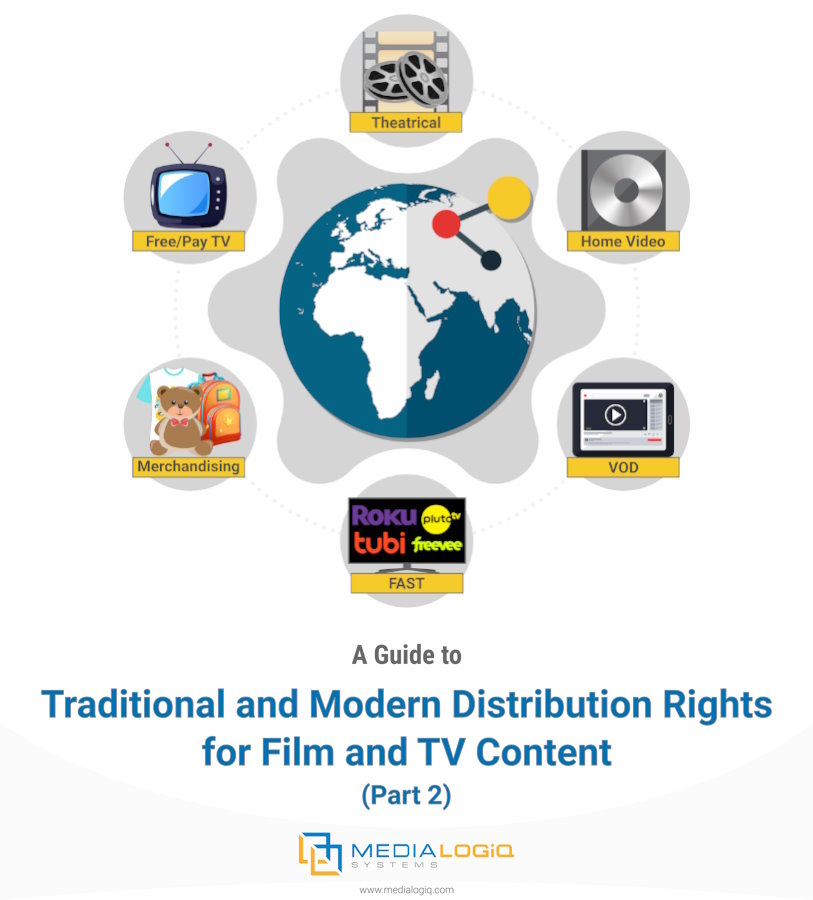
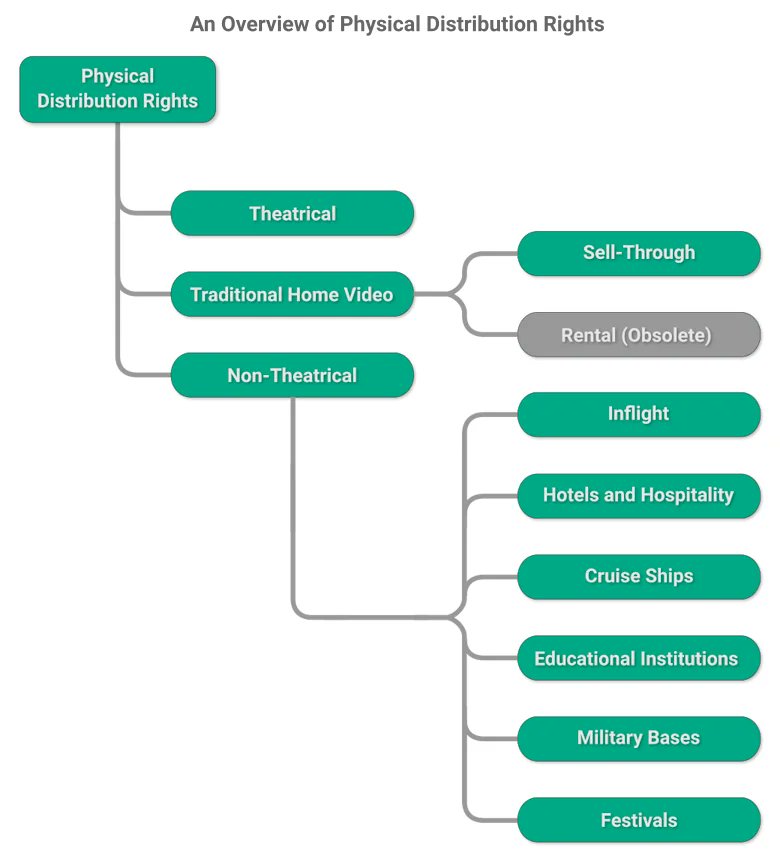
ALT An Overview of Physical Distribution Rights
2
5
65