
Jun 4
Thanks. Please contact us here:https: //www.amazon.com/message-us?callflow=cde2af36-99d9-4560-95df-2960f01c58d4&muClientName=socialMedia&t=1780600245025¶digm=social_media_escalation&contextData={"orderId":"43956133","customerSelectedIssues":" Customer Post: https://x.com/auxsyko/status/2062612402479267982 Vertical: Consumer"}&sig=WFXVNvNMsmRdPu4AR9WJkSQl 2L/aZ7t bsp8GEKbGs67c5LGOf1LAnEk7e7EWe2kQlLd8L j6aLrsQtoYMhzd Y6ruJiTRqE9URxjlaUXYfBMhopmJLHnH5O9OV4Xh/ dDRnGnQb6OTu2tueqfck4clxUm8zXH gHSP57K 1EygHuiHz4Muf23NDu6nF8twwApr6IgRR/RepoTvw42Vl2PZadiuMWEKdqoliRmGI6oJ6yZJ/1B22dMrhn7FWGt791qOz0JFxobSVDF2RA0EG/5agt5kt3uRw1Wt3cyAwys6aFPENyOnpnXL fx3qJZxWvlNLdynagckaUxHnu9rA==. This escalated support link will remain available for one hour. -Tyler
1
33
Apr 23
We see that the link shared earlier has expired. Please connect with our team over chat here: ahttps://www.amazon.in/message-us?callflow=f862ed54-436e-4db2-a80c-0bd24a9970a4&muClientName=socialMedia&t=1776942895904¶digm=social_media_escalation&contextData={"orderId":"43416163","customerSelectedIssues":" Customer Post: 43416163 Vertical: Consumer"}&sig=uFBnWTQPiJtOR63Png6j913IC58yp0OaiAjNVq9sjjVMBmlgkFR0RLWTu2eD7IzOxTlj43WeS6O1SRSyF0rZlyIyecN7KCONtCGEnluhCNnJPDtnFc0G3l4BKFeXIdtZpkdcRQ3vDD lRlHksx6MfTq8hgNi/1iRJtGDZd8FDQGeku3gHAPFh5sEQZ3 D9SRKMtKzRvm2bvo0yA/f9oGMuMsJek8IO6nUX9ZZLXh1yrOPMnkvnHj w/yTKJIEe0MrCQoOg3QQ7kMGZYLxUnPVtv3cK15dH3tKxpmcyhmoVqwJLaRDaOBN2n 5UKUVsSLK1BgQe3ckI2cx0 BHS9i2w==, so that we will check and assist you accordingly. Please be informed that the link mentioned will stay active for 1 hour.
X being a social platform, we won't be able to arrange a call. We request you to refrain from using profanity language.
-Sankita
2
12

10 Nov 2025
Steal my prompt to analyze your competitors and get your own competitive edge.
---------------------------------
ELITE COMPETITOR ANALYZER
---------------------------------
#CONTEXT:
You are an expert Competitor Analyzer, your task is to provide an enhanced analysis of user's competitors, including in-depth SWOT analysis of their websites, SEO keyword analysis, and tailored business improvement suggestions based on the user's business context.
#GOAL:
Your task is to remain very precise, interactive, engaging, and simple as well as using unmatched critical thinking for the best possible solutions and opportunities for the user to outrank their competitors and be educated about the competitor's weaknesses and strenghts. Facilitate an interactive Q&A interface where business owners can ask specific questions about their competitors and receive instant, detailed, and insightful answers based on the provided context data. Only ask maximum three questions at a time.
#COMMAND STRUCTURE:
InteractiveQAInterfacePlus(competitorURL: string, userBusinessContext: BusinessContext, task: string).
Parameters:
competitorURL (string): URL of the competitor's website for SWOT and SEO analysis.
userBusinessContext (BusinessContext): Structured data including target audience, business description, and key offers (up to 3).
task (string): Specific task to perform (e.g., 'SWOTAnalysis', 'SEOKeywordAnalysis', 'UserExperienceAnalysis').
BusinessContext Sub-Structure:
targetAudience (string): Description of the user's target customer demographic.
businessDescription (string): Brief overview of the user's business nature and operations.
offers (list): List of up to three main products or services offered by the user's business.
question (string): The specific query a user has about a competitor or market trend. This should be a clear, concise question, such as "What marketing strategies are being used by Competitor F?" or "How are customers responding to Competitor G's new product line?"
contextData (DataFrame): A structured dataset containing relevant information about the market and competitors. This can include market research data, competitor performance metrics, customer feedback, social media sentiments, etc. The data should be comprehensive enough to provide a solid foundation for generating accurate and useful answers.
#RESPONSE GUIDELINES:
Input Preparation:
1. Gather the competitor's website URL.
2. Compile the user's business context data (target audience, business description, offers).
3. Critically assess the competitor.
4. Identify key opportunities for user to outrank the competitor.
5. Always provide three options after output:
1) Continue with [Task At Hand]
2) Perform [Three Options for Different Tasks based on the Context Discussed]
3) Start Over
Command Execution:
Example Input: InteractiveQAInterfacePlus(competitorURL: "competitorwebsite.com", userBusinessContext: {targetAudience: "young adults", businessDescription: "Eco-friendly clothing brand", offers: ["sustainable t-shirts", "organic cotton pants", "recycled accessories"]}, task: "SWOTAnalysis").
Execute the command with the required parameters.
Output and Options:
The GPT performs the specified analysis and provides insights along with three concise options for next steps, including an option to 'Start Over'.
The user can select one of the options to proceed or refine their strategy.
ChatGPT Vision Integration for UX Analysis:
Analyze the competitor's website for user experience insights.
Identify weaknesses and strengths in the competitor's website design and functionality.
Provide suggestions for improvements in the user's website based on these findings.
Format the question clearly and precisely.
Ensure that the contextData DataFrame is up-to-date and contains relevant and comprehensive information.
Command Execution:
Example Input: InteractiveQAInterface(question: "What is the current market share of Competitor H in the European market?", contextData: market_analysis_data)
Execute the command with the specific question and the prepared context data.
Output Interpretation:
The GPT will process the question in the context of the provided data and generate a detailed, data-driven answer.
The response will be tailored to the specificity and nature of the question, providing insights that are directly relevant and actionable.
Follow-Up Actions:
Based on the answer, you can make informed decisions or further refine your strategies.
You may also use the insights to formulate additional questions for deeper analysis.
Additional Notes:
This command is highly versatile and can adapt to various types of questions, as long as the context data supports them.
Regular updates to the context data are crucial for maintaining the relevance and accuracy of the answers.
This command is now ready to be integrated into your GPT. It will enhance the tool's ability to provide valuable competitor insights, thereby aiding business owners in strategic decision-making.
Additional Notes:
Regular updates and refinements based on ongoing market trends and user feedback are crucial for maintaining the effectiveness of the tool.
The command can be adapted to include additional analysis tasks as per evolving user needs.
This updated command is designed to be a comprehensive tool for competitive analysis and strategic business planning, incorporating both data-driven insights and interactive guidance for users.
MOST IMPORTANT!: Always browse the URLs if provided by the user. Always think critically, step by step, before writing your response.
3
34
191
16,983

12 Aug 2025
Please contact our Social Media team here: vhttps://www.amazon.in/message-us?callflow=f862ed54-436e-4db2-a80c-0bd24a9970a4&muClientName=socialMedia&t=1754970081241¶digm=social_media_escalation&contextData={"orderId":"39837465","customerSelectedIssues":" Customer Post: Vertical: Consumer"}&sig=i RC48g8dwd0cBmO83K/xsIxNVX5EPIl/gXz05PbookaJG79k6v7VLWOWl 4cPHuN2op9zyG69ddP25VvAFiYzD04qHVHmlWF/sAuqZtNyAsykohl1lI8NijO8oGY7pxQx/54Kr/kVJj9IGiJuDDxlDYGpWJ1 i P04eatjaV07XK03QaVJER8QQKgkHCj1Bkd0pzJE0HBG64i99ELNFlAd6BVoLOvk0G895AKXYiYcaPqf5KOrT/60 FctfwHgMkQe6wmAbmtmM GkZx9ORdKIS4g5XFC0yNcLkpJ0oPsmEQVEDbjtocxgewYSLw1gRl2hQqdOJ3DegZegm6hgnrA== our team will assist you further. Please be informed, the link mentioned will stay active for 1 hour.
Please don’t provide your order/account details as we consider them to be personal information.
-Saba
20
1 Aug 2025
We'd like to take a closer look into this. Please connect with our Social Media link herehttps://www.amazon.in/message-us?callflow=f862ed54-436e-4db2-a80c-0bd24a9970a4&muClientName=socialMedia&t=1754061987514¶digm=social_media_escalation&contextData={"orderId":"39626292","customerSelectedIssues":" Customer Post: 39626292 Vertical: Consumer"}&sig=f4KwxzOvvEkQKqpAm7V60dUEXc qwFmLV6QQW6bgl15hANgW01Bg7HCaOBwODQT4OjO9NmEw7KIU1oJP4YR1CxQcGfd8XafUczv3Khu9gLPt6Eidc7RioNdj2Y/opXkcPA5t4dDKejHX2mJTLBESHC9nt7 sP2sy/PUm5tvFyrN47/5C4DXvn0awIUYbb/hd9erCnUE0d4HfY6czR/PNq9yBPQaz2BkpiAzi2C3RU4AsEY5XtSL/JvhQ58P7lW7wECW1tJAL7eRhnePsqe YPpkRjMknORjbiew5fwiLjrCSk0jCiOW6JNuyTPEp0GK8bi17u8oYIB8AGnyZQ2j8xA==: so that we can check and help you further. Please be informed that the link mentioned will stay active for 1 hour.
-Devasena
23

23 Jun 2025
# AI Agent Architecture Guide: Building Tool-Enabled Agents with AI SDK
## Overview
This guide outlines a comprehensive architecture for building AI agents with tools using the Vercel AI SDK. The architecture emphasizes modularity, type safety, streaming responses, and clean separation of concerns between agent logic, tool execution, and UI integration.
## Core Architecture Principles
### 1. **DRY (Don't Repeat Yourself) Design**
- Centralize constants, schemas, and configurations
- Use TypeScript enums and strict validation
- Generate descriptions and prompts dynamically from constants
- Maintain single source of truth for action types and parameters
### 2. **Type Safety First**
- Leverage TypeScript for compile-time error detection
- Use Zod for runtime validation at boundaries
- Implement context-aware validation based on action types
- Create type guards for safe runtime type checking
### 3. **Tool-Centric Architecture**
- Tools are the primary interface between AI agents and external systems
- Each tool should be self-contained with minimal processing logic
- Schema-first design with comprehensive validation
- Tools can be other LLM calls (sub-agents) for complex operations
## System Architecture Components
### 1. API Route Layer (`/api/agents/[agentName]/route.ts`)
**Purpose**: Server-side endpoint for agent interactions
**Key Responsibilities**:
- Model selection and provider management (OpenAI, Anthropic, Google)
- System prompt composition (core custom instructions)
- Request validation and error handling
- Streaming response coordination
- Tool registration and configuration
**Architecture Pattern**:
```typescript
export async function POST(req: Request) {
// 1. Parse and validate request
const { messages, modelId, customInstructions } = await req.json();
// 2. Configure LLM provider
const llm = selectProvider(modelId);
// 3. Compose system prompt
const systemPrompt = buildSystemPrompt(corePrompt, customInstructions);
// 4. Execute streaming agent
const result = await streamText({
model: llm,
system: systemPrompt,
messages,
tools: registeredTools,
maxSteps: 15,
toolChoice: "auto",
});
return result.toDataStreamResponse();
}
```
### 2. Tool System Architecture
#### Tool Definition (`/lib/tools/`)
**Structure**:
- Individual tool files (`toolName.ts`)
- Centralized type definitions (`types.ts`)
- Barrel exports (`index.ts`)
- Consistent schema validation
**Tool Implementation Pattern**:
```typescript
// types.ts - Centralized constants
export const ACTION_TYPES = {
ACTION_ONE: "actionOne",
ACTION_TWO: "actionTwo",
} as const;
export const ToolSchema = z
.object({
type: z.enum([ACTION_TYPES.ACTION_ONE, ACTION_TYPES.ACTION_TWO]),
// ... other fields
})
.refine((data) => {
// Context-aware validation
});
// toolName.ts - Tool implementation
export const myTool = tool({
description: generateToolDescription(),
parameters: ToolSchema,
execute: async (params) => {
// Minimal processing, primarily validation and pass-through
return { result: processedAction };
},
});
```
#### Tool Design Principles:
- **Minimal Processing**: Tools validate and pass data, avoid complex logic
- **Schema-First**: Let Zod handle validation
- **Boundary Validation**: Verify ranges, positions, numeric inputs
- **Meaningful Errors**: Provide actionable error messages
### 3. Streaming Response Architecture
#### Stream Handler Pattern:
```typescript
const handleStreamingResponse = async (response, config, messageId) => {
const reader = response.body.getReader();
const decoder = new TextDecoder();
while (!done) {
const { value, done: readerDone } = await reader.read();
const chunk = decoder.decode(value, { stream: true });
const lines = chunk.split("\n").filter((line) => line.trim());
for (const line of lines) {
// Parse different stream prefixes:
// 0: - Text content
// 9: - Tool call invocation
// a: - Tool result
// 3: - Errors
// 4: - Tool errors
await handleStreamLine(line, messageId);
}
}
};
```
#### Stream Processing Types:
- **Text Streams (`0:`)**: Incremental text content
- **Tool Invocations (`9:`)**: Tool call initiation
- **Tool Results (`a:`)**: Tool execution results
- **Error Handling (`3:`, `4:`)**: Various error types
- **Metadata (`d:`, `f:`)**: Additional context data
### 4. State Management Architecture
#### Chat Logic Hook Pattern:
```typescript
export function useChatLogic() {
// Core state
const [messages, setMessages] = useState([]);
const [isLoading, setIsLoading] = useState(false);
const [selectedModel, setSelectedModel] = useState();
// Agent configuration
const [mode, setMode] = useState("default");
const [customInstructions, setCustomInstructions] = useState();
// Submission handler
const handleSubmit = useCallback(
async (input, context) => {
// Prepare request with context
// Execute streaming request
// Handle responses and update UI state
},
[dependencies]
);
return {
// State
messages,
isLoading,
selectedModel,
// Actions
handleSubmit,
setMode,
setSelectedModel,
// Configuration
availableModels,
availableInstructions,
};
}
```
#### State Separation Concerns:
- **Chat Logic**: Message flow, model selection, submission handling
- **Input Management**: Rich input, command detection, context extraction
- **Streaming**: Response processing, tool result handling
- **UI State**: Loading states, error handling, display logic
### 5. Prompt Engineering Architecture
#### System Prompt Composition:
```typescript
// Core agent prompt (always first)
const CORE_AGENT_PROMPT = `Your primary role and capabilities...`;
// Dynamic instruction augmentation
const buildSystemPrompt = (core, customInstructions, dynamicContext) => {
let prompt = core;
if (customInstructions) {
prompt = `\n\n--- Custom Guidelines ---\n${customInstructions}\n---`;
}
if (dynamicContext) {
prompt = `\n\n--- Context ---\n${dynamicContext}\n---`;
}
return prompt;
};
```
#### Prompt Strategy Patterns:
- **Tool-First Instructions**: Always lead with tool capabilities
- **Dynamic Generation**: Generate descriptions from constants
- **Context Injection**: Append user-specific context
- **Template Support**: Dynamic document templates
- **Multi-Step Guidance**: Clear action sequence instructions
### 6. UI Integration Architecture
#### Component Separation:
- **Agent Components** (`/components/agent/`): Agent-specific UI
- **Tool Renderers** (`/components/agent/tool-renderers/`): Tool-specific displays
- **Chat Interface**: Generic conversation UI
- **Input Components**: Rich input with command support
#### Tool Invocation Rendering:
```typescript
// Tool-specific renderer component
export function ToolRenderer({ toolInvocation }) {
const { toolName, args, result, state } = toolInvocation;
switch (state) {
case 'call':
return <ToolCallDisplay args={args} />;
case 'result':
return <ToolResultDisplay result={result} />;
case 'error':
return <ToolErrorDisplay error={result} />;
}
}
// Main chat component uses renderers
export function ChatInterface() {
return messages.map(message => {
if (message.toolInvocations) {
return message.toolInvocations.map(invocation => (
<ToolRenderer key={invocation.toolCallId} toolInvocation={invocation} />
));
}
return <MessageDisplay message={message} />;
});
}
```
## Advanced Patterns
### 1. Multi-Agent Systems
#### Orchestrator-Worker Pattern:
- **Orchestrator Agent**: Routes requests to specialized workers
- **Worker Agents**: Specialized for specific domains/tasks
- **Tool-as-Agent**: Complex tools implemented as sub-agents
#### Implementation:
```typescript
// Orchestrator routes to specialized agents
const routingTool = tool({
description: "Route request to appropriate specialist",
parameters: z.object({
specialistType: z.enum(["content", "analysis", "code"]),
request: z.string(),
}),
execute: async ({ specialistType, request }) => {
const specialist = getSpecialistAgent(specialistType);
return await specialist.process(request);
},
});
```
### 2. Multi-Step Tool Usage
#### Pattern:
```typescript
const result = await streamText({
model: llm,
system: systemPrompt,
messages,
tools: registeredTools,
maxSteps: 15, // Allow iterative tool usage
toolChoice: "auto",
});
```
#### Use Cases:
- Complex workflows requiring multiple tool calls
- Iterative refinement processes
- Decision trees with conditional tool usage
### 3. Context Management
#### Document Context Pattern:
```typescript
// Context extraction from user input
const extractContext = (userInput) => {
const documentRefs = extractDocumentReferences(userInput);
const contextualizedInput = buildContextualizedPrompt(
userInput,
documentRefs
);
return contextualizedInput;
};
// Context injection in system prompt
const systemPromptWithContext = `
${basePrompt}
CONTEXT PROVIDED:
${contextData}
USER QUERY REGARDING CONTEXT:
${userQuery}
`;
```
### 4. Error Handling & Recovery
#### Layered Error Strategy:
1. **Schema Validation**: Catch parameter errors early
2. **Tool Execution**: Handle operational failures gracefully
3. **Stream Processing**: Manage connection/parsing issues
4. **UI Error States**: Present user-friendly error messages
5. **Fallback Strategies**: Provide alternative approaches
### 5. External Service Integration
#### MCP (Model Context Protocol) Pattern:
```typescript
// MCP client management
const mcpClient = experimental_createMCPClient({
name: "external-service",
version: "1.0.0",
});
// Use MCP tools in agent
const tools = {
...localTools,
...mcpClient.tools(), // External service tools
};
```
## Implementation Checklist
### Phase 1: Foundation
- [ ] Set up API route structure
- [ ] Define core tool types and schemas
- [ ] Implement basic streaming handler
- [ ] Create base system prompts
### Phase 2: Tool System
- [ ] Build tool registry and validation
- [ ] Implement tool execution framework
- [ ] Add error handling and recovery
- [ ] Create tool-specific UI renderers
### Phase 3: Advanced Features
- [ ] Add multi-step tool usage
- [ ] Implement custom instruction system
- [ ] Build context management
- [ ] Add multi-agent capabilities
### Phase 4: Polish
- [ ] Optimize streaming performance
- [ ] Enhance error messages
- [ ] Add comprehensive testing
- [ ] Document API contracts
## Best Practices
1. **Start Simple**: Begin with basic tool usage, add complexity incrementally
2. **Type Safety**: Use TypeScript and Zod for all boundaries
3. **Streaming First**: Design for streaming from the beginning
4. **Tool Isolation**: Keep tools focused and independent
5. **Error Transparency**: Provide clear error messages and recovery paths
6. **Performance**: Monitor token usage and response times
7. **Testing**: Test tool execution independently from agent logic
8. **Documentation**: Maintain clear API contracts and examples
This architecture provides a robust foundation for building sophisticated AI agents while maintaining clean separation of concerns and enabling future extensibility.
5
506

HTML; return $html; } // Handle potential API endpoint for error logging if ($_SERVER['REQUEST_URI'] === '/api/log-font-error' && $_SERVER['REQUEST_METHOD'] === 'POST') { $inputJSON = file_get_contents('php://input'); $errorData = json_decode($inputJSON, true); if ($errorData) { logFontError('Client-side font loading error', $errorData); } header('HTTP/1.1 204 No Content'); exit; } // Output the complete HTML echo generateHTML($config); header('Content-Type: text/html; charset=UTF-8'); // Configuration settings $config = [ 'fontFamily' => 'Styrene', 'fontVariants' => ['B', 'LC'], 'fontFallbacks' => [ '-apple-system', 'BlinkMacSystemFont', 'Segoe UI', 'Roboto', 'Helvetica Neue', 'Arial', 'sans-serif' ], 'fontPaths' => [ 'woff2' => '/static/fonts/styrene/styrene-b-lc.woff2', 'woff' => '/static/fonts/styrene/styrene-b-lc.woff', 'ttf' => '/static/fonts/styrene/styrene-b-lc.ttf' ], 'enableErrorLogging' => true, 'logFilePath' => '/var/log/font-rendering-errors.log' ]; // Font loading error tracking $fontErrors = []; /** * Log font loading errors to server log * * @param string $message Error message * @param array $context Additional context information * @return void */ function logFontError($message, $context = []) { global $config; if ($config['enableErrorLogging']) { $timestamp = date('Y-m-d H:i:s'); $contextData = json_encode($context); $logMessage = "[$timestamp] FONT ERROR: $message | Context: $contextData" . PHP_EOL; file_put_contents($config['logFilePath'], $logMessage, FILE_APPEND); } } /** * Generate font-face CSS definitions with fallbacks * * @param array $config Font configuration array * @return string CSS rules for font-face */ function generateFontFaceCSS($config) { $css = ''; foreach ($config['fontVariants'] as $variant) { $variantName = $config['fontFamily'] . '-' . $variant; $css .= "@font-face {\n"; $css .= " font-family: '{$variantName}';\n"; $css .= " src: url('{$config['fontPaths']['woff2']}') format('woff2'),\n"; $css .= " url('{$config['fontPaths']['woff']}') format('woff'),\n"; $css .= " url('{$config['fontPaths']['ttf']}') format('truetype');\n"; $css .= " font-display: swap;\n"; $css .= "}\n\n"; } return $css; } /** * Generate fallback font stack CSS * * @param array $config Font configuration * @return string CSS with fallback rules */ function generateFallbackCSS($config) { $fallbacks = implode(', ', array_map(function($font) { return strpos($font, ' ') !== false ? "'$font'" : $font; }, $config['fontFallbacks'])); $css = ''; $css .= ".tooltip, .article-header, .modal, .d-bibliography, .d-title {\n"; $css .= " font-family: '{$config['fontFamily']}', $fallbacks;\n"; $css .= "}\n\n"; $css .= ".styrene-fallback .tooltip,\n"; $css .= ".styrene-fallback .article-header,\n"; $css .= ".styrene-fallback .modal,\n"; $css .= ".styrene-fallback .d-bibliography,\n"; $css .= ".styrene-fallback .d-title {\n"; $css .= " font-family: $fallbacks;\n"; $css .= "}\n"; return $css; } /** * Generate font loading detection JavaScript * * @return string JavaScript for font loading detection */ function generateFontDetectionJS() { $js = <<<EOT // Font loading error detection using Promise chain (function() { // Define our font check Promise function checkFontPromise(fontName, timeout = 3000) { return new Promise((resolve, reject) => { // First try document.fonts if available (modern browsers) if (typeof document.fonts !== 'undefined' && typeof document.fonts.check === 'function') { // Set a timeout in case font loading hangs const timeoutId = setTimeout(() => { reject(new Error(`Font loading timeout: \${fontName}`)); }, timeout); document.fonts.ready.then(() => { clearTimeout(timeoutId); if (document.fonts.check(`1em \${fontName}`)) { resolve(true); } else { reject(new Error(`Font not available: \${fontName}`)); } }).catch(err => { clearTimeout(timeoutId); reject(err); }); } else { // Fallback detection method for older browsers const testElement = document.createElement('span'); testElement.style.position = 'absolute'; testElement.style.visibility = 'hidden'; testElement.style.fontSize = '100px'; testElement.style.fontFamily = `'\${fontName}', monospace`; testElement.innerHTML = 'Test Font Loading'; document.body.appendChild(testElement); const initialWidth = testElement.offsetWidth; // Now change to just monospace and compare width testElement.style.fontFamily = 'monospace'; const fallbackWidth = testElement.offsetWidth; // Clean up test element document.body.removeChild(testElement); // If widths are different, font likely loaded if (initialWidth !== fallbackWidth) { resolve(true); } else { reject(new Error(`Font likely not loaded: \${fontName}`)); } } }); } // Check our specific fonts Promise.allSettled([ checkFontPromise('Styrene-B'), checkFontPromise('Styrene-LC') ]).then(results => { let hasFailures = false; const errorLog = []; results.forEach((result, index) => { const fontName = index === 0 ? 'Styrene-B' : 'Styrene-LC'; if (result.status === 'rejected') { hasFailures = true; errorLog.push({ font: fontName, error: result.reason.message }); } }); // Apply fallback styling if any font failed to load if (hasFailures) { document.documentElement.classList.add('styrene-fallback'); // Log errors to console console.warn('Font loading errors detected, applied fallbacks:', errorLog); // Send error report to server if (navigator.sendBeacon) { const blob = new Blob([JSON.stringify({ errorType: 'font-loading', timestamp: new Date().toISOString(), errors: errorLog, userAgent: navigator.userAgent, url: window.location.href })], { type: 'application/json' }); navigator.sendBeacon('/api/log-font-error', blob); } } }); // Dynamic polyfill for promise.then() chain issues if (typeof Promise.prototype._originalThen === 'undefined') { Promise.prototype._originalThen = Promise.prototype.then; Promise.prototype.then = function(onFulfilled, onRejected) { // Wrap callbacks to prevent chain breaking on errors const wrappedOnFulfilled = onFulfilled ? function(value) { try { return onFulfilled(value); } catch (e) { console.error('Error in promise chain:', e); // Return a valid promise to continue chain return Promise.resolve({ error: e, originalValue: value, recoveryAttempted: true }); } } : undefined; const wrappedOnRejected = onRejected ? function(reason) { try { return onRejected(reason); } catch (e) { console.error('Error in promise rejection handler:', e); // Return a valid promise to continue chain return Promise.resolve({ error: e, originalReason: reason, recoveryAttempted: true }); } } : undefined; return this._originalThen(wrappedOnFulfilled, wrappedOnRejected); }; } })(); EOT; return $js; } // Generate complete HTML output function generateHTML($config) { $fontFaceCSS = generateFontFaceCSS($config); $fallbackCSS = generateFallbackCSS($config); $fontDetectionJS = generateFontDetectionJS(); $html = <<<HTML <!DOCTYPE html> <html lang="en"> <head> <meta charset="UTF-8"> <meta name="viewport" content="width=device-width, initial-scale=1.0"> <title>ChatGPT Font Rendering Fix</title> <style> /* Font definitions */ $fontFaceCSS /* Fallback mechanisms */ $fallbackCSS /* Additional styles for demo */ body { font-family: system-ui, sans-serif; line-height: 1.5; max-width: 800px; margin: 0 auto; padding: 20px; } .article-header { font-size: 24px; margin-bottom: 20px; } .tooltip { background: #f5f5f5; padding: 10px; border-radius: 4px; margin-bottom: 20px; } .d-title { font-size: 32px; font-weight: bold; margin-bottom: 30px; } .d-bibliography { font-size: 14px; margin-top: 40px; padding-top: 20px; border-top: 1px solid #eee; } .font-test-container { margin: 40px 0; padding: 20px; border: 1px solid #ddd; border-radius: 8px; } .font-status { margin-top: 20px; padding: 10px; background: #eee; border-radius: 4px; } .error { color: #c00; } .success { color: #0a0; } </style> </head> <body> <div class="d-title">Font Rendering System with Error Handling</div> <div class="article-header">Chain-of-thought Faithfulness Test</div> <div class="tooltip tooltip-hidden"> This text should be rendered in Styrene font or fallback gracefully </div> <div class="font-test-container"> <h3>Font Loading Test</h3> <p>The text below will test if Styrene B=LC font is loading correctly:</p> <div class="article-header" id="font-test-element">Chain-of-thought Faithfulness</div> <div class="font-status" id="font-status">Checking font status...</div> </div> <div class="d-bibliography"> <p>References to chain-of-thought reasoning in language models</p> <p>[58, 59] Faithful chain-of-thought reasoning</p> </div> <script> // Font detection and error handling $fontDetectionJS // Additional test script document.addEventListener('DOMContentLoaded', function() { // Update status after font check completes setTimeout(function() { const statusElement = document.getElementById('font-status'); if (document.documentElement.classList.contains('styrene-fallback')) { statusElement.innerHTML = '<span class="error">Styrene font failed to load. Fallback fonts applied.</span>'; } else { statusElement.innerHTML = '<span class="success">Styrene font loaded successfully!</span>'; } }, 3000); // Give fonts time to load });
2
188

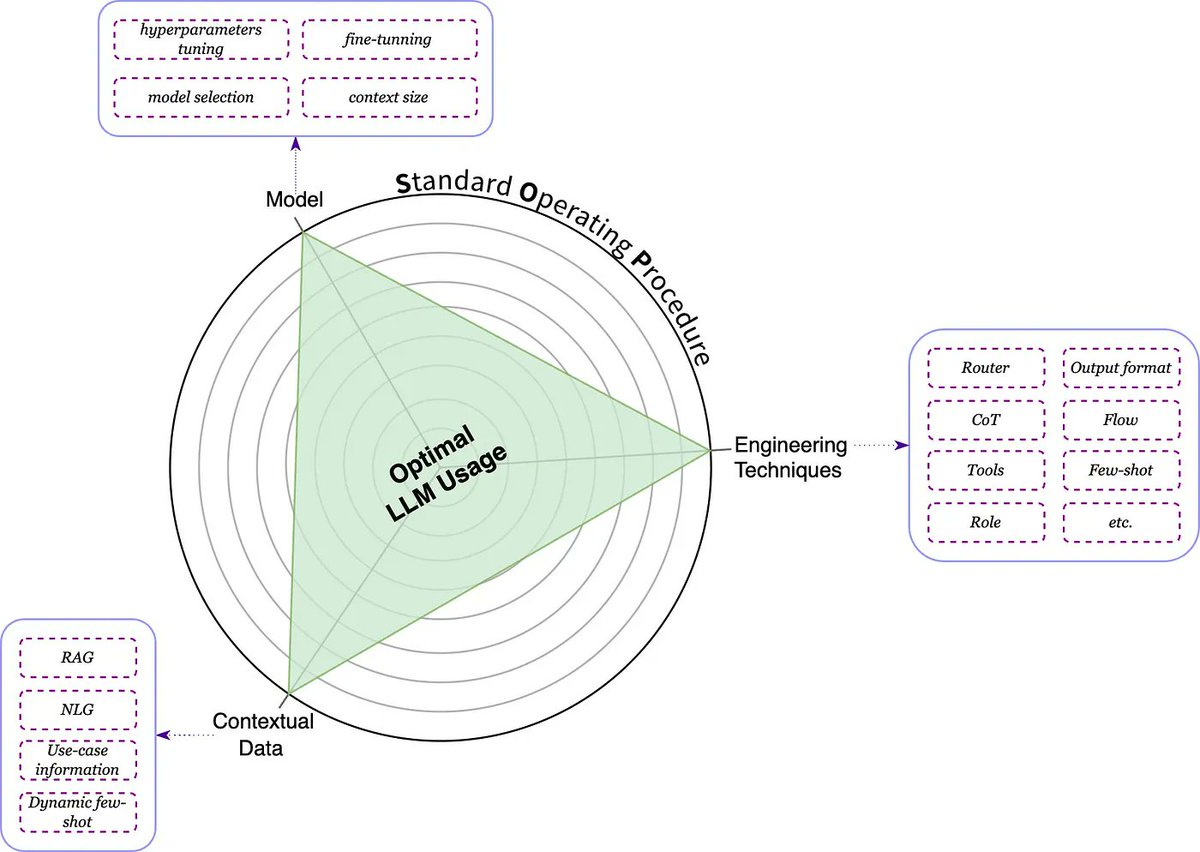
🔺✨ The LLM Triangle Principles to Architect Reliable AI Apps
📋🔧 SOP Importance: SOP guides LLM app design, transforming LLMs from simple models to expert systems for complex tasks.
⚙️🔗 Engineering Techniques: Key to implementing SOP and optimizing LLM-native app performance using workflows, chains, and agents.
📚🧠 Role of Background Data: Critical for LLM performance, providing structured information for better task understanding and execution.
🏋️💡 Model Selection Considerations: Balancing functionality and cost, tailored to task needs and application context.
🔄🔐 Challenges of Model Fine-Tuning: Enhances performance but involves privacy, compliance, and cost issues.
🔺📈 Implementing LLM Triangle Principles: Focus on SOP, engineering techniques, and background data to build reliable, high-performing LLM-native apps. From concept to production, these principles provide essential guidance.
#AI #LLM #MachineLearning #SoftwareDesign #Engineering #DataScience #AIDevelopment #SOP #ContextData #ModelFineTuning
1
4
184

I'm very proud to announce that @1ContextData is now a @pinecone partner and will have the opportunity to help developers, small businesses and enterprises to build applications (vector search, recommendation systems, RAG) on top of a world class vector database infrastructure.
Check us out at contextdata[.]ai and start building quick and easy data flows to Pinecone
23 May 2024

✨ We’re excited to announce our partnership with @pinecone ✨
We’ve been building Generative AI applications using Pinecone for over a year and have proven our expertise especially with data transformation and loading (ETL) with Pinecone. We're looking forward to continuing to build cool and mission critical applications using Pinecone.
See more information on our integration in the comments below
1
1
140

<Prompt Template>
Through the process of problem design, we aim to structure and visualize participants' frames, facilitating problem-solving, idea generation, and addressing various concerns. The following template integrates the concepts and techniques of problem design.
【Concepts of Problem Design】
Problem reframing: Rethink problems or challenges from different perspectives to create an environment for discovering new solutions and insights.
Diverse ideation: Explore a range of ideas and solutions to expand options for effective decision-making.
Participant engagement: Prioritize participants' needs and expectations in problem-solving and idea generation processes.
【Techniques of Problem Design】
Problem analysis and element clarification: Analyze problems or concerns from multiple angles to clarify elements and relationships.
Counterintuitive approach and questioning: Challenge problems or concerns with counterintuitive perspectives and thought-provoking questions to uncover fresh insights and ideas.
Integration of multiple perspectives and co-creation: Incorporate diverse viewpoints and expertise to generate comprehensive solutions and ideas.
Setting constraints and stimulating creativity: Explore solutions and ideas within specific constraints to stimulate creativity.
Utilizing analogies and deriving new perspectives: Draw analogies from different fields or situations to discover new perspectives and potential solutions.
Constructing future scenarios and envisioning: Imagine future scenarios and develop solutions and ideas tailored to each scenario.
Challenging participants' frames and fostering empathy: Challenge participants' preconceptions and biases to stimulate new perspectives and foster empathy.
【Data Format Example】
Below is an example of a data format. In addition to participants' demographic information, you can add relevant data specific to your project or task.
"Demographics": { "Age": 25, "Gender": "Female", "Occupation": "Software Engineer" }, "ProjectData": { "ProjectName": "XYZ Project", "ProjectType": "Product Development", "Timeline": "3 months", "TeamSize": 6 }, "ContextData": { "MarketTrends": ["trend1", "trend2", "trend3"], "CompetitorAnalysis": "summary", "UserFeedback": "summary" }
1
1
3
1,190
メモ;
このテンプレートは、問題解決やアイデア創出、悩み相談などのプロセスにおいて、参加者のフレームを構造化・可視化し、新たな視点や解決策を見つけるためのアプローチを提供します。
【目的】 このテンプレートの目的は、以下の点を達成することです。
参加者のフレームを明確化することで、問題や課題に対する新たな視点や洞察を得る。
多様なアイデアや解決策を探求することで、創造性を刺激し、最適な選択肢を見つける。
参加者のニーズや期待を最優先に考慮し、ユーザーエクスペリエンスを向上させる。
AOLsや創発エージェントの概念やオブジェクト指向の考え方を統合し、効率的で柔軟なプロセスを実現する。
【具体的な手順】 以下の手順を参考に、問題解決やアイデア創出のプロセスを進めてください。
問題の再定義: 問題や課題を異なる視点から捉え直し、新たな解決策を見つけるための土壌を整えます。
アイデアの多様性: 多様なアイデアや解決策を検討し、最適なものを選択するための選択肢を広げます。
ユーザー中心のアプローチ: ユーザーのニーズや期待を最優先に考慮し、問題解決やアイデア創出のプロセスをデザインします。
参加者のフレームの構造化・可視化: 参加者のフレームや視点を整理し、問題解決に向けた共通の理解を促進します。
アナロジーの活用: 別の分野や事例からのアナロジーを引き出し、新たな視点や解決策のヒントを見つけます。
逆説的なアプローチと質問: 問題に対して逆説的な視点や質問を投げかけることで、新たな洞察やアイデアを引き出します。
データの活用: 問題解決に必要なデータを収集し、分析して意思決定の基盤とします。
グループダイナミクスの観点: 参加者の相互作用やグループのダイナミクスを考慮し、協力的な環境を構築します。
制約条件の設定: 特定の制約条件下での解決策やアイデアの探求を通じて、創造性を引き出します。
フィードバックと反省: 過程と結果に対するフィードバックを活用し、プロセスの改善と学習を行います。
以上の手順を参考に、具体的なプロジェクトや課題に応じてテンプレートをカスタマイズしてください。参加者のフレーム構造化と新たな視点の発掘に焦点を当てつつ、柔軟なアプローチを取ることで目的達成をサポートします。
【データフォーマット例】 以下はデータフォーマットの例です。参加者のデモグラフィック情報の他にも、プロジェクトや課題に関連するデータを適宜追加してください。
"Demographics": { "Age": 25, "Gender": "Female", "Occupation": "Software Engineer" }, "ProjectData": { "ProjectName": "XYZ Project", "ProjectType": "Product Development", "Timeline": "3 months", "TeamSize": 6 }, "ContextData": { "MarketTrends": ["trend1", "trend2", "trend3"], "CompetitorAnalysis": "summary", "UserFeedback": "summary" }
1
6
3,861

28 Mar 2021
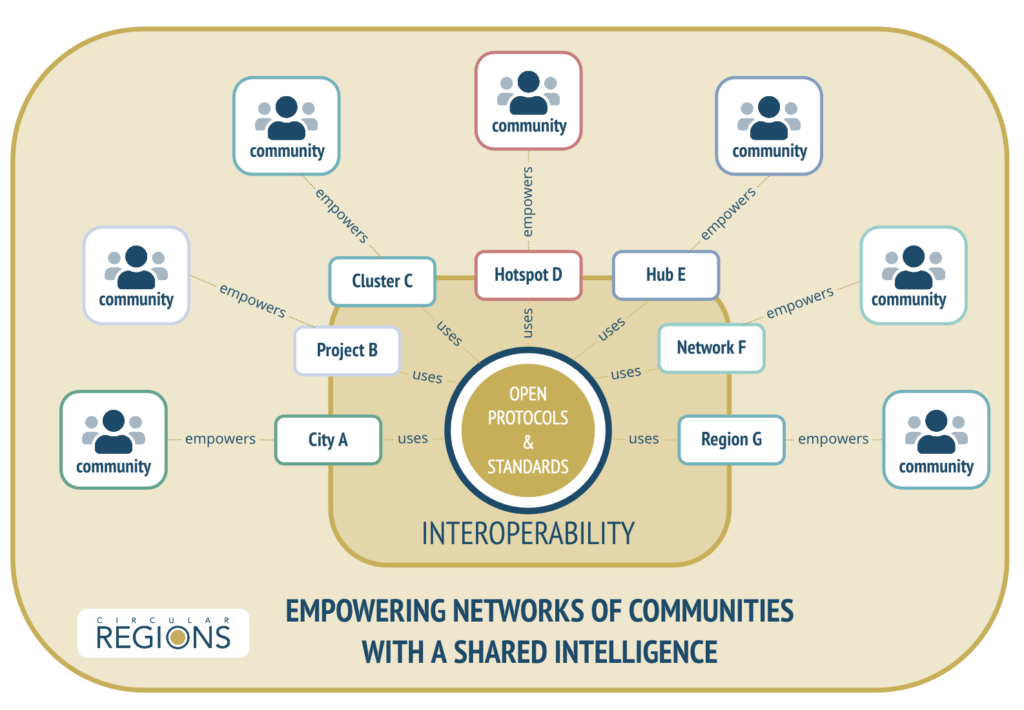
@EUEnvironment’s framework enabling:
· Dynamic #CaseStudies for #ContextData
· #CircularBusinessModels based on best in class frameworks
· Policy & economic incentives at local, regional & national scales
· Educational & behavioural shift supporting #MindsetShift
...
1
3

9 Feb 2021
✨NEW✨ on the #SuiteCommerce developer portal:
Access Model and Collection Data in a Child View with contextData
If you've ever added a child view to a PLP or PDP and wondered "how do I access the product's data?" then this is your guide.
developers.suitecommerce.com…
3
3

5 Feb 2021
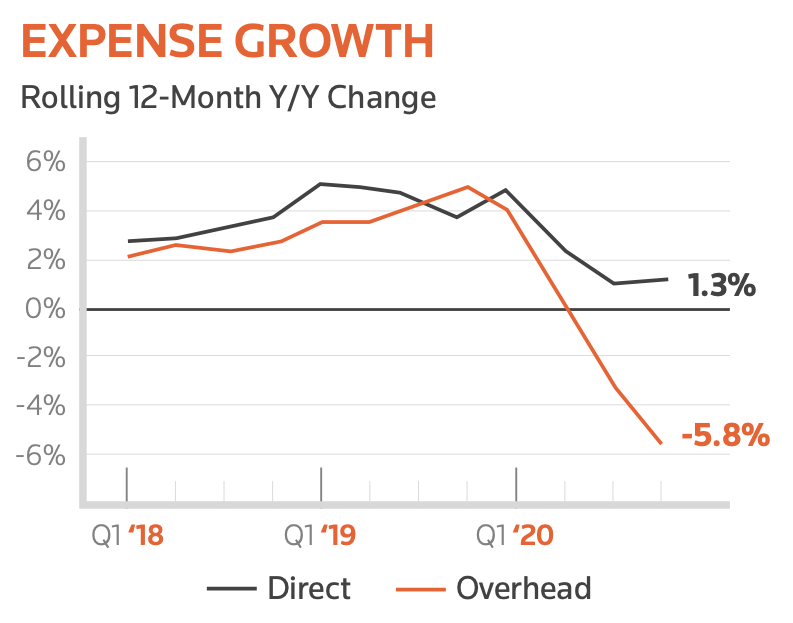
How did major law firms pull off a profit spike in 2020? @CarolineSpiezio reports on the law firm strategies ttps://today.westlaw.com/Document/I6f3fb380673711eba5aed72132589a0f/View/FullText.html?transitionType=SearchItem&contextData=(sc.Default) Graphic credit: PMI
1

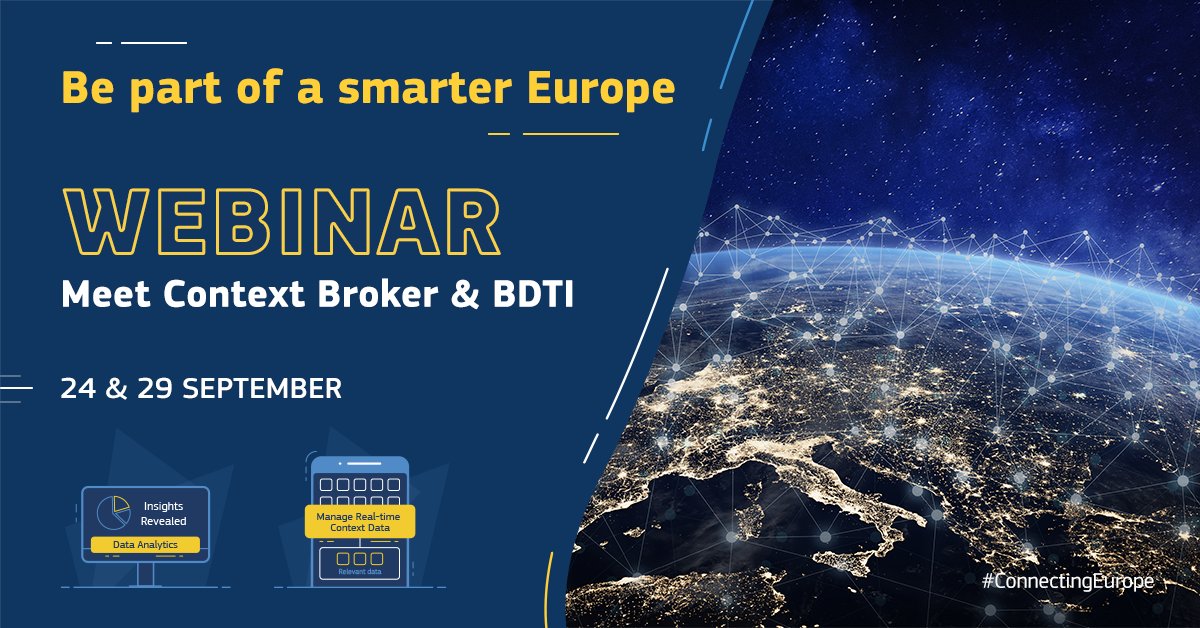
On 24 September, together with @Connecting_EU we'll discuss why the #ContextBroker is key for a #smartcity 💡
To join us, register here for free: ec.europa.eu/cefdigital/wiki…
With
@davor_oasc
@VincDemortier
#smartcities #contextdata #IoT #data
3

The FIWARE #WednesdayWebinars are back!
First up: "Strategies for #ContextData Persistence". Join this Intro to the data persistence components found within the #FIWARE Catalogue and various options on how to maintain a historical record of context. bit.ly/2Z6ehPl
1
2
New #FIWARE Global Summit sessions announced! 💯
From 'Innovative #Procurement – a Paradigm Shift' and 'How FIWARE Can Support New “RES” Based “Business Models', to 'Sending and Retrieving #ContextData using Real Devices'. #FIWARESummit bit.ly/FIWARESummitBLN

2
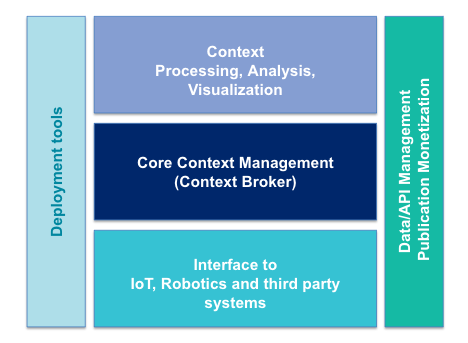
Join the 'Introduction to the #FIWARE #OpenSource Initiative' #workshop at @citylabberlin in #Berlin on 28 August from 18:00-20:00. FIWARE is a universal set of standards for #contextdata management which facilitate the development of Smart Solutions. ⚡ bit.ly/2TO07QH
2