
Jun 13
No wonder since they are using it for offensive cyberoperations.
135

പൊലീസ് തലപ്പത്ത് വൻ അഴിച്ചുപണി; പി.വിജയൻ ക്രമസമാധാന ചുമതലയുള്ള എഡിജിപി
#KeralaPolice #PVijayanIPS #PoliceReshuffle #ADGPLawAndOrder #KeralaNews #IPSNews #KeralaGovernment #LawAndOrder #CyberOperations #Kerala
etvbharat.com/ml/state/keral…
4

Jun 9
In her latest for Binding Hook, @cyberoverdrive argues that Chinese #cyberoperations no longer fit neatly within the traditional ‘advanced persistent threat’ (APT) model & explores why composite responsibility matters.
🪝 Read the full article: bindinghook.com/understandin…
1
41

May 14
For much of the modern era, #Deterrence rested on 2 essential conditions: #Attribution & #Cognition.
You could identify your #Adversary, and you had time to assess, deliberate, and step back from #Escalation.
Today, these conditions are under growing strain. From #HybridWarfare to #CyberOperations, #ProxyConflicts, and #DeniableStrikes,
#Conflict is increasingly unfolding in ways that #ObscureResponsibility and #CompressResponseTime.
3
4
325

中美共同的敌人
The U.S. and China Have a Common Foe. Hint: It’s Not the U.S.S.R.
托马斯·弗里德曼2026年5月6日
📷Photo Illustration by The New York Times. Photographs: XINHUA / AFP via Getty Images; Tyrone Siu/Reuters
The summit between President Trump and President Xi Jinping in Beijing next week could be the most significant encounter between American and Chinese leaders since Richard Nixon met Mao Zedong in Beijing in 1972.下周,特朗普总统与习近平主席将在北京举行会晤,这可能是自1972年理查德·尼克松与毛泽东在北京会面以来中美两国领导人之间最重要的一次会晤。That summit eased decades of Sino-American animosity and forged a tacit alliance between the United States and China against the Soviet Union. This summit comes at a similar transformational moment in world affairs, when there is a new shared threat to both China and America. It is a metastasizing disorder that could destabilize the world and harm both countries unless they figure out a way to simultaneously compete and collaborate against a growing list of challenges. These challenges can be successfully confronted only by their collective action — starting with the United States and China together creating guardrails against the malign uses of A.I., now that the latest models have demonstrated staggeringly powerful cyberattack capabilities.那次会晤缓和了中美之间长达数十年的敌意,促成了美中两国针对苏联的默契同盟。本次会晤同样发生在国际局势发生类似变革的时刻,中美如今正面临一个全新的共同威胁。这是一种不断扩散的失序风险,若两国无法在竞争的同时开展合作、应对日益增多的挑战,这种风险或将动摇全球稳定,损害两国利益。唯有中美两国携手行动,才能有效应对这些挑战——首先,鉴于最新的人工智能模型已展现出惊人的网络攻击能力,中美两国应携手建立防护机制,防止人工智能被恶意利用。Two paradigm shifts have changed the world since the Nixon-Mao summit. The first — still not widely appreciated, although the alarm bells are now ringing off the wall — is the emergence of these new, asymmetric artificial intelligence tools that could superempower small, malign actors, be they terrorists, anarchists, criminals, political groups or small nation-states.自尼克松与毛泽东会晤以来,两大范式转变重塑了世界。第一大转变——尽管警钟已响彻全球,但仍未被广泛重视——正是新型非对称人工智能工具的出现。这类工具能为小型恶意行为体赋予极大的能力,无论是恐怖分子、无政府主义者、犯罪分子、政治团体,还是小型国家。Two guys in a cave with a laptop, access to the latest A.I. models and a Starlink terminal could attack the critical infrastructure of any society.两个人躲在山洞里,仅用一台笔记本电脑、接入最新AI模型和星链终端,就能对任何国家的关键基础设施发动攻击。The second has to do with globalization. The Nixon-Mao summit began the process of taking the world from disconnected to much more connected and then interconnected. When Nixon and Mao began easing China out of its isolation from the global economy — which Deng Xiaoping then vastly accelerated by shifting China to state-led capitalism — they unleashed a cascade of economic and technological forces.第二大转变与全球化有关。尼克松与毛泽东会晤,开启了世界从彼此隔绝到紧密连接、进而深度交织的进程。当年,尼克松与毛泽东推动中国逐步融入全球经济,随后邓小平大力加速这一进程,推动中国转向国家主导的资本主义模式,由此释放了一系列经济与技术力量。By the time the early 21st century rolled around, the combination of China joining the World Trade Organization and the world being wired with the internet meant that more people in more places could compete, connect and collaborate in more ways for less money on more things than at any other time in human history. It is why I wrote a book in 2005 titled “The World Is Flat.”进入21世纪初,中国加入世界贸易组织以及全球互联网的普及前所未有地让更多地区、更多的人能以更低的成本、更多的方式在更多的领域展开竞争、联结与协作。正因如此,我在2005年撰写了《世界是平的》(The World Is Flat)一书。It is in the nature of technological change, though, that each major step forward comes faster than the previous one, because it builds on the tools that the previous era unleashed. So, years after I argued that the world is flat, technology, and other forces, marched on and took us, as Dov Seidman, the founder of The HOW Institute for Society, argued, from interconnected to interdependent, or as he puts it, from flat to “fused.”然而,技术变革的本质在于,每一次重大进步都比前一次更快,因为它建立在前一时代所释放的工具之上。因此,在我提出“世界是平的”多年后,技术与其他力量继续演进,正如HOW社会研究院创始人多夫·赛德曼所言,世界从相互联接走向了相互依存,或如他所说,是从“平的”走向了“融合的”。You could unplug from the flat world. There is no escaping the fused world. We are all going to rise and fall together now.在平的世界里,你尚可选择拔掉插头;但在融合的世界里,无人能够逃离。如今,我们已是命运与共,休戚相关。That is not only because advances in the internet, smartphones, fiber optics, satellites and wireless communication have fused us technologically more than ever before. It is also because a set of planetary-scale challenges has fused our fates together more than ever before as well. These challenges are so large in scope and so indifferent to national borders that no single state, however powerful, can address or escape them alone.这不仅是因为互联网、智能手机、光纤、卫星及无线通信技术让我们在技术层面以前所未有的方式紧密相连;更因为一系列全球性挑战让我们的命运前所未有地交织在一起。这些挑战影响范围极广,且不受国界限制,任何国家无论实力多强都无法独自应对或逃避。We know what they are: mitigating climate change, preventing the spread of nuclear and biological weapons, managing global migrations, controlling pandemics, keeping global supply chains that we all now depend on operating smoothly and — most important and immediate — managing this new A.I. species we have conjured up.我们清楚这些挑战是什么:减缓气候变化、防止核武器与生物武器扩散、管理全球移民、遏制疫情、维护如今我们都依赖的全球供应链顺畅运转,以及最重要且最紧迫的事项——管控我们亲手创造的新型人工智能物种。We have been able to postpone or get by with limited collaboration on many of these planetary-scale issues, but time is up on A.I.’s cyberattacking powers. There is no kicking this can down the road. There is no more road.在众多全球性议题上,我们尚且能够通过有限的合作来拖延或是勉强应对,但面对人工智能的网络攻击能力,我们已经没有时间。再没有拖延的余地,已经无路可退。For years, notes Craig Mundie — a former head of research and strategy at Microsoft and my tutor and partner in thinking about this new A.I. threat — the United States and China have regularly poked and probed each other, and have embedded malware infrastructure and stolen information from each other with covert cyberoperations. But they also knew, Mundie noted, that if the Chinese took out our electricity grids, we could take out theirs, and that if they could turn the lights out in Washington, we could do the same in Beijing. It’s the same as with nuclear weapons: “They had recreated mutually assured destruction,” Mundie said.微软前研究与战略主管、也是我研究人工智能新威胁的导师与合作伙伴克雷格·蒙迪指出,多年来,美国和中国一直在网络空间相互试探、渗透,通过秘密网络行动在对方系统植入恶意软件基础设施并窃取信息。但蒙迪指出,双方也心知肚明,若中方瘫痪我们的电网,我们也能瘫痪中方电网;若中方能让华盛顿断电,我们也能让北京断电。这与核武器的逻辑如出一辙:“他们重现了相互确保摧毁的格局,”蒙迪说。But now guess who’s coming to dinner? A new set of actors, potentially very dangerous, and they’re not just countries. Yet they can threaten us both.但现在猜猜谁又已经入局?一批新的、潜在极具危险性的行为体,它们不再局限于国家主体,却能同时威胁中美两国。These are the agentic A.I. systems recently disclosed by Anthropic and OpenAI that could give tools to small cyberattackers to disrupt both China’s economy and ours — and anybody else’s — with very little money and virtually no expertise. You can bet that other U.S. models, like Google’s Gemini, and soon China’s A.I. models, will offer the same powers.这就是Anthropic与OpenAI近期披露的代理式人工智能系统。这类系统能为小型网络攻击者提供工具,使其能以极低成本扰乱中美两国乃至全球任何国家的经济,而且几乎无需专业技术。可以肯定的是,谷歌的Gemini等其他美国人工智能模型以及中国后续推出的人工智能模型也将具备同等能力。Because companies in the United States and China have been the first to produce these agentic systems, “the two of them must take the lead in controlling their distribution and building defenses to protect themselves — and everyone else if they leak out,” Mundie said.蒙迪表示,由于中美企业率先研发出这类代理式系统,“两国必须牵头管控它们的传播,并构建防御体系——既要保护自身,也要防范技术泄露后危害他人”。Anthropic and OpenAI say their newest models are so potent at finding and exploiting flaws in software that both companies have chosen to limit their distribution for now. But it is only a matter of time before they escape into the wild, if they haven’t already.Anthropic与OpenAI称,其最新模型在发现和利用软件漏洞方面能力极强,因此两家公司目前选择限制其传播。但即使尚未泄露,技术流入公开领域也只是时间问题。“This should be a big motivator for the two countries to come together — if only on this narrow issue, which is now a clear and present danger to both,” Mundie argued.蒙迪认为:“这应当成为两国携手合作的强大动力——哪怕仅限于这个狭窄的议题,它如今已经对双方构成了迫在眉睫的威胁。”It is not asking the impossible. China and the United States were able to cooperate in the days of Nixon and Mao, Mundie concluded, “because we had a common problem: the Soviet Union. Well, now we have another common problem. It is not another country; it’s a technology — the emerging risks from asymmetric cyberthreats from agentic A.I. systems.”这并非不切实际的要求。蒙迪指出,尼克松与毛泽东时代,中美能够合作“是因为当时我们有共同的敌人苏联。如今,我们面临另一个共同问题,它并非某个国家,而是一项技术——代理式人工智能系统带来的非对称网络威胁引发的新兴风险”。The old G2, the United States and China, need to work with what I’ll call the new I7 — Anthropic, Google/Alphabet, OpenAI, Meta, Alibaba Group, DeepSeek and ByteDance — to figure out a way to get the best from these new A.I. models while cushioning against the worst. The governments can’t solve this by themselves, and neither can the companies.过去的G2(即中美两国)应当同我称之为“新I7”的七家企业——Anthropic、谷歌/Alphabet、OpenAI、Meta、阿里巴巴、深度求索、字节跳动——携手合作,在充分发挥新型人工智能模型价值的同时有效防范其最坏影响。仅靠政府无法解决这一问题,企业同样力有未逮。In a development that received too little attention because of the Iran war, Trump is reportedly now considering imposing oversight on A.I. models before they are made publicly available. That is very wise of Trump. People need to wake up: We are entering a world in which private companies can now, in effect, split the atom, in terms of the power they can unleash in every direction.由于伊朗战争的影响,这一动态未受到应有的关注,但据报道,特朗普正考虑在人工智能模型公开前对其实施监管。特朗普此举非常明智。人们必须清醒认识到:我们正进入一个新时代,私营企业如今掌握的力量堪比裂变原子,它们能够释放的影响力将辐射到各个领域。“And as with splitting the atom, you can either make electricity or bombs,” Mundie said. The same is true with agentic A.I. “We have the power to do unlimited good or create weapons — hugely asymmetric weapons.”“和裂变原子一样,这项技术既可以用来发电,也能制造炸弹,”蒙迪说。代理式人工智能亦是如此。“我们既可创造巨大福祉,也能制造武器——而且是极具非对称破坏力的武器。”The topic of agentic A.I. is expected to be on the Trump-Xi agenda. What would truly make this the most significant U.S.-China summit since Mao and Nixon is not just that the two men talk about it, but that they decide to work together on it — now. Later will be too late. It’s just coming too fast.代理式人工智能预计将成为特朗普与习近平会晤的议题。而真正能让本次会晤成为自毛泽东与尼克松会晤以来最重要中美峰会的,不仅仅是两国领导人就此展开讨论,而是他们决定现在就携手应对——拖到以后就太迟了,技术发展速度已经不容拖延。Even if many leaders in Washington, Beijing and, for that matter, Moscow still haven’t grasped it, this is the first era of human history in which we Homo sapiens must govern, innovate, collaborate and coexist at a planetary scale to thrive. We will either build complex, adaptive coalitions to do that or we will be overwhelmed together.尽管华盛顿、北京乃至莫斯科的许多领导人尚未完全意识到这一点,但人类历史已经第一次进入这样一个全新阶段:我们智人必须以地球为尺度,开展治理、创新、协作与共存,才能实现繁荣发展。我们要么构建复杂且自适应的合作联盟来实现这一目标;要么就是一起沉沦。Our fates are now fused.我们的命运如今已经融合在一起。
托马斯·L·弗里德曼(Thomas L. Friedman)是外交事务方面的专栏作者。他1981年加入时报,曾三次获得普利策奖。他著有七本书,包括赢得国家图书奖的《从贝鲁特到耶路撒冷》(From Beirut to Jerusalem)。欢迎在Twitter和Facebook上关注他。
1
2
281


May 1
When at @ICRC I was writing the report on human cost of cyberoperations, I did consider such integrity attacks. While no reports of evidence was available back then, it was an important aspect to consider. It turns out the evidence was out there all this time, just hidden.
Apr 30

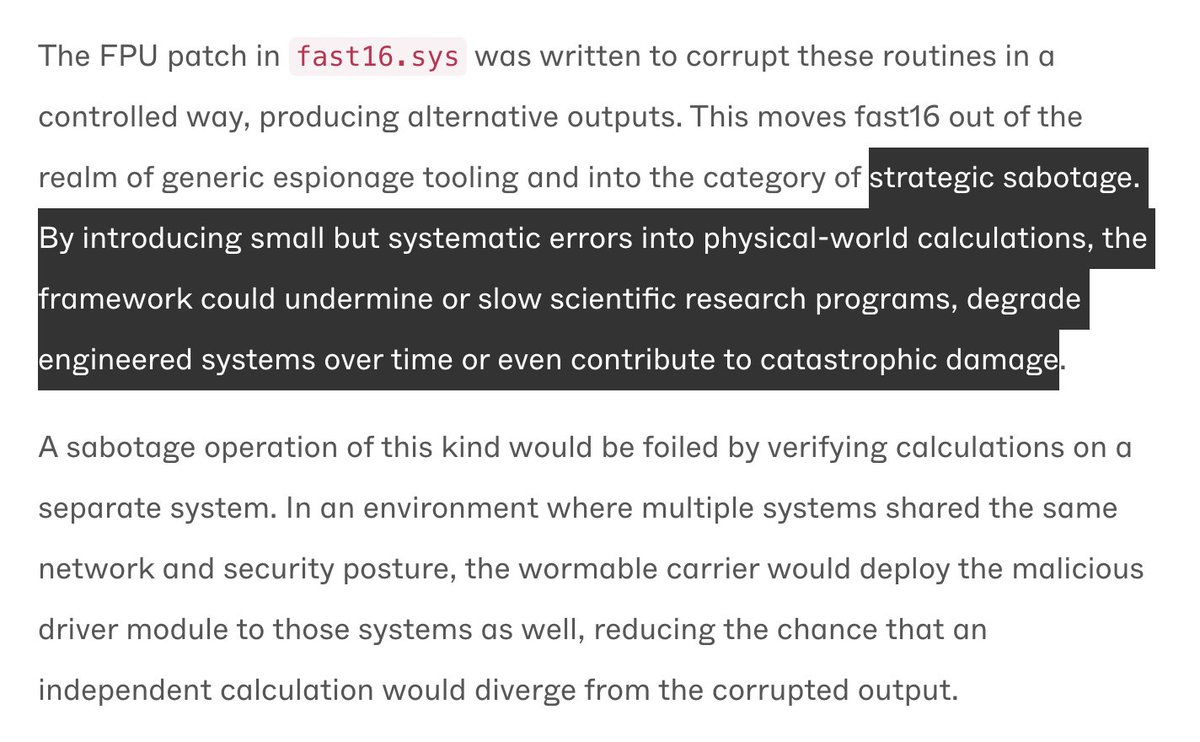
A 2005 state-designed worm designed to corrupt physics simulations sat undetected on VirusTotal for nearly a decade. Fast16, intercepted executable files at the kernel level and silently rewrote floating-point calculations to make them produce slightly wrong answers. Targets: high-precision engineering suites used for structural analysis, crash simulations, and physical process modeling, including LS-DYNA, a tool cited in reports on Iran's nuclear weapons research. The sabotage vector relied on deployment of the driver across a network via worm, corrupting calculations on every machine, and eliminating the possibility of cross-checking results against a clean system. Stuxnet got the documentary. Fast16 got twenty years of nothing. sentinelone.com/labs/fast16-…
2
4
28
2,813

Apr 29
Adversaries don’t operate through isolated attacks—they run long-term campaigns.
Persistence, positioning, and adaptation define modern cyber operations.
Our latest podcast explores why understanding attacker behavior gives defenders a stronger advantage than focusing on alerts alone.
🎧youtu.be/2vzVMU-Y2Kc
#ThreatActors #APT #ThreatIntelligence #CyberOperations #Podcast
1
5
261

Apr 27
🇷🇺 vs.🐕 𝗡𝗔𝗙𝗢 𝗠𝗮𝗱𝗲 𝗠𝗲 𝗗𝗼 𝗜𝘁!
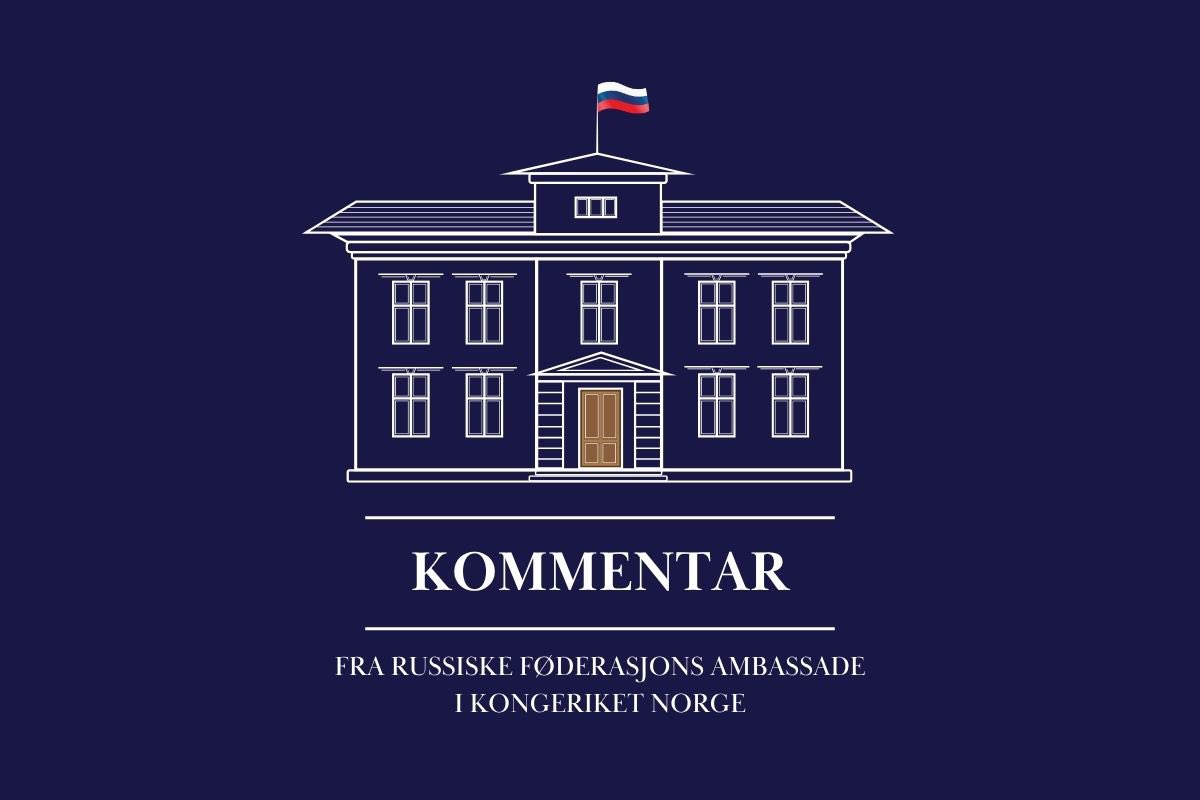
The Russian Embassy in Norway just filed an official diplomatic response to a Norwegian outlet asking about Russian cyberoperations against Norway and other foreign states.
Source: x.com/RusEmbNo/status/204758…
They answered the question. But there's a nuance.
Instead, the Embassy produced a list of Ukrainian cyber threats to justify Russia's own conduct: Yellow Drift, Ukrainian Cyber Alliance, Cyber Anarchy Squad, Silent Crow, IT Army of Ukraine, InformNapalm... and NAFO.
Yes. That NAFO. The decentralized social media phenomenon built around a Shiba Inu whose primary offensive capability is hurting Russian's feelings with really mean memes.
NAFO is not a hacking group. It is not a Ukrainian group. It is not a group at all. Yet it made Russia's official diplomatic threat assessment anyway.
The list list sent to the news outlet turned out to be a collection of groups that annoy Russia online rather than cyber threats.
The document gets worse from there.
Newsflash, Kremlin. You are at war with Ukraine.
Cyber operations against Russian military and government infrastructure are lawful acts of war. Framing them as terrorism while actively bombing Ukrainian housing blocks is a credibility problem that only a regime drenched in its own war crimes could muster.
Norway is not at war with Russia. The question was about Russian cyberoperations against Norway. Whether they know it or not, that question was answered in the affirmative through justification by whataboutisms.
But there is something deeper here than bad diplomacy.
Norway is a NATO member and one of Ukraine's most committed supporters. Sending this document to a Norwegian outlet, as though a list of Ukrainian hacker groups and meme clubs constitutes a defense of Russian conduct, suggests an embassy operating in a completely different information reality than the country that will publish it.
That is not strategic messaging. That is an institution that has consumed its own propaganda long enough to believe it works on people who have access to other information.
They are not speaking to Norway. They are speaking to the Kremlin.
The Shiba Inu could not be reached for comment.
#OSINT #Russia

💬 Kommentar fra Russlands ambassade i Norge til den norske nettavisen «kode24» (22. april 2026)
Vi anser anklagene mot Russland om å ha gjennomført cyberoperasjoner mot andre stater som ubegrunnede. Samtidig foreslår vi å se på det nevnte problemet fra en annen side.
Nesten helt fra starten av den spesielle militære operasjonen har de ukrainske myndighetene iverksatt en omfattende skadelig kampanje mot vårt land og våre borgere ved hjelp av informasjons- og kommunikasjonsteknologi.
Blant de pro-ukrainske hackergruppene som gjennomførte angrep mot russisk kritisk infrastruktur i 2025, er: Yellow Drift, Ukrainian Cyber Alliance, Cyber Anarchy Squad; Silent Crow; Laska, UNG901; IT Army of Ukraine, InformNapalm, NAFO, Secjucie; DarkGaboon, Werewolfes; Scaly Wolf, Space Pirates (angrep på offentlig sektor, spionasje, svindel og utpressing).
Den viktigste og eneste oppgaven til de ukrainske cybergruppene er å påføre størst mulig skade. Siden objekter i den russiske kritiske informasjonsinfrastrukturen er pålitelig beskyttet takket være våre kompetente myndigheter, har sivile objekter blitt hovedmålet.
Hovedtyngden av datangrepene fra Ukraina er rettet mot bank-, energi- og transportsektoren, sykehus, apotek og butikker. Det dreier seg hovedsakelig om forsøk på å sette informasjonsressurser ut av drift eller å få tilgang til personopplysninger om russiske borgere for å gjennomføre målrettede operasjoner mot dem.
Myndighetene i Kiev har satt stram kontroll på virksomheten til hundrevis av såkalte call-sentre, som driver med ren og skjær tyveri fra vanlige russere, hovedsakelig pensjonister. Til dette benyttes ikke bare sosial manipulasjon, som brukes til å presse penger ut av ofrene, men også personopplysninger om russere som er innhentet gjennom datangrep. De stjålne midlene går enten til behovene til de ukrainske væpnede styrkene, eller havner i lommene til korrupte eliter.
Det er også viktig å merke seg at de ukrainske spesialtjenestene aktivt bruker potensialet til call-sentrene til å involvere sivilbefolkningen – gjennom bedrag eller utpressing – i sabotasje- og terroraktiviteter på russisk territorium.
I det siste har de ukrainske spesialtjenestene mangedoblet sin aktivitet når det gjelder rekruttering av russiske borgere, først og fremst ungdom, til å utføre sabotasje og terrorhandlinger på russisk territorium. Det er betegnende at myndighetene i Kiev og hackerne de har under sin kontroll ikke bare unnlater å skjule sin involvering i cyberangrep, men også skryter av det.
Uten tvil kunne alle de beskrevne handlingene fra Kiev i utgangspunktet ikke gjennomføres uten hjelp og, enda mindre, uten Vestens viten. Siden 2022 har ukrainske spesialtjenester og hackere begynt å motta omfattende materiell, teknisk, faglig og personell støtte fra Vesten. Ideen om å åpne en «digital front» mot Russland ble foreslått av NATO-landene, som lenge har betraktet cyberspace som et krigsteater innenfor rammen av konseptet om hybridkrigføring mot andre land.
Alle handlingene til regimet i Kiev på den «digitale fronten» har ingenting med «forsvar» å gjøre og passer inn i logikken til dets nazistiske, terroristiske ideologi.
Ukraina har, gjennom innsatsen fra sine myndigheter og vestlige kuratorer, endelig blitt et arnested for cyberkriminalitet. Dette er et langsiktig problem – og langt fra bare for Russland. Allerede nå registreres en utvidelse av «geografien» for ukrainske hackere og nettsvindlere, som stadig oftere angriper europeiske land og deres borgere. Denne informasjonen er bekreftet av FN – i juli 2025 publiserte FNs kontor for narkotika og kriminalitet en rapport om situasjonen med organisert kriminalitet i Ukraina, der det gis konkrete eksempler på operasjoner utført av nettsvindlere mot borgere i EU-land.
☝️Etter at krisen er løst, vil hele dette kriminelle og offensive potensialet utgjøre en trussel for hele verden.
🔗 Publisert 22.04.2026 på kode24: kode24.no/artikkel/ukrainer-…
7
6
24
4,411

As armed conflict becomes more digitalized, how can civilians be protected in an interconnected battlespace?
ICT activities raise pressing humanitarian and legal questions.
Read more → lnkd.in/ecAyD4Zb
#IHL #CyberOperations #ProtectionOfCivilians
ALT Photo of cables in a room, placed in a very confusing way.
7
15
2,445

Apr 22
Whilst you ponder this topic, understand the following:
1. Almost everything you consume about Iran is done via the internet, in most part via Blue social networks - everything arrives to you through this algorithmically controlled funnel
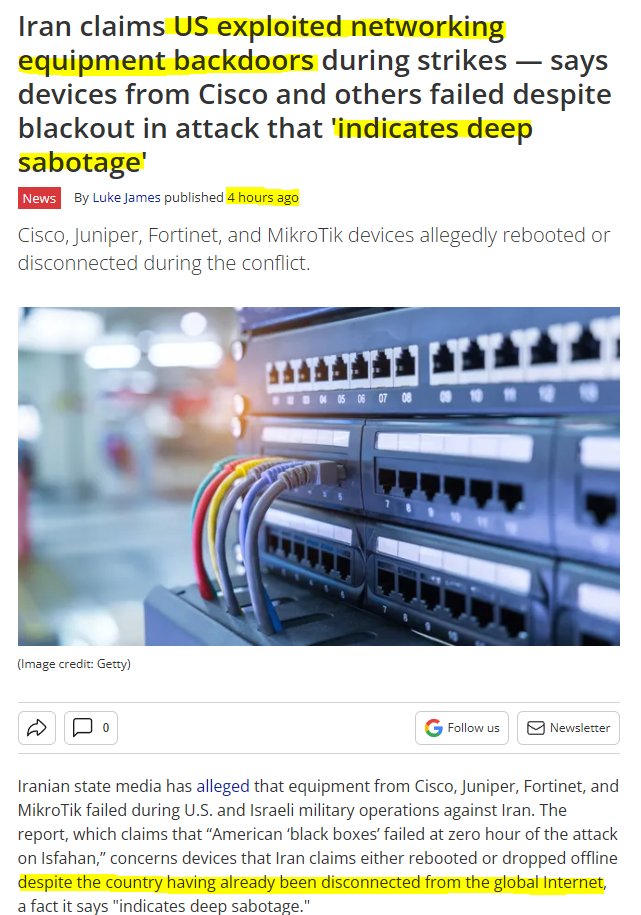
2. What's feeding these networks with Red info are 'semi-official' Iranian news outlets - accessed via Blue network infrastructure.
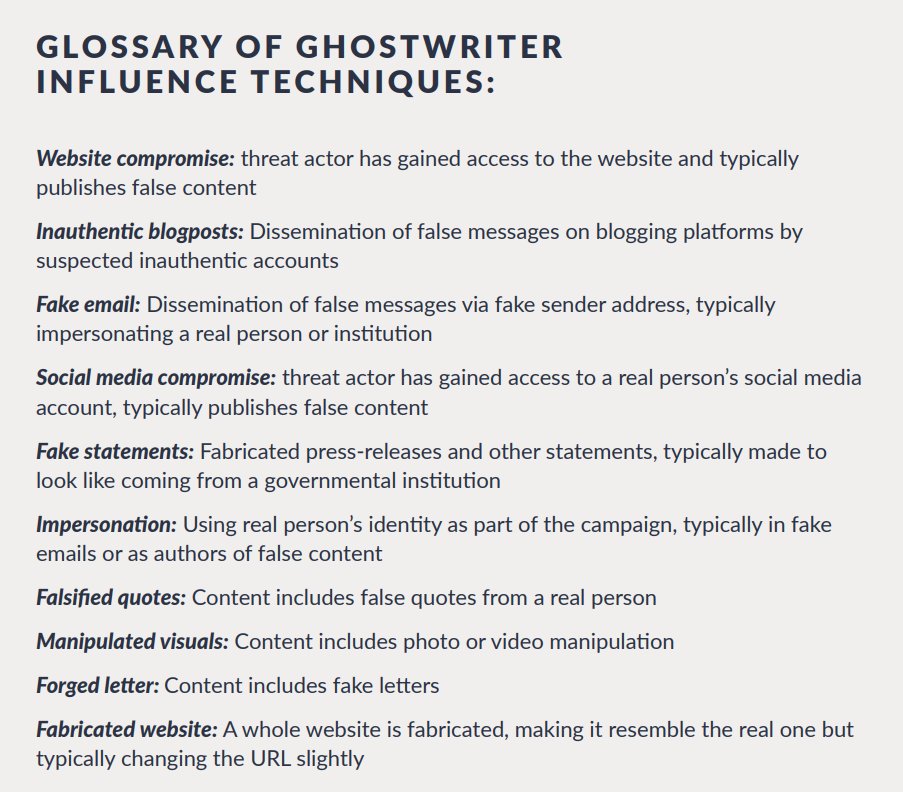
3. State actors have been hijacking news outlets for black propaganda for years now. In peacetime, this is a serious breach of sovereignty by state-backed groups who's with limited reach - in wartime, sovereignty is not a roadblock to cyberoperations conducted at a state level. Imagine the 'ghostwriter campaign', but with the gloves off.
4. Iran's tv signals and broadcasts have been hijacked several times - overt propaganda was broadcasted. In an AI generated world, imagine what less obvious content could be displayed. Imagine if that hijack was permanent.
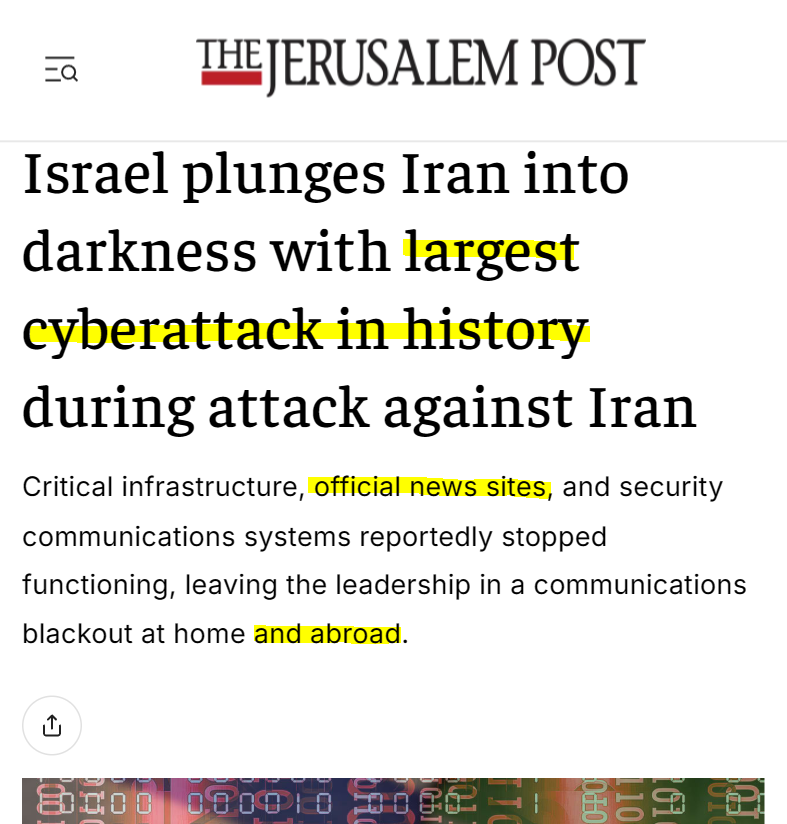
5. In the opening phase of the war (and in the years prior for that matter), a significant cyber operation was conducted - these targeted Iranian apps and *news outlets*, INCLUDING the ones I have mentioned here. 'Near total digital blackout'.
When an established outlet like the NYT, NBC or CNN cites 'Iranian media', they aren't lying to you, technically - they are simply citing a public source.
But what if the source they are citing is no longer Iranian?
1
4
217

Apr 18
Space Force report predicts future conflict with China | Bill Gertz, The Washington Times
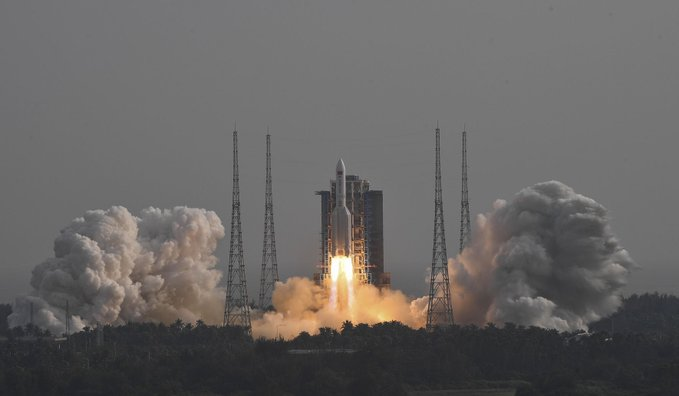
China is rapidly building up space-warfare capabilities and by 2040 will be conducting low-level warfare powered by advanced technology aimed at weakening the United States, according to a new Space Force report.
The report, made public earlier this week, is called “Future Operating Environment 2040” and describes a dark vision of conflict with Beijing below the level of declared war in the next 14 years.
“By 2040, the operating environment is marked by ongoing, hard-to-detect competition below the level of declared war,” the report stated. “The line between peace and conflict has become unclear amid continuous electromagnetic activity, cyberoperations, and covert interference in orbital regimes.”
By that date a major war with China or Russia is not expected but a long-term conflict in space and other warfighting domains will be underway, the report said, comparing this upcoming period to the years before the outbreak of World War I in 1914.
Chinese military investments in space capabilities will support “informatized” and “intelligentized” warfare, the report said, using Beijing’s term for advanced combat capabilities.
The report noted that 2040 is China’s declared goal date China for achieving space-power parity with the U.S.
China believes space power is vital for People’s Liberation Army joint strike operations, blockades, border wars and air defenses.
According to the report, China is developing advanced military and dual-use civilian-military know-how and will field directed energy weapons, artificial intelligence-powered arms, brain computer interface capabilities and “metamaterials” - artificially engineered structures designed to control light, sound, and electromagnetic waves in ways not found in nature.
The Space Force predicts future wars in space will be defined as “unrestricted spectrum warfare” that extends beyond the physical domain to include digital and cognitive warfare.
Similar to Germany’s unrestricted submarine warfare and the similar U.S. campaign against Japan in World War II, future, no-limits warfare in space and electronic domains will be a significant threat to the U.S.
“Like previous submarine campaigns, we project [unrestricted spectrum warfare] in 2040 will mean that every frequency, signal, and orbital regime is contested terrain, and both military and civilian space infrastructure are targets,” the report said.
“Attacks on space services are likely to occur without warning, with potentially devastating consequences for the populations they support,” it added.
U.S. space weapons and power will remain significant but will become “brittle” as a result of interference from China and other adversaries.
Tools and weapons used against U.S. space assets will include electronic spoofing, deceptive signaling, occasional outages, delays in space launches, on-orbit maneuvers from unclear signals, targeted coercion and “cyber-enabled intimidation of personnel and families,” the report said.
“The People’s Republic of China emphasizes speed, scale, and resilience by using distributed architectures,” the report said, noting the Chinese military’s use of stratospheric systems such as high-altitude balloons and drones, low profile nanosatellite swarms and relays utilizing the space between Earth and the moon.
China also will employ sophisticated “gray zone” warfare such as electronic jamming of satellites that appears as natural interference, spoofing disguised as routine communication errors, and supply chain disruptions.
All the methods will seek to gradually weaken U.S. capability and will, the report said.
China’s low-level warfare against rival Taiwan in 2040 will produce military operational fatigue and economic friction rather than large-scale military strikes, the report said.
Geopolitically, China by 2040 will seek to become the center of the global system, setting rules and norms from its communist system for both Earth and space, the report said.
Chinese leaders view the mid-21st century as a historic window of opportunity, linked to the centenary of Chinese Communist Party rule, the report said.
The goal is for China to become a technology superpower by the early 2030s and then establish “full-spectrum dominance or parity by 2049,” the report said.
PLA military planners are building forces for space operations that will include both combat and deterrence systems, the report said.
“This will manifest through threats and demonstrations, followed by a careful escalation in the precise application of force, all backed up by formidable space forces capable of ’zhenshe daji,’ or ’overawing space attack,’” the report said.
Chinese space warfare will include its current arsenal of counterspace weapons: anti-satellite missiles, directed energy weapons and killer robot satellites.
PLA forces will be powered by advanced intelligence, sensor, and communications systems, in space along with high-speed decision making tools and maneuvering satellites, the report said.
Advanced Chinese space technology threats in 2040 will include “never before harnessed” asymmetric warfare tools, the report said.
All will leverage AI, brain computer interface and material sciences, including metamaterials that the PLA will use to create “invisibility cloaks” for satellites, the report said.
The report also reveals China is building a vast, AI-based platform dubbed “Supermind” that is tracking and recruiting millions of scientists and researchers around the world.
For its brain-computer military capabilities, the PLA is investing heavily in technologies that can support direct neural links between military operators and robot space systems.
“This can dramatically compress decision cycles from minutes to milliseconds while allowing single operators to manage vast constellations of satellites, weapons platforms, and sensor networks,” the report said.
The PLA plans to use brain-computer links and AI to conduct complex, multi-domain operations as part of its unrestricted spectrum warfare, “potentially adapting faster than current U.S. [military decision-making] loops,” the report said.
Directed energy guns by 2040 will be supercharged by AI-enabled targeting, miniaturized emitters, and algorithmic modulation, the report said.
Advanced technology being developed includes quantum radar that will use single photons instead of classical electromagnetic waves to bolster electronic warfare and target satellites.
Spacecraft that release swarms of micro-satellites and nuclear space propulsion also will enhance PLA space war power, the report said.
High-altitude balloons, drones and airships operating at 60,000 feet to 120,000 feet pose a threat to U.S. space control and provide the PLA with “unique strike options,” the report said.
The report also states that Russian low-level space warfare in the coming decades will employ maneuvering robot satellites, mobile jammers and hidden “sleeper” satellites that activate at unexpected times.
“Repeated ’accidents,’ falsified ephemerides [data used in celestial navigation], and escalatory nuclear signals make it hard to attribute actions and manage crises,” the report said.
In Europe, governments there will operate in an environment of sabotaged infrastructure and uncertainty about U.S. deterrence in space and cyberspace.
“The overall effect is a prolonged competition marked by cumulative losses rather than decisive battles,” the report said. “Every informational advantage introduces reciprocal vulnerabilities, and defensive adjustments create new attack surfaces.”
washingtontimes.com/news/202…
1
3
11
1,398

Apr 12
Iranian Handala hacking group publish shot of cyberoperations wiping out sensitive UAE data
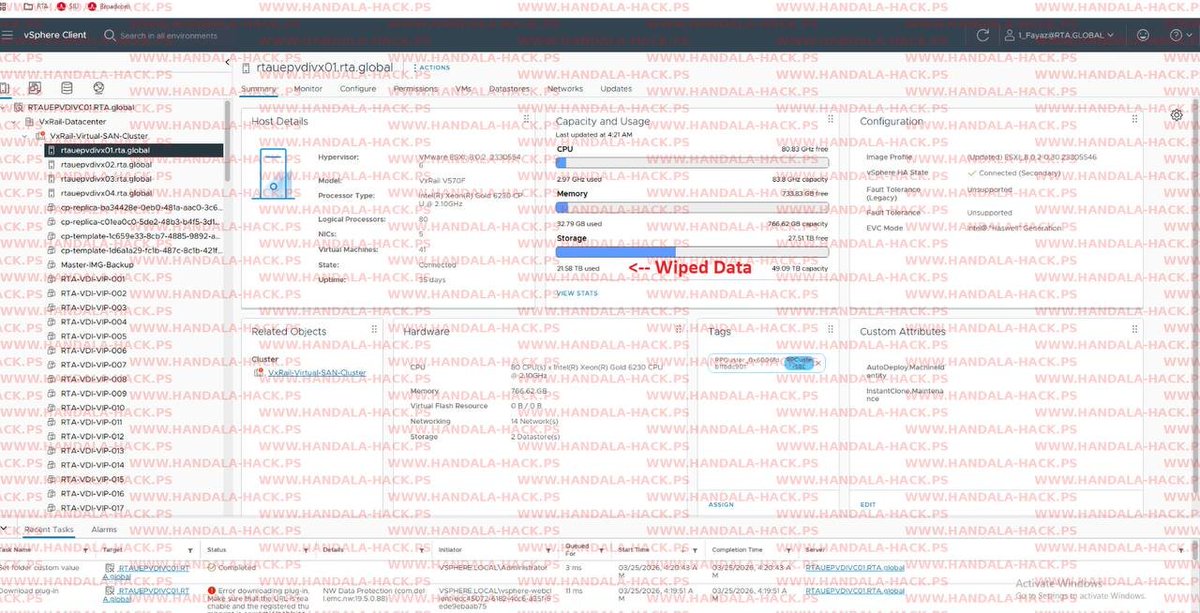
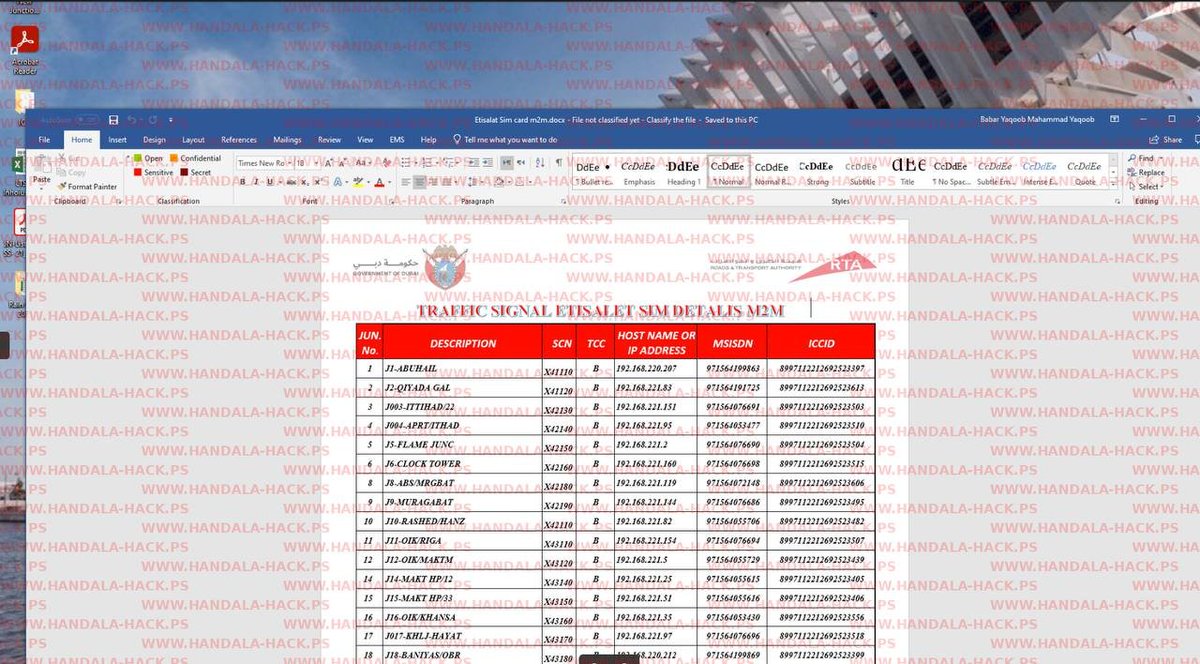
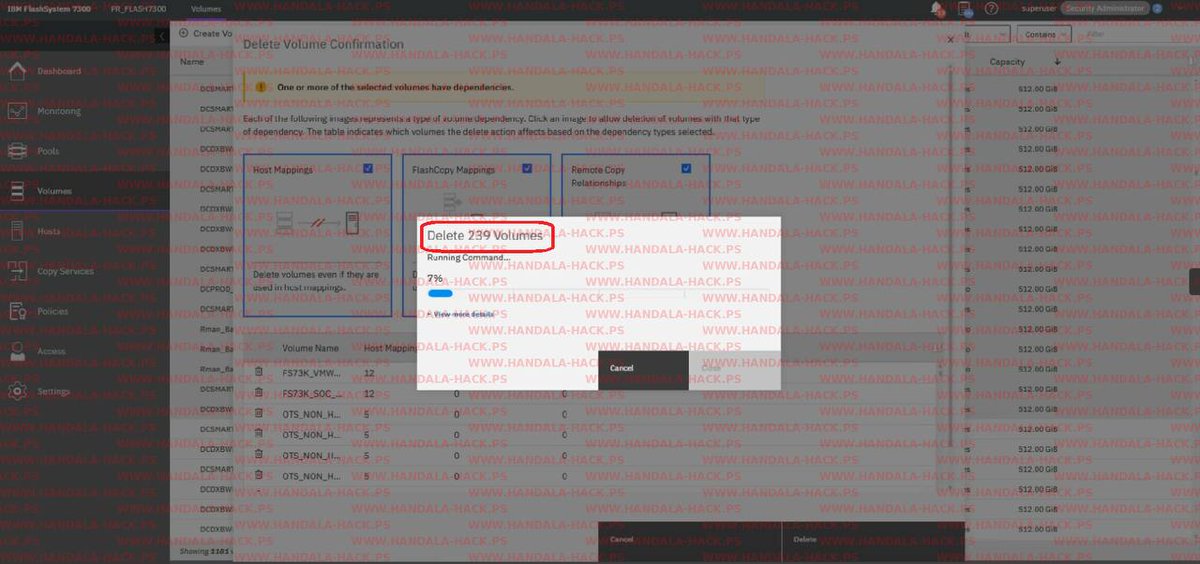
Apr 12

Iran is waving heavy cyberattacks against the Zio-American UAE (United Arab Epsteinpire), wiping out 6 petabytes of data
2
9
1,398

Looking forward to contributing to the discussion on #CyberOperations and #neutrality @GVAGrad conference on “Neutrality in Cyberspace: International Humanitarian Law at the Digital Battlefield” graduateinstitute.ch/communi…
2
209

Mar 30
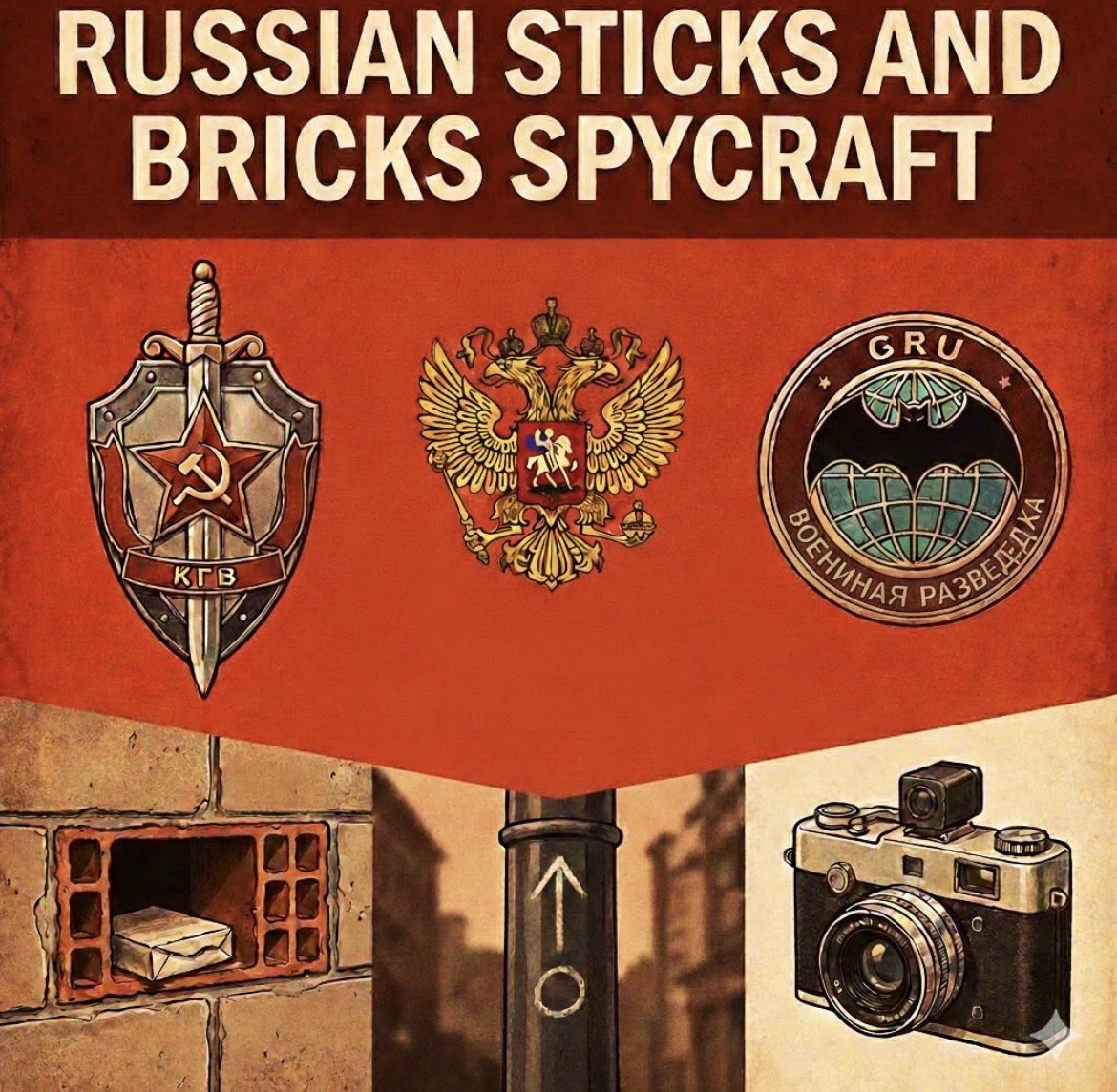
Russian espionage agent handling on the “streets”—this is the craft in CIA we call "sticks and bricks." They call spy tradecraft “following the rules of conspiracy.”
For over a century — from the Cheka to the KGB and today’s SVR and GRU — Moscow has refined the art of agent/asset handling abroad.
While technology evolves, core principles remain remarkably consistent: compartmentation, patience, agent signaling, and dead drops are all foundational concepts.
I cover this in Chapter 5 of my book: “Tradecraft, Tactics, and Dirty Tricks: Russian Intelligence and Putin's Secret War” (out 21 April in stores, shipping already now on pre-orders!).
Here’s a snapshot:
⚠️ Before any message is exchanged, Russian handlers confirm it is safe to communicate. “Impersonal communications” use signal sites with CHALK or other methods.
This involves prearranged visual cues — electrical tape on a mailbox, a chalk mark on a wall. The signal doesn’t carry intelligence itself, it conveys an exchange.
👉Dead drops, what the Russians call "tainiki" are concealed containers — magnets under bridges, hollowed-out stones, or waterproof packages buried in parks — that allow exchanges without face-to-face contact.
🚨And then there are “ops-tech” communications. Russians call it SPETS-Svyaz. Historically this meant one-time pads and burst radio transmissions. Today it may involve encrypted messaging apps, steganography in digital images, etc.
🚨The lesson isn’t that this tradecraft is exotic. It’s that impersonal comms for the enemy are unchanging—it still works for them.
Good counterintelligence isn’t about chasing cinematic spy stories — it’s about recognizing patterns.
U.S. and allied services have disrupted sophisticated networks run by entities like Russia’s SVR and GRU, but the operating environment has only grown more permissive.
👉Knowing their historical patterns is critical!
⚠️Counterintelligence tradecraft must be just as disciplined. Pattern analysis and institutional memory — understanding that these methods are not new, only repackaged.
☢️Companies, universities, research centers, and startups sit on the front lines whether they realize it or not.
👉Russian and Chinese services understand that long-term access beats short-term theft, but they do both! They cultivate relationships, not just sources.
🎯We are targets — not because of paranoia, but because of our innovation.
The brush of a hand against a bench or a benign social message. Tradecraft hasn’t disappeared. It has adapted. And the chalk mark still matters.
Please consider my book- link to Amazon follows! It is #1 Best Seller again this week on the “Russia” list thanks to you!!
a.co/d/04DyiXTj
#Russia #Intelligence #CyberOperations
#RussianIntelligence #Tradecraft
#Counterintelligence #Espionage
#SecurityStudies #OperationalSecurity #OpSec
8
39
109
11,647

Mar 27
Le coeur de sa thèse est que l'IA sert à transformer ́l'information en avantage operationnel, notamment dans 3 grands domaines : la planification, le ciblage et les cyberoperations. Dans les 3 cas, l'IA permet d'aider ces armées noyés sous l'information à la traiter.
1
1
6
347

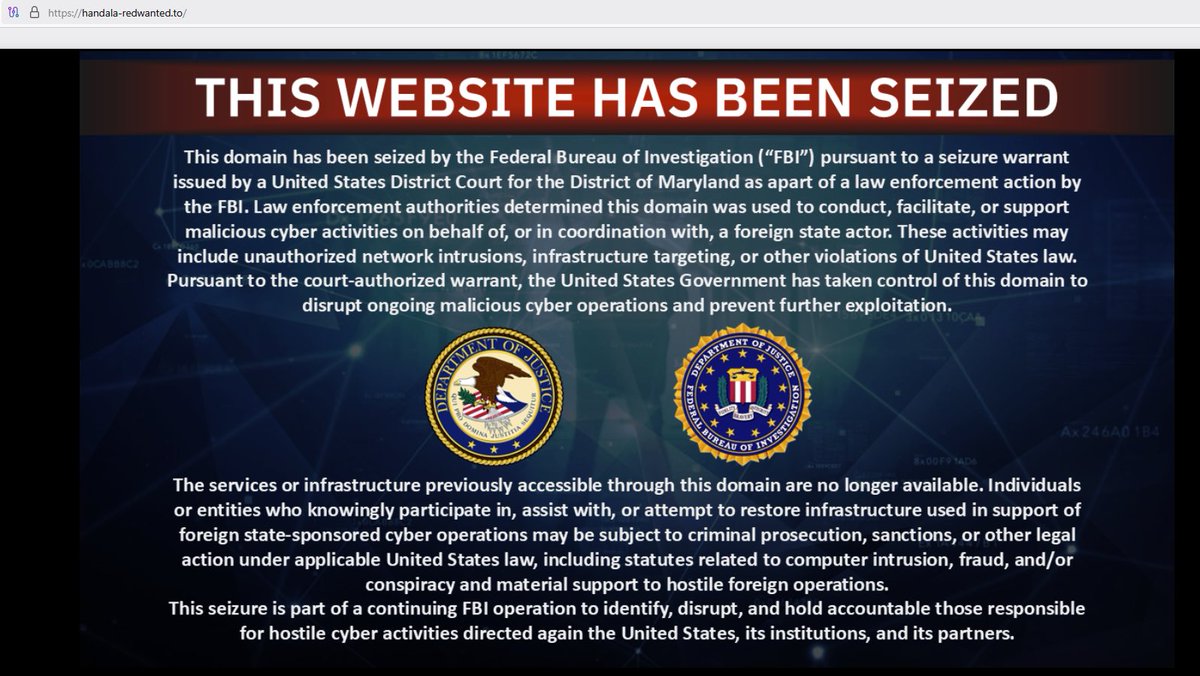
🚨 FBI Seizes Handala-Linked Domain in Cyber Operation
The domain handala-redwanted[.]to has been seized by the FBI following a court-authorized action by the U.S. District Court for the District of Maryland.
According to the seizure notice, the infrastructure was allegedly used to conduct or support malicious cyber activities in coordination with a foreign state actor, including potential network intrusions and infrastructure targeting.
The seizure is part of an ongoing effort by U.S. law enforcement to disrupt hostile cyber operations and prevent further exploitation.
⚠️ Authorities warn that individuals assisting or attempting to restore such infrastructure may face criminal prosecution under U.S. law.
#CyberCrime #CyberThreatIntelligence #Infosec #CyberSecurity #ThreatIntel #DarkWeb #OSINT #FBI #CyberOperations
2
23
61
9,440

Mar 19
US military shifting to AI-led warfare model: Pentagon
yespunjab.com/?p=230120
#USMilitary #AIWarfare #CyberOperations #AutonomousSystems #Pentagon #SpecialOperations #FutureOfWarfare #MilitaryTech #DefenseNews #IndiaDefense
15

Mar 14
When AI acts autonomously, security assumptions break.
Agentic systems like OpenClaw are moving from novelty to infrastructure, running locally, executing tasks, and operating with elevated access.
But autonomous agents strain traditional authorization models.
Misconfigurations can turn productivity tools into persistent footholds.
Always-on capability means always-on risk.
Security teams need new controls for an agentic future.
Read the full analysis here → falconfeeds.io/blogs/opencla…
#CyberThreatIntelligence #SOC #ThreatIntelligence #CyberConflict #NationalSecurity #CyberOperations #falconfeeds
1
1
7
1,367
Mar 7
When trusted apps become part of the battlefield.
The alleged compromise of Iran’s popular prayer app BadeSaba highlights how modern conflicts increasingly unfold inside everyday digital platforms.
What looked like a routine application, quickly became a vector for psychological operations (PSYOP)
Capable of spreading narratives, manipulating perception, and reaching millions of users in moments.
These incidents are increasingly about influence, trust, and narrative control inside digital ecosystems people rely on daily.
Understanding these signals early requires high-context threat intelligence that connects technical indicators with geopolitical intent.
Read the full intersection of technology and influence that took place in the BLOG
falconfeeds.io/blogs/israels…
#CyberThreatIntelligence #SOC #NationalSecurity #CyberOperations #PSYOP #InformationWarfare #ThreatLandscape #falconfeeds
2
3
1,211