
SEALSQ Corp (NASDAQ:LAES)has expanded its Quantum Investment Fund from $20 million to over $35 million
nasdaq.com/press-release/sea…
#SEALSQ #QuantumInvestment #CybersecurityTech #TechMomentum #NASDAQLAES #DigitalSecurity #InvestorInsight #QuantumLeap
5
13
52
2,429

12 Mar 2024
What Role Does Artificial Intelligence Play Within Cybersecurity➡️medium.com/@ivangodinez_6760… #TechSecurity #CybersecuritySolutions #ArtificialIntelligence #CybersecurityTech #AIinCybersecurity #artmac
1
2
23

22 Jan 2024
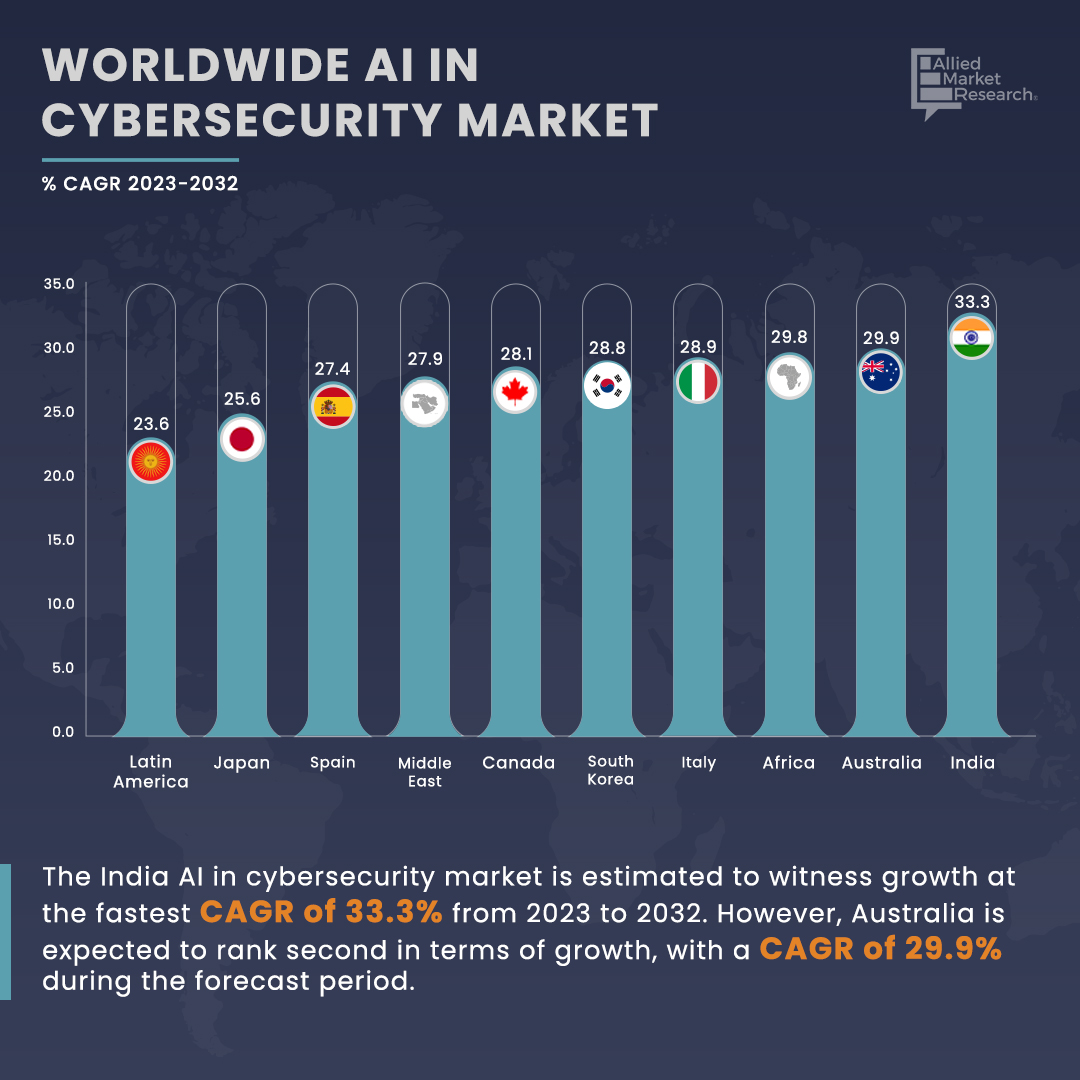
AI In Cybersecurity Market: CAGR Forecast!
🇮🇳India 33.3%
🇦🇺Australia 29.9%
🇮🇹Italy 28.9%
🇰🇷South Korea 28.8%
🇨🇦Canada 28.1%
🇪🇸Spain 27.4%
🇫🇷Japan 25.6%
🇨🇳China 23.7%
🇿🇦France 21.3%
🇩🇪Germany 20.1%
🇺🇸U.S. 19.4%
🇬🇧UK 19.2%
📈Find out what CAGR other countries will have:
tinyurl.com/y73dnu9n
Key Market Players:
@MicronTech
@PaloAltoNtwks
@Microsoft
@intel
@IBM
@AmazonWebService
@NVIDIA
@Samsung
#AMRinsights #Alliedmarketresearch #marketresearch #research #b2b #Influencers #AIinCybersecurity #CybersecuritySolutions #MachineLearningSecurity #ThreatDetection #CyberDefense #ArtificialIntelligence #DataProtection #DigitalSecurity #CybersecurityTrends #AIandSecurity #Cyberthreats #NetworkSecurity #AIInnovation #CybersecurityTech #SecurityAnalytics
2
3
730

8 Jan 2024
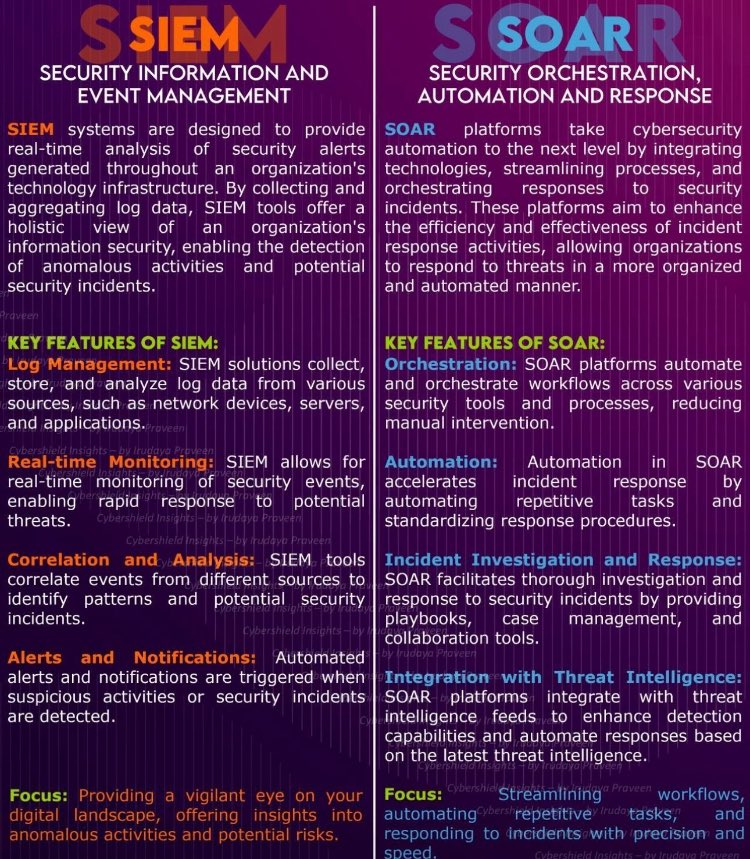
🛡️ Understanding SIEM and SOAR in Cybersecurity 🔄🤖
1️⃣ SIEM (Security Information and Event Management):
•🌐 Purpose: Centralizes and analyzes security data from various sources.
•🕵️ Functionality: Detects and responds to security incidents by correlating information.
•🧩 Components: Log collection, normalization, correlation engine, and reporting.
•🚨 Example: Splunk, ELK Stack, IBM QRadar.
2️⃣ SOAR (Security Orchestration, Automation, and Response):
•⚙️ Purpose: Automates and orchestrates security processes and tasks.
•🤖 Functionality: Speeds up incident response, reducing manual effort and errors.
•🔄 Workflow: Automated playbooks for incident response and resolution.
•🌐 Example: Palo Alto Cortex XSOAR, IBM Resilient, Splunk Phantom.
🔗 Integration Between SIEM and SOAR:
•SIEM Feeds SOAR: SIEM provides alerts and data to SOAR for automated response.
•Automated Response: SOAR triggers automated responses based on predefined playbooks.
•Enhanced Efficiency: Combining SIEM’s analysis with SOAR’s automation strengthens cybersecurity defenses.
🌐 Real-World Example:
•Think of SIEM as a detective gathering evidence from various sources (logs).
•SOAR is the assistant who takes care of routine tasks, allowing the detective to focus on critical analysis and decision-making.
🚀 Benefits of SIEM and SOAR Integration:
•📉 Reduced Response Time: Automation speeds up incident resolution.
•🔄 Consistent Responses: Automated playbooks ensure standardized reactions.
•💼 Resource Efficiency: Minimizes the need for manual intervention.
🛠️ Equipping Cybersecurity Teams:
•SIEM Skills: Log analysis, correlation, and understanding of security data.
•SOAR Skills: Automation scripting, playbook development, and incident response.
💡 Key Takeaway: SIEM and SOAR work hand in hand, empowering cybersecurity teams to swiftly detect, respond, and mitigate security threats. #SIEM #SOAR #CybersecurityTech
3
5
144
6 Dec 2023
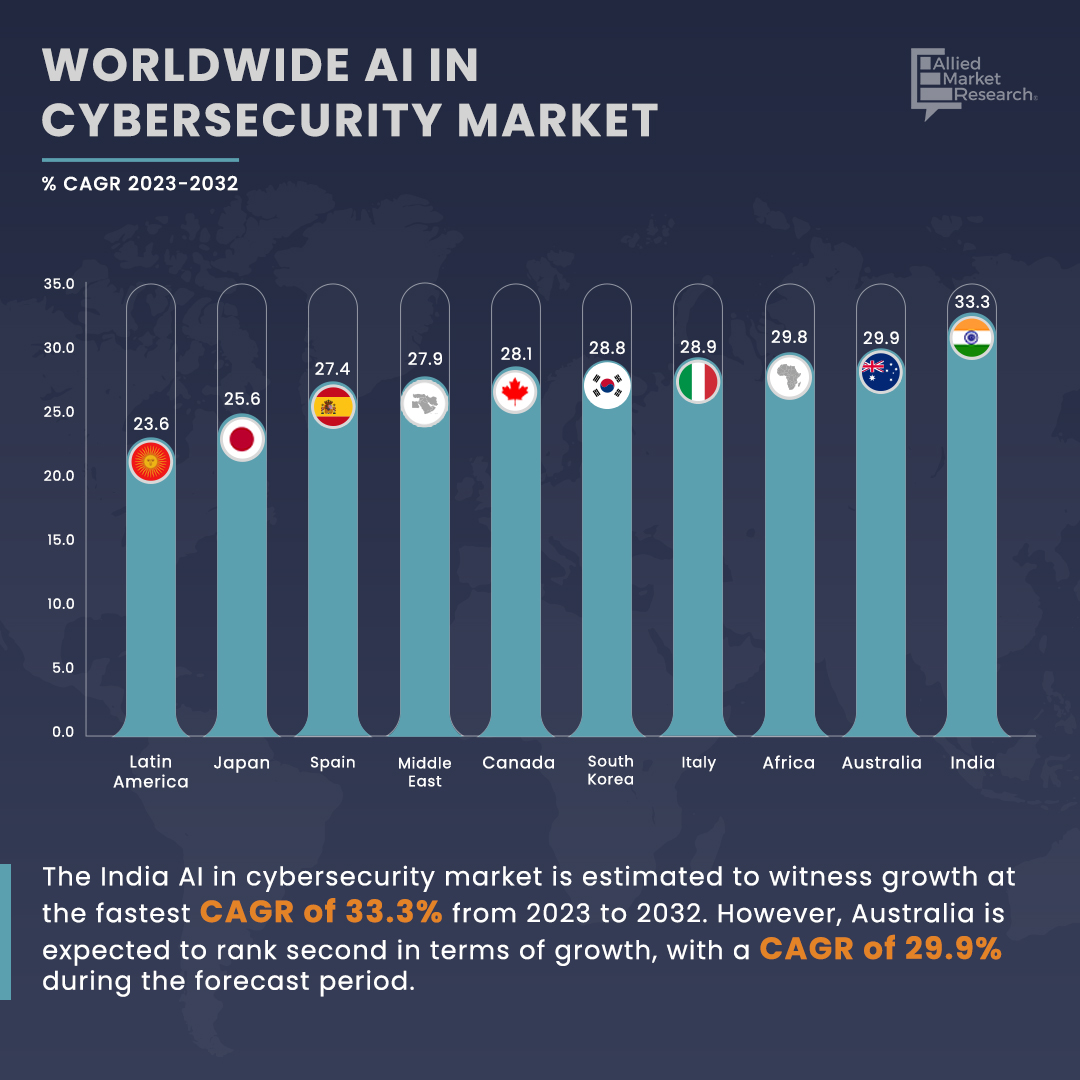
AI In Cybersecurity Market: CAGR Forecast!
🇮🇳India 33.3%
🇦🇺Australia 29.9%
🇮🇹Italy 28.9%
🇰🇷South Korea 28.8%
🇨🇦Canada 28.1%
🇪🇸Spain 27.4%
🇫🇷Japan 25.6%
🇨🇳China 23.7%
🇿🇦France 21.3%
🇩🇪Germany 20.1%
🇺🇸U.S. 19.4%
🇬🇧UK 19.2%
📈Find out what CAGR other countries will have:
tinyurl.com/y73dnu9n
Key Market Players:
@MicronTech
,@PaloAltoNtwks
,@Microsoft
,@intel
,@IBM
,@AmazonWebService
@NVIDIA
,@Samsung
#AMRinsights #Alliedmarketresearch #marketresearch #research #b2b #Influencers #AIinCybersecurity #CybersecuritySolutions #MachineLearningSecurity #ThreatDetection #CyberDefense #ArtificialIntelligence #DataProtection #DigitalSecurity #CybersecurityTrends #AIandSecurity #Cyberthreats #NetworkSecurity #AIInnovation #CybersecurityTech #SecurityAnalytics
1
2
3
164

13 Nov 2023
This article covers detailed knowledge of Google's cybersecurity innovations.
Read it Here: ipspecialist.net/google-cybe…
#IPSpecialist #GoogleSecurity #CyberInnovations #GoogleCyberDefense #SecureByGoogle #CybersecurityTech #GoogleSafetyNet #InnovateProtect #DigitalSecurity #GoogleCyberGuard #SafeBrowsing #GoogleCyberSolutions #SecurityInnovation #AdvancedThreatProtection #CyberResilience #GoogleSecurityTech #CloudSecurity #OnlineSafety #GoogleCyberShield #DataProtection #GoogleSecureFuture #InfoSecInnovations #GoogleTechSecurity #CyberSecAdvancements #GoogleCyberAwareness #SecuringTheFuture #GoogleSecurityInnovations #BeCyberSmart

1
4
34

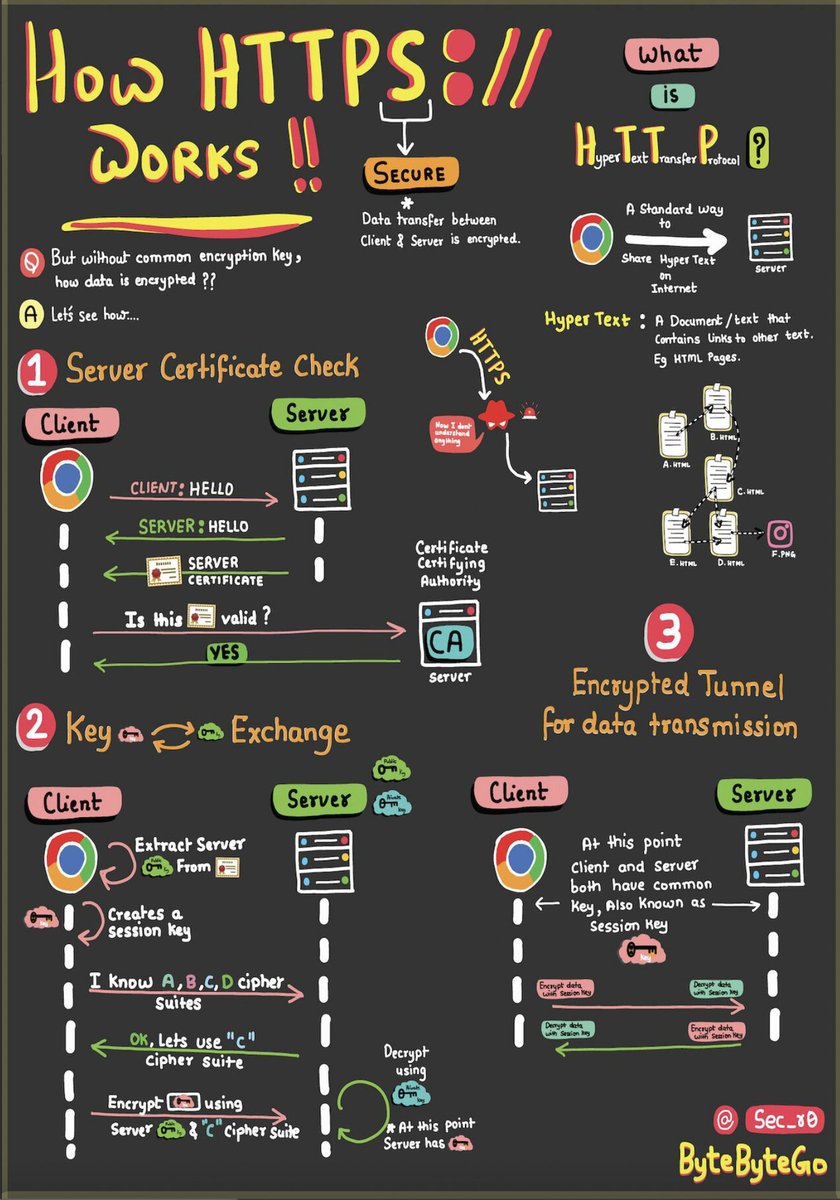
A Deep Dive into HTTPS, SSL Handshake, and Data Encryption over HTTP, the language of web 🔐🌐
🔍 Explore the inner workings of online security with this flyer! Delve into the intricate layers of HTTPS, unravel the complexities/simplicity of the SSL handshake, and unearth the mechanics of data protection. 💻🔒
🛡️ HTTPS: Safeguards your data from eavesdroppers and breaches. Understand how encryption and digital certificates create an impregnable shield.
🤝 SSL Handshake: Behind the Scenes — Witness the cryptographic protocols that establish a secure connection. Experience the intricate exchange of keys and negotiation.
🌐 Secure Data Transmission: Navigating the Tunnel — Journey through the encrypted tunnel forged by HTTPS. Learn how your information travels while shielded from cyber threats.
🕸️ HTML's Role: Peek into HTML's role in structuring the web. Uncover how hyperlinks and content come together seamlessly. And why is it called as HYPER TEXT.
Now, let's delve deeper: In this ever-evolving digital landscape, what emerging technologies do you foresee shaping the future of cybersecurity or web? Join the conversation below! 👇💭
#HTTPSExploration #SSLHandshakeDemystified #DataEncryption #CybersecurityTech #HTMLStructures #Web #futureOfWeb
I made this flyer for @bytebytego 💕🫶
5
112
501
61,958
30 Sep 2023
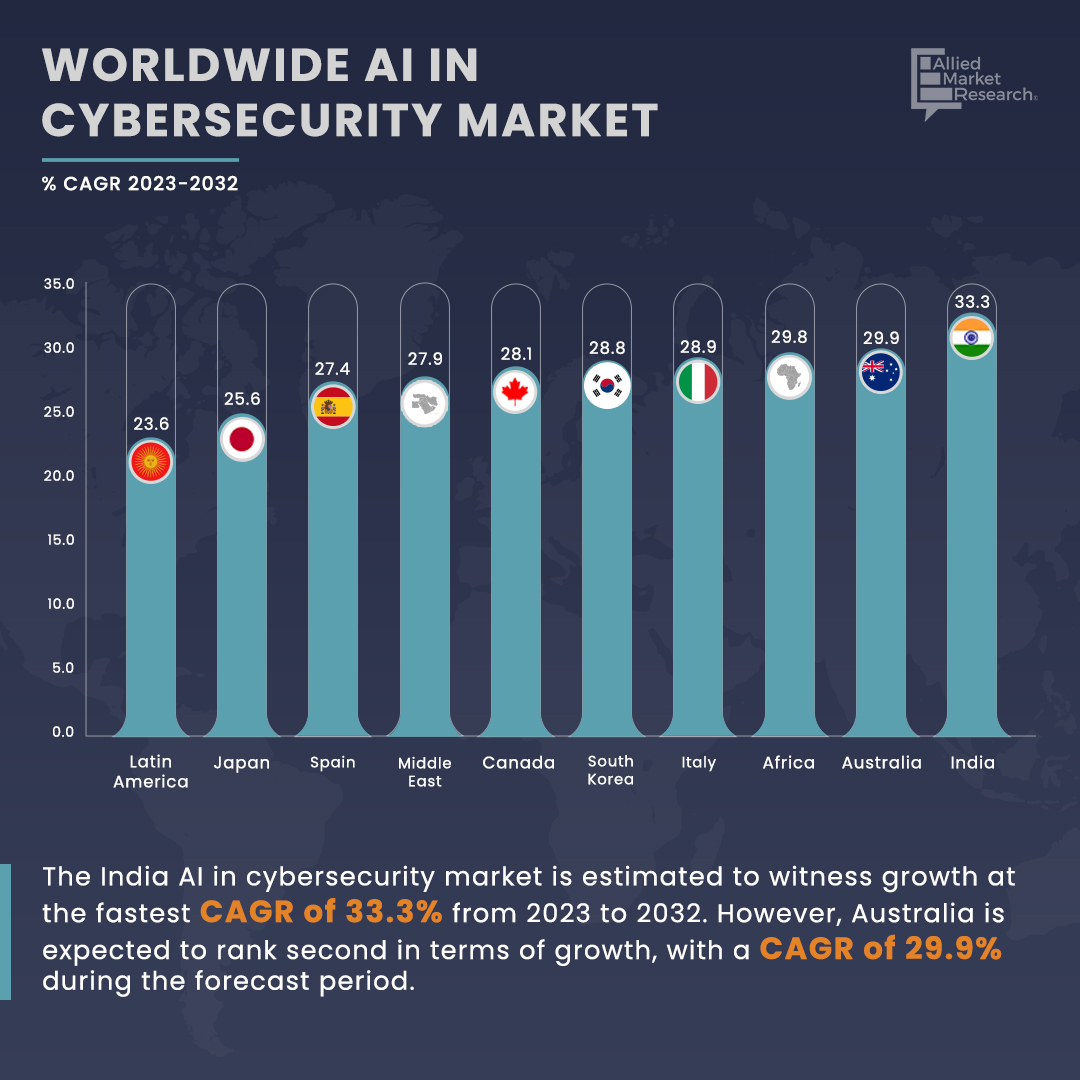
AI In Cybersecurity Market: CAGR Forecast!
🇮🇳India 33.3%
🇦🇺Australia 29.9%
🇮🇹Italy 28.9%
🇰🇷South Korea 28.8%
🇨🇦Canada 28.1%
🇪🇸Spain 27.4%
🇫🇷Japan 25.6%
🇨🇳China 23.7%
🇿🇦France 21.3%
🇩🇪Germany 20.1%
🇺🇸U.S. 19.4%
🇬🇧UK 19.2%
📈Find out what CAGR other countries will have:
tinyurl.com/y73dnu9n
Key Market Players:
@MicronTech, @PaloAltoNtwks, @Microsoft, @intel, @IBM, @AmazonWebService, @NVIDIA, @Samsung
#AMRinsights #Alliedmarketresearch #marketresearch #research #b2b #Influencers #AIinCybersecurity #CybersecuritySolutions #MachineLearningSecurity #ThreatDetection #CyberDefense #ArtificialIntelligence #DataProtection #DigitalSecurity #CybersecurityTrends #AIandSecurity #Cyberthreats #NetworkSecurity #AIInnovation #CybersecurityTech #SecurityAnalytics
2
5
702

7 Mar 2023
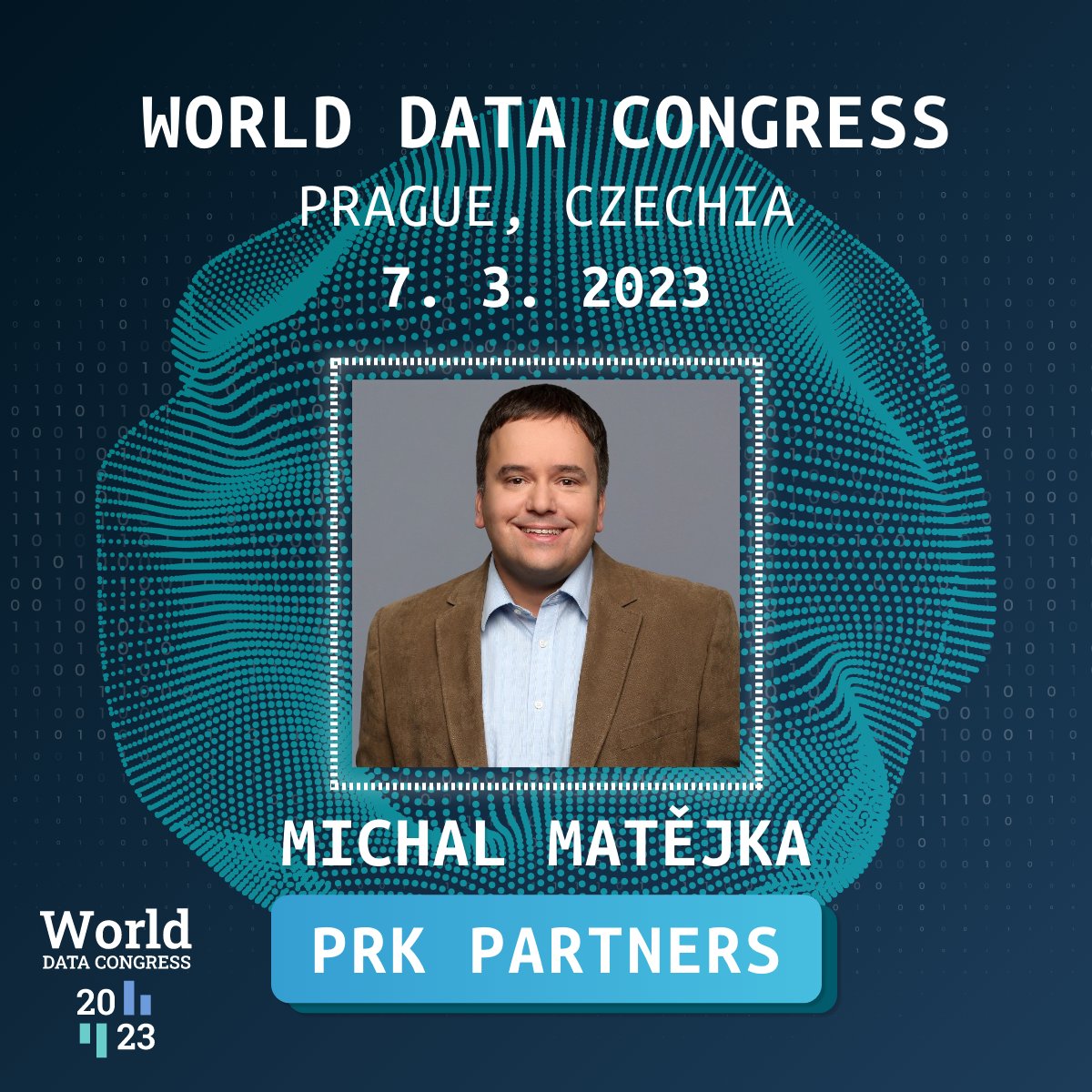
Michal Matějka, a partner at PRK Partners, will take part in a panel discussion on #digitalization at the World Data Congress 2023.
More information: datacongress.cz
#IT #AI #CyberSecurityTech #NIS2
2
53

12 Sep 2022
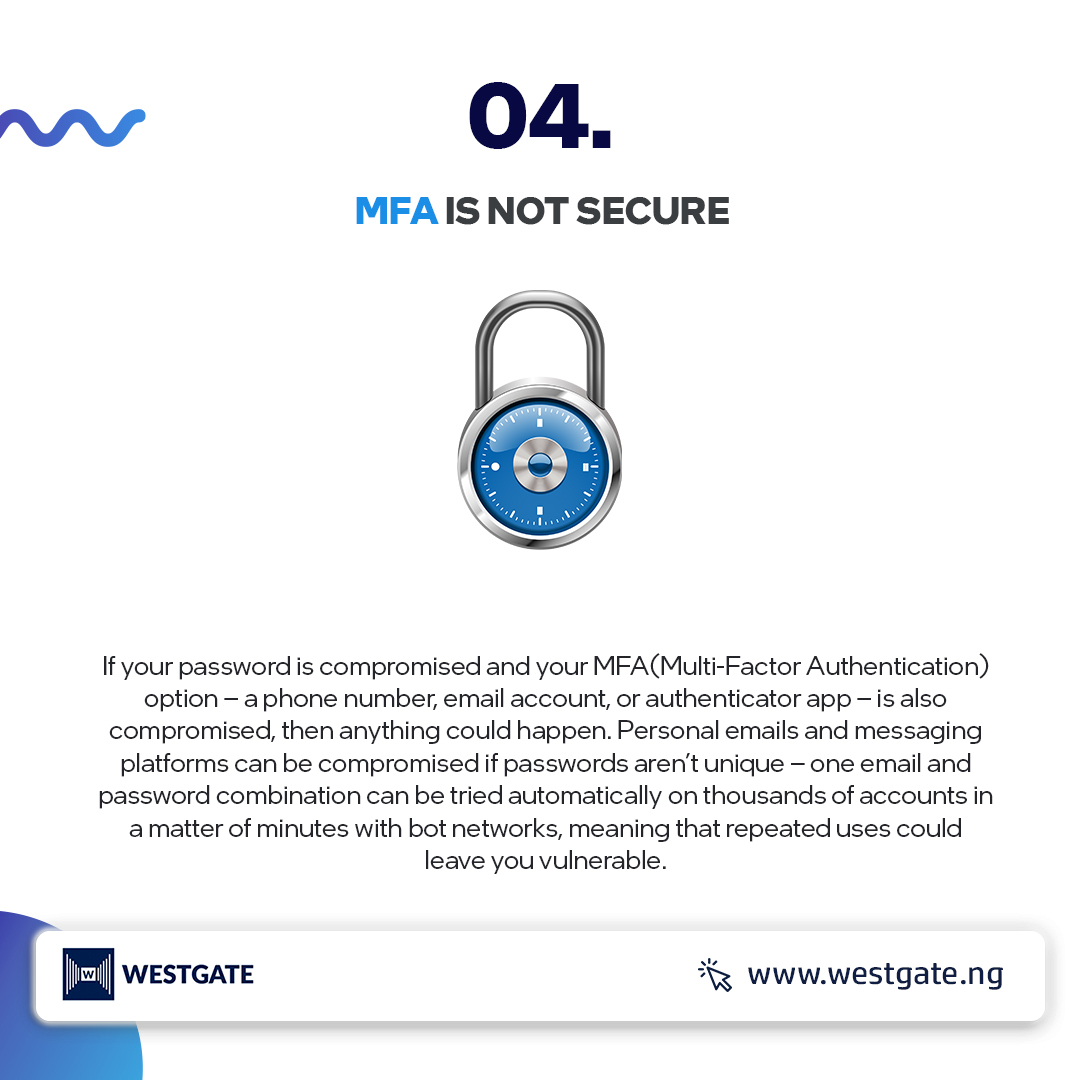
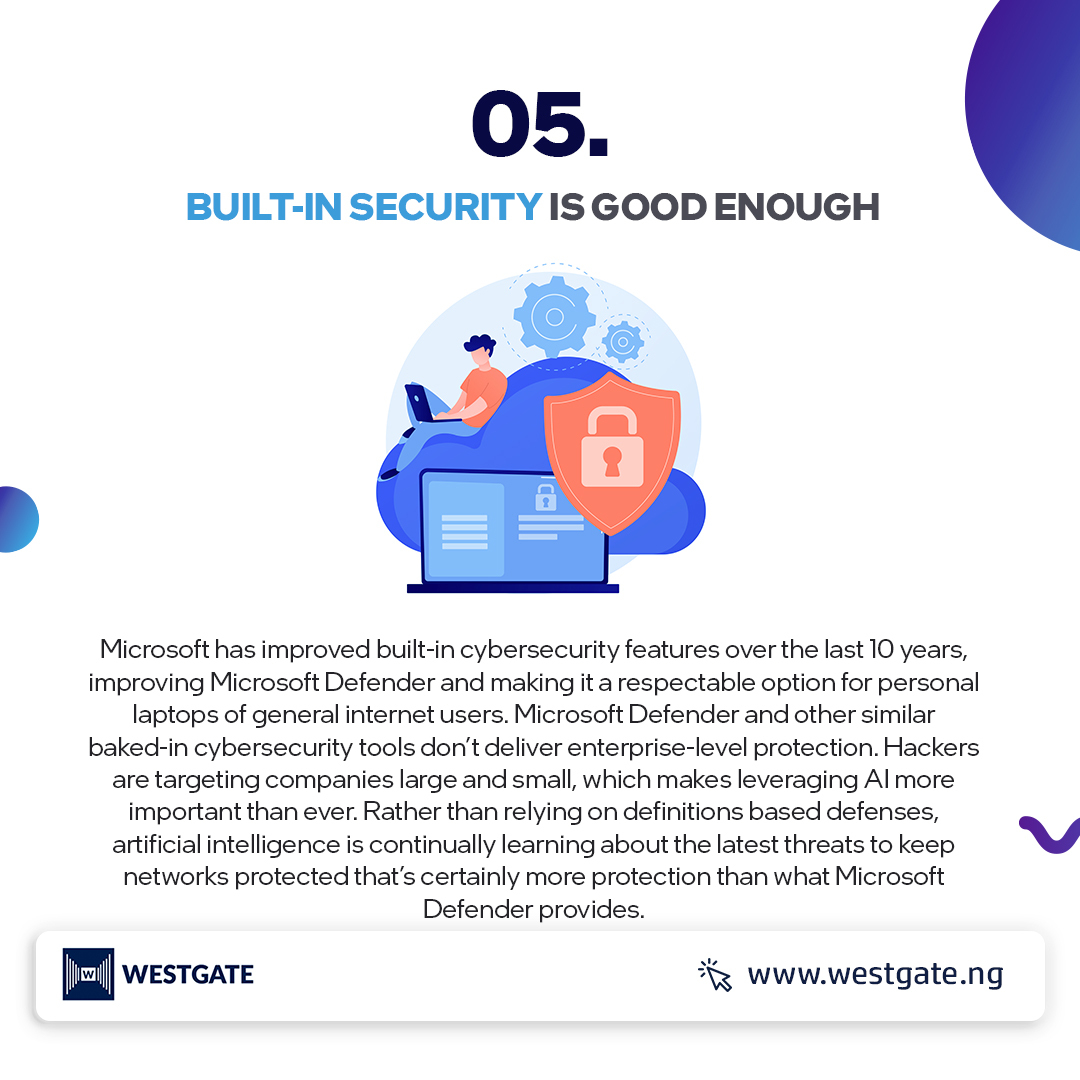
The reasons for this lack of awareness include no training on cybersecurity and persistent misinformation.
Let's see some of the top myths around cybersecurity.
#WestgateTechnologies #CyberSecurityMyth #CyberSecurityTech #ITSecurity #ElectronicInformationSecurity #TechFacts
2

1 Aug 2021
New cybersecurity tech protects computer networks in vehicles #CybersecurityTech #Desolator #TechNews #Industry #CyberSecurity #Ip #CybersecurityProtection #CyberSecurityNews #Technology telecom.economictimes.indiat…
8
3


6 Jan 2021
This year we invite you to meet virtually at #CES January 11-14! Register for a virtual meeting and a private demo of our cutting edge GPS cybersecurity, ensuring your navigation is safe and reliable --->
regulus.com/contact-us
#CES2021 #CybersecurityTech #GNSSdefense

1
2

17 Feb 2020
Thankyou Economic Times for featuring our GSOC.
state-of-art facility, equipped with latest cybersecuritytech is geared to manage your securityposture end-to-end. To visit or to learn more, write to us at info@inspiraenterprise.com or call at 9920335957.
economictimes.indiatimes.com…
1
2

12 Dec 2018
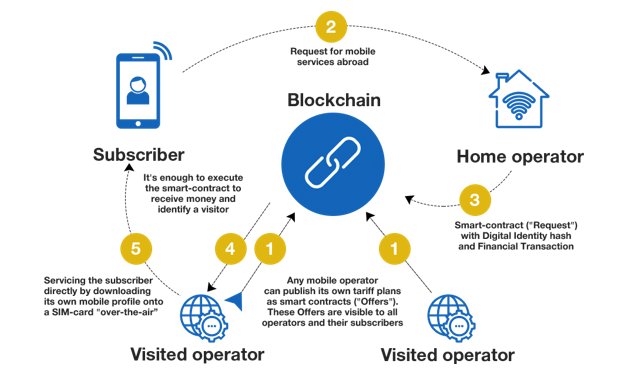
A worthwhile read on blockchain and telecommunication from @moniquejmorrow, tech strategist and venture partner at the @SparkLabsCyber accelerator. #CybersecurityTech linkedin.com/pulse/from-text…
2

9 Nov 2018
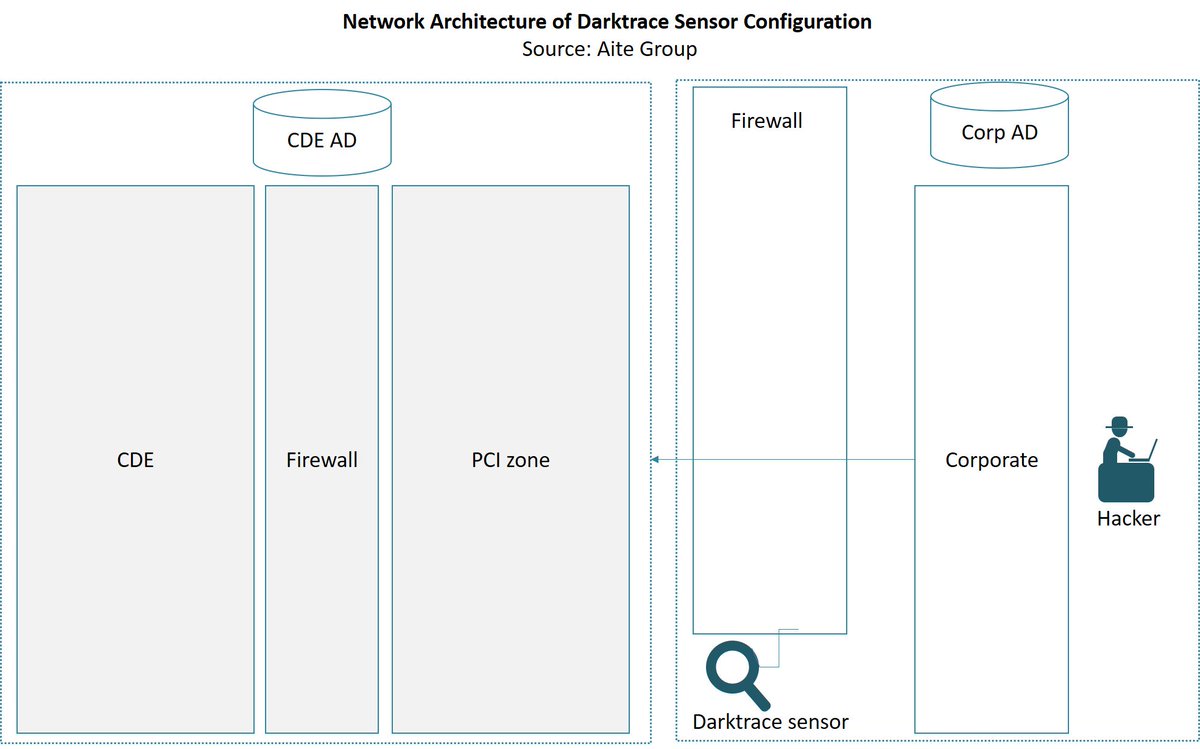
The Darktrace solution effectively detects what legacy anti-virus solutions fail to detect - See new @AiteGroup report by @alissaknight to learn more: aitegroup.com/report/darktra… #CyberSecurity #antivirus #cybersecuritytech #fintech #MachineLearning
4
3

#Swisscom hat bei #CybersecurityTech Accord unterschrieben. Zusammen mit anderen Unternehmen aus der #Schweiz und der ganzen widmet man sich nun dem Training für eine stärkere #Cybersecurity. @Swisscom_Medien dlvr.it/QlKrPl

2

25 Sep 2018
#Swisscom hat bei #CybersecurityTech Accord unterschrieben. Zusammen mit anderen Unternehmen aus der #Schweiz und der ganzen widmet man sich nun dem Training für eine stärkere #Cybersecurity. @Swisscom_Medien dlvr.it/QlKrQN
1
2

17 May 2018
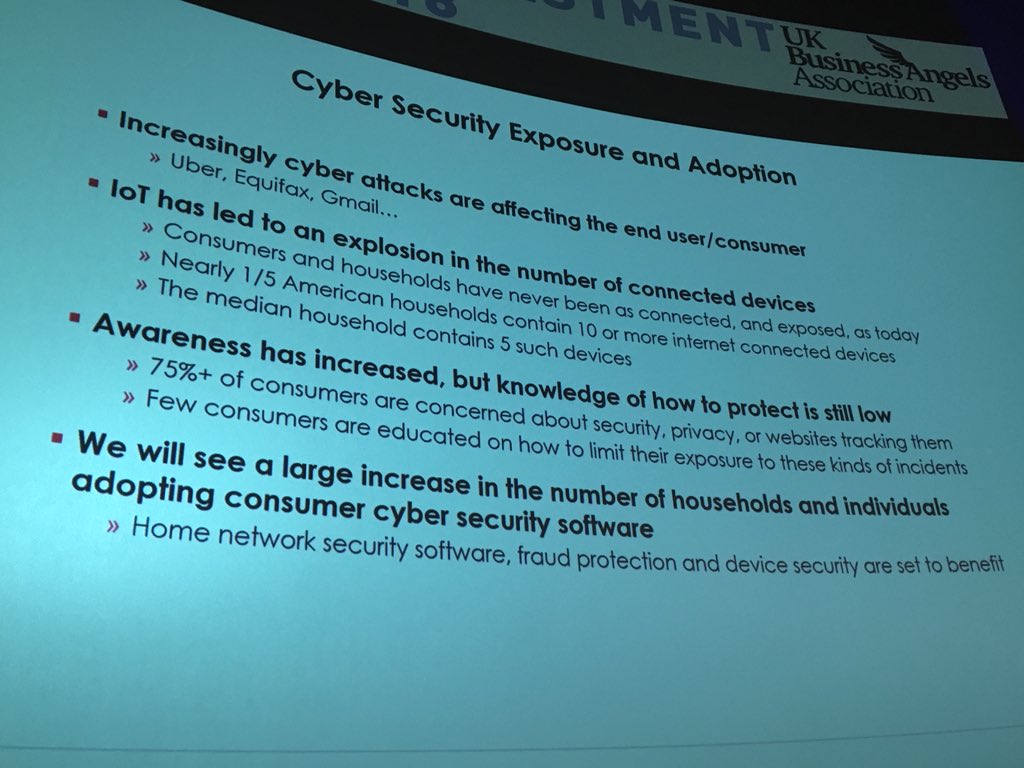
#Cybersecuritytech incredibly important to gain more investment in the North @UKBAngels @GPBullhound @creativeengland
20 Mar 2018

Nick Horrocks of @GPBullhound focuses on the increasing importance of #CyberSecurity tech and associated investment @UKBAngels #MIS2018 - ties in well with our CS academic startup programme with @innovateuk @DCMS @UKCyberGrowth
3
