
31 Oct 2025
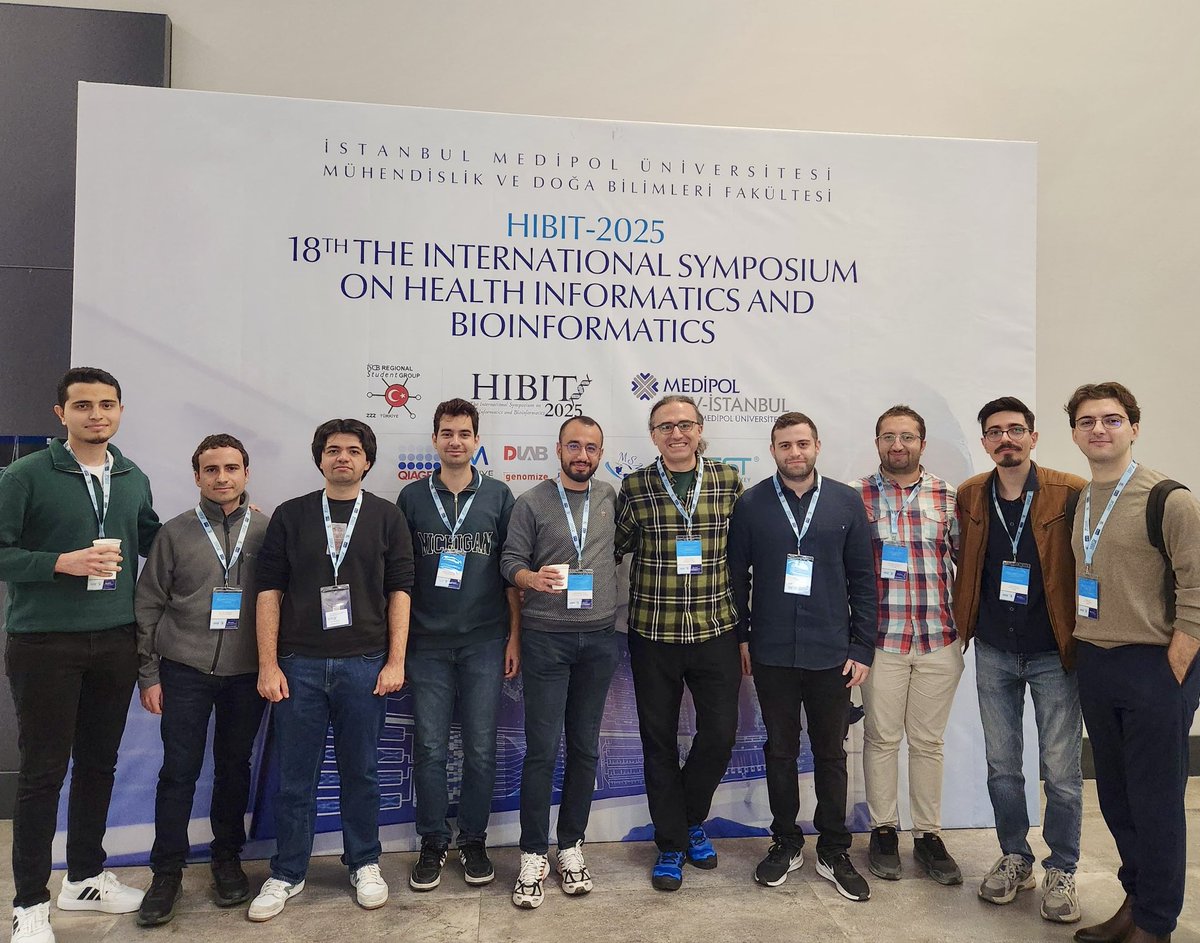
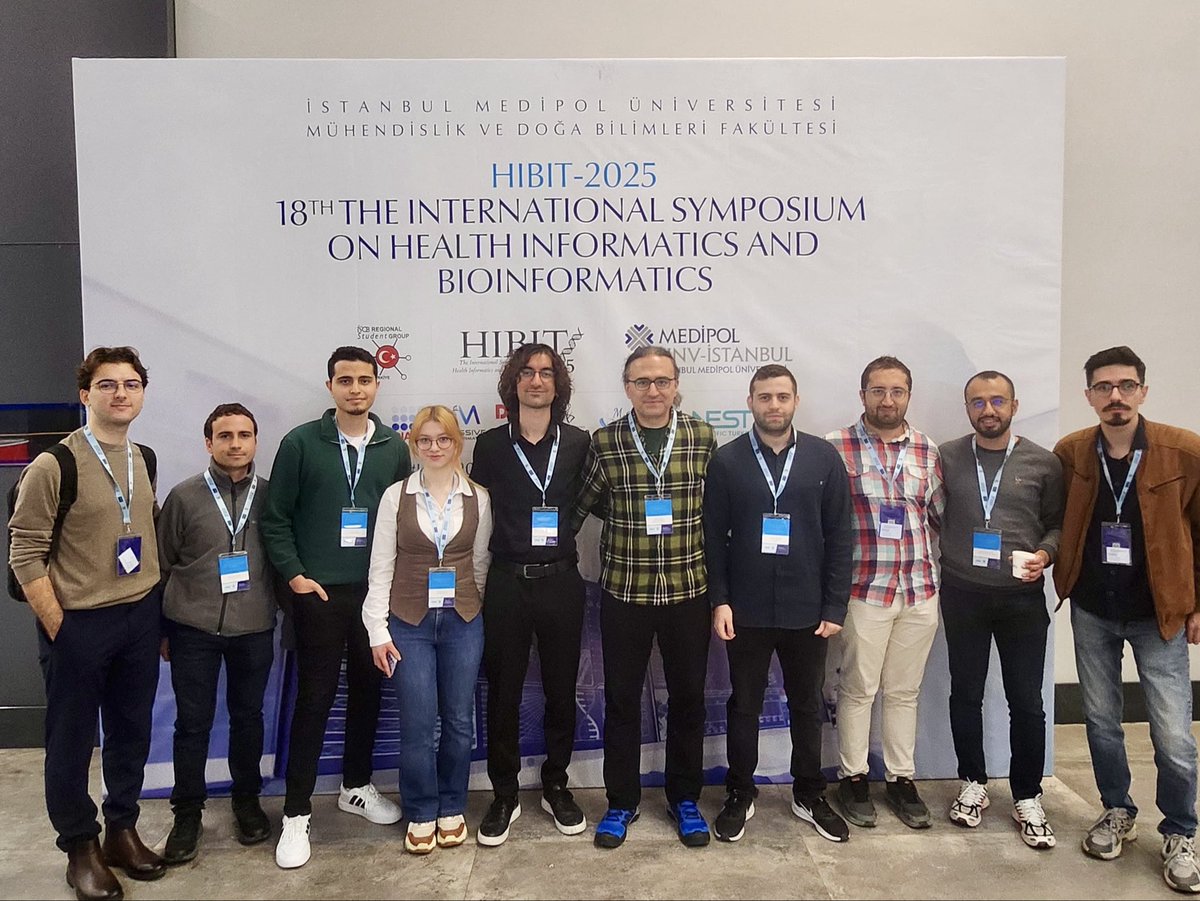
We are excited to announce that our team: the Hacettepe Biological Data Science Lab, is participating in HIBIT 2025 (18th International Symposium on Health Informatics and Bioinformatics)!
We are thrilled to present our work. Don't miss our oral talks and posters! #bionformatics #healthinformatics @HBioinformatics
🗣️ Oral Presentations
31 October, Friday, 11.00-11.15
Ali Baran Taşdemir
FlowProt: Classifier-Guided Flow Matching for Targeted Protein Backbone Generation in the de novo DNA Methyltransfarase Family
31 October, Friday, 14.00-14.15
Bünyamin Şen
BepiCon: A Geometric Deep Learning Framework for Conformational B Cell Epitope Prediction
1 November, Saturday, 11.30-11.45
Atabey Ünlü
Al-Based Drug Repurposing for Rapid Broad-Spectrum Poxvirus Antiviral Discovery
2 November, 12.05-12.20
Seyit Semih Yiğitarslan
Language Modeling-Based Generative Artificial Intelligence for De Novo Protein Design
📊 Poster Presentations
31 October
Bünyamin Şen
BepiCon: A Geometric Deep Learning Framework for Conformational B Cell Epitope Prediction
1 November
Mehmet Furkan Çalışkan
DEEPScreen : A Modular Image-Based Deep Learning Framework for Drug-Target Interaction Prediction
Ufuk Tanrıverdi
Designing Novel DNMT Enzymes with a Transformer-Guided Generative Al Framework
Yusuf Demir
Molecular Intelligence for Novel Discovery (MIND): A Universal Multi-Modal Foundation Model for Life's Molecules
Melike Akkaya
ProQuest: A Large Language Model Application on the Uniprot Protein Sequence and Annotation Database
Gökhan Özsari
GRADDA-DTI: Gradient-Aware Dynamic Domain Adaptation for Drug-Target Interaction Prediction
Seyit Semih Yiğitarslan
Language Modeling-Based Generative Artificial Intelligence for De Novo Protein Design
Ali Baran Taşdemir
FlowProt: Classifier-Guided Flow Matching for Targeted Protein Backbone Generation in the de novo DNA Methyltransfarase Family
Atabey Ünlü
Al-Based Drug Repurposing for Rapid Broad-Spectrum Poxvirus Antiviral Discovery
1
2
15
784

12 Apr 2025
A beginner’s approach to deep learning applied to VS and MD techniques
1. This review offers a comprehensive and accessible guide for computational chemists seeking to integrate deep learning (DL) into virtual screening (VS) and molecular dynamics (MD), providing a clear roadmap from basic concepts to state-of-the-art tools.
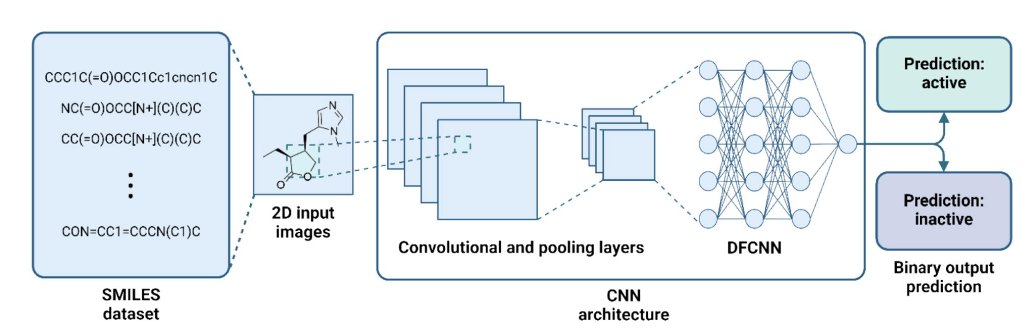
2. DL is shown to be transformative for VS, especially in structure-based and ligand-based workflows. Applications include new molecular fingerprinting methods (Mol2vec, ProtVec), drug-target interaction prediction (DEEPScreen), and user-friendly model-building platforms (DeepScreening).
3. The review highlights hybrid DL pipelines that combine ligand- and structure-based models with traditional docking and MD simulations, enabling fast, interpretable, and high-performance drug discovery strategies (e.g., IVS2vec, DeepBindBC, Zhang et al.’s dual-DL approach for SARS-CoV-2).
4. DL’s generative potential is explored in detail, with GANs, VAEs, and LSTM-RNNs used to create novel drug-like molecules and antimicrobial peptides. These synthetic compounds are then screened through traditional VS and MD workflows for biological relevance.
5. DL is positioned not just as an enhancer, but as a potential replacement for traditional docking. New pose prediction models like EquiBind, TANKBind, and DiffDock can generate protein-ligand binding poses with high speed and improved accuracy over conventional tools.
6. DiffDock stands out with its diffusion-based generative approach that iteratively samples ligand poses, outperforming one-shot models and retaining accuracy even with predicted (AlphaFold-style) protein structures.
7. AlphaFold 3 is recognized as a next-generation DL platform that predicts full protein-ligand complexes, expanding its scope beyond just protein folding and opening the door to integrated DL-driven structure prediction and docking.
8. DL also improves MD by guiding enhanced sampling (e.g., identifying rare conformational states), learning interatomic force fields (neural network potentials), and automating trajectory analysis through classification and dimensionality reduction tools.
9. A strength of this review is its focus on practicality: it includes tool and dataset overviews, a glossary of DL concepts, and curated examples of DL applications, helping readers bridge theory and implementation in molecular modelling.
10. The authors emphasize that while DL brings power and flexibility, careful consideration must be given to dataset quality, generalization, and biological interpretability. Future work must address model bias, robustness, and integration with experimental validation.
📜Paper: link.springer.com/article/10…
#Cheminformatics #DeepLearning #VirtualScreening #MolecularDynamics #DrugDiscovery #ComputationalBiology #MachineLearning #AlphaFold #DiffDock #BioAI
18
72
5,489

2 Apr 2025
DOOH’s creative renaissance is here.
Entries are open for our #OceanDCC, where DeepScreen® , real-time interactivity & immersive storytelling push boundaries. All you need is an idea to enter.
Get inspired via. @Campaignmag: campaignlive.co.uk/article/d…
2
2
165

10 Feb 2025
It's a OOH media first for our lovely client @FerraraCandyJar and their brand Nerds.
Up on Piccadilly Lights to showcase their association with the Super Bowl and employing DeepScreen technology thanks to @OceanOutdoorUK
#ooh #oohmedia #beseen
2
410
3 Dec 2024
From standout campaigns to new partnerships, November was a testament to The Art of Outdoor®.
#Wicked 'defied gravity' on Printworks SkyLights, Red Bull's DeepScreen® made an impact, and Surf's 3D special build engaged our senses - thanks to our #OceanLabs team.
1
3
533
16 Sep 2024
Why be basic when you can be bueno?
DeepScreen® doesn’t just catch your eye - it keeps them. With 34% of viewers saying they’d make an effort to see 3D ads again, it’s the ideal way to stand out in a saturated market and create unforgettable experiences for your audience.
5
216
30 Jul 2024
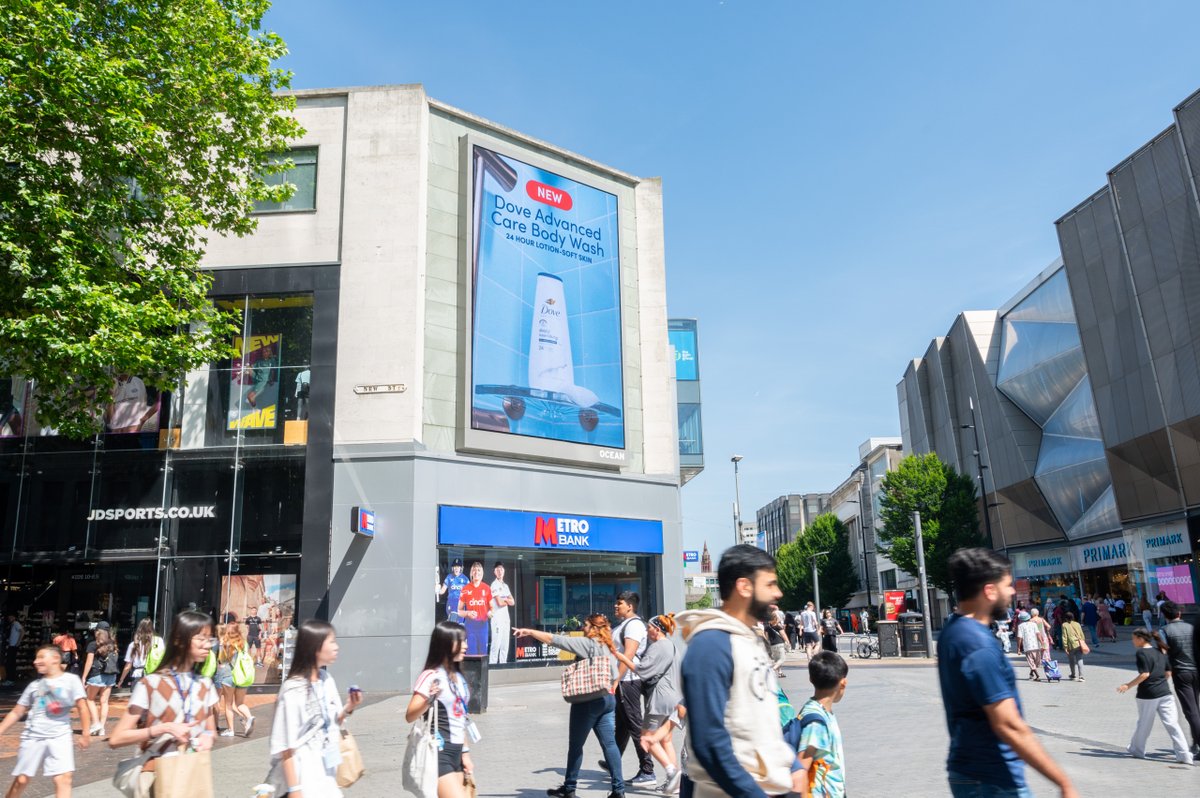
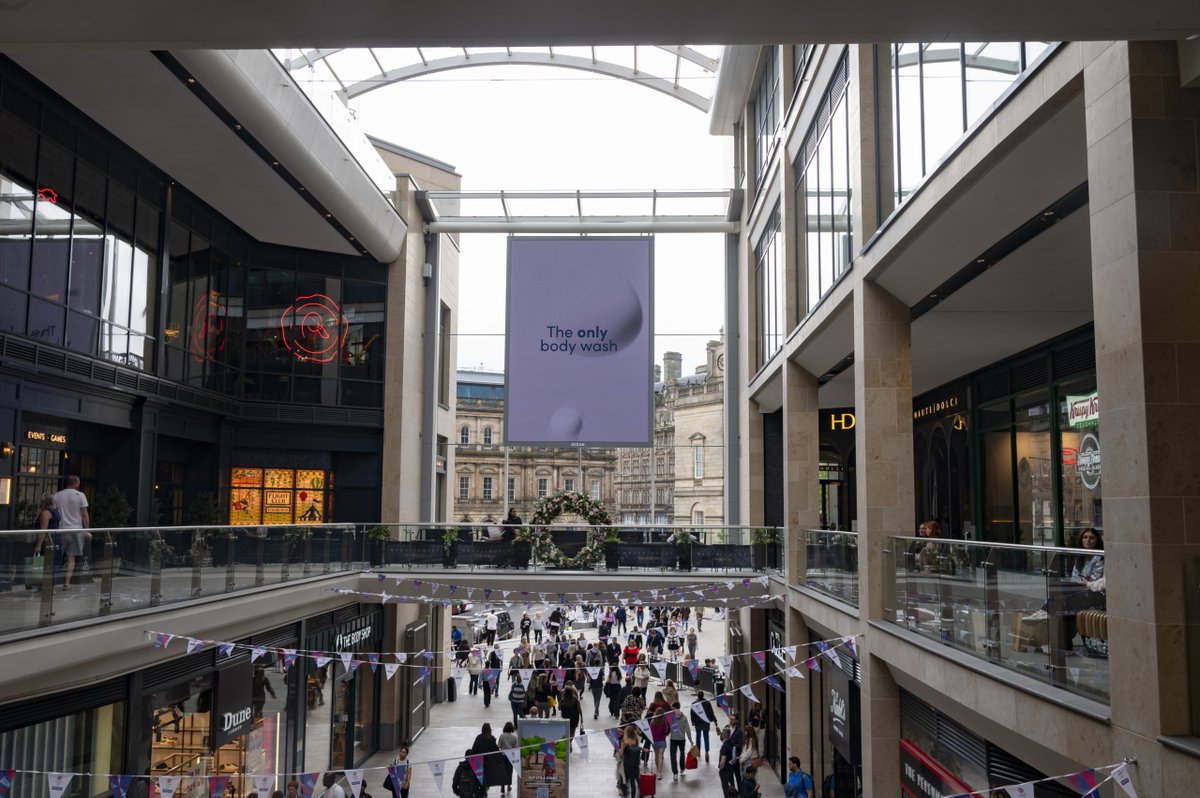
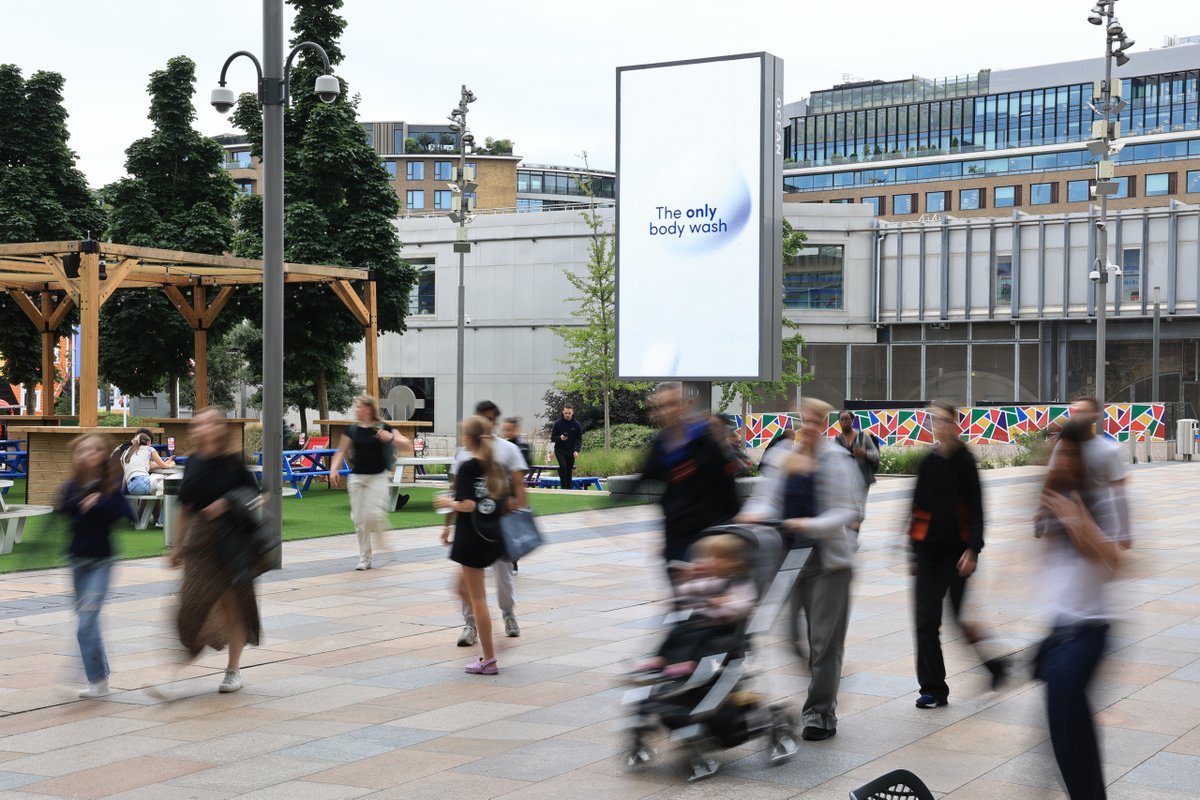
Ocean Studio recently brought Dove’s DeepScreen® campaign to life across our network. The highlight moment? This marks the debut of DeepScreen® on our St James Quarter screens, making history as the first in Edinburgh.
Learn more about DeepScreen®: oceanoutdoor.com/labs/deepsc…
1
1
324
2 Jul 2024
June was an eventful month, full of news stories and creativity in the form of standout campaigns. Among these were @volvic_uk's mesmerising display on @MCRPrintworks SkyLights and @santanderuk's DeepScreen® on @PicLights.
Which campaign captured your attention this month?
1
10
471
24 Jun 2024
Ready to experience Edinburgh in 3D?
It’s official: our two large format full motion screens have launched in St James Quarter welcoming DeepScreen® to Edinburgh.
Read more: oceanoutdoor.com/ocean-news/…
#OOH // #Scotland // #Edinburgh // #DOOH
1
4
318
7 Jun 2024
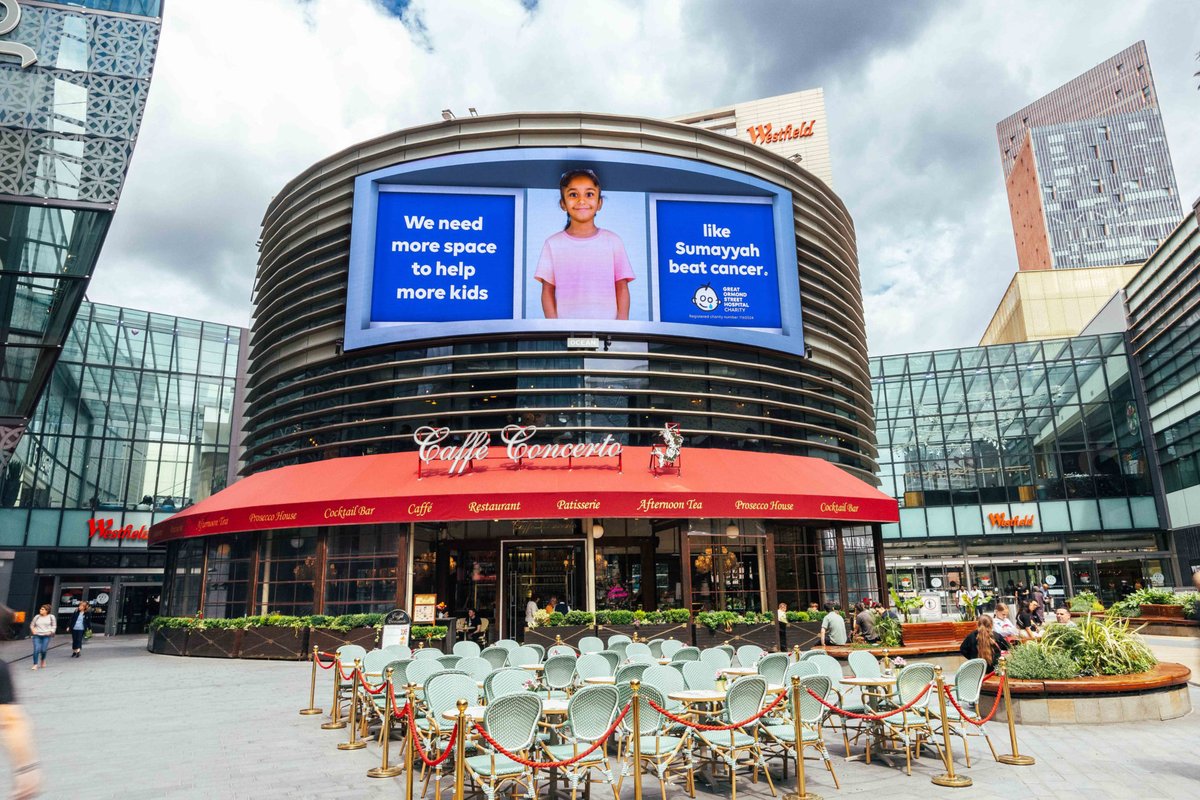
Build it. Beat it. One of our Digital Creative Competition winners @GOSHCharity charity has gone live with their thought-provoking DeepScreen® campaign to raise crucial funds to help build a new Children’s Cancer Centre.
Read more: oceanoutdoor.com/ocean-news/…
1
1
3
287

3 May 2024
FOOH meets real 3D DOOH in our latest campaign with Magnum on Oceans DeepScreen!
Special thanks to @MagnumIceCream, @OceanOutdoorUK, @LandsecGroup, @mindshare_UK, @GroupMWorldwide, and #PiccadillyLights!
tiktok.com/@magnum_icecream/…
2
163
2 Apr 2024
March was a month jam packed with innovation. Including @SingaporeAir DeepScreen(R) campaign on @PicLights and Ocean Labs' 3D build for Wilkinson Sword at @westfieldlondon .
And the grand finale? The launch of Printworks’ SkyLights. Which campaign caught your eye this month?
1
2
392

14 Mar 2024
Love this @OceanOutdoorUK 🩷👏#ooh #digitalooh #oohmedia #oohadvertising #dooh #innovation #3D #anamorphic #deepscreen #deepscreenalive #realtime #OceanStudio #OceanLabs
14 Mar 2024

Since 2021, we've pioneered 3D anamorphic with DeepScreen® technology. Last year, Ocean Studio went a step further with DeepScreen® Alive - adding realtime interactivity.
Learn more: bit.ly/48SeCIk
#dooh #innovation #3D #anamorphic #deepscreen #OceanStudio
2
136
14 Mar 2024
Since 2021, we've pioneered 3D anamorphic with DeepScreen® technology. Last year, Ocean Studio went a step further with DeepScreen® Alive - adding realtime interactivity.
Learn more: bit.ly/48SeCIk
#dooh #innovation #3D #anamorphic #deepscreen #OceanStudio
5
6
583
9 Jan 2024
You belong here.
Great to have worked on this amazing 3D animation for @gov_procurement @OmnigovUK and Capita for the @BritishArmy .
This amazing commercial was powered by @OceanOutdoorUK real-time DeepScreen 3D technology with creative direction from @AccentureSong
#OOH
4
222
8 Jan 2024
December was a month of Ocean Labs innovation, with DeepScreen ALIVE for @SamsungUK, a snow cannon at @westfieldstrat for @pepsi, DeepScreen for @WonkaMovie's release, an interactive game for @VodafoneUK and festive creative from @GuinnessGB.
What a way to end 2023!
2
230
29 Dec 2023
Ever wondered if you belong in the Army ? Lance Sergeant Natty Ngwenya invites you to get stuck in, thanks to #OceanLabs' DeepScreen ALIVE #3D technology.
👏 @armyjobs, @Capita, @posterscope and @accenturesong
#ooh #deepscreenALIVE #anamorphic #armyjobs
4
267

🚨Check this out! 🚨
Our very own Natty on #Deepscreen across the U.K.
📍 @westfieldstrat @StEnochCentre @manarndale
🖥️ @OceanOutdoorUK
2
17
3,837
20 Dec 2023
Presenting a world first from #OceanLabs: DeepScreen® ALIVE for @SamsungUK and @RocketLeague. The @PicLights show was created by @CheilUK, Cylndr & @EpicGames, with unlimited scope for real time responses and 3D interactivity. #innovation #3d #deepscreenALIVE #ooh #london
5
283

19 Dec 2023
@SamsungGaming Hub and @Cheil_Worldwide have teamed up to create an interactive 3D livestream Rocket League experience on Piccadilly Lights. Two gaming influencers battled it out with DeepScreen® Alive technology. 🤔 #livestream #esports
1
46