Keith Robison retweeted

Jun 11
RTing this to prove that I've been bitching about bioAI refusals since before it was cool
5 Oct 2025

At the Asilomar conference in 1975, biologists chose to be pro-active about calling their own work risky
50 years later, you can’t ask AI for a PCR recipe without getting shut down like a bioterrorist
My fellow biologists: this is our fault. We built this regulatory culture
3
1
21
1,874
Anthony M. Hopper retweeted

Jun 11
We hope to do this BioAI show with Peter on a bi-weekly schedule. Today’s topic, starting shortly, is the fabled fable 5. ☺️
Jun 11

First BAIO Show today with @DeryaTR_
We’re going to talk Claude Fable. It might get emotional.
Join us here:
x.com/i/spaces/1pKkOOeaEyZKj
1
2
32
5,068

Jun 11
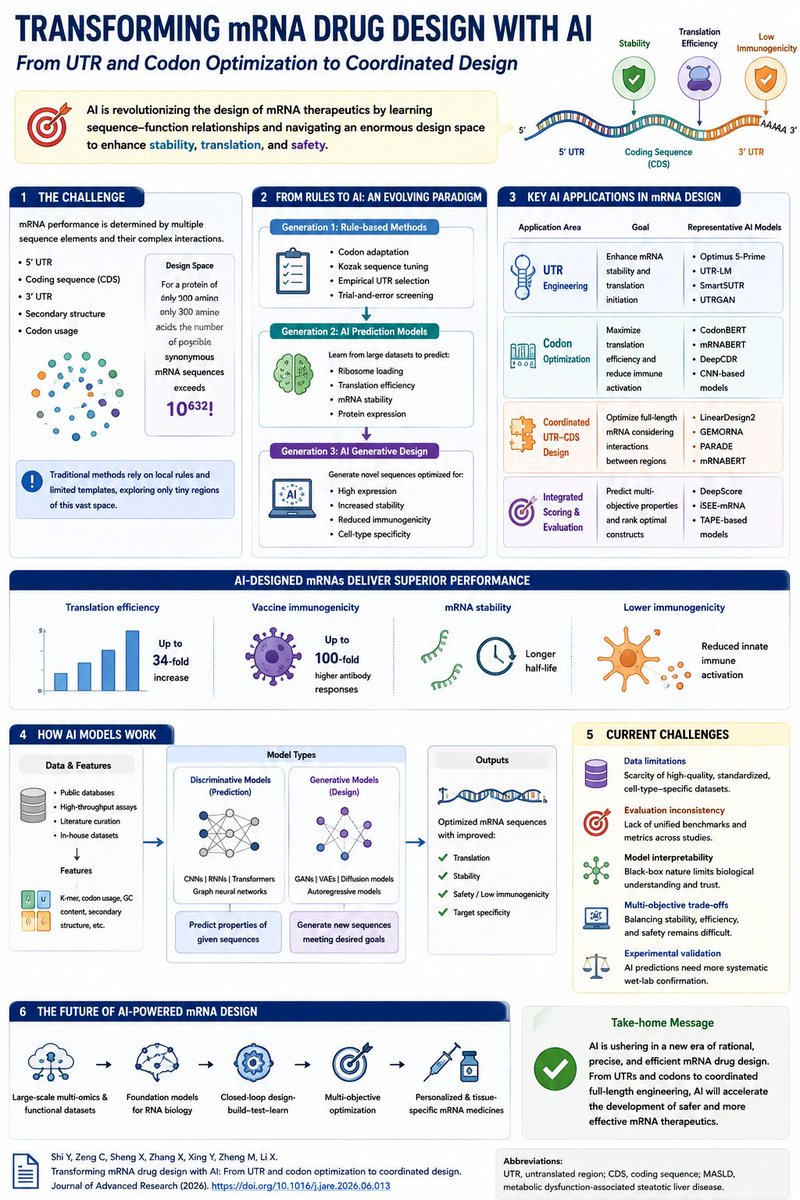
AI Is Rewriting mRNA Drug Design
The success of COVID-19 mRNA vaccines proved that messenger RNA can become a transformative therapeutic platform. Yet one of the field’s biggest challenges remains unresolved:
How do we design the optimal mRNA sequence among billions of possibilities?
A new review in Journal of Advanced Research highlights how artificial intelligence is rapidly becoming the engine that drives next-generation mRNA therapeutics.
Unlike conventional drugs, mRNA performance depends heavily on sequence architecture:
• 5′ untranslated region (5′UTR)
• Coding sequence (CDS)
• 3′ untranslated region (3′UTR)
• Secondary structure
• Codon usage patterns
Even when two mRNAs encode exactly the same protein, differences in sequence design can dramatically alter:
✓ Translation efficiency
✓ Stability
✓ Immunogenicity
✓ Tissue-specific expression
The review describes a major paradigm shift.
Generation 1: Rule-based optimization
Historically, mRNA engineering relied on:
• Codon adaptation indices
• Kozak sequence tuning
• Empirical UTR selection
• Trial-and-error screening
These approaches explore only tiny regions of an enormous design space.
For example, the synonymous coding space of the SARS-CoV-2 spike protein exceeds 10⁶³² possible mRNA sequences.
Generation 2: AI prediction models
Deep-learning systems such as:
• Optimus 5-Prime
• UTR-LM
• CodonBERT
• mRNABERT
learn sequence–function relationships directly from large experimental datasets.
Rather than relying on hand-crafted rules, these models predict:
• Ribosome loading
• Translation efficiency
• mRNA half-life
• Protein expression output
Generation 3: AI-generated mRNA
The most exciting development is the rise of generative design.
Instead of evaluating existing sequences, AI can now create entirely new ones.
Examples include:
🧬 UTRGAN
🧬 Smart5UTR
🧬 PARADE
🧬 GEMORNA
These systems generate synthetic UTRs and coding sequences optimized for specific objectives such as:
• High expression
• Increased stability
• Reduced immunogenicity
• Cell-type specificity
Some AI-designed UTRs produced:
🚀 Up to 34-fold increases in translation efficiency
🚀 Nearly 100-fold higher vaccine-induced antibody responses
compared with conventional designs.
The next frontier: coordinated design
The review argues that the field is moving beyond isolated optimization of individual sequence elements.
Current efforts increasingly focus on:
5′UTR CDS 3′UTR co-design
as a unified system.
Models such as:
• LinearDesign2
• GEMORNA
• mRNABERT
attempt to optimize the entire transcript simultaneously rather than treating each region independently.
This matters because translation, stability, structure, and immunogenicity emerge from interactions across the full-length mRNA molecule.
Why this matters
The future of mRNA medicine may resemble modern protein design.
Instead of manually optimizing sequence elements, researchers will specify desired properties:
✓ High expression
✓ Long half-life
✓ Low innate immune activation
✓ Liver targeting
✓ Efficient LNP delivery
and AI systems will generate candidate mRNAs automatically.
The authors envision a future built around:
• Foundation models for RNA biology
• Multi-objective optimization
• Generative AI
• Closed-loop design-build-test-learn platforms
where computational models and experimental validation continuously improve each other.
If protein engineering was transformed by AlphaFold and generative biology, mRNA therapeutics may be approaching a similar inflection point.
The next blockbuster mRNA drug may be designed not by manual codon tuning—but by AI.
Reference
Shi Y, Zeng C, Sheng X, et al.
Transforming mRNA drug design with AI: From UTR and codon optimization to coordinated design.
Journal of Advanced Research (2026)
DOI: 10.1016/j.jare.2026.06.013
#mRNA #ArtificialIntelligence #GenerativeAI #CodonOptimization #UTRDesign #RNAEngineering #DrugDiscovery #BioAI #PrecisionMedicine #JournalOfAdvancedResearch
1
6
315


Jun 10
interesting post. thank you.
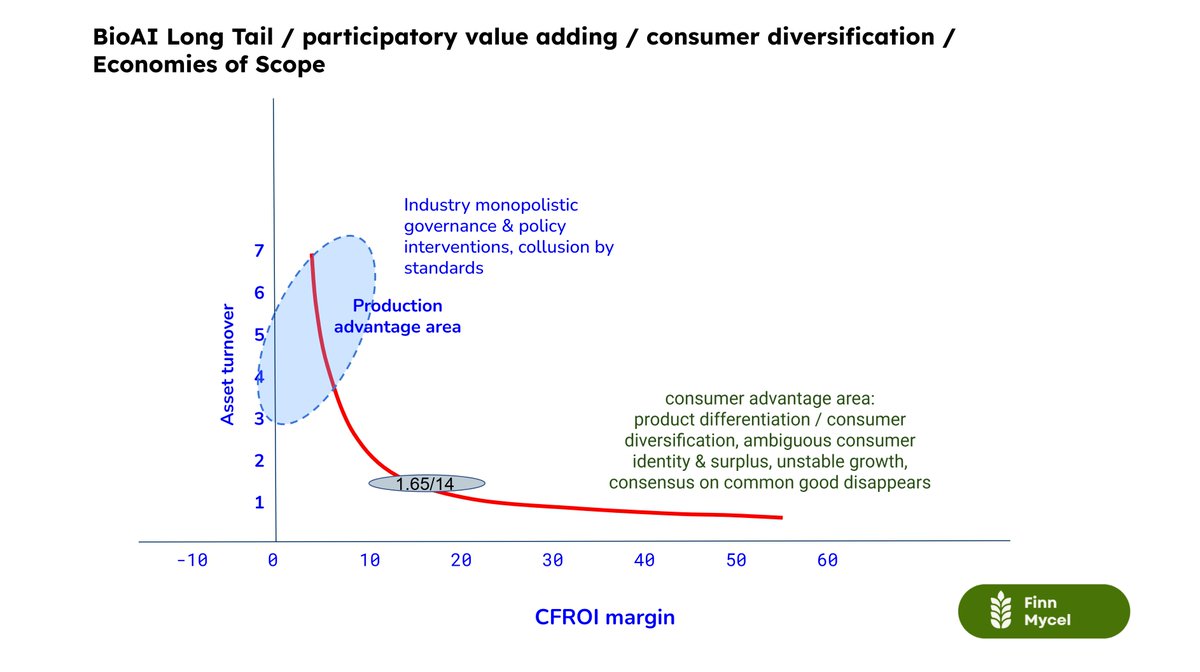
The anti-scaling law impacts some parts of the potential value creation and value capture areas of your industry (the old Economies of Scale Industry and the blue area in this picture?).
But there are ofc. value creation and value capture models for long tails too. Eg. the grey area of this picture marks the Asset turnover ratio/CFROI margin of Amazon some years ago. there must be thousands of Food Biotech and Fungi BioAI startups already who target the long tail and the Economies of Scope and Niche Demand Aggregation there. My Finnmycel is one of those.
222

Jun 7
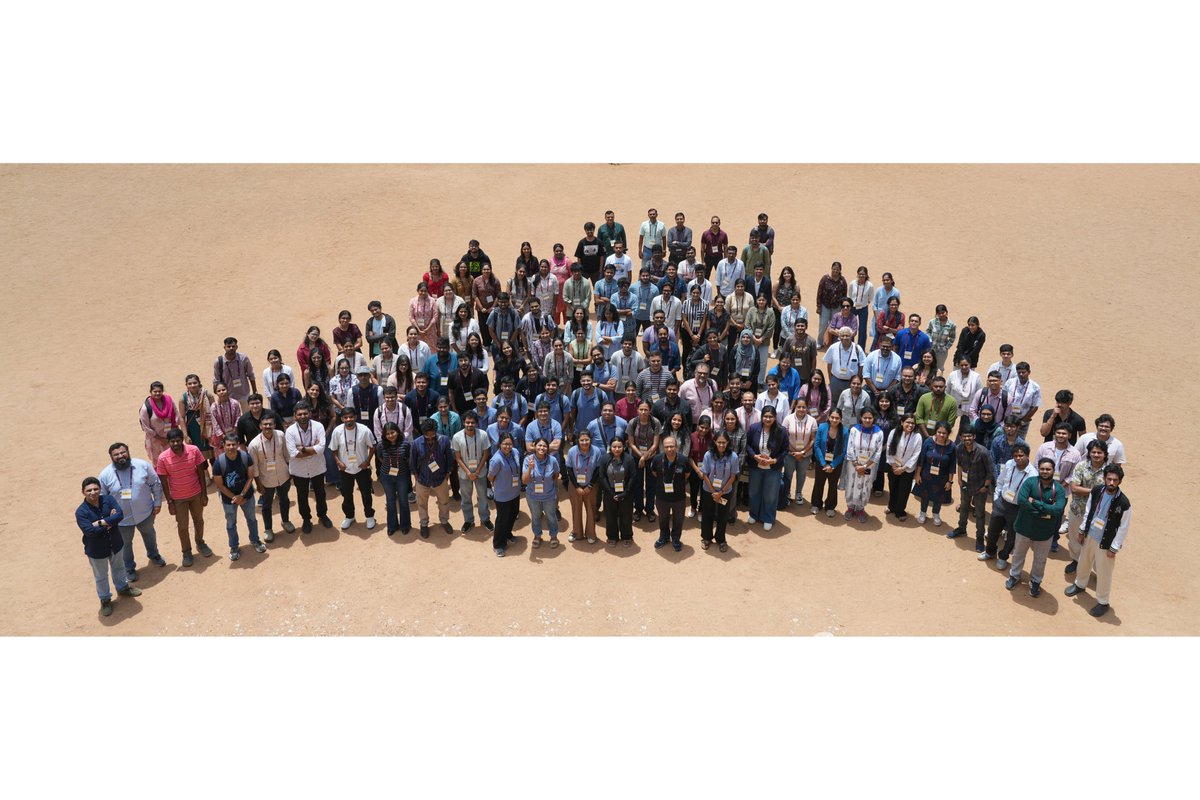
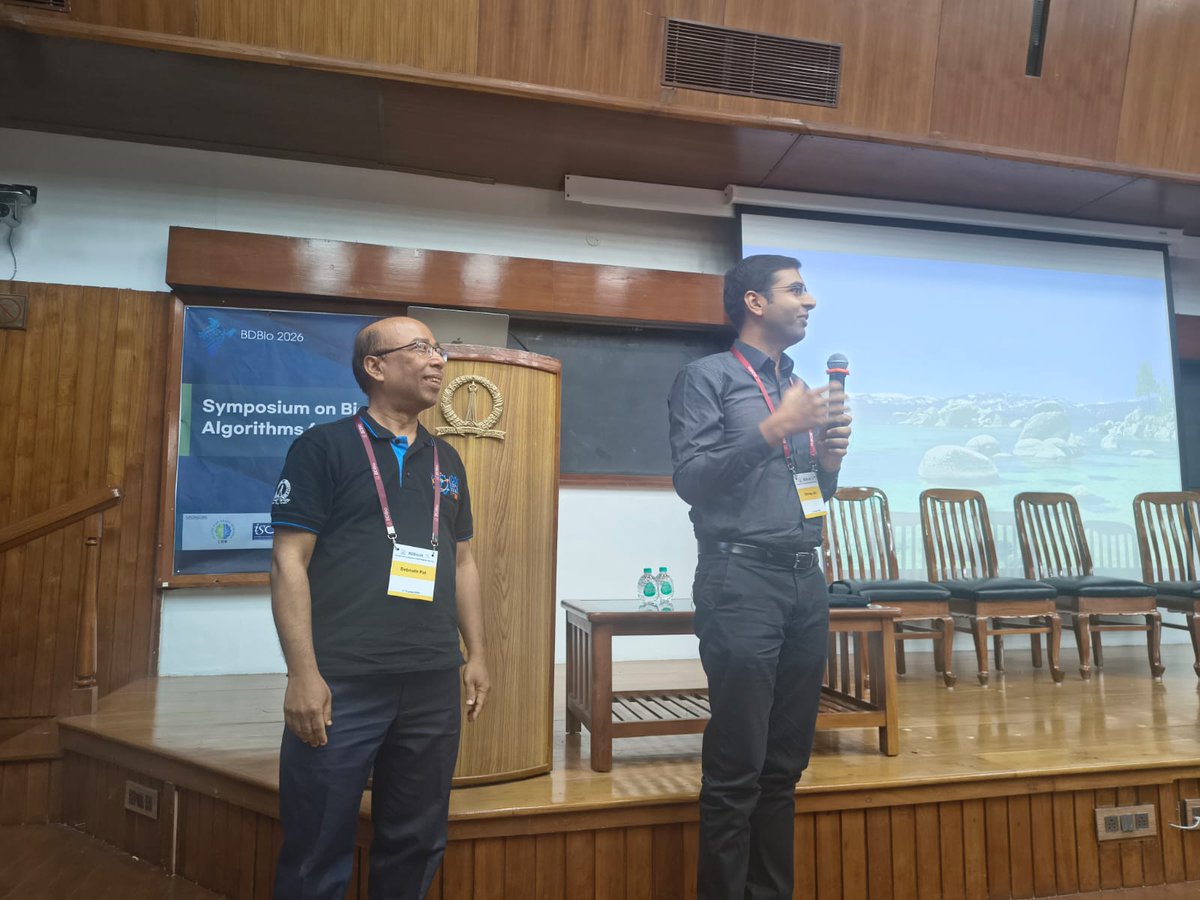
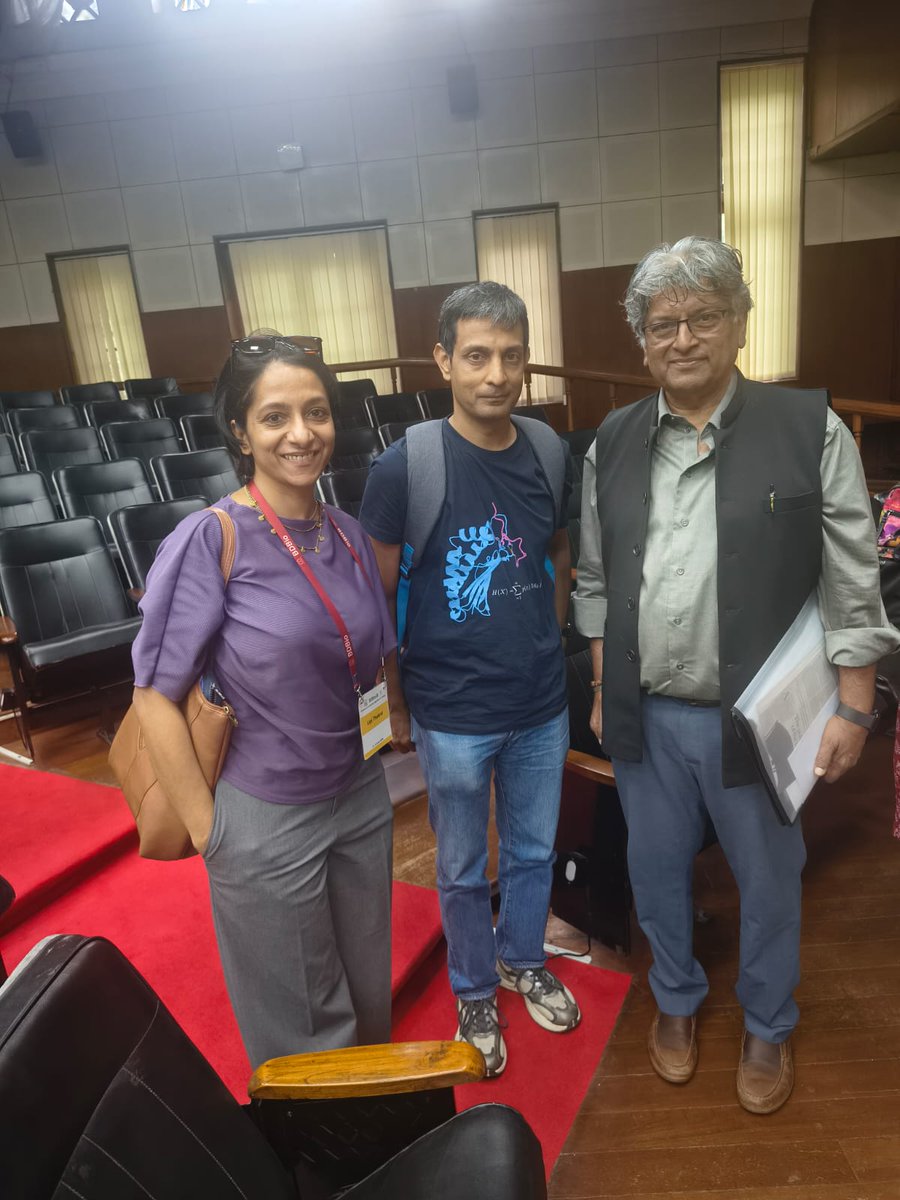
Great conference about algorithms underlying current computational approaches in biology #BDBio2026 at CDS dept @iiscbangalore . Fantastic organisation by Chirag and Debnath, thoroughly enjoyed the interactions. A lot of interesting ideas around #bioAI, while also emphasizing the many fundamental biological questions that remain unsolved.
Presented our recent results in cancer genomics and it was great to discuss a new direction our lab is taking. More coming soon.
2
4
51
3,425
Jun 6
DeSci-AI / BioAI
👀👇@paulkhls

We've made a breakthrough in self-evolving AI scientists moving from "search" to "principled discovery": Scientific discovery requires that the search space itself changes, and an AI scientist must perceive this shift without intervention. We built an AI that achieves this for the first time with the ability to discover the scientific vocabulary it reasons in. Evidence, tools, artifacts, verifiers, failures & claims become typed provenance. We show three distinct modalities: 1) retrieval, adding known objects; 2) search, exploring a fixed schema; and critically: 3) discovery, a verified regime transition.
We solve the open-endedness evaluation problem by lifting agentic workflows into a typed copresheaf and proving, via a Kan obstruction, that true discovery is not unbounded generation but a verifiable schema expansion: old evidence is transported by Left Kan extension, and genuine novelty is mathematically quantified by the pointwise residual beyond the transported image - separating discovery from mere search and making novelty objective and measurable rather than a subjective judgment or benchmark delta.
Our AI scientist is built in a way that does not pre-conceive the approach it chooses; instead, we endow the system with formal power to adapt, evolve, and reason from first principles. Case studies include:
1⃣Builder/Breaker model that discovers mode-conditioned compliance in proteins;
2⃣CategoryScienceClaw that finds anisotropic fiber-network stiffness rules.
Great work in collaboration with my graduate student @fwang108_ @MITdeptofBE
F.Y. Wang & M.J. Buehler, Self-Revising Discovery Systems for Science: A Categorical Framework for Agentic Artificial Intelligence, arXiv:2606.01444, 2026
2
4
158
Jun 5
AI-Integrated Immune Cell Delivery: The Next Frontier in Cancer Therapy
A major bottleneck in cancer nanomedicine is that most delivery systems are still designed through labor-intensive trial-and-error approaches. A new review in the Journal of Controlled Release argues that the future lies in combining immune-cell delivery platforms with artificial intelligence (AI), creating adaptive and predictive therapeutic systems capable of overcoming tumor heterogeneity and immune suppression.
Immune cells possess natural tumor-homing capabilities that conventional nanoparticles struggle to replicate. This review systematically compares five major immune-cell delivery platforms:
🔹 Macrophages – excellent for deep tumor penetration, stromal remodeling, and delivery into hypoxic regions.
🔹 Neutrophils – ideal for rapid recruitment to inflamed tumors, postoperative recurrence, and circulating tumor cell interception.
🔹 Dendritic Cells (DCs) – specialized for antigen presentation and immune priming, making them attractive for cancer vaccines.
🔹 Natural Killer (NK) Cells – provide rapid cytotoxicity and can be engineered through membrane coating or CAR-NK approaches.
🔹 T Cells – combine active trafficking with antigen-specific immune killing and remain central to advanced cell therapies such as CAR-T.
The review highlights a paradigm shift: from empirical carrier design toward AI-integrated frameworks built around three pillars:
1️⃣ AI-Assisted Rational Design
Machine learning models optimize CAR architectures.
Generative AI platforms design proteins, peptides, and delivery vehicles.
AI-guided CAR-T engineering can predict exhaustion and improve persistence before experimental validation.
2️⃣ Precision Target Identification
Deep learning predicts TCR–neoantigen interactions.
Models such as pMTnet identify highly immunogenic targets from patient-specific tumor mutations.
Computational approaches enable rapid screening of tumor-specific antigens that are difficult to discover experimentally.
3️⃣ Predictive Delivery Assessment
AI predicts pharmacokinetics, biodistribution, tumor homing, and toxicity.
Integration of spatial transcriptomics and multi-omics data enables simulation of delivery performance before clinical testing.
Emerging digital-twin frameworks may eventually support personalized dosing strategies.
Particularly notable are examples such as:
AI-guided multi-antigen CAR-T optimization achieving complete tumor clearance in preclinical models.
De novo-designed pMHC minibinders generated using RFdiffusion and AlphaFold.
CAR-Toner, an AI platform predicting tonic signaling and CAR exhaustion based on protein structural features.
Yet significant challenges remain. Current AI systems suffer from limited standardized datasets, poor interpretability, manufacturing constraints, and insufficient modeling of the dynamic tumor microenvironment. The authors emphasize that future progress will require integrating immunology, nanotechnology, systems biology, spatial omics, and machine learning into unified platforms.
The central message is clear:
The next generation of cancer therapeutics will not simply use immune cells as carriers. Instead, AI will help design, optimize, predict, and personalize immune-cell delivery systems—transforming them from biologically inspired tools into intelligent therapeutic platforms.
Reference
Chen H, Dang X, Zhu J, et al. Immune cell delivery platforms for tumor therapy: From empirical approaches to AI-integrated frameworks. Journal of Controlled Release (2026). DOI: 10.1016/j.jconrel.2026.115065.
#CancerResearch #Immunotherapy #CAR_T #CellTherapy #Nanomedicine #DrugDelivery #ArtificialIntelligence #MachineLearning #TumorMicroenvironment #PrecisionMedicine #JournalOfControlledRelease #BioAI #TranslationalMedicine #Oncology #CancerMetastasis

2
5
156

Jun 3
Indeed, world models are next big thing in BioAI

World models is how we will simulate and interrogate biology to solve disease.
3
1
19
1,412
Jun 3
This is so cool! Thanks for sharing. This is a must read for the BioAI community!!!

The training data market has exploded for LLMs and bio foundation models are next.
But biological data is extremely complex and requires a data generation playbook that prioritizes quality over immediate scale.
@_DimensionCap Research article live now!
research.dimensioncap.com/p/…
4
16
1,321
Jun 3
Great BioAI talks!
Jun 3

A few talks at the intersection of single cell biology x agent engineering:
- Understanding library prep sequencing is important
- Repurposing data infrastructure for agent consumption
- How to benchmark frontier agents on single cell analysis
1
26
10,521
May 30
Great recap of BioAI advances during May from Peter. Follow him if you are interested in BioAI; he has the best newsletter on this.
May 29
May was a huge month in AI × biology. Here's a recap of the biggest stories. 🧵 (1/6)
1
10
91
16,292
May 27
This is so exciting! BioAI just jumped a level with the release of ESMFold2!
Kudos to Alex and the team for making this open scientific engine and releasing billions of proteins and predicted structures!
May 27

Today we're announcing ESMFold2, an open scientific engine to power prediction, design, and discovery across protein biology.
The new model delivers state of the art performance on protein interactions, especially antibodies, a critical modality for therapeutics.
We have designed and validated miniprotein binders and single chain antibodies across five therapeutic targets that are important in cancer and immunology. We are seeing very high success rates, and affinities at levels consistent with therapeutic activity.
We’re also releasing an atlas of 6.8 billion proteins, and 1.1 billion predicted structures.
ESMFold2 is built on a state of the art language model that has been trained on billions of protein sequences.
A world model of protein biology emerges through language modeling.
We’ve used the techniques of mechanistic interpretability developed to understand large language models to understand the concepts ESM uses to represent proteins.
The model’s representation space has a compositional organization of features across scales, levels of complexity, and abstraction, that reflects and mirrors the understanding of protein biology developed through a century of empirical science.
This understanding emerges without prior knowledge, just from language modeling of protein sequences.
Language models are becoming a powerful substrate to understand and program biology.
The design of protein interactions is one of the most fundamental problems in biophysics, and has critical implications for the discovery of new medicines. A simple gradient based search with the model was able to discover high-affinity protein binders.
I'm excited by the potential this has to accelerate basic science and the understanding of proteins. And especially for the new avenues it opens up for therapeutic design and medicine.
1
18
137
23,618


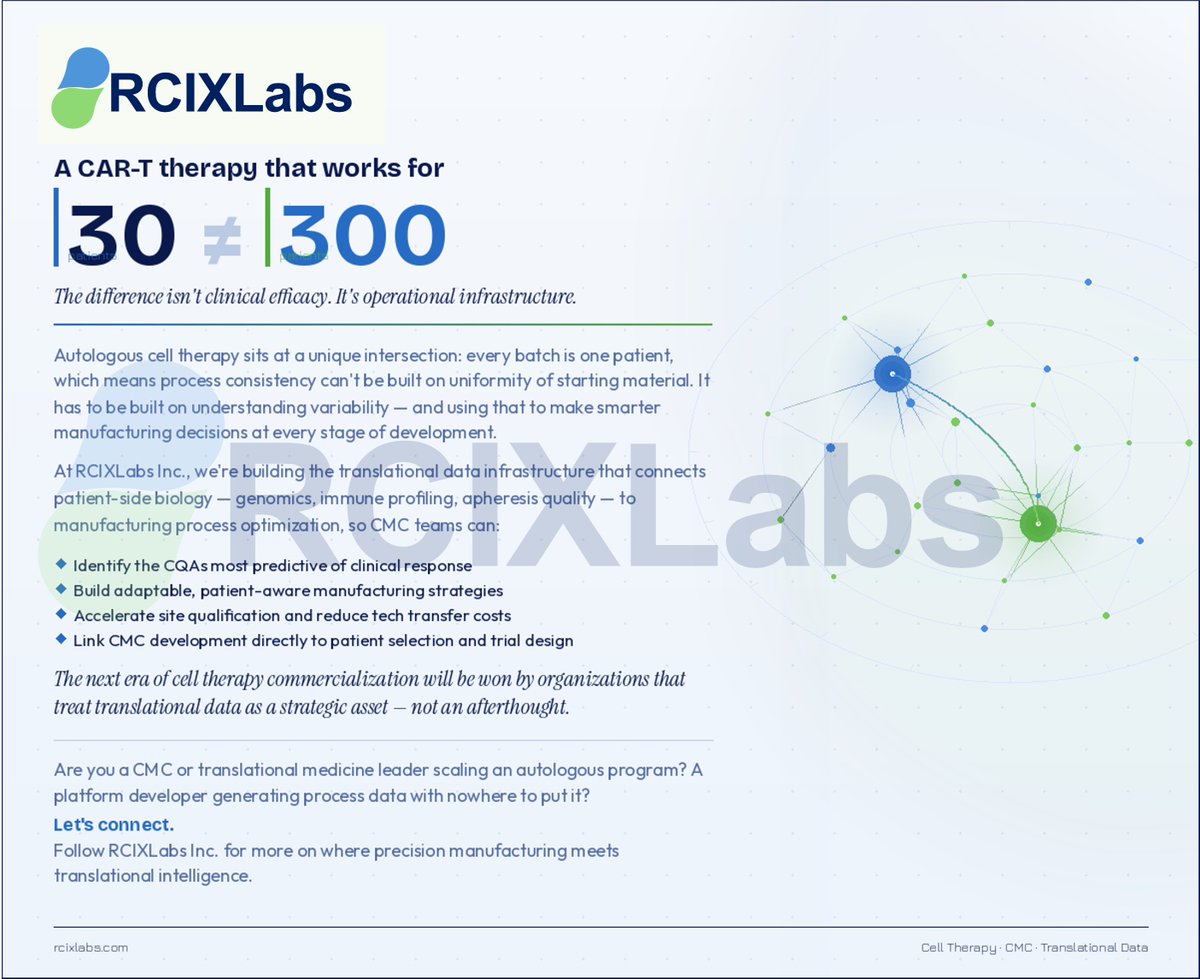
Your CAR-T works in 30 patients. Reaching 300 is a different problem entirely.
Not clinical. It's Operational.
Our simulative Digital Twin connects patient biology to manufacturing intelligence — so autologous programs can actually scale.
#CART #CellTherapy #BioAI #DigitalTwin
1
2
96
May 22
The UAE is becoming a more & more attractive place to accelerate BioAI, biomedical research & longevity. In contrast, the US public is pushing towards deceleration & regulation, in great irony when most technological advances are happening here, including in AI & biomedicine. 😕

the UAE might just win the biology/acc race
and nobody in the US is talking about it
- Mubadala Capital, Abu Dhabi's sovereign wealth fund, is writing $75M checks directly into longevity biotech
- UAE longevity industry projected to surpass $23B by 2026. state backed. no apology.
- zero personal tax, zero corporate tax, supportive regulatory environment. biotech founders are relocating.
- clinical trials run faster and cheaper than anywhere in the West
George Church told me on the podcast the US might eventually have to call upon UAE to catch up
think about that for a second
the most decorated biology professor at Harvard said the US might lose the biology race to a country that did not exist 50 years ago?
science is never the problem, the system around it is
5
9
103
13,920

May 21
More seriously, I wud love to understand whether this claim holds for bioAI models and applications like DNALMs & single cell FMs that have enough training data but really struggle to learn effectively.
2
10
1,022