antisense. retweeted

7 Jun 2025
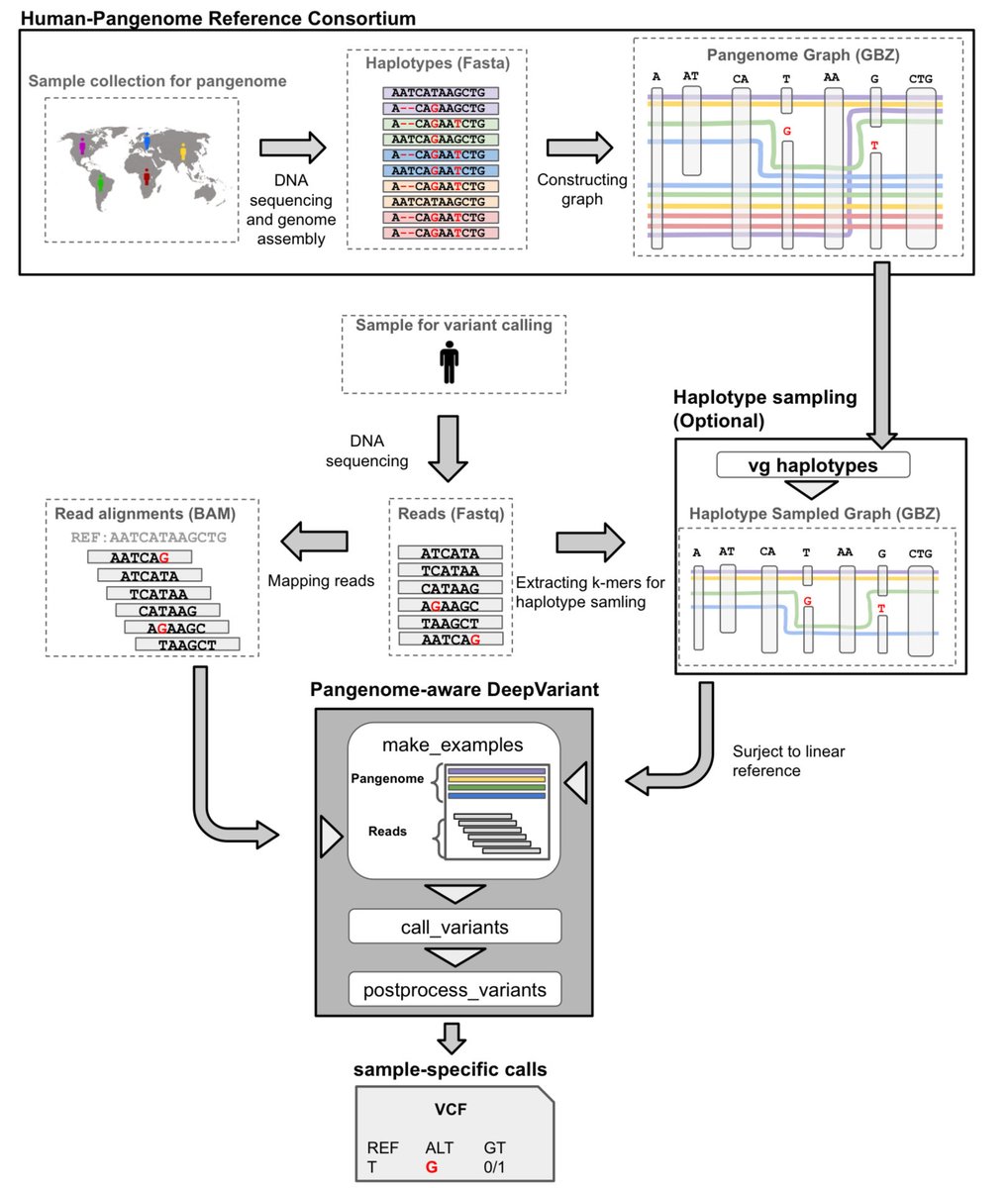
Pangenome-aware DeepVariant biorxiv.org/content/10.1101/…
1
22
92
5,729

What does it take to move from high-throughput sequencing to real-time genomic insight?
That was the focus of our recent webinar and panel discussion with Complete Genomics, Google, and NVIDIA. The discussion highlighted that the next bottleneck in genomics is not just sequencing, but how quickly and reliably we can analyze, interpret, and validate the data.
Three key takeaways stood out:
· Real-time genomic analysis for the clinical setting is here! The next challenge is building a seamless end-to-end workflow that connects laboratories, bioinformatics, IT infrastructure, and clinical stakeholders.
· Faster and cheaper AI/GPU based analysis without compromising accuracy. The cost for DNBSEQ-T7 with Google DeepVariant and NVIDIA Parabricks delivers highly accurate variant calling for only ~$0.75 per sample.
· High-throughput sequencing and AI are transforming large-scale genomics, but robust validation remains essential.
In case you missed our webinar yesterday, catch the on-demand version here: na2.hubs.ly/H0659w10
Learn more about DNBSEQ-T7 : na2.hubs.ly/H0659RD0
#Genomics #Bioinformatics #AI #PrecisionMedicine #DNBSEQ #Parabricks #CompleteGenomics #NVIDIA #Google
28
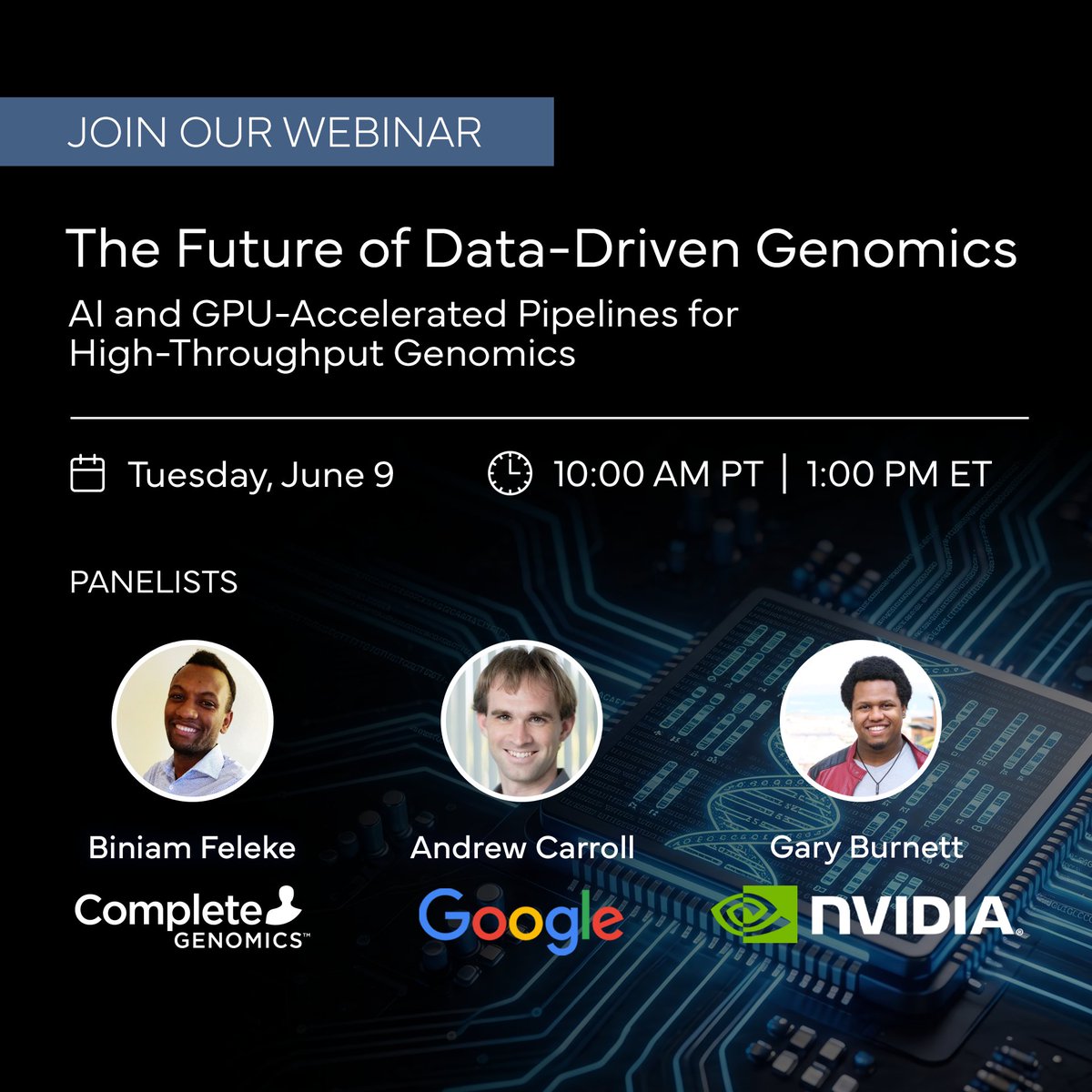
Starting in 1 hour: The Future of Data-Driven Genomics
Join Complete Genomics, Google, and NVIDIA for a live webinar exploring how high-throughput sequencing, GPU-accelerated analysis, and AI-driven variant calling are enabling faster, more scalable genomics workflows.
The session will include a panel discussion with Biniam Feleke, Andrew Carroll, and Gary Burnett on how to connect sequencing, accelerated compute, and AI-enabled analysis.
⏰ 10:00 AM PT | 1:00 PM ET
Register here: na2.hubs.ly/H061YZX0
#Genomics #WholeGenomeSequencing #Bioinformatics #VariantCalling #AIinGenomics #GPUComputing #DeepVariant #NVIDIAParabricks #NGS
62
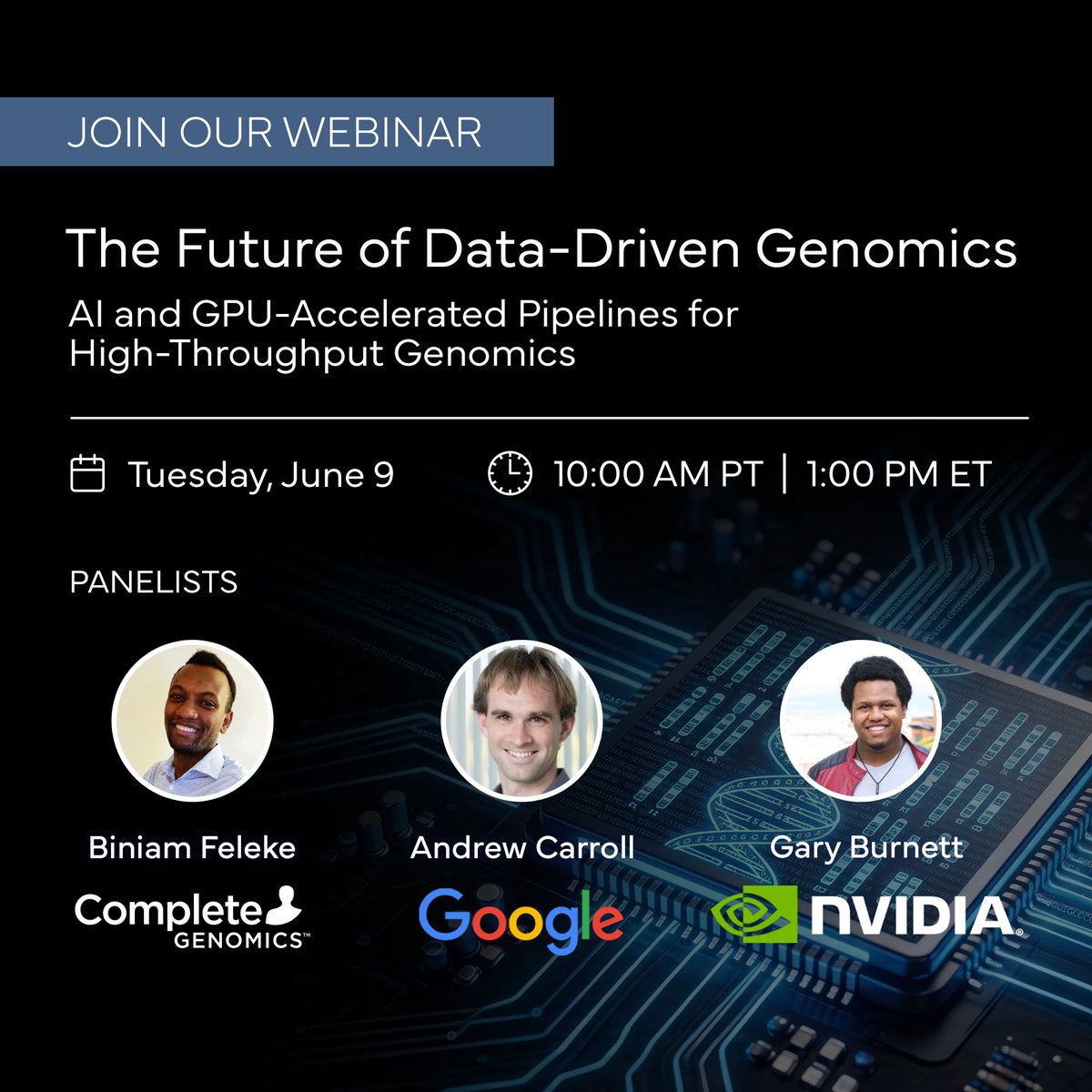
Happening tomorrow: The Future of Data-Driven Genomics
Join Complete Genomics, Google, and NVIDIA for a webinar on how high-throughput sequencing, GPU-accelerated analysis, and AI-driven variant calling are helping researchers move from FASTQ files to accurate insights faster.
The session will feature a live panel discussion with Biniam Feleke, Andrew Carroll, and Gary Burnett on how to connect sequencing, accelerated compute, and AI-enabled analysis to enable more scalable genomics workflows.
📅 Tuesday, June 9
⏰ 10:00 AM PT | 1:00 PM ET
Register here: na2.hubs.ly/H061jl00
#Genomics #WholeGenomeSequencing #Bioinformatics #VariantCalling #AIinGenomics #GPUComputing #DeepVariant #NVIDIAParabricks #NGS
53

Built KidGenome Compass with Codex: a local-first app that turns child genetic reports into parent-friendly next steps. Uses DeepVariant, AlphaMissense & AlphaGenome-style signals. No upload. No diagnosis. Demo: kidgenome-compass.vercel.app
1
76
Built KidGenome Compass with Codex: a local-first app that turns child genetic reports into parent-friendly next steps. Uses DeepVariant, AlphaMissense & AlphaGenome-style signals. No upload. No diagnosis. Demo: kidgenome-compass.vercel.app
1
54

Genomic analysis that once took hours now takes minutes — and the compute enabling that shift just got significantly more powerful.
Explore how the NVIDIA BioNeMo Platform, including NVIDIA Parabricks, on the NVIDIA RTX PRO 4500 Blackwell Server Edition is transforming precision medicine.
Compared to NVIDIA L4, RTX PRO 4500 Blackwell delivers:
⚡ ~2x faster genomic analysis (fq2bam, Minimap2, Deepvariant)
⚡ 9.6x faster sequence alignment (Smith-Waterman)
⚡ 2.3x faster protein structure prediction (OpenFold3)
Read the full breakdown ➡️ nvda.ws/4vhvGmJ

8
28
188
12,012

May 26
$TAO The Genomics Moat 👀
Minos Subnet 107: The Genomics AI Moat That Could Redefine Precision Medicine
I’ve spent the last hours digesting Hash Rate Ep. 172 with Mark Jeffrey and Mamad Ahangari, the force behind Minos AI (Bittensor Subnet 107). This has me genuinely excited. Not empty crypto hype, but a sharp attack on genomics’ core data scarcity with a self-improving, incentive-driven flywheel that centralised labs will struggle to match.
The Core Problem: Ground-Truth Data is Scarcer Than Hen’s Teeth
Genomic AI is bottlenecked by extreme data scarcity. Only about seven high-quality verified genomes exist publicly for benchmarking. Genetic data is hypersensitive and heavily regulated, with real samples locked behind thick privacy walls. Tools like GATK, DeepVariant, and Illumina’s DRAGEN are slow, costly, or limited. Precision medicine, pharma R&D, and digital twins all suffer as a result.
Enter Minos.
The Moat: Synthetic Genomes Decentralised Adversarial Optimisation
Minos stands out with HelixForge, generating unlimited realistic synthetic genomes complete with perfectly known mutations — ideal digital twins for training and testing. This privacy-by-construction approach sidesteps heavy regulatory hurdles like GDPR and HIPAA by avoiding real patient data entirely. Every 72 minutes, validators issue fresh challenges. Miners submit optimised configs for variant-calling pipelines (no raw outputs to prevent cheating), scored transparently via hap.py in a winner-take-most system.
This delivers:
• Infinite perfect ground truth — smashing the data drought.
• Hyper-rapid iteration — constant bug fixes and gains no internal team can match.
• Trustless meritocracy — prevents gaming while aggregating global talent.
• Expanding performance dataset — open and transparent.
The blend of planetary-scale synthetic data plus relentless decentralised optimisation forms Minos’ huge moat. It’s a flywheel that strengthens with every round.
Tokenomics and Path to Revenue
Still R&D-focused, as it should be. Plans include API/synthetic data licensing, token buybacks, VM-friendly mining, and broader adoption. A major scientific conference in October should help bridge to traditional genomics.
Investment Angle and Risks
For TAO holders, Minos is one of the more compelling subnets for long-term value — capturing emissions while driving real utility and external revenue. High conviction on the tech, but early-stage risks remain: adoption and TAO market cycles. The upside in becoming the open, cheap foundation for precision medicine and drug discovery is massive. It won’t replace incumbents overnight but will sit on top, improving relentlessly while they lag.
I’ll be watching Minos Subnet 107 closely. In an AI world full of noise, genuine moats on hard science problems feel rare. This one stands out.
As ever, views my own. DYOR — not financial advice. Crypto and subnets carry real risk of capital loss.
I wouldn’t sleep on this 🚀🚀
#Bittensor #TAO #AI #DeSci #Genomics #PrecisionMedicine #Minos #SN107 #Solana #Crypto
$TAO $SOL
1
7
255

May 25
Just finished watching Hash Rate Ep. 172 hosted by @markjeffrey with @centrum_blue of @theminos_ai (Minos Subnet 107) easily one of the most insightful conversations I’ve seen in the Bittensor ecosystem recently.
You could immediately tell this wasn’t just another surface level subnet conversation. The discussion went deep into the real world challenges of genomics, and what impressed me most was how well Mark handled the interview despite openly not coming from a genomics background. He asked the right questions at the right moments, kept the conversation flowing naturally, and did a great job translating complex ideas into something understandable for a broader audience. Massive credit to him for that.
One part that really stuck with me was Mamad explaining how limited the genomics industry still is when it comes to high quality benchmark datasets. Because genomic data is so private and sensitive, researchers are essentially working with an extremely small pool of trusted benchmark genomes, which slows progress across mutation detection, personalized medicine, and biomedical AI systems.
The mechanism behind Minos was probably the most interesting part of the episode for me.
Instead of relying on static benchmarks, the subnet continuously generates fresh genomic challenges roughly every 72 minutes by injecting hidden synthetic mutations into real sequencing datasets. Miners compete to identify those mutations using established tools like GATK and DeepVariant, while validators score submissions blindly based on accuracy.
That design choice alone makes the subnet feel fundamentally different. It creates an environment of continuous benchmarking and real performance validation instead of optimizing around stale datasets or fixed leaderboards.
The conversation around clinical grade accuracy and the long term vision for decentralized genomics and digital twins was also incredibly compelling. You can tell there’s serious scientific thought behind the architecture, not just hype around AI narratives.
Strong DeSci energy throughout the entire interview.
May 25

Hash Rate - Ep. 172: Minos Subnet 107
🧙 Guest: @centrum_blue of @theminos_ai
02:27 The Challenge of Private Genetic Data
07:04 The Mutation Detector
10:59 Synthetic Genomes
14:21 The Role of Miners
22:27 Why Subnet?
26:29 Competitive Landscape
29:53 Synthetic Genomes and Digital Twins
34:00 Tokenomics
46:31 Marketing
48:51 Mamad's Journey and Vision
4
4
18
2,101

May 25
I also have a browser WASM version of deepvariant which I’m about to put up if you are interested in testing.
Have you aligned with Sarek or something similar yet? What do you get off the ONT P2 Solo? Is it pod5 or fastq??
Keen to hear all the details
2
79
May 25
$TAO Genomics Disruptor ⬇️⬇️
Minos (Bittensor Subnet 107), a real genomics disruptor and the decentralized “truth engine” for genomic AI. While most chase hype, Minos is building the foundational validation layer that could finally make genomic AI trustworthy. One bad variant call can tank a drug program — they turn accuracy into a competitive, incentive-driven sport.
How It Works
Every ~72 minutes, api.theminos.ai drops a fresh challenge genome via HelixForge, injecting hidden synthetic mutations at read level into BAM files for tough, realistic tests.
Miners submit optimized hyperparameters for tools like GATK or DeepVariant. Validators run them in isolated Docker containers and score with hap.py AdvancedScorer. Rewards go to consistent top performers via EMA. Roadmap scales from hyperparams to custom pipelines and an ensemble meta-caller. Fully open-source.
HelixForge: Synthetic Truth at Scale
HelixForge creates controlled mutations that expose real tool weaknesses. HelixForge-Pheno uses CUDA to generate massive disease-specific synthetic cohorts from GWAS stats, hitting ~90% correlation on Polygenic Risk Scores (PRS) — weighted sums estimating risk for diseases like heart disease, diabetes, and cancers.
Result: unlimited, privacy-safe data perfect for AI training and validation.
ASHG Highlights
Minos is presenting two strong works at ASHG this fall in Montréal:
1. Bittensor-powered continuous benchmarking to optimize variant-calling pipelines.
2. HelixForge-Pheno for synthetic cohorts in genomic AI.
Thesis: synthetic truth at scale nonstop benchmarking = real progress.
From Research to Revenue
These fuel actual products:
• BaaS: Subscriptions for validation, optimization, and audits.
• Synthetic Data Platform: License PRS-validated cohorts for AI/drug discovery.
Revenue via SaaS on theminos.ai, licensing, and enterprise deals. Long-term paid meta-caller. Targeting big markets:
• Genomics: ~$44-51B now → $175-199B by 2034 (CAGR ~16%)
• Genomics-AI: ~$1.5-1.8B → $9.9-20B
• Precision Medicine: $126-138B → $237-537B
Sidestepping Bottlenecks
Synthetic-first decentralized design avoids HIPAA/GDPR, scarcity, bias, and liability — no real patient PHI on the network, miners send only configs, partners handle regulated work.
Current Momentum (Late May 2026)
~64 neurons, tens of thousands of evaluations, solid stake, modest alpha cap with upside. Live on chr20 expanding, transparent dashboard, Hippius integration, easy Docker demo.
Bottom Line
Minos HelixForge crushes the variant-calling bottleneck with adversarial benchmarking and scalable PRS-aligned synthetic data. ASHG should bridge crypto to mainstream science. With tailwinds in precision medicine, AI, and $TAO on Solana, this genomics disruptor is positioned for serious revenue, real healthcare impact, and explosive upside.
Watching post-ASHG closely. Don’t be caught sleeping 🚀🚀
#Bittensor #TAO #DeSci #Genomics #PrecisionMedicine #SN107 #Minos #AI #Solana $TAO $SOL
1
9
375

May 12
Heads up: in ~6h @centrum_blue drops the new SN107 scoring on us.
No more EMA whale-miner setup. Per-round winner instead.
13/05, 14:00 EST. Things are about to get weird on @theminos_ai 🧬
———
Quick recap of what we had until tonight:
1 round = 72 min. ~9 validators score everyone. EMA builds slowly (α=0.1). And the miner with the highest EMA takes 100% of emissions.
Same UID has been parked at the top of SN107 for 3 months. Not exactly thrilling.
———
Tonight that's gone.
Per-round = the best ADV_SCORE in each individual round eats the emissions for THAT round. Whoever wins this 72-min slice, gets that bag. Next round, completely new game.
Centrum's own words: "each round will have different properties."
Translation: hyper-volatile leaderboard incoming.
———
Why I think it's a big deal:
– No more grinding 20 rounds before you even matter
– Static configs are dead. Per-round tuning is now mandatory
– Region matters more than ever. Some configs eat certain chr20 zones, others choke on them
– Top 1 just lost his lifetime VIP card
Whale era over. Tuning era starts now.
———
I'm mining SN107 since March. Genomics is the weird underrated corner of TAO and nobody covers it in FR.
Helix = miner perspective, in the trenches, EN FR.
Next post: which tool actually wins post-switch / GATK, DeepVariant, FreeBayes or BCFtools? My bet inside.
🧬
2
138
May 12
$TAO DeSci Moving Fast!! 👀👀
💥MINOS SN 107 🚨
Just watched @theminos_ai drop a 10-day progress timelapse that gave me straight chills.
Numbers going absolutely nuclear:
→ 67,000 evaluations
→ 207 genome analysis rounds
→ 110 miners live on the network
This isn’t slow lab growth. This is decentralized genomic intelligence exploding in real time. 🧬⚡
Minos (Bittensor Subnet 107 on @opentensor) is doing something massive:
Miners compete every 72 minutes on fresh DNA sequencing challenges packed with hidden mutations. They’re stress-testing tools like FreeBayes, GATK & DeepVariant under adversarial pressure — exposing where even the “gold standard” tools fail hard.
This builds the verifiable, clinical-grade foundation AI actually needs to understand human biology. No more black-box guesses. Real precision at scale.
The bigger picture? Sequencing is now ~$200. The real bottleneck was accurate variant calling.
Minos is fixing that with decentralized competition — unlocking trustworthy AI for personalized medicine, faster disease detection, longevity research, and drug discovery.
This is DeSci in action: open, incentivized, global, and moving faster than centralized labs ever could.
Mind officially blown. The future of health intelligence is here.
x.com/theminos_ai/status/205…
#DeSci #Bittensor #Genomics #PrecisionMedicine #AI #BioTech #DePIN $TAO $SOL $MINO
x.com/theminos_ai/status/205…

1
6
23
405

1/
What reference genome should you use?
Sounds easy. It’s not.
GRCh37? GRCh38? hs37d5?
Have you heard of T2T or the new pan-genome-aware DeepVariant?
This matters more than you think.
biorxiv.org/content/10.1101/…
1
1
7
936
May 9
$TAO Genomic Game Changer!! 👀
💥MINOS SN 107💥
Wow! Minos (Subnet 107 on Bittensor) is positioned to generate real revenue faster than most crypto projects can even launch a testnet.
Why? Decentralized variant calling solving a brutal problem: labs self-report accuracy on easy pipelines and dodge hard regions. Nonstop 72-minute challenges with synthetic genomes (hidden truth mutations) let miners compete using GATK, DeepVariant etc., building a massive validated synthetic database ensemble consensus caller.
This rolls straight into a clinical-grade API/service for hospitals, pharma & labs in the multi-billion precision medicine market. Paid submissions for ultra-accurate calls = revenue flywheel on top of TAO emissions.
Little regulatory barriers because it starts with synthetic data (no patient privacy/HIPAA headaches), focuses on transparent benchmarking tools first, and delivers software-like accuracy improvements that labs integrate — not direct diagnostics. Fast iteration without the usual biotech red tape.
No memes. Just high-stakes science meeting incentive-aligned compute. The kind of asymmetric utility that prints while others chase narratives.
We are genuinely so wild early.
$TAO $MINOS $SOL (TAO on Solana loading)
#Bittensor #TAO #Minos #Genomics #DeSci #AICrypto #PrecisionMedicine #Crypto #Solana #DePIN
8
34
971
May 3
$TAO Making a difference! ⬇️⬇️
MINOS SN 107 👀👀
Alagille syndrome is a rare genetic disorder affecting roughly 1 in 30,000–50,000 live births. It causes problems in multiple organs, especially the liver (due to missing or reduced bile ducts leading to cholestasis, severe itching, and growth issues), heart, skeleton, eyes, and blood vessels. Prognosis varies widely — overall survival is around 80–90% into adulthood, but 20–30% of patients eventually need a liver transplant, and native liver survival drops to about 40% by age 18. Current treatments focus on symptom management (e.g., medications like maralixibat or odevixibat for itching, nutritional support, and surgery), with liver transplantation as the main option for severe cases. There is no cure that fixes the underlying JAG1 mutation.
Why better analysis in this region helps: Accurate, low-cost detection of JAG1 variants enables earlier diagnosis, personalized monitoring, and timely interventions — potentially reducing complications, improving quality of life, and lowering the need for costly transplants or long-term care. This is exactly where Minos’ decentralized AI validation adds real clinical value.
Minos’ value mining near the JAG1 (chr20:11M-16M) region:
Imagine trying to read a critical page in a book, but some words are smudged or in hard-to-read font. Traditional DNA analysis tools often struggle in this specific JAG1 region — it’s technically “noisy” and error-prone.
What Minos is doing:
• They’re crowdsourcing thousands of decentralized AI “miners” to double-check and perfect the reading of this exact region.
• Goal: Reach near-perfect accuracy (F1 score 0.95–0.99), matching or beating top tools like DeepVariant and DRAGEN.
Why this matters (the real value):
• Mutations here cause Alagille syndrome — a serious condition affecting the liver, heart, bones, and more.
• Better accuracy = faster, more reliable diagnoses → earlier treatment, better patient outcomes, and fewer unnecessary tests.
• For researchers and clinics: Cheaper re-analysis of existing DNA data (saving $10–$100 per sample in this region) instead of expensive re-sequencing.
• Long-term: This proves decentralized AI can deliver clinical-grade genomics at lower cost, opening the door for broader, more affordable precision medicine.
In short: Minos is turning a hard, high-stakes genomic “problem zone” into a reliable, low-cost strength — directly helping rare disease patients while showing how decentralized AI can compete with (or beat) big centralized tools.
This small region is a perfect showcase for the whole project’s potential.
#Genomics #PrecisionMedicine #AlagilleSyndrome #JAG1 #Bittensor #DeAI #BioTech #HealthTech #RareDisease #DNA $TAO
1
4
35
1,228
May 2
$TAO Keep staking! 🎯
MINOS SN 107 👀👀
🚀 Just launched: @theminos_ai is a decentralized AI network (on Bittensor) crowdsourcing ultra-accurate DNA analysis for better health insights.
56 miners active • 7 full genomes processed.
Live dashboard shows early results on chr20:11M-16M — right next to JAG1 gene (linked to Alagille syndrome: liver, heart, skeletal issues). Testing here checks real clinical relevance tough variant spots.
Current F1 scores ~0.73–0.77 — solid start. Goal: 0.95–0.99 like top tools (DeepVariant/DRAGEN). Still in bootstrapping phase!! 👀👀
Follow progress: theminos.ai/dashboard
#Genomics #DecentralizedAI #PrecisionMedicine #Bittensor #TAO #DeAI #BioTech #AI #Genetics #DNA #HealthTech #Crypto #Web3 #Bioinformatics
3
2
32
848

Apr 27
$TAO #Bittensor Making a difference!👀
MINOS SN 107 ⬇️⬇️
“Scientists often work alone in labs.
But Bittensor’s Subnet 107 (@theminos_ai - Minos) is advancing genomics faster.
Every 72 minutes, miners use decentralized compute to compete on secret DNA challenges. They improve tools like GATK and DeepVariant for accurate results — all rewarded by TAO.
Now with MinosVM on @TargonCompute: anyone can mine easily and securely.
This leads to better disease prediction, personalized treatments, and fewer medical errors.
Open competition beats closed labs. 🧬
The future of personalized medicine is on $TAO.
#Bittensor #TAO #DeSci #DeAI #Genomics #AI #Crypto #Web3”
1
15
550

Apr 18
I didn't know this but they use ML for DNA sequencing
DeepVariant github.com/google/deepvarian…
2
9
838