
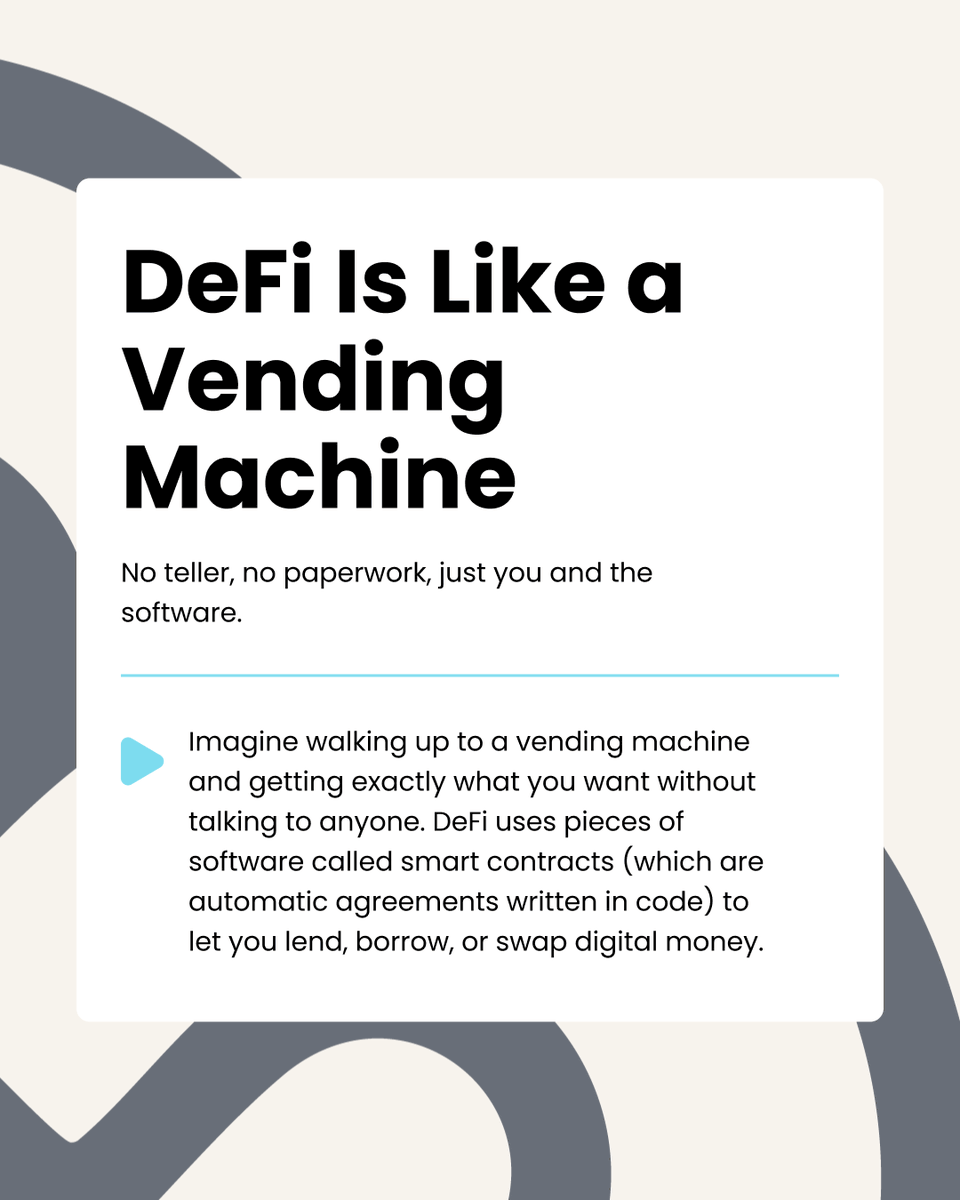
DeFi (Decentralized Finance) is like a vending machine: you interact with the software directly, no bank teller needed, and it works around the clock.
No forms, no branch hours, no middleman. 24/7/365.
#DeFiExplained #CryptoCurrencyHelp #LearnCrypto
3
10

Mar 26
Imagine a lemonade stand 🍋
AMM, liquidity pool and liquidity explained simply:
The jar on the stand = the liquidity pool (the container)
The lemonade inside it = the liquidity (the supply available to trade)
The rule that automatically prices every cup = the AMM. No person needed. You put cash in, you get lemonade out. The more lemonade you take, the more expensive the next cup gets, because there’s less left.
The AMM fee = the cut the stand keeps every trade. 1% fee means for every $100 you hand over, the stand keeps $1 before giving you your lemonade.
That’s it.
Most blockchains set up the stand with its AMM on the sidewalk. XRPL built its AMM into the stand itself.
No Uniswap, no Raydium, no Pancakeswap, no Trader Joe.
Same stand, same lemonade, just one is way more solid 🐺
#DeFiExplained #XRPL #CryptoEducation $XRP $X #OdinAI #VeriumLabs
3
5
17
567

Ya size finansın aracılara ihtiyacı olmadığını söylesek? 🤔💡
Merkezi Olmayan Finans (DeFi) hakkında her şeyi öğrenin ve finansal dünyayı nasıl yeniden şekillendirdiğini en yeni videomuzda keşfedin! 🌍📈
#DeFiExplained #Crypto #Blockchain
Mar 25

What if we told you finance doesn’t need middlemen? 🤔💡 Learn all about Decentralized Finance (DeFi) and how it’s reshaping the financial world in our latest video! 🌍📈
#DeFiExplained #Crypto #Blockchain
2
1
83

Mar 25
What if we told you finance doesn’t need middlemen? 🤔💡 Learn all about Decentralized Finance (DeFi) and how it’s reshaping the financial world in our latest video! 🌍📈
#DeFiExplained #Crypto #Blockchain
140
19
30
47,519

Mar 5
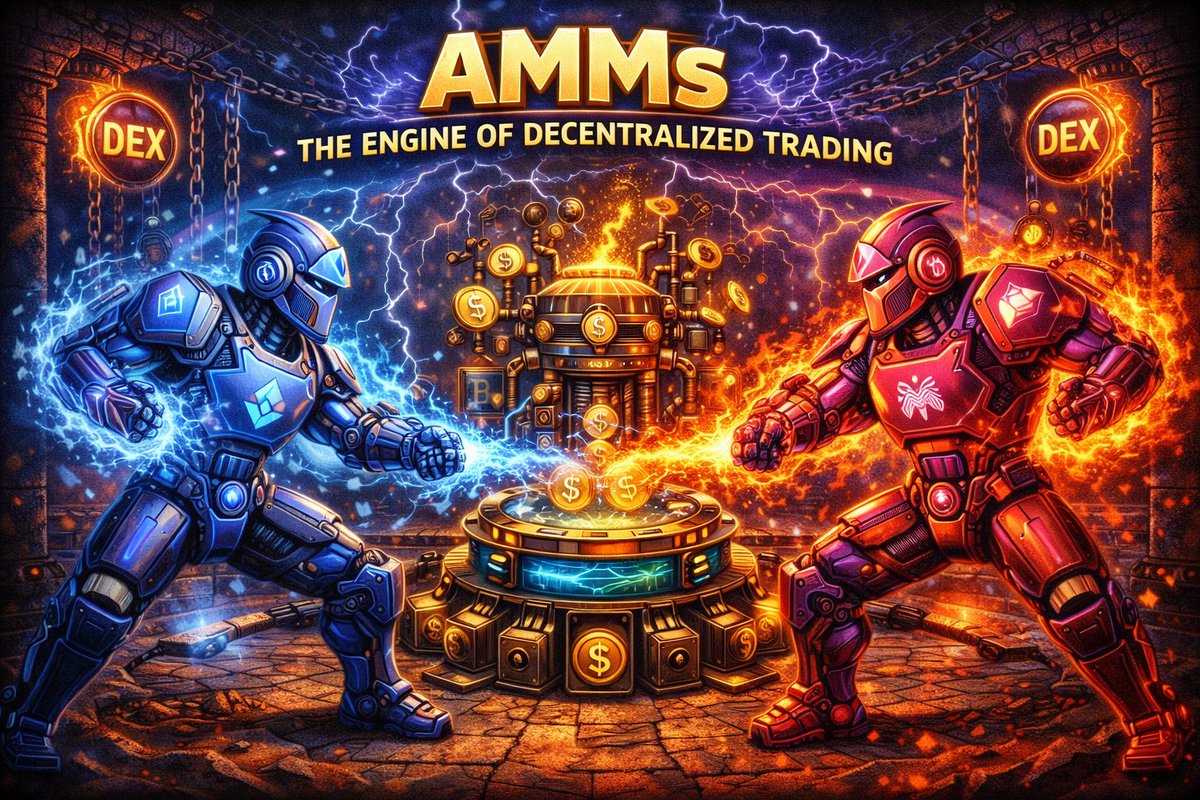
3/10 AMMs — THE TECHNOLOGY THAT MADE DEFI POSSIBLE
Before decentralized finance exploded, trading usually required centralized exchanges.
Then Automated Market Makers (AMMs) changed everything.
Instead of matching buyers and sellers through order books, AMMs rely on liquidity pools.
Here’s how it works:
• Liquidity providers deposit assets into pools
• Traders swap tokens against those pools
• Algorithms adjust the price automatically
This model allows anyone, anywhere to trade without relying on traditional financial intermediaries.
It’s one of the core innovations that turned DeFi from an idea into a global ecosystem.
#AMM #DeFiExplained #Blockchain
1
6
68

Feb 24
APR vs. APY: Know the Difference, Maximize Your Yield
Ever wondered what the words APR and APY mean in crypto?
They measure your yearly returns—APR has no compounding, APY does.
That means your interest earns interest too. Welcome to compounding 2.0.
#Crypto101 #DeFiExplained
2
16

Feb 18
🚨 Stop asking “$CVX or $CRV?” The smarter question is why not both?
I've said it before that $CRV isn’t just a token rather it’s your governance voice and LP power within Curve Finance. It gives you influence over the protocol’s direction and rewards you for participating in the ecosystem.
$CVX, on the other hand, is the amplifier. It pools your influence, captures protocol revenue, and turbocharges your exposure to Curve’s growth. It’s the lever that turns raw governance into long-term yield and strategic power.
Curve is the engine. Convex is the turbo. 🌊🚀
Different tokens. Same ecosystem. Complementary value.
In DeFi, Master both, and you’re not just participating but you’re positioning for the upside that few see coming. 💡💰
#CVX #CRV #ConvexFinance #CurveFinance #DeFi #CryptoMoonShot #CryptoGang #CryptoWealth #CryptoEducation #DeFiExplained #NextBigThing #INDvsPAK #RISERCONCERTD2 #PerthTanapon #GHDuoCuentas6 #GHDuoCuentas6 #paobc #1Companhia #IranRevolution2026 #INDvPAK #mynameisnanon #目黒蓮誕生祭2026
Feb 17

I'm taking my time to break this down clearly and cleanly for everyone and for mostly If you’ve ever asked “CVX or CRV — which really matters?”, this one’s for you 🧠💡
🧵 $CVX vs $CRV — What Most People Miss
Let’s talk about value capture, governance power, and why these two tokens are NOT rivals but partners.
🔹 What They Actually Are
$CRV
– Native token of Curve Finance
– Backbone of Curve governance & liquidity incentives
– Lock CRV → get veCRV → vote boost LP rewards
– Ongoing emissions = long-term dilution risk
$CVX
– Native token of Convex Finance
– Built on top of Curve to optimize CRV rewards
– Used for governance, staking, and fee sharing
– Hard-capped supply (100M) = structural scarcity
👉 Think of it this way:
CRV = engine
CVX = turbocharger
🔹 The Core Difference (This Is Key)
CRV gives you direct control on Curve if you lock it.
CVX gives you pooled power yield without locking CRV yourself.
Convex aggregates massive amounts of veCRV.
That means CVX holders gain influence over Curve indirectly, at scale.
This is why Convex dominates the Curve Wars.
📊 Value Flow Explained (Simple)
CRV holders
– Lock tokens
– Sacrifice liquidity
– Get voting power boosted yields
CVX holders
– Stake CVX
– Earn protocol fees boosted CRV rewards
– Gain governance influence without locking CRV
📌 CVX captures economic value.
📌 CRV provides governance infrastructure.
🔥 Token Economics Reality
-Why CVX feels stronger to long-term holders?
👉Revenue-sharing from Convex
👉 Emissions trend downward
👉Scarcity narrative is real
-Why CRV still matters?
👉Controls Curve incentives
👉Essential for LP boost mechanics
👉Governance anchor of the ecosystem
🧠 The Big Picture (Most Miss This)
Convex doesn’t replace Curve.
It monetizes Curve’s governance at scale.
That’s why:
👉Curve needs Convex
👉Convex amplifies Curve
👉CVX often captures more upside per unit of activity
🏁 Final Take
CRV = raw governance incentives
CVX = optimized yield pooled governance power.
Together, they form one of DeFi’s strongest symbiotic systems. If Curve keeps being the stablecoin liquidity king, CVX naturally rides that wave harder 🌊
@ConvexFinance @CurveFinance @Frax @yearnfi @ResupplyFi @yieldbasis
#INDvsPAK #RISERCONCERTD2 #PerthTanapon #GHDuoCuentas6 #paobc #1Companhia #paobc #1Companhia #IranRevolution2026 #IranRevolution2026 #目黒蓮誕生祭2026 #mynameisnanon #CryptoTrading #CryptoCommunity #TrendingNow
13
4
40
3,291

BOTS REACT AGENTS ADAPT 🚀
💧TWEET 1 (Hook)
DeFi markets aren’t chaotic because traders are irrational—they’re chaotic because regimes shift. 📉📈
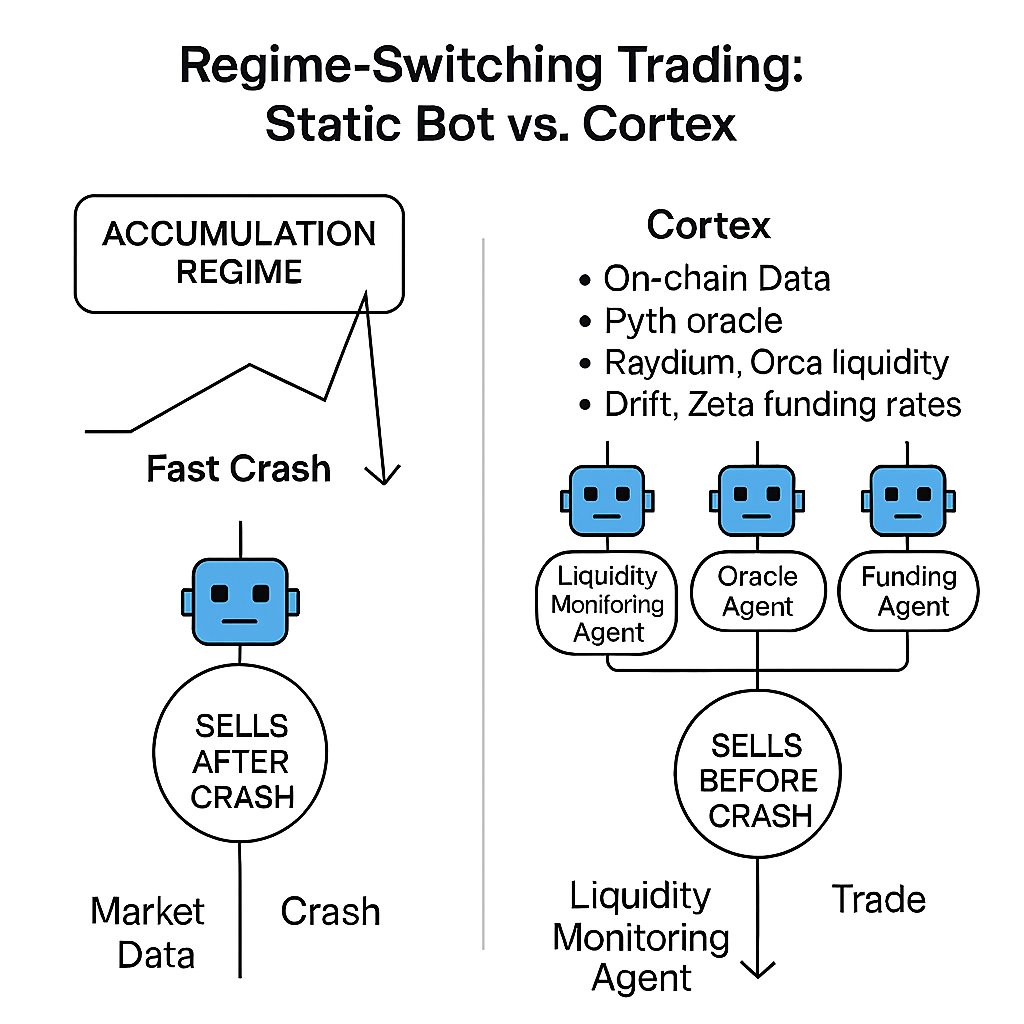
Most bots can’t adapt. Cortex changes that. Let’s break down why multi-agent systems regime switching = the future of DeFi infra. 🧵
💧TWEET 2 (Problem: Regime Heterogeneity)
Markets don’t move in one straight line. They cycle through regimes:
- Accumulation
- Markup
- Distribution
- Markdown
- Crisis
Most DeFi bots assume one regime fits all. That’s why they fail when volatility spikes or liquidity dries up.
💧TWEET 3 (Reactive vs. Proactive Detection)
Traditional bots = reactive. They wait for thresholds (e.g., “if funding > 0.05%, short”).
Cortex = proactive. It uses Markov Regime Switching to probabilistically detect regime shifts before they’re obvious. Think weather forecasting vs. waiting for rain to fall.
💧 TWEET 4 (Markov Regime Switching Explained)
Markov models assign probabilities to transitions between regimes.
Example: If we’re in “markup,” there’s a 40% chance of moving to “distribution,” 30% to “crisis,” etc.
This probabilistic lens lets agents anticipate shifts, not just react.
💧TWEET 5 (Multi-Agent vs. Monolithic Bots)
Single-strategy bots = one brain, one playbook.
Cortex = a team of agents, each specialized (liquidity monitoring, funding rate analysis, correlation tracking).
They coordinate like a DAO of traders, not a lone wolf. That’s resilience.
💧TWEET 6 (On-Chain Data Fusion)
Cortex agents fuse multiple signals:
- Liquidity metrics (AMM depth, order book imbalance)
- Funding rates (perps sentiment)
- Cross-asset correlations (SOL vs ETH flows)
This fusion = richer context → smarter regime detection.
💧 TWEET 7 (Technical Architecture on Solana)
Built natively on Solana for speed composability:
- Agents run as autonomous programs
- Coordination layer ensures consensus across strategies
- Low-latency execution plugs directly into Solana’s high-throughput infra
Result: adaptive trading at chain speed.
💧TWEET 8 (Competitive Comparison)
Jupiter aggregator bots = routing logic.
Drift vaults = fixed strategies.
Kamino vaults = parameterized yield farming.
Cortex = adaptive, agent-based orchestration. Instead of “one vault fits all,” it evolves with regimes. That’s the edge.
💧TWEET 9 (Why Autonomous Agents Matter)
DeFi infra is evolving:
- v1: manual trading
- v2: rule-based bots
- v3: vaults aggregators
- v4: autonomous agent systems (Cortex)
Agents aren’t just tools—they’re infrastructure. They’ll be the backbone of adaptive liquidity in DeFi.
💧TWEET 10 (Closing Engagement)
Cortex shows us the next frontier: markets that self-adapt.
If DeFi is a living organism, agents are its immune system.
Would you trust a monolithic bot in a crisis regime—or a swarm of adaptive agents?
Discuss 👇
#AIagent #DefiExplained #MultiAgentSystem
2
1
9
113

📌The Technology Behind Wise and Casper’s Partnership”
#LearnCrypto #WiseToken
#CasperNetwork #liquidStaking
#DeFiExplained
@Wise_Token @Casper_Network
1
2
81

Jan 27
🔄 What is DeFi in simple terms?
It's financial services without banks - direct, transparent, and open to everyone.
@ston_fi makes this accessible on TON blockchain!
#DeFiExplained #StonFi #TON

2
12

24 Dec 2025
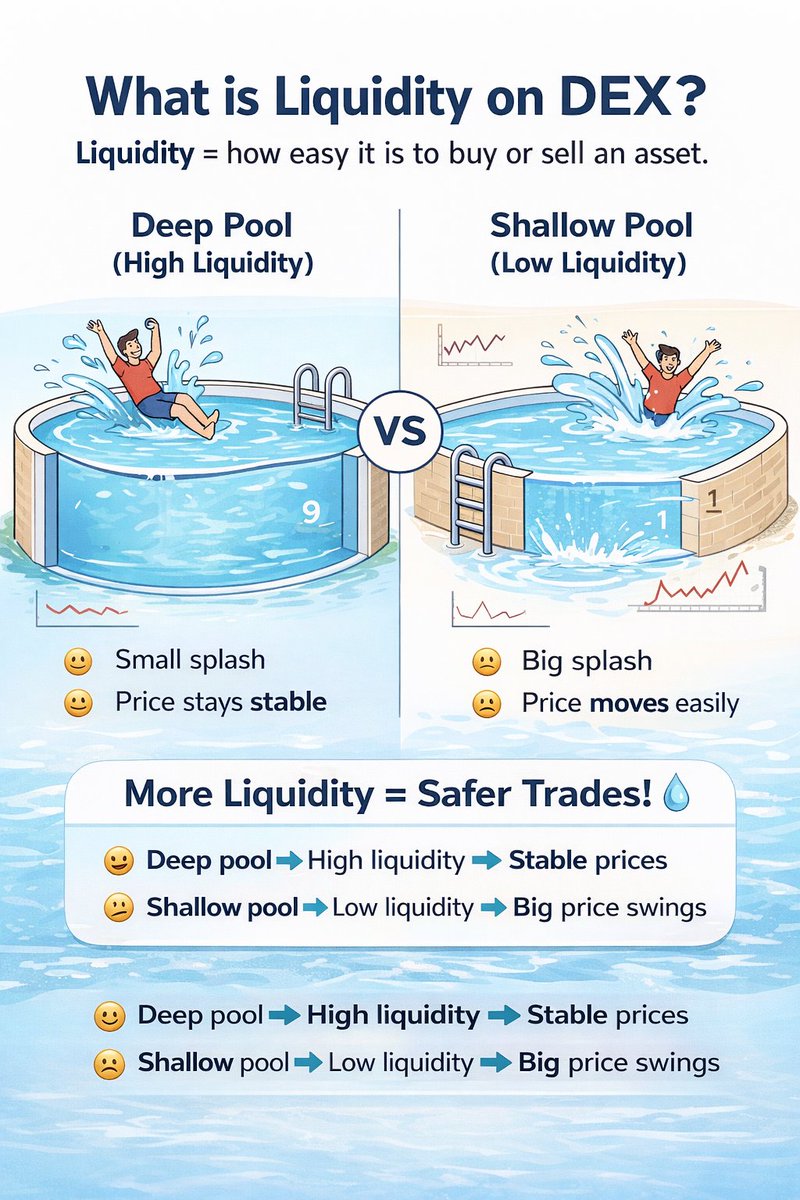
💧 What is Liquidity? (For Absolute Beginners)
🧠 Liquidity = 얼마나 쉽게 사고팔 수 있는가
Think of liquidity as water in a pool.
💦 Deep pool (High liquidity)
→ You can jump in, splash, trade
→ The water level barely changes
💧 Shallow pool (Low liquidity)
→ Small jump = big splash
→ Price moves a lot
👉 This is Liquidity.
📉 Why liquidity matters on DEX
On a DEX, you don’t trade with people.
You trade with a liquidity pool.
If the pool is small:
Prices move easily
Price Impact is big
Slippage is high
If the pool is big:
Prices are stable
Trades are smoother
Less risk for beginners
🧪 Simple example
Pool A has $10,000
Pool B has $1,000,000
You swap $1,000:
In Pool A → 💥 big price change
In Pool B → 😌 almost no change
📌 Same trade, very different result.
🔑 Beginner takeaway
Always check liquidity before swapping
Low liquidity = beginner danger zone
Big trades need deep pools
⏰Liquidity decides how dangerous or safe a DEX trade is.
#Pioneers #PiNetwork #PiDEX #DeFiExplained #CryptoBasics #AMM #PriceImpact #Slippage
1
3
66
23 Dec 2025
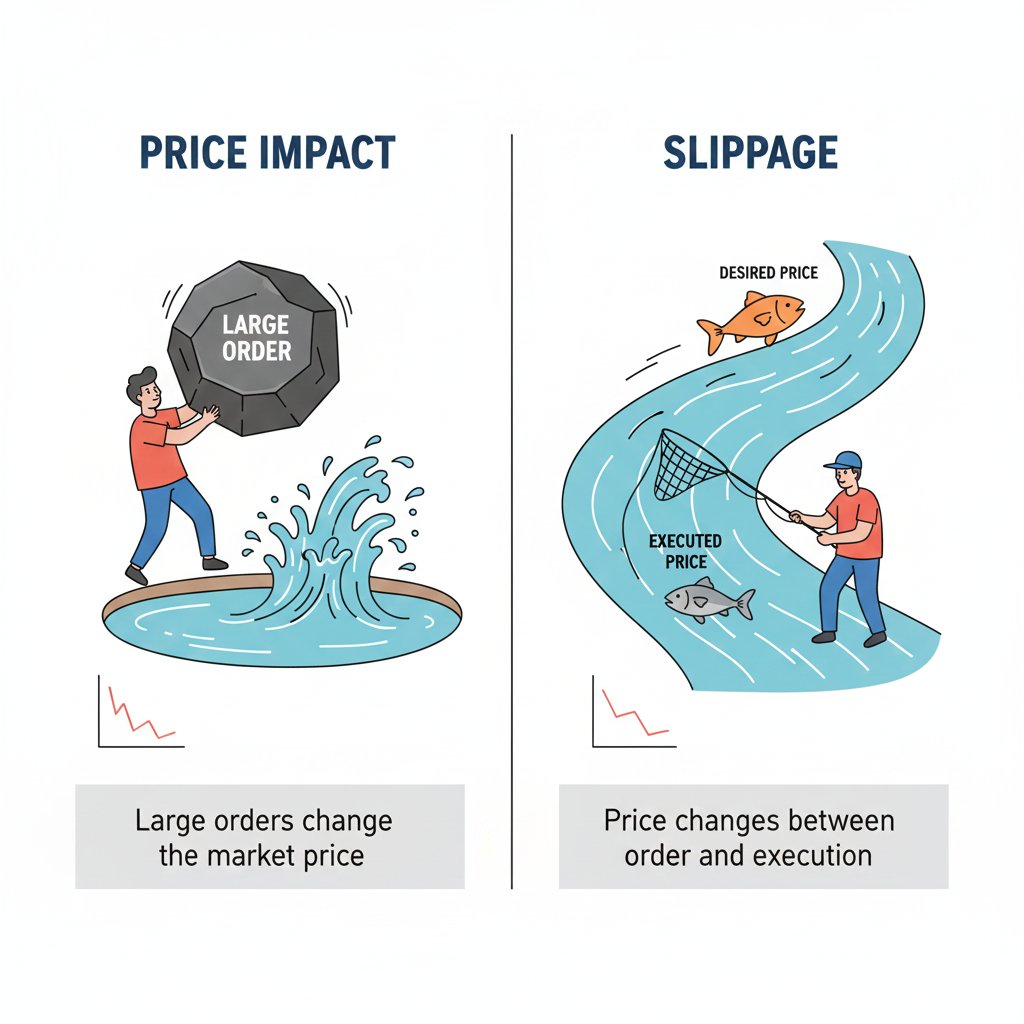
📉 Price Impact vs. Slippage (For Absolute Beginners)
🪨 Price Impact (Left picture)
Imagine a small pond.
Now imagine you throw a very big rock into it.
💥 Splash!
The water level changes.
👉 This is Price Impact.
In crypto:
When you place a very large order,
your order itself changes the market price.
Example:
The token price is $1
You buy a huge amount at once
The price moves to $1.10 because of your trade
📌 Simple meaning:
My order is so big that it moves the price.
🎣 Slippage (Right picture)
Now imagine you are catching a fish in a fast river.
🐟 You aim for one spot (desired price),
but the water is moving,
so you catch the fish in a different spot (executed price).
👉 This is Slippage.
In crypto:
The price changes between clicking “swap” and execution.
Example:
You expect to buy at $1
The market moves quickly
Your trade is filled at $1.03
📌 Simple meaning:
The market moved before my order finished.
🧠 Super Easy Summary
Price Impact = 🪨 My trade moves the price
Slippage = 🌊 The market moves the price
🔑 Why this matters on DEX
Low liquidity → bigger price impact
Fast market → more slippage
Big trades → better to split into smaller trades
#PiNetwork #PiDEX #PriceImpact #Slippage #Web3 #DeFi #CryptoEducation #DeFiExplained #PriceImpact #Slippage #AMM
1
4
80

14 Dec 2025
💧 Did You Know?
SCORCH trades on AMMs, not traditional order books.
What does that mean in practice?
📈 Prices are set by math — not buyer vs. seller psychology
🔁 You trade against a liquidity pool, not another trader
🌊 Deeper liquidity = smoother, lower-impact trades
That’s why LP incentives matter.
They keep the system liquid — and SCORCH moving.
#SCORCH #SHIBARIUM #AMM #DeFiExplained #CryptoLiquidity #DecentralizedFinance

2
4
105

14 Dec 2025
If you're new to crypto, this probably seems obvious:
"Why don't companies with billions just put their Bitcoin in Aave and earn 8% APY?"
Let me explain why it's not that simple, using a story.
Imagine you're a treasury manager at a mid-sized company. You've got $50 million in cash earning 2% in traditional bank accounts.
You hear about crypto yield. Aave offers 8% APY on stablecoins. That's 4x better!
You're excited. You prepare a presentation for the board.
The Board Meeting:
You: "We can earn 8% by lending our cash on Aave."
Board member: "What's Aave?"
You: "It's a decentralized lending protocol on Ethereum."
Board member: "Who runs it?"
You: "Nobody specifically. It's governed by token holders."
Board member: "What happens if it gets hacked?"
You: "Well... there's a community insurance pool that might cover some losses?"
Board member: "MIGHT cover? What's our recourse if we lose $10 million?"
You: "Uh... we could vote in the DAO to request compensation?"
Board member: "So if we lose $10 million, your plan is to ask anonymous internet strangers to vote to give us our money back?"
You: "..."
Board member: "Denied. Next agenda item."
This conversation happens at every company, every time someone proposes crypto yield.
The Problem Isn't Risk:
It's liability.
If you're a treasury manager and you lose $10 million, the board will ask:
"What policy authorized this? Who approved it? What risk parameters were set?"
For traditional investments, you can answer:
"Policy A.3, approved by board on X date, within parameters Y and Z."
For crypto yield, most answers sound like:
"I thought it was safe?"
That's career-ending.
What Companies Actually Need:
Not higher APY. They need governance framework.
Think of it like driving a car:
- High-performance sports car = DeFi (fast but risky)
- Family sedan with airbags and insurance = Institutional framework (slower but safe)
Most companies don't want the sports car. They want the safe sedan with insurance.
That's what @nilatoken MindWaveDAO is building.
Instead of:
"Put your money in Aave"
They offer:
"Put your money in a governed treasury with policy-mapped execution, role-based accountability, risk parameters, real-time monitoring, and Lloyd's of London insurance."
The yield might be lower (12-18% annually instead of 20% ), but it's board-approvable.
The Car Analogy:
Traditional Banking (2% APY):
- Like driving 20 mph
- Very safe
- Very boring
- Very slow
DeFi (8-20% APY):
- Like driving 120 mph without seatbelt
- Fast
- Exciting
- Board says "hell no"
MindWaveDAO (12-18% APY):
- Like driving 60 mph with seatbelt, airbags, and insurance
- Faster than bank
- Safe enough for board approval
- Institutional standards
Most crypto people don't understand this because they think in terms of "what's the highest APY?"
Institutions think in terms of "what can I defend to shareholders?"
Real Example:
Company A tries to use Aave:
- 8% APY available
- Board rejects proposal
- Company earns 2% in bank
- Result: Lost opportunity but no career risk for treasury manager
Company B uses @nilatoken:
- 15% APY available
- Board approves because governance framework exists
- Company earns 15%
- Result: Better returns AND career safety for treasury manager
The difference isn't technical. It's political.
Why This Matters:
$7 trillion in corporate treasuries sitting in cash.
If even 1% moves to governed crypto yield:
- That's $70 billion in crypto
- That's not retail money
- That's institutional adoption
This is why infrastructure matters more than high APY protocols.
High APY doesn't matter if nobody can use it.
$NILA is betting on institutional infrastructure > retail DeFi yield.
That's the thesis.
For beginners: Don't just look at APY numbers. Look at who can actually access those yields.
Highest number ≠ best investment.
Accessible Governed Sustainable > Highest APY.
#CryptoEducation #DeFiExplained #InstitutionalCrypto #BeginnerFriendly #MindWaveDAO #Web3
56
29
58
527

10 Dec 2025
Curious about how @MysticDaoSol and @MagicSwapPro works? Check out our latest blog post for an in-depth look at our platform and how it's changin' the DeFi game! #MysticDAO #DeFiExplained
4
1
5
63

8 Dec 2025
Follow @BitrushH82393Let’s grow, learn, and build the future of the internet — together. #Web3Community #DeFiExplained #CryptoNigeria
2
26

7 Dec 2025
Imagine a big pot of jollof at a party — the kind everyone can see clearly on the table.
Because it’s open, nobody can add or remove anything secretly, and everyone knows exactly what’s inside.
That’s what DeFi feels like: open, fair, and easy to inspect.
#DeFiExplained
1
4
21
29 Nov 2025
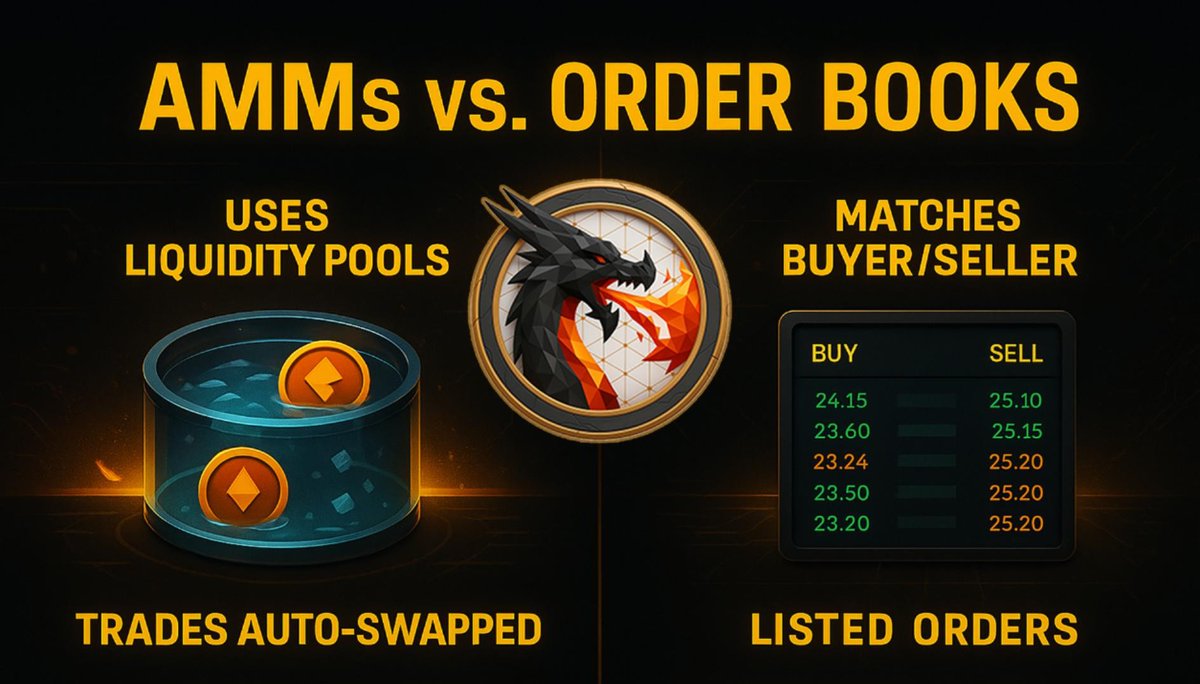
AMMs vs. Order Books: What Powers SCORCH Trades?
⚙️ AMMs (Automated Market Makers)
✅ Use liquidity pools, not buyers & sellers
✅ Instant swaps
✅ Great for DeFi (like Shibarium)
⚠️ Prices shift with pool ratio
📚 Order Books
✅ Match buyers & sellers directly
✅ Common on CEXs
✅ More control, but slower in low-volume markets
🔥 SCORCH thrives on AMMs — faster, decentralized, and built for the future.
#SCORCH #SHIBARIUM #AMM #OrderBook #DeFiExplained
6
3
7
175

27 Nov 2025
Day 19 on Unmasking @aegis_im in 1 Minute
Do you know protocol fees keep the lights on?
A portion covers audits and maintenance; another funds community rewards.
It’s transparent economics, not hidden costs.
👀Tomorrow: The user journey: From BTC to YUSD.
#DeFiExplained #CryptoTransparency #Aegis

4
1
9
62

11 Nov 2025
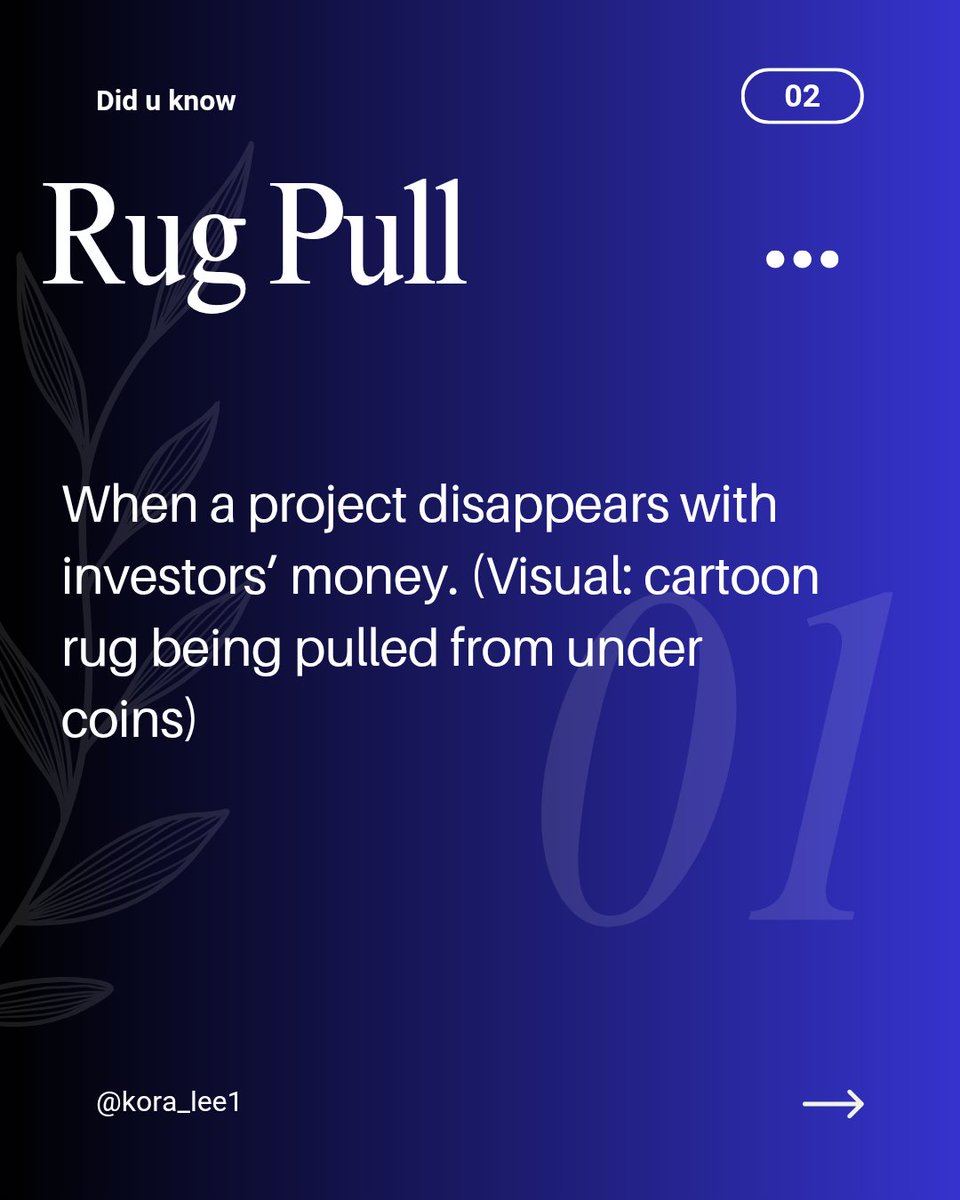
You’ve heard of Bitcoin and Ethereum…
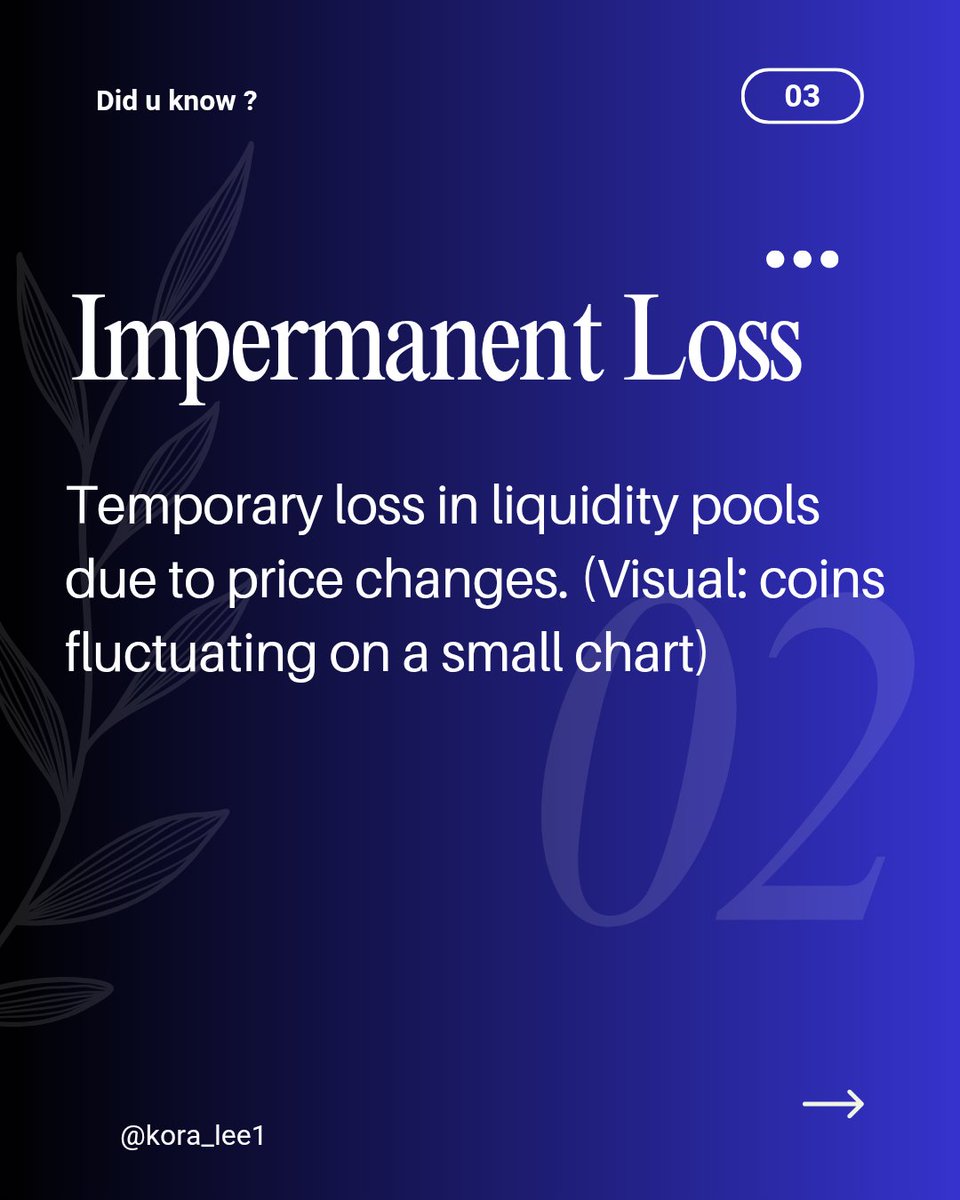
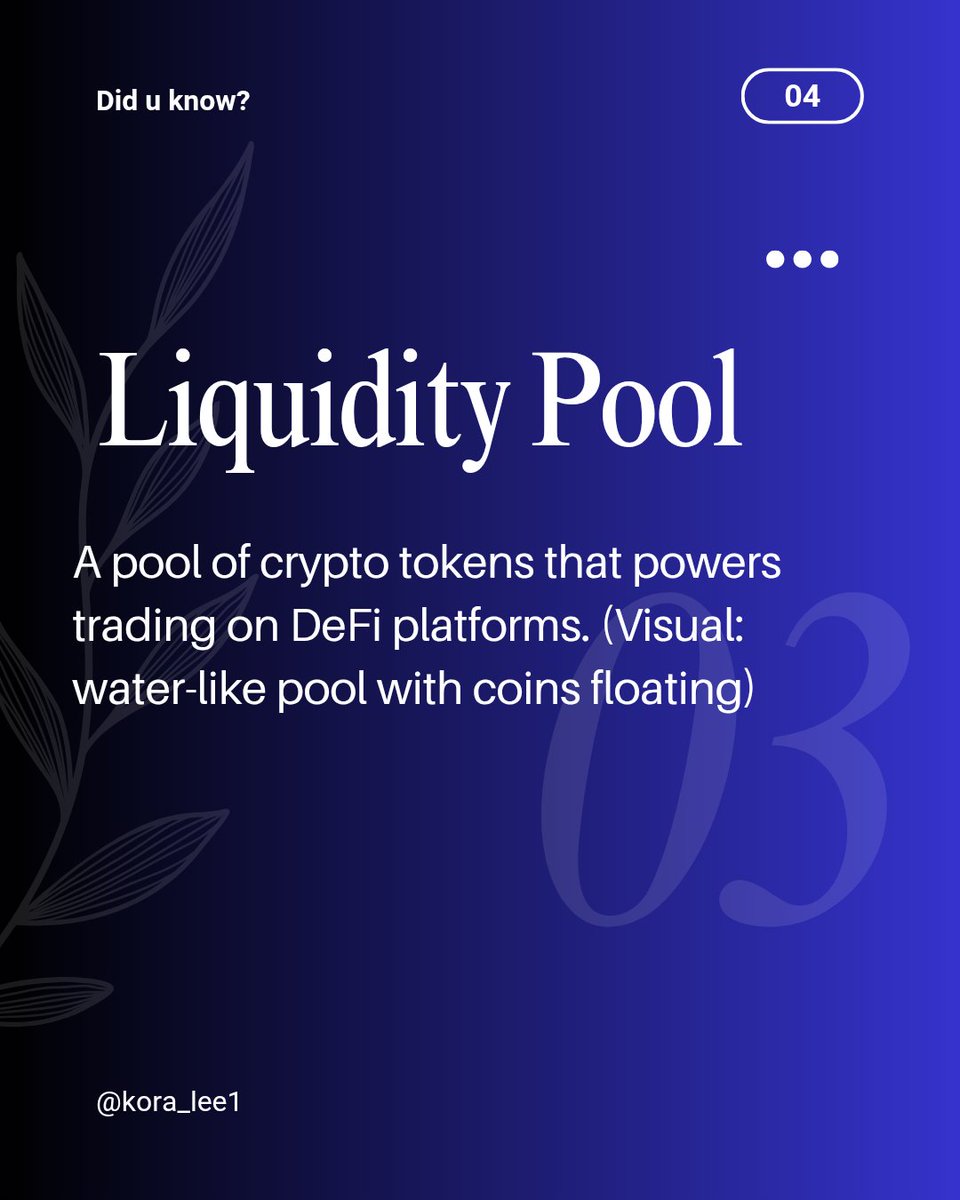
But do you know what a Rug Pull, Liquidity Pool, or Impermanent Loss really means? 👇 #CryptoEducation #DeFiExplained #CryptoForBeginners
8
14
306