
Jun 10
2

24/25 𝗚𝗟𝗜𝗡𝗧: 𝗦𝗽𝗮𝗿𝘀𝗲𝗹𝘆 𝗚𝗮𝘁𝗲𝗱 𝗩𝗶𝘀𝗶𝗼𝗻-𝗟𝗮𝗻𝗴𝘂𝗮𝗴𝗲 𝗔𝗹𝗶𝗴𝗻𝗺𝗲𝗻𝘁 𝗳𝗼𝗿 𝗙𝗶𝗻𝗲-𝗚𝗿𝗮𝗶𝗻𝗲𝗱 𝗥𝗮𝗱𝗶𝗼𝗹𝗼𝗴𝘆 𝗥𝗲𝗽𝗿𝗲𝘀𝗲𝗻𝘁𝗮𝘁𝗶𝗼𝗻𝘀
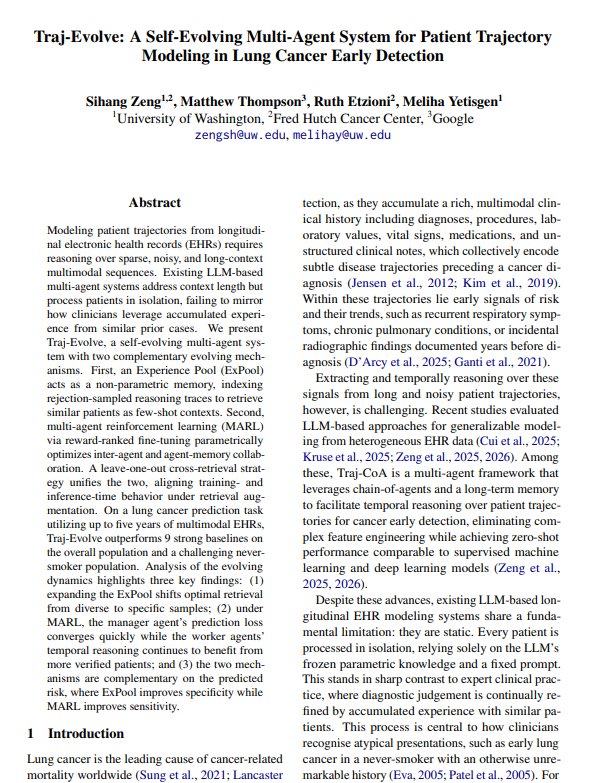
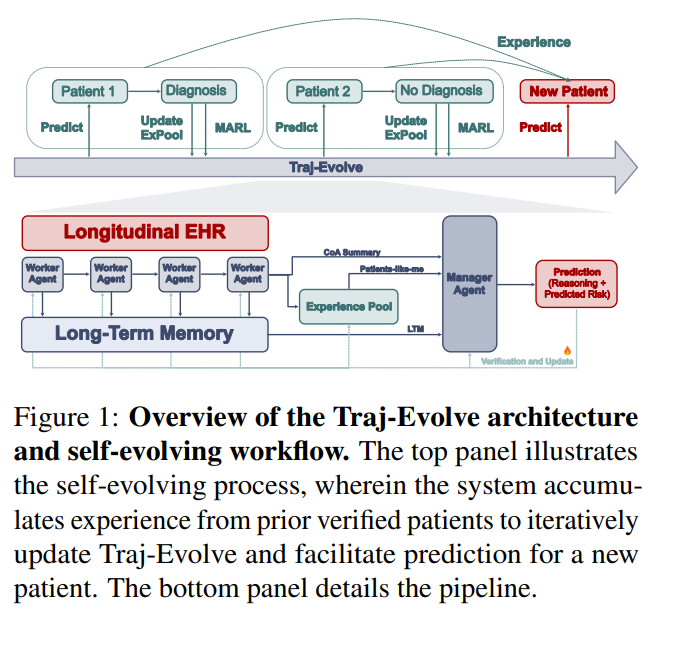
This paper introduces Traj-Evolve, a self-evolving multi-agent system designed to model patient trajectories from sparse, noisy, and long-context multimodal EHRs by leveraging an Experience Pool (ExPool) for retrieving similar patient experiences and multi-agent reinforcement learning (MARL) for optimizing inter-agent and agent-memory collaboration. It outperforms 9 strong baselines on a lung cancer prediction task using up to five years of EHRs, with analysis showing ExPool improves prediction specificity and MARL enhances sensitivity.
#TrajEvolve #PatientTrajectory #EHRs #MultiAgentSystem #MedicalAI #ReinforcementLearning
Paper Link: arxiv.org/abs/2606.02812
1
39

✍️New featured Title Story in @Systems_MDPI
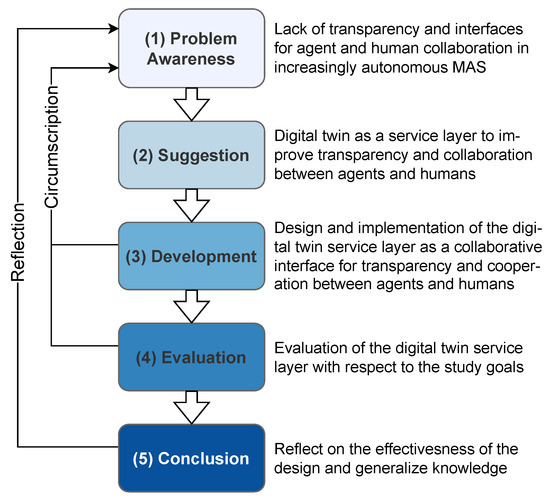
From Automation to Autonomy: A #DigitalTwin Framework for Transparent Agent and Human Collaboration in Industrial Multi-Agent Systems by authors from @dlr_musc
👉brnw.ch/21x0vdK
#AutonomousSystem #MultiAgentSystem
1
38

Mar 23
We built a 3-agent system using OpenClaw that actually gets smarter over time. No cloud, no external dependencies, no reset button.
The Setup (nuts & bolts)
One Boss agent — the brain. It decides the highest-ROI actions each cycle.
Two slave agents — one desktop-focused (Playwright browser), one ASUS-focused (local execution). They do the heavy lifting.
Everything syncs through a shared OneDrive folder — dead simple, no Redis/RQ needed. Works flawlessly on Windows too.
Boss uses Grok as final quality gate, with Groq as fast fallback for polish.
Both Boss and slaves run self-critique loops — every output gets scored 1–10 and revised until 9 .
Memory layer: ChromaDB nomic-embed-text embeddings (via Ollama) — local vector DB, no cloud.
How the Memory Actually Works
Boss has a central memory bank that stores every polished win (vectorized output metadata).
Each slave has its own independent memory — remembers its specific strengths, past tasks, and failures.
Before every decision or execution, agents query their memory for similar past wins → pulls context automatically.
The shared playbook lives in memory too — both Boss and slaves reference/update it.
Why Memory Changes the Workflow
Without it, every task starts from zero — classic forgetful AI problem.
With persistent memory: agents reference real past performance, avoid repeating mistakes, and get noticeably sharper over days/weeks.
Self-critique memory means outputs keep improving without manual intervention.
Result: the whole team compounds knowledge — not just executes instructions.
We trained in continuous mode for weeks (522 high-quality wins stored), then switched to production mode (manual/scheduled runs only).
This isn’t flashy — it’s the difference between agents that reset and agents that actually evolve.
If you’re building locally, memory isn’t optional anymore. It’s the line between toy and tool.
What’s your current memory setup like? Or the biggest pain point you’re hitting without it? Drop it below — always good to hear real workflows.
#AIAgents #VectorMemory #MultiAgentSystem #AIAgency

1
1
2
472

Listen, need suggestions - I was working on building AI Agentic workforce for the past 1 month and now Perplexity Computer looks eerily similar to it. What are my options going forward? #aiagents #multiagentsystem #ai #needadvice #VentureCapital #SiliconValley
1
3
73

BOTS REACT AGENTS ADAPT 🚀
💧TWEET 1 (Hook)
DeFi markets aren’t chaotic because traders are irrational—they’re chaotic because regimes shift. 📉📈
Most bots can’t adapt. Cortex changes that. Let’s break down why multi-agent systems regime switching = the future of DeFi infra. 🧵
💧TWEET 2 (Problem: Regime Heterogeneity)
Markets don’t move in one straight line. They cycle through regimes:
- Accumulation
- Markup
- Distribution
- Markdown
- Crisis
Most DeFi bots assume one regime fits all. That’s why they fail when volatility spikes or liquidity dries up.
💧TWEET 3 (Reactive vs. Proactive Detection)
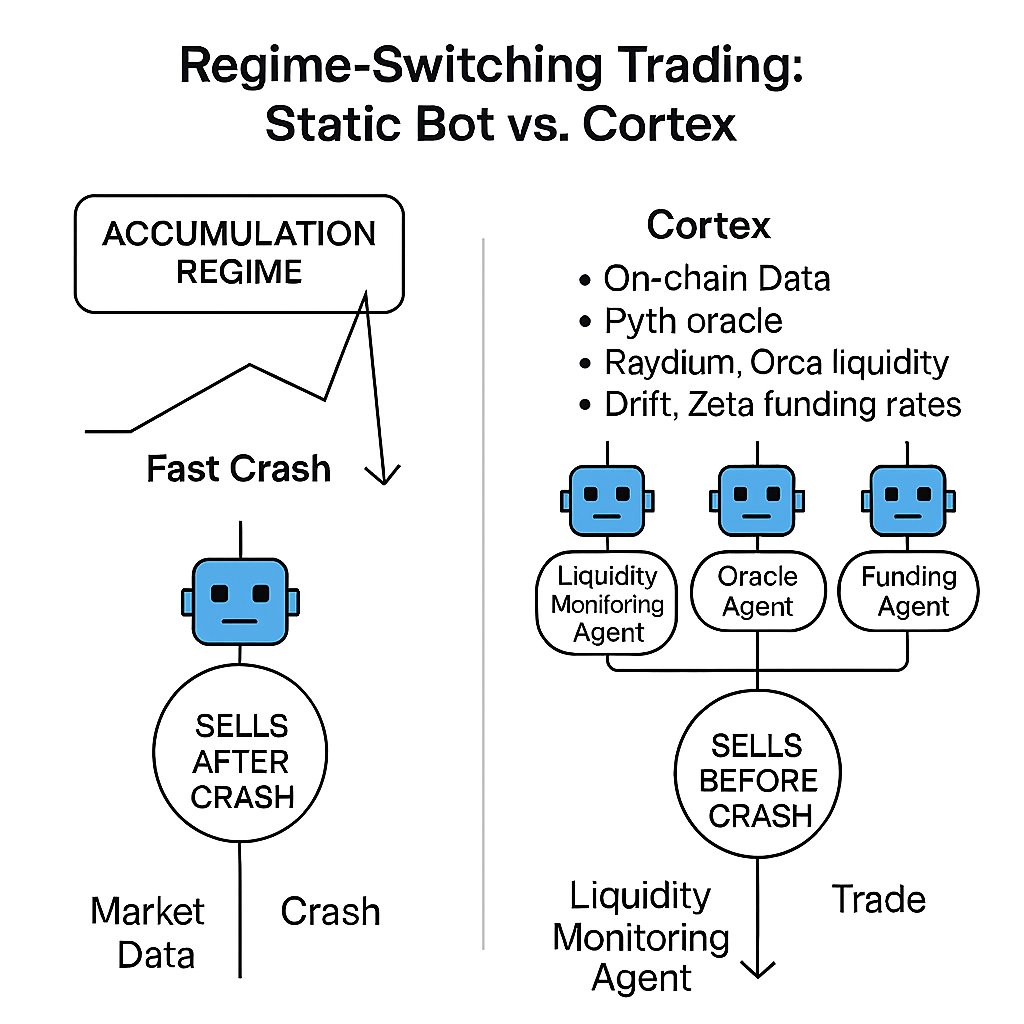
Traditional bots = reactive. They wait for thresholds (e.g., “if funding > 0.05%, short”).
Cortex = proactive. It uses Markov Regime Switching to probabilistically detect regime shifts before they’re obvious. Think weather forecasting vs. waiting for rain to fall.
💧 TWEET 4 (Markov Regime Switching Explained)
Markov models assign probabilities to transitions between regimes.
Example: If we’re in “markup,” there’s a 40% chance of moving to “distribution,” 30% to “crisis,” etc.
This probabilistic lens lets agents anticipate shifts, not just react.
💧TWEET 5 (Multi-Agent vs. Monolithic Bots)
Single-strategy bots = one brain, one playbook.
Cortex = a team of agents, each specialized (liquidity monitoring, funding rate analysis, correlation tracking).
They coordinate like a DAO of traders, not a lone wolf. That’s resilience.
💧TWEET 6 (On-Chain Data Fusion)
Cortex agents fuse multiple signals:
- Liquidity metrics (AMM depth, order book imbalance)
- Funding rates (perps sentiment)
- Cross-asset correlations (SOL vs ETH flows)
This fusion = richer context → smarter regime detection.
💧 TWEET 7 (Technical Architecture on Solana)
Built natively on Solana for speed composability:
- Agents run as autonomous programs
- Coordination layer ensures consensus across strategies
- Low-latency execution plugs directly into Solana’s high-throughput infra
Result: adaptive trading at chain speed.
💧TWEET 8 (Competitive Comparison)
Jupiter aggregator bots = routing logic.
Drift vaults = fixed strategies.
Kamino vaults = parameterized yield farming.
Cortex = adaptive, agent-based orchestration. Instead of “one vault fits all,” it evolves with regimes. That’s the edge.
💧TWEET 9 (Why Autonomous Agents Matter)
DeFi infra is evolving:
- v1: manual trading
- v2: rule-based bots
- v3: vaults aggregators
- v4: autonomous agent systems (Cortex)
Agents aren’t just tools—they’re infrastructure. They’ll be the backbone of adaptive liquidity in DeFi.
💧TWEET 10 (Closing Engagement)
Cortex shows us the next frontier: markets that self-adapt.
If DeFi is a living organism, agents are its immune system.
Would you trust a monolithic bot in a crisis regime—or a swarm of adaptive agents?
Discuss 👇
#AIagent #DefiExplained #MultiAgentSystem
2
1
9
113

10 Dec 2025
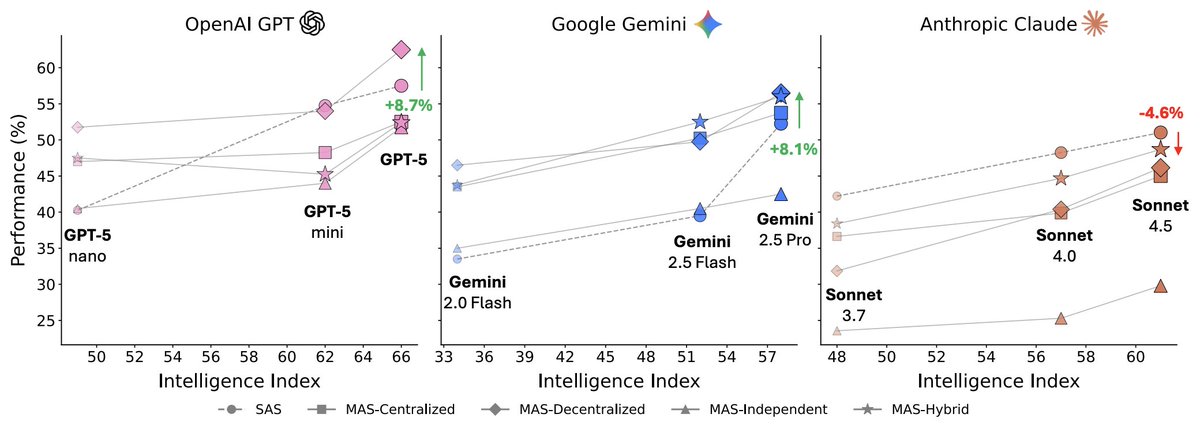
🤖 When and Why do we want to use Multi-Agent System (MAS) over Single-Agent System (SAS)?
Excited to share our research at Google Research & DeepMind: "Towards a Science of Scaling Agent Systems"
📄 Paper: lnkd.in/e325up7S
#multiagentsystem #agentscaling #agents #llm
5
3
6
656

26 Nov 2025
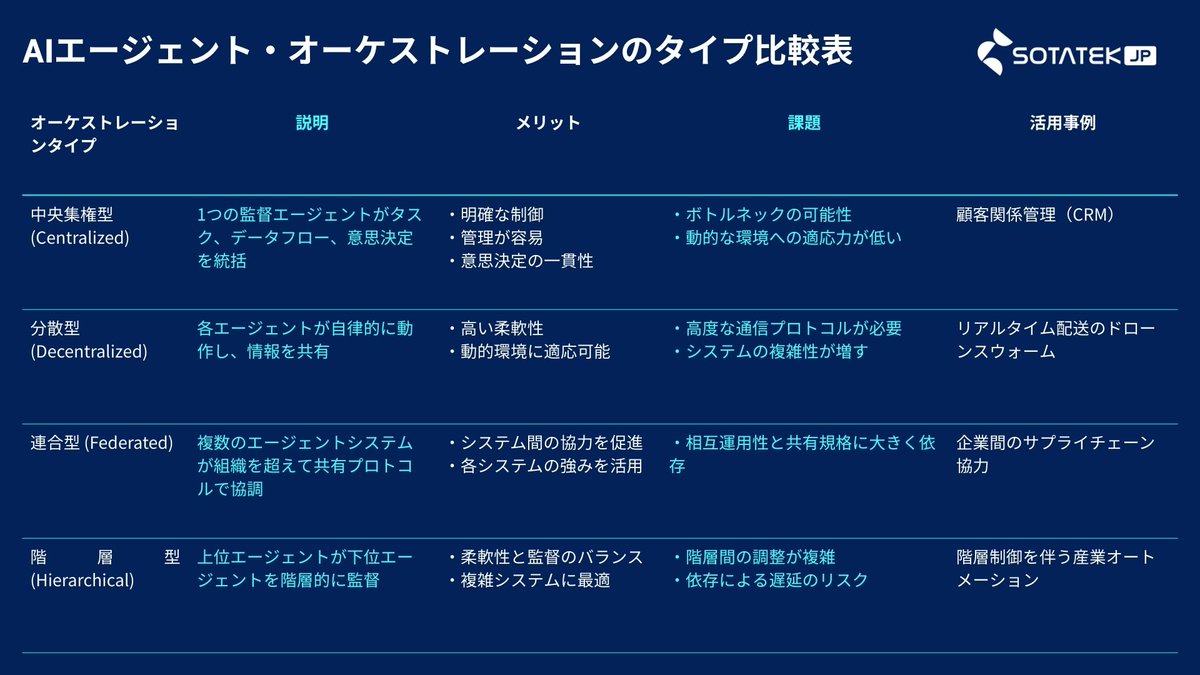
💡マルチエージェント システムにおけるAIエージェントのオーケストレーションの役割
📊AIエージェント・オーケストレーションのタイプ比較表も公開中
👉詳細記事:sotatek.com/jp/blogs/buildin…
#SotaTek #SotaTekJapan #AIエージェント #AI #AIAgent #MAS #マルチエージェントシステム #MultiAgentSystem
1
2
56

6 Nov 2025
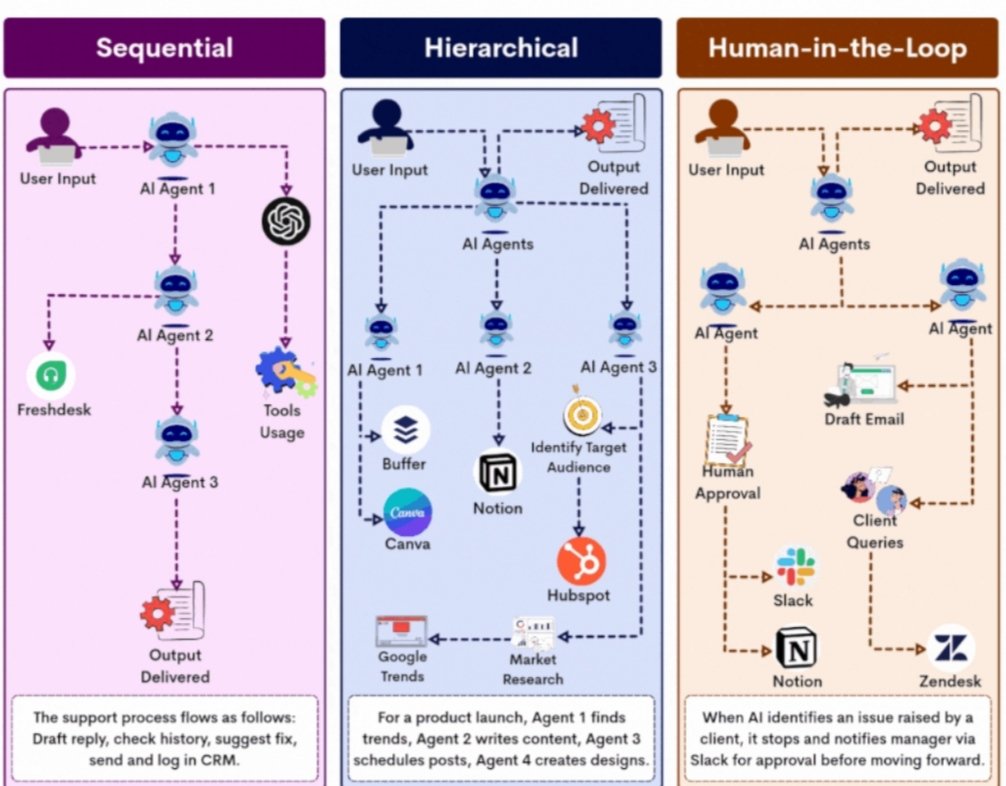
How Multi-Agent Systems Succeed or Fail - Do the Architecture Matters?
The Hidden #AIArchitecture Behind Every #MultiAgentSystem: Success or Failure?
What if the very design of your multi-agent system is the silent force that decides its fate?
3
57

24 Oct 2025
Discover @infinityg_ai: Where AI Meets Web3 Creation
🧠 Build with AI: Turn ideas into live dApps & games using just natural language. No coding needed.
🛒 Monetize Your Creations: Launch & sell AI tools in their decentralized App Store with true ownership.
⛓️ Trade Seamlessly: Buy/sell NFTs across any chain in one secure, AI-powered marketplace.
💎 Powered by $AIN: Fueled by a token with staking, governance, and deflationary burns.
✅ Proven Track Record: 16M wallets, backed by @AnimocaBrands & @nvidia.
They're not just building tools, they're building the future of open, creator-owned digital economies.
#AIN #InfinityG_AI #AIinWeb3 #DecentralizedIntelligence #MultiAgentSystem #FutureOfAI #CryptoInnovation

24 Oct 2025

This is arguably the most complete vision for the creator-centric Web3 economy I've seen. It connects the dots from idea to income in a way that actually makes sense.
Let's break down why this is so powerful:
🛠️ The Tool: No-Code AI
The Agentic IDE removes the single biggest barrier to entry: complex code. Turning natural language into live dApps is like giving every creative person a master developer as a co-pilot.
🏪 The Marketplace: True Ownership
The AI App Store is the game-changer. It creates a direct, open economy for creators. Build a useful AI tool, launch it, and monetize it with true ownership. This is the antithesis of the walled-garden app store model.
💎 The Economy: Aligned Incentives
The $AIN token isn't just a fee mechanism; it's the glue. Staking, governance, and burns create a circular economy where participants are also owners. The backing from Animoca & NVIDIA adds immense credibility.
The Big Picture:
They aren't just building another platform; they're building a factory for the on-chain economy. They provide the raw materials (AI IDE), the storefront (App Store), and the currency $AIN.
This is how you move from speculative assets to a thriving ecosystem of utility and creativity. The 16M wallets are just the beginning.
What's the first AI tool you would build and launch?
33
19
30
1,024

21 Oct 2025
Imagine a world where building decentralized applications doesn’t require coding skills, but just your idea expressed in natural language. This is exactly what @infinityg_ai is delivering with its groundbreaking decentralized #AgenticIDE — the world’s first platform where AI agents collaborate to transform simple descriptions into fully functional, scalable blockchain apps. Sounds like sci-fi? It’s real and evolving fast.
Turbocharging Decentralized Development
Unlike traditional blockchain platforms, InfinityGround tackles the core challenges of complexity and access. Its multi-layer #architecture includes Application, Execution, Data, Model, and Hosting layers, ensuring secure, decentralized, and high-performance operations. Each layer works seamlessly, orchestrated by AI to automate app creation from logic to deployment.
Key Features: AI as Your Co-Developer
#NaturalLanguageProgramming: Simply describe your app’s purpose, and AI agents generate the frontend, backend, and smart contracts autonomously.
#MultiAgentSystem: Multiple AI entities plan, code, debug, and optimize workflows in parallel, accelerating development cycles.
#OpenRemixCulture: Every app is modular and open-source, encouraging inspection, modification, and forking — fueling rapid innovation.
#DecentralizedOwnership: True on-chain ownership and self-custodial hosting empower creators with full control and transparent revenue sharing through native $AIN token.
Ecosystem Integration: Decentralized, Open, Collaborative
By connecting creators, developers, and users in a vibrant marketplace, InfinityGround enables direct monetization and collaborative app evolution. The platform’s AI-driven marketplace streamlines distribution and incentivizes community contributions, redefining #Web3 creativity and cooperation.
A Glimpse into the Future
Picture describing your groundbreaking idea in a sentence and instantly having a fully deployed decentralized app with governance, payments, and AI-driven adaptability at your fingertips. This vision is no longer distant — it’s happening now with InfinityGround leading the way into the AI-native web3 era.
#InfinityGround #AIN #Web3 #AI #NoCode #Blockchain #Decentralization #Innovation #AgenticIDE
20 Oct 2025

The future of #Web3 development is here, and it doesn't involve writing a single line of code. 🤯
Meet @infinityg_ai , the project shattering the barrier between idea and on-chain reality. Their revolutionary Agentic IDE lets you build dApps—games, DeFi, social platforms—simply by describing your vision in natural language.
⚡️
This is built for the "Vibe Coders"—the artists, entrepreneurs, and creators who have the vision but not the coding skills. If you can dream it, you can now build it. The platform is powered by a robust three-pillar system: a decentralized AI IDE, an AI App Store for monetization and remixing, and the scalable ING Network (a custom L2) for fast, low-cost transactions.
🧠
This isn't just a concept. It's a powerhouse project backed by $2.2M from industry giants like @animocabrands and @kucoinventures. The team is stacked with talent from Google, Disney, TikTok, and Goldman Sachs, bringing elite expertise from tech, finance, and entertainment.
💰
The $AIN token fuels the entire ecosystem, enabling payments, staking, governance, and access to premium features. With a deflationary model that includes strategic token burns, it's designed to create long-term value and scarcity.
🚀
InfinityGround is not just another tool; it's a movement to empower the next billion creators and redefine the future of the decentralized internet.
#AI #Web3 #Crypto #Blockchain #DeFi

2
1
16
288

8 Oct 2025
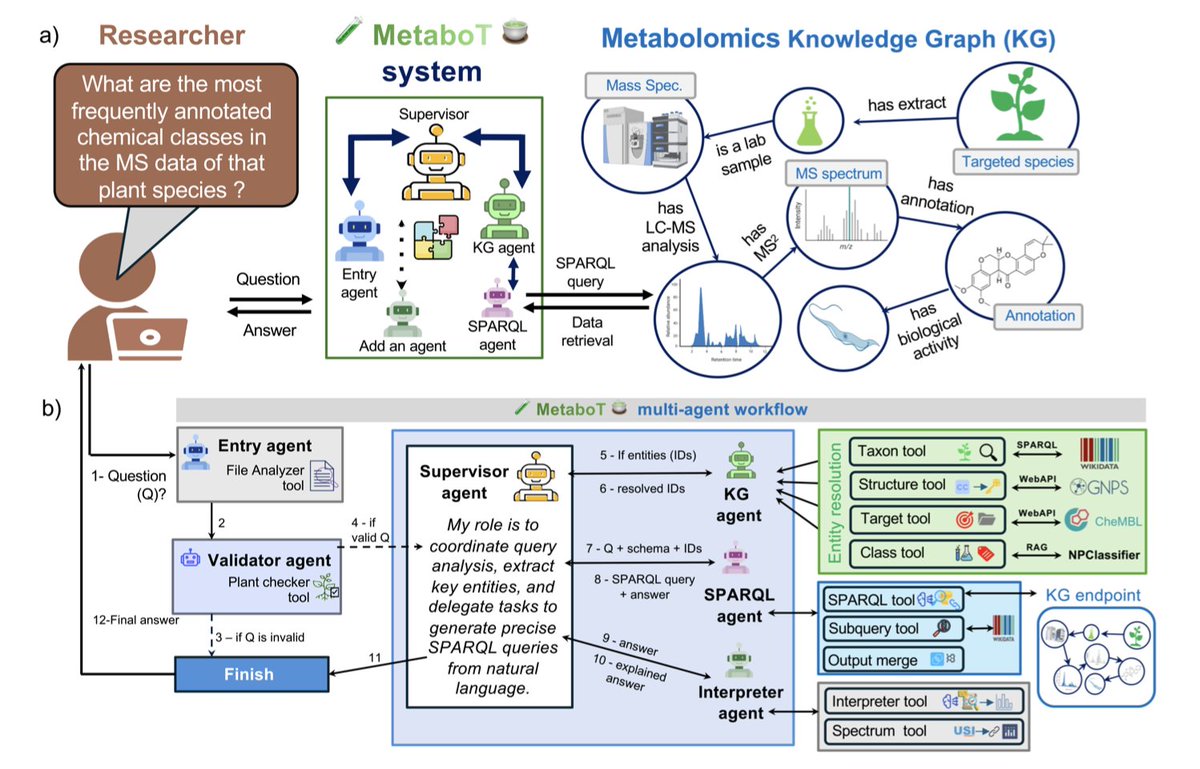
MetaboT: An LLM-based Multi-Agent Framework for Interactive Analysis of Mass Spectrometry Metabolomics Knowledge
1. MetaboT introduces a novel multi-agent framework that leverages Large Language Models (LLMs) to convert natural language questions into precise SPARQL queries, enabling intuitive and efficient navigation of complex metabolomics knowledge graphs. This innovation significantly lowers the barrier for researchers without extensive programming skills to explore and analyze mass spectrometry metabolomics data.
2. The framework stands out for its modular design, which allows for straightforward extension to other mass spectrometry-based knowledge graphs and compatibility with different LLM models. This flexibility ensures that MetaboT can adapt to the rapidly evolving landscape of LLMs and integrate new capabilities seamlessly.
3. MetaboT's performance was rigorously validated on a large plant dataset with 50 representative queries. The results demonstrated a substantial improvement in SPARQL query accuracy when using the multi-agent system compared to single-LLM baselines, highlighting the effectiveness of the coordinated functioning of specialized agents in mitigating LLM limitations such as hallucinations.
4. A notable feature of MetaboT is its iterative refinement loop, which distinguishes between query construction errors and genuine data absence. This mechanism reduces manual debugging efforts and enhances user confidence by automatically reformulating and re-executing queries when necessary.
5. The system's architecture includes a flexible pipeline that manages entity resolution, query processing, and iterative refinement. Specialized agents and tools are employed for tasks such as verifying the presence of plant species in curated databases, resolving entity identifiers through authoritative sources, and generating executable SPARQL queries aligned with the knowledge graph's schema.
6. MetaboT's web application interface prioritizes usability, capturing natural language questions and displaying results while managing the backend processing. Current features include file uploads, visualizations, and a SpectrumPlotter module for integrating Metabolomics USIs to render spectrum plots.
7. Future developments aim to address limitations such as the current restriction to single-graph querying and the computational cost associated with multiple LLM API calls. The vision is to evolve MetaboT into a comprehensive toolbox for mass spectrometry data analysis by integrating agents for common computational metabolomics approaches and expanding interoperability with other tools.
📜Paper: arxiv.org/abs/2510.01724
💻Code: github.com/HolobiomicsLab/Me…
#MetaboT #LLM #MultiAgentSystem #MassSpectrometry #Metabolomics #KnowledgeGraphs #SemanticDataIntegration #ComputationalBiology
4
17
1,274

3 Oct 2025
Most people think the future of AGI will be decided in boardrooms at OpenAI or Anthropic.
But what if the real story is being written in open code, by thousands of builders worldwide? 🌍
gSenti! Did you know… 🤔👇
S ➡ Some of the best tech ever (Linux, Android, Kubernetes) started open-source
E ➡ Every time, open systems beat the closed ones
N ➡ Now AGI is here, but most labs keep it locked in black boxes
T ➡ The twist: Sentient flips it — open, community-owned, global
I ➡ Inside the GRID: 110 partners, agents, models, data, compute
E ➡ Everyone can join, stake $SENT, build tools, earn together
N ➡ No more waiting for one company’s update — growth is community-driven
T ➡ The real Linux moment for AI is happening right now
That’s why I believe @SentientAGI isn’t just tech —
it’s the heartbeat of an intelligence layer we actually own.
#Web3 #Trending #CryptoInnovation #SentientAGI #AI #MultiAgentSystem @sentient_chat @0xsachi @vivekkolli @abhishek095 @LeaderX_btc @oleg_golev @Krypto_Kratos
3
10
1,123
2 Oct 2025
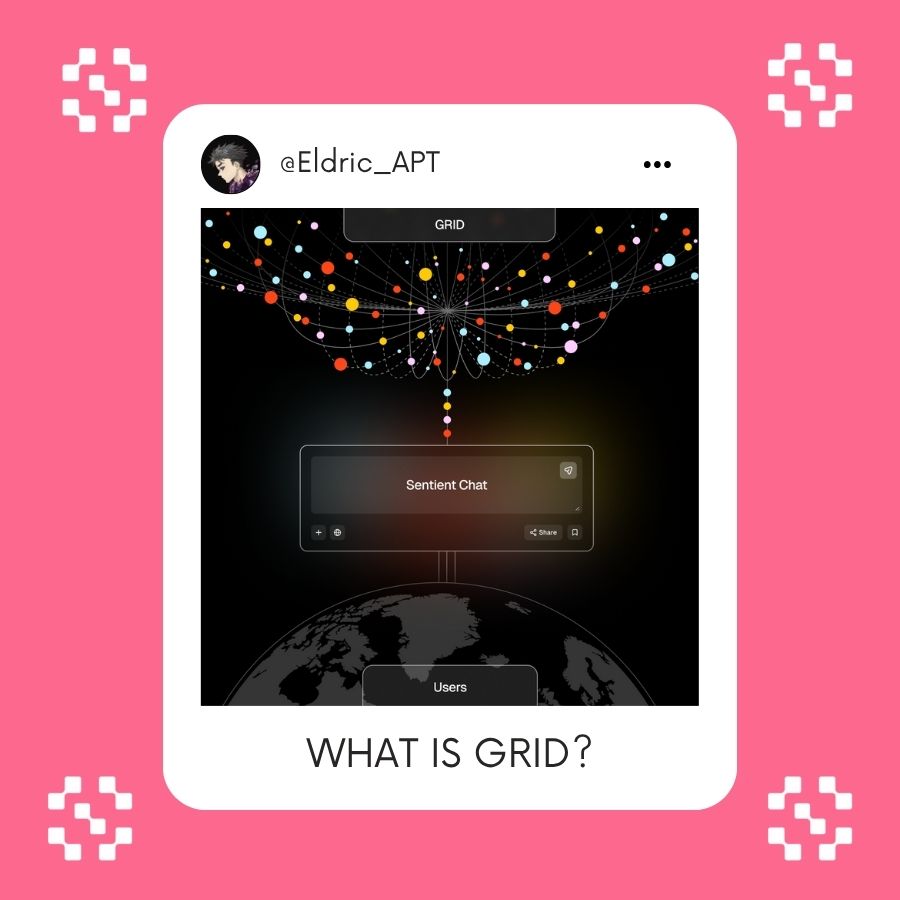
🌐 What is GRID?
When I first read about GRID, it clicked for me.
AGI doesn’t have to be this black-box tech locked inside OpenAI or Anthropic.
It makes more sense to see AGI as a network of many brains, each with its own strength, working together.
That’s exactly what GRID (Global Research and Intelligence Directory) is: the world’s largest open network of intelligence. Think of it like an “internet of intelligences”: instead of one brain, you get a million minds collaborating.
⚡ How GRID works
Step 1: Query → You ask a question.
Step 2: Routing → GRID splits your query, sending it to the best agents, models, and data sources.
Step 3: Enrichment → It uses external tools (like search or domain-specific databases).
Step 4: Merge → Results are combined into one high-quality answer.
Instead of one closed company deciding how AI thinks, you get the power of thousands of builders worldwide. To me, that’s the real spirit of “open AGI.”
🖥 How to access GRID
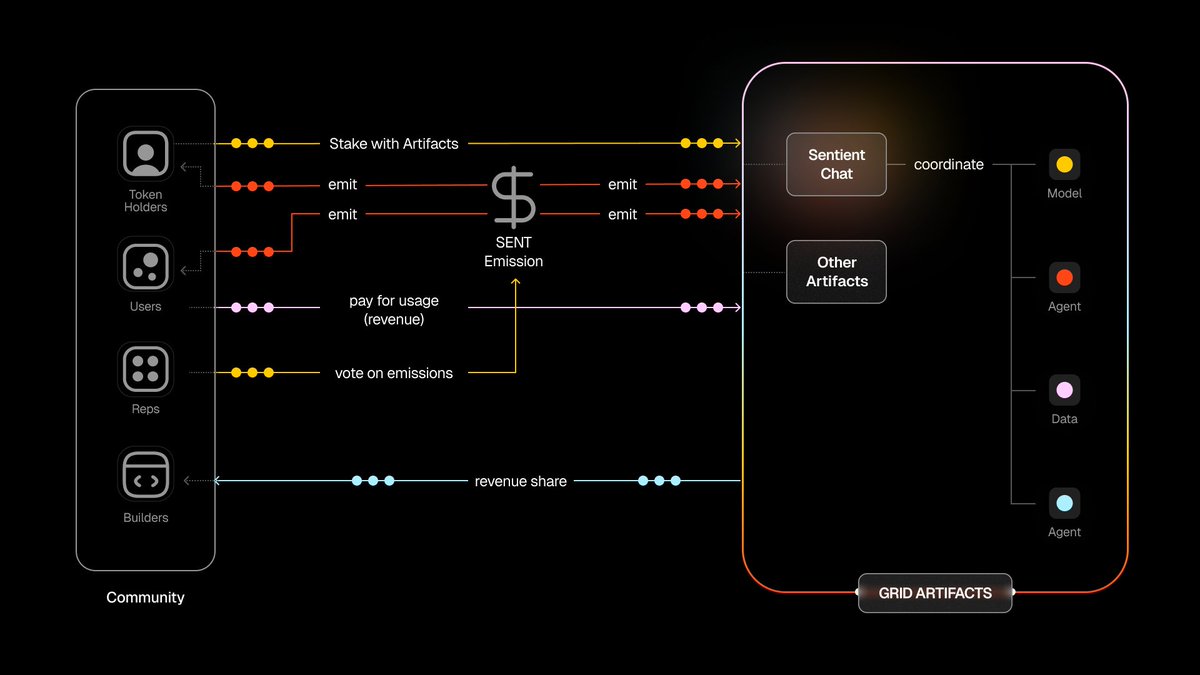
Sentient Chat = the main gateway.
• Users: see which intelligences are working in real time.
• Builders: a distribution channel to bring their tools/models to global users.
• Soon: paid usage → revenue flows back to builders.
Direct access: Builders’ individual contributions (called artifacts) can also be accessed directly.
💰 The Economics of GRID
Powered by $SENT token.
• You stake on the artifacts you believe in.
• More stake → more emissions to that artifact.
• Stakers earn yield.
• Emissions also depend on real usage revenue.
• Plus votes from global AI experts (Reps).
This creates a self-sustaining economy where the community funds open AI by simply using and staking.
🌍 Current GRID ecosystem
Already more than 110 partners are plugged into GRID:
50 specialized agents | 50 data providers | 6 AI models | 10 compute & verifiable infra providers
Notable partners include:
@Exa | @KaitoAI | @MessariCrypto | @napkin_ai | @graphprotocol | @eigencloud
When I see that list, it feels like watching the Linux moment for AI happening live.
I honestly think GRID is the missing piece that lets open-source AI compete head-to-head with trillion-dollar labs.
If Linux freed computation, GRID will free intelligence.
👉 Try GRID now: chat.sentient.xyz
#AI #SentientAGI #MultiAgentSystem @sentient_chat @0xsachi @vivekkolli @abhishek095 @LeaderX_btc @oleg_golev @Krypto_Kratos
30 Sep 2025

Open source = millions of builders.
Exponential = @SentientAGI
I’ve been thinking a lot about why closed AI looks strong now but can’t last.
History is clear: open source always ends up winning.
🔎 Linux replaced UNIX and Windows in supercomputing.
🔎 Apache overtook IIS and Netscape by 1999 to power the web.
🔎 Android crushed Symbian and BlackBerry, now 79% of all smartphones.
🔎 Kubernetes became the cloud default (84% of orgs use it).
🔎 LLVM/Clang outpaced proprietary compilers, even Apple Google use it.
🔎 WordPress powers 43% of all websites today.
And @SentientAGI is making that same dynamic real in AI. Not just “open is better” talk — actual numbers:
👉 Open Deep Search hit 75.3% FRAMES, GPT-4o is 65%, Perplexity 45%.
👉 SimpleQA 88.3%, basically shoulder to shoulder with GPT-4o, above Perplexity.
👉 ROMA agent scored 45.6% SEAL0, Gemini 2.5 Pro only 19.8%.
That’s not ideology, that’s performance.
The difference is funding distribution. Closed AI has both. That’s why they dominate right now.
Sentient answers with the #GRID $SENT economy:
✨ stake directs emissions, rewards go to artifacts people actually use,
✨ Sentient Chat gives builders distribution straight to users,
✨ 110 partners already plugged in (Exa, @KaitoAI, @MessariCrypto, Dobby models with 700k users).
The formula is simple:
closed = useful but limited.
open = useful evolving nonstop.
That’s why I believe Sentient isn’t just another AI project. It’s the intelligence layer of the open internet.
Closed systems are walls. Sentient is an ecosystem.
And if history has shown us anything — evolution always wins.
#AI #SentientAGI #MultiAgentSystem @sentient_chat @0xsachi @vivekkolli @abhishek095 @LeaderX_btc @oleg_golev @Krypto_Kratos
1
5
1,425
30 Sep 2025
Open source = millions of builders.
Exponential = @SentientAGI
I’ve been thinking a lot about why closed AI looks strong now but can’t last.
History is clear: open source always ends up winning.
🔎 Linux replaced UNIX and Windows in supercomputing.
🔎 Apache overtook IIS and Netscape by 1999 to power the web.
🔎 Android crushed Symbian and BlackBerry, now 79% of all smartphones.
🔎 Kubernetes became the cloud default (84% of orgs use it).
🔎 LLVM/Clang outpaced proprietary compilers, even Apple Google use it.
🔎 WordPress powers 43% of all websites today.
And @SentientAGI is making that same dynamic real in AI. Not just “open is better” talk — actual numbers:
👉 Open Deep Search hit 75.3% FRAMES, GPT-4o is 65%, Perplexity 45%.
👉 SimpleQA 88.3%, basically shoulder to shoulder with GPT-4o, above Perplexity.
👉 ROMA agent scored 45.6% SEAL0, Gemini 2.5 Pro only 19.8%.
That’s not ideology, that’s performance.
The difference is funding distribution. Closed AI has both. That’s why they dominate right now.
Sentient answers with the #GRID $SENT economy:
✨ stake directs emissions, rewards go to artifacts people actually use,
✨ Sentient Chat gives builders distribution straight to users,
✨ 110 partners already plugged in (Exa, @KaitoAI, @MessariCrypto, Dobby models with 700k users).
The formula is simple:
closed = useful but limited.
open = useful evolving nonstop.
That’s why I believe Sentient isn’t just another AI project. It’s the intelligence layer of the open internet.
Closed systems are walls. Sentient is an ecosystem.
And if history has shown us anything — evolution always wins.
#AI #SentientAGI #MultiAgentSystem @sentient_chat @0xsachi @vivekkolli @abhishek095 @LeaderX_btc @oleg_golev @Krypto_Kratos
2
6
212
27 Sep 2025
Open source always wins? ⁉⁉⁉
Let me share my view.👇
Right now, big AI labs like @OpenAI, @AnthropicAI, @xai, @perplexity_ai are building closed systems.
They decide what the model knows, how it behaves, and who can access it. That’s power in the hands of a few.
But history shows us: open source always wins.
🔹 Linux became the backbone of the internet
🔹 Android (built on Linux) took 79% of mobile
🔹 WordPress powers 40% of all websites
Why? Because open source lets millions of builders join in. Closed systems can’t match that scale.
And now, I see @SentientAGI is following the same path:
It’s building an open network called the GRID, connecting 100 partners (models, agents, data, compute). Users access it through Sentient Chat, and contributors get rewarded through $SENT.
And the results are already real:
🔸 ODS outperforms GPT-4o & Perplexity on benchmarks
🔸 ROMA beats Gemini 2.5 in multi-agent routing
🔸 Dobby, a crypto-native model, has ~700K users
So when I look at the landscape, the comparison is clear:
👉 Closed labs = strong utility, no openness
👉 @deepseek_ai = open, but corporate-owned
👉 @bittensor = open, but low utility
👉 @SentientAGI = the first to be open, community-owned, and high-utility
That’s why many call it the Linux of AGI — the open kernel of intelligence.
If history is any guide, the answer is simple:
Yes. Open source always wins.
gSENT @SentientAGI @KaitoAI
#AI #SentientAGI #MultiAgentSystem @sentient_chat @0xsachi @vivekkolli @abhishek095 @LeaderX_btc @oleg_golev @Krypto_Kratos
2
10
152

27 Sep 2025
🚨AI Agents Are Evolving: Meet the @SentientAGI GRID.
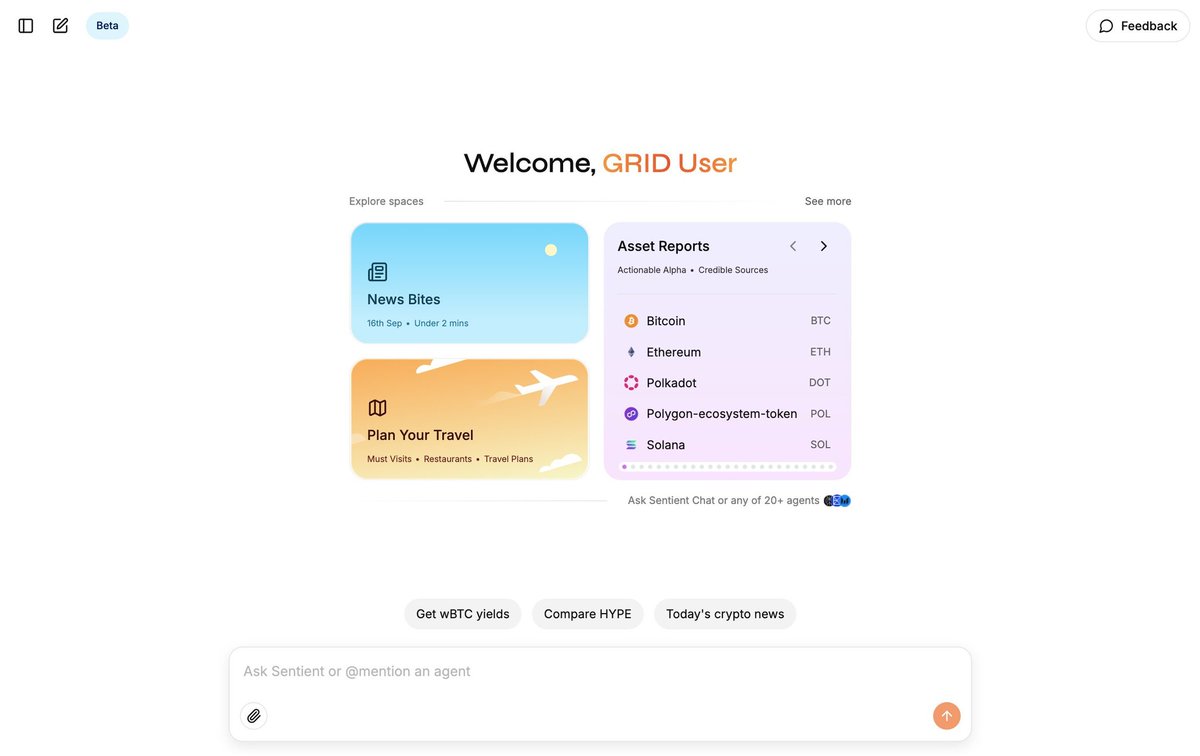
Forget isolated bots. The Sentient GRID is a decentralized intelligence network where AI agents collaborate, learn, and adapt in real time.
🔍 What it means:
- Agents aren’t just tools,they’re teammates.
- They share context, goals & strategies across domains.
- Think swarm intelligence meets personal assistant.
💡 Why it matters:
- Devs: Build smarter, interoperable agents.
- Users: Get seamless, anticipatory support.
- Researchers: Explore emergent behaviour & collective cognition.
🌐 The future isn’t one AI it’s many, thinking together.
#AI #SentientAGI #MultiAgentSystem
56
4
58
438

24 Sep 2025
2) How does it work? ROMA orchestrates specialized agents (like a Deep Research Agent or a Crypto Analytics Agent) and combines their findings. This creates a collaborative network, enabling more accurate and in-depth analysis than a single model could achieve. #MultiAgentSystem
1
3
30

24 Sep 2025
24 Sep 2025

WHOS JOINING FREE TOPOLOGICAL MULTI-AGENT DISTRIBUTED MIND POWER HOUSE SYSTEM… 😈 #MultiAgentAi #AiCodeGen github.com/devdollzai/HYDRA-…
1
3
158

18 Sep 2025
🧩 Ever handed a complex task to AI and watched it stumble?
Tasks like “Compare the weather in two cities and analyze the differences” can quickly go sideways, even if the AI handles each step with 99% accuracy. A small mistake early on can throw everything off. 😅
✨ Enter ROMA (Recursive Open Meta-Agent) from @SentientAGI – a whole new way to tackle complexity.
The core idea? Don’t rely on a single agent for everything. Break tasks into a tree structure and let multiple agents handle the pieces. 🌳
🔹Parent nodes → split goals into sub-tasks
🔹Child nodes → specialized agents handle each sub-task
🔹Aggregator → combine results into a complete answer ✅
This setup lets you see exactly what’s happening and quickly pinpoint where things go wrong. 🔍
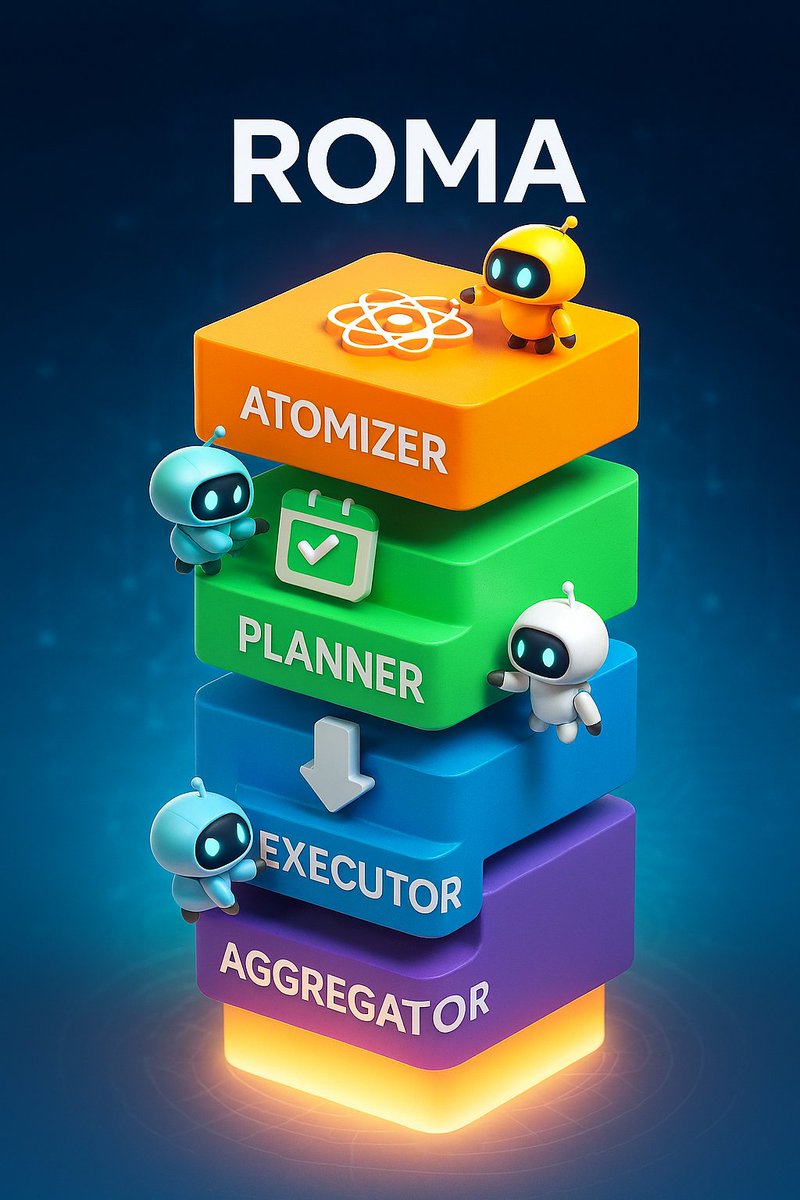
ROMA works in four steps:
1️⃣ Atomizer – decides if a task is simple or needs breaking down
2️⃣ Planner – splits the task into sub-tasks
3️⃣ Executor – runs each task with the right tool or agent 🛠️
4️⃣ Aggregator – compiles results into a final output 📊
💡 Simple tasks are handled fast, complex tasks are broken down carefully. And it’s open source, so anyone can inspect, modify, or use it.
Check out ROMA Search benchmarks:
✅SEAL-0: 45.6%
✅FRAMES: 81.7% (state-of-the-art in multi-step reasoning)
✅SimpleQA: 93.9% (nearly top-tier factual search)
It’s not just for search – think financial analysis, research reports, or content creation. The framework is general, reliable, and scalable. 🌐
ROMA = transparent, modular, and naturally handles complex tasks with an open-source multi-agent system. For developers frustrated with closed AI platforms, ROMA is a fresh, exciting alternative. 🚀
💬 Curious how you’d use ROMA in your projects? Or what kind of tasks you’d love to see it tackle? Drop your thoughts below! 👇
@KaitoAI #OpenSourceAI #MultiAgentSystem
15 Sep 2025

Let’s Explore ROMA | The AI That Handles Complexity Differently
So I've been digging into @SentientAGI's latest release, ROMA (Recursive Open Meta-Agent), and honestly, it's got me pretty excited. Not because of some flashy marketing claims, but because of what it actually does, and more importantly, what it might mean for anyone trying to build reliable AI systems.
Why Most AI Agents Actually Suck at Complex Tasks
Look, we need to be honest here. Sure, AI can write you a decent email or summarize an article. But ask it to do something that requires multiple steps, like researching two cities' climates and writing a proper comparison, and you'll quickly see where things fall apart.
The math is brutal. Even if your AI is 99% reliable on individual tasks, chain together 10 steps and suddenly you're looking at maybe a 90% success rate. Add more complexity, and that number drops fast. One small mistake early on can derail everything.
I've seen this countless times in my own projects. You think you've built something solid, then it fails on the exact type of complex reasoning you actually need it for.
What ROMA Does Differently
Here's where ROMA caught my attention. Instead of hoping one agent can handle everything, it breaks tasks down into a tree structure. Parent tasks split into smaller subtasks, those get handled by specialized agents, then results bubble back up.
The part that stands out is this, you can actually see what's happening. No more black box guessing. When something goes wrong, you know exactly where and why.
Let me walk you through how it works with their search example. They built something called ROMA Search, and the numbers are impressive across multiple benchmarks:
• SEAL-0: 45.6% (beats Kimi Researcher's 36%, more than doubles Gemini 2.5 Pro's 19.8%)
• FRAMES: 81.7% (state-of-the-art for multi-step reasoning)
• SimpleQA: 93.9% (near state of the art for factual retrieval)
• Significantly outperforms other open-source systems like Open Deep Search (8.9%)
What’s notable is that they didn’t optimize it specifically for search. This is the same framework you could use for financial analysis or content creation.
The Four-Step Process That Actually Makes Sense
ROMA uses four types of nodes, and once you get it, it's pretty intuitive:
Atomizer - Basically asks "Is this simple enough to just do, or do I need to break it down?"
Planner - Takes complex stuff and splits it into logical pieces. Like saying "To compare these cities, I need weather data for each, then I need to analyze the differences."
Executor - Does the actual work using whatever tools make sense for each subtask.
Aggregator - Pulls everything together into a coherent final answer.
The recursive part means each node can create more nodes if needed. It scales naturally without getting messy.
Why I Think This Matters
Three things make ROMA interesting to me:
First, the transparency. I can't overstate how valuable it is to see exactly what your system is thinking. When you're trying to improve something, visibility is everything.
Second, the modularity. Want to swap in a different model for one part? Easy. Need a human to verify something critical? Just plug it in. You're not locked into any specific approach.
Third, it handles complexity without breaking. Simple tasks stay simple. Complex ones get broken down appropriately. And independent parts can run in parallel, so it's actually fast.
Beyond Search
While their search demo is solid, I'm more interested in what else becomes possible:
• Research reports that actually pull from multiple sources and synthesize properly.
• Financial analysis that doesn't miss important connections.
• Content creation workflows that don't fall apart halfway through.
The framework is general enough to handle whatever you throw at it, but structured enough to be reliable.
The Open Source Angle
This is probably the best part, it's completely open source. No vendor lock-in, no API limits, no mysterious pricing tiers. You can see the code, modify it, and build exactly what you need.
For anyone who's been frustrated with proprietary AI platforms, this feels like a breath of fresh air.
My Take
I've been following AI developments for a while now, and most "breakthroughs" are just incremental improvements dressed up in marketing speak. ROMA feels different because it's solving a real architectural problem that anyone building AI systems has run into.
It's not about having the smartest individual AI components. It's about orchestrating them in a way that actually works for complex, real-world tasks.
The team at Sentient has made something genuinely useful here, and they've made it available for everyone to build on. That combination doesn't happen often.
If you're working on anything that involves multi-step AI reasoning, this is worth checking out. The documentation looks solid, and the results speak for themselves.
#Sentient #ROMA #SentientAGI #AI

2
1
3
44