
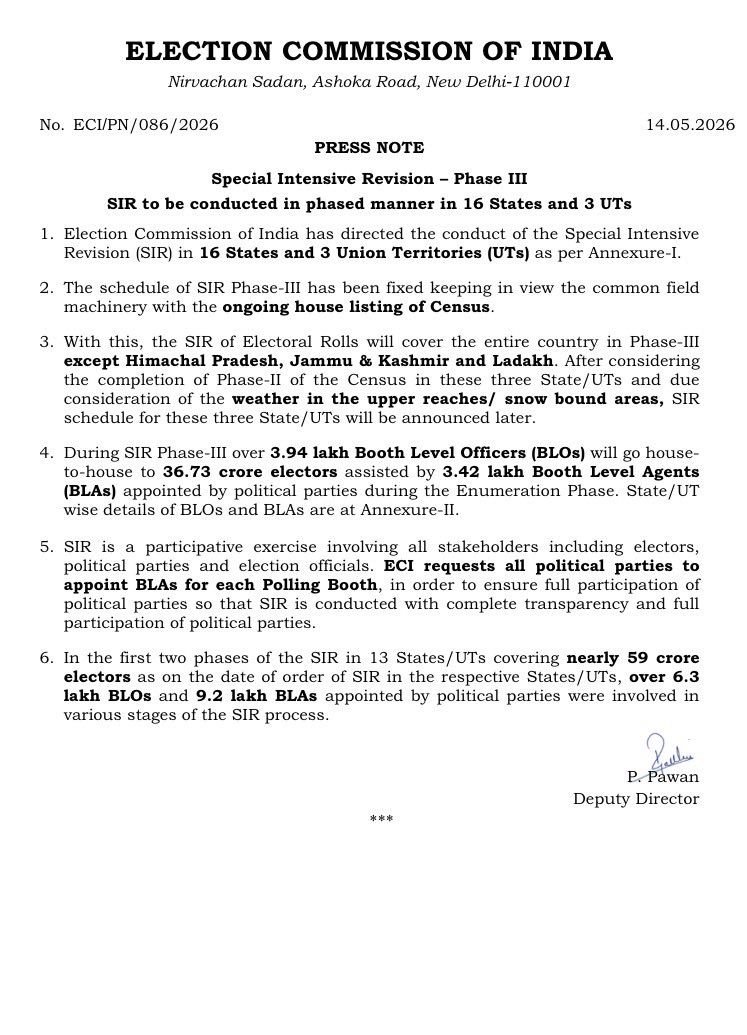
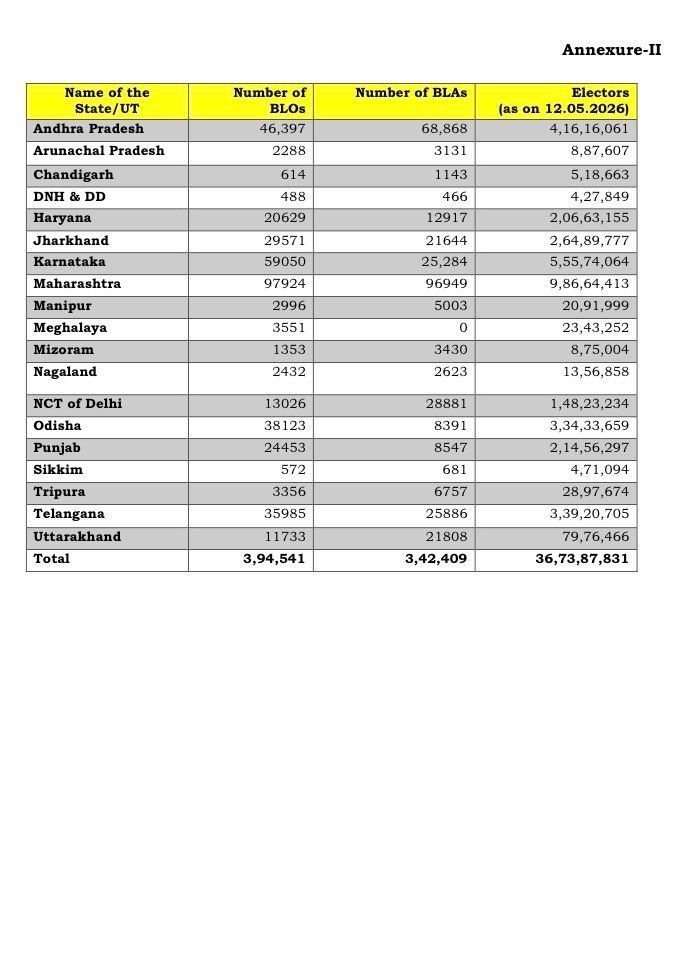
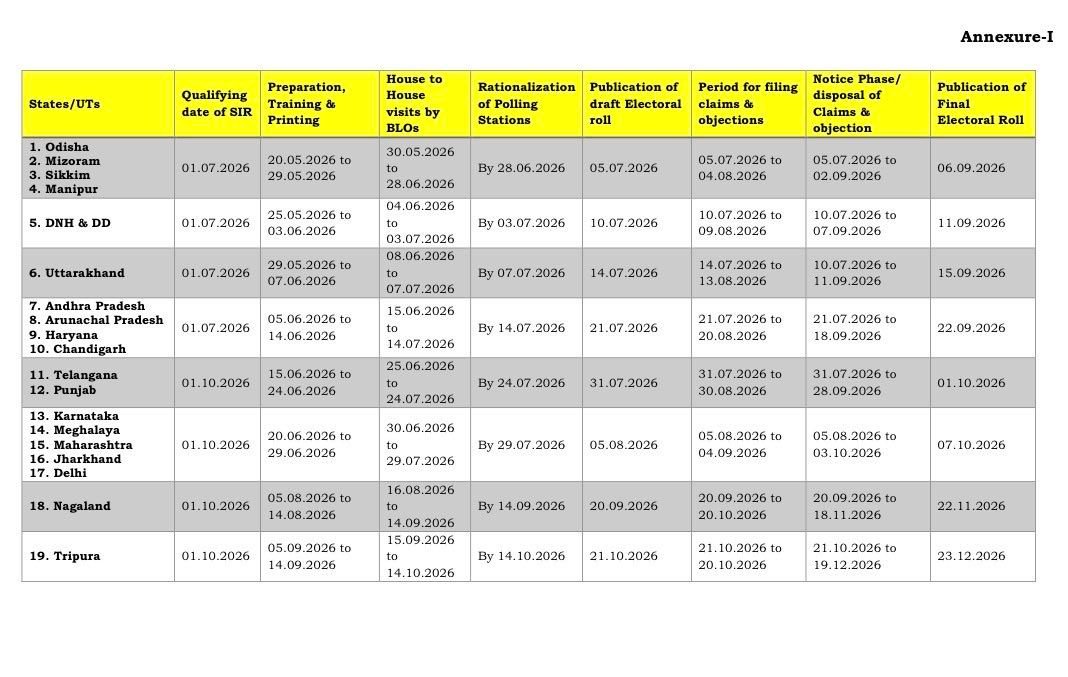
The Election Commission of India’s decision to conduct Special Intensive Revision (SIR) across the remaining States and Union Territories is a timely and important step towards strengthening electoral transparency, voter confidence and democratic integrity.
A clean, accurate and verified electoral roll is the true foundation of free and fair elections.
Every genuine voter deserves protection.
Every duplication, irregularity or inaccuracy must be addressed with accountability and transparency.
From Telangana and Andhra Pradesh to Delhi, Maharashtra, Karnataka and across India, this exercise reflects the ECI’s commitment towards institutional credibility and a stronger democratic process.
Strong democracies are built on strong systems.
And strong systems begin with trusted voter rolls.
A cleaner electoral process means a stronger democracy.
A stronger democracy means a stronger Bharat.
@ECISVEEP @SpokespersonECI @CEO_Telangana @CEO_Andhra @ceodelhioffice @CEOMaharashtra @ceokarnataka @BJP4India @AmitShah @narendramodi
#ElectionCommission #ECI #SIR #ElectoralReforms #Democracy #India #VoterAwareness #FreeAndFairElections #OneNationOneVoterList #TransparentElections #DemocraticIntegrity #VoterRights #ElectionIntegrity #Bharat #NewIndia #ViksitBharat #IndiaFirst
3
2
256

One man helped stack the highest court with ideologues -- and most Americans have no idea. Dark money bought those seats. The rulings affect your healthcare, your rights, your wages. Follow the money. #DemocraticIntegrity
1
7
26
658

9 Dec 2025
NEW PAPER ✨
The Cost of Transactionalism: Trauma, Coercive Control & the Case for Relational Justice
Modern institutions increasingly treat people as problems to process rather than humans in crisis.
This shift to transactionalism has a devastating cost—especially for survivors of trauma, coercive control, unrepresented litigants & whistleblowers.
My new reflective paper argues:
🔹 Transactional systems misread trauma as non-compliance
🔹 Institutions often replicate the coercive patterns they should prevent
🔹 “Procedural justice” without relational ethics becomes a form of harm
🔹 Trauma-led, first-tier arbitration can anchor a shift toward relational justice
🔹 Democratic health depends on how we treat those most vulnerable
We can—and must—build systems where dignity is non-negotiable.
Relational justice is not idealism. It is democratic necessity.
Full paper coming soon.
#RelationalJustice #TraumaInformed #CoerciveControl #JusticeReform #HumanRights #InstitutionalBetrayal #DemocraticIntegrity
2
2
127

What concrete measures were truly undertaken to prevent Mamdani’s victory? More importantly, what must now be implemented, without delay, to ensure that such a democratic failure does not recur in other cities and other states? America is neither socialist nor communist. It must remain so.
#DefendDemocracy #CivicAction #AmericanPrinciples #NoToSocialism #PreserveFreedom #LeadershipMatters #DemocraticIntegrity #ProtectTheRepublic

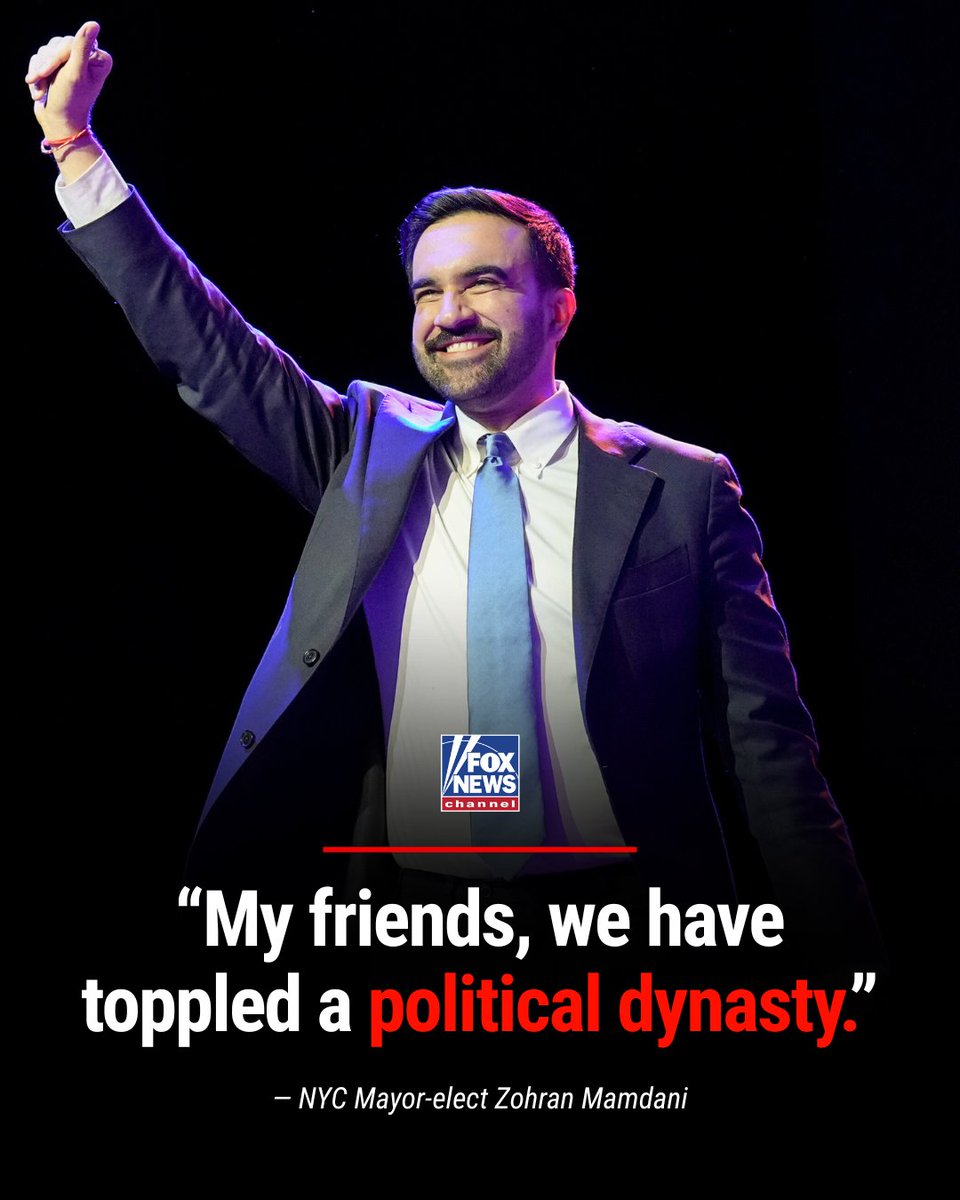
SOCIALIST SHIFT: NYC Mayor-elect Zohran Mamdani frames his New York City victory as part of a generational shift toward socialism, promising sweeping action on housing, childcare, and transit.
“Together, we will usher in a generation of change,” he said.
2
70
24 Oct 2025
Denial of Fair Process, Transparency, and Constitutional Safeguards
I wish to express my deep and continuing concern regarding the conduct of my case, the misuse of legislative provisions such as the Protected Disclosures (Amendment) Act, the introduction of last-minute evidence by the State, and the complete absence of independent media scrutiny. Collectively, these factors represent serious breaches of constitutional and human rights principles, undermining public confidence in the rule of law and the integrity of democratic institutions.
Although the Protected Disclosures framework was intended to protect individuals exposing wrongdoing, in practice it has operated to silence and marginalise me. Its procedural flaws denied me meaningful access to justice and the protections it was meant to guarantee. The State introduced evidence at the eleventh hour, depriving me of the opportunity to review or respond — in direct contravention of the principles of equality of arms, fair procedure, and natural justice.
Of particular concern is the treatment of the Byrne case. This case was introduced only after my case had formally closed, without notice or opportunity for response, and was then used selectively and unfavourably against me in the final judgment. The Byrne case involved a key constitutional issue common to both proceedings — namely, undue and unprecedented interference in the voting rights of county councillors, who were placed under improper political pressure to block all independent candidates from nomination. This interference strikes at the heart of Article 28.1 of the Irish Constitution, which protects democratic governance, collective responsibility, and institutional independence. It also undermines the constitutional safeguards surrounding the two distinct routes to presidential nomination, which exist precisely to prevent political parties in government from exercising exclusive control over that process.
Despite the profound constitutional implications of these matters, none of this was reported by the media. No journalists attended the critical leave hearing or any subsequent proceedings, and the press merely reproduced the outcome of the judgment without reference to the underlying facts, evidence, or procedural irregularities. This has resulted in a distorted public record, erasing key constitutional issues from view and shielding serious democratic concerns from public scrutiny. The absence of media presence throughout the case gives the appearance of a de facto media blackout, undermining open justice and the public’s right to know.
These cumulative irregularities — including the last-minute introduction of evidence, the selective use of precedent after the case had closed, and the total absence of journalistic oversight — amount to multiple breaches of domestic, European, and international legal standards, including:
Article 6 of the European Convention on Human Rights (ECHR) – the right to a fair and public hearing by an independent and impartial tribunal;
Article 10 ECHR – the right to freedom of expression and the public’s right to receive information, including judicial transparency;
Articles 41 and 47 of the EU Charter of Fundamental Rights – the right to good administration, reasoned decision-making, and an effective remedy before an impartial tribunal;
Article 11 of the EU Charter – the right to freedom of expression and media pluralism;
Directive (EU) 2019/1937 (EU Whistleblowing Directive) – guaranteeing protection for individuals making disclosures in the public interest, access to justice, and freedom from retaliation or suppression; and
Article 28.1 of the Irish Constitution, which safeguards democratic governance and institutional independence from undue political influence.
Taken together, these failings constitute a serious breach of fair process, democratic accountability, and constitutional integrity. The selective post-closure introduction of the Byrne case, its misuse in the judgment, and the total media silence surrounding these developments have deprived the public of transparency and denied me the procedural fairness guaranteed under both Irish and European law.
This situation reflects a broader pattern of institutional bias, procedural concealment, and suppression of truth, which undermines not only individual justice but also public confidence in the independence of Ireland’s judicial and political systems.
#AccessToJustice #FairTrial #OpenJustice #RuleOfLaw #MediaFreedom #TransparencyMatters #EqualityOfArms #WhistleblowerProtection #DemocraticIntegrity #InstitutionalBias #ConstitutionalBalance #EUCharter #ECHR #Article6 #Article10 #Article11 #Article41 #Article47 #Article28_1 #TruthAndAccountability
1
3
92
24 Oct 2025
PRESS STATEMENT
Denial of Fair Process, Transparency, and Constitutional Safeguards
I wish to express my deep and continuing concern regarding the conduct of my case, the misuse of legislative instruments such as the Protected Disclosures (Amendment) Act, the introduction of last-minute evidence by the State, the selective use of precedent, and the complete absence of independent media scrutiny. Collectively, these factors represent serious breaches of constitutional and human rights principles, undermining public confidence in the rule of law and the integrity of democratic institutions.
Although the Protected Disclosures framework was designed to protect those who expose wrongdoing, it has instead operated in my case as a mechanism of obstruction. Its procedural deficiencies denied me meaningful access to justice and the very protections it was intended to guarantee. Evidence was introduced by the State at the last moment, depriving me of the opportunity to respond adequately, thereby breaching the principles of equality of arms and fair hearing.
Equally concerning is the selective reliance on the Byrne case, which was applied against me in a narrow and inconsistent manner, disregarding the shared constitutional issue at the heart of both cases. A key issue—previously raised and central to both matters—concerned unprecedented interference in the voting rights of county councillors, who were placed under improper pressure to block independent candidates from nomination. This interference directly undermines the constitutional balance envisaged under Article 28.1 of the Irish Constitution, which protects democratic governance and collective responsibility. It also affects the integrity of the two constitutional routes to presidential nomination, which exist precisely to ensure that political parties in government do not exercise sole control over the nomination process. The erosion of these checks and balances represents a serious threat to democratic pluralism and the separation of powers.
Despite the constitutional and public importance of these issues, they were entirely omitted from media coverage. No journalists attended or reported on the critical leave hearing, and subsequent reporting was limited to reproducing the judgment without any analysis, context, or scrutiny. The absence of media presence throughout the proceedings has created the appearance of a de facto media blackout, shielding the process from public accountability and distorting the public record. This lack of transparency has not only obscured the substantive issues at stake but has also prevented informed public oversight in a case that touches upon the foundations of democratic governance and institutional integrity.
The combination of these procedural failures, selective interpretation of law, and absence of public scrutiny constitutes a breach of multiple legal and constitutional guarantees:
Article 6 of the European Convention on Human Rights (ECHR), ensuring the right to a fair and public hearing within a reasonable time by an independent and impartial tribunal;
Article 10 ECHR, guaranteeing freedom of expression and the public’s right to receive information on matters of democratic accountability and judicial transparency;
Articles 41 and 47 of the EU Charter of Fundamental Rights, guaranteeing the right to good administration, reasoned decisions, and an effective remedy before an impartial tribunal;
Article 11 of the EU Charter, protecting freedom of expression and media pluralism;
Directive (EU) 2019/1937, the EU Whistleblowing Directive, which requires the protection of individuals who disclose wrongdoing and prohibits retaliation or obstruction of justice;
And Article 28.1 of the Irish Constitution, safeguarding democratic governance, institutional independence, and constitutional balance.
These violations, taken together, reveal a systemic failure of open justice, transparency, and democratic accountability. They suggest a troubling pattern of institutional bias, procedural irregularity, and media silence, all of which have the cumulative effect of concealing constitutional issues of national significance.
The denial of fair process, suppression of public scrutiny, and obstruction of truth not only infringe my personal rights but also erode the very principles upon which a democratic society is founded.
#AccessToJustice #FairTrial #FreedomOfExpression #OpenJustice #RuleOfLaw #MediaFreedom #DemocraticIntegrity #EqualityOfArms #TransparencyMatters #WhistleblowerRights #GoodGovernance #EUCharter #ECHR #ProtectedDisclosures #Article6 #Article10 #Article11 #Article41 #Article47 #Article28_1 #TruthAndAccountability
1
2
2
107

28 Dec 2024
Delhi LG directs police to probe Sandeep Dikshit’s surveillance allegations, seeks report in three days yespunjab.com/?p=76796
#DelhiPolitics #SandeepDikshit #VKSaxena #AAP #ArvindKejriwal #PunjabIntelligence #DelhiElections2025 #DemocraticIntegrity #Investigation #SurveillanceAllegations #ElectionFairness
41

14 Dec 2024
#DHOpinion | The #BJP’s dominance may secure #electoralvictories, but the broader #societalconsequences of these #techniques pose #seriouschallenges to the #democraticintegrity and inclusivity of #India’s #politicallandscape.
deccanherald.com/opinion/whe…
2
288

10 Dec 2024
#SomalilandElections2024 reaffirms #Somaliland's status as #HornOfAfrica's most genuine #democracy. #InternationalObservers played crucial role in ensuring #DemocraticIntegrity, promoting #PublicConfidence & #Participation. @RAbdiAnalyst & @cannon_brendon saxafimedia.com/somaliland-r…
1
5
151

12 Nov 2024
Your critique of Citizens United highlights a vital issue in our political system. By allowing corporations to make political donations as if they were individuals, the ruling has introduced a significant imbalance, where financial influence can overshadow the voice of the average citizen.
The decision assumes corporate donations reflect the interests of all stakeholders, from shareholders to employees. In reality, these contributions often represent the priorities of a few executives rather than the broader group, amplifying corporate influence in ways that can sideline the public’s interests.
While Citizens United is impartial in its application, both major parties now benefit from this expanded corporate funding, making it harder to push for reform. Instead of creating a system rooted in equal representation, we have a political landscape increasingly influenced by financial power, where issues that align with corporate interests often receive more attention than the needs of individual voters.
Thank you for continuing to address this critical issue. Citizens United challenges us to rethink the role of financial influence in politics and to consider meaningful reforms that restore a balanced, representative democracy.
While Citizens United opened the door for corporate influence, Congress does have some options to address its effects, though they come with limitations and hurdles. Congress can pass laws to require full transparency on political contributions, so corporations and PACs disclose their donors in detail, making it clear where the money is coming from. Additionally, Congress could strengthen campaign finance laws to curb coordination with Super PACs or even establish public financing for campaigns as an alternative to corporate funding.
For a full overturn, though, Congress would need to pass a constitutional amendment clarifying corporate personhood or explicitly limiting corporate political spending. This would be challenging, needing two-thirds of Congress and three-fourths of state legislatures to ratify. Alternatively, redefining aspects of corporate personhood might address some issues, but the Supreme Court could still strike down such reforms as infringing on First Amendment rights.
Ultimately, while Congress has tools to increase transparency and offer alternatives to corporate influence, direct limits on corporate donations would require a constitutional amendment or a major shift in the Supreme Court’s interpretation of corporate free speech.
#CampaignFinance #CitizensUnited #CorporateInfluence #PoliticalReform #Congress #Transparency #PublicFinancing #DemocraticIntegrity #PoliticalDonations #CorporatePersonhood
1
6
303

16 Sep 2024
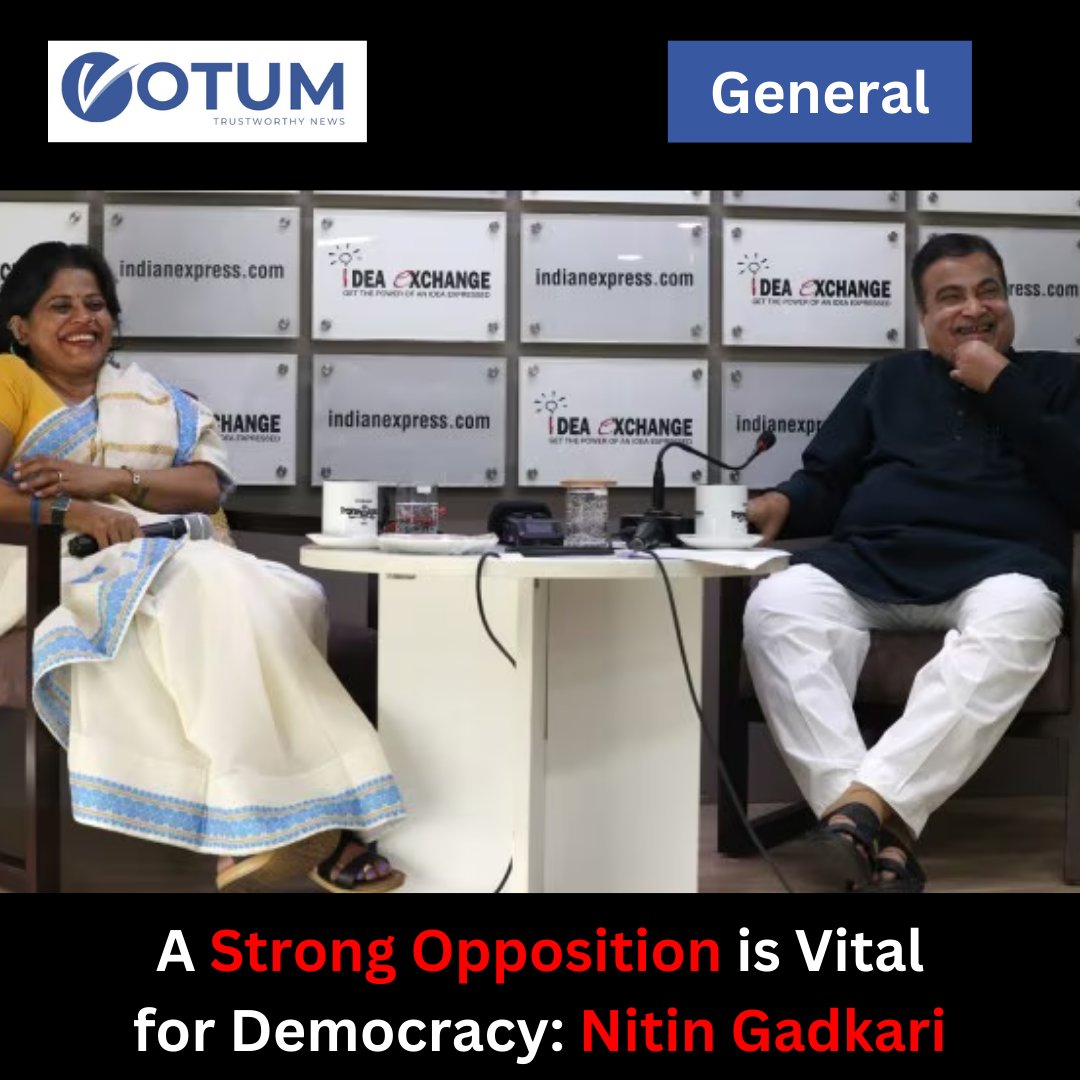
Nitin Gadkari emphasized that a strong opposition is essential for the functioning of a democracy.
#NitinGadkari #StrongOpposition #Democracy #GovernmentAccountability #PublicInterest #PoliticalBalance #DemocraticIntegrity #GoodGovernance #DemocracyInAction #votumnews
3
11

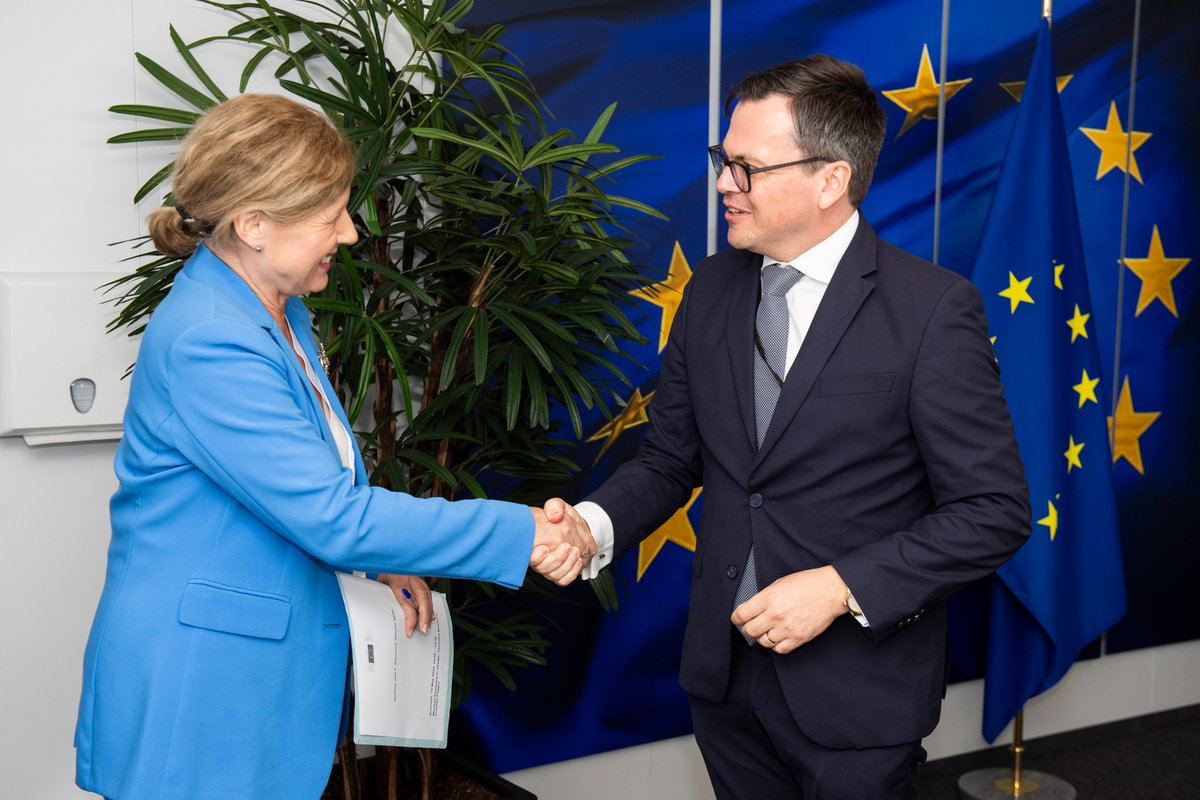
Thank you @EU_Commission Vice-President @VeraJourova for the excellent discussion on promoting and protecting #EUDemocracy in the run-up to 🗳️ #EUElections2024. @APPF_EU is looking forward to continuing teaming up for #DemocraticIntegrity! 🇪🇺
2
373

13 May 2024
The Long Shadow of Foreign Interference: Western Intelligence Agencies' Role in Africa
Foreign intelligence agencies such as the British MI6, American CIA, and France's DGSE have had a long and controversial history of interference in African politics, often undermining democratic processes and supporting regimes that align with Western geopolitical and economic interests. This pattern of meddling has not only contributed to historical destabilization but continues to affect the continent today.
Historically, these agencies were instrumental in some of the most egregious violations of democratic integrity. For instance, both MI6 and the CIA played significant roles in the assassination of Patrice Lumumba, the first democratically elected Prime Minister of Congo in 1961. Their efforts to subvert leaders did not end there, as similar tactics were used against Ghana's Kwame Nkrumah and other pan-African leaders who championed independence and self-governance away from colonial influence.
The DGSE of France, similarly, has been active in its former colonies, where it has been accused of engaging in covert operations that include supporting oppressive regimes and organizing secret military operations. The involvement of these agencies has often prioritized Western interests over local welfare, leading to a cycle of dependency and instability that hampers genuine self-governance and development.
In contemporary Africa, the negative influence of these agencies persists. Modern interference often manifests through economic espionage and the manipulation of political outcomes to secure access to valuable resources like oil, minerals, and strategic geopolitical positioning. This ongoing interference undermines the ability of African nations to manage their resources, dictate their economic policies, and develop independent political paths.
Moreover, the presence and activities of these foreign intelligence bodies have sometimes contributed to internal conflict and strife. By supporting certain factions over others, they have indirectly fueled conflict and perpetuated environments of violence and instability. This not only impacts the political landscape but also affects civilian life, causing displacement, loss of life, and human rights abuses.
To mitigate these ongoing issues, there is a pressing need for increased transparency, accountability, and international oversight of the activities of these foreign intelligence agencies in Africa. African nations must enhance their sovereign capabilities, developing robust intelligence and counter-intelligence sectors that can defend against and counteract foreign interference. Furthermore, international laws and norms need to be enforced more rigorously to ensure that all nations respect the sovereignty and democratic processes of African countries.
The international community, particularly global powers and organizations dedicated to human rights and democratic values, must condemn and seek to prevent any actions by these intelligence agencies that violate national sovereignty and human rights.
**#EndForeignMeddling #AfricanSovereignty #DemocraticIntegrity #TransparentIntelligence**
3
5
860

29 Apr 2024
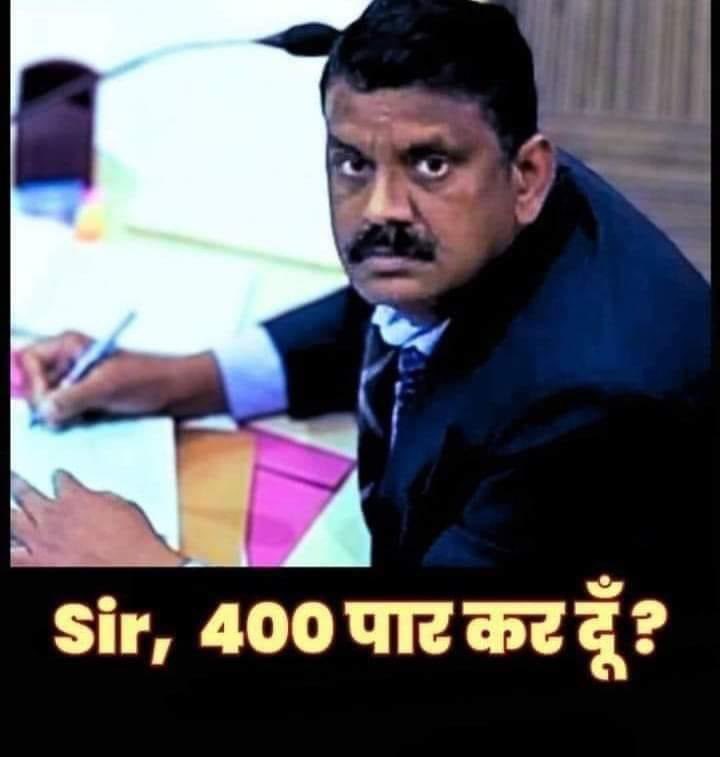
Betraying the party by suddenly withdrawing candidature before the election or deceiving the voters by switching to another party after being elected both are harmful to democracy.
Both actions undermine the trust and faith voters have in the democratic process. They can create a sense of betrayal and disillusionment among the electorate, weakening the democratic system as a whole.
#PoliticalBetrayal
#DemocracyUndermined
#TrustErosion
#VoterDeception
#DemocraticIntegrity
#PartyLoyalty
#ElectionEthics
#PublicTrust
#PoliticalAccountability
@AamAadmiParty @INCIndia @NCPspeaks @ShivSenaUBT_
1
1
3
94

13 Feb 2024
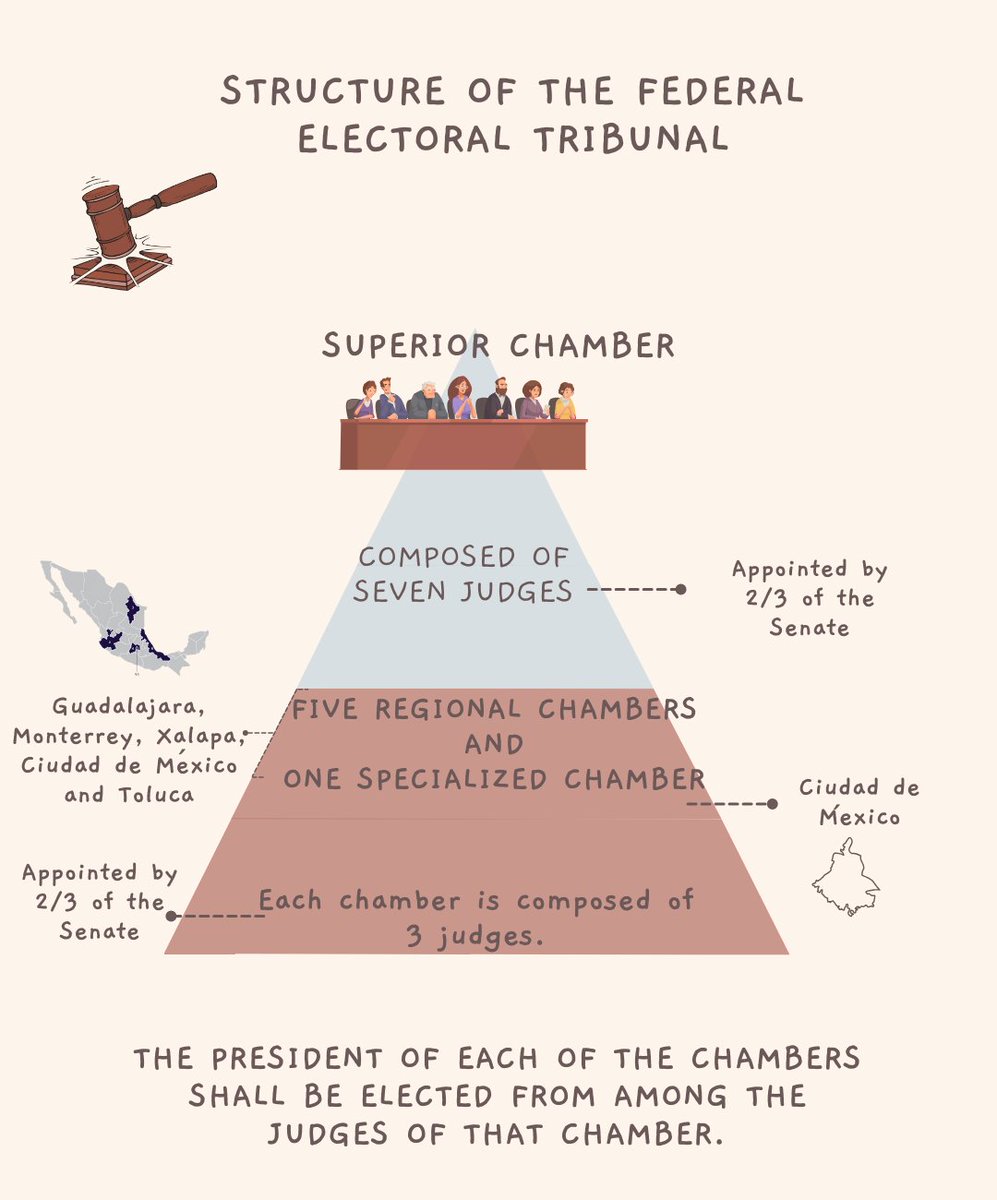
Why is it important to ensure that the Federal Electoral Tribunal in Mexico is fully integrated? #TEPJF. All about Mexico's electoral justice system in issue #9 of the Newsletter "Democratic Integrity: Mexico 2024" at:usmex.ucsd.edu/_files/democr… @Cetysuni
#DemocraticIntegrity #INE #Elecciones2024Mx
1
4
5
1,319
8 Feb 2024
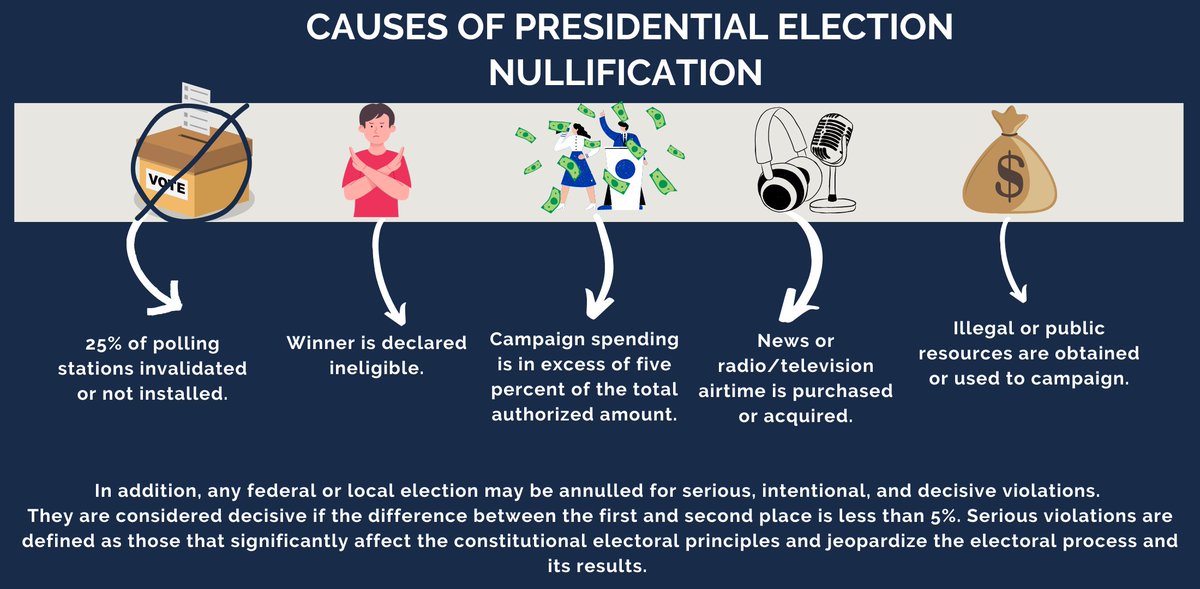
Did you know that the Electoral Tribunal #TEPJF can declare the elections null and void? Learn more about the reasons that can lead to this decision and all about Mexico's electoral justice system in issue #9 of the Newsletter "Democratic Integrity: Mexico 2024" at:usmex.ucsd.edu/_files/democr… @Cetysuni
#DemocraticIntegrity #INE #Elecciones2024Mx
2
3
980
7 Feb 2024
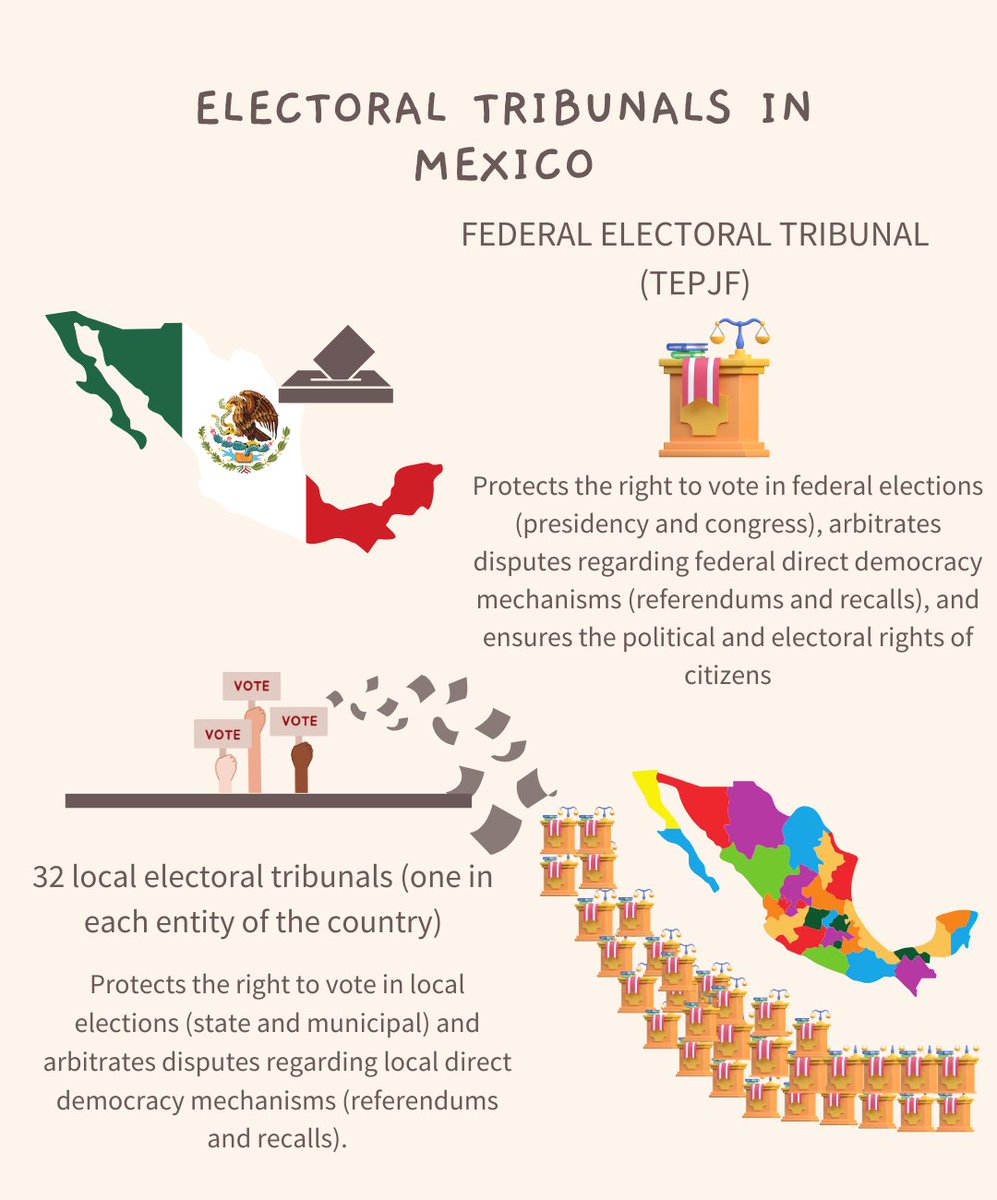
Why are electoral institutions important? How do they ensure your right to vote? All about Mexico's electoral justice system in issue #9 of the Newsletter "Democratic Integrity: Mexico 2024" at: usmex.ucsd.edu/_files/democr… @Cetysuni
#DemocraticIntegrity #INE #Elecciones2024Mx
2
4
1,174
31 Jan 2024
"Today, it can be said that there is no mass politics (i.e. modern politics) without mass media. But it can also be said that there is no mass communication without politics." Raúl Trejo Delarbre, Mediocracia sin mediaciones (Media-cracy without mediation). All about Media and Elections in issue 8 of the Newsletter "Democratic Integrity: Mexico 2024" at: usmex.ucsd.edu/_files/democr… @Cetysuni
#DemocraticIntegrity #INE #Elecciones2024Mx

4
4
1,117
30 Jan 2024
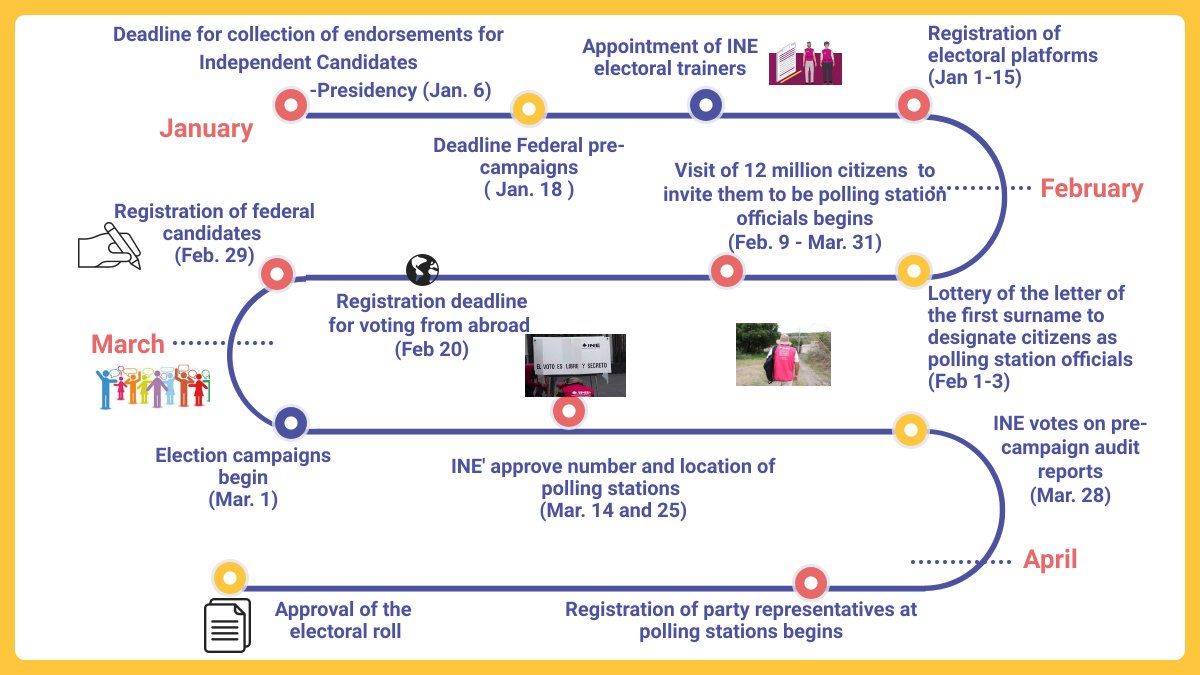
Learn about the most important dates and processes of the electoral process in Mexico in our newsletter "Democratic Integrity: Mexico 2024" at: usmex.ucsd.edu/media-center/… @Cetysuni
#DemocraticIntegrity #INE #Elecciones2024MX
3
3
941
26 Jan 2024
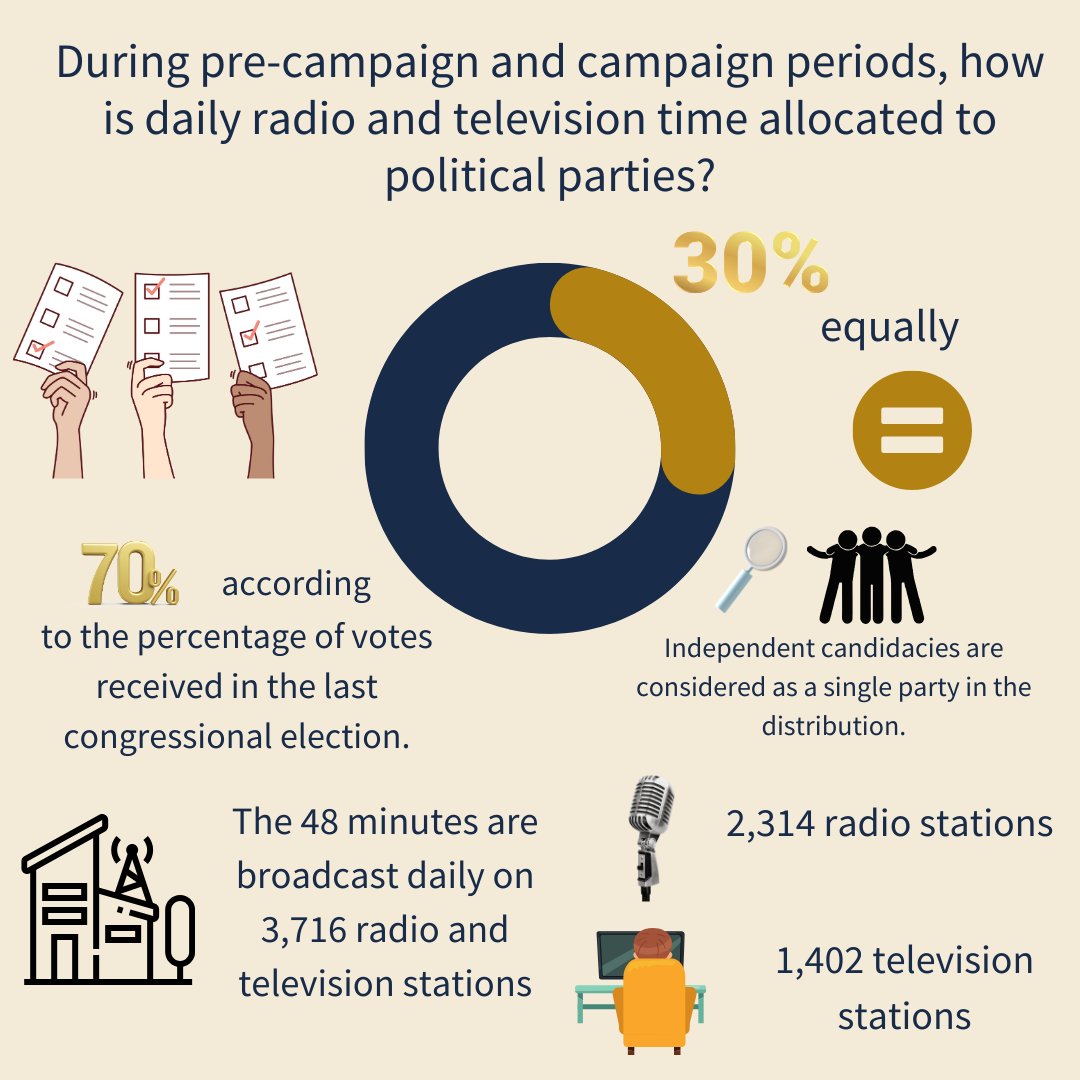
Campaigning begins on March 1. Of the 48 daily minutes that political parties and electoral authorities will have on radio and T.V., 41 will be for parties and 7 for authorities. Find out how they will be distributed in issue 8 of the Newsletter "Integridad Democrática: Mexico 2024" at: usmex.ucsd.edu/_files/democr… @Cetysuni
#DemocraticIntegrity #INE #Elecciones2024MX
3
5
1,097