
Jan 18
Day 2 post keeping the same highenergy (Jan 18, 2026). Building on the stack hype while teasing the incoming wave 🔥
Day 2 of grinding the @MindoAI ecosystem and it's only getting clearer: this isn't random drops it's a full layered beast assembling in real time 🚀🧩
Current lineup still crushing (Epochs rolling, claims for @c8ntinuum @helios_layer1 dropping next week 👀):
@helios_layer1 → ETFnative L1 revolutionizing onchain finance 📈💼
Crosschain portfolios, autostrategies, diversified baskets securing the chain. Decentralized BlackRock energy, but way hotter 😏
@c8ntinuum → Bridgeless trust layer 🔒🌐
ZK magic for seamless multichain moves no wraps, no custodians, yield recycling. The invisible glue fixing everything
@intodotspace → Public reasoning powerhouse 🧠📊
Prediction markets turning internet debates into real signal. Collective brain onchain finally
@DeepNodeAI → Rewarded open intelligence 💰🧬🔬
Contributors (data, models, compute) cash $DN for actual utility. Smarter healthcare, drugs, threat detection decentralized & paid
@TauntCoin → Interactive chaos unlocked 🎮🔥📺
Gaming live streaming predictions = viewers become players. Onchain battles, ranks, tokenized fun. Passive watching? Dead
@PerceptronNTWK → Humanverified AI data bedrock 🛡️📈
Earn $PERC feeding quality inputs via nodes. Own your data, kill centralized theft real foundation for nextgen models
The flow is chef's kiss: data (Perceptron) → verification (c8ntinuum) → intelligence (DeepNode) → reasoning (intodotspace) → attention/gaming (TauntCoin) → finance execution (Helios) ✨
And heads up new campaigns incoming next week (multiple creators teasing fresh drops from known teams) 👀💥
Stay locked in, quality content is still printing big on Mindo spam era officially over 📉➡️📈
Day 2 vibes: Which layer are you doubling down on today? Or guessing the mystery new one? Hit me 👇🚀
The snapshot for
@c8ntinuum
and
@helios_layer1
has been taken claim will be opened next week
We’ve tightened our filters and added manual review tools to exclude bots and AI slop and good creators now have greater chance to stand out
announcing new campaigns
and yes, you already know these teams well 👀
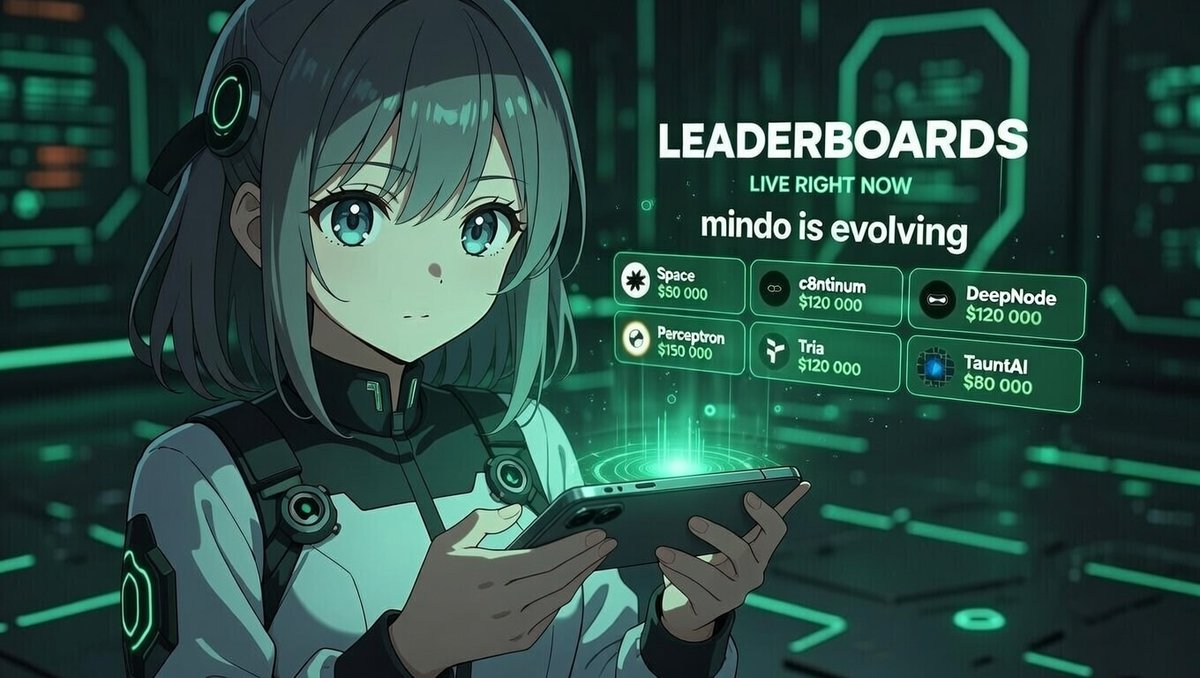

We continue to reward creators who deliver real value, not just noise
Rewards for @useTria are already live on the website and ready for claim
The snapshot for @c8ntinuum and @helios_layer1 has been taken - claim will be opened next week
We’ve tightened our filters and added manual review tools to exclude bots and AI slop and good creators now have greater chance to stand out
All the rest active campaigns @perceptronNTWK @intodotspace @TauntCoin @DeepNodeAI remain active and next week we are also announcing new campaigns - and yes, you already know these teams well 👀
26
21
173

Jan 7
Why @helios_layer1 is Revolutionizing On-Chain Finance in 2026
In a world where DeFi often feels overwhelming with constant monitoring, Helios Layer 1 stands out as the ETF-native Layer 1 blockchain that's truly built for real users. Imagine setting up automated portfolio strategies once like DCA, auto-rebalancing, and yield compounding and letting them run seamlessly in the background across multiple chains.
@helios_layer1 embeds portfolio logic directly into its protocol, treating diversified baskets as first-class citizens. Powered by innovative Interchain Proof of Stake and Reputation (I-PoSR) consensus, it secures the network with multi-chain assets (ETH, ATOM, BNB, and more) while enabling bridge-free cross-chain interoperability through Hyperion modules.
No more risky bridges or emotional trading decisions. Helios brings emotion-free, scalable portfolio management on-chain aiming to be the "BlackRock of onchain finance." With programmable rebalances via Chronos, AI-driven strategies, and tools like Forge for minting on-chain ETFs, it's unlocking autonomous DeFi innovation.
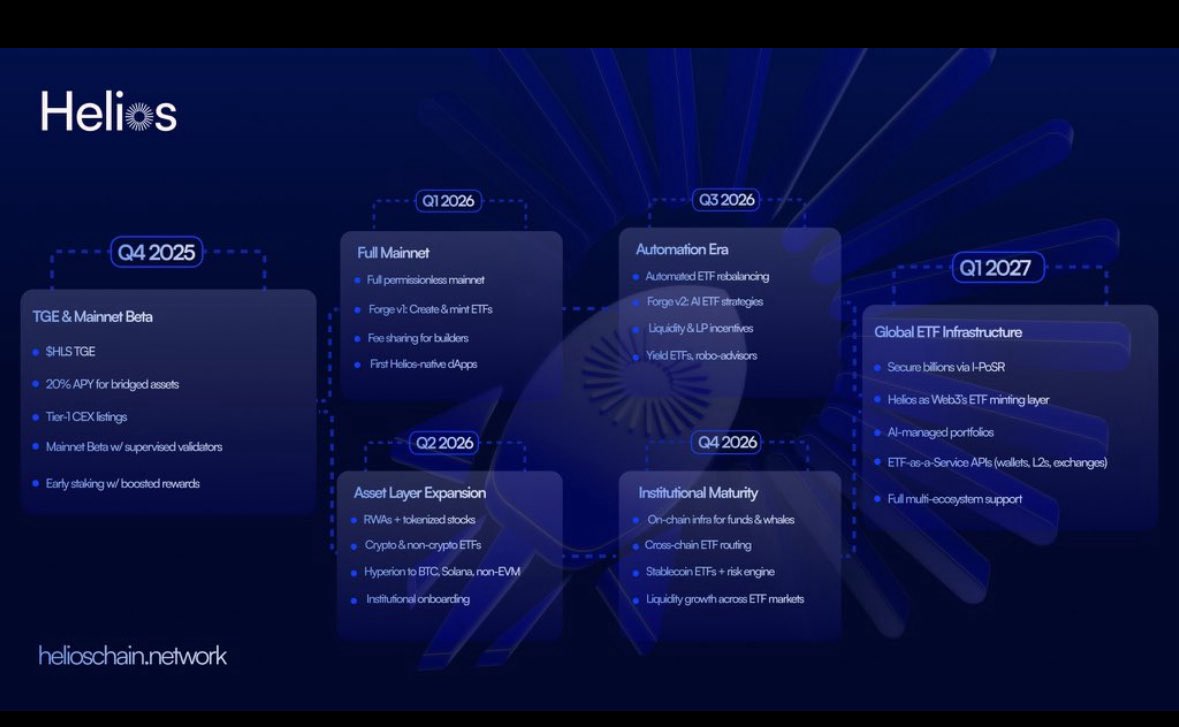
Backed by $15M funding, live beta mainnet, and $HLS token already listed, @helios_layer1 is positioned for massive growth with full mainnet in Q1 2026.
If you're tired of babysitting positions and want sustainable, diversified exposure without the hassle, Helios is the future. Set it, forget it, and watch your on-chain portfolio thrive.
#HeliosLayer1 #ETFnative #IPoSR #CrossChain #OnChainETFs #DeFiAutomation @helios_layer1
Active on MindoAI leaderboard genuine engagement driving real impact! Join the movement and climb with us. 💪

49
5
47
427

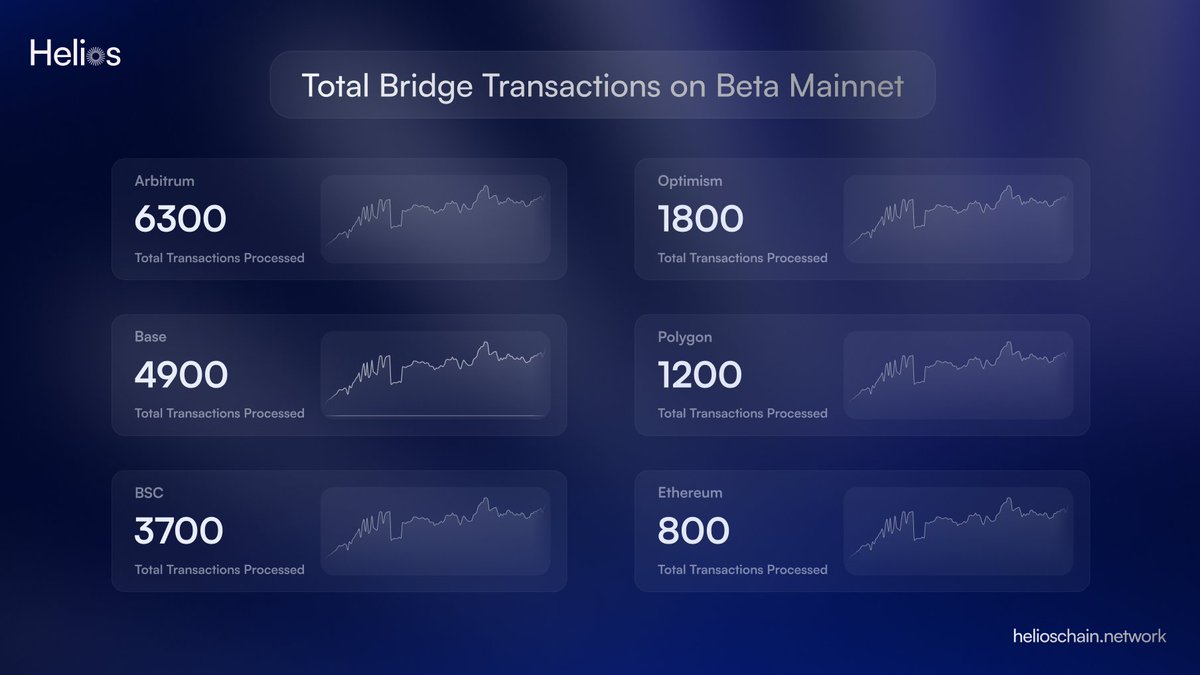
Helios Beta Mainnet을 보면
포트폴리오 상태가 먼저 고정된다는 말이
체감이 아니라 이미 작동 중인 구조라는 게 분명해집니다.
@helios_layer1 @MindoAI
중요한 건 이게
Beta에서 끝나는 실험이 아니라,
Full Mainnet(Q1 2026 예정)에선 프로토콜의 기본값이 된다는 점입니다.
지금 Beta에서 Deposit하면
자산이 미러링된 포트폴리오 상태가 만들어지는데,
Full Mainnet에선 이 상태가
온체인 ETF minting의 출발점이 됩니다.
이 상태부터 시작하세요 가 아니라
이 상태가 이미 기본으로 주어진다 에 가까운 구조입니다.
ETF를 만들든 커스텀하든
출발선을 다시 만들 필요가 없어집니다.
I-PoSR가 본격적으로 활성화되면
멀티체인 자산(ETH, BTC, USDC 등)은
단순히 포트폴리오 안에 머무르지 않고
네트워크 보안에 직접 기여하게 됩니다.
포트폴리오 상태 자체가
Helios 네트워크에서 validator 역할을 맡고,
자산은 네트워크를 지키면서 동시에 보상을 받는 구조입니다.
Hyperion과 Chronos가 풀 가동되면
브릿지 없이 멀티체인 자산을 그대로 사용하고,
자동 리밸런싱·컴파운딩·DCA·수익 최적화가
프로그래머블하게 이어집니다.
지금 Beta에서 느껴지는
상태가 유지된다 는 감각은
Full Mainnet에선
상태가 자동으로 진화한다 는 단계로 넘어갑니다.
#Helios #HLS #Mainnet #ETFNative

2025 was a big year for Helios ☀️
We went from testnet seasons to Mainnet Beta with real assets, and closed the year with the $HLS TGE.
None of it would’ve been possible without the community that showed up, tested early, gave feedback, and stuck with us.
Thank you for being part of the journey.
Happy New Year.
Onwards into 2026
17
21
366

Bridge fatigue is real.
Helios removes it entirely with bridge-free cross-chain portfolios built into the protocol itself.
One deposit. Full market exposure.
#Helios #crosschain #ETFnative #Layer1DeFi #multichain #cryptoeducation #HLS
30
7,312
Crypto ETFs are no longer a theory
Helios is building ETF-native portfolios directly on-chain - automated, diversified, and multi-chain
If you ever want passive crypto exposure without stress, this is worth understanding
#Helios #ETFnative #Layer1DeFi #Web3 #cryptoportfolio
35
7,280

30 Dec 2025
Welcome to a new era in on-chain investing with @helios_layer1. This platform takes individual tokens and turns them into secure and diversified ETFs on a dedicated Layer 1 blockchain.
#Helios #ETFnative #Web3
5
3
4
7,819

30 Dec 2025
Day 3 — ETFs finally make sense.
I used to hear “ETF” and immediately get confused… until someone explained it in the simplest way ever:
➡️ Stop buying one thing. Start buying a basket.
That single idea changed how I see investing.
And now @helios_layer1 is bringing that same ETF logic into crypto, BTC, ETH, AVAX, stables… all in one balanced basket.
One decision. Many assets.
#Helios #ETFNative
52
5
60
71,613

26 Dec 2025
🎄 Christmas này mình dành thời gian nhìn lại portfolio và thấy đúng là DeFi đang quá rối.
Nhiều chain, nhiều asset, quản lý thủ công, rủi ro thì nằm khắp nơi. Đó là lý do mình chú ý tới @helios_layer1 ($HLS).
Helios không phải thêm một chain để farm, mà là một ETF-Native Layer 1 nơi portfolio đa chain, có cấu trúc và tự động được build ngay từ hạ tầng.
Điểm mình đánh giá cao:
✅ Chronos tự động DCA, rebalance và chốt lời
✅ Hyperion giúp execute cross-chain an toàn, không cần bridge truyền thống
✅ I-PoSR bảo mật bằng basket tài sản liên chuỗi, thay vì stake một token đơn lẻ
Nói đơn giản: Trong lúc mình nghỉ lễ, Helios vẫn tự cân bằng portfolio, quản lý rủi ro và compound lợi nhuận hướng tới ~20% APY.
Nếu anh em thích DeFi nhưng muốn ít stress hơn, có cấu trúc hơn, thì Helios là cái tên rất đáng theo dõi thời điểm này.
Trải nghiệm thử: app.helioschain.network
Hiện tạiHelios hiện cũng đang có mặt trong BingX SpotBlast với $20,000 HLS Prize Pool: bingx.com/kol-blaster?projec…
Merry Christmas 🎄Chuẩn bị một năm mới bullish hơn
#Helios #HLS #ETFNative #Layer1 #DeFi #BingXSpotBlast
32
29
16,292

25 Dec 2025
In a space that keeps reinventing exposure, @helios_layer1 takes a different approach.
ETFnative design treats diversification, rebalancing, and risk management as system level properties, not products layered on top.
Instead of wrappers or manual decisions, ETF logic lives directly at the asset layer, where composability and automation work together by default.
It’s less about chasing outcomes, and more about building infrastructure that understands complexity from the start.

60
65
319

25 Dec 2025
Talking about @helios_layer1's tech. I like the most is Chronos feature, that is Helios' native automation module.
✅ For on chain ETFs, index funds, or yield baskets, it can periodically adjust asset allocations to maintain target weights, take profits during market pumps, or respond to volatility.
✅ Profits or dividends from portfolios can be automatically distributed to holders, or yields can be compounded without user action.
✅ Supports dollar-cost averaging (DCA), protocol-owned liquidity management, scheduled governance actions, or conditional triggers based on cross-chain events.
✅Builders can create self-managing products like autonomous index funds that require no ongoing maintenance, reducing complexity and centralization risks.
It's a core reason Helios positions itself as the ETFnative Layer 1, where portfolios can truly run themselves.
#Helios

24 Dec 2025

Soaring with @helios_layer1, the ETF native Layer 1 that's turning my fragmented crypto portfolios into seamless, AI rebalanced powerhouses.
With low effords such as no more chain hopping or manual tweaks.
Deposit once, get diversified exposure across ETH, BTC, stables & RWAs, secured by multi-asset I-PoSR consensus
Chronos handles the automation: rebalancing, yield optimization, dividends – all on-chain.
$HLS TGE just hit, mainnet beta live, and the vision is clear: building the BlackRock of decentralized finance.
#Helios
15
2
15
1,890

24 Dec 2025
I wanted to see if Helios could actually remove the multichain headache, so I set up a simple experiment last week: a three-asset basket with DCA into BTC, ETH and stables, split across chains, and let the system run. The change was immediate. No bridging tabs. No waiting rooms. No juggling wallets. @helios_layer1 treats portfolios as first-class citizens, and the protocol handles allocation and rebalancing without me babysitting every move. It felt like the chain itself became the portfolio manager rather than another app bolted on top
Under the hood, the security design is what flipped my mental model. Hyperion Security gives native-level safety for cross-chain actions, so you’re not routing value through fragile wrappers. I-PoSR consensus pushes alignment beyond “who has the most stake” by combining multichain collateral with reputation. And Helios doesn’t rely on a single token to secure itself it’s backed by a diversified interchain basket (WETH, WBNB), which is a more honest approach to resilience than single-asset security. That’s the kind of base layer you want if you care about structured crypto finance, not just weekend volatility
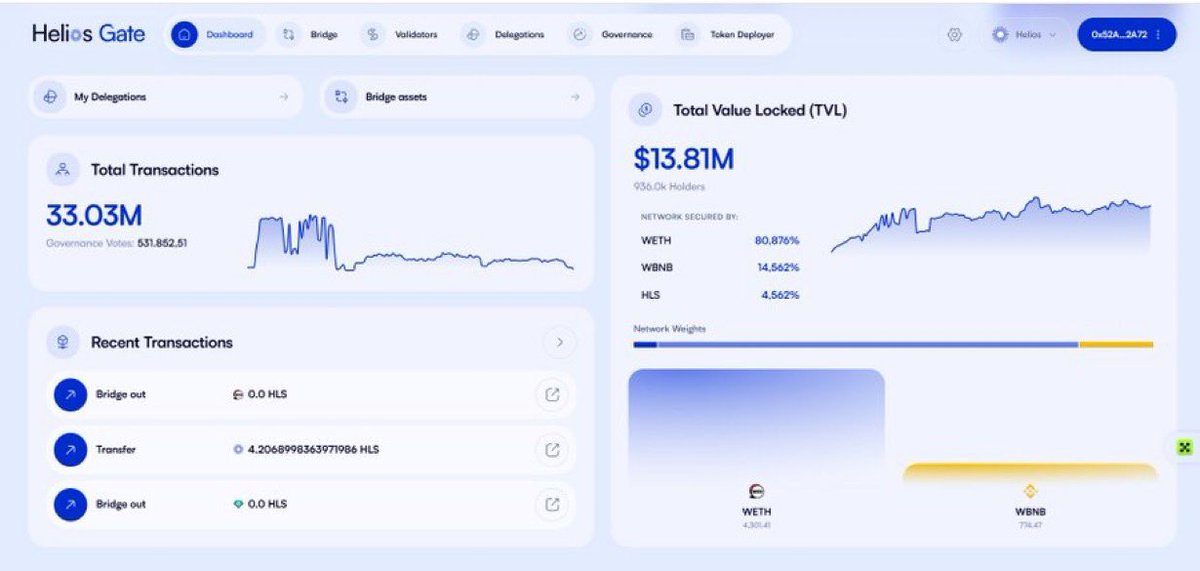
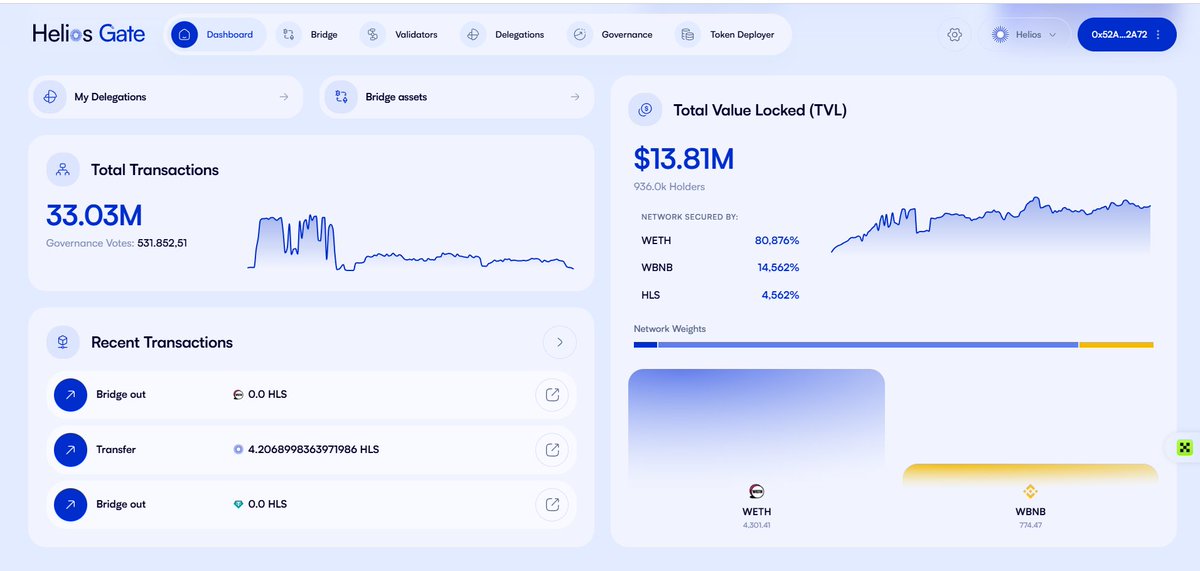
Numbers matter too. 33M transactions processed. ~$13.8M TVL. Nearly 1M wallets before the native token even launched. Now $HLS is live and trading on @BingXOfficial with #BingXSpotBlast, and Helios is still shipping with the same quiet, iterative pace instead of chasing noise. Forge is rolling out to bring ETF logic fully on-chain (think automated L2 baskets, stable diversification, market-cap indices). Tokenomics earmark 15% to community a rarity these days which lines up with how they’ve been distributing opportunities so far
If you want to replicate my setup, here’s what worked:
• Connect your EVM wallet and pick a basket that matches your thesis
• Set allocations DCA cadence and enable auto-rebalance at the protocol level
• Keep assets in-system and let Helios execute cross-chain actions natively
• Optional yield: bridge into mainnet beta and earn ≈20% APY, including stables
• Track $HLS liquidity and exposure on exchanges without overcomplicating your stack
I also plugged into @MindoAI to stay aligned with campaigns. It’s where the Helios community is actually active: leaderboards, content bounties, ongoing reward tracks. First airdrop for early supporters is rolling out make sure your wallet KuCoin UID are linked on the Helios app before the Dec 23, 2025 deadline. If you’re farming mindshare anyway, Mindo makes it simple to stay positioned while you build a real position
Most L1s feel like slot machines. This felt like infrastructure. Security handled at consensus, portfolios made programmable, and cross-chain execution that doesn’t punish you for staying diversified. Less micromanaging, more clarity. Less fragility, more structure
Are you already building baskets on @helios_layer1 and stacking @MindoAI points for the airdrop, or still juggling bridges and dashboards hoping nothing breaks on the next rebalance? #Helios #Layer1 #ETFNative #BlockchainSecurity #HLS #BingXSpotBlast #MindoAI
24 Dec 2025

Managing crypto across chains used to be the part I dreaded most: bridge here, swap there, rebalance, track fees, repeat. I wanted something closer to “set allocation, walk away.” So I trialed @helios_layer1 this week and it felt different in practice like ETF logic moved down to the base layer instead of bolted on top
What clicked for me:
- Portfolios are the primitive. You pick a basket (think “onchain ETF”), set weights, and the network handles deployment and rebalancing across chains by design
- Bridge-free execution. Strategies run natively without fragile wrappers, so you’re not juggling bridge risk just to maintain allocation
- Automation is the default. DCA, rebalance windows, and profit-taking aren’t “features,” they’re protocol behaviors
My zero-fluff path to get started:
1) Link wallet on mainnet beta
2) Choose a portfolio template or set custom weights
3) Fund with stables/crypto and confirm execution
4) Let the chain orchestrate cross-chain ops in the background
5) Optional: stake $HLS for up to ~20% APY while you watch the strategy do the boring work
If you were on testnet/early lists, there’s also a live claim window that requires action (not just a snapshot). Steps I followed:
- Connect the same wallet you used
- Add your exchange UID (I used KuCoin)
- Verify ownership
- Claim before Dec 23, 2025, 23:59 UTC
Allocation: 7.5M $HLS across 400K supporters it’s more about signal than size
Why I’m paying attention beyond UX:
- Security posture: I-PoSR consensus (secured by a diversified interchain basket) Hyperion Security for native cross-chain actions
- Direction over noise: mainnet beta live, token just launched, early infra focus vs hype cycles
- Real stats already shared: 33M tx processed, ~$13.8M TVL, nearly 1M wallets and first L1 to be hosted on Mindo
- Near-term catalyst: Helios Forge is set to land on #Arbitrum, turning TradFi ETF logic into onchain smart-contract portfolios (L2 exposure baskets like ARB/OP/MATIC, stable diversification, market-cap indices, DeFi blue-chip sets)
I’ve tried enough chains that promise “scale” while leaving users to duct-tape tools together. This feels like the opposite: a chain for capital coordination where portfolios, not single tokens, are the core building block. Clean, boring, and purposeful exactly what long-term structures should be
If your goal in 2025 is less micromanagement and more structured exposure, you’ll probably get why $HLS and @helios_layer1 are interesting. Curious where you stand are you still managing tokens one by one, or ready to let the base layer manage the basket for you?
59
43
389

24 Dec 2025
Most Layer1 chains today are chasing the same narratives: DeFi, NFTs, gaming, memes.
But almost no one is asking the obvious question:
🧩 Why isn’t there a blockchain purpose built for real financial products like ETFs, stocks, and funds?
@helios_layer1 is quietly building what others have ignored.
It’s not trying to do everything. Instead, it’s going deep where others go broad creating the first ETF native L1.
🔹33M transactions already processed
🔹$13.8M in TVL from nearly 1M wallet
🔹Secured by multiple assets (WETH, WBNB), not just its own token
All this before its native token has even launched.
While most blockchains are chasing trends, Helios is building rails the kind that could carry real capital onchain.
This isn’t just another L1.
It might be the one we’ve been waiting for.
Join with me to share the $18,000 Prize Pool
>>>> bingx.com/invite/7YHZPO
@BingXOfficial #Helios #ETFNative #Layer1 #BingX
37
1
31
608
23 Dec 2025
look at @helios_layer1 appears to be targeting a niche but potentially lucrative market: on-chain structured finance a trend attracting attention from large organizations. If they can address the challenges of legal compliance, liquidity, and UX, this could be a Layer1 option worth watching in the next cycle.
Join with me to share the $18,000 Prize Pool
>>>> bingx.com/invite/7YHZPO
@BingXOfficial #Helios #ETFNative #Layer1 #BingX
22 Dec 2025

A quick breakdown on why Helios is worth watching:
☘️ Helios | The ETF-Native Layer 1
@helios_layer1 is building a new kind of onchain finance a Layer 1 blockchain purpose built for ETF and structured financial products.
While most L1s today chase DeFi, NFTs, or gaming, Helios is focused on real finance a place where ETFs, stocks, funds, and complex instruments can actually live and move natively onchain.
So what makes Helios different?
🔹 ETF Native Design
Helios doesn’t just support ETF it’s designed from the ground up to meet the needs of institutions that want to issue ETFs directly onchain.
🔹 Multi chain Consensus
Instead of relying on a single chain, Helios uses a multi chain consensus model, combining security and data from multiple blockchain. That’s a big deal wen handling sensitive financial assets.
🔹 Clear and focused vision
This isn’t trying to be a “do it all” chain like Ethereum. Helio goes straight at one of Web3 is biggest blind spots: the lack of infrastructure purpose-built for traditional financial assets.
Why keep an eye on Helio early?
The project is $L1 token hasn’t launched yet, but the ecosystem is already taking shape.
Strong positioning to capture institutional capital flows into tokenized finance.
> Web3 has tokenized art, games, and memes now it’s time for finance.
Helios isn’t riding the wave.
They’re building the rails so real capital can flow onchain.
Join with me to share the $18,000 Prize Pool
>>>> bingx.com/invite/7YHZPO
@BingXOfficial #Helios #ETFNative #Layer1 #BingX
3
4
779

23 Dec 2025
Crypto isn’t short on alpha.
It’s short on coordination.
Liquidity lives everywhere, across L1s, L2s, and app-specific chains. Most investors already hold multi-chain exposure, yet managing it still depends on bridges, manual reweights, and fragile trust layers.
This is the problem Helios was built to solve.
@helios_layer1 isn’t chasing speed records or fee wars. It’s the first blockchain purpose-built for structured onchain finance, where ETFs, index products, and yield baskets are treated as core protocol functions, not external add-ons.
With Helios:
•Portfolio rules are native to the chain
•Allocation weights and rebalancing execute automatically
•Cross-chain deployment happens at the protocol level
That’s how fragmented assets become investable products.
That’s how passive strategies graduate from dashboards to infrastructure.
ETF-style DeFi can’t fully mature on general-purpose chains.
It requires a chain designed specifically for it.
Helios is delivering that,together with @BingXOfficial.
Earn up to 20% APY on Helios
app.helioschain.network
Join the campaign
bingx.com/kol-blaster?pr…
BingX Invite Code: RAC5AH
#Helios #StructuredDeFi #ETFnative #Layer1 #DeFi #BingXSpotBlast
2
2
44

23 Dec 2025
Helios (@helios_layer1) is blazing a trail in onchain finance as the first ETFnative Layer 1, and its postTGE momentum is turning heads across the DeFi space. Heres your deep dive into what makes this project a standout:
🚀 PostTGE Highlights
HLS Token Live: Officially launched on December 19, 2025, with trading now active on BingX, KuCoin, MEXC, LBank, and Weex.
1M Rewards Pool: BingX is hosting a massive campaign for deposits and trades, giving users a chance to earn from a milliondollar prize pool.
Invite Code: Use 1YSGRT on BingX to unlock exclusive bonuses and campaign perks.
🧠 Core Innovations
Chronos Engine: Automates portfolio rebalancing, yield optimization, and strategy execution no manual intervention needed.
CrossChain Execution: Powered by Hyperion, enabling bridgeless ETF composition across chains like Ethereum and Arbitrum.
Helios Forge: A permissionless ETF builder where users can:
Deposit USDC or other assets
Create or invest in multiasset, yieldgenerating portfolios
Enter and exit positions seamlessly
🌐 Ecosystem & Backing
Built on Ethereum & Arbitrum: Leveraging toptier infrastructure for scalability and security.
Grants & Partnerships: Supported by ecosystem partners including Arbitrum and backed by Bolts Capital with 15M in funding.
Mainnet Launch: Scheduled for Q1 2026, alongside developer onboarding and SDK releases.
📈 Why It Matters
Helios is redefining DeFi investing by:
Bringing ETFstyle diversification to crypto.
Eliminating the need for bridges and centralized asset managers.
Offering AIpowered, automated strategies for both retail and institutional users.
🏁 How to Get Started
Trade HLS on BingX with invite code 1YSGRT.
Explore Helios Forge to build or invest in permissionless ETFs.
Join the rewards campaign to earn from the 1M pool.

1
1
4
2,244
23 Dec 2025
Helios (@helios_layer1) is rapidly emerging as a powerhouse in the onchain finance space, blending TradFi structure with Web3 innovation. Here’s a full breakdown of what’s fueling the momentum:
🚀 PostTGE Momentum
HLS Token is now live on BingX, with additional listings on KuCoin, MEXC, LBank, and Weex.
Spot Campaigns: Active traders can earn USDT and HLS rewards through BingX’s ongoing spot events.
Invite Code: Use 1YSGRT to join BingX and unlock bonus rewards.
🧠 Core Features of Helios
Helios Forge: A permissionless ETF engine enabling:
Native multiasset staking (ETH, BNB, AVAX, etc.)
Automated rebalancing of ETF portfolios
Seamless entry/exit without bridges or liquidity fragmentation
Crosschain ETF Infrastructure: Powered by Hyperion and Chronos for strategy automation and liquidity routing.
🌐 Ecosystem Growth & Collaborations
MindoAI Creator Campaign: A $120K leaderboard rewards video creators and influencers promoting Helios.
IDOs on Polkastarter & Spores: Expanding access and community reach through trusted launchpads.
Testnet Stats:
3.5M wallets
30M transactions
Signals strong premainnet traction and user interest.
💡 Why It Matters
Helios is pioneering a Layer 1 ETFnative chain, offering a new paradigm for DeFi investing:
TradFistyle diversification with cryptonative automation
No bridges, no silos just seamless, onchain portfolio management
Backed by Bolts Capital with $15M in funding.
🏁 What’s Next
Mainnet Launch: Slated for Q1 2026, along with developer onboarding and SDK releases.
Airdrop Claims: KuCoin users must link UIDs by Dec 23 to qualify.
Creator Campaigns: Still open great opportunity for content creators to earn from the $120K pool.

1
3
32
23 Dec 2025
The next phase of crypto won’t be defined by how many tokens exist.
It will be defined by how capital is structured.
@helios_layer1 ($HLS) rethinks what a Layer 1 should do, shifting the focus from processing transactions to orchestrating portfolios.
Rather than scattered liquidity and siloed networks, Helios introduces an onchain framework where assets are grouped, optimized, and deployed automatically across ecosystems.
Why Helios is different:
•Portfolio rules are embedded directly into the base protocol
•Multi-chain assets operate inside a single coordinated system
•Strategies run natively, continuously, and with full transparency
This isn’t simply another L1 competing for block space.
It’s an operating layer designed for structured onchain finance.
Part of the Blast To Earn campaign with @BingXOfficial
#Helios #HLS #ETFnative #Layer1 #DeFi #BingXSpotBlast
1
3
45

22 Dec 2025
Good morning crypto fam! ☀️
Waking up pumped with energy from @helios_layer1 – the first ETF-native Layer 1 blockchain!
Stake multi-chain assets, get auto-rebalanced portfolios powered by AI Chronos, seamless cross-chain via Hyperion, and rock-solid security with I-PoSR.
$HLS just crushed its TGE, mainnet launching Q1 2026. The era of structured DeFi is here!
Who's holding $HLS? GM everyone! @BingXOfficial
#Helios #ETFNative #BingXSpotBlast #Web3Community
106
55
113
5,822
22 Dec 2025
A quick breakdown on why Helios is worth watching:
☘️ Helios | The ETF-Native Layer 1
@helios_layer1 is building a new kind of onchain finance a Layer 1 blockchain purpose built for ETF and structured financial products.
While most L1s today chase DeFi, NFTs, or gaming, Helios is focused on real finance a place where ETFs, stocks, funds, and complex instruments can actually live and move natively onchain.
So what makes Helios different?
🔹 ETF Native Design
Helios doesn’t just support ETF it’s designed from the ground up to meet the needs of institutions that want to issue ETFs directly onchain.
🔹 Multi chain Consensus
Instead of relying on a single chain, Helios uses a multi chain consensus model, combining security and data from multiple blockchain. That’s a big deal wen handling sensitive financial assets.
🔹 Clear and focused vision
This isn’t trying to be a “do it all” chain like Ethereum. Helio goes straight at one of Web3 is biggest blind spots: the lack of infrastructure purpose-built for traditional financial assets.
Why keep an eye on Helio early?
The project is $L1 token hasn’t launched yet, but the ecosystem is already taking shape.
Strong positioning to capture institutional capital flows into tokenized finance.
> Web3 has tokenized art, games, and memes now it’s time for finance.
Helios isn’t riding the wave.
They’re building the rails so real capital can flow onchain.
Join with me to share the $18,000 Prize Pool
>>>> bingx.com/invite/7YHZPO
@BingXOfficial #Helios #ETFNative #Layer1 #BingX
79
1
67
2,088

22 Dec 2025
Meet @helios_layer1, the first ETF-Native Layer1 project building a platform for smart, decentralized investing in Web3.
Helios uses ETFs, stablecoins, and RWAs to create diversified portfolios that reduce risk and increase stability with their AI system automatically balancing portfolios for steady returns.
Helios is also connecting users, assets, and institutions across different blockchains with the goal to make investing automated, open, and intelligent.
When a project has such a clear and direct narrative, it's easier to align and build with the team. Supporting all the way from @BingXOfficial.
#Helios #HLS #ETFnative #DeFi #L1 #BingXSpotBlast

27
2
29
16,128