
Feb 12
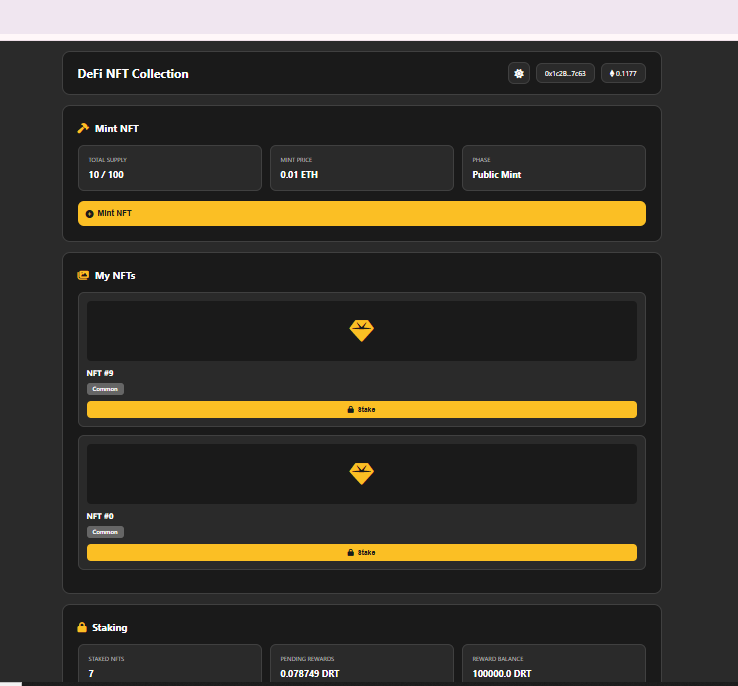
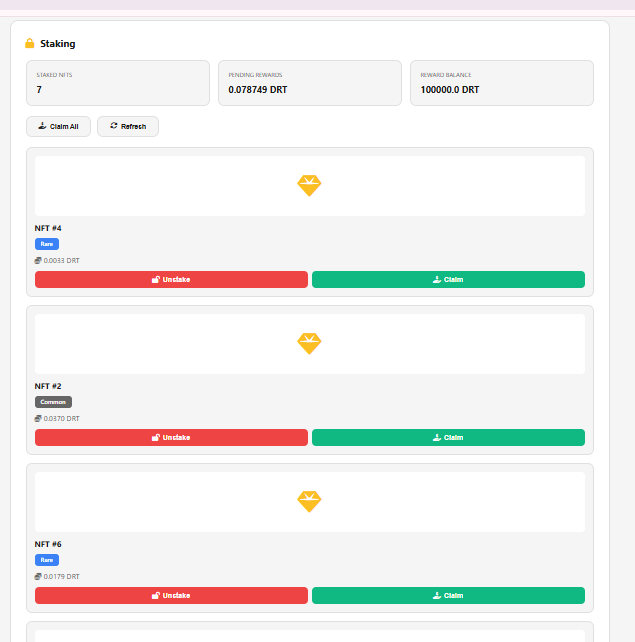
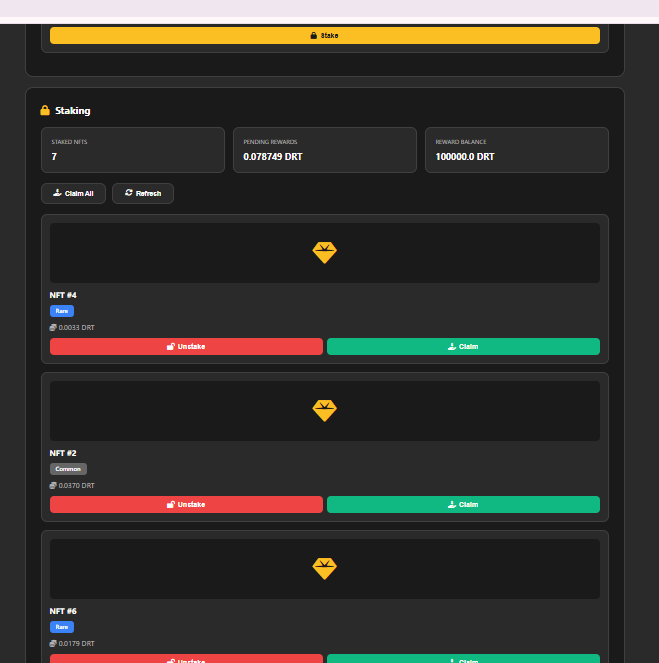
MINTING, STAKING, CLAIMING & UNSTAKING IN ACTION..
#Web3 #Blockchain #Solidity #SmartContracts #NFT #DeFi #EngineerBasecamp #BuildInPublic #LearnInPublic #BlockchainDevelopment #Ethereum #Web3Developer #CohortLearning #TechEducation #SoftwareEngineering #DeFiDevelopment #NFTStaking #CryptoInnovation #Hardhat #OpenZeppelin #FullStackDeveloper #TechJourney #CareerGrowth #Innovation #Decentralization
1
3
74
Feb 12
MINTING, STAKING, CLAIMING & UNSTAKING IN ACTION..
#Web3 #Blockchain #Solidity #SmartContracts #NFT #DeFi #EngineerBasecamp #BuildInPublic #LearnInPublic #BlockchainDevelopment #Ethereum #Web3Developer #CohortLearning #TechEducation #SoftwareEngineering #DeFiDevelopment #NFTStaking #CryptoInnovation #Hardhat #OpenZeppelin #FullStackDeveloper #TechJourney #CareerGrowth #Innovation #Decentralization
1
6
80
Feb 12
Building My First DeFi NFT Staking Platform
Four weeks ago, I started Engineer Basecamp Cohort 2 (Web3 Track) @eng_network_gb , and this week's task pushed me to build something I never thought I could - a complete DeFi NFT collection with staking mechanics. Today, it's live on Sepolia testnet, and I'm still processing everything I learned.
Deployed: nft-collection-pied-chi.verc…
The Challenge
Week 4 task: Build an NFT collection where holders can stake their NFTs and earn ERC-20 rewards over time. Different rarity levels earn different rewards. Include whitelist minting, royalties, and deploy to testnet.
Reading the requirements, I thought "this is impossible." But I started anyway.
What I Built
ERC-721 NFT Collection (100 max supply)
Three rarity tiers using Chainlink VRF for provably fair randomness
ERC-20 Reward Token with controlled minting
Time-based staking system (Common: 1 token/day, Rare: 3/day, Legendary: 10/day)
Full-stack frontend with MetaMask integration
38 passing tests
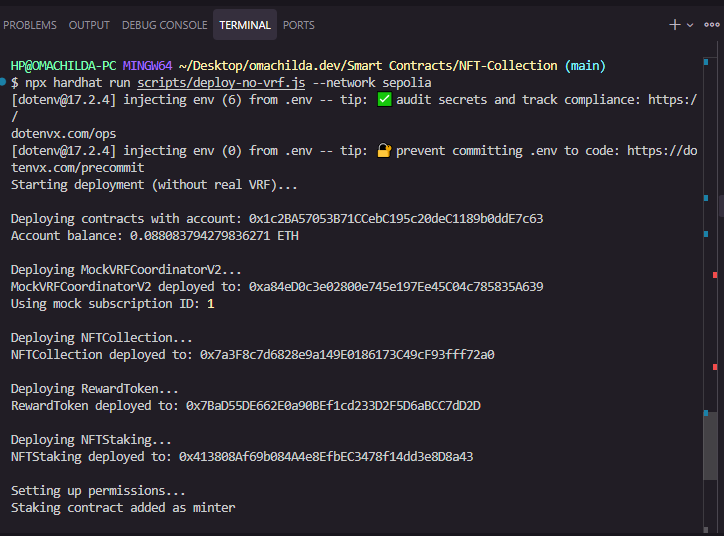
Deployed and verified on Sepolia
The Reality Check
The first time I tried to deploy, I got "out of gas" errors. I didn't understand why.
The first time I wrote the staking logic, I had a reentrancy vulnerability. I didn't even know what that meant.
The first time I connected the frontend, nothing worked. MetaMask kept rejecting transactions.
But each error taught me something.
What I Actually Learned
Security isn't optional. In traditional web dev, a bug means a broken feature. In blockchain, a bug means lost funds. Every line of code needed to be bulletproof. ReentrancyGuard, access control, input validation - these aren't buzzwords, they're necessities.
Gas costs are real money. I learned to think about every operation differently. Using uint8 instead of uint256 for rarity? That saves users money. Deleting storage after unstaking? That refunds gas. These micro-optimizations matter.
Testing saves you. Writing 38 tests felt tedious until one test caught a critical bug in my reward calculation. That one test potentially saved users from losing rewards. Now I understand why blockchain developers are obsessed with testing.
Web3 UX is hard. Making users sign transactions, wait for confirmations, switch networks - it's clunky compared to Web2. But that's the challenge we need to solve for mass adoption.
Standards enable composability. By following ERC-721 and ERC-20 standards, my contracts automatically work with existing wallets, marketplaces, and tools. That's the power of blockchain.
The Breakthrough Moment
It was 2 AM when I finally got the staking rewards calculation working correctly. I staked an NFT, waited 5 minutes, claimed rewards, and saw the tokens appear in my wallet. That moment - seeing value flow through code I wrote - that's when it clicked.
This isn't just code. It's a financial system. And it works.
What's Next
This project taught me I can build real blockchain applications. Not just understand concepts, but actually ship working DApps.
Week 4 broke me and rebuilt me as a blockchain developer.
#Web3 #Blockchain #Solidity #SmartContracts #NFT #DeFi #EngineerBasecamp #BuildInPublic #LearnInPublic #BlockchainDevelopment #Ethereum #Web3Developer #CohortLearning #TechEducation #SoftwareEngineering #DeFiDevelopment #NFTStaking #CryptoInnovation #Hardhat #OpenZeppelin #FullStackDeveloper #TechJourney #CareerGrowth #Innovation #Decentralization
1
1
12
474
