
Step into the world of decentralized finance with our DeFi Development Services
We build DeFi platforms such as decentralized exchanges, staking platforms, lending solutions, and yield farming applications.
Visit: koinkart.org/defi-developmen…
#DeFiDevelopment #DeFi #Blockchain
2

May 14
🗞️ #Solana odaklı hazine şirketi #DeFiDevelopment (DFDV), ilk çeyrekte zarar açıklamasına rağmen hisse başına düşen $SOL miktarını son bir yılda yüzde 108 artırdığını duyurdu. Şirketin hisse başına #SOL oranı 0,0322’den 0,0670’e yükselirken toplam SOL varlığı 2,29 milyon adedi aştı.
DFDV, büyümenin #staking, doğrulayıcı operasyonları ve zincir üstü #DeFi stratejileri sayesinde gerçekleştiğini belirtti. CEO Joseph Onorati, Solana ekosisteminin #Bitcoin merkezli rezerv modellerine kıyasla daha fazla getiri ve kullanım alanı sunduğunu ifade etti.
Şirketin geliri yıllık bazda güçlü artış gösterse de dijital varlıklardaki değer kaybı nedeniyle net zarar 83,4 milyon dolara yükseldi. DFDV ayrıca 2028’e kadar hisse başına 1 SOL hedefini koruduğunu açıkladı.
1
4
491

May 13
Need a DeFi development company for production-ready blockchain platforms with secure, scalable smart contract systems.
Visit us >> kryptobees.com/defi-developm…
#DeFiDevelopment #Blockchain #Crypto #SmartContracts #DecentralizedFinance #Web3 #USA #Singapore #UAE #India #Canada
1
3
28

Launch Your Own DeFi Exchange Today! Build a powerful PancakeSwap Clone with CoinsQueens your gateway to the booming DeFi world!
coinsqueens.com/blog/pancake…
#PancakeSwapClone #DeFi #DEX #BSC #YieldFarming #CoinsQueens #CryptoExchange #Web3 #Blockchain #DeFiDevelopment
2
50

Mar 19
5/5
Developers, STON.fi has you covered. SDKs, APIs, and Omniston integration make building and deploying DeFi products on TON easy and powerful.
@ston_fi
#DeFiDevelopment #TONBuilders #STONfi
🔗 Learn more: ston.fi
2
21

Feb 21
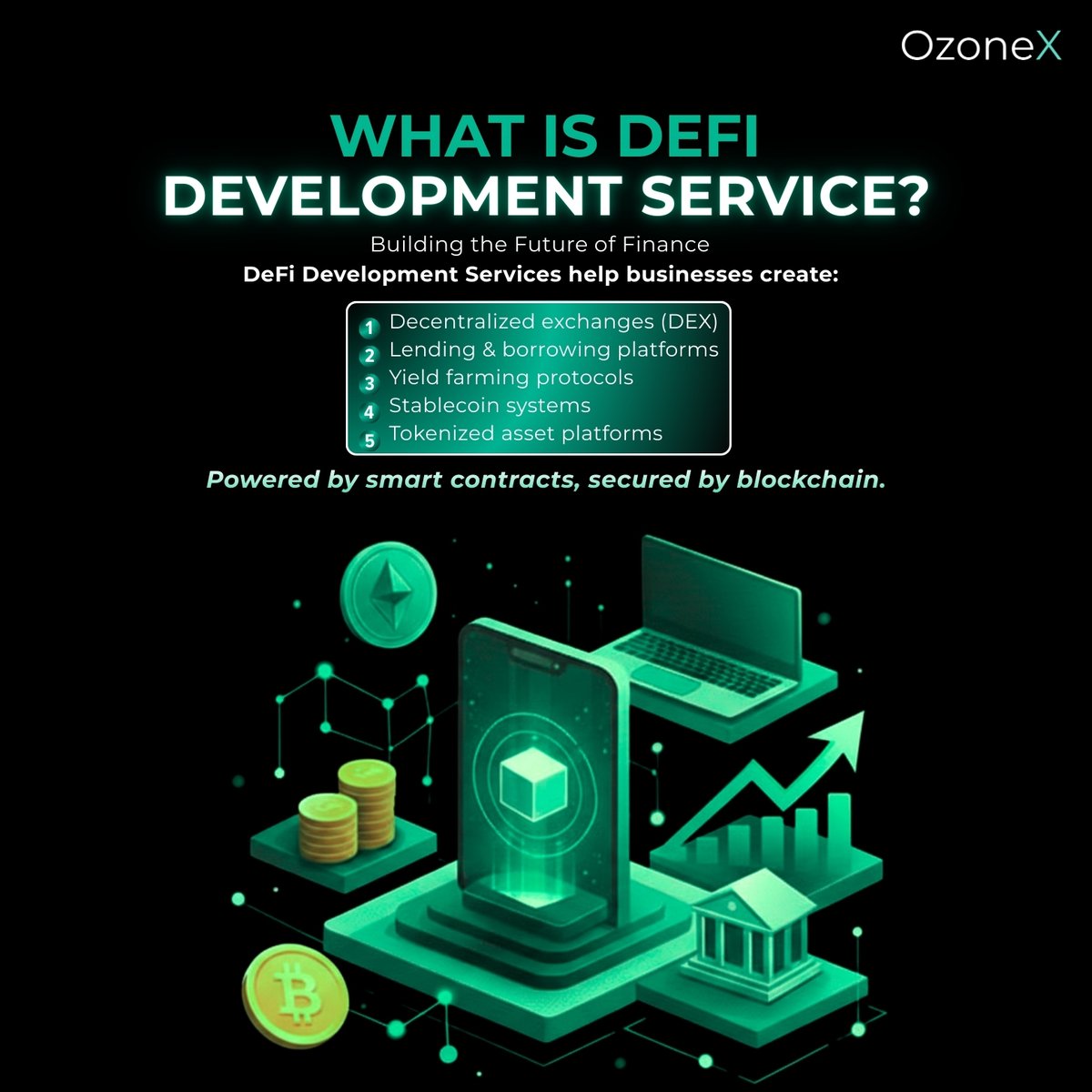
Behind every successful crypto platform is solid engineering 🛠️
From decentralized trading platforms to lending ecosystems and tokenized assets, blockchain-based systems rely on secure smart contracts and well-designed token models.
The real power of crypto lies in programmable finance. That’s where serious development makes the difference 🔐
#OzoneX #RWA #Blockchain #Crypto #DigitalAssets #DeFiDevelopment #SmartContracts #Web3 #CryptoEcosystem #BlockchainBuilders #Tokenization
6
24

Feb 12
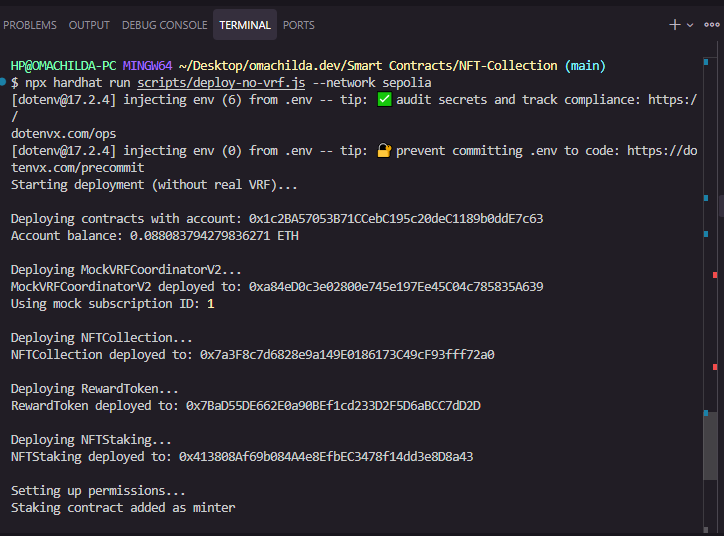
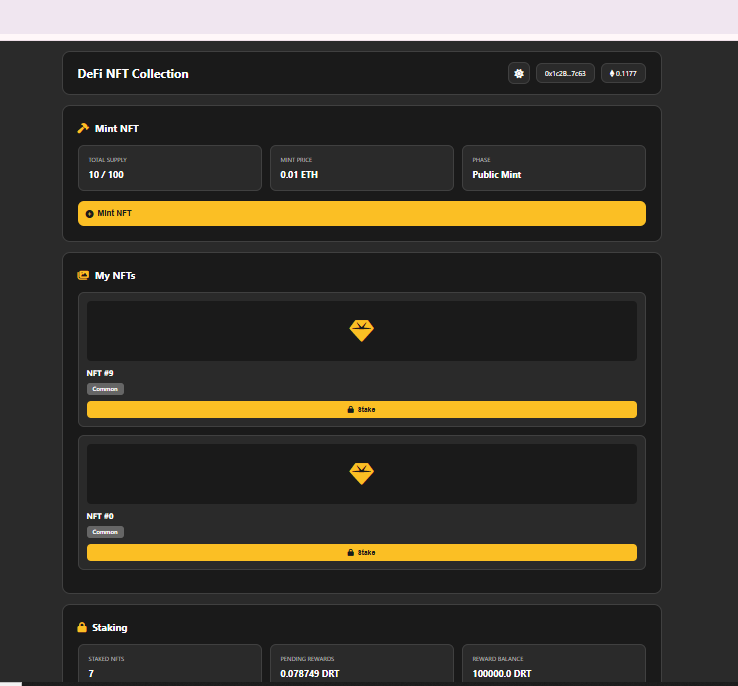
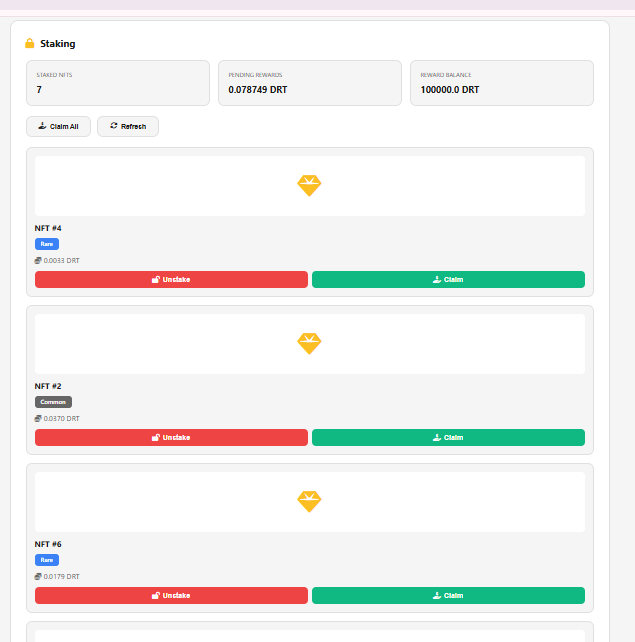
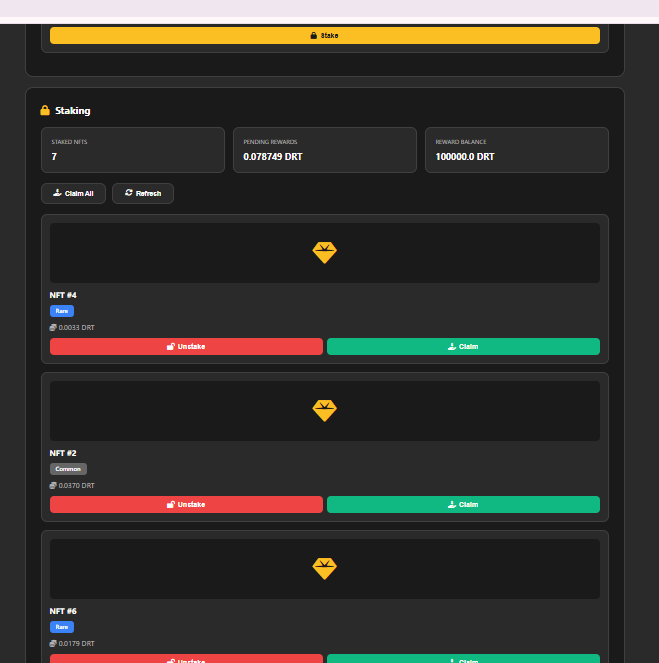
MINTING, STAKING, CLAIMING & UNSTAKING IN ACTION..
#Web3 #Blockchain #Solidity #SmartContracts #NFT #DeFi #EngineerBasecamp #BuildInPublic #LearnInPublic #BlockchainDevelopment #Ethereum #Web3Developer #CohortLearning #TechEducation #SoftwareEngineering #DeFiDevelopment #NFTStaking #CryptoInnovation #Hardhat #OpenZeppelin #FullStackDeveloper #TechJourney #CareerGrowth #Innovation #Decentralization
1
3
74
Feb 12
MINTING, STAKING, CLAIMING & UNSTAKING IN ACTION..
#Web3 #Blockchain #Solidity #SmartContracts #NFT #DeFi #EngineerBasecamp #BuildInPublic #LearnInPublic #BlockchainDevelopment #Ethereum #Web3Developer #CohortLearning #TechEducation #SoftwareEngineering #DeFiDevelopment #NFTStaking #CryptoInnovation #Hardhat #OpenZeppelin #FullStackDeveloper #TechJourney #CareerGrowth #Innovation #Decentralization
1
6
80
Feb 12
Building My First DeFi NFT Staking Platform
Four weeks ago, I started Engineer Basecamp Cohort 2 (Web3 Track) @eng_network_gb , and this week's task pushed me to build something I never thought I could - a complete DeFi NFT collection with staking mechanics. Today, it's live on Sepolia testnet, and I'm still processing everything I learned.
Deployed: nft-collection-pied-chi.verc…
The Challenge
Week 4 task: Build an NFT collection where holders can stake their NFTs and earn ERC-20 rewards over time. Different rarity levels earn different rewards. Include whitelist minting, royalties, and deploy to testnet.
Reading the requirements, I thought "this is impossible." But I started anyway.
What I Built
ERC-721 NFT Collection (100 max supply)
Three rarity tiers using Chainlink VRF for provably fair randomness
ERC-20 Reward Token with controlled minting
Time-based staking system (Common: 1 token/day, Rare: 3/day, Legendary: 10/day)
Full-stack frontend with MetaMask integration
38 passing tests
Deployed and verified on Sepolia
The Reality Check
The first time I tried to deploy, I got "out of gas" errors. I didn't understand why.
The first time I wrote the staking logic, I had a reentrancy vulnerability. I didn't even know what that meant.
The first time I connected the frontend, nothing worked. MetaMask kept rejecting transactions.
But each error taught me something.
What I Actually Learned
Security isn't optional. In traditional web dev, a bug means a broken feature. In blockchain, a bug means lost funds. Every line of code needed to be bulletproof. ReentrancyGuard, access control, input validation - these aren't buzzwords, they're necessities.
Gas costs are real money. I learned to think about every operation differently. Using uint8 instead of uint256 for rarity? That saves users money. Deleting storage after unstaking? That refunds gas. These micro-optimizations matter.
Testing saves you. Writing 38 tests felt tedious until one test caught a critical bug in my reward calculation. That one test potentially saved users from losing rewards. Now I understand why blockchain developers are obsessed with testing.
Web3 UX is hard. Making users sign transactions, wait for confirmations, switch networks - it's clunky compared to Web2. But that's the challenge we need to solve for mass adoption.
Standards enable composability. By following ERC-721 and ERC-20 standards, my contracts automatically work with existing wallets, marketplaces, and tools. That's the power of blockchain.
The Breakthrough Moment
It was 2 AM when I finally got the staking rewards calculation working correctly. I staked an NFT, waited 5 minutes, claimed rewards, and saw the tokens appear in my wallet. That moment - seeing value flow through code I wrote - that's when it clicked.
This isn't just code. It's a financial system. And it works.
What's Next
This project taught me I can build real blockchain applications. Not just understand concepts, but actually ship working DApps.
Week 4 broke me and rebuilt me as a blockchain developer.
#Web3 #Blockchain #Solidity #SmartContracts #NFT #DeFi #EngineerBasecamp #BuildInPublic #LearnInPublic #BlockchainDevelopment #Ethereum #Web3Developer #CohortLearning #TechEducation #SoftwareEngineering #DeFiDevelopment #NFTStaking #CryptoInnovation #Hardhat #OpenZeppelin #FullStackDeveloper #TechJourney #CareerGrowth #Innovation #Decentralization
1
1
12
474

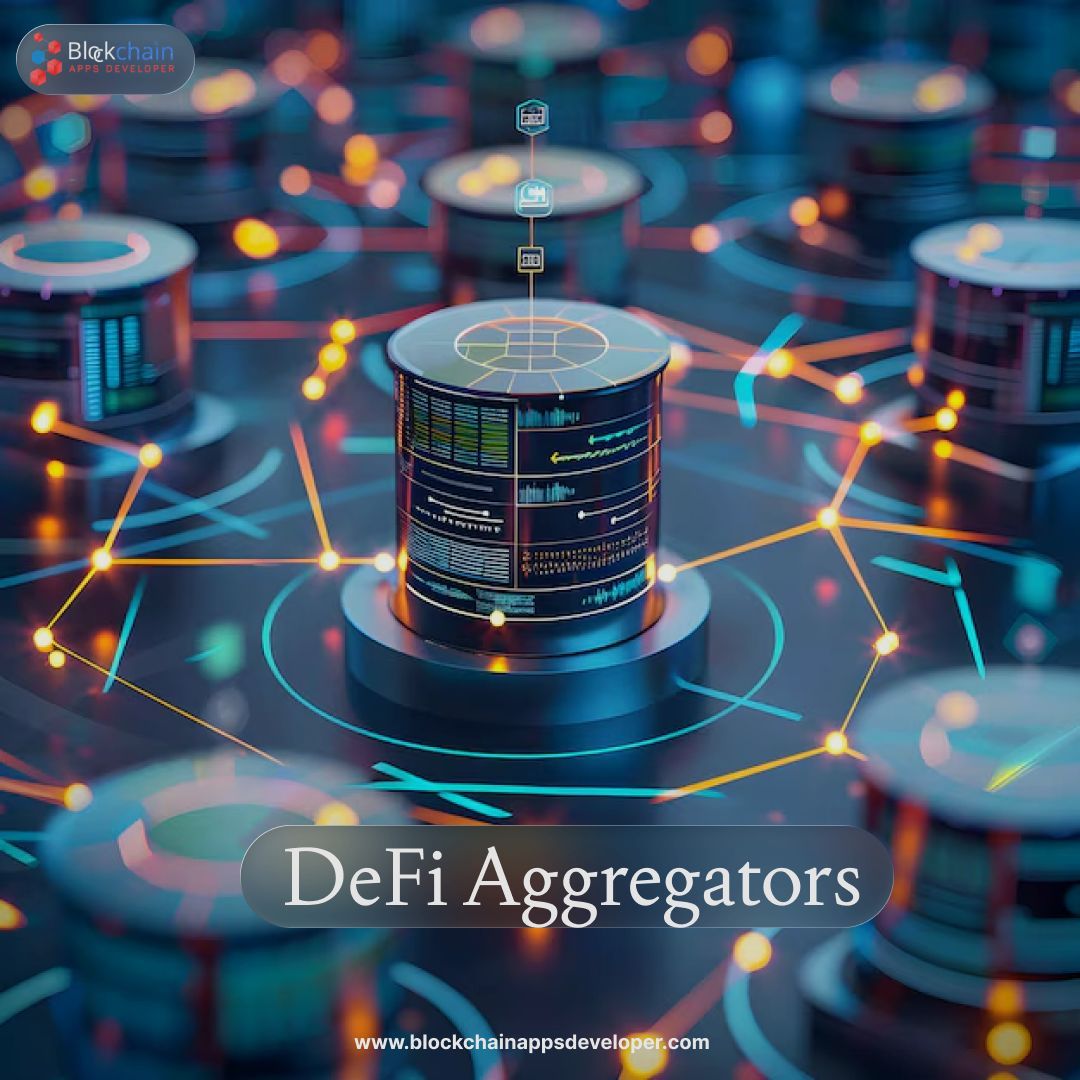
DeFi users shouldn’t need 10 tabs open to make 1 decision.
As #DeFi matures, tools that simplify access will matter more than tools that add complexity.
Visit: blockchainappsdeveloper.com/…
📞WhatsApp: 919489606634
#DeFiAggregator #DeFiDevelopment #Blockchain #usa #uk #uae
2
21

31 Dec 2025
If you haven't secured your #ticket yet for our upcoming #investment #conference, don't wait. This #live event has limited seating, and lots of time to visit to discuss what's ahead in 2026. We will cover:
- The outlook for #Crypto (DefiDevelopment)
- What's next for #ArtificialIntelligence (Blackrock)
- Financial Planning (Ed Slott)
- Investing in 2026 (Lance Roberts
- Credit markets (@michaellebowitz)
- Q&A with @adamtaggart
I look forward to seeing you there.
eventbrite.com/e/2026-ria-ec…

1
2
12
8,392

12 Dec 2025
“Farmers are growing food. Restaurants are serving food.
So why does the money disappear in the middle? (Tyson food, Cargill)
Meet Foodsply — the platform that connects farmers directly to consumers.
No middlemen. No delays. No games.
#BlockchainTech #Web3Builders #DeFiDevelopment #SmartContracts #Dapps #flare #solana #CryptoBuilders #StartupsBuilding #TechForGood
foodsply.io/waitlist
4
68

23 Oct 2025
ERC-6909: The Unsung Hero of Uniswap v4’s Gas Efficiency ⛽
Uniswap v4 didn’t just optimize swaps, it redefined how tokens move inside the protocol.
#UniswapV4 #DeFi #Blockchain #SmartContracts #Web3 #Ethereum #AMM #DeFiDevelopment #Solidity #Web3Builders

1
2
43
19 Oct 2025
💬 Question: If you could build your own Hook on Uniswap v4, what would you want it to do??
Day 3 wrapped: Hooks completed!!! Stay tuned for Day 4…
#UniswapV4 #DeFi #Blockchain #SmartContracts #Web3 #Ethereum #AMM #DeFiDevelopment #Solidity #Web3Builders
3
21

16 Oct 2025
🚨 🔥 LATEST: Nasdaq's DeFi Development Corp ($DFDV) stacks 86,307 $SOL ($9.6M at $110.91 avg)—total now 2.2M $SOL ($426M)! First public co with SOL treasury strategy, staking for yields. HODL power 📈 #Solana #SOL #DeFiDevelopment #CryptoTreasury #Web3
2
64

16 Oct 2025
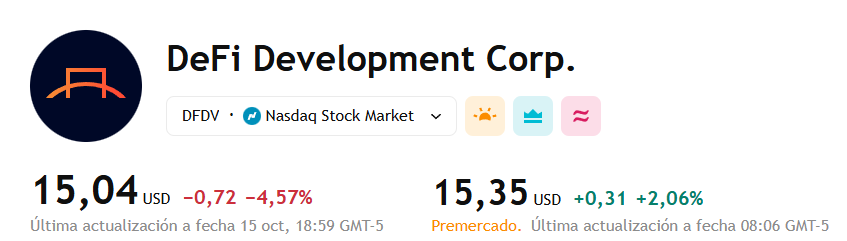
🪙 DeFi Development Corp $DFDV adquirió 86.307 tokens Solana $SOL a un precio medio de $110,91, elevando sus tenencias totales en 4,7% a 2.195.926 SOL, valoradas en ~$426M.
📊 El nuevo nivel de 0,0760 SOL por acción equivale a $14,67/acc, con 28,9M de acciones en circulación (o ~31,9M tras ejercer warrants). Los tokens se mantendrán a largo plazo y serán “staked” para generar rendimiento, incluyendo validadores propios de la empresa.
🏢 Además de su estrategia de tesorería en $SOL, $DFDV opera una plataforma de IA para el sector inmobiliario comercial, que conecta desarrolladores, prestamistas y REITs, con más de 1M de usuarios anuales en EE.UU. 🧠
#DeFiDevelopment #Solana #Blockchain
1
4
659

9 Oct 2025
LATEST: Nasdaq-listed @defidevcorp has partnered with Superteam Japan to launch DFDV JP — Japan’s first digital asset treasury project built around Solana 🇯🇵
The company previously launched DFDV Korea, building a regional #Solana treasury network across Asia 🌏
#Solana #DeFiDevelopment #DFDVJP #Web3 #CryptoJapan #SolanaEcosystem
2
2
112

At BlockchainX, we closely track the companies shaping this revolution. In 2025, the spotlight falls on a select group of DeFi development firms. Read out this Blog to know more.
#DeFi #Blockchain #DeFiDevelopment #Innovation
Vist: blockchainx.tech/top-defi-de…
1
46

10 Sep 2025
📈 #Solana holds an uptrend above $200 targeting a further rise.
🏦 #DeFiDevelopment Corp adds over 100,000 SOL on Tuesday.
📊 #SOL Open Interest hits an all-time high of $14.68 billion.
Read more! Click here 👇
ow.ly/UswC50WUlas
113

7 Sep 2025
CRYPTO NEWSWIRE: Solana Surges, Outperforming Bitcoin and Ether Amid Altcoin Shift
INVESTMENT NEWS: Solana has surged, outperforming Bitcoin and Ether as capital shifts to altcoins.
FINANCIAL OUTLOOK: Corporate investors and significant ETF inflows are poised to drive its growth, experts say.
While Bitcoin hovers just above $110,000 and Ether consolidates after hitting fresh records, Solana has emerged as a standout performer in the crypto market.
Trading around $211 on Monday, the token has surged 33% from its early August lows, significantly outperforming both Bitcoin and Ether over the past month.
This rally reflects a broader rotation into altcoins, with liquidity shifting from Bitcoin into second-tier tokens, as noted by Sergei Gorev, head of risk at YouHodler.
Gorev suggests these capital flows into projects like SOL could be long-term, driven by corporate investors seeking large, liquid assets.
Jeff Dorman, chief investment officer at Arca, anticipates Solana could replicate Ether’s earlier 200% surge, which was fueled by stablecoin adoption, strong ETF inflows, and demand from digital asset treasuries (DATs).
With a futures-based Solana ETF launched in July and several spot product applications pending, coupled with at least three Solana-focused DATs poised to channel up to $2.65 billion into SOL within the next month, the stage is set.
Given SOL’s market capitalization is only one-fifth of ETH’s, such inflows could trigger an even more pronounced price reaction.
Recent positive developments, including Nasdaq-listed Galaxy Digital tokenizing shares on Solana and the approval of the Alpenglow upgrade promising improved transaction speed, further bolster momentum.
Dorman views SOL as potentially “the most obvious long right now,” highlighting its potential for substantial growth if even a fraction of the demand seen by Ether materializes.
ALSO: DeFi Development Corp Buys $77 Million in Solana, Lifts Holdings to 1.8 Million Tokens
DeFi Development Corp., the Nasdaq-listed company that treats Solana as its core reserve asset, has bought an additional 407,247 SOL for roughly $77 million at an average price of $188.98 per token.
The purchase, financed with proceeds from a recent equity offering, lifts the firm’s holdings to 1.83 million SOL valued at about $371 million, a 29% increase from its previous balance.
Management said more than $40 million of net raise proceeds remain earmarked for further Solana purchases.
The company stakes its tokens across multiple validators to generate yield and operates its own validator infrastructure.
After the latest acquisition, the firm’s Solana-per-share metric (SPS) stands at 0.0864 SOL, or roughly $17.52, based on 21 million shares outstanding, with plans to update the figure once warrants from the equity raise are exercised.
Separately, DeFi Development unveiled DFDV UK, billed as the United Kingdom’s first publicly traded Solana treasury vehicle.
The unit is being formed through the acquisition of London-listed Cykel AI, in which DeFi Development will hold a 45% stake.
The launch marks the initial step in the company’s “Treasury Accelerator” program, which envisions five additional Solana-focused vehicles in other markets.
#Crypto #CryptoNewswire #Solana #CryptoNews #Altcoin #Bitcoin #Ether #CryptoMarket #Investment #ETF #SolanaETF #DigitalAssets #CorporateInvestment #DeFi #SolanaSurge #CryptoRally #MarketTrends #LiquidityShift #AltcoinSeason #CryptoInvesting #SolanaPrice #Tokenization #GalaxyDigital #AlpenglowUpgrade #TransactionSpeed #CryptoGrowth #DeFiDevelopment #Nasdaq #SolanaHoldings #CryptoTreasury #Staking #Validator #YieldGeneration #SolanaPerShare #EquityOffering #TreasuryAccelerator #CykelAI #DFDVUK #CryptoAdoption #MarketCap #CapitalFlows #InvestmentStrategy #CryptoPortfolio #FinancialOutlook #SolanaMomentum #CryptoInnovation #DigitalEconomy #Blockchain

1
222