
Apr 18
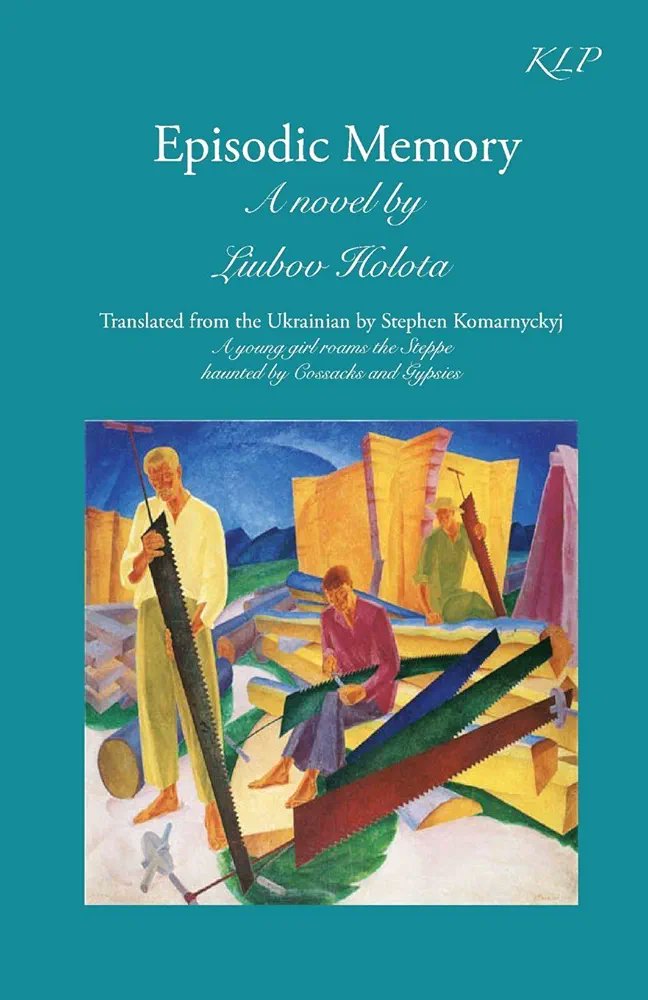

indextrious.blogspot.com/202… a lovely review of one of my previous novel translations. Check it out. The original book is very beautiful and I think I did it justice.
1
4
68

Jan 20
Ever remembered a first job interview, a birthday party, or where you were during a big life moment? That’s episodic memory in action.
Follow Vectorize for more bite-sized insights into memory, cognition, and how the brain works.
#EpisodicMemory #Neuroscience #MemoryScience #BrainFacts #CognitiveScience #Vectorize
2
6
117

21 Oct 2025
That's fascinating !
Episodicmemory isn't limited to pigs; corvids (like crows and jays) can also remember where and when they cached food.
This shows they can recall specific past events, much like replaying a memory !
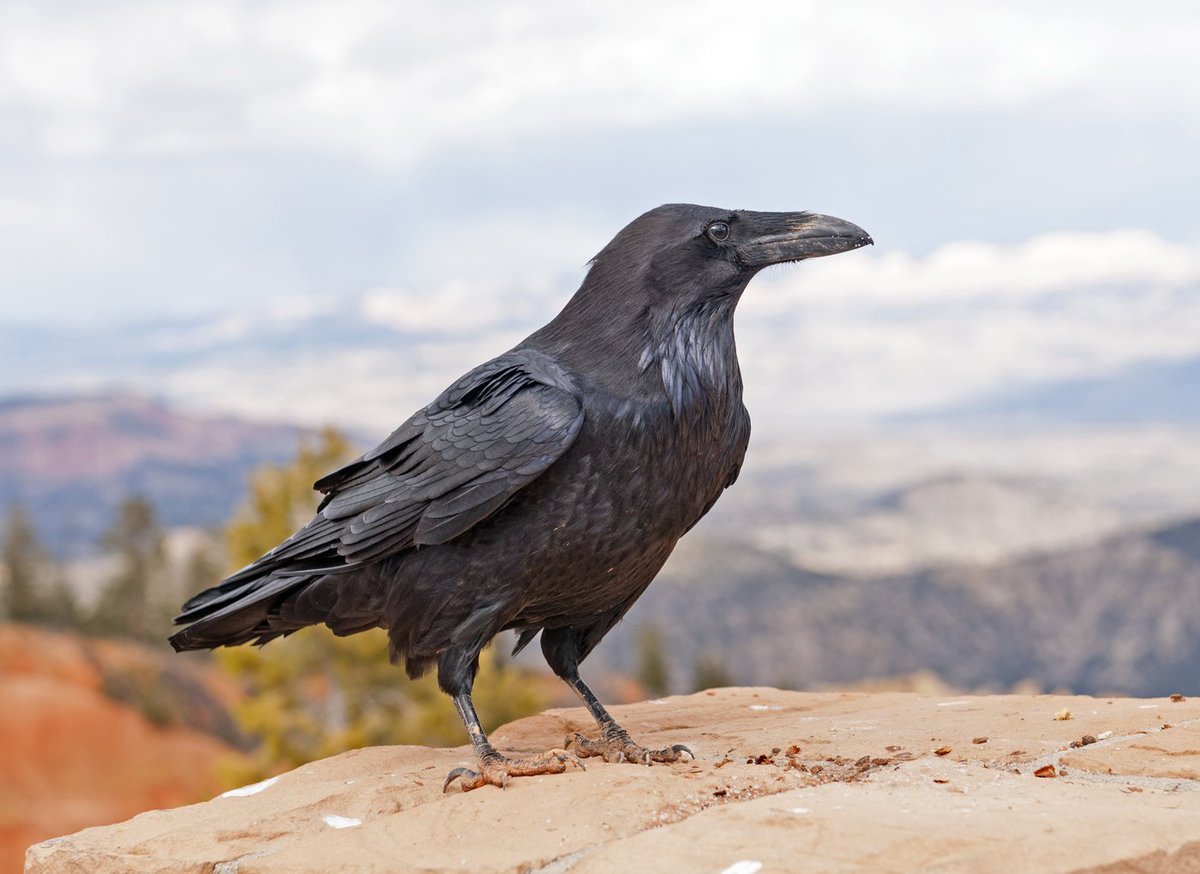
ALT The enigmatic common raven: Unveiling its intelligence, adaptability, and cultural mystique I One Earth
1
1
4
155

2 Jun 2025
Now published in the Journal of Neuroscience @SfNtweets , open access: jneurosci.org/content/early/… #hippocampus #episodicmemory
1
5
199

22 Nov 2024
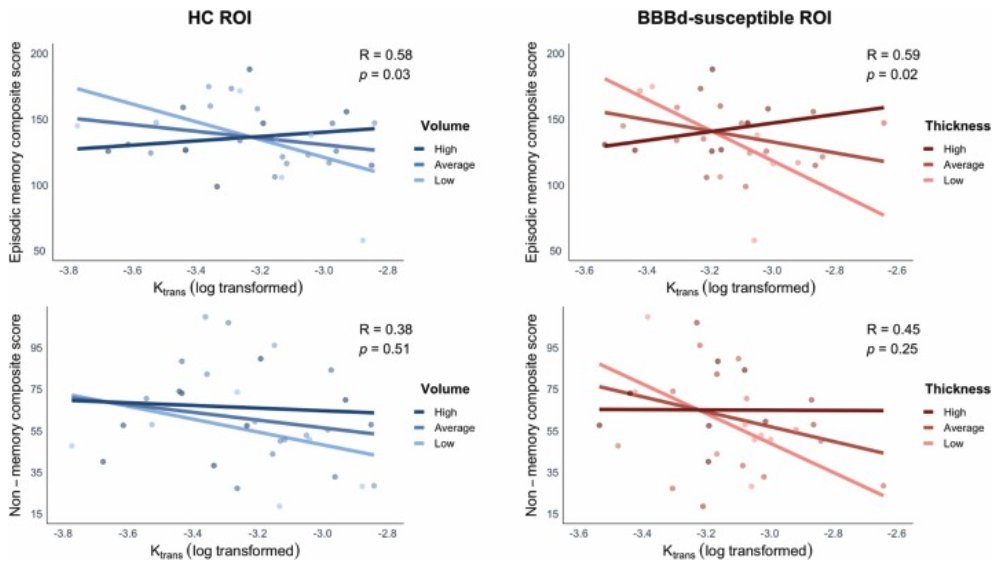
Using DCE-MRI, Denkinger et al. shows greater blood brain barrier disruption in the #hippocampus linked to worse #EpisodicMemory, independent of Aβ and tau, among #CognitivelyNormal older adults.
sciencedirect.com/science/ar…
4
362

1 Nov 2024
#Science solves the #mystery of where our #memories are stored 🧠🧠🧠🧠A study on #episodicmemory link.medium.com/YkMyWy9QaOb 👇
3
12

31 Aug 2024
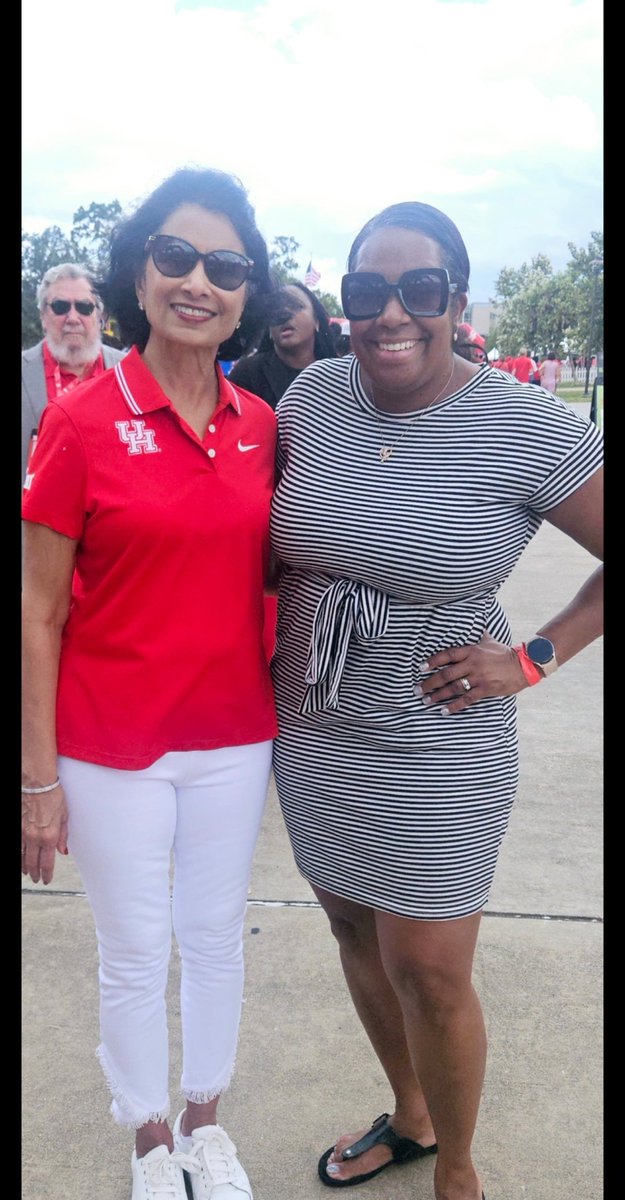
Alas! I finally met HERRRR!!! 😁🥰☺️😲😎 Dr. Khator... the greatest president the University of Houston!!!!
My year has been made!!!
#episodicmemory #professionalgoals
#changemaker
2
39
1,727

21 Aug 2024
Thrilled to share our new study on anticipatory eye gaze as a marker of memory! It’s been an incredible journey developing this with such a talented team @LabNir @FlavioSchmidig @omerxsharon @CharanRanganath! Excited to see where this leads! #EpisodicMemory #EyeTracking #MEGA 👀
21 Aug 2024

1/9
Seeing the Future: Anticipatory Eye Gaze as a Marker of Memory
We developed a NO-REPORT paradigm for studying episodic-like memory for events occurring at specific places and times @YaminEtAl @FlavioSchmidig @omerxsharon @CharanRanganath
biorxiv.org/content/10.1101/…
A 🧵.. pls RT
2
6
179

20 Jul 2024
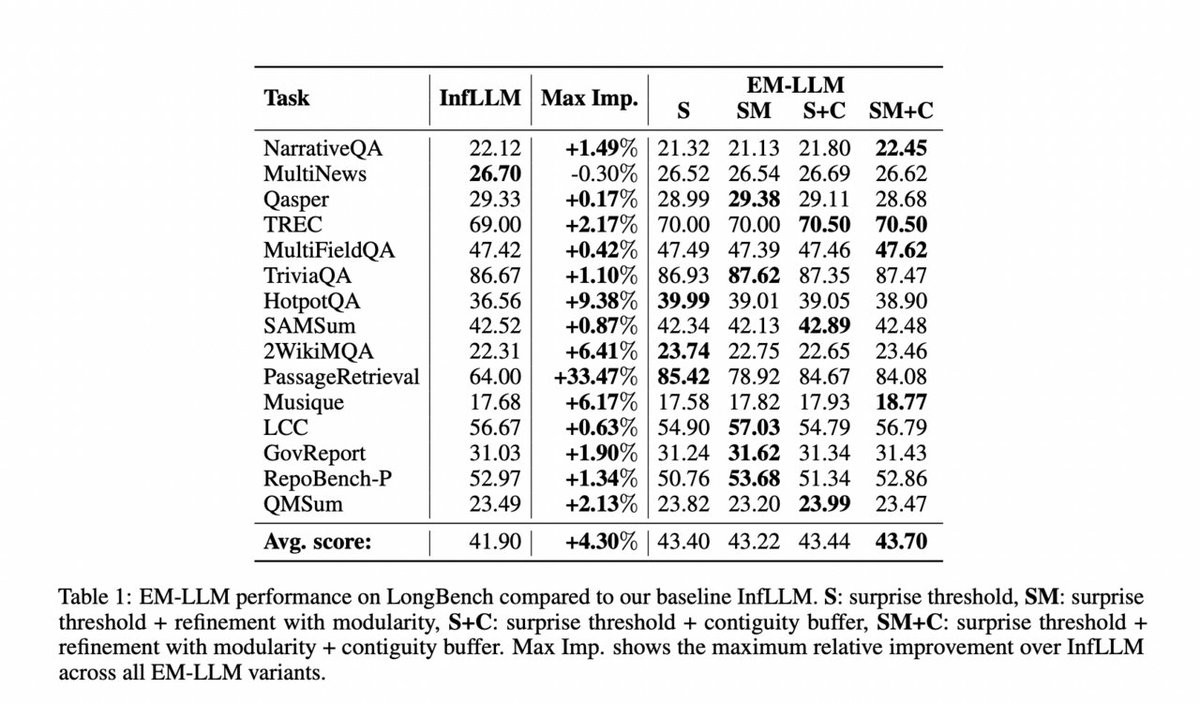
EM-LLM: A Novel and Flexible Architecture that Integrates Key Aspects of Human Episodic Memory and Event Cognition into Transformer-based Language Models
itinai.com/em-llm-a-novel-an…
#EM-LLM #LanguageModels #EpisodicMemory #AI #KPIManagement #ai #news #llm #ml #research #ainews #i…
2
48

19 Jul 2024
New paper #psynomLB "Validation of a rodent model of episodic memory replay' by Sheridan et al. finds that rats are able to replay episodic memories. bit.ly/Sheridan_rats @ComparativeCog #episodicmemory #olfaction #familiarity #memorytracestrength #rat @Psychonomic_Soc
3
8
1,573

15 Jul 2024
🚀 Excited to share our new pre-print: "Human-like Episodic Memory for Infinite Context LLMs"! We introduce EM-LLM, a novel approach integrating cognitive science insights into LLMs for vastly extended context processing: arxiv.org/pdf/2407.09450
What we did:
· 📊 We treat LLMs' K-V cache as analogous to personal experiences and segmented it into events of episodic memory based on Bayesian surprise (or prediction error).
· 🔍 We then apply a graph-theory approach to refine these events, optimizing for relevant information during retrieval.
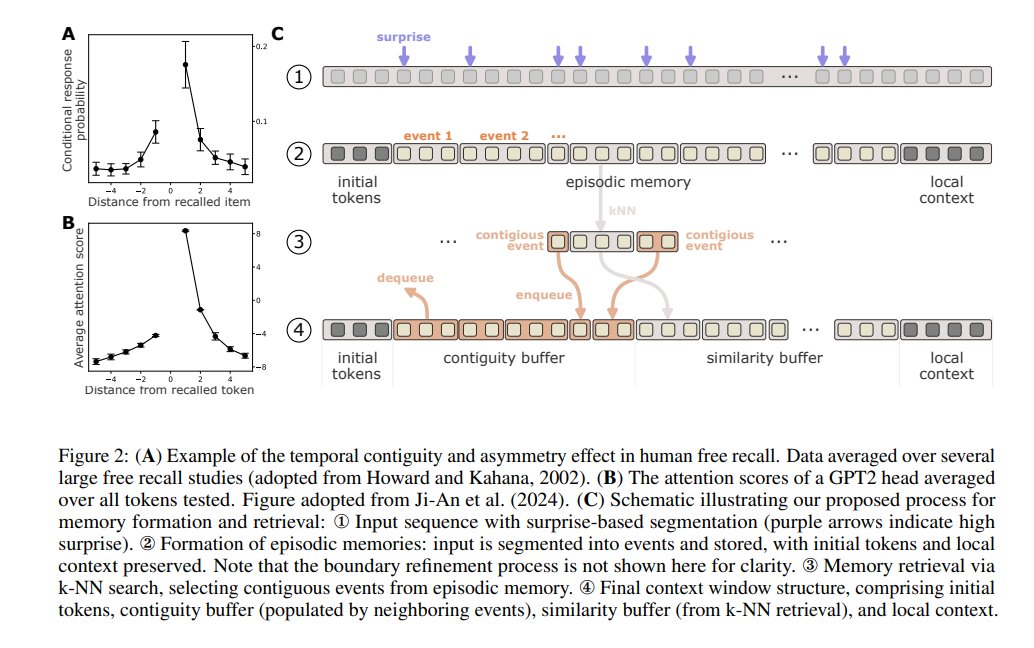
· 🔄 When deemed important by the LLM's self-attention, past events are recalled based on similarity to the current query, promoting temporal contiguity & asymmetry, mimicking human free recall effects.
· ✨ This allows LLMs to handle virtually infinite contexts more accurately than before, without retraining.
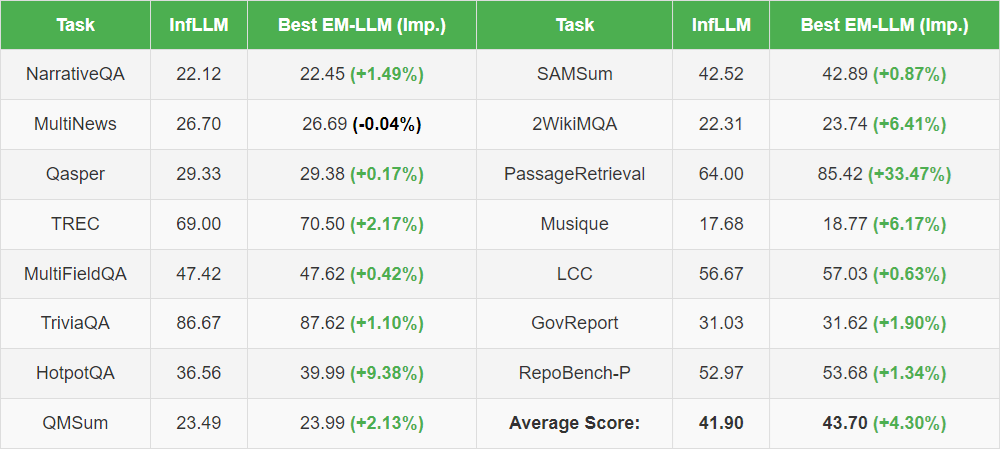
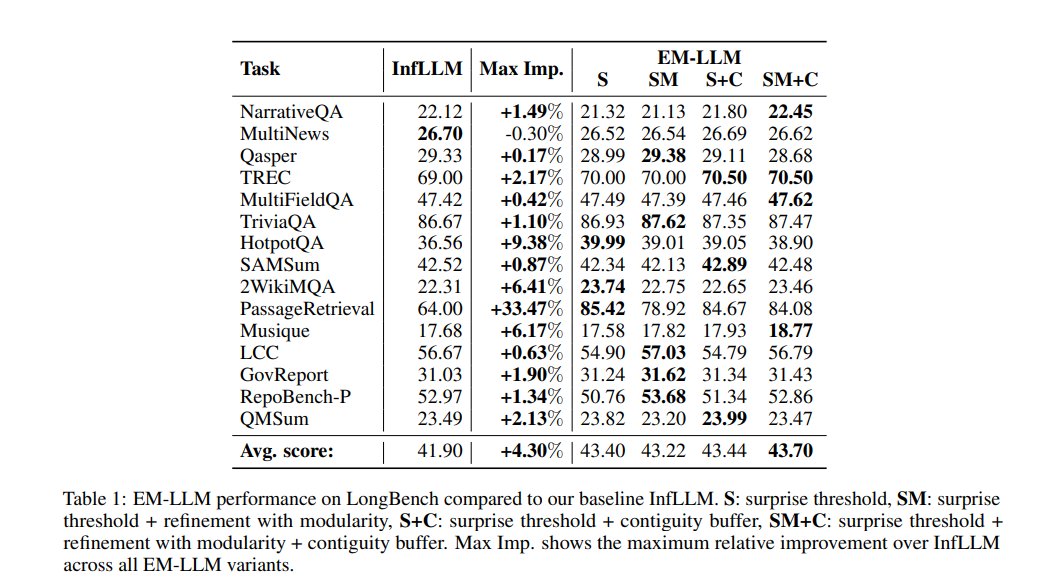
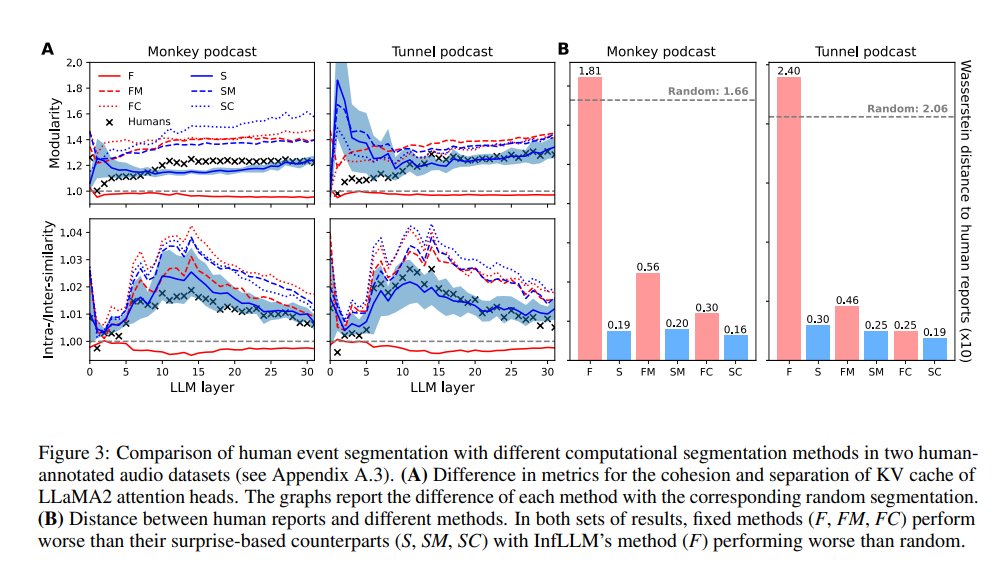
Our method outperforms the SOTA model InfLLM on LongBench, given an LLM and context window size, achieving a 4.3% overall improvement with a significant boost of 33% on PassageRetrieval. Notably, EM-LLM's event segmentation also strongly correlates with human-perceived events!!
We are releasing this method today with our first set of results, but more results and analysis are coming soon.
Huge thanks to all my co-authors/colleagues for this amazing collaboration: Martin A Benfeghoul, Adnan Oomerjee, @fenchri, @glampouras_NLP, @hbouammar from @Huawei Noah's Ark and Jun Wang from @UCL.
For a fuller description, check out @hbouammar's thread: x.com/hbouammar/status/18127…
Stay tuned for more updates and a code release soon :) #LLMs #LongContextLLMs #EpisodicMemory #NLP #CogSci #MachineLearning #AI
15 Jul 2024

Excited to present - Human-Like Memory for LLMs:
Our brain interprets its continuous experience by segmenting it into discrete events which are then stored. What is even cooler is that boundaries between those events correspond to surprise – i.e., brain is -surprised by the information it saw – We all remember surprising events don’t we?
Q: Can we enable LLMs to have a human-like memory structure?
A: You bet! This is what my fantastic team just did in our latest paper!
Q: How did we do it?
A: Here’s a short (very short summary):
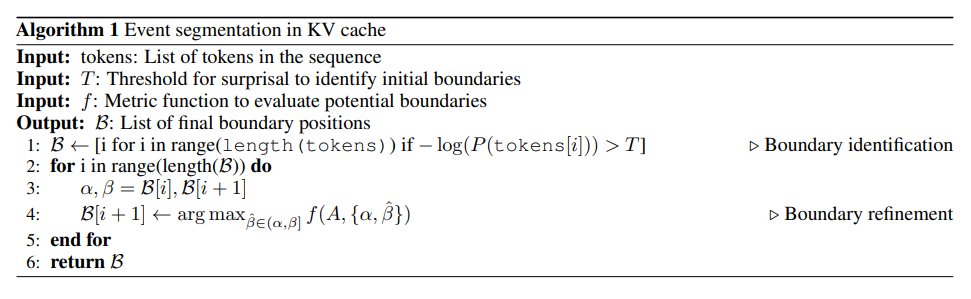
1. Tokens are not handled jointly, we will chunk them into blocks via a notion of surprise that is defined with respect to the LLM - as our brains do it – the difference is that we define our notion of surprise via log likelihoods (check Section 3) in the paper.
2. While surprise splits are reasonable, we notice that the utility of elements within an event during memory recall depends on their likelihood to be used by the current query.
3. With this realization, we propose refinements of the original splits by reframing the problem form a graph theoretic perspective and proposing to maximize graph-clustering metrics (check Section 3.3)
4. This finally gives us our algorithms that: 1) Chunks tokens based on surprise in an initial step, 2) refines the boundaries by building-on ideas from graph-theory.
Q: Does it work?
A: Marvelously! Results are good, where we compare to infLLM (previous SOTA) and we show an overall relative improvement of 4.3% across various tasks, including a 33% improvement on the PassageRetrieval task.
Q: Is this Human connection just a BS selling pt?
A: Nope! Our analysis reveals strong correlations between EM-LLM’s event segmentation and human-perceived events, suggesting a bridge between this artificial system and its biological counterpart. This work not only advances LLM capabilities in processing extended contexts but also provides a computational framework for exploring human memory mechanisms, opening new avenues for interdisciplinary research in AI and cognitive science.
Check out the paper: arxiv.org/pdf/2407.09450 #AI #MachineLearning #GPT4 #LLM
3
8
43
3,722

12 Jul 2024
Effects of mindifullness-based intervention on the painfull experience of women with TMD
#SemioticsResearch
#Semantic
#LanguageProcessing
#AttentionMemory
#SpeechLanguage
#LongTermMemory
#EpisodicMemory
#SemanticCognition
#LossAversion
#ProblemSolving
brainsupport.com.br/blog/ino…
6
6
23

16 Apr 2024
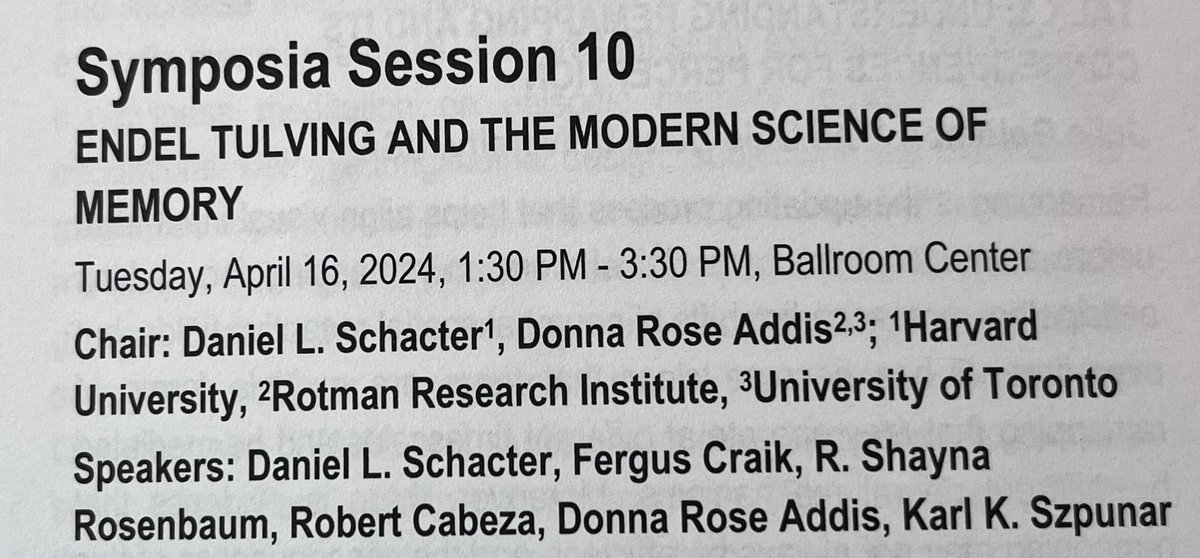
Looking forward to this Session dedicated to the memory of Dr. Endel Tulving. #episodicmemory @rotmanresearch @CNSmtg #CNS2024
3
20
1,181

15 Apr 2024
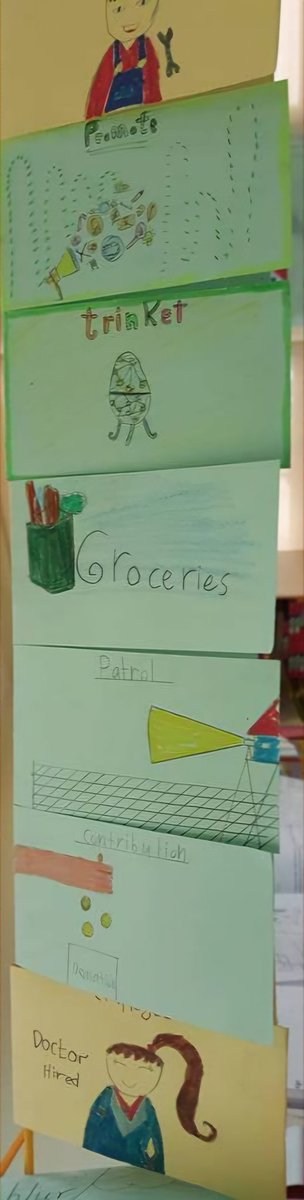
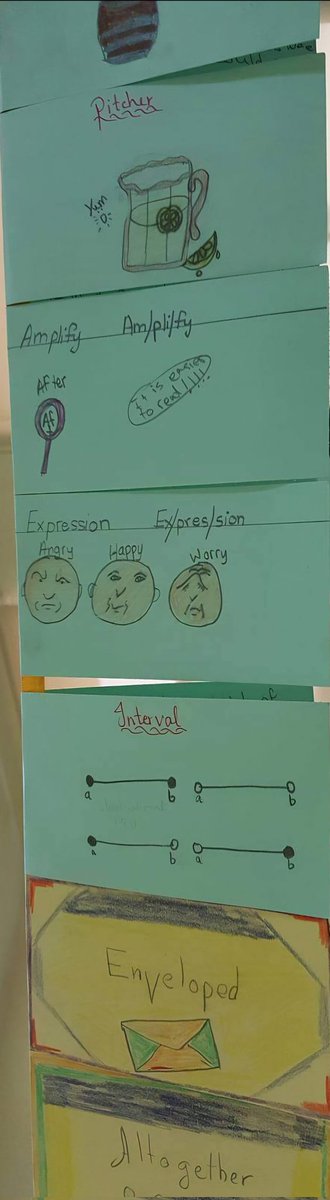
Visuals were integral in my classroom. They spoke volumes when it came to my students' thinking process, perceptions and experiences.
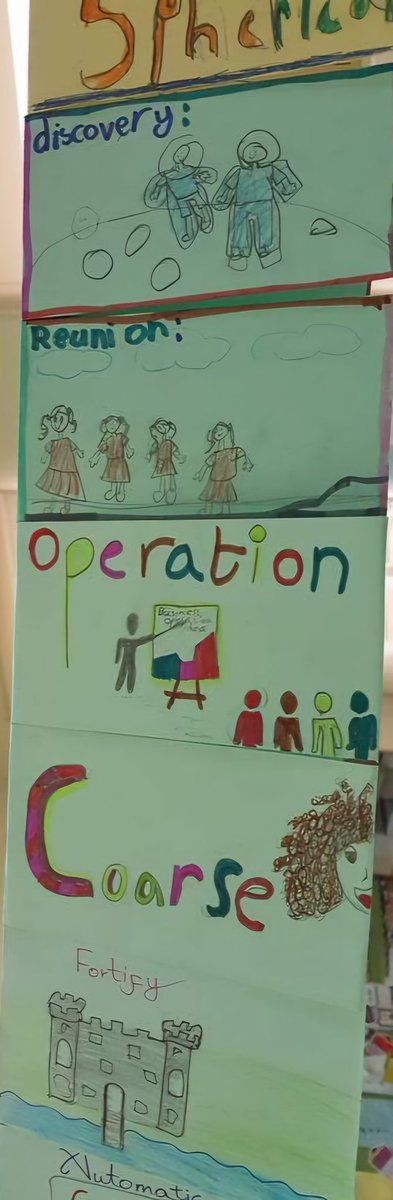
The vocab cards displayed in this post were created by my students as they engaged with vocabulary building.
The vocabulary station in my language lesson offered children the responsibility to underline words to investigate and choose a strategy to express meaning.
Children worked in pairs to support each other in exploring new words. One strategy was integration of visuals. This method helped them personalise word meanings and share their perception on how they saw things. Both children shared visuals of the same word and described their interaction with the word individually.
They shared laughter, debates and artwork for 20 minutes while adding new vocabulary to their bank of words.
Fun and hands on learning activated and stored the experience in their brain as part of their episodic memory. A promise that they would remember the word meanings owing to the comfortable and unique encounter.
The supportive environment, being with friends, having a choice and exploring self potential helped the children build their vocabulary and feel a sense of pride in contributing towards their partner's growth.
Student centered strategic activities create inclusive and safe classrooms.
#vocabulary #inclusion #language #visualisation #vocabactivity #episodicmemory #learning #school #education #mentoring #strategy

1
1
163

11 Apr 2024
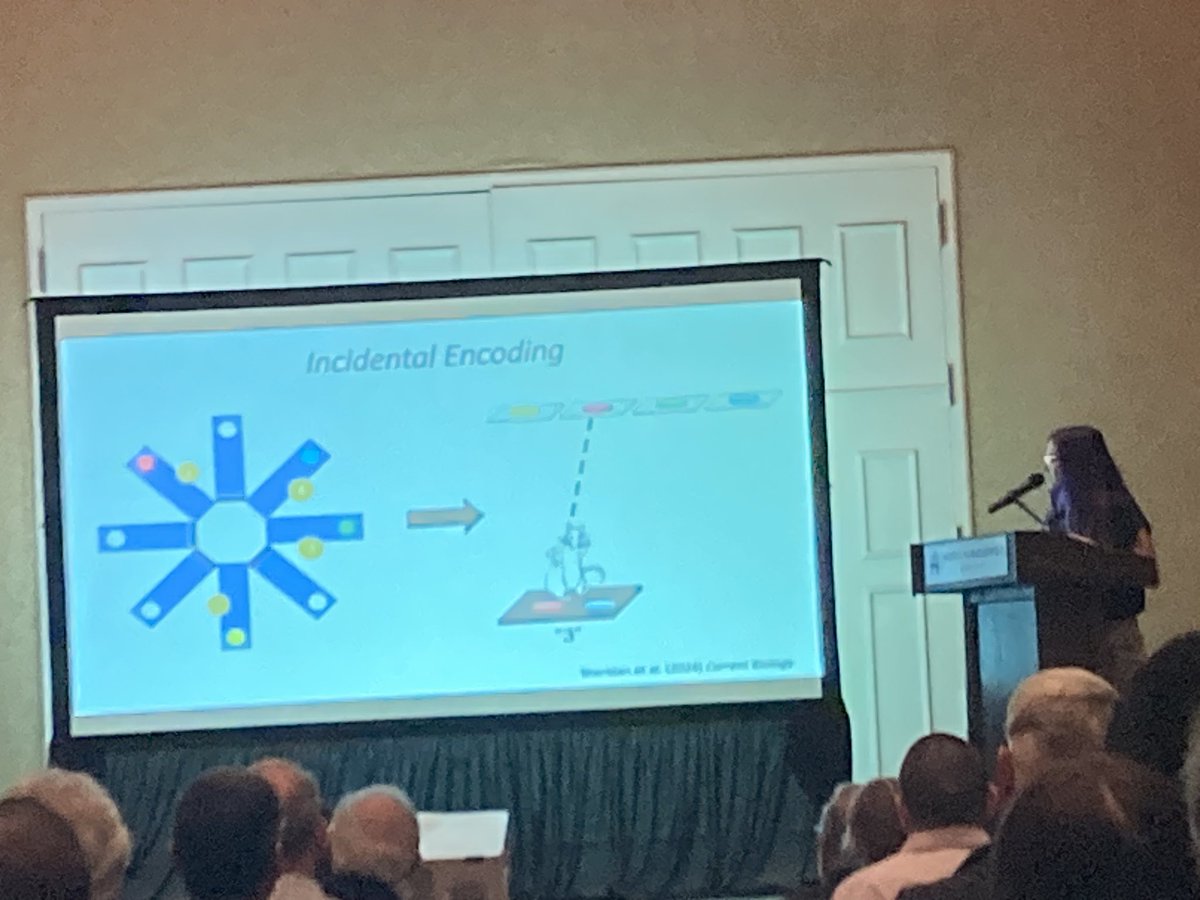
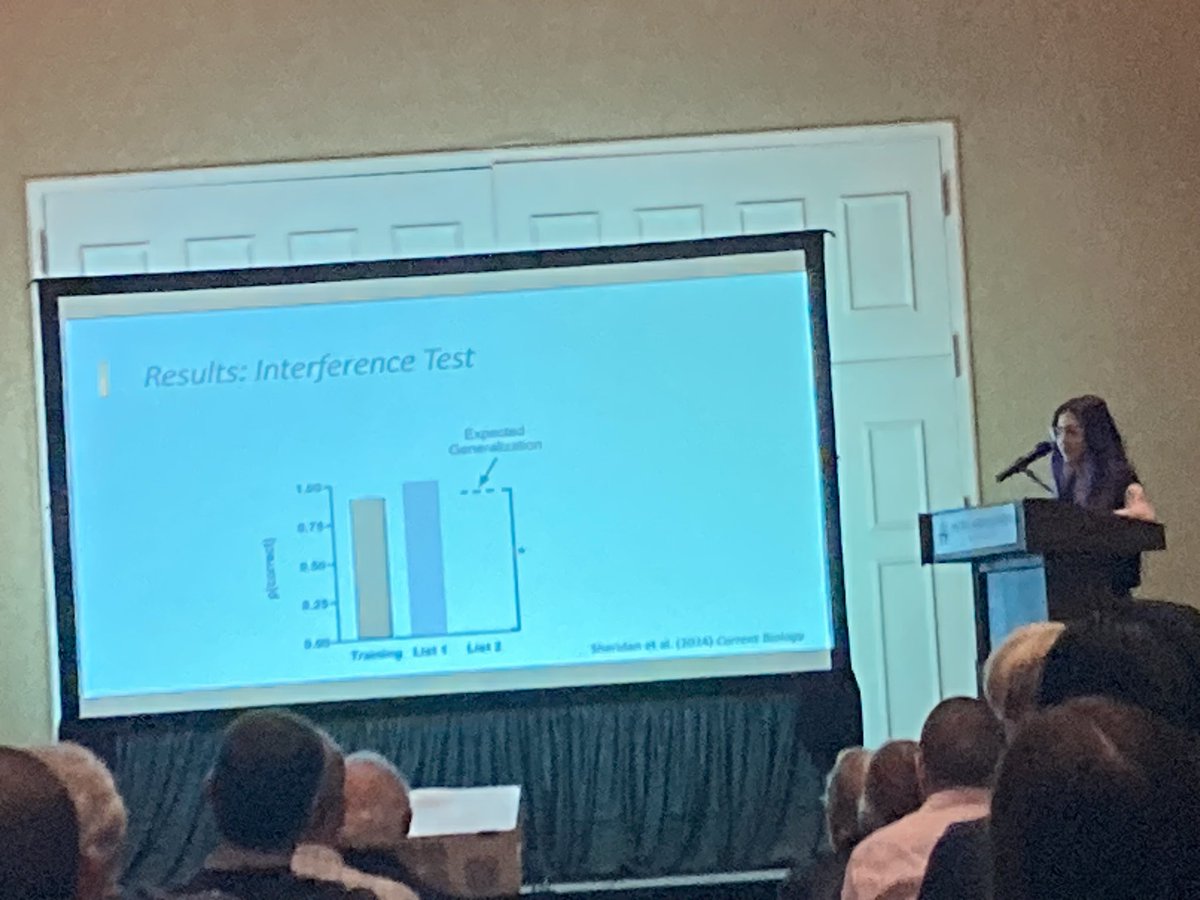
How do rats recall incidental details? ✨CassandraSheridan & team's study suggests they replay episodic memories unexpectedly, retaining information without specific encoding. 🐀🧠 #EpisodicMemory #AnimalCognition #CO3_2024
1
4
487

3 Feb 2024
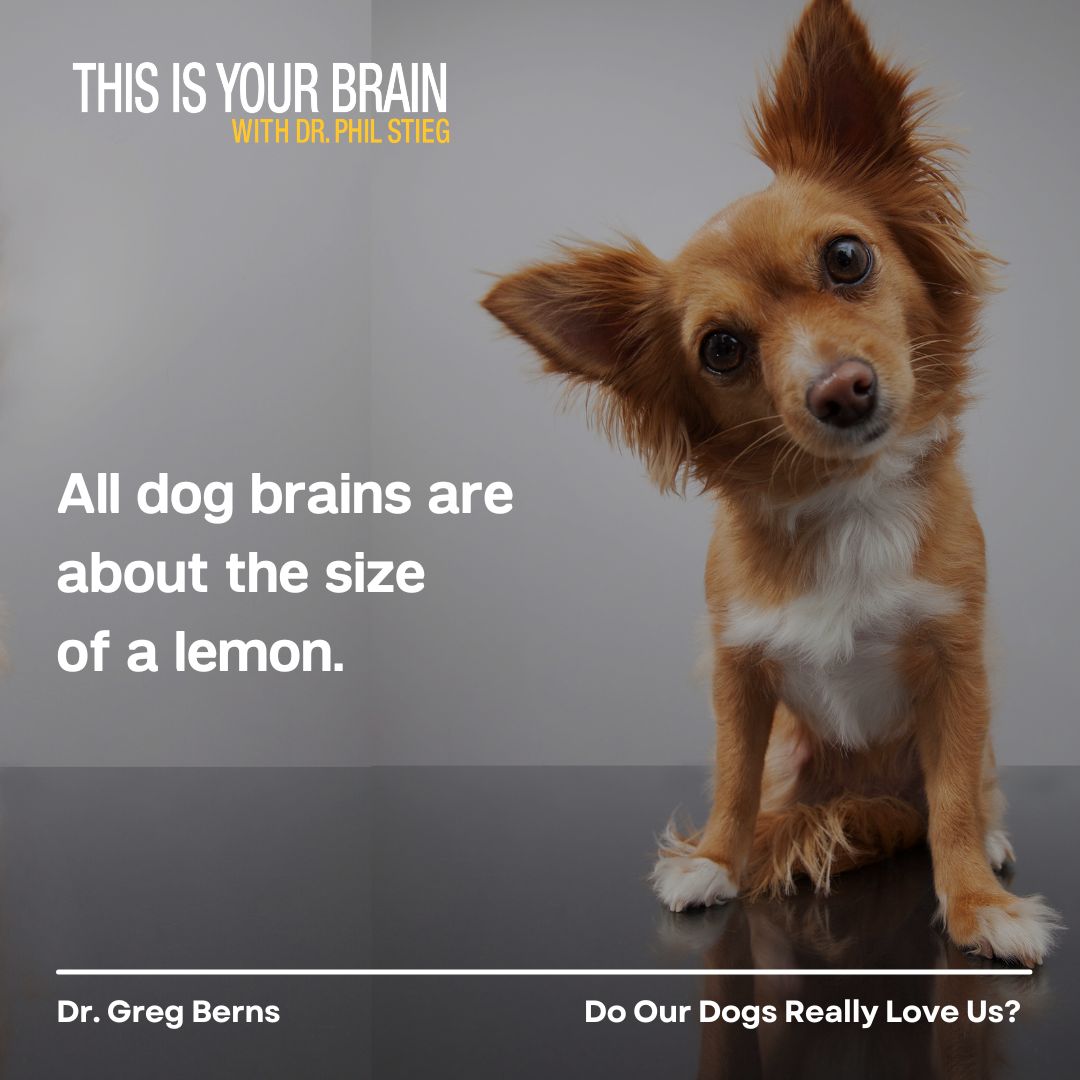
A dog’s brain is about the size of a lemon 🍋 with a large #hippocampus.
This means its #memory center, like spatial and episodic memory, is quite active.
Hear more:
podcasts.apple.com/us/podcas…
#spatialmemory #episodicmemory
1
3
429

22 Dec 2023
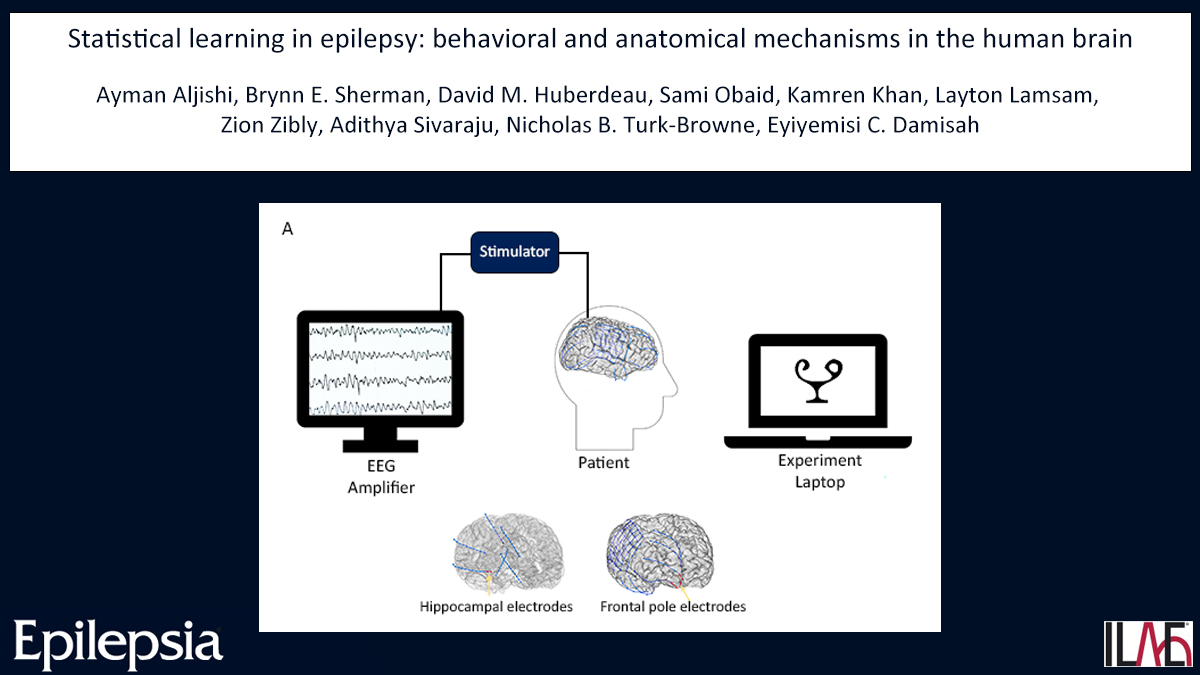
Key point: Statistical learning task can reliably predict seizure burden in patients with epilepsy.
doi.org/10.1111/epi.17871
#epilepsy #ilae #episodicmemory #medialtemporallobe #hippocampus #seizurefrequency #statisticallearning @IlaeWeb @epilepsiajourn @WileyNeuro
3
4
5,051

6 Oct 2023
📢 New preprint out! 📢
Premotor-hippocampal coupling reveals how the self is reinstated when retrieving past episodes.
Work led by @nathalie_heidi and Bapthiste Gauthier, check this out ⬇️
#episodicmemory #self #bodilyselfconsciousness
6 Oct 2023

I am very excited to use my first tweet to share with you my first preprint! Check it out here: biorxiv.org/content/10.1101/…
5
865

4 Oct 2023
I let my story speak for itself. Let one read my life rather than always telling them what to think, how to feel.I have the onus to tell the #Truth as I perceive it.Using the senses to describe an event is more about one's experience. #episodicmemory #memoir

14
331

26 Sep 2023
I'm looking for a post-doc to work on my #episodicmemory project! If you're interested in how we can use artificial implementations of episodic memory in AI to help us understand episodic memory in biological systems, hit me up :) More on the project here: lse.ac.uk/cpnss/research/Epi…
26 Sep 2023

🚨 Open Position 🚨
#LSEPhilosophy Assistant Professor @aliboyle6 is searching for a Post-Doctoral Research Officer in Episodic Memory (Philosophy of Artificial Intelligence & Cognitive Science). Application deadline: 20 October 2023: lse.ac.uk/philosophy/blog/20…

1
51
74
40,963