
10 Apr 2025
Visibility Will Be Earned—Not Given
In this system, attention isn’t free.
You don’t get seen because you shouted the loudest, gamed the algorithm, or posted at the right time.
You get seen because you contributed.
Because you showed consistency, clarity, and value over time.
Because your behavior loop reflects integrity, not impulse.
This is how Social Consensus will work:
•Posts surface based on your behavior, not just engagement.
•Reputation builds through patterns, not popularity.
•Signal rises. Noise fades.
•Your visibility will be a mirror of your presence.
And cultivators will be the ones to show how it works.
The grow room is the proving ground.
But what we’re building goes far beyond cannabis. It STARTS with growers but to eventually cover the entire social media sphere as the DIFFERENCE to the EXPERIENCE!
#SocialConsensus #BehavioralLoop #EarnedVisibility #Growmies #CannabisCulture #LegacyBuilders #EthicalAlgorithm
4
84
10 Apr 2025
We’re not just launching another cannabis forum.
We’re building the first prototype of the behavioral loop model—and cannabis cultivators will be the ones to prove it.
This isn’t likes, shares, or clout.
This is earned visibility through behavior.
Consistency, contribution, and ethics shape what gets seen—not hype.
Cultivators understand cycles.
They understand proof-of-work.
That’s why they’ll be the first to test what Social Consensus really means in practice.
The platform starts here.
But it won’t end here.
#SocialConsensus #CannabisCommunity #Growmies #EthicalAlgorithm #LegacyBuilders #CultivationCulture
1
2
11
298
2 Apr 2025
What you’re seeing is the algorithm quietly suffocating cannabis content—growers, breeders, educators. It’s not a glitch, it’s a shift. They can’t monetize us, so they throttle us. Even legacy voices get buried.
That’s why we’re building Social Consensus—a new system where visibility is earned, not paid for. Where growers rise by contribution, not manipulation.
The old feed is collapsing. The new path is already forming.
#SocialConsensus
#EthicalAlgorithm
#RespectTheWork
1
3
85
2 Apr 2025
You’re not imagining it. The algorithm punishes authenticity and integrity. But it’s exactly that integrity that makes your ratios so strong. That’s why we’re building a new path—where visibility is earned, not filtered.
#EthicalAlgorithm
#SocialConsensus
#RespectTheWork
1
2
51

2 Oct 2024
fyi
Creating an algorithm that accommodates multiple ethical frameworks (such as x, y, and z) is a complex task due to the inherent diversity and sometimes conflicting nature of ethical principles. However, it is possible to design a flexible, modular system that can adapt to various ethical standards by incorporating elements from each framework and allowing for contextual decision-making. Below is a high-level outline of such an algorithm, along with explanations for each component.
Overview of the Ethical Algorithm
1. Define Ethical Frameworks
2. Establish Priority and Weighting Mechanisms
3. Contextual Analysis
4. Decision-Making Process
5. Feedback and Adaptation Loop
Detailed Components
1. Define Ethical Frameworks
Objective: Clearly outline the principles, rules, and values of each ethical framework you wish to incorporate (e.g., x, y, z).
Implementation:
Modular Structure: Each ethical framework is encapsulated in its own module or component.
Rules and Principles: Define the specific rules, duties, virtues, or consequences associated with each framework.
Scoring System: Assign scores or weights to actions based on how well they align with each framework.
Example:
class EthicalFramework:
def __init__(self, name, principles):
self.name = name
self.principles = principles # Dictionary of principles and their weights
def evaluate_action(self, action):
score = 0
for principle, weight in self.principles.items():
score = weight * principle.assess(action)
return score
# Example frameworks
utilitarian = EthicalFramework("Utilitarianism", {"maximize_happiness": 1.0})
deontological = EthicalFramework("Deontology", {"duty": 1.0})
virtue_ethics = EthicalFramework("Virtue Ethics", {"virtue": 1.0})
2. Establish Priority and Weighting Mechanisms
Objective: Determine how different ethical frameworks will interact, especially when their recommendations conflict.
Implementation:
Priority Levels: Assign priority levels to frameworks based on context or predefined settings.
Weighting Factors: Allow for dynamic weighting of frameworks to influence decision-making.
Example:
class EthicalAlgorithm:
def __init__(self, frameworks, priorities):
self.frameworks = frameworks # List of EthicalFramework instances
self.priorities = priorities # Dictionary mapping framework names to priority levels
def set_priority(self, framework_name, priority):
self.priorities[framework_name] = priority
def get_weighted_score(self, action):
total_score = 0
for framework in self.frameworks:
score = framework.evaluate_action(action)
weighted_score = score * self.priorities.get(framework.name, 1)
total_score = weighted_score
return total_score
3. Contextual Analysis
Objective: Assess the context in which a decision is made to apply the appropriate ethical considerations.
Implementation:
Context Identification: Determine relevant factors such as stakeholders, consequences, and situational variables.
Dynamic Adjustment: Modify the weighting or selection of frameworks based on the identified context.
Example:
def analyze_context(action, context):
# Modify priorities based on context
if context == "emergency":
ethical_algorithm.set_priority("Utilitarianism", 1.5)
ethical_algorithm.set_priority("Deontology", 0.5)
elif context == "routine":
ethical_algorithm.set_priority("Deontology", 1.0)
ethical_algorithm.set_priority("Virtue Ethics", 1.0)
# Add more context rules as needed
4. Decision-Making Process
Objective: Make a decision based on the aggregated scores from the different ethical frameworks.
Implementation:
Action Evaluation: Assess all possible actions using each ethical framework.
Score Aggregation: Combine the scores using the established priorities and weights.
2 Oct 2024

If
(a) has ethics based on x
(b) has ethics based on y
(c) has ethics based on z
Then the same algorithm of ethics won’t work for all.
1
2
130

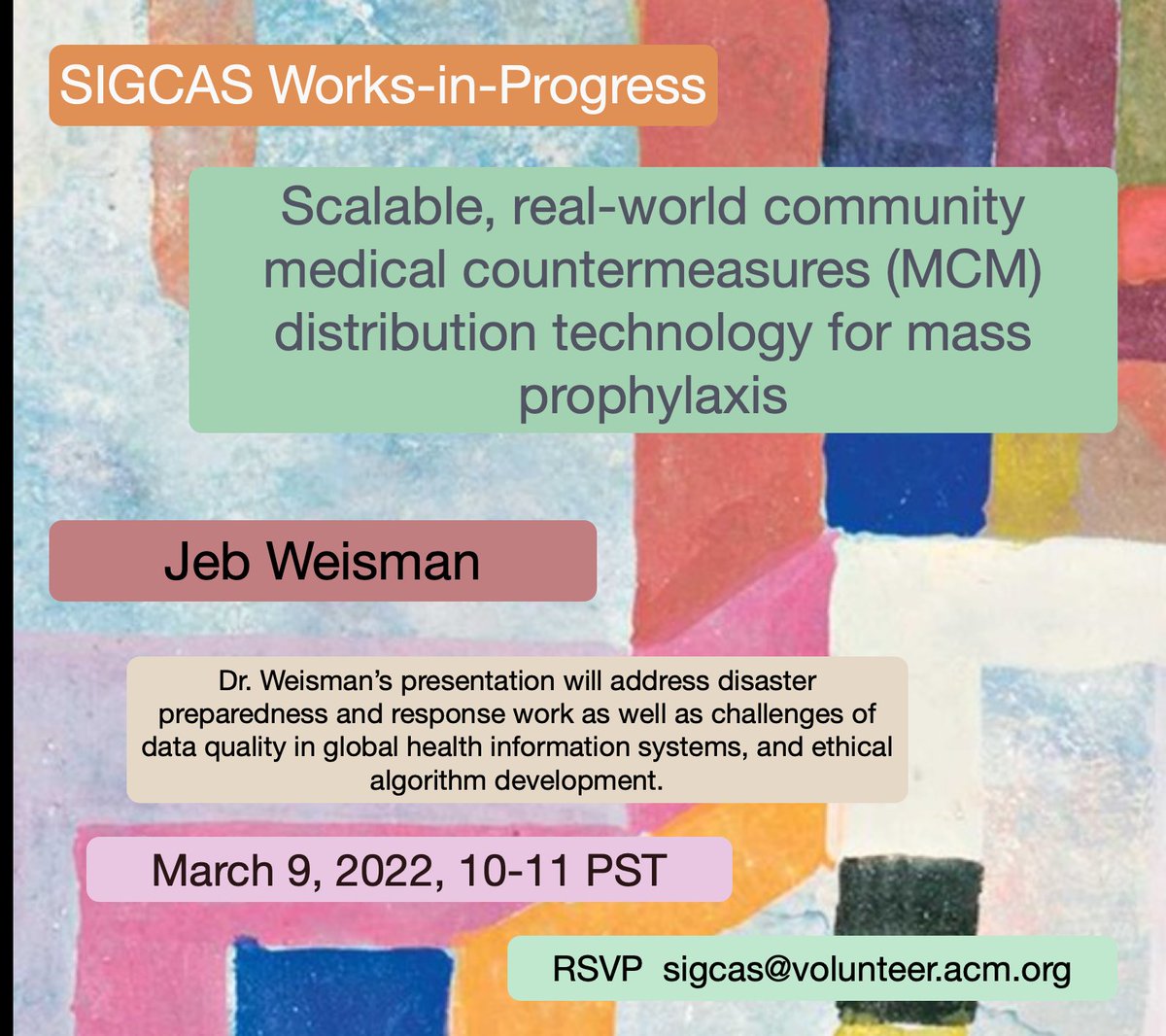
We're very pleased to announce the next SIGCAS Works in Progress! Dr. Weisman’s will discuss disaster preparedness and response work as well as challenges of data quality in #globalHealth #InformationSystems, and #ethicalAlgorithm development. @sigchi @vardi @doctorow
3
2

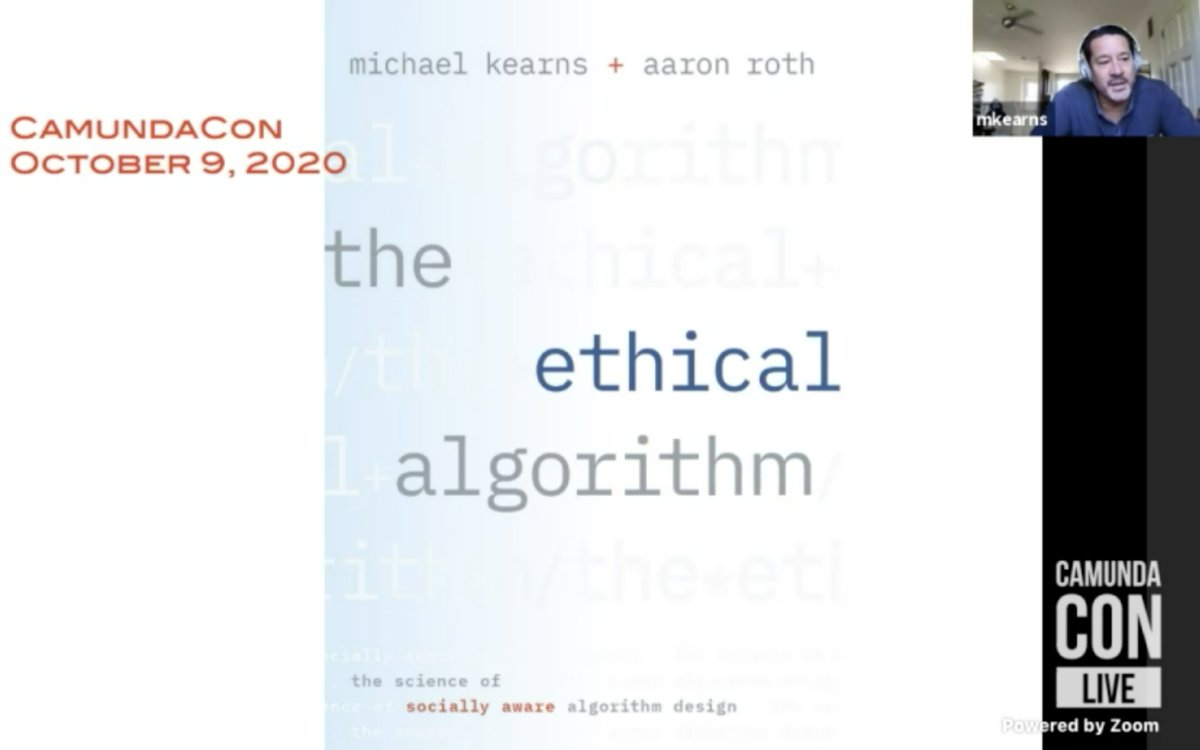
👏👏👏 Please join us in giving a warm #CamundaCon welcome to @mkearnsupenn! 👏👏👏 #AI #machinelearning #ethicalalgorithm
2

16 May 2020
In The #EthicalAlgorithm, two University of Pennsylvania professors explain how #socialvalues such as fairness and privacy can be designed into machines. sb.stratbz.to/2wOTrdI via @stratandbiz
3
2

#ArtificialIntelligence: The Holy See Pleads for an #EthicalAlgorithm.
"#AI is not necessary to perform a specific action, it is rather intended to change the way, the mode with which we carry out our daily actions.”
CC: @alecrad @jeffkagan @facebookai
ow.ly/EBv530qB8gV
6
7

31 Mar 2020
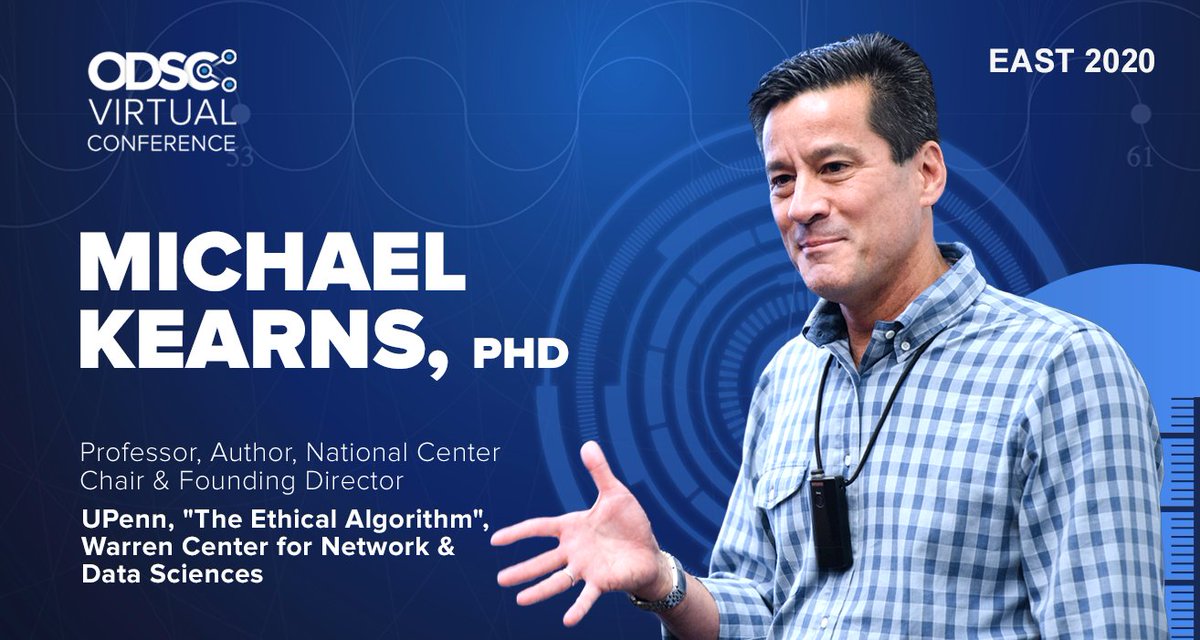
Curious about the future of data science? Learn from Ethical Algorithm creator Michael Kearns at ODSC’s Global Virtual Conference. Register and hear it: hubs.ly/H0nYdRS0 #datascience #ethicalalgorithm @mkearnsupenn
1
5
23 Mar 2020
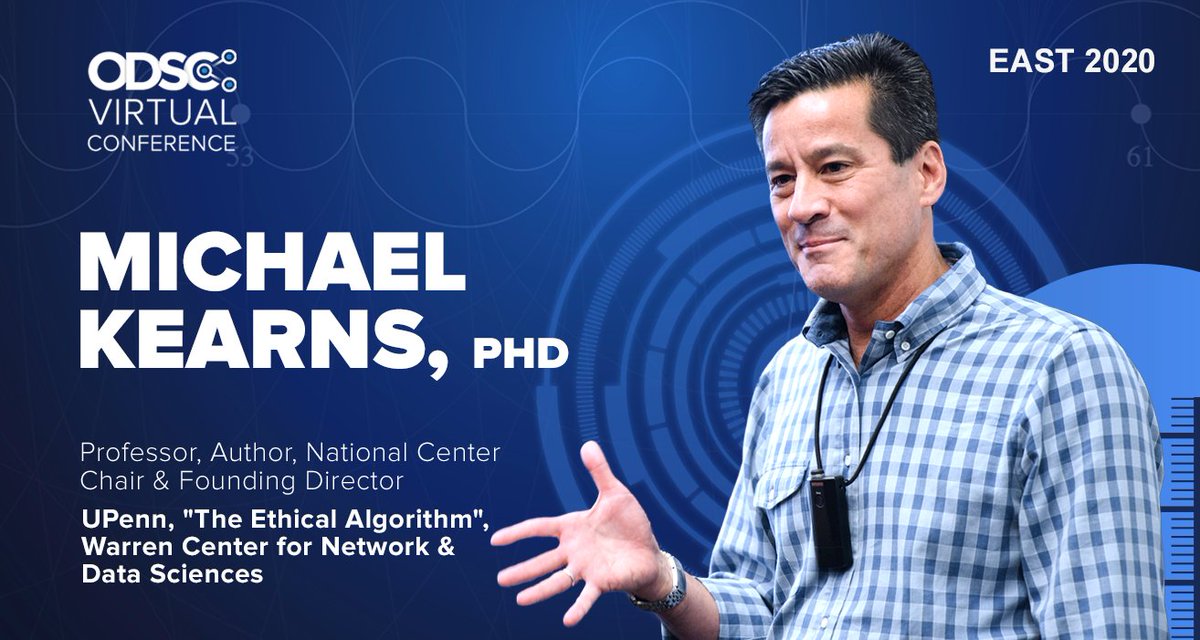
Curious about the future of data science? Learn from Ethical Algorithm creator Michael Kearns at ODSC’s Global Virtual Conference. Register and hear it: hubs.ly/H0nKLh-0 #datascience #ethicalalgorithm
1
2
20 Mar 2020
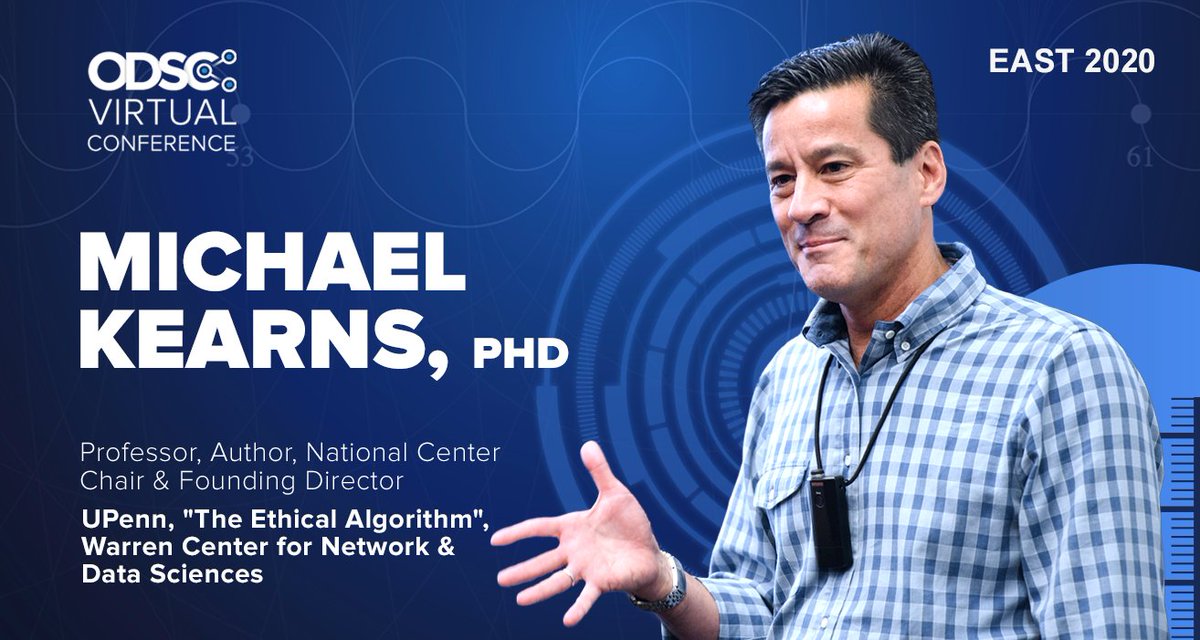
Curious about the future of data science? Learn from Ethical Algorithm creator Michael Kearns, PhD at ODSC’s Global Virtual Conference. Register and hear it: hubs.ly/H0nKMBl0 #datascience #ethicalalgorithm @mkearnsupenn
1
1
11 Mar 2020
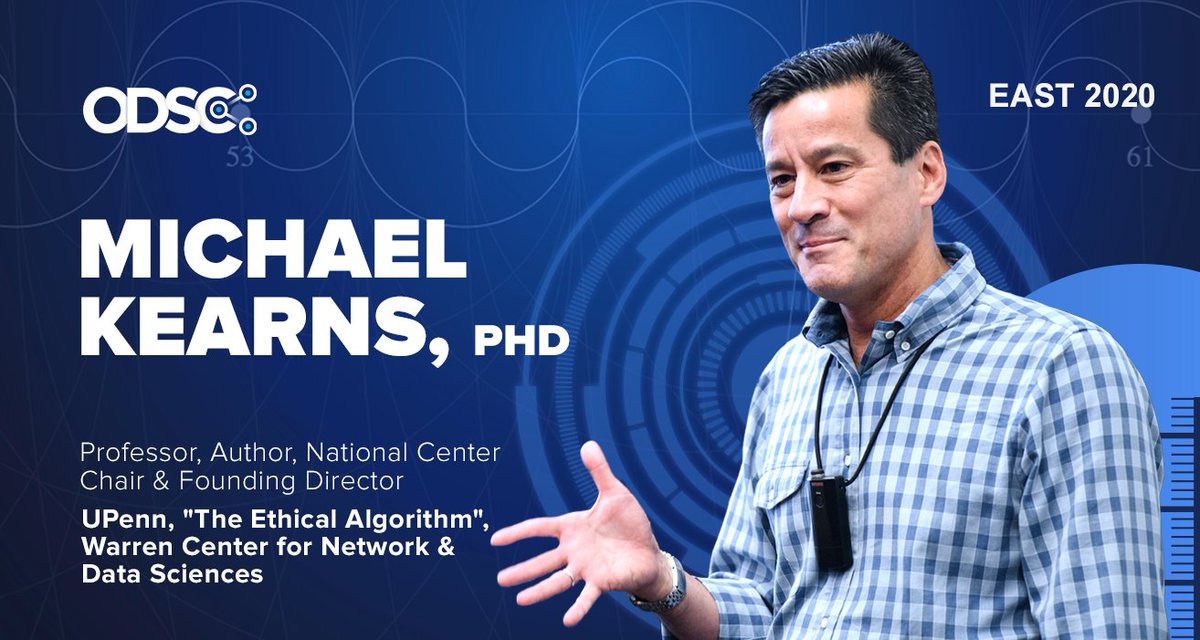
Curious about the future of data science? Learn from Ethical Algorithm creator Michael Kearns at his ODSC East keynote speech. Register and hear it: hubs.ly/H0npWyM0 #datascience #ethicalalgorithm
1
3

10 Mar 2020
2/2: also features inputs from @maria_axente @johnchavens @mkearnsupenn @Aaroth @DrZimmermann @undersequoias and many more. #AIethics. by @hekiwi1 @qz #ethicalalgorithm #algorithms
1
5

11 Dec 2019
Fun fireside chat with Michael Kearns @UofPenn bit.ly/2sfNp3A Reflections on research trajectory, ethics & algorithms, and reflections on career choices
@mkearnsupenn #EthicalAlgorithm #AetherCommittee @MSFTResearch #FATE @NeurIPSConf @acmeducation @compcomcon @ieee
2
19

28 Nov 2019
Better coding, not just laws and regulations, is the solution for tech’s failure to address the needs of actual humans @sciam #EthicalAlgorithm bit.ly/2OnWIXH
1
29 Oct 2019
Imaging technologies were used to match research subjects to their M.R.I. scans. A facial recognition program correctly matched 70 out of 84 subjects @nytimes #ethicalalgorithm nyti.ms/2NchOqr
1
26 Oct 2019
You Got a Brain Scan at the Hospital. Someday a Computer May Use It to Identify You @nytimes #ethicalalgorithm nyti.ms/2pXUPqT
3

See @carolinesinders and @KLdivergence at the @AaronSwartzDay #EthicalAlgorithm panel on Nov 4 aaronswartzday.org/ethical-a…

1
1