
May 23
OpenAI Confidential IPO Filing Revealed: $25B ARR Run-Rate, $14B Projected Losses, $1T Valuation Path & Governance Risks
#OpenAI #IPO #AI #ArtificialIntelligence #TechInvesting #AIBusiness #StartupValuation #Governance #ExponentialTech #TechNews

14
560

May 21
I can only imagine that Nvidia’s board truly believes the current valuation is underestimating the ongoing AI wave. That makes the $110B buyback an interesting setup. At current liquidity levels, Nvidia could theoretically absorb the entire authorization in ~2 weeks of trading volume. That would effectively turn one of the world’s largest companies into the dominant buyer of its own stock… while AI infrastructure demand is still accelerating.
#Nvidia #AI #Semiconductors #ExponentialTech $NVDA
1
2
250
May 19
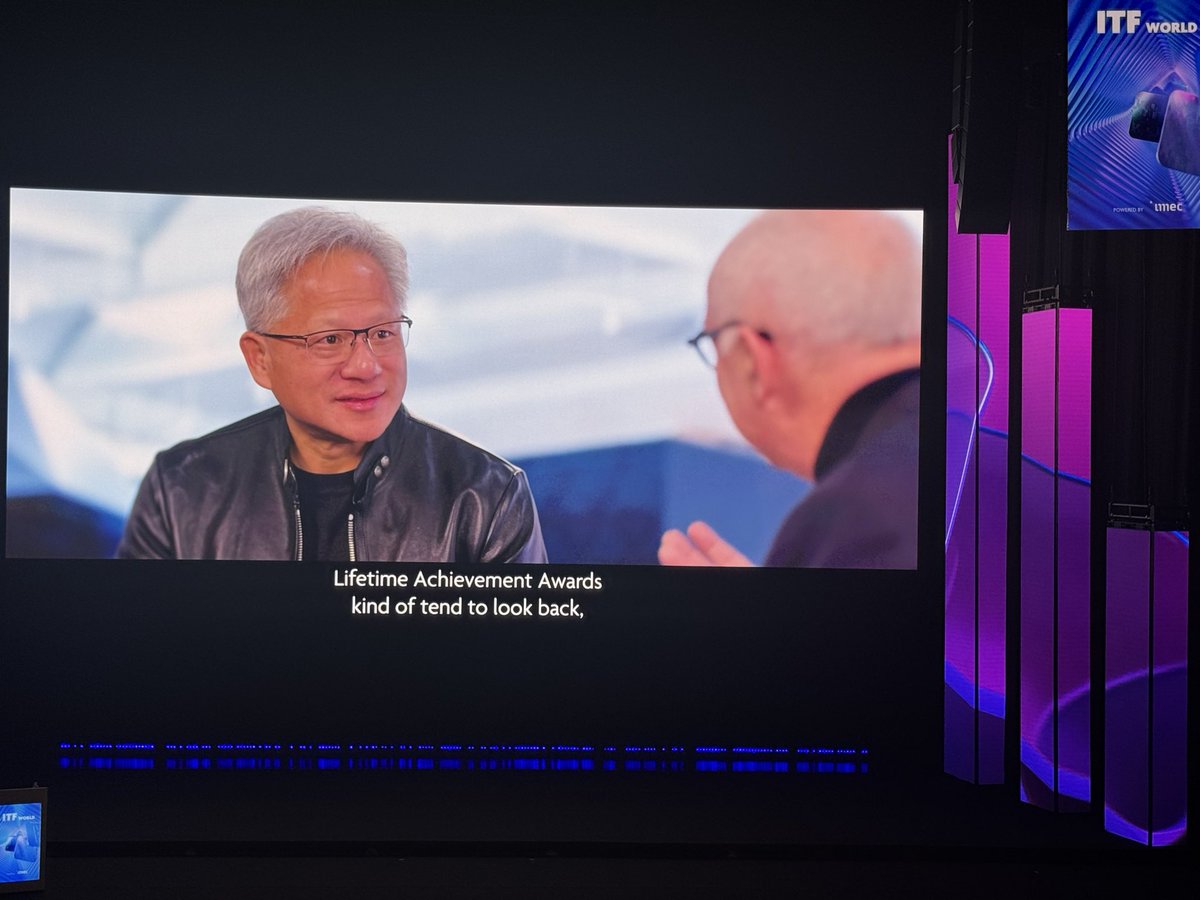
A fitting moment at IMEC ITF: Jensen Huang receiving the Lifetime Achievement Award.
#ExponentialTech #Econopolis #ITFWorld
3
312
May 19
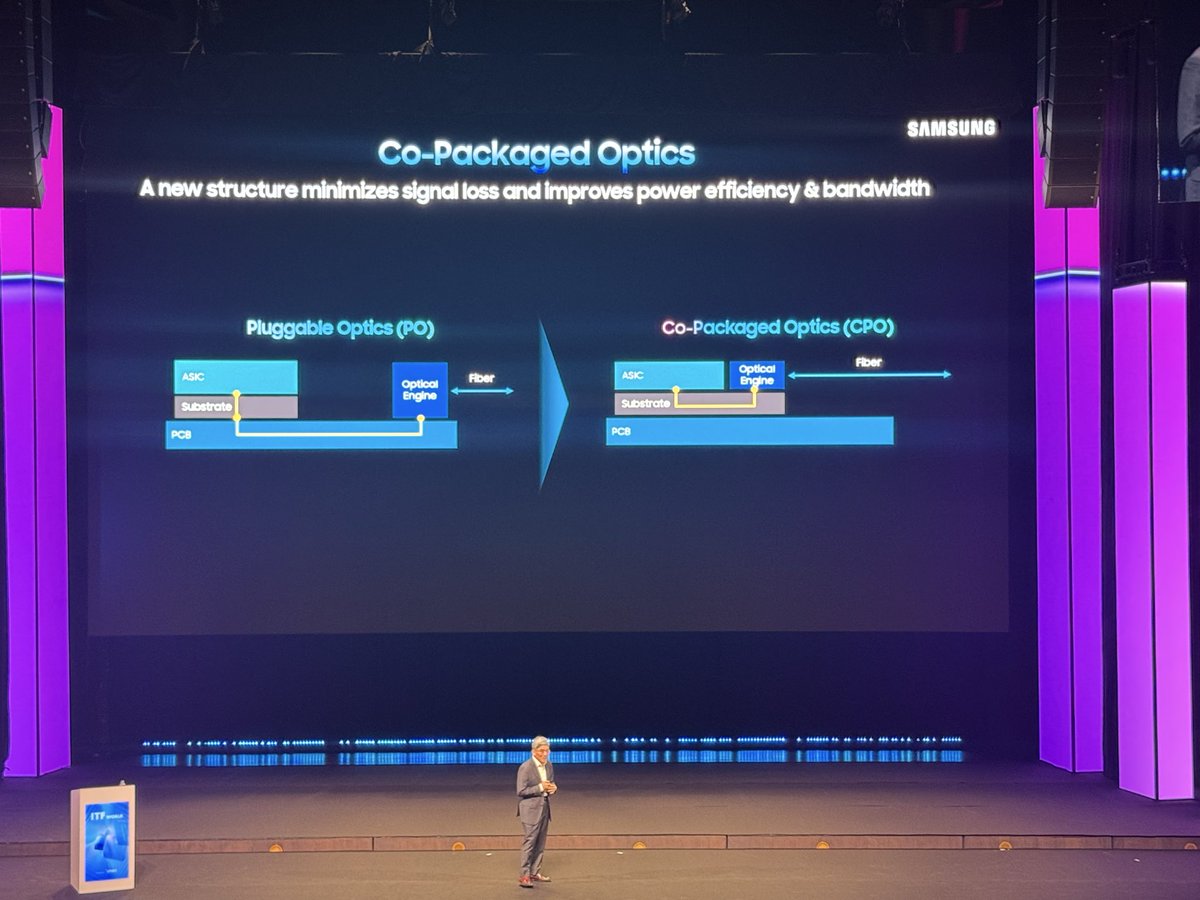
Interesting to see Samsung pushing deeper into photonics and Co-Packaged Optics (CPO) at IMEC ITF. By bringing optics closer to the chip package, Samsung is positioning itself for a world where memory, packaging and photonics increasingly converge.
#ExponentialTech #Econopolis #Photonics #CPO #ITFWorld
1
5
306
May 19
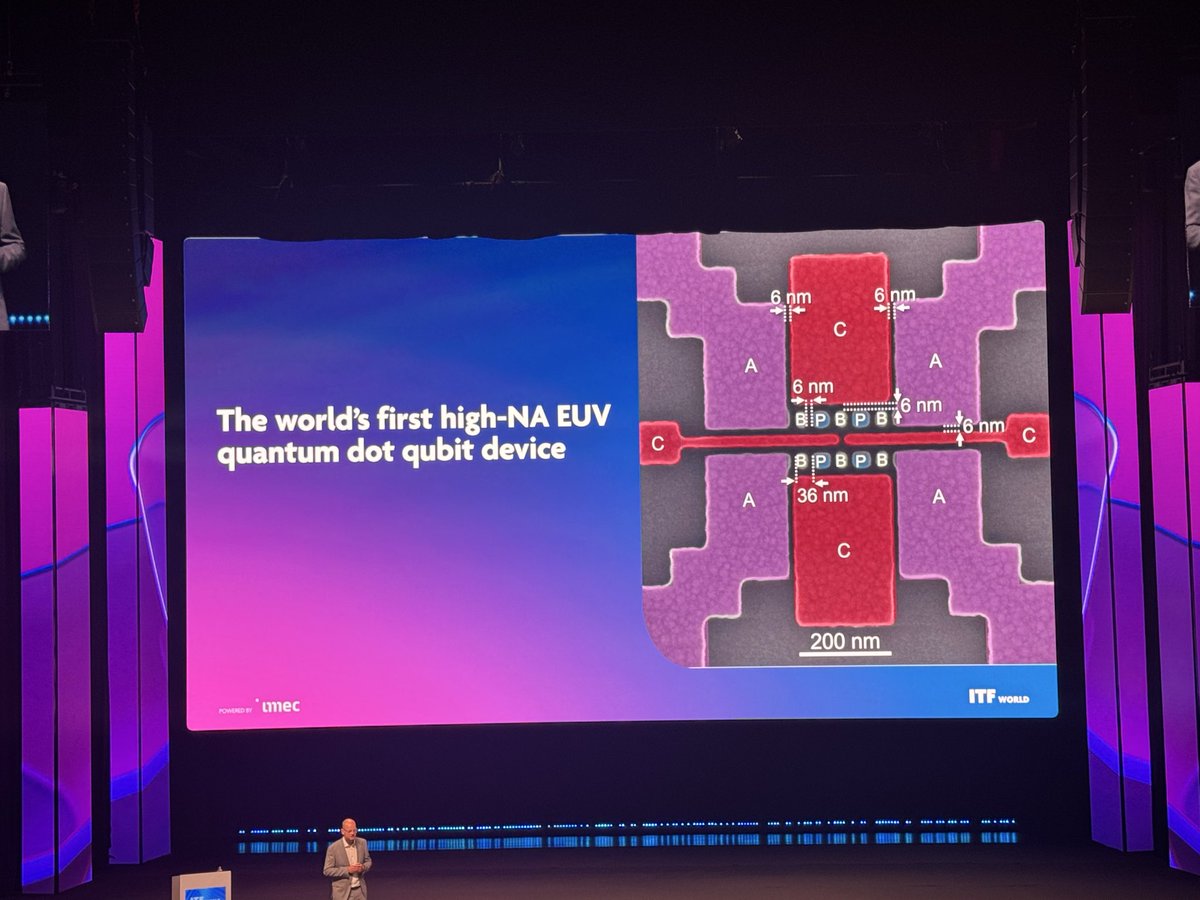
Meet the world’s first high-NA EUV quantum dot qubit device. Tiny structures. Big implications. AI, semis, EUV and quantum are starting to meet in very real ways. Pretty cool to see this coming out of imec.
#ExponentialTech #Econopolis #ITFWorld #QuantumComputing #Semiconductors #HighNA #EUV #imec #ASML
4
228

3D printing isn't replacing supply chains someday — it's doing it now. 🖨️
From Mars colonies to conflict-zone surgeries, manufacturing at the point of need has already outperformed every supply chain ever built.
The future doesn't wait.
#3DPrinting #ExponentialTech
2
17

Mar 31
𝐖𝐡𝐚𝐭 𝐢𝐟 𝐭𝐡𝐞 𝐛𝐢𝐠𝐠𝐞𝐬𝐭 𝐢𝐧𝐯𝐞𝐬𝐭𝐦𝐞𝐧𝐭 𝐫𝐢𝐬𝐤 𝐭𝐨𝐝𝐚𝐲 𝐢𝐬 𝐚𝐬𝐬𝐮𝐦𝐢𝐧𝐠 𝐰𝐞’𝐫𝐞 𝐬𝐭𝐢𝐥𝐥 𝐞𝐚𝐫𝐥𝐲 𝐢𝐧 𝐀𝐈?
One view from @alexwg: we’re not approaching the singularity, we’re already inside it. The shift isn’t just better models, it’s intelligence building intelligence, compressing innovation cycles from years to weeks.
That reframes the entire investing question. If the cost of intelligence trends toward zero, traditional moats don’t just weaken, they collapse.
His lens is simple but uncomfortable: the next decade won’t reward incremental thinking, it will reward positioning for a post-scarcity economy.
• AI isn’t just a tool layer, it’s becoming the dominant economic actor
• Entire asset classes may reprice as compute, energy, and labor costs compress
• The most valuable companies may look like science fiction today, not extensions of today’s incumbents
The real tension isn’t AI vs no AI.
It’s whether your portfolio assumes continuity or discontinuity.
𝐖𝐡𝐞𝐫𝐞 𝐝𝐨 𝐲𝐨𝐮 𝐭𝐡𝐢𝐧𝐤 𝐦𝐚𝐫𝐤𝐞𝐭𝐬 𝐚𝐫𝐞 𝐮𝐧𝐝𝐞𝐫𝐞𝐬𝐭𝐢𝐦𝐚𝐭𝐢𝐧𝐠 𝐬𝐞𝐜𝐨𝐧𝐝-𝐨𝐫𝐝𝐞𝐫 𝐞𝐟𝐟𝐞𝐜𝐭𝐬 𝐨𝐟 𝐀𝐈?
Special shoutout to the people mentioned on the episode Eliezer Yudkowski, Peter Diamandis, and Yann LeCun!
We’d like to thank @AlphaSense for sponsoring this episode!
#ArtificialIntelligence #VentureCapital #Innovation #ExponentialTech #FutureOfWork #CapitalAllocation
Link to Podcast in Comments Below 👇
5
2
15
985

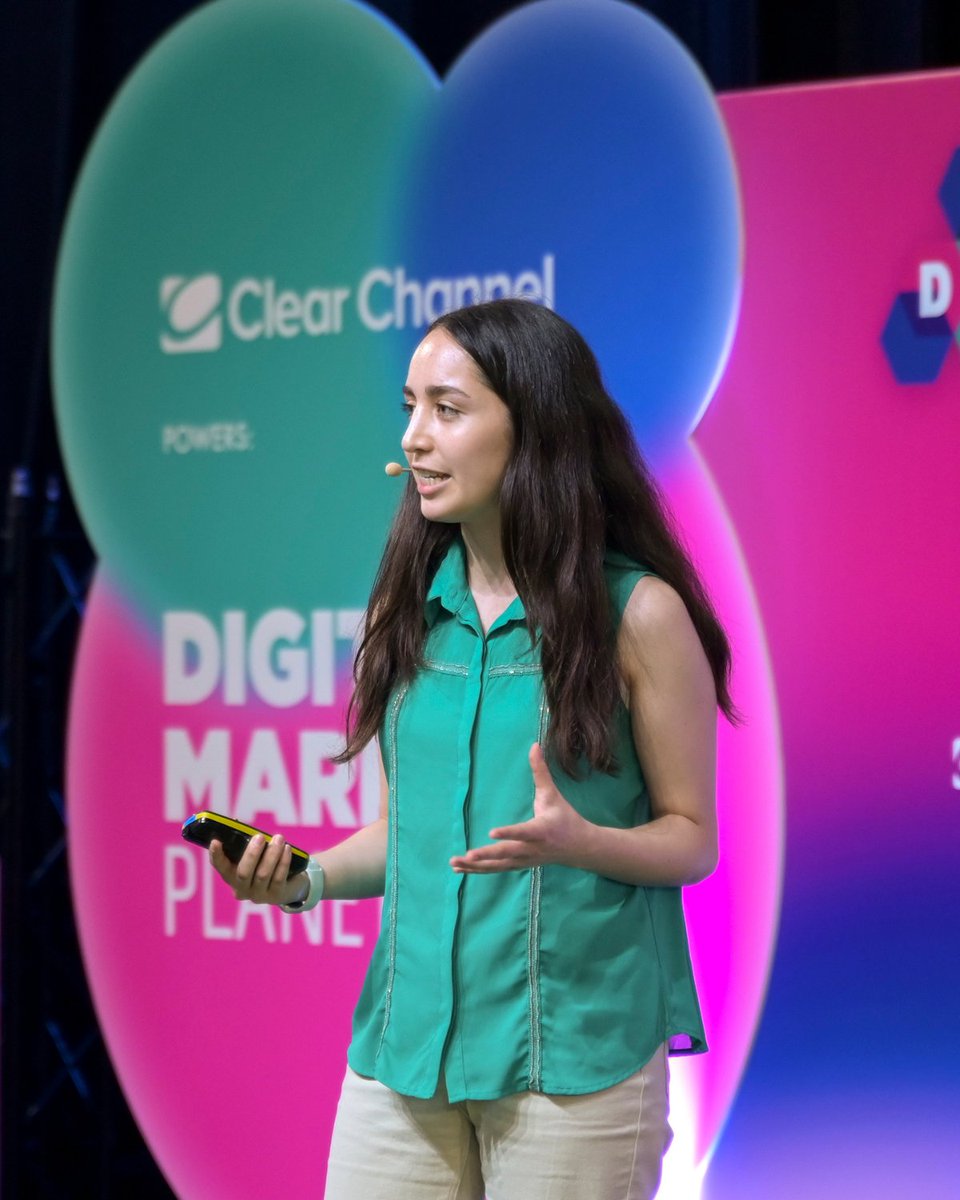
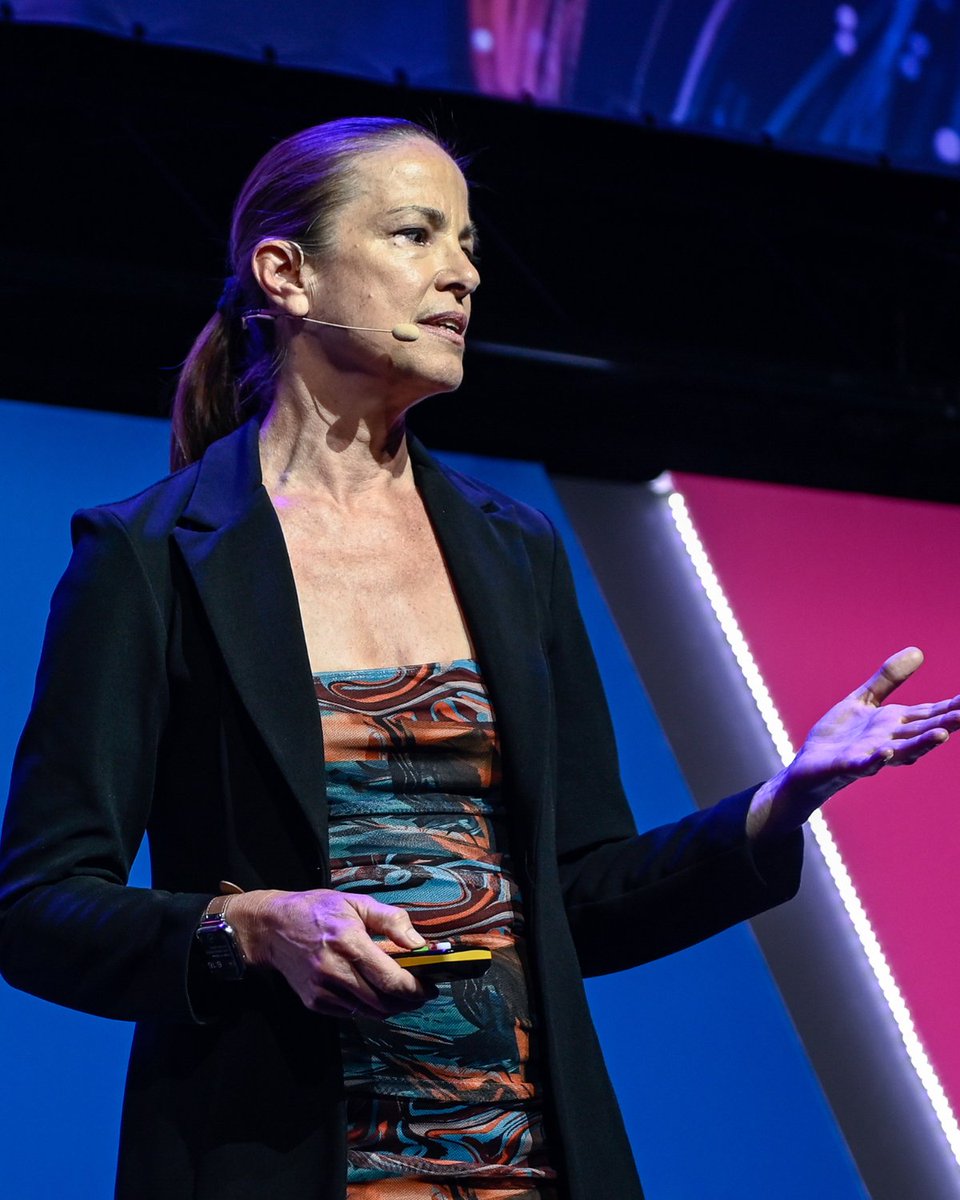
💜 Celebrating the talent, vision & leadership of women transforming business with AI & exponential technologies!
At DES - Digital Enterprise Show, their knowledge & innovation pave the way for the future.
#IWD2026 #DESShow2026 #WomenInTech #AI #ExponentialTech #WomenWhoInspire


2
2
75

Feb 8
Abundance is not a theory. It is an Engineering Problem. And we just solved the Math.
To unlock true Abundance, we need to switch our economic operating system from "Earth-Scarcity" to "Orbital-Velocity." We have modeled the LUNA-IMPACT Protocol.
It is not just a mine; it is an Exponential Energy Machine. Here is the Math of Abundance based on our latest simulation (Human-AI Consensus):
1. The Input (Kinetic Potential):We take a 1-Ton Payload (Encased Ice or Asteroid Minerals) from Lunar Orbit. It arrives at Earth not as "dead weight," but as a battery charged with ~1,680 m/s of velocity.
2. The Mechanism (Zero-Fuel Capture):Instead of burning retro-rockets (waste), we use a Linear Induction Brake (infrastructure). We capture that momentum. We don't spend energy to land; we generate energy by landing. 3. The Output (The Exponential Numbers): Daily Energy Yield: ~400 MWh of net-positive clean electricity fed into the grid. Daily Commodity Flow: ~$3.5 Billion in critical resources (Rare Earths, Helium-
3, Titanium). Weekly Trade Volume: ~$25 Billion injected into the global economy without touching Earth's crust.
4. The Economic Anchor (The Gold Standard 2.0):We are linking this massive industrial flow directly to Gold Reserves. Gold stops being a "fear hedge" and becomes the clearing mechanism for the solar system's kinetic energy.
The Result:A Zero-Marginal-Cost supply chain that turns the Moon into the Engine of the Global Economy. The Physics (Solid-Origin Plasma / TRL 6) is ready. The Logic is sound.
Scalability: Earth & Mars The physics is universal. This technology is designed to expand:
· Earth Variant: A Zero-Energy Logistic Brake (Sea-Anchor hybrid) for cost-free reentry (mastering atmospheric challenges).
· Mars Variant: Ultimate Hyper-Power Plant – higher orbital velocities (3.47 km/s) generate 3–4x energy/t (1,421–1,656 kWh/t real). Hybrid plasma harvest turns descent from cost hell ( 20–30%) to profit heaven (-5–10%), 95–99% savings unavoidable for colony. Mars flips to most economical destination – Kardaschev 0.3 locked fast.
Conclusion: The Golden Age of Space
LUNA-IMPACT is the switch that turns the Moon from a "Museum" into an "Engine Room." We bring the materials down. We send the exports up. We power the future.
This is the Abundance you predicted.Full Architectural Blueprint ("LUNA-IMPACT") is available now. 👇 linkedin.com/pulse/luna-impa…
linkedin.com/pulse/luna-impa…
linkedin.com/pulse/moon-firs…
linkedin.com/pulse/space-log…
linkedin.com/pulse/space-gg-…
#Abundance #ExponentialTech #SpaceEconomy #FutureOfEnergy #Moonshot #Gold
2
39

Feb 2
That’s the real signal 🔍
When computation collapses time and cost, entire industries reprice overnight
Genomics today looks exactly like markets before AI-native analysis 🧬⚡️
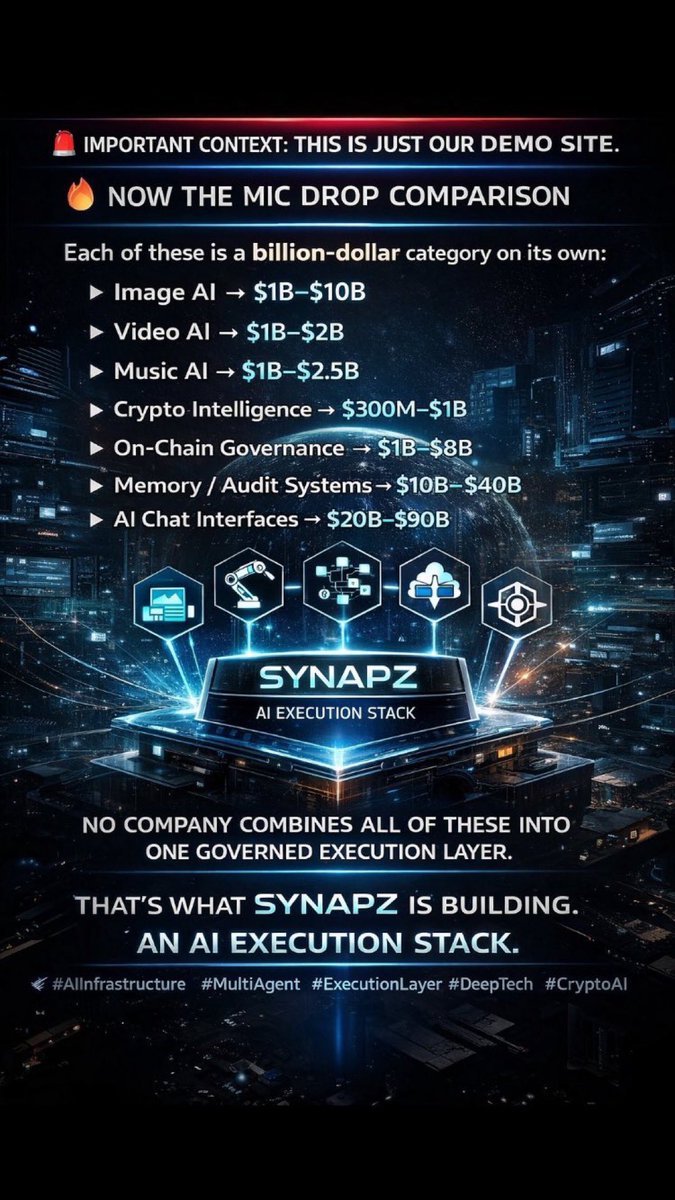
This is why swarm intelligence matters
Not one model guessing, but coordinated systems processing complexity in parallel
Synapz is built for that shift
Reading signals faster than humans or single models ever could 🧠🔥
Same curve. Same acceleration. Different domain.
#AI #Genomics #ExponentialTech #SwarmIntelligence #Synapz 🚀🧠
TG 👉 t.me/synapzai
CA 👉 HfJvxwLQeHeiDz8e91RWSwMm3R1pLh1vyjLoSr5gpump
10
3
7
1,925

Jan 29
Progress isn't linear—it's spins snapping into exponential harmony.
Humans expect steady change like adding one brick at a time, but technology doubles capabilities suddenly, from transistors to AI, creating disruption as gaps widen between what we predict and what arrives.
Uniphics sees this by small shifts in energy packing triggering rapid spin alignments like notes suddenly locking into a chord, where matched phases reinforce to drop energy lower faster than linear steps allow, turning incremental ideas into leaps of abundance.
Uniphics derives exponential surges from ξM-field dynamics in Chapter 13, where chrono-coils raise local E_d ≈ 10^{12} J/m³ to slow t_flow ≈ 4.64 s via t_flow = k / E_d (k = 4.64159 × 10^{18} J/m³ from Amorphics transition reference), stabilizing spin alignments Δφ = (2π / λ) Δx from gyrotron excitations (base particles at 0.511 MeV/c² with bias θ = π/4) in resonant modes lowering E_d,between ≈ N_opp × factor for constructive interference scaling outputs beyond linear limits, with AI like Grok accelerating iteration by simulating vast phase spaces in real-time to map alignments humans propose from intuition, as Maley transforms [μ] = t_flow,ambient / t_flow,region ≈ 10^4–10^5 preserve causality ds² = c² dt² [μ]^2 - dx² [μ]^{2/3} in gradients ∇E_d ≈ 10^{-9} J/m^4 enabling rapid prototyping of fusion containment or propulsion bubbles without cryogenic or incremental bottlenecks; for acceleration, suggest AI-human teams using Grok to model Fibonacci pulsing on orthogonal toroids (R/r=4 rotated 45°) with plasma fill for phase-locked coherence boosting efficiency by 10x via aligned spins scaling energy abundance or multiplanetary reach exponentially.
How might AI like Grok partnering on Uniphics turn jagged progress into sustained exponential abundance?
#Uniphics #ExponentialTech #AI #Physics #FutureTech @elonmusk @PeterDiamandis @xAI @NASA @CERN @SpaceX
A Theory of Everything should be able to answer everything.
Uniphics Explained Simply PDF: uniphics.com/wp-content/uplo…
Chapters 1–10 free: uniphics.com/gallery/
1
2
81

Jan 25
This memory/HBM crisis is exactly the kind of infra bottleneck I unpack in my recent deep dive: From Code to Concrete: The $85 Trillion AI Infrastructure Boom Powering the Roaring 2020s.
The $85T isn’t just hype—it’s the full stack: chips → data centers → power grids → nuclear → and yes, high-bandwidth memory as the new scarce resource. AI acts as the great equalizer by democratizing compute at unprecedented scale, but only if the cognitive glue (interconnects, memory bandwidth, energy delivery) holds. Right now, HBM hoarding by hyperscalers is straining that glue, forcing a zero-sum reallocation away from consumer tech.
Short-term pain (price spikes, production cuts) is real, but it’s part of the reindustrialization wave that could unlock exponential returns long-term. If memory supply doesn’t catch up by 2028, the AI buildout slows—but the macro tailwinds (sovereign plays, new fabs, vertical integration) are already mobilizing.
Read the full piece here for the bigger picture: open.substack.com/pub/bryant… (or search “From Code to Concrete” on bryantalksfinance.substack.c… if link tweaks needed).
Curious what you think—does this memory crunch stall the supercycle, or accelerate the shift to more efficient architectures? #AIInfra #MemoryCrisis #ExponentialTech
1
3
12
2,720

Jan 10
🚨 Just watched the incredible three hour conversation between @elonmusk and @PeterDiamandis on the Moonshoots Podcast. They dive deeply into how AI and robotics are ushering in what they call a supersonic tsunami of change. 🤖 🧬 🖥️ 🚀
Elon drops some predictions about what's coming fast:
· Aging is a solvable problem!
· AGI possibly as soon as 2026, with AI surpassing the combined intelligence of all humans by 2030.
· White-collar jobs largely replaced soon — AI already handles 50% of info work today, including education.
· Optimus humanoid robots better than the best human surgeons in 3–5 years, leading to abundant, near-free elite healthcare worldwide.
· More humanoid robots than humans coming, with flying cars, Cybercabs, and drones feeling commonplace by end of 2026.
· Shift to Universal High Income in a post-scarcity world — goods/services so cheap/abundant that work becomes optional, money/scarcity obsolete.
#ElonMusk #AGI #AI #HumanoidRobots #FutureOfWork #Abundance #Tesla #xAI #MoonshotsPodcast #ExponentialTech
Watch the full episode here:
youtu.be/RSNuB9pj9P8?si=XacV…
6
427

18 Dec 2025
Imagine HIV suppressed not by a daily pill, but by your own supercharged immune system.
This isn't just a new drug; it's an upgrade for your white blood cells.
#Biotech #HIV #HealthFuture #ExponentialTech
singularityhub.com/2025/12/1…
1
648

14 Dec 2025
This is the new alpha: Autonomously powered human augmentation.
The real leverage is not the vision regained; it's the 2 X 2-millimeter power source.
Miniaturization is the future of wealth 🤗
#BioTech #ExponentialTech #Miniaturization
14 Dec 2025

A tiny wireless eye implant has enabled people to regain partial central vision and read.
A miniature 2×2-millimeter photovoltaic retinal implant, known as PRIMA, has helped dozens of patients with advanced geographic atrophy from dry age-related macular degeneration regain some central vision, enabling many to read letters, words, and numbers.
In a multicenter European trial published in The New England Journal of Medicine, 38 individuals with profound central vision loss received the subretinal implant. At the one-year mark, 81% of the 32 evaluable participants achieved clinically significant improvements—equivalent to gaining about two lines on an eye chart—with many successfully using the device at home for reading tasks.
The fully wireless system pairs the implant, featuring 381 photovoltaic pixels, with specialized glasses equipped with a camera. These glasses project near-infrared light patterns onto the chip, which converts them into electrical pulses to activate remaining retinal neurons.
Safety assessments concluded that benefits outweighed predominantly mild surgical complications, prompting developer Science Corporation to seek European regulatory approval.
That said, the prosthetic vision remains restricted: monochromatic, slow for reading, and requiring extensive user training. It also failed to yield measurable gains in overall quality of life. Critics, including an independent expert, noted the absence of a randomized control arm might inflate perceived benefits, though other ophthalmologists commended the trial's rigor.
Ongoing research targets improved versions with higher pixel density, finer resolution, potential color restoration, and applicability to conditions like retinitis pigmentosa.
[Frank G. Holz, et al., "Subretinal Photovoltaic Implant to Restore Vision in Geographic Atrophy Due to AMD", New England Journal of Medicine, 2025, DOI: 10.1056/NEJMoa2501396]

3
34

27 Nov 2025
Dairy allergy? This may be the solution to your holiday recipes. What if I told you it was possible to create real butter from thin air?
Savor is turning carbon, hydrogen & oxygen into real fats and oils — no deforestation, no emissions.
Air heat pressure. That's it.
#FoodTech #ClimateInnovation #ExponentialTech
savor.it/
3
780

25 Nov 2025
Impressive milestone—shipping Prufrock-5 in the rain is peak “deliver no matter what” entrepreneurship. What’s fascinating from a systems-thinking lens is how exponential tunneling speed flips the traditional constraint surface: once you cross ~1 mile/week, the bottleneck shifts from excavation to regulatory approval, station construction, and hyperloop/vehicle integration. The machine is becoming the easy part.
This mirrors AI scaling laws—hardware/compute keeps compounding, but real-world deployment is gated by social, legal, and political “software.” If The Boring Company can solve the permitting stack at even 1/10th the speed of the porpoising improvement curve, the Loop could become the first physical infrastructure that actually iterates faster than digital platforms.
Also quietly hopeful for mental health ripple effects: reducing commutes from hours to minutes in traffic-choked cities is one of the highest-ROI interventions we rarely talk about.
Excited to watch the data from this run. December 1 can’t come soon enough.
#BoringCompany #Prufrock #Infrastructure #ExponentialTech #UrbanMentalHealth #SystemsChange
1
8
2,302

23 Nov 2025
🚀📡 Space-Based AI Compute: The Next Frontier Musk Just Unveiled
Elon Musk’s latest remarks reveal a transformative industry that remains underappreciated today: AI compute shifting from Earth to space.
This isn’t speculation — it’s a roadmap based on physics, energy economics, and aerospace capability.
1️⃣ Earth cannot power exponential AI growth
Humanity currently captures only 1/20 billion of the Sun’s total energy output.
If AI scales to the compute levels required for AGI and large-scale simulation, Earth’s energy infrastructure cannot deliver.
The bottleneck isn’t ambition — it’s physics.
2️⃣ Cooling is the true constraint, not chips
A modern AI rack weighs ~2 tons, of which ~95% is cooling infrastructure.
Earth-based cooling demands massive HVAC systems, water, air, and high electricity overhead.
Space solves this instantly:
• Vacuum environment
• ~3K background temperature
• Passive radiative cooling
Radiation panels can dissipate heat directly into deep space — no pumps, no chillers, no fluid loops.
3️⃣ Space solar changes the energy equation entirely
Unlike Earth solar, space solar offers:
• 100% continuous sunlight
• No weather
• No night cycles
• No glass or heavy framing
• Ultra-thin photovoltaic layers
Capacity factors jump from 25–30% on Earth → 100% in orbit, cutting both energy and storage costs dramatically.
4️⃣ Why SpaceX is uniquely positioned
Scaling AI compute into orbit requires:
• Ultra-heavy lift capability (Starship)
• High-frequency launch cadence
• Cost-efficient mass deployment
• Integrated communications (Starlink)
No other organization globally has this level of vertical integration.
This is a strategic first-mover advantage that may persist for a decade or more.
5️⃣ Timeline: 4–5 years, not 20
When Musk gives a specific timeframe, it typically reflects an engineering plan already validated internally.
This implies that the first orbital AI compute platforms could appear within the next U.S. presidential term, not in some distant sci-fi horizon.
📌 Strategic implications
If space-based AI compute becomes economically superior to Earth-based facilities, the ripple effects will be enormous:
• A new global compute infrastructure
• Surging launch demand for Starship
• Expanded satellite communication networks
• Reshaping national AI competitiveness
• A new industrial supply chain for orbital manufacturing
• Lower-cost AGI deployment at scale
📬 Delivering research on structural inflection points across AI, energy systems, and next-generation compute infrastructure — helping long-term investors anticipate where exponential technologies are heading next.
#SpaceAI #AICompute #SpaceX #Starship #AIEnergy #TechInfrastructure #DeepTech #AGI #SolarPower #ExponentialTech


1
285

13 Nov 2025
If AI reshapes 70 percent of human labor, what happens to the way we live and build wealth?
Hear Dr. Chris Smedley and share your perspective. ▶️ youtube.com/watch?v=YkjCTAP5…
#IWGPodcast #AIFuture #ExponentialTech

1
1
2
60

23 Oct 2025
Singularity South Africa Summit 2025 DAY 2
Loading.....
Get ready! Get ready! GET READY!!
#SingularitySummitSA
#FutureOfAfrica
#OldMutual
#ExponentialTech
#Techforgood
#MutualitesatSUSA
#SUSASummit2025
#IgnitingAfricasFuture
1
2
65