
May 14
Big moment for the future of AI in our region. 🚀
Today, Sacramento State joined industry partners, education, and civic leaders in signing a Memorandum of Understanding (MOU) to formalize a first-of-its-kind AI workforce pipeline from kindergarten through career. 📚 💼
The AI K-Career initiative brings schools and industry partners together to align on what education, skills, and training are needed to connect people to jobs in the @CityofRCordova—setting a new standard for how regions can prepare talent for the future.
"This is exactly the kind of collaboration that defines what a university like ours does. We prepare students to create a better life through alignment with industry partners, ensuring they graduate with gainful employment. We're glad to be in partnership with all the amazing people around this table and looking forward to being a core part of what is going to continue to transform this region." - President @DrLukeWood
@flcfalcons
@FolsomCordova
@FarmGPU
@hmci_ai
@NVIDIAAI
@SacStateCarlsen
@solidigm
📸 Sacramento State/Andrea Price
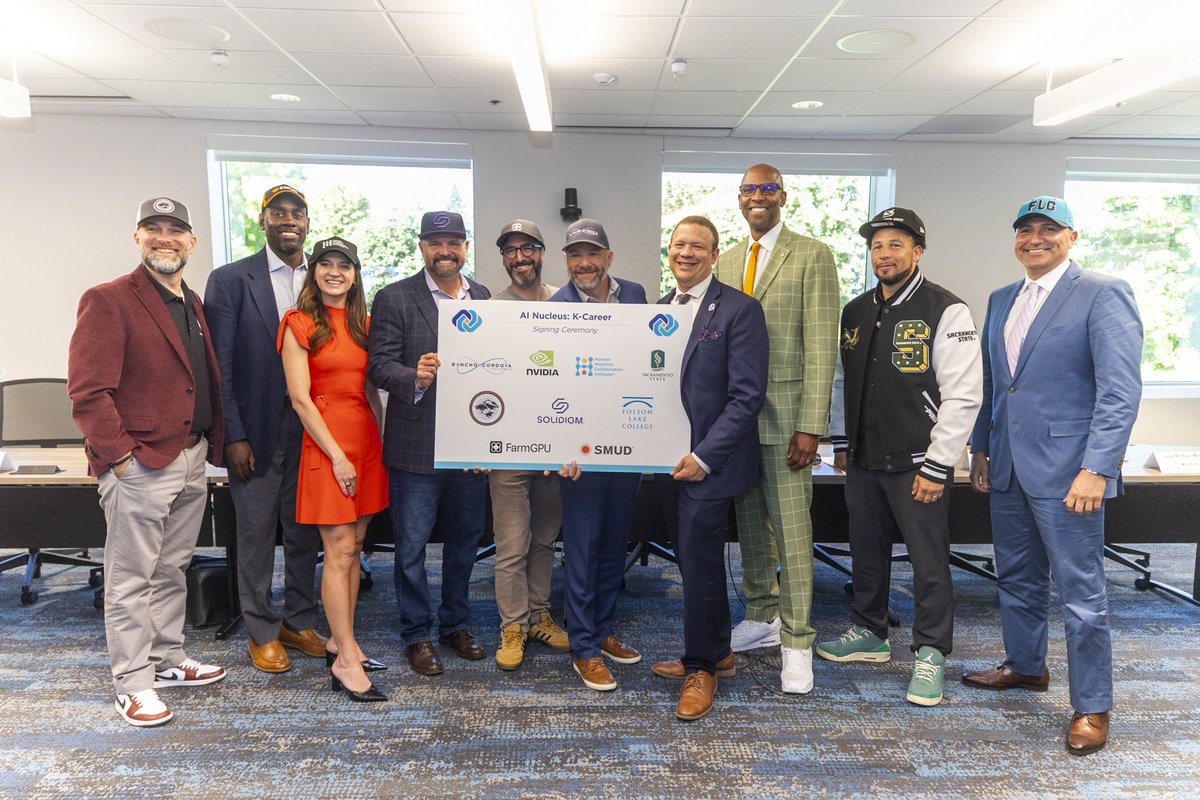
ALT A group of individuals wearing business attire and caps stands in a conference room, holding a large sign with various company logos.
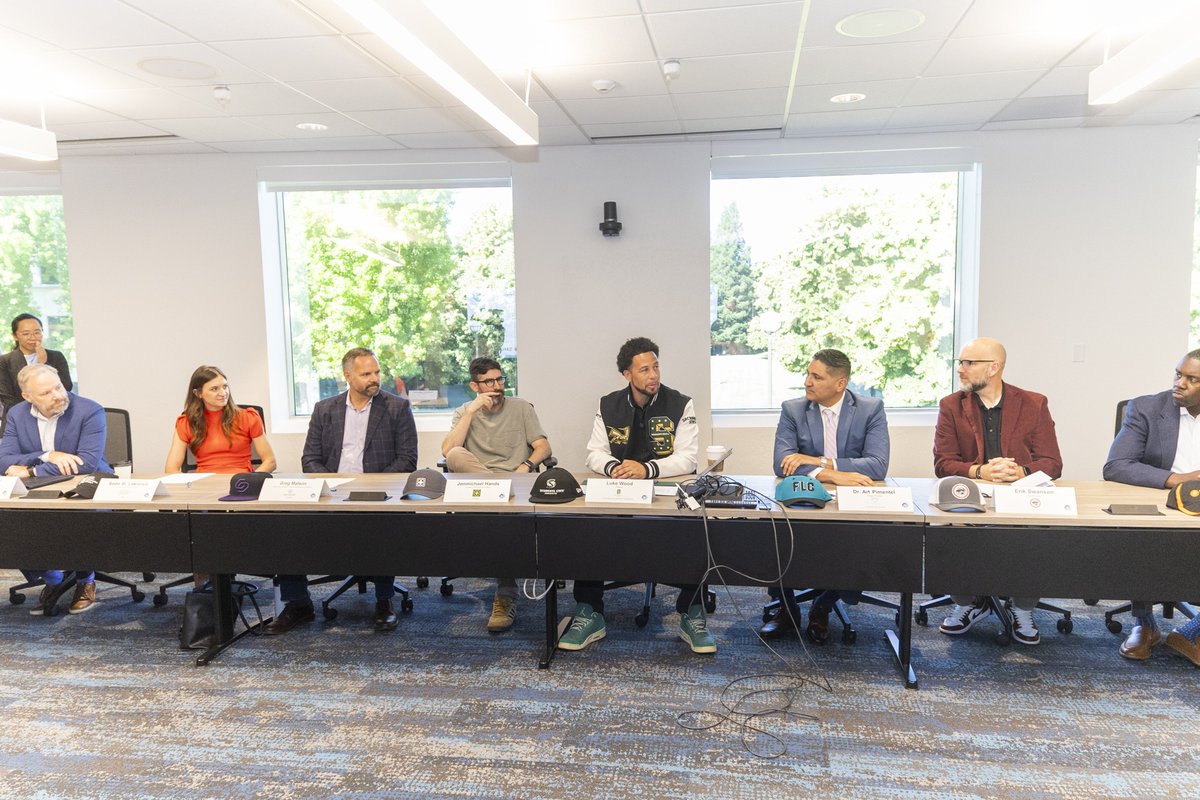
ALT A group of people are seated at a long conference table in a bright room with large windows. Various hats and papers are arranged in front of the individuals, who appear to be engaged in a discussion.
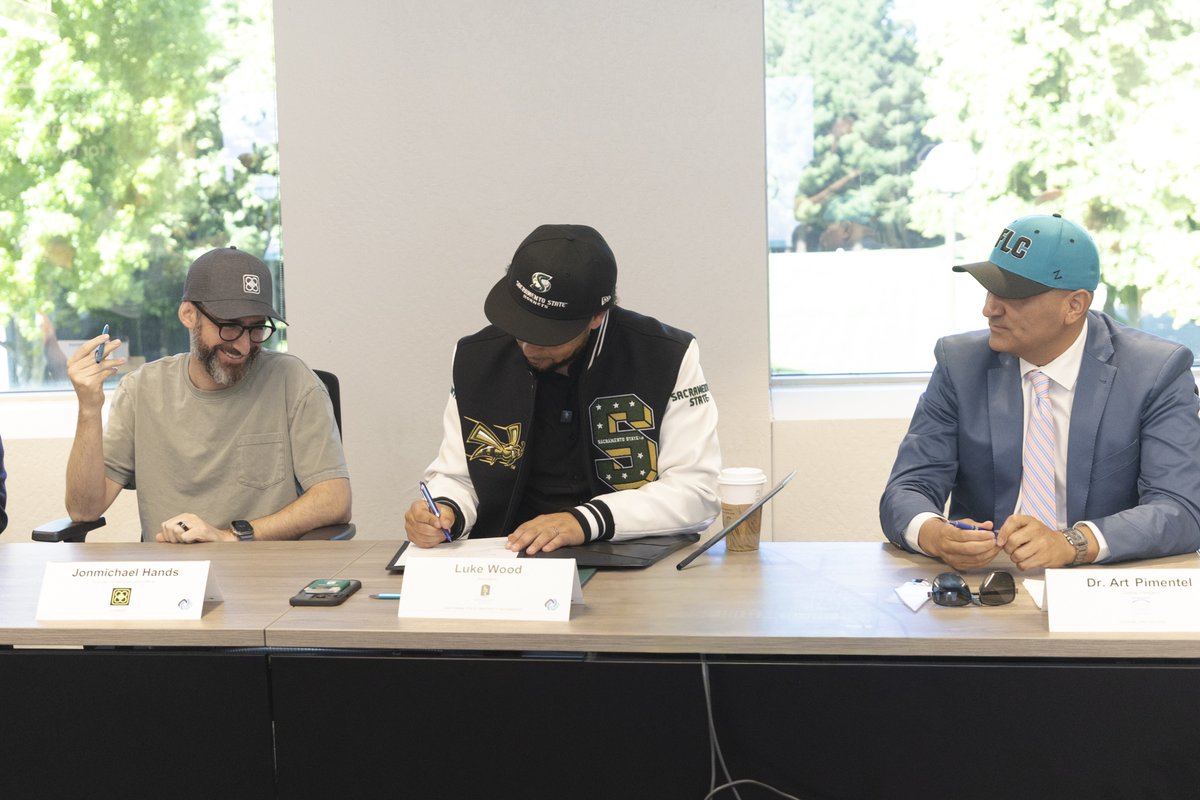
ALT Jonmichael Hands, Luke Wood, and Dr. Art Pimentel are seated at a conference room table. President Wood is signing a document.
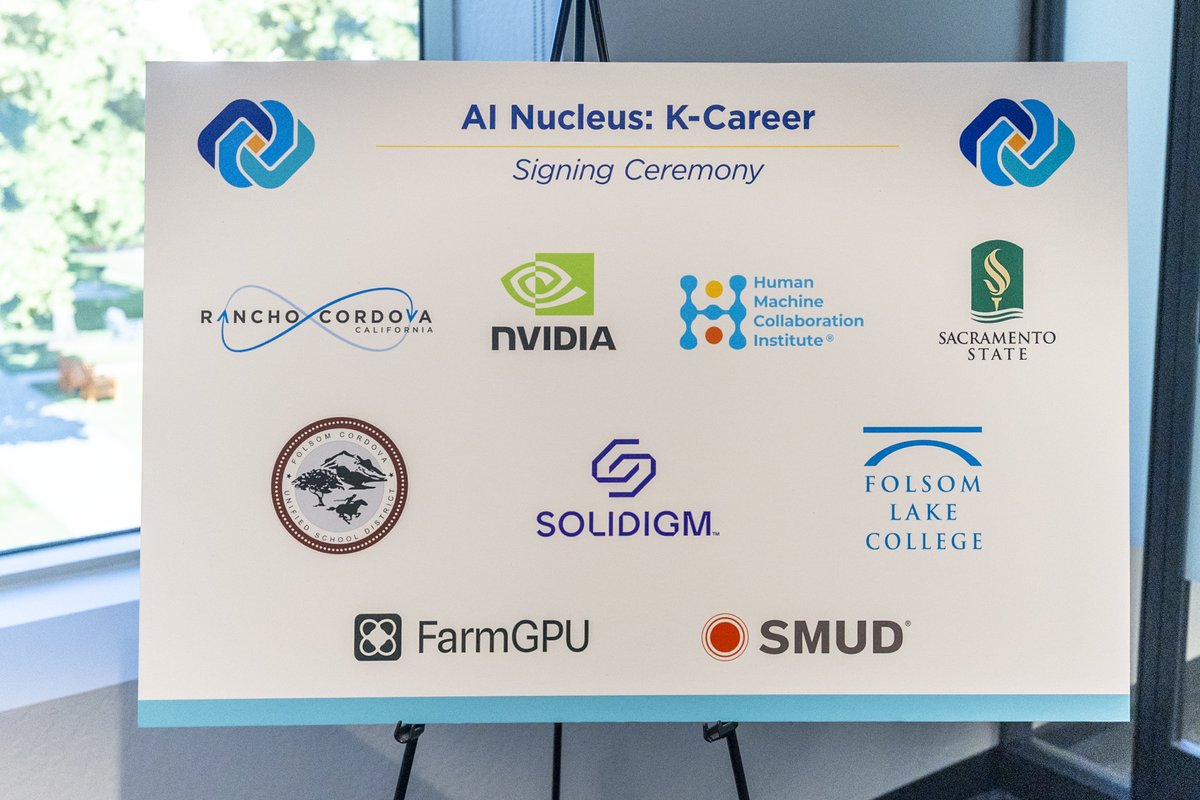
ALT A display board titled "AI Nucleus: K-Career Signing Ceremony" with logos of Rancho Cordova, NVIDIA, Human Machine Collaboration Institute, Sacramento State, Folsom Lake College, Solidigm, FarmGPU, and SMUD.
1
2
5
769

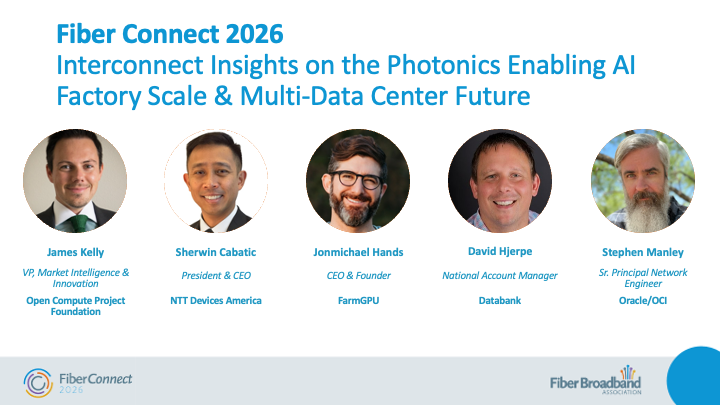
OCP is excited to announce our upcoming panel at Fiber Connect 2026's AI and Emerging Technology Infrastructure Summit on Wednesday, May 20!
Panel Title: Interconnect Insights on the Photonics Enabling AI Factory Scale and the Multi-Data Center Future
Join our expert panel for this discussion:
-Moderator: James Kelly, VP Market Intelligence & Innovation, OCP
-Sherwin Cabatic, President and CEO, NTT Devices America
-Jonmichael Hands, CEO, FarmGPU
-Stephen Manley, Sr Principal Network Engineer, Oracle Cloud
-David Hjerpe, National Account Manager, Databank
The race to exascale AI is fundamentally shifting how AI factory building blocks are designed and operated. This OCP-led panel will discuss how networking and photonics are becoming critical enablers for data movement, focusing on three key areas: scale-up within an AI pod, scale-out across the AI factory floor, and scale-across between AI data center campuses and metros. One practical reality we'll be discussing is that power density isn't the only headline-grabber: for data centers, fiber count and fiber pathway capacity per rack are so demanding that the cable plant is now essentially the new floor-loading, catching many colo designs flat-footed.
We look forward to seeing you at Fiber Connect!
Learn more and register here: fiberconnect.fiberbroadband.…
#FiberConnect2026 #AI #Photonics #DataCenter #OCP #OpenComputeProject #networking
2
225

The neoclouds quietly became the second tier of hyperscale AI infra. Same 100kW racks, same RoCE fabrics, same firmware nightmares — on a fraction of the team and balance sheet. That's the gap OCP's new Scaling AI Clusters at Neoclouds workstream exists to close, and FarmGPU is co-chairing it alongside Scaleway and Denvr Dataworks.
A few signals from the first 19-operator community survey worth paying attention to:
→ Power sourcing and benchmarking are rated the most important 2026 problems (4.21 / 4.05 importance).
→ But the area where operators think OCP can move the needle most is open rack and pod reference patterns for 30–100kW (4.11 leverage). Hardware ≠ the bottleneck. Operational surface area is.
→ The top operator pain points: networking (RoCE/IB tuning, congestion control), management & automation (Day-2 ops, firmware), and interoperability (BMC/BIOS/telemetry consistency). Every neocloud is independently re-discovering the same gaps and filing the same tickets to the same OEMs.
Concrete output already in motion:
1. A neocloud Redfish profile. Redfish works great on Dell, inconsistently everywhere else. Instead of 20 operators each begging OEMs separately, the workstream is drafting a collective, machine-validatable profile that codifies the BMC, firmware, TLS, telemetry, and event-subscription behaviors neoclouds actually need. One spec OEMs implement against. One checklist procurement validates.
2. FarmGPU is the first neocloud running an OCP-aligned backend fabric in production — the AI Training Fabric Reference Architecture we co-developed with Hedgehog and Celestica. Celestica DS5000 (51.2T) SONiC Hedgehog as the K8s-native control plane. 36 ready-to-deploy composition variants spanning OPG-64/128/256/512 → XOC-256/512/1024, air- and liquid-cooled, single- and dual-plane. Vendor-neutral, declarative, reproducible. Contributed back to OCP so nobody has to reinvent it.
3. OCP NVMe SSD spec → predictive failure engine. We standardize on the OCP Datacenter NVMe SSD spec because the telemetry surface is dramatically richer than vanilla NVMe. On top of that we built a fleet-wide predictive failure engine — scores every drive for NAND degradation, ECC escalation, recoverable/uncoverable error trends, surfaces replace/watch/monitor recommendations. Plan is to open-source it so other neoclouds can run it directly.
The whole thesis: write down what neoclouds actually need → get OEMs to ship it through OCP → open-source the operator tooling that turns the spec into operational value. That compounds.
Full writeup, survey results, hardware-management deep dive recording, and how to join the workstream: blog.farmgpu.com/ocp-scaling…
🌾🚜
1
3
122
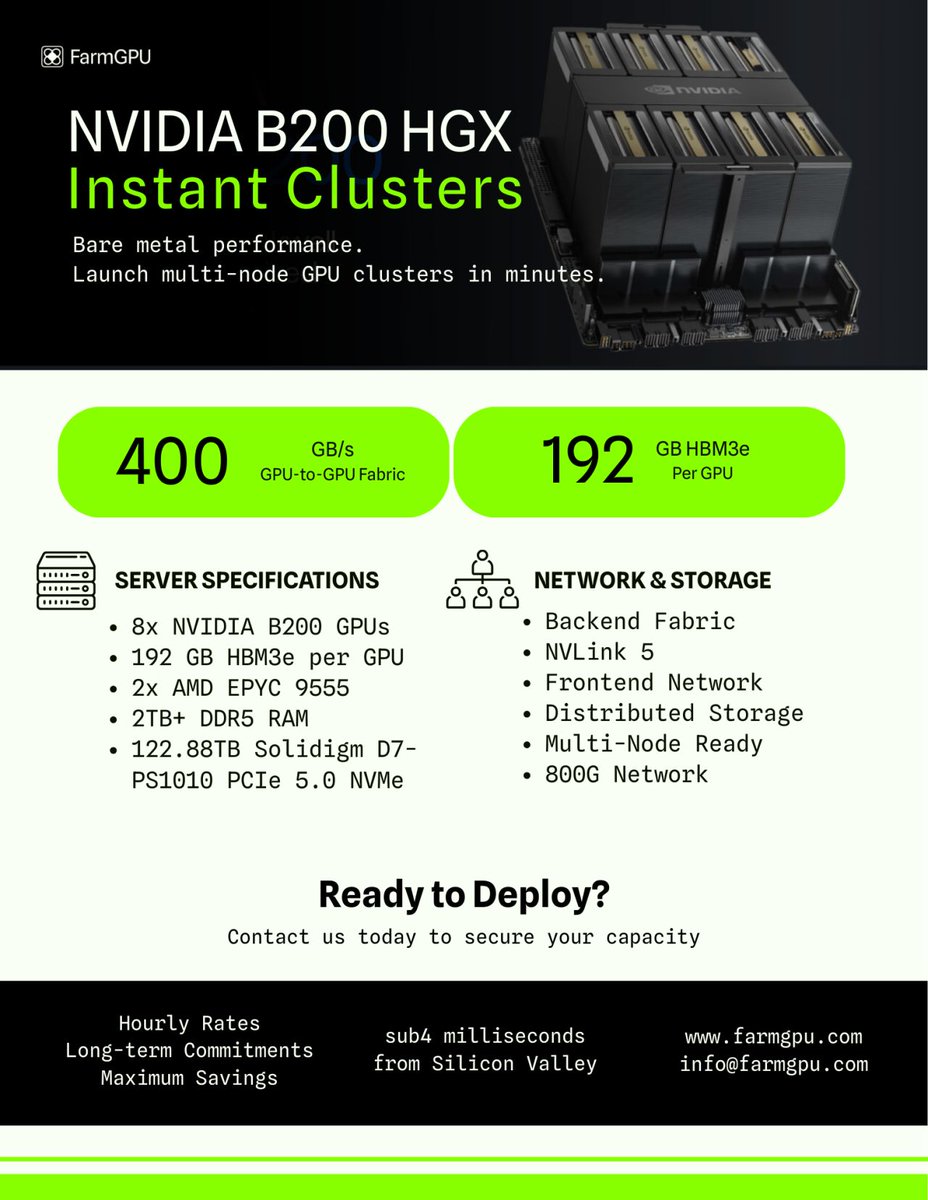
B200 bare metal performance. Spins up in minutes.
Good news
FarmGPU @RunPod Instant Clusters: B200 HGX, 800G open Ethernet fabric, 8x PCIe 5.0. NVMe per node via @Solidigm
No procurement queue. No hyperscaler tax. Just the hardware.
Bad news
we are sold out 😭 need more GPUs
blog.farmgpu.com/b200-cluste…
6
129
FarmGPU ranked #1 in SemiAnalysis ClusterMax 2.0 storage benchmarks.
0.98s PyTorch import on H100. 0.72s on B200.
Most clouds talk about GPUs. We focus on the storage stack that keeps them from idling.
Details:
blog.farmgpu.com/clustermax-…
4
54

Mar 13
In a collaboration with @ScaleFlux and #FarmGPU, @LightbitsLabs announced the debut of a collaborative architecture designed to optimize the #KVCache and reduce latency using Lightbits’ #LightInferra model. Read more below.
Mar 11

#ScaleFlux, #FarmGPU, and Lightbits debut a collaborative architecture at #NVIDIAGTC to optimize storage for #KVCache. Reduce GPU stalls and improve inference throughput. Visit booth 7006 to view live demonstrations. 👉 lightbitslabs.com/press-rele…
#AIInference #LongContextAI
2
5
306

If your AI can read it, so can the company behind it.
Most AI tools read everything you type. Confidential compute is how we change that.
Listen & learn from our conversation with @AlphaTONCapital, FarmGPU, and AtlanticAI.👇
Mar 12

TON Real Talk Ep.6 - COCOON AI & Confidential Compute x.com/i/broadcasts/1NGarazqO…
8
2
29
683

Mar 12
🎤 TON Real Talk Ep.6 is LIVE!
This week we discuss COCOON AI, decentralisation, and the benefits of Confidential Compute network.
Together with our special guests:
@OwnYourDataNow from @AlphaTONCapital, Matthew from Atlantic AI, JonMichael from FarmGPU & @moontripss from TON Foundation.
Watch on Telegram, X, LinkedIn or YouTube.
🫵💎
Mar 12
TON Real Talk Ep.6 - COCOON AI & Confidential Compute x.com/i/broadcasts/1NGarazqO…
1
6
151

Mar 12
🎤 TON Real Talk Ep.6 is LIVE!
This week we discuss COCOON AI, Decentralisation, the benefit of Confidential Compute Network & how you can take advantage of it!
Together with our special guests: @OwnYourDataNow from @AlphaTONCapital, Matthew from Atlantic Ai, JonMichael from FarmGPU & @moontripss from TON Foundation.
Watch on Telegram, X, LinkedIn or YouTube.
🫵💎
Mar 12
TON Real Talk Ep.6 - COCOON AI & Confidential Compute x.com/i/broadcasts/1NGarazqO…
3
4
24
2,009
Mar 12
💎 TON Real Talk Ep.6 - COCOON AI & Confidential Compute
This week we will discuss COCOON AI, Decentralisation, the benefit of Confidential Compute & how you can take advantage of it!
Together with our special guests: @OwnYourDataNow from @AlphaTONCapital, Matthew from Atlantic Ai, JonMichael from FarmGPU & @moontripss from TON Foundation.
🗓️ 12th March | 4pm UTC
🎤 On X, Telegram, YT & LinkedIn
See you there 🫵💎
11
8
52
2,818

Feb 2
Excited to talk with @chia_project CEO @hoffmang and @Circuit_DAO about how $XCH can be used to earn real yield on GPU servers powered by Silicon. Special guest star also joining - Silicon partner @LebanonJon CEO of FarmGPU, our datacenter partner.

I'll be hosting a Space to talk about @Circuit_DAO and @silicondotnet and how to put your $XCH to work 2/4 at 8am Pacific time x.com/i/spaces/1OwxWeNZoyRGQ…
20
66
2,264

Jan 27
So a big driver behind the pool was utilization fairness. We observed that NFT utilization rates were asymmetric, some folks earning 130%, others earning pennies. Making sure utilization was fair across individual NFTs was a real challenge. The pool solves that: you're betting on the provider as a whole, not whether your specific hardware got lucky on jobs.
On the returns question: we believe pool tokens will actually be superior long-term because of autocompounding. A direct RWA has a finite life—hardware degrades, eventually it's worthless. The pool is designed to be perpetual, continuously cycling into new equipment. Different value proposition.
On taxes: it's based on where the hardware physically sits, not where you are. FarmGPU is in CA, so there's no escaping CA tax on that equipment regardless of the ownership model. No location arbitrage available with RWAs structured this way. As more datacenters come online in different jurisdictions, that could change—but today, that's the reality.
Direct RWA sales will return—we focused on the pool first to meet specific challenges. The $2M raise is for enterprise-grade equipment. We've learned that consumer cards are difficult to stabilize at scale, and datacenter-grade cards are much more reliable for consistent utilization. The fractional model exists because most people can't drop $115k on a Pro6000 in whole.
Honestly, I think you're pointing at a broader challenge with RWAs in general, not something isolated to Silicon. It's probably why real sustainable RWAs on-chain don't really exist yet in a meaningful way. We're trying to solve some of the hard problems that have kept RWAs from working on-chain. Whether this becomes the model others follow, we'll see.
And if personal depreciation is core to your strategy, direct hardware ownership will return, we are doing the best we can with our team resources.
3
59

25 Nov 2025
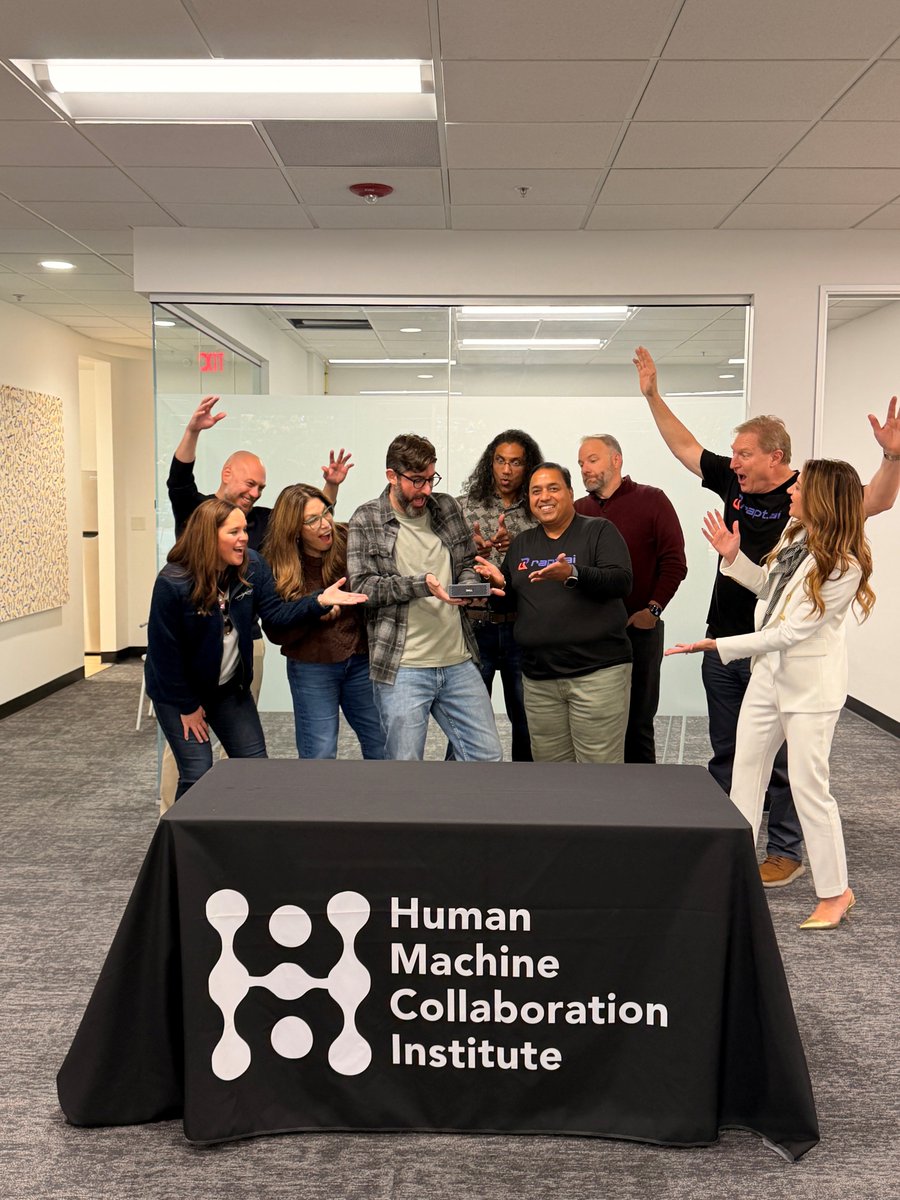
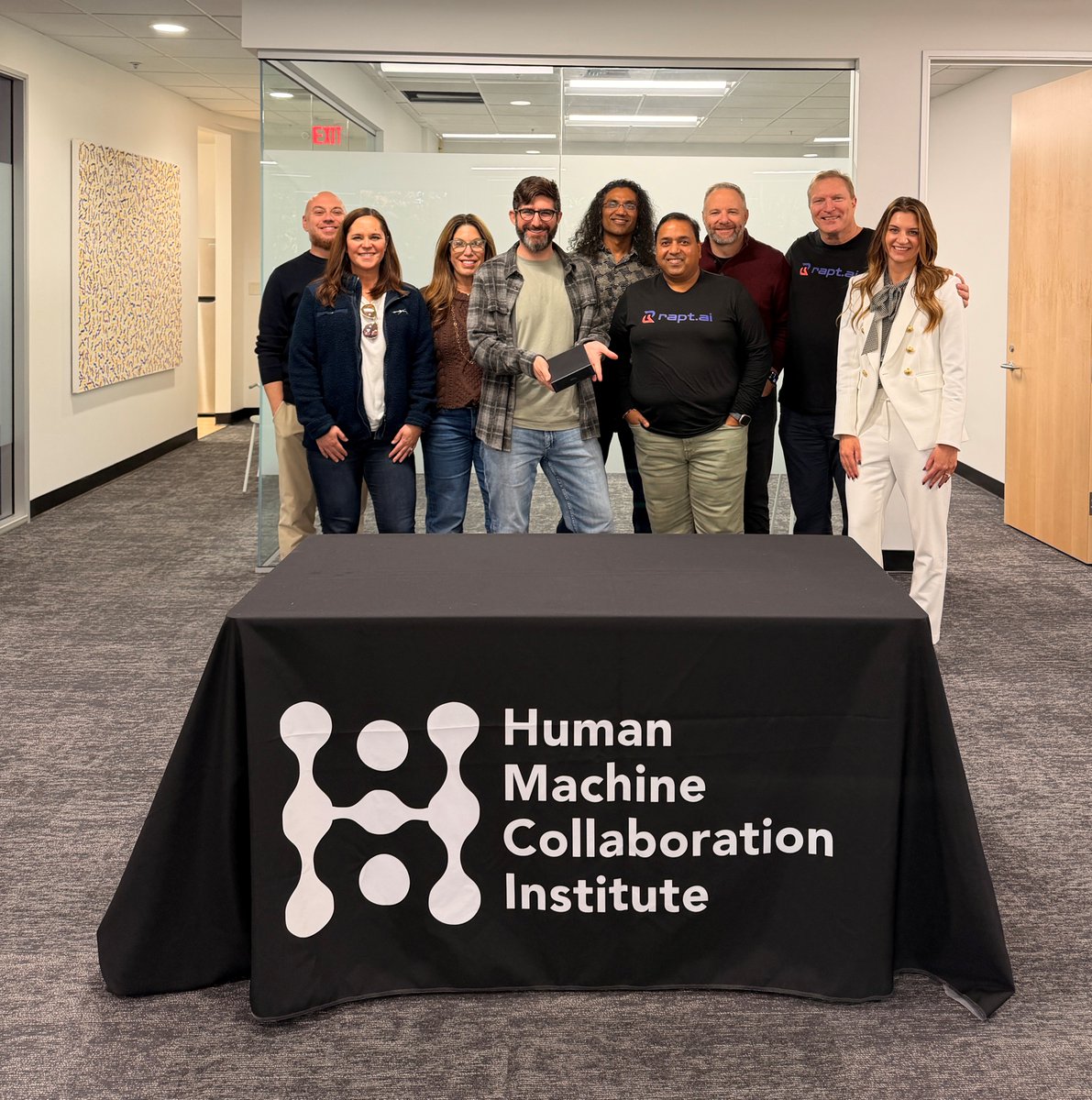
Rancho Cordova is partnering with HMCI, Rapt.AI, FarmGPU and NVIDIA to bring powerful new AI and computing tools to our community. This effort expands access for students, small businesses, educators and more: cityofranchocordova.org/Home…
1
142

24 Nov 2025
A little BTS from our recent announcement with @rapt_ai and FarmGPU for the @CityofRCordova of Rancho Cordova AI and Robotics Ecosystem.
Read more here: lnkd.in/g_EqJAQy
1
3
45
30 Jun 2025
First-of-its-kind: Fund the purchase of GPU hardware run by professional datacenter partners @PantheonCompute and @lebanonjon of FarmGPU.
Claim tickets represent ownership of H200s, RTX 5090s, or RTX 4090s, expected to be operational within 60 days (H200s), 30 days (5090s), and 7 days (4090s) of the drop ending.
1
8
264

22 Jun 2025
3/7 @silicondotnet sold all 48 NVIDIA 4090 GPU NFTs! Congrats to @pantheoncompute & @LebanonJon at FarmGPU. Chia’s NFT game is hotter than a GPU at full throttle! Keep farming, folks! #Chia
17 Jun 2025

All 48 of the first edition NVIDIA 4090 GPU NFTs are officially sold ✅
Congrats to our Providers @pantheoncompute and @LebanonJon of FarmGPU!
1
1
10
1,003
17 Jun 2025
All 48 of the first edition NVIDIA 4090 GPU NFTs are officially sold ✅
Congrats to our Providers @pantheoncompute and @LebanonJon of FarmGPU!
13 May 2025
The inaugural release of 48x NVIDIA 4090 GPU NFTs are now LIVE on mintgarden.io/silicon. Starting at $3,500, you can own real, earning AI hardware that's professionally managed and operational in our verified providers’ datacenters. To see earnings from our alpha owners, see the thread below.
4
12
43
4,565
31 May 2025
🚀 NVIDIA 4090 GPU demand is soaring, pushing used prices up as AI utilization spikes! @LebanonJon points to FarmGPU NFTs on Chia—tokenized GPUs earning passive income. @joshpainter made $1,961.90 total from 8 GPUs ($22.18/day). Check your potential earnings at calculator.farmgpu.net! #DePIN #AI #Crypto
x.com/LebanonJon/status/1922…
13 May 2025

4090s are the appetizer 😉
Utilization has been off the charts lately (hence used prices for cards being extremely high). Check out the calculator.farmgpu.net/ to model earnings for FarmGPU NFTs!
1
1
14
531

13 May 2025
4090s are the appetizer 😉
Utilization has been off the charts lately (hence used prices for cards being extremely high). Check out the calculator.farmgpu.net/ to model earnings for FarmGPU NFTs!
13 May 2025
The inaugural release of 48x NVIDIA 4090 GPU NFTs are now LIVE on mintgarden.io/silicon. Starting at $3,500, you can own real, earning AI hardware that's professionally managed and operational in our verified providers’ datacenters. To see earnings from our alpha owners, see the thread below.
4
4
22
1,886

Avi Shetty will be joined by leaders from FarmGPU, Fractile, ScaleUp Technologies, and ZeroPoint Technologies for a panel at OCP EMEA! They'll discuss how OCP can expand its influence and increase its impact across sectors. Catch us at 16:30 IST on 4/29 ! 2025ocpemea.fnvirtual.app/a/…
4
180