
I built FastStream, co-maintain AG2 (a framework for AI agents), and contribute to CPython & FastAPI. ~8 years of Python in public.
Open source for real - money, burnout, politics - plus Python internals and building real AI agents. Receipts, not hot takes.
Follow along 👇
29

May 24
🌐 APIs & Networking
Still using requests without async? → Use HTTPX for async better performance.
Overwhelmed with paginating API responses? → Use FastAPI Pagination to add it in one line.
Working with Kafka/RabbitMQ feels boilerplate-heavy? → Use FastStream for async, Pydantic-validated streams.
1
2
271
Feb 18
🌐 APIs & Networking
Still using requests without async? → Use HTTPX for async better performance.
Overwhelmed with paginating API responses? → Use FastAPI Pagination to add it in one line.
Working with Kafka/RabbitMQ feels boilerplate-heavy? → Use FastStream for async, Pydantic-validated streams.
1
3
70


14 Dec 2025
faststream: Event Stream API for Kafka, RabbitMQ, NATS & Redis #python github.com/ag2ai/faststream
1
21
2,709
7 Dec 2025
🌐 APIs & Networking
Still using requests without async? → Use HTTPX for async better performance.
Overwhelmed with paginating API responses? → Use FastAPI Pagination to add it in one line.
Working with Kafka/RabbitMQ feels boilerplate-heavy? → Use FastStream for async, Pydantic-validated streams.
1
2
56


12 Nov 2025
Fast Streamers, joining the FDA gives you more than union membership. Become part of a professional community that defends your voice and supports your career.
Join today and get your first six months of FDA membership free: fda.org.uk/why-fast-streamer…
#FastStream #FDA #Union
1
2
184

Re licenses: Qualcomm has a lot of their hacks, aptX Voice™ for example. CSR used to have FastStream (A2DP Backchannel).
QC also does some crazy shit, like incapsulating Bluetooth frames into Wi-Fi (XPAN)
theverge.com/2023/10/24/2393…
1
8
718

3 Nov 2025
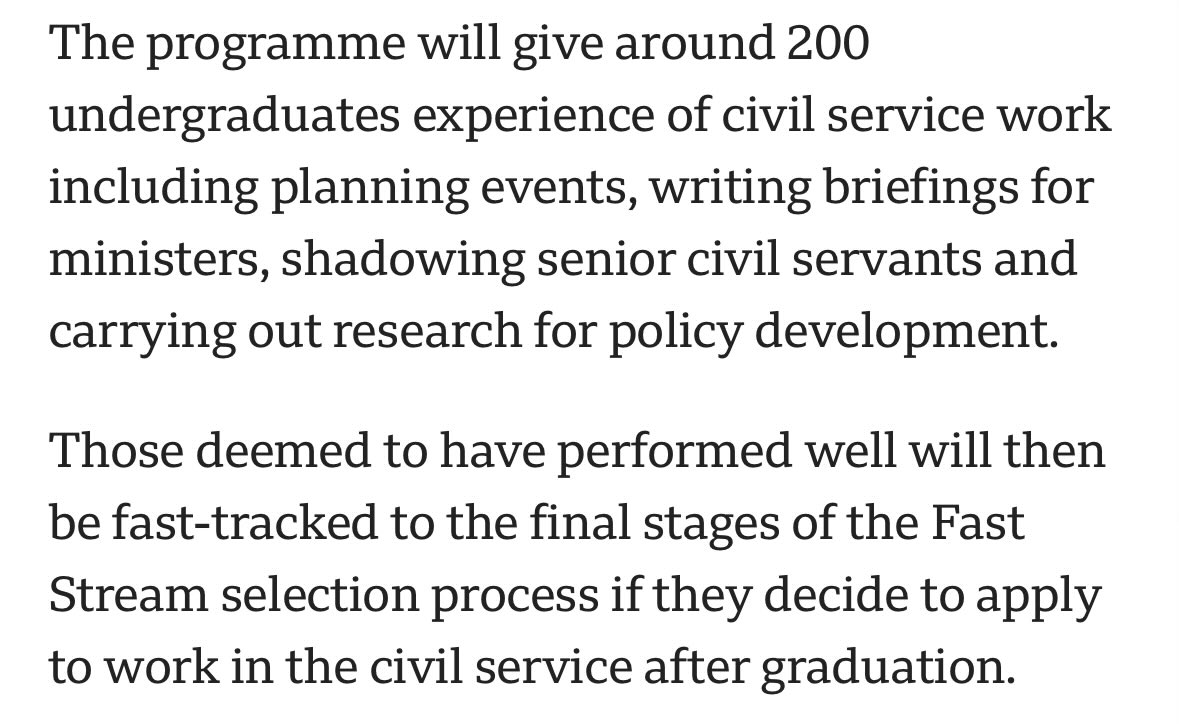
Apply for the UK Civil Service Fast Stream 2026 — the #1 graduate leadership programme shaping national policy, public services & government strategy. Deadline: 6 Nov 2025
🔗 Apply: wp.me/p23f03-h2H
#FastStream #GraduateJobs #PublicService #UKGov #LeadershipDevelopment
1
4
537
1 Nov 2025
Apply for the UK Civil Service Fast Stream 2026 — the #1 graduate leadership programme shaping national policy, public services & government strategy. Deadline: 6 Nov 2025
🔗 Apply: wp.me/p23f03-h2H
#FastStream #GraduateJobs #PublicService #UKGov #LeadershipDevelopment
1
2
651
27 Oct 2025
Apply for the UK Civil Service Fast Stream 2026 — the #1 graduate leadership programme shaping national policy, public services & government strategy. Deadline: 6 Nov 2025
🔗 Apply: wp.me/p23f03-h2H
#FastStream #GraduateJobs #PublicService #UKGov #LeadershipDevelopment
3
550

7 Oct 2025
#AI-generated virtual #TV #presenters will host a TV music channel on FastStream Interactive’s forthcoming interactive TV music channel, ROXi.
broadcastnow.co.uk/productio…
2
2
181

22 Aug 2025
faststream: Event Stream API for Kafka, RabbitMQ, NATS & Redis github.com/ag2ai/faststream
2
32
2,558

4 Aug 2025
Python Libraries Deserve More Attention⚡️
1. Toolz / PyToolz - It gives you small, reusable tools to manipulate data in a cleaner, smarter,
and faster way.
2. Tabulate - The tabulate library is used to display tables (like rows and columns) in a pretty and readable format — especially useful in the terminal or console.
3. Rich - rich is a library that makes your Python terminal output look gorgeous. It supports:
- Colored text
- Formatted tables
- Progress bars
- Syntax highlighting
- Markdown rendering
And more — all in the terminal!
4. Hypothesis - is a Python testing library that writes test cases for you.
5. Pydantic-settings - is a library that helps you manage app settings and environment variables in Python — cleanly, safely, and with type checking
6. Httpx - httpx is a modern HTTP client for Python, like requests, but better.
- It supports both sync and async HTTP calls — which means it works well for modern web apps (like FastAPI) where speed and concurrency matter
7. FastAPI-pagination - Pagination in FastAPI apps quick and easy. Instead of manually writing logic for limit, offset, or page, it gives you ready-made tools to paginate any list or database query — automatically
8. FastStream - FastStream is a Python framework that helps you build event-driven apps (like microservices) using message queues — with a syntax and feel similar to FastAPI
- Really nice if you are using services like Redis, Kafka or RabbitMQ
9. NiceGUI - Lets you build modern, beautiful web apps using only Python — no HTML, CSS, or JavaScript needed
10. Flet - Lets you build multi-platform GUI apps (web, desktop, mobile) — using only Python.
- Built on top of Flutter, but you don’t need to write any Dart or touch Flutter SDK
11. Reflex - Allows you to build full stack web apps using a react style components tree in python.
12. Textual - Lets you build Terminal UIs that look and behave like GUI apps — with mouse support, layouts, animations, and even CSS-style theming.
- Think: “React Tailwind — but for your terminal”.
13. LangGraph - A graph-based framework built on top of LangChain.
- LangGraph lets you create step-by-step workflows (like a recipe) where each step can be powered by an AI model.
14. PydanticAI - An extension of Pydantic (used for data validation in Python)
- But instead of you manually writing logic to extract structured data from messy input (like natural language), it uses LLMs (like GPT) to do that for you — while still giving you Pydantic-style schemas.
Notes from the Video
youtube.com/watch?v=F09EK4zt…
from @ArjanCodes
2
184

Crew Shortages: The Core Issue
The RFA’s workforce has declined from 2,500 in 2010 to 1,700 in 2025, a 32% reduction, with 2,463 personnel leaving and 1,783 recruited between 2010 and 2023. Vessels operate under the Tailored Scheme of Complement (TSOC), with crews 20–30% below safe levels (e.g., Tidespring operates with 63 personnel against a requirement of 90). Certificated mariners, such as engineers and masters, earn £83,541–£95,442 annually, compared to £100,000–£175,000 in commercial sectors like BP Shipping or the US Military Sealift Command, driving resignations. Mariners join the RFA to sail, but 40% are stuck in shore roles or alongside (2024 data), exacerbated by low sea-time bonuses (£10–£20/day), four-month sea tours, and a 1:0.69 leave ratio (one day of leave for every 0.69 days at sea). A 2024 Faststream report identifies pay as the primary reason for departures, with no exit interviews conducted, reflecting cultural neglect within the RFA. A 2024 pay deal, accepted by RMT and Nautilus unions, includes a 6.5% pay increase, two £750 one-off payments, reduced tours to 10–12 weeks, £500 travel vouchers, a 3% shorthand allowance, and up to 50% voyage leave cash-in. This deal ended a 48-hour strike in Portsmouth in June 2024 but fails to address the 30% real-terms pay cut since 2010. High application withdrawal rates (47% in 2021–22) and delays in the 10-week Initial Naval Training Officers course at BRNC Dartmouth further hinder recruitment, with 50% of applicants withdrawing due to lengthy processes. These issues mirror broader defense workforce challenges, including cultural resistance to change and inadequate personnel management.

2
2
22
1,006


31 Jul 2025
FASTStream Interactive is already set to launch interactive news based channels in addition to ROXi on ATSC 3.0 tuners. More info here: abc6onyourside.com/news/nati…
1
3
587
31 Jul 2025
Sinclair Broadcasting Group & FASTStream Interactive are bringing ROXi the first interactive music channel to OTA ASTC 3.0/NextGenTV tuners. The channel will launch in 31 TV markets soon.

1
7
19
1,140