
Jun 6
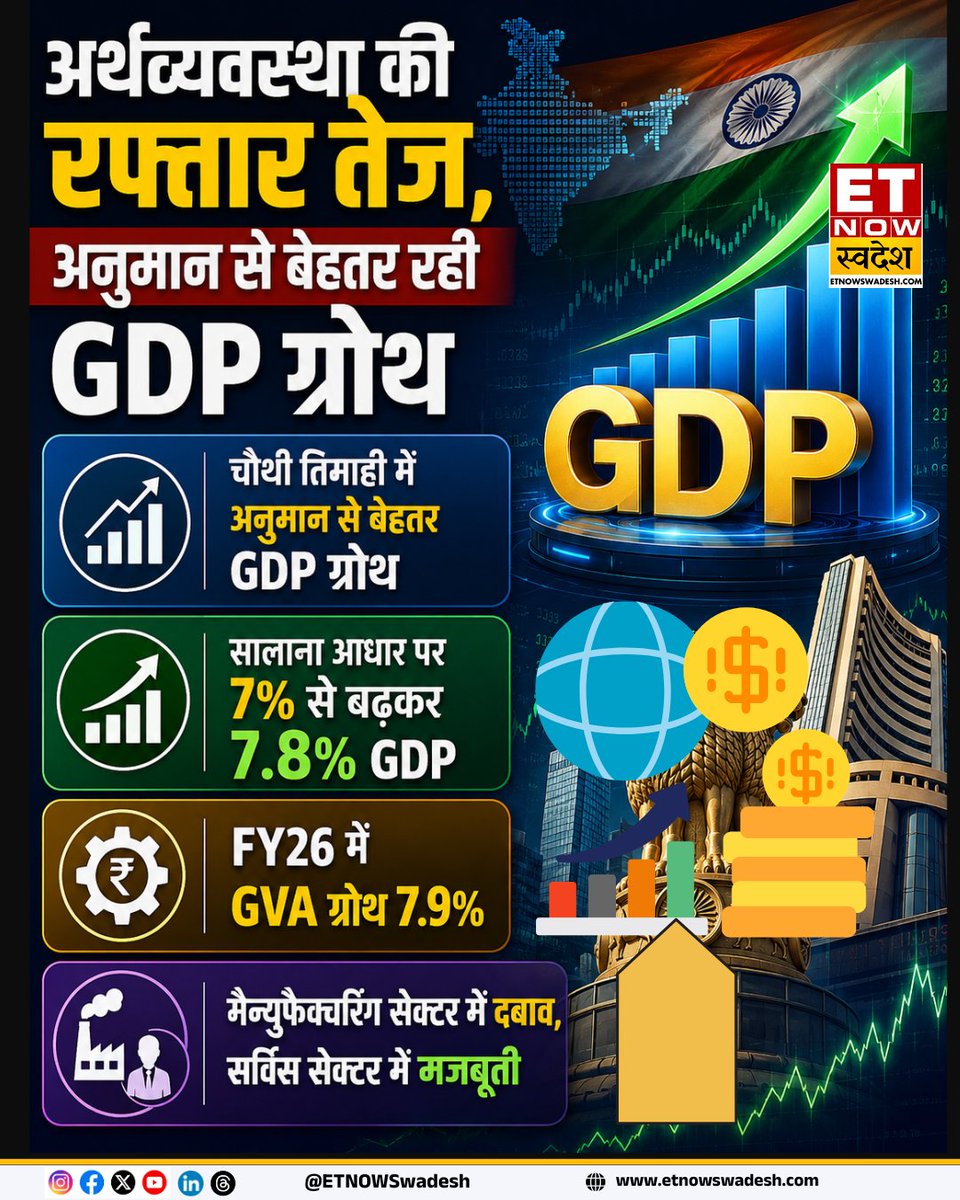
#NewsUpdate | अर्थव्यवस्था की रफ्तार तेज, अनुमान से बेहतर रही GDP ग्रोथ
#GDP #GDPGrowth #India #IndianGDP #GDPUpdate #ETNSNews
1
13
405

#MarketBuzzwithIndiabulls
📢India's GDP Update
India's Q4 GDP Growth Accelerates to 7.7 % in FY26 up from 7.1% YoY
#India #GDPupdate #GDPgrowthrate #FY26
3
71

India Slips to 6th Largest Economy: Why IMF Data Still Signals Strong Growth Ahead stackumbrella.com/latest-new… #indiaeconomy #indiaslipsto6thlargesteconomy #imfgdprankings #indiangrowth #breakingnews #economynews #weakerupee #gdpupdate #indianeconomy #trendingnow #businessnews
1
24

Apr 17
#IndiaEconomy #IMF2026 #BhadrabahuSamhita #StockMarketCrash #FinancialAstrology #GDPUpdate #RupeeDown #EconomicWarning2026
Match The Prediction
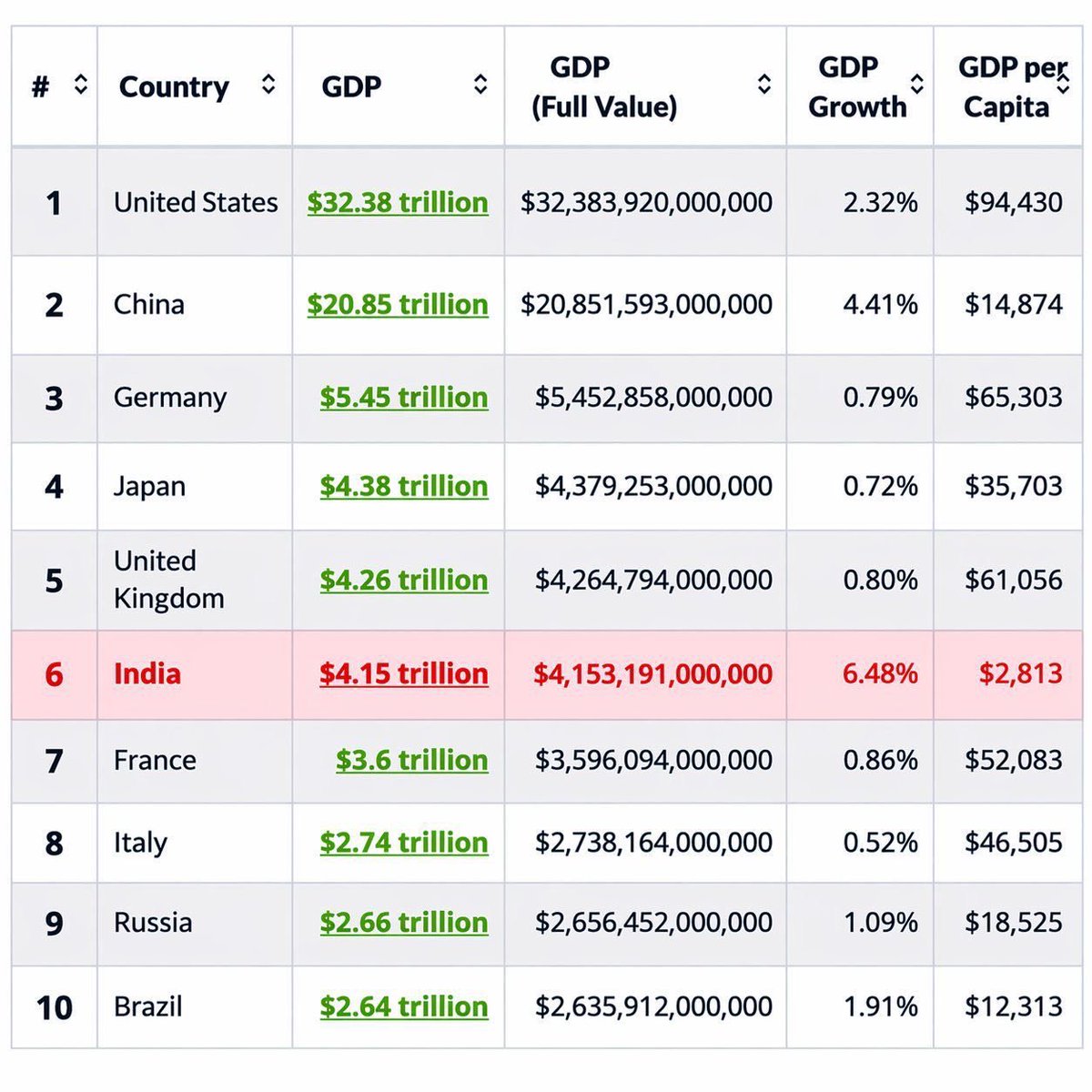
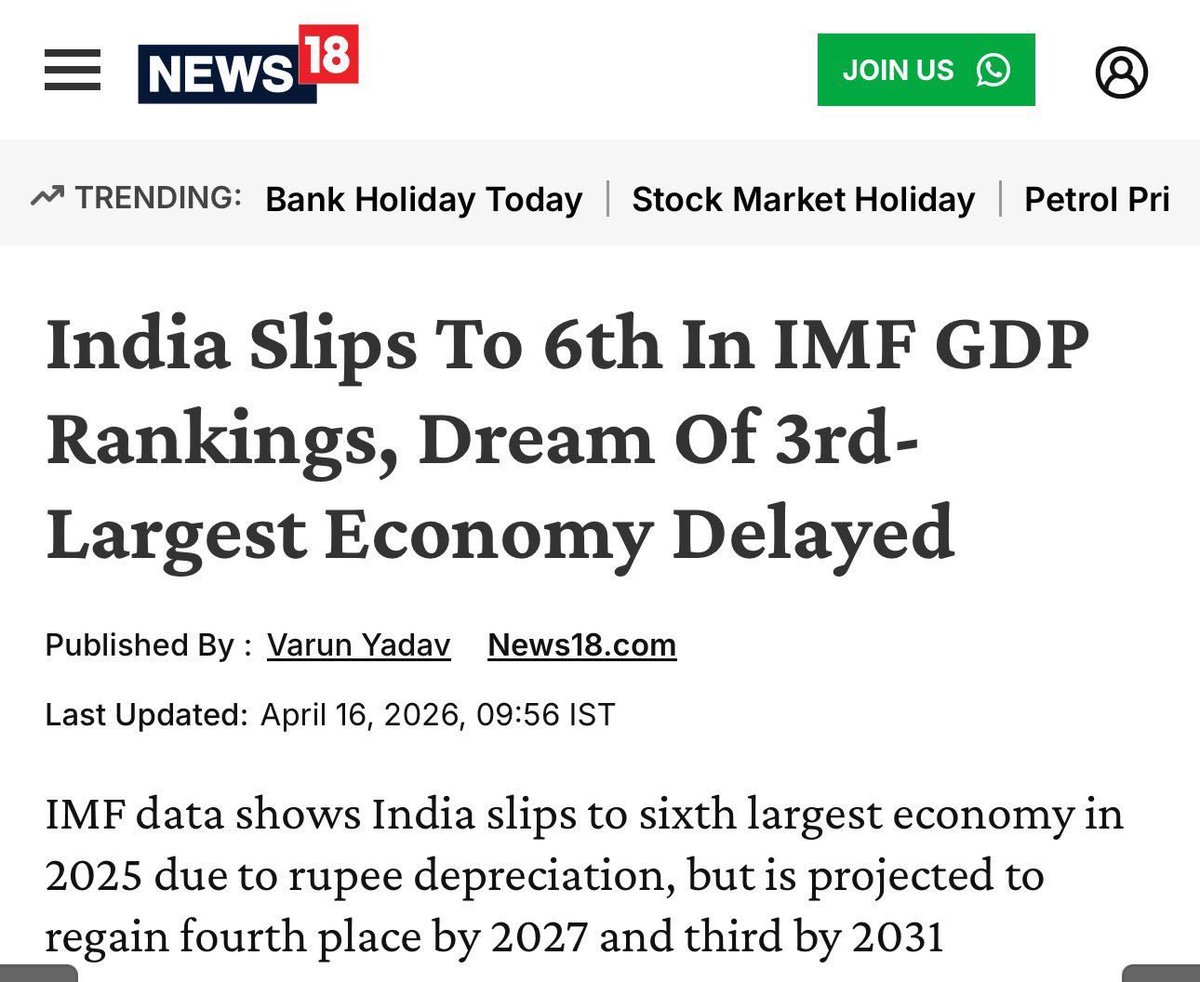
Occurrence : India is now the world's sixth-largest economy in nominal GDP terms, based on the IMF's April 2026 World Economic Outlook. India is no longer among the world's top five economies in nominal GDP terms, according to the International Monetary Fund's latest World Economic Outlook estimates.
Prediction: In short: The stars are shouting a loud warning – the share market faces high risk of big crashes, war effects, foreign troubles, trade disruptions, accidents, and hidden dangers. Oil stayed calm earlier due to Saturn’s classical links. Still, now the strong battle energy (Saturn combust Sun Saturn-Mars aspects on war and trade houses) plus the Bhadrabahu Samhita’s ancient predictions of suffering, war fear, scarcity, and unrest are coming alive. astroseekers.com/post/stock-…
2
1
171

Apr 16
India slips to the 6th largest economy in 2025 due to currency fluctuations #Economy #India #GDPUpdate #IMF #FinanceNews
20

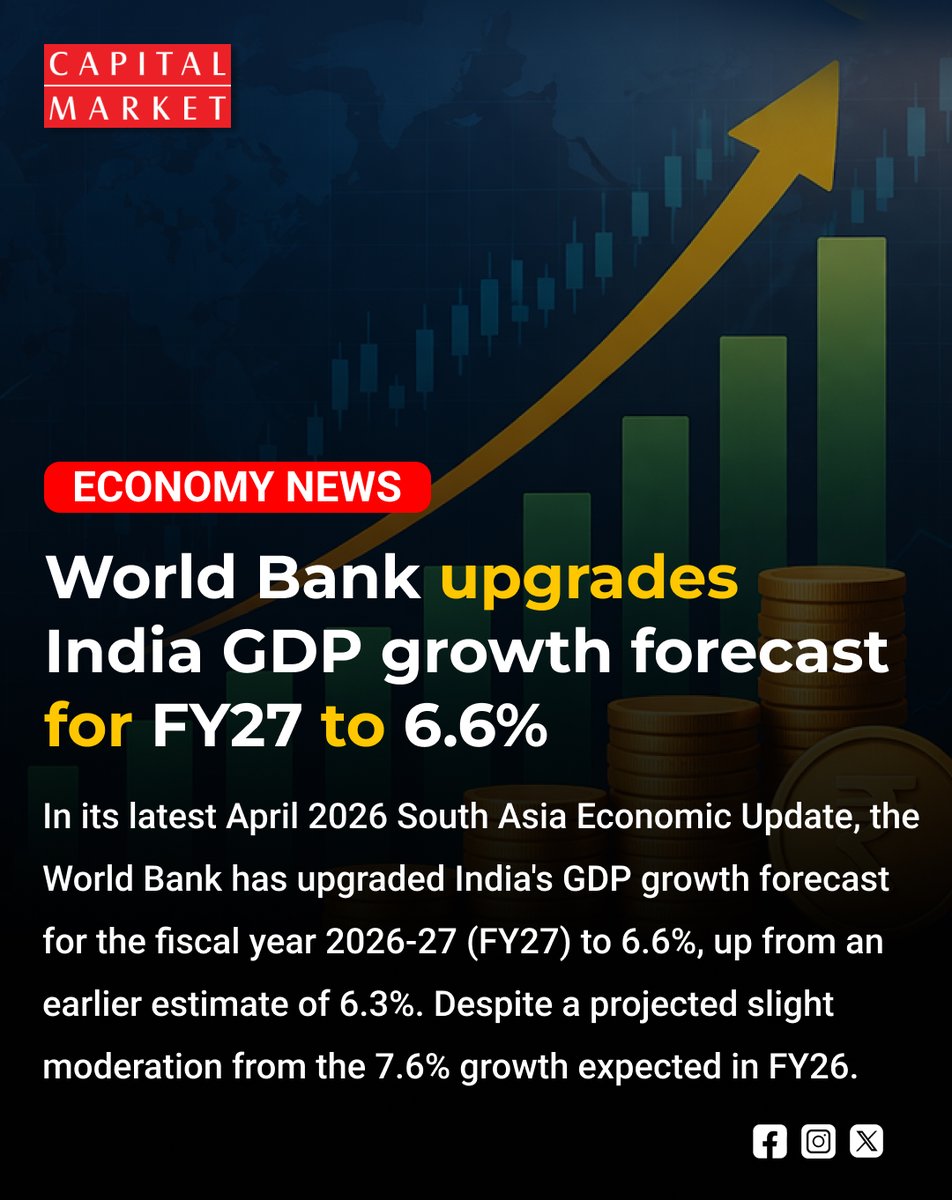
World Bank Lifts India FY27 Growth View to 6.6%, Flags Global Headwinds
capitalmarket.com
#IndiaGDP #WorldBank #EconomicGrowth #FY27 #GrowthForecast #IndianEconomy #GDPUpdate #MacroOutlook #GlobalEconomy #EconomicOutlook #IndiaGrowth #FinanceNews #EconomyWatch #InflationRisks #EnergyPrices #GlobalHeadwinds #ExportOutlook #DomesticDemand #BusinessNews
1
57

இந்தியாவின் வளர்ச்சி விகிதம் சரியும்💰
#IndiaGDP #IndianEconomy #GDPGrowth #MoodyForecast #EconomicGrowth
#IndiaGrowthStory #EconomyNews #India2026 #GDPUpdate #EconomicOutlook
#IndiaDevelopment #GrowthRate #IndianMarkets #EconomyTrends #BusinessNews
#IndiaFinance #nritamil

8

New Zealand’s economy keeps moving forward GDP up 0.2% in Q4 2025.
For more information and the full story, click the link below.
b2bnews.co.nz/news/gdp-climb…
#NZEconomy #GDPUpdate #EconomicGrowth #BusinessNZ #TourismBoost #MarketTrends #FinancialNews #B2BNews #NZBusiness #EconomicUpdate
7

Mar 18
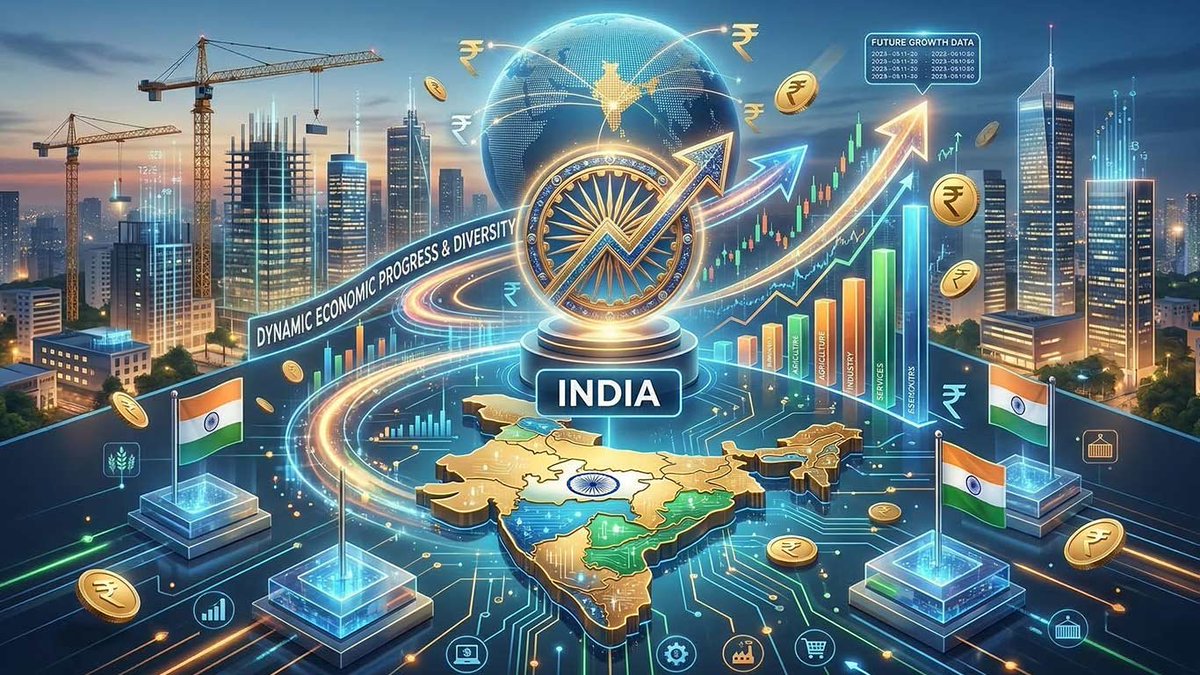
India Likely To Remain Fifth Largest Economy In FY27, Says CEA
#IndiaEconomy #GDPUpdate #GlobalEconomy #EconomicGrowth #NominalGDP #IndiaFY26 #IndiaFY27 #CEANageswaran #Macroeconomy #CurrencyTrends
knnindia.co.in/news/newsdeta…
2

Australia’s 4th Quarter GDP Growth in line with Expectations
Australia’s economy finished 2025 on a strong footing, with GDP rising 0.8% in the December quarter, bringing annual growth to 2.6%—the strongest year-ended performance in several years. While the quarterly figure met market expectations, the underlying composition tells a more nuanced story.
Household consumption came in softer than anticipated (0.3% q/q versus a 1.0% forecast), but this was offset by a solid rise in inventories along with steady public and private sector spending. As a result, domestic demand reached its strongest annual pace since mid-2018, excluding the unusual distortions seen during the pandemic.
Broad-Based Demand
The significance of the result lies not only in the pace of expansion but also in its broad participation across the economy. As shown in the chart tracking GDP contributions, both private and public demand have consistently added to growth since mid-2024, dispelling earlier expectations that economic momentum would shift solely from public to private spending. Instead, both sectors are contributing simultaneously.
Private demand increased 0.4% quarter-on-quarter and 3.2% year-on-year, supported by improving real incomes, which rose 1.0% in the quarter and 3.7% annually. These gains have helped sustain household spending. Business investment also advanced across most asset categories, with new building construction rising 8.9% over the year. Housing construction added 5.5% annually, supported by a solid pipeline of projects.
Supply-Side Support
On the supply side, the economy also delivered encouraging signals. Labour productivity increased by 1.0% annually, while market-sector productivity (excluding mining) rose around 1.1%. This improvement has helped ease cost pressures, with unit labour cost growth slowing to 3.3% per year, the slowest pace since before the pandemic and consistent with gradually moderating labour market conditions.
Click below to read more:
foresight-analytics.com/aust…
#AustraliaEconomy #AustraliaGDP #EconomicGrowth #GDPUpdate #Macroeconomics #EconomicOutlook #AustralianMarkets #MarketInsights
10

India’s GDP At 7.8% | Factors Impacting Growth
India’s GDP slips to 7.8% in Oct–Dec, slightly lower than 8.4% in Q2, driven by domestic & rural consumption with manufacturing growth at 11.5% YoY.
Full‑year GDP for 2025–26 estimated at 7.4%, using a new 2022–23 base year with GST & digital data; capturing the informal & digital economy despite global trade uncertainties.
#IndiaGDP #EconomicGrowth #RuralConsumption #DomesticDemand #ManufacturingGrowth #GDP2025 #BaseYear2022 #DigitalEconomy #GSTData #GlobalTrade #IndianEconomy #GDPUpdate
1
77

Mar 1
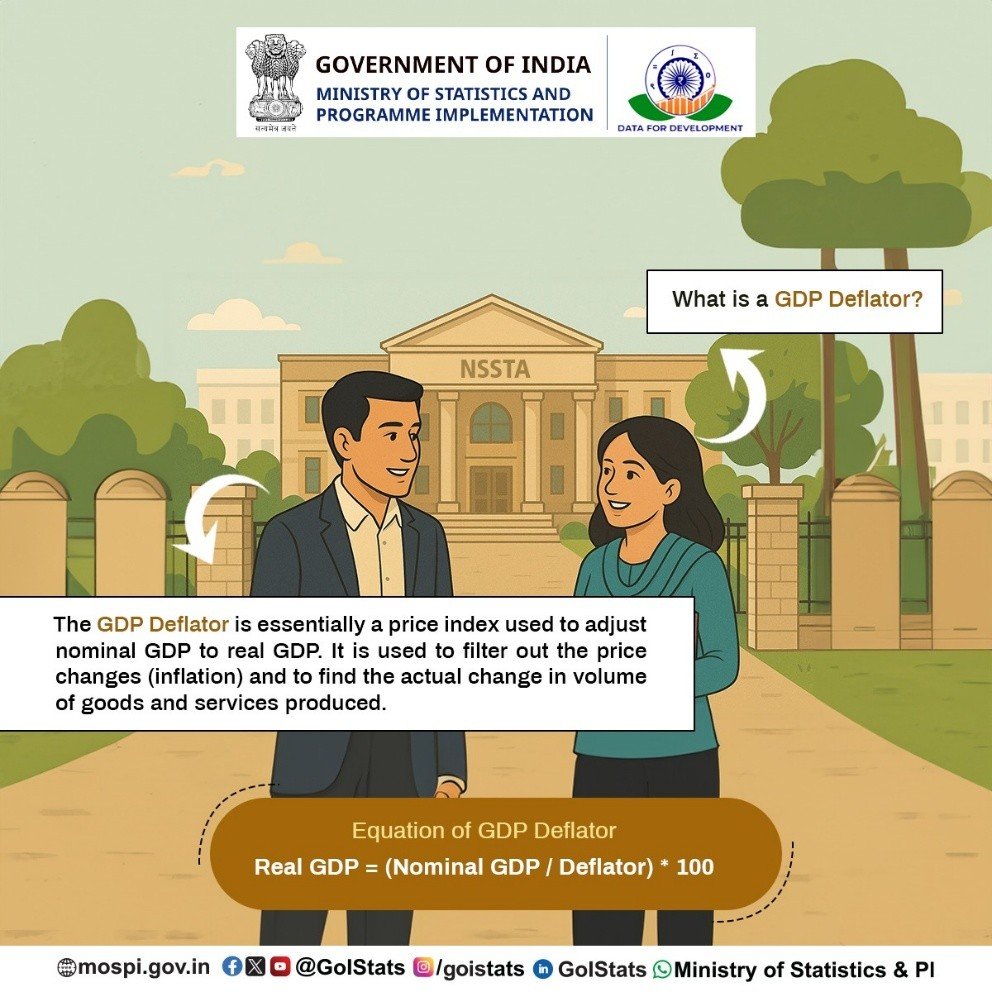
NSO, MoSPI uses various deflators to adjust the nominal GDP to real GDP to filter out the effect due to price changes (inflation) and to find the actual change in volume of goods and services produced.
#GDPUpdate #GDPRevisionByMoSPI #IndiaEconomyMoSPI #GDP
18

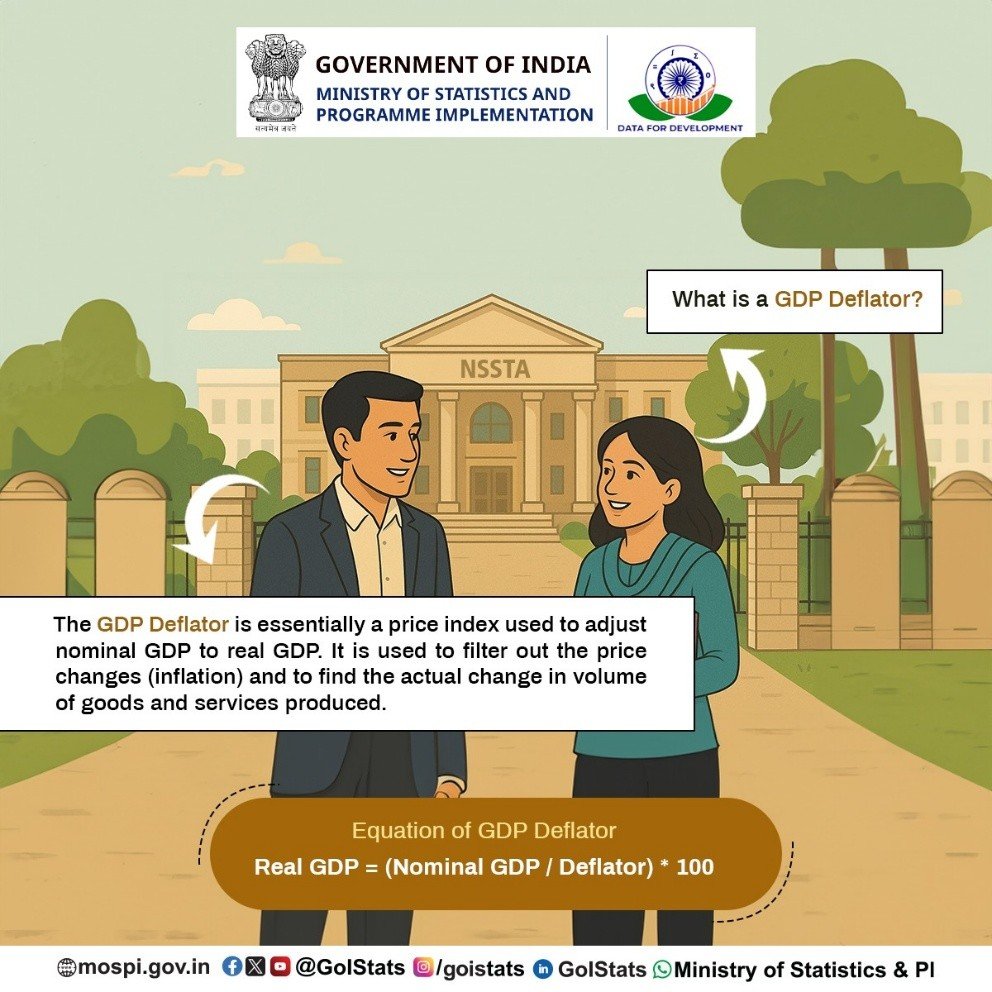
NSO, MoSPI uses various deflators to adjust the nominal GDP to real GDP to filter out the effect due to price changes (inflation) and to find the actual change in volume of goods and services produced.
#GDPUpdate #GDPRevisionByMoSPI #IndiaEconomyMoSPI #GDP #BaseYearExplained #NewBaseYear #IndiaGrowthStory #MoSPI @GoIStats
6
10
983

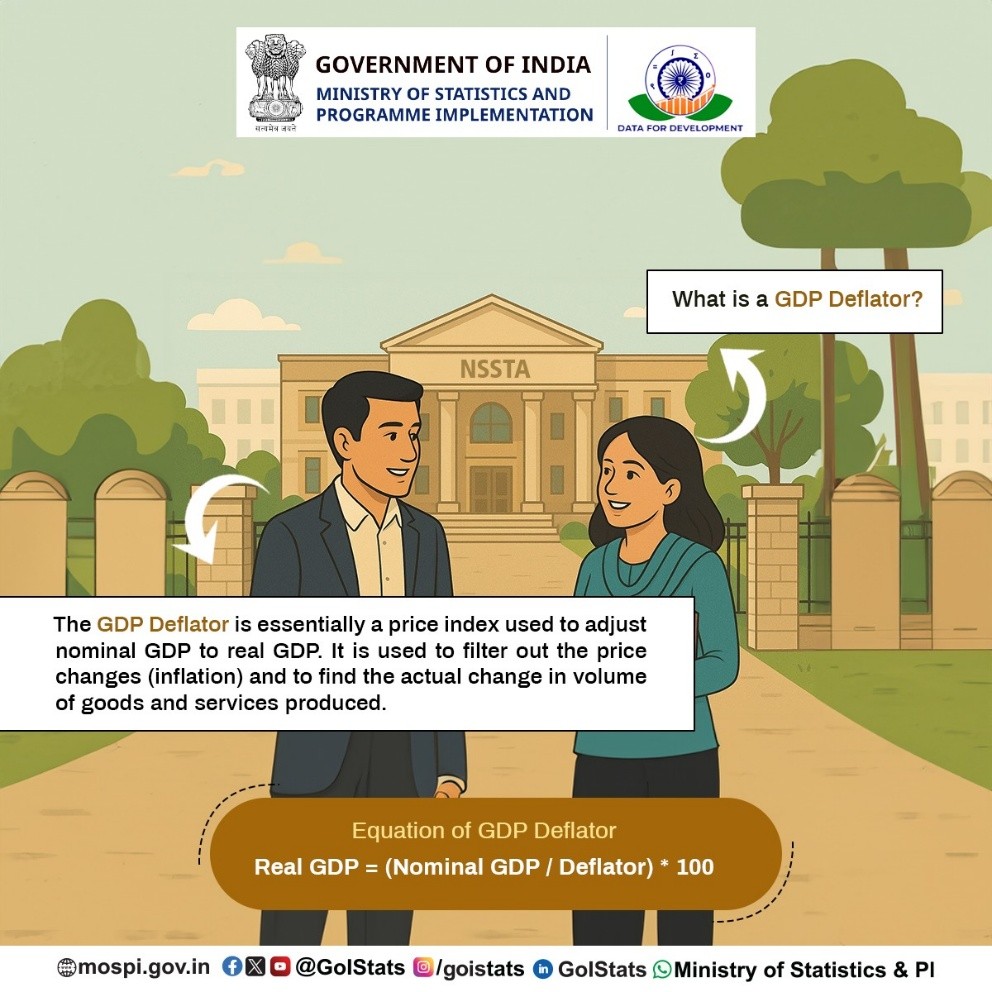
NSO, MoSPI uses various deflators to adjust the nominal GDP to real GDP to filter out the effect due to price changes (inflation) and to find the actual change in volume of goods and services produced.
Stay connected with MoSPI’s official social media handles for regular updates.
For more details, visit: mospi.gov.in
#MoSPIStatistics #MoSPIGDPChange #GDPUpdate
#GDPRevisionByMoSPI #IndiaEconomyMoSPI #MoSPIExplains #MoSPIRevisesGDP #StatsForNation #GDP #BaseYearExplained #NewBaseYear #IndiaGrowthStory #MoSPI #NSO #DataForDevelopment #SurveyData #DataCollection
@PMOIndia @_saurabhgarg @PIB_India @PibMospi
@Rao_InderjitS @mygovindia @NITIAayog
5
14
663
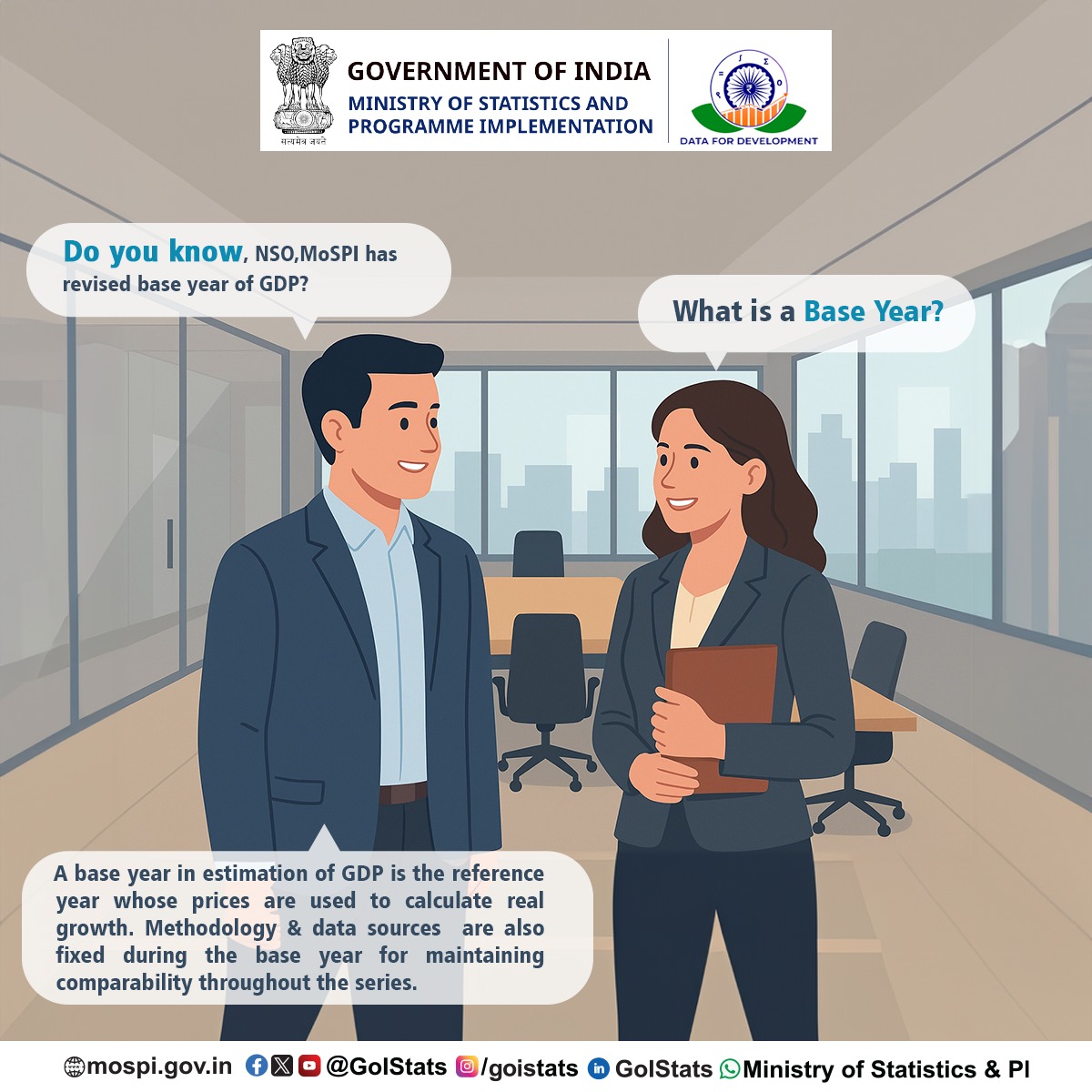
NSO, MoSPI has updated the base year of GDP estimates with the release of the new series (2022-23).
Stay connected with MoSPI’s official social media handles for regular updates.
For more details, visit: mospi.gov.in
#BaseYear #IndianEconomy #BaseYearUpdate #MoSPIStatistics #MoSPIGDPChange #GDPUpdate #GDPRevisionByMoSPI #IndiaEconomyMoSPI #MoSPIExplains #MoSPIRevisesGDP #StatsForNation #BaseYearExplained #NewBaseYear #SurveyData #IndiaGrowthStory #MoSPI #NSO #DataCollection #DataForDevelopment
@PMOIndia @_saurabhgarg @PIB_India @PibMospi
@Rao_InderjitS @mygovindia @NITIAayog
4
13
538

Feb 28
The real GDP growth estimate for the 2025-26 financial year increased to 7.6%. This update aligns national statistics with current economic activities. It improves policy assessment.
#IndianEconomy #GDPUpdate #EconomicGrowth #FinanceNews #India
1
8

Ever feel like the goalposts just moved?
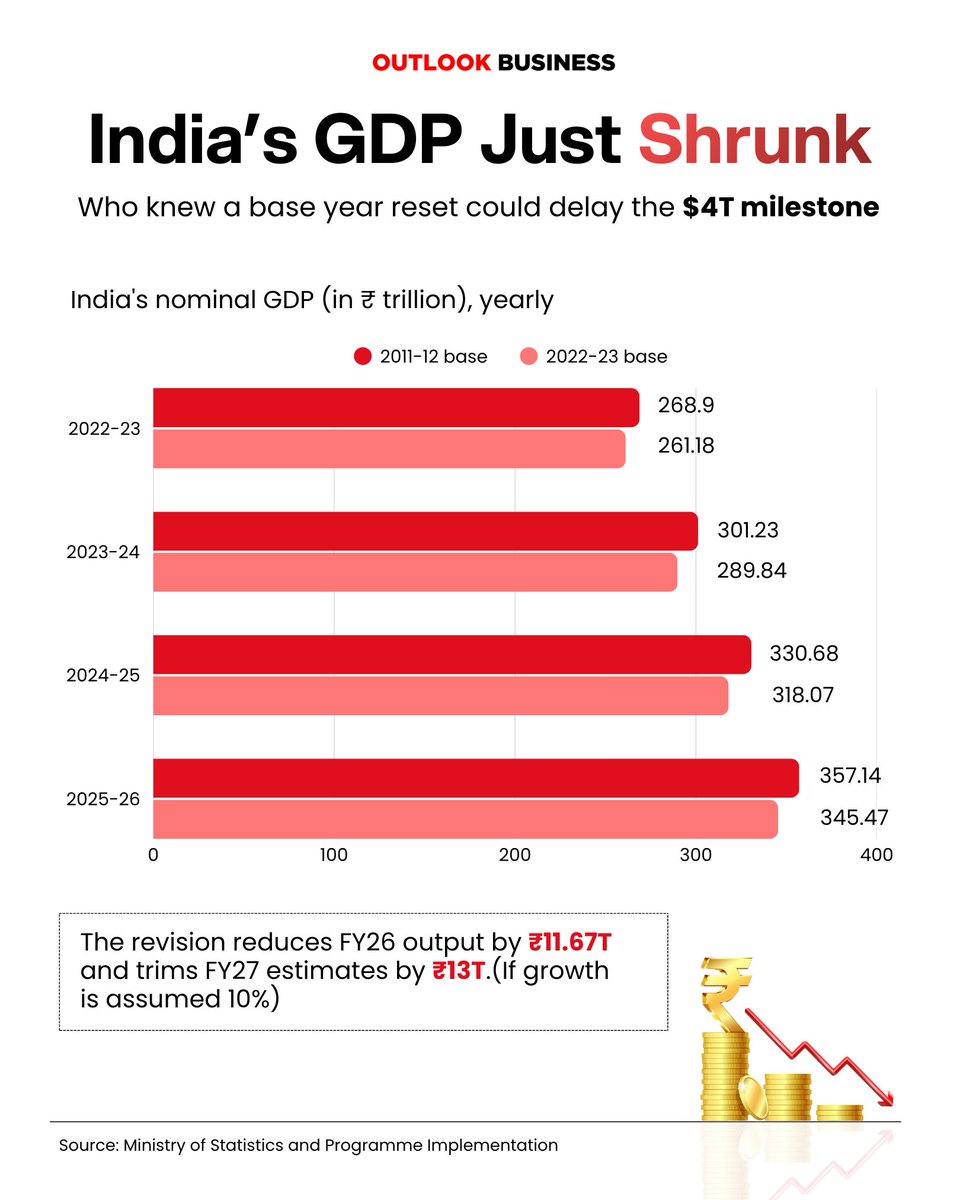
That’s exactly what happened with India’s GDP. The government just swapped an old ruler (the 2011-12 base year) for a modern one (2022-23), and the numbers look a little different now.
Using real-world data such as GST and surveys of small businesses, we’ve found the economy is slightly smaller than previous estimates suggested.
What’s the damage?
•Tighter Wallets: The government has less "spending room" because the deficit just jumped from 4.36% to 4.51%
•Debt Stress: Our national debt looks heavier—now at 58% of GDP instead of 56%
•The $4 Trillion Wait: That big party for hitting the $4 trillion milestone? It’s likely delayed. We’re currently looking at $3.93 trillion, keeping us firmly behind Japan for a bit longer.
It’s not that the economy is failing; we’re just finally getting a more honest look at the math.
To understand how this works, read the full story at: outlookbusiness.com/economy-…
#IndianEconomy #GDPUpdate #FinanceNews #Macroeconomics #BusinessIndia
68
“Our GDP numbers are now more robust, accurate, and data-driven than ever before.”
Dr Saurabh Garg, Secretary, MoSPI, in an interview with CNBC-TV18, explains how the revised GDP base year enhances data quality, improves methodological precision, and supports informed economic decision-making.
To access the full interview, refer to the link: youtube.com/live/yHHpixHVxDg
Visit MoSPI’s official website for related updates and official information: mospi.gov.in/
#NSO #MoSPI #GDP #GDPBaseYear #EconomicData #OfficialStatistics #IndiaEconomy #GDPUpdate #StatisticalReforms #ViksitBharat
@PMOIndia @_saurabhgarg @PIB_India @PibMospi
@Rao_InderjitS @mygovindia @NITIAayog
1
8
568
Dr. Saurabh Garg, Secretary, MoSPI, in a conversation with Sudhir Chaudhary, in a special programme “Decode With Sudhir Chaudhary" on DD News.
Follow this link to access the full programme: youtube.com/watch?v=D9W9JiwG…
Visit MoSPI’s official website for related updates and official information: mospi.gov.in/
#NSO #MoSPI #GDP #GDPBaseYear #EconomicData #OfficialStatistics #IndiaEconomy #GDPUpdate #StatisticalReforms #ViksitBharatBudget
@PMOIndia @_saurabhgarg @PIB_India @PibMospi
@Rao_InderjitS @mygovindia @NITIAayog
2
7
664
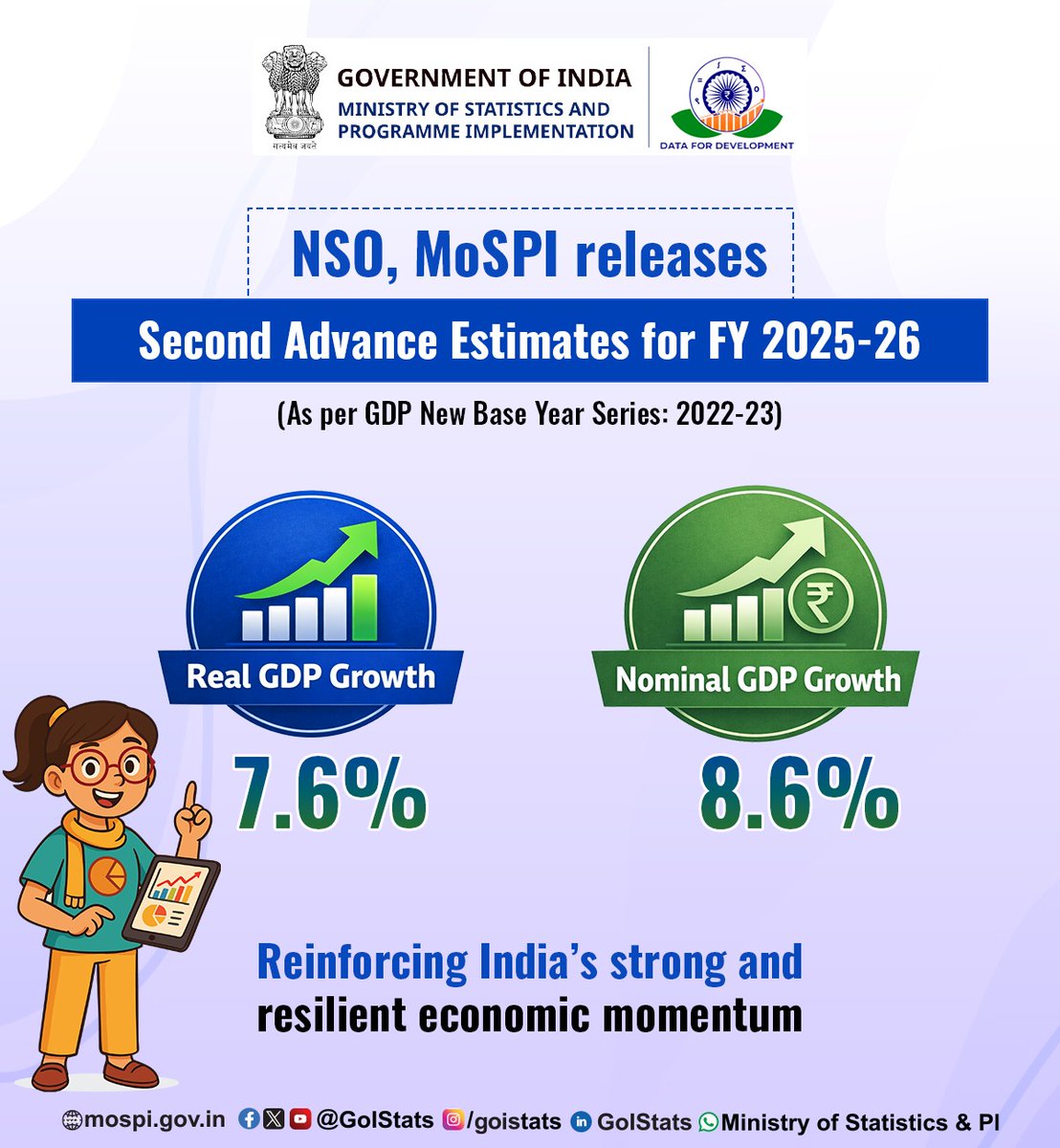
NSO, MoSPI releases the Second Advance Estimates of GDP for the financial year 2025-26, according to the GDP New Base Year Series: 2022-23. The Real GDP growth is estimated at 7.6% and the Nominal GDP growth at 8.6%, reinforcing India’s strong and resilient economic momentum.
For more details, visit: mospi.gov.in/
#NSO #MoSPI #GDP #GDPBaseYear #EconomicData #OfficialStatistics #IndiaEconomy #GDPUpdate #StatisticalReforms #ViksitBharat
@PMOIndia @_saurabhgarg @PIB_India @PibMospi
@Rao_InderjitS @mygovindia @NITIAayog
5
17
488