
Jun 3
A US non-profit reports no Iranian crude penetrated the US blockade of Hormuz in May
First, how can a group called "United Against Nuclear Iran" be objective?
Second, no credible source like Kpler or Vortexa corroborate their finding.
For now, I treat this report as propaganda @izakaminska
bloomberg.com/news/articles/…
#Iran #Oil #Hormuz #EnergySecurity #OilMarkets #CrudeOil #Tankers #Shipping #China #Geopolitics #Energy #Commodities #Macro #Sanctions #ShadowFleet #GreatSimplification
1
4
67
3,033
Jun 3
China's crude imports aren't collapsing because of EVs
They're collapsing because refiners are losing money
Fuel demand is weak, inventories are overflowing, and Beijing is burning through stockpiles instead of bidding for $100 oil.
The story is margins & inventories—not Teslas.
reuters.com/business/energy/…
#China #Oil #CrudeOil #Energy #OilMarkets #Refining #EnergySecurity #Hormuz #EVs #Gasoline #Diesel #Geopolitics #Macro #GreatSimplification
11
25
124
6,416
Jun 3
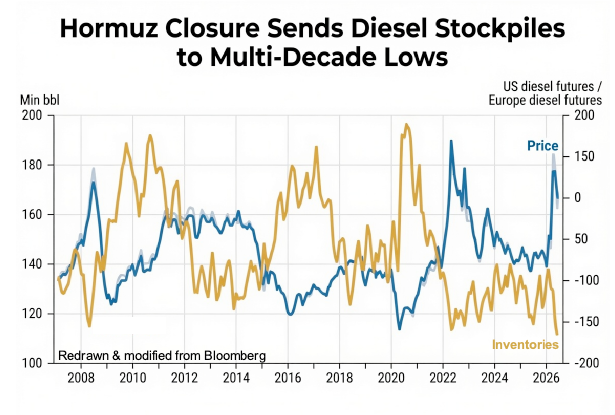
Diesel inventories are crashing
But the real story is that buffers everywhere are disappearing:
Oil reserves
Household savings
Corporate balance sheets
Government finances
Central bank flexibility
The Hormuz crisis has exposed that the market never gets the future right
#Oil #Energy #Economy #Resilience #OilMarkets #EnergySecurity #Macro #Geopolitics #SupplyChains #Debt #Inflation #CentralBanks #GreatSimplification #Overshoot
4
39
167
5,795
Jun 1
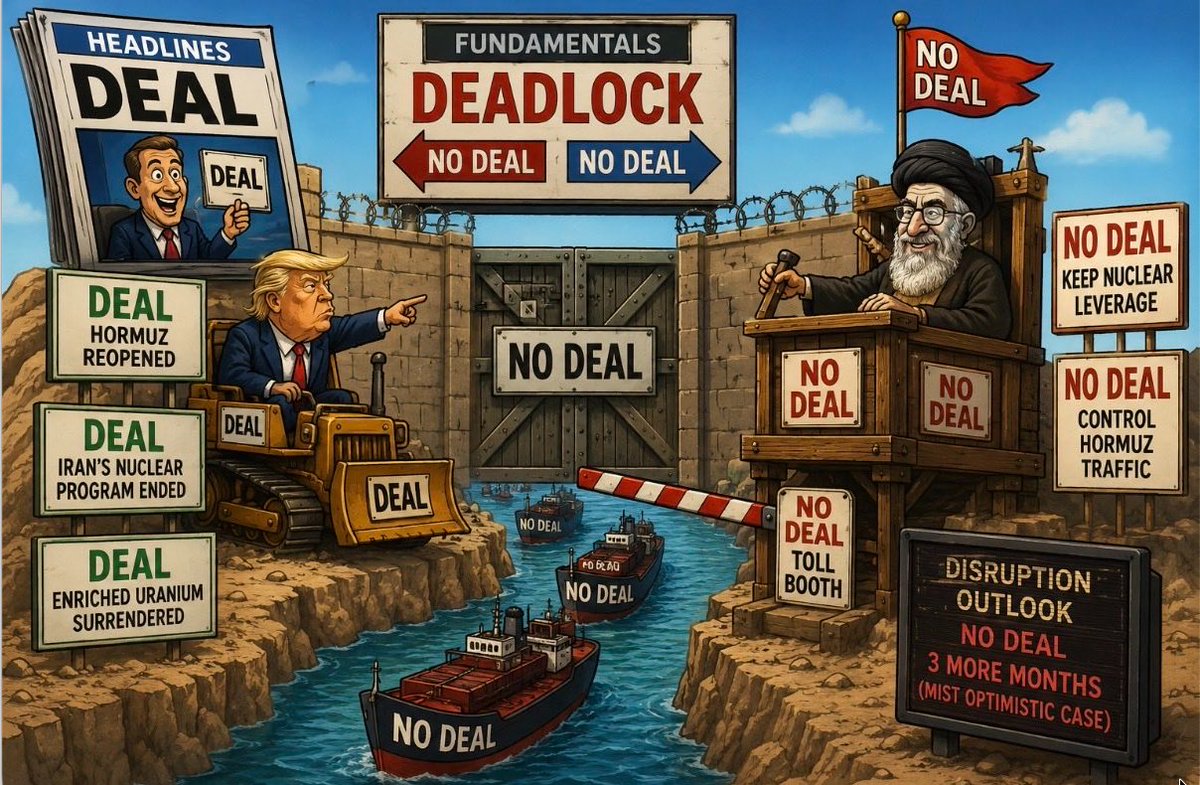
Markets are moving from "a deal is imminent" to "no deal anytime soon," writes Rabobank's @BenPicton1
Iran's leverage IS Hormuz
Giving it up without major concessions makes no sense
The path to a deal remains far narrower than the market wants to believe
#Oil #Hormuz #Iran #Energy #OilMarkets #EnergySecurity #Geopolitics #CrudeOil #Macro #Commodities #MiddleEast #GreatSimplification
7
14
49
2,831
Jun 1
Wisdom from @biancoresearch
👇
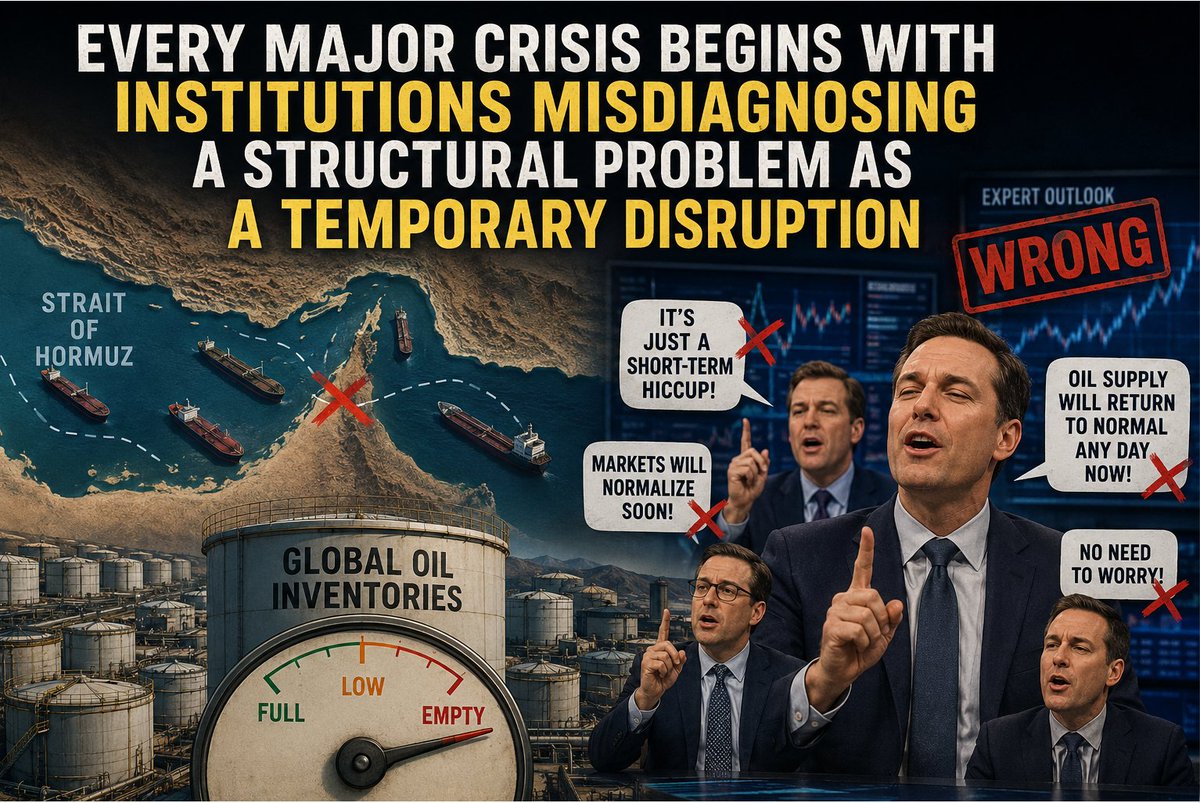
Every major crisis begins by mistaking a structural problem for a temporary disruption.
My take:
No credible analysis suggests Hormuz will reopen soon or that tanker flows will return to pre-war levels.
That's the reality markets should be pricing—and policymakers should be planning for.
#Oil #Energy #Hormuz #OilMarkets #EnergySecurity #Geopolitics #Iran #CrudeOil #Commodities #Macro #Investing #SupplyChains #RiskManagement #GreatSimplification
Jun 1

Here is my take, which is consistent with the Goehring & Rozencwajg letter in the repost?
----
Every crisis—1997, 2008, 2020—starts with the same institutional script: treating a structural problem as a temporary liquidity glitch. Wall Street is hardwired to assume that everything will safely revert to a mean, fearing the phrase "this time is different." It takes months of frustration to realize the rules of the game have changed.
Today, I fear we are repeating this exact behavioral trap.
Believing the closure of the Strait of Hormuz is a brief, 60-day hurdle, governments and oil companies are aggressively draining inventories to bridge the gap. They are treating a potential permanent, structural deficit in the world’s crude supply as a short-term liquidity problem.
Burning the lifeboats to build a temporary bridge only works if a resolution is guaranteed. By artificially delaying gradual demand destruction today, we ensure it hits all at once tomorrow should inventories slam into operational minimums.
Why is the market so blind to this? Because over the last five years, macro investors have developed deep scar tissue from listening to "experts":
* Q2 2020: Virologists scared investors into selling at the pandemic market bottom.
* April 2020: Commodity bears screamed that oil was irrelevant right as it hit its historic generational low.
* H2 2022: Economists panicked investors into dumping equities at the peak of 9% inflation.
* Q2 2023: Banking analysts screamed sell at the market bottom following Silicon Valley Bank's failure.
* April 2025, Policy Analysts scared investors about tariffs and Liberation Day to sell the low of the year.
The market learned that when the experts scream trouble, buying the dip makes money, and hedging for disaster loses it.
But ignoring the energy sector today, investors might be confusing past false alarms with a looming physical reality ... tanks really are running dry, and prospects for the Strait to "normalize" are nonexistent.
3
16
46
3,937
May 29
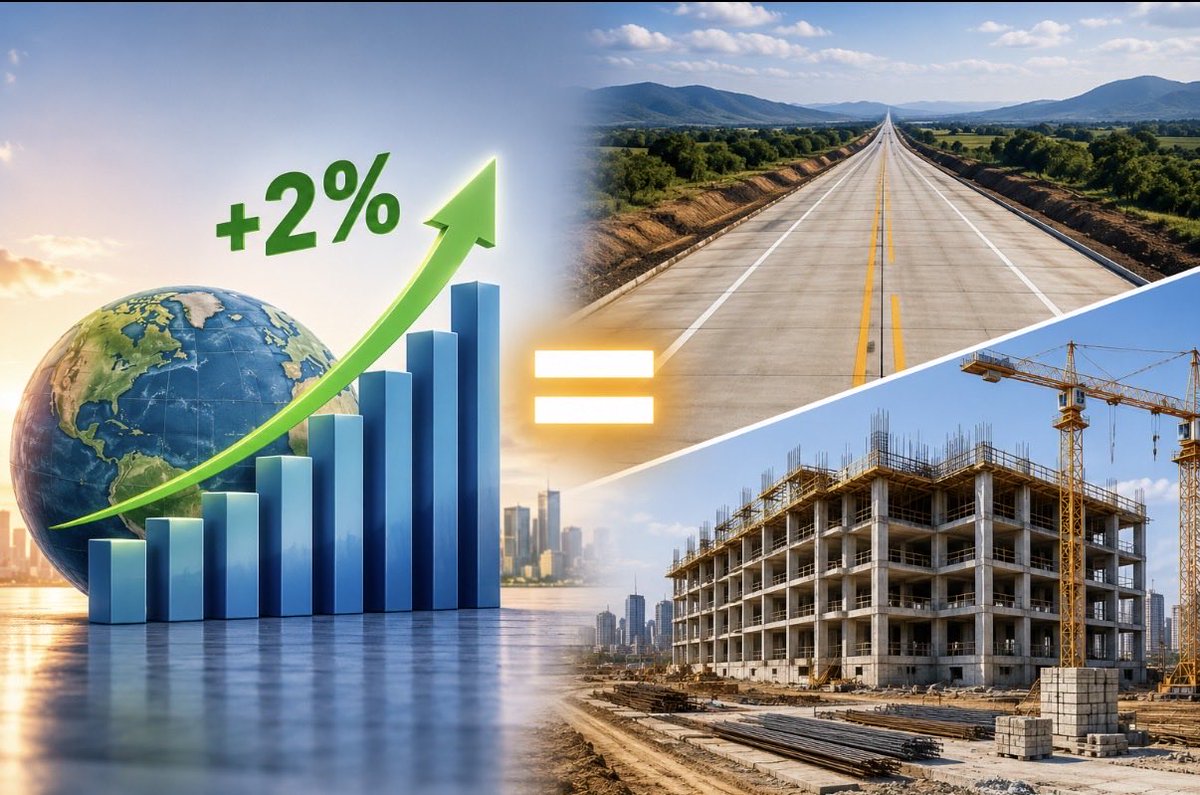
GDP growth is roads poured, buildings erected, steel forged, trucks moving & energy consumed
A typical country’s 2% annual growth requires roughly 20,000 GWh of additional energy
Equivalent to paving about 20,000 km of two-lane road
#EnergyIsTheEconomy #GDP #Growth #Infrastructure #GreatSimplification
2
5
21
1,791

ART BERMAN ON THE BIGGEST BLUNDER IN HISTORY: GEOLOGIST WARNS OF JULY CRUNCH
Nate Hagens welcomes petroleum geologist Art Berman back for another truly fascinating conversation. With over 40 years of oil and gas industry experience and deep expertise on US shale plays, Art delivers a sobering deep dive into the data surrounding the Strait of Hormuz closure. What he reveals about impending shortages, system risks, and the true scale of this conflict will change how you see the months ahead.
THE SCALE OF THE CRISIS
➡️ Roughly 21 million barrels per day of oil and refined products normally flow through Hormuz — exactly what the United States consumes daily.
➡️ As of now pretty close to zero is getting through, with only Iranian oil moving at all.
➡️ That leaves about 11 to 12 million barrels offline — roughly 11% of global supply suddenly gone.
WORSE THAN THE 1970s SHOCKS
➡️ The rate of loss is up to 100 times greater than the 1979 Iranian Revolution shock when normalized for daily impact.
➡️ Leads and lags mean the US has not felt the full pinch yet but places like East Asia and Africa already have.
➡️ Strategic reserves are being drawn down at the maximum physical rate of about 2 million barrels per day.
WHY JULY LOOKS BRUTAL
➡️ Even if peace breaks out tomorrow, hundreds of tankers parked inside Hormuz will take 2 to 3 months to reach destinations.
➡️ Production shut-ins, mines in the strait, insurance issues, and repositioning delays all add months more.
➡️ By July gasoline and especially diesel prices will reach levels where many people simply cannot afford to fill their tanks.
THE DIESEL HEART ATTACK
➡️ Diesel powers ships, trains, trucks, farms, mining — basically the entire global economy.
➡️ Spot prices in places like Singapore have already hit the equivalent of $210 per barrel.
➡️ Higher diesel costs cascade into everything you buy, from groceries to delivered goods.
THE US OIL ILLUSION
➡️ America is a net energy exporter on paper but remains a significant net importer of crude oil.
➡️ We export light shale oil ideal for gasoline but must import heavy oil to make enough diesel and jet fuel.
➡️ Our complex refineries are specifically designed around this mix — there is no quick fix.
THE REFINERY SQUEEZE
➡️ Physical oil is trading at $140–$160 per barrel while futures sit much lower.
➡️ Refineries need strong margins to operate profitably at these prices.
➡️ If margins collapse, throughput will be cut, making shortages even worse regardless of crude availability.
PEAK MATERIALS REALITY
➡️ Steel, cement and fertilizer production have already been declining for years.
➡️ Plastics are flattening.
➡️ These four pillars support modern civilization — their peak means we were already slowing before Hormuz.
THE RENEWABLES LIMIT
➡️ Solar panels, wind turbines and EVs still require massive steel, plastics and concrete.
➡️ Critical minerals are overwhelmingly controlled by China.
➡️ We are simply trading Persian Gulf dependence for Chinese dependence.
THE BOTTOM LINE
Art Berman and Nate Hagens lay out why this conflict represents the biggest military, geopolitical, and economic blunder in modern history — driven by energy blindness and a failure to grasp system implications.
Even in the best case we are screwed through the rest of the year no matter what happens next.
HT: YouTube Nate Hagens @aeberman12 @NJHagens
#TheGreatSimplification #ArtBerman #HormuzCrisis #OilShortage #DieselCrunch #EnergyBlunder #GreatSimplification
25
144
392
57,239
May 12
Then be sure to watch my discussion tomorrow with @njhagens on The Great Simplification @Lucaswb8928.
That should help separate signal from noise.
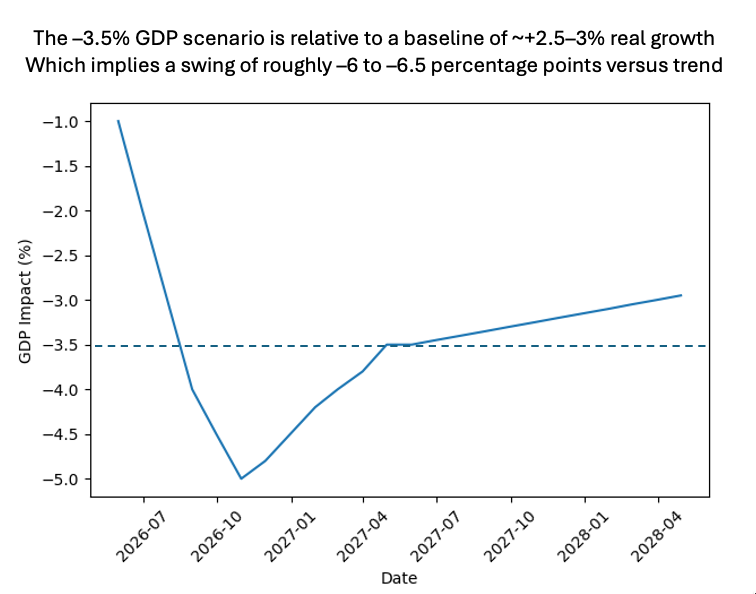
My base case is global GDP growth averaging roughly -1% versus the prewar baseline of 2.5% through 2027.
Clear enough?
#Oil #Economy #EnergyCrisis #GreatSimplification
May 12

Am very concerned about this but it’s hard to know how much I should be. There’s a lot of people hand wringing. Well I don’t want to do anything crazy until I have a better understanding situation. However if the Gulf Infrastructure was permanently destroyed I would go DECCON1.
2
1
11
1,931

May 9
#GreatSimplification #ClimateAction
The point by Nate Hagens (@NJHagens) is a cold fact of energy physics and history. We have merely "added" energy sources to our existing system.
---
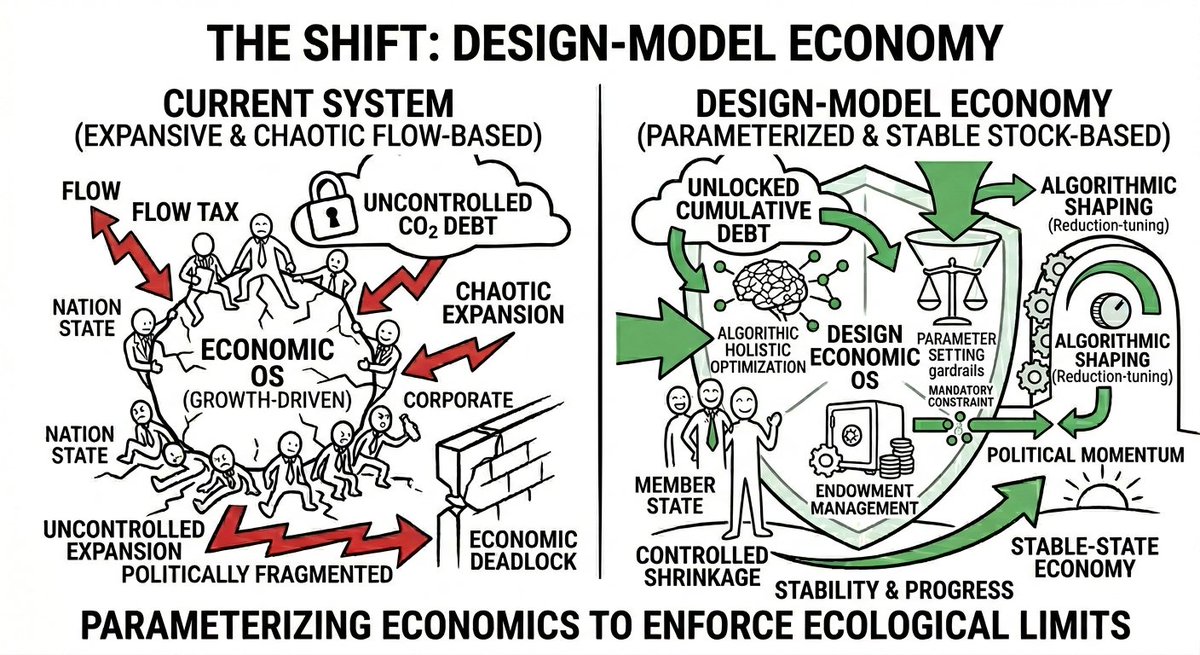
My blueprint for a new economic OS [Survival Redesign]:
👇
x.com/ttmori/status/20451491…
---
To break the 21st-century deadlock, we need—for the first time in history—an Economic Operating System that is intentionally "subtractive."
My proposed "Survival Redesign" framework presents a blueprint for this: a "Design-Model Economy" OS. It does not tax flow (consumption); instead, it enforces ALGORITHMIC SHAPING (Reduction-tuning) to automatically induce controlled economic shrinkage based on ecological parameters.
Recognizing the physical reality of history and systemically adapting through Design is the only viable route to survival.
May 7

Every energy transition in history has been additive, not subtractive, and the current push toward renewables is no exception.
1
1
3
144
Apr 14
Iran isn’t trying to win. It’s trying to make everyone else lose more.
That’s a very different game—and the U.S. may be playing the wrong one.
#EnergyCrisis #Iran #Geopolitics #OilMarkets #GreatSimplification
nytimes.com/2026/04/13/world…
3
1
15
1,254
Apr 12
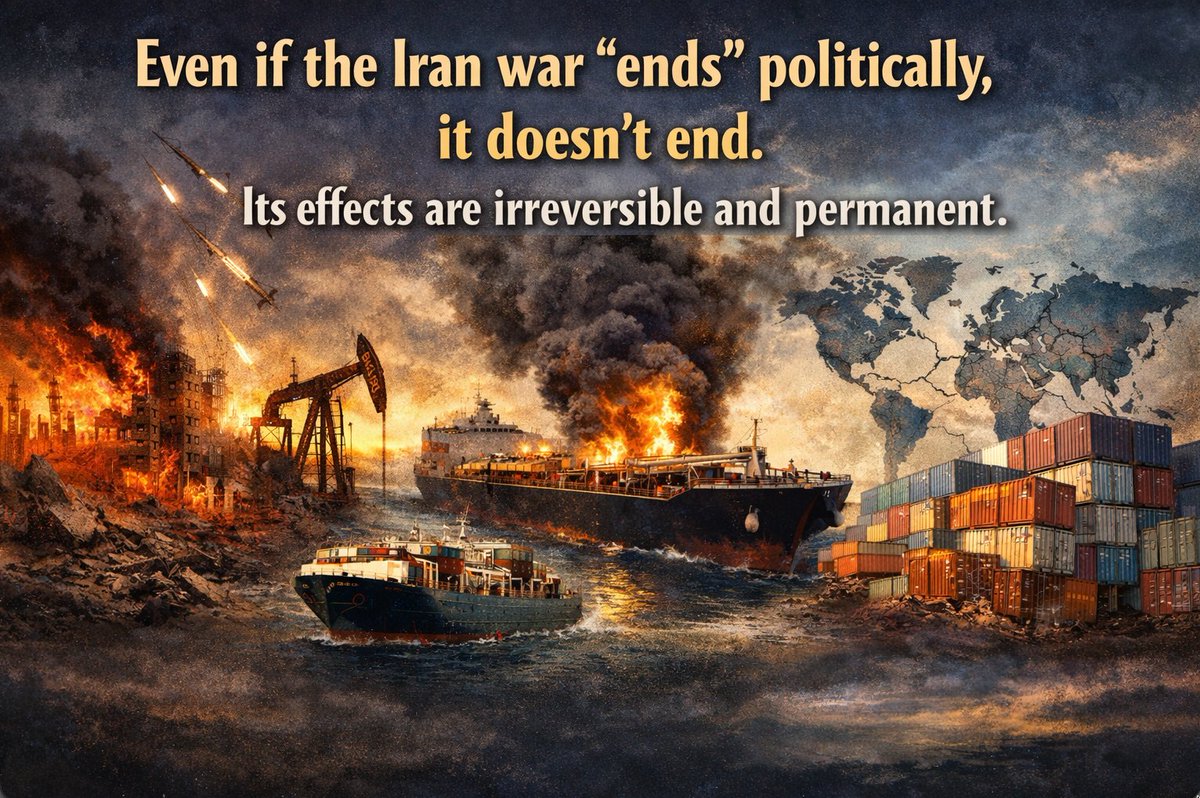
The Iran war is increasing market downside risk, notes the cautious @elerianm
LET ME BE BLUNT
The global fallout will dwarf 2008 and Covid unless a serious effort toward peace is made now.
This is a becoming a systemic rupture--not something temporary.
Time to put pride aside & do the right thing, Trump (not happening)
#GlobalEconomy #SystemicRisk #Geopolitics #EnergyCrisis #FinancialCrisis #OilMarkets #Macro #BlackSwan #Fragility #GreatSimplification
Apr 12

How sanguine should we be about the US economic outlook?
I suspect the answer to this question comes down to your view on:
How transitory will the inflation hit from the Middle East War be?
To what extent can the adverse effects on growth—driven by reduced affordability and a disrupted global economy—be offset by other growth impulses (e.g., those related to AI)?
Are policy offsets available, if needed?
In analyzing all three, it is important to consider tipping points, behavioral factors, and the fragility of circuit breakers in a world in which governments have less control over outcomes (especially abroad).
Whatever your (realistically, multi-modal) distribution of economic outcomes was pre-War, it has shifted towards greater downside risk with a less favorable mean.
#economy #markets #middleeastwar
5
38
3,018
Apr 11
Complex systems—society, the economy—run on cheap energy.
When energy gets expensive, complexity decreases
That's the definition of COLLAPSE
thegreatsimplification.com/f…
#Energy #ComplexSystems #Collapse #OilMarkets #GreatSimplification
6
27
87
20,299
Apr 10
One barrel of oil does the work of ~5 years of human labor.
Each human has 100 fossil fuel slaves
Innovation and technology are a rounding error compared to this invisible workforce.
thegreatsimplification.com/f…
#Energy #Oil #Economics #HumanLabor #FossilFuels #GreatSimplification
15
40
1,780
Mar 20
We're at a global turning point
@njhagens turns from DIAGNOSIS toward DIRECTION
What actions should we take as events in the Middle East have pushed The Great Simplification timeline forward?
youtube.com/watch?v=TH8aHQ3Y…
#GreatSimplification #NateHagens #Frankly #Metacrisis #Overshoot #SystemsThinking
Mar 20
This week’s Frankly marks a turning point in the work of The Great Simplification. Having spent 20 years articulating the more-than-human predicament, I shift from diagnosis to direction as current events accelerate the timeline.
thegreatsimplification.com/f…

12
2,135
Mar 19
The Fed did nothing as the world burns
Central banks see "exogenous shocks"--bad luck but not part of their models, writes @TheMichaelEvery
At what point don't markets believe the story anymore?
The system isn’t being hit by shocks—it’s becoming the shock.
#Geopolitics #MacroRisk #FatTailRisk #SystemicRisk #CentralBanks #GreatSimplification #EnergyCrisis #GlobalOrder

1
3
14
1,167
Mar 16
Nuclear is a infantile sci-fi fantasy IMO @GMonroyEnergy
Here's my latest explanation
👇
artberman.com/blog/the-nucle…
#EnergyReality #NuclearEnergy #EnergyTransition #ClimatePolicy #GreatSimplification

Mar 15

Aaaaah, got it.
We're on the same page, then.
1
13
2,123
Mar 15
I was summarizing @ArjunNMurti’s views @GMonroyEnergy
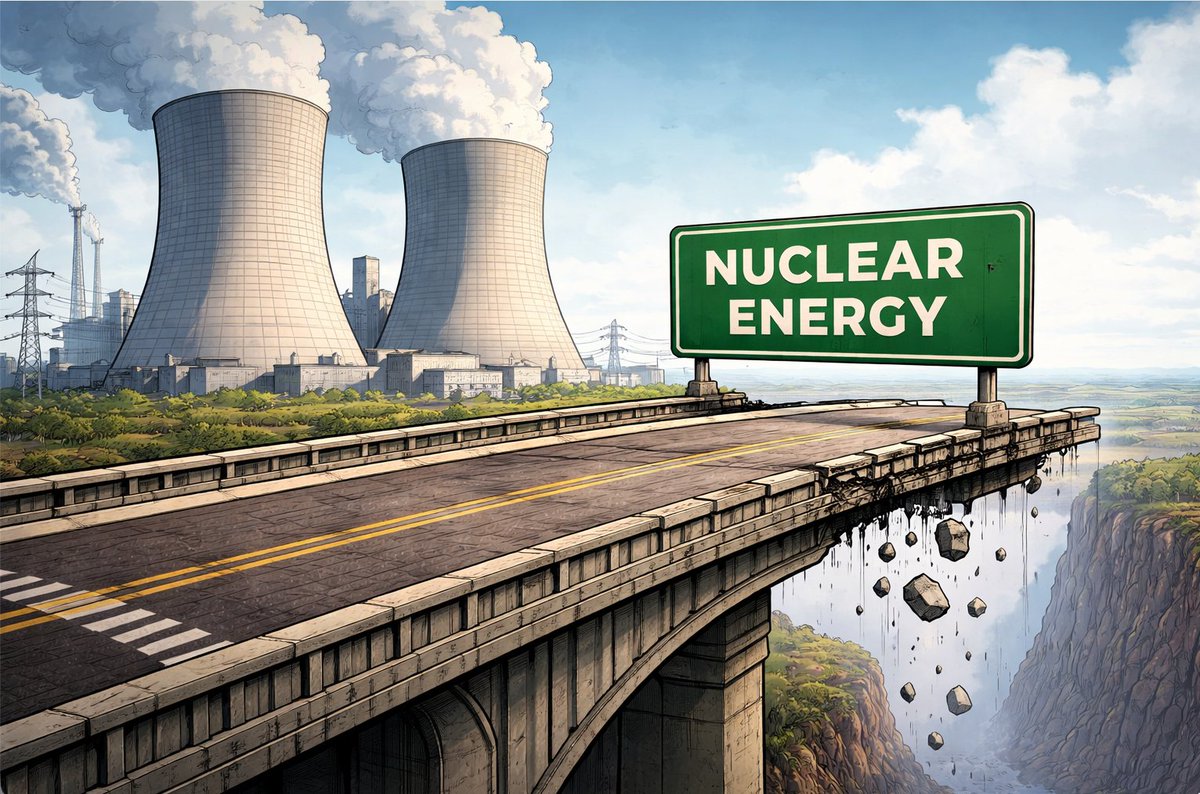
I’ve long believed nuclear beyond a small share of total energy is magical thinking
Too slow, too costly, and far too limited to scale
#EnergyTransition #NuclearEnergy #EnergyRealism #EnergyPolicy #GreatSimplification
Mar 15
Not sure we can count Nuclear in winners YET.
High-investment cycle, unattractive in high uncertainty times.
Maybe, later. Yes, definitely, in the long-longer term.
1
1
14
2,279
Mar 6
Nothing you’re doing today is more important than listening to this conversation
I know the ideas of @ctindale, @TheMichaelEvery, and @NJHagens inside out
And hearing them together completely blew my mind.
#Geopolitics #Energy #Macro #GreatSimplification #SystemsThinking
Mar 4
Today, I'm joined by financial analysts, @ctindale and @TheMichaelEvery, to discuss the growing geopolitical tensions over scarce resources and the rapidly changing foreign policy and economic statecraft that countries are implementing in response.
thegreatsimplification.com/e…
4
12
60
12,255
Feb 18
Acceptance of mortality & the near-term expiration date of this civilization, may be the only honest starting point for changing how we think about the world & our place in it @gordonschuecker
Climate advocacy failed because it never asked for that level of truth.
#Overshoot #GreatSimplification #LimitsToGrowth #EnergyReality #Complexity #ClimateReality #HumanNature #SystemsThinking
Feb 18

Agree… it’s code name for “prepare to die” - the only “adaptation” left.
“Luckily” the date for that is 2100, but the path is nevertheless painfull…
1
1
15
1,263
Feb 7
The “consumption pyramid” is a practical map of dependence, says @NJHagens
As the world gets more intermittent & expensive, everyone moves down the pyramid.
The smart move is to simplify by choice
#GreatSimplification #NateHagens #Consumption #Resilience #Sovereignty #Overshoot #Energy #culture
Feb 6
This week’s Frankly unpacks humans’ current identification with the label “consumer.” Consumption is something much deeper and more nuanced than shopping or spending.
thegreatsimplification.com/f…

4
1,175