
Feb 20
Levelized costs are a lie @BloombergNEF
They price the hardware, not the electricity system you actually rely on.
Like calling a house “cheap” while ignoring taxes, maintenance, and utility bills.
That’s not analysis—it’s deception.
#EnergyEconomics #GridReality #LCOE #PowerMarkets #EnergyBlindness
Feb 19

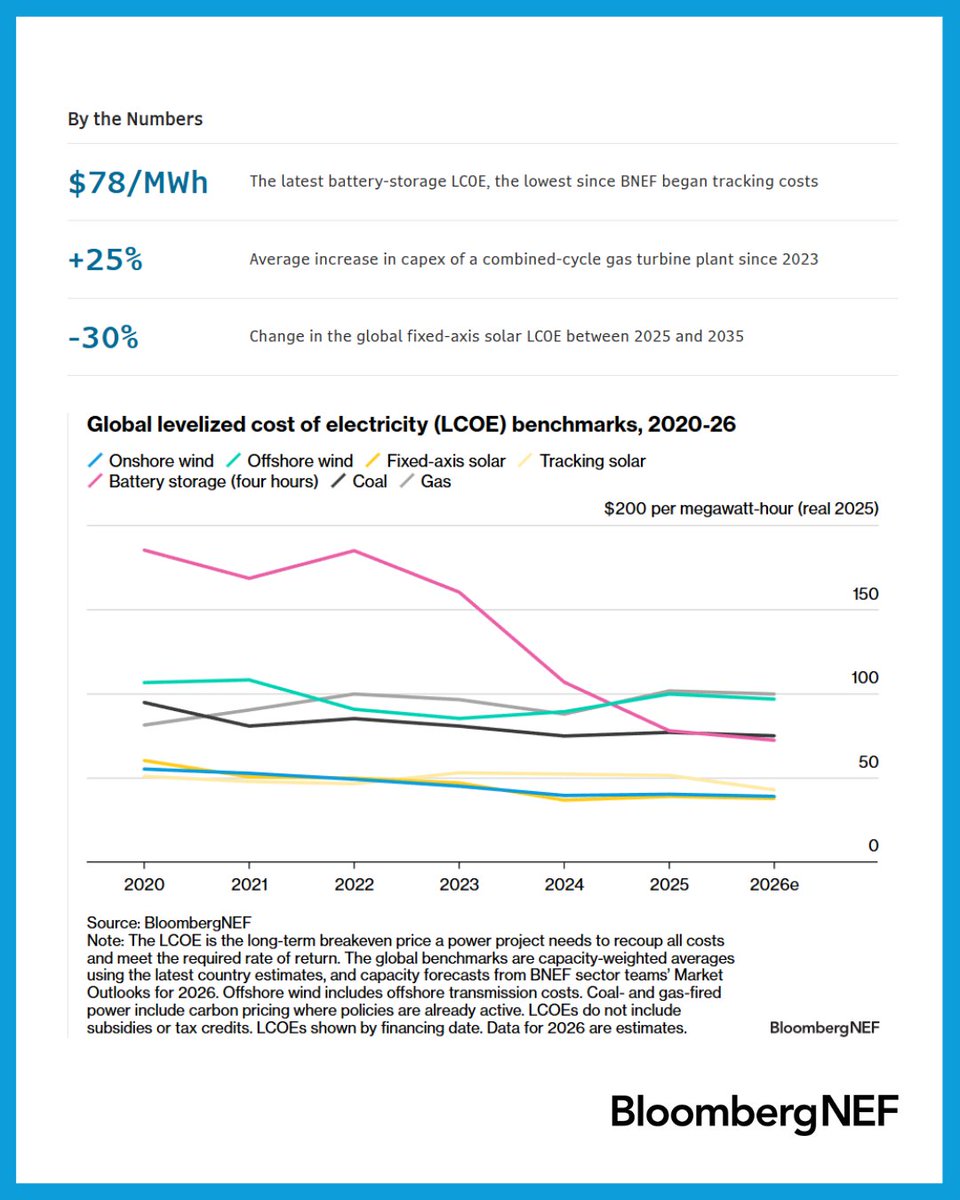
📉 Battery storage costs have fallen to a record low, even as solar, wind and gas turbine costs increased.
BloombergNEF’s research shows the global benchmark levelized cost of electricity (LCOE) for a four-hour battery storage project declined 27% year-on-year to $78/MWh.
By contrast, global LCOEs in 2025 rose for:
• Solar: 6%
• Onshore wind: 2%
• Offshore wind: 12%
• Combined-cycle gas turbine plant: 16%
The data underscores diverging cost trends across generation and storage technologies this year.
Explore the research ➡️ bloom.bg/4aqBNxh

6
7
27
3,125
Jan 31
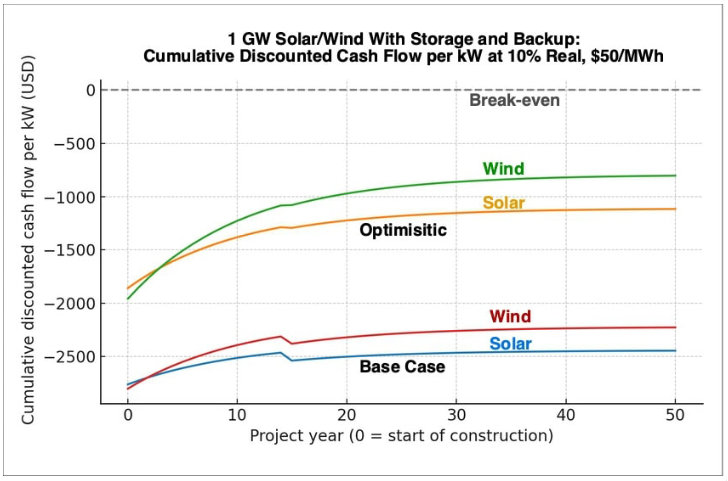
This chart shows you all you need to know about renewables @ChristerEricson
The "cheapest form of energy" propaganda is just the equipment cost.
The cost of providing power never breaks even.
Don't google. Search my website. It's all there
artberman.com
#EnergyReality #Renewables #PowerCosts #GridReality #EnergyEconomics #NetZero #EnergyTransition #OilAndGas #ArtBerman

A key distinction of the article is “dispatchable power.” Some straightforward googling shows why eg storage duration, as well as transportation, are problems for solar batteries as a substitute, today. The article covers it but doesn’t spell it out explicitly.
1
1
16
2,245
Jan 16
You can generate zero-carbon electricity by pedaling a bike @acidiclemon2
That doesn’t make it socially useful power.
Energy systems are selected by the maximum power principle, not virtue.
Solar lost that test in the Middle Ages. It fails it again at industrial scale.
Modern society runs on dense, dispatchable energy.
Renewables don’t fit that reality.
#energy #renewables #maximumpowerprinciple #energyeconomics #gridreality #industrialenergy #climatepolicy #systemsThinking
Jan 16

As with EROEI, the question is where do you draw the boundary.
In terms of energy output a solar panel produces electricity with much less CO2 output than oil/coal/gas do.
In considering construction of the panel, you'd also need to consider all systems required to produce FFs.
1
8
1,510
23 Dec 2025
Nonsense @JohnLeePettim13
2023 global investment in wind was $180 billion.
Even if that much was spent every year--and it wasn't even close--we're talking about $1.5 T
I'm no fan of wind but I'm less of a fan of fabricated bullshit.
#EnergyTransition
#WindPower
#EnergyEconomics
#GridReality
#SystemCosts
#Decarbonization
#ElectricityMarkets
#Infrastructure
#EnergyPolicy
#ClimateRisk
22 Dec 2025

The world has spent approximately $6–7 trillion cumulatively on wind turbines and solar panels. With that amount, we could have built up to 1,400 standard nuclear power plants (each with ~1–1.2 GW capacity, typical for modern large reactors). With proper maintenance, safety upgrades, and regulatory approvals, many nuclear plants last 60 years- 80 years or more. A typical wind or solar farm lasts about 20 years, meaning we would need to spend up to $21 trillion to produce the same energy as nuclear. With $21 trillion, the world could theoretically fund up to 4,000 nuclear power plants.
Now lets talk about wind turbines.
Without the Production Tax Credit (PTC), many wind farms were not economically viable from electricity sales alone, due to high upfront costs, intermittency (requiring backup power), and competition from cheaper sources like natural gas. The tax credits effectively offset a significant portion of costs—in some cases covering much or all of the investment for tax-liable entities—turning otherwise marginal or unprofitable projects into attractive ones. Are you seeing the scam? It's time to start building more nuclear and less of these green dream turbines and solar panels.
1
3
1,421
22 Dec 2025
China dominates clean-tech hardware, but cheap machines ≠ cheap power @AlastairJMarsh
Once grid costs, storage, & backup are included, there's no economic payoff
No energy transition means China's manufacturing win will be a massively bad bet.
bloomberg.com/news/articles/…
#EnergyEconomics #GridReality #CleanTech #China #EnergyTransition
1
7
1,022
22 Nov 2025
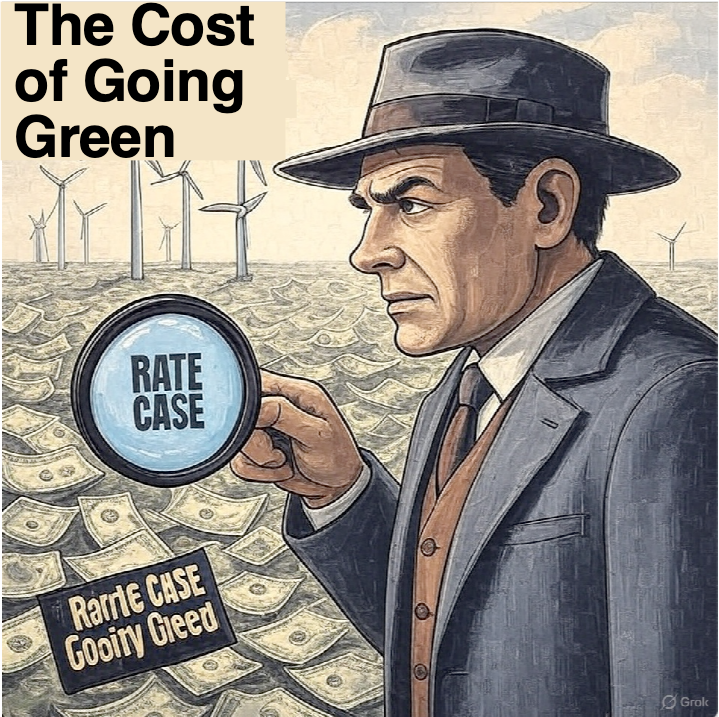
Electricity prices are rising because years of spending on the energy-transition
Wind, solar, batteries, electrification, thermal retirements, & major transmission build-outs—are finally hitting bills.
Utilities are now recovering those costs through record rate cases.
energybadboys.substack.com/p…
#Energy #ElectricityPrices #PolicyFailure #GridReality
2
5
18
2,185

9 Sep 2025
Dear King Cankles,
OH LOOK, ANOTHER BRILLIANT TAKE FROM THE "MAGA IS DUMBEST" CROWD!
Let me explain something about energy storage for those of us who actually understand basic physics: YES, THE ENERGY IS STORED. That's literally the entire point of battery technology, pumped hydro storage, compressed air systems, and grid-scale lithium-ion installations. You know, the same technology that allows your Tesla to drive at night or your iPhone to work without being plugged into the wall 24/7?
But here's what's particularly FASCINATING about your "gotcha" moment: you're accidentally highlighting one of the fundamental challenges with renewable energy integration that engineers have been working to solve for decades. Intermittency IS a real issue that requires sophisticated grid management, backup systems, and yes – ENERGY STORAGE SOLUTIONS.
What's really RICH is watching you mock MAGA for questioning renewable energy reliability while simultaneously proving you don't understand the technical complexities involved. Grid-scale energy storage systems cost billions, have limited capacity, require rare earth minerals (often mined in environmentally destructive ways), and still can't provide the baseload power that coal, natural gas, and nuclear facilities deliver consistently.¹
Your snarky comeback about storage being "obvious" ignores some inconvenient realities: current battery technology can store maybe 4-6 hours of grid demand, utility-scale storage systems degrade over time requiring expensive replacement, and the manufacturing process for these batteries creates significant environmental impact.²
Here's the IRONY you're missing: the Department of Energy under Trump actually increased funding for energy storage research and grid modernization. But I suppose acknowledging that would complicate your "MAGA DUMBEST" narrative.
Maybe instead of calling people "ABSOLUTE F***ING MORONS" for questioning energy policy complexities, you could actually research how grid storage works, what it costs taxpayers, and why engineers are still working to make renewable storage economically viable at scale.
But what do I know? I just actually study energy policy instead of getting my technical expertise from Twitter dunks.
#EnergyStorageFacts #GridReality #RenewableComplexity #TechnicalLiteracy #EnergyEngineering #GridManagement #BatteryTechnology #RealEnergyPolicy
¹ Energy Information Administration, "Battery Storage in the United States," 2024 ² National Renewable Energy Laboratory, "Grid-Scale Battery Storage Technical Report," 2024
1
56

25 May 2025
You can’t run a country on idealism alone.
Shutting down coal and gas while choking renewables in red tape is like cutting your parachute mid-air and arguing over the color of the landing pad.
Labor’s 82% renewables by 2030 isn’t a bad dream. It’s a regulatory trap of their own making.
Fix the bottlenecks. Accelerate approvals. Or brace for a blackout economy.
#EnergyCrisis #GridReality #Australia #PolicyFailure #SaulK #Camenzuli #BaseloadMatters #SmartTransition @saulkavonic
1
35

8 May 2025
Why 100% wind and solar energy is physically impossible
“Wind and solar energy is the future ”
That’s the story we’ve been sold
But the physics and the data say something very different...
Solar and wind are not “always on” power sources
They fluctuate by the hour, the season, and the weather
But hospitals, grids, and industries need constant, stable electricity
The usual answer?
“Just store the excess energy ”
But large scale energy storage remains:
- Technically limited
- Economically unsustainable
- Environmentally questionable
Look at the real world: Germany spent a copious amount on the “Energiewende”
Still uses gas, coal, and imported nuclear to stabilize its grid
Spain overproduces solar then imports nuclear from France at night and faced blackouts because of lacking inertia
This isn’t about opposing clean energy
It’s about engineering reality
We need reliable, dispatchable power:
- Nuclear
- Hydro
- Gas and coal
100% wind and solar or “renewable” is not an energy strategy It’s a marketing slogan
If we want to protect the environment and keep the lights on, we need honesty not ideology
#EnergyTruth #Renewables #GridReality #ClimatePolicy #LarsSchernikau

ALT “wind and solar energy is the future ” That’s the story we’ve been sold But the physics and the data say something very differ
1
5
165