
There is absolutely a scholarly consensus, (eg IAGS), and a human rights expert consensus. Amnesty, HRW, B’Tselem, I can provide huge lists.
4
l’International Association of Genocide Scholars (IAGS), regroupant environ 1500 spécialistes du génocide qui a adopté en juillet 2025 une résolution (à 86% des voix) déclarant que les politiques et actions d’Israël à Gaza répondent à la définition juridique du génocide.
1
1
21

You've now conceded the substance. The UN Commission of Inquiry, IAGS, Amnesty, HRW, and Israeli human-rights groups all examined the evidence and concluded genocide, intent included. Hold that, because everything you wrote after it is a single move, and it doesn't survive scrutiny.
Move one: "no court has ruled on the merits." True, and irrelevant to classification, because that knife cuts both ways. If the absence of a final verdict bars calling it genocide, it equally bars calling it lawful self-defense. Yet you deploy non-finality in only one direction. Never to withhold Israel's framing, only to withhold the genocide finding. That asymmetry is not neutrality. Pick one rule and apply it to both sides.
Move two: "contested by many governments and scholars." Name them. The governments are overwhelmingly Israel and the states arming it, the US and Germany among them. Those governments have a direct legal interest in it not being genocide, because the Convention obligates third states to prevent genocide and to not be complicit in it. A weapons supplier denying the buyer's crime is not a neutral data point. It is the testimony of an interested party. Strip those out and what remains is a scholarly minority set against the considered finding of every body whose actual job is to make this determination.
Move three: the October 7 justifications. A stated aim of defeating Hamas does not negate genocidal intent. The Convention is explicit that genocide can be carried out through military operations. The Commission weighed the urban-combat claim, the human-shield claim, and the "warnings," including the documented pattern of ordering civilians into zones that were then struck, and it still found intent. These defenses were not overlooked. They were examined and rejected by the people who examined them.
On the ICJ: "plausible risk only" undersells what happened. A court does not order a state to prevent genocide over a frivolous claim. The ICJ found the Palestinians' right to be protected from genocide plausible and ordered Israel to prevent genocidal acts. Israel then, by the Commission's finding, failed to comply.
So here is the actual state of things. The classification is "the core legal dispute" only inside a courtroom that moves at the speed of years. Outside that courtroom, among the bodies built to recognize this crime, it is not disputed. It is concluded. Defaulting to "unresolved" when the relevant expert consensus has resolved is not the absence of a judgment. It is siding with the holdouts and calling it objectivity.
So answer the question you keep stepping around: on the evidentiary record as the investigating bodies assessed it, does Israel's conduct meet the Convention's criteria, yes or no? You already granted they concluded yes. So tell me which you actually have: grounds to say those bodies are wrong, or only grounds to say a court has not yet said it out loud?
1
13
Let me make it a little clearer for you.
Gaza: The Numbers, the Verdict, and the Authorities
A sourced record, current to June 2026.
A standard sleight of hand runs through most "balanced" coverage of this question: it answers what a court has finalized when asked what the evidence shows, and it treats anything short of a final binding verdict as "unresolved." That is not neutrality. It is the evidentiary standard of the accused party, dressed up as caution. No international court convicted anyone over Srebrenica, Rwanda, or Darfur until years or decades after the killing, and we did not wait for those verdicts before naming what was happening. The standard below is the one investigating bodies actually use: reasonable grounds to conclude, applied to the documented record.
1. The death toll, low to high
Gaza (October 2023 – June 2026)
Confirmed, named dead (floor): The Gaza Health Ministry's tally surpassed 73,000 in mid-June 2026, with more than 173,000 wounded. The ministry compiles a named, identified list; its records are widely treated as generally reliable, and an Israeli army official acknowledged in January 2026 that roughly 70,000 had been killed.
Independent survey (violent deaths only): The Gaza Mortality Survey, a population-representative household study published in The Lancet Global Health, estimated 75,200 violent deaths to 5 January 2025 — about 35% higher than the Health Ministry's count for the same window. The study's conclusion is important: the official figures are a conservative floor, not an overcount.
Capture-recapture estimate: A separate Lancet analysis (Jamaluddine et al.) estimated 64,260 traumatic-injury deaths to June 2024, with a confidence range spanning roughly 55,000 to 88,000.
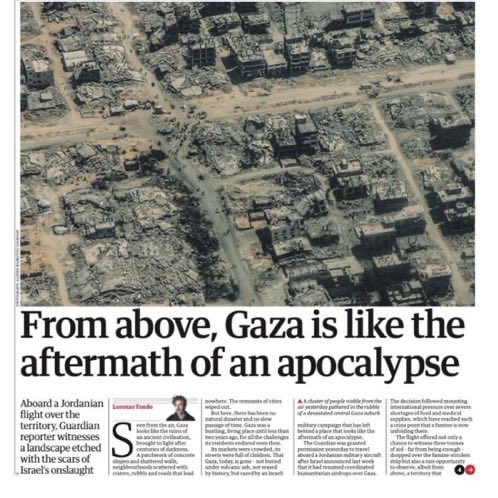
The true total is higher than any of these. All of the above count violent deaths. None fully capture the indirect dead — those lost to famine, disease, dehydration, and the deliberate collapse of the health system — nor the thousands still missing under rubble. UN-backed food-security experts formally declared famine in Gaza City in 2025.
Across every method, the demographic composition stays consistent: women, children, and the elderly make up well over half of the dead.
Lebanon (October 2023 – November 2024 war, plus 2026 renewal)
Israeli strikes killed more than 3,961 people in Lebanon between October 2023 and the November 2024 ceasefire, including 736 women, 248 children, and 222 health and rescue workers (Lebanese Health Ministry; Human Rights Watch). Roughly 1.2 million people were displaced.
The September 2024 pager-and-walkie-talkie attack killed dozens and injured more than 2,800 in a single indiscriminate operation that legal analysts flagged as a violation of the prohibition on booby traps.
Renewed fighting in 2026 has pushed the toll higher still.
On the Israeli side, Hezbollah fire killed roughly 30 civilians plus soldiers over the main war.
2. Is it genocide?
Genocide under the 1948 Convention (Article II) requires two things: (a) one or more prohibited acts against a national, ethnic, racial, or religious group, and (b) the specific intent (dolus specialis) to destroy that group in whole or in part.
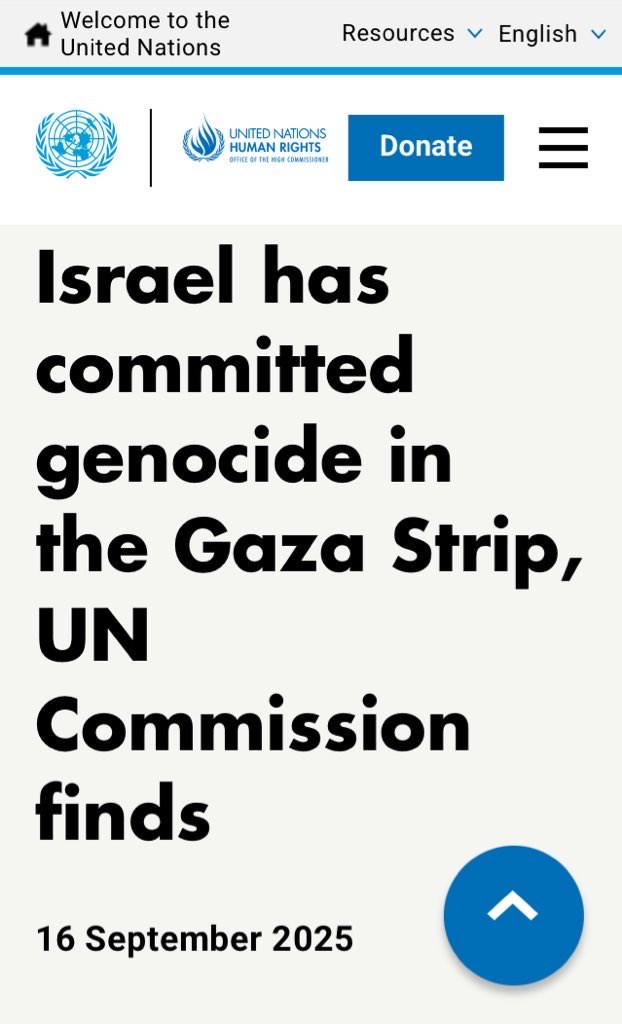
The UN Independent International Commission of Inquiry, after two years of investigation, concluded on 16 September 2025 that Israel has committed four of the five genocidal acts named in the Convention:
killing members of the group
causing serious bodily or mental harm
deliberately inflicting conditions of life calculated to bring about physical destruction
imposing measures intended to prevent births
It further found that explicit statements by Israeli civilian and military leaders, taken together with the pattern of military conduct, establish the intent element. The Commission is chaired by Navi Pillay — former UN High Commissioner for Human Rights, former ICC judge, and former president of the International Criminal Tribunal for Rwanda. This is not a fringe panel.
What the experts are saying: a warning that began as "grave risk" in October 2023 has, over two years, hardened into a determination of fact. More than 800 scholars of international and genocide law sounded the alarm within a week of 7 October 2023. By 2025 the conclusion was no longer that genocide was a risk but that it was a reality. The dissent — Israel, allied governments shielding themselves from complicity, and a minority of legal scholars — is real but is a minority position. Calling that landscape "divided" misrepresents where the weight sits.
3. The authorities
Institutions and bodies that have formally concluded Israel's conduct in Gaza constitutes genocide or genocidal acts:
United Nations system
UN Independent International Commission of Inquiry (Navi Pillay) — found genocide; report 16 September 2025
UN Special Committee to Investigate Israeli Practices — found Israel's warfare methods consistent with genocide (November 2024)
UN Special Rapporteur on the OPT, Francesca Albanese — "Anatomy of a Genocide" (March 2024) and "Gaza Genocide: A Collective Crime" (October 2025)
Multiple UN Special Rapporteurs and independent experts — warned of genocide from October/November 2023 onward
The genocide-studies field
International Association of Genocide Scholars (IAGS) — the professional association of the discipline; resolution passed by supermajority (2025) that Israel's actions meet the legal definition
Lemkin Institute for Genocide Prevention — active genocide alerts from October 2023
Genocide Watch — classified the situation as genocide
International human rights organizations
Amnesty International — concluded genocide (December 2024)
Human Rights Watch — found extermination and acts of genocide, documenting deliberate deprivation of water (December 2024)
Médecins Sans Frontières / Doctors Without Borders — "Life in a Death Trap," found genocide and genocidal acts (December 2024)
Israeli human rights organizations
B'Tselem — "Our Genocide" (July 2025)
Physicians for Human Rights–Israel — concluded genocide (July 2025)
Scholars, including Israeli and Holocaust historians
Omer Bartov, Amos Goldberg, Raz Segal, Melanie O'Brien and many others
University Network for Human Rights — legal analysis concluding violation of the Genocide Convention (June 2024)
Courts and legal process (pending, not yet final — but already significant)
International Court of Justice (South Africa v. Israel): in January 2024 found it plausible that the rights of Palestinians under the Genocide Convention were at risk and ordered Israel to take all measures to prevent genocidal acts; reinforced with further provisional measures in 2024. Merits judgment pending.
ICJ Advisory Opinion (July 2024): Israel's occupation of the Palestinian territory is unlawful and must end.
International Criminal Court: arrest warrants issued in November 2024 for the Israeli prime minister and former defence minister for war crimes and crimes against humanity.
4. The intent question, answered directly
The single hardest element to prove in any genocide case is intent. It is also the place every evasion hides, because intent feels subjective. It is not. It is inferred from evidence — and here the evidence is unusually explicit, which is precisely why the UN Commission was able to make the finding it did.
The record includes statements from the highest levels of the Israeli state made in the opening days and weeks of the campaign: the announcement of a "complete siege" of Gaza with "no electricity, no food, no fuel," paired with the dehumanizing framing of the population; references to Gaza's inhabitants in collective, eliminationist terms; and calls that drew no distinction between combatant and civilian. These are not anonymous social-media posts. They are on-record declarations by ministers and commanders, and South Africa placed them at the center of its ICJ filing.
So, to the question as it is actually asked — does the documented record show intent to destroy Palestinians in Gaza as a group? — the bodies that investigated it have answered yes: the UN Commission of Inquiry, the genocide scholars' own professional association, the leading human rights organizations, and Israeli human rights groups. "A court has not finalized its ruling" is a statement about the speed of legal process, not a rebuttal of the evidentiary finding. The two are different things, and conflating them is the move to watch for.
5. The consistency test
Apply the "wait for a binding court verdict" standard consistently and it collapses:
The treatment of the Uyghurs is widely called genocide — by the United States government and multiple parliaments — with no court ruling.
Darfur was named genocide by the US in 2004; no one has been convicted of it.
Srebrenica was genocide on the day it happened, not only when a tribunal said so years later.
The "wait for the court" bar is applied to Gaza and almost nowhere else. That selectivity is itself the tell.
Bottom line
The numbers are not seriously in dispute: a confirmed floor above 73,000, independent surveys placing violent deaths higher still, and indirect deaths uncounted on top. The genocide determination is not a fringe claim: it is the conclusion of the UN's own commission, the professional body of genocide scholars, the major human rights organizations, and Israeli human rights groups, grounded in explicit statements of intent and a documented pattern of conduct. What remains "unresolved" is a single court's final timeline — not the weight of the evidence, and not the verdict of the people whose entire profession is to recognize this crime when they see it.
You do not need a court to tell you what the doctors who carried the children out already testified to. The record is the record.
1
2
67
Politikarma retweeted

Jun 15
The International Association of Genocide Scholars (IAGS), the world's largest professional association of genocide scholars, passed a resolution declaring that Israel's actions and policies in Gaza fulfill the legal definition outlined in Article II of the UN convention.
2
2
33

Show me another genocide that looks like this. Also- you should know that I paid my $30 fee to become a genocide scholar from the IAGS. You’re familiar w/ them, right? They (attempted) to rework the definition of “genocide” so Gaza could fit in
1
1
12

First. You're begging the question that there are complaints. There's no mention of complaints.
Second, the false dilemma fallacy remains. Curating one venue after complains because of a political message fulfills the definition of suppression according to Cambridge dictionary which means: the act of preventing something from being seen or expressed or from operating
Source: dictionary.cambridge.org/dic…
It curates but at the same time suppress.
Third, we're talking about that specific place, not public zones, that's a strawman. But it's also moving the criteria of debate to your advantage, I don't remember which fallacy is.
Nobody spoke about state prohibition, that's a strawman. Neither I said ideological prohibition, I said suppression. But it could apply.
It's not neutral because according to the principle of excluded middle you oppose Gaza genocide (according to the IAGS) or you don't. There's no moral neutrality here.
1
4

Jun 15
it's genocide ( @amnesty ) it's genocide ( @hrw ) it's genocide ( @btselem ) it's genocide ( @MSF ) it's genocide (IAGS) it's genocide ( @alhaq_org ) it's genocide ( @UNHumanRights ) it's genocide ( @UN_HRC ) it's genocide ( @pchrgaza ) it's genocide ( @AlMezanCenter ) it's genocide ( @WarOnWant ) it's genocide ( @PHRIsrael ) it's genocide ( @fidh_en ) it's genocide (PHROC) it's genocide ( @LemkinInstitute ) it's genocide ( @theCCR ) it's genocide ( @ECCHRBerlin ) it's genocide ( @unitedforrights ) it's genocide ( @JURDIasso ) it's genocide ( @TheElders ) it's genocide ( @Oxfam )
-- "Calling a genocide a genocide is a hoax" - David Ulevitch, VC & guy who first heard about "international law" in 2026
3
66
350
3,213

Fascist-Israel have committed genocide in Gaza
it's genocide (@amnesty)
it's genocide (@hrw)
it's genocide (@btselem)
it's genocide (@MSF)
it's genocide (IAGS)
it's genocide (@alhaq_org)
it's genocide (@UNHumanRights)
it's genocide (@UN_HRC)
1
7
🌊 retweeted

Jun 14
The International Association of Genocide Scholars (IAGS) has become the face of the libelous campaign calling Gaza a genocide.
What they don't want you to know is that Mia Bloom—one of its founding members—has stated on record that the organization does not reflect the views of the majority of genocide scholars.
In her words: "To single out Gaza while remaining silent on the October 7 atrocities—and failing to issue comparable statements on other cases of mass ethnic violence—IAGS exposed itself as a virtue-signaling, faux-academic body rather than a credible scholarly association."
We knew that already. And so do those pretending they didn’t.
7
30
120
3,031

Jun 15
There’s no genocide in Gaza and @RoKhanna knows this.
Why is it that the report he cites to failed to use the legal tests that are required? Why did Amnesty, IAGS, B’tselem, all require that they use a “broader analytical framework?”
Instead of feeding into a blood libel the congressman should call out the bullshit and push back. You can care about Palestinians without purposefully propelling harm to Jews worldwide by regurgitating a lie.
And to think, the now soon to be fired ICC Chief Prosector recently said that they only charge for what there is evidence, when pressed on why he didn’t charge for genocide after the Pre-Trial Chamber said his warrants for the crime against humanity of extermination were denied because the elements were not present.
Members of Congress should tone down the rhetoric, not fuel it, as Ro has done.

Vinod, my understanding is these students walked out to protest Google's contract with IDF given Israel's genocide in Gaza.
Wherever one stands on those contracts, I believe you would support their right of free expression and challenging authority.
2
7
60
1,250

Jun 14
(Part 2) "This is one of the significant advantages of IAGS, providing a networking opportunity between scholars and those in the practice of genocide prevention and punishment. Another dimension of IAGS inclusivity of expertise is the desire to make sure artists, community...
7
Jun 14
(Part 1)"IAGS’ membership is predominantly made up of scholars/academics from a wide range of disciplines, and with experts in the fields of genocide prevention, education and punishment, such as policymakers, NGO representatives and legal professionals."
genocidescholars.org/reactio…
9