Jun 14
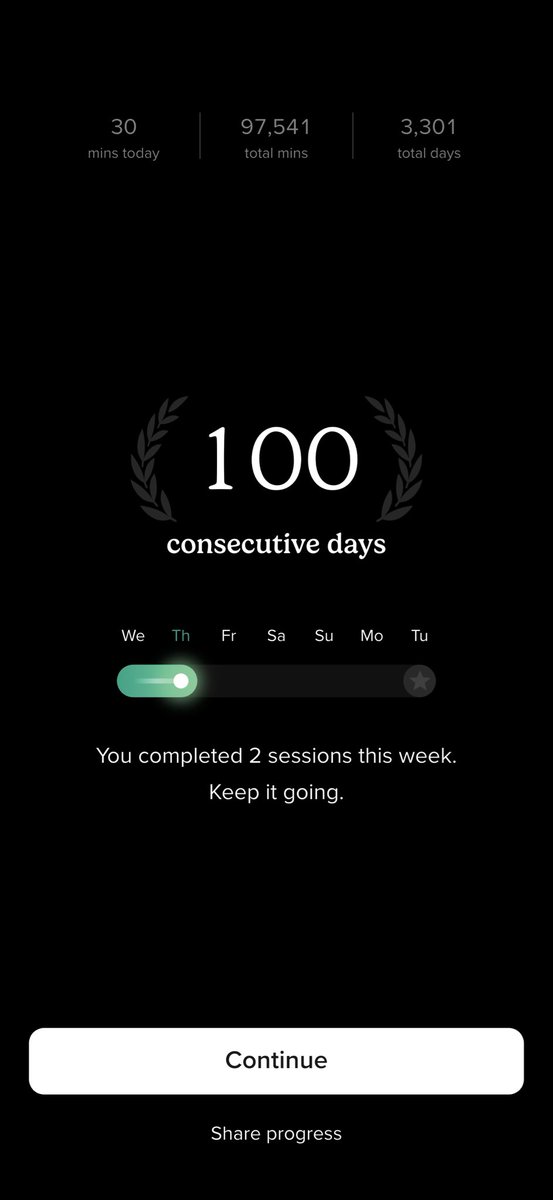
165 days to go for the one year mark
Been a long time since I’ve put together this kind of streak
Thank you @InsightTimer 🧘♂️
4
3
10
174

Jun 14
Me: Spiritual effects of music
Ai: Music has profound spiritual effects, serving as a bridge to transcendence, emotional healing, connection with the divine (or higher self), and altered states of consciousness across cultures and throughout history. It transcends language and unites people, often evoking feelings of awe, unity, or communion with something greater. insighttimer. com
Historical and Cultural Role
Music integrates deeply into spiritual and religious practices worldwide:
• Chanting and mantras appear in Buddhism (sutras and mantras during meditation), Hinduism (Om, devotional chants with instruments like tabla or sitar), and Sufism (Qawwali for ecstatic devotion). insighttimer. com
• Hymns and psalms feature prominently in Christianity and Judaism, with biblical examples like King David using music to soothe Saul or express praise. whosoever. org
• Ritual drumming and singing occur in indigenous and shamanic traditions for healing, celebration, or invoking spirits.
• Across faiths, music strengthens worship, builds community, and facilitates prayer or meditation. soundinfusion. io
It acts as a “ladder for the soul” (as Baha’u’llah described) or a pathway to enlightenment, often inspiring creation while creating sacred atmospheres. bahaiteachings. org
Psychological and Emotional Effects
Music taps into deep emotions, from sorrow to joy, and can induce altered states of consciousness—key to spiritual experiences. It fosters reflection, a sense of shared humanity, and transcendence (e.g., “losing oneself” in music). templetonreligiontrust. org
Positive music (harmonious, uplifting) promotes calmness, clarity, and unity, attuning mind, body, and spirit. It can elevate mood via serotonin and endorphins, reduce depression, and evoke spiritual emotions more strongly than everyday positive or negative ones in group settings. beauty10024.medium. com
Group singing, in particular, boosts oxytocin (bonding) and lowers cortisol (stress), enhancing community and spiritual feelings. books.openbookpublishers. com
Physiological and Healing Aspects
Music influences the body in ways that support spiritual well-being:
• Lowers heart rate, blood pressure, and stress; supports immunity.
• Aids pain management and emotional release.
• Used in sound healing and music therapy for mental, emotional, and spiritual health. insighttimer. com
Some traditions view it through vibrations or frequencies that align the soul (e.g., Nada Yoga in Indian traditions, treating sound as a meditative path). medium. com
Potential Dual Nature
Not all music uplifts equally. Uplifting or sacred music draws people closer to the divine or inner peace, while certain aggressive or negative lyrics may influence mood, thoughts, or behavior in less constructive ways (e.g., studies linking heavy exposure to impacts on adolescents). Awareness of lyrics and intent matters, as music can program the subconscious. whosoever. org
Scientific Perspectives
Empirical research (e.g., psychology, neuroscience) explores these links, including during worship or group experiences. Studies examine cognitive effects of music in rituals, preferences for low-arousal (calming) music among spiritual people, and measurable changes in emotions or physiology. While hard to fully quantify “spiritual realities,” evidence supports music’s role in insight, growth, and well-being. templetonreligiontrust. org
Practical Ways to Harness Spiritual Effects
• In meditation/yoga — Use mantras (e.g., Om Mani Padme Hum), ambient sounds, or nature tracks.
• Daily listening — Choose classical, devotional, or healing music for calm or focus.
• Group settings — Join choirs, kirtans, or concerts for communal uplift.
• Intentional practice — Listen mindfully as a form of meditation (deep listening in Nada Yoga). insighttimer. com
1
2
48

Jun 13
I do not want to click out of so many surveys and updates every time I open the @InsightTimer app! And even more when I finish a meditation. I just want to go on, meditate, and leave in peace like back in the day. PLEASE!!!
12

May 28
@JesseSchoberg asked a brilliant question - what company have you referred the most ppl to simply because you love the product.
Here's my answer. I'd love to hear yours.
Companies: @brainfmapp, @MantaSleep, @InsightTimer, @othership_us, @Strala_Yoga
May 22

What company have you referred the most people to simply because you love the product?
1
1
5
257

May 27
Since 2023, @InsightTimer has played a meaningful role in my personal growth, mental clarity, and overall mindset. What started as simply listening to meditations slowly became part of how I reset, reflect, and reconnect with myself through different seasons of life.
Over the past year, I felt inspired to give back by becoming a teacher and publisher on the platform and creating guided meditations of my own to help others slow down, think clearly, and return to what matters. One of my favorite pieces I’ve created so far is a 40 minute meditation on the rise of #civilization and the evolution of human progress.
Give them a listen. Hope they give you some inner peace ☮️
#Mindfulness
#Meditation
#MentalHealth
#PersonalGrowth
insig.ht/bRL1KAJCu3b
2
119

May 26
Does @InsightTimer know that you're mocking the appearance of a woman who is recovering from cancer? Shame on you Jenna.
8
71
May 23
Superb question:
@brainfmapp
@MantaSleep
@othership_us
@InsightTimer
@Strala_Yoga
And a number of cocktail bars in London & NYC!
2
126

May 18
I made a meditation app that is probably not for you.
Been using InsightTimer since 2017 tracking my meditation, but in migrating to GrapheneOS it was time for a change. InsightTimer has gotten filled with a bunch of BS features I didn't ask for: social, teachers, podcasts...

2
3
338

Yeah, agree - theres's some nice stuff on there. My point is about the people who claim meditation cures you of chronic illness because you must, if you have a stress related chronic illness, be a type A personality who grew up with a lot of extrinsic, goal oriented attitudes.
2
3
60


“…for the anger that was grief in disguise…”
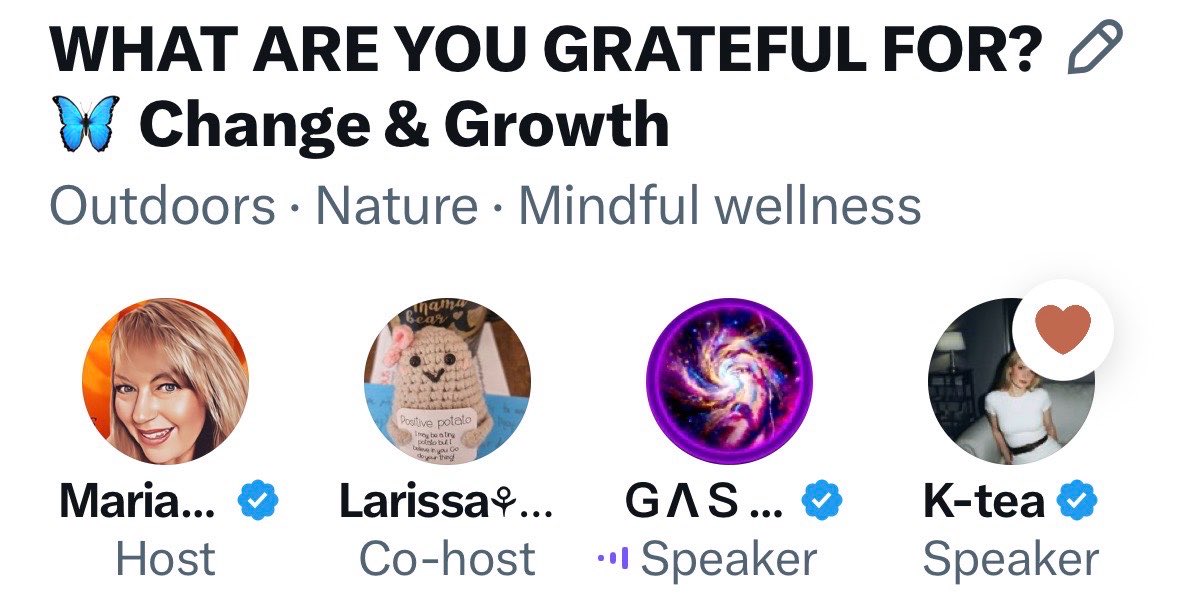
I want to thank Gasp for the poem he read into our space the other day. @HeartMime69
Here’s the replay should you wish to hear the conversation about gratitude but with a little bit of social media safety talk in the mix as well.
🦋💘➡️ x.com/sbssforme/status/20514…
There is so much anger and cruelty in this world. It’s true yet we persevere. Hope remains.
I feel grief as I observe this app decline, yet for the time being I will continue to share energy here. I know that there are kind, intelligent, compassionate people out here that I am looking forward to finding before more of them leave.
Will I stay forever? Of course not but I’m hoping to connect with as many heart centered souls as I can before that day comes.
I will be providing information on best places to find me soon but here are some existing places to find me even if some are a little outdated::
Maria Humphreys-teacher on the Insighttimer Meditation app
StrongBodyStrongSoul-the podcast is on most platforms and the YTooooob channel bears the same title. Also on FB📕, 🔗IN and 👁️gee (I’m not supposed to spell out other platform names right? 🤯😆🤯)
Have a beautiful day. 🦋
Once in awhile I’ll post along these lines but I really don’t have time or desire to be in spaces for long periods analyzing the app when it’s obvious we have no idea what’s happening EVEN when so many of us ARE currently paying money for it. 😩
@Huunnie_bee thank you for sharing energy with us in that beautiful Who’s Awake? space last night …. THAT is the energy I am here to offer and immerse in with other souls.🦋

1
4
9
221
May 5
Sure.
1) All the basic sleep hygiene stuff, but just do what you can. My bedroom isn't blackout (long story), doesn't matter.
2) @MantaSleep - goes everywhere with me, SO so good. Also a pair of ear plugs, but I don't use them unless there's noise.
3) It's MORE about mental management - learning to deal with a racing mind, what to do when you wake up etc. Breathwork for sleep and yoga nidra are amazing things to learn, hat tip to @othership_us app & @InsightTimer.
(Jennifer Piercey's sleep course on Insight Timer is incredible).
@brainfmapp has great sleep music for planes etc, on which noise cancelling headphones are a must.
4) Hail mary option... when nothing else works: I fire up Audible, set a 30 min time out, put one headphone in on barely audible volume, and dial up Rockefeller's autobiography at 0.7x speed.
It is incredibly long and boring. I never last more than a few minutes.
I've been 'listening" for 3 years, and am still on Chapter 2 🤣
2
1
8
341

I've been teaching women and providers about menopause for the past 5 years. I am also a teacher on @InsightTimer focusing on meditations for women in this life transition. They are launching a new video series which I'm excited to be part of...here's a sneak peak. #ugccreator
3
81

Gm zm. Love this quote today! Hope you are doing wonderful.i have your calendly to schedule time on my todos!
1
2
14

Mar 12
If it’s a launch, it’s on #UDHQ. Your daily lifestyle discovery:
🚨 India’s Wellness Game Just Changed!
The world’s largest meditation app Insight Timer has officially launched in India with 300,000 guided sessions, Vedic chanting, Yoga Nidra & AI-powered stress tracking. 🧘♂️
For India’s busy professionals battling burnout, this could become the most important daily ritual of 2026.
👉 Discover why everyone is talking about it: Read the full story: tinyurl.com/4m53ybvh
#InsightTimer #Meditation #MentalWellness #Mindfulness #YogaNidra #StressRelief #DigitalWellness #IndiaTech #WellnessTech #UnboxDailyHQ
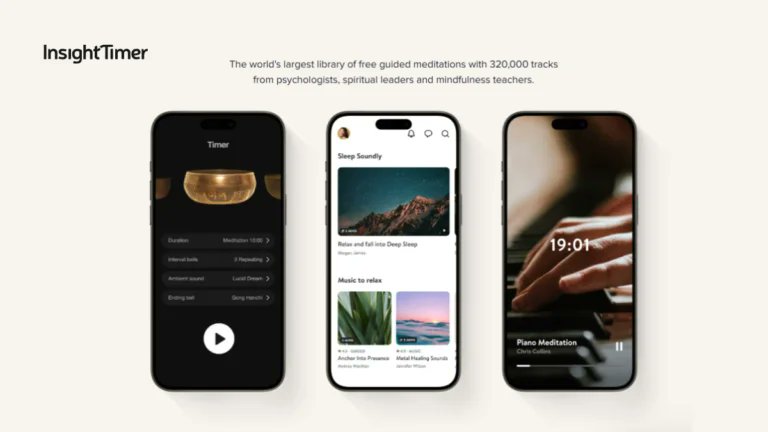
ALT Insight Timer debuts its specialized interface in India, offering the world’s largest free library of guided meditations and mindfulness tools.
1
4
26