
Apr 28
🔴ANALYSE – France, OLP, Hezbollah : l’aveuglement diplomatique français au Liban
Par Pierre Sassine
➡lediplomate.media/analyse-fr…
De l’OLP au Hezbollah, la diplomatie française a souvent cru préserver la stabilité libanaise en maintenant le dialogue avec des acteurs armés devenus interlocuteurs politiques. Mais en différant la clarification sur la souveraineté et le monopole de la force, Paris a contribué, malgré elle, à normaliser des exceptions armées qui ont durablement fragilisé l’État libanais.
Une diplomatie de l’équilibre aux limites visibles
La politique étrangère française au Liban se présente volontiers comme une diplomatie de l’équilibre. Elle invoque la souveraineté, la stabilité institutionnelle, la préservation du pluralisme libanais, le refus de l’escalade régionale et la nécessité du dialogue avec l’ensemble des acteurs. Cette posture repose sur une tradition ancienne : la France se pense au Levant comme une puissance de médiation, capable de maintenir des canaux là où d’autres choisissent la rupture. Cette logique n’est ni absurde ni illégitime. Elle a parfois permis à Paris de conserver une influence que d’autres avaient perdue. Mais elle porte aussi en elle une faiblesse profonde : à force de préserver l’interlocution politique, la diplomatie française a souvent tardé à qualifier clairement la nature réelle des organisations armées qui ont contribué à déstructurer l’État libanais. Hier avec l’Organisation de libération de la Palestine, aujourd’hui avec le Hezbollah, le même mécanisme réapparaît : transformer un acteur armé en interlocuteur politique au nom de la stabilité, en espérant que l’intégration diplomatique finira par neutraliser la logique militaire. L’histoire libanaise montre l’inverse : lorsqu’une organisation obtient une reconnaissance politique sans renoncer à son autonomie stratégique, elle ne se normalise pas ; elle consolide sa domination.
La matrice française : la question palestinienne et l’OLP
Pour comprendre cette continuité, il faut revenir à la genèse de la politique française vis-à-vis de l’OLP. À partir de la fin des années 1960, dans le prolongement de la réorientation gaullienne après 1967, Paris construit ce que l’on a appelé sa « politique arabe ». Il s’agit de rééquilibrer sa position au Moyen-Orient, de prendre ses distances avec une proximité jugée excessive avec Israël et de redevenir une puissance autonome capable de parler à l’ensemble du monde arabe. La question palestinienne devient alors un axe diplomatique structurant. Sous Pompidou, puis sous Giscard d’Estaing, et plus encore sous François Mitterrand, la reconnaissance du « fait palestinien » s’impose progressivement. La Déclaration de Venise de 1980 en marque l’aboutissement : l’OLP est considérée comme un interlocuteur incontournable de toute solution régionale. La France ne voit pas seulement une organisation armée ; elle y voit un acteur politique dont l’exclusion rendrait impossible tout règlement durable.
#Liban,#Hezbollah,#OLP,#FranceDiplomatie,#Geopolitique,#MoyenOrient,#Souverainete,#EtatFaible,#PolitiqueEtrangere,#AnalyseStrategique,#IranInfluence,#ConflitLibanais,#FINUL,#ArmeeParallele,#DiplomatieFrancaise,#YasserArafat,#HistoireLiban,#CriseLibanaise,#PuissanceRegionale,#PolitiqueArabe,#StabiliteRegionale,#Terrorisme
4
5
388

Apr 26
آبنائےملاکا بند؟ چین کی لائف لائن نشانے پر؟
سی پیک ، گوادر دنیا کی نیا دبئی بن گیا؟
بلوچستان دنیا کوتجارتی نقشہ دے گی؟
#IranPower #IranInfluence #MiddleEastTensions #Geopolitics #SupremeLeader #SunoNewsHD
2
191
Apr 26
ایٹم بم کی تیاری ۔۔ ایران نےآخرکار اعلان کردیا!
عراقچی کا دورہ ، امریکہ کی شہ رگ ، ایران نے دبوچ لیا؟
#IranPower #IranInfluence #MiddleEastTensions #Geopolitics #SupremeLeader #SunoNewsHD
5
285

Apr 22
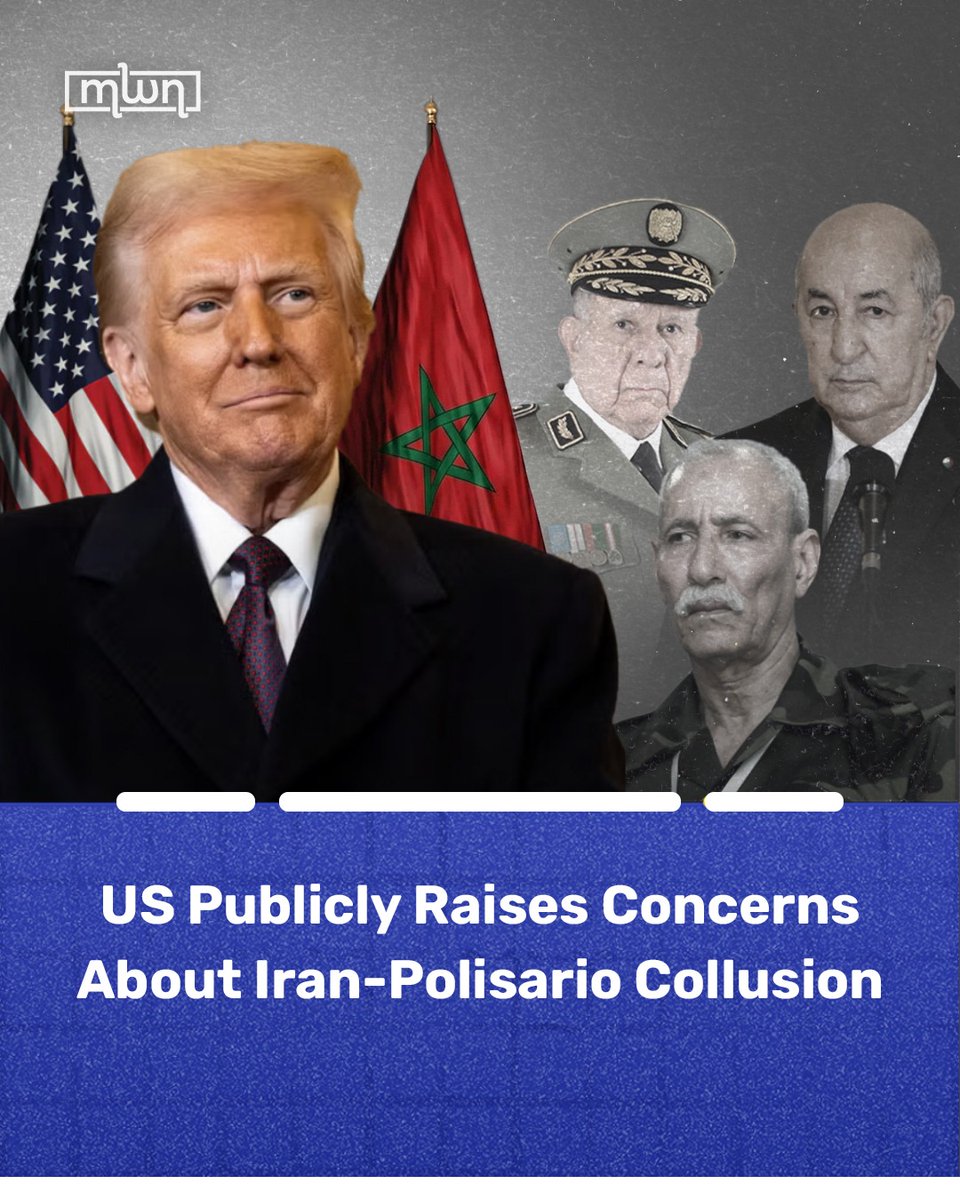
The US has officially expressed concerns over reports linking the Polisario Front with Iran amid congressional bills warning Washington about the security risks posed by the separatist group in Africa.
Monica Ager Jacobsen, Senior Bureau Official for the Bureau of Counterterrorism (CT), has publicly conveyed the US administration’s concerns during a hearing about US counterterrorism efforts in Africa on Tuesday.
“We share concerns about the Polisario Front and its impact in the CT space. What I can say with confidence in an open hearing is that the region where the Polisario Front operates sits near trafficking and militant activity in the Sahel and that this creates vulnerabilities that external actors, including Iran, could seek to exploit,” the US official said.
Read more: shorturl.at/GXyiT
#USForeignPolicy #PolisarioFront #IranInfluence #NationalSecurity #MoroccoAlly #SahelSecurity #Counterterrorism2026
1
2
256

Apr 9
मिडिल ईस्ट में चल रहे संघर्ष का दायरा लगातार बढ़ सकता है। विशेषज्ञों के अनुसार, यह युद्ध केवल एक देश तक सीमित नहीं रहेगा। लेबनान, सीरिया, इराक और यमन में ईरान के प्रभाव वाले समूह पहले से सक्रिय हैं। यदि ये सभी मोर्चे खुल गए, तो यह केवल युद्ध नहीं रहेगा, बल्कि पूरे क्षेत्र में गंभीर राजनीतिक और सुरक्षा संकट पैदा कर सकता है।
#MiddleEast #IranInfluence #Lebanon #Syria #Iraq #Yemen #newstrack
1
3
4
49

Apr 7
Hezbollah has expanded its reach across Latin America, transforming from a small network in the tri-border region of Paraguay, Brazil, and Argentina into a sprawling shadow operation that now touches Venezuela, Chile, Bolivia, and Mexico. Active since the 1980s, the group uses weak oversight, porous borders, and regional corruption to fundraise, recruit, and influence quietly, avoiding high-profile attacks that would draw attention.
Allegedly led by Hussein Ahmad Karaki under Hezbollah’s top leadership, the group has historic ties to terrorism in the region, including the 1994 AMIA bombing in Buenos Aires. It has also been linked to plots targeting Israeli and Jewish communities in Colombia and Brazil. Their focus remains on generating revenue and influence, not public spectacle, allowing them to quietly control networks across multiple countries.
Hezbollah funds its operations through drug trafficking, money laundering, and illicit trade. Hundreds of millions of dollars are believed to flow annually through the tri-border area, with Mexico serving as a key transit point for funds and shipments connected to the network. Iran is widely considered a backer, and some of the group’s weapons have been traced to Russia.
Governments across the Americas have taken action. The United States, Argentina, Paraguay, Colombia, Guatemala, and Honduras have designated Hezbollah or affiliates as terrorists, while U.S. authorities have sanctioned individuals and businesses tied to the network.
In 2023, Brazilian authorities arrested operatives allegedly planning attacks against Jewish communities, showing that even low-profile networks can pose serious threats. Commanders and financiers continue relocating across South America while maintaining connections to the broader Hezbollah infrastructure. These expansions quietly increase influence and revenue while most civilians remain unaware of the organization’s true scope.
#Hezbollah #LatinAmerica #TriBorderArea #AMIA #GlobalSecurity #Terrorism #IranInfluence #Mexico #Iran
5
128

Apr 4
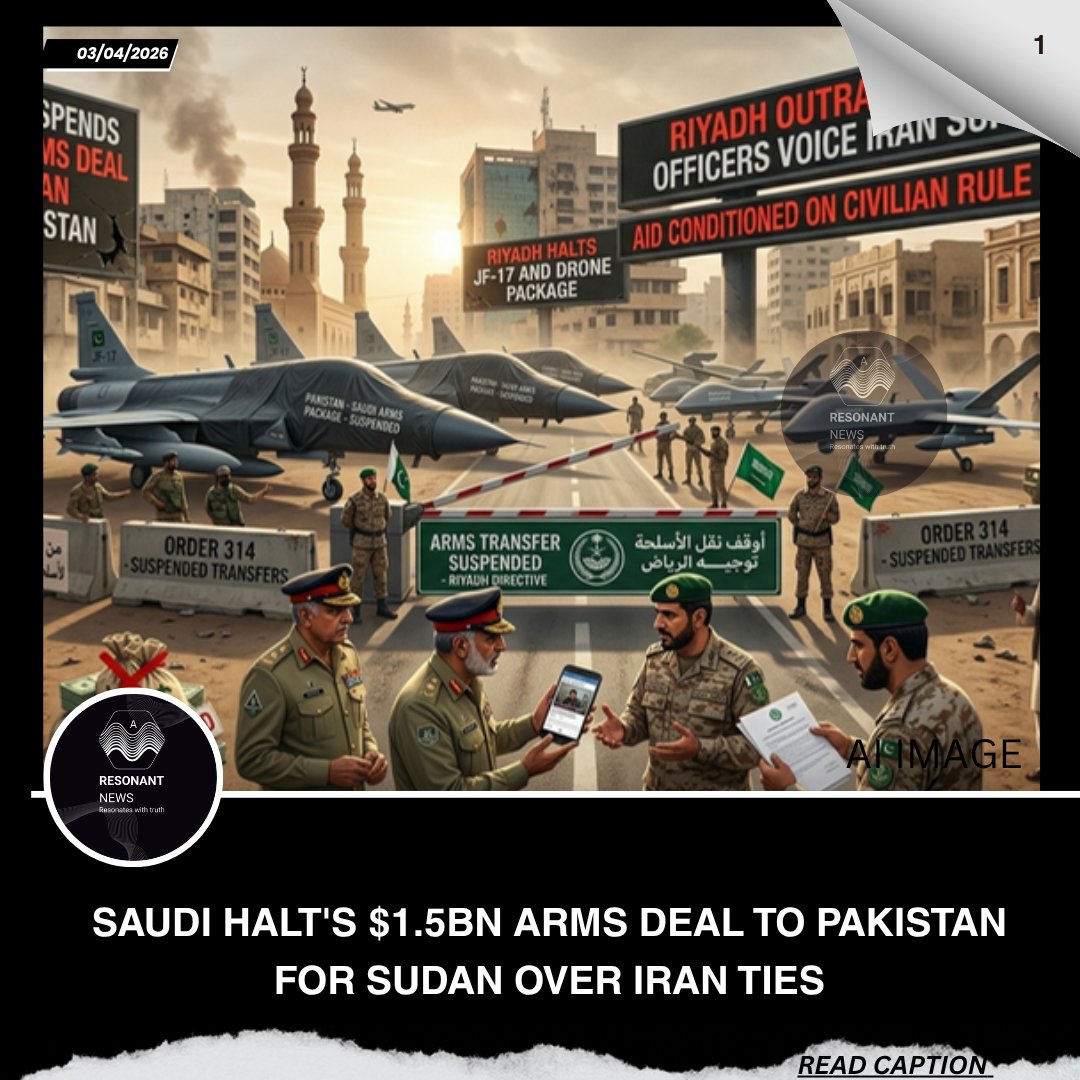
🚨 𝗕𝗥𝗘𝗔𝗞𝗜𝗡𝗚: 𝗦𝗮𝘂𝗱𝗶 𝗔𝗿𝗮𝗯𝗶𝗮 𝘀𝘂𝘀𝗽𝗲𝗻𝗱𝘀 $𝟭.𝟱 𝗯𝗶𝗹𝗹𝗶𝗼𝗻 𝗮𝗿𝗺𝘀 𝗱𝗲𝗮𝗹 𝘄𝗶𝘁𝗵 𝗣𝗮𝗸𝗶𝘀𝘁𝗮𝗻 𝗳𝗼𝗿 𝗦𝘂𝗱𝗮𝗻 𝗮𝗳𝘁𝗲𝗿 𝗜𝘀𝗹𝗮𝗺𝗶𝘀𝘁 𝗼𝗳𝗳𝗶𝗰𝗲𝗿𝘀 𝗯𝗮𝗰𝗸 𝗜𝗿𝗮𝗻 𝗮𝗺𝗶𝗱𝘀𝘁 𝗿𝗲𝗴𝗶𝗼𝗻𝗮𝗹 𝘁𝗲𝗻𝘀𝗶𝗼𝗻𝘀 𝗮𝗻𝗱 𝗚𝘂𝗹𝗳 𝗿𝗲𝗮𝗹𝗶𝗴𝗻𝗺𝗲𝗻𝘁
🇸🇦🇵🇰🇸🇩 || Saudi Arabia suspends $1.5 billion arms package to Pakistan for Sudan's forces—JF-17 jets, drones, aircraft—after Islamist officers voice Iran support in viral video, sparking Riyadh outrage.
💥 The halt signals Saudi pivot against Iran-linked elements in Sudan, conditioning aid on civilian rule and military purge amid Brotherhood fears.
#SaudiArabia #Pakistan #Sudan #ArmsDeal #IranInfluence
📍 @ResonantNews
2
29
70
3,199

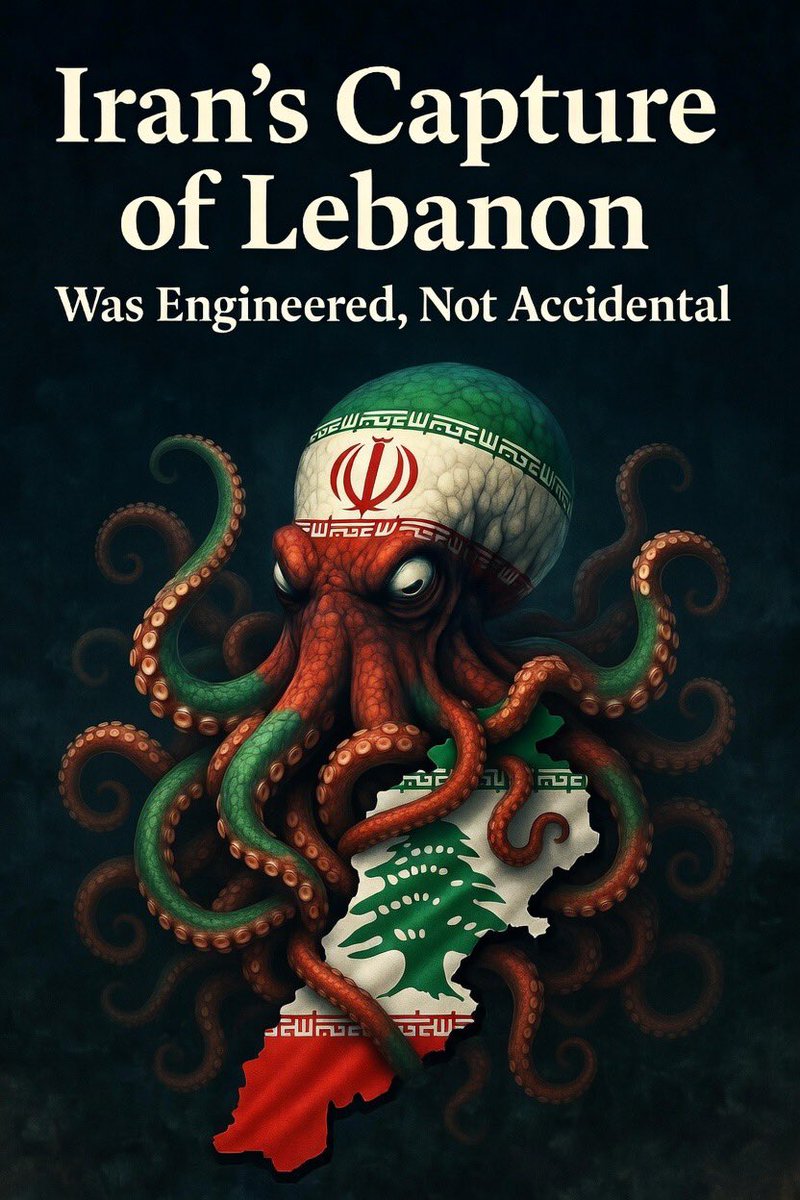
Since 1982, Iran has implemented a deliberate strategy to anchor its power in Lebanon through Kizballah, a terrorist mercenary militia operating as a direct extension of Tehran. This was never a resistance project. It was a long-term plan to capture the Lebanese state from within.
Iran did not need to invade. It built a system that made invasion unnecessary.
Over time, Kizballah constructed parallel structures that steadily displaced state authority:
a military force outside government control,
a financial network sustained by illicit and external flows,
and a political mechanism capable of overriding national decision-making.
The decisive shift came in 2006. The Mar Mikhael agreement did not merely reflect political pragmatism. It institutionalized the erosion of sovereignty. By aligning with Kizballah, Michel Aoun and Gebran Bassil provided the political legitimacy that allowed an armed non-state actor to entrench itself at the core of the Lebanese system.
This was not coexistence. It was state capture facilitated from within.
Kizballah’s record leaves little ambiguity. Its intervention in Syria prolonged the Assad regime at Lebanon’s expense. Its role in the 2006 war exposed the country to devastating consequences without delivering strategic gain. Its parallel economic networks have hollowed out state institutions while insulating its own structures from collapse.
The pattern is consistent: decisions taken in service of Iranian regional priorities, with Lebanon absorbing the cost.
Equally important is the role of internal enablers. This system could not have consolidated without political actors willing to legitimize, protect, or ignore the expansion of parallel authority. Alliances were formed, institutions were compromised, and accountability was systematically avoided.
The result is a state in form, but not in function.
Reversing this trajectory requires more than reform. It requires dismantling the architecture that allowed this parallel system to take root: restoring exclusive state control over force, confronting the political networks that enabled it, and disrupting the financial structures that sustain it.
Lebanon’s central challenge is no longer ambiguous. It is whether the state can reassert authority over actors that have systematically operated beyond it.
Until that question is answered, sovereignty will remain nominal, and instability will persist
#Lebanon
#FreeLebanon
#Iran
#IranProxy
#IranInfluence
#MiddleEast
12
42
144
6,678

“When Lebanon declared Iran’s ambassador persona non grata and gave him a deadline to leave, it was a sovereign move aimed at curbing external influence. Now that he refuses to go ‘in accordance with Berri and Hezbollah,’ it proves the very point critics make: Hezbollah and its allies act as Iran’s political and military extension in Lebanon, undermining Lebanese state decisions and sovereignty. #LebanonSovereignty #IranInfluence”
2
5
1,168


The Iranian regime's 'Trojan Horse' strategy in the UK—exploiting the charity sector to build soft power, spread Khomeinist ideology, and potentially enable influence or repression—should spark urgent discussion about similar patterns across the EU.
Lord Walney's March 2026 report "Undue Influence: The Iranian Regime’s Abuse of the UK Charity System" exposes a network of over 30 organisations, including 10 charities (8 under slow Charity Commission probes), with ties to Iranian bodies. These promote reverence for Khamenei/Soleimani, host Quds Day events with antisemitic rhetoric, support proxies like Hezbollah/Hamas, and indoctrinate youth—while fostering hostility toward dissidents and British Jews. Fears of racism accusations have delayed robust action, allowing these "soft power hubs" to operate amid Iran's espionage/transnational repression threats.
This mirrors patterns elsewhere in Europe. For example, Germany banned the Islamic Centre Hamburg (IZH) in 2024 as a regime proxy promoting extremism, antisemitism, and Hezbollah support; related networks (e.g., Al-Mustafa Berlin branch) face ongoing extremism probes and scrutiny over hundreds of affiliates.
But the core issue is the security concerns highlighted in Walney's report.
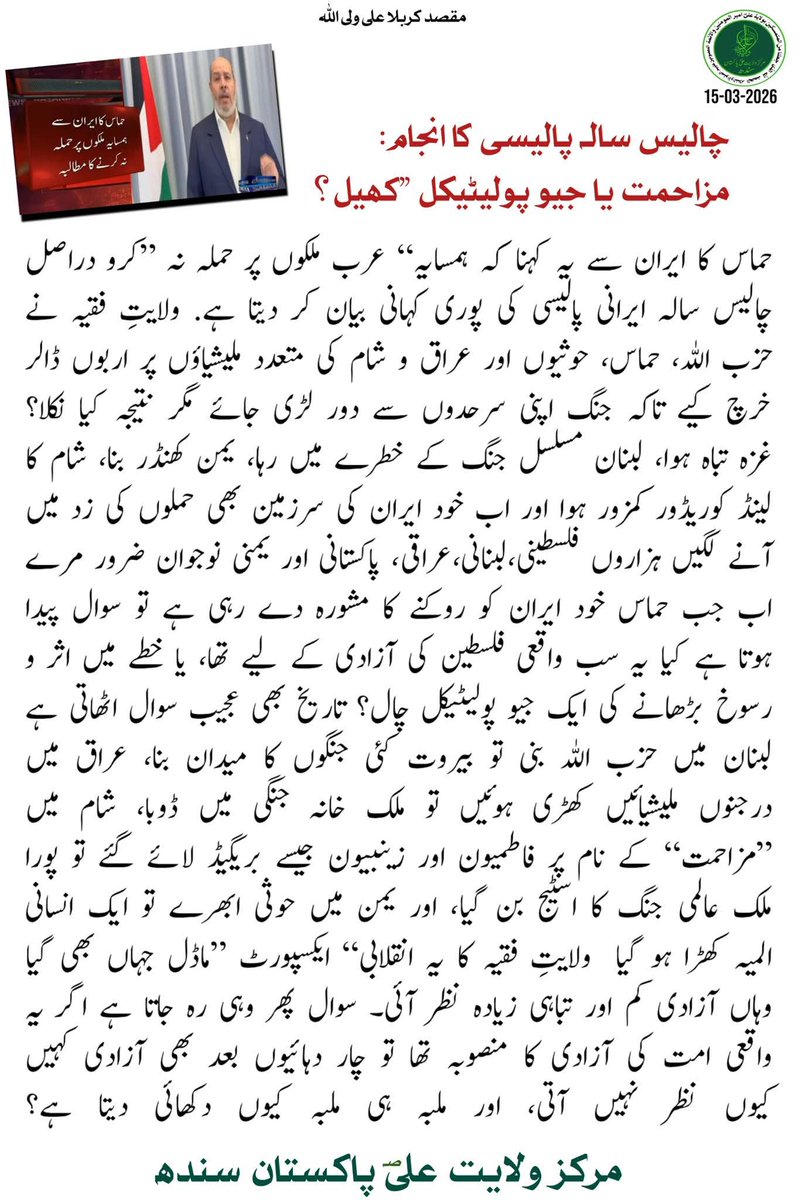
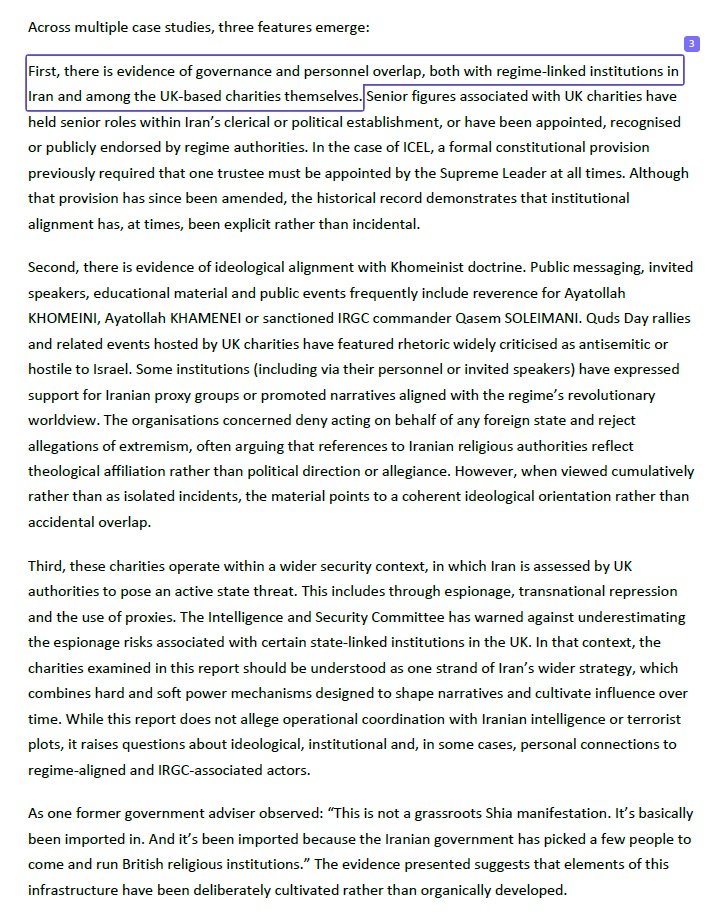
Screenshot 1: "...there is evidence of governance and personnel overlap, both with regime-linked institutions in Iran and among the UK-based charities themselves. Senior figures associated with UK charities have held senior roles within Iran’s clerical or political establishment, or have been appointed, recognised, or publicly endorsed by regime authorities."
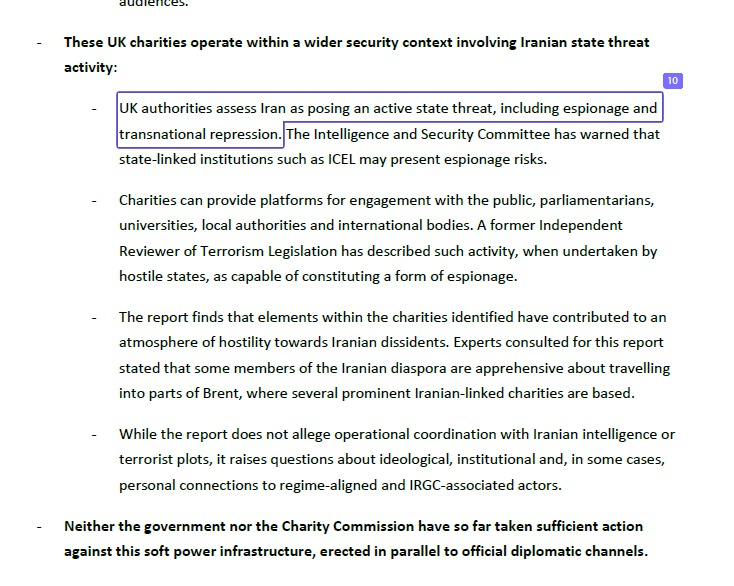
Screenshot 2: "UK authorities assess Iran as posing an active state threat, including espionage and transnational repression. The Intelligence and Security Committee has warned that state-linked institutions such as ICEL may present espionage risks. Charities can provide platforms for engagement with the public, parliamentarians, universities, local authorities and international bodies. A former Independent Reviewer of Terrorism Legislation has described such activity, when undertaken by hostile states, as capable of constituting a form of espionage."
In short, what appears as charity work can mask or support state-directed malign activity in an open society, heightening vulnerability to espionage, repression, and broader national security threats from a regime assessed as persistent and unpredictable.
The Iranian regime's strategy is not unique. Other state actors, terrorist organisations, and extremist networks—with the resources and intent—have long exploited similar vulnerabilities in Europe's charity, religious, and cultural sectors for influence, funding, or cover. Examples include sham charities funnelling support to groups like Hamas or Hezbollah, as flagged in EU counter-terrorism efforts and international reports.
EU countries grapple with regulatory gaps: narrow oversight focuses on compliance, not systemic foreign influence/extremism; slow probes and limited intel-sharing hinder effective deterrence. The Walney report's UK-specific recommendations—expanded Charity Commission powers to address ideology/foreign ties, trustee disqualifications, faster investigations, transparency, and Gift Aid restrictions—could inspire continent-wide reforms to safeguard open societies from this deliberate infiltration undermining security, cohesion, and vulnerable communities.
Time for coordinated EU action against these threats.
Download the full report: powerfulstreet.com/Undue_Inf…
#IranInfluence #EuropeSecurity #UKSecurity #Iran #EU #UK
8
10
177

Mar 11
Iran’s Victory: Threat to Arab Nations? | What Will the New Regional Map Look Like? | Sohail Waraich
#Iran #MiddleEast #ArabNations #SohailWaraich #Geopolitics #BreakingNews #IranVictory #RegionalShift #MiddleEastConflict #GlobalPolitics #IranInfluence #capitaltv
141

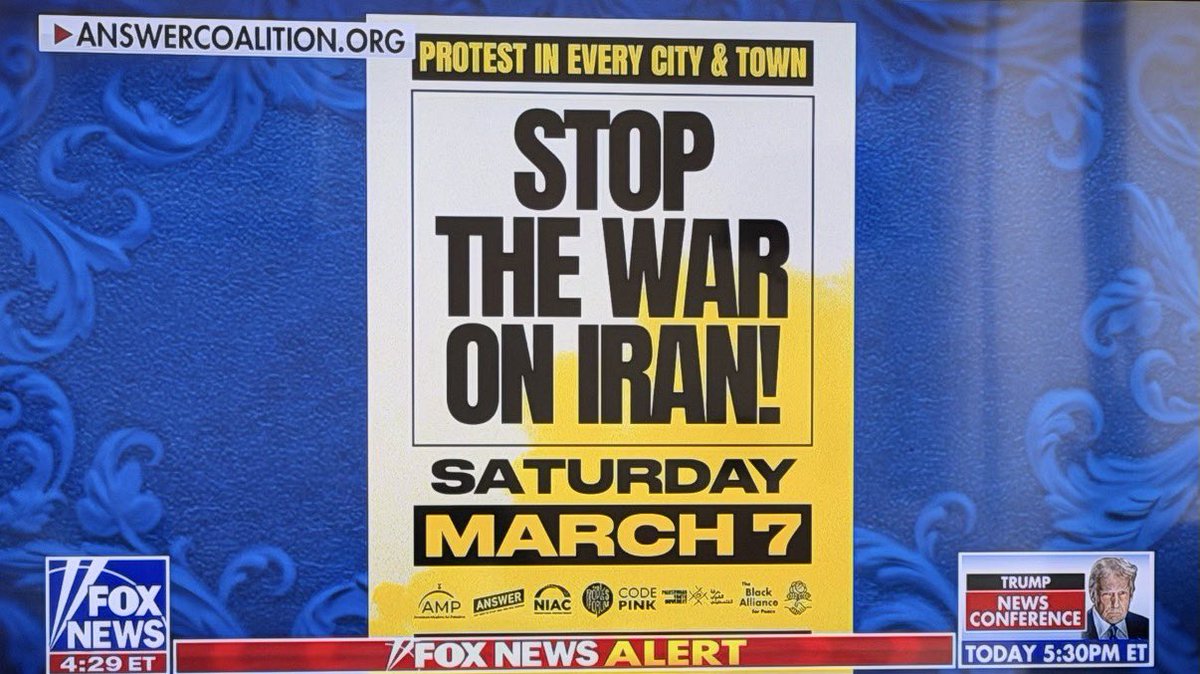
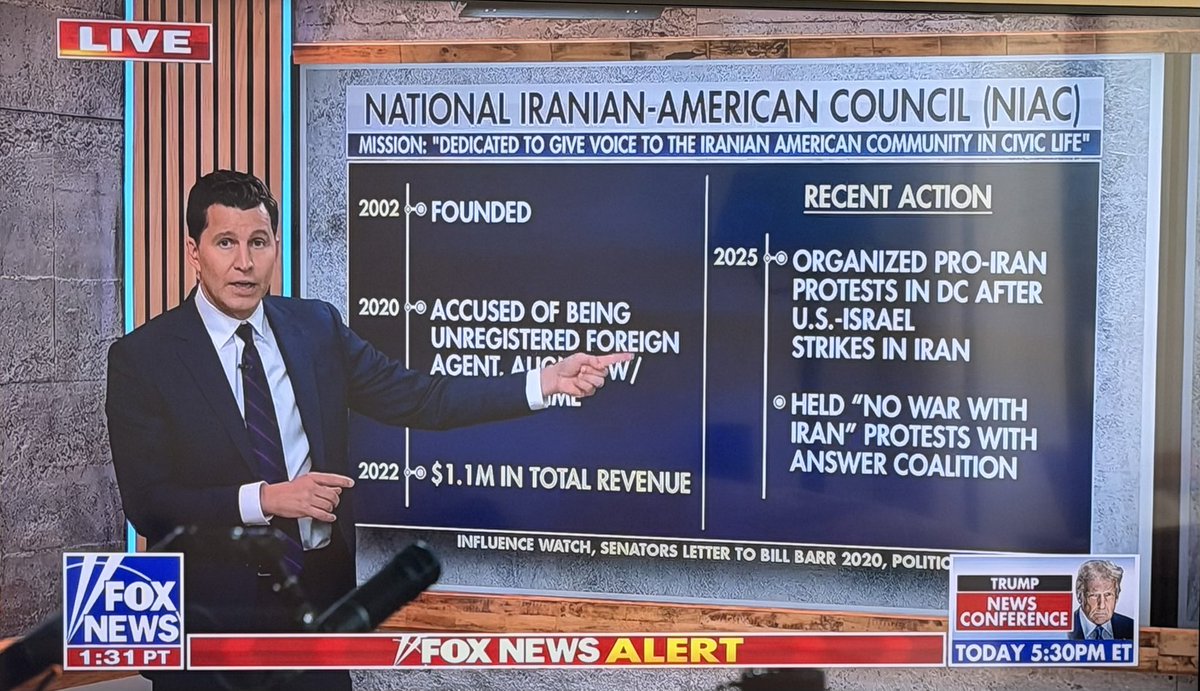
As @AsraNomani disclosed on Fox, her research shows #NIAC and other anti war #Iran groups aren’t really about peace, they’re a DC activist network pushing Iran regime talking points while pretending to speak for Iranian Americans. #FakeActivism
#IranInfluence
14
33
1,697

Mar 8
#Exclusive | The mosque in Dubai was founded and used by the Iranian government. Ordinary Muslims pray at home and are peaceful — they want Ramadan, they want their iftar, they want their lives, and they want to succeed. This has nothing to do with religion: Roxana Chegini, Iranian Cultural Analyst and Advocate for Democratic Transition in conversation with India Today.
#RoxanaChegini #IranRegime #MiddleEastPolitics #IranInfluence #Geopolitics | @gauravcsawant
1
1
5,493

If Islamist leaders in SAF-aligned battalions openly support Iran, we should know the potential geopolitical impact. Iran and their readiness to fight alongside it despite Iran’s terrorist behavior toward its regional neighbors.
#SudanConflict #IranInfluence #AfricaSecurity
Mar 4

When Al-Naji Abdullah, an Islamist figure affiliated with the army in Sudan, appears publicly declaring explicit support for Iran, claiming to speak on behalf of “Sudanese mujahideen,” and threatening to send fighters to confront U.S. forces, this is not emotional rhetoric—it is a dangerous indicator of the ideological project penetrating the military institution.
The scene does not end with words. Standing beside him is Owais Ghanem, while widely circulated images show a commander linked to Liwa al-Bara ibn Malik, an armed formation aligned with Islamists and operating alongside Sudanese forces. This is bigger than individuals. It reveals an organized ideological network that speaks in transnational language and operates with a mobilization mindset rather than a state mentality.
When a nation is reduced to the language of “global jihad,” and sovereignty is replaced with doctrinal alignment, Sudan risks transforming from a country seeking stability into a platform for regional and international confrontation.
The question is no longer who is speaking in the video. The real question is: who allowed what should be a national army to become a stage for ideological score-settling? And who bears responsibility for dragging Sudan’s name into battles that serve neither its people nor its future?
3,433

"Mayor Mamdani’s attendance at Al-Khoei Center is reigniting the debate over foreign influence in NYC’s religious landscape. 🏛️🗽 While the Mayor’s team calls it routine community outreach, critics point to the center's historical financial ties to the Alavi Foundation—long cited by the DOJ as an Iranian front. In a 2026 climate where US-Iran tensions are at a breaking point, the reported rhetoric of the Imam regarding 'striking down non-believers' creates a massive liability for City Hall. Is this just faith, or a failure of vetting? ⚖️🛡️ #MamdaniNYC #AlaviFoundation #NationalSecurity #NYCPolitics #IranInfluence"
1
2
8
4,303

@LindseyGrahamSC
Iran’s regional spread through its nuclear program (existential threat), ballistic missiles (range), and militias (local force) forms an integrated indirect influence model. A multi-dimensional strategy deserving serious study.
#RegionalProliferation #IranInfluence
But this spread relies on three fragile links: nuclear & missile technology vulnerable to restriction, militia funding exposed to sanctions, centralized leadership sensitive to targeting. Severing any link initiates breakdown of the others. Clear analysis.
#LinkageFragility #StrategicBreakpoints
Therefore the optimal approach is crushing dismantling: hand the file to Israel for devastating military strikes that eradicate nuclear & ballistic assets, pulverize militias, and topple the regime that harbors and directs them — three interconnected axes leading to irreversible regime end. Israel is the only state with the experience and will to crush without hesitation. Delay equals continued attrition.
#RegimeEnd #IsraelAuthority #StrategicDeterrence #USIran
2
7
991
@NBCNews
Iran’s regional spread through its nuclear program (existential threat), ballistic missiles (range), and militias (local force) forms an integrated indirect influence model. A multi-dimensional strategy deserving serious study.
#RegionalProliferation #IranInfluence
But this spread relies on three fragile links: nuclear & missile technology vulnerable to restriction, militia funding exposed to sanctions, centralized leadership sensitive to targeting. Severing any link initiates breakdown of the others. Clear analysis.
#LinkageFragility #StrategicBreakpoints
Therefore the optimal approach is synchronized dismantling: restrict nuclear & ballistic technology → dry militia resources → disrupt centralized leadership. Three interconnected axes that turn expansion into irreversible contraction.
#SynchronizedDismantling #StrategicDeterrence #USIran
6
344

Feb 2
Iran holds significant leverage in Iraq.”
“Maliki isn’t a pure proxy.”
“But Iran is the decisive auxiliary.”
@SamRamani2 @CapitolInstitut
Baghdad risks sliding back into Tehran’s orbit.
#Iraq #Maliki #IranInfluence
@washingtonpost
«إيران تملك نفوذًا كبيرًا في العراق».
«المالكي ليس وكيلاً خالصًا».
«لكن طهران هي العامل الحاسم».
العراق أمام اختبار سيادي خطير.
#العراق #المالكي
@StateDept
“This is a blow to the development route.”
“Iraqi business elites will push back.”
“Even Kuwait is hesitant to invest.”
Politics is suffocating growth.
#IraqEconomy #DevelopmentRoad
«ضربة قاسية لمسار التنمية».
«رجال الأعمال العراقيون سيقاومون».
«حتى الكويت مترددة».
السياسة تخنق الاقتصاد.
#اقتصاد_العراق
@worldbankgroup
“Sanctions can crack PMF funding.”
“Financial networks are the target.”
“Trump can act unilaterally — but allies matter.”
Money is the battlefield.
#Sanctions #OFAC #FinancialCrime
@USTreasury @OFAC_treasury
«العقوبات تفكك تمويل الميليشيات».
«الشبكات المالية هي الهدف».
«التنسيق الدولي ضروري».
الحرب الحقيقية… مالية.
#عقوبات
@USTreasury
1
1
6
946

After President @realDonaldTrump's tweet: Will the fracturing Shia Coordination Framework let Iran dictate Iraq’s next govt? Will the U.S. intervene directly? Could Moqtada return to reshape the scene? Who really controls Iraq’s future? #IraqPolitics #Iraninfluence #USApressure.
1
4
204